Hubbry Logo
Buffer solutionBuffer solutionMain
Open search
Buffer solution
Community hub
Buffer solution
logo
7 pages, 0 posts
0 subscribers
Be the first to start a discussion here.
Buffer solution
Buffer solution
from Wikipedia

A buffer solution is a solution where the pH does not change significantly on dilution or if an acid or base is added at constant temperature.[1] Its pH changes very little when a small amount of strong acid or base is added to it. Buffer solutions are used as a means of keeping pH at a nearly constant value in a wide variety of chemical applications. In nature, there are many living systems that use buffering for pH regulation. For example, the bicarbonate buffering system is used to regulate the pH of blood, and bicarbonate also acts as a buffer in the ocean.

Principles of buffering

[edit]
Figure 1. Simulated titration of an acidified solution of a weak acid (pKa = 4.7) with alkali

Buffer solutions resist pH change because of a chemical equilibrium between the weak acid HA and its conjugate base A:

HA ⇌ H+ + A

When some strong acid is added to an equilibrium mixture of the weak acid and its conjugate base, hydrogen ions (H+) are added, and the equilibrium is shifted to the left, in accordance with Le Chatelier's principle. Because of this, the hydrogen ion concentration increases by less than the amount expected for the quantity of strong acid added. Similarly, if strong alkali is added to the mixture, the hydrogen ion concentration decreases by less than the amount expected for the quantity of alkali added. In Figure 1, the effect is illustrated by the simulated titration of a weak acid with pKa = 4.7. The relative concentration of undissociated acid is shown in blue, and of its conjugate base in red. The pH changes relatively slowly in the buffer region, pH = pKa ± 1, centered at pH = 4.7, where [HA] = [A]. The hydrogen ion concentration decreases by less than the amount expected because most of the added hydroxide ion is consumed in the reaction

OH + HA → H2O + A

and only a little is consumed in the neutralization reaction (which is the reaction that results in an increase in pH)

OH + H+ → H2O.

Once the acid is more than 95% deprotonated, the pH rises rapidly because most of the added alkali is consumed in the neutralization reaction.

Buffer capacity

[edit]

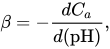
Buffer capacity is a quantitative measure of the resistance to change of pH of a solution containing a buffering agent with respect to a change of acid or alkali concentration. It can be defined as follows:[2][3] where is an infinitesimal amount of added base, or where is an infinitesimal amount of added acid. pH is defined as −log10[H+], and d(pH) is an infinitesimal change in pH.

With either definition the buffer capacity for a weak acid HA with dissociation constant Ka can be expressed as[4][5][3] where [H+] is the concentration of hydrogen ions, and is the total concentration of added acid. Kw is the equilibrium constant for self-ionization of water, equal to 1.0×10⁻¹⁴. Note that in solution H+ exists as the hydronium ion H3O+, and further aquation of the hydronium ion has negligible effect on the dissociation equilibrium, except at very high acid concentration.

Figure 2. Buffer capacity β for a 0.1 M solution of a weak acid with a pKa = 7

This equation shows that there are three regions of raised buffer capacity (see figure 2).

  • In the central region of the curve (colored green on the plot), the second term is dominant, and Buffer capacity rises to a local maximum at pH = pKa. The height of this peak depends on the value of pKa. Buffer capacity is negligible when the concentration [HA] of buffering agent is very small and increases with increasing concentration of the buffering agent.[3] Some authors show only this region in graphs of buffer capacity.[2]
    Buffer capacity falls to 33% of the maximum value at pH = pKa ± 1, to 10% at pH = pKa ± 1.5 and to 1% at pH = pKa ± 2. For this reason the most useful range is approximately pKa ± 1. When choosing a buffer for use at a specific pH, it should have a pKa value as close as possible to that pH.[2]
  • With strongly acidic solutions, pH less than about 2 (coloured red on the plot), the first term in the equation dominates, and buffer capacity rises exponentially with decreasing pH: This results from the fact that the second and third terms become negligible at very low pH. This term is independent of the presence or absence of a buffering agent.
  • With strongly alkaline solutions, pH more than about 12 (coloured blue on the plot), the third term in the equation dominates, and buffer capacity rises exponentially with increasing pH: This results from the fact that the first and second terms become negligible at very high pH. This term is also independent of the presence or absence of a buffering agent.

Applications of buffers

[edit]

The pH of a solution containing a buffering agent can only vary within a narrow range, regardless of what else may be present in the solution. In biological systems this is an essential condition for enzymes to function correctly. For example, in human blood a mixture of carbonic acid (H
2
CO
3
) and bicarbonate (HCO
3
) is present in the plasma fraction; this constitutes the major mechanism for maintaining the pH of blood between 7.35 and 7.45. Outside this narrow range (7.40 ± 0.05 pH unit), acidosis and alkalosis metabolic conditions rapidly develop, ultimately leading to death if the correct buffering capacity is not rapidly restored.

If the pH value of a solution rises or falls too much, the effectiveness of an enzyme decreases in a process, known as denaturation, which is usually irreversible.[6] The majority of biological samples that are used in research are kept in a buffer solution, often phosphate buffered saline (PBS) at pH 7.4.

In industry, buffering agents are used in fermentation processes and in setting the correct conditions for dyes used in colouring fabrics. They are also used in chemical analysis[5] and calibration of pH meters.

Simple buffering agents

[edit]
Buffering agent pKa Useful pH range
Citric acid 3.13, 4.76, 6.40 2.1–7.4
Acetic acid 4.7 3.8–5.8
KH2PO4 7.2 6.2–8.2
CHES 9.3 8.3–10.3
Borate 9.24 8.25–10.25

For buffers in acid regions, the pH may be adjusted to a desired value by adding a strong acid such as hydrochloric acid to the particular buffering agent. For alkaline buffers, a strong base such as sodium hydroxide may be added. Alternatively, a buffer mixture can be made from a mixture of an acid and its conjugate base. For example, an acetate buffer can be made from a mixture of acetic acid and sodium acetate. Similarly, an alkaline buffer can be made from a mixture of the base and its conjugate acid.

"Universal" buffer mixtures

[edit]

By combining substances with pKa values differing by only two or less and adjusting the pH, a wide range of buffers can be obtained. Citric acid is a useful component of a buffer mixture because it has three pKa values, separated by less than two. The buffer range can be extended by adding other buffering agents. The following mixtures (McIlvaine's buffer solutions) have a buffer range of pH 3 to 8.[7]

0.2 M Na2HPO4 (mL) 0.1 M citric acid (mL) pH
20.55 79.45 3.0
38.55 61.45 4.0
51.50 48.50 5.0
63.15 36.85 6.0
82.35 17.65 7.0
97.25 2.75 8.0

A mixture containing citric acid, monopotassium phosphate, boric acid, and diethyl barbituric acid can be made to cover the pH range 2.6 to 12.[8]

Other universal buffers are the Carmody buffer[9] and the Britton–Robinson buffer, developed in 1931.

Common buffer compounds used in biology

[edit]

For effective range see Buffer capacity, above. Also see Good's buffers for the historic design principles and favourable properties of these buffer substances in biochemical applications.

Common name (chemical name) Structure pKa,
25 °C
Temp. effect,
dpH/dT (K−1)[10]
Mol.
weight
TAPS,
([tris(hydroxymethyl)methylamino]propanesulfonic acid)
8.43 −0.018 243.3
Bicine,
(2-(bis(2-hydroxyethyl)amino)acetic acid)
8.35 −0.018 163.2
Tris,
(tris(hydroxymethyl)aminomethane, or
2-amino-2-(hydroxymethyl)propane-1,3-diol)
8.07[a] −0.028 121.14
Tricine,
(N-[tris(hydroxymethyl)methyl]glycine)
8.05 −0.021 179.2
TAPSO,
(3-[N-tris(hydroxymethyl)methylamino]-2-hydroxypropanesulfonic acid)
7.635 259.3
HEPES,
(4-(2-hydroxyethyl)-1-piperazineethanesulfonic acid)
7.48 −0.014 238.3
TES,
(2-[[1,3-dihydroxy-2-(hydroxymethyl)propan-2-yl]amino]ethanesulfonic acid)
7.40 −0.020 229.20
MOPS,
(3-(N-morpholino)propanesulfonic acid)
7.20 −0.015 209.3
PIPES,
(piperazine-N,N′-bis(2-ethanesulfonic acid))
6.76 −0.008 302.4
Cacodylate,
(dimethylarsenic acid)
6.27 138.0
MES,
(2-(N-morpholino)ethanesulfonic acid)
6.15 −0.011 195.2
  1. ^ Tris is a base, the pKa = 8.07 refers to its conjugate acid.

Calculating buffer pH

[edit]

Monoprotic acids

[edit]

First write down the equilibrium expression

HA ⇌ A + H+

This shows that when the acid dissociates, equal amounts of hydrogen ion and anion are produced. The equilibrium concentrations of these three components can be calculated in an ICE table (ICE standing for "initial, change, equilibrium").

ICE table for a monoprotic acid
[HA] [A] [H+]
I C0 0 y
C x x x
E C0x x x + y

The first row, labelled I, lists the initial conditions: the concentration of acid is C0, initially undissociated, so the concentrations of A and H+ would be zero; y is the initial concentration of added strong acid, such as hydrochloric acid. If strong alkali, such as sodium hydroxide, is added, then y will have a negative sign because alkali removes hydrogen ions from the solution. The second row, labelled C for "change", specifies the changes that occur when the acid dissociates. The acid concentration decreases by an amount −x, and the concentrations of A and H+ both increase by an amount +x. This follows from the equilibrium expression. The third row, labelled E for "equilibrium", adds together the first two rows and shows the concentrations at equilibrium.

To find x, use the formula for the equilibrium constant in terms of concentrations:

Substitute the concentrations with the values found in the last row of the ICE table:

Simplify to

With specific values for C0, Ka and y, this equation can be solved for x. Assuming that pH = −log10[H+], the pH can be calculated as pH = −log10(x + y).

Polyprotic acids

[edit]
This image plots the relative percentages of the protonation species of citric acid as a function of p H. Citric acid has three ionizable hydrogen atoms and thus three p K A values. Below the lowest p K A, the triply protonated species prevails; between the lowest and middle p K A, the doubly protonated form prevails; between the middle and highest p K A, the singly protonated form prevails; and above the highest p K A, the unprotonated form of citric acid is predominant.
% species formation calculated for a 10-millimolar solution of citric acid

Polyprotic acids are acids that can lose more than one proton. The constant for dissociation of the first proton may be denoted as Ka1, and the constants for dissociation of successive protons as Ka2, etc. Citric acid is an example of a polyprotic acid H3A, as it can lose three protons.

Stepwise dissociation constants
Equilibrium Citric acid
H3A ⇌ H2A + H+ pKa1 = 3.13
H2A ⇌ HA2− + H+ pKa2 = 4.76
HA2− ⇌ A3− + H+ pKa3 = 6.40

When the difference between successive pKa values is less than about 3, there is overlap between the pH range of existence of the species in equilibrium. The smaller the difference, the more the overlap. In the case of citric acid, the overlap is extensive and solutions of citric acid are buffered over the whole range of pH 2.5 to 7.5.

Calculation of the pH with a polyprotic acid requires a speciation calculation to be performed. In the case of citric acid, this entails the solution of the two equations of mass balance:

CA is the analytical concentration of the acid, CH is the analytical concentration of added hydrogen ions, βq are the cumulative association constants. Kw is the constant for self-ionization of water. There are two non-linear simultaneous equations in two unknown quantities [A3−] and [H+]. Many computer programs are available to do this calculation. The speciation diagram for citric acid was produced with the program HySS.[11]

N.B. The numbering of cumulative, overall constants is the reverse of the numbering of the stepwise, dissociation constants.

Relationship between cumulative association constant (β) values and stepwise dissociation constant (K) values for a tribasic acid.
Equilibrium Relationship
A3− + H+ ⇌ AH2+ Log β1= pka3
A3− + 2H+ ⇌ AH2+ Log β2 =pka2 + pka3
A3− + 3H+⇌ AH3 Log β3 = pka1 + pka2 + pka3

Cumulative association constants are used in general-purpose computer programs such as the one used to obtain the speciation diagram above.

See also

[edit]

References

[edit]
[edit]
Revisions and contributorsEdit on WikipediaRead on Wikipedia
from Grokipedia
A buffer solution is a mixture of a weak acid and its conjugate base, or a weak base and its conjugate acid, that resists significant changes in when small quantities of a strong acid or strong base are added. This resistance arises because the components of the buffer neutralize added H⁺ or OH⁻ ions without substantially altering the overall hydrogen ion concentration. Buffer solutions are essential in maintaining stable levels in various chemical and biological systems. The mechanism of a buffer solution involves the equilibrium between the weak acid (HA) and its conjugate base (A⁻), where added acid reacts with A⁻ to form HA, and added base reacts with HA to form A⁻ and . For example, in an acetic acid-sodium buffer, ions (CH₃COO⁻) capture protons from added HCl to produce acetic acid (CH₃COOH), while acetic acid donates protons to added NaOH to regenerate . This dynamic equilibrium ensures that the remains relatively constant, with the buffer's effectiveness depending on the concentrations of its components and the pKₐ of the weak acid. The pH of a buffer solution can be precisely calculated using the Henderson-Hasselbalch equation: pH = pKₐ + log₁₀([A⁻]/[HA]), where pKₐ is the negative logarithm of the , [A⁻] is the concentration of the conjugate base, and [HA] is the concentration of the weak acid. This equation allows for the design of buffers with targeted pH values by adjusting the ratio of base to acid forms. Buffer capacity, which measures the amount of acid or base a buffer can neutralize before its pH changes significantly, increases with higher concentrations of the buffering components. Buffer solutions play a critical role in biological processes by stabilizing intracellular and extracellular within narrow ranges essential for function, , and metabolic reactions. In human blood, for instance, the (HCO₃⁻/H₂CO₃) maintains around 7.4 to support respiration and prevent or . In chemistry and industry, buffers are used in experiments, pharmaceutical formulations, and to control reactions and ensure product stability.

Fundamentals of Buffer Solutions

Definition and Composition

A buffer solution is an aqueous mixture containing a weak acid and its conjugate base, or a and its conjugate acid, designed to resist substantial changes in upon the addition of small quantities of a strong acid or strong base. This resistance arises from the equilibrium between the acid-base pair, which allows the solution to absorb added protons or ions without drastic pH shifts. The typical composition of a buffer solution includes the weak acid or base as the primary buffering agent and a salt that supplies the corresponding conjugate to establish the necessary equilibrium. For instance, an acetate buffer comprises acetic acid (CH₃COOH) and (CH₃COONa), where the salt dissociates to provide acetate ions (CH₃COO⁻). The relative concentrations of the acid and conjugate base play a key role in setting the buffer's , with balanced ratios promoting optimal performance around the pKa value. Effective buffering requires the pKa of the weak acid (or pKb of the weak base) to be near the target , generally within one pH unit, to ensure sufficient concentrations of both species. Qualitative influences such as the solution's , which can alter ion activities, and , which affects dissociation equilibria, must also be considered for reliable performance. The term "buffer" originated in 1914, coined by G. S. Walpole to describe stabilizing mixtures in biological and chemical contexts.

Mechanism of pH Resistance

Buffer solutions resist changes in through dynamic chemical equilibria involving weak acids and their conjugate bases, or weak bases and their conjugate acids. In a weak acid buffer, such as acetic acid (HA) and (A⁻), the equilibrium is established as \ceHAH++A\ce{HA ⇌ H+ + A-}. When a strong base, like (OH⁻), is added, the OH⁻ reacts with free H⁺ to form , reducing the H⁺ concentration and disturbing the equilibrium. According to Le Châtelier's principle, the system responds by shifting the equilibrium to the right, dissociating more HA to replenish H⁺ and thus minimizing the increase. Conversely, addition of a strong acid introduces excess H⁺, which combines with A⁻ to form undissociated HA, shifting the equilibrium to the left and consuming the added H⁺ to limit the decrease. For weak base buffers, exemplified by and , the relevant equilibrium is \ceB+H2OBH++OH\ce{B + H2O ⇌ BH+ + OH-}. Addition of a strong acid provides H⁺ that reacts with OH⁻ to form , decreasing OH⁻ and prompting the equilibrium to shift right, producing more OH⁻ from B to counteract the drop. If a strong base is added, excess OH⁻ reacts with BH⁺ to form B and , shifting the equilibrium left to regenerate BH⁺ and reduce the rise. This application of Le Châtelier's principle ensures that the added ions are effectively neutralized by the buffer components without significantly altering the H⁺ or OH⁻ concentrations. Buffers have inherent limitations in their pH resistance. They fail when large quantities of or base are added, exceeding the available concentrations of the buffering species and depleting one component, after which the solution behaves like a non-buffered one with drastic pH changes. Effectiveness is also reduced if the solution's pH deviates significantly from the pKa of the weak or base, as the equilibrium favors one form over the other, limiting the buffer's ability to absorb perturbations. Dilution with causes only minor pH shifts due to slight changes in ionic equilibria, but extreme dilution can diminish buffering capacity by reducing component concentrations.

Buffer Capacity and Effectiveness

Quantitative Definition

Buffer capacity, denoted as β, quantifies the resistance of a buffer solution to changes upon addition of or base. It is defined as the number of moles of strong or strong base required to alter the of one liter of the buffer solution by one unit. This measure arises from the buffer's ability to absorb added H⁺ or OH⁻ through equilibrium shifts, with higher values indicating stronger buffering action. For a monoprotic buffer consisting of a weak acid HA and its conjugate base A⁻, the buffer capacity can be approximated using the Van Slyke equation derived from the Henderson-Hasselbalch relation. The Henderson-Hasselbalch equation is pH = pK_a + \log_{10} \left( \frac{[A^-]}{[HA]} \right). Differentiating with respect to added base B (where d[A^-] = -d[HA] = dB for small additions, neglecting [H⁺] and [OH⁻] contributions), yields β = \frac{dB}{dpH} \approx 2.303 \frac{[HA][A^-]}{[HA] + [A^-]}, where 2.303 is \ln(10). This approximation holds when the buffer concentration is sufficiently high relative to [H⁺] and [OH⁻]. The capacity reaches its maximum when pH = pK_a, corresponding to [HA] = [A^-] = \frac{C}{2}, where C is the total buffer concentration ([HA] + [A^-]), giving β_{max} \approx 0.576 C. Buffer capacity is typically expressed in units of moles per liter per unit (mol L⁻¹ ⁻¹). Experimentally, it is determined through : a known volume of buffer is titrated with standardized strong or base while monitoring , and β is calculated as the moles of titrant added per liter divided by the observed change (often averaged over a ±0.5 range around the buffer for accuracy). A higher β signifies better stability, with the 1:1 [HA]:[A⁻] providing optimal resistance for a given concentration, though actual capacity also depends on the total buffer amount present.

Factors Affecting Capacity

The buffer capacity of a solution increases with the total concentration of the buffering components, as higher concentrations provide more weak and conjugate base molecules available to neutralize added or base, up to the limits imposed by and stability of the buffer species. For a fixed amount of buffer solute, diluting the solution by increasing its volume reduces the concentration and thereby decreases the buffer capacity per unit volume, though the total capacity across the entire volume remains constant. Buffer capacity exhibits a strong dependence on the deviation between the solution's pH and the buffer's pKa value, reaching a maximum at pH = pKa and declining rapidly outside the range of pH = pKa ± 1 unit. This relationship arises because the capacity is proportional to the product of the concentrations of the and conjugate base forms, which is optimized when their ratio is 1:1. Beyond this range, the buffer becomes less effective, with capacity dropping to about half its maximum at pH = pKa ± 1 and approaching zero farther away, as illustrated by the bell-shaped curve of buffer capacity versus , centered at the pKa. The ratio of conjugate base to in the buffer mixture also influences capacity, with the optimal performance occurring at a 1:1 ratio (pH = pKa), but buffers remain functional at extreme ratios such as 10:1 or 1:10, corresponding to pH = pKa ± 1, where capacity is reduced but still significant within the effective pH range. Temperature affects buffer capacity indirectly through shifts in the pKa value, which depend on the of the dissociation reaction: endothermic dissociations increase pKa with rising , while exothermic ones decrease it. These shifts alter the pH-pKa alignment and thus the effective capacity at a given . Representative temperature coefficients (ΔpKa/ΔT) for common buffers are provided below; negative values indicate a decrease in pKa with increasing , which is typical for many biological buffers.
Buffer SystempKa (25°C)ΔpKa/ΔT (°C⁻¹)
(acetic acid)4.76-0.0002
(pK₂)7.20-0.0028
Tris (tris(hydroxymethyl)aminomethane)8.06-0.031
(pK₂)10.33-0.0096
These values highlight that buffers like acetate show minimal temperature sensitivity, while amine-based buffers like Tris exhibit pronounced shifts, impacting their suitability for temperature-variable applications. Ionic strength influences buffer capacity via the Debye-Hückel theory, which describes how increased salt concentrations alter the activity coefficients of ionic species in solution, thereby shifting the apparent pKa and reducing the effective concentrations of active buffer forms. In high-ionic-strength environments, such as those with added salts exceeding 0.1 M, this effect diminishes capacity by up to 10-20% for monoprotic buffers, particularly those involving charged species, necessitating adjustments in formulation to maintain performance.

Types of Buffer Solutions

Simple Buffering Agents

Simple buffering agents are solutions composed of a single weak acid and its conjugate base, or a and its conjugate acid, which together resist changes upon addition of small amounts of acid or base. These systems rely on the equilibrium between the acid and its salt to maintain stability, typically effective within approximately 1 pH unit of the acid's pKa value. Preparation of simple buffers commonly involves dissolving equimolar amounts of the weak and its conjugate base salt in water to achieve a pH near the pKa. Alternatively, partial neutralization of the weak with a strong base (or vice versa) can produce the desired ratio of to conjugate, or existing solutions can be adjusted by adding small volumes of strong or base to fine-tune the pH. Stock solutions of these components are often prepared separately and mixed to create working buffers, ensuring consistency and ease of use in settings. Common examples include the acetate buffer, formed from acetic acid (pKa 4.76 at 25°C) and , which operates effectively in the range of 3.6 to 5.6. Citrate buffers, using (pKa values 3.13, 4.76, and 6.40 at 25°C) in a simple pair such as the first dissociation with its monosodium salt, provide buffering around 3 to 5 or 4 to 6 depending on the selected pair. Borate buffers, derived from (pKa 9.24 at 25°C) and , are suitable for alkaline conditions in the range of 8 to 10. These agents offer advantages such as straightforward preparation and low cost, making them accessible for routine applications. However, their buffering range is inherently narrow, limited to about ±1 unit from the pKa, and certain options like buffers carry potential toxicity risks, including reproductive harm from exposure.

Universal Buffer Mixtures

Universal buffer mixtures are formulations combining multiple buffering agents to provide effective pH control across a broad range, typically from pH 2 to 12, allowing researchers to maintain consistent ionic environments without preparing entirely new solutions for different pH values. These systems rely on the overlapping pKa values of the constituent weak acids and their conjugates, enabling sequential dominance of buffering action as pH changes. Prominent examples include the Britton-Robinson buffer, developed in 1931, which consists of 0.04 M each of acetic acid, orthophosphoric acid, and boric acid, with the pH adjusted using 0.2 M sodium hydroxide to cover the range from pH 2 to 12. Another widely used formulation is the McIlvaine buffer, introduced in 1921, comprising 0.1 M citric acid and 0.2 M disodium hydrogen phosphate mixed in varying proportions to achieve pH values from 2.2 to 8.0. Phosphate-based variants attributed to Sørensen, such as the standard 0.067 M sodium phosphate buffer (combining Na₂HPO₄ and KH₂PO₄), provide coverage in the narrower range of pH 5.8 to 8.0 but can be modified with additional components for extended utility in universal applications. Preparation of these mixtures typically involves dissolving the acid components in deionized water to form a stock solution, followed by stepwise addition of a strong base like NaOH while monitoring with a calibrated , ensuring gradual to avoid overshooting. For instance, in the Britton-Robinson system, the acids are combined first, then NaOH is added incrementally until the target is reached, with final volume adjustment using water. Stability concerns arise during this process, including potential precipitation of borates or phosphates at extreme values, which can occur if is not controlled or if incompatible ions are present, necessitating careful storage at and use within weeks to minimize degradation. The primary advantage of universal buffer mixtures is their versatility, enabling experiments across wide pH ranges with a single base formulation, which simplifies workflows in electrochemical, spectroscopic, and studies. However, this comes at the cost of increased complexity in preparation compared to single-component buffers, potential chemical interactions between agents that may alter or introduce artifacts, and reduced buffering capacity per pH unit due to the distributed concentrations of individual components.

Biological Buffer Systems

Biological buffer systems encompass a range of buffering agents specifically developed or selected for compatibility with living organisms and biochemical processes, ensuring minimal interference with cellular functions while maintaining stable in physiological ranges. These buffers are essential in involving enzymes, proteins, and cell cultures, where pH fluctuations can denature biomolecules or disrupt metabolic pathways. Unlike general-purpose buffers, biological ones prioritize properties that support , such as in aqueous media and low to cells. The development of modern biological buffers traces back to the 1960s, when biochemist Norman Good and colleagues introduced a series of zwitterionic compounds known as to address limitations of traditional agents like or in biochemical experiments. These buffers were engineered for use in studies of proteins and cellular organelles, offering enhanced stability and reduced interaction with biological components compared to earlier options. Their zwitterionic structure—featuring both positive and negative charges—contributes to high and ionic strength mimicry of physiological conditions, making them staples in research. Subsequent refinements have expanded the lineup, but Good's original set remains foundational for life sciences applications. Selection criteria for biological buffers emphasize attributes that prevent adverse effects on experimental systems, including a pKa value between 6.0 and 8.0 to align with most cellular pH optima, high solubility, and low permeability through cell membranes to avoid unintended shifts. Additional requirements include minimal of metal ions, which could disrupt cofactors; low absorbance in the (UV) and visible spectra (typically below 230–700 nm) to enable spectroscopic assays without interference; and chemical stability under physiological temperatures and ionic conditions. Buffers must also exhibit non-toxicity, prompting avoidance of agents like in due to potential metabolic interference or . These criteria ensure buffers support rather than hinder biological integrity. Common biological buffers include several Good's variants alongside established inorganic options, each tailored to specific pH needs and experimental contexts. The following table summarizes key examples:
Buffer NamepKa (at 20–25°C)Effective pH RangeNotable Properties and Uses
Tris (tris(hydroxymethyl)aminomethane)8.06–8.17.0–9.0Temperature-sensitive (pH decreases ~0.03 units/°C); widely used in protein electrophoresis and enzyme assays due to its solubility and compatibility with biomolecules, though its basic range limits lower-pH applications.
HEPES (4-(2-hydroxyethyl)-1-piperazineethanesulfonic acid)7.56.8–8.2A Good's buffer with low UV absorbance and minimal metal chelation; ideal for cell culture and mammalian systems as it mimics physiological ionic environments without toxicity.
Phosphate (e.g., Na2HPO4/NaH2PO4)7.2 (pKa2)5.8–8.0Inorganic buffer with high biocompatibility and low cost; effective in isotonic solutions for maintaining extracellular pH, though it can precipitate with divalent cations at higher concentrations.
MOPS (3-(N-morpholino)propanesulfonic acid)7.2–7.286.5–7.9Good's buffer featuring a morpholine ring for stability; suitable for near-neutral pH in cell lysis, protein purification, and media formulation due to its low salt effects and non-interference with UV detection.
In practice, (), a mixture of salts with and at 7.4, serves as a versatile isotonic buffer for washing cells, diluting samples, and transporting tissues in biological workflows, preserving cell viability without osmotic stress. buffers, often as systems equilibrated with CO2, are employed in incubators to simulate physiological and stabilize in media for CO2-dependent organisms. These examples highlight how biological buffers integrate seamlessly into research protocols to replicate conditions .

Applications of Buffer Solutions

Laboratory and Analytical Chemistry

In laboratory and analytical chemistry, buffer solutions play a crucial role in calibrating pH measurement instruments to ensure accurate and reproducible results. Standard buffer solutions, such as those developed by the National Institute of Standards and Technology (NIST), are used to calibrate pH meters by providing reference points at specific pH values. For instance, potassium hydrogen phthalate buffer (SRM 185i) yields pH 4.005 at 25°C, phosphate buffer (SRM 186g) provides pH 6.864 (equimolal formulation) or 7.416 (physiological formulation) at 25°C, and sodium carbonate/sodium bicarbonate buffer (SRM 191d) achieves pH 10.014 at 25°C, all traceable to primary standards for high precision within ±0.01 pH units. These buffers are prepared from high-purity reagents and certified against electrometric methods to minimize variability during calibration of glass electrodes in electrometric pH assemblies. Buffer solutions are essential in enzymatic assays to maintain a stable environment that matches the optimal conditions for activity, thereby ensuring reliable kinetic measurements and reaction outcomes. For example, buffers at pH 4.5 are commonly employed in assays involving (GUS) from sources like or bovine liver, where they facilitate reactions by resisting pH shifts caused by proton release or substrate addition. This stability is critical for quantitative analysis, as even minor pH fluctuations can alter conformation and activity rates, leading to inaccurate results in biochemical studies. In chromatographic techniques, buffers control the and of mobile phases to influence retention and separation efficiency, particularly in (HPLC) and ion-exchange chromatography. Phosphate buffers, often at concentrations of 10–50 mM and 6–8, are widely used in reversed-phase HPLC and ion-exchange methods for protein separation, as they provide effective buffering capacity while being compatible with UV detection and helping to modulate protein charge for selective binding and . Quality control is paramount for buffer solutions in analytical settings to prevent errors from degradation or impurities. Certified buffers, such as those compliant with (USP) standards under <791> , must be fresh and stored in tightly sealed, alkali-free glass containers to avoid from CO₂ absorption or microbial growth. Buffers should be used within their , typically 1-2 years unopened when stored properly (10–25°C, protected from light). After opening, replace every 1-3 months or sooner if signs of degradation appear, per USP <791> guidelines. verification is often conducted by ISO 17025-accredited labs against NIST references.

Industrial and Pharmaceutical Uses

In pharmaceutical formulations, buffers play a critical role in stabilizing for injectables and oral to ensure and prevent degradation. Citrate buffers, for instance, are commonly employed in formulations to maintain an optimal acidic range, facilitating the disaggregation of viral particles and enhancing stability during storage and administration. As of 2025, citrate buffers are increasingly used in mRNA-lipid (LNP) formulations to optimize stability and encapsulation efficiency at 3.0-6.0. is frequently used as an in various to control and support overall integrity. Similarly, tartrate salts, such as in phenindamine , serve as buffering agents in formulations, aiding stabilization in oral preparations to improve and shelf-life. buffers are also utilized in pharmaceutical preparations for their compatibility in maintaining during freeze-drying processes. In biotechnological production, buffers are essential for controlling during processes, particularly in the large-scale synthesis of . and ammonium-based buffers, such as mixtures of and , are added to maintain a stable around 6.8, preventing fluctuations that could inhibit microbial growth and reduce yields in processes like L-lysine or L-glutamic acid production. These buffers counteract the natural rise in pH due to liberation from , ensuring consistent conditions in industrial bioreactors. Buffers are integral to for precise adjustment in processes like textile and . In operations, acidic buffers such as or citrate systems are used to stabilize bath between 4 and 6, promoting uniform uptake on fibers and minimizing color variations. For , serves as a key buffering agent in nickel electrolytes to keep steady at 4–4.5 near the , preventing hydrogen evolution and ensuring even metal deposition. Regulatory frameworks from the FDA and EMA outline guidelines for buffer excipients to guarantee safety and consistency in pharmaceutical products. The FDA's guidance on nonclinical studies for pharmaceutical excipients requires toxicity assessments for buffers like citrate and tartrate to confirm their suitability in drug formulations, emphasizing compatibility with active ingredients. Similarly, EMA aligns with ICH Q1A(R2) stability testing protocols, which mandate evaluating buffer performance under accelerated conditions (e.g., 40°C/75% RH) to verify maintenance and product stability over . These standards ensure buffers meet pharmacopeial requirements for purity and functionality in commercial manufacturing.

Physiological and Environmental Roles

In the , the plays a central role in maintaining blood at approximately 7.4 through the equilibrium between (CO₂), , (H₂CO₃), and ions (HCO₃⁻), which allows rapid adjustment via respiratory and renal mechanisms. This system resists pH fluctuations from metabolic acids, with the ratio of HCO₃⁻ to H₂CO₃ typically around 20:1 under normal conditions. buffers contribute significantly in , where the pKₐ of 6.8 enables H₂PO₄⁻ to capture excess protons during acid , preventing drastic pH drops in renal tubular fluid. Proteins, including plasma albumins and intracellular enzymes, further enhance buffering through ionizable groups on amino acid side chains, such as residues, which donate or accept protons near physiological pH. Hemoglobin serves as a key buffer in blood, particularly in red blood cells, where its histidine-rich structure (with pKₐ values around 6.6–7.85) binds protons released during CO₂ transport, stabilizing pH during oxygen delivery and preventing acidosis in tissues. In cellular environments across organisms, amino acid side chains—especially from , aspartate, and glutamate—act as intracellular buffers by ionizing in response to pH changes, maintaining optimal conditions for enzymatic activity and metabolic processes. These protein-based systems are ubiquitous in vertebrates and , underscoring their evolutionary importance for acid-base . In natural environments, the ocean's buffer system regulates at about 8.1 via the equilibrium of CO₂, , and ions, enabling the absorption of atmospheric CO₂ while supporting calcifying organisms like corals and . However, ongoing —driven by rising CO₂ levels—has lowered average surface by 0.1 units since pre-industrial times, reducing buffer capacity and threatening marine ecosystems through impaired shell formation and . In soils, clay minerals and humic acids provide buffering against shifts from rainfall or fertilization; clays exchange cations to neutralize acidity, while , with their carboxylic and phenolic groups, bind protons and stabilize soil for plant growth. Disruptions to these natural buffers can lead to significant imbalances; in humans, medical conditions like (excess acid from or ) or ( excess from ) overwhelm buffer systems, causing deviations that impair organ function and require interventions like dialysis. Environmentally, —laden with sulfuric and nitric acids—depletes lake buffering capacity in low-alkalinity watersheds, lowering below 5 in sensitive areas and harming populations through aluminum mobilization and reproductive failure.

pH Calculations for Buffers

Monoprotic Buffer Systems

Monoprotic buffer systems consist of a weak acid (HA) and its conjugate base (A⁻), or a and its conjugate acid, where only one proton dissociation occurs. The of such buffers is calculated using the Henderson-Hasselbalch equation, which relates the to the (pKₐ) and the ratio of conjugate base to acid concentrations. This equation is derived from the equilibrium expression for the weak acid dissociation. The acid dissociation constant KaK_a for HA ⇌ H⁺ + A⁻ is given by Ka=[H+][A][HA]K_a = \frac{[H^+][A^-]}{[HA]} Rearranging yields [H⁺] = Ka[HA][A]K_a \frac{[HA]}{[A^-]}. Taking the negative logarithm of both sides of the KaK_a expression gives logKa=log[H+]+log[A][HA]-\log K_a = -\log [H^+] + \log \frac{[A^-]}{[HA]} which simplifies to pKa=pH+log[HA][A]pK_a = pH + \log \frac{[HA]}{[A^-]} or, equivalently, pH=pKa+log[A][HA].pH = pK_a + \log \frac{[A^-]}{[HA]}. This form, known as the Henderson-Hasselbalch equation, was first proposed by Lawrence J. Henderson in 1908 and reformulated in logarithmic terms by Karl A. Hasselbalch in 1916. The equation enables prediction of buffer pH from known concentrations or ratios of HA and A⁻. For instance, when [A⁻]/[HA] = 1, pH = pKₐ, indicating maximum buffering capacity at this ratio. To achieve a target pH, the required ratio is [A⁻]/[HA] = 10^(pH - pKₐ); for example, a ratio of 10 yields pH = pKₐ + 1, and 0.1 yields pH = pKₐ - 1. These applications assume the buffer operates near the pKₐ for effective resistance to pH changes. The derivation relies on key assumptions: the dissociation of HA and hydrolysis of A⁻ are negligible compared to their initial concentrations, valid in dilute solutions where buffer concentrations exceed [H⁺] and [OH⁻] by at least 100-fold; the pH lies within pKₐ ± 1; and concentrations approximate activities. Errors arise from non-ideal behavior, such as ionic strength effects on activity coefficients, which deviate from ideality in concentrated or high-ionic-strength solutions, potentially leading to pH inaccuracies of up to 0.3 units. The equation does not apply to strong acids or bases, where dissociation is complete. A representative example is an acetate buffer with 0.10 M acetic acid (CH₃COOH, pKₐ = 4.76) and 0.10 M (CH₃COONa), where [A⁻]/[HA] = 1. Substituting into the equation gives pH = 4.76 + log(1) = 4.76, demonstrating the buffer's equals the pKₐ at equal concentrations.

Polyprotic Buffer Systems

Polyprotic buffer systems involve acids or bases capable of donating or accepting multiple protons, leading to more complex calculations compared to monoprotic systems due to successive dissociation steps. For a diprotic acid H₂A, such as (H₃PO₄, where the relevant steps are H₃PO₄/H₂PO₄⁻ and H₂PO₄⁻/HPO₄²⁻), the is approximated using the Henderson-Hasselbalch equation for the dominant conjugate pair when the target lies between pK_{a1} and pK_{a2}. In this range, the first dissociation dominates, and the equation simplifies to: pHpKa1+log([\ceHA][\ceH2A])\text{pH} \approx \text{p}K_{a1} + \log \left( \frac{[\ce{HA-}]}{[\ce{H2A}]} \right) where [HA⁻] and [H₂A] are the concentrations of the intermediate and fully protonated forms, respectively. This approximation holds because the second dissociation contributes negligibly to [H⁺] when K_{a1} ≫ K_{a2}, allowing treatment of the system as effectively monoprotic for that step. For more precise calculations, especially when adding base to H₂A, the full equilibrium system must be considered, incorporating both dissociation constants. The charge balance and equations lead to a in [H⁺], but successive approximations are often used: first solve for the first dissociation ignoring the second, then refine by including contributions from subsequent steps. Iterative numerical methods, such as successive substitution, converge to the exact by updating concentrations until stability. In cases of overlapping pK_a values (where ΔpK_a < 3), these approximations break down, requiring computational tools like software (e.g., Visual MINTEQ or PHREEQC) to solve the coupled equilibria accurately. A key example is the carbonic acid-bicarbonate buffer in , where H₂CO₃ (pK_{a1} = 6.35) dissociates to HCO₃⁻ and the second step to CO₃²⁻ (pK_{a2} = 10.33) is minimal at physiological pH ~7.4. Here, the dominant species are H₂CO₃ and HCO₃⁻, so pH ≈ 6.35 + log([HCO₃⁻]/[H₂CO₃]), with typical ratios maintaining pH despite CO₂ variations. Another common system is (pK_{a1} = 3.13, pK_{a2} = 4.76, pK_{a3} = 6.40), used in buffers for pH 3–6; buffers around pK_{a2} or pK_{a3} employ the intermediate form H Cit²⁻ as the dominant species, acting amphoterically (as both and base) to resist pH shifts. In phosphate buffers, the amphoteric HPO₄²⁻ species (from pK_{a2} = 7.20 of ) similarly facilitates buffering near neutral pH by participating in both proton donation and acceptance.

References

Add your contribution
Related Hubs
User Avatar
No comments yet.