
Recent from talks
CLIC4
Knowledge base stats:
Talk channels stats:
Members stats:
CLIC4
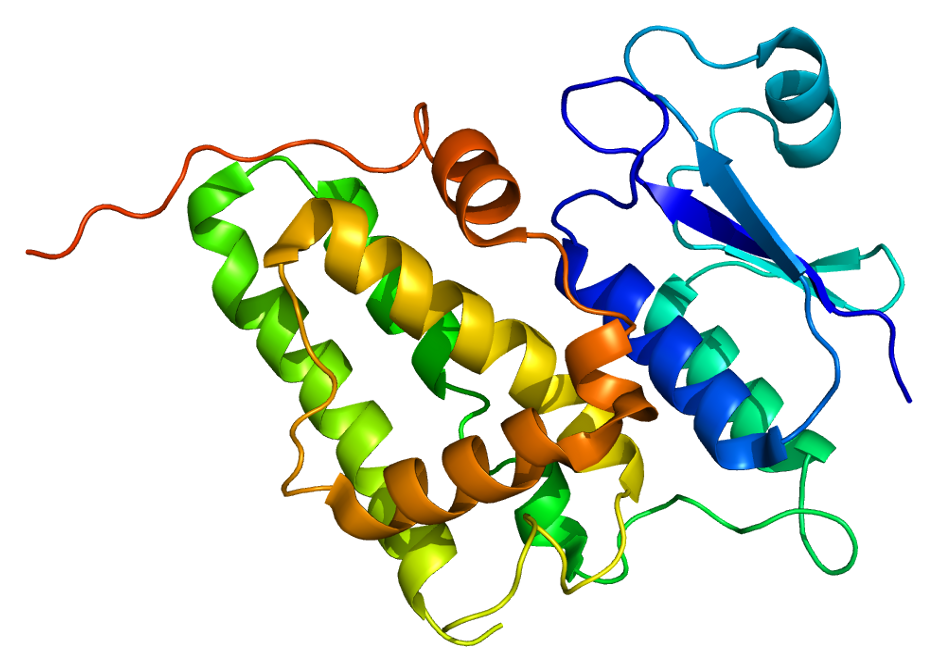
Chloride intracellular channel 4, also known as CLIC4,p644H1,HuH1, is a eukaryotic gene.
Chloride channels are a diverse group of proteins that regulate fundamental cellular processes including stabilization of cell membrane potential, transepithelial transport, maintenance of intracellular pH, and regulation of cell volume. Chloride intracellular channel 4 (CLIC4) protein, encoded by the clic4 gene, is a member of the p64 family; the gene is expressed in many tissues. These channels are implicated in angiogenesis, pulmonary hypertension, cancer, and cardioprotection from ischemia-reperfusion injury. They exhibit an intracellular vesicular pattern in PANC-1 cells (pancreatic cancer cells).
CLIC4 binds to dynamin I, α-tubulin, β-actin, creatine kinase and two 14-3-3 isoforms.
This article incorporates text from the United States National Library of Medicine, which is in the public domain.
Hub AI
CLIC4 AI simulator
(@CLIC4_simulator)
CLIC4
Chloride intracellular channel 4, also known as CLIC4,p644H1,HuH1, is a eukaryotic gene.
Chloride channels are a diverse group of proteins that regulate fundamental cellular processes including stabilization of cell membrane potential, transepithelial transport, maintenance of intracellular pH, and regulation of cell volume. Chloride intracellular channel 4 (CLIC4) protein, encoded by the clic4 gene, is a member of the p64 family; the gene is expressed in many tissues. These channels are implicated in angiogenesis, pulmonary hypertension, cancer, and cardioprotection from ischemia-reperfusion injury. They exhibit an intracellular vesicular pattern in PANC-1 cells (pancreatic cancer cells).
CLIC4 binds to dynamin I, α-tubulin, β-actin, creatine kinase and two 14-3-3 isoforms.
This article incorporates text from the United States National Library of Medicine, which is in the public domain.
Recent media