Hubbry Logo
Type IV collagenType IV collagenMain
Open search
Type IV collagen
Community hub
Type IV collagen
logo
7 pages, 0 posts
0 subscribers
Be the first to start a discussion here.
Type IV collagen
Type IV collagen
from Wikipedia

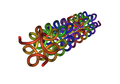
Collagen IV (ColIV or Col4) is a type of collagen found primarily in the basal lamina. The collagen IV C4 domain at the C-terminus is not removed in post-translational processing, and the fibers link head-to-head, rather than in parallel. Also, collagen IV lacks the regular glycine in every third residue necessary for the tight, collagen helix. This makes the overall arrangement more sloppy with kinks. These two features cause the collagen to form in a sheet, the form of the basal lamina. Collagen IV is the more common usage, as opposed to the older terminology of "type-IV collagen".[citation needed] Collagen IV exists in all metazoan phyla, to whom it served as an evolutionary stepping stone to multicellularity.[1]

There are six human genes associated with it:[2]

Function

[edit]

Type IV collagen is a type of collagen that is responsible for providing a scaffold for stability and assembly. It is also predominantly found in extracellular basement membranes.[3] It aids in cell adhesion, migration, survival, expansion, and differentiation.[4]

Synthesis

[edit]

To begin, this type of collagen is synthesized by the assembly of a specific trimer, when the three NC1 domains initiate molecular interactions between the three α-chains. Protomer trimerization then proceeds from the carboxy terminus to yield the fully assembled protomer. The next step in assembly is collagen IV dimerization. Two collagen IV protomers associate through the carboxy-terminal NC1 trimer to form the NC1 hexamer. These interactions form the core of the type IV collagen scaffold. The scaffold evolves into a collagen IV superstructure by "end-to-end" and lateral connections between collagen IV protomers. The collagen molecule is then formed. Lastly, the type IV collagen molecules bind together to form a complex protein network.[3]

To summarize, the process of collagen synthesis occurs mainly in the cells of fibroblasts which are specialized cells with the main function of synthesizing collagen. Collagen synthesis occurs both intracellularly and extracellularly.[5] However, when looking specifically at type IV collagen, it is mostly synthesized extracellularly.

Structure

[edit]

The C4 Domain at the C-terminus is not removed in the post-translational process, and as a result, the structure of the fibers are linked in a "head-to-head" format instead of in a parallel fashion.[3] It also lacks a glycine in every third amino acid residue that is responsible for the tight collagen helix, as a result it will be more flexible and kinked than other types of collagen.[3]

How does Type IV collagen differ from Type I collagen?

[edit]

The most common collagen is type I collagen which makes up 90% of all collagen. It is found in all dermal layers at high proportions while type IV collagen is only found at the basement membrane of the epidermal junction.[6] Despite their differences in commonality, they are both strongly altered during aging or cancer progression.[citation needed]

Clinical significance

[edit]

Depending on genetic and nongenetic factors including alterations in gene expression, splice variations, post-translational modifications, and the chain-specific assembly of particular α-chains, different organs can be affected during their development and in the adult life span.[2]

Collagen IV has been the focus of extensive research ranging from biochemistry perspectives, to pathology, and genetic disorders. This is the only collagen type that is encoded by six different genes. The six α-chains of collagen IV can recognize each other with incredible specificity and will assemble into unique heterotrimers. After secretion into the extracellular membrane, these molecules will further interact to form higher molecular organizations. These, along with other proteins, will form unique basement membranes in tissue-specific manners. Through interactions with specific cellular receptors such as integrins, the basement membrane collagen IV networks not only provide structural support to the cells and tissues, but they also affect the biological rate during and after the development. New discoveries keep unraveling information about genetic mutations, biosynthesis, molecular assembly, and network formation of type IV collagen, and this increases the understanding of the critical role of this collagen in health and disease.[2]

Goodpasture syndrome

[edit]

The alpha-3 subunit (COL4A3) of collagen IV is thought to be the antigen implicated in Goodpasture syndrome, wherein the immune system attacks the basement membranes of the glomeruli and the alveoli upon the antigenic site on the alpha-3 subunit becoming unsequestered due to environmental exposures.[citation needed]

Goodpasture syndrome presents with nephritic syndrome and hemoptysis. Microscopic evaluation of biopsied renal tissue will reveal linear deposits of Immunoglobulin G by immunofluorescence. This is classically in young adult males.

Alport syndrome

[edit]

Mutations to the genes COL4A3, COL4A4 and/or COL4A5 coding for collagen IV lead to Alport syndrome. This will cause thinning and splitting of the glomerular basement membrane. It may present as isolated hematuria, sensorineural hearing loss, and ocular disturbances and is passed on genetically in an autosomal dominant, autosomal recessive, or X-linked manner.

Liver disease

[edit]

Liver fibrosis and cirrhosis are associated with the deposition of collagen IV in the liver. Serum collagen IV concentrations correlate with hepatic tissue levels of collagen IV in subjects with alcoholic liver disease and hepatitis C and fall following successful therapy.[7][8]

HANAC syndrome

[edit]

Mutations in COL4A1 exons 24 and 25 are associated with HANAC (autosomal dominant hereditary angiopathy with nephropathy, aneurysms, and muscle cramps).[9] It has also been confirmed that mutations in the COL4A1 gene occur in some patients with porencephaly and schizencephaly.[10][11]

Congenital cataract

[edit]

In humans, a novel mutation of the COL4A1 gene coding for collagen type IV was found to be associated with autosomal dominant congenital cataract in a Chinese family. This mutation was not found in unaffected family members or in 200 unrelated controls. In this study, sequence analysis confirmed that the Gly782 amino acid residue was highly conserved.[12] This report of a new mutation in the COL4A1 gene is the first report of a non-syndromic autosomal dominant congenital cataract that highlights an important role for collagen type IV in the physiological and optical properties of the lens.[12]

Cardiovascular disease

[edit]

Type IV collagen is a main component of basement membranes in various tissues (arteries included).[13]

Over the past decade, studies have repeatedly found single-nucleotide polymorphisms located in the collagen ( COL) 4A1 and COL4A2 genes to be associated with cardiovascular disease, and the 13q34 locus harboring these genes is one of the 160 genome-wide significant risk loci for coronary artery disease. COL4A1 and COL4A2 encode the α1- and α2-chains of collagen type IV. This is a major component of basement membranes in various tissues including arteries. There are clinical reports linking 13q34 to coronary artery disease, atherosclerosis, and artery stiffening from experimental studies based on vascular cells and tissue.[13]

Additionally, in the cardiovascular field, the COL4A1 and COL4A2 regions on chromosome 13q34 are a highly replicated locus for coronary artery disease. In a normal wall of arteries, collagen type IV acts to inhibit smooth muscle cell proliferation. Accordingly, it was demonstrated that protein expression of collagen type IV in human vascular smooth muscle cells is regulated by both SMAD3 protein and TGFβ mediated stimulation of mRNA.[14] Altogether, it was concluded that the pathogenesis of coronary artery disease may be regulated by COL4A1 and COL4A2 genes.[14]

Pancreatic cancer cells

[edit]

This type of collagen can cause an increase in pancreatic cancer cells and is able to inhibit apoptosis through an autocrine loop.[4]

This autocrine loop provides essential cell survival signals to the pancreatic cancer cells.[4]

Type IV collagen is expressed close to the cancer cells in vivo, forming basement membrane like structures on the cancer cell surface that colocalize with the integrin receptors. The interaction between type IV collagen produced by the cancer cell, and integrins on the surface of the cancer cells, are important for continuous cancer cell growth, maintenance of a migratory phenotype, and for avoiding apoptosis.[4]

Scurvy

[edit]

Scurvy is a nutritional deficiency of water-soluble vitamin C or ascorbic acid. It is rare in the developing world and is mostly seen in infants, the elderly, and alcoholics, all who may have inadequate nutritional intake and malnutrition.[5]

Patients may present with general fatigue, weakness, poor wound healing, anemia, and gum disease. Clinically, one of the first signs of scurvy occurs on the skin and manifests as perifollicular hemorrhage where follicles of the skin are plugged with keratin. These areas appear as bruise-like spots around the hair follicles. There can also be fragile hairs arranged in a corkscrew confirmation.[5]

A lack of ascorbic acid leads to epigenetic DNA hypermethylation and inhibits the transcription of various types of collagen found in skin, blood vessels, and tissue.[15]

Collagen hybridizing peptides

[edit]

Collagen, the major structural component of nearly all mammalian tissues, undergoes extensive proteolytic remodeling during developmental states and a variety of life-threatening diseases such as cancer, myocardial infarction, and fibrosis. While degraded collagen could be an important marker of tissue damage, it is difficult to detect and target using conventional tools. As a result, a collagen hybridizing peptide is specifically hybridized to the degraded, unfolded collagen chains, can be used to image degraded collagen and inform tissue remodeling activity in various tissues.[16]

Labeled with 5-carboxyfluorescein and biotin, the collagen hybridizing peptide can enable direct localization and quantification of collagen degradation in isolated tissues within pathologic states ranging from osteoarthritis and myocardial infarction, to glomerulonephritis and pulmonary fibrosis, as well as in normal tissues during developmental programs associated with embryonic bone formation and skin aging.[16]

The general correlation between the level of collagen remodeling and the amount of denatured collagen in tissue, show that the collagen hybridizing peptide probes can be used across species and collagen types (including type IV collagen), providing a versatile tool for not only pathology and developmental biology research, but also disease diagnosis via histology.[16]

An autosomal recessive encephalopathy associated with mutations in this gene has also been reported.[17]

Increased glomerular and mesangial deposition of collagen IV occurs in diabetic nephropathy and increased urinary levels are associated with the extent of renal injury.[18]

See also

[edit]
  • Spongin, a variant of this collagen type found in some animals

References

[edit]
[edit]
Revisions and contributorsEdit on WikipediaRead on Wikipedia
from Grokipedia
Type IV collagen is a specialized, network-forming collagen that serves as the principal structural protein of basement membranes, the thin extracellular matrix layers that underlie epithelial and endothelial cells and provide essential support to tissues throughout the body. Composed of six genetically distinct α-chains (α1–α6), encoded by the paired genes COL4A1COL4A6 located on chromosomes 13q34, 2q36–37, and Xq22 respectively, it assembles into three distinct heterotrimeric protomers: [α1(IV)]₂α2(IV), α3(IV)α4(IV)α5(IV), and [α5(IV)]₂α6(IV). These ~390 nm rod-like molecules feature an N-terminal 7S domain for end-to-end assembly, a central collagenous triple-helical domain rich in Gly-X-Y repeats (where X and Y are often and ), and a C-terminal non-collagenous NC1 domain that initiates chain-specific trimerization in the . In the , the protomers polymerize laterally via NC1-NC1 interactions and longitudinally through 7S-7S associations, forming a planar, sheet-like scaffold that integrates with laminins, nidogens, and proteoglycans to create mature basement membranes. This network is further stabilized by covalent crosslinks, including sulfilimine bonds between and hydroxylysine residues in the collagenous domain, as well as bonds in the NC1 domain of the α3α4α5 protomer, conferring tensile strength and resistance to proteolytic degradation. The α1α1α2 network is ubiquitously expressed across tissues, providing general mechanical support, while the α3α4α5 and α5α5α6 networks are enriched in specialized sites like the of the , where they enable and size-selective barrier functions. Beyond structural roles, type IV collagen modulates cellular processes by binding (such as α1β1 and α2β1) on cell surfaces, promoting , migration, proliferation, and differentiation essential for embryonic development, tissue repair, and organ homeostasis. Proteolytic fragments, termed matrikines (e.g., arresten from α1, tumstatin from α3, and canstatin from α2), exhibit potent anti-angiogenic activity by inhibiting endothelial and signaling, influencing processes like and tumor suppression. Dysregulation, including mutations in COL4A3COL4A5 or autoantibodies targeting the α3 NC1 domain, underlies hereditary disorders such as (characterized by , , and ocular abnormalities) and autoimmune conditions like .

Overview

Definition and composition

Type IV collagen is a specialized member of the collagen superfamily that serves as the predominant structural protein in membranes, assembling into planar, sheet-like networks that provide tensile strength and selective permeability, distinct from the rope-like of collagens such as types I and III. Unlike fibrillar collagens, which rely on a continuous triple-helical structure for linear polymerization, type IV collagen features interrupted helices and globular domains that enable lateral associations into two-dimensional lattices. This architecture underpins its role as the foundational scaffold in membranes, integrating other components like laminins and proteoglycans. First isolated in the 1960s from the of bovine kidneys by Nicholas A. Kefalides, type IV collagen was recognized as a novel, non-fibrillar variant based on its solubility in acidic conditions and lack of typical collagen banding patterns under . Subsequent biochemical analyses confirmed its unique composition and widespread distribution in epithelial and endothelial basement membranes across tissues. In vertebrates, including humans, type IV collagen comprises six α-chains (α1–α6), each encoded by distinct genes: COL4A1 and COL4A2 on , COL4A3 and COL4A4 on , and COL4A5 and COL4A6 on the . These chains form three specific heterotrimeric protomers—[α1]₂α2, α3α4α5, and [α5]₂α6—that exhibit tissue-specific expression and contribute to the functional diversity of basement membranes. Type IV collagen networks are evolutionarily ancient, present in all metazoans from sponges to mammals, where they first enabled the formation of organized multicellular structures.

Evolutionary aspects

Type IV collagen is highly conserved across all metazoan phyla, with orthologous genes and proteins identified from basal groups such as ctenophores, sponges, placozoans, and cnidarians to vertebrates including humans, underscoring its fundamental role in animal architecture. This conservation extends to structural domains like the N-terminal 7S region, the collagenous , and the C-terminal NC1 domain, which are homologous across these lineages. In contrast, type IV collagen is absent in non-metazoan eukaryotes, including fungi and , as well as in unicellular relatives of animals like choanoflagellates. The protein emerged in the common ancestor of metazoans over 600 million years ago, during the late era, marking a key innovation in the transition from unicellular to multicellular life. This timing aligns with the appearance of early animal fossils and the development of basement membranes, specialized extracellular matrices that provided structural support for epithelial tissues and enabled the organization of multicellular body plans. In basal metazoans like homoscleromorph sponges and ctenophores, type IV collagen already formed network-like structures analogous to modern basement membranes, suggesting its primordial function in compartmentalizing tissues. Variations in the number and composition of alpha chains reflect evolutionary adaptations to increasing organismal complexity. typically encode fewer alpha chains, such as two in (encoded by two s, vkg and Cg25C, producing alpha1 and alpha2), compared to the six alpha chains (α1–α6) in vertebrates. Vertebrate-specific expansions, including the α5 and α6 chains unique to vertebrates, arose through gene duplications and allow for specialized heterotrimeric networks tailored to diverse tissue requirements, such as in the . In humans, these six alpha chains assemble into distinct protomers like α1·α1·α2 and α5·α6·α5, highlighting the diversification from simpler invertebrate forms. The evolutionary trajectory of type IV collagen parallels the around 540 million years ago, when fossil evidence reveals a rapid increase in bilaterian animal diversity and tissue complexity, including structured epithelia supported by basement membranes. This period saw the proliferation of alpha chain isoforms in emerging bilaterians, facilitating more sophisticated extracellular scaffolds that accommodated the morphological innovations observed in early fossils, such as organized body plans in arthropods and chordates.

Structure

Subunits and genetic basis

Type IV collagen is composed of six genetically distinct α-chains (α1–α6), each encoded by one of the COL4A1–COL4A6 genes arranged in three paralogous pairs. The COL4A1 and COL4A2 genes are located on chromosome 13q34 in a head-to-head orientation, COL4A3 and COL4A4 on chromosome 2q36–q37, and COL4A5 and COL4A6 on Xq22. Each gene spans approximately 150–290 kb and contains 46–52 exons, reflecting their evolutionary duplication and conservation across mammals. The α-chains are synthesized as pro-α-chains with a molecular weight of approximately 180 , comprising three principal domains that dictate their assembly. The N-terminal 7S domain (~25 ) is rich in and residues, including three cysteines per chain that form interchain bonds to enable dimerization of two protomers. The central collagenous domain (~1410 residues) features a repeating Gly-X-Y triplet sequence characteristic of collagens, with ~22–27 interruptions that introduce flexibility and facilitate higher-order network formation. The C-terminal non-collagenous NC1 domain (~230 residues) contains conserved motifs for specific chain recognition and trimerization initiation.70203-6/fulltext) These pro-α-chains assemble intracellularly into three distinct heterotrimeric protomers: the ubiquitous α1·α1·α2 in most basement membranes, the specialized α3·α4·α5 in glomerular and some vascular basement membranes, and the α5·α5·α6 in epidermal and alveolar basement membranes. Chain selection is directed by complementary interactions in the NC1 domains, ensuring stoichiometric precision (e.g., two α1 and one α2 in the first protomer). These protomers serve as building blocks for the type IV collagen network. Post-translational modifications are critical for stability and function, including enzymatic of (to 4-hydroxyproline) and (to hydroxylysine) residues in the Gly-X-Y repeats for triple-helix stabilization, O-linked on hydroxylysines, and N-linked glycosylation in the NC1 domain. Disulfide bonds, particularly the three in the 7S domain and additional ones in NC1, chains and protomers, preventing misfolding. These modifications occur co- or post-translationally and are conserved across α-chains.

Molecular domains and assembly

Type IV collagen molecules, known as protomers, are composed of three intertwined α-chains that form a long triple-helical collagenous domain flanked by specialized N- and C-terminal noncollagenous domains. The collagenous domain features a repeating Gly-X-Y sequence, where X is often and Y is often , but includes multiple interruptions in this triplet pattern that introduce kinks and enhance flexibility, distinguishing it from the more rigid fibrillar collagens. These Gly interruptions, occurring approximately every 15-20 triplets, create hinge regions that allow the protomer to bend and adapt to tissue-specific stresses. The N-terminal 7S domain, a short cysteine-rich segment of about 25 , facilitates head-to-head dimerization of protomers through initial sulfhydryl () bonds, ultimately linking four protomers in a tetrameric stabilized by lysyl oxidase-mediated cross-links. At the opposite end, the C-terminal NC1 domain is a globular comprising roughly 230 residues organized into tandem β-sheet subdomains, which drives tail-to-tail trimerization of individual chains within the protomer and subsequent anti-parallel dimerization of two protomers into NC1 hexamers via interlocking β-sheet interactions. These NC1 hexamers also mediate lateral associations between adjacent protomers, enabling branching. The assembly of Type IV collagen follows a hierarchical process beginning intracellularly with the formation of the triple-helical protomer through chain selection and folding, followed by extracellular oligomerization. Protomers first dimerize in an anti-parallel fashion via NC1-NC1 hexamer formation, then two such dimers associate end-to-end at their 7S domains to create a tetramer. Subsequent lateral interactions along the collagenous domains of multiple tetramers promote branching and planar sheet formation, culminating in a supramolecular network. This results in irregular, polygonal scaffolds with an average mesh size of approximately 300 nm, featuring flexible hinges at Gly interruption sites that permit deformation and tissue adaptation without fracturing. Network properties vary by α-chain composition: the α1α1α2 heterotrimer assembles into flexible, planar networks with more pronounced and fewer cross-links, supporting diverse basement membranes, whereas the α3α4α5 heterotrimer forms rigid, highly cross-linked structures optimized for mechanical stability in filtration barriers such as the .

Intracellular processing

The biosynthesis of Type IV collagen begins with the transcription of its six α-chain genes (COL4A1–COL4A6), which are organized in pairs (e.g., COL4A1/COL4A2, COL4A3/COL4A4, COL4A5/COL4A6) and regulated by bidirectional promoters to ensure coordinated expression. These genes are expressed in specific cell types, including fibroblasts and endothelial cells, where the resulting mRNAs are translated into pro-α chains within the (ER). The pro-α chains consist of a central Gly-X-Y repeat domain flanked by non-collagenous N-terminal (7S) and C-terminal (NC1) domains. Following translation, the pro-α chains undergo essential post-translational modifications in the ER. The nascent chains are translocated into the ER via a , which is subsequently cleaved. of (at the 4-position by prolyl 4-hydroxylases such as P4HA1 and P4HA2, and at the 3-position by prolyl 3-hydroxylase 2) and (by lysyl hydroxylase 3, LH3) residues in the Gly-X-Y repeats is critical for stability; these reactions require ascorbic acid () as a cofactor. Additionally, hydroxylysine residues are glycosylated, primarily with glucosyl-galactosyl-hydroxylysine disaccharides by LH3 and galactosyl-hydroxylysine by GLT25D1, affecting approximately 90% of hydroxylysine sites and influencing chain interactions. Triple helix formation nucleates at the C-terminal NC1 domains through chain-specific recognition and domain swapping, followed by zipper-like propagation toward the N-terminal 7S domains. This process is facilitated by molecular chaperones, including HSP47, which binds to the folded to prevent aggregation and promote proper assembly, and (PDI), which catalyzes disulfide bond formation in the 7S domain to stabilize the structure. Quality control mechanisms in the ER ensure only properly folded protomers proceed to secretion. Misfolded chains are retained in the ER, often bound by chaperones like HSP47, and targeted for degradation via ER-associated degradation (ERAD), which involves retrotranslocation to the for proteasomal breakdown. Correctly assembled triple-helical protomers are packaged into vesicles with the aid of TANGO1 and transported through the Golgi apparatus for secretion.

Extracellular polymerization

Following from cells, Type IV collagen protomers—pre-assembled intracellularly as triple helices—undergo extracellular dimerization primarily through their N-terminal 7S domains, where four protomers align to form a tetrameric structure stabilized by bonds and lysyl oxidase-like 2 (LOXL2)-mediated cross-links between residues, enhancing mechanical stability in the . These anti-parallel dimers overlap at the 7S region, creating a foundational scaffold for further network formation, with extracellular ions (Cl⁻) acting as a conformational switch to facilitate initial associations by modulating salt bridges in the domains. Network expansion occurs via lateral associations of these dimers through the C-terminal non-collagenous 1 (NC1) domains, where two protomers dimerize to form NC1 hexamers stabilized by sulfilimine bonds catalyzed by peroxidasin in the presence of ions, allowing incorporation of multiple protomers into planar sheets that tessellate into a chicken-wire-like lattice. Unlike fibrillar collagens such as Type I, Type IV collagen does not require proteolytic cleavage of N- and C-terminal propeptides for maturation; instead, the 7S and NC1 domains are retained to drive this process, with minor site-specific cleavages occurring later during tissue remodeling. This polymerization is influenced by local environmental factors, such as higher extracellular Cl⁻ concentrations promoting efficient hexamer formation during . The resulting Type IV collagen networks integrate with other (ECM) components to form mature , primarily through binding interactions with via nidogen (entactin), which bridges the two networks, and with heparan sulfate proteoglycans like and agrin, whose chains mediate electrostatic attachments to the collagen lattice. These associations stabilize the supramolecular architecture, with nidogen binding independently to both Type IV collagen and to promote ternary complex formation essential for integrity. Polymerization and network maintenance are regulated by matrix metalloproteinases (MMPs), such as MMP-2 and MMP-9, which degrade Type IV collagen during ECM remodeling, balanced by tissue inhibitors of metalloproteinases (TIMPs) that prevent excessive breakdown and preserve scaffold stability. This dynamic equilibrium allows adaptation to tissue-specific demands, though rates may vary by organ, with glomerular basement membranes exhibiting particularly robust cross-linking for filtration function.

Function

Role in basement membranes

Type IV collagen forms the essential structural scaffold of basement membranes, assembling into a planar, covalently crosslinked network that imparts tensile strength and mechanical stability to these thin extracellular matrices underlying epithelia, endothelia, and muscle cells. This network, often described as a chicken-wire lattice, integrates with other components like to create a resilient platform that supports tissue architecture and withstands physiological stresses. In specialized contexts such as the , the collagen IV mesh exhibits a pore size of approximately 5-10 nm, functioning as a size- and charge-selective that regulates filtration of molecules while permitting passage of water and small solutes. The distribution of type IV collagen is widespread across basement membranes in various tissues, ensuring their integrity in diverse physiological settings. The α1α1α2(IV) heterotrimer predominates in most vascular, alveolar, epidermal, and general interstitial membranes, providing a foundational network for broad . In contrast, the α3α4α5(IV) heterotrimer is more restricted, concentrating in specialized sites such as the of the , the cochlear basement membrane of the ear, and the lens capsule and other ocular basement membranes of the eye, where it contributes to precise barrier functions tailored to organ-specific demands. This isoform-specific localization underscores the adaptability of type IV collagen networks to varying tissue requirements. Mechanically, type IV collagen confers elasticity through flexible kinks introduced by noncollagenous interruptions in its triple-helical domains, allowing the network to deform under stress without fracturing, while sulfilimine and cross-links enhance its resistance to and overall durability. These properties are critical for maintaining and enabling dynamic tissue remodeling. During embryogenesis, type IV collagen plays a pivotal role in organ development by stabilizing nascent s and guiding epithelial-mesenchymal interactions, which orchestrate , polarization, and tissue stratification essential for forming complex structures like kidneys and lungs. Its absence in early development leads to severe disruptions in integrity, highlighting its indispensable function in embryonic tissue organization.

Interactions with cells and matrix

Type IV collagen facilitates primarily through interactions with such as α1β1 and α2β1, which recognize specific motifs within the triple helical domain and the non-collagenous (NC1) domain of the collagen molecule. These bindings enable anchorage of various cell types, including endothelial and epithelial cells, to membranes, supporting tissue integrity and cellular positioning. Additionally, the NC1 domain of the α1 chain binds α1β1 to mediate anti-angiogenic in endothelial cells. While dystroglycan and Lutheran group glycoprotein contribute to , their interactions with type IV collagen occur indirectly through associated components like and . Through these adhesion mechanisms, type IV collagen activates intracellular signaling pathways that regulate cell behavior. Binding to integrins triggers focal adhesion kinase (FAK) phosphorylation, which in turn activates the PI3K/Akt pathway to promote cell proliferation, migration, and differentiation in various cell types, including neuronal progenitors and muscle cells. For instance, native type IV collagen induces FAK and Akt activation via discoidin domain receptor 1 (DDR1) and epidermal growth factor receptor (EGFR), enhancing migration in smooth muscle cells. In endothelial cells, type IV collagen exerts anti-apoptotic effects by inhibiting sustained FAK phosphorylation and preventing apoptosis induced by high-molecular-weight kininogen fragments. Type IV collagen engages in cross-talk with other extracellular matrix components to stabilize basement membranes and modulate cellular responses. It interacts with through nidogen bridges, forming a interconnected network that enhances mechanical stability and facilitates . Nidogen-1 binds with high affinity to both type IV collagen and , bridging their networks in all basement membranes. Type IV collagen also associates with and , promoting and influencing migration; for example, mediates skeletal muscle cell attachment to type IV collagen. In , proteolytic fragments of type IV collagen, such as tumstatin derived from the α3 chain, inhibit VEGF-induced endothelial , migration, and tube formation by binding to αvβ3 and suppressing downstream signaling pathways like FAK and p38 MAPK, thereby modulating vessel formation. Dynamic remodeling of type IV collagen is crucial for physiological and pathological processes, involving (MMP)-mediated degradation. MMP-2 and MMP-9 (type IV collagenases) cleave type IV collagen in basement membranes, enabling cell invasion during by allowing epithelial and migration into the provisional matrix. In tumor progression, upregulated MMPs degrade type IV collagen, facilitating cancer cell invasion and by breaching basement membrane barriers around vessels and glands. This degradation exposes cryptic sites that can further promote angiogenic signaling, linking matrix turnover to disease advancement.

Comparisons with Other Collagens

Key differences from Type I collagen

Type IV collagen and Type I collagen exhibit fundamental structural differences that underlie their distinct roles in extracellular matrix organization. Type IV collagen assembles into planar, branching networks rather than linear fibrils, facilitated by interruptions in its Gly-X-Y repeat sequence—up to 21–26 per chain—that introduce flexibility and kinks, contrasting with the continuous triple helix of Type I collagen, which enables a rigid, staggered overlap arrangement for fibril formation with a 64–67 nm banding periodicity. The protomeric unit of Type IV collagen measures approximately 400 nm in length, allowing for extensive lateral associations, whereas individual Type I collagen molecules are about 300 nm long but aggregate into bundled fibrils that provide mechanical rigidity. Compositionally, Type IV collagen forms heterotrimeric protomers composed of chains selected from six distinct α isoforms (α1–α6), such as [α1(IV)]₂α2(IV), which incorporate specialized non-collagenous domains for network stabilization, in contrast to the more uniform homotrimeric or heterotrimeric structure of , typically [α1(I)]₂α2(I), relying on high and content for helical stability. Unlike , which features short telopeptide regions at its N- and C-termini that are cleaved during maturation to enable initial cross-linking, Type IV collagen lacks these telopeptides and instead uses its 7S (N-terminal) and NC1 (C-terminal) domains for oligomerization and cross-linking via sulfilimine bonds or hydroxylysine-methionine linkages. Functionally, Type IV collagen contributes to the formation of sheet-like membranes that support selective filtration, , and signaling in tissues like kidneys and , owing to its flexible, kinked architecture that accommodates dynamic interactions. In opposition, Type I collagen predominates in fibrillar arrays within connective tissues such as , tendons, and , where its rigid, tensile structure imparts high mechanical strength and resistance to deformation. These divergent architectures ensure Type IV collagen's role in planar scaffolds for epithelial-mesenchymal interfaces, while Type I collagen excels in load-bearing fibrous networks. In biosynthesis, both collagens undergo intracellular trimerization through chain association and in the , but Type IV collagen emphasizes complete protomer folding intracellularly prior to , with subsequent extracellular driven by 7S tetramer and NC1 hexamer interactions to form networks. , by comparison, features partial intracellular assembly of procollagen trimers, followed by extensive extracellular processing, including propeptide cleavage by N- and C-proteinases and fibril nucleation via telopeptide-mediated overlaps, with cross-linking primarily by lysyl oxidase. This shifts more of 's higher-order assembly to the , adapting to its fibrillar destiny.

Relations to other types

Type IV collagen shares certain structural features with the minor fibrillar collagens Types V and XI, including triple-helical domains that are shorter or interrupted compared to major fibrillar collagens, which facilitates regulatory roles in assembly. Specifically, Types V and XI participate in nucleating and regulating the diameter of collagen during tissue development, such as in and , by co-assembling with Type I or II collagens to initiate fibrillogenesis. However, unlike Types V and XI, which contribute to formation, Type IV collagen lacks the ability to form and instead assembles into non-fibrillar networks. Type IV collagen belongs to the network-forming subgroup of collagens, alongside Types VI, VIII, and X, all of which assemble into supramolecular structures distinct from . Type VI collagen forms beaded filaments with periodic globular domains that link cells to the surrounding matrix, while Types VIII and X create more regular hexagonal networks; Type VIII is prominent in the of the , and Type X in hypertrophic of the growth plate. In certain basement membranes, such as those in the eye, Type IV co-assembles with Type VIII to reinforce the network structure, providing tissue-specific stability. Evolutionarily, these network-forming collagens trace back to a common ancestral adapted for specialized extracellular scaffolds, with Type IV representing the most ancient and ubiquitous member. Type IV collagen interacts with Types XV and XVIII, which are multiplexin collagens containing endostatin-like domains, by anchoring them within membranes and pericellular matrices to bridge fibrillar collagens and the underlying network. These interactions position Types XV and XVIII to modulate vascular processes, as their C-terminal fragments (endostatins) inhibit upon proteolytic release. What distinguishes Type IV from these and other non-fibrillar collagens is its unique capacity to form extensive, planar sheet-like networks that serve as the foundational scaffold of all membranes, whereas Types VI, VIII, X, XV, and XVIII play more auxiliary or localized roles in matrix organization. In contrast to fibrillar collagens, Type IV's interrupted helical structure prevents linear aggregation.

Clinical Significance

Renal and autoimmune disorders

Type IV collagen defects play a central role in several renal disorders, particularly those involving (GBM) abnormalities. , a hereditary condition, arises from mutations in the COL4A3, COL4A4, or COL4A5 genes, which encode the α3, α4, and α5 chains of type IV collagen, respectively. These mutations disrupt the assembly of the α3α4α5 network in the GBM, leading to progressive thinning, splitting, and lamellation of the membrane. Clinically, this manifests as persistent microscopic , , and eventual end-stage renal disease (ESRD), with renal failure occurring in approximately 90% of males with X-linked forms by age 40 and variable progression in autosomal forms. The X-linked variant, caused by COL4A5 mutations on the , accounts for about 80-85% of cases, while autosomal recessive (homozygous or compound heterozygous COL4A3/A4) and dominant forms comprise the remainder. Prevalence estimates range from 1:5,000 to 1:53,000 worldwide, with higher detection in populations screened for . Recent classifications propose "Type IV collagen-associated nephropathy" to describe the broader spectrum of COL4A3/A4/A5-related diseases, including and thin nephropathy. Thin basement membrane nephropathy (TBMN), often considered a carrier state or mild form of Alport syndrome, results from heterozygous mutations in COL4A3 or COL4A4, leading to uniform thinning of the GBM without the splitting seen in full Alport syndrome. This condition typically presents with isolated benign microscopic hematuria, which persists lifelong but rarely progresses to significant proteinuria or renal failure, affecting about 1% of the general population based on genetic variant prevalence in large cohorts. However, a subset of patients may develop hypertension or mild renal impairment over time, highlighting the spectrum of collagen IV-related nephropathies. Diagnosis relies on electron microscopy showing GBM thickness below 250 nm and genetic confirmation of heterozygous variants. In contrast, represents an autoimmune disorder targeting type IV collagen, characterized by autoantibodies against the non-collagenous (NC1) domain of the α3 chain (α3(IV)NC1), which is a key component of the GBM and alveolar . This triggers (RPGN) with crescentic lesions and, in 60-70% of cases, due to linear IgG deposition along . The disease shows strong , with over 80% of patients carrying the HLA-DRB1*15:01 allele, which facilitates presentation of α3(IV)NC1 peptides to autoreactive T cells. Annual incidence is low, at 0.5-1 per million, predominantly affecting young adults and smokers. Diagnosis of these disorders integrates clinical findings, , and molecular testing. For and TBMN, electron microscopy reveals characteristic GBM alterations—thinning in TBMN and basket-weave lamellation in —while is typically negative. via next-generation sequencing of COL4A3/A4/A5 confirms mutations with high sensitivity, enabling early risk stratification and family screening. In , serum anti-GBM antibody assays ( targeting α3(IV)NC1) are diagnostic in 90-95% of cases, supported by showing linear IgG . Post-2023 updates emphasize rituximab as an adjunct or second-line in anti-GBM disease, particularly when is contraindicated; multicenter reviews report improved renal survival (up to 67%) and patient survival (91%) with rituximab combined with and glucocorticoids, reducing relapse rates compared to historical regimens.

Genetic syndromes and developmental defects

Mutations in the COL4A1 gene are the primary cause of hereditary with nephropathy, aneurysms, and muscle cramps (HANAC) syndrome, an autosomal dominant disorder characterized by cerebral small vessel disease, intracranial aneurysms, muscle cramps, and retinal arterial tortuosity. These mutations, often affecting residues in the collagenous domain, disrupt the integrity of vascular membranes, leading to fragility and hemorrhage predisposition. Affected individuals typically present with hyperintensities on MRI indicative of small vessel disease, alongside extracerebral manifestations such as and Raynaud phenomenon, though renal involvement is milder compared to other IV disorders. COL4A1 variants have also been implicated in and , congenital brain malformations resulting from prenatal hemorrhagic events that cause tissue cavitation and clefts. These conditions arise from cerebral hemorrhages due to weakened vascular basement membranes, often detectable via or MRI as periventricular or subcortical lesions. In severe cases, such prenatal insults lead to neurological deficits including , , and motor impairments postnatally. Disruptions in COL4A1 and COL4A2 genes contribute to congenital cataracts by impairing the of the lens capsule, which is essential for lens development and transparency. Mutations in these genes can result in anterior segment dysgenesis, where defective type IV collagen networks fail to support lens epithelial and signaling, leading to opacification during embryogenesis. This ocular may occur in isolation or as part of broader multisystem involvement. Rare associations exist between type IV collagen defects and Walker-Warburg syndrome, a severe form of with cobblestone , eye anomalies, and muscle pathology, where COL4A1 mutations have been identified in select cases. Additionally, emerging evidence links COL4A1 variants to fetal akinesia deformation sequence, a condition involving reduced fetal movements, contractures, and due to disrupted function in and neural tissues. These disorders generally follow autosomal dominant with variable and expressivity, though recessive patterns have been reported in homozygous cases, highlighting the allelic heterogeneity of collagen IV genes.

Role in fibrosis, cancer, and metabolic diseases

Type IV collagen plays a pivotal role in the of , where its excessive deposition contributes to tissue stiffening and dysfunction. In liver , liver sinusoidal endothelial cells promote the accumulation of type IV collagen, leading to sinusoidal remodeling and during fibrotic progression. This overdeposition involves upregulation of the α1α1α2 network, the predominant heterotrimer in membranes, which exacerbates accumulation in response to chronic injury. Similarly, in , an imbalance in matrix metalloproteinases (MMPs) and their inhibitors results in reduced degradation of type IV collagen α1 and α2 chains, promoting persistent matrix stiffening and alveolar scarring. Degradation fragments of these chains serve as biomarkers of ongoing fibrotic activity, highlighting the dynamic remodeling in this condition. In cancer, alterations in type IV collagen networks facilitate tumor progression and . Fragmentation of membranes, often due to MMP-mediated cleavage, disrupts the structural barrier and enables into surrounding stroma. For instance, in pancreatic ductal , elevated expression of COL4A1 in tumor-associated endothelial cells enhances collagen signaling, promoting tumor , migration, and . The non-collagenous domain 1 (NC1) fragment from the α3 chain, known as tumstatin, exhibits anti-angiogenic properties by inhibiting endothelial and vascularization, thereby suppressing tumor growth; however, its downregulation in advanced cancers correlates with increased . Recent studies since 2023 have identified COL4A1 as a potential for , with its overexpression linked to poor and peritoneal spread in gastric cancer through weighted analysis. Type IV collagen is implicated in metabolic diseases through disruptions in its assembly and integrity. In scurvy, resulting from vitamin C deficiency, impaired hydroxylation of proline residues in procollagen chains—including type IV—prevents proper triple-helix formation and secretion, leading to weakened basement membrane networks and vascular fragility. This deficiency compromises extracellular matrix stability, contributing to hemorrhagic manifestations. In cardiovascular disease, genetic variants in COL4A1 increase the risk of coronary artery disease by altering collagen IV structure, which promotes arterial stiffening and endothelial dysfunction. Genome-wide association studies have confirmed that single-nucleotide polymorphisms in COL4A1 are associated with pulse wave velocity, a measure of arterial stiffness, and independently predict cardiovascular events. Emerging research highlights type IV collagen's involvement in aging-related extracellular matrix changes and metabolic disorders like non-alcoholic (NAFLD). With advancing age, type IV collagen accumulates in vascular membranes, thickening microvessels and reducing lumen diameter, which contributes to impaired tissue and age-associated . In NAFLD, turnover of type IV collagen increases with disease activity and non-alcoholic steatohepatitis progression, serving as a for staging independent of other histological scores. Recent 2024-2025 investigations have explored type IV collagen-derived NC1 fragments, such as those from the α6 chain, as potential inhibitors of pathological processes; these fragments attenuate endothelial proliferation and , suggesting therapeutic potential in modulating and related metabolic complications.

Diagnostic and emerging therapeutic applications

Diagnostic approaches for Type IV collagen abnormalities primarily involve histopathological techniques to assess chain expression and network structure in affected tissues. using antibodies against specific alpha chains, such as α3(IV), α4(IV), and α5(IV), enables detection of expression patterns in s, particularly in renal biopsies for distinguishing conditions like thin nephropathy from . Electron microscopy provides ultrastructural visualization of the collagen IV network, revealing characteristic lamellation, thickening, or splitting in glomerular s, which supports definitive diagnosis in genetic disorders. hybridizing peptides (CHPs), developed in the as synthetic probes that bind denatured collagen helices, facilitate imaging of degraded Type IV collagen in models of cancer invasion and , offering a non-invasive tool for monitoring matrix remodeling. Biomarkers targeting Type IV collagen turnover aid in disease monitoring and prognosis. Urinary protein biomarkers, including fragments derived from collagen IV degradation, correlate with early glomerular damage in patients, independent of levels, and may predict progression to end-stage renal disease. In , serial measurement of anti-glomerular (anti-GBM) antibody titers, which target the non-collagenous domain of the α3(IV) chain, serves as a sensitive indicator of disease activity and guides immunosuppressive therapy. Therapeutic strategies targeting Type IV collagen focus on correcting genetic defects and modulating its pathological roles. Preclinical using CRISPR-Cas9 to edit COL4A5 mutations in patient-derived podocytes has restored collagen IV assembly in models, with ongoing efforts toward clinical translation as of 2025, including advancements in base editing and delivery systems for hereditary collagen disorders. Tumstatin, a fragment of the α3(IV) chain, inhibits by binding αvβ3 on endothelial cells; synthetic mimics of tumstatin have shown antitumor effects in preclinical cancer models by suppressing vascularization. Inhibitors of lysyl oxidase (), such as β-aminopropionitrile, reduce Type IV collagen crosslinking in fibrotic tissues, alleviating matrix stiffness and progression in liver and cardiac models. Emerging applications post-2023 leverage recombinant Type IV collagen for and personalized interventions. Synthetic scaffolds incorporating recombinant human Type IV collagen promote basement membrane-like structures in , enhancing vascularization and integration in skin and neural repair constructs. Polygenic risk scores including COL4A1 variants identify individuals at heightened risk, where yields amplified benefits by mitigating linked to collagen IV dysregulation.

References

Add your contribution
Related Hubs
User Avatar
No comments yet.