Hubbry Logo
Comb (anatomy)Comb (anatomy)Main
Open search
Comb (anatomy)
Community hub
Comb (anatomy)
logo
8 pages, 0 posts
0 subscribers
Be the first to start a discussion here.
Comb (anatomy)
Comb (anatomy)
from Wikipedia
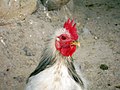
Single comb

A comb is a fleshy growth or crest on the top of the head of some gallinaceous birds, such as domestic chickens. The alternative name cockscomb (with several spelling variations) reflects the fact that combs are generally larger on cock birds than on hens. The comb is one of several fleshy protuberances on the heads of chickens, the others being the wattles and earlobes, which collectively are called caruncles.[citation needed] In turkeys, the caruncles are the fleshy nodules on the head and throat.

Chicken combs are most commonly red, but may also be black or dark purple in breeds such as the Silkie or the Sebright. In other species the color may vary from light grey to deep blue or red.[citation needed]

The comb may be a reliable indicator of health or vigor and is used for mate-assessment in some poultry species.[1]

Types of chicken comb

[edit]

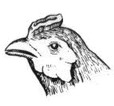
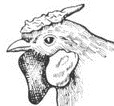
Comb shape varies considerably depending on the breed or species of bird. Of the many types and shapes seen in chicken cocks the principal ones are:[2]: 499 [3]

  • the single comb, extending in a single line from the top of the base of the beak to the back of the head. It consists of a solid vertical part with a series of points or serrations; the size, shape and number of these and the overall shape of the comb are all variable, depending on the breed.[2]: 502 
  • the cup comb or buttercup comb, as seen in the Sicilian Buttercup, a cup-shaped comb with spiked edges.[2]: 500 
  • the cushion comb, as seen in the Chantecler and Silkie, is a compact cushion-shaped mass covered with small protuberances, with a shallow transverse groove across it.[2]: 500 
  • the horn comb or V-comb, as seen in breeds such as the Crèvecœur, La Flèche and Sultan, with two spikes in a V shape starting above the beak, tapering to a point from a thick base.[2]: 501 
  • the leaf comb or shell comb, as seen in the Houdan, which resembles a butterfly with partially-opened wings.[2]: 501 
  • the raspberry comb, as seen in the Orloff, which roughly resembles half a raspberry, cut lengthwise.[2]: 502 
  • the rose comb, as seen in the Hamburg and Wyandotte, broad and fairly fast, covered with small pointed protuberances, with a long backwards-facing spike to the rear.
  • the strawberry or walnut comb, as seen in the Malay, which roughly resembles half a strawberry or walnut.[2]: 503 

In hens, the comb is usually smaller and neater than in the cock.

There are three known genes affecting comb shape: Rose-Comb, Pea-Comb, and Duplex-Comb, which has one allele responsible for buttercup combs and another one responsible for V combs.[4]

In cookery

[edit]

Combs are used in cookery, often in combination with wattles or chicken kidneys.

Combs were formerly used in French cuisine as garnishes. They were also used to prepare salpicons served in vol-au-vents, profiteroles, etc. in which they were often combined with other luxury ingredients such as truffles, sweetbreads, or morels in a cream sauce.

In Italian cuisine, cockscombs are an ingredient of cibreo, a traditional sauce which also includes chicken livers, wattles and unlaid eggs.[5]: 88  It is used in the pasta dish tagliatelli al cibreo and in the main dish ciambella con cibreo.[5]: 468 

Combs are prepared by parboiling and skinning, then cooking in court-bouillon. After preparation, they are greyish. They are often served in Chinese dim sum-style dishes.[citation needed]

Other

[edit]

Because of its bright color and distinctive shape, "cockscomb" also describes various plants, including the florists' plant Celosia cristata, the meadow weed yellow rattle, sainfoin, wild poppy, lousewort, Erythronium and Erythrina crista-galli; the characteristic jester's cap; a shape of pasta (creste di galli); and so on. Hyaluronic acid, which is used in skincare and medical treatments to hydrate and maintain moisture in the skin, is extracted from cockscomb.[6][7]

Spelling variations

[edit]
  • cockscomb
  • cock's comb
  • cock's-comb
  • coxcomb
[edit]

See also

[edit]

References

[edit]
Revisions and contributorsEdit on WikipediaRead on Wikipedia
from Grokipedia
In anatomy, the comb is a distinctive fleshy, vascular protuberance situated atop the head of gallinaceous birds, including chickens (Gallus gallus domesticus), turkeys (Meleagris gallopavo), and pheasants, characterized by its bright red coloration due to abundant blood vessels and soft, pliable texture. It typically emerges early in development and grows prominently in mature individuals, varying in prominence between sexes with males exhibiting larger, more developed combs as a secondary sexual trait. The primary physiological function of the comb is , acting as a heat-dissipating structure where circulates through a network of capillaries to release excess body heat, compensating for birds' inability to sweat like mammals; this mechanism is crucial in maintaining the avian core temperature around 106°F (41°C). Additionally, the comb plays a role in and social signaling, with its size, color, and condition influencing mate attraction and dominance displays among males during breeding seasons. Combs exhibit significant morphological diversity across breeds and species, with at least eight recognized types in chickens alone, each genetically determined and often used to classify varieties in poultry breeding. Common forms include the single comb, a straight, serrated ridge with 5–6 points extending from the beak to the nape; the rose comb, a solid, bumpy plate with a spiked tip; the pea comb, featuring three parallel ridges resembling peas; and the V-shaped comb, consisting of two horn-like projections diverging from a basal point. Less common variants, such as the cushion comb (small and rounded) or walnut comb (furrowed and compact), are breed-specific and contribute to the overall phenotypic diversity in domestic fowl. Beyond and , the comb serves as a reliable in management; a vibrant, plump, and glossy red appearance signals robust circulation, nutritional status, and reproductive activity, particularly in laying hens where peak egg production correlates with intensified coloration. Conversely, , shriveling, or lesions may denote illness, stress, , or nutritional deficiencies, such as inadequate protein or vitamins, prompting veterinary intervention in backyard or commercial flocks. In some contexts, combs are surgically modified (dubbed) to reduce risk in crowded , though this practice raises welfare concerns.

General Overview

Definition and Structure

The comb is a fleshy, caruncle-like protuberance located on the top of the head in gallinaceous birds, such as domestic chickens, turkeys, and pheasants. It consists primarily of fibers arranged in protein bundles, a network of blood vessels, and , lacking feathers or scales on its surface. This structure arises from the skin's dermal and epidermal layers, forming a soft, pliable that attaches at its base near the and extends posteriorly along the midline of the cranium. Combs are highly vascularized, featuring a dense network of capillaries in the superficial just beneath the , supplied by arterioles, while deeper dermal layers contain a sparser vascular arrangement drained by veins. This capillary-rich configuration positions blood vessels close to the surface, facilitating functions such as through and heat dissipation. Although combs vary in height and shape across individuals and species, they consistently originate from the dermal of the cranium, with the overlying contributing to its external form. Combs exhibit , typically larger in males than in females. Embryologically, the comb develops from ectodermal thickenings in the frontonasal process region of the embryonic head, posterior to the nasal area. In chickens, it first appears as a narrow midline , known as the comb-ridge, during the first week of incubation, specifically around embryonic days 6–7 (E6–E7). Development proceeds through proliferation of ectodermal and mesenchymal tissues, with mesenchymal condensations forming dermal papillae that organize the structure into its mature form by E18, just prior to . Genetic factors significantly influence this process; for instance, the dominant rose comb (R) on causes a large inversion leading to ectopic expression of regulatory genes in the comb from E6 to E12, resulting in altered morphology, while the pea comb (P) involves a duplication near SOX5, promoting lateral expansion and multiple ridges. The is anatomically distinct from related head structures in gallinaceous birds, such as wattles—fleshy lobes suspended under the chin—and —flattened patches of skin adjacent to the openings. In some , these appendages, including the , are collectively referred to as caruncles due to their shared fleshy, vascular nature.

Physiological Functions

The comb in chickens serves a primary role in , functioning as a vascular that facilitates heat dissipation in the absence of sweat glands. Through , blood flow to the comb increases during high ambient temperatures, allowing conductive, convective, and radiative heat loss; studies show that comb temperatures can vary by more than 10°C relative to core body , enabling elevations of up to 7-10°C above body levels to enhance cooling efficiency. This mechanism is critical in hot environments, as evidenced by experiments where trimming the comb and wattles led to elevated body temperatures and higher mortality during heat stress episodes averaging 34.6°C. In terms of sexual signaling, the comb acts as a secondary sexual characteristic that conveys information about an individual's , levels, and genetic fitness, particularly in roosters where larger and brighter combs correlate with higher circulating testosterone concentrations. Testosterone stimulates comb growth and coloration, converting to 5α-reduced compounds that promote development, thereby attracting mates and asserting dominance in flocks through visual displays. This signaling is evolutionarily advantageous, as comb size influences and in species like the . The comb also contributes to blood circulation and immune monitoring, featuring a dense network of blood vessels and arteriovenous anastomoses that support peripheral flow and rapid responses to physiological changes. or in the comb can indicate systemic issues such as infections, with immune cells diffusely distributed in healthy combs to facilitate localized responses. Evolutionarily, the comb represents an in gallinaceous birds, derived from display structures in ancestral forms and refined for thermoregulatory and signaling functions suited to their tropical origins in regions like Southeast Asian forests. This vascular crest likely evolved to balance heat management and reproductive display in warm, humid environments where galliform ancestors thrived.

Variation Across Species

Types in Domestic Chickens

In domestic chickens, comb morphology exhibits significant , primarily governed by interactions between the rose comb gene (R) and the pea comb gene (P), with the single comb representing the recessive wild-type form (rrpp). These variations have been selectively bred into distinct types across breeds, influencing appearance and adaptation. The single comb forms a tall, serrated ridge extending from the to the , consisting of a straight row of evenly serrated points. It is the recessive (rrpp) and common in breeds like Leghorns, where it appears in varieties such as Single Comb White and Single Comb Light Brown. The pea comb features three small, pearl-like rows of papillae running parallel along the top of the head, reducing the overall size compared to the single comb. This dominant trait (rrP-) is controlled by in 1 of the SOX5 gene on , which limits comb and wattle development. It is prevalent in breeds such as Brahmas and Sumatras, where it helps mitigate risk in colder environments by minimizing exposed surface area. The rose comb is a compact, solid, and flat structure topped with a row of small spikes at the rear, lacking the deep serrations of the single comb. As a dominant trait (R-pp), it arises from a 7.4 Mb inversion on that disrupts regulation of the MNR2 gene, altering mesenchymal development during embryogenesis. This type is characteristic of Wyandottes and certain Leghorn varieties like Rose Comb White. Walnut comb results from the epistatic interaction of both dominant alleles (R-P-), producing a low, compact, and bumpy structure resembling a walnut shell. It combines features of and combs and is the standard in breeds like Silkies, where it often appears mulberry or dark purple rather than bright red. Additional comb types arise from further genetic modifications or combinations. The V-shaped comb consists of two distinct horn-like projections diverging from the head, often associated with a genomic duplication causing of the EOMES gene; it is seen in Houdans alongside their crest. The strawberry comb is a low, bumpy variant similar to pea but more rounded and forward-positioned, typical in Sumatras. The cushion comb is a smooth, rounded modification of the walnut type, appearing compact and close to the in Chanteclers. Inheritance of these comb types follows Mendelian principles with , as first demonstrated by Bateson and Punnett through crosses yielding predictable ratios: single (rrpp), (rrP-), (R-pp), and (R-P-). For instance, crossing a (R-pp) with a (rrP-) parent typically produces offspring (R-P-), while breeding two single-combed birds (rrpp) yields only single combs. has favored low-profile combs like or in cold climates to reduce incidence. Comb size varies sexually and by breed, with roosters exhibiting larger combs than hens due to higher testosterone levels. Hens have proportionally smaller combs, and while the typical color is bright red, certain breeds such as Silkies display mulberry or black hues.

Combs in Other Gallinaceous Birds

In turkeys (Meleagris gallopavo), the head lacks a prominent comb like that of chickens; instead, caruncles—fleshy, wrinkled protuberances—cover much of the neck and face, serving primarily as display features during . These include a snood, a pendulous dermal extending from the over the , which is longer and more vibrant in males, and a major caruncle on the throat that enlarges during breeding displays. In wild turkeys, these structures are generally smaller and less exaggerated compared to domestic varieties, where has amplified their size for enhanced visual signaling in confined environments. Pheasants (Phasianus spp.) exhibit varied head ornamentation, with males often featuring elongated, fleshy crests or bare, vascularized skin patches that swell seasonally for . In the ring-necked pheasant (Phasianus colchicus), for example, a small, red comb-like structure of bare facial skin and subtle wattles brightens and expands during the breeding season, aiding in mate attraction and rival deterrence. These features, less wattled than in turkeys, emphasize display over extensive , reflecting adaptations to temperate grasslands where overheating is less critical. Other gallinaceous species show further diversity in comb morphology. Quails (Coturnix and Callipepla spp.) typically possess minimal, inconspicuous combs—small, low fleshy ridges on the crown—supplemented in some like the California quail (Callipepla californica) by a prominent feathered top-knot that serves similar signaling roles without vascular exposure. Guineafowl (Numida spp.) combine a helmet-like bony casque atop the head, covered in keratin, with underlying soft, red combs and elongated wattles that are more pronounced in males and function in social recognition. Partridges (Perdix and Alectoris spp.) display subtle vascular ridges on the head and throat, often integrated with sparse wattles, providing low-profile indicators of health and status in dense cover habitats. Comparatively, combs across non-chicken gallinaceous birds exhibit less than in domesticated chickens, stemming from narrower selective pressures outside intensive breeding programs. These structures primarily evolved for sexual and agonistic display rather than pronounced , as many species inhabit cooler or more variable climates than the tropical jungle fowl ancestors of chickens (Gallus gallus), from which galliform lineages diverged millions of years ago. In wild populations, comb health serves as a sentinel for environmental stress; for instance, pollution can dull coloration and reduce vascular prominence in these bare parts, signaling broader ecosystem degradation through impaired signaling and physiological strain.

Health and Abnormalities

Indicators of Avian Health

In poultry management, the comb serves as a valuable non-invasive indicator of overall avian health and welfare. A healthy chicken comb exhibits a color, firm texture, and warmth to the touch, signifying robust circulation and sufficient nutritional status. These characteristics are particularly evident in birds, where the comb's vibrant appearance reflects optimal vascular function and levels. The size of the comb also correlates with age and sexual maturity, functioning as a secondary sexual characteristic that enlarges with due to increased influence. In roosters and laying hens, a well-developed comb signals reproductive readiness, while smaller or underdeveloped combs in younger birds indicate immaturity. This growth pattern aids in quick assessments of flock development stages. Nutritionally, a pale comb often points to , commonly linked to , which impairs production and reduces flow to the comb's vascular tissues. In molting hens, a shrunken or retracted comb may arise from physiological stress or inadequate feed quality, as reduced gonadal activity during renewal diminishes supply to the comb. These changes highlight the need for balanced diets rich in proteins and minerals to support recovery. Environmental stressors manifest distinctly on the comb; for instance, in cold climates leads to blackened tips, especially in breeds with prominent single combs like Leghorns, where exposed tissue freezes and loses viability due to restricted blood flow. Conversely, heat stress can cause the comb to appear flushed and swollen from and , though severe cases may progress to as sets in. These signs underscore the importance of suitable housing to mitigate climate extremes. Routine inspections promote flock uniformity in commercial operations, where consistent vitality across birds correlates with higher production rates, as healthy combs in layers indicate active and reduced downtime. Variations in comb condition can signal uneven or stress, allowing managers to intervene early for optimized performance. Veterinarily, the comb's provides a practical proxy for core body , with normal values around 41–42°C in chickens, enabling rapid vital sign checks without invasive procedures. Warmth confirms , while deviations may prompt further diagnostics for underlying issues.

Common Pathological Conditions

Avian pox, caused by the fowl pox virus (a member of the genus), manifests in chickens primarily through its cutaneous form, characterized by wart-like growths or nodular lesions on the comb and wattles. These lesions can progress to black scabs, leading to discomfort, reduced vision if near the eyes, and secondary bacterial infections due to tissue damage. Transmission occurs mechanically via mosquitoes or direct contact with infected birds, with the diphtheritic form affecting the causing severe morbidity and mortality rates of 0-50% in unvaccinated flocks, higher in severe cases with airway obstruction. Fowl cholera, resulting from infection by the bacterium , often presents with acute septicemia in chickens, featuring swollen and purplish discoloration of the and wattles due to vascular congestion and . In chronic cases, abscesses may form in the wattles, accompanied by lameness from swollen joints, and the disease can lead to sudden death from fibrinous in multiple organs. Turkeys are particularly susceptible to severe outbreaks, where the infection spreads rapidly in overcrowded conditions, exacerbating comb lesions and overall flock mortality rates exceeding 10-50% without intervention. Injuries to the comb frequently arise from aggressive pecking or rooster fights, resulting in open wounds that bleed profusely owing to the structure's high vascularity. These wounds heal slowly and are prone to secondary bacterial infections, such as those from species, especially in crowded flocks where stress-induced perpetuates tissue damage. Implications include from blood loss and increased susceptibility to opportunistic pathogens, potentially leading to systemic illness if untreated. Tumors and neoplasms affecting the comb are uncommon but can include fibromas or lymphomas appearing as asymmetrical, firm growths on the skin surface. In some chickens, particularly certain genetic lines, such manifestations can be linked to , a herpesvirus-induced lymphoproliferative disorder that causes T-cell lymphomas, with comb involvement contributing to and impaired . These growths may lead to , from nerve involvement, and death, with reducing incidence but not eliminating rare cutaneous presentations. Parasitic infestations, particularly by the northern fowl mite (Ornithonyssus sylviarum), cause crusting and scab formation on the through blood-feeding, resulting in irritation, feather loss, and progressive that pales the comb's color. Infested birds exhibit reduced feed intake, , and up to 10-20% drop in egg production, with severe cases causing mortality from blood loss in young chicks. Treatment typically involves topical applications of insecticides like or , applied directly to the vent and areas to eradicate mites and prevent reinfestation.

Human Uses and Cultural Aspects

Culinary Applications

Chicken combs, known as the fleshy crest on the head of roosters, have been utilized in various traditional cuisines for their unique gelatinous texture derived from . In French , they are prepared as crêtes de coq, often poached in a light or blanc to maintain firmness before being incorporated into dishes. Classic preparations include filling them with for Crêtes de Coq Demidoff or using them as garnishes in , a shell filled with creamy sauces and . In , particularly Tuscan, combs feature in cibrèo, a refined or combining them with chicken livers, hearts, and eggs, seasoned simply to highlight their tender, melt-in-the-mouth quality. Preparation of chicken combs begins with thorough cleaning to remove any outer skin or impurities; this typically involves soaking them overnight in to tenderize and blanching in or for several minutes. After peeling the blanched skin, they are braised in for about 20 minutes until the tough softens, yielding a texture akin to or soft dumplings. Combs are frequently paired with wattles in stocks, where their high content contributes to a rich, gelatinous ideal for soups or sauces. They can also be minced and bound with sauces for patties or added to stews for added body. Nutritionally, combs are a valuable source of collagenous protein, comprising approximately 61% protein on a dry weight basis. Their collagen-rich profile makes them beneficial for broths aimed at promoting and wellness. Historically, combs held cultural significance in European offal-based dishes, symbolizing resourceful use of whole animals in pre-industrial eras, as seen in French and Italian traditions where they elevated humble ingredients into fare. However, their consumption has declined with modern industrial farming's emphasis on breast meat and eggs, reducing availability of such by-products outside specialty or heritage markets. For safety, combs must be sourced from healthy birds and cooked thoroughly to an internal temperature of at least 165°F (74°C) to eliminate pathogens like , which can contaminate raw . Sourcing from certified farms minimizes risks, and proper handling—avoiding cross-contamination—ensures safe consumption.

Terminology and Historical References

The term "comb" applied to the fleshy crest on the head of gallinaceous birds originates from camb, denoting a ridge or toothed structure, which extended to describe crest-like anatomical features by the period. The synonymous "cockscomb," specifically referencing the rooster's comb, emerged in the 15th century and saw spelling variations such as "coxcomb," which by the 16th century had acquired a figurative meaning in English literature as a jester's shaped like the bird's crest, symbolizing folly or conceit. This usage appears prominently in Shakespearean works, where "coxcomb" denotes a vain or foolish individual, as in where the Fool's cap evokes the rooster's protuberance to mock pretension. Linguistic equivalents in other languages highlight similar anatomical connotations: "crête" in French for the rooster's crest, "Kamm" in German evoking a comb-like ridge, and Latin "crista" in early anatomical descriptions to denote the elevated fleshy growth. Culturally, the rooster's comb has symbolized virility and alertness across traditions, appearing in heraldic motifs as part of the cock emblem denoting vigilance and strength, often in European coats of arms from the medieval period onward. Charles Darwin later refined these observations in The Descent of Man (1871), attributing the comb's development in male birds to sexual selection, where its size and coloration serve as indicators of vigor during mate choice, updating earlier views with evolutionary context. In modern veterinary terminology, the comb along with wattles and earlobes forms part of the "caruncles"—fleshy excrescences on the avian head—derived from Latin caruncula meaning "small piece of flesh," a term standardized in 19th-century zoological . Breed standards from organizations like the American Poultry Association (APA), established in 1873, further specify morphology for exhibition purposes, emphasizing its role in identification without altering anatomical classification.

References

Add your contribution
Related Hubs
User Avatar
No comments yet.