



Community hub
Recent from talks
Contribute something
Nothing was collected or created yet.
Anglican Church in North America
View on Wikipedia
| Anglican Church in North America | |
|---|---|
 | |
| Abbreviation | ACNA |
| Classification | Protestant (with Anglo-Catholic, charismatic and evangelical orientations) |
| Orientation | Anglican |
| Scripture | Holy Bible |
| Theology | Anglican doctrine |
| Polity | Episcopal |
| Archbishop | Steve Wood |
| Executive director | Deborah Tepley |
| Associations | GAFCON, Global South |
| Region | Canada, United States, Mexico, Cuba |
| Origin | June 22, 2009 St. Vincent's Cathedral, Bedford, Texas, United States |
| Separated from | Anglican Church of Canada and Episcopal Church (United States) |
| Merger of | Common Cause Partnership |
| Congregations | 1,027 (2024)[1] |
| Members | 130,111 (2024)[1] |
| Official website | anglicanchurch |

The Anglican Church in North America (ACNA) is a Christian denomination in the Anglican tradition in the United States and Canada. It also includes ten congregations in Mexico,[2] two mission churches in Guatemala,[3] and a missionary diocese in Cuba.[4] Headquartered in Ambridge, Pennsylvania, the church reported more than 1,000 congregations and more than 130,000 members in 2024.
The ACNA was founded in 2009 by former members of the Episcopal Church in the United States and the Anglican Church of Canada, who were dissatisfied with doctrinal and social teachings in their former churches, especially regarding the position of women and the ordination of gay men, which they considered too liberal and contradictory to traditional Anglican belief (similarly to the Reformed Episcopal Church, which had separated from the Episcopal Church in 1873).[5] Immediately prior to 2009, these conservative Anglicans received support from a number of Anglican churches (provinces) outside of North America, especially in the Global South. Several Episcopal dioceses and many individual parishes in both Canada and the United States in the early 2000s voted to transfer their allegiance to Anglican provinces in South America and Africa. In 2009 many North American Anglican groups which had moved to the South American and African jurisdictions, however, united to form the Anglican Church in North America leading to currently established (as of 2025) movement.
The first archbishop of the ACNA was Robert Duncan, who was succeeded by Foley Beach in 2014. In June 2024, the College of Bishops elected Steve Wood as the third archbishop of the ACNA.[6] Authority was transferred to him during the closing Eucharist at the ACNA Assembly 2024 conference in Latrobe, Pennsylvania.[7] The Anglican Church in North America is a Confessing Anglican denomination, being a member of the Global Fellowship of Confessing Anglicans (GAFCON).[8][9]
Unlike the Episcopal Church and the Anglican Church of Canada, the ACNA is not a member province of the Anglican Communion.[10][11][12][13][14] From its inception, the Anglican Church in North America has sought full communion with those provinces of the Anglican Communion "that hold and maintain the Historic Faith, Doctrine, Sacraments and Discipline of the One, Holy, Catholic, and Apostolic Church";[15] and maintains full communion with some of the Anglican Global South primates.[16][17][18]
The ACNA has attempted to incorporate the full spectrum of conservative Anglicanism within Canada and the United States. As a result, it accommodates Anglo-Catholic, charismatic, and evangelical theological orientations. It also includes those who oppose and those who support the ordination of women. Women can serve as clergy members in some dioceses, while other dioceses maintain an exclusively male clergy. Women are ineligible to serve as bishops. This disagreement over the ordination of women has led to "impaired communion" among some dioceses.[19] The ACNA defines Christian marriage exclusively as a lifelong union between a man and a woman and holds that there are only two expressions of faithful sexuality: lifelong marriage between a man and a woman or abstinence. The church opposes abortion and euthanasia.
History
[edit]The Anglican Church in North America was founded by Anglicans who had left the Anglican Church of Canada and the Episcopal Church in the United States over concerns that the teaching of those churches had grown more liberal.[20][21][22] The new body charged that the two existing churches "have increasingly accommodated and incorporated un-Biblical, un-Anglican practices and teaching".[23]
Two major events that contributed to ACNA's formation both involved human sexuality. The first was the 2002 decision of the Diocese of New Westminster in Canada to authorize a rite of blessing for same-sex unions; the second was the General Convention's ratification of the election of Gene Robinson, an openly gay non-celibate man,[24][25] as Bishop of New Hampshire the following year. Conservative opposition to both the Episcopal Church's 1979 edition of the Book of Common Prayer and to the ordination of women priests had led to the founding of an earlier wave of independent Anglican churches, often called the Continuing Anglican movement.
Common Cause Partnership
[edit]| Part of a series on the |
| Anglican realignment |
|---|
In June 2004, the leaders of six conservative Anglican organizations—the Anglican Communion Network, the Reformed Episcopal Church, the Anglican Mission in America, Forward in Faith North America, the Anglican Province of America, and the American Anglican Council—sent a public letter to the Archbishop of Canterbury, pledging "to make common cause for the gospel of Jesus Christ and common cause for a united, missionary and orthodox Anglicanism in North America".[26] They called their alliance the Common Cause Partnership and drafted a theological statement in 2006.[27]
In September 2007, fifty-one bishops met in Pittsburgh, Pennsylvania, to discern direction and to bind themselves constitutionally, saying they intended to found an "Anglican union". Some of the bishops present were foreign bishops, including a retired archbishop.[28] Features of note from the result of the initial meeting include a broad sharing of clergy between the varied groups, an intention to be a "missionary" or church-planting entity,[29] and an intention, after a brief time, to seek international organizational recognition.[30]
Key members of the partnership participated[citation needed] in the June 2008 meeting of conservative Anglicans in Jerusalem, the Global Anglican Future Conference, which in turn prompted the formation of the Global Fellowship of Confessing Anglicans.[31] A final statement issued by the conference stated that: "we believe the time is now ripe for the formation of a province in North America for the federation currently known as Common Cause Partnership to be recognised by the Primates' Council" of the Anglican Communion.[32]
The Anglican Province of America participated in the partnership until July 2008.
Establishment
[edit]In December 2008, the partnership met in West Chicago, Illinois, as a constitutional convention to form a "separate ecclesiastical structure in North America" for Anglican faithful distinct from the Episcopal Church and the Anglican Church of Canada.[33][34] There the partnership's executive committee approved a provisional constitution and canons for the new church which were to be submitted for formal adoption at the new church's first Provincial Assembly.[33][35][36]
The members of the Common Cause Partnership at the founding of the ACNA were:
- The American Anglican Council
- The Anglican Coalition in Canada
- The Anglican Communion Network
- The Anglican Mission in the Americas (AMiA)
- The Anglican Network in Canada
- The Convocation of Anglicans in North America
- Forward in Faith North America
- The Missionary Convocation of Kenya
- The Missionary Convocation of the Southern Cone
- The Missionary Convocation of Uganda
- The Reformed Episcopal Church
- The Reformed Communion[37]
Inaugural assembly
[edit]On June 22, 2009, delegates of the ACNA's founding bodies met at St. Vincent's Cathedral in Bedford, Texas, for an inaugural provincial assembly to ratify its constitution and canons.[38] At this meeting, a number of major steps were taken to officially establish the new denomination, including the election of Robert Duncan, bishop of the Anglican Diocese of Pittsburgh, as archbishop.[39][40][41]
Rick Warren, a leading American evangelical, and Metropolitan Jonah Paffhausen, leader of the Orthodox Church in America, addressed the audience. There were nine provinces in the Anglican Communion that sent official representatives to the assembly, namely the Church of the Province of West Africa, the Church of Nigeria, the Church of Uganda, the Anglican Church of Kenya, represented by Archbishop Benjamin Nzimbi, the Anglican Province of the Southern Cone, including Archbishop Gregory Venables, the Episcopal Church in Jerusalem and the Middle East, the Church of the Province of Myanmar, the Church of the Province of South East Asia and the Church of the Province of Rwanda.[39]
Other ecumenical observers included Bishop Walter Grundorf of the Anglican Province of America, Samuel Nafzger of the Lutheran Church–Missouri Synod, and Bishop Kevin Vann of the Roman Catholic Diocese of Fort Worth.[39]
Leaders from three Anglican provinces, John Chew of the Church of the Province of South East Asia, Archbishop Peter Jensen of the Anglican Diocese of Sydney and the Fellowship of Confessing Anglicans and Mouneer Anis, Presiding Bishop of the Episcopal Church in Jerusalem and the Middle East, formally announced support for the ACNA.[42] From England, Bishop Wallace Benn and Archdeacon Michael Lawson sent greetings from the Church of England Evangelical Council.[42]
Anglican Mission and PEARUSA
[edit]The Anglican Mission in the Americas (AMiA) was a founding member of the Anglican Church in North America and, at the same time, maintained its status as a mission of the Church of the Province of Rwanda. This "dual citizenship" was defined by protocol among the Province of Rwanda, the Anglican Mission, and the ACNA.[43]
However, in a May 18, 2010, communiqué, the Anglican Mission announced its decision to transition from full ACNA membership to "ministry partner" status, a designation provided for in the governing structure of the ACNA, and remain a part of the Rwandan province. Reasons cited for the change were that the "dual citizenship" model had caused "significant confusion within the Anglican Mission and the ACNA regarding membership in two provinces, and more importantly, is inconsistent with the Constitution and Canons of the Province of the Anglican Church in Rwanda".[44]
On December 20, 2011, Archbishop Duncan announced that, due to the resignation of the majority of Anglican Mission bishops from the Province of Rwanda on December 5, the Anglican Mission had lost its "ministry partner" status with the ACNA and that most of AMiA's bishops had lost their status in the ACNA's College of Bishops.[45] Archbishop Onesphore Rwaje of the Anglican Church of Rwanda and Archbishop Duncan of the Anglican Church in North America issued a Joint Communiqué on April 28, 2012, to address the future of the AMiA. Meanwhile, the House of the Bishops of Rwanda decided to establish the Missionary District in North America (PEARUSA) to pursue the same work in the United States. The AMiA members were given three alternatives: join the PEARUSA, join another Anglican jurisdiction through letters dimissory, or remain in the AMiA. A deadline of August 31, 2012, was established for the clergy and the congregations of the AMiA to decide their future.[46] On April 29, 2012, Archbishop Henri Isingoma expressed his official approval for the temporary admission of the AMiA at the Anglican Church of Congo until its future was clarified.[47] Bishop Chuck Murphy, of the AMiA, expressed his will that the fracture between the AMiA and the ACNA could be solved in an answer letter to Archbishop Duncan, on September 8, 2012.
On August 14, 2014, it was announced the reopening of conversations between ACNA and AMiA "to discuss broken relationships, and to find ways that produce a faithful witness to Christ that has been undermined in the past". The meeting in which these conversations were started was attended by representatives of both ACNA and AMiA, including Archbishop Foley Beach and Bishop Philip Jones, who replaced Chuck Murphy in December 2013.[48]
PEARUSA was a missionary district with equivalent status to a diocese. Upon the unanimous vote of ACNA's Provincial Council on June 21, 2016, PEARUSA was fully transferred to ACNA with two of the three former PEARUSA networks (Mid-Atlantic and Northeast, West) becoming full ACNA dioceses known respectively as the Anglican Diocese of Christ Our Hope and the Anglican Diocese of the Rocky Mountains.[49][50] The former PEARUSA Southeast network did not become a full, separate ACNA diocese. According to a decision that had been reached at their clergy meeting and released on February 8, 2016,[51] the 20 parishes of PEARUSA Southeast were folded into the already existing ACNA dioceses.[52]
Other dioceses
[edit]The Reformed Episcopal Diocese of the West became a convocation at the Missionary Diocese of All Saints, in April 2016, due to their small size. The Diocese of Western Canada and Alaska, who had two parishes in British Columbia, and also included the Missionary District of Cuba, was extinct and incorporated in the Diocese of Mid-America, for similar reasons.[citation needed]
The ACNA and the Diocese of South Carolina, which had withdrawn from the Episcopal Church in October 2012 and was under the provisional primatial oversight of the Global South, held a two-day meeting on April 28–29, 2015, at St. Christopher Camp and Conference Center in South Carolina for conversations and examining the "possible compatibility of the ecclesiologies" of both churches.[53] The Diocese of South Carolina Affiliation Task Force recommended the affiliation to the ACNA at their 225th Diocesan Convention, held in Bluffton, on March 12, 2016. The affiliation required approval by two future conventions of the diocese.[54] The Diocese of South Carolina voted unanimously to affiliate with ACNA at their 226th Convention, held in Summerville, on March 11, 2017. ACNA's Provincial Council voted also unanimously to formally receive the Diocese of South Carolina at ACNA's Third Provincial Assembly, meeting in Wheaton, Illinois, on June 27, 2017.[55][56][57]
Convocation of Anglicans in North America (CANA)
[edit]After the formation of the ACNA, the Church of Nigeria (Anglican Communion) entered into letters of agreement to formalize relationship between the two provinces. The most recent agreement signed by the ACNA and the Church of Nigeria related to three of the four dioceses that resulted from the Convocation of Anglicans in North America activity in the United States. The agreement signed on March 12, 2019, allowed for the Missionary Diocese of the Trinity, the Missionary Diocese of CANA East, and the Missionary Diocese of CANA West to decide their own provincial affiliation. This agreement became necessary as the result of a dispute generated by the election by the Church of Nigeria of four suffragan bishops for the Missionary Diocese of the Trinity, composed mostly of Nigerian expatriates in the United States, without consultation with the ACNA College of Bishops. Until this time, the Church of Nigeria had allowed all four CANA dioceses to be full participating members of the ACNA.[58] On May 21, 2019, the Missionary Diocese of CANA East announced its decision to withdraw from the Church of Nigeria to become solely a diocese of the Anglican Church in North America, with the new name of the Anglican Diocese of the Living Word.[59] The Diocese of CANA West announced their decision to remain a diocese of the Church of Nigeria on May 23, 2019, followed by the Missionary Diocese of the Trinity on the same day. The dioceses remaining with the Church of Nigeria are, by the agreement, considered ministry partners (a formal canonical status) of the ACNA.[60][61] The fourth diocese, the Diocese of the Armed Forces and Chaplaincy (CANA), which had become the Jurisdiction of the Armed Forces and Chaplaincy (ACNA) in 2014 by a previous letter of agreement between the Church of Nigeria and the ACNA, was unaffected by this latter agreement since the previous agreement regarding Anglican Chaplains had been solidified through changes in the Canons of the ACNA. The Jurisdiction of the Armed Forces and Chaplaincy continues to function as a full diocesan entity of the ACNA, and in concordat with the Church of Nigeria (CANA).[citation needed]
Impaired communion
[edit]Bishop Jack Iker of Fort Worth—one of the founding members of ACNA—announced on 4 November 2017 that his diocese was in impaired communion with the ACNA dioceses that ordained women.[62][63] He said: "Most ACNA bishops and dioceses are opposed to women priests, but as it presently stands, the ACNA Constitution says each diocese can decide if it will ordain women priests or not. We now need to work with other dioceses to amend the Constitution to remove this provision". He continued:[64]
We are in a state of impaired communion because of this issue. The Task Force concluded that "both sides cannot be right." At the conclave, I informed the College of Bishops that I will no longer give consent to the election of any bishop who intends to ordain female priests, nor will I attend the consecration of any such bishop-elect in the future. I have notified the Archbishop of my resignation from all the committees to which I had been assigned to signify that it is no longer possible to have "business as usual" in the College of Bishops due to the refusal of those who are in favor of women priests to at least adopt a moratorium on this divisive practice, for the sake of unity. Bishops who continue to ordain women priests in spite of the received tradition are signs of disunity and division.
In June 2024, Ryan Reed, the current Bishop of Fort Worth, reiterated that the diocese is in a state of impaired communion with those dioceses that ordain women to the priesthood, calling on the ACNA "to agree to a moratorium on the practice of the ordination of women in order to facilitate full communion."[65]
Wood's primacy and misconduct allegations
[edit]Steve Wood was invested as the ACNA's third archbishop in October 2024.[66] Wood's diocese, the Diocese of the Carolinas, ordains women to the priesthood, as do most of the larger dioceses in the ACNA.[67]
In November 2024, following an independent investigation which concluded that a youth minister employed by The Falls Church Episcopal during the 1990s and early 2000s "engaged in sexual abuse of students who participated in the youth program while he was employed," Bishop Chris Warner of the Diocese of the Mid-Atlantic took the unusual step of publicly announcing that he had issued "Godly Admonitions" to the current and former rectors of The Falls Church Anglican, one of the largest congregations in the ACNA. Warner criticized them for not opening an investigation into the allegations when first informed. In subsequent months, it was confirmed that the FBI had opened an investigation into the sexual grooming allegations.[68] "The abuse is horrifying in its own right," commented the youth minister's son, "But what also concerns me is the number of times his behavior was overlooked, left unchecked and protocols broken, enabling him to move from church to church and gaining access to even more students," referencing the fact that, after leaving The Falls Church, the youth minister had gone on to work for at least one other ACNA parish, Christ Church of Atlanta.[69]
In May, Presiding Bishop Ray Sutton of the Reformed Episcopal Church, a founding member of the ACNA, granted a one-year ministry license to provocative priest and right-wing social media figure Calvin Robinson, who had been removed by the Anglican Catholic Church earlier in the year after ending a speech with a gesture his opponents characterized as a Nazi salute. Wood responded by issuing a public statement expressing concern with the licensure: "I have concerns about Rev. Robinson’s ability to uphold the full commitments of our Anglican tradition, and his ability to model the Christ-like virtues of peace, patience, gentleness, goodness, and love." Wood added: "I do not personally believe the Rev. Robinson is a good representative of the Anglican Church in North America."[70] The following day, Sutton withdrew the license he had granted to Robinson just ten days earlier. Robinson then posted the message from Sutton notifying him of the decision on his Facebook page.[71]
In July, an ecclesiastical trial commenced against Stewart Ruch, bishop of the Anglican Diocese of the Upper Midwest, for allegedly mishandling disclosures of sexual abuse and habitually promoting sexual abusive ministers within his diocese and at his cathedral parish, Church of the Resurrection in Wheaton, Illinois. Two years earlier, a lay catechist in Ruch's diocese was sentenced to prison after allegedly committing felonious criminal child sexual assault against a 9-year-old parishioner, felonious criminal sexual assault against a woman, and grooming women and children by inebriating them with consecrated communion wine. It was alleged that Ruch failed to open an investigation nearly two years after being first informed of the alleged abuse against the nine year old child.[72]
Less than a week into the court proceedings, the trial was halted due to the unexpected resignation of the provincial prosecutor, Alan Runyan. Runyan wrote that "the trial process had been irreparably tainted," describing how a member of the trial court allegedly questioned one of the prosecution's witnesses for over an hour using external material that had not been admitted into evidence by the court before the trial. Within days, Wood appointed archdeacon of the Jurisdiction of the Armed Forces and Chaplaincy Job Serebrov as a replacement prosecutor.[73] One week later, assistant counsel to the prosecutor Rachel Thebeau issued a letter alleging that Chief Operating Officer of the ACNA Deborah Tepley and ACNA Chancellor William Nelson had improperly shared the inadmissible evidence with a court member using Dropbox. The College of Bishops and Executive Committee of the ACNA responded by releasing statements supporting the archbishop and his staff while denying misconduct. Nine days after being appointed, Serebrov resigned as prosecutor, was replaced by Thomas Crapps of the Gulf Atlantic Diocese, and the trial was placed on hold, first until August 11 and then until October 8.[74][75] The trial resumed on October 8 and concluded on October 13.[76][77]
In September 2025, repeated clashes over misconduct allegations and ecclesiastical controversies gave way to a crisis in which the Jurisdiction of the Armed Forces and Chaplaincy (JAFC), the nonprofit overseeing chaplain endorsements in the ACNA, moved to formally disaffiliate from the ACNA.[78]
In the lead up to the crisis, officials from the ACNA claimed that they received multiple "credible complaints" alleging "abuse of ecclesiastical power" but not involving "any accusations of physical or sexual abuse or doctrinal concerns" by Bishop of the JAFC Derek Jones. At least six complainants alleged wrongful use of church discipline, at least two alleged interference with external employment, at least one alleged improper release of a priest from orders, and six alleged infliction of “financial, emotional, and psychological stress" by Jones.[79]
On September 12, Archbishop of the ACNA Steve Wood informed Jones that a third-party would be conducting an independent investigation into the allegations. Jones told Religion News Service (RNS) that he was initially willing to cooperate with the investigation until JAFC canon lawyers informed him of their opinion that an investigation could not occur before the filing of a formal presentment and forming of a board of inquiry. (Officials from the ACNA later repudiated this understanding, defending the practice of opening an investigation before filing a presentment as customary.) On September 20, Jones told RNS, he signed a letter withdrawing from the ACNA.[80] The next day, on September 21, Wood issued a temporary inhibition against Jones, restricting Jones from ministry for 60 days in response to Jones' refusal to cooperate with the investigation. One day later, the JAFC sent a letter to Wood announcing its formal disaffiliation from the ACNA.[81]
That evening, in a video call with JAFC chaplains which was later made public, Jones addressed the allegations and denied their veracity. Jones went on to claim that he was being targeted for what he described as his vocal criticism of Wood, citing a "woke" mentality and situating the dispute within a broader ongoing theological conflict between egalitarian and complementarian views in the ACNA regarding the ordination of women: "Steve promised that he was going to navigate those waters well, but in fact, has hired nothing but egalitarian staff, in training bishops, has nothing but egalitarian bishops. He’s trying to push an agenda." Officials from the ACNA pushed back on these claims, citing the case as an illustration of the need for more transparent bylaws and comprehensive canonical reform in the ACNA.[82]
On September 25, the ACNA College of Bishops elected Bishop Jay Cayangyang to oversee what remained of the chaplaincy jurisdiction in the ACNA. The JAFC responded by sending the ACNA a "cease and desist" letter through its law firm, Nelson Madden Black, demanding the ACNA refrain from claiming to oversee the JAFC.[83] The following month, on October 6, the JAFC filed a formal complaint in the Charleston Division of the United States District Court for the District of South Carolina, accusing the ACNA of multiple unfair business practices including alleged misrepresentation, false advertising, misappropriation, tortious interference, trademark infringement, defamation, and breach of the South Carolina Unfair Trade Practices Act.[84]
On October 23, 2025, The Washington Post reported that Wood himself was the subject of a formal ecclesiastical Presentment involving claims of sexual harassment, abuse of power, and plagiarism. A former children’s ministry director accused Wood of forcibly touching her and attempting to kiss her in his office in April 2024, asserting that Wood paid her thousands of dollars in church funds before the alleged incident. Wood declined to answer specific questions about the accusations, but he denied the allegations, stating that he believed the allegations were without merit.[85][86][87]
Beliefs
[edit]In its Fundamental Declarations, the Anglican Church in North America declares itself part of the One, Holy, Catholic, and Apostolic Church, confessing Jesus Christ to be the only way to God the Father.[88] Consistent with this, it identifies the following seven elements as characteristic of the "Anglican Way" and essential for membership:
- The Bible is the inspired word of God, containing all things necessary for salvation, and is the final authority and unchangeable standard for Christian faith and life.
- Baptism and the Lord's Supper are sacraments ordained by Christ and are to be ministered with unfailing use of his words of institution and the elements ordained by him.
- The historic episcopate is an inherent part of the apostolic faith and practice, and therefore integral to the fullness and unity of the Body of Christ.
- The church affirms the historic faith of the undivided church as declared in the three ecumenical (catholic) creeds: the Apostles', the Nicene, and the Athanasian.
- Concerning the seven Councils of the undivided church, it affirms the teaching of the first four Ecumenical Councils and the Christological clarifications of the fifth, sixth and seventh councils, in so far as they are agreeable to the Bible.
- The 1662 Book of Common Prayer and its ordinal is a standard for Anglican doctrine and discipline and, with the editions before it, the standard for the Anglican tradition of worship.
- "[T]he Thirty-Nine Articles of Religion of 1571, taken in their literal and grammatical sense, [express] the Anglican response to certain doctrinal issues controverted at that time, and [express] fundamental principles of authentic Anglican belief."[89]
In addition to the 1662 edition of the Book of Common Prayer, the ACNA has authorized the use of later versions, including the 1928 and 1979 versions produced by the Episcopal Church and the 1962 version produced by the Anglican Church of Canada.[90] In 2013, the College of Bishops approved on a trial basis Texts for Common Prayer, a collection of liturgies made specifically for the Anglican Church in North America. Texts for Common Prayer includes morning prayer, evening prayer, the Eucharist or Lord's Supper, and an ordinal.[91] In 2014, the ACNA also released a catechism for trial use, To Be a Christian: An Anglican Catechism, the Approved Edition of which was published in 2020.[92][93] The new Book of Common Prayer of ACNA was released in 2019.[94][95] The Calendar of Saints of ACNA was issued in 2017.[96]
.jpg)
The ACNA has Anglo-Catholic, evangelical, and charismatic members and is more theologically conservative than the Episcopal Church and the Anglican Church of Canada.[97] The church allows dioceses to decide if they will or will not ordain women as priests, although it does not permit women to become bishops.[41] The College of Bishops released a statement on ordination, sharing that the teaching of the ACNA is that the ordination of women to the priesthood "is a recent innovation to Apostolic Tradition and Catholic Order. We agree that there is insufficient scriptural warrant to accept women's ordination to the priesthood as standard practice throughout the Province...[but] that individual dioceses have constitutional authority to ordain women to the priesthood."[98]
Concerning marriage, it holds that it is between one man and one woman; therefore, it opposes same sex unions. The ACNA opposes abortion and euthanasia, proclaiming "all members and clergy are called to promote and respect the sanctity of every human life from conception to natural death".[99] The ACNA is associated with Anglicans for Life for promotion of the pro-life ministry.[100] In 2018, ACNA Archbishop Foley Beach signed a letter with several other church leaders stating gender cannot be separated from one's sex as male or female.[101]
The Canons and Constitution of the ACNA lay out the Church's beliefs regarding the duties of the laity, or non-clergy members of the church. Included among these duties are an obligation for the laity to "worship God...every Lord's Day in a church unless reasonably prevented,"[102] a duty similar to the Roman Catholic Holy Day of Obligation, as well as duties to "receive worthily the Sacrament of Holy Communion as often as reasonable" and to "observe the feasts and fasts of the Church set forth in the Anglican formularies."
Structure
[edit].svg)
The Anglican Church in North America is structured as a self-governing, multinational ecclesiastical province. The province's polity is described in its constitution and canon law. The basic level of organization is the local congregation. Each congregation is part of a diocese led by a bishop. Dioceses are self-governing bodies that operate according to their own diocesan canon law (as long as this is consistent with the provincial constitution), and they are able to leave the province at any time if they so choose.[103]
The ACNA is a conciliar church in which both clergy and laity participate in church governance. Every five years, between 250 and 300 diocesan delegates meet as a representative body called the Provincial Assembly.[104] Each diocese is represented by its bishop, two clergy delegates, and two lay delegates. In addition, a diocese receives one additional clergy delegate and one additional lay delegate for every 1,000 constituents, calculated by average attendance at Sunday church services. Dioceses also send youth representatives between the ages of 16 and 26, and these representatives have full voting rights. The Provincial Assembly must approve all constitutional amendments and new canons before they go into effect. Other duties of the assembly include deliberating on church affairs and making recommendations to the provincial governing bodies on such matters.[105]
The ACNA's governing body is the Provincial Council. The council meets every June and is responsible for enacting policy, approving a budget, and recommending changes to the constitution and canons. Each diocese selects a bishop, a clergy member, and two lay persons to represent it on the council. The council itself may also appoint up to six other persons as members, bringing the total number to around 140 members. Council members serve five-year terms. The Provincial Council is led by an executive committee, which sets the council's agenda and serves as the church's board of directors. The executive committee's 12 members are divided equally between clergy and laity. In addition to meeting three times a year in person, they communicate regularly by conference call.[104][106]
All bishops in active ministry are members of the College of Bishops. The college elects the archbishop, the presiding officer and primate of the church, who convenes the Provincial Assembly, the Provincial Council, and the College of Bishops. The college also has authority to approve diocesan elections of bishops, or in some cases actually elect bishops. There are 50 active bishops sitting in the college. The archbishop has a cabinet composed of leading bishops within the church which functions as a council of advice.[107] The Provincial Tribunal is an ecclesiastical court empowered to rule on constitutional and canonical disputes.

Local congregations hold their own property and the province disavows any claim on the property of local congregations. Existing property-holding arrangements within the founding member entities are not affected by their relation to the province. The province also disavows any authority to control the member entities' policies regarding the question of the ordination of women as deacons or priests.[citation needed]
The constitution and canons specify that other non-member groups (such as a seminary, monastic order or ministry organization, or a diocese, congregation or other entity) may be considered for association as ministry partners or affiliated ministries. These affiliated groups may have representation in church gatherings as determined by the archbishop and may withdraw from affiliation or have their affiliation ended with or without cause.[108] ACNA affiliated ministries include Anglican Global Mission Partners (a missionary organization), Anglican Relief and Development Fund, and Anglican 1000 (a church planting initiative).[citation needed]
In 2021, Foley Beach designated Christ Church Plano, one of the largest churches in the ACNA to serve as pro-cathedral for the province under Beach's personal oversight as archbishop. Christ Church hosted the investiture of Robert Duncan as the first archbishop and the ACNA province-wide assembly in 2019.[109]
Dioceses and statistics
[edit]In 2019, the Anglican Church in North America reported 972 congregations with a membership of 127,624 and an average Sunday attendance of 84,310 people.[110][111] The primate of the ACNA, Archbishop Foley Beach, and church staff identified the departure of two dioceses from the Convocation of Anglicans in North America as the primary cause of the decline in membership and attendance.[110] In 2020, the denominational statistics reported 972 congregations, no change from 2019, 126,760 members, and an average Sunday attendance of 83,119 people.[112] In 2022, using statistics from 2021, the ACNA reported 974 congregations, a slight increase, 122,450 members, and an average Sunday attendance of 73,832 from its highest two months; average Sunday attendance overall was 58, 255.[113] The ACNA saw a slight increase from 2022 in membership to 124,999 members and saw an increase in average Sunday attendance to 75,583.[114] In 2023, the province recovered to pre-COVID levels of membership (128,114) and average Sunday attendance (84,794).[115][116]
In 2017, the ACNA reported 1,037 congregations with a membership of 134,593 and an average Sunday attendance of 93,489.[117] The 2017 average Sunday attendance was an increase from statistics reported in 2009, the year the church was founded when the church reported 703 congregations and an average Sunday attendance of 69,167.[118][119] However, in 2018, the average Sunday attendance was 88,048.[120] ACNA had a maximum of 30 dioceses, that was reduced to 28, with the withdrawal of the Missionary Diocese of CANA West and the Anglican Diocese of the Trinity to remain solely as Church of Nigeria and Convocation of Anglicans in North America dioceses, on May 23, 2019. The Missionary Diocese of CANA West rejoined ACNA with the name of Anglican Diocese of All Nations, in 2023. ACNA congregations are now organized into the following 28 dioceses and jurisdictions:[121]
- Anglican Diocese of All Nations
- Missionary Diocese of All Saints
- Special Jurisdiction of the Armed Forces and Chaplaincy
- Anglican Diocese of Canada
- Diocese of the Carolinas
- Diocese of Cascadia
- REC Diocese of the Central States
- Anglican Diocese of Christ Our Hope
- Episcopal Diocese of Fort Worth
- Anglican Diocese of the Great Lakes (Not to be confused with the older Diocese of the Great Lakes, an autonomous Continuing Anglican jurisdiction.)
- Gulf Atlantic Diocese
- Anglican Diocese of the Living Word
- REC Diocese of Mid-America, with the Convocation of the West and Western Canada
- Diocese of the Mid-Atlantic
- Anglican Diocese in New England
- REC Diocese of the Northeast and Mid-Atlantic, with the Convocation of Eastern Canada
- Anglican Diocese of Pittsburgh
- Anglican Diocese of the Rocky Mountains
- Diocese of Quincy
- Diocese of Churches for the Sake of Others
- Diocese of San Joaquin
- Anglican Diocese of the South
- Anglican Diocese of South Carolina
- REC Diocese of the Southeast
- Anglican Diocese of the Southwest
- Anglican Diocese of the Upper Midwest
- Diocese of Western Anglicans
- Anglican Diocese of the Western Gulf Coast
-
 Church of Our Lord, Victoria, British Columbia (Anglican Diocese of Canada)
 -
 Church of the Resurrection, Washington, D.C. (Diocese of Christ Our Hope)
 -
 St. Peter's Cathedral, Tallahassee, Florida (Gulf Atlantic Diocese)
 -
 Holy Cross Cathedral, Loganville, Georgia (Diocese of the South)
 -
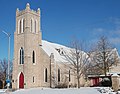 St. John's Parish, Quincy, Illinois (Diocese of Quincy)
 -
 Church of the Resurrection, Wheaton, Illinois (Upper Midwest Diocese)
 -
 Christ Church, Accokeek, Maryland (Diocese of the Mid-Atlantic)
 -
 Mariners' Church, Detroit, Michigan (REC Diocese of Mid-America)
 -
 Holy Trinity Church, Raleigh, North Carolina (Diocese of the Carolinas)
 -
 St. Peter and St. Paul Anglican Church, Ottawa, Ontario (Anglican Diocese of Canada)
 -
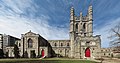 Church of the Ascension, Pittsburgh, Pennsylvania (Diocese of Pittsburgh)
 -
 St. Michael's Church, Charleston, South Carolina (Diocese of South Carolina)
 -
 St. Philip's Church, Charleston, South Carolina (Diocese of South Carolina)
 -
 St. Vincent's Cathedral, Bedford, Texas (Diocese of Fort Worth)
 -
 Cathedral Church of the Holy Communion, Dallas, Texas (REC Diocese of Mid-America)
 -
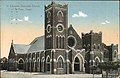 Church of St. Clement, El Paso, Texas (Diocese of the Southwest)
 -
 Truro Church, Fairfax, Virginia (Diocese of the Mid-Atlantic)
 -
 The Falls Church Anglican, West Falls Church, Virginia (Diocese of the Mid-Atlantic)
2.JPG)
.jpg)


,_the_cathedral_parish_of_the_Anglican_Diocese_of_the_Upper_Midwest,_Wheaton,_Illinois.jpg)


.jpg)


.jpg)


_05.jpg)

Ecumenical relations
[edit]Anglican churches
[edit]The ACNA's constitution expresses the goal to seek recognition as a province of the Anglican Communion.[15] A total of nine Anglican provinces sent formal delegations to the inaugural assembly.[42] The Anglican Church in North America has not yet requested formal recognition by the Anglican Communion office as a province recognized by the Anglican instruments of communion.[citation needed][contradictory] The office of the Archbishop of Canterbury has said it would possibly take years for the ACNA to gain official recognition from the rest of the Anglican Communion.[33]
In several cases ACNA has become entangled in protracted legal disputes over church property (for example, when the ACNA's Diocese of Fort Worth split from the Episcopal Church), with some of these lawsuits continuing for years.
The Fellowship of Confessing Anglicans primates' council has said that the new church is "fully Anglican" and called for its recognition by existing provinces of the Anglican Communion.[122] Archbishop Robert Duncan was present at the Global South Fourth Encounter that took place in Singapore, in April 2010, where he presided at the Eucharist and met primates and representatives from 20 Anglican provinces. The Global South Encounter final statement declared: "We are grateful that the recently formed Anglican Church in North America (ACNA) is a faithful expression of Anglicanism. We welcomed them as partners in the Gospel and our hope is that all provinces will be in full communion with the clergy and people of the ACNA and the Communion Partners."[123]
In March 2009, the Anglican Church of Nigeria declared itself to be in full communion with the Anglican Church in North America,[124] followed by the House of Bishops of the Anglican Church of Uganda in June 2009 and the Episcopal Church of Sudan in December 2011.[125][126] Inasmuch as these churches report approximately 30,500,000 members,[127][128] and the Anglican Communion reports over 80,000,000 members,[129] the ACNA is in communion with churches comprising somewhat over one-third of the membership of the Anglican Communion.[dubious – discuss][original research?]
On the final day of its 2009 synod, the Anglican Diocese of Sydney passed a resolution welcoming the creation of the ACNA and expressing a desire to be in full communion.[130] The resolution also called for the diocese's standing committee to seek a general synod motion affirming the Anglican Church of Australia to be in full communion with the ACNA. The Anglican Diocese of Sydney declared itself to be in "full communion" with ACNA during its synod on October 13, 2015.[131]
In 2010, the General Synod of the Church of England affirmed "the desire of those who have formed the Anglican Church in North America to remain within the Anglican family" and called upon the archbishops of Canterbury and York to report back to the synod after further study in 2011.[132][133] Published in December 2011, the archbishops' follow up report recommended "an open-ended engagement with ACNA on the part of the Church of England and the Communion" but also stated that a definitive outcome would be unclear for sometime.[134][135]
Archbishop Robert Duncan met following his invitation the Archbishop of Canterbury, Justin Welby, in May 2013, to discuss the recognition of the ACNA ordinations in the near future.[136] Welby announced on January 16, 2014, that Tory Baucum, Rector of Truro Church in Fairfax, Virginia, a parish of the ACNA, had been elected unanimously to serve as one of the Six Preachers of Canterbury Cathedral.[137] Baucum was installed on March 14, 2014, attended by both Justin Welby and Robert Duncan.[138] In October 2014, Welby stated that Tory Baucum had been ordained before ACNA's inception and because of that his Anglican orders were valid, so he was eligible to be elected to that office. He further stated that ACNA was a separate church and not part of the Anglican Communion.[139]
In October 2014, the Diocese of North West Australia passed a motion recognizing the ACNA as a "member church of the Anglican Communion".[140] On October 9, 2014, following the ceremony of investiture of Foley Beach as archbishop and primate of ACNA, an official statement, which recognized Beach as "a fellow Primate of the Anglican Communion", was signed by the seven Anglican archbishops present: Mouneer Anis of Jerusalem and the Middle East, Eliud Wabukala of Kenya, Nicholas Okoh of Nigeria, Stanley Ntagali of Uganda, Onesphore Rwaje of Rwanda, Stephen Than Myint Oo of Myanmar, and Héctor "Tito" Zavala of the Southern Cone of America.[141][142] However, the authority to decide whether ACNA should be admitted to the worldwide Anglican Communion lies with the Anglican Consultative Council, and not with individual member churches or provinces. Member churches and provinces are, however, able to develop bilateral relations, which do not bind the rest of the Anglican Communion.
At a meeting of the Anglican Primates of the Global South (a coalition representing the majority of the world's Anglicans) on October 14–16, 2015, in Cairo, Egypt, ACNA was declared to be an official partner province of the Global South by representatives of twelve churches, with Archbishop Beach being seated as a member of the Global South Primates Council with voice and vote.[143]
Despite the ACNA not being recognized as a province of the Anglican Communion, Welby invited Beach to attend a gathering of primates in the communion as an observer in January 2016.[12][13][144][145] While not permitted to vote, Beach was allowed to attend the first four days of the five-day session.[13][146] The prospect of the ACNA joining the communion was discussed and it was recognized that if the ACNA were to apply for admission to membership in the communion, the consideration of their application would be within the purview of the Anglican Consultative Council.[13][144]
The Archbishops of Canterbury and York, Justin Welby and John Sentamu, recognized ACNA's religious orders under the Overseas and Other Clergy (Ministry and Ordination) Measure 1967 (No. 3), as it was announced on 10 February 2017.[147][148]
After a meeting between Archbishop Foley Beach of ACNA and the Moderator/Primate of the Church of Bangladesh, Paul Sarker, on May 13–15, 2017, at Holy Cross Anglican Cathedral in Loganville, Georgia, they signed a statement affirming and celebrating the communion between both provinces thereby causing ACNA to enter into full communion with the Church of Bangladesh.[149][150][151]
In February 2016, Archbishop Foley Beach signed an instrument declaring ACNA to be in full communion with the Free Church of England, a reformed and Protestant Anglican church. Archbishop Beach's declaration was ratified by the Provincial Council of the ACNA in June 2016. The Reformed Episcopal Church, a founding member of the denomination, was already in that status with the FCE since 1927. Foley Beach and Ray Sutton, Presiding Bishop of REC, participated at the celebrations of the 90th anniversary of the communion between FCE and REC, which took place at Wallasey, England, on June 10, 2017.[152]
Fulfilling what Archbishop Foley Beach had already announced on June 8, 2017, on the same day that the Scottish Episcopal Church voted to approve same-sex marriage,[153] Andy Lines was consecrated Missionary Bishop to Europe at ACNA's Third Provincial Assembly meeting in Wheaton, Illinois, on June 30, 2017, on behalf of GAFCON.[154] The consecration was attended by 1,400 Anglican representatives from all over the world, including 11 primates, 3 archbishops, and 13 bishops.[155] The Primates who attended were Nicholas Okoh, from the Church of Nigeria, Stanley Ntagali, from the Church of Uganda, Daniel Deng Bul, from the Province of the Episcopal Church of South Sudan and Sudan, Jacob Chimeledya, from the Anglican Church of Tanzania, Jackson Ole Sapit, from the Anglican Church of Kenya, Onesphore Rwaje, from the Province of the Anglican Church of Rwanda, Zacharie Masimango Katanda, from the Province of the Anglican Church of the Congo, Daniel Sarfo, from the Church of the Province of West Africa, Gregory Venables, from the Anglican Church of South America, Ng Moon Hing, from the Church of the Province of South East Asia, and Mouneer Anis, retired Presiding Bishop of the Episcopal Church in Jerusalem and the Middle East. This was the largest gathering of worldwide Anglicans that ever participated at a Provincial Assembly of the ACNA.[156] [self-published source][unreliable source]
On December 13, 2017, the Anglican Global South, a grouping of Southern Hemisphere provinces of the Anglican Communion, reaffirmed full communion with the Anglican Church in North America.[157]
The ACNA was represented at GAFCON III, held in Jerusalem, from June 17–22, 2018, by a large delegation from the United States and Canada.[158] At the final of the conference, it was announced that Archbishop Foley Beach will take office as Chairman of the GAFCON's Primates Council in early 2019.[159] After the end of GAFCON III, ACNA held the meeting of their Provincial Council in Jerusalem, for the first time outside North America.[160]
The ACNA endorsed a concordat with the Episcopal Missionary Church, a Continuing Anglican denomination, in January 2020, which was signed by Archbishop Foley Beach and EMC Presiding Bishop William Millsaps on 14 September 2020.[161][162]
In 2021, the ACNA College of Bishops released a pastoral statement rejecting the use of the phrase "gay Christian", instead recommending the phrase "same-sex attraction", and that restated the church's belief that sex is reserved for marriage between one man and one woman while acknowledging that celibate "same-sex attracted" people can be members of the denomination.[163] This statement divided the ACNA as well as GAFCON, the body of Anglican churches with which the ACNA is affiliated. Within the ACNA, Bishop Todd Hunter of the Diocese of Churches for the Sake of Others (C4SO) released his own pastoral statement in which he used both phrases "gay Christian" and "same-sex attracted", criticizing and departing from the College of Bishops' guidance, and in which he affirmed the membership of those who identify as "gay Christian" pursuing celibacy or "mixed orientation" marriages.[164] Conversely, Archbishop Henry Ndukuba, the Primate of the Church of Nigeria, criticized and rejected the ACNA College of Bishops' pastoral guidance as being too open to homosexuality; Archbishop Ndukuba referred to homosexuality as a "deadly virus" and called on the ACNA to join the Church of Nigeria's "total rejection of homosexuality".[165][166][167] These actions received response from the Archbishop of Canterbury, Justin Welby, who released a statement that said people are able to be members of the Anglican Communion "regardless of sexual orientation" and without mention of celibacy.[163][168][169]
Archbishops Foley Beach, of the ACNA, and Henry Ndukuba, of the Church of Nigeria, signed a Joint Statement, on 30 March 2021, reaffirming both churches' common stance on human sexuality, as defined by the Lambeth 1998 resolution 1.10, and by the Jerusalem Declaration of 2008, of the Global Anglican Future Conference.[170]
In 2023, Archbishop Foley Beach was asked to comment on Archbishop of Uganda Stephen Kaziimba's support for Ugandan legislation that allows life imprisonment for Ugandans who engage in gay sex and the death penalty for "aggravated homosexuality".[171][172] Foley replied, "...we condemn it when we don't really understand it. I don't understand their culture enough to be able to really comment on it."[173]
Other churches
[edit]At the ACNA's inaugural assembly in June 2009, Metropolitan Jonah of the Orthodox Church in America, who was raised Episcopalian, while recognizing theological differences, said that he was "seeking an ecumenical restoration" between Orthodox and Anglicans in the United States.[174] An agreement was announced between Saint Vladimir's Orthodox Theological Seminary and Nashotah House, an Anglo-Catholic seminary, to guide ecumenical relationships and "new dialogue" between the two churches.[174] Archbishop Foley Beach met Metropolitan Hilarion Alfeyev, Chairman of the Department of External Relations of the Russian Orthodox Church, at an ecumenical meeting that took place at St. Vladimir's Orthodox Theological Seminary in Yonkers, New York, on November 8, 2014. The main purpose of the meeting was the prosecution of the Anglican and Orthodox dialogue in the United States and other parts of the world.[citation needed] Metropolitan Tikhon of the Orthodox Church in America was also present and invited Archbishop Foley Beach to the Orthodox All-American Council, which took place in Atlanta, Georgia, in July 2015.[175]
At the invitation of Patriarch Kirill, Archbishop Beach led a nine-member ACNA delegation to Moscow, Russia, to participate in formal ecumenical meetings with the Russian Orthodox Church. The delegation met Metropolitan Hilarion and was officially received by Patriarch Kirill on August 23, 2015. Both churches expressed their desire to develop and deepen the ecumenical relationships between Orthodox and faithful Anglicans through the world. Archbishop Beach delivered a letter of greeting from Archbishop Eliud Wabukala, Archbishop of Kenya and Chairman of the GAFCON.[176] The ACNA is about to start ecumenical relationships with Patriarch Bartholomew I of Constantinople, due to the mediation of Greek Orthodox Bishop Kyrillos Katerelos.[177]
Archbishop Foley Beach and Bishop Kevin Bond Allen met Patriarch Theophilos III, of the Greek Orthodox Church of Jerusalem, at the Church of the Holy Sepulcher, in Jerusalem, on May 31, 2017.[178]
The ACNA representatives had a meeting with Pope Tawadros II of the Coptic Orthodox Church of Egypt, during his visit to the United States, on October 23, 2015, during which he was presented with a letter of Bishop Todd Hunter, welcoming him and celebrating the recent ecumenical dialogue held between Anglican and Coptic Orthodox churches.[179] Pope Tawadros II met Archbishop Foley Beach and Bishop Charlie Masters, of ACNA, during his meeting with several Global South representatives, in Cairo, in November 2015.[180]
The ACNA established dialogue with several Lutheran groups. In March 2010, the Lutheran Church – Missouri Synod announced that it and the ACNA would hold discussions to "explore dialogue".[181] The ACNA has approved a request from the North American Lutheran Church to share clergy where there are vacancies. In addition, there is a Lutheran group which has requested to be admitted into the ACNA as a diocese.[182]
A "Marriage Summit", was held in Dallas, Texas, May 3–5, 2013, with representatives of ACNA and three Lutheran denominations, the Lutheran Church-Missouri Synod, the Lutheran Church-Canada and the North American Lutheran Church. It resulted in an official joint document, "An Affirmation of Marriage", approved by the heads of all the four church bodies and described as "a strong example of biblical ecumenicism at work", defining the divine nature of "marriage to be the life-long union of one man and one woman".[183]
The ACNA has held ten ecumenical dialogue meetings with the Polish National Catholic Church, since the first, held in Scranton, Pennsylvania, on June 19–20, 2012.[184] The most recent took place at St. Vincent's Cathedral, in Bedford, Texas, on February 15–16, 2017.[185]
The ACNA has been involved with evangelical movements such as the Lausanne Conference on World Evangelism and has observer status with the National Association of Evangelicals. It has also established dialogue with the Charismatic Episcopal Church, the Presbyterian Church in America, and the United Methodist Church.[186] The ACNA is also partnering with Messianic Jewish groups.[182] The ACNA has also held ecumenical contacts with the Believers Eastern Church, an Evangelical denomination whose headquarters are situated in Kerala, India.[187]
The ACNA has established friendly ecumenical relationships with the Roman Catholic Church. The Catholic Church was represented by Bishop Kevin Vann at their inaugural Provincial Assembly, in Bedford, Texas, on June 22, 2009. In October 2009, ACNA's leadership reacted to the Roman Catholic Church's proposed creation of personal ordinariates for disaffected traditionalist Anglicans by stating that although they believe that this provision will not be utilized by the great majority of its laity and clergy, they will happily bless those who are drawn to participate in this proposal.[188] The ACNA expressed its support for the Catholic Church's opposition to the 2012 US Health and Human Services' contraceptive mandate, with Archbishop Robert Duncan being one of the signatories of the statement of the Christian Associates of Southwest Pennsylvania, representing 26 Christian denominations, on April 13, 2012.[189] Archbishop Duncan and Bishop Ray Sutton were also invited to the weekly private audience by Pope Benedict XVI, which took place in Rome, on November 28, 2012, whom they meet and greet afterwards on behalf of the ACNA and the Fellowship of Confessing Anglicans.[190] The ACNA Provincial Assembly, which reunited more than 900 participants, and their College of Bishops conclave, which elected Foley Beach as the second Archbishop of the province, took place at the Roman Catholic Benedictine St. Vincent Archabbey Basilica, in Latrobe, Pennsylvania, on June 19–21, 2014, due to the kind permission of Archabbot Douglas Robert Nowicki, a personal friend of Archbishop Duncan.[191] [self-published source][unreliable source] Archbishop Wilton Daniel Gregory of the Roman Catholic Archdiocese of Atlanta offered Foley Beach an African-made crozier, which he used at his investiture ceremony, that took place at the Church of the Apostles, in Atlanta, Georgia, at October 9, 2014. Former Archbishop Gregory Venables of the Anglican Church of the Southern Cone of America read at the ceremony a message by his personal friend Pope Francis, who sent Archbishop Foley Beach his "personal greetings and congratulations as he leads his church in the very important job of revival" and asked Archbishop Venables to embrace him on his behalf.[192][193] [self-published source][unreliable source]
The ACNA has started official talks with the United States Conference of Catholic Bishops. Bishop Ray Sutton, Provincial Dean for Ecumenical Affairs led the team that met with a USCCB delegation, led by Bishop Mitchell T. Rozanski, Chair of Ecumenical and Interreligious Affairs, in Chicago, Illinois, on October 12, 2016.[194] In 2024, Sutton announced that the Vatican had begun an ecumenical dialogue with the ACNA and GAFCON which excluded the Archbishop of Canterbury, the Church of England, the Episcopal Church, and the Anglican Church of Canada.[195] He stated that the process would be managed by the Vatican's Dicastery for the Doctrine of the Faith (DDF) and not by the Dicastery for Promoting Christian Unity, and that the Prefect of the DDF, with the Pope's approval, had accepted an ACNA proposal for dialogue with the USCCB, which was based on the framework set forth in the 1968 Malta Report, a document on ecumenical dialogue set forth by the Anglican-Roman Catholic Joint Preparatory Commission.[196]
In January 2020, the ACNA endorsed a concordat with the Philippine Independent Catholic Church (formally known as the "International Conference of Philippine Independent Catholic Churches of Jesus Christ" since 2019), a breakaway faction from the Philippine Independent Church, in a meeting held in Melbourne, Florida, which was meant to be presented for approval by the Provincial Council in June that year.[161] Later in the same year, the endorsement was approved and both churches signed a concordat of understanding.[197]
At the 2024 ACNA Provincial Assembly in Latrobe, PA, Bishop Ray Sutton announced several updates on ecumenical relations between the ACNA and other churches.[198] Sutton announced that the ACNA and the Evangelical Lutheran Church of Latvia (ELCL), Latvia's state church, had recognized full communion with one another. In July of 2022, Bishop Ryan Reed of the Episcopal Diocese of Fort Worth (also fashioned Anglican Diocese of Fort Worth) and then-ACNA Archbishop Foley Beach were invited by ELCL Archbishop Janis Vanags to participate in the consecration of an ELCL bishop through the laying on of hands. In addition, they were granted pulpit and altar privileges at the Cathedral Church of St. Mary in Riga, Latvia.
Bishop Sutton also announced that the Elder Board of Communio Messianica (CM), a movement of Muslim Background Believers,[199] had determined to become Anglican and join GAFCON, through discussions with the Reformed Episcopal Church (REC), a diocese of the ACNA. In March of 2024, Communio Messianica's Yassir Eric was consecrated a bishop by Rwandan Anglican Archbishop and GAFCON Chairman Laurent Mbanda at Holy Trinity Cathedral in Kigali, Rwanda.[200]
Interfaith
[edit]In August 2010, the executive committee approved the creation of a task force on "Islam and interfaith engagement". Regarding the task force, Julian Dobbs, a member of the ACNA College of Bishops and Missionary Bishop of the Convocation of Anglicans in North America, stated, "we need to undertake a prayerful, sensitive and honest approach to the issues involved".[201]
In its 2011 annual report, the ACNA said it was forming partnerships with Messianic Jewish groups to proselytize.[182]
Archbishop Foley Beach and Bishop Charlie Masters, of ACNA, met the Grand Imam of Al-Azhar, Ahmed el-Tayeb, when he welcomed a delegation of several Global South representatives during their visit to Egypt in November 2015. Ahmed el-Tayeb expressed the "importance of the partnership and collegiality between religious leaders for the common good of humanity" and his solidarity with the Anglican realignment. He also stated that Christians and Muslims should be united in their opposition to the pressure for the acceptance of same-sex marriage and homosexual practice, especially in the western world.[202] [self-published source][unreliable source]
He visited Pakistan in November 2019, at invitation of the Kul Masalak Ulama Board Leadership, where he attended an interfaith gathering with Muslim scholars, in Lahore, on 19 November 2019.[203]
In the wake of the terrorist attack to the Tree of Life Synagogue, in Pittsburgh, on October 27, 2018, Archbishop Beach expressed his full solidarity with the Jewish communities of the United States and endorsed the "ShowUpForShabbat" initiative by which ACNA parish members were to attend local synagogues for the Shabbat.[204]
See also
[edit]References
[edit]Citations
[edit]- ^ a b Walton, Jeff (July 10, 2025). "What are the Largest Anglican Dioceses and Parishes?". Juicy Ecumenism. Institute on Religion and Democracy. Retrieved July 10, 2025.
- ^ "The Anglican Church in North America". The Anglican Church in North America. Retrieved August 17, 2022.
- ^ "Cristo Mi Redentor". Anglican Chaplains. Retrieved August 17, 2022.[permanent dead link]
- ^ "Cuba Mission". Reformed Episcopal Church - Diocese of Western Canada and Alaska. Archived from the original on June 12, 2018.
- ^ "Conservative bishops refuse to take Communion with LGBTQ+ bishops, demand 'sanctions' for churches that allow for same-sex marriage". Episcopal News Service. July 29, 2022. Retrieved August 17, 2022.
- ^ Thebeau, Rachel (June 22, 2024). "Steve Wood Elected the Third Archbishop of the Anglican Church in North America". The Anglican Church in North America. Retrieved June 29, 2024.
- ^ AnglicanChurchNA (June 28, 2024). AnglicanChurchNA is live!. Retrieved June 29, 2024 – via YouTube.
- ^ Sugden, Chris (November 24, 2017). "Canada: New Confessing Anglicanism". Anglican Mainstream. Retrieved February 3, 2025.
- ^ Conger, George (July 8, 2008). "Anglican Conservatives Create "Confessing Movement"". Institute on Religion and Democracy. Retrieved February 3, 2025.
- ^ "Member Churches". Anglican Communion Office. Retrieved January 21, 2016.
- ^ Brittain 2015, pp. 185–186: "On 3 October 2014, Archbishop [Justin] Welby was asked during an interview with the Irish Times Gazette to comment on the present relationship between the Anglican Church in North America (ACNA) and the Anglican Communion. He replied, 'Well, the ACNA is a separate church; it is not part of the Anglican Communion'. The interviewer, Canon Ian Ellis, then followed up by asking, 'Can it be in the Anglican Communion, or is that something for the future?' The Archbishop answered, 'Well, it's clearly for the future, because it's not part of the Communion.'"
- ^ a b Bernardelli, Giorgio (January 10, 2016). "Anglican primates hold meeting to avert schism". Vatican Insider. La Stampa. Turin. Archived from the original on January 21, 2016. Retrieved January 21, 2016.
- ^ a b c d Forget, André (January 20, 2016). "Hiltz: Despite controversy, Primates' Meeting a 'success'". Anglican Journal. Toronto. Retrieved January 21, 2016.
- ^ "Secretary General clarifies ACNA position with Communion as he reports to Standing Committee". Anglican Communion News Service. September 5, 2017. Retrieved December 30, 2017.
- ^ a b Anglican Church in North America 2014, p. 3.
- ^ "Global South Anglican - A Statement from the Global South Primates Regarding the Anglican Church in North America". Global South Anglican. Archived from the original on December 14, 2017. Retrieved August 11, 2018.
- ^ Percy 2017, p. 57.
- ^ "About the Anglican Church in North America" (PDF). Anglican Church in North America. 2017. p. 3. Archived from the original (PDF) on April 22, 2017. Retrieved September 11, 2017.
- ^ "Fort Worth in impaired communion with some ACNA dioceses". Anglican Ink. November 16, 2017. Archived from the original on November 19, 2017. Retrieved November 20, 2017.
- ^ Staunton, Denis (December 5, 2008). "Anglicans escalate split with plan for rival group". Irish Times. Archived from the original on July 27, 2011. Retrieved December 5, 2008.
- ^ Helfand, Duke (December 4, 2008). "Conservatives who fled liberal views of Scripture have formed a breakaway church in North America". LA Times. Archived from the original on December 5, 2008. Retrieved December 5, 2008.
- ^ Nowicki, Sue (November 20, 2010). "Breakaway Anglican diocese wins appeal". LA Times. Archived from the original on December 3, 2010. Retrieved December 12, 2010.
- ^ "Our Genesis" (PDF). Anglican Church in North America. Archived from the original (PDF) on July 25, 2011.
- ^ "BBC NEWS - Americas - US Church 'unfairly criticised'". bbc.co.uk. Retrieved October 5, 2015.
- ^ "Gays among candidates for Episcopal bishops - Christian News on Christian Today". Christian Today. August 3, 2009. Retrieved October 5, 2015.
- ^ "Archived copy" (PDF). Archived from the original (PDF) on April 30, 2014. Retrieved April 29, 2014.
{{cite web}}: CS1 maint: archived copy as title (link) - ^ Theological Statement and Articles of the Common Cause Partnership[dead link]. Revised March 28, 2007. Accessed April 15, 2010.
- ^ Schjonberg, Mary Frances (September 28, 2007). "Common Cause Bishops Pledge to Seek Anglican Recognition". Episcopal News Service. Archived from the original on October 11, 2007.
- ^ "Anglican Bishops Take First Steps to New Structure". Common Cause Partnership. September 28, 2007. Archived from the original on February 25, 2008. Retrieved April 18, 2009.
- ^ Banerjee, Neela (September 30, 2007). "Groups Plan New Branch to Represent Anglicanism". The New York Times. Retrieved April 25, 2010.
- ^ Thompson 2013, pp. 746–749.
- ^ "GAFCON Final Statement - Statement on the Global Anglican Future". Global Anglican Future Conference. June 28, 2008. Archived from the original on December 24, 2013.
- ^ a b c "Rick Warren to address breakaway Anglicans". Christianity Today. April 23, 2009.
- ^ Waring, Steve (November 16, 2008). "Convention Planned to Form New Anglican Province". The Living Church Foundation. Archived from the original on January 3, 2009. Retrieved November 17, 2008.
- ^ "Provisional Constitution" (PDF). The Common Cause Partnership.[dead link]
- ^ Prichard 2009, p. 29.
- ^ "About Us". Reformed Communion. Archived from the original on October 5, 2015. Retrieved October 5, 2015.
- ^ Christian Newswire (June 22, 2009). "Anglican Church Assembly Begins" (Press release). Retrieved August 25, 2009.
- ^ a b c Anglican Church in North America. "Anglican Church in North America officially constituted". Archived from the original on June 26, 2009.
- ^ Rodgers, Ann (June 23, 2009), "Archbishop Duncan shepherds Episcopal spinoff", Pittsburgh Post-Gazette
- ^ a b Conger, George. "New US Province is formed". Religious Intelligence. Archived June 26, 2009, at the Wayback Machine
- ^ a b c "More Anglican Leaders Join Supporters of the Anglican Church in North America". Anglican Church in North America. Archived from the original on June 28, 2009.
- ^ Protocol between Rwanda, the Anglican Mission, and the ACNA. Accessed May 21, 2010. Archived July 26, 2011, at the Wayback Machine
- ^ The Anglican Mission's Relationship with the Anglican Church in North America, May 18, 2010. Accessed May 21, 2010. Archived April 15, 2013, at archive.today
- ^ Archbishop Duncan, "A Pastoral Letter", December 20, 2011. Accessed December 21, 2011.
- ^ "Joint Communiqué from Archbishop Rwaje of P.E.A.R. and Archbishop Duncan of the Anglican Church, April 28, 2012, Anglican Ink". Archived from the original on May 8, 2012. Retrieved May 18, 2012.
- ^ "Congo to give a temporary home to the AMiA: The Church of England Newspaper, April 29, 2012 p 7". Conger. May 4, 2012. Retrieved October 5, 2015.
- ^ "Anglican Church in North America". anglicanchurch.net. Retrieved October 5, 2015.
- ^ "Anglican Church in North America". anglicanchurch.net. Retrieved June 22, 2016.
- ^ "Anglican Diocese of Christ Our Hope|HOME". Anglican Diocese of Christ Our Hope|HOME. Retrieved July 25, 2016.
- ^ "PEARUSA Southeast Network to fold congregations into ACNA dioceses, Anglican Ink, 2 March 2016". Archived from the original on April 6, 2016. Retrieved March 27, 2016.
- ^ "PEARUSA Moves Legally to ACNA, Remains Relationally Connected « PEAR USA". www.pearusa.org. Archived from the original on September 28, 2015. Retrieved September 27, 2015.
- ^ "Anglican Church in North America". anglicanchurch.net. Retrieved October 5, 2015.
- ^ "South Carolina Considers ACNA Affiliation during 225th Diocesan Convention | Anglican Ink © 2023". anglican.ink.
- ^ Ailes, Mary (March 11, 2017). "The Diocese of South Carolina votes to affiliate with the Anglican Church in North America". Anglican Church in North America. Archived from the original on March 12, 2017.
- ^ "Anglican Church in North America". anglicanchurch.net. Retrieved June 27, 2017.
- ^ Hunter, Joy. "Diocese of South Carolina - Diocese of South Carolina Received by the Anglican Church in North America". Diocese of South Carolina. Archived from the original on June 28, 2017. Retrieved June 27, 2017.
- ^ "Church of Nigeria, Anglican Church in North America Reach Agreement on CANA Dioceses ?". Anglican Church in North America. Archived from the original on October 1, 2019.
- ^ "CANA East withdraws from the Church of Nigeria | Anglican Ink © 2023". anglican.ink.
- ^ "CANA West leaves ACNA | Anglican Ink © 2023". anglican.ink.
- ^ "CANA Diocese of the Trinity withdraws from ACNA | Anglican Ink © 2023". anglican.ink.
- ^ Iker, Jack. "The Bishop's Annual Address to the 35th Convention of the Diocese of Fort Worth Saturday, Nov. 4, 2017". The Episcopal Diocese of Fort Worth. Archived from the original on November 21, 2017. Retrieved November 21, 2017.
- ^ Petersen, Kirk (January 2, 2020). "Jack Iker, a Founding Bishop of ACNA, Retires in Fort Worth". The Living Church. Retrieved October 8, 2024.
- ^ Conger, George (November 17, 2017). "Fort Worth in impaired communion with some ACNA dioceses". Anglican Ink © 2024. Retrieved October 8, 2024.
- ^ Kallsen, Kevin (June 6, 2024). "Diocese of FT Worth calls for Full Communion in ACNA". Anglican Ink © 2024. Retrieved October 8, 2024.
- ^ Walton, Jeff (November 1, 2024). "ACNA Installs New Archbishop". The Living Church. Retrieved October 11, 2025.
- ^ Walton, Jeff (July 5, 2024). "ACNA's New Archbishop: Passionate for Evangelism". The Living Church. Retrieved October 12, 2025.
- ^ Shapira, Ian (January 15, 2025). "Minister accused of sex abuse landed one high-profile job after another". The Washington Post. Retrieved October 10, 2025.
- ^ LeBlanc, Douglas (January 16, 2025). "Washington Post Digs Into Sex-Abuse Allegations". The Living Church. Retrieved October 10, 2025.
- ^ Gaffin, Greta (May 14, 2025). "Calvin Robinson Receives a One-Year License". The Living Church. Retrieved October 11, 2025.
- ^ LeBlanc, Douglas (May 15, 2025). "Bishop Sutton Withdraws Calvin Robinson's License". The Living Church. Retrieved October 11, 2025.
- ^ Coles, Arlie (July 12, 2025). "ACNA to Try Bishop on Mishandling Abuse Charges". The Living Church. Retrieved October 11, 2025.
- ^ Coles, Arlie (July 22, 2025). "Ruch Trial Halted by Prosecutor's Resignation". The Living Church. Retrieved October 11, 2025.
- ^ Coles, Arlie (August 1, 2025). "Chaotic Ruch Trial on Hold". The Living Church. Retrieved October 11, 2025.
- ^ "Wayback Machine" (PDF). anglicanchurch.net. Archived from the original (PDF) on October 7, 2025. Retrieved October 16, 2025.
- ^ "Updates on the Ecclesiastical Trial of Bishop Stewart Ruch III". The Anglican Church in North America. Retrieved October 16, 2025.
- ^ "Wayback Machine" (PDF). anglicanchurch.net. Archived from the original (PDF) on October 16, 2025. Retrieved October 16, 2025.
- ^ Post, Kathryn (September 26, 2025). "ACNA is tested and chaplains scramble as chaplain-endorsing nonprofit exits". Religion News Service. Retrieved October 11, 2025.
- ^ Coles, Arlie (September 26, 2025). "ACNA Inhibits Its Chaplaincy Bishop". The Living Church. Retrieved October 11, 2025.
- ^ Post, Kathryn (September 26, 2025). "ACNA is tested and chaplains scramble as chaplain-endorsing nonprofit exits". Religion News Service. Retrieved October 11, 2025.
- ^ Gryboski, Michael (September 25, 2025). "Chaplains group in battle to cut ties with Anglican Church in North America". The Christian Post. Retrieved October 11, 2025.
- ^ Post, Kathryn (September 26, 2025). "ACNA is tested and chaplains scramble as chaplain-endorsing nonprofit exits". Religion News Service. Retrieved October 11, 2025.
- ^ Coles, Arlie (September 26, 2025). "ACNA Inhibits Its Chaplaincy Bishop". The Living Church. Retrieved October 11, 2025.
- ^ Gryboski, Michael (October 10, 2025). "Chaplains group sues Anglican Church in North America over leadership dispute". The Christian Post.
- ^ Shapira, Ian (October 23, 2025). "U.S. Anglican Church archbishop accused of sexual misconduct, abuse of power". The Washington Post. Retrieved October 23, 2025.
- ^ Post, Kathryn (October 23, 2025). "ACNA Archbishop Steve Wood accused of sexual misconduct". Religion News Service. Retrieved October 23, 2025.
- ^ Gryboski, Michael (October 23, 2025). "Anglican Church in North America leader faces complaint alleging sexual misconduct, abuse of power". The Christian Post. Retrieved October 23, 2025.
- ^ Anglican Church in North America 2014, p. 1.
- ^ Anglican Church in North America 2014, pp. 1–2.
- ^ Frequently Asked Questions. Anglican Church in North America. Accessed June 3, 2014.
- ^ Texts for Common Prayer. Anglican Church in North America. Accessed June 3, 2014.
- ^ "Anglican Church in North America". anglicanchurch.net. Retrieved October 5, 2015.
- ^ Packer, J. I.; Scandrett, Joel (January 28, 2020). To Be a Christian: An Anglican Catechism. Crossway. ISBN 9781433566776.
- ^ "ACNA releases new liturgical resources | Anglican Ink © 2023". anglican.ink.
- ^ "The Book of Common Prayer 2019 Final Texts Released". Anglican Church in North America. Archived from the original on June 4, 2020.
- ^ "Anglican Church in North America Calendar of Saints" (PDF).
- ^ An Introduction to the Constitution and Canons - By Bishop Robert Duncan
- ^ Andrew (September 8, 2017). "College of Bishops Statement on the Ordination of Women". The Anglican Church in North America. Retrieved June 6, 2024.
- ^ Anglican Church in North America 2014, title II, canon 8.
- ^ "Anglicans For Life". anglicansforlife.org. Retrieved October 5, 2015.
- ^ "The Anglican Church in North America".
- ^ "THE ANGLICAN CHURCH IN NORTH AMERICA CONSTITUTION AND CANONS" (PDF). anglicanchurch.net. Archived from the original (PDF) on March 10, 2023.
- ^ Anglican Church in North America 2014, pp. 2, 4.
- ^ a b "Governance". www.anglicanchurch.net. Anglican Church in North America. Retrieved October 17, 2016.
- ^ Anglican Church in North America 2014, p. 17.
- ^ Anglican Church in North America 2014, pp. 15–16.
- ^ Anglican Church in North America (August 10, 2010), "Elected Executive Committee Begins Work". Accessed February 21, 2011.
- ^ Anglican Church in North America 2014, Title I, canon 7.
- ^ Walton, Jeff (November 19, 2021). "Christ Church Plano's Paul Donison on new Anglican Provincial Cathedral". Christianity News. Retrieved July 13, 2022.[permanent dead link]
- ^ a b Walton, Jeff (June 27, 2020). "Anglican Decline, Pandemic and Pandemonium in "Challenging Times"". Anglican Ink © 2020. Retrieved June 29, 2020.
- ^ "ACNA Stats". juicyecumenism.com. June 26, 2020. Retrieved June 28, 2020.
- ^ Walton, Jeff (June 25, 2021). "Contra expectations, Anglican numbers largely hold steady in 2020". Anglican Ink © 2021. Retrieved June 26, 2021.
- ^ Ernie (June 29, 2022). "A Summary of Provincial Council 2022". The Anglican Church in North America. Retrieved September 25, 2022.
- ^ Walton, Jeff (June 24, 2023). "ACNA Attendance Strongly Rebounds". Anglican Ink © 2023. Retrieved June 25, 2023.
- ^ "Congregational Reporting: 2023 in Review" (PDF). Anglican Church in North America. Archived from the original (PDF) on June 25, 2024. Retrieved June 25, 2024.
- ^ Walton, Jeff (June 25, 2024). "ACNA's Attendance & Membership Rebound". The Living Church. Retrieved June 26, 2024.
- ^ "Provincial Council 2018 Documents" (PDF). Dropbox. Retrieved August 17, 2022.
- ^ "One Hundred and Six New Anglican Congregations in Nine Months" Archived July 25, 2011, at the Wayback Machine. Anglican Church in North America. April 13, 2010. Accessed April 15, 2010.
- ^ ACNA Dioceses and Delegates Fact Sheet. June 2009. Accessed April 15, 2010.
- ^ "Anglican Church in North America". www.anglicanchurch.net. Retrieved January 7, 2020.
- ^ "Dioceses and Congregations". Anglican Church in North America. Retrieved November 7, 2023.
- ^ "GAFCON Communiqué issued — ACNA recognized". GAFCON / Fellowship of Confessing Anglicans.
- ^ "Global South Encounter — Fourth Trumpet". Global South Encounter. Archived from the original on May 29, 2017. Retrieved June 30, 2010.
- ^ "Church of Nigeria in full communion with Anglican Church of North America". Dallas Morning News. Archived from the original on June 25, 2009. Retrieved March 21, 2009.
- ^ Church of Uganda. "Church of Uganda Declares itself in Full Communion with Anglican Church in North America". Archived from the original on June 28, 2009.
- ^ "Advent Letter from Archbishop Duncan". Retrieved December 16, 2011.
- ^ "ENUGU CONSECRATION: 'Serve and Suffer for Christ'". Church of Nigeria (estimate) Archived September 27, 2007, at the Wayback Machine
- ^ 2002 Uganda Population and Housing Census, Bureau of Statistics (PDF) Archived November 24, 2007, at the Wayback Machine
- ^ Anglican Communion Office. "Welcome". The Anglican Communion. Archived from the original on January 26, 2010. Retrieved October 5, 2015.
- ^ Russel Powell. "We See Them and Embrace Them". Sydneyanglicans.net, October 28, 2009.
- ^ Ould, David (October 14, 2015). "Sydney Synod Declares 'Communion with ACNA'". Stand Firm. Archived from the original on October 16, 2015.
- ^ General Synod - Summary of Business Conducted on Wednesday 10th February 2010, accessed 21 January 2012.
- ^ Mackay, Maria (February 10, 2010), "Church of England Recognises Breakaway US Anglicans", Christian Today, archived from the original on February 13, 2010, retrieved February 10, 2010
- ^ The Church of England and the Anglican Church in North America Archived June 19, 2013, at the Wayback Machine, report of the Archbishops of Canterbury and York to the General Synod of the Church of England, December 2011, accessed 21 January 2012.
- ^ "The Anglican Planet - International News - CofE report generally open to new Anglican Church". anglicanplanet.net. Archived from the original on 3 March 2016. Retrieved 5 October 2015.
- ^ "Anglican Church in North America". anglicanchurch.net. Retrieved October 5, 2015.
- ^ "Archbishop appoints US priest as Canterbury preacher". archbishopofcanterbury.org. Retrieved October 5, 2015.
- ^ "Six Preacher Installation · Events". archbishopofcanterbury.org. Retrieved October 5, 2015.
- ^ "Canterbury buries the instruments of unity". anglicanink.com. Archived from the original on October 17, 2015. Retrieved October 5, 2015.
- ^ "Diocese of NW Australia recognises ACNA as "a member church of the Anglican Communion"". Anglican Church League, Sydney, Australia. October 5, 2014. Retrieved October 5, 2015.
- ^ "Anglican Church in North America". anglicanchurch.net. Retrieved October 5, 2015.
- ^ "Global South Anglican". globalsouthanglican.org. Archived from the original on July 30, 2019. Retrieved October 5, 2015.
- ^ "Anglican Church in North America Declared Partner Province by the Global South". Anglican Church in North America. Retrieved October 16, 2015.
- ^ a b "Communiqué from the Primates' Meeting 2016". Anglican Communion News Service. London: Anglican Communion Office. January 15, 2016. Retrieved January 21, 2016.
- ^ "'Grown-up' Primates' Meeting affirms Anglican links with Canterbury". www.churchtimes.co.uk. Retrieved June 11, 2024.
- ^ "Statement on votes given to Primates at the meeting in Canterbury". Primates 2016. Anglican Communion Office. January 17, 2016. Archived from the original on January 19, 2016. Retrieved January 20, 2016.
- ^ "ACNA orders valid state Archbishops of Canterbury and York, Anglican Ink, 10 February 2017". Archived from the original on February 11, 2017. Retrieved February 10, 2017.
- ^ Davies, Madeleine (April 13, 2017). "ANCA's Orders recognised". Church Times. Retrieved March 18, 2024.
- ^ "Anglican Church in North America". www.anglicanchurch.net. Retrieved May 19, 2017.
- ^ "Concordat of communion between the ACNA and Church of Bangladesh". Anglican Ink 2017. May 18, 2017. Archived from the original on September 12, 2017. Retrieved May 20, 2017.
- ^ "Moderator in USA with PCUSA" (PDF). Church of Bangladesh Newsletter (Special Issue January-May 2017 ed.). Church of Bangladesh. June 2017. p. 7. Retrieved March 18, 2024.
- ^ "Free Church of England Celebrates 90 Years of Unity, Free Church of England Official Website". Archived from the original on July 2, 2017. Retrieved June 24, 2017.
- ^ "Missionary Bishop introduced by Archbishop Foley Beach | GAFCON". www.gafcon.org.
- ^ "Anglican Church in North America". anglicanchurch.net. Retrieved July 1, 2017.
- ^ "The consecration of a Missionary Bishop for Europe | GAFCON". www.gafcon.org.
- ^ "WHEATON, IL: Thirty Global Anglican Leaders Stand in Solidarity with Anglican Church in North America | VirtueOnline – The Voice for Global Orthodox Anglicanism". virtueonline.org.
- ^ "Global South Anglican - A Statement from the Global South Primates Regarding the Anglican Church in North America". www.globalsouthanglican.org. Retrieved December 14, 2017.
- ^ "GAFCON III largest pan-Anglican gathering since Toronto Congress of 1963 | Anglican Ink © 2023". anglican.ink.
- ^ "Foley Beach and Ben Kwashi to lead GAFCON". Anglican Ink 2018 ©. June 22, 2018. Archived from the original on June 23, 2018. Retrieved June 23, 2018.
- ^ "Provincial Council Jerusalem Reports Growth of Church". Anglican Church in North America. Archived from the original on July 3, 2018.
- ^ a b "College of Bishops Communiqué". Anglican Church in North America. January 2020. Archived from the original on February 6, 2020.
- ^ "ACNA AND EPISCOPAL MISSIONARY CHURCH ENTER INTO FORMAL CONCORDAT | VirtueOnline – The Voice for Global Orthodox Anglicanism". virtueonline.org.
- ^ a b Otieno, Jeckonia. "Homosexuality debate rages in the Anglican communion". The Standard. Retrieved March 15, 2021.
- ^ "C4SO Pastoral Guidance on the ACNA Statement on Sexuality and Identity". anglican.ink. January 31, 2021. Retrieved March 15, 2021.
- ^ "Archbishop of Canterbury criticises letter by the Primate of Nigeria, Archbishop Henry Ndukuba". www.anglicannews.org. Retrieved July 1, 2025.
- ^ Ndukuba, Henry (February 27, 2021). "Church of Nigeria criticizes ACNA over "Dear Gay Anglicans" Letter". anglican.ink. Retrieved March 15, 2021.
- ^ "Nigerian Primate Lashes Out at ACNA". The Living Church. March 2, 2021. Retrieved March 15, 2021.
- ^ "Justin Welby condemns Nigerian archbishop's gay 'virus' comments". the Guardian. March 6, 2021. Retrieved March 15, 2021.
- ^ AM, Staff writer 06 March 2021 | 10:47 (March 6, 2021). "Justin Welby condemns Nigeria Primate's 'unacceptable' language on homosexuality". www.christiantoday.com. Retrieved March 15, 2021.
{{cite web}}: CS1 maint: numeric names: authors list (link) - ^ "Joint Statement from Archbishop Foley Beach (Primate of the Anglican Church in North America (ACNA) and Archbishop Henry Ndukuba (Primate of the Church of Nigeria (CoN))" (PDF).
- ^ Northam, Jackie (May 29, 2023). "A new anti-gay law in Uganda calls for life in prison for those who are convicted". NPR. Retrieved July 1, 2025.
- ^ "Ugandan court upholds anti-gay law that allows the death penalty in some cases". AP News. April 3, 2024. Retrieved July 1, 2025.
- ^ Petersen, Kirk (April 20, 2023). "Twenty Minutes With Archbishop Foley Beach". The Living Church. Retrieved July 1, 2025.
- ^ a b "ACNA | Orthodox Church Leader Rekindles Relationship with Anglicans". June 26, 2009. Archived from the original on June 26, 2009.
- ^ "Archbishop Beach and Metropolitan Hilarion Encourage Anglican/Orthodox Ecumenical Dialogue". Anglican Church in North America. Archived from the original on November 11, 2014.
- ^ "Anglican Church in North America". anglicanchurch.net. Retrieved October 5, 2015.
- ^ "Ecumenical Relations Task Force Report, College of Bishops/Provincial Council, Vancouver, British Columbia, June 22-26, 2015" (PDF). Archived from the original (PDF) on October 4, 2015. Retrieved September 19, 2015.
- ^ "Meeting Between Archbishop Beach and Patriarch Theophilos". Anglican Church in North America. Archived from the original on June 5, 2017.
- ^ "Letter to Pope Tawadros II of the Coptic Orthodox Church in Egypt". February 17, 2015. Retrieved February 7, 2024.
- ^ "Anglican Archbishops meet with Coptic Pope and Grand Imam of Al-Azhar".
- ^ Hoops, Linda C. (March 3, 2010). "CTCR Adopts Environment-Stewardship Report". Reporter. Lutheran Church–Missouri Synod. Archived from the original on March 23, 2010. Retrieved June 11, 2010.
- ^ a b c Ray Sutton (November 2011), The Apostle: Anglican Church in North America's Ministry in Review Report Archived February 8, 2012, at the Wayback Machine, p. 14. Accessed 10 December 2011.
- ^ "Canadian Lutheran Online » Blog Archive » An affirmation of marriage". Canadian Lutheran Online. June 3, 2013. Retrieved October 5, 2015.
- ^ Polish National Catholic Church and Anglican Church in North America Dialogue Meeting PRESS RELEASE, The Missionary Diocese of All Saints Official Website
- ^ "Tenth Ecumenical Dialogue Meeting Between the Polish National Catholic Church (PNCC) and the Anglican Church in North America (ACNA), The Episcopal Diocese of Fort Worth Official Website, 15-16 February 2017". Archived from the original on April 10, 2017. Retrieved April 9, 2017.
- ^ "Anglican Church in North America" (PDF). anglicanchurch.net. Archived from the original (PDF) on October 4, 2015. Retrieved July 13, 2024.
- ^ "Provincial Council 2016: Live Blog". Anglican Church in North America. Archived from the original on June 25, 2016.
- ^ "Anglican Church in North America responds to Vatican offer". Anglican Church. October 20, 2009. Archived from the original on October 23, 2009.
- ^ "News Release" (PDF). Christian Associates of Southwest Pennsylvania. 13 April 2012. Archived from the original (PDF) on 5 February 2015. Retrieved 19 February 2015.
- ^ "Archbishop Duncan attends Papal Audience in Rome". Anglican Church in North America. Archived from the original on January 21, 2016. Retrieved October 5, 2015.
- ^ Mueller, Mary Ann (June 25, 2014). "LATROBE, PA: New ACNA Archbishop-elect introduced to the media". Virtueonline. Retrieved October 5, 2015.
- ^ "Papal greetings for newest Anglican archbishop". anglicanink.com. Archived from the original on 3 October 2015. Retrieved 5 October 2015.
- ^ "ATLANTA: ACNA Archbishop Recognized as Primate in the Anglican Communion". Virtueonline. Retrieved October 5, 2015.
- ^ "The Anglican Church in North America builds ecumenical bridges". Anglican Church in North America. January 6, 2017.
- ^ PhD, Jules Gomes (June 28, 2024). "Rome Moves Toward 'Full Communion' With Orthodox Anglicans". Souls and Liberty. Retrieved April 22, 2025.
- ^ "ARCJPC, Anglican-Roman Catholic Joint Preparatory Commission ~ IARCCUM.org". iarccum.org. Retrieved April 22, 2025.
- ^ "Concordat of Understanding Between The Anglican Church in North America and The Philippine Independent Catholic Churches of Jesus Christ Also Known as Iglesia Catolica Filipina Indpendiente" (PDF). AnglicanChurch.net. The Anglican Church in North America. Retrieved November 1, 2022.
- ^ "Dropbox". www.dropbox.com. Retrieved April 22, 2025.
- ^ "About CM". www.communiomessianica.org. Retrieved April 22, 2025.
- ^ "Consecration of Bishop Dr. Yassir Eric". www.communiomessianica.org. Retrieved April 22, 2025.
- ^ Anglican Church in North America, Executive Committee Calls for Task Force on 'Islam and Interfaith Engagement'". Accessed July 13, 2011.
- ^ "EGYPT: Anglican Archbishops Meet With the Grand Imam of Al-Azhar | VirtueOnline – The Voice for Global Orthodox Anglicanism". virtueonline.org.
- ^ "American archbishop lauds CoP for uniting church leaders, Pakistan Today, 20 November 2019".
- ^ "A Call to Solidarity". Anglican Church in North America. Archived from the original on November 24, 2018.
Sources
[edit]- Anglican Church in North America (2009). Constitution and Canons (PDF). Anglican Church in North America. Archived from the original (PDF) on January 3, 2011. Retrieved August 11, 2018.
- —— (2014). Constitution and Canons (PDF). Anglican Church in North America. Archived from the original (PDF) on December 25, 2016. Retrieved October 17, 2016.
- Brittain, Christopher Craig (2015). A Plague on Both Their Houses: Conservative vs. Liberal Christians and the Divorce of the Episcopal Church USA. London: T&T Clark. ISBN 978-0-5676-5845-6.
- Percy, Martyn (2017). The Future Shapes of Anglicanism: Currents, Contours, Charts. Abingdon, England: Routledge. ISBN 978-1-317-18211-5.
- Prichard, Robert W. (2009). "Courts, Covenants, and Canon Law: A Review of Legal and Canonical Issues Facing the General Convention". Anglican and Episcopal History. 78 (1): 9–29. ISSN 0896-8039. JSTOR 42615483.
- Thompson, Mark D. (2013). "The Global Anglican Future Conference (GAFCON)". In Markham, Ian S.; Hawkins, J. Barney IV; Terry, Justyn; Steffensen, Leslie Nuñez (eds.). The Wiley-Blackwell Companion to the Anglican Communion. Somerset, New Jersey: John Wiley & Sons. pp. 739–749. doi:10.1002/9781118320815.ch65. ISBN 978-0-470-65634-1.
External links
[edit]


| General |  | |
|---|---|---|
| Member provinces | ||
| Non-provincial member jurisdictions | ||
| Leaders |
| |
| Related | ||
Anglican Church in North America
View on GrokipediaThe Anglican Church in North America (ACNA) is a conservative denomination within the Anglican tradition, founded on June 22, 2009, in Bedford, Texas, by theological traditionalists who seceded from the Episcopal Church and Anglican Church of Canada primarily over departures from historic Anglican doctrine on scriptural authority, ordination, and human sexuality.[1][2]
It unites diverse Anglican streams—evangelical, Anglo-Catholic, and charismatic—in a conciliar structure of 28 dioceses spanning the United States and Canada, governed by the Most Reverend Robert Duncan as its inaugural archbishop until 2014, emphasizing the authority of the Bible, the Thirty-Nine Articles of Religion, and the historic creeds while permitting diocesan variation on women's ordination but requiring male-only episcopacy.[1][3]
As of 2023, the ACNA comprises 1,013 congregations with membership exceeding 127,000 and average Sunday attendance of 84,794, reflecting steady growth amid challenges like the COVID-19 pandemic.[4][5]
Though denied provincial status in the Anglican Communion by the Archbishop of Canterbury due to its formation outside established structures, the ACNA holds full ecclesial communion with GAFCON, a global network representing over half of the world's Anglicans and prioritizing orthodox faith over institutional ties to Canterbury.[6][7]