Hubbry Logo
CothonCothonMain
Open search
Cothon
Community hub
Cothon
logo
8 pages, 0 posts
0 subscribers
Be the first to start a discussion here.
Cothon
Cothon
from Wikipedia
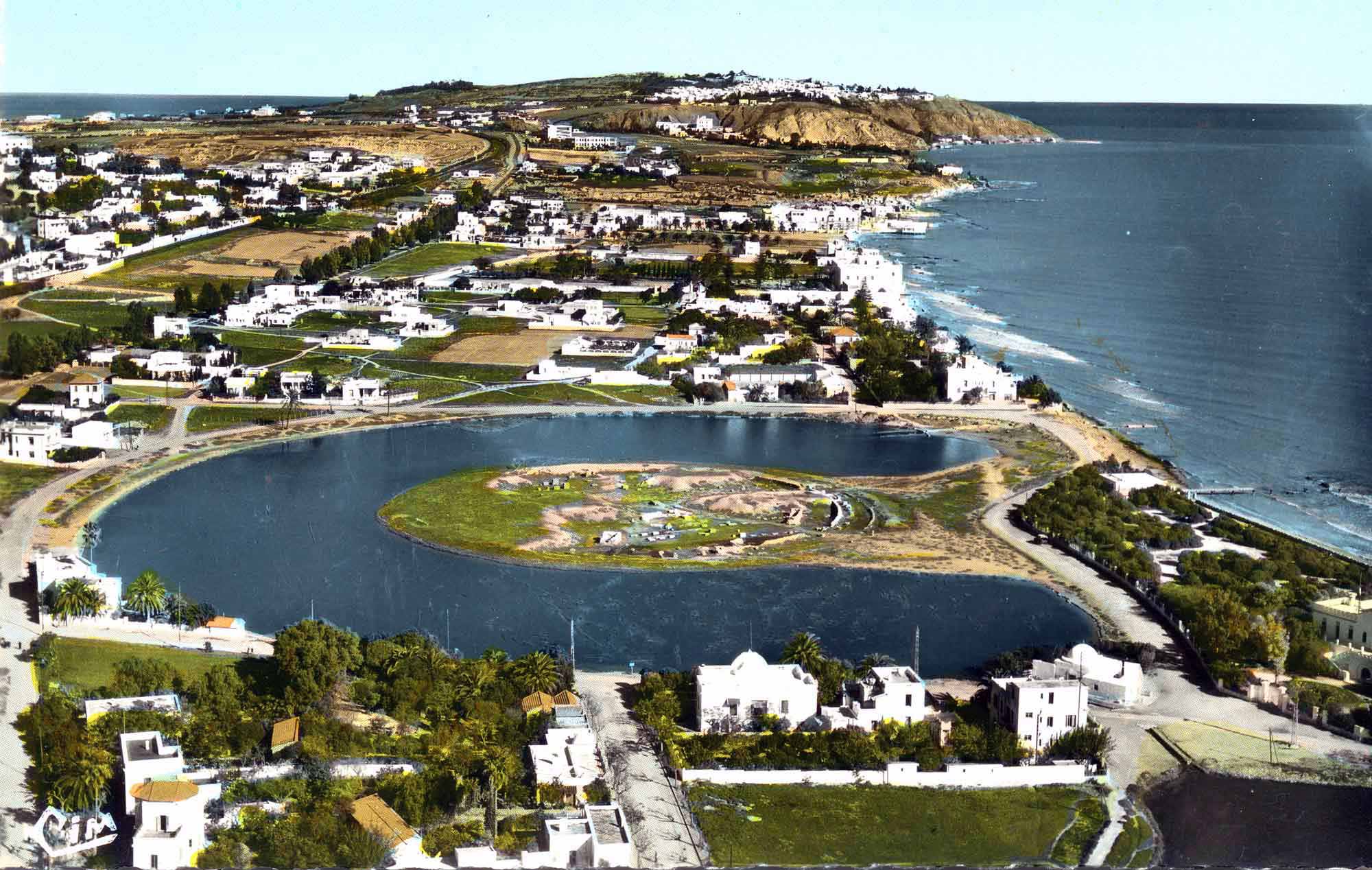
Ancient Carthaginian port, in a 1958 photograph

A cothon (Greek: κώθων, lit.'drinking vessel') is an artificial, protected inner harbour such as that in Carthage during the Punic Wars c. 200 BC.

Cothons were generally found in the Phoenician world. Other examples include Motya in Sicily from the 6th century BC, which performed an uncertain purpose, (measuring 35 metres x 51 metres), although it has been suggested this cothon might even have been closable and drainable to form a dry dock,[1][2] Mahdia in Tunisia from the 7th century BC, (which measured 72 metres x 56 metres) and one from Kition in Cyprus.

In ancient times "cothon" was only used to describe the harbour at Carthage.[3] In modern times, however, archaeologists use the term to refer to similar ancient harbours constructed of a man-made basin connected to the sea by a channel.[4] The name comes from an island in Carthage's harbour.[5]

The harbours of Carthage

[edit]

The cothon at Carthage was divided into a rectangular merchant harbour followed by an inner protected harbour reserved for military use only. This inner harbour was circular and surrounded by an outer ring of structures divided into a series of docking bays for ship maintenance, along with an island structure at its centre that also housed navy ships. Each docking bay featured a raised slipway. Above the raised docking bays was a second level consisting of warehouses where oars and rigging were kept along with supplies such as wood and canvas.

On the island structure, there existed a raised 'cabin' where the admiral in command could observe the whole harbour along with the surrounding sea. The inner docking complex could house up to 220 ships. The entire harbour was protected by an outer wall and the main entrance could be closed off with iron chains.[6] Most records of Carthage were destroyed when the city was razed by the victorious Romans in the Third Punic War.

References

[edit]
Revisions and contributorsEdit on WikipediaRead on Wikipedia
from Grokipedia
A cothon is an artificial constructed in antiquity, particularly by Phoenicians and Carthaginians, consisting of a protected basin excavated inland and linked to the open sea via a narrow, controllable channel to shield vessels from weather and attackers. The name derives from kōthōn, referring to a deep drinking cup, due to the basin's typical circular or saucer-like form. The and most celebrated example is the cothon of in modern-day , built in the 3rd century BCE as part of a dual-harbor complex that exemplified Punic maritime engineering and supported the city's role as a dominant Mediterranean power. The Carthaginian cothon featured a rectangular outer commercial harbor for trade vessels, connected to a circular inner basin approximately 325 meters in diameter, designed exclusively for warships. This inner harbor included a central island, known as the Ilôt de l'Amirauté, which housed the admiral's quarters and allowed oversight of the entire fleet; surrounding it were 220 covered slips or sheds for quinqueremes and other galleys, each accessible via individual channels. The system had a shared entrance approximately 20 meters wide that could be secured by massive iron chains, enhancing defense during conflicts like the . Enclosed within the city's walls, the cothon underscored Carthage's naval supremacy, enabling rapid deployment of its fleet and storage of vast resources in adjacent multi-story warehouses. After the Roman destruction of Carthage in 146 BCE, the site was repurposed as a commercial basin under Roman rule, with remnants visible today as lagoons near . Similar cothons appear in other Phoenician sites, such as the structure at in (recently reinterpreted as a sacred pool rather than a functional harbor as of 2022), highlighting their widespread use in Punic colonial networks from the BCE onward.

Etymology and Definition

Origin of the Term

The term "cothon" originates from the noun κώθων (kōthōn), which denoted a deep, wide-mouthed drinking vessel, specifically a Laconian type used by soldiers for its stability and capacity, evoking the circular, basin-like enclosure of an artificial harbor. This metaphorical application arose in the context of describing Phoenician maritime engineering, where the harbor's excavated, vessel-shaped form prompted the borrowing. In modern scholarship, the term is applied anachronistically to earlier Phoenician artificial harbors exhibiting similar features. The earliest surviving literary attestation of "cothon" in reference to such a structure appears in the works of the Greco-Roman historian , writing in the AD, who used the term to designate the circular military harbor of during his narration of the Third Punic War. In Appian's Roman History (Punic Wars 8.96–98), he describes the "harbor of Cothon" as a fortified, round basin capable of sheltering a vast fleet, highlighting its strategic role in Carthaginian naval power. This usage marks the term's entry into classical as a descriptor for Phoenician-style ports. Scholars posit that the Greek "kōthōn" renders a pre-existing Phoenician or Punic word, from the qt, connoting "to cut out" or "excavate," which aligns with the labor-intensive and of these inland basins. No direct epigraphic evidence in Punic script survives to confirm the native term, suggesting it may have been primarily oral or lost in the destruction of Carthaginian records during the Roman conquest. By the time of later Roman authors, the term had evolved to specifically denote artificial inner harbors engineered for protection against storms and enemies, distinguishing them from open natural bays like those at Tyre or . Although , in his Histories (c. 150 BC), provides a detailed eyewitness-derived account of Carthage's harbors—including the circular naval basin—he employs descriptive phrases like "inner harbor" without the specialized word "cothon," indicating the term's consolidation in post-Punic literature.

Key Characteristics

A cothon represents a distinctive type of ancient artificial harbor, engineered as a dug-out basin excavated inland or behind the coastline and connected to the open sea through a narrow, controlled channel. This provided essential against rough waves, strong currents, and potential enemy incursions, making it particularly valuable on exposed coasts where natural shelter was absent. Unlike open-roadstead ports or naturally formed bays, cothons were entirely man-made structures, relying on human excavation rather than geological features to create calm, enclosed waters ideal for safe . In terms of shape and layout, cothons typically adopted a circular or rectangular form to optimize space and maneuverability, often incorporating a central or a series of radial slips for efficient docking of vessels. For instance, the Carthaginian cothon featured up to 220 such slips arranged around a central , facilitating the berthing of warships in a compact, defensible configuration. These basins were generally maintained at depths of 2 to 5 meters to accommodate quinqueremes and other warships, with stone revetments lining the sides and bottom to mitigate silting and erosion from sediment accumulation. The primary purpose of a cothon was , serving as a secure for mooring and maintaining fleets of quinqueremes during campaigns, though many also supported commercial activities by allowing safe storage and loading of goods away from hostile threats. Engineering innovations included watertight seals at the channel entrance, often reinforced with heavy chains or barriers for selective , as well as integration with surrounding city walls to enhance overall fortifications. These features underscored the cothon's role in Phoenician and Punic maritime strategy, emphasizing defense, operational efficiency, and long-term durability over mere anchorage.

Historical Context

Phoenician Origins

The Phoenicians emerged as a dominant maritime power in the around 1200 BCE, following the , with key city-states such as Tyre and driving advanced and the need for secure facilities to support extensive seafaring activities. These centers facilitated the construction of increasingly sophisticated harbors to accommodate growing fleets capable of long-distance voyages. While the term cothon specifically refers to fully artificial enclosed inner harbors (as seen in later Punic examples), the earliest precursors—enhanced natural anchorages evolving toward enclosed artificial basins—appear in the Levantine homeland during the , with confirmed examples by the 9th century BCE at sites like Atlit. Trade in high-value commodities such as cedar wood, metals, and murex-derived purple dye necessitated protected facilities for ship maintenance and storage, spurring these developments as the Phoenicians served as intermediaries in Mediterranean exchange networks, exporting Levantine resources to , , and beyond. Technological precursors to these cothons trace back to Bronze Age Canaanite ports, where natural anchorages were enhanced with breakwaters constructed from submerged boulder piles and channeled approaches, as evidenced at sites like Yavne-Yam and around 1500 BCE. By the 9th century BCE, these evolved into fully artificial enclosed basins, exemplified by the moles and quays at Atlit and the reinforced sandstone structures at and Tyre, which provided sheltered waters for larger vessels amid expanding trade. As Phoenician colonization expanded from the 10th century BCE onward, advanced harbor technologies accompanied voyages to outposts across the Mediterranean, with cothon-like structures appearing in later colonies such as in , enabling the establishment of secure harbors that sustained long-distance trade routes. These innovations underpinned the Phoenicians' commercial empire, allowing reliable access to resources like Cypriot copper and Iberian silver.

Development in Punic Society

Carthage was founded around 814 BC by Tyrian colonists led by Queen Dido (Elissa), who established the city as a Phoenician outpost in the Gulf of , inheriting maritime traditions that included the construction of cothons to secure naval dominance amid growing competition with Greek colonists in the western Mediterranean. These artificial harbors enabled the rapid assembly and protection of fleets, crucial for countering Greek expansion in and during the 8th and 7th centuries BC. During the expansion phase from the 6th to 3rd centuries BC, Carthage developed an extensive mercantile empire across , the , , and , constructing cothons in key outposts to facilitate trade and military projection. This infrastructure supported decisive naval victories, such as the in 535 BC against Phocaean Greeks, which curtailed Greek colonization in and established Punic control over western sea lanes. By the , Carthage's network of fortified harbors underpinned its economic prosperity, with silver from and agricultural tribute from African territories funding further colonial ventures. Cothons were deeply integrated into Punic governance as state-controlled assets, managed by the oligarchic and suffetes (judges) to sustain a professional navy of quinqueremes and mercenaries during conflicts like the (264–146 BC). These harbors served not only as shipyards but also as fiscal centers, generating revenue through customs duties that financed campaigns against Roman forces, including the massive fleet of over 200 warships housed in Carthage's principal cothon by the . The decline of Punic cothons culminated in the destruction of Carthage's main harbor in 146 BC by Roman forces during the Third Punic War, which razed the city and scattered its population. Despite this devastation, Punic maritime influence endured in diaspora communities across and Iberia, where simplified harbor designs persisted into the Roman era.

The Cothon of Carthage

Layout and Design

The Cothon of Carthage exemplified advanced Punic engineering through its double-harbor system, comprising an outer rectangular commercial basin and an enclosed inner circular harbor. The outer basin, intended for shipping, measured approximately 400 meters in length by 150 meters in width, forming a perimeter of roughly 1.1 kilometers and requiring the excavation of about 120,000 cubic meters of material to achieve a depth of approximately 1.5 meters. This layout allowed for efficient handling of trade vessels while providing sheltered access to the inner facility. The overall design is primarily known from the 2nd-century CE account by , supplemented by archaeological evidence. The inner military cothon was a circular basin with a diameter of 325 meters, dug to a depth of approximately 1.5 meters and encompassing around 115,000 cubic meters of excavated volume. At its center lay a circular island platform, approximately 106 meters in diameter, elevated for oversight and possibly containing the admiral's quarters along with a temple dedicated to naval deities. Radiating outward from this island were approximately 220 ship sheds, arranged along the embankments and quays to accommodate the Carthaginian war fleet, with each shed featuring slipways for launching and maintenance. The harbors shared a sea entrance approximately 20 meters wide, which could be sealed with iron chains during threats; access to the inner cothon was via a narrower passage of about 4 meters wide, further enhancing defensibility. Integrated into the perimeter were supporting structures, including warehouses for supplies, arsenals for armaments, and quays backed by double walls and gates, all oriented to streamline and operations within the urban layout.

Construction and Function

The cothon of , particularly its circular military harbor, was likely constructed between the late 4th and 3rd centuries BC (ca. 350–250 BC), as indicated by archaeological evidence from excavations revealing the foundational structures predating the . Local materials such as yellow sandstone for the lower courses of quay walls and white limestone slabs for capping were employed, sourced from nearby quarries to facilitate the of a waterproof basin. These blocks were fitted without mortar in , emphasizing precise cutting and dry-stone techniques typical of Punic construction. Construction techniques involved excavating submarine sands and virgin deposits to , creating a basin approximately 1.5 meters deep, with wooden dams used to form dry trenches approximately 1.5 meters deep for laying the foundations. walls, built with dressed stone blocks, lined the eastern shore and other edges to stabilize the structure against erosion and tidal forces, reaching heights sufficient to support the harbor's operational needs. The circular basin required approximately 0.15 million cubic meters of initial to achieve navigable depths. To counteract silting from coastal currents, ongoing was essential to preserve usability for warships. The primary military function of the circular cothon was to provide secure mooring for up to warships, protected from external threats by its enclosed design and access channel that could be sealed. Shipsheds along the perimeter, featuring sloping ramps and foundations, enabled dry-docking for hull repairs, maintenance, and winter storage, enhancing the fleet's readiness and longevity. This infrastructure supported rapid deployment during sieges, notably in the Third Punic War (149–146 BC), where the harbor allowed Carthaginians to hastily assemble and launch vessels against the Roman blockade, underscoring its role in naval defense. Integrated with the broader port system, the cothon complemented the adjacent rectangular commercial harbor, which primarily accommodated merchant vessels for trade. During adverse weather or high seas, the military cothon served as a secure overflow refuge, safeguarding both warships and occasional commercial craft while minimizing exposure to Mediterranean storms.

Other Examples

Motya in Sicily

Motya, an ancient Phoenician colony established around the on the island of San Pantaleo off the western coast of , served as a key trading outpost in the Stagnone until its destruction in 397 BC. The site features a prominent rectangular basin, measuring 52.5 by 37 meters and lined with stone, constructed during the as part of the city's monumental core. Traditionally, archaeologists interpreted this basin, known as the kothon, as a military harbor on a smaller scale than the famous example at , allegedly connected to the sea via a 7-meter-wide for sheltered docking of warships. This view stemmed from its artificial design and superficial resemblance to Punic , with the canal presumed to enable maritime access. However, excavations conducted between 2002 and 2020, culminating in findings published in 2022, have reinterpreted the structure as a sacred freshwater pool rather than a functional harbor. The basin was fed by natural springs and deliberately isolated from seawater, with depths ranging from 0.8 to 1.5 meters, making navigation impractical and ruling out maritime use; moreover, the apparent connecting dates to the Roman period and was absent in Phoenician times. Positioned at the center of a large circular enclosing three temples dedicated to and , the pool likely hosted rituals involving purification and offerings to the storm god , symbolized by water and celestial phenomena. Its orientation aligns precisely with the stars and during their winter culmination, enhancing its ritual significance as a "star-filled" for nocturnal ceremonies. The absence of ship slips or maritime artifacts further supports this non-naval function, emphasizing the site's religious landscape over defensive or economic priorities.

Mahdia in Tunisia

Mahdia, situated on the eastern coast of , served as a Punic port town from approximately the 5th to 2nd centuries BCE, operating as a key outpost within the broader Carthaginian maritime network. The site featured a combining maritime facilities with supporting , reflecting its role in regional commerce and naval operations along an otherwise exposed coastline lacking natural harbors. The cothon itself consists of a rectangular basin, approximately 125 meters long by 62.5 meters wide, entirely excavated from solid rock with vertical stone-lined walls rising to form the enclosure. Access to the open sea was provided through a narrow channel connecting it to the open sea, with the basin floor below to facilitate entry for vessels while offering protection from waves. This design supported the berthing of small warships and fishing boats, aligning with standard Punic cothon principles of creating secure, artificial inner harbors. Distinctive features of the Mahdia cothon include its integration with nearby stone quarries on the hills above the bay, which supplied materials for and possibly harbor maintenance, underscoring the site's multifaceted industrial character. Due to natural silting over time, particularly after the blockage of a secondary de-silting channel, the basin is now partially submerged and preserved underwater, with remnants of rock-cut revetments and features still visible. Stone anchors and other artifacts scattered in the vicinity further attest to its prolonged use, though the structure awaits more comprehensive excavation to clarify its full extent and evolution.

Archaeological Evidence

Excavations at Carthage

The identification of the lagoons near modern as remnants of the ancient harbors began in the through surveys by Danish Christian Tuxen Falbe, who in mapped the site and proposed that the two adjacent bodies of water represented the commercial and military ports described by classical authors. French archaeologists conducted major systematic excavations at starting in the under the Service des Antiquités de Tunisie, led by figures such as Louis Poinssot (director until 1942), focusing on broader site exploration including areas like the ; harbor-specific surveys intensified in the mid-20th century, with initial structural elements like quay foundations uncovered and Punic-era occupation layers confirmed beneath Roman constructions. By the mid-20th century, the harbors had been partially explored, revealing evidence of heavy that had obscured much of the original basins since antiquity. A pivotal advancement came in 1958 when aerial photographs captured by French aerial survey teams, analyzed by Jean Baradez, clearly revealed the circular layout of the military cothon, including the central island and radiating slips for warships, providing the first comprehensive visual confirmation of Appian's ancient description and prompting renewed interest in the site's maritime infrastructure. In the 1970s, international teams, including British and American archaeologists under the UNESCO Save Carthage campaign led by Henry Hurst and Lawrence Stager, undertook extensive land and underwater surveys; these excavations exposed earth and timber slipways, Cap Bon sandstone quay walls up to 3.5 meters high, and a connecting channel approximately 15-20 meters wide and 2 meters deep, dating the cothon's primary construction to around 200-150 BC. The 1973 offshore survey by divers using echo-sounders further confirmed the entrance channel's path and identified Roman-era modifications, such as hydraulic concrete blocks overlaying Punic structures post-146 BC, when the Romans rebuilt the site as Colonia Iulia Concordia Carthago. Key artifacts recovered include Punic sherds of South Italian and Sicilian origin from the , indicative of networks, along with iron anchors and fittings scattered in the silted basins, attesting to the cothon's naval function; Roman overlays yielded amphorae (Dressel 2 type, 1st-2nd centuries AD) and unguentaria, highlighting continued use into the imperial period. These finds, totaling thousands of fragments and metal objects, were documented in stratigraphic contexts showing multiple phases of repair and reuse. Excavations also revealed luxury imports like beads and jewelry near the quays, underscoring Carthage's economic prominence. Significant challenges persist in fully delineating the cothon due to extensive accumulation—estimated at over 2 meters in places from post-Punic and seismic activity—and modern urban development, including the construction of the Tunis-Carthage International Airport and residential areas in the , which have encroached on and buried portions of the eastern harbor perimeter. Ongoing from the nearby Bay of continues to threaten preservation, while rising sea levels (1.25-1.50 meters since antiquity) have submerged outer elements, complicating further underwater work. Despite these obstacles, the excavations have established the cothon's scale at roughly 13 hectares, with the circular basin alone accommodating up to 220 warships.

Investigations at Other Sites

Archaeological investigations at Motya in Sicily, conducted by the Sapienza University of Rome from 2005 to 2013, reinterpreted the site's so-called kothon as a sacred freshwater pool rather than a functional harbor. Stratigraphic analysis revealed multiple construction phases, beginning with a spring-fed pond around 750–675 BC (Motya IVB period), later formalized into a rectangular basin measuring approximately 47 by 34 meters with a depth of up to 1.8 meters during the Motya VIA phase (550–520 BC), and used until the city's destruction in 397/396 BC. These layers included evidence of ritual deposition, such as pottery sherds, faunal remains from offerings, and water management features like subterranean channels fed by three natural springs, indicating non-navigational, cultic purposes linked to the worship of Ba'al 'Addir (equated with Poseidon). The pool was central to a monumental circular sanctuary (temenos) with a diameter of 118 meters, encompassing foundations of three temples: the primary Temple of Ba'al on a podium within the pool, the Temple of Astarte to the east, and a Sanctuary of the Holy Waters to the west, all oriented toward the pool for ceremonial access. Astronomical alignments were evident in the sanctuary's layout, with the Ba'al temple axis pointing toward Orion's belt at the winter solstice and the Astarte temple toward Venus at the summer solstice, suggesting the pool's surface served as a reflective medium for celestial observations during rituals, supported by finds like a bronze pointer possibly used for navigation or astronomy. At in , 20th-century underwater surveys confirmed the presence of a Punic cothon, a rectangular artificial basin measuring approximately 72 by 56 meters, connected to the sea via a narrow channel. Early explorations in the and , followed by systematic dives by members of the Expedition to , which included Mahdia, in 1966, employed basic to map the basin's cut-stone walls, which rise to 2–3 meters in height and show evidence of silting from post-Punic sedimentation. These investigations also documented nearby Punic shipwrecks, including artifacts from Roman-era wrecks such as the Mahdia shipwreck (ca. 80-70 BC), where amphorae and lead anchors scattered around the basin suggest continued use as a protected harbor into the Roman period, though originally functioning as a harbor during the Punic . and photographic mapping during these surveys highlighted the cothon's geometric design, with straight walls and a central or remnant, distinguishing it from natural coastal features and underscoring its role in Punic . Limited archaeological probes at other suspected Punic sites have yielded suggestive but inconclusive evidence for cothons. At Nora in , excavations since the 1950s, including targeted digs in the 1980s and 1990s, uncovered linear stone channels and basin-like structures in the Phoenician-Punic harbor area, potentially indicative of an artificial inner dock, though their interpretation as a true cothon remains debated due to overlapping Roman modifications and natural lagoon sedimentation. In contrast, investigations at Gades (modern ) in , including geoarchaeological coring in the 2010s, identified Phoenician-Punic harbor remains at depths of 20–40 meters below , featuring a semi-protected basin accessible from the west, but no confirmed cothon features such as enclosed rectangular walls were found, with evidence pointing instead to open-roadstead ports. Methodological advances in these investigations have increasingly relied on non-invasive geophysical techniques and sediment coring to differentiate artificial cothons from natural coastal formations. (GPR) and (ERT) have been used to map subsurface walls and channels at sites like and Nora, revealing buried without extensive digging, while multibeam in underwater contexts at has delineated basin outlines with high resolution. Sediment coring, extracting vertical profiles up to 10 meters deep, analyzes , organic content, and microfossils to identify anthropogenic harbor muds—characterized by fine, laminated silts with elevated from ancient ship maintenance—contrasting with coarser natural beach deposits, as applied in Gades to confirm Punic-era sedimentation patterns. These integrated approaches, combining with of cores, have enhanced the detection of cothon signatures across Mediterranean Punic sites, prioritizing preservation of fragile underwater heritage.

Significance and Legacy

Economic and Military Role

The cothon of served as a pivotal military asset, enabling the city's naval dominance in the western Mediterranean during the . This infrastructure was instrumental in 's efforts to control vital sea lanes, particularly during the (264–241 BCE), where the navy projected power against Roman forces and safeguarded trade routes from to Iberia. The fortified layout minimized vulnerability to enemy incursions, underscoring 's reputation as a maritime reliant on its harbors for strategic projection. Economically, the cothon complex—comprising the military basin and adjacent rectangular commercial harbor—facilitated Carthage's role as a central hub for Mediterranean exchange, handling imports and exports of essential goods such as foodstuffs (including grain from and ), unworked metals from Iberia and , textiles, and slaves captured or acquired through conquests and alliances. Warehouses and workshops surrounding the harbors supported ship repairs with materials like wood, , and , while the commercial basin accommodated hundreds of vessels, amplifying volumes that fueled Carthage's prosperity as a mercantile empire. This integration of naval and commercial functions boosted the city's economic output, with the flow of commodities like , , silver artifacts, and slaves contributing to its accumulation and influence over regional networks. As the urban centerpiece of , the cothon symbolized the city's power and maritime identity, driving to an estimated 200,000–400,000 inhabitants by the BCE through its role in sustaining and defense. Its central location within the urban layout enhanced connectivity between the harbors, markets, and residential areas, fostering economic vitality that attracted settlers and merchants. Socially, the harbors employed thousands in maintenance, , and , promoting specialized labor groups akin to Punic craft associations that supported the infrastructure's operations.

Influence on Later Structures

The incorporated key elements of the cothon design into its harbor infrastructure, particularly in the ports of Ostia and , where artificial enclosed basins provided secure shelter for imperial fleets against open-sea conditions. Trajan's hexagonal basin at , constructed around 103–112 CE, exemplifies this adoption, functioning as an artificially excavated harbor basin connected to the sea via a controlled channel, much like Punic cothons, to facilitate safe and maintenance of warships. This design addressed silting and exposure issues common in the Delta, enhancing logistical efficiency for Rome's maritime dominance. The cothon's emphasis on protected, artificial basins influenced medieval harbor engineering, as seen in the 12th-century , with its enclosed slips and covered facilities for construction and repair. These parallels highlight a continuity in prioritizing sheltered environments for naval operations, adapting ancient concepts to Venice's setting for rapid ship production. In modern times, the cothon legacy persists in naval bases and artificial marinas, particularly 19th-century dry docks in the Mediterranean, which evolved from the ancient principle of drainable, enclosed basins for ship repair without full submersion. Recent scholarly studies, including 2023 geoarchaeological analyses, have recognized cothons as models for sustainable port engineering, emphasizing their resilience to silting and —challenges amplified by modern . These works underscore how cothon techniques, such as substratum excavation and narrow-channel access, offer lessons for mitigating sea-level rise and storm surges in vulnerable Mediterranean sites.

References

Add your contribution
Related Hubs
User Avatar
No comments yet.