


Community hub
Recent from talks
Contribute something
Nothing was collected or created yet.
Cummins Unit
View on Wikipedia

Key Information


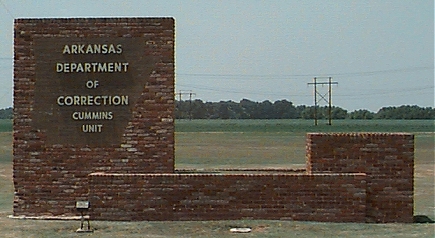
The Cummins Unit (formerly known as Cummins State Farm) is an Arkansas Department of Corrections prison in unincorporated Lincoln County, Arkansas, United States,[5][6] in the Arkansas Delta region.[7] It is located along U.S. Route 65,[6] near Grady,[6] Gould,[8] and Varner,[9] 28 miles (45 km) south of Pine Bluff,[6] and 60 miles (97 km) southeast of Little Rock.[10][11]
This prison farm is a 16,500-acre (6,700 ha) correctional facility. The prison first opened in 1902 and has a capacity of 1,725 inmates. Cummins housed Arkansas's male death row until 1986, when it was transferred first to the Tucker Maximum Security Unit. The State of Arkansas execution chamber is located in the Cummins Unit, adjacent to the location of the male death row, the Varner Unit.[12] The female death row is located at the McPherson Unit.[13] Cummins is one of the State of Arkansas's "parent units" for male prisoners; it serves as one of several units of initial assignment for processed male prisoners.[14]
History
[edit]In 1902 the State of Arkansas purchased about 10,000 acres (4,000 ha) of land for $140,000 ($5,090,000 when adjusted for inflation) to build the Cummins Unit.[15] The prison was established during that year,[16] and prisoners began occupying the site in December.[17] The prison occupied the former Cummins and Maple Grove plantations.[18] Both had been used for growing cotton.[19]
Then-Governor of Arkansas Jeff Davis wanted the state to buy a farm in Jefferson County owned by Louis Altheimer, a Republican Party leader who was Davis's friend. When the legislature instead purchased the land for Cummins, Davis put up political opposition, trying to force the state to cancel the purchase.[20]
In 1933 Governor Junius Marion Futrell closed the Arkansas State Penitentiary ("The Walls"), and some prisoners moved to Cummins from the former penitentiary.[15] Since the establishment of the prison, it had housed African-American men and women. Beginning in 1936, white male prisoners with disciplinary problems were housed at Cummins. As of 1958, most prisoners worked in farming, producing cotton, livestock, and vegetables. The prison, during that year, housed clothing and lumber manufacturing facilities.[21] In 1951 white female prisoners were moved from the Arkansas State Farm for Women to Cummins.[15]
On September 5, 1966, riots occurred at Cummins and 144 prisoners attempted a strike. Arkansas State Police ended the strike with tear gas.[22] In 1970 some prisoners asking for segregated housing started a riot, leading to an intervention by state police.[23]
In 1969 Johnny Cash performed at a concert in Cummins Unit. He donated his own money so a chapel could be built there.[24]
In 1972 Arkansas's first prison rodeo was held at the Cummins Unit.[15] In 1974 death row inmates, previously at the Tucker Unit, were moved to the Cummins Unit.[25] In 1976 female inmates were moved from the Cummins Unit to the Pine Bluff Unit. In 1978 a new execution chamber opened at Cummins Unit.[15] In 1983 the Cummins Modular Unit opened.[26] In 1986 death row inmates were moved to the Maximum Security Unit.[25] In 1991 the vocational technology program moved from the Cummins Unit to the Varner Unit.[27] In 2000 Arkansas's first lethal electrified fence, built with inmate labor, opened at the Cummins Unit.[15]
A tornado affected the Cummins Unit facility in May 2011. It damaged the dairy facility, the chicken and swine houses, and the employee housing in the Free Line area. The tornado destroyed the prison's three green houses. It also turned over a center pivot irrigation system.[28]
In 2020 the prison was affected in the COVID-19 pandemic in Arkansas. According to correctional staff, the administration initially did not wish for correctional staff to wear masks to avoid frightening prisoners. As of April 25, 2020, 33 correctional employees and 800 prisoners had COVID-19. As of 15 June 2020[update] 11 Cummins prisoners had died from COVID-19.[19]
Torture
[edit]In 1968, Tom Murton alleged that three human skeletons found on the farm were the remains of inmates who had been subjected to torture, prompting a publicized investigation which found "a prison hospital served as torture chamber and a doctor as chief tormentor."[29]
The revelations included allegations of electrical devices connected to the genitalia of inmates. The Arkansas State Penitentiary System at that time had already been found to have held inmates at the Cummins Unit under conditions rising to the level of unconstitutionally cruel and unusual punishment, in cases tried by the US District Court for the Eastern District of Arkansas, among others.
Certain characteristics of the Arkansas prison system serve to distinguish it from most other penal institutions in this country. First, it has very few paid employees; armed trusties ["trusted" inmates, according to the source] guard rank and file inmates and trusties perform other tasks usually and more properly performed by civilian or "free world" personnel. Second, convicts not in isolation are confined when not working, and are required to sleep at night in open dormitory type barracks in which rows of beds are arranged side by side; there are large numbers of men in each barracks. Third, there is no meaningful program of rehabilitation whatever at Cummins; while there is a promising and helpful program at Tucker, it is still minimal.[30]
Composition
[edit]It is located partially in Auburn Township,[31] and partially in Choctaw Township.[32]
Cummins has about 16,500 acres (6,700 ha) of land.[16]
Prisoners working the fields are part of the Hoe Squad, and prisoners who refuse work are taken to solitary confinement.[19]
A white building is and has been referred to the past as the prison's "barracks". The "telephone-pole" style structure serves as a housing unit for prisoners. The building had eight units. In the past, one was reserved for white trustees, one for black trustees, and others for other prisoners. The housing units were racially segregated.[33] There was a separate unit for female prisoners.[34]
The prison includes the "Free Line", the prison residences for free world employees, including the warden, several prison officials, and their families; prisoners work as house servants in the Free Line.[11] Children (dependents of correctional staff) living on the prison property are zoned to the Dumas School District.[35][36] The prison property was formerly within the Gould School District.[37][38] On July 1, 2004, the Gould School District was merged into the Dumas district.[39]
In the past the main entrance to the prison was at the terminus of a road off of the main highway. The main gate consisted of a wooden structure behind a chicken wire fence, which had barbed wire on top. A trusty shooter manned the main entrance.[11] In past eras, the prison housed a commissary and did not house educational facilities, prison factories, or medical and dental clinics.[33]
The Cummins Unit has an electric fence.[40]
The Cummins/Varner Volunteer Fire Department provides fire services to the Cummins Unit property.[41] The station is inside the Cummins Unit property,[42] along Arkansas Highway 388.[43] In fiscal year 2010 the Arkansas Department of Correction spent $81,691 on the fire station.[42]
Operations
[edit]As of 2006, the Cummins Unit has the largest farming operation in the Arkansas Department of Correction system. At Cummins, over 16,000 acres (6,500 ha) of land is devoted to production of crops and farm goods, including cash crops, hay, livestock, and vegetables.[44] As of 2001 prisoners harvested corn, cotton, and rice from the fields and were supervised by prison guards mounted on horses.[7]
Cummins previously housed the Special Management Barracks, a unit for prisoners with counseling and mental health requirements.[45] In 2008 it moved to the Randall L. Williams Correctional Facility.[46]
Prisoners at Cummins attend the correctional school system.[47]
Prisoner life
[edit]In the past[when?], each prisoner worked for 10 hours per day, six days per week in the fields. Prisoners were only excused if the outside temperature was below freezing.[11] Some prisoners who were sent to the fields lacked shoes.[48] Prisoners did not have fixed quotas. Instead they were told to do as much work as possible. Prisoners deemed to be not doing enough work were beaten.[33]
Trustee prisoners had authority over other prisoners. At night, all except for two of the free world prison guards left, so trustees kept the order during the night. Prisoners who were not trustees were sub-ranked as "do-pops" and "rankers".[33] In past eras, trustee prisoners were responsible for the prison's perimeter security.[11]
During the day, the prison barracks were empty since most prisoners worked on the fields. At night, the two free world employees patrolled the central corridor but did not venture into the barrack units. The trustees, armed with knives, kept the order at night. Some inmates, referred to as "crawlers" and "creepers", stabbed sleeping prisoners. Male on male rape frequently occurred in the housing units. The prison did not ask trustees to intervene in case of rape, and guards rarely intervened.[33]
Prisoners did not receive payment for working in the fields. In order to buy items from the commissary, some prisoners worked there.[33] Other prisoners sold their blood; a healthy prisoner was permitted to sell his blood once weekly.[49]
Trustees were allowed to leave and re-enter the prison without undergoing searches, so trustees smuggled in alcohol, illegal drugs, and weapons; they then sold those items within the prison. Trustees usually bought these items from one another, since they had large amounts of money. Non-trustees, including "do-pops" and "rankers", had to pay trustees in order to get food, medicine, access to medical staff, access to outsiders, and protection from arbitrary prison punishments. Therefore non-trustees did not have large reserves of money.[49]
Education in the Cummins Unit began in 1968, when the Gould School District started a night program.[50]
Wardens
[edit]- Thomas G. Milner (1941-1949)[51]
- Terrell Don Hutto (beginning 1967)[52][53][54][55]
Notable inmates
[edit]Death Row
[edit]- John Edward Swindler, sentenced to death and executed on June 18, 1990, for the murder of Patrolman Randy Basnett.[56]
- Ricky Ray Rector, sentenced to death and executed on January 24, 1992, for the murder of Police Officer Robert Martin.[57][58]
- Darryl Richley, sentenced to death and executed on August 3, 1994, for the murder of Donald Lehman.[59][60][61]
- Hoyt Franklin Clines, sentenced to death and executed on August 3, 1994, for the murder of Donald Lehman.[60][62]
- James William Holmes, sentenced to death and executed on August 3, 1994, for the murder of Donald Lehman.[59]
- Barry Lee Fairchild, sentenced to death and executed on August 31, 1995, for the murder of Marjorie "Greta" Mason.[63][64]
- Paul Ruiz and Earl Van Denton, sentenced to death and executed on January 8, 1997, for the murders of Marvin Richie and Opal Lee James.[65]
- Marion Albert Pruett, sentenced to death and executed on April 12, 1999, for the murder of Bobbie Jean Robertson.[66]
- Christina Marie Riggs, sentenced to death and executed on May 2, 2000, for murders of her two children.
- Clay King Smith, sentenced to death and executed on May 8, 2001, for the murders of five people.[67]
- Charles Laverne Singleton, sentenced to death and executed on January 6, 2004, for the murder of Mary Lou York.[68]
- Eric Nance, sentenced to death and executed on November 28, 2005, for the murder of Julie Heath.
- Ledell Lee, sentenced to death and executed on April 20, 2017, for the murder of Debra Reese. He was the first person executed in Arkansas in 12 years.
- Jack Harold Jones, serial killer, and Marcel Wayne Williams, sentenced to death and executed on April 24, 2017. It was the first double execution in the United States since 2000.
- Kenneth Williams, serial killer, sentenced to death and executed on April 27, 2017.
Non Death Row
[edit]- Kenneth Nicely, sentenced to life for the 1958 murder of a police officer and Arkansas longest-serving prisoner.[69]
- Richard Gordon - Murdered his neighbor Joseph Clifton on September 3, 2009 after a dispute. Was convicted of first-degree murder and was sentenced to life plus fifteen years in prison.[70][71] Story was featured on Investigation Discovery's Fear Thy Neighbor.
Bruce Jackson's prison photography
[edit]In the 1960s, ethnographer Bruce Jackson began taking photographs of prisoners in Texas for his research on African-American work songs in prison. Jackson had become friends with the assistant warden of Ramsey prison farm at the time, T. Don Hutto. When Hutto became Arkansas commissioner of corrections in 1971, their friendship provided Jackson with access to prisoners resulting in numerous publications. In 2010, Jackson's photo collection from the Cummins Unit was exhibited at the Albright-Knox Art Gallery in Buffalo, New York and at the Center for Documentary Studies at Duke University in Durham, North Carolina.[55][72]
See also
[edit]
- Trusty system
- Gates v. Collier, 1974 court decision abolishing the trusty system
- List of law enforcement agencies in Arkansas
- List of United States state correction agencies
- List of U.S. state prisons
References
[edit]- General
- "The Law: The Shame of the Prisons". Time. January 18, 1971.
- "New Chapter in Horror". The Nation. January 10, 1972.
- "One Year of Prison Reform". [permanent dead link] The Nation.
- "Prison History and Events 2011-1838"
- "Prisons: Hell in Arkansas". Time. February 9, 1968.
- Factor 8: The Arkansas Prison Blood Scandal, 2005 film
- Bruce Jackson, Killing Time: Life in the Arkansas Penitentiary. Cornell University Press, 1977. ISBN 978-0801411014
- Specific
- ^ Geography Division (April 9, 2021). 2020 Census - Census Block Map: Auburn township, AR (PDF) (Map). U.S. Census Bureau. Retrieved November 22, 2025.
- ^ Geography Division (April 9, 2021). 2020 Census - Census Block Map: Choctaw township, AR (PDF) (Map). U.S. Census Bureau. pp. 2-3 (PDF pp. 3-4). Retrieved November 22, 2025.
- ^ "Cummins, Arkansas". Geographic Names Information System. United States Geological Survey, United States Department of the Interior.
- ^ "Cummins State Prison". Geographic Names Information System. United States Geological Survey, United States Department of the Interior.
- ^ "2020 CENSUS - CENSUS BLOCK MAP (INDEX): Lincoln County, AR" (PDF). U.S. Census Bureau. p. 5 (PDF p. 6/17). Retrieved November 1, 2024.
Cummings [sic] State Prison and Frm[...]Cummins Unit
- ^ a b c d "Cummins Unit". Arkansas Department of Correction. Archived from the original on July 26, 2010. Retrieved August 15, 2010.
- ^ a b Melissa, Nelson (December 9, 2001). "Inmates recall prison life before reforms at harsh Cummins Unit" (PDF). Log Cabin Democrat. pp. 40–46. Retrieved November 12, 2021 – via Cummins Prison Farm: Lesson Plan Cummins Prison Farm Lincoln County, Arkansas.
- ^ Barnes, Royl S. (1957). Facts, Figures, and Functions of Arkansas State and Local Government. Hurley Co. p. 182. Retrieved March 6, 2011 – via Google Books.
Arkansas maintains three penitentiary units: the Women's Reformatory at Cummins near Gould; one near Tucker for white men, known as the Tucker Farm; and the other near Gould, for Negro men and women, known as the Cummins Farm.
- ^ "Arkansas killer plans no more appeals: He is to die Wednesday in '84 death of trooper". The Dallas Morning News. Associated Press. April 18, 1995. Retrieved March 5, 2011.
and he was transferred to the death watch cell at the Cummins Unit near Varner.
- ^ "Over 20 Convicts Flee State Farm". The Day. New London, Connecticut. January 20, 1916. Retrieved March 5, 2011 – via Google News Archive.
- ^ a b c d e Feeley, Malcolm M.; Rubin, Edward L. (2000). Judicial Policy Making and the Modern State: How the Courts Reformed America's Prisons. Cambridge University Press. p. 53. ISBN 978-0-521-77734-6 – via Google Books.
- ^ "State Capitol Week in Review". State of Arkansas. June 13, 2008. Archived from the original on June 23, 2010. Retrieved August 15, 2010.
Executions are carried out in the Cummins Unit, which is adjacent to Varner.
- ^ Haddigan, Michael (April 9, 1999). "They Kill Women, Don't They?". Arkansas Times. Archived from the original on May 8, 1999. Retrieved August 15, 2010.
- ^ "Guide for Family and Friends" (PDF). Arkansas Department of Correction. Archived from the original (PDF) on August 19, 2010. Retrieved July 18, 2010.
- ^ a b c d e f "Prison History and Gallery". Arkansas Department of Correction. Archived from the original on March 10, 2011. Retrieved September 7, 2010.
- ^ a b "2006 Fact Brochure" (PDF). Arkansas Department of Correction. p. 14. Archived from the original (PDF) on August 6, 2009. Retrieved March 8, 2011.
- ^ "2006 Fact Brochure" (PDF). Arkansas Department of Correction. p. 23. Archived from the original (PDF) on August 6, 2009. Retrieved March 8, 2011.
- ^ "Jobe et al. v. Urquhart". The Southwestern Reporter. 136. West Publishing Company: 663. 1911. Retrieved September 23, 2011 – via Google Books.
- ^ a b c Aviv, Rachel (June 15, 2020). "Punishment by Pandemic". The New Yorker. Retrieved July 5, 2021.
- ^ Donovan, Timothy Paul; Gatewood, Willard B. (1995). The Governors of Arkansas: Essays in Political Biography. University of Arkansas Press. p. 125. ISBN 978-1-55728-331-3. Retrieved March 5, 2011 – via Google Books.
- ^ Federal Writers' Project (1958). Arkansas: A Guide to the State. US History Publishers. p. 277. ISBN 978-1-60354-004-9. Retrieved March 5, 2011 – via Google Books.
{{cite book}}: ISBN / Date incompatibility (help) - ^ "2006 Fact Brochure" (PDF). Arkansas Department of Correction. p. 24. Archived from the original (PDF) on August 6, 2009. Retrieved March 8, 2011.
- ^ "2006 Fact Brochure" (PDF). Arkansas Department of Correction. p. 25. Archived from the original (PDF) on August 6, 2009. Retrieved March 8, 2011.
- ^ Johnny Cash and the Forgotten Prison Blues. The Documentary. BBC. January 12, 2013.
- ^ a b "2006 Facts Brochure" (PDF). Arkansas Department of Correction. p. 25. Archived from the original (PDF) on August 6, 2009. Retrieved August 15, 2010.
- ^ "2006 Fact Brochure" (PDF). Arkansas Department of Correction. p. 26. Archived from the original (PDF) on August 6, 2009. Retrieved March 8, 2011.
- ^ "2006 Fact Brochure" (PDF). Arkansas Department of Correction. p. 27. Archived from the original (PDF) on August 6, 2009. Retrieved March 8, 2011.
- ^ "2012 Billy Max Moore Award Winner: David L. Allen" (PDF). The Advocate. Arkansas Department of Correction. December 2012. p. 9. Archived from the original (PDF) on January 15, 2016. Retrieved April 16, 2013.
In May 2011, a tornado hit the Cummins Farm, devastating the employees' free line housing, dairy facility, swine and chicken houses; turning over a center pivot irrigation system; and completely destroying three green houses.
- ^ von Zielbauer, Paul; Plambeck, Joseph (February 27, 2005). "As Health Care in Jails Goes Private, 10 Days Can Be a Death Sentence". The New York Times. Retrieved July 11, 2010.
- ^ "Holt v. Sarver II - 1970". United States District Court for the Eastern District of Arkansas. 1970. Archived from the original on March 16, 2008. Retrieved July 11, 2010 – via Max Pages.
- ^ "2020 CENSUS - CENSUS BLOCK MAP: Auburn township, AR" (PDF). U.S. Census Bureau. Retrieved August 1, 2022.
- ^ "2020 CENSUS - CENSUS BLOCK MAP: Choctaw township, AR" (PDF). U.S. Census Bureau. Retrieved August 1, 2022.
- ^ a b c d e f Feeley, Malcolm M.; Rubin, Edward L. (2000). Judicial Policy Making and the Modern State: How the Courts Reformed America's Prisons. Cambridge University Press. p. 54. ISBN 978-0-521-77734-6. Retrieved March 5, 2011 – via Google Books.
- ^ Woodward, Colin Edward (March 22, 2018). "The Arkansas prison scandal". Arkansas Times. Retrieved February 19, 2023.
- ^ "Maintenance & Transportation Department" (PDF). Dumas School District. Archived from the original (PDF) on August 15, 2011. Retrieved March 6, 2011.
- ^ "Arkansas School Districts and Education Cooperatives Effective July 1, 2010" (PDF). Arkansas Department of Education. Archived from the original on November 16, 2010. Retrieved March 7, 2011.
- ^ "Arkansas Department of Education school district maps, 1952-1954 Lincoln County, 1952-1954". Arkansas Digital Archives. Arkansas State Archives. December 31, 1954. Archived from the original on December 3, 2020.
- ^ General Highway and Transportation Map: Lincoln County: Arkansas (Map). Arkansas State Highway Commission. Cummins State Convict Farm. Archived from the original on February 28, 2021. Retrieved November 12, 2021.
- ^ "Consolidation/Annexations of LEA's (1983-2010)". Arkansas Department of Education. Archived from the original on November 16, 2010. Retrieved March 6, 2011.
- ^ "Third Electric Fence Installed With Inmate Labor" (PDF). ADC Advocate. Arkansas Department of Correction. February 2005. p. 3. Archived from the original (PDF) on October 15, 2022. Retrieved March 6, 2011.
- ^ "Fire Department Ratings". Little Rock: Fox 16. Lincoln County. Archived from the original on June 23, 2007. Retrieved March 5, 2011.
- ^ a b "Annual Report Financial Year 2010" (PDF). Arkansas Department of Correction. pp. 3, 6. Archived from the original (PDF) on October 15, 2022. Retrieved March 8, 2011.
- ^ "Cummings [sic] Volunteer Fire Station". United States Geological Survey. Retrieved May 5, 2011.
State Highway 388, Grady, Ar 71644
[dead link] - ^ "2006 Fact Brochure" (PDF). Arkansas Department of Correction. p. 8. Archived from the original (PDF) on August 6, 2009. Retrieved March 8, 2011.
- ^ "2006 Fact Brochure" (PDF). Arkansas Department of Correction. p. 36. Archived from the original (PDF) on August 6, 2009. Retrieved March 8, 2011.
- ^ "ADC Acquires Jefferson County Jail" (PDF). Financial Year 2008 Annual Report. Arkansas Department of Correction. Archived from the original (PDF) on April 29, 2009. Retrieved March 8, 2011.
- ^ "School/District" (PDF). Arkansas Department of Education. Archived from the original on October 11, 2011. Retrieved September 23, 2011.
- ^ Feeley, Malcolm M.; Rubin, Edward L. (2000). Judicial Policy Making and the Modern State: How the Courts Reformed America's Prisons. Cambridge University Press. pp. 53–54. ISBN 978-0-521-77734-6. Retrieved March 5, 2011 – via Google Books.
- ^ a b Feeley, Malcolm M.; Rubin, Edward L. (2000). Judicial Policy Making and the Modern State: How the Courts Reformed America's Prisons. Cambridge University Press. p. 55. ISBN 978-0-521-77734-6. Retrieved March 5, 2011 – via Google Books.
- ^ "History and Description of the Arkansas Correctional School". Arkansas Correctional School. April 4, 2006. Retrieved November 12, 2021.
- ^ "Former Warden Knows of No Former Brutality". The Camden News. Camden, Arkansas. February 23, 1968.
- ^ Bauer, Shane (2018). "The Straight Line From Slavery to Private Prisons: How Texas Turned Plantations into Prisons". Literary Hub. Retrieved October 14, 2018.
- ^ Bauer, Shane (September 18, 2018). American Prison: a Reporter's Undercover Journey into the Business of Punishment. Penguin Publishing Group. p. 368. ISBN 978-0735223585.
- ^ "Shockingly Candid Photos of Life on a 1970s Arkansas Prison Farm: 'Just about everyone carrying a gun was a convict'". Mother Jones. Photography by Bruce Jackson. August 9, 2017. Retrieved October 15, 2018.
{{cite web}}: CS1 maint: others (link) - ^ a b Estrin, James (May 27, 2009). "Showcase: A Wide View of a Hellish World". The New York Times. Retrieved October 15, 2018.
- ^ "Arkansas Electrocutes Killer of Police Officer". The New York Times. June 19, 1990.
- ^ "Arkansas Justice: Racism, Torture, and a Botched Execution". November 12, 2017.
- ^ "Hillary Clinton's forgotten death penalty shift". Politico. April 29, 2015. Archived from the original on May 1, 2015.
- ^ a b "Arkansas Carries Out Nation's First Triple Execution in 32 Years". The New York Times. August 5, 1994.
- ^ a b "Arkansas schedules triple execution".
- ^ "Three Killers Executed in Arkansas : Punishment: The three had slain a businessman in 1981. Multiple execution is decried by some as 'slaughter' as others note its efficiency". Los Angeles Times. August 4, 1994.
- ^ "Arkansas Schedules Triple Execution Tonight". August 3, 1994.
- ^ Duke, Lynne (January 9, 1994). "In Arkansas, A Death Row Struggle And Doubt". The Washington Post. Retrieved June 10, 2022.
- ^ [1][dead link]
- ^ "Arkansas Executes 2 Killers Who Fled Oklahoma Prison". The Oklahoman. January 9, 1997.
- ^ "Wicked witness got federal protection to turn into 'mad-dog killer'". New York Daily News. October 2016.
- ^ "Arkansas executes killer of five". United Press International. May 9, 2001. Retrieved September 8, 2024.
- ^ Kevin Drew CNN. "Executed mentally ill inmate heard voices until end - Jan. 6, 2004". CNN.com. Retrieved June 10, 2022.
{{cite web}}:|author=has generic name (help) - ^ "Arkansas Prison Still Shackled to Dark Past". Los Angeles Times. January 6, 2002.
- ^ "ADC".
- ^ "Gordon v. State (Majority)".
- ^ Kurutz, Steven (September 4, 2010). "Speakeasy: Bruce Jackson on how he became the dean of prison folklore". The Wall Street Journal.
Further reading
[edit]- "Arkansas Department of Correction, Cummins Unit collection, 1900-1998". Finding Aids. Arkansas State Archives. December 31, 1998. Archived from the original on November 30, 2021. - PDF
- "Cummins Prison Farm: Lesson Plan Cummins Prison Farm Lincoln County, Arkansas" (PDF). University of Arkansas Little Rock.
External links
[edit]| External image | |
|---|---|
 Arkansas historical photos - Arkansas Department of Corrections Arkansas historical photos - Arkansas Department of Corrections |
- Cummins Unit. Arkansas Department of Corrections.
- "Cummins Unit". Encyclopedia of Arkansas.
| State prisons |
|
|---|---|
| Work release centers |
|
Above facilities are male-only unless noted by ♀ (female only) or ♂♀ (both sexes) | |
Municipalities and communities of Lincoln County, Arkansas, United States | ||
|---|---|---|
| Cities | 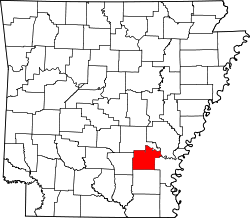 | |
| Unincorporated communities | ||
| Townships | ||
| International | |
|---|---|
| National | |
