Hubbry Logo
Daniel PayneDaniel PayneMain
Open search
Daniel Payne
Community hub
Daniel Payne
logo
8 pages, 0 posts
0 subscribers
Be the first to start a discussion here.
Daniel Payne
Daniel Payne
from Wikipedia
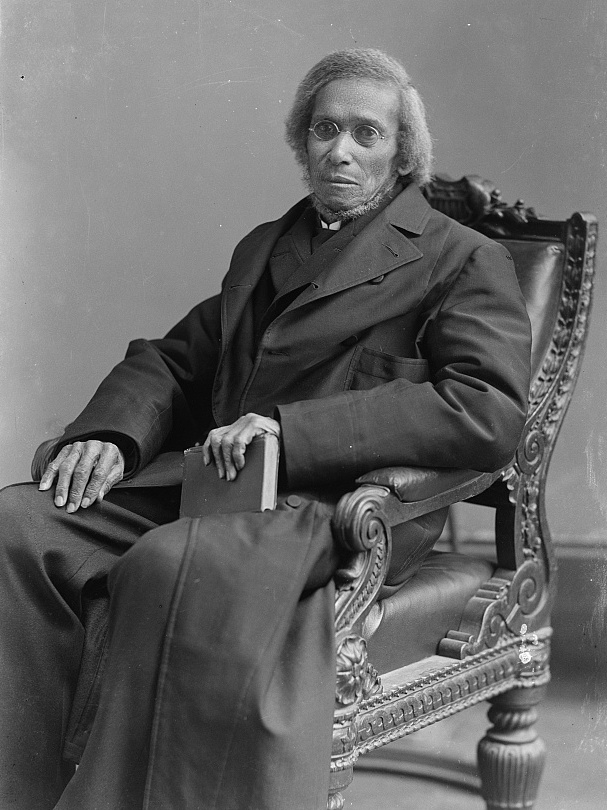
Payne photographed by C. M. Bell
Bishop Daniel A. Payne. Frontispiece of Recollections of Seventy Years (1888)

Daniel Alexander Payne (February 24, 1811 – November 2, 1893) was an American bishop, educator, college administrator and author. A major shaper of the African Methodist Episcopal Church (AME), Payne stressed education and preparation of ministers and introduced more order in the church, becoming its sixth bishop and serving for more than four decades (1852–1893) as well as becoming one of the founders of Wilberforce University in Ohio in 1856. In 1863, the AME Church bought the college and chose Payne to lead it; he became the first African-American president of a college in the United States and served in that position until 1877.

By quickly organizing AME missionary support of freedmen in the South after the Civil War, Payne gained 250,000 new members for the AME Church during the Reconstruction era. Based first in Charleston, he and his missionaries founded AME congregations in the South down the East Coast to Florida and west to Texas. In 1891 Payne wrote the first history of the AME Church, a few years after publishing his memoir.

Early life and education

[edit]

Daniel Alexander Payne was born free in Charleston, South Carolina, on February 24, 1811, of African, European and Native American descent. Payne stated later in his autobiographical writings "as far as memory serves me my mother was of light-brown complexion, of middle stature and delicate frame. She told me that her grandmother was of the tribe of Indians known in the early history of the Carolinas as the Catawba Indians." He also stated that he descended from the Goings family, who were a well known free colored/Native American family. His father was one of six brothers who served in the American Revolutionary War (1775–1783) and his paternal grandfather was an Englishman.[1] His parents, London and Martha Payne, were part of the "Brown Elite" of free blacks in the coastal southern city.[2] Both died before he reached maturity. While his great-aunt assumed Daniel's care, the Minors' Moralist Society assisted his early education.[3] Payne was raised in the Methodist Church like his parents. He also studied at home, teaching himself mathematics, physical science, and the classical languages. In 1829, at the age of 18, he opened his first school in Charleston.[2]

After the infamous and feared Nat Turner's Rebellion of 1831 in Virginia, South Carolina and other southern states passed legislation further restricting the rights and movement of free people of color and slaves. They enacted a law several years after the uprising on April 1, 1835, which made teaching literacy to both free people of color and slaves illegal and subject to fines and imprisonment for both whites and blacks.[4] With the passage of this law, Payne had to close his school.

In May 1835, Payne sailed from Charleston north to Philadelphia in search of further education. Declining the Methodists' offer, which was contingent on his going on a religious evangelist mission to the Republic of Liberia in West Africa, (which was then being organized as a colony for free blacks and emancipated slaves from the United States), Payne instead studied at the Lutheran Theological Seminary at Gettysburg (founded several yeàrs earlier in 1826) in Gettysburg (Adams County) in rural farming area of south-central Pennsylvania. The Gettysburg Seminary, only a decade old was the second Lutheran theological seminary in North America (the first was Hartwick Seminary in New York) and the current oldest in American Lutheranism. With then only a small number of theology students in one three-stories building capped by a cupola, later known as Old Dorm (now restored and renamed as Schmucker Hall), the seminary was led by prominent, talented but controversial Evangelical Lutheran theologian and professor Rev. Samuel Simon Schmucker (1799–1873). Payne never was later called or served as a Lutheran minister, though but he was the first to be educated and ordained in 1835 by an American Lutheran church body – the General Synod of the Evangelical Lutheran Church in the USA, itself also recently organized 15 years before (1820–1917) as the third major Lutheran synod in America and first nation-wide confederation of regional / state synods and congregations, ancestor to the modern Evangelical Lutheran Church in America (formed by mergers 1988).

One source claims he had to drop out of school because of problems with his eyesight.[5] Another source claimed no congregation called him and the leaders and other ministers in the General Synod of the Lutheran Church told him to work through the Methodist Episcopal Church (ancestor body from 1784 to 1939 of the current United Methodist Church), which had a number of "colored" / "Negro" congregations and very strong in Baltimore and Philadelphia, plus the recently organized off-shoot of the African Methodist Episcopal Church.[6]

Marriage and family

[edit]

Payne married in 1847, but his wife died during the first year of marriage from complications of childbirth. In 1854, he married again, to Eliza Clark of Cincinnati.

Career in AME Church

[edit]

By 1840, Payne started another school. He joined the African Methodist Episcopal Church (AME) which had been organized in 1794, a decade after the first organized American grouping of "Methodists" at the famed Christmas Conference at the old original Lovely Lane Chapel off South Calvert and German (now Redwood) Streets in Baltimore Town in December 1784 following the teachings of British leaders George Whitefield (1714–1770), John Wesley (1703–1791) and his brother Charles Wesley (1707–1788) (both well-known musical authors and hymn-writers) who were active in the Church of England seeking to revive the Christian Protestant spiritual life in Anglicanism which they feared was becoming staid, stiff and hard. After being recommended by other ministers, seven years after his Lutheran General Synod ordination of 1835 at the Lutheran Theological Seminary under Rev. Samuel Simon Schmucker (1799–1873), in Gettysburg, Pennsylvania, Rev. Payne gravitated in 1842 towards the African Methodist Episcopal Church, then 26 years old as an organized functioning church denomination since 1816, with Richard Allen and Daniel Coker, centered in eastern cities of Philadelphia, Baltimore, Richmond, which had split off from the Methodist Episcopal Church (organized in Baltimore in December 1784 with its famous "Christmas Conference" / first General Conference ordaining first Bishop Francis Asbury (1745–1816), with famed traveling evangelist Robert Strawbridge and visiting German Reformed Church pastor Philip William Otterbein, 1726–1813). That new M.E. Church had a few integrated congregations usually with "Negro" members sitting in balconies or off-sides, but was generally mostly white. Payne with his extensive Evangelical Lutheran theological education at the Gettysburg Seminary agreed with A.M.E.'s founder of a congregation in 1794, Bishop Richard Allen (1760–1831), that a visible and independent black denomination was a strong argument against slavery and racism. Payne had always worked to improve the position of blacks within the United States; he opposed calls for their emigration from North America and resettlement to the proposed new nation of Liberia where a county was being set up in the proposed African settlement taking the name of "Maryland" or other parts of Africa, as urged by the American Colonization Society which had strong support among many white abolitionists (including future President Abraham Lincoln) and supported by some free blacks.

Payne worked to improve education for AME ministers, recommending a wide variety of classes, including grammar, geography, literature and other academic subjects, so they could effectively lead the people. In the ensuing decades' debates about "order and emotionalism" in assemblies and conventions/conferences of the African Methodist Episcopal Church, he sided consistently with order.[7] He was critical of AME's founders, whom he said had "no trace of a thought in their minds about a school of learning". [8]Payne believed that AME had lagged behind white churches because its founding generation was illiterate, which some members considered a virtue and were reluctant to change.[9]

The AME's first task was "to improve the ministry; the second to improve the people".[9] At a denominational meeting in Baltimore in 1842, Payne recommended a full program of study for ministers, to include English grammar, geography, arithmetic, ancient history, modern history, ecclesiastical history, and theology. At the following 1844 AME General Conference, he called for a "regular course of study for prospective ordinees", in the belief they would lift up their parishioners.[9] In 1845, Pastor Payne tried to establish a short-lived AME seminary, and succeeded in gradually raising the educational preparation required for its ministers.

Payne also directed reforms at the style of music, introducing trained choirs and instrumental music to church practice. He supported the requirement that ministers be literate. Payne continued throughout his career to build the institution of the church, establishing literary and historical societies and encouraging order. At times he came into conflict with those who wanted to ensure that ordinary people could advance in the church. Especially after expansion of the church following the end of the Civil War into and across the South, where different styles of worship had taken root and prevailed, there were some continuing tensions about the direction of the denomination.[10]

Bishop and college president

[edit]

In 1848, fourth Bishop William Paul Quinn (1788–1873), named Payne as the historiographer of the AME Church.[11] In 1852, Payne was elected and consecrated as the sixth bishop of the AME denomination. He served in that position for the rest of his life to 1893.

Together with the Rev. Lewis Woodson (1806–1878), a leading black nationalist ideologue and fellow AME minister, and two other African Americans representing the AME Church, and 18 European-American representatives of the Cincinnati Annual Conference of the Methodist Episcopal Church (MEC), Payne served on the founding board of directors, which established Wilberforce University in Wilberforce, Ohio in 1856. It was named for the now deeply revered William Wilberforce, (1759–1833) who was a long serving British political and social leader, firm abolitionist and deep Christian believer in the Gospel, who worked tirelessly for his anti-slavery and abolishing the African trans-Atlantic slave trade causes for decades as a longtime member of the lower chamber of the British Parliament in the House of Commons.[12] Among the trustees who supported the abolitionist cause and African-American education was Salmon P. Chase, previously Governor of Ohio, who was appointed in 1864 as Chief Justice of the U.S. Supreme Court by 16th President Abraham Lincoln after serving as U S. Secretary of the Treasury in Lincoln's cabinet for 3 years during the early American Civil War, to succeed longtime Chief Justice Roger B. Taney who had died.[13] The denominations jointly sponsored Wilberforce in 1856 to provide collegiate education to African Americans. It was the first historically black college in which African Americans were part of the founding.[14]

The town of Wilberforce was located at what had been a popular summer resort, called Tawawa Springs. It was patronized by people from Cincinnati further south on the Ohio River, including abolitionists, as well as many white planters from the South, who often brought their mistresses of color and "natural" (illegitimate) multi-racial children with them for extended stays.[14]

In one of the paradoxical results of slavery, by 1860 most of the college's more than 200 paying students were mixed-race offspring of wealthy southern planters, who gave their children the education in Ohio which they could not get in the South.[14][15] The men were examples of white fathers who did not abandon their mixed-race children, but passed on important social capital in the form of education; they and others also provided money, property and apprenticeships.

With the outbreak of Civil War in the Spring of 1861, the planters withdrew their sons from the college, and the Cincinnati Annual Conference of the M.E. Church (which was generally white-only) felt it needed to use its resources to support social efforts related to the war. The college had to close temporarily because of these financial difficulties. In 1863, Payne persuaded his fellow ministers and lay members of the AME Church to buy the debt and take over the college outright from the Methodist Episcopalians of Cincinnati. Payne was then selected as president, becoming the first African-American college president in the United States.[16]

The AME had to reinvest in the college two years later, when a southern sympathizer damaged buildings by an arson fire. Payne helped organize fundraising and rebuilding. White sympathizers gave large donations, including $10,000 donations each from founding board member Salmon P. Chase and another supporter from Pittsburgh, as well as $4200 from a white woman. The United States Congress, then dominated by Radical Republicans passed a $25,000 grant for the college to aid in its rebuilding.[17] Payne led the college until 1877.[2] Payne traveled twice to Europe, where he consulted with other British Methodist clergy there and studied their several colleges and education programs.

In April 1865, after the Civil War, Payne returned to the South for the first time in 30 years. Knowing how to build an organization, he took nine missionaries and worked with others in Charleston to establish the AME denomination. He organized missionaries, committees and teachers to bring the AME Church to freedmen. By only a year later, the church had grown by 50,000 congregants in that part of the South.[2]

By the end of the Reconstruction era in 1877, AME congregations existed across the South from Florida to Texas, and more than 250,000 new adherents had been brought into the church. While it had a northern center, the growing AME Church was strongly influenced by its expansion in the South. The incorporation of many congregants with different practices and traditions of worship and music styles helped shape the national AME Church. It began to reflect more of the African-American culture of the South.[18]

In 1881, he founded the Bethel Literary and Historical Society, a club which invited speakers to present and speak on topics relevant to African-American life and a part of the flourishing "Lyceum movement".[19]

Bishop Payne died on November 2, 1893, having served the African Methodist Episcopal Church for more than 50 years. He was interred in Baltimore's Laurel Cemetery.[20]

Works

[edit]
  • 1888: Recollections of Seventy Years, a memoir.
  • 1891: The History of the A. M. E. Church, the first history of the denomination.[21]

Legacy and honors

[edit]

The historian James T. Campbell wrote of Payne in his Songs of Zion: The African Methodist Episcopal Church in the United States and South Africa (1995): "No single individual, with the possible exception of Richard Allen himself, did more to shape the trajectory and tone of African Methodism."

Key Information

  • Daniel Payne College, a historically black college that operated in Alabama from 1889 to 1979, was named in his honor. After the college closed, the city of Birmingham renamed a street Daniel Payne Drive.
  • Payne Theological Seminary in Wilberforce, Ohio, is named in his honor.
  • A Pennsylvania State Historical Marker was installed in his honor at 239 N. Washington St. at Gettysburg College, recognizing his study there.[23]
  • Payne is celebrated on the Lutheran liturgical calendar
  • Payne elementary school in Washington, DC, is named for him.

References

[edit]

Further reading

[edit]
[edit]
Revisions and contributorsEdit on WikipediaRead on Wikipedia
from Grokipedia
Daniel Alexander Payne (February 24, 1811 – November 2, 1893) was an American bishop, educator, author, and church administrator who significantly shaped the through his emphasis on ministerial training, liturgical discipline, and educational advancement for . Born free to Black parents in , Payne was orphaned by age ten and apprenticed to a before pursuing self-education and formal training, eventually founding private schools for Black children despite legal restrictions in antebellum South Carolina. Payne's ecclesiastical career began in the AME Church, where he rose to prominence as a minister advocating against , intemperance, and moral laxity, publishing early works like a on the brutalizing effects of . In 1848, he was appointed historiographer of the AME, documenting its origins and development, and in 1852, he was elected and consecrated as its sixth bishop, serving until his death. A committed educator, Payne briefly attended Lutheran before establishing institutions in and elsewhere, and in 1863, he became the first African American president of a in the United States upon the AME's acquisition of in , where he led for over a decade, prioritizing rigorous academic standards and vocational preparation. Throughout his tenure as , Payne enforced reforms to elevate AME , introducing choral music, , and formal clerical attire to counter perceptions of disorderliness, while traveling extensively to establish missions, schools, and churches across the and abroad. His writings, including , histories, and treatises, underscored a of self-improvement and intellectual rigor as essential to racial progress, influencing generations of Black and leaders. Payne's legacy endures in the AME's institutional structure and its historic commitment to education, exemplified by Wilberforce and the later founding of the Bethel Literary and Historical Society in 1881.

Early Life

Birth and Family Background


Daniel Alexander Payne was born free on February 24, 1811, in Charleston, South Carolina, to parents London Payne and Martha Payne, both members of the free Black community.
His father died when Payne was four years old, and his mother passed away five years later, leaving him orphaned at the age of nine. Thereafter, he was raised by his great-aunt, Sarah Bordeaux. Payne's family belonged to Charleston's free Black population, a group sometimes designated as the "Brown Elite," which consisted of relatively affluent and educated individuals of color amid the prevailing system of .

Initial Education and Formative Influences

Payne was born on February 24, 1811, in , to free Black parents and Martha Payne, both of whom were devout Methodists. His father died in 1815 when Payne was four years old, and his mother passed away in 1820 when he was nine, leaving him orphaned and raised thereafter by his great-aunt Sarah Bordeaux. This early family environment instilled a strong emphasis on piety and moral discipline, with Payne later recalling his parents' commitment to Methodist hymns and ethical living as foundational to his character. From a young age, Payne received religious instruction at Charleston's Cumberland Methodist Church, where he was immersed in Methodist traditions that shaped his lifelong advocacy for disciplined faith and ecclesiastical reform. His formal education began at the Minors' Moralist Society School, a private institution for free Black children, which he attended for two years, focusing on basic literacy and moral education. Subsequently, he was privately tutored by Thomas S. Bonneau, under whose guidance Payne acquired proficiency in mathematics, Greek, and other classical subjects, supplementing this with self-directed study in physical sciences. To support himself amid limited opportunities for free Blacks, Payne worked from age twelve as a shoe merchant, followed by apprenticeships in at thirteen and tailoring, experiences that grounded his intellectual pursuits in practical and highlighted the economic constraints facing his community. These formative years, marked by personal loss, religious fervor, and autodidactic effort within the restrictive , cultivated Payne's conviction in education as a pathway to moral and social elevation, influencing his later career in teaching and ministry.

Path to Ministry

Religious Conversion and AME Entry

Payne was raised in a pious Methodist family; his father, , led classes at a local Methodist church, conducted daily family worship, and exemplified Christian devotion through personal habits like morning prayer. At age eighteen, in 1829, Payne attended a held by the in , where he experienced conversion to Christianity, describing an immediate sensation of transcendent peace and joy. Weeks later, during prayer, he reported receiving a divine call to study, preach , and educate . Initially drawn to Lutheran , Payne relocated to in May 1835 and enrolled as the first student at the Lutheran Seminary in Gettysburg, though deteriorating eyesight forced his withdrawal after two years. He received Lutheran in 1837, becoming only the second individual to do so, but racial prejudice prevented him from obtaining a pastoral appointment within that denomination. In 1841, after moving to , Payne joined the African Methodist Episcopal (AME) Church, an independent denomination founded in 1816 amid discrimination in white . Upon entering the AME, Payne founded a preparatory school for Black youth in in 1842, emphasizing disciplined education and moral reform. He formally entered AME ministry in 1843, aligning with the church's emphasis on intellectual rigor and opposition to emotional excesses in worship, which resonated with his post-conversion convictions. This transition marked his commitment to a denomination that offered greater opportunities for Black leadership and autonomy.

Lutheran Seminary Experience and Ordination

In 1835, following the legislature's prohibition on educating free Black individuals, which forced the closure of his school in Charleston, Daniel Alexander Payne relocated to , and enrolled at the Lutheran Theological Seminary. He became the first African American student admitted to the institution, supported by a from the Evangelical Lutheran of Inquiry on Missions and letters of introduction from white ministers, including John Bachman. During his two years of study from 1835 to 1837, Payne pursued a rigorous curriculum that included German, Hebrew, Greek, ecclesiastical , mental philosophy, , and , often working from early morning until late evening. He formed a close relationship with seminary president Samuel Simon Schmucker, who served as a mentor and father figure. Concurrently, Payne engaged in community outreach by teaching to local in a building, conducting revivals focused on , delivering at least 70 lectures, attending antislavery meetings, and establishing committees to promote moral integrity among students. Payne departed the in 1837 without completing the full four-year program, primarily due to deteriorating eyesight that impaired his ability to continue intensive reading. That same year, he affiliated with the Franklin of the Lutheran Church. In 1839, he was ordained as a minister by the Frankean —a body he helped establish for independent African American Lutheran congregations—in Fordsboro, New York, becoming one of the earliest African American Lutheran ministers in the United States (sources vary on whether first or second, citing Jones Jr. as precedent). At his ordination, Payne delivered the address "Slavery Brutalizes Man," endorsing a synodical resolution calling for the abolition of in America.

Educational Leadership

Founding and Management of Schools

In 1829, at the age of 18, Daniel Alexander Payne founded a for African American children in , funding the endeavor with his own resources after completing apprenticeships in and tailoring. The school primarily enrolled free Black students, numbering in the dozens, and emphasized subjects such as , physical sciences, and classical languages, reflecting Payne's self-taught proficiency in these areas. Payne occasionally extended instruction to enslaved individuals at night, defying local customs, though such efforts remained clandestine due to prevailing racial restrictions. He personally managed daily operations, delivery, and student discipline until 1835, when South Carolina's Bill No. 259 explicitly banned education for free Blacks and reinforced prohibitions on teaching slaves, prompted by fears following Nat Turner's 1831 rebellion. After departing Charleston for in May 1835 to evade the restrictive laws, Payne resumed teaching while pursuing further studies. In 1840, he established a coeducational in the city, which served students and focused on foundational academic skills including , , , and arithmetic, with an emphasis on equipping future African Methodist Episcopal (AME) ministers for effective ministry. Payne oversaw its administration, integrating moral and intellectual training aligned with his Methodist principles, and supplemented it by founding a and a literary society to foster community-wide and among free s. These institutions operated amid northern urban challenges like limited funding and prejudice, yet persisted under Payne's direct involvement until his duties intensified in the mid-1840s.

Presidency of Wilberforce University

In 1863, the African Methodist Episcopal (AME) Church acquired , a originally established in 1856 near , but shuttered during the Civil War; , then a in the AME, played a pivotal role in persuading the church to purchase it for $10,000, transforming it into the first college owned and operated by . The AME selected Payne as its president, marking him as the first African American to lead a college in the United States. During his tenure from 1863 to 1876, Payne prioritized rigorous academic standards intertwined with moral and religious development, instituting policies that conditioned on demonstrated strong to foster disciplined . Enrollment expanded dramatically under his leadership, rising from 12 students in 1863 to over 150 by 1876, reflecting his success in attracting freedmen and promoting higher education as a tool for within the AME framework. He enhanced clerical training programs, aligning the university's with the church's needs for an educated ministry, which contributed to broader reforms in AME preparation. Payne's administration faced inherent challenges from postwar financial constraints and societal racial barriers, yet he positioned Wilberforce as a model for in , emphasizing intellectual rigor over vocational training alone. By 1876, he stepped down from the presidency to devote more time to his episcopal duties, leaving a legacy of institutional stability and that solidified Wilberforce's role in African American higher education.

Ecclesiastical Career

Ascension in the AME Church

Payne entered the ministry of the African Methodist Episcopal (AME) Church in 1843, following his departure from , where he had been ordained in 1839 as one of the first African American ministers. His prior theological education at the Lutheran Seminary in , distinguished him among AME clergy, who often lacked formal training, and positioned him as an advocate for intellectual rigor in preaching and church governance. By emphasizing disciplined worship over emotionalism and promoting ministerial preparation, Payne gained influence within the denomination's leadership circles. In 1848, at the AME General Conference, Payne was appointed historiographer, tasked with documenting the church's origins and development, a role that amplified his visibility and authority. This position allowed him to author key works, such as the church's early history, reinforcing his reputation as a scholar-cleric committed to institutional order and historical preservation amid the era's abolitionist and denominational expansions. Payne's ascent culminated on May 7, 1852, when he was elected and consecrated as the sixth bishop of the AME Church at the General Conference in , becoming the first bishop with seminary-level theological education. His election reflected the denomination's growing prioritization of educated leadership to counter stereotypes of intellectual inferiority among and to strengthen missionary and organizational efforts post-emancipation pressures. Serving until his death in 1893, Payne's elevation marked a shift toward professionalized episcopacy in the AME, though some contemporaries debated his austere reforms as overly rigid.

Reforms as Bishop

Upon his election as the sixth bishop of the African Methodist Episcopal (AME) Church at the 1852 General Conference in , Daniel Payne prioritized elevating the denomination's intellectual and liturgical standards amid rapid post-slavery expansion. He advocated for rigorous preparation of clergy, arguing that uneducated ministers perpetuated ignorance and emotionalism, and successfully pushed for mandatory courses in , , , , and at AME institutions. By 1863, Payne's influence facilitated the AME Church's purchase of , which he led as president, integrating ministerial training with broader education to produce disciplined, literate leaders capable of countering racial stereotypes of intellectual inferiority. Payne enforced stricter disciplinary measures against "heathenish" worship practices, such as ring shouts and uncontrolled shouting during services, which he viewed as relics of slavery-era emotional excess incompatible with dignified . In his episcopal oversight, traveling extensively across the and into and the , he standardized to align more closely with Methodist traditions, reducing improvisational elements and promoting orderly services to foster respectability among congregants and observers. These reforms faced resistance from those favoring expressive folk but gained traction as the church grew to over 250,000 members by the 1870s, partly through Payne's organizational efforts. In , Payne condemned "cornfield ditties"—referring to unrefined —and championed trained choirs with instrumental accompaniment, collaborating with European-trained musicians to elevate AME hymnody toward classical standards. At the 1856 General Conference, he proposed the AME motto, "God our Father, Christ our Redeemer, the the our Comforter, the Human Race our Family," encapsulating his vision of universal Christian brotherhood under disciplined piety. These initiatives, rooted in Payne's Lutheran-influenced emphasis on rationality and self-control, aimed to transform the AME into a model of moral and intellectual uplift for , though critics later debated whether they overly suppressed cultural expressions in favor of assimilationist respectability.

Writings and Thought

Major Publications

Payne's most prominent publication was History of the African Methodist Episcopal Church (1891), a comprehensive account of the denomination's origins, development, and key figures, serving as the first official history and drawing on his extensive involvement as a and educator. Earlier supplemental volumes on the same topic appeared in the , reflecting his role as church historian. In 1888, he published Recollections of Seventy Years, an autobiographical memoir detailing his personal journey from enslavement's shadow in to leadership in the AME Church, emphasizing themes of self-education, religious conviction, and institutional reform. Payne also produced Sermons Delivered by Daniel A. Payne (1888), a collection of addresses stenographically recorded during his episcopal tenure, focusing on doctrinal purity, moral discipline, and ecclesiastical discipline within the AME. Among his earlier writings, the Biography of Rev. David Smith of the A.M.E. Church chronicled the life of a fellow minister, underscoring Payne's commitment to preserving ecclesiastical through biographical . These works collectively advanced Payne's for intellectual rigor and historical documentation in African American religious institutions.

Core Philosophical and Theological Positions

Payne adhered to orthodox Trinitarian , proposing the African Methodist Episcopal (AME) Church motto at the 1856 General Conference: “God Our Father, Christ Our Redeemer, Our Comforter, Humankind Our Family,” which underscores a traditional understanding of the and human relations under divine authority. His of divine knowledge emphasized God's self-disclosure through creation, history, and supremely Scripture, viewing as the primary means by which "the infinite has manifested Himself." This framework rejected subjective or socially derived interpretations of faith, insisting instead on biblical fidelity as the foundation for and practice. Central to Payne's positions was the integration of intellectual rigor and education with spiritual formation, arguing that true knowledge of God required studious engagement with Scripture and classical learning to foster holy living. He urged believers to "rest not till you have learned to read the Bible," positioning education not as optional but as essential for clergy and laity to discern and apply divine truth amid moral challenges like slavery, which he condemned as a violation of God's created order. Payne's seminary training informed his advocacy for an educated ministry proficient in Hebrew and Greek, implementing multi-year theological courses to ensure preaching aligned with scriptural exegesis rather than personal inspiration. This reflected his broader philosophical commitment to reason and discipline over emotional excess, viewing unbridled sentiment in worship as a barrier to refined Christian expression. In and church order, Payne championed formal, liturgical practices and "order" against the "emotionalism" prevalent in some AME congregations, particularly Southern styles marked by spontaneous outbursts he deemed "heathenish." He sought to "drive out this heathenish mode of " to preserve intelligence, refinement, and doctrinal purity, favoring biblically grounded services that prioritized scriptural instruction and moral discipline. Social reforms, including abolition and temperance, flowed from this as outgrowths of knowing , not autonomous , aiming to cultivate a "holy, studious, instructive, and wise" community aligned with divine moral law.

Social and Moral Advocacy

Abolitionist Efforts

Daniel Payne's abolitionist efforts began in his youth in , where he established a in 1829 to educate free black children and slaves, challenging the institution of through literacy and moral instruction despite prevailing laws. This initiative was shuttered in 1835 following South Carolina's enactment of Bill No. 2639, which prohibited the of slaves amid fears of unrest following slave revolts led by and . Payne's commitment persisted after relocating north, where he integrated anti-slavery advocacy into his religious and communal roles. In the 1830s, Payne participated in organized protests against through the Frankean , a black Lutheran synodical body that opposed the institution on moral and scriptural grounds. His pivotal contribution came in June 1839 during his ordination in Fordsboro, New York, when he delivered the address "Slavery Brutalizes Man" to endorse a synodical report calling for the end of in America. In the speech, published in the Lutheran Herald and Journal of the Franckean , Payne contended that " brutalizes man—destroys his , and subverts the moral government of ," arguing it dehumanized both enslaved and enslavers by promoting separations, denying , and enabling among owners, in violation of biblical mandates such as Matthew 19:6. This oration influenced the synod to adopt the anti-slavery resolution and marked Payne's use of scripture to dismantle theological justifications for bondage. Transitioning to the African Methodist Episcopal (AME) Church in 1841, Payne continued his activism by leading the from 1842 to 1843, where he coordinated aid for fugitive slaves, supplying food, clothing, shelter, and assistance in escapes to . This practical work complemented his broader ecclesiastical opposition to , as the AME—founded by free blacks resisting —served as a platform for against the trade. Payne's efforts emphasized education's role in , viewing as essential for scriptural interpretation and rejecting slavery's enforced ignorance as antithetical to Christian agency.

Temperance and Ethical Reforms

Payne actively participated in the 19th-century , promoting sobriety as essential to moral discipline and among , whom he believed were particularly vulnerable to alcohol's degrading effects. His poetry emphasized "moral purity" and "holy virtue," framing intemperance as a barrier to spiritual and social progress. He supported youth temperance associations, organizing groups to instill habits of from an early age, as recounted in his Recollections of Seventy Years. In 1842, amid anti-abolitionist riots in that targeted institutions like Temperance Hall—a venue for reformist gatherings—Payne publicly addressed the violence in the Liberator, linking temperance advocacy to broader struggles against moral and social disorder. His involvement underscored temperance as intertwined with and self-improvement, countering stereotypes of Black degradation. As bishop, Payne extended ethical reforms to ecclesiastical discipline, enforcing stricter moral codes within the AME Church to elevate and . He criticized "immoral," "ungodly," and "recreant" preachers, advocating rigorous educational and ethical preparation for to prevent vice and promote integrity. Payne opposed secular amusements infiltrating worship, such as dancing, which he viewed as profane; in one early ministry experience, he halted a congregation's dancing and hand-clapping during services, insisting on aligned with Methodist . These reforms aimed at internal moral elevation, rejecting practices like secret societies and theatrical entertainments that Payne deemed incompatible with Christian ethics, thereby fostering a disciplined church capable of countering external prejudices through exemplary conduct.

Legacy and Evaluation

Achievements and Recognized Contributions

Payne's most enduring contributions lie in advancing African American education and ecclesiastical leadership within the African Methodist Episcopal (AME) Church. He served as the first Black president of Wilberforce University from 1863 to 1876, expanding enrollment from 12 to 150 students and establishing it as the first institution of higher learning owned and operated by African Americans after persuading the AME Church to acquire it in 1863. As the sixth AME bishop, elected in 1852 and the first with formal theological training, he elevated ministerial standards by securing a structured curriculum at the 1844 General Conference and dispatching the church's first missionaries to the post-Civil War South in 1863, facilitating rapid expansion including the founding of the South Carolina Conference in 1865. His historiographical work further solidified his legacy, as the AME's first official historiographer appointed in 1848, culminating in the publication of History of the African Methodist Episcopal Church in 1891, which provided a foundational record of the denomination's origins and development. Payne also presided over the Methodist Ecumenical Conference in in 1881 as the first Black bishop to do so, enhancing the AME's international presence. These efforts, alongside establishing early schools in Charleston in 1829 and in 1840, underscored his commitment to intellectual and moral upliftment, influencing AME policies on education and clergy preparation for decades.

Criticisms and Historical Debates

Payne's advocacy for formal education among AME clergy generated significant internal debate, as his proposals for mandatory curricula and training were resisted by those who prioritized experiential piety over academic preparation. At the 1844 AME General Conference, Payne's education committee successfully pushed for structured ministerial requirements despite opposition, arguing that educated leaders would better serve and uplift the Black community amid pervasive racial stereotypes of inferiority. Critics within the church viewed these standards as potentially exclusionary, favoring an intellectual elite at the expense of grassroots preachers whose authority derived from spiritual fervor rather than formal study. A prominent point of contention centered on Payne's vehement opposition to "shouting" and ring shouts—circular, rhythmic worship practices involving clapping, stamping, and ecstatic movement rooted in African traditions. In an 1878 recollection, Payne described witnessing such a gathering near , where participants formed a ring post-sermon, removed coats, and engaged in what he termed "a most ridiculous and heathenish way" of singing and dancing, rejecting his plea to halt it as the leader invoked divine will. He characterized these as symptoms of "incurable religious disease" blending divine and human elements with , advocating instead for orderly, literate to align with Protestant and refute white supremacist claims of Black . This stance fueled historical debates over cultural authenticity versus assimilation in religious expression, with later scholars critiquing Payne's position as an internalized bid for respectability that suppressed vital, embodied spirituality sustaining enslaved communities. Proponents of Payne, however, defend his reforms as pragmatic responses to post-emancipation needs, fostering institutional legitimacy and countering arguments that were incapable of disciplined faith. These tensions persisted in AME , balancing Payne's role in professionalizing the church against accusations of classism and cultural erasure.

References

Add your contribution
Related Hubs
User Avatar
No comments yet.