Recent from talks
Nothing was collected or created yet.
Daucus
View on Wikipedia
| Daucus | |
|---|---|
| Daucus carota | |
| Scientific classification | |
| Kingdom: | Plantae |
| Clade: | Tracheophytes |
| Clade: | Angiosperms |
| Clade: | Eudicots |
| Clade: | Asterids |
| Order: | Apiales |
| Family: | Apiaceae |
| Subfamily: | Apioideae |
| Tribe: | Scandiceae |
| Subtribe: | Daucinae |
| Genus: | Daucus L. (1753) |
| Species | |
|
See text | |
| Synonyms[1] | |
|
List
| |
Daucus is a worldwide genus of herbaceous plants of the celery family Apiaceae of which the best-known species is the cultivated carrot. Daucus has about 45 species.[1] The oldest carrot fossil is 1.3 Ma, and was found on the island of Madeira in the Atlantic Ocean.[2]
Description
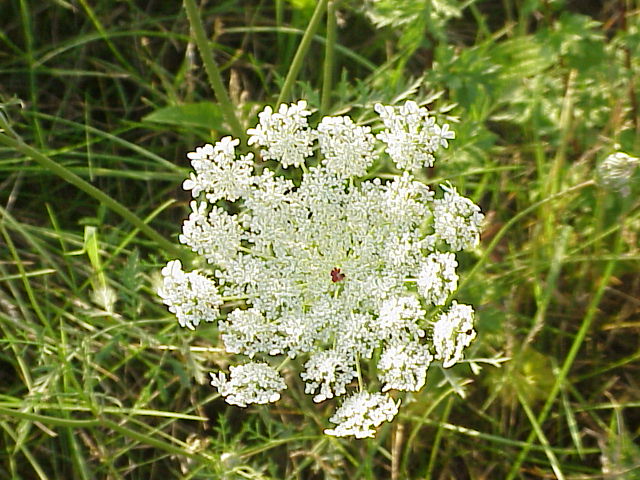
[edit]Members of Daucus are distinguished within the family Apiaceae by their leaves which are 2–3 pinnatisect with narrow end sections. The genus primarily consists of biennial plants but also includes some annual plants and some perennial herbs. All Daucus have bristly stems. The inflorescences are umbels. The flowers are mostly white, with bracts and bracteoles. The petals may be pure white, reddish, pinkish or yellowish. They are emarginate above and have pointed, wrapped lobules. The petals are often unequal in size, with petals at the outermost edge of the inflorescence often being larger. The fruit is an ovoid to ellipsoidal schizocarp, cylindrical or compressed, with ciliate primary ribs and secondary ribs with a row of hooked spines.[3] Some species have a small pale or white edible taproot, similar to a radish, which may or may not be bitter in taste.
Ecology
[edit]Daucus pollination is carried out by insects, primarily: Lepidoptera, Coleoptera, Diptera, and Hymenoptera. It is a cosmopolitan genus with endemic species on most continents as well as on many islands and in isolated areas.[citation needed] The genus centre is in North Africa and Southwest Asia in the Temperate Zone.[citation needed] Prolonged dry or cold weather tends to retard growth in Daucus species, but the genus as a whole is evolutionarily adaptive to these conditions.[citation needed] Some Daucus species accumulate substantial resources in large underground taproots without impeding plant development.[citation needed] Native to Europe is the carrot, with several subspecies, including subsp. carota (wild carrot), subsp. gummifer (sea carrot) and subsp. sativus, a cultivated form of carrot, also called garden carrot).
Four members of the Daucus genus were examined to determine differences in isoenzyme patterns and plastid DNA. The four were: Daucus carota subspecies sativus cultivar Danvers, D. carota subsp. gummifer, D. capillifolius, and D. pusillus. Although only one form of HSDH (homoserine dehydrogenase) was present in each Daucus line, the rate of migration of HSDH from cv. Danvers was different from that of the others. Multiple isoenzymic forms of ADH were present in each Daucus cultivar. Comparison of endonuclease restriction fragment patterns from plastid DNAs digested by BamHI revealed only small differences between plastid DNAs of cv. Danvers and subsp. gummifer, whereas large differences were observed between cv. Danvers and D. pusillus plastid DNA patterns. No differences were found between cv. Danvers and D. capillifolius plastid DNA patterns when examined using eight different restriction enzymes. The data indicate that specific isoenzyme and organelle DNA restriction fragment patterns will be useful markers for precise identification of genomes of different Daucus species.[4]
Species
[edit]45 species are currently accepted.[1]
- Daucus aleppicus J.Thiébaut – Lebanon and Syria
- Daucus aureus Desfontaines – yellow fruit's carrot, golden carrot; Mediterranean basin and Canary Islands
- Daucus bicolor Sm.
- Daucus biseriatus Murb. – Algeria and Morocco
- Daucus broteri Tenore – Brotero's carrot; southeastern Europe to Iran
- Daucus carota L. – wild carrot, Queen Anne’s lace; Europe, Northern Africa, western and Central Asia, southern China, introduced elsewhere
- Daucus conchitae Greuter – Dodecanese and southwestern Turkey
- Daucus crinitus Desf. – Iberian Peninsula and northwestern Africa
- Daucus decipiens (Schrad. & J.C.Wendl.) Spalik, Wojew., Banasiak & Reduron – Madeira
- Daucus della-cellae (Asch. & Barbey ex E.A.Durand & Barratte) Spalik, Banasiak & Reduron – Libya
- Daucus durieua Lange – Durieu's carrot; Canary Islands, Iberian Peninsula, North Africa, Levant
- Daucus edulis (Lowe) Wojew., Reduron, Banasiak & Spalik – Madeira and Selvagens
- Daucus elegans (Webb ex Bolle) Spalik, Banasiak & Reduron – Canary Islands
- Daucus glaber (Forssk.) Thell. – eastern Mediterranean to northern Iran
- Daucus glochidiatus (Labill.) Fisch., C.A.Mey. & Avé-Lall. – Australia and New Zealand
- Daucus gracilis Steinh. – Algeria
- Daucus guttatus Sm. – eastern Mediterranean to Iran
- Daucus hochstetteri A.Braun ex Engl. – Eritrea and Ethiopia
- Daucus humilis (Lobin & K.H.Schmidt) Rivas Mart., Lousã, J.C.Costa & Maria C.Duarte – Cape Verde
- Daucus incognitus (C.Norman) Spalik, Reduron & Banasiak – eastern tropical Africa from Ethiopia to Mozambique
- Daucus insularis (Parl.) Spalik, Wojew., Banasiak & Reduron – Cape Verde
- Daucus involucratus Sm. – southern and eastern Greece to Crete and western and southern Turkey, Cyprus, and central Israel
- Daucus jordanicus Post Libya, and Syria to Jordan
- Daucus mauritii (Sennen ex Maire) Sennen – northern Morocco
- Daucus melananthus (Hochst.) Reduron, Spalik & Banasiak – central and eastern tropical Africa, Yemen, Madagascar, and South Africa
- Daucus microscias Bornm. & Gauba – northern Iraq to northwestern and north-central Iran
- Daucus minusculus Pau ex Font Quer – Morocco, Portugal, and Sardinia
- Daucus mirabilis (Maire & Pamp.) Reduron, Banasiak & Spalik – northeastern Libya
- Daucus montanus Humb. & Bonpl. ex Spreng. – Mexico to Central America and the Andes
- Daucus muricatus (L.) L. – Azores and western and central Mediterranean
- Daucus pedunculatus (Baker f.) Banasiak, Spalik & Reduron – eastern tropical Africa from central Ethiopia to Mozambique
- Daucus pumilus (L.) Hoffmanns. & Link – Mediterranean basin and the Canary Islands
- Daucus pusillus Michx. (syn. D. arcanus F.García Mart. & Silvestre) – American wild carrot; western Canada to northern Mexico and the southeastern US, and southeastern Brazil to southern South America
- Daucus reboudii Coss. ex Batt. – northern Algeria and Tunisia
- Daucus ribeirensis (K.H.Schmidt & Lobin) Rivas Mart., Lousã, J.C.Costa & Maria C.Duarte – Cape Verde
- Daucus rouyi Spalik & Reduron – Corsica, Sardinia, Algeria, and Tunisia
- Daucus sahariensis Murb. – Morocco to Libya and Sinai
- Daucus setifolius Desf. – southern Spain and northwestern Africa
- Daucus setulosus Guss. ex DC. – southeastern Europe to western Turkey, Syria and Lebanon, and northwestern Libya
- Daucus subsessilis Boiss. – Cyprus, the Levant, southern Iran, and the northeastern Arabian Peninsula
- Daucus syrticus Murb. – Tunisia, Libya, and northern Egypt
- Daucus tenuisectus Coss. ex Batt. – southwestern Morocco
- Daucus virgatus (Poir.) Maire – Algeria and Tunisia
Allergenicity
[edit]Daucus has an OPALS allergy scale rating of 10 out of 10, indicating extremely high potential to cause allergic reactions.[5]
References
[edit]- ^ a b c "Daucus L." Plants of the World Online. Royal Botanic Gardens, Kew. Retrieved 17 February 2025.
- ^ Góis-Marques, Carlos A.; Nascimento, Lea de; Fernández-Palacios, José María; Madeira, José; Sequeira, Miguel Menezes de (2019). "Tracing insular woodiness in giant Daucus (s.l.) fruit fossils from the Early Pleistocene of Madeira Island (Portugal)". Taxon. 68 (6): 1314–1320. Bibcode:2019Taxon..68.1314G. doi:10.1002/tax.12175. hdl:10400.13/5323. ISSN 1996-8175. S2CID 214067624.
- ^ "Daucus carota (Carrot)". CAB International. 2019. Retrieved 10 November 2019.
- ^ Benjamin F. Matthews; Kenneth G. Wilson; Lorin R. DeBonte (January 1984). "Variation in Culture, Isoenzyme Patterns and Plastid DNA in the Genus Daucus". In Vitro. 20 (1): 38–44. doi:10.1007/BF02633330. JSTOR 4292775. S2CID 42829077.
- ^ Ogren, Thomas Leo (2015). The Allergy-Fighting Garden. Berkeley: Ten Speed Press. ISBN 9781607744917.
The article is based on the following sources:
- Seybold Siegmund (eds): interactive Schmeil-Fitschen (CD-Rom), Source & Meyer, Wiebelsheim 2001/2002, ISBN 3-494-01327-6
- Daucus, Flora of China
External links
[edit]- species list on the Germplasm Resources Information Network
- Daucus - Synonyms Index synonymique France (French)
Daucus
View on GrokipediaTaxonomy
Etymology and History
The genus name Daucus originates from the Ancient Greek daûkos (δάυκος), an ancient term for a carrot-like plant, reflecting the close association of the type species Daucus carota with early cultivated carrots.[7] This etymological root underscores the genus's historical linkage to edible root vegetables in Mediterranean agriculture.[8] Carl Linnaeus formally established the genus Daucus in his seminal work Species Plantarum in 1753, where he described D. carota as the type species and delineated the genus based on morphological characteristics such as umbellate inflorescences and schizocarp fruits typical of the Apiaceae family. During the 19th and early 20th centuries, taxonomic treatments evolved through regional floras and monographic studies; for instance, George Bentham (1867) and Pierre Edmond Boissier (1872) grouped Daucus within the spiny-fruited alliance Caucalideae, while Philipp Gustav Heinrich von Drude (1898) refined its placement in subtribe Daucinae under tribe Scandiceae, emphasizing fruit ornamentation as a key diagnostic trait.[9] Subsequent works, such as those by Santiago Sáenz Laín (1981) and Leslie D. Gottlieb (post-1980s syntheses), recognized approximately 20–25 species based on morphological and cytological data, though boundaries with related genera like Ammi and Caucalis remained debated due to overlapping fruit structures.[9] Key taxonomic revisions in the 19th and 20th centuries involved segregating or synonymizing taxa; for example, species formerly placed in Caucalis (e.g., C. platycarpos) were occasionally transferred to Daucus based on fruit spination, as noted in early European floras, while Ammi was generally retained as distinct but with noted affinities in subtribe Daucinae.[10] These changes were driven by morphological analyses in works like Drude's classifications and later by Irving H. Fisher (1960) and Michael G. Gilbert (1980s), which consolidated ~21 species while highlighting variability in Mediterranean endemics.[9] Recent molecular phylogenetics have significantly updated the genus's circumscription; a 2016 study by Łukasz Banasiak and colleagues, using nuclear ribosomal ITS and chloroplast DNA sequences from 260 accessions, demonstrated the polyphyly of traditional Daucus and proposed merging nine genera (including Ammi, Agrocharis, Melanoselinum, Monizia, Pachyparsonsia, Pseudorlaya, Rouya, and Tornabenea) and the species Athamanta della-cellae into an expanded Daucus, recognizing approximately 33 species across diverse fruit types (winged, spiny, and obsolete).[11] This revision, building on earlier molecular work like ITS-based phylogenies from 2004–2014, increased the accepted species count to around 40 when incorporating subsequent validations; this expanded circumscription is followed in some treatments, leading to approximately 40-45 accepted species, though not all databases have fully implemented the mergers (e.g., Ammi remains separate in POWO as of 2024).[9][3] A 2019 synthesis further affirmed this broader delimitation, noting ongoing refinements through next-generation sequencing to resolve remaining ambiguities in species boundaries.[9]Phylogenetic Position
Daucus is classified within the order Apiales, family Apiaceae, subfamily Apioideae, and tribe Scandiceae, subtribe Daucinae, a group characterized by spiny-fruited taxa adapted to Mediterranean-like environments.[11] Molecular phylogenetic studies utilizing internal transcribed spacer (ITS) regions of nuclear ribosomal DNA and chloroplast DNA (cpDNA) markers, such as rpl16 and rpoC1 introns, have confirmed the monophyly of Daucus, resolving it as a well-supported clade within Scandiceae.[12] These analyses, often complemented by multiple nuclear orthologs, reveal closest relatives among genera like Torilis and Caucalis, which share similar fruit structures and occupy adjacent positions in ITS-based trees of the tribe.[13] Within Daucus, subdivisions into sections such as Sect. Daucus and Sect. Carota have been delineated using a combination of fruit morphology—particularly spine arrangement and mericarp features—and DNA markers like ITS and cpDNA sequences. Sect. Daucus encompasses species with prominent secondary ribs bearing bifurcate spines, while Sect. Carota includes the type species D. carota and allies distinguished by subtler fruit ornamentation, reflecting evolutionary adaptations to diverse dispersal strategies.[14] The genus originated in the Mediterranean region, with fossil-calibrated phylogenies estimating its initial divergence and radiation around 10–15 million years ago during the Miocene, coinciding with the uplift of regional mountain systems and aridification events that promoted speciation in Apiaceae.[15] This timeline aligns with biogeographic patterns showing early diversification in Eurasia before subsequent dispersals to Africa, the Americas, and Australasia.[16]Description
Morphology
Daucus species are primarily annual or biennial herbs, growing 0.1–1.5 m tall, with erect, branching stems that are often retrorsely hispid or scabrous along the ribs.[17][18] They possess a thickened taproot, which in some taxa like Daucus carota subsp. sativus is fleshy, elongate, and edible, while in wild forms it is slender, branched, and woody.[19] The basal leaves are petiolate and pinnately decompound, with ultimate segments narrow and lanceolate, measuring 5–15 cm long overall, while upper leaves are reduced, sessile, and sheathing.[17][18] The inflorescences consist of terminal and axillary compound umbels, typically 3–10 cm in diameter, with numerous spreading or incurved rays up to 7 cm long.[17][18] Flowers are white, sometimes yellowish or purplish, in small umbellules; the outer petals are obcordate with an inflexed tip and often enlarged and radiant, while a central flower is frequently dark purple or sterile with enlarged petals.[17][20] Involucral bracts are pinnatisect into linear lobes, reflexed, and numerous, exceeding the umbel in some species.[17] Fruits are schizocarps, ellipsoid to ovoid, 2–5 mm long, and dorsally compressed, with primary ribs filiform and bristly, and secondary ribs winged bearing glochidiate (hooked) prickles that aid in animal dispersal.[17][20] Vittae (oil tubes) are present in the furrows and on the commissure, and the seed face is shallowly concave.[17] Morphological variations occur across the approximately 40 species in the genus, with annual forms like Daucus pusillus being more slender (5–60 cm tall) and having linear-lanceolate bract segments, contrasting with the taller biennial Daucus carota (up to 1.5 m) featuring broader, more dissected leaves and concave fruiting umbels.[21][22] Fruit spine length and umbel shape also vary, with longer spines in species like Daucus capillifolius and flat to convex umbels in Mediterranean subspecies of D. carota.[23] These traits show overlap but help distinguish taxa in phenetic analyses.[24]Reproduction and Life Cycle
The genus Daucus encompasses species with life cycles that are predominantly biennial, characterized by a vegetative rosette-forming stage in the first year, followed by bolting, flowering, and seed production in the second year, though some species complete their cycle annually. For instance, Daucus carota, the type species, is typically biennial but can behave as a short-lived perennial under favorable conditions, while species like Daucus pusillus are annual.[25][26][27] This biennial habit allows plants to store energy in a thickened taproot during the initial phase, supporting reproductive efforts the following season. Annual species, in contrast, germinate, flower, and set seed within a single growing season, often in response to more arid or disturbed habitats. Sexual reproduction in Daucus occurs through hermaphroditic flowers arranged in compound umbels, with plants exhibiting self-compatibility that enables autogamy, though outcrossing is favored due to protandry and the spatial separation of male and female phases within and between umbels. Studies on wild and cultivated D. carota confirm self-compatibility, with viable seed set following self-pollination, but higher seed quality and yield from cross-pollination.[28][29] Similarly, species such as D. pusillus and D. montanus demonstrate self-compatibility, producing fully developed mericarps through selfing, though geitonogamy (pollination between flowers on the same plant) predominates in natural populations.[27] Asexual reproduction via apomixis is rare and not well-documented across the genus, with no widespread evidence of seed production without fertilization in natural populations. Seed dormancy mechanisms play a key role in the life cycle, particularly for biennial species, where freshly matured seeds often exhibit physiological dormancy that enforces a delay in germination. In D. carota, this dormancy can persist for 1 to 7 years in the soil seed bank, contributing to population persistence.[30] For biennials, germination is typically triggered by cold stratification, a period of low temperatures (around 0–5°C) lasting 4–12 weeks during winter, which breaks dormancy and synchronizes seedling emergence with spring conditions.[31] Annual species generally lack this strict requirement, germinating more readily under fluctuating temperatures that mimic autumn or spring.Distribution and Habitat
Global Distribution
The genus Daucus is native primarily to the Mediterranean Basin, encompassing southern Europe, North Africa, and Southwest Asia, with its range extending eastward to Pakistan and Central Asia, and southward into parts of sub-Saharan Africa, including Ethiopia, tropical regions, and Madagascar.[3] This biogeographic core reflects the genus's evolutionary origins in temperate and subtropical zones, where it exhibits its highest species diversity.[12] The Mediterranean region, in particular, serves as a center of endemism, with the western portion—including North Africa—recognized as a major hotspot for Daucus variation.[32] Comprising approximately 40 accepted species, Daucus shows elevated diversity in countries such as Morocco and Iran, each hosting 5–8 species, underscoring these areas as key nodes within the native range.[3][33] For instance, Morocco supports multiple taxa like Daucus aureus and Daucus maximus, contributing to regional patterns of speciation driven by climatic gradients.[34] Similarly, Iran harbors diverse forms, including wild relatives of the cultivated carrot, reflecting its position at the crossroads of Southwest Asian flora.[35] Around 10 species are endemic to Macaronesian islands, such as the Canary Islands and Madeira, where insular isolation has fostered unique evolutionary radiations, including arborescent forms.[36] These endemics highlight the genus's adaptability to oceanic archipelagos within its native distribution.[37] While the primary native range is in the Mediterranean and adjacent regions, several Daucus species are also native to North and South America, Australia, and New Zealand; notable examples include D. pusillus in North America, D. montanus in the Andes of South America, and D. glochidiatus in Australia and New Zealand.[3] Additionally, species like D. carota have been widely introduced to these and other regions through human-mediated dispersal, often as contaminants in agricultural seed or via ornamental plantings, leading to naturalization in temperate grasslands and disturbed habitats.[38][12]Habitat Preferences
Species of the genus Daucus predominantly inhabit disturbed environments, including roadsides, waste grounds, old pastures, and open grasslands, where they often colonize areas following human activity or natural disruptions. They are frequently found on rocky slopes and in meadows, thriving in open, sunny conditions that provide full sunlight exposure. These plants exhibit a preference for dry to moderately moist sites, avoiding waterlogged areas due to their need for well-drained soils.[39][40][41] Daucus species tolerate a range of soil types, particularly dry, sandy, or gravelly substrates, as well as calcareous and heavy clay soils, with a noted affinity for neutral to alkaline pH levels. They perform well in low-fertility soils with medium to high nitrogen content but are less competitive in shaded or nutrient-poor, coarse-textured environments. The deep taproot characteristic of the genus enables effective water and nutrient uptake, contributing to their persistence in such varied, often marginal habitats.[39][40][42] Adapted primarily to Mediterranean-type climates, Daucus demonstrates notable drought tolerance through taproot storage of reserves, allowing survival in regions with low precipitation and high temperatures. Many species also exhibit cold tolerance, extending their range into temperate zones. Altitudinally, they occur from sea level up to 3000 m, with coastal and lowland species favoring saline-influenced areas while montane taxa occupy higher elevations in rocky or open terrains.[43][44][42]Ecology
Pollination and Dispersal
Daucus species exhibit entomophilous pollination, relying primarily on insect vectors for cross-pollination. The flowers attract a diverse array of generalist pollinators, including flies (Diptera such as Syrphidae and true flies), bees and wasps (Hymenoptera), beetles (Coleoptera like Rhagonycha fulva), and butterflies (Lepidoptera).[45][46] The compound umbel inflorescence, with its flat to convex arrangement of small white flowers, serves as a landing platform that accommodates these varied visitors, promoting pollen transfer across plants.[45] Flowering in Daucus typically occurs during summer months, with individual plants producing multiple umbels that mature sequentially—starting with the central or terminal umbel and progressing to lateral ones.[47] This staggered maturation extends the flowering period per plant, enhancing opportunities for pollination by synchronizing with peak insect activity. Seed dispersal in Daucus is achieved mainly through epizoochory, where the dry schizocarp fruits, each comprising two mericarps armed with hooked spines, adhere to the fur of passing animals or human clothing.[48] These spines facilitate attachment and enable long-distance transport, with studies recording dispersal distances up to several kilometers via mammals.[48] Wind also contributes to dispersal, particularly for short distances, as lightweight fruits can be carried by air currents, though this is secondary to animal-mediated spread.[48] Daucus seeds form a persistent soil seed bank, remaining viable for up to 5 years under natural conditions, which allows for recruitment in favorable years following disturbance or gap formation.[49] This longevity is influenced by burial depth and environmental factors, with deeper seeds exhibiting prolonged persistence.[49]Interactions with Other Organisms
Daucus species interact with herbivores primarily through consumption of their foliage, roots, and seeds, though chemical defenses limit extensive damage. In D. carota, the aromatic and bitter foliage is browsed sparingly by mammalian herbivores such as deer (Odocoileus spp.) and rabbits (Sylvilagus spp.), which prefer less defended plants. Seeds serve as a food source for granivorous birds, including the American goldfinch (Spinus tristis) and ruffed grouse (Bonasa umbellus). To deter feeding, Daucus employs polyacetylenic compounds like falcarinol, which act as chemical defenses against insect herbivores by disrupting their physiology and reducing palatability.[38][50][51] Symbiotic relationships in Daucus enhance nutrient acquisition in nutrient-poor soils. The genus commonly forms arbuscular mycorrhizal associations with fungi in the Glomeromycota phylum, which extend the root system and improve uptake of phosphorus and other minerals, benefiting plant growth in exchange for carbohydrates from the host. Nitrogen-fixing symbioses are rare in the Apiaceae family, with Daucus relying instead on soil nitrogen or associative endophytic bacteria rather than nodulating rhizobia typical of legumes.[52] As an invasive species, D. carota disrupts native ecosystems in introduced regions, particularly grasslands and prairies. It establishes rapidly in disturbed habitats like roadsides and old fields, outcompeting native perennials through faster maturation, taller growth, and prolific seed production, which can reduce biodiversity in recovering areas.[53] Daucus faces threats from pathogens, notably fungal diseases that affect yield and survival. D. carota is susceptible to Sclerotinia rot caused by Sclerotinia sclerotiorum, a soilborne fungus that produces sclerotia and infects roots and crowns, leading to wilting and decay, especially in cool, wet conditions. Despite these vulnerabilities, Daucus contributes positively to biodiversity by serving as a nectar source for diverse insects, including bees, wasps, and hoverflies, supporting pollinator communities in agroecosystems and wild habitats.[54][50]Species
Accepted Species
The genus Daucus currently includes 45 accepted species, as recognized by Plants of the World Online (POWO) in its 2024 update.[3] These species are mostly annual or biennial herbs, distinguished primarily by fruit morphology, such as the presence and arrangement of spines on the mericarps, though brief morphological traits like leaf dissection and inflorescence structure aid in differentiation.[3] Taxonomic revisions, informed by molecular phylogenetics, have clarified relationships and resolved numerous synonyms; for instance, Daucus littoralis Sm. is treated as a synonym of D. glaber (Forssk.) Thell..[55][56] Key accepted species include:- Daucus carota L.: A widespread biennial herb native to Macaronesia, Europe, northern Africa, and temperate Asia; it is the progenitor of the cultivated carrot and assessed as Least Concern (LC) by IUCN due to its abundance.[43]
- Daucus aureus Desf.: An annual herb endemic to the Canary Islands and the broader Mediterranean Basin, often found in coastal and disturbed habitats; conservation status not globally assessed but locally stable.[57]
- Daucus glochidiatus (Labill.) Fisch., C.A.Mey. & Avé-Lall.: A slender annual or short-lived perennial native to Australia (all states) and New Zealand, occurring in diverse habitats from coastal dunes to montane grasslands; not assessed by IUCN but considered secure in its range.[58][59]
- Daucus muricatus (L.) L.: An annual with spiny fruits, native to the Mediterranean region, northern Africa, southeastern Europe, and western Asia (including Syria and Italy); it is of Least Concern globally but monitored in some fragmented populations.[60][61]
- Daucus pusillus Michx.: A delicate annual herb native to the Americas, ranging from southwestern Canada and the United States (e.g., California, Texas) to northern Argentina; it is not threatened and common in disturbed, sandy soils.[5][62]
