Hubbry Logo
ProtoplastProtoplastMain
Open search
Protoplast
Community hub
Protoplast
logo
8 pages, 0 posts
0 subscribers
Be the first to start a discussion here.
Protoplast
Protoplast
from Wikipedia

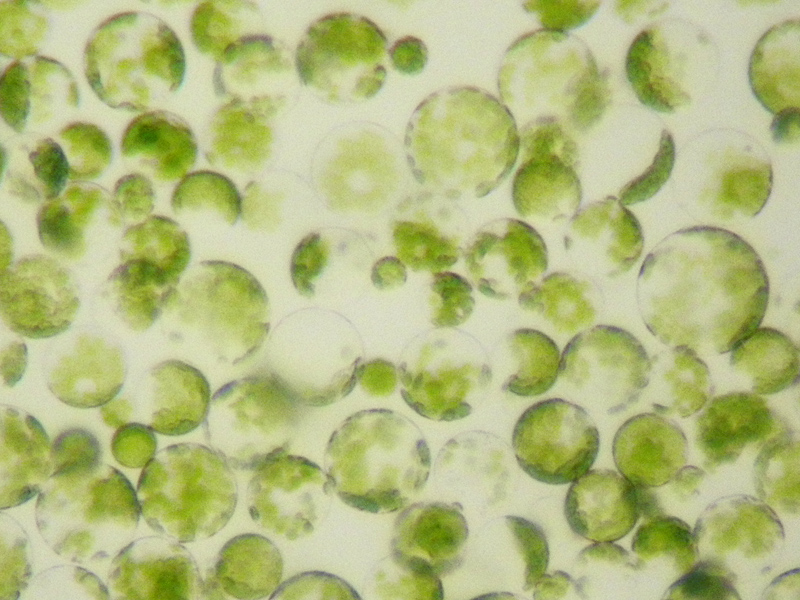
Protoplasts of cells from a petunia's leaf
Protoplasts of the moss Physcomitrella patens

Protoplast (from Ancient Greek πρωτόπλαστος (prōtóplastos) 'first-formed'), is a biological term coined by Hanstein in 1880 to refer to the entire cell, excluding the cell wall.[1][2] Protoplasts can be generated by stripping the cell wall from plant,[3] bacterial,[4][5] or fungal cells[5][6] by mechanical, chemical or enzymatic means.

Protoplasts differ from spheroplasts in that their cell wall has been completely removed.[4][5] Spheroplasts retain part of their cell wall.[7] In the case of Gram-negative bacterial spheroplasts, for example, the peptidoglycan component of the cell wall has been removed but the outer membrane component has not.[4][5]

Enzymes for the preparation of protoplasts

[edit]

Cell walls are made of a variety of polysaccharides. Protoplasts can be made by degrading cell walls with a mixture of the appropriate polysaccharide-degrading enzymes:

Type of cell Enzyme
Plant cells Cellulase, pectinase, xylanase[3]
Gram-positive bacteria Lysozyme, N,O-diacetylmuramidase, lysostaphin[4]
Fungal cells Chitinase[6]

During and subsequent to digestion of the cell wall, the protoplast becomes very sensitive to osmotic stress. This means cell wall digestion and protoplast storage must be done in an isotonic solution to prevent rupture of the plasma membrane.[citation needed]

Uses for protoplasts

[edit]
Fused protoplast (on left), containing both chloroplasts (from a leaf cell) as well as a coloured vacuole (from a petal).

Protoplasts can be used to study membrane biology, including the uptake of macromolecules and viruses . These are also used in somaclonal variation.

Protoplasts are widely used for DNA transformation (for making genetically modified organisms), since the cell wall would otherwise block the passage of DNA into the cell.[3] In the case of plant cells, protoplasts may be regenerated into whole plants first by growing into a group of plant cells that develops into a callus and then by regeneration of shoots (caulogenesis) from the callus using plant tissue culture methods.[8] Growth of protoplasts into callus and regeneration of shoots requires the proper balance of plant growth regulators in the tissue culture medium that must be customized for each species of plant.[9][10] Unlike protoplasts from vascular plants, protoplasts from mosses, such as Physcomitrella patens, do not need phytohormones for regeneration, nor do they form a callus during regeneration. Instead, they regenerate directly into the filamentous protonema, mimicking a germinating moss spore.[11]

Protoplasts may also be used for plant breeding, using a technique called protoplast fusion. Protoplasts from different species are induced to fuse by using an electric field or a solution of polyethylene glycol.[12] This technique may be used to generate somatic hybrids in tissue culture.[citation needed]

Additionally, protoplasts of plants expressing fluorescent proteins in certain cells may be used for Fluorescence Activated Cell Sorting (FACS), where only cells fluorescing a selected wavelength are retained. Among other things, this technique is used to isolate specific cell types (e.g., guard cells from leaves, pericycle cells from roots) for further investigations, such as transcriptomics.[citation needed]

See also

[edit]

References

[edit]
Revisions and contributorsEdit on WikipediaRead on Wikipedia
from Grokipedia
A protoplast is a cell from which the rigid has been enzymatically or mechanically removed, leaving the plasma membrane as the sole barrier enclosing the protoplasm, which comprises the nucleus, , and organelles. These spherical, totipotent cells retain the ability to regenerate cell walls, divide, and develop into whole or tissue under suitable culture conditions, making them a fundamental unit in plant cellular studies. Protoplast isolation primarily relies on enzymatic methods, where cell walls are degraded using a mixture of , , and sometimes hemicellulase in an isotonic medium to maintain osmotic balance and prevent bursting. Mechanical isolation, involving physical disruption like grinding or slicing followed by hypertonic solutions, is less common due to lower yields but suits vacuolated storage tissues such as those in carrots or onions. Factors influencing successful isolation include tissue type, enzyme concentration, incubation time, and , with yields often reaching millions of viable protoplasts per gram of starting material in optimized protocols for like or . In plant biotechnology, protoplasts enable key applications such as somatic hybridization through polyethylene glycol-induced fusion, bypassing sexual reproduction barriers to produce interspecific hybrids and cybrids for crop improvement. They facilitate direct DNA uptake via electroporation, PEG-mediated transfection, or Agrobacterium co-cultivation for stable or transient genetic transformation, allowing rapid assessment of gene function, promoter activity, and protein localization without whole-plant regeneration. Advanced uses include CRISPR/Cas9 genome editing for precise mutations and single-cell RNA sequencing to explore cellular heterogeneity and stress responses at the individual level.

Overview

Definition

A protoplast is a spherical structure derived from , fungal, or bacterial cells by the complete removal of the , consisting of the plasma membrane enclosing the , nucleus, and organelles. This wall-less entity retains the essential cellular contents but lacks the rigid outer layer that typically provides structural support and protection. In intact cells, the functions to counteract the internal generated by osmotic water influx, maintaining cell shape and preventing bursting in hypotonic environments; without it, protoplasts become highly osmotically fragile and require hypertonic media for stability. Protoplasts differ from spheroplasts, which are primarily observed in bacterial contexts and retain partial remnants of the , often including an outer membrane in Gram-negative species, resulting in a structure bounded by two membranes rather than one. In contrast, true protoplasts are entirely devoid of any material, making them fully spherical and more susceptible to . This distinction is crucial in and plant biology, as spheroplasts may exhibit different osmotic sensitivities and regeneration potentials compared to protoplasts. While protoplasts are predominantly prepared artificially through enzymatic or mechanical means for research purposes, they occur rarely in nature, such as in certain like where species-specific autolysins naturally degrade the during gamete formation or under specific environmental stresses. Transient protoplast-like states may also appear briefly during in some algal species, but these are not stable and quickly reform walls. The emphasis in biological studies remains on their artificial isolation, which enables applications in , , and by exposing the plasma membrane for direct manipulation.

Historical Background

The concept of the protoplast, referring to the living content of a cell enclosed by the plasma membrane but devoid of the , emerged from early microscopic observations of cells in the . In 1844, reported the separation of protoplasts from cell walls in certain , such as and Bryopsis, when exposed to hypertonic solutions, highlighting the distinction between the rigid wall and the inner cellular material during . The term "protoplast" was formally coined in 1880 by Johannes von Hanstein to describe this wall-free cellular entity, building on prior distinctions between cell walls and established by Nägeli and Hugo von Mohl in the 1840s. These foundational insights laid the groundwork for later experimental pursuits, though isolated protoplasts remained elusive until the late 19th century. Key milestones in protoplast isolation began with mechanical methods in . In 1892, Johan Klercker achieved the first successful isolation of plant protoplasts using mechanical disruption and of plasmolyzed tissues, producing fragile, short-lived structures that demonstrated the feasibility of wall removal. For microorganisms, Claes Weibull advanced the field in 1953 by isolating stable bacterial protoplasts from Bacillus megaterium through controlled treatment, which enzymatically degraded the wall and enabled studies of bacterial cytology. A breakthrough for higher came in 1960 when Edward C. Cocking introduced enzymatic isolation using from Myrothecium verrucaria to digest root cell walls, yielding viable protoplasts suitable for further manipulation. The and marked a pivotal from mechanical to enzymatic isolation techniques, driven by refined enzyme preparations like and , which improved yield and viability for diverse and facilitated protoplast . This shift enabled widespread research, including protoplast fusion for somatic hybridization; notable contributions include those of E.C. Cocking in refining isolation protocols and P.S. Carlson, who in reported the first interspecific hybrids via protoplast fusion using polyethylene glycol. By the 1980s, protoplasts were integrated into , serving as vectors for direct DNA uptake and gene transfer in improvement. In the post-2000 era, protoplast research has advanced into , leveraging high-throughput systems for , transient , and cellular reprogramming in model plants like and emerging crops, including recent applications in CRISPR-based screening and as of 2023.

Structure and Properties

Cellular Composition

A protoplast is bounded by the plasma , which becomes the new outer limit following cell wall removal, enclosing the , nucleus, mitochondria, ribosomes, and other intracellular components. In protoplasts, this structure retains chloroplasts essential for photosynthetic processes and a central surrounded by the tonoplast membrane, which helps regulate and osmotic equilibrium. Bacterial protoplasts, being prokaryotic, lack membrane-bound organelles but include the nucleoid region containing the genomic DNA, ribosomes for protein synthesis, and cytoplasmic inclusions such as storage granules. Fungal protoplasts, in contrast, possess eukaryotic organelles including nuclei, mitochondria, vacuoles, , and Golgi apparatus, similar to counterparts but without chloroplasts; incomplete wall digestion may leave trace chitin-derived remnants on the plasma membrane surface. The removal of the rigid renders protoplasts osmotically fragile, requiring hypertonic media to prevent , and causes them to adopt a spherical morphology driven by the surface tension of the plasma membrane. This enhances accessibility for cellular studies but heightens sensitivity to environmental stresses.

Viability and Stability

Protoplast viability is commonly assessed through methods that evaluate membrane integrity and cellular function, including fluorescein diacetate (FDA) staining, which fluoresces upon hydrolysis by esterases in live cells, plasmolysis reversal to confirm turgor recovery, and assays measuring metabolic activity such as resazurin reduction to fluorescent resorufin. Without supportive conditions, protoplasts typically maintain viability for 1-2 days post-isolation, after which lysis and loss of functionality occur rapidly. Maintaining protoplast stability requires careful control of environmental factors to prevent osmotic rupture and membrane damage. Osmotic stabilizers such as or (often at 0.4-0.6 M) are essential to balance internal turgor and avert bursting in hypotonic environments. Protoplasts exhibit pH sensitivity, with optimal stability in the range of 5.5-6.5 to support function and membrane integrity during handling. Temperature also plays a critical role, particularly for plant protoplasts, which remain viable best at 25-28°C to minimize metabolic stress and . Stability varies significantly across organisms due to differences in cellular architecture. Plant protoplasts are particularly fragile owing to the large central , which occupies much of the cell volume and heightens osmotic vulnerability upon removal. In contrast, bacterial protoplasts achieve greater stability through supplementation with divalent cations like Mg²⁺ (typically 10-20 mM), which enhance membrane flexibility and prevent structural collapse. Common challenges to protoplast viability include induced by hypotonic shock, where sudden drops in external osmolarity cause rapid water influx and rupture. Additionally, residual enzymatic exposure post-isolation can lead to progressive degradation if not thoroughly washed away during purification.

Isolation Techniques

Enzymatic Methods

Enzymatic methods for protoplast isolation involve the controlled of cell walls using specific hydrolytic enzymes, enabling the release of intact protoplasts from , fungal, or bacterial tissues. This approach, pioneered in the 1960s, marked a significant advancement over earlier mechanical techniques by allowing higher yields and minimizing physical damage to cells. In plant tissues, key enzymes include , which degrades the β-1,4-glycosidic bonds in microfibrils of the primary ; or polygalacturonase, which hydrolyzes the pectin-rich to separate adjacent cells; and hemicellulase, which targets side chains for complete wall breakdown. In fungal tissues, enzymes such as and β-1,3-glucanase are used to degrade and β-glucans, respectively. For bacterial cells, is the primary , acting as a muramidase to cleave the β-1,4 linkages between N-acetylmuramic acid and in , the main structural component of the bacterial . The standard protocol begins with tissue preparation, such as surface sterilization and cutting leaves or roots into small strips to increase enzyme access. The tissue is then incubated in an enzyme solution—typically 1-2% cellulase and 0.1-2% pectinase for plants, or 0.8 mg/mL lysozyme for bacteria—dissolved in an osmoticum like 0.5-0.6 M mannitol or sucrose to prevent bursting, at 25-30°C for plants or 37°C for bacteria, for 2-4 hours with gentle agitation. Following digestion, the mixture is filtered through 40-100 μm mesh to remove debris, and protoplasts are separated by low-speed centrifugation (e.g., 100-1500 × g for 5-15 minutes) or density gradient methods, yielding a clean pellet of spherical protoplasts. Optimizations enhance efficiency and viability, such as combining with macerozyme (a pectinase-rich ) for protoplasts, achieving yields of 10^6 to 10^7 protoplasts per gram fresh weight with up to 90-97% viability. Enzyme activity is maximized at 4.5-5.5 for digests, often buffered with MES or citrate, while bacterial protocols use 6.5 in stabilizers like SMM (sucrose-maleic acid-MgCl2). These refinements, including precise ratios and incubation times, address species-specific compositions to improve protoplast integrity. Compared to mechanical isolation, enzymatic methods provide superior yields (often 10-100 times higher) and reduce trauma from shearing or grinding, preserving membrane function and enabling scalable production for downstream applications. This shift, evident post-1960 with the introduction of cellulase-based protocols, revolutionized protoplast across kingdoms.

Non-Enzymatic Methods

Non-enzymatic methods for protoplast isolation rely on physical disruption or auxiliary chemical treatments to remove cell walls without employing , making them suitable for sensitive to enzymatic activity or those with recalcitrant walls. These approaches, though less efficient than enzymatic techniques, provide viable alternatives in niche applications, such as isolating protoplasts from , fungi, or woody tissues where enzyme penetration is challenging. Mechanical methods represent the earliest and most direct non-enzymatic strategy, pioneered by Johan Klercker in 1892 through microsurgical dissection of plasmolyzed algal cells from Stratiotes aloides. The process begins with plasmolysis in a hypertonic solution, such as 0.6–1.0 M mannitol or sucrose, to shrink the protoplast away from the cell wall, creating space for separation. Tissue is then subjected to physical force, including grinding, blending, chopping, scraping with a scalpel, or gentle teasing, followed by sieving through filters (e.g., 50–100 µm mesh) to collect intact protoplasts. Deplasmolysis in an isotonic medium restores protoplast turgor. This method has been applied to large-vacuolated storage tissues like onion bulb scales, beetroot, and radish roots, as well as filamentous algae and callus from Saintpaulia ionantha leaves. Yields typically range from 10^4 to 10^5 protoplasts per gram of fresh tissue, with examples achieving up to 2.4 × 10^5 cells per gram in red algae like Kappaphycus alvarezii. Chemical methods, often integrated with mechanical steps, use non-digestive agents to weaken cell walls or induce without full enzymatic breakdown. Hypertonic solutions for , such as or at 0.5–1.0 M, cause osmotic withdrawal of water, separating the protoplast from the wall and facilitating release upon mechanical agitation. Chelators like EDTA (1–5 mM) can destabilize wall-middle lamella bonds by sequestering divalent cations, while mild detergents or oxidants (e.g., in phosphate buffer) soften tissues for dissociation, as demonstrated in non-enzymatic isolation from Kappaphycus spp. and denticulatum, where 12-hour incubation yielded viable somatic cells that regenerated walls within 60 days. These approaches are particularly effective for and spores, avoiding enzyme-induced stress. Hybrid approaches combine mechanical shear with mild chemical treatments to enhance efficiency in enzyme-resistant organisms, such as fungi with chitinous walls. For instance, grinding or ultrasonic shock is paired with plasmolytic agents or chelators to disrupt walls, as reported in protocols for filamentous fungi where physical methods alone yield protoplasts without enzymatic aids. This is advantageous for woody and fungal spores, where thick, lignified, or chitin-reinforced walls resist standard digestion. Despite their utility, non-enzymatic methods suffer from lower purity and yield compared to enzymatic alternatives, often producing 10^4–10^5 protoplasts per gram with viability below 50% due to mechanical damage and debris contamination. The labor-intensive nature and tissue specificity limit scalability, though they remain valuable for high-impact studies in recalcitrant species.

Regeneration

Wall Formation

The regeneration of the cell wall in protoplasts is a critical initial step following isolation, enabling the cells to regain structural integrity and proceed to division. In plant protoplasts, this process commences with the oriented deposition of cellulose microfibrils by cellulose synthase complexes (CSCs) located in the plasma membrane, typically within 1-2 hours post-isolation. These microfibrils, initially short and randomly oriented, provide the scaffold for subsequent wall assembly. Over the ensuing 24-48 hours, a primary cell wall develops through the integration of pectins, which form the matrix, and hemicelluloses such as xyloglucans that cross-link the microfibrils, enhancing wall cohesion and extensibility. Recent studies (as of 2025) using live-cell imaging have detailed a four-stage model of wall assembly in Arabidopsis protoplasts, from diffusing fragments to a mature network over ~24 hours. The wall formation unfolds in distinct stages, beginning with phase 1, where a loose fibrillar network of nascent and associated accumulates on the protoplast surface, often appearing diffuse under electron microscopy. This network consolidates in phase 2 into a more rigid, organized structure as density increases and alignment becomes transverse to the cell's future expansion axis. These stages are modulated by environmental and biochemical cues, including calcium ions that stabilize membrane-associated synthases and promote pectin cross-linking, as well as hormones that activate downstream signaling for enhanced cellulose synthesis and wall loosening. Success rates for complete wall formation vary from 50% to 90% in optimal conditions, influenced by factors like species and medium composition; unsuccessful regeneration leads to osmotic as the unprotected plasma fails to withstand . Osmotic support during these early stages is essential to maintain viability until the wall provides mechanical protection.

Culture Media and Conditions

The culture of isolated plant protoplasts requires specialized media to maintain osmotic balance, provide essential nutrients, and stimulate cell division and regeneration. Typically, the basal medium consists of Murashige and Skoog (MS) salts, supplemented with an osmoticum such as 0.4–0.6 M mannitol to prevent bursting due to the absence of cell walls. Carbon sources like 2–3% sucrose or glucose are included, along with vitamins, amino acids, and myo-inositol for metabolic support. For solidification in plating methods, 2–5% agar or agarose is commonly used to embed protoplasts, facilitating colony formation while minimizing movement. Hormonal supplements, such as the auxin 2,4-dichlorophenoxyacetic acid (2,4-D) at 1–9 μM, are added to induce callus formation by promoting cell division. Optimized protocols as of 2025 can achieve regeneration frequencies up to 64% in certain species. Optimal environmental conditions are critical for protoplast viability and proliferation. Incubation occurs at 23–28°C, most often 25°C, under species-dependent conditions, such as a 16-hour /8-hour photoperiod, initial , or continuous , to support regeneration and . In suspension cultures, gentle agitation (e.g., 30–60 rpm) ensures nutrient distribution without . density is maintained at 1 × 10^5 protoplasts per mL to promote efficient division while preventing aggregation that could lead to uneven growth or . As protoplasts regenerate cell walls and begin dividing (typically within 7–14 days), the medium is transitioned to a lower osmoticum to accommodate expanding colonies. After this period, onto induction medium with reduced (e.g., 0.2–0.3 M) and continued 2,4-D supports microcallus development into visible calli over 2–4 weeks. For regeneration, cytokinins like kinetin (1–5 μM) are introduced to the medium to initiate shoot formation, often in combination with auxins for balanced . A common challenge in protoplast culture is oxidative browning caused by released from damaged cells, which can inhibit division and reduce viability. This is mitigated by incorporating antioxidants such as ascorbic acid (0.1–1 g/L) into the medium, which scavenges and prevents phenolic oxidation.

Applications in

Cell Fusion and Hybridization

Protoplasts serve as versatile tools for , allowing the merging of somatic cells from incompatible or varieties to generate novel hybrids that incorporate entire genomes or specific cytoplasmic traits. This process, known as somatic hybridization, circumvents the limitations of , such as barriers and genetic incompatibilities, enabling the rapid combination of desirable characteristics like disease resistance from wild relatives into cultivated crops. Fusion typically follows protoplast isolation, where cell walls are removed to expose plasma membranes for direct contact and merging. The most established chemical method for protoplast fusion is polyethylene glycol (PEG)-induced fusion, developed in the 1970s. In this technique, isolated protoplasts from different parents are mixed and exposed to 30-50% PEG solutions, often supplemented with calcium ions and buffers, which promote membrane , , and eventual fusion through destabilization of lipid bilayers. Early protocols achieved fusion efficiencies of 10-20%, though rates vary with protoplast viability, PEG molecular weight (e.g., PEG 4000 or 6000), and incubation time (typically 15-30 minutes). A landmark application occurred in 1978 when Melchers et al. fused ( tuberosum) and ( lycopersicum) mesophyll protoplasts using PEG, regenerating the first interspecific somatic hybrid plants—commonly called ""—which exhibited intermediate morphological traits and confirmed nuclear-cytoplasmic recombination. Electrofusion represents a physical alternative that often yields higher efficiency, typically 50-70% under optimized conditions, by using to manipulate protoplasts. Protoplasts are first aligned into pearl chains via (AC) pulses (e.g., 1 MHz, 100-200 V/cm for 10-60 seconds), followed by (DC) pulses (e.g., 1-2 kV/cm, 10-100 μs duration) that induce reversible breakdown and fusion at contact points. This method, pioneered by and Scheurich in the early 1980s, minimizes chemical toxicity and allows precise control over fusion events, making it suitable for large-scale applications. Spontaneous fusion is rare and unreliable, occurring at rates below 1% without induction, and is generally not used in practice. Following fusion, hybrid selection and verification are critical to isolate true somatic hybrids from unfused or parental regenerants. A common approach employs complementing auxotrophic mutants, where protoplasts from parents carrying reciprocal nutritional deficiencies (e.g., nitrate reductase-deficient mutants in Nicotiana species) are fused; only hybrids regain prototrophy and grow on minimal media lacking the required supplements. Flow cytometry provides an additional verification tool, analyzing DNA content, nuclear ploidy, or fluorescent markers to distinguish hybrids (e.g., binucleate cells with mixed parental signals) from parental types with high throughput. In asymmetric hybridization, one parental protoplast (the donor) is irradiated (e.g., with gamma rays at 100-500 Gy) prior to fusion to fragment its chromosomes, leading to selective elimination during regeneration and transfer of limited nuclear DNA alongside cytoplasmic elements; this has produced fertile asymmetric hybrids, such as the transfer of methotrexate resistance from carrot (Daucus carota) into tobacco (Nicotiana tabacum). The advantages of protoplast-based in include accelerated of traits like resistance, bypassing multi-generational sexual crosses that can take years. For instance, somatic hybrids have transferred late resistance from wild into cultivated varieties more rapidly than conventional methods, enhancing resilience without extensive . This approach also facilitates the creation of novel for traits recalcitrant to traditional breeding, such as for hybrid seed production.

Genetic Transformation

Genetic transformation of protoplasts exploits their cell wall-free state to facilitate the uptake of foreign DNA, enabling both transient and stable genetic modifications in . Common techniques include (PEG)-mediated DNA uptake, which induces transient expression by promoting , as first demonstrated in and protoplasts with efficiencies reaching up to 50% for activity. applies short electric field pulses to create transient pores in the plasma membrane, achieving transformation efficiencies of 10-50% in various , such as and , depending on voltage and buffer conditions. Liposome-mediated delivery encapsulates DNA in vesicles for fusion with the protoplast membrane, offering a gentler alternative for sensitive systems, while provides direct cytoplasmic or nuclear delivery for precise, low-throughput applications. In plant systems, transformation often employs Ti-plasmid-derived vectors from Agrobacterium tumefaciens, which carry T-DNA borders flanking the gene of interest to ensure nuclear integration. Selectable markers, such as the nptII gene conferring kanamycin resistance, allow identification of transformed cells during selection, while reporter genes like uidA (encoding β-glucuronidase, GUS) enable visualization of expression through histochemical assays. These elements are integrated into binary vectors for direct uptake or co-cultivation with disarmed Agrobacterium strains, enhancing stable transformation rates in protoplasts. Applications of protoplast transformation include stable integration for crop improvement, as seen in the development of herbicide-resistant tobacco lines in the 1980s through direct DNA uptake of resistance genes. Transient expression assays, often using PEG or electroporation, facilitate rapid gene function studies, such as promoter analysis or protein localization, with results observable within 24-48 hours post-transformation. Post-transformation, DNA integrates into the genome via non-homologous end joining or homology-directed repair, followed by selection on media containing antibiotics or herbicides; successful events are then regenerated into transgenic calli and whole plants. This workflow has supported advancements in traits like disease resistance and yield enhancement in recalcitrant species. Protoplasts have become particularly valuable for CRISPR/Cas9-mediated , allowing precise targeted mutations through transient expression of editing components. For instance, DNA-free editing using ribonucleoproteins (RNPs) has been achieved in protoplasts, enabling transgene-free modifications as of 2025. Such approaches facilitate of edits before whole-plant regeneration and are applicable in species like , , and .

References

Add your contribution
Related Hubs
User Avatar
No comments yet.