Hubbry Logo
DefibrillationDefibrillationMain
Open search
Defibrillation
Community hub
Defibrillation
logo
8 pages, 0 posts
0 subscribers
Be the first to start a discussion here.
Defibrillation
Defibrillation
from Wikipedia
Defibrillation
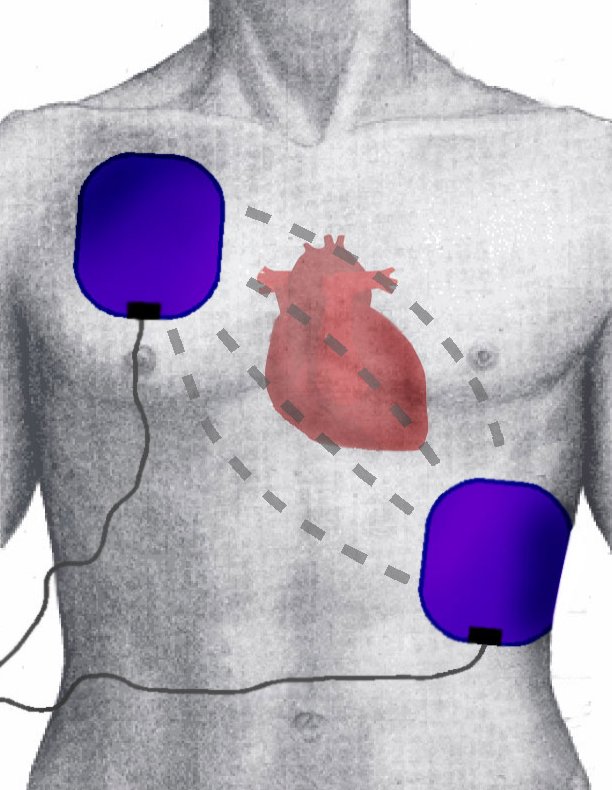
View of defibrillator electrode position and placement
MeSHD047548

Defibrillation is a treatment for life-threatening cardiac arrhythmias, specifically ventricular fibrillation (V-Fib) and non-perfusing ventricular tachycardia (V-Tach).[1][2] Defibrillation delivers a dose of electric current (often called a counter-shock) to the heart. Although not fully understood, this process depolarizes a large amount of the heart muscle, ending the arrhythmia. Subsequently, the body's natural pacemaker in the sinoatrial node of the heart is able to re-establish normal sinus rhythm.[3] A heart which is in asystole (flatline) cannot be restarted by defibrillation; it would be treated only by cardiopulmonary resuscitation (CPR) and medication, and then by cardioversion or defibrillation if it converts into a shockable rhythm. A device that administers defibrillation is called a defibrillator.

In contrast to defibrillation, synchronized electrical cardioversion is an electrical shock delivered in synchrony to the cardiac cycle.[4] Although the person may still be critically ill, cardioversion normally aims to end poorly perfusing cardiac arrhythmias, such as supraventricular tachycardia.[1][2]

Defibrillators can be external, transvenous, or implanted (implantable cardioverter-defibrillator), depending on the type of device used or needed.[5] Some external units, known as automated external defibrillators (AEDs), automate the diagnosis of treatable rhythms, meaning that lay responders or bystanders are able to use them successfully with little or no training.[2]

Use of defibrillators

[edit]

Indications

[edit]

Defibrillation is often an important step in cardiopulmonary resuscitation (CPR).[6][7] CPR is an algorithm-based intervention aimed to restore cardiac and pulmonary function.[6] Defibrillation is indicated only in certain types of cardiac dysrhythmias, specifically ventricular fibrillation (VF) and pulseless ventricular tachycardia.[1][2] If the heart has completely stopped, as in asystole or pulseless electrical activity (PEA), defibrillation is not indicated. Defibrillation is also not indicated if the patient is conscious or has a pulse. Improperly given electrical shocks can cause dangerous dysrhythmias, such as ventricular fibrillation.[1]

Application method

[edit]

A defibrillation device that is often available outside of medical centers is the automated external defibrillator (AED),[8] a portable machine that can be used with no previous training. That is possible because the machine produces pre-recorded voice instructions that guide the user. The device automatically checks the patient's condition and applies the correct electric shocks. There also exist written instructions that explain the procedure step-by-step.[9]

Outcomes

[edit]

Survival rates for out-of-hospital cardiac arrests in North America are poor, often less than 10%.[10] Outcome for in-hospital cardiac arrests are higher at 20%.[10] Within the group of people presenting with cardiac arrest, the specific cardiac rhythm can significantly impact survival rates. Compared to people presenting with a non-shockable rhythm (such as asystole or PEA), people with a shockable rhythm (such as VF or pulseless ventricular tachycardia) have improved survival rates, ranging between 21 and 50%.[6][11][12]

Types

[edit]

Manual models

[edit]

Manual external defibrillators require the expertise of a healthcare professional.[13][14] They are used in conjunction with an electrocardiogram, which can be separate or built-in. A healthcare provider first diagnoses the cardiac rhythm and then manually determine the voltage and timing for the electrical shock. These units are primarily found in hospitals and on some ambulances. For instance, every NHS ambulance in the United Kingdom is equipped with a manual defibrillator for use by the attending paramedics and technicians. [citation needed] In the United States, many advanced EMTs and all paramedics are trained to recognize lethal arrhythmias and deliver appropriate electrical therapy with a manual defibrillator when appropriate. [citation needed]

An internal defibrillator is often used to defibrillate the heart during or after cardiac surgery such as a heart bypass. The electrodes consist of round metal plates that come in direct contact with the myocardium. Manual internal defibrillators deliver the shock through paddles placed directly on the heart.[1] They are mostly used in the operating room and, in rare circumstances, in the emergency room during an open heart procedure.

Automated external defibrillators

[edit]

Automated external defibrillators (AEDs) are designed for use by untrained or briefly trained laypersons.[15][16][17] AEDs contain technology for analysis of heart rhythms. As a result, it does not require a trained health provider to determine whether or not a rhythm is shockable. By making these units publicly available, AEDs have improved outcomes for sudden out-of-hospital cardiac arrests.[15][16]

Trained health professionals have more limited use for AEDs than manual external defibrillators.[18] Recent studies show that AEDs does not improve outcome in patients with in-hospital cardiac arrests.[18][19] AEDs have set voltages and does not allow the operator to vary voltage according to need. AEDs may also delay delivery of effective CPR. For diagnosis of rhythm, AEDs often require the stopping of chest compressions and rescue breathing. For these reasons, certain bodies, such as the European Resuscitation Council, recommend using manual external defibrillators over AEDs if manual external defibrillators are readily available.[19]

As early defibrillation can significantly improve VF outcomes, AEDs have become publicly available in many easily accessible areas.[18][19] AEDs have been incorporated into the algorithm for basic life support (BLS). Many first responders, such as firefighters, police officers, and security guards, are equipped with them.

AEDs can be fully automatic or semi-automatic.[20] A semi-automatic AED automatically diagnoses heart rhythms and determines if a shock is necessary. If a shock is advised, the user must then push a button to administer the shock. A fully automated AED automatically diagnoses the heart rhythm and advises the user to stand back while the shock is automatically given. Some types of AEDs come with advanced features, such as a manual override or an ECG display.

Cardioverter-defibrillators

[edit]

Implantable cardioverter-defibrillators, also known as automatic internal cardiac defibrillator (AICD), are implants similar to pacemakers (and many can also perform the pacemaking function). They constantly monitor the patient's heart rhythm, and automatically administer shocks for various life-threatening arrhythmias, according to the device's programming. Many modern devices can distinguish between ventricular fibrillation, ventricular tachycardia, and more benign arrhythmias like supraventricular tachycardia and atrial fibrillation. Some devices may attempt overdrive pacing prior to synchronised cardioversion. When the life-threatening arrhythmia is ventricular fibrillation, the device is programmed to proceed immediately to an unsynchronized shock.

There are cases where the patient's ICD may fire constantly or inappropriately. This is considered a medical emergency, as it depletes the device's battery life, causes significant discomfort and anxiety to the patient, and in some cases may actually trigger life-threatening arrhythmias. Some emergency medical services personnel are now equipped with a ring magnet to place over the device, which effectively disables the shock function of the device while still allowing the pacemaker to function (if the device is so equipped). If the device is shocking frequently, but appropriately, EMS personnel may administer sedation.

A wearable cardioverter defibrillator is a portable external defibrillator that can be worn by at-risk patients.[21] The unit monitors the patient 24 hours a day and can automatically deliver a biphasic shock if VF or VT is detected. This device is mainly indicated in patients who are not immediate candidates for ICDs.[22]

Interface

[edit]

The connection between the defibrillator and the patient consists of a pair of electrodes, each provided with electrically conductive gel in order to ensure a good connection and to minimize electrical resistance, also called chest impedance (despite the DC discharge) which would burn the patient. Gel may be either wet (similar in consistency to surgical lubricant) or solid (similar to gummi candy). Solid-gel is more convenient, because there is no need to clean the used gel off the person's skin after defibrillation. However, the use of solid-gel presents a higher risk of burns during defibrillation, since wet-gel electrodes more evenly conduct electricity into the body. Paddle electrodes, which were the first type developed, come without gel, and must have the gel applied in a separate step. Self-adhesive electrodes come prefitted with gel. There is a general division of opinion over which type of electrode is superior in hospital settings; the American Heart Association favors neither, and all modern manual defibrillators used in hospitals allow for swift switching between self-adhesive pads and traditional paddles. Each type of electrode has its merits and demerits.

Paddle electrodes

[edit]

The most well-known type of electrode (widely depicted in films and television) is the traditional metal "hard" paddle with an insulated (usually plastic) handle. This type must be held in place on the patient's skin with approximately 25 lbs (11.3 kg) of force while a shock or a series of shocks is delivered. Paddles offer a few advantages over self-adhesive pads. Many hospitals in the United States continue the use of paddles, with disposable gel pads attached in most cases, due to the inherent speed with which these electrodes can be placed and used. This is critical during cardiac arrest, as each second of nonperfusion means tissue loss. Modern paddles allow for monitoring (electrocardiography), though in hospital situations, separate monitoring leads are often already in place.

Paddles are reusable, being cleaned after use and stored for the next patient. Gel is therefore not preapplied, and must be added before these paddles are used on the patient. Paddles are generally only found on manual external units.

Self-adhesive electrodes

[edit]
Self-adhesive electrodes of a defibrillator

Newer types of resuscitation electrodes are designed as an adhesive pad, which includes either solid or wet gel. These are peeled off their backing and applied to the patient's chest when deemed necessary, much the same as any other sticker. The electrodes are then connected to a defibrillator, much as the paddles would be. If defibrillation is required, the machine is charged, and the shock is delivered, without any need to apply any additional gel or to retrieve and place any paddles. Most adhesive electrodes are designed to be used not only for defibrillation, but also for transcutaneous pacing and synchronized electrical cardioversion. These adhesive pads are found on most automated and semi-automated units and are replacing paddles entirely in non-hospital settings. In hospital, for cases where cardiac arrest is likely to occur (but has not yet), self-adhesive pads may be placed prophylactically.

Pads also offer an advantage to the untrained user, and to medics working in the sub-optimal conditions of the field. Pads do not require extra leads to be attached for monitoring, and they do not require any force to be applied as the shock is delivered. Thus, adhesive electrodes minimize the risk of the operator coming into physical (and thus electrical) contact with the patient as the shock is delivered by allowing the operator to be up to several feet away. (The risk of electrical shock to others remains unchanged, as does that of shock due to operator misuse.) Self-adhesive electrodes are single-use only. They may be used for multiple shocks in a single course of treatment, but are replaced if (or in case) the patient recovers then reenters cardiac arrest.

Special pads are used for children under the age of 8 or those under 55 lbs. (22 kg).[23]

Placement

[edit]
Anterior-apex placement of electrodes for defibrillation

Resuscitation electrodes are placed according to one of two schemes. The anterior-posterior scheme is the preferred scheme for long-term electrode placement. One electrode is placed over the left precordium (the lower part of the chest, in front of the heart). The other electrode is placed on the back, behind the heart in the region between the scapula. This placement is preferred because it is best for non-invasive pacing.

The anterior-apex scheme (anterior-lateral position) can be used when the anterior-posterior scheme is inconvenient or unnecessary. In this scheme, the anterior electrode is placed on the right, below the clavicle. The apex electrode is applied to the left side of the patient, just below and to the left of the pectoral muscle. This scheme works well for defibrillation and cardioversion, as well as for monitoring an ECG.

Researchers have created a software modeling system capable of mapping an individual's chest and determining the best position for an external or internal cardiac defibrillator.[24]

Mechanism

[edit]

Defibrillation halts chaotic cardiac activity by forcibly depolarizing heart cells, disrupting re-entrant circuits, and allowing for the heart's natural pacemaker to take over.[25][26]

Cardiac cells require a strong electrical stimulus to raise their transmembrane potential to the activation threshold.[25][26] Only a small amount of electrical current enters the cell due to high membrane impedance.[25] The intracellular voltage of the cell remains uniform, while the extracellular voltage rapidly increases or decreases depending on proximity to the electrodes.[25] This creates a voltage gradient that alters the transmembrane potential of cells, potentially resetting irregular electrical activity to restore normal cardiac rhythm.[25][26]

Irregular rhythms often result from re-entrant circuits, where electrical impulses circle within the heart tissue due to areas of slow conduction or unidirectional block.[27] The widespread depolarization from the shock interrupts these circuits, stopping the erratic propagation of electrical signals.[25][26][27]

After the cells depolarize, they enter a refractory period, during which they cannot be re-excited.[28][29] This allows the heart's natural pacemaker, the sinoatrial node, to resume control of the rhythm. During this period, ion pumps actively restore the normal distribution of ions, re-establishing the resting membrane potential.[28][29]

History

[edit]

Defibrillators were first demonstrated in 1899 by Jean-Louis Prévost and Frédéric Batelli, two physiologists from the University of Geneva, Switzerland. They discovered that small electrical shocks could induce ventricular fibrillation in dogs, and that larger charges would reverse the condition.[30][31]

In 1933, Dr. Albert Hyman, heart specialist at the Beth Davis Hospital of New York City, and C. Henry Hyman, an electrical engineer, looking for an alternative to injecting powerful drugs directly into the heart, came up with an invention that used an electrical shock in place of drug injection. This invention was called the Hyman Otor where a hollow needle is used to pass an insulated wire to the heart area to deliver the electrical shock. The hollow steel needle acted as one end of the circuit and the tip of the insulated wire the other end. Whether the Hyman Otor was a success is unknown.[32]

The external defibrillator, as it is known today, was invented by electrical engineer William Kouwenhoven in 1930. Kouwenhoven studied the relationship between electric shocks and their effects on the human heart when he was a student at Johns Hopkins University School of Engineering. His studies helped him invent a device to externally jump start the heart. He invented the defibrillator and tested it on a dog, like Prévost and Batelli. The first use on a human was in 1947 by Claude Beck,[33] professor of surgery at Case Western Reserve University.

Beck's theory was that ventricular fibrillation often occurred in hearts that were fundamentally healthy, in his terms "Hearts that are too good to die", and that there must be a way of saving them. Beck first used the technique successfully on a 14-year-old boy who was having his breastbone separated from his ribs because of a congenital growth disorder, causing breathing problems. The boy's chest was surgically opened, and manual cardiac massage was undertaken for 45 minutes until the arrival of the defibrillator. Beck used internal paddles on either side of the heart, along with procainamide, an antiarrhythmic drug, and achieved return of a perfusing cardiac rhythm.[citation needed]

These early defibrillators used the alternating current from a power socket, transformed from the 110–240 volts available in the line, up to between 300 and 1000 volts, to the exposed heart by way of "paddle" type electrodes. The technique was often ineffective in reverting VF while morphological studies showed damage to the cells of the heart muscle post-mortem. The nature of the AC machine with a large transformer also made these units very hard to transport, and they tended to be large units on wheels.[citation needed]

Closed-chest method

[edit]

Until the early 1950s, defibrillation of the heart was possible only when the chest cavity was open during surgery. The technique used an alternating voltage from a 300 or greater volt source derived from standard AC power, delivered to the sides of the exposed heart by "paddle" electrodes where each electrode was a flat or slightly concave metal plate of about 40 mm diameter. The closed-chest defibrillator device which applied an alternating voltage of greater than 1000 volts, conducted by means of externally applied electrodes through the chest cage to the heart, was pioneered by Dr V. Eskin with assistance by A. Klimov in Frunze, USSR (today known as Bishkek, Kyrgyzstan) in the mid-1950s.[34] The duration of AC shocks was typically in the range of 100–150 milliseconds.[35]

Direct current method

[edit]
A circuit diagram showing the simplest (non-electronically controlled) defibrillator design, depending on the inductor (damping), producing a Lown, Edmark or Gurvich Waveform

Early successful experiments of successful defibrillation by the discharge of a capacitor performed on animals were reported by N. L. Gurvich and G. S. Yunyev in 1939.[36] In 1947 their works were reported in western medical journals.[37] Serial production of Gurvich's pulse defibrillator started in 1952 at the electromechanical plant of the institute, and was designated model ИД-1-ВЭИ (Импульсный Дефибриллятор 1, Всесоюзный Электротехнический Институт, or in English, Pulse Defibrillator 1, All-Union Electrotechnical Institute). It is described in detail in Gurvich's 1957 book, Heart Fibrillation and Defibrillation.[38]

The first Czechoslovak "universal defibrillator Prema" was manufactured in 1957 by the company Prema, designed by Dr. Bohumil Peleška. In 1958 his device was awarded Grand Prix at Expo 58.[39]

In 1958, US senator Hubert H. Humphrey visited Nikita Khrushchev and among other things he visited the Moscow Institute of Reanimatology, where, among others, he met with Gurvich.[40] Humphrey immediately recognized importance of reanimation research and after that a number of American doctors visited Gurvich. At the same time, Humphrey worked on establishing a federal program in the National Institute of Health in physiology and medicine, telling Congress: "Let's compete with U.S.S.R. in research on reversibility of death".[41]

In 1959 Bernard Lown commenced research in his animal laboratory in collaboration with engineer Barouh Berkovits into a technique which involved charging of a bank of capacitors to approximately 1000 volts with an energy content of 100–200 joules then delivering the charge through an inductance such as to produce a heavily damped sinusoidal wave of finite duration (~5 milliseconds) to the heart by way of paddle electrodes. This team further developed an understanding of the optimal timing of shock delivery in the cardiac cycle, enabling the application of the device to arrhythmias such as atrial fibrillation, atrial flutter, and supraventricular tachycardias in the technique known as "cardioversion".

The Lown-Berkovits waveform, as it was known, was the standard for defibrillation until the late 1980s. Earlier in the 1980s, the "MU lab" at the University of Missouri had pioneered numerous studies introducing a new waveform called a biphasic truncated waveform (BTE). In this waveform an exponentially decaying DC voltage is reversed in polarity about halfway through the shock time, then continues to decay for some time after which the voltage is cut off, or truncated. The studies showed that the biphasic truncated waveform could be more efficacious while requiring the delivery of lower levels of energy to produce defibrillation.[35] An added benefit was a significant reduction in weight of the machine. The BTE waveform, combined with automatic measurement of transthoracic impedance, is the basis for modern defibrillators.[citation needed]

Portable units

[edit]

A major breakthrough was the introduction of portable defibrillators used out of the hospital. Already Peleška's Prema defibrillator was designed to be more portable than original Gurvich's model. In Soviet Union, a portable version of Gurvich's defibrillator, model ДПА-3 (DPA-3), was reported in 1959.[42] In the west this was pioneered in the early 1960s by Prof. Frank Pantridge in Belfast. Today portable defibrillators are among the many very important tools carried by ambulances. They are the only proven way to resuscitate a person who has had a cardiac arrest unwitnessed by emergency medical services (EMS) who is still in persistent ventricular fibrillation or ventricular tachycardia at the arrival of pre-hospital providers.

Gradual improvements in the design of defibrillators, partly based on the work developing implanted versions (see below), have led to the availability of automated external defibrillators. These devices can analyse the heart rhythm by themselves, diagnose the shockable rhythms, and charge to treat. This means that no clinical skill is required in their use, allowing lay people to respond to emergencies effectively.

Waveform change

[edit]

Until the mid 1990s, external defibrillators delivered a Lown type waveform (see Bernard Lown), a heavily damped sinusoidal impulse having a mainly uniphasic characteristic. Biphasic defibrillation alternates the direction of the pulses, completing one cycle in approximately 12 milliseconds. Biphasic defibrillation was originally developed and used for implantable cardioverter-defibrillators. When applied to external defibrillators, biphasic defibrillation significantly decreases the energy level necessary for successful defibrillation, decreasing the risk of burns and myocardial damage.

Ventricular fibrillation (VF) could be returned to sinus rhythm in 60% of cardiac arrest patients treated with a single shock from a monophasic defibrillator. Most biphasic defibrillators have a first shock success rate of greater than 90%.[43]

Implantable devices

[edit]

A further development in defibrillation came with the invention of the implantable device, known as an implantable cardioverter-defibrillator (or ICD). This was pioneered at Sinai Hospital in Baltimore by a team that included Stephen Heilman, Alois Langer, Jack Lattuca, Morton Mower, Michel Mirowski, and Mir Imran, with the help of industrial collaborator Intec Systems of Pittsburgh.[44] Mirowski teamed up with Mower and Staewen, and together they commenced their research in 1969. However, it was 11 years before they treated their first patient. Similar developmental work was carried out by Schuder and colleagues at the University of Missouri.

The work was commenced, despite doubts amongst leading experts in the field of arrhythmias and sudden death. There was doubt that their ideas would ever become a clinical reality. In 1962 Bernard Lown introduced the external DC defibrillator. This device applied a direct current from a discharging capacitor through the chest wall into the heart to stop heart fibrillation.[45] In 1972, Lown stated in the journal Circulation – "The very rare patient who has frequent bouts of ventricular fibrillation is best treated in a coronary care unit and is better served by an effective antiarrhythmic program or surgical correction of inadequate coronary blood flow or ventricular malfunction. In fact, the implanted defibrillator system represents an imperfect solution in search of a plausible and practical application."[46]

The problems to be overcome were the design of a system which would allow detection of ventricular fibrillation or ventricular tachycardia. Despite the lack of financial backing and grants, they persisted and the first device was implanted in February 1980 at Johns Hopkins Hospital by Dr. Levi Watkins Jr. assisted by Vivien Thomas. Modern ICDs do not require a thoracotomy and possess pacing, cardioversion, and defibrillation capabilities.

The invention of implantable units is invaluable to some people with regular heart problems, although they are generally only given to those people who have already had a cardiac episode.

People can live long normal lives with the devices. Many patients have multiple implants. A patient in Houston, Texas had an implant at the age of 18 in 1994 by the recent Dr. Antonio Pacifico. He was awarded "Youngest Patient with Defibrillator" in 1996.

Society and culture

[edit]

As devices that can quickly produce dramatic improvements in patient health, defibrillators are often depicted in movies, television, video games and other fictional media. Their function, however, is often exaggerated with the defibrillator inducing a sudden, violent jerk or convulsion by the patient. The pad placement is also shown incorrectly, along with sudden rising of patient to large height when shock is given. In reality, while the muscles may contract, such dramatic patient presentation is rare. Similarly, medical providers are often depicted defibrillating patients with a "flat-line" ECG rhythm (also known as asystole). This is not normal medical practice, as the heart cannot be restarted by the defibrillator itself. Only the cardiac arrest rhythms ventricular fibrillation and pulseless ventricular tachycardia are normally defibrillated. The purpose of defibrillation is to depolarize the entire heart all at once so that it is synchronized, effectively inducing temporary asystole, in the hope that in the absence of the previous abnormal electrical activity, the heart will spontaneously resume beating normally. Someone who is already in asystole cannot be helped by electrical means, and usually needs urgent CPR and intravenous medication (and even these are rarely successful in cases of asystole). A useful analogy to remember is to think of defibrillators as power-cycling, rather than jump-starting, the heart. There are also several heart rhythms that can be "shocked" when the patient is not in cardiac arrest, such as supraventricular tachycardia and ventricular tachycardia that produces a pulse; this more-complicated procedure is known as cardioversion, not defibrillation.

In Australia up until the 1990s it was relatively rare for ambulances to carry defibrillators. This changed in 1990 after Australian media mogul Kerry Packer had a cardiac arrest due to a heart attack and, purely by chance, the ambulance that responded to the call carried a defibrillator. After recovering, Kerry Packer donated a large sum to the Ambulance Service of New South Wales in order that all ambulances in New South Wales should be fitted with a personal defibrillator, which is why defibrillators in Australia are sometimes colloquially called "Packer Whackers".[47]

[edit]

See also

[edit]

Citations

[edit]
  1. ^ a b c d e Ong, ME; Lim, S; Venkataraman, A (2016). "Defibrillation and cardioversion". In Tintinalli JE; et al. (eds.). Tintinalli's Emergency Medicine: A Comprehensive Study Guide, 8e. McGraw-Hill (New York).
  2. ^ a b c d Kerber, RE (2011). "Chapter 46. Indications and Techniques of Electrical Defibrillation and Cardioversion". In Fuster V; Walsh RA; Harrington RA (eds.). Hurst's The Heart (13th ed.). New York: McGraw-Hill – via AccessMedicine.
  3. ^ Werman, Howard A.; Karren, K; Mistovich, Joseph (2014). "Automated External Defibrillation and Cardiopulmonary Resuscitation". In Werman A. Howard; Mistovich J; Karren K (eds.). Prehospital Emergency Care, 10e. Pearson Education, Inc. p. 425.
  4. ^ Knight, Bradley P. Page, Richard L; Downey, Brian C (eds.). "Basic principles and technique of external electrical cardioversion and defibrillation". UpToDate. Retrieved 2019-07-24.
  5. ^ Hoskins, MH; De Lurgio, DB (2012). "Chapter 129. Pacemakers, Defibrillators, and Cardiac Resynchronization Devices in Hospital Medicine". In McKean SC; Ross JJ; Dressler DD; Brotman DJ; Ginsberg JS (eds.). Principles and Practice of Hospital Medicine. New York: McGraw-Hill – via Access Medicine.
  6. ^ a b c Venegas-Borsellino, C; Bangar, MD (2016). "CPR and ACLS Updates". In Orpello JM; et al. (eds.). Critical Care. McGraw-Hill (New York).
  7. ^ Marenco, JP; Wang, PJ; Link, MS; Homoud, MK; Estes III, NAM (2001). "Improving Survival From Sudden Cardiac ArrestThe Role of the Automated External Defibrillator". JAMA. 285 (9): 1193–1200. doi:10.1001/jama.285.9.1193. PMID 11231750 – via JAMA Network.
  8. ^ "What is an automated external defibrillator? Defibrillators, cardiac arrest". 2011-06-23. Archived from the original on 2011-06-23. Retrieved 2021-11-08.
  9. ^ "How to use an automated external defibrillator". 2011-06-23. Archived from the original on 2011-06-23. Retrieved 2024-05-09.
  10. ^ a b Borke, Jesse (2016-11-03). "Cardiopulmonary Resuscitation (CPR): Practice Essentials, Preparation, Technique". Archived from the original on 2016-12-07.
  11. ^ Nadkarni, Vinay M. (2006-01-04). "First Documented Rhythm and Clinical Outcome From In-Hospital Cardiac Arrest Among Children and Adults". JAMA. 295 (1): 50–57. doi:10.1001/jama.295.1.50. ISSN 0098-7484. PMID 16391216.
  12. ^ Nichol, Graham (2008-09-24). "Regional Variation in Out-of-Hospital Cardiac Arrest Incidence and Outcome". JAMA. 300 (12): 1423–1431. doi:10.1001/jama.300.12.1423. ISSN 0098-7484. PMC 3187919. PMID 18812533.
  13. ^ Beaumont, E (2001). "Teaching Colleagues and the General Public about Automatic External Defibrillators". Medscape. Prog Cardiovasc Nurs. Archived from the original on January 23, 2017. Retrieved December 8, 2016.
  14. ^ Center for Devices and Radiological Health. "External Defibrillators – External Defibrillator Improvement Initiative Paper". www.fda.gov. Archived from the original on 2016-11-10. Retrieved 2016-12-08.
  15. ^ a b Powell, Judy; Van Ottingham, Lois; Schron, Eleanor (2016-12-01). "Public defibrillation: increased survival from a structured response system". The Journal of Cardiovascular Nursing. 19 (6): 384–389. doi:10.1097/00005082-200411000-00009. ISSN 0889-4655. PMID 15529059. S2CID 28998226.
  16. ^ a b Investigators, The Public Access Defibrillation Trial (2004-08-12). "Public-Access Defibrillation and Survival after Out-of-Hospital Cardiac Arrest". New England Journal of Medicine. 351 (7): 637–646. doi:10.1056/NEJMoa040566. ISSN 0028-4793. PMID 15306665.
  17. ^ Yeung, Joyce; Okamoto, Deems; Soar, Jasmeet; Perkins, Gavin D. (2011-06-01). "AED training and its impact on skill acquisition, retention and performance – a systematic review of alternative training methods" (PDF). Resuscitation. 82 (6): 657–664. doi:10.1016/j.resuscitation.2011.02.035. ISSN 1873-1570. PMID 21458137.
  18. ^ a b c Chan, Paul S.; Krumholz, Harlan M.; Spertus, John A.; Jones, Philip G.; Cram, Peter; Berg, Robert A.; Peberdy, Mary Ann; Nadkarni, Vinay; Mancini, Mary E. (2010-11-17). "Automated external defibrillators and survival after in-hospital cardiac arrest". JAMA. 304 (19): 2129–2136. doi:10.1001/jama.2010.1576. ISSN 1538-3598. PMC 3587791. PMID 21078809.
  19. ^ a b c Perkins, GD; Handley, AJ; Koster, RW; Castren, M; Smyth, T; Monsieurs, KG; Raffay, V; Grasner, JT; Wenzel, V; Ristagno, G; Soar, J (2015). "European Resuscitation Council Guidelines for Resuscitation 2015 Section 2. Adult basic life support and automated external defibrillation" (PDF). Resuscitation. 95: 81–99. doi:10.1016/j.resuscitation.2015.07.015. hdl:10067/1302990151162165141. PMID 26477420. Archived (PDF) from the original on 2016-12-20.
  20. ^ "Benefits of Fully Automated Defibrillators" (PDF). Physio-Control. 2011. Archived (PDF) from the original on 29 March 2012. Retrieved 12 December 2016.
  21. ^ "What is the LifeVest?". Zoll Lifecor. Archived from the original on 2008-11-21. Retrieved 2009-02-09.
  22. ^ Adler, Arnon; Halkin, Amir; Viskin, Sami (2013-02-19). "Wearable Cardioverter-Defibrillators". Circulation. 127 (7): 854–860. doi:10.1161/CIRCULATIONAHA.112.146530. ISSN 0009-7322. PMID 23429896.
  23. ^ "What is the Difference Between Adult and Pediatric Pads". AED Brands. 2018-05-16. Retrieved 2021-08-06.
  24. ^ Jolley, Matthew; Stinstra, Jeroen; Pieper, Steve; MacLeod, Rob; Brooks, Dana; Cecchin, Frank; Triedman, John (2008). "A Computer Modeling Tool for Comparing Novel ICD Electrode Orientations in Children and Adults". Heart Rhythm. 5 (4): 565–572. doi:10.1016/j.hrthm.2008.01.018. PMC 2745086. PMID 18362024.
  25. ^ a b c d e f Dosdall, Derek J.; Fast, Vladimir G.; Ideker, Raymond E. (July 2010). "Mechanisms of Defibrillation". Annual Review of Biomedical Engineering. 12 (1): 233–258. doi:10.1146/annurev-bioeng-070909-105305. ISSN 1523-9829. PMC 3984906. PMID 20450352.
  26. ^ a b c d Jones, J.L.; Tovar, O.H. (March 1996). "The mechanism of defibrillation and cardioversion". Proceedings of the IEEE. 84 (3): 392–403. doi:10.1109/5.486742.
  27. ^ a b Gill, Gurnoor S; Blair, Jacob; Litinsky, Steven (2024-11-16). "Evaluating the Performance of ChatGPT 3.5 and 4.0 on StatPearls Oculoplastic Surgery Text- and Image-Based Exam Questions". Cureus. 16 (11) e73812. doi:10.7759/cureus.73812. ISSN 2168-8184. PMC 11650114. PMID 39691123.
  28. ^ a b Wei, Xingyu; Yohannan, Sandesh; Richards, John R. (2024), "Physiology, Cardiac Repolarization Dispersion and Reserve", StatPearls, Treasure Island (FL): StatPearls Publishing, PMID 30725879, retrieved 2024-11-22
  29. ^ a b Fraser, James; Huang, Christopher L-H (2005-04-01). "The interdependence of cell volume and resting membrane potential". Physiology News (Spring 2005): 21–22. doi:10.36866/pn.58.21.
  30. ^ Prevost J.L., Batelli F. (1899). "Some Effects of Electric Discharge on the Hearts of Mammals". Comptes Rendus de l'Académie des Sciences. 129: 1267–1268.
  31. ^ Lockyer, Sir Norman (1900). "Restoration of the Functions of the Heart and Central Nervous System after Complete Anemia". Nature. 61: 532.
  32. ^ Corporation, Bonnier (1 October 1933). "Popular Science". Bonnier Corporation. Retrieved 2 May 2018 – via Google Books.
  33. ^ "Claude Beck, defibrillation and CPR". Case Western Reserve University. Archived from the original on 2007-10-24. Retrieved 2007-06-15.
  34. ^ Sov Zdravookhr Kirg. (1975). "Some results with the use of the DPA-3 defibrillator (developed by V. Ia. Eskin and A. M. Klimov) in the treatment of terminal states". Sovetskoe Zdravookhranenie Kirgizii (in Russian). 66 (4): 23–25. doi:10.1016/0006-291x(75)90518-5. PMID 6.
  35. ^ a b "Apparatus for defibrillation or cardioversion with a waveform optimized in the frequency domain". Patents. 21 June 2006. Archived from the original on 24 September 2015. Retrieved 22 September 2014.
  36. ^ Гурвич Н.Л., Юньев Г.С. О восстановлении нормальной деятельности фибриллирующего сердца теплокровных посредством конденсаторного разряда // Бюллетень экспериментальной биологии и медицины, 1939, Т. VIII, № 1, С. 55–58
  37. ^ Gurvich NL, Yunyev GS. Restoration of a regular rhythm in the mammalian fibrillating heart // Am Rev Sov Med. 1946 Feb;3:236–239
  38. ^ Аппарат для дефибрилляции сердца одиночным электрическим импульсо,м in: Гурвич Н.Л. Фибрилляция и дефибрилляция сердца. Moscow, Medgiz, 1957, pp. 229–233.
  39. ^ Elektrická kardioverze a defibrilace, Intervenční a akutní kardiologie, 2011; 10(1)
  40. ^ Humphrey H H. My marathon talk with Russia's boss: Senator Humphrey reports in full on Khrushchev – his threats, jokes, criticism of China's communes New York, Time, Inc., 1959, pp. 80–91.
  41. ^ Humphrey H.H. "An important phase of world medical research: Let's compete with U.S.S.R. in research on reversibility of death." Congressional Records, October 13, 1962; A7837–A7839
  42. ^ "П О РТА ТИ ВН Ы Й Д Е Ф И Б Р И Л Л Я Т О Р С У Н И В Е РС А Л Ь Н Ы М ПИТАНИЕМ" Archived 2014-11-29 at the Wayback Machine (Portable defibrillator with universal power supply)
  43. ^ Heart Smarter: EMS Implications of the 2005 AHA Guidelines for ECC & CPR Archived 2007-06-16 at the Wayback Machine pp 15-16
  44. ^ Gold, Michael; Nisam, Seah (January 21, 2002). "Jack Lattuca". Pacing and Clinical Electrophysiology. 25 (5): 876. doi:10.1046/j.1460-9592.2002.t01-1-00876.x. S2CID 222087116. Archived from the original on 2013-01-05 – via Wiley Online Library.
  45. ^ Aston, Richard (1991). Principles of Biomedical Instrumentation and Measurement: International Edition. Merrill Publishing Company. ISBN 978-0-02-946562-2.
  46. ^ Giedwoyn, Jerzy O. (1972). "Pacemaker Failure following External Defibrillation" (PDF). Circulation. 44 (2): 293. doi:10.1161/01.cir.44.2.293. ISSN 1524-4539. PMID 5562564. S2CID 608076.
  47. ^ Karl Kruszelnicki (2008-08-08). "Dr Karl's Great Moments In Science, Flatline and defibrillator (Part II)". Australian Broadcasting Corporation. Archived from the original on 2012-11-10. Retrieved 2011-12-21.

General and cited references

[edit]
[edit]
Revisions and contributorsEdit on WikipediaRead on Wikipedia
from Grokipedia
Defibrillation is a that delivers a controlled electric shock to the heart through the chest wall to terminate life-threatening cardiac arrhythmias, such as (VF) or pulseless (VT), thereby restoring a normal . This intervention depolarizes the myocardium simultaneously, halting chaotic electrical activity and allowing the to resume coordinated contractions. It is a cornerstone of (ACLS) and is indicated exclusively for shockable rhythms during , with no absolute contraindications, even in patients with pacemakers or implanted defibrillators. The history of defibrillation began with animal experiments by Jean-Louis Prévost and Frédéric Batelli in 1899, followed by the first successful human open-chest defibrillation by Claude Beck in 1947; closed-chest techniques emerged in the 1950s with Paul Zoll and William Kouwenhoven, and direct-current devices were pioneered by Bernard Lown in 1962. Modern defibrillation employs biphasic truncated exponential waveforms, which are more effective and require lower energy than older monophasic devices; the 2025 American Heart Association guidelines recommend an initial shock of 120–200 joules for adults, escalating as needed, with higher settings (≥200 J) preferable for cardioversion of atrial fibrillation. Types include manual defibrillators for healthcare professionals, AEDs for public and out-of-hospital settings, wearable cardioverter-defibrillators for high-risk patients, and implantable cardioverter-defibrillators (ICDs) for long-term prevention of sudden cardiac death. In pediatric cases, energy dosing starts at 2 joules per kilogram of body weight, increasing to a maximum of 10 joules per kilogram. For refractory VF, double sequential defibrillation—using two devices in rapid succession—may be considered, though evidence remains limited. The procedure's success is time-sensitive, with survival rates declining by approximately 10% per minute of delay in out-of-hospital ; overall survival is about 10.8% out-of-hospital and 25.5% in-hospital. Risks include skin burns, myocardial , or proarrhythmia if mistimed, but benefits far outweigh hazards in arrest scenarios. Early defibrillation, combined with high-quality CPR, remains the most effective intervention for improving outcomes in sudden , which claims around 350,000 lives annually in the U.S.

Definition and Mechanism

Definition and Principles

Defibrillation is defined as the therapeutic delivery of an electrical shock through the heart to depolarize a critical mass of myocardial tissue, thereby terminating life-threatening arrhythmias such as ventricular fibrillation (VF) or pulseless ventricular tachycardia (VT). This intervention aims to halt the disorganized electrical activity that prevents effective cardiac contraction, restoring the potential for normal sinus rhythm. In , defibrillation works by overriding the erratic electrical impulses characteristic of these arrhythmias through a high-energy shock that simultaneously depolarizes a large portion of the myocardium. VF and pulseless VT represent chaotic "electrical storms" in the ventricles, where uncoordinated wavefronts propagate randomly, leading to ineffective quivering or rapid contractions that fail to produce a and can rapidly progress to if untreated. The shock disrupts these reentrant circuits and wavefronts, creating a brief period of that allows the to reestablish organized electrical control and resume normal heart rhythm. A key principle underlying successful defibrillation is the alteration of transmembrane potential across myocardial cells, where the induces (negative change in potential) and hyperpolarization, extinguishing excitable tissue and preventing reinitiation of . For efficacy, the shock must affect a of approximately 95% of the ventricular myocardium to ensure all fibrillation wavefronts are simultaneously rendered unexcitable, as smaller affected areas may allow residual activity to persist. This concept, first demonstrated in experimental models, highlights the need for sufficient shock strength to achieve uniform tissue quiescence.

Physiological Effects

Defibrillation shocks deliver a high-energy electrical current that induces a rapid change in transmembrane potential across cardiac cell membranes, leading to simultaneous of a of myocardial cells. This widespread depolarization extinguishes re-entrant circuits underlying (VF) or pulseless (VT) by overriding disorganized electrical activity and allowing the to resume control. Following the shock, the myocardium undergoes a period of recovery characterized by reperfusion, which restores oxygen delivery to ischemic tissue but can contribute to transient dysfunction. Successful defibrillation often results in restoration of , though post-shock or may occur temporarily due to , where contractile function is impaired without permanent . This stunning is exacerbated by ischemia-reperfusion injury and the shock itself, leading to reduced myocyte shortening and altered intracellular calcium dynamics, particularly with higher energy deliveries. The minimum effective energy dose for defibrillation varies, with external biphasic shocks typically requiring 120-200 joules initially to achieve success rates comparable to higher monophasic energies. Transthoracic impedance, averaging 70-80 ohms in adults, significantly influences current delivery and efficacy, as higher impedance reduces shock effectiveness and may necessitate energy escalation or techniques to lower it, such as firm pressure. Patient body weight shows no clear with required levels. Excessive shock energy can cause physiological complications, including myocardial injury manifested by troponin release and of cell membranes. occurs at field strengths above 25 V/cm, creating transient pores that lead to diastolic , reduced amplitude, and potential pro-arrhythmic effects, though it may also contribute to defibrillation success by extending refractoriness. High-energy shocks (e.g., 1-2 joules in experimental models) impair myocyte contractility and elevate biomarkers like , indicating subclinical damage that worsens with multiple or intense deliveries.

Clinical Use

Indications for Use

Defibrillation is primarily indicated for the treatment of shockable rhythms during cardiac arrest, specifically ventricular fibrillation (VF) and pulseless ventricular tachycardia (pVT), as these chaotic arrhythmias disrupt effective cardiac output and require electrical termination to restore organized rhythm. In hemodynamically unstable patients with non-perfusing tachycardias, such as pulseless VT, defibrillation serves as an urgent intervention to prevent deterioration into full arrest. According to the 2025 American Heart Association (AHA) Advanced Cardiovascular Life Support (ACLS) guidelines, defibrillation plays a central role in the cardiac arrest algorithm, with an immediate unsynchronized shock recommended upon identification of VF or pVT in witnessed arrests to maximize survival chances, followed by 2 minutes of high-quality CPR before rhythm reassessment. This integration emphasizes minimizing interruptions in chest compressions, with defibrillation delivered as soon as possible after CPR cycles in non-witnessed cases, and subsequent shocks using biphasic energies of 120-200 J or monophasic 360 J if needed. The European Resuscitation Council (ERC) 2025 guidelines align closely, advocating early defibrillation within the ALS algorithm for shockable rhythms alongside high-quality CPR with continuous compressions and asynchronous ventilations at 10 per minute when an advanced airway is in place. Defibrillation is contraindicated in non-shockable rhythms, including and (), where electrical therapy offers no benefit and may delay other resuscitative efforts, as well as in stable, organized rhythms without hemodynamic instability. Presence of a pacemaker or does not preclude defibrillation, though pads should avoid direct placement over the device. In special populations, indications remain focused on VF and pVT but with tailored approaches. For patients with left ventricular assist devices (LVADs), defibrillation is indicated for VF/pVT, but prioritize assessing and attempting to restart LVAD function if a second rescuer is available, alongside standard shocks. For opioid-associated cardiac arrest, integrate administration (initial 2 mg IV/IO, repeat if needed) before or after shocks if overdose is suspected. For pediatrics, the AHA Pediatric Advanced Life Support (PALS) guidelines recommend defibrillation at lower energy doses—2 J/kg for the first shock, escalating to 4 J/kg and ≥4 J/kg thereafter (maximum 10 J/kg or adult dose)—integrated with age-appropriate CPR. During , defibrillation is indicated without delay for shockable rhythms, with standard adult protocols applied alongside left uterine displacement to optimize CPR effectiveness and preparation for perimortem cesarean delivery if is not achieved within 5 minutes. In post-cardiac surgery scenarios, immediate defibrillation with up to three stacked shocks within 1 minute for VF or pVT is prioritized before initiating CPR or emergency resternotomy, to address reversible causes like graft issues while adhering to ACLS principles.

Procedure and Application

The procedure for defibrillation in clinical settings follows standardized (ALS) protocols, such as those outlined by the (AHA), to ensure rapid and safe delivery during or elective . Preparation begins with confirming a shockable , such as (VF) or pulseless (pVT), through monitor analysis after a brief pause in high-quality (CPR), typically every 2 minutes. The patient is positioned on a firm, flat surface to facilitate chest compressions and application, while the team coordinates roles—one member continues compressions if possible, another prepares the defibrillator, and all communicate clearly to minimize interruptions exceeding 10 seconds. The chest is exposed by removing clothing, jewelry, and any transdermal patches to prevent arcing or burns; if the chest is wet, it is dried thoroughly to reduce transthoracic impedance. Self-adhesive defibrillation pads are applied to the bare chest in standard anterolateral positions—one over the right upper sternal and the other on the left mid-axillary line at the level of the cardiac apex—or an anteroposterior configuration if needed for cases. The defibrillator is charged to the initial while CPR continues, with biphasic devices set to 120–200 joules (J) based on manufacturer recommendations, or 360 J for monophasic devices. For patients in with VF or pVT, unsynchronized shocks are delivered immediately after confirming the rhythm and ensuring no one is touching the patient or bed. In contrast, for elective of stable tachyarrhythmias like monomorphic VT with a , synchronized shocks are used, timed to the R-wave on the ECG to avoid inducing VF, starting at lower energies such as 100–200 J depending on the . The operator announces "all clear" loudly, visually confirms team safety, and presses the shock button to deliver the energy. Defibrillation integrates seamlessly with (BLS) and algorithms, where CPR resumes immediately after the shock for a full 2-minute cycle without pausing to check the rhythm or pulse, unless signs of (ROSC) are evident, such as rising end-tidal CO2. After the cycle, the rhythm is reassessed; if VF or pVT persists, subsequent shocks are delivered at equal or higher energy levels, with epinephrine administered every 3–5 minutes and (300 mg IV/IO bolus) given after the third shock, followed by a 150 mg dose if needed. This sequence prioritizes minimizing peri-shock pauses to maintain coronary and cerebral . Safety protocols are paramount to protect rescuers and patients. Defibrillation is avoided in oxygen-enriched environments to prevent risks, with oxygen delivery tubes positioned at least 1 meter from the chest and exhaust directed away. Operators wear appropriate , including insulated gloves for manual paddle use if required, to guard against or electrical leakage. In wet conditions, such as around pools or during , the procedure is deferred until the patient can be moved to a dry area, and all metallic objects on the patient or rescuers are removed to avoid conduction hazards.

Outcomes and Success Rates

The effectiveness of defibrillation is primarily measured by its ability to terminate shockable rhythms such as (VF) and restore a perfusing . In clinical settings, biphasic waveform shocks achieve initial VF termination rates of 80-90% in out-of-hospital cardiac arrest (OHCA) cases when delivered early. For patients with initial shockable rhythms in OHCA, (ROSC) rates typically range from 30-50%, while survival to hospital discharge falls between 25-40%, depending on system-wide factors like rapid response. These outcomes highlight defibrillation's role as a cornerstone intervention, though overall OHCA survival remains modest at around 10% across all rhythms due to the minority presenting with shockable arrhythmias. Several factors significantly influence defibrillation success. The time from collapse to first shock is critical, with each additional minute of delay associated with a 6-10% reduction in the likelihood of successful rhythm termination and ROSC, emphasizing the need for immediate intervention. Bystander-initiated CPR prior to defibrillation enhances outcomes by preserving myocardial viability, mediating up to 50% of the survival benefit through improved VF waveform characteristics and higher ROSC rates (odds ratio 1.72). Additionally, biphasic waveforms outperform monophasic ones, yielding higher termination rates (e.g., 82.5% vs. 71.2% for first shocks) and better long-term survival when used at energies of 150-200 J. Recent advancements, including drone-delivered automated external defibrillators (AEDs), have shown promise in improving outcomes, particularly in rural areas where traditional response times are longer. Data from 2024-2025 registries and trials indicate that drone systems can deliver AEDs in under 5 minutes (median 4:47 minutes), arriving before in 67% of cases and potentially boosting by enabling earlier shocks in remote settings. The Registry to Enhance (CARES) 2024 report notes overall OHCA survival to discharge at 10.4%, with shockable rhythms benefiting most from such innovations, though widespread adoption requires further validation. Despite these successes, defibrillation has notable limitations in certain scenarios. In prolonged cardiac arrest exceeding 10 minutes, efficacy declines sharply, with ROSC probability dropping by up to 19% per minute of intra-arrest delay due to myocardial deterioration, often necessitating like CPR or vasopressors. In hypothermic , standard defibrillation alone yields lower success rates (under 50% ROSC), as cold-induced arrhythmias resist termination; (ECMO) outperforms conventional rewarming, achieving survival rates of 71% versus 29% in the cardiac arrest subgroup.

Types of Devices

Manual External Defibrillators

Manual external defibrillators are devices operated by trained healthcare professionals to deliver controlled electrical shocks for terminating life-threatening arrhythmias such as or pulseless . These units allow for precise control over the defibrillation process, enabling operators to select levels and timing based on needs and clinical judgment. Key design features include adjustable energy delivery, typically ranging from 2 J for pediatric patients up to 360 J for adults, which permits escalation as required during efforts. They incorporate a synchronized mode that times the shock to the patient's R-wave on the ECG to reduce the risk of inducing in hemodynamically stable tachyarrhythmias. Integration with ECG monitoring is standard, providing real-time rhythm analysis directly on the device interface to guide treatment decisions. Operationally, these defibrillators require user-initiated controls for rhythm interpretation via the integrated ECG display and manual selection of shock delivery, ensuring shocks are administered only after confirming a shockable . They are commonly deployed in high-acuity environments such as emergency rooms, intensive care units, and ambulances, where skilled personnel can rapidly assess and intervene. These devices are compatible with self-adhesive electrodes for efficient application during emergencies. Manual external defibrillators offer high customization in energy selection and waveform delivery, allowing adaptation to diverse clinical scenarios, but their use demands significant operator expertise to avoid errors in rhythm recognition or timing. Modern models predominantly employ biphasic waveforms, which have been the clinical standard since the early 2000s due to their superior efficacy and ability to achieve defibrillation at lower energy levels compared to older monophasic designs, thereby reducing myocardial damage. Maintenance protocols emphasize regular calibration to verify energy output accuracy and battery checks to ensure operational readiness, with annual servicing recommended to include testing, reconditioning, and submission of tracking reports to manufacturers and the FDA as required under regulations.

Automated External Defibrillators

Automated external defibrillators (AEDs) are portable devices designed for use by laypersons or minimally trained individuals in emergency situations, featuring integrated electrocardiogram (ECG) analysis algorithms that automatically detect shockable rhythms such as (VF) and pulseless (VT). These algorithms process ECG signals from self-adhesive pads applied to the patient's chest, analyzing characteristics like frequency and amplitude to determine if a defibrillatory shock is warranted, with rates exceeding 95% for VF detection in validated databases. Upon detecting a shockable rhythm, the AED charges its and delivers a biphasic truncated exponential shock, typically ranging from 150 to 360 joules for adults, while prompting the user to ensure safety before delivery. Many AED models incorporate pediatric modes to adapt for younger patients, reducing delivered energy to approximately 50-75 joules or 2-4 joules per kg for children under 8 years old or weighing less than 55 pounds (25 kg), often activated via a dedicated button or specialized pediatric pads that attenuate the adult dose. This mode ensures safer application during in pediatric cases, where VF occurs in about 15-20% of out-of-hospital arrests, aligning with guidelines emphasizing early defibrillation to improve survival odds. Public access defibrillation programs have proliferated since the early 2000s, with over 4.5 million AED units deployed across the by 2024, strategically placed in high-traffic locations such as airports, schools, and sports venues to facilitate rapid access during out-of-hospital cardiac arrests. These initiatives, supported by legislation in all 50 states mandating AED placement in certain public buildings, have contributed to survival rates doubling when AEDs are used within the first few minutes of collapse. Integration with mobile applications, such as the AED registry, enables real-time location tracking via GPS, allowing emergency dispatchers to guide bystanders to the nearest device and alert nearby CPR-trained volunteers. The of AEDs prioritizes simplicity for non-experts, providing step-by-step audio prompts that guide actions like turning on the device, applying in an anterior-lateral position, and delivering the shock if advised, often supplemented by visual indicators such as illuminated diagrams or flashing lights for clarity in low-light or noisy settings. Built-in self-testing features perform daily, weekly, and monthly checks on battery status, integrity, and circuitry, alerting users via status indicators if is required, thereby ensuring device readiness without manual intervention. A key limitation of AEDs is their inability to deliver synchronized shocks for hemodynamically tachyarrhythmias, as they lack timing mechanisms to align the discharge with the R-wave, potentially risking if used on organized rhythms like stable VT; in such cases, manual defibrillators are preferred. Recent advancements in the incorporate enhancements, including algorithms for improved ECG that filter artifacts and noise from motion or environmental interference, enhancing rhythm detection accuracy during uninterrupted CPR without pausing for analysis.

Implantable Cardioverter-Defibrillators

Implantable cardioverter-defibrillators (ICDs) are surgically implanted devices designed to monitor heart rhythm continuously and deliver electrical therapy to prevent sudden cardiac death in high-risk patients. Unlike external defibrillators used for acute , ICDs provide long-term prophylaxis by detecting life-threatening ventricular and responding automatically. These devices have evolved since the first implantation in 1980, becoming a cornerstone of management. ICDs consist of key components including lead systems that sense cardiac signals and deliver , a with battery and capacitors, and sophisticated circuitry for detection. The leads, typically transvenous wires positioned in the heart chambers, transmit electrical impulses and monitor rhythms, while the battery powers the device for an average lifespan of 4-6 years, depending on . Modern ICDs employ tiered algorithms, starting with antitachycardia pacing to terminate slower ventricular tachycardias non-invasively, escalating to low-energy or high-energy shocks for if needed; many also include pacing to support slow heart rates. Indications for ICD implantation fall into primary and secondary prevention categories. Primary prevention is recommended for patients with and reduced (HFrEF, LVEF ≤35%) in New York Heart Association class II-III symptoms, or post-myocardial infarction with LVEF ≤30% and at least 40 days elapsed, to avert first-time sudden . Secondary prevention applies to survivors of due to or hemodynamically unstable , not attributable to reversible causes, or those with structural heart disease and syncope of suspected arrhythmic origin. These guidelines, updated in 2025, emphasize patient selection to balance benefits against procedural risks. The implantation procedure involves placing the in a subcutaneous pocket, typically below the left , under and fluoroscopic guidance. Transvenous implantation, the traditional approach, inserts leads via the into the right ventricle and sometimes atrium for sensing and pacing; this method allows dual-chamber functionality but carries risks of vascular access complications. Subcutaneous implantation positions a single lead parallel to the without entering the vascular system or heart, reducing lead-related infections and extraction challenges, though it lacks pacing capabilities in standard designs. Post-implantation, devices are programmed to patient-specific zones and therapies, with follow-up involving in-clinic interrogations; remote monitoring uses home transmitters that wirelessly upload data nightly via radiofrequency to central servers, enabling early detection of arrhythmias, battery depletion, or lead issues without frequent visits. By 2025, advancements include leadless ICDs, which eliminate transvenous leads entirely by integrating sensing and shocking capabilities into a fully intracardiac capsule delivered via , significantly lowering infection risks associated with leads and pockets. Additionally, the extravascular ICD (EV-ICD), which places the lead outside the while maintaining defibrillation efficacy, and the OmniaSecure lead for pediatric applications were introduced, further reducing complications. MRI-conditional designs incorporate specialized circuitry and lead materials to minimize radiofrequency heating and induced currents, allowing safe 1.5T and 3T MRI scans under specific protocols, expanding imaging options for patients with comorbidities. These innovations enhance device longevity, reduce complications, and improve through better integration with diagnostic tools.

Electrode Systems

Paddle Electrodes

Paddle electrodes are handheld, reusable devices employed in manual external defibrillation, featuring circular metal plates with diameters typically ranging from 8 to 12 cm for use, mounted on insulated handles equipped with discharge buttons that must be pressed simultaneously to deliver the shock. These electrodes connect to the defibrillator unit via durable, coiled cables, allowing the operator to maintain control during application. The design emphasizes direct contact with the patient's chest, requiring firm —approximately 8 to 12 kg per paddle—to optimize electrical and minimize transthoracic impedance. Prior to use, conductive must be applied liberally to the surfaces to facilitate current flow and prevent arcing or to the skin. These gels are predominantly saline-based electrolytes, such as those formulated with to reduce skin-electrode interface resistance from kilo-ohms to as low as tens of ohms, ensuring efficient energy delivery without excessive voltage requirements. Non-saline alternatives, like certain alpha-based pastes, have been used historically but are less common due to potential sparking risks if improperly applied; modern protocols prioritize gels that are water-soluble, bacteriostatic, and non-gritty for clean, reliable performance. Paddle electrodes find primary application in in-hospital settings, such as during advanced cardiovascular life support (ACLS) for rapid intervention in or pulseless , where trained personnel can quickly retrieve and deploy them from crash carts. Their design supports immediate use in controlled environments, often positioned in an apex-sternum configuration for optimal current path across the heart. Advantages include the ability to apply adjustable pressure for enhanced contact in challenging anatomies, potentially achieving lower and more consistent impedance compared to poorly adhered alternatives when is correctly used. However, disadvantages encompass higher variability in transthoracic impedance due to operator-dependent application, increased of skin burns from inadequate coverage or arcing, and potential operator exposure to the during shock delivery, which can interrupt chest compressions. Self-adhesive pads are preferred in modern protocols, including those from the European Resuscitation Council and , over paddle electrodes to improve safety and reduce CPR interruptions, though paddles remain available for specific in-hospital applications.

Self-Adhesive Electrodes

Self-adhesive electrodes, also known as disposable defibrillation pads, are pre-gelled, single-use devices designed for external defibrillation and cardioversion in both manual and automated systems. These pads facilitate rapid application and enable continuous electrocardiographic monitoring prior to shock delivery, making them a standard component in modern resuscitation protocols. These electrodes consist of multi-layer constructions optimized for conductivity and patient comfort. The backing is typically a flexible polyethylene foam layer that provides insulation and structural support, while the conductive element often incorporates silver/silver chloride (Ag/AgCl) or tin-coated materials to ensure low-offset voltage and reliable signal transmission. A key feature is the conductive hydrogel adhesive layer, which interfaces directly with the skin to enhance electrical contact and adhesion. Adult pads measure approximately 10-12 cm in diameter (or equivalent area of about 100-150 cm²), whereas pediatric versions are smaller, around 8-10 cm (or 70-90 cm²), to accommodate younger patients. Snap connectors at the edges allow secure attachment to defibrillator cables.80606-7/fulltext) Application involves a simple peel-and-stick process, where the pads are applied to the patient's chest for immediate monitoring and defibrillation readiness. This reduces transthoracic impedance to an average of 70-100 ohms, facilitating efficient energy delivery without the need for additional conductive gel. Regulated by the FDA as Class II devices, self-adhesive electrodes are approved for single-use to ensure sterility and prevent cross-contamination. They have a of 2-5 years, depending on the manufacturer, and are compatible with biphasic waveforms commonly used in contemporary defibrillators. The primary advantages include hands-free operation, which minimizes interruptions in chest compressions during and reduces rescuer exposure to electrical hazards. Additionally, their disposable nature lowers infection risk in scenarios requiring prolonged monitoring or repeated interventions, as opposed to reusable alternatives.

Placement Techniques

Proper electrode placement is crucial in defibrillation to ensure optimal delivery of electrical current through the heart, maximizing the likelihood of successful termination of arrhythmias such as . The goal is to position the s so that the current vector traverses a sufficient mass of the myocardium, particularly the ventricles, to achieve simultaneous . As per the 2025 and European Resuscitation Council guidelines, self-adhesive pads are recommended to minimize CPR interruptions, with placement techniques aimed at optimizing myocardial current flow. The standard anterior-lateral (antero-apical) position for external defibrillation involves placing one electrode pad immediately to the right of the upper , below the , and the second pad on the left side of the chest in the mid-axillary line, approximately at the level of the cardiac apex (fifth ). This configuration directs the current flow from the right shoulder region across the heart toward the left lateral chest, effectively encompassing the ventricular myocardium. An alternative anterior-posterior position places one pad on the anterior chest (typically over the left mid-axillary line or apex) and the other on the posterior (below the left or mid-back), which is often used for implantable cardioverter-defibrillators (ICDs) during testing or in scenarios where anterior-lateral access is limited. The rationale for these positions stems from the need to minimize transthoracic impedance and align the electrical vector parallel to the heart's long axis, thereby reducing the defibrillation threshold—the minimum required for successful defibrillation. In the anterior-lateral setup, the vector approximates the heart's anatomical orientation, promoting uniform current distribution across the ventricles. The anterior-posterior approach can further optimize flow in cases where anterior tissue attenuates the current, as it bypasses superficial chest wall resistance. Adjustments to placement are necessary for specific patient characteristics to maintain efficacy. In obese individuals or those with large breasts, the anterior-lateral pads may be shifted laterally or under the breast tissue to improve contact and reduce impedance from adipose layers; alternatively, the anterior-posterior position is preferred to avoid excessive anterior tissue. For pediatric patients weighing more than 25 kg or older than 8 years, either anterior-lateral or anterior-posterior positions are suitable, compatible with automated external defibrillators (AEDs). In infants under 1 year or weighing less than 10 kg, where pads may overlap in the anterior-lateral position, an anterior-posterior configuration is recommended, with one pad on the center of the chest and the other on the center of the back, as posterior placement is practical due to the child's size. Verification of placement involves ensuring firm adhesion of self-adhesive pads to the bare chest, removing any excessive hair, moisture, or medicaments that could increase impedance, and confirming at least 8-10 cm distance from implanted pacemakers or ICD generators to prevent device damage or interference. Prior to shock delivery, the ECG rhythm is assessed via the defibrillator's leads to verify a shockable , indirectly confirming adequate contact through signal quality. Clinical evidence supports the impact of optimal positioning on outcomes, though guidelines consider both major configurations reasonable due to historical equivalence in success rates across multiple studies. However, a 2024 of out-of-hospital cardiac arrests found anterior-posterior placement associated with a 2.64-fold higher adjusted odds of (ROSC) compared to anterior-lateral (95% CI 1.50-4.65), suggesting up to a 17% relative in initial success. In a porcine pediatric model, anterior-posterior placement reduced the 50% defibrillation threshold by approximately 20% compared to anterior-lateral, highlighting potential energy savings and efficacy gains in vulnerable populations. These findings underscore the value of tailoring placement to anatomical factors for enhanced defibrillation performance.

Historical Development

Early Methods and Closed-Chest Techniques

The origins of defibrillation trace back to the late , when Swiss physiologists Jean-Louis Prévost and Frédéric Batelli conducted pioneering experiments on dogs. In 1899, they demonstrated that small electric shocks could induce , while larger (AC) shocks—delivered via electrodes placed in the mouth and rectum—could revert the and restore normal heart rhythm. These findings established the foundational principle that electrical countershock could depolarize fibrillating myocardium, allowing spontaneous organized activity to resume, though the work remained confined to animal models and was not immediately applied clinically. Human application of defibrillation began in the mid-20th century through invasive open-chest techniques. In 1947, American surgeon Claude S. Beck achieved the first successful defibrillation of a heart during on a 14-year-old boy whose ventricle had fibrillated intraoperatively. Beck applied 110-volt AC shocks directly to the exposed heart using internal electrodes, administering multiple pulses of 0.5 to 2 seconds each, combined with manual cardiac massage, to restore . This landmark procedure, performed at , marked the transition from animal experimentation to clinical use but was limited to surgical settings due to the need for . The development of closed-chest techniques emerged in the early , pioneered by cardiologist Paul M. Zoll, who adapted external AC defibrillation for non-invasive application. In 1956, Zoll reported the first successful use of transthoracic shocks on humans, delivering 480 to 1,000 volts of low-frequency (60 Hz) AC through large plate electrodes applied to the chest wall, often requiring multiple discharges to terminate . His bulky, wheeled device—typically around 150 kg—enabled without opening the chest, expanding potential use beyond the operating room. However, these early AC methods carried significant risks, including severe skin burns from high-energy delivery and induction of additional arrhythmias due to the prolonged, oscillating nature of the current, which could damage myocardial tissue.

Shift to Direct Current and Portable Devices

The transition from (AC) to (DC) defibrillation marked a pivotal advancement in the 1960s, addressing the limitations of earlier AC methods that often caused myocardial burns and arrhythmias. In 1959, cardiologist and his team developed a monophasic damped sinusoidal DC waveform defibrillator, which delivered controlled energy pulses of 100 to 400 joules, significantly reducing tissue damage while effectively terminating . This innovation, first clinically applied in 1962, shifted clinical practice toward safer, more reliable for both atrial and ventricular arrhythmias, establishing DC as the standard over AC by the mid-1960s. Parallel developments in portability transformed defibrillation from a hospital-bound procedure to one feasible in emergency settings. In 1966, Northern Irish cardiologist introduced the first external portable defibrillator, a 70 kg unit powered by car batteries rather than , enabling its installation in ambulances for pre-hospital use in . By the , refinements led to more compact battery-operated models weighing around 25 kg, which facilitated widespread adoption in mobile coronary care units and further integrated defibrillation into out-of-hospital response protocols. Key contributions from researchers William B. Kouwenhoven, James R. Jude, and G. Guy Knickerbocker in the late and early integrated defibrillation with closed-chest (CPR), enhancing overall resuscitation efficacy. Their work demonstrated that combining external chest compressions with timely DC shocks improved circulation and rhythm restoration during , laying the foundation for modern protocols. These advancements enabled pre-hospital defibrillation, dramatically improving outcomes for out-of-hospital cardiac arrests; early programs with portable DC units in settings achieved survival rates up to 15-20%, compared to approximately 5% without prompt intervention. Early paddle electrodes, typically 8-12 cm in and applied with conductive , supported this portability by allowing quick manual delivery of shocks in non-hospital environments.

Modern Advancements in Waveforms and Implantables

In the , defibrillation technology advanced significantly with the development of biphasic truncated exponential (BTE) waveforms, which reversed the direction of current flow during the shock to improve efficacy and reduce required energy levels compared to traditional monophasic damped sine waveforms. Clinical studies demonstrated that BTE shocks at 150-200 J achieved defibrillation success rates comparable to or exceeding those of 360 J monophasic shocks, with lower risks of myocardial injury and faster post-shock recovery. This shift, validated in multicenter trials, led to widespread adoption of biphasic waveforms in external and implantable defibrillators by the early 2000s, enhancing patient outcomes in both hospital and out-of-hospital settings. Implantable cardioverter-defibrillators (ICDs) represent a cornerstone of modern advancements, originating with Michel Mirowski's pioneering work; the first human implant occurred in 1980 at , successfully terminating ventricular arrhythmias in a patient with recurrent malignant episodes. Over the subsequent decades, ICDs evolved from bulky transvenous systems to subcutaneous models, which avoid intravascular leads to reduce and complication risks. By 2025, subcutaneous ICDs such as the EMBLEM MRI S-ICD system offer projected battery longevity of 8.7 years, enabling reliable long-term monitoring and therapy delivery for high-risk patients. These devices now incorporate advanced sensing algorithms, further minimizing inappropriate shocks while maintaining high efficacy rates. Recent innovations have integrated artificial intelligence (AI) into rhythm detection for both automated external defibrillators (AEDs) and ICDs, improving accuracy in identifying shockable arrhythmias like ventricular tachycardia and fibrillation amid noisy signals or CPR artifacts. Machine learning models, such as convolutional neural networks, achieve over 95% sensitivity and specificity in classifying rhythms from single-lead ECGs, reducing diagnostic delays and enhancing survival in cardiac arrest scenarios. Complementing this, drone delivery systems for AEDs have undergone trials across Europe from 2023 to 2025, demonstrating feasibility in rural and urban areas; for instance, a Swedish program achieved median delivery times of 5 minutes with a time advantage of approximately 3 minutes over ambulances in 67% of cases, while Danish studies reported median drone delivery of 4:47 minutes in feasible scenarios. To address global disparities, efforts in low-resource settings have focused on reusable cardiac implantable electronic devices, including defibrillators, to expand access without prohibitive costs; studies from high- and low-income contexts show no increased risks of or device failure when protocols for , testing, and sterilization are followed. These initiatives, supported by organizations, promote protocols for refurbishing explanted units, potentially extending their usability and aligning with broader goals for equitable sudden cardiac death prevention in underserved regions.

Societal and Cultural Impact

Public Access and Training Programs

Public Access Defibrillation (PAD) programs emerged in the United States during the 1990s, spearheaded by the American Heart Association (AHA), which established a task force in 1990 to promote widespread AED availability and training for lay responders. These initiatives expanded through federal funding, including the Cardiac Arrest Survival Act of 2000, which allocated grants for AED purchase and placement in public venues, and the ongoing Health Resources and Services Administration's Rural Access to Emergency Devices program, supporting AED deployment in underserved areas since the early 2000s. Training programs are central to PAD success, with the AHA offering standardized courses like Heartsaver First Aid CPR AED, which emphasize performing high-quality CPR in 2-minute cycles at a rate of 100-120 compressions per minute to minimize interruptions and integrate AED use seamlessly. These courses incorporate AED features, such as voice prompts guiding users through pad application and shock delivery. Mobile applications like PulsePoint further support bystander response by sending real-time alerts to CPR-trained individuals about nearby cardiac arrests, including AED locations from a national registry, enabling rapid intervention. Studies demonstrate the effectiveness of public AED access, with defibrillation within 3-5 minutes of collapse increasing out-of-hospital survival rates to 50-70%, compared to under 10% without prompt intervention, as evidenced by analyses from the AHA and European Resuscitation Council. For instance, the Public Access Defibrillation Trial showed that trained lay responders using AEDs in community settings doubled survival to discharge rates versus CPR alone. Despite these advances, challenges persist in PAD implementation, including maintenance issues such as expired batteries, faulty , and inadequate monthly checks, which can render up to 20% of public AEDs inoperable and contribute to preventable failures. Urban-rural disparities exacerbate access gaps, with rural areas facing lower AED density—often fewer than half the units compared to cities—and longer emergency response times, resulting in survival rates 20-30% below urban benchmarks. Addressing these requires targeted funding for rural deployment and standardized protocols to ensure equitable PAD coverage. Good Samaritan laws provide legal protections for lay rescuers who administer defibrillation using automated external defibrillators (AEDs) in good faith during emergencies, shielding them from civil liability in the absence of . In the United States, all 50 states offer such immunity, with 48 states extending protections to untrained bystanders and only three requiring prior training. Internationally, similar protections exist in numerous countries, encouraging bystander intervention without fear of lawsuits, though requirements for training vary; for instance, unrestricted use by any citizen is permitted in 15 countries, while certification is mandated in three others. Ethical considerations in defibrillation encompass dilemmas around and , particularly in crises. For unconscious patients experiencing , implied is ethically justified for immediate life-saving interventions like defibrillation, as obtaining explicit permission is impossible and delay could be fatal; healthcare providers must act in the patient's best interest under principles of beneficence and non-maleficence. During the (2020-2022), resource shortages strained efforts, leading to protocols that prioritized patients based on survival likelihood and resource needs, sometimes limiting defibrillation or advanced care in overwhelmed settings to allocate ventilators and ICU beds equitably. These decisions raised concerns over fairness, with guidelines emphasizing transparent, evidence-based criteria to avoid . Economically, AED deployment involves upfront costs balanced against long-term health benefits. A single AED unit typically ranges from $1,200 to $3,000, depending on model and features, with home models averaging around $1,450 and professional units higher. Cost-effectiveness analyses demonstrate value in public settings, where bystander defibrillation yields an incremental cost of approximately $46,700 per (QALY) gained, reflecting improved survival and reduced morbidity from out-of-hospital cardiac arrests. As of 2025, regulatory updates emphasize workplace mandates and global disparities. In regions like , , legislation requires AEDs on construction sites with 20 or more workers lasting three months or longer, enhancing access in high-risk environments. Similarly, mandates employer-provided AED access by January 2026, with trained personnel available. On a global scale, equity remains challenged, with fewer public AEDs in low-income neighborhoods and regions compared to affluent areas, exacerbating survival gaps in low- and middle-income countries where access is limited by and . Efforts to address these include international calls for subsidized distribution to promote equitable deployment.

References

Add your contribution
Related Hubs
User Avatar
No comments yet.