Hubbry Logo
Devil SummonerDevil SummonerMain
Open search
Devil Summoner
Community hub
Devil Summoner
logo
8 pages, 0 posts
0 subscribers
Be the first to start a discussion here.
Devil Summoner
Devil Summoner
from Wikipedia

Devil Summoner
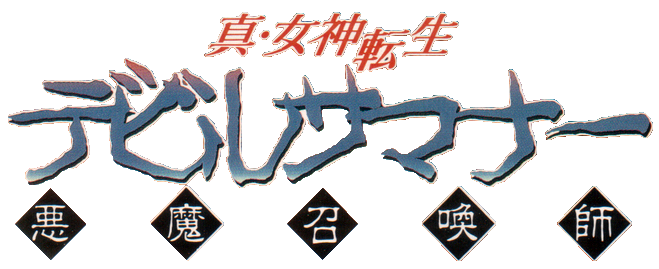
Japanese-language logo with "Devil Summoner" written in blue, jagged characters, and "Shin Megami Tensei" above in a smaller, red, italic font.
Logo for the first game, Shin Megami Tensei: Devil Summoner. The font and styling varies throughout the series.
GenreRole-playing
DeveloperAtlus
Publishers
CreatorKouji Okada
PlatformsMicrosoft Windows, Sega Saturn, PlayStation, PlayStation 2, PlayStation Portable, PlayStation 4, PlayStation 5, Nintendo 3DS, Xbox One, Xbox Series X/S, Nintendo Switch, Nintendo Switch 2
First releaseShin Megami Tensei: Devil Summoner
December 25, 1995[1]
Latest releaseRaidou Remastered: The Mystery of the Soulless Army
June 19, 2025
Parent seriesMegami Tensei

Devil Summoner,[a] initially marketed as Shin Megami Tensei: Devil Summoner, is a video game franchise developed and primarily published by Atlus. Focused on a series of role-playing video games, Devil Summoner is a spin-off from Atlus' Megami Tensei franchise. The first entry in the series, Shin Megami Tensei: Devil Summoner, was released in 1995 for the Sega Saturn. The series has seen several more games since, with the most recent main entry being Raidou Remastered: The Mystery of the Soulless Army released in 2025.

Devil Summoner began as a spin-off based on the positively-received Shin Megami Tensei If... (1994). The games, set on an alternate Earth between the 1930s and a fictionalized near-future, featuring a person either related to or holding the Kuzunoha family name using demons to investigate cases involving the supernatural. Created by Kouji Okada, the series was developed by multiple Megami Tensei veterans including artist Kazuma Kaneko and composer Shoji Meguro. While each entry has a different story and time period, it shares a universe and uses recurrent detective story elements.

The series remained exclusive to Japan until the release of Devil Summoner: Raidou Kuzunoha vs. the Soulless Army in 2006, with all games apart from the original receiving English localizations from Atlus USA. Several entries have been supported by spin-off media and supplementary game materials. The first two Devil Summoner titles were among the best-selling titles for the Saturn. Games in the series have seen generally positive reception internationally.

Titles

[edit]
Release timeline
1995Devil Summoner
1996
1997Soul Hackers
1998–2005
2006Raidou Kuzunoha vs. the Soulless Army
Pinball: Judgment
2007Soul Hackers: Intruder
2008Soul Hackers: New Generation
Raidou Kuzunoha vs. King Abaddon
2009–2021
2022Soul Hackers 2
2023–2024
2025Raidou Remastered: The Mystery of the Soulless Army

Main series

[edit]
[edit]

The characters and art of the original Devil Summoner were used for the mobile pinball game Shin Megami Tensei Pinball: Judgment, released in Japan in 2006 through EZweb.[19][20] Soul Hackers saw two mobile follow-ups: Devil Summoner: Soul Hackers – Intruder, a 2007 tactical role-playing game with adventure game elements; and Devil Summoner: Soul Hackers – New Generation, a 2008 turn-based game set in a virtual world.[21][22][23][24]

Devil Summoner was adapted into a live-action television series in 1997, with its popularity prompting a second series in 1998.[25] Two novels based on the series written by Ryo Suzukaze were published by the Aspect Books imprint of Media Works in 1996.[26][27] Soul Hackers received two novel spin-offs; Devil Summoner Soul Hackers: Death City Korin by Osamu Makino in April 1998 from Aspect Books, and Devil Summoner Soul Hackers: Nightmare of the Butterfly by Shinya Kasai in May 1999 from Famitsu Bunko.[28][29] A manga adaptation, written by Fumio Sasahara and illustrated by Kazumi Takasawa, was released in two volumes in March and August 1999 by Kadokawa Shoten.[30][31]

The Raidou Kuzunoha duology saw multiple media expansions. A spin-off novel called Devil Summoner: Raidou Kuzunoha vs. the Dead Messengers, written by Boogey Toumon and illustrated by Kazuma Kaneko, was released by Kadokawa Shoten in 2006.[32] A spin-off manga Devil Summoner: Raidou Kuzunoha vs. Kodoku no Marebito, began serialization through the online Famitsu Comic Clear in 2009, being released in six volumes between 2010 and 2012. The manga was written by Kirihito Ayamura based on a story draft by Kaneko, and supervised by Atlus's Kazuyuki Yamai.[33][34][35] A two-part CD drama, Devil Summoner: Raidou Kuzunoha vs. the One-Eyed God, was released by Frontier Works during 2009.[36][37]

Recurring elements

[edit]

Rather than the post-apocalyptic setting of the main Megami Tensei series, Devil Summoner takes place in an alternate modern Earth where people known as devil summoners form contracts with demons using devices called COMPs.[4][17] The protagonists, devil summoners often associated with the Kuzunoha family, investigate misuse of demons.[4][38] A recurring element is two rival summoner clans, the benevolent Yatagarasu and the malevolent Phantom Society.[17][39] The Raidou Kuzunoha duology take place in a fictionalized version of Japan's Taishō period. The storylines follow the fourteenth trained devil summoner to take on the title of Raidou Kuzunoha, facing supernatural threats in Tokyo while working at the Narumi Detective Agency.[15][40]

The first two titles use a traditional turn-based battle system taken from the main Megami Tensei series, with the player character and a team of up to five demons taking part in battles from a first-person perspective while navigating both an overworld map and dungeons.[5][41] Soul Hackers 2 again uses a turn-based battle system, taking elements of exploiting enemy weaknesses for extra turns from the main Shin Megami Tensei series.[42] The Raidou Kuzunoha duology shifts to an action-based battle system, navigating pre-rendered town and dungeon environments.[43][44] The protagonist fights in separate battle arenas with two assigned demons through random encounters, with Kuzuhona capturing demons during battles in the first game, and persuading them to join him through a conversation system in the second. An assigned demon can also be used to solve environmental puzzles.[43][45]

A recurring element is the player's relationship with their demons. While demons are acquired in different ways across the games, a demon's alignment and actions in battle are all play a role in how they respond to commands. If a demon uses a skill they have low affinity for too many times, they will not respond as well to commands. Recruited demons can also be fused into new demons, carrying over particular traits from their predecessors.[5][41][43] A resource called Magnatite or its equivalent is needed to keep demons summoned or powers different elements of attacks appears in multiple entries.[5][41][45] A recurring character throughout the series is Dr Victor, a person who takes charge of demon fusion and takes on different appearances throughout the series.[46]

History and development

[edit]

Following the success of the Megami Tensei spin-off Shin Megami Tensei If... in 1994, lead developer Kouji Okada decided to create spin-off series to explore different narrative possibilities; the two initial spin-off titles were Revelations: Persona (1996) for the PlayStation, and Shin Megami Tensei: Devil Summoner for the Saturn.[47][48][49] Devil Summoner drew on themes from detective fiction, particularly the melancholic and hardboiled fiction of Raymond Chandler.[47][50] It was the first Megami Tensei title to be released on a 32-bit fifth-generation home video game console, and the first Megami Tensei game to feature 3D graphics.[50][51] The staff included Okada as director, recurring writer Ryutaro Ito, and artist Kazuma Kaneko.[47][52] Following the success of Devil Summoner, development of a sequel moved forward, drawing inspiration from the potential dangers of the internet. Okada and Kaneko returned to their respective roles, while Shogo Isogai created the scenario based on Kaneko's draft.[38]

Following the release of Shin Megami Tensei III: Nocturne in 2003, producer Kazuyuki Yamai wanted a project for his team that would offer new challenges, deciding to make a new Devil Summoner title based on staff feedback.[53][54] Kaneko returned as character designer.[55] A sequel was produced shortly afterwards, continuing Raidou Kuzunoha's story while being a standalone entry for newcomers, with Kaneko returning as both character designer and producer.[53][56] It saw mechanical improvements and additions taken from the main series.[53] A sequel to Soul Hackers was long requested by fans, though the original game was growing in age and losing mainstream recognition. Eiji Ishida and Mitsuru Hirata, who had previously worked on multiple entries in the Megami Tensei series, began production on a sequel with reworked mechanics and a new art style led by Shirow Miwa.[57][58]

While a release overseas was rumored at the time of its release, the original Devil Summoner remains exclusive to Japan, with its age compared to other titles keeping it from being released during the PS2 era.[59][60] Soul Hackers was originally also exclusive to Japan, with an overseas release only coming with the 3DS port. The localization was created by Atlus USA, with their focus being on emulating its time period through slang and references to cyberpunk fiction.[11] The two Raidou Kuzunoha titles were the first Devil Summoner titles to be released in the West.[4] For the localization of the first Raidou Kuzunoha, project leader Yu Namba incorporated slang from the 1920s to ground the storyline in that period.[60] The second Raidou Kuzunoha saw a limited release in North America.[61] Only three games have been released in Europe through third-party publishers: Soul Hackers by NIS America,[10] the original Raidou Kuzunoha by Koei,[13] and Soul Hackers 2 by Sega.[62]

Music

[edit]

The original game's music was composed by Toshiko Tasaki and Tsukasa Masuko, with several tracks being repurposed during production or switching role.[63] For Soul Hackers, Tasaki and Masuko were joined by Shoji Meguro; Meguro focused on the game's cyberpunk themes and atmosphere, lamenting his lack of creative freedom compared to his work on Maken X.[64][65] Meguro returned for the Raidou Kuzunoha duology, using brass and jazz instrumentation to emulate the 1920s alongside his signature guitar-heavy "MegaTen sound".[60][66][56] The music of Soul Hackers 2 is composed by the music group Monaca.[17]

Reception

[edit]
Japanese and Western review scores
As of November 9, 2025.
Game Year Famitsu Metacritic OpenCritic
Devil Summoner 1995 35/40[1]
Soul Hackers 1997 34/40[67] 74/100[68]
Raidou Kuzunoha vs. the Soulless Army 2006 30/40[69] 74/100[70]
Raidou Kuzunoha vs. King Abaddon 2008 32/40[71] 79/100[72]
Soul Hackers 2 2022 38/40[73] 74/100[74] 62% recommend[75]

The first two games were among the best-selling titles on the Sega Saturn in Japan.[76] Technology Tell, in a retrospective article on the Megami Tensei franchise, noting it as standing out from the rest of the franchise due to not having a post-apocalyptic setting.[4]

Reception of the first Raidou Kuzunoha game was generally positive, with critics noting its break from the traditional turn-based gameplay of other Megami Tensei series, though noting some problems caused by the new elements.[43][77][78] Raidou Kuzunoha 2 saw a stronger reception, with critics praising it as an improvement over the first game.[44][79][80]

References

[edit]
Revisions and contributorsEdit on WikipediaRead on Wikipedia
from Grokipedia
Devil Summoner is a subseries of Atlus's long-running Shin Megami Tensei franchise, consisting of video games in which protagonists, known as Devil Summoners, negotiate pacts with demons to investigate mysteries and combat otherworldly threats. The series emphasizes demon recruitment, fusion, and strategic battles, often blending elements of detective work, , and horror in diverse settings such as contemporary , futures, and Taisho-era . Developed primarily by Atlus's internal teams, the franchise has been praised for its innovative gameplay mechanics and atmospheric storytelling, though some entries remain untranslated or unreleased outside . The series originated with Shin : Devil Summoner in 1995 for the , a first-person dungeon crawler set in the fictional city of Hirasaki City, where the Kyouji Kuzunoha confronts a unleashing demons on modern . This was followed by Devil Summoner: in 1997 for the (later ported to other platforms), which shifts to a near-future world where artificial intelligences and soul-hacking technology intersect with demonic forces, centering on a navigating a virtual reality . A direct sequel, , was released in 2022 for , , , and PC, continuing the theme with agent Ringo of the AI entity Aion preventing an through demon summoning in a neon-lit . In 2006, launched the action RPG-focused Devil Summoner: Raidou Kuzunoha vs. the Soulless Army for , introducing the detective Raidou Kuzunoha XIV in an alternate Taisho-era , where he solves cases involving yokai and mechanical threats using real-time swordplay, gun combat, and demon allies. Its 2008 sequel, Devil Summoner: Raidou Kuzunoha vs. the King Abaddon, expands on this formula with larger explorable areas and deeper demon integration, culminating in a battle against ancient evils threatening the capital. A remastered version of the first Raidou game, titled Raidou Remastered: The Mystery of the Soulless Army, launched in June 2025 for modern platforms including Nintendo Switch 2, , Xbox Series X|S, and PC, featuring updated visuals, quality-of-life improvements, and an overhauled battle system.

Overview

Concept and premise

The Devil Summoner series is a sub-series within the larger franchise, centering on protagonists who serve as devil summoners tasked with investigating and resolving crimes in urban settings. These characters harness the power to summon and ally with demons, blending elements of detective work with phenomena to uncover hidden threats in modern or near-modern . The core premise revolves around noir-inspired detective stories infused with supernatural horror, where summoners navigate moral dilemmas in their alliances with otherworldly entities to maintain balance against demonic incursions. This narrative approach emphasizes investigation and strategic partnerships with demons, often involving choices that reflect the summoner's ethical stance without the franchise's typical binary alignments of law and chaos. The series distinguishes itself through its focus on character-driven mysteries rather than apocalyptic events, creating an atmosphere of intrigue and tension. The inaugural title, Shin Megami Tensei: Devil Summoner, was released in 1995 for the , establishing the series' foundational themes of soul-bound summoning and urban demon hunts. As part of the broader universe, it expands on demon negotiation mechanics while introducing a lens to the franchise's lore.

Place in the Megami Tensei franchise

Devil Summoner originated as a spin-off from the 1994 game Shin Megami Tensei If..., which itself was a departure from the mainline Shin Megami Tensei series by introducing school-based narratives; the Devil Summoner subseries further diverged by emphasizing and supernatural investigations in urban settings. The series shares core universe elements with the broader franchise, such as the demon compendium for recruiting and fusing mythical beings and summoning contracts that bind humans to demons as allies. However, it distinguishes itself from the mainline Shin Megami Tensei titles' focus on apocalyptic, post-demon invasion worlds by centering on localized mysteries and human-demon coexistence in modern or historical . Chronologically, Devil Summoner entries occupy alternate timelines within the Megami Tensei multiverse, separate from the primary Shin Megami Tensei lineage and the Persona series' psychological and contemporary arcs; for instance, the Raidou Kuzunoha duology is set in Taishō-era Japan (1920s–1930s), while Soul Hackers unfolds in a cyberpunk 2040s. The Devil Summoner subseries has influenced the franchise's expansion by pioneering action-RPG hybrids and cyberpunk themes, paving the way for mobile adaptations like Shin Megami Tensei: Liberation Dx2 (2018), which incorporates Soul Hackers-inspired Devil Downloader mechanics for demon summoning via smartphone apps, and recent remasters such as the 2025 release of Raidou Remastered: The Mystery of the Soulless Army.

Gameplay

Core mechanics

The core mechanics of the Devil Summoner series center on the strategic , fusion, and deployment of , drawing from the established systems of the broader franchise while emphasizing urban investigation themes. Central to gameplay is demon summoning, typically facilitated by specialized tools such as the COMP—a wrist-mounted computer device that stores, sustains, and calls forth using a digital replication of ancient summoning rituals. This device enables players to maintain a roster of , swapping them as needed for different scenarios, and reflects the series' blend of technology and occultism in demon management. Recruitment occurs primarily through negotiation during encounters, where players converse with demons via dialogue options influenced by the creature's personality, offering items or flattery to secure loyalty and avoid hostility. Successful negotiations add the demon to the player's stock, allowing for further customization via fusion, a process that combines multiple demons to produce a new entity with inherited skills, stats, and affinities, often conducted at dedicated facilities like Dr. Victor's laboratory. Fusion encourages experimentation with demon combinations to create optimized allies, enhancing strategic depth in both combat and progression. Combat employs a turn-based system where parties of the protagonist and summoned demons engage enemies on a grid or in direct confrontations, with exploiting or physical weaknesses granting extra actions or bonuses to maintain . This mechanic rewards careful party composition, as demons' affinities determine effectiveness against foes, and battles often arise randomly during exploration. is integral, particularly through MAG (magic points), a limited pool expended for summoning demons into battle or casting spells, requiring players to balance usage across extended runs. Exploration unfolds in labyrinthine urban environments modeled after real-world cities like , presented in first-person perspectives with interconnected mazes that simulate streets, buildings, and subways. Puzzle-solving integrates demon abilities, such as flight or detection, to access hidden paths or resolve obstacles, blending investigative elements with navigational challenges. An alignment system further shapes gameplay, assigning moral or ideological labels (e.g., , Neutral, Chaos) to demons that must align closely within the active party to avoid penalties like reduced performance; in some titles, these choices influence story branches and available fusions.

Variations across titles

The original Devil Summoner (1995) established the series' gameplay as a first-person dungeon crawler, emphasizing turn-based combat and exploration of labyrinthine environments on the . In contrast, the Raidou Kuzunoha sub-series, beginning with Raidou Kuzunoha vs. the Soulless Army (2006) and continuing in Raidou Kuzunoha vs. King Abaddon (2008), shifted to a third-person action-RPG format with real-time battles, where players control the protagonist directly in combat alongside summoned demons. Soul Hackers (1997), another entry in the sub-series, retained the first-person crawling style but integrated cyberpunk-themed hacking mechanics via the COMP device, allowing players to analyze enemies, alter alignments, and access digital networks for strategic advantages in turn-based encounters. The 2022 preserved these core elements while updating visuals and adding quality-of-life features like improved , maintaining the focus on summoning and fusion mechanics central to the franchise. Its sequel, (2022), introduced real-time elements in exploration and the Soul Hack ability, enabling players to intervene in souls during investigations in a setting, alongside turn-based combat that builds on demon summoning. The game also featured companion AI through characters like Figue, an AI agent assisting in and story progression, and limited online capabilities for demon sharing via the Demon Compendium. The 2025 remaster of Raidou Kuzunoha vs. the Soulless Army, titled Raidou Remastered: The Mystery of the Soulless Army, enhanced controls for modern platforms, including smoother analog movement, revamped responsiveness, and quality-of-life updates like quicker demon switching and save-anywhere functionality, while retaining the action-RPG essence.

Setting and story elements

World and lore

The Devil Summoner series unfolds in an alternate version of , where a hidden layer coexists beneath the surface of modern human society, allowing demons to influence events from . This world emphasizes a "lived-in" atmosphere, drawing on contemporary urban environments to ground its elements, with developers aiming to create a of immersion in a dangerous yet stylish setting where ordinary life intersects with the . At the core of the lore are devil summoner clans, such as the historic Kuzunoha lineage, which integrate into the narrative as guardians tasked with maintaining balance between the human and demon realms. Demons, summoned through contracts and negotiations—with variations such as devices like COMPs in the Soul Hackers entries or tubes in the Raidou games—play a dual role in society: as powerful allies aiding summoners in investigations and battles, or as chaotic forces threatening stability when uncontrolled. These beings are drawn from a diverse array of global mythologies, blending Japanese yokai—such as mischievous spirits from traditional tales—with biblical figures like angels and fallen entities, resulting in unique designs that reflect cultural origins while adapting to the series' themes of existential disruption. The series' timeline features notable divergences, with the original Devil Summoner and Soul Hackers set in a mid-1990s analog, capturing anxieties around and amid incursions. In contrast, the Raidou Kuzunoha duology transpires in an extended Taisho-era (1912–1926 and beyond in an ), portraying a rapidly industrializing capital rife with passion and societal tension, where summoners confront threats symbolizing human flaws, such as manifestations tied to capital vices that risk unleashing apocalyptic entities like ancient destroyers.

Recurring characters and organizations

The Devil Summoner series centers on protagonists who serve as devil summoners, individuals capable of allying with and commanding demons to resolve supernatural threats in urban or historical Japanese settings. These characters often operate within agencies or hacker collectives, blending investigation with practices. The narratives emphasize their personal growth and the burdens of their inherited or acquired powers. Kyouji Kuzunoha serves as the vessel for the protagonist in the original Shin Megami Tensei: Devil Summoner, portraying a sharp-witted running the Kuzunoha Detective Agency in the coastal city of Hirasaki. His character design draws from classic hard-boiled detectives, incorporating elements like a signature white suit inspired by archetypes such as and , symbolizing a mix of eccentricity and professionalism in handling demon-related cases. In the Raidou Kuzunoha sub-series, Raidou Kuzunoha XIV emerges as the primary protagonist, representing the 14th generation of the storied Kuzunoha clan—a lineage of elite devil summoners sworn to safeguard from otherworldly dangers. As a calm, late-teen apprentice at the Narumi Detective Agency during the Taisho era (an alternate 1920s ), Raidou investigates mysterious incidents in the Capital using a for close combat, a for ranged attacks, and demon-sealing tubes to summon and deploy allies. This clan's traditions, rooted in disciplined demon negotiation and ethical restraint against human harm, evolve across titles to highlight generational duty and the tension between tradition and modernization. The Soul Hackers entries feature a silent, player-named who joins the , a group of elite hackers in the futuristic Amami City. Known as Keiji Minegishi in the novelization, this character awakens latent summoning abilities after merging with the enigmatic demon Nemissa, allowing fusion of cyber technology with demon pacts to navigate digital and physical threats. Unlike the detective-focused Kuzunoha summoners, this embodies the series' shift toward themes, where summoning involves COMP devices that harness internet-sourced emotions to sustain demons. Antagonistic organizations provide recurring conflict, often pursuing ideologies that corrupt summoning lore for power. The Phantom Society, first prominently featured in Soul Hackers, is a secretive cult of summoners led by figures like Madame Ginko, who seek to dominate humanity through manipulation and uncontrolled demon summoning. Their actions, such as unleashing apocalyptic entities like , contrast with ethical summoner codes and escalate in later titles like , where they wage ideological war against rival factions. Opposing the Phantom Society is the , a millennia-old supranationalist group embodying divine protection for , guiding clans like the Kuzunohas through emissaries such as the Herald of Yatagarasu. They enforce summoner protocols, including prohibitions on harming innocents, and operate facilities like training halls for demon honing, positioning them as guardians against chaos while occasionally employing assassins for . This organization's rivalry with the Phantom Society underscores the series' exploration of summoning as a tool for order versus domination. Supporting characters enrich the summoning lore, often serving as mentors or allies tied to clan histories. Gouto-Douji, a companion exclusive to the Raidou games, acts as Raidou's guide, offering tactical advice on devil summoning techniques and managing finances during investigations. Well-versed in the Kuzunoha lineage's rules, Gouto embodies the series' fusion of with , drawing from Japanese yokai traditions while providing narrative continuity across the clan's generational saga.

Games

Main series

The main series of the Devil Summoner sub-franchise consists of games developed by , focusing on protagonists who harness demonic powers to combat threats in alternate versions of . These titles blend dungeon-crawling exploration, demon negotiation, and narrative-driven investigations, evolving from first-person perspectives in early entries to action-oriented mechanics in later ones. The series began in the mid-1990s on hardware and has continued across multiple platforms, with a remaster announced for 2025. Shin Megami Tensei: Devil Summoner, the inaugural entry, was released in Japan for the Sega Saturn on December 25, 1995, with a port for PlayStation Portable released in Japan on March 23, 2006. The story centers on a college student in the city of Hirasaki, modern-day Japan, who dies during a demonic attack and has his soul transferred into the body of Kyouji Kuzunoha, a devil summoner; he must thwart a cult's plan to unleash a catastrophic entity through ritualistic summonings. Devil Summoner: Soul Hackers followed as the second core installment, launching for the in on November 13, 1997, with a port released in on April 16, 2013. Set in the near-futuristic Amami City, the plot follows an unnamed hacker from the group who, after accessing the virtual realm Paradigm X, merges with the demon Nemissa and uncovers a conspiracy involving the Phantom Society's demonic rituals aimed at reshaping reality through advanced technology. Shifting to a historical setting, Devil Summoner: Raidou Kuzunoha vs. the Soulless Army debuted for the in on March 2, 2006, and in on October 10, 2006. The narrative unfolds in Taisho-era (1920s) , where the protagonist, Raidou Kuzunoha the 14th—a student and devil summoner employed by the Narumi Detective Agency—investigates bizarre supernatural incidents, including zombie outbreaks and mechanical abominations, tied to a plot by factions seeking to conquer the capital with an undead army. Its direct sequel, Devil Summoner 2: Raidou Kuzunoha vs. King Abaddon, was released for the PlayStation 2 in Japan on October 23, 2008, and in North America on May 12, 2009. Continuing in the Taisho period, Raidou returns to the capital to probe a surge of demonic possessions linked to the seven deadly sins; his investigation reveals a scheme by the Kunlun clan and other entities to summon the apocalyptic demon king Abaddon and plunge the world into chaos. Advancing the Soul Hackers storyline, launched simultaneously worldwide on August 26, 2022, for , , , Xbox Series X|S, and PC. In a near-future , Aion's agent Ringo—accompanied by her AI partner Figue—awakens in the physical world to avert an impending , soul-hacking human hosts to battle demons while navigating rival summoner groups like the and Phantom Society in a conflict over sacred sites and digital souls. An enhanced remaster of the first Raidou title, Raidou Remastered: The Mystery of the Soulless Army, was released on June 19, 2025, across Nintendo Switch, Nintendo Switch 2, PlayStation 5, PlayStation 4, Xbox Series X|S, and PC via Steam (with the Steam version launching on June 18). This version updates the 2006 original with improved graphics, quality-of-life features, and expanded content while retaining the core plot of Raidou's detective work against supernatural threats in Taisho-era Tokyo.

Spin-offs and adaptations

The Devil Summoner subseries has produced several mobile-exclusive spin-offs that adapt its core demon-summoning mechanics to alternative gameplay formats. Shin Megami Tensei Pinball: Judgment, released in Japan on October 5, 2006, for feature phones, transforms the franchise's lore into a pinball experience set in the Devil Summoner universe. Players control a summoner navigating tables inspired by the series' urban fantasy setting, summoning and fusing over 70 demons to trigger special abilities, multiball modes, and score multipliers during gameplay. Developed by KAZe and published by Atlus, the title emphasizes quick sessions with RPG elements like demon recruitment, reflecting the original games' negotiation system. Another mobile spin-off, Devil Summoner: Soul Hackers Intruder, launched in August 2007 for and SoftBank feature phones in . This strategy RPG extends the narrative of Devil Summoner: Soul Hackers, occurring six months after its events and centering on the hacker collective , including returning characters like Nemissa and Hitomi Tono, as they confront emergent digital threats to avert . Gameplay involves turn-based tactical battles on grid-based maps, demon summoning for combat support, and COMP device upgrades, blending the series' themes with mobile-friendly bite-sized scenarios. Published by , it was praised for deepening lore ties while adapting complex to portable constraints. Devil Summoner: Soul Hackers – New Generation, a 2008 mobile spin-off for feature phones in Japan, focuses on competitive demon battles in a network-based PVP format, allowing players to build teams and rise through summoner ranks. Adaptations of the original Shin Megami Tensei: Devil Summoner extended its story into literature and television during the late 1990s. Two novels, Shin Megami Tensei: Devil Summoner: Sealed Soul (released May 1, 1996) and Shin Megami Tensei: Devil Summoner Side Story: Lamentations of a Requiem (released September 28, 1996), were authored by Ryo Suzukaze and published by Aspect. These works explore side narratives involving summoner Kyouji Kuzunoha and supernatural conspiracies in Hirasaki City, expanding on the game's themes of folklore, urban occultism, and moral ambiguity through prose that delves into character backstories and unresolved plot threads. A third novel, Shin Megami Tensei: Devil Summoner: Yami no Sairin, followed in 1998, continuing the saga with escalating demonic incursions. The franchise also received a live-action television adaptation in 1997, titled Shin Megami Tensei: Devil Summoner, produced by and aired on from October 4, 1997, to March 28, 1998, spanning 26 episodes across two seasons. The series dramatizes the game's plot, following detective Kyouji Kuzunoha and his allies as they battle yokai and demons in a modern Japanese city, incorporating practical effects for summonings and folklore-inspired antagonists. Its popularity led to a second season starting , 1998, which introduced new threats while retaining core cast members like actors portraying Kuzunoha and Rei Reiho. The show blended action with RPG elements, emphasizing summoner rituals and ethical dilemmas central to the games. Elements of Devil Summoner have appeared in crossovers and compilations within the broader franchise, enhancing interconnectivity. For instance, Raidou Kuzunoha XIV from the Raidou subseries features as an optional superboss in Shin Megami Tensei III: Nocturne Maniax editions and its 2021 HD Remaster, where players battle him in the Amala Network, complete with unique demon allies and dialogue referencing his Taisho-era exploits. This integration highlights thematic overlaps like devil contracts and historical mysticism. Additionally, characters and demons from Devil Summoner recur in titles like Devil Summoner: (2022), where Kuzunoha lineage ties appear in lore and as summonable entities, and mobile compilations such as Shin Megami Tensei: Liberation Dx2, which hosted Raidou-themed events with exclusive fusion recipes. These appearances reinforce the subseries' role in the franchise's multiverse without standalone spin-offs. An unreleased project from the 1990s, initially conceptualized under the working title Ronde by , was intended as a tactical RPG spin-off tied to Devil Summoner mechanics but evolved into the independent III: Ronde, released in 1997 for without direct subseries branding due to development shifts. Outsourced to Access amid ' focus on core entries, it retained demon negotiation but was ultimately positioned outside Devil Summoner canon.

Development

Origins and evolution

The Devil Summoner series was conceived by as a spin-off from the Shin Megami Tensei franchise. The inaugural title, Shin Megami Tensei: Devil Summoner, launched on December 25, 1995, for the , establishing a detective noir aesthetic where players control Kyouji Kuzunoha, a devil summoner investigating crimes in the fictional city of Hirasaki in modern-day . This shift toward mystery-driven narratives, inspired by and urban dramas, allowed the series to explore demon summoning in everyday investigative contexts rather than apocalyptic scenarios. Over its history, the series transitioned from 2D games in the to 3D action-oriented titles in the , adapting to advancing console hardware while retaining core mechanics like demon negotiation and fusion. The 1997 sequel, Soul Hackers, adopted a first-person dungeon crawler format on Saturn and PlayStation, delving into themes of and digital demons. The Raidou Kuzunoha duology (2006 and 2008) on marked a pivotal to real-time 3D combat, where the Taisho-era protagonist utilized demons for both puzzle-solving and battles, fulfilling long-held visions constrained by earlier technology. In the , the franchise embraced modern 3D turn-based systems with Soul Hackers 2 in 2022 and enhanced remasters, broadening accessibility on current platforms. Key milestones include a 2005 interview with series creator marking the 10th anniversary, where he discussed the detective genre's influence and hardware-driven design compromises. Following Raidou Kuzunoha vs. the Soulless Army in 2006 and its 2008 sequel, the series entered a 14-year hiatus amid Atlus's focus on other properties, ending with Soul Hackers 2's August 2022 launch and the June 19, 2025, of the first Raidou title, which updated visuals, added , and improved quality-of-life features. Development challenges encompassed hardware limitations on Saturn that limited demon utility to basic combat roles, necessitating later iterations to realize fuller integration, alongside platform transitions from systems to Sony's PlayStation lineup, which involved porting efforts like Soul Hackers' 1999 PS1 version and adapting mechanics for PS2's capabilities.

Key personnel

Kazuma Kaneko served as the primary character and demon designer for the Devil Summoner series across all titles, contributing to its distinctive visual style and mythological elements since the original 1995 game. As a veteran artist, Kaneko shaped the series' aesthetic by evolving demon designs over the decade, emphasizing investigative themes in entries like Raidou Kuzunoha vs. the Soulless Army, where demons assist in detective work such as gathering . Kouji Okada acted as lead developer and director for the original Shin Megami Tensei: Devil Summoner in 1995, overseeing its core development as part of Atlus's early spin-offs. He reprised his director role for Devil Summoner: Soul Hackers in 1997, guiding the game's narrative and mechanics while also serving as producer. Shoji Meguro composed the soundtracks for multiple Devil Summoner entries, including Soul Hackers (1997) and the Raidou Kuzunoha duology (2006–2008), introducing a signature jazz-techno hybrid that blended electronic and rock influences to define the series' audio identity. His work on these titles established an experimental soundscape that evolved Atlus's musical approach in the franchise. Later localization efforts for modern releases involved Atlus West, which handled the English adaptation and publishing for in 2022, incorporating dual audio options and region-specific subtitles to broaden accessibility. Atlus West continued this role for the 2025 remaster of Devil Summoner: Raidou Kuzunoha vs. the Soulless Army, updating visuals and mechanics while ensuring Western market localization.

Music and media

Soundtracks

The soundtracks of the Devil Summoner series are characterized by a blend of synthesizer-driven compositions in early entries and more sophisticated , orchestral, and electronic styles in later installments, often composed by regulars to underscore themes of urban mystery, demonic summoning, and futuristic dystopia. The original Shin Megami Tensei: Devil Summoner (1995) features music composed by Tsukasa Masuko, relying on synthesized instrumentation suited to the Saturn's capabilities, with tracks evoking tension in and demon battles, such as the atmospheric "Yarai Shopping Arcade." This two-disc Sound File album, released in 1996 by Polydor, captures the game's noir vibe through repetitive, looping motifs that build suspense. For Devil Summoner: Soul Hackers (1997), the soundtrack was a collaboration among Toshiko Tasaki, , and Tsukasa Masuko, introducing jazz-fusion elements like improvisational saxophones and groovy basslines to reflect the setting of a digital underworld. Meguro's contributions, in particular, add a funky, urban edge to tracks like "Naomi's Battle Theme," enhancing the game's themes of hacking and soul possession. The original two-disc was released in 1998 by Scitron Digital Content, followed by an arranged version in 2012 featuring rearrangements by Atsushi Kitajoh. The 2012 remake incorporated new compositions by Ryota Kozuka, expanding the soundtrack with updated electronic layers while remixing classics for modern hardware. Shoji Meguro composed the scores for the Raidou Kuzunoha sub-series, shifting toward orchestral jazz to evoke the 1920s Taisho period in an alternate Tokyo, with big-band swing for investigation scenes and dramatic strings for summoning rituals. In Raidou Kuzunoha vs. the Soulless Army (2006), standout tracks like the main "Theme" blend lively brass with subtle tension, released as a two-disc Complete Music Works album that same year by Atlus. The sequel, Raidou Kuzunoha vs. King Abaddon (2008), evolves this with more intense battle cues, such as "New Battle Raidou," on its 2008 soundtrack album, emphasizing epic confrontations. In July 2025, the soundtrack was made available on digital streaming platforms. The series' music evolved from MIDI-like synth in the 1990s, constrained by console limitations, to full orchestral recordings and digital enhancements in PlayStation 2-era titles and beyond, as seen in the 2012 Soul Hackers remaster's polished mixes. Soul Hackers 2 (2022) marks a departure with compositions by the studio MONACA, featuring cyberpunk synthwave and electronic pulses that amplify the neon-lit, AI-driven world, exemplified by "Battle of Devil Summoners," a high-energy fusion track for demon clashes. Its three-disc original soundtrack, released in 2022 by Atlus, totals 74 tracks and highlights pulsating bass and glitchy effects to convey isolation in a virtual society.

Other media

The Devil Summoner series has inspired various merchandise lines, particularly centered on the protagonist Raidou Kuzunoha from the subseries. In 2006, released the D-Arts of Raidou Kuzunoha, depicting him with his signature and demon-summoning elements from Shin : Devil Summoner - Raidou Kuzunoha vs. the Soulless Army. This was followed by Max Factory's figure in 2023, an exclusive release through , Amazon , AmiAmi, and D Shop, featuring interchangeable faces and accessories to capture Raidou's and summoner personas. Additional collectibles include the Game Characters Collection DX figure line, which portrays Raidou in dynamic poses against antagonists like King Abaddon. Art books have also been produced to commemorate key milestones. A hardcover art book compiling 171 illustrations and settings by , the series' longtime designer, focuses on the original Shin Megami Tensei: Devil Summoner and its designs. In 2005, as part of the franchise's 10th anniversary celebrations—which included a PlayStation Portable port of the original game— highlighted developmental insights and artwork in interviews and promotional materials, underscoring the series' evolution from its 1995 Saturn debut. Promotional events have supported revivals and anniversaries. In 2023, hosted the Shin 30th , which featured music and segments from Devil Summoner alongside other franchise entries, streamed online to engage global fans. Fan meet-and-greet opportunities tied to this revival included virtual panels and Q&A sessions with developers, focusing on the series' Taisho-era lore and potential remasters. Tie-in collaborations extend the series' reach into other media. Raidou Kuzunoha appears as a playable guest in Shin Megami Tensei III: Nocturne HD Remaster's Chronicle Edition, replacing Dante from Devil May Cry in boss encounters and story integrations, as a nod to the 2006 tie-in with Devil Summoner: Raidou Kuzunoha vs. King Abaddon. External crossovers include Raidou's inclusion in BlazBlue: Cross Tag Battle (2018), where he teams up with characters from RWBY and Under Night In-Birth in tag-team battles. Within the broader Shin Megami Tensei universe, demons and elements from Devil Summoner recur in mobile titles like Shin Megami Tensei: Liberation Dx2, with event-based summonings. For the 2025 remaster Raidou Remastered: The Mystery of the Soulless Army, released free digital extras including high-resolution wallpapers featuring updated character art and demon designs by guest artist Hungry Clicker. A playable demo became available on November 5, 2025, for , , and PC via , allowing users to experience the enhanced visuals, quality-of-life improvements, and over 120 demons in the opening chapters.

Reception and legacy

Critical response

The original Shin Megami Tensei: Devil Summoner (1995) received positive reviews in for its innovative storytelling and integration of elements with summoning mechanics, earning a score of 35 out of 40. Critics praised the game's atmospheric blend of urban mystery and horror, though some noted its challenging difficulty spikes as a barrier for casual players. Shin Megami Tensei: Devil Summoner: Soul Hackers (1997) was lauded for its narrative and extensive demon variety, with awarding the Saturn version 34 out of 40 and the PlayStation port 35 out of 40. Reviewers highlighted the compelling story involving AI and futuristic hacking, but criticized the original releases for dated graphics and repetitive crawling upon later ports. The 2012 3DS remake maintained enthusiasm for its demon fusion system while addressing some pacing issues, though it still faced complaints about its relatively short length compared to other entries in the series. The Raidou Kuzunoha sub-series garnered acclaim for its Taisho-era setting and real-time action combat, with Raidou Kuzunoha vs. the Soulless Army (2006) achieving a score of 74 out of 100 and praise from for its atmospheric world-building and detective gameplay, rating it 8.5 out of 10. Its sequel, Raidou Kuzunoha vs. King (2008), improved on these elements with a average of 79 out of 100, earning commendations for deeper storytelling and demon command variety, though critics pointed to occasional difficulty spikes and control clunkiness. Common criticisms across both titles included visually dated elements in Western ports and a campaign length of around 20-25 hours that felt concise for the genre. Soul Hackers 2 (2022) received mixed reviews, with a score of 72 out of 100, praised for its stylish visuals and accessible demon negotiation system but critiqued for a that faltered in its later acts and less flexible compared to contemporaries. Reviewers appreciated the variety of over 150 recruitable and the protagonist Ringo's engaging personality, yet highlighted repetitive dungeons and uneven difficulty as drawbacks. The 2025 remaster Raidou Remastered: The Mystery of the Soulless Army was well-received for modernizing controls, graphical updates, and quality-of-life improvements, with a score of 75 out of 100, including scores from outlets like RPG Site (7/10) and The Sixth Axis (8/10), with praise centered on preserving the original's atmospheric intrigue while enhancing fusion and exploration. Critics noted that these changes mitigated past complaints about dated graphics and difficulty spikes, making it more approachable, though some felt the core story's brevity remained unchanged. Overall, the series has been celebrated for its unique themes of summoning and moral ambiguity, with variety consistently cited as a strength, while ports and remakes have addressed many graphical and pacing criticisms over time.

Sales and impact

The Devil Summoner series has achieved modest commercial success within Atlus's broader portfolio, with sales varying by entry and platform. The original Shin Megami Tensei: Devil Summoner, released in 1995 for the , sold approximately 380,000 units worldwide. Later installments, such as Shin Megami Tensei: Devil Summoner: Raidou Kuzunoha vs. the Soulless Army (2006, ), recorded total sales of around 90,000 units. The 2022 release of debuted with 52,000 physical units sold in across PlayStation platforms during its first week, though overall performance fell short of Atlus's internal expectations as reported in Sega's investor communications. Remasters have contributed to renewed interest and visibility for the series. The 2025 remaster of Raidou Kuzunoha vs. the Soulless Army sold 51,435 physical copies in during its debut week, distributed across (21,146 units), (19,248 units), and (5,783 units), according to data. This release, alongside prior ports like the 2012 3DS version of Soul Hackers (which sold 69,365 units in its first week in ), has helped sustain the franchise's presence in Atlus's lineup of Shin Megami Tensei spin-offs. The series has influenced the evolution of Atlus's RPG portfolio by pioneering detective-themed narratives within the universe, diverging from the typical post-apocalyptic settings of mainline entries and blending elements of investigation with demon summoning mechanics. This approach prefigured lighter, character-driven storytelling in related subseries like , with loose canonical ties—such as references to Raidou Kuzunoha in Golden—fostering shared lore and fan crossover appeal. Remasters and the 2022 Soul Hackers 2 launch expanded the series' reach in Western markets, where earlier titles had limited localization, contributing to gradual fanbase growth amid Atlus's rising global profile post- success.

References

Add your contribution
Related Hubs
User Avatar
No comments yet.