Hubbry Logo
Dioscorea cayenensis subsp. rotundataDioscorea cayenensis subsp. rotundataMain
Open search
Dioscorea cayenensis subsp. rotundata
Community hub
Dioscorea cayenensis subsp. rotundata
logo
8 pages, 0 posts
0 subscribers
Be the first to start a discussion here.
Contribute something
Dioscorea cayenensis subsp. rotundata
from Wikipedia

Dioscorea cayenensis subsp. rotundata
White yam
Scientific classification Edit this classification
Kingdom: Plantae
Clade: Tracheophytes
Clade: Angiosperms
Clade: Monocots
Order: Dioscoreales
Family: Dioscoreaceae
Genus: Dioscorea
Species:
Subspecies:
D. c. subsp. rotundata
Trinomial name
Dioscorea cayenensis subsp. rotundata

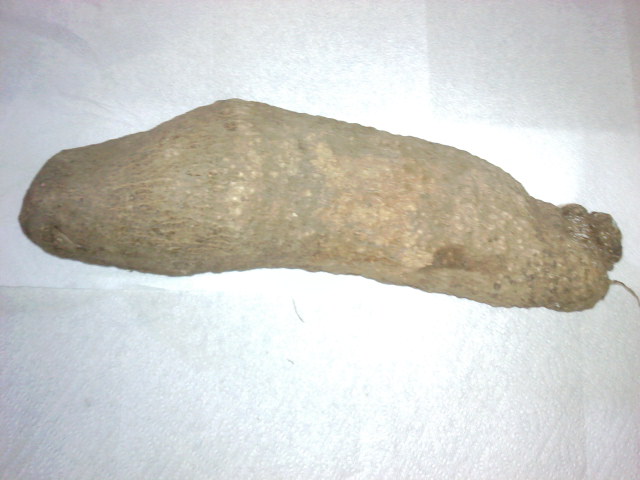
Dioscorea cayenensis subsp. rotundata, commonly known as the white yam, West African yam,[1] Guinea yam, or white ñame, is a subspecies[2] of yam native to Africa. It is one of the most important cultivated yams.[3] Kokoro is one of its most important cultivars.

It is sometimes treated as separate species from Dioscorea cayenensis.[1]

Domestication

[edit]

Its wild progenitor is Dioscorea praehensilis[1] and possibly also D. abyssinica (by hybridization).[4] Domestication occurred in West Africa, along the south-facing Atlantic coast. There is insufficient documentation and as of 2009 insufficient research to determine how long ago that occurred.[5]

Distribution

[edit]

D. c. subsp. rotundata is grown in West Africa, including countries such as Ivory Coast, Ghana and Nigeria.[6]

Linguistics

[edit]

Blench (2006) reconstructs the tentative Proto-Niger-Congo (i.e., the most recent common ancestor of the Niger-Congo languages) root -ku for D. rotundata.[1]

References

[edit]
Revisions and contributorsEdit on WikipediaRead on Wikipedia
from Grokipedia
Dioscorea cayenensis subsp. rotundata, commonly known as white yam or Guinea yam, is a climbing in the Dioscoreaceae, characterized by annual stems that can reach up to 12 meters in length, often prickly, and twining to the right as they scramble over vegetation or the ground. It is a dioecious, tuberous geophyte native to West Tropical Africa, where it grows primarily in seasonally dry tropical biomes, though it is not known in a truly wild state and has been developed through human selection. The plant produces large, cylindrical to irregular tubers weighing 2–5 kg on average (up to 10–26 kg in some cultivars), which are starchy and serve as the primary edible part, cooked as a or processed into . This subspecies, often treated synonymously with Dioscorea rotundata, originated as a homoploid hybrid between the wild species Dioscorea abyssinica (contributing ~68% of its ) and Dioscorea praehensilis (contributing ~32%), with likely occurring in regions like or through human selection for larger tubers and adaptability. It is widely cultivated across West and , as well as introduced to parts of , the (e.g., , ), and other tropical regions, thriving in moist tropical conditions with temperatures of 25–32°C, annual rainfall of 1,000–1,500 mm, and well-drained sandy or clay soils at pH 6.4–6.7. Propagation occurs vegetatively via tuber pieces or vine cuttings, with a growth cycle of 7–9 months (180–270 days), yielding 16–20 tonnes per under optimal conditions. Economically and culturally, D. cayenensis subsp. rotundata is a cornerstone staple in , where production dominated by this subspecies and related yams accounts for over 93% of the world's yam output (approximately 88 million tonnes globally as of 2022), with contributing about 70%. It provides approximately 200 dietary calories per day to over 300 million people, rich in carbohydrates (up to 80.8% ), protein (0.09–8.28%), , (475–900 mg/100 g), and vitamins, while also holding high socio-cultural value in , marriage ceremonies, and festivals. Over 2,500 cultivars have been developed, supporting , rural livelihoods, and , though challenges like nutrient depletion, pests (e.g., yam mosaic virus), and post-harvest losses persist.

Taxonomy

Classification

_Dioscorea cayenensis subsp. rotundata belongs to the hierarchical classification within the plant kingdom as follows: Kingdom Plantae, Phylum Tracheophyta, Class Liliopsida, Order Dioscoreales, Family Dioscoreaceae, Genus Dioscorea, Species D. cayenensis, and Subspecies D. cayenensis subsp. rotundata. This subspecies was originally described as Dioscorea rotundata by P. Poiret in 1813 and later reclassified as a subspecies of D. cayenensis by J. Miège in 1968, based on morphological and distributional evidence from West Tropical Africa. Phylogenetically, D. cayenensis subsp. rotundata is part of the D. cayenensis-D. rotundata complex, a group of cultivated yams characterized by extensive hybridization and morphological variation, leading to ongoing debate over whether D. rotundata warrants recognition as a distinct . Its closest relatives include the wild progenitor D. praehensilis, a species, and D. abyssinica, a savannah-adapted species, with genomic evidence indicating that the diploid form of D. rotundata arose from homoploid hybridization between these two. This hybrid origin underscores the complex's evolutionary history in , where interspecific crosses have contributed to its and diversity.

Nomenclature and Synonyms

_Dioscorea cayenensis subsp. rotundata was originally described as the independent species rotundata by P. Poiret in the Encyclopédie Méthodique, Botanique, Supplément 3: 139 in 1813. In 1968, Joseph Miège reclassified it as a subspecies of cayenensis Lam. (originally described in 1789) in the second edition of the of West Tropical (volume 3, page 153), recognizing the morphological and genetic intergradation within the D. cayenensis-rotundata complex. The genus name honors the ancient Greek physician and pharmacologist Pedanius Dioscorides (c. 40–90 AD), who documented many medicinal plants in his work . The specific epithet cayenensis derives from , the capital of , where the type specimen of D. cayenensis was erroneously collected and described, despite the species' African origins—this reflects early taxonomic misattribution based on colonial collections. The subspecific epithet rotundata comes from the Latin rotundatus, meaning "rounded," referring to the typically cylindrical to rounded shape of its tubers in contrast to more angular forms in related taxa. Accepted synonyms for this subspecies include Dioscorea rotundata Poir., Dioscorea cayennensis subsp. rotundata (Poir.) J.Miège (noting the variant spelling cayennensis). Hybridization debates within the complex have led to associations with variants like Dioscorea abyssinica Hochst. ex Kunth, particularly as genomic studies indicate from East African wild relatives contributing to the cultivated forms' diversity.

Description

Morphology

_Dioscorea cayenensis subsp. rotundata is a climbing characterized by its right-twining habit, with annual aerial stems that can reach lengths of up to 12 m. The stems are typically cylindrical, green to reddish in color, and often armed with spines, particularly on younger portions. This twining growth requires support from other vegetation or stakes to ascend, enabling the plant to access in its natural forest-edge environments. The leaves are simple, glabrous, and heart-shaped (cordate), measuring 10-20 cm in length and width, with prominent veins and a shiny surface. They are arranged oppositely on the lower stem and alternately on the upper portions, contributing to the vine's photosynthetic efficiency. The primary storage organs are underground tubers, which are cylindrical to rounded in shape, covered in rough brown skin, and possess white flesh rich in starch, typically comprising 70-80% of the dry weight. Average tuber weights range from 2-5 kg, though exceptional specimens can exceed 10 kg and reach up to 26 kg under optimal conditions. The plant is dioecious, with male and female flowers occurring on separate individuals, though monoecious forms exist rarely. Male inflorescences are paniculate or racemose, axillary structures bearing small, greenish-yellow unisexual flowers in or racemes up to 50 cm long. Female inflorescences are shorter, simple that develop into 1-3 winged capsules per cluster, each 2-3 cm long, containing flat, winged dispersed by wind; however, seed production is infrequent in cultivated populations due to predominant vegetative propagation.

Growth and Reproduction

_Dioscorea cayenensis subsp. rotundata is a geophyte characterized by annual aerial growth cycles synchronized with seasonal rainfall patterns in its native West African habitats. The emerges from underground at the onset of the , undergoes vegetative development and tuber maturation over 7-9 months, and enters during the subsequent dry period. This life cycle ensures survival through extended dry spells, with tubers serving as storage organs that retain viability for several months post-harvest. Vegetative growth begins with sprout emergence typically 20-40 days after planting, aligning with the start of adequate . Once established, the vine exhibits rapid climbing behavior during the , twining rightward and reaching heights of 6-12 meters by supporting itself on nearby vegetation or stakes. Growth is most vigorous under daylengths exceeding 12 hours early in the season, promoting canopy expansion and to fuel development. Reproduction in D. cayenensis subsp. rotundata occurs primarily through asexual means via , with setts from mature tubers producing genetically identical plants. Sexual reproduction is rare due to the species' dioecious nature, requiring separate plants for , which is often limited by the absence of efficient pollinators and erratic flowering. Seeds, when produced on female plants, exhibit low viability, with rates ranging from 26% to 68% and requiring about 25 days under optimal conditions, though viable production is infrequent in cultivation. As the approaches, typically 7-9 months after planting, the aerial parts undergo , with leaves yellowing and vines dying back to conserve resources. This process coincides with harvest, after which the underground tubers enter a phase lasting 30-150 days, during which they store carbohydrates and remain quiescent until environmental cues like trigger the next growth cycle.

Habitat and Distribution

Native Habitat

Dioscorea cayenensis subsp. rotundata, commonly known as white yam, originates in the seasonally dry tropical forests and savanna-forest ecotones of West Tropical Africa, spanning from to . This is not found in a truly wild state but occurs in populations, particularly in abandoned agricultural fields where it reverts to more wild-like forms through seed germination or tuber sprouting. Its ecological niche reflects adaptation from wild progenitors in forest and environments, with plants often persisting in disturbed areas near natural vegetation. The climate in its native range features average temperatures of 25–32°C, with extremes tolerated from 15–38°C, and annual rainfall of 1,000–1,500 mm distributed across a 4–6 month . This bimodal rainfall pattern, characteristic of the tropical wet and dry (Aw) zone, supports growth during wet periods while inducing tuber dormancy in the . The subspecies requires more than 12 hours of daylight for vegetative growth and shorter days for tuber initiation, aligning with the photoperiod in its West African . It prefers deep, well-drained sandy loam soils with a of 6.4–6.7 but can adapt to heavier clay soils and a broader range of 5.8–8.5. In its native environments, plants are typically found on slopes or edges, where drainage prevents waterlogging during heavy rains. As a climber, it scrambles over shrubs or ascends trees up to 12 meters, often in association with wild yam relatives such as Dioscorea praehensilis in margins and Dioscorea abyssinica in transitions.

Global Cultivation Areas

Dioscorea cayenensis subsp. rotundata, commonly known as white yam or white Guinea yam, is predominantly cultivated in , where it forms the backbone of regional agriculture and food systems. Nigeria leads global production, accounting for approximately 69% of the world's output with around 61 million tonnes as of 2022, followed by , Côte d'Ivoire, , and , which together contribute over 90% of the global total. In , cultivation is significant in , producing about 700,000 tonnes in 2020 and approximately 557,000 tonnes as of 2022, and the of Congo, where it supports rural livelihoods and despite lower yields. These regions span the humid and sub-humid savannas and forest zones, where the crop's expansion has been driven by its role as a staple for over 300 million people, providing essential calories and income. Globally, white yam production forms the majority of the overall yam output of about 88 million tonnes as of 2022, with West and Central Africa dominating at nearly 90% of the total cultivated area exceeding 10 million hectares. Secondary cultivation areas emerged through historical introductions, particularly via the transatlantic slave trade, leading to established farming in the , including and , where varieties are grown for local consumption and export. In , production occurs in countries like , while minor cultivation extends to parts of , such as and , and the Pacific islands, though these regions favor other yam species like D. alata for larger-scale farming; recent efforts have explored expanded cultivation in response to demands as of 2023. The crop thrives in humid tropical environments with well-drained soils and rainfall between 1,100 and 1,600 mm annually, but expansion into new areas often involves clearing forests, contributing to and soil degradation in . Sustainable practices are increasingly emphasized to mitigate these challenges while maintaining yields essential for .

Domestication and History

Origins

The domestication of Dioscorea cayenensis subsp. rotundata, commonly known as white yam, began in the forest-savanna of the basin in , particularly around northern . This region, characterized by seasonal climates and transitional vegetation, provided an ideal environment for early agricultural experimentation with tuber crops. Genetic analyses indicate that the initial expansion of cultivation occurred around 2,500 generations ago, aligning with the emergence of sedentary farming communities in the area. The cultivated form originated as a homoploid hybrid between the species Dioscorea abyssinica (contributing ~68% of its ) and the species Dioscorea praehensilis (contributing ~32%), with likely occurring through human selection in regions like or . Early farmers selected for traits such as larger tubers and reduced bitterness, transforming the small, fibrous wild tubers into more palatable and productive varieties suitable for storage and consumption. This process involved ongoing management of wild and semi-domesticated plants, reflecting gradual human intervention rather than a single event. Archaeological evidence for this domestication is limited due to the poor preservation of tuber remains, but indirect findings from regional sites support the timeline through associations with other early West African crops. Genetic studies since 2009, including whole-genome resequencing and analyses of selection signatures, reveal reduced in cultivated forms—approximately 30% lower than in wild relatives—along with signatures of selection in genes related to root development, starch biosynthesis, and adaptation. These molecular insights confirm the West African origins and the bottleneck effects of . In the cultural context, early Niger-Congo-speaking peoples, including ancestors of Bantu groups, played a key role in this process, selecting yams for their storability to buffer against seasonal food shortages in the ecotone's variable climate. This domestication contributed to the development of resilient agricultural systems among these communities.

Historical Spread

The spread of Dioscorea cayenensis subsp. rotundata, commonly known as white yam or Guinea yam, began with its dissemination across Africa through human migrations. Originating in West Africa following its domestication, the crop was carried eastward into Central Africa by Bantu-speaking peoples during their expansion, which commenced around 1000 BCE from the Cameroon-Nigeria border region. This migration integrated the yam into agricultural systems, where it became a key component of the Bantu farming package alongside other crops like sorghum and oil palm, facilitating settlement in forested and savanna regions. By approximately 500 CE, it had established as a dietary staple in the emerging "yam belt" of West and Central Africa, supporting population growth and cultural practices in these areas. The transatlantic dissemination of the subspecies occurred during the 16th and 17th centuries amid the , as enslaved Africans transported yam tubers and cultivation knowledge to the . Portuguese and Spanish traders introduced it to tropical regions, where it took root in provision grounds on plantations, providing sustenance for enslaved communities. By the 1700s, it was firmly established in the , notably in , where it was referred to as "Guinea yam" and cultivated extensively for local consumption. This introduction not only sustained populations but also diversified agriculture, with the crop adapting to similar tropical conditions. In the , post-colonial trade and scientific efforts expanded the subspecies' global reach. Following in African nations during the mid-20th century, exports of white yam increased to and , primarily serving immigrant communities and niche markets, though volumes remained modest due to perishability. Breeding programs at the (IITA) in , initiated in the early 1970s, played a pivotal role in enhancing varietal resilience and yield, promoting wider adoption across and beyond through improved distribution. Historical challenges included significant postharvest losses from pests like mealybugs and yam scales during transport, which hampered early trade efforts; however, international aid initiatives in the 1980s, including IITA-supported extension programs, contributed to resurgence by introducing pest-resistant varieties and better storage techniques.

Cultivation

Practices

Cultivation of Dioscorea cayenensis subsp. rotundata, commonly known as white yam, typically begins with the preparation of setts weighing 200–500 g, each containing 2–3 buds, which are cut from healthy parent tubers using disinfected tools to minimize disease transmission. These setts are treated with fungicides and insecticides, such as and , before planting to protect against fungal rots and insect damage. Planting occurs at the onset of the rainy season, typically from to in West African regions, depending on local climate, at a depth of 10–15 cm in ridges or mounds raised 70–100 cm high to improve drainage and soil aeration, with spacing of 1 m between plants and rows to allow for vine growth and reduce competition. The vines of D. cayenensis subsp. rotundata are climbing and require staking with poles or branches 2–3 m tall, inserted adjacent to plants shortly after vine emergence to support upward growth and prevent tuber deformation from contact with soil. Maintenance involves manual or chemical weed control, with 3–4 weedings during the first 8–16 weeks post-planting to suppress competition, and application of NPK fertilizers at rates around 200 kg/ha in split doses to enhance soil fertility, particularly in depleted fields. Crop rotation with cereals or legumes is recommended every 2–3 years to prevent soil nutrient depletion and reduce pest buildup. Harvesting takes place 7–9 months after planting, once leaves yellow and vines senesce, typically yielding 16–20 tonnes per under good management, though averages in are around 12–18 t/ha. Tubers are carefully dug using hoes or cutlasses to avoid cuts that could lead to rot, with the process often timed to coincide with the for easier handling. Key pests and diseases, such as yam mosaic virus and root-knot nematodes (Scutellonema bradys), are managed primarily through the use of clean, disease-free setts and , supplemented by targeted insecticides like for beetles and scales. Post-harvest, tubers are cured at 29–35°C and 90–95% for 4–8 days to heal wounds. In , they are traditionally stored in well-ventilated structures at ambient temperatures (around 25–30°C) to minimize spoilage; controlled storage at 13–16°C is used in some modern facilities to extend .

Varieties and Breeding

Dioscorea cayenensis subsp. rotundata, commonly known as white Guinea yam, exhibits extensive varietal diversity across its cultivation regions, particularly in West and , where over 2,500 s have been developed through farmer selection and breeding efforts. These s vary significantly in agronomic traits, including shape (cylindrical to irregular), yield potential (ranging from 10 to 30 tons per ), and dormancy periods (typically 3-4 months but extending up to 6 months in some landraces). Notable examples include the , prized for its high productivity and numerous small ideal for processing into dried chips, which supports its widespread use in , , and . Another key variety is TDr 89/02677, an improved hybrid released in , characterized by stable yields, tolerance to anthracnose disease, and excellent cooking and pounding qualities suitable for traditional West African dishes. Genetic diversity within D. cayenensis subsp. rotundata is high, as revealed by agro-morphological and molecular studies using SNP markers, which highlight variations in traits like vine vigor, tuber skin color ( to ), and resistance to pests such as yam nematodes. However, this diversity faces erosion due to practices, replacement of local landraces with high-yielding hybrids, and environmental pressures, with studies reporting significant , such as an average loss of 37% of cultivars per village in over recent decades. Conservation efforts emphasize on-farm maintenance by smallholder farmers, who prioritize traits like marketability and storability to sustain this variability. Breeding programs for D. cayenensis subsp. rotundata, led by the (IITA) since the 1970s, focus on enhancing virus resistance (e.g., to yam mosaic virus), yield stability, and reduced labor inputs through techniques like the minisett method, which involves cutting tubers into small pieces for rapid propagation. Hybridization within the D. cayenensis-rotundata complex has produced elite lines with genetic gains of 1-2% per year in yield, as demonstrated in multi-site trials across , incorporating traits from diverse landraces to improve adaptability to climate variability. These efforts have resulted in the release of over 30 improved varieties since 1995, emphasizing intraspecific crosses to maintain the complex's genetic integrity. Major challenges in breeding include the species' low seed production, with flowering often asynchronous or absent in many cultivars, limiting traditional hybridization to less than 10% success rates in controlled pollinations. Vegetative propagation dominates, but it perpetuates diseases, prompting the adoption of techniques for virus-free rapid multiplication, achieving up to 100-fold increases in planting material within months. Ongoing research addresses these limitations through to accelerate trait introgression while preserving .

Uses

Culinary

Dioscorea cayenensis subsp. rotundata, commonly known as white yam, is typically prepared by peeling the tubers prior to cooking to remove the bitter compounds concentrated in the skin. The peeled tubers are then commonly , fried, roasted, or pounded into a dough-like consistency known as or iyan, often served with soups or stews in . involves slicing the tuber into pieces and until soft, while pounding requires first followed by mashing in a for a smooth, elastic texture. Nutritionally, white yam tubers are high in carbohydrates, with comprising approximately 75-84% of the dry weight, and provide approximately 118 kcal per 100 g of raw (or about 110 kcal per 100 g when cooked), depending on . Protein content is low at 1-2.5%, but the tubers are rich in and , contributing to their role as a nutrient-dense staple; they are naturally gluten-free, making them suitable for various dietary needs. As a for over 300 million people in , particularly in , white yam is consumed daily in forms such as boiled slices, fried chips, or pounded , providing essential energy in regional diets. It is also processed into flour for making amala, a thick paste, or dried into chips for extended shelf life and portability. Post-harvest, white yam tubers undergo curing for 4-8 days at 29-32°C and 90-96% relative to heal wounds and reduce loss, extending storability. Properly cured tubers can last 4-6 months when stored in traditional methods like or barns at ambient conditions, minimizing and rot.

Medicinal Uses

Tubers of Dioscorea cayenensis subsp. rotundata are employed in for treating skin infections and , with extracts demonstrating anti-diarrheal properties in preclinical studies. The presence of diosgenin, a steroidal sapogenin, contributes to its potential therapeutic applications, including as a precursor for synthesizing hormones like and progesterone, though clinical evidence remains limited and primarily based on . Extracts have shown promise in reducing symptoms of inflammatory bowel diseases by improving epithelial barriers and attenuating inflammation through bioactive compounds such as polyphenols and methyl protodioscin.

Industrial Uses

Starch extracted from the tubers serves as a pharmaceutical due to its suitable physicochemical properties, including and scanning characteristics, enabling applications in tablet production. Yam from this subspecies also finds use in adhesives and textiles as a thickener and stabilizer, leveraging its high content and functional attributes like gelation and film formation. Diosgenin, albeit in trace amounts, can serve as a precursor for synthesizing corticosteroids and contraceptives; however, commercial production primarily utilizes other species with higher yields.

Other Uses

Stem fibers are utilized traditionally for cordage in some regions, providing a supplementary for local crafts. The is occasionally grown ornamentally in gardens for its climbing vines and foliage. In times of scarcity, tuber peelings serve as for , offering a source of crude protein and .

Hazards

Raw tubers contain antinutritional factors such as oxalates, , and , which can cause toxicity, skin irritation, and reduced absorption if not properly processed through , , or cooking. Diosgenin and related compounds contribute to potential gastrointestinal distress and allergic reactions in unprocessed forms.

Cultural Significance

Vernacular Names

Dioscorea cayenensis subsp. rotundata is known by various vernacular names that highlight its regional significance as a staple crop, particularly in where it originated and remains widely cultivated. These names often reflect characteristics such as the color of the tuber flesh or its cultural role in local diets. In English-speaking regions, common names include white yam, Guinea yam, and West African yam. In French, it is referred to as igname blanc or igname de Guinée. Spanish speakers call it ñame blanco, while in it is known as inhame. In the , it is sometimes simply termed true yam to distinguish it from sweet potatoes. Among West African languages, examples include Yoruba (ìṣú fùnfùn), Igbo (jí ọ́cha), and Hausa (dōyā). The subspecies exhibits extensive regional variations, with over 100 local names across ethnic groups, often denoting differences in tuber color, shape, or specific cultivars.

Linguistics

The etymological roots of names for Dioscorea cayenensis subsp. rotundata trace back to West African Niger-Congo languages, where terms derive from reconstructed forms such as nyam-, related to "to eat" or "food." This nomenclature spread among Niger-Congo-speaking communities in West Africa, reflecting the crop's integration into early agricultural vocabularies. Colonial encounters further shaped these terms in European languages. The Portuguese word "inhame," used for the plant, originated from the Temne language's "enyame," a Niger-Congo term denoting the tuber or food. Similarly, the Spanish "ñame" was borrowed from this West African linguistic substrate and disseminated to the Americas through transatlantic trade and settlement. Linguistic evidence underscores the ' domestication history, with names often adapting from terms for other staples to highlight morphological traits like swelling or edibility. Across Niger-Congo languages, more than 200 variants exist, evidencing widespread lexical innovation linked to the plant's cultural and economic importance. Modern linguistic analyses, including a 2006 study, connect these name patterns to yam cultivation dating back to around 5,000 BCE in , aligning lexical reconstructions with archaeological evidence of early farming in the region.

References

Add your contribution
Related Hubs
Contribute something
User Avatar
No comments yet.