Hubbry Logo
Dutch Language UnionDutch Language UnionMain
Open search
Dutch Language Union
Community hub
Dutch Language Union
logo
8 pages, 0 posts
0 subscribers
Be the first to start a discussion here.
Contribute something
Dutch Language Union
from Wikipedia

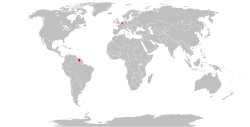
The Dutch Language Union (Dutch: Nederlandse Taalunie [ˈneːdərlɑntsə ˈtaːlˌyni] , NTU) is an international regulatory institution that governs issues regarding the Dutch language. It is best known for its spelling reforms which are promulgated by member states, grammar books, the Green Booklet and its support of Dutch language courses and studies worldwide. It was founded on a treaty concluded between the Netherlands and Belgium (in respect of the Flemish Community) on 9 September 1980. Suriname has been an associate member of the Taalunie since 2004.

Key Information

History

[edit]
The Dutch-speaking world.

The Dutch Language Union was established by a treaty between Belgium and the Netherlands, signed on 9 September 1980 in Brussels. It succeeded the "Cultural Agreement" (governing more than just language) between the two countries signed just after the Second World War. This agreement was redone in 1995, after the federalization of Belgium, and a new treaty was signed between the Netherlands and Flanders.[1] On 12 December 2003, president of the Committee of Ministers of the Dutch Language Union Medy van der Laan and Minister of Education of Suriname Walter Sandriman signed the agreement to the accession of Suriname to the union. The accession was ratified by the National Assembly of Suriname in 2004 and came into force in 2005.[2]

Standard Dutch (Algemeen Nederlands, often abbreviated to AN) is the standard language as it is taught in schools and used by authorities in the Netherlands, Flanders, Suriname, and the Dutch Caribbean. The Dutch Language Union defines what is AN and what is not. Since efforts to "uplift" people had come to be considered rather presumptuous, the earlier name Algemeen Beschaafd Nederlands ("Common Civilised Dutch") and its abbreviation, ABN, were replaced with Algemeen Nederlands (AN). The implication that non-standard varieties are not civilised was thus removed.

Word list

[edit]
Groene Boekje (1954)

An important change that was carried out by the Dutch Language Union was the modification of Dutch orthography in 1995, regarding in particular the writing of the interfix -n in many compounds. Among the Union's publications is the well-known Word list of the Dutch language (Woordenlijst Nederlandse taal), commonly known as the “Groene boekje” ("Green booklet", because of its distinctive green colour). The green booklet is the official orthographic and grammatical reference of the Dutch language. It is laid out like a vocabulary, including plural forms and spelling but without actual word definitions.

The most recent version of the Green Booklet appeared on 13 October 2015. Its content does not differ from the previous version of 2005, which included a somewhat controversial spelling reform that was not received well in general because a part of the spelling reforms of 1996 was changed again. In December 2005, most of the Dutch mainstream media announced a boycott. In August 2006, they released a 'White book' as their own, subtly different guideline. Currently these two spellings are both in use, sometimes confusing people; the 'green' one is used by schools and officials, the 'white' one by papers, magazines and television stations.

In Belgium, on the other hand, the spelling reform was generally accepted without protest.

Dictionary

[edit]

The Van Dale dictionary is commonly accepted as the most authoritative Dutch dictionary. Commonly named the Dikke Van Dale ("Thick" Van Dale due to its size) the dictionary is split into three volumes (A–I, J–R, S–Z) and is usually updated every 7–8 years. The 15th edition was published on 23 September 2015.

The Woordenboek der Nederlandsche Taal (WNT) is a historic dictionary that includes all words used from 1500 to the present day. Work began in 1864 and was finished in 1998 when the last volume was published. It has 46 volumes, occupying about 3 metres of shelf space, with about 400,000 words on 49,255 pages. In 2001, three additional volumes were published containing mostly words from the 20th century that were not included in the previous 43 volumes. This dictionary is published by Instituut voor Nederlandse Lexicologie and can be found online.

Dutch as a foreign language

[edit]

The Dutch Language Union supports the teaching of Dutch in primary and secondary schools in the neighbouring regions and countries. It concerns Belgium (Brussels and Wallonia; 350,000 learners), Germany (Lower Saxony and North Rhine-Westphalia, 40,000 learners) and France (Nord-Pas-de-Calais, 8,000 learners).

The Union also supports the study of Dutch language and culture at universities and schools worldwide. Approximately 14,000 people study the Dutch language and Dutch literature at 140 institutions.[3]

Organisation

[edit]

Internal organisation

[edit]

The NTU has offices in The Hague and Brussels, and it comprises four institutions:

  • The Secretariat-General, responsible for preparing and implementing policy, headed by Kris Van de Poel since March 2020
  • The Committee of Ministers, containing the ministers of education and culture from the Netherlands and Flanders;
  • The Interparliamentary Commission, made up of members of the Dutch and Flemish parliaments;
  • The Council for Dutch Language and Literature.[1]

Instituut voor de Nederlandse Taal

[edit]

The binational (Belgium and the Netherlands) Instituut voor de Nederlandse Taal ("Institute for the Dutch Language") in Leiden, formerly Instituut voor Nederlandse Lexicologie, works under the auspices of the Dutch Language Union, and is responsible for the Woordenboek der Nederlandsche Taal (Dictionary of the Dutch language).[4] In addition, the institute publishes a number of dictionaries, including the Old Dutch Dictionary, the Early Middle Dutch Dictionary, and an etymological dictionary; and databases, including databases indexing various newspapers and magazines, and legal documents. The Spoken Dutch Corpus has contemporary Dutch as spoken in the Netherlands and Flanders, including audio recordings of Standard Dutch.[5]

Royal Academy of Dutch Language and Literature

[edit]

The Royal Academy of Dutch Language and Literature was founded in Belgium in 1886 to stimulate the culture and literature of Flanders. It is the official advisory board to the Flanders government, and publishes the Materiaal Willems database, based on the dialect surveys done by Pieter Willems, containing material from dialects in Flanders, the Netherlands, and French Flanders.[6]

External connections

[edit]

The organisation is also responsible for the external linguistic policy of the Netherlands and Flanders and is active in Indonesia and South Africa, two countries with historic links with the Dutch language. Nevertheless, cooperation with South Africa is not limited to the Afrikaans language but aimed also at fostering multilingualism.[citation needed]

The purposes of the organisation are limited to Dutch language and Dutch-language literature, and are hence not as wide as those of the Community of Portuguese Language Countries, La Francophonie or the Commonwealth of Nations.

The Treaty on the Dutch Language Union foresees the possibility that the Kingdom of the Netherlands extends application to NTU members’ parts outside Europe. The organs of the NTU are its Committee of Ministers (composed of the ministers of education and culture of the Dutch and Flemish Governments), its Secretariat-General, an Interparliamentary Committee (composed of members of the States General of the Netherlands and the Flemish Parliament) and a Dutch Language and Literature Council (composed of twelve independent experts). There are specific arrangements for the participation of Suriname in the organisation's inner workings.

Member states

[edit]

The basis of the Taalunie is a treaty between the Kingdom of the Netherlands and the Kingdom of Belgium, the two sovereign states that constitute the Union. For the Kingdom of the Netherlands, the treaty is only applicable to its European territory. The treaty allows for two types of extensions:

In 2004, Suriname signed an "associative treaty" with the Taalunie.[2] From 27 November 2013 the treaty also applies to the Caribbean Netherlands.[8] The three autonomous Caribbean countries of the Kingdom of the Netherlands, Aruba, Curaçao, and Sint Maarten, are designated as candidate member states.[9] Additionally, Indonesia and South Africa are considered "special partners" of the Dutch Language Union.

Prizes

[edit]

The Dutch Language Union has administered the Prijs der Nederlandse Letteren (Dutch Literature Prize) since 1986. The prize is awarded every three years to an author from the Netherlands, Belgium or Suriname. It is considered one of the most prestigious prizes in Dutch language literature.

Another literary award administered by the Dutch Language Union is the Toneelschrijfprijs for playwrights.

See also

[edit]

References

[edit]
[edit]
Revisions and contributorsEdit on WikipediaRead on Wikipedia
from Grokipedia
The Dutch Language Union (Nederlandse Taalunie) is an intergovernmental organization tasked with coordinating language policy for Dutch across the , (the Dutch-speaking northern region of ), and . Established by the Treaty concerning the Dutch Language Union, signed on 9 September 1980 between the Kingdom of the and the Kingdom of , it succeeded earlier bilateral cultural agreements aimed at linguistic cooperation. acceded to the treaty in 2005, expanding the Union's scope to include the former Dutch colony where Dutch remains an official language. The Union's primary mandate involves developing and stimulating unified policies for the , including standardization of , , and , while supporting its global promotion and digital infrastructure. It maintains authoritative reference works such as the Groene Boekje (Green Booklet), which serves as the official dictionary and spelling guide, with editions reflecting periodic reforms to adapt to linguistic evolution. These efforts ensure consistency in official usage despite political boundaries, fostering a shared linguistic identity among approximately 24 million native speakers. Notable achievements include harmonizing spelling reforms in 1995 and 2006, which, though initially contentious due to resistance from purists and regional variations, reinforced a single standard across member territories. The organization operates through a general secretariat in and collaborates with institutions like the for research and advice.

History

Establishment and Treaty Formation

The Dutch Language Union, known in Dutch as the Nederlandse Taalunie, was formally established through an international treaty signed on September 9, 1980, in between the and the . This agreement created a framework for coordinated policy on the and across the territories where Dutch serves as an official language, primarily the and the Dutch-speaking of . The treaty built upon prior bilateral cultural cooperation, such as the 1946 Belgian-Dutch Cultural Agreement, but marked the first dedicated institutional mechanism for joint language standardization and promotion. The treaty, titled Verdrag inzake de Nederlandse Taalunie (Treaty concerning the Dutch Language Union), outlined the union's foundational structure in its opening articles. Article 1 explicitly established the Language Union as a collaborative entity, while Article 2 defined its scope to encompass , , , and the societal functions of Dutch in administration, , , and . Articles 3 and 4 further specified objectives, including the development and enrichment of the language, the advancement of Dutch , and practical on issues like reforms and for Dutch as a foreign language. These provisions emphasized pluricentricity, recognizing variations in Dutch usage between the and without imposing uniformity. Ratification instruments were exchanged in , leading to the treaty's entry into force on April 1, 1982, after which provisional arrangements from 1980 to 1984 transitioned to full operations. The establishment reflected a pragmatic response to post-World War II linguistic divergences, particularly spelling discrepancies that had emerged since the , aiming to foster unity through rather than political imposition. Initial governance included a Committee of Ministers from both kingdoms, supported by advisory bodies, setting the stage for ongoing administrative evolution.

Expansion to Include Suriname

In the years following 's independence from the on November 25, 1975, Dutch retained its status as the , serving as a unifying medium in education, administration, and media amid the country's multilingual society, which includes and over a dozen other languages spoken by ethnic groups such as Hindustanis, Javanese, and . Efforts to integrate into the Dutch Language Union gained momentum in the early , driven by the need to coordinate language standardization, , and to counter post-colonial linguistic divergence and support Dutch proficiency in Surinamese schools and public life. These initiatives addressed concerns over inconsistent practices and the influence of local variants, with preliminary negotiations spanning over a decade to align with the Union's pluricentric standards without imposing full supranational authority. On December 12, 2003, an association agreement was signed in between the Dutch Language Union and the Republic of , formalizing 's associate membership effective January 1, 2004. This status granted participatory rights in policy consultations, such as updates to the Groene Boekje and development of terminology databases, while exempting it from the full financial and governance obligations borne by core members like the and the Dutch-speaking Community of . The agreement emphasized mutual benefits, including technical assistance for Surinamese language education and promotion of Dutch as a bridge to international opportunities, without altering 's over domestic language use. The expansion via associate membership marked a pragmatic evolution of the Union, extending its influence to the and recognizing as a distinct yet interconnected variety, with approximately 60% of Surinamese proficient in it as a first or . Post-accession activities included joint projects on school curricula and digital resources, though implementation faced challenges like adapting the spelling reform, which Suriname initially resisted due to resource constraints before partial adoption. This inclusion has been credited with bolstering Dutch's institutional role against competing creoles and immigrant languages, fostering cross-border cultural ties without full integration.

Major Milestones and Reforms

In , the Dutch Language Union's Committee of Ministers approved a comprehensive orthographic reform following years of deliberation by expert commissions, aiming to streamline , hyphenation, and inflectional endings for greater uniformity across Dutch-speaking regions. This revision, detailed in the updated Woordenlijst Nederlandse Taal and the second edition of the Groene Boekje, reduced inconsistencies inherited from earlier systems, such as variable spellings in derived words, and was implemented progressively from August 1996 in the and . The 2005 spelling update represented a scheduled ten-year revision of the official word list, incorporating approximately 2,000 new entries and minor rule adjustments to reflect linguistic evolution, while affirming the 1995 framework. Published via the third Groene Boekje on April 23, 2005, it faced significant opposition in the , where the ruled certain changes—such as simplified adjective endings—exceeded the Taalunie's mandate, leading to a hybrid implementation with some rules suspended until 2006. In , the full update was adopted without interruption, highlighting ongoing tensions in pluricentric standardization. Subsequent reforms have focused on periodic vocabulary maintenance rather than structural overhauls, with the Taalunie shifting toward digital resources like woordenlijst.org for ongoing updates, approved in line with the 1995-2005 precedents. These orthographic efforts underscore the Union's role in balancing empirical linguistic trends with policy-driven consistency, though they have periodically sparked public and legal debates over authority and change management.

Mandate and Objectives

Core Policy Goals

The core policy goals of the Dutch Language Union, as established by the 1980 concerning the Dutch Language Union, center on fostering integration among the , the of , and later in matters pertaining to the in its broadest sense. This integration aims to coordinate language policy without imposing uniformity, emphasizing collaborative decision-making on standards while respecting regional variations. The treaty's Article 2 delineates tasks including the joint regulation of , guidelines, and grammatical norms to ensure consistency in official and educational contexts across member regions. A primary goal involves standardizing terminology and providing authoritative language advice to support effective communication in administration, science, and technology. The Union maintains resources like the Woordenlijst Nederlandse Taal (Green Booklet) for spelling and advises on neologisms, with updates reflecting empirical usage data from corpora such as the Woordenboek der Nederlanden. Educational policy coordination constitutes another key objective, promoting high-quality instruction as both a first and within the language area and supporting its teaching at approximately 135 universities in 40 countries outside it as of recent assessments. This includes developing curricula, teacher training, and certification standards to enhance proficiency and accessibility. International promotion and preservation form integral goals, with efforts to bolster the global position of Dutch—spoken by about 24 million people—through , digital archiving of literature, and translation initiatives. The Union addresses pluricentricity by recognizing dialectal and regional varieties, such as since its associate membership in 2005, while countering linguistic fragmentation via multilingual policy frameworks in former Dutch colonies like and . These goals prioritize evidence-based approaches, drawing on linguistic research to adapt policies to evolving usage patterns rather than prescriptive ideals.

Principles of Pluricentricity and Standardization

The Dutch Language Union (Taalunie) formally recognizes Dutch as a , meaning it maintains multiple national standard varieties with equal status across its member regions: the , (), and . This approach, adopted in 2005, acknowledges that while the varieties share a common core, they exhibit systematic differences in pronunciation, vocabulary, and certain grammatical preferences, without one dominating the others. The principle of equality ensures that efforts respect these national distinctions, promoting rather than uniformity. Standardization under Taalunie principles emphasizes joint policy-making in shared domains to foster unity amid diversity, as outlined in Article 2 of the 1980 (revised 1990 and 2005). Key areas include , where the 1995 spelling agreement—updated in 2005—establishes a single set of rules applied across varieties via the Groene Boekje , covering 42,000 headwords and resolving divergences like compound . Terminology occurs through collaborative databases and advisories, harmonizing technical terms (e.g., in , ) while permitting national adaptations, as seen in the Interinstitutionele Terminologiebank for Dutch (ITD) with over 100,000 entries. , guided by the Algemene Nederlandse Spraakkunst (ANS, editions 1984, 1997, planned pluricentric update), describes rather than prescribes, documenting variations such as Flemish preferences for diminutives or Netherlandic adverb placement without enforcing convergence. Pluricentric principles extend to pronunciation and usage, where Taalunie avoids codifying a single norm, instead supporting awareness of regional standards in and media to counter asymmetric influences, such as Netherlandic dominance in . This is evident in policies like the advisory on language variation, which prioritizes a "common standard" for spelling and morphology but tolerates "national standards" elsewhere, ensuring Surinamese Dutch—integrated via the 2005 protocol—is not subordinated. Empirical monitoring, including corpus data from diverse sources, informs these efforts, revealing, for instance, that 85-90% lexical overlap exists across varieties, justifying selective unification over total assimilation. Overall, the framework balances causal preservation of linguistic identity—rooted in historical since the —with pragmatic coordination to sustain Dutch's functionality as a cross-border spoken by approximately 24 million .

Organizational Structure

Governing and Administrative Bodies

The Committee of Ministers constitutes the principal governing body of the Dutch Language Union, responsible for determining overall policy, approving five-year strategic plans, and adopting annual action plans. It comprises two ministers from the and two from the of Belgium, with the chairmanship rotating every two years between Dutch and Flemish representatives; , as an associate member, participates through designated representatives such as ambassadors or ministry officials but lacks voting rights equivalent to full members. Decisions of the Committee are binding and have been documented publicly since 1982, ensuring accountability in policy formulation. The Interparliamentary Committee provides oversight and monitors the implementation of the Union's policies, functioning as a supervisory organ composed of 11 parliamentarians from the Dutch States General and 11 from the . This body convenes at least twice annually to review activities, question the Secretariat, and assess compliance with the founding , with chairmanship alternating biennially in alignment with the Committee of Ministers; Suriname's corresponding oversight is handled by its national Commission for Education, Science, and Culture. Established under the 1980 , the committee ensures democratic scrutiny without direct executive powers. Administratively, the General Secretariat executes the policies set by the governing bodies, preparing proposals, coordinating with expert commissions and working groups, and managing daily operations across offices in and . Headed by Secretary-General Gunther Van Neste since December 2024, it collaborates with external specialists to implement initiatives such as language standardization and international promotion, while reporting to the Committee of Ministers. The Secretariat's role emphasizes practical administration over policy-making, drawing on a network of commissions for technical input. The Council for Dutch Language and Literature (Raad voor de Nederlandse Taal en Letteren, RNTL) serves as an advisory body to the Committee of Ministers, offering expert guidance on linguistic and literary matters from a pluricentric perspective. Comprising appointed linguists, writers, and other prominent figures in use, it evaluates policy drafts and recommends actions on issues like and , operating independently but aligned with the Union's objectives since its integration into the structure.

Key Affiliated Institutions

The Raad voor de Nederlandse Taal en Letteren (RNTL) serves as the Taalunie's principal advisory institution, consisting of 12 appointed experts in , , and from the , , and , supplemented by a dedicated Surinamese subcommittee of three members. Established under the Taalunie's treaty framework, the RNTL provides solicited and unsolicited policy advice to the Comité van Ministers on matters such as orthographic reforms, development, and the promotion of , convening approximately four times annually to evaluate linguistic trends and recommend actions grounded in empirical language use data. A key external affiliate is the Instituut voor de Nederlandse Taal (INT), an independent research institute in , , founded in 2021 through the merger of prior linguistic bodies including the Instituut voor de Nederlandse Lexicologie. The INT maintains a formal partnership with the Taalunie, contributing expertise in digital corpora management—encompassing over 10 billion words from historical and contemporary sources—and supporting joint initiatives on , such as the development of online dictionaries and terminology databases aligned with Taalunie standards. This collaboration ensures evidence-based resources for standardization, with the INT representing Dutch interests alongside the Taalunie in supranational forums like the European Federation of National Institutions for Language (EFNIL). These institutions enable the Taalunie's pluricentric approach by integrating academic research with policy execution, though their outputs prioritize verifiable linguistic data over prescriptive uniformity, reflecting the diverse variants of Dutch across member regions.

Funding and Operational Framework

The Dutch Language Union (Nederlandse Taalunie) is financed primarily through annual contributions from its participating governments: the Kingdom of the , the of , and . These funds support core operations, policy development, and initiatives such as language and international promotion. The contributions are allocated based on negotiated proportions reflecting each party's involvement and resources, as facilitated by the 1980 and subsequent administrative protocols; for example, the channels its share via the Ministry of Education, Culture and Science within its international language budget. , as a smaller , provides a more limited contribution while benefiting from collaborative projects, with overall budgeting subject to approval by the governing bodies to ensure fiscal transparency and alignment with pluricentric language goals. Operationally, the Taalunie functions as an intergovernmental policy organization under the framework of the Treaty concerning the Dutch Language Union, signed on 9 September 1980 by the and (representing ), with acceding as an associated member in 2004 and later integrating fully into decision-making. The General Secretariat, based in , executes day-to-day activities, including policy preparation, project coordination, and administrative management, under the leadership of a Secretary-General appointed by the Committee of Ministers. This committee, comprising ministers or delegates from each member, holds ultimate decision-making authority on strategic matters, supported by expert advisory committees on areas like , , and . Oversight is provided by the Interparlementary Committee, drawn from Dutch and Flemish parliaments (with Surinamese representation in consultations), which reviews annual reports, budgets, and compliance with treaty objectives to maintain accountability. The structure emphasizes consensus-driven governance to balance the linguistic interests of the diverse member regions while avoiding centralized imposition.

Member States and Governance

Role of the Netherlands

The serves as a founding member of the Dutch Language Union, having signed the Language Union Treaty on 9 1980 in alongside , with the agreement entering into force on 1 April 1982 following ratification by Dutch law on 24 June 1981. This treaty established joint responsibility for standardizing and promoting the Dutch language across member jurisdictions, with the extending its application to the (Bonaire, Saba, and ) via a 2013 regulation. As the state with the largest population of native Dutch speakers—approximately 17 million—the exerts substantial influence on the Union's pluricentric approach, balancing linguistic norms between its variety of Dutch and those in and . In governance, the appoints ministerial representatives to the Comité van Ministers, the Union's highest decision-making body, which approves policies on spelling, terminology, and promotion; these delegates typically hail from the Ministry of Education, Culture and Science. Parliamentary oversight is provided through the Interparlementaire Commissie (IPC), comprising 11 Dutch members from the and alongside 11 Flemish counterparts, which meets three times annually to review operations and budgets. The also contributes to advisory structures like the Raad voor de Nederlandse Taal en Letteren, reformed in 1998 to prioritize expert input on cultural and linguistic matters. Financially, the Netherlands funds a major share of the Union's operations, which totaled about €11 million in 2023, primarily through state budget allocations managed under the 2019 Regeling Financieel Beheer; as the original bilateral framework evolved to include in 2007, Dutch contributions have sustained core activities like and international outreach despite the modest overall scale. Domestically, the Netherlands implements Union directives, such as adopting the 2005 spelling reform via the Spelling Act, which empowers the Comité van Ministers to issue binding regulations. This role underscores the ' commitment to maintaining Dutch as a cohesive while fostering its global position, though debates persist over the Union's influence amid diverging regional preferences.

Role of the Flemish Community

The Flemish Community signed the Language Union Treaty with the Kingdom of the Netherlands on September 9, 1980, establishing the Dutch Language Union as a bilateral framework for coordinating Dutch language policy, with Flanders as a co-founding entity responsible for advancing standardization and promotion efforts in its territory. This foundational role positioned the Flemish Community as an equal partner in defining common standards for spelling, grammar, and terminology, addressing the need for linguistic unity amid regional variations while preserving Flemish-specific usages in official contexts such as education and administration. In the Union's governance, the Flemish Community holds representation in the Committee of Ministers, the supreme decision-making organ comprising education and culture ministers from the member states, where the Flemish minister participates in approving policies on language resources like the Woordenlijst Nederlandse Taal (Green Booklet) and international promotion strategies. The Interparliamentary Committee, consisting of 11 members from the Flemish Parliament and 11 from the Dutch Houses of Parliament, provides oversight and ensures Flemish parliamentary input into policy execution, focusing on alignment with regional needs such as terminology for Flemish media and public sector usage. Additionally, Flemish delegates serve on the Board of Directors, which handles operational decisions, including budgeting for projects that support Dutch proficiency in Flemish schools and cultural institutions. The Flemish Community's involvement extends to co-financing Union activities through its Department of Culture, Youth and Media, enabling initiatives that reinforce Dutch as the primary language in Flanders, home to approximately 6.6 million native speakers, and counter potential fragmentation from French-language influences in Belgium. This includes advocacy for pluricentric approaches that accommodate Flemish phonological and lexical traits in joint standards, as evidenced in reforms to official dictionaries and advice services tailored to Flemish contexts. In recent collaborations, such as the 2025 joint action plan on artificial intelligence and Dutch language technology with the Netherlands, Flemish representatives have emphasized culturally grounded tools to enhance language processing for Flemish variants.

Role of Suriname and Broader Representation

acceded to the Dutch Language Union as an associate member in 2004, following an agreement signed in on December 12, 2003, which formally integrated the country into collaborative efforts alongside the and the of . This status affirms Dutch as Suriname's sole , used predominantly in , , , and media, with over 60% of the speaking it as a mother tongue. As the only independent nation outside where Dutch holds this position, Suriname's membership introduces a postcolonial, non-European dimension to the Union's pluricentric approach, influencing standardization to accommodate Surinamese linguistic variants. Within the Union's governance, maintains dedicated advisory structures to ensure representation in decision-making. The Raadscommissie Suriname provides counsel to the Comité van Ministers on matters, while the Onderwijscommissie of the Nationale Assemblee functions as the Surinamese counterpart to the Interparlementaire Commissie, focusing on educational aspects of use. These bodies enable to contribute input on initiatives such as lexicographical updates, where Surinamese terms have been incorporated into official resources like the Woordenlijst Nederlandse Taal, reflecting local usage without full voting parity due to associate status and limited financial contributions. This arrangement underscores 's role in balancing European-centric norms with diverse dialectal influences, though its advisory influence remains subordinate to the primary members. Suriname's involvement extends to broader representation of Dutch-speaking communities beyond the core members, particularly in the . The Union fosters close cooperation with , , and —constituent countries of the Kingdom of the Netherlands—through joint projects on language promotion and education, effectively encompassing all regions where Dutch serves as an . For instance, Taalunie activities in , including 2022 work visits emphasizing language policy, education, and culture, aim to strengthen Dutch amid multilingual pressures from and other creoles, supporting global dissemination via digital tools and teacher training. This framework positions as a bridge for non-European perspectives, enhancing the Union's mandate to sustain Dutch vitality worldwide while prioritizing empirical alignment with local linguistic realities over uniform imposition.

Key Initiatives and Activities

Language Standardization Projects

The Dutch Language Union oversees standardization projects to establish and maintain a common standard for Dutch orthography, terminology, and grammar across the , , and , promoting consistency in official and public usage. These initiatives, grounded in joint agreements among member states, involve periodic reviews and updates based on linguistic research and usage data. Orthographic standardization constitutes a core project, centered on the Woordenlijst Nederlandse Taal, the official spelling dictionary known as the Groene Boekje. First published in 1954, it has undergone revisions under Taalunie authority since the 1980 , with major updates occurring approximately every decade to incorporate empirical evidence from language corpora and address evolving conventions. The 1995 spelling reform, endorsed by the Taalunie's Committee of Ministers, revised the 1954 guidelines by simplifying rules for compounds, hyphenation, and word forms, such as permitting single forms for certain plurals and adjusting inflections to reduce exceptions. Implemented through national legislation in 1997 for education and 1998 for publications, the reform drew on data from the Institute for Dutch Lexicology to ensure reforms aligned with actual usage patterns. Controversy over the 1995 changes, particularly rigid compound word rules like inserting infixes, prompted a 2005 revision where the Taalunie, in consultation with Dutch and Flemish governments, introduced flexibility by designating certain simplified spellings as preferable while tolerating traditional variants in non-official contexts. This compromise, reflected in the third Groene Boekje edition, balanced purism with practicality and reaffirmed the ten-year update cycle. Terminology standardization projects focus on harmonizing specialized , coordinated via the Taalunie's support for the Dutch Terminology Service Centre and the Centre of Expertise for Dutch Terminology. These entities maintain databases like NedTerm, conduct research in domains such as legal, medical, and technical fields, and offer training to ensure uniform term application, reducing regional divergences in professional communication.

Lexicographical Resources and Dictionaries

The Dutch Language Union maintains the Woordenlijst Nederlandse Taal, the official reference for , which lists correct spellings, inflections, and derivations of words used in the , , and . This digital resource, accessible at woordenlijst.org since 2015, includes over 140,000 headwords and supports mandatory spelling standards in government documents, education, and official publications across member regions. The Taalunie updates the list periodically to incorporate linguistic evolution, with revisions reflecting consensus among Dutch-speaking communities. A printed subset of the Woordenlijst, known as Het Groene Boekje (The Green Booklet), serves as a portable reference, with the 2015 edition containing approximately 70,000 entries selected for common usage. First published in 1954 following Taalunie predecessor agreements, it has undergone revisions in 1995 and 2005 to align with updated rules, such as those simplifying compound word formations. The Taalunie certifies commercial dictionaries, like Van Dale, that adhere to this via a spelling quality mark, ensuring consistency in lexicographical works. Beyond spelling, the Taalunie collaborates with the Instituut voor de Nederlandse Taal on broader lexicographical efforts, including integration with historical dictionaries for etymological depth, though primary focus remains over comprehensive definition. These resources underpin by providing verifiable norms, countering dialectal divergences and anglicisms through evidence-based inclusions.

Promotion of Dutch Internationally

The Dutch Language Union supports the international promotion of Dutch through targeted funding and programs aimed at expanding Dutch language instruction, research, and cultural exchange outside the native-speaking regions of the , , and . Dutch is currently taught at approximately 135 universities and higher education institutions in 40 countries, serving around 400,000 learners globally, with a focus on enhancing diplomatic, economic, scientific, and cultural ties via language proficiency. These efforts prioritize structural support for academic departments, networks, and individual scholars to sustain and grow interest in neerlandistiek, the study of Dutch language and culture abroad. Key initiatives include subsidies for establishing and maintaining departments of Dutch at , which provide basic operational grants, funding for language assistants, guest author programs, and workshops on literary to improve teaching quality and resources. Additional project grants target enhancements in academic-level Dutch tuition as a , such as developing curricula or digital tools. In border regions like French-speaking , northern , and western , the Union collaborates with local authorities to fund classes and activities, supporting over 350,000 learners in alone. For broader networks outside the Dutch-speaking area, operating subsidies cover fixed costs like administration, meetings, and promotion, ranging from €2,500 for thematic or small regional networks to €7,500 for those spanning six or more countries, requiring applicants to demonstrate non-profit status, multi-institutional collaboration, and co-funding. Recent expansions, secured through a €1 million annual allocation starting in 2025, introduce new subsidy opportunities for students, teachers, researchers, and institutions, including support for publications, departmental strengthening, and international collaborations to build and elevate Dutch studies' academic status. Specific programs encompass summer courses, doctoral colloquia, visiting lecturer schemes, and incentives like guest chairs (e.g., in ) and writer visits worldwide to foster direct cultural engagement. Research scholarships fund projects on Dutch outside native areas, while initiatives like a new master's program in exemplify efforts to create advanced degree pathways. These measures aim to leverage international Dutch studies for practical outcomes, such as improved labor mobility and economic partnerships, without relying on unsubstantiated claims of widespread adoption.

Prizes and Recognition

Awarded Prizes and Their Criteria

The Dutch Language Union awards the Prijs der Nederlandse Letteren, a triennial prize established to honor authors whose oeuvres consist of significant original works in Dutch-language , , essayistic , or . Eligibility requires living authors with qualifying bodies of work that do not violate laws, exclude jury-authored texts, or involve prior recipients; nominations are evaluated by a representative of Dutch-speaking regions and international Dutch studies, which advises the Union's Committee of Ministers by June 1 of the award year, with the Committee able to deviate only after consultation. The , appointed on recommendation of the Raad voor de Nederlandse Taal en Letteren and chaired alternately by Dutch or Flemish members, selects a single laureate without honorable mentions; the prize, valued at €60,000, alternates between and the and has been conferred since 1956, recognizing contributions to Dutch literary heritage across member regions including since 2005. Another key award is the Toneelschrijfprijs, an annual prize aimed at stimulating original Dutch-language playwriting and its professional performance, including in children's and youth theater. Criteria mandate that eligible works be newly premiered texts in Dutch, first staged between January 1 and December 31 of the preceding year, and performed at least five times publicly by a professional ensemble; submissions of these texts are assessed by a Dutch-Flemish professional jury, which shortlists three to four nominees announced weeks before the September ceremony at alternating Flemish or Dutch theater festivals. The winner receives €10,000 to support further writing development, while nominees get €1,000 each; financed by the Union in collaboration with entities like the Fonds Podiumkunsten, Vlaams Fonds voor de Letteren, and Nederlands Letterenfonds, the prize succeeds the 1988–1992 Nederlands-Vlaamse Toneelschrijfprijs and underscores the Union's commitment to dramatic arts in standard Dutch. The Union also issues specialized prizes for clear language use, such as the Direct Duidelijk Prizes for exemplary government communication, nominated by public servants and awarded to individuals or organizations promoting accessible Dutch in official contexts, as seen in 2020 recipients like the municipalities of and . Similarly, the Zorgtaalprijs, launched in 2024, recognizes Dutch and Flemish healthcare organizations for patient-centered, comprehensible Dutch, emphasizing empirical improvements in communication efficacy over stylistic preferences. These awards prioritize verifiable impact on language clarity and , aligning with the Union's goals without favoring unproven ideological framings.

Impact on Cultural and Linguistic Promotion

The prizes awarded by the Dutch Language Union, such as the Prijs der Nederlandse Letteren and the Toneelschrijfprijs, serve to recognize excellence in Dutch-language literature and theater, thereby incentivizing the production of high-quality works that sustain and elevate the language's cultural role. The Prijs der Nederlandse Letteren, established in 1956 and valued at €60,000, honors an author's lifetime contributions to poetry, prose, or drama, with recipients selected by a jury representing the Netherlands, Flanders, Suriname, and international Dutch studies; this triennial award has spotlighted figures like Herman Teirlinck (1956), Hugo Claus (1986), and Astrid Roemer (2021, the first Surinamese laureate), fostering a shared literary canon across Dutch-speaking regions and reinforcing linguistic unity amid regional variations. By financially supporting and publicizing these oeuvres, the prize promotes broader engagement with Dutch texts, encouraging translations, academic study, and public discourse that preserve the language's vitality against anglicization pressures; for instance, its alternation between Belgian and Dutch royal presentations underscores institutional commitment to cross-border cultural cohesion. Similarly, the Toneelschrijfprijs, initiated in 1987 and offering €10,000 annually, targets original Dutch plays performed at least five times professionally, stimulating new theatrical output—including for youth audiences—and alternating ceremonies between Flemish and Dutch festivals to bridge cultural divides. These initiatives have measurable effects on linguistic promotion, as evidenced by increased performances of awarded plays (e.g., winners like Eric de Vroedt in ) and heightened visibility for Dutch drama, which counters declining theater attendance trends by prioritizing native-language innovation over imported works. Overall, the Union's prizes cultivate a where creators are rewarded for advancing Dutch as a medium of sophisticated expression, contributing to cultural preservation by linking with artistic output and ensuring the idiom's relevance in contemporary across member states.

Achievements and Impact

Successful Policy Implementations

The Dutch Language Union's most prominent successful policy implementation centers on the standardization of , culminating in the 2005 endorsed by its Committee of Ministers. This reform simplified rules for compound words, hyphenation, and foreign terms, replacing prior fragmented regulations with a unified Woordenlijst Nederlandse Taal as the authoritative reference. Enacted via the ' Spelling Act of 15 September 2005 (effective 22 February 2006) and parallel Flemish (effective 1 September 2006), the policy mandated compliance in government documents, education curricula, and official publications across member states, achieving legal enforceability without requiring new bilateral treaties. Despite initial resistance from publishers and linguists between 1996 and 2006, the reform prevailed, leading to "spelling peace" through consistent application and periodic updates, as evidenced by the continued use of derived resources like woordenlijst.org. Complementing orthographic standardization, the Taalunie's terminology policies have effectively harmonized specialized vocabulary in public sectors, including administration, education, and . Since the 1980 founding and its 1995 expansion to include , joint Flemish-Dutch efforts produced shared databases and guidelines, such as those integrated into EU-level term management, reducing discrepancies in technical and legal Dutch usage. These implementations succeeded in fostering , with measurable outcomes including the of terminology resources that support cross-border policy alignment and language technology development, as coordinated through Taalunie-led commissions. The Groene Boekje, the Taalunie's flagship lexicographical output derived from the Woordenlijst, exemplifies sustained policy efficacy in practical application. First compiled in 1954 and updated decennially—most recently in 2015 with over 135,000 entries focusing on problematic spellings—the booklet (and its online successor) has been adopted as the in schools and media, ensuring empirical consistency in everyday and without reliance on subjective interpretation. Its impact is reflected in broad institutional uptake, where compliance rates in official contexts exceed 95% post-reform, bolstering causal links between policy enforcement and reduced orthographic variation across Dutch-speaking regions.

Measurable Effects on Language Use and Preservation

The Dutch Language Union conducts biannual surveys under the "State of the Dutch Language" initiative to assess usage patterns across the , , and Suriname, revealing that Dutch remains the predominant language in social settings, internal workplace communication, and family interactions with children among non-native speakers. In higher education, English usage has stagnated or increased in the while Dutch employment has risen in , indicating policy efforts to bolster Dutch in academic domains amid pressures. These surveys, informed by Taalunie's coordination, track shifts such as declining dialect use on in favor of standard Dutch or English, underscoring the Union's role in monitoring and supporting standard variety dominance for preservation. Standardization initiatives, including the 1995 orthography reform authorized by the Union and codified in the Groene Boekje, have enforced uniform spelling and grammar across member states, reducing regional variations in written Dutch and enhancing in , media, and official documents. Compliance with these reforms is near-universal in formal contexts, as evidenced by their mandatory adoption in schools and government publications since implementation, which has minimized orthographic divergence that could fragment the language community. In , where Dutch serves as the sole official language amid competition from and other creoles, Taalunie's inclusion of the country since 2005 has supported maintenance efforts, with surveys showing 88% of respondents proficient in Dutch and over 60% claiming it as a mother tongue. This high proficiency level correlates with Union's terminology and educational policy alignment, countering potential erosion in a multilingual postcolonial context where Dutch functions primarily in formal external communication. Overall, these outcomes reflect causal links from coordinated policies to sustained usage, though long-term preservation faces challenges from English encroachment and demographic shifts not fully mitigated by current measures.

Criticisms and Challenges

Controversies Surrounding Reforms

The Dutch Language Union's most prominent reforms have centered on orthographic , particularly the 1995 and 2005 spelling updates to the Groene Boekje , which aimed to simplify rules for compound words, diminutives, and inflections but elicited widespread criticism for introducing inconsistencies and disregarding established usage patterns. Critics, including linguists and publishers, argued that provisions like the mandatory tussen-n (intermediary 'n' in compounds, e.g., appeltaartje becoming appel-taartje) created "spookspelling" or phantom spellings that contradicted intuitive feel and failed to enhance learnability or reduce social in writing. These changes were seen as overly prescriptive, prioritizing theoretical simplification over of usage, with detractors noting that prior reforms in 1954 had already achieved sufficient streamlining without similar backlash. Public and media resistance peaked in the following the 2005 revision, which partially reverted some 1995 innovations by reintroducing traditional forms (e.g., restoring huisnummer over huis-nummer) but retained contentious elements, leading to boycotts by major newspapers and a rift with language advocacy groups like Onze Taal. In contrast, Flemish media and institutions largely complied without protest, highlighting regional divergences in acceptance that strained the Union's pluricentric mandate. The Taalunie faced accusations of poor communication and insufficient consultation with stakeholders, as reforms proceeded on a decennial cycle despite recurring complaints that they exacerbated confusion rather than unifying standards across member states. Politically, the controversies prompted intervention; in 1998, Dutch Education Minister Jo Ritzen declared that spelling decisions should rest with parliament rather than linguists, reflecting concerns that the 1995 reforms had overreached into cultural norms. By 2006, the Dutch government enacted the Spelling Act, permitting "white lists" of exceptions to allow institutions like publishers to retain pre-reform spellings for disputed words, effectively diluting enforcement and underscoring the reforms' limited practical impact. Such accommodations revealed underlying tensions in balancing standardization with user autonomy, as evidenced by ongoing debates over whether the Taalunie's top-down approach adequately addressed causal factors like regional dialects and evolving vernacular rather than imposing abstract ideals.

Political and Cultural Tensions Among Members

The Dutch Language Union has encountered political tensions stemming from unequal member engagement and divergent policy priorities. Flanders actively drives the Taalunie's agenda through parliamentary involvement in the Interparliamentary Commission, reflecting a historical emphasis on linguistic unity as a cultural bulwark against French influence in Belgium. In contrast, the Netherlands exhibits minimal interest, treating Dutch as a self-evident internal language and prioritizing domestic initiatives, such as allocating €1 million annually since late 2022 for independent Dutch language courses abroad. This disengagement culminated in 2023 when the Dutch Lower House reduced the Taalunie's role, opting for unilateral policies and sidelining joint decision-making structures. Cultural tensions arise from differing attitudes toward language and pluricentricity. Flemish perspectives view Dutch as an aspirational standard to cultivate, informed by past suppression, leading to advocacy for recognizing regional variants within a unified framework. Netherlandic speakers, however, perceive such efforts as unnecessary affirmations of division, favoring local norms over enforced multicentric policies adopted by the Taalunie in the early . Linguist Marc van Oostendorp has critiqued pluricentricity as a politicized construct that overlooks intra-national variations, such as differences (e.g., soft 'g' in versus hard 'g' in the north), complicating consensus on "centers" like or the . Suriname's associate membership since 2005 introduces additional strains due to its postcolonial, multilingual context, where Dutch functions pragmatically alongside as the . While Netherlandic Dutch is practically accepted in formal domains, it faces ideological resistance as a colonial remnant, with surveys indicating for local standards over an imports. Suriname's limited resources curtail its influence in Taalunie deliberations, exacerbating perceptions of an dominance and hindering balanced policy on non-an variants. These dynamics underscore broader challenges in reconciling utility-driven approaches in with identity-focused ones in .

External Pressures and Effectiveness Debates

The dominance of English as a global exerts significant external pressure on the Dutch Language Union (Taalunie), particularly in domains such as higher education, scientific , and , where anglicization has accelerated since the early . In the , for instance, over 90% of academic publications in natural sciences were in English by , prompting concerns that Dutch is losing ground as a language of knowledge production despite Taalunie's efforts to promote its use in these areas. Similarly, in , stringent regulations limit foreign language use in , yet globalization-driven migration and amplify exposure to non-Dutch languages, challenging the Union's goals. European Union policies on multilingualism add further strain, as the EU's emphasis on English for practical communication undermines smaller languages like Dutch, even as official documents remain multilingual. Taalunie's response includes guidelines for Dutch departments abroad, but critics argue these are insufficient against broader trends, such as the shift toward English in Dutch universities, where indigenous students' Dutch proficiency has reportedly declined amid internationalization. External evaluations, including a 2016 Flemish report, highlight how global economic integration prioritizes English proficiency over native language vitality, reducing demand for Dutch promotion initiatives. Debates on Taalunie's effectiveness center on its limited impact in countering these pressures, with multiple audits questioning its policy implementation and visibility. A 2016 advisory report described the organization as failing to profile itself adequately, recommending greater collaboration among member states over promotional activities, amid perceptions of inefficiency. In , amid financial crises, Taalunie faced criticism for allocating €180,000 to celebrations while core language-spreading programs stagnated, fueling arguments that it prioritizes bureaucracy over measurable outcomes. Surveys like the 2021 "State of the Dutch Language" reveal stable everyday use but domain-specific erosion, such as in education, leading to calls for reevaluation of Taalunie's role versus national efforts. Proponents defend Taalunie's advisory role, citing free public resources accessed 5.5 million times in 2009 as evidence of utility, yet skeptics, including international Neerlandists, contend it has become rigid and detached, as evidenced by 2023 Dutch parliamentary moves to sideline it amid internal strife. Effectiveness metrics remain contested, with language policy experts noting Dutch's resilience but attributing limited malleability to inherent cultural and economic forces beyond institutional control, rather than Taalunie's strategic shortcomings. Overall, while the Union sustains orthographic unity via tools like the Groene Boekje, debates persist on whether it adapts sufficiently to globalization's causal dynamics, with some advocating a leaner structure focused on core linguistic coordination.

References

Add your contribution
Related Hubs
Contribute something
User Avatar
No comments yet.