Hubbry Logo
Dutch process cocoaDutch process cocoaMain
Open search
Dutch process cocoa
Community hub
Dutch process cocoa
logo
8 pages, 0 posts
0 subscribers
Be the first to start a discussion here.
Dutch process cocoa
Dutch process cocoa
from Wikipedia

Dutch processed cocoa
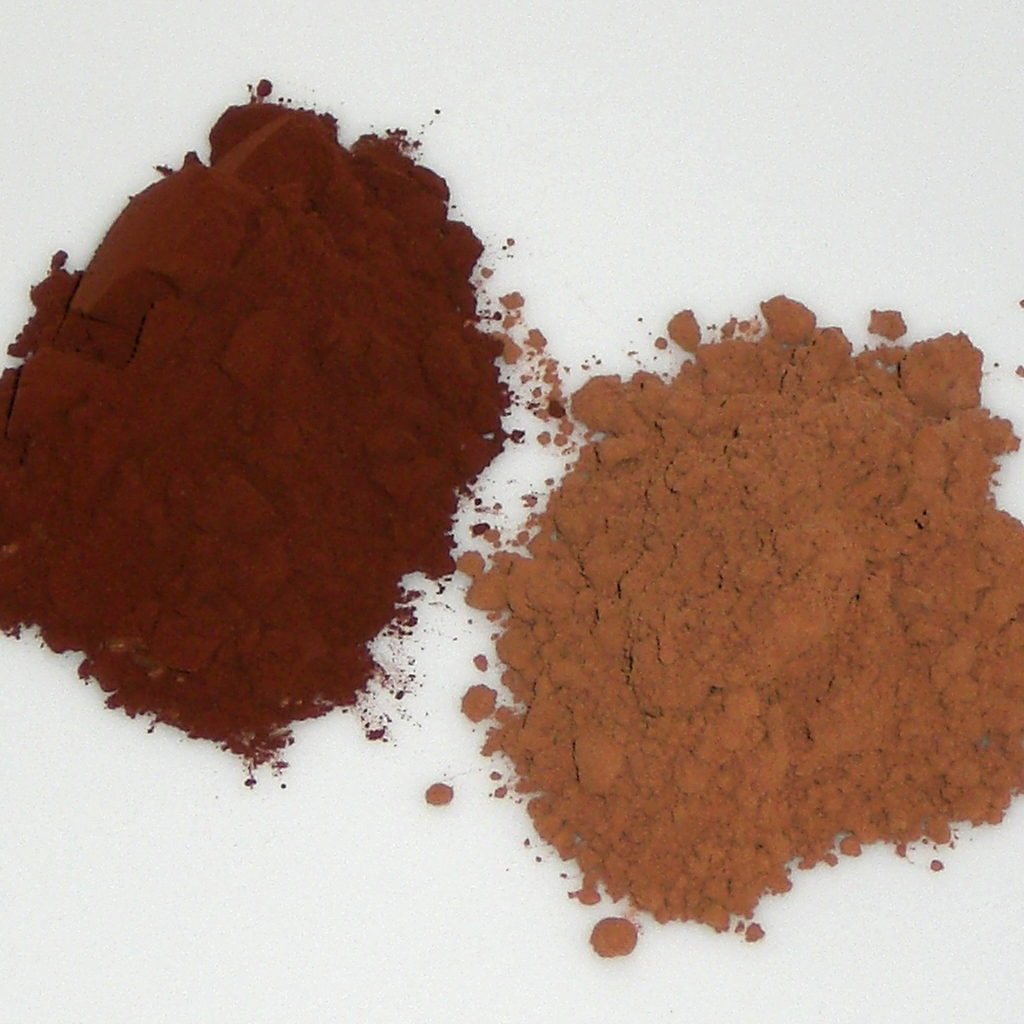
Dutch-processed cocoa (left)
"Natural" cocoa (right)
Alternative namesDutched cocoa
TypeCocoa
Place of originNetherlands
Created byCoenraad Johannes van Houten
Main ingredientsCocoa powder, alkalizing agent

Dutch processed cocoa, Dutched cocoa, or alkalized cocoa, is made from cocoa solids that have been treated with an alkalizing agent to reduce the natural acidity of cocoa, giving it a less bitter taste and darker colour compared to "natural cocoa" extracted with the Broma process. Alkalizing agents employed vary, but include potassium carbonate (E501), sodium carbonate (E500), and sodium hydroxide (E525).

Dutching greatly reduces the levels of certain phytochemicals in cocoa. It forms the basis for much of modern chocolate, and is used in ice cream, hot chocolate, and baking.

Baking chocolate, unsweetened, squares
Nutritional value per 100 g (3.5 oz)
Energy922 kJ (220 kcal)
58.3 g
Sugars1.76
Dietary fiber29.8 g
13.1 g
18.1 g
Vitamins and minerals
Other constituentsQuantity
Water2.7 g
Caffeine78 mg
Theobromine2630 mg

Percentages estimated using US recommendations for adults.[1]

History

[edit]

The Dutch process was developed in the early 19th century by Dutch chocolate maker Coenraad Johannes van Houten, whose father Casparus was responsible for the development of the method of removing fat from cocoa beans by hydraulic press around 1828, forming the basis for cocoa powder. These developments greatly expanded the use of cocoa, and reduced the oiliness that was previously associated with cocoa.[2]

Black cocoa

[edit]

Typical Dutch process cocoa produces a dark brown cocoa. Continuing to treat cocoa with alkaline yield ultra-processed Dutch cocoa, or black cocoa. Black cocoa has a further earthier taste compared to typical Dutch process cocoa. Oreo and Hydrox cookies are defined by black cocoa.[3][4][5][6]

Reduction of phytochemicals

[edit]

Caffeine

[edit]

Dutched cocoa contains only about 1/3 of the caffeine of untreated cocoa:

  • 100 grams unsweetened cocoa powder processed with alkali contains 78 mg.[7]
  • 100 grams unsweetened cocoa powder without alkali (un-dutched) contains 230 mg.[8]

Antioxidants and flavonols

[edit]

Compared to other processes, Dutch process cocoa contains lower amounts of flavonols (antioxidants).[9] The effect this has on nutritional value is disputed. Professor Irmgard Bitsch of the Institut für Ernährungswissenschaft, Justus-Liebig-University Giessen claims that the reduction of antioxidants due to the process is not significant and enough polyphenols and procyanidins remain in the cocoa.[10] One study determined that 60% of natural cocoa's original antioxidants were destroyed by light dutching and 90% were destroyed by heavy dutching.[11] Natural cocoa has such high levels of antioxidants that even a 60% reduction leaves it high on the list of antioxidant-rich foods.[12]

References

[edit]
Revisions and contributorsEdit on WikipediaRead on Wikipedia
from Grokipedia
Dutch process cocoa, also known as alkalized or European-style cocoa, is a type of cocoa powder produced by treating with an alkaline solution, such as , after the has been extracted from roasted cacao nibs. This process, invented in 1828 by Dutch chemist , neutralizes the natural acidity of cocoa (raising its from around 5 to 7 or higher), resulting in a darker color, milder flavor, reduced astringency, and improved in liquids. Unlike natural cocoa, which retains its acidic profile and higher levels of flavanols—antioxidant compounds linked to cardiovascular benefits—Dutch-processed cocoa undergoes significant flavanol loss during alkalization, potentially diminishing some health advantages while enhancing its palatability for baking and confectionery applications. The process begins with fermented and dried cacao beans that are roasted, cracked, and winnowed to produce nibs; these are then ground into , from which is pressed out, leaving cocoa cake that is pulverized into powder. During Dutch processing, the cocoa cake or liquor is exposed to and heat in varying degrees (light, medium, or heavy), with U.S. regulations limiting the alkali to no more than the equivalent of 3 parts anhydrous per 100 parts cacao nibs and requiring labeling as "processed with alkali" or the specific alkali used. This treatment causes chemical changes, including epimerization of flavan-3-ols like epicatechin to , which alters the cocoa's composition and reduces bitterness but also lowers bioactive compounds. Widely used in commercial chocolate production since the , Dutch process cocoa enables the creation of smoother, less acidic products like mixes and certain dark chocolates, though it contrasts with natural cocoa in recipes requiring leavening agents like baking soda, where acidity is needed for reaction. Its darker hue and mellow taste make it preferable for European-style , but ongoing research highlights the trade-off: while it improves sensory qualities, the reduction in flavanols (e.g., up to 90% loss in heavily processed forms) may limit its nutritional profile compared to untreated cocoa.

Definition and Overview

Definition

Dutch process cocoa is a type of cocoa produced by treating with an alkaline solution, such as , to neutralize the natural acidity present in untreated cocoa. This alkalization process, also known as Dutch processing, results in a product that is milder in taste compared to natural cocoa. The basic composition of Dutch process cocoa begins with cocoa beans harvested from trees, which are then fermented, dried, roasted, and winnowed to produce cocoa nibs. These nibs are ground into , which is subsequently pressed to separate the from the solid cocoa cake; the cake is then finely ground into and subjected to the alkalization treatment. The purpose of this process is to yield a product suitable for various culinary applications where a less acidic profile is desired. Commonly referred to as alkalized cocoa, European-style cocoa, or simply Dutched cocoa, the term originates from its development in the . It was invented in the early 19th century by Dutch chemist .

Comparison to Natural Cocoa

Natural cocoa powder, also known as non-alkalized or untreated cocoa, retains the inherent acidity of the , typically with a pH range of 5 to 6. This results in a lighter, reddish-brown color and a flavor profile characterized by fruity, , or notes with a sharper bitterness. Due to its acidity, natural cocoa exhibits higher reactivity with alkaline leavening agents such as baking soda, which it activates through an acid-base reaction to produce for lift in baked goods. In contrast, Dutch process cocoa undergoes alkalization to neutralize its acidity, achieving a of 7 to 8, which imparts a darker, richer color and a smoother, mellower with earthy or woodsy undertones rather than bright acidity. While cocoa preserves the bean's original acidic and vibrant flavors, Dutch process cocoa offers a more subdued profile that emphasizes depth without the tang. These differences arise from the alkalization treatment, which modifies the cocoa's chemical structure but is briefly referenced here as the core distinction from processing. Additionally, the alkalization process in Dutch-processed cocoa reduces its antioxidant content, particularly flavanols, compared to natural cocoa, which retains higher levels of these phytochemicals. Studies indicate that Dutch processing can decrease flavanol content by up to 90%, leading to lower overall antioxidant capacity. As a result, natural cocoa is often preferred in applications where maximizing nutritional benefits, such as cardiovascular health support from antioxidants, is desired. The two types are not always interchangeable in recipes, particularly those relying on cocoa's acidity for leavening; substituting Dutch process for natural may result in insufficient rise since it does not react with baking soda, potentially yielding denser baked goods unless is used instead. Conversely, using natural cocoa in place of Dutch process can introduce excess acidity, leading to overly tangy flavors or imbalanced textures if the recipe assumes neutrality. Adjustments, such as swapping leavening agents, are often necessary to maintain structure and taste. Visually, natural cocoa appears lighter and more tawny, while Dutch process is notably darker, influencing the final hue of confections. Texturally, Dutch process cocoa tends to dissolve more readily in liquids due to its neutral and smoother consistency, reducing clumping in mixtures like sauces or beverages, whereas natural cocoa can be slightly more absorbent and prone to grittiness in some applications.

History

Invention and Early Development

The Dutch process cocoa, also known as alkalized or Dutched cocoa, was invented in 1828 by Coenraad Johannes van Houten, a chemist working in his family's chocolate business in Amsterdam, Netherlands. Van Houten developed the process by treating cocoa mass—obtained after roasting and grinding cacao beans—with alkaline salts such as potassium carbonate, which neutralized the natural acidity and transformed the powder's properties. This innovation built upon the hydraulic press patented earlier that year by his father, Casparus van Houten, which efficiently separated cocoa butter from the cocoa liquor, yielding a drier cocoa cake suitable for further processing into powder. Van Houten's primary motivation was to address the inherent challenges of raw cocoa, which was highly astringent, bitter, and acidic due to its natural pH of around 5.0–5.5, making it unpalatable and difficult to dissolve in hot water or milk for European-style drinking chocolate. At the time, chocolate beverages were popular but coarse and expensive, often requiring large amounts of costly cocoa butter; the alkalization step reduced these issues by mellowing the flavor and enhancing dispersibility, allowing for a smoother, more accessible product. Early experiments involved mixing the alkaline solution with the pressed cocoa cake, followed by drying and grinding, which not only curbed the sourness but also deepened the color to a richer brown. In 1828, Coenraad van Houten secured a Dutch patent for this alkalization method, marking the formal birth of what would be termed "Dutch cocoa" to distinguish it from untreated varieties. The , which lasted 10 years and expired in 1838, protected the use of specifically, though van Houten later explored other alkalies like . This breakthrough overcame the limitations of cocoa's native and acids, which caused astringency and poor , thereby making drinks more enjoyable and suitable for widespread consumption in 19th-century . The resulting product quickly gained recognition as a refined alternative, setting the stage for its integration into the broader industry.

Commercial Adoption

Following the invention of the Dutch process in the early 19th century, Van Houten's company began commercial exports of alkalized cocoa powder to Britain and by 1850, facilitating its initial spread beyond the . By 1850, these exports had grown substantially, prompting the relocation of production to a steam-powered factory in to handle increasing international demand. British chocolatiers, including , adopted the technology in 1866 by acquiring a Van Houten , which enabled the creation of milder, more palatable products like Cocoa Essence that appealed to a broader consumer base. Throughout the , Dutch process cocoa became integrated into the European chocolate industry, supporting innovations in solid bars and powdered beverages by improving and reducing bitterness. In the late 1800s, the process reached the through European imports and early manufacturers such as Walter Baker & Co., which produced cocoa powder for domestic markets and laid the groundwork for wider adoption in American . This expansion was driven by the process's ability to extract more for separate sale, lowering the cost of the remaining powder and making it economically viable for . In the , Dutch process cocoa achieved standardization across , emerging as the preferred method for cocoa powder due to its consistent color, milder flavor, and compatibility with industrial-scale manufacturing. Variations, such as highly alkalized black Dutch cocoa, developed as extensions of the original technique to achieve even deeper colors and smoother profiles for specialized applications. Post-World War II economic recovery further propelled its use in affordable, mass-produced mixes and instant beverages, capitalizing on the process's efficiency to meet rising global demand for convenient products.

Production Process

Alkalization Methods

The alkalization methods employed in Dutch process cocoa primarily utilize as the key alkaline agent, applied in an to the cocoa material. This compound is the most common choice due to its effectiveness in modifying cocoa properties while maintaining process control. Other alkalis, including and , are occasionally used as alternatives or in combination to achieve specific treatment effects. Variations in the alkalization process are distinguished by the intensity of treatment, categorized as lightly alkalized ( 6.5–7.2), moderately alkalized ( 7.2–7.6), and heavily alkalized ( >7.6, including black cocoa for extreme treatment), which progressively intensify the reaction for greater modification. These differences arise from adjustments in concentration—typically ranging from 1% to 6%—along with variations in exposure duration and heat application. The timing of alkalization offers production flexibility, occurring either on cocoa nibs prior to or on cocoa liquor subsequent to , integrating seamlessly into the overall manufacturing workflow. Treatment duration generally spans 30 to 60 minutes under precisely controlled conditions to optimize the reaction. Temperatures are maintained between 60°C and 120°C to promote penetration and interaction without compromising material integrity. At the chemical level, the process entails base addition to neutralize inherent organic acids in cocoa, such as acetic and citric acids originating from prior stages, resulting in the formation of neutral salts. This reaction proceeds without substantially disrupting the core structural components of the , enabling targeted enhancements while preserving essential characteristics.

Key Manufacturing Steps

The production of Dutch process cocoa powder begins with the initial processing of raw cocoa beans. After harvesting, the beans undergo for 3 to 7 days in heaps or boxes, where microbial activity develops precursors for flavor compounds. This is followed by sun-drying the fermented beans on mats or trays for several days until moisture content reaches about 6-7%, halting and preparing the beans for transport. The dried beans are then roasted at temperatures between 120°C and 150°C for 20 to 40 minutes to enhance flavor, reduce acidity, and loosen the shells. follows, where the roasted beans are cracked and the shells are removed via air separation, yielding clean cocoa nibs. The nibs are ground under heat and pressure into cocoa liquor, a viscous paste of cocoa solids suspended in cocoa butter. At this stage, the liquor undergoes alkalization using alkali solutions such as to neutralize acidity and modify color and flavor, as detailed in specialized treatment methods. The alkalized liquor is then pressed hydraulically at pressures up to 450 kg/cm² to separate the , extracting it to leave a with 10-24% residual fat content, typically 10-12% for standard powders. The dry press cake is broken into smaller pieces and milled using attrition or ball mills to produce fine powder. This is followed by sieving to achieve fineness, with quality standards requiring typically 99.8% of particles to pass through a 75-micron sieve for smooth texture in applications. Throughout the process, quality controls monitor moisture levels to keep them under 7% in the final powder to prevent microbial growth, verify fat content within specified ranges, and ensure microbial safety through limits on bacteria such as a maximum plate count of 500/g.

Physical and Chemical Properties

Color and Appearance

Dutch process cocoa typically exhibits a dark brown to reddish-black hue, resulting from enhanced Maillard reactions and polymerization during the alkalization and roasting stages. This process intensifies color development beyond that seen in untreated cocoa, with black Dutch variants achieving a nearly jet-black appearance through extreme alkalization. The powder's is fine and uniform, generally ranging from 10 to 30 microns, contributing to a smooth texture that appears less dusty overall. Several factors influence the final color of Dutch process cocoa. The degree of alkalization plays a primary role, with mild treatment yielding a medium shade and heavy alkalization producing a very dark, almost black result. intensity further deepens the hue by promoting additional reactions, while the origin of the cocoa beans—such as Ecuadorian varieties tending toward darker, purplish tones compared to lighter hues from West African ones—introduces subtle variations in base pigmentation. In commercial production, the color of Dutch process cocoa is often assessed using to measure and ensure consistency across batches, with the Lovibond color scale occasionally applied for comparative grading in applications.

pH Level and Acidity

Dutch process cocoa, also known as alkalized cocoa, exhibits a range of 6.5 to 8.0 or higher, rendering it neutral to slightly alkaline, in contrast to cocoa powder's acidic of 5.3 to 5.8. This shift occurs through treatment with alkaline agents that neutralize the inherent acidity of cocoa solids derived from fermented beans. The alkalization process primarily reduces acidity by converting organic acids—such as acetic acid produced during bean fermentation—into their corresponding neutral salts, thereby lowering total titratable acidity by 23% to 88% depending on the degree of treatment. For instance, lightly alkalized cocoa (pH 6.5–7.2) shows moderate acid reduction, while heavily alkalized variants (pH >7.6) achieve greater neutralization, resulting in a milder chemical profile. The of Dutch process cocoa is typically measured by preparing a 10% suspension of the in and using a calibrated , as per standard analytical methods like AOAC 970.21. This extractable value not only quantifies acidity but also impacts the 's in aqueous systems and its in formulations, where higher enhances dispersibility and reduces reactivity with acidic components. The neutralized environment in Dutch process cocoa contributes to greater long-term stability, making it less susceptible to flavor degradation from acid-catalyzed reactions during storage or processing. Additionally, the low (typically 0.24–0.34) inherent to cocoa powders ensures microbiological stability, further minimizing spoilage risks regardless of , though the alkaline nature supports consistent performance in neutral or basic food matrices.

Flavor Profile

Dutch process cocoa is characterized by a mellow and smooth flavor profile, featuring earthy and woodsy notes alongside prominent undertones, with significantly reduced bitterness and fruitiness compared to natural cocoa. The neutralization of acidity during alkalization diminishes sharp, tangy elements, resulting in a more rounded taste that emphasizes deeper, less aggressive chocolate characteristics. In terms of aroma, alkalization enhances certain roasted and nutty volatiles through interactions that promote products, while lowering levels of volatile acids such as acetic acid, which contributes to reduced sharpness and overall acidity in the scent profile. This leads to a warmer, less pungent aroma dominated by cocoa-specific notes rather than bright, fruity ones. Sensory analyses confirm these shifts, with alkalized cocoa showing decreased concentrations of fruity and floral esters and alcohols, allowing roasted pyrazines to stand out more perceptibly despite overall volatile reduction. Flavor intensity varies by degree of alkalization: mildly processed Dutch cocoa exhibits a subtly sweet and balanced profile ideal for versatile use, whereas heavily alkalized varieties, often appearing nearly black, deliver intense depth with potential burnt undertones from extended processing. In sensory evaluations, Dutch process cocoa consistently scores higher for flavor acceptability (typically 7.4–7.7 on a 9-point hedonic scale) and overall drinkability, attributed to its balanced neutrality that pairs seamlessly with without clashing acidic notes.

Culinary Applications

Uses in Baking and Confectionery

Dutch process cocoa is particularly well-suited for applications such as cakes, cookies, and brownies, where its neutral helps prevent excessive acidity that could interfere with leavening agents like baking soda. This makes it a preferred choice in many European recipes, where it is more widely available and commonly incorporated for its ability to yield tender textures without altering the rise of the batter. In pastry contexts, it excels in laminated doughs, , and , contributing a deeper color and richer flavor while maintaining low moisture retention for flakier results. In confectionery, Dutch process cocoa enhances ganaches, truffles, and chocolate coatings by providing a smoother, more velvety texture due to its milder profile and improved dispersibility. It is frequently used as a base in formulations and mixes, where its mellow flavor integrates seamlessly without overpowering other ingredients. For beverages, the alkalized nature of Dutch process cocoa improves solubility in milk-based drinks like mochas and syrups, reducing the risk of separation or graininess compared to more acidic alternatives. Typical dosage guidelines recommend incorporating 20-30 grams of Dutch process cocoa per standard batch, often substituting about 5-10% of the weight to balance flavor and structure. In premium chocolates, it is often blended with natural cocoa to achieve a balanced flavor profile, leveraging its subdued acidity for nuanced development.

Recipe Adjustments and Substitutions

When substituting Dutch process cocoa for natural cocoa in that rely on chemical leavening, adjustments to soda are necessary because the alkalized nature of Dutch process cocoa reduces its acidity and thus its reaction with soda, potentially leading to insufficient rise. Reduce the amount of soda by 25-50% or replace it entirely with at twice the quantity to maintain proper leavening; for instance, if substituting Dutch process for natural in a calling for soda, incorporate an acidic like or to restore reactivity. Substitution ratios for Dutch process cocoa are generally 1:1 by volume with natural cocoa, though fine-tuning leavening as described is essential for balanced results; in some cases, adding 1-2 tablespoons of additional liquid may help compensate for the smoother dispersion properties of Dutch process cocoa, which can slightly alter batter consistency. For highly alkalized varieties like black Dutch process cocoa, used primarily for intense color, employ it sparingly—typically replacing no more than 25-50% of the total cocoa—to prevent excessive bitterness without overpowering the recipe. Common pitfalls when using Dutch process cocoa include overuse in leavened baked goods, which can result in flat textures due to inadequate acid-base reactions for lift. In non-leavened applications such as or , no adjustments to leavening agents are required, allowing direct 1:1 substitution without impacting structure. For enhanced flavor complexity, blend Dutch process and cocoa in a 50:50 ratio to combine the mellow earthiness of the former with the brighter notes of the latter, particularly in items like brownies or cookies where balance is key.

Nutritional Aspects

Reduction of Phytochemicals

The Dutch processing of cocoa, through alkalization, leads to substantial reductions in key phytochemicals, primarily due to the synergistic effects of elevated temperatures and alkaline agents that induce oxidation, , and solubilization of compounds. Total polyphenols experience a decrease of 60-90%, while theobromine levels remain largely unchanged, and caffeine undergoes a significant reduction of approximately 66%. Caffeine content in natural cocoa is typically around 0.23% (230 mg/100 g), dropping to approximately 0.078% (78 mg/100 g) in Dutch-processed varieties, as heat facilitates degradation while the base promotes extraction and conversion into less soluble forms. Beyond methylxanthines, alkalization markedly lowers levels of catechins and procyanidins, often by more than 60%, as these flavanols polymerize into insoluble complexes under alkaline conditions. These phytochemical losses are routinely quantified using (HPLC), which provides precise separation and detection of compounds like catechins, procyanidins, , and . Reductions are less pronounced in mild alkalization compared to heavy treatments, where up to 90% of certain polyphenols may be lost.

Impact on Antioxidants and Health

The Dutch processing of cocoa leads to a substantial reduction in its content, particularly flavanols such as epicatechin, which are key bioactive compounds responsible for many of cocoa's health-promoting effects. Research indicates that this process can diminish flavanol levels by 70-95%, with total flavanols decreasing from an average of 34.6 mg/g in natural cocoa to as low as 4.3 mg/g in heavily alkalized varieties. This loss correspondingly lowers the overall capacity. These reductions have significant implications, especially regarding cardiovascular protection and activity. Flavanols contribute to improved endothelial function, regulation, and reduced ; however, the lower concentrations in Dutch-processed cocoa attenuate these benefits, resulting in less pronounced effects on reduction and vascular compared to natural cocoa. Alkalization reduces flavanol levels, diminishing anti-inflammatory potential compared to non-alkalized options. While Dutch-processed cocoa still supplies beneficial minerals such as magnesium, its diminished flavanol content limits its potential for and cardioprotective outcomes; while still better than sugary chocolates in terms of polyphenol content, it is not optimal for maximizing these benefits. Comparative studies from the 2000s, including randomized trials on flavanol intake, demonstrate that natural cocoa provides superior delivery of these compounds and associated advantages, such as enhanced production for better circulation. In contrast, Dutch-processed cocoa may offer advantages for digestibility in individuals with sensitive stomachs, as its neutralized acidity reduces and interference with like pancreatic . For general dietary use, Dutch-processed cocoa remains appropriate in moderation but is not an optimal source of antioxidants; consumers seeking cardiovascular benefits should prioritize high-flavanol natural cocoa or equivalents.

References

Add your contribution
Related Hubs
User Avatar
No comments yet.