



Community hub
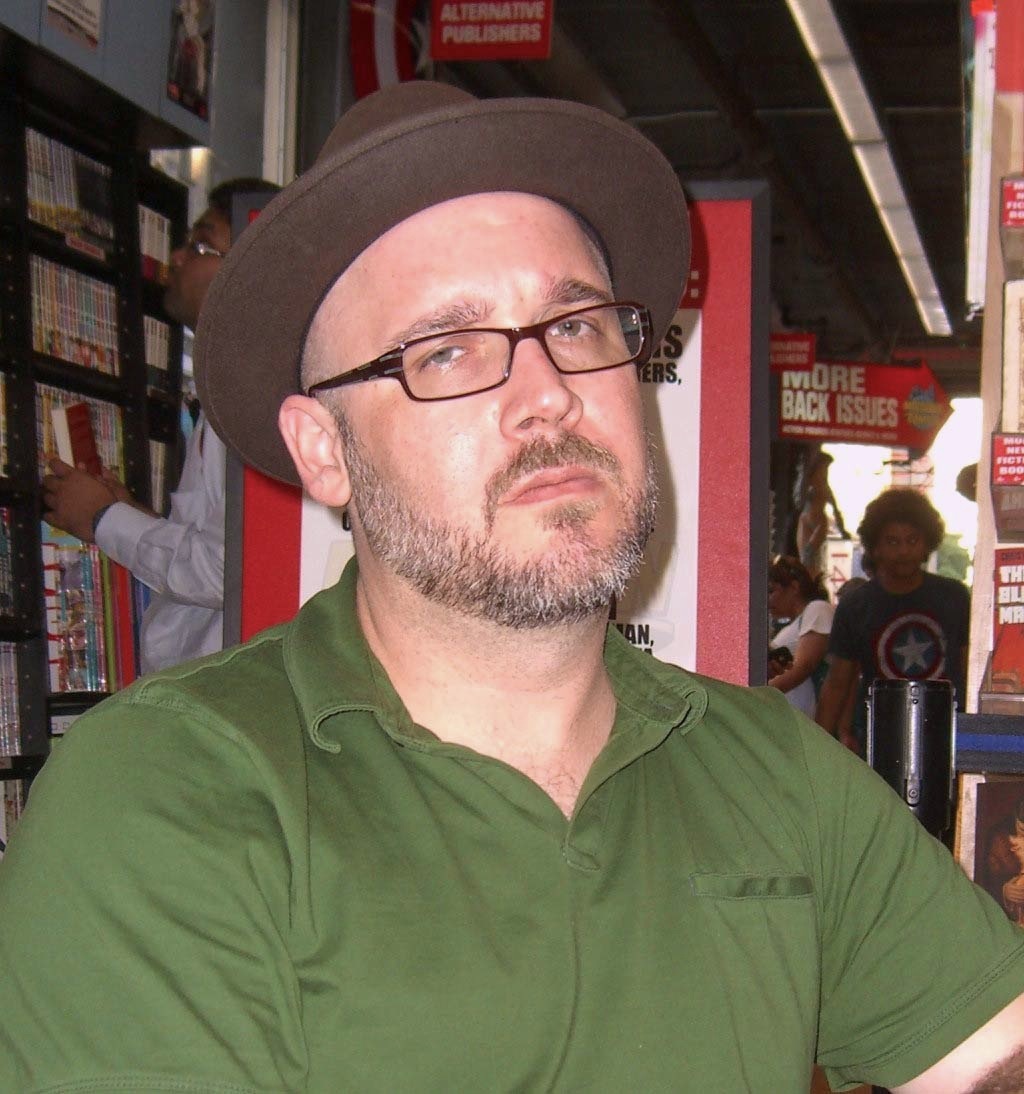
Ed Brubaker
View on Wikipedia
Ed Brubaker (/ˈbruːbeɪkər/; born November 17, 1966)[1] is an American comic book writer, cartoonist and screenwriter who works primarily in the crime fiction genre. He began his career with the semi-autobiographical series Lowlife and a number of serials in the Dark Horse Presents anthology, before achieving industry-wide acclaim with the Vertigo series Scene of the Crime and moving to the superhero comics such as Batman, Catwoman, The Authority, Captain America, Daredevil and Uncanny X-Men. Brubaker is best known for his long-standing collaboration with British artist Sean Phillips, starting with their Elseworlds one-shot Batman: Gotham Noir in 2001 and continuing with a number of creator-owned series such as Criminal, Incognito, Fatale, The Fade Out, and Kill or Be Killed.
Key Information


He is also known for co-creating the Winter Soldier identity of Bucky Barnes with Steve Epting.
Brubaker has won numerous awards for his comics work, including seven Eisner Awards, two Harvey Awards, an Ignatz Award, and a GLAAD Media Award. In addition to his work in comics, Brubaker served as the executive producer and co-writer of the 2019 Amazon series Too Old to Die Young, directed by Nicolas Winding Refn.
Early life
[edit]Brubaker was the child of a Navy intelligence officer, and spent much of his childhood in Guantánamo Bay, Cuba. From childhood he read comics that included Captain America and his sidekick Bucky Barnes, which were seminal in the storyline he would one day write when creating the Winter Soldier. Describing his affinity for Captain America's sidekick thus, he has stated, "I was a Navy brat, and he was an Army brat." As Bucky had been killed off before Brubaker began reading comics, he assumed that the character had met his demise in an elaborate, dramatic story, only to find that he had been unceremoniously killed in a single page of The Avengers #4, which Brubaker saw as an injustice, commenting, "I was a 9-year-old kid, and I was horrified."[2] His uncle was screenwriter John Paxton.[3]
Career
[edit]Early work
[edit]Brubaker began his career in comics as a cartoonist, writing and drawing Pajama Chronicles for Blackthorne Publishing, Purgatory U.S.A. for Slave Labor Graphics and several short stories for various small-press anthologies. His most well-known work of the period is Lowlife, a semi-autobiographical series first published by Caliber and later moved to Aeon Press. For Caliber, Brubaker also co-edited an anthology publication titled Monkey Wrench.[4]
In 1991, Brubaker wrote one of his earliest crime stories for the Dark Horse anthology series Dark Horse Presents, which he would continue to contribute to intermittently throughout the decade. Among those contributions were the three-part serial "An Accidental Death", a collaboration between Brubaker and artist Eric Shanower which garnered the two an Eisner Award nomination in 1993,[5] a Godzilla short story and another tale under the "Lowlife" title, this time a romantic triangle explored through three stories with each depicting a different participant's point-of-view.[6] The latter story was collected by Alternative Comics into a standalone publication titled At the Seams, which in turn was nominated for Outstanding Graphic Novel or Collection at the 1997 Ignatz Awards. His other work for Alternative Comics, the humorous and experimental Detour #1, was to be the first issue of a series, though only one issue was published.[7] Detour was nominated for the "Best New Series" Harvey Award in 1998.[8]
Brubaker's last work for Dark Horse Presents was "The Fall", a five-part story illustrated by Berlin creator Jason Lutes about a convenience store clerk who gets involved in a ten-year-old murder mystery after he uses a stolen credit card. In 2001, all five parts were collected into a one-shot by Canadian publisher Drawn & Quarterly. In 2004, IDW Publishing announced the first creator-owned project by Brubaker and artist Sean Phillips, a pirate-themed series titled Black Sails.[9][10] The creators eventually decided to shelve the series in favor of Criminal (published under Marvel's Icon imprint),[11] and "The Fall" remained Brubaker's last independent comics work until his move to Image in 2012.
DC Comics
[edit]In 1995, Brubaker was contacted by DC Comics to write a story about Prez for its "mature readers" imprint Vertigo, after being recommended to the editors by his "An Accidental Death" collaborator Eric Shanower (who was already attached to the project as the artist).[12] The result—Brubaker's first work for one of the two major American comic book publishers—was a one-shot titled Vertigo Visions: Prez, a broad political satire revamping the obscure 1970s Joe Simon creation. Brubaker continued to pitch various ideas to Vertigo but kept getting rejected until Shelly Roeberg asked him to pitch "something [he] didn't think Vertigo would publish", which ended up being Scene of the Crime.[12] The 1999 series marked Brubaker's first collaboration with two artists who would frequently work with him in later years: Michael Lark and Sean Phillips (who joined the project as the inker for issues #2–4). A slacker detective story set in San Francisco, Scene of the Crime was critically acclaimed and brought Brubaker to the attention of Hollywood producers for the first time.[13]
In late 2000, Brubaker signed an exclusive contract with DC Comics.[14] That same year, he wrote his first mainstream superhero work, taking over Batman with issue #582 (Oct. 2000).[15] Brubaker would continue writing various series starring Batman and his ancillary characters until late 2003, including contributions to inter-title crossover storylines such as "Bruce Wayne: Murderer?"[16] and "Bruce Wayne: Fugitive",[17] as well as a stint on Detective Comics[18][19] that was cut short due to an unspecified dispute with the editors.[20] Also in 2000, Brubaker launched his second creator-owned property at Vertigo, the science fiction series Deadenders with artist Warren Pleece, which lasted 16 issues before its cancellation in 2001.[21] Brubaker's last work for Vertigo was Dead Boy Detectives, a four-issue The Sandman spin-off limited series illustrated by artist Bryan Talbot.[22]
In 2001, Brubaker teamed up with artist Darwyn Cooke to revamp Catwoman, redesigning and redeveloping the character's costume, supporting cast and modus operandi.[23] The pair's stint started with a four-part serial "Trail of the Catwoman", published in Detective Comics #759–762, in which private detective Slam Bradley attempts to investigate the death of Selina Kyle, a.k.a. Catwoman, and continued into the new Catwoman series which launched in late 2001. Brubaker stayed on the series until #37 (Jan. 2005). During this time, Brubaker and Marvel writer Brian Michael Bendis discussed co-writing a team-up tale between DC's Batman and Marvel's Daredevil. The two writers were enthusiastic about their ideas, which included a fight between Batman and Marvel villain Bullseye as well as another fight between Catwoman and Elektra. DC editors Matt Idelson and Bob Schreck were also enthusiastic, but DC Publisher Paul Levitz objected to the project due to a prior disagreement with Marvel's Editor-in-Chief Joe Quesada.[24]
In 2002, Brubaker did his first work for Wildstorm, another DC imprint, penning the five-issue Wildcats spin-off Point Blank. The series, drawn by New Zealand artist Colin Wilson and starring Wildcats' member Grifter, took existing characters and concepts from the Wildstorm Universe and used them to set up Brubaker's Sleeper series which debuted later that year. A collaboration with artist Sean Phillips, Sleeper starred Holden Carver, a secret agent who goes undercover in a supervillain's powerful organization only to have his only contact in law enforcement fall into a coma. With the authorities believing him a dangerous criminal, Carver is caught between the two warring sides with unclear allegiances. Although Sleeper was a success with critics and fans on the Internet, the series underperformed commercially. In December 2003, in a unique publicity stunt conceived to help promote the first trade paperback collection of Sleeper, Brubaker organized an arm wrestling competition at San Francisco's Isotope Comics. If participants were able to beat Brubaker at arm wrestling, they were awarded free signed comic books. According to Brubaker, he wrestled around 40–50 people and won most of the time, losing only to eight or nine contestants.[25]
During the series' run, Sleeper also took part in the line-wide crossover "Coup d'Etat", with Brubaker scripting the first issue of the eponymous limited series. "Coup d'Etat" featured a series of events that led the Authority, a powerful team of superhumans in the Wilstorm Universe, to take over the United States. Following the crossover, Brubaker and artist Dustin Nguyen produced the 12-issue The Authority: Revolution series which explored the ramifications of the team's actions,[26] while Sleeper was relaunched with the Season Two subtitle under the first volume's creative team.[27]
Brubaker's last major project at DC was Gotham Central, co-created by Brubaker, writer Greg Rucka and artist Michael Lark. The series focused on the activities of the Gotham City Police Department, with writers either co-scripting storylines or alternating between the arcs.[28][29][30] After Brubaker and Lark left the series due to their newly-signed exclusive contracts with Marvel,[31] Rucka decided to discontinue the title, and Gotham Central was cancelled with issue #40 (Apr. 2006).[32]
Marvel Comics
[edit]
Brubaker's first work for Marvel was volume five of the Captain America series.[33] Paired with artist Steve Epting, Brubaker introduced new villains and resurrected the long-dead supporting character Bucky Barnes as "the Winter Soldier". The relaunch was a commercial and critical success from its first issue, with its most well-known storyline involving the assassination of Steve Rogers and subsequent passing of the Captain America mantle to Bucky Barnes.[34][35][36] Brubaker wrote Captain America for eight full years, from November 2004 to October 2012, alongside several spin-off titles and associated series based around the character, including the 2009 mini-series Captain America: Reborn, which featured the return of Rogers, the eight-issue The Marvels Project limited series, as well as Secret Avengers, an ongoing series that followed the adventures of the eponymous team formed in the aftermath of the company-wide crossover storyline "Siege".[37]
Brubaker's workload at Marvel increased in 2006. He wrote two limited series, Books of Doom with artist Pablo Raimondi, retelling and expanding on the origin of Doctor Doom, and X-Men: Deadly Genesis with artist Trevor Hairsine, retconning the origins of the All-New, All-Different X-Men team that debuted in 1975. After finishing Deadly Genesis in July 2006, Brubaker became the regular writer of Uncanny X-Men, working with artists Billy Tan and Clayton Henry.[38] In addition to that, he also took over Daredevil, having already planned his run with outgoing writer Brian Michael Bendis.[39] Once again teaming up with his Scene of the Crime and Gotham Central collaborator Michael Lark,[40] Brubaker explored the ramifications of the character's imprisonment which occurred at the close of Bendis' run. Another notable launch of the year was The Immortal Iron Fist, an ongoing series co-written by Brubaker and Matt Fraction which started in November 2006.[41]
Also in 2006, Brubaker and artist Sean Phillips launched their first creator-owned series Criminal, published under Marvel's Icon imprint.[42][43] The title received generally positive reviews[44] and its first arc, "Coward", won the 2007 Eisner Award for Best New Series.[45] In 2008, after two volumes of Criminal, Brubaker and Phillips took a break from the series to launch another Icon title, Incognito, which Brubaker described as being "about a completely amoral guy with super-powers forced to pretend he's a normal law-abiding citizen, because he's in Witness Protection, and how that shapes what he becomes. It's also a brutal noir twist on the super-hero/super-villain genre that delves more into their roots in the pulps, and it's going to be pretty over-the-top and action-packed."[46]
In February 2010, a controversy arose around Captain America #602, which depicted a group of anti-tax protesters, understood by some readers to be a Tea Party, which was characterized by the Falcon as exclusively white and racist group. Brubaker and Marvel's Editor-in-Chief Joe Quesada apologized for the matter, explaining that, although Brubaker did not intend the protesters to represent any particular real-life group, one of the signs depicted in the scene read, "Tea Bag The Libs Before They Tea Bag YOU!". The slogan was not in Brubaker's script and was instead added by letterer Joe Caramagna, who, under deadline pressures, used messages from signs he found online at the last minute. Quesada further assured that the error would not appear in future reprints of the issue.[47][48][49] In an interview following the controversy Brubaker stated, "I had to shut down my public email because I started getting death threats from, y'know, peaceful protesters."[50]
Image Comics
[edit]In January 2012, Brubaker and Phillips launched Fatale at Image Comics. The series was initially announced as a twelve-issue maxi-series but was extended to an ongoing title in November 2012.[51] Jesse Schedeen of IGN stated that "You can't go wrong with a Brubaker/Phillips collaboration. Even so, Fatale is making a strong case for being the best of their projects."[52] In October 2013, Brubaker signed a five-year contract to produce comics exclusively for Image. Under the terms of the deal, Image would publish any comic Brubaker brought to them without having to pitch it. Brubaker stated this arrangement was something he has always wanted.[53] The first series released under this contract was The Fade Out, a Hollywood period piece made with frequent collaborator Sean Phillips.[54]
Brubaker's other projects for Image include Velvet, a spy series illustrated by his Captain America collaborator Steve Epting.[55][56]
Film and television work
[edit]In March 2009, Brubaker premiered his web series Angel of Death on Crackle.[57] Brubaker made a cameo appearance in the 2014 film Captain America: The Winter Soldier, playing the Winter Soldier's handler.[58] In 2016, Brubaker joined the writing staff for HBO's Westworld.[59] He co-wrote the episode "Dissonance Theory" with Jonathan Nolan.[60]
In 2019, Brubaker partnered with Nicolas Winding Refn to produce Too Old to Die Young, a 10-part neo-noir miniseries for Amazon.[61][62] In 2022, it was announced that Brubaker would serve as head writer and executive producer on the animated series Batman: Caped Crusader.[63] In 2023, Criminal was announced to be in development at Amazon Prime Video with him serving as writer, executive producer and showrunner. A year later, in 2024, the series was ordered to series with Jordan Harper joining as co-showrunner and Phillips as executive producer.[64][65]
Personal life
[edit]Brubaker lived previously in Seattle, with his wife, Melanie.[66]
Brubaker currently lives in Los Angeles with his wife and dog.[67][68][69]
Awards and nominations
[edit]Awards
[edit]- 2003 Prism Award ("Disguises" from Catwoman #17–19)[70]
- 2004 GLAAD Media Awards – Outstanding Comic Book (Catwoman by Ed Brubaker)[71]
- 2006 Harvey Award Winner – Best Writer (Captain America)[72]
- 2007 Eisner Award – Best Writer (Daredevil, Captain America, Criminal), Best New Series (Criminal with Sean Phillips)[45]
- 2007 Harvey Award – Best Writer (Daredevil)[73]
- 2008 Eisner Award – Best Writer (Captain America, Criminal, Daredevil and Immortal Iron Fist)[74]
- 2010 Eisner Award – Best Writer (Captain America, Criminal, Daredevil, The Marvels Project, Incognito), Best Single Issue (Captain America #601 with Gene Colan)[75]
- 2011 Scream Award – Best Comic Book Writer (Captain America, Captain America: Reborn, The Marvels Project, Steve Rogers: Super Soldier)
- 2012 Eisner Award – Best Limited Series or Story Arc (Criminal: The Last of the Innocent with Sean Phillips)[75]
- 2015 Eisner Award – Best New Series (The Fade Out with Sean Phillips)[76]
- 2016 Eisner Award – Best Limited Series (The Fade Out with Sean Phillips)[77]
- 2019 Eisner Award – Best Graphic Album—New (My Heroes Have Always Been Junkies with Sean Phillips)[78]
Nominations
[edit]- 1993 Eisner Award nominee – Best Writer-Artist Team ("An Accidental Death")[79]
- 1997 Ignatz Award nominee – Outstanding Graphic Novel or Collection (At the Seams)[80]
- 1998 Harvey Award nominee – Best New Series (Detour)[8]
- 2000 Eisner Award nominee – Best Writer (Scene of the Crime) and Best Mini-Series (Scene of the Crime)[81]
- 2007 Eisner Award nominee – Best Continuing Series (Daredevil with Michael Lark and Stefano Gaudiano, Captain America with Steve Epting)[82]
- 2010 Eisner Award nominee – Best Limited Series or Story Arc (Incognito with Sean Phillips)[83]
- 2013 Eisner Award nominee – Best Continuing Series (Fatale with Sean Phillips)[84]
- 2013 Eisner Award nominee – Best New Series (Fatale with Sean Phillips)[84]
- 2013 Eisner Award nominee – Best Writer (Fatale)[84]
Bibliography
[edit]Early work
[edit]- Blackthorne Publishing:
- Pajama Chronicles (script and art, one-shot, 1987)
- Gumby 3-D #4 (as artist — among others; written by Art Clokey, 1987)
- Purgatory U.S.A. (script and art, one-shot, Slave Labor Graphics, 1989)
- Rip Off Press:
- Rip Off Comix #28: "Love and Fear" (script and art, anthology, 1990)
- All Shook Up: "Reflecting on an Earthquake" (script and art, anthology one-shot, 1990)
- Caliber:
- Lowlife #1–2 (script and art, 1991)
- Three more issues (written and drawn by Brubaker) were published by Aeon Press as Lowlife #3–5 (1993–1996)
- Stories from all five issues in rearranged order are collected as A Complete Lowlife (tpb, 112 pages, Black Eye, 1997, ISBN 1-891830-20-1)
- Monkey Wrench: "Almost Like Wisdom" (with Brian Sendelbach, anthology one-shot co-edited by Brubaker and Josh Petrin, Iconografix, 1992)
- Lowlife #1–2 (script and art, 1991)
- Dark Horse Presents (Dark Horse):
- "Burning Man" (with Mike Christian, in #50, 1991) collected in The Best of Dark Horse Presents Volume 3 (tpb, 120 pages, 1993, ISBN 1-878574-81-7)
- "An Accidental Death" (with Eric Shanower, in #65–67, 1992) reprinted in the form of a one-shot as An Accidental Death (Fantagraphics Books, 1993)
- "Here and Now" (with Stefano Gaudiano, in #96–98, 1995)
- "Bird Dog" (with Patrick McEown, in #100-4, 1995)
- "Godzilla's Day" (with Dave Cooper, in #106, 1996) collected in Godzilla: Age of Monsters (tpb, 272 pages, 1998, ISBN 1-56971-277-8)
- "Lowlife" (script and art, in #113–115, 1996) reprinted in the form of a one-shot as At the Seams (Alternative Comics, 1997)
- "The Fall" (with Jason Lutes, in #131–135, 1998) reprinted in the form of a one-shot as The Fall (Drawn & Quarterly, 2001)
- Real Stuff (as artist, written by Dennis Eichhorn, anthology, Fantagraphics Books):
- "Sixth Player" (in #9, 1992)
- "The Guy Who Wanted to Be Friends" (in #13, 1993)
- Madman Adventures (as artist — among others; jam cover for the collected edition, tpb, 66 pages, Tundra, 1993, ISBN 1-56862-014-4)
- Wiindows #21 (cover illustration, Cult Press, 1994)
- Northwest Cartoon Cookery: "Food, Glorious Food" (as artist, written by Dennis Eichhorn, anthology one-shot, Starhead Comix, 1995)
- Oh That Monroe: "The Homo Test" (co-written by Brubaker and Jon Lewis, art by Sam Henderson, anthology one-shot, Wow Cool, 1995)
- Alternative Comics:
- Detour #1 (of 3 — discontinued after the debut issue) (script and art, 1997)
- Urban Hipster #1–2 (as "continuity editor"; written and drawn by Greg Stump with David Lasky, 1998)
- Small Press Expo '97: "Mysteries?" (script and art, 1-page story in the anthology one-shot, CBLDF, 1997)
- Oni Double Feature #5 (script and art, untitled 1-page story in the anthology, Oni Press, 1998)
- Astronauts in Trouble: Cool Ed's (as "assistant editor"; written by Larry Young, drawn by Charlie Adlard, one-shot, AiT/Planet Lar, 1999)
DC Comics
[edit]Vertigo
[edit]- Vertigo Visions: Prez (with Eric Shanower, one-shot, 1995) collected in Prez: The First Teen President (tpb, 224 pages, 2016, ISBN 1-4012-6317-8)
- Gangland #3: "Small Time" (with Eric Shanower, anthology, 1998) collected in Gangland (tpb, 112 pages, 2000, ISBN 1-56389-608-7)
- Scene of the Crime (with Michael Lark):
- Scene of the Crime (tpb, 112 pages, 2000, ISBN 1-56389-670-2; hc, 128 pages, Image, 2012, ISBN 1-60706-632-7) collects:
- Vertigo: Winter's Edge #2: "God and Sinners" (anthology, 1999)
- Scene of the Crime #1–4: "A Little Piece of Goodnight" (1999)
- 9-11 Volume 2: "Still Life" (anthology graphic novel, 224 pages, 2002, ISBN 1-56389-878-0)
- Scene of the Crime (tpb, 112 pages, 2000, ISBN 1-56389-670-2; hc, 128 pages, Image, 2012, ISBN 1-60706-632-7) collects:
- Deadenders (tpb, 392 pages, 2012, ISBN 1-4012-3480-1) collects:
- Vertigo: Winter's Edge #3: "The Morning After" (with Warren Pleece, anthology, 2000)
- Deadenders #1–16 (with Warren Pleece, 2000–2001)
- The Sandman Presents: The Dead Boy Detectives #1–4 (with Bryan Talbot, 2001) collected as The Sandman Presents: The Dead Boy Detectives (tpb, 104 pages, 2008, ISBN 1-4012-1855-5)
DC Universe
[edit]- Batman (with Scott McDaniel, James Tucker + Stefano Gaudiano (#600) and Sean Phillips (#603); issues #606–607 are co-written by Brubaker and Geoff Johns, 2000–2002) collected as:
- Batman by Ed Brubaker Volume 1 (collects #582–586 and 591–597, tpb, 320 pages, 2016, ISBN 1-4012-6065-9)
- Includes the Batman: Our Worlds at War one-shot (written by Brubaker, art by Stefano Gaudiano, 2001)
- Batman by Ed Brubaker Volume 2 (collects #598–607, tpb, 288 pages, 2016, ISBN 1-4012-6485-9)
- Batman: Bruce Wayne — Murderer? (includes #599–602, tpb, 264 pages, 2014, ISBN 1-4012-4683-4)
- Batman: Bruce Wayne — Fugitive (includes #603–607, tpb, 432 pages, 2014, ISBN 1-4012-4682-6)
- Batman by Ed Brubaker Volume 1 (collects #582–586 and 591–597, tpb, 320 pages, 2016, ISBN 1-4012-6065-9)
- Batman: Turning Points #2 (with Joe Giella) and #3 (with Dick Giordano, 2001) collected in Batman: Turning Points (tpb, 128 pages, 2007, ISBN 1-4012-1360-X)
- Batman: Gotham Adventures #33: "World without Batman" (with Brad Rader, 2001)
- Batman: Gotham Noir (with Sean Phillips, one-shot, Elseworlds, 2001)
- Robin vol. 2 #86 (with Pander Brothers, 2001) collected in Batman: Officer Down (tpb, 168 pages, 2001, ISBN 1-56389-787-3)
- Detective Comics:
- "History Lesson" (with Steve Lieber, co-feature in #758, 2001)
- "Dead Reckoning" (with Tommy Castillo, in #777–782, 2003)
- "Made of Wood" (with Patrick Zircher, in #784–786, 2003) collected in Batman: The Man Who Laughs (hc, 144 pages, 2008, ISBN 1-4012-1622-6; tpb, 2009, ISBN 1-4012-1626-9)
- Catwoman vol. 3 (with Darwyn Cooke (#1–4), Brad Rader, Cameron Stewart, Javier Pulido (#17–19), Guy Davis (#23–24), Paul Gulacy, Sean Phillips (#32) and Diego Olmos (#33), 2002–2005) collected as:
- Trail of the Catwoman (collects #1–9, tpb, 336 pages, 2012, ISBN 1-4012-3384-8)
- Includes "Trail of the Catwoman" co-feature serial (art by Darwyn Cooke) from Detective Comics #759–762 (2001)
- No Easy Way Down (collects #10–24, tpb, 400 pages, 2013, ISBN 1-4012-4037-2)
- Includes the Catwoman Secret Files & Origins one-shot (written by Brubaker, art by Michael Avon Oeming, Cameron Stewart and Eric Shanower, 2002)
- Under Pressure (collects #25–37, tpb, 312 pages, 2014, ISBN 1-4012-4592-7)
- Catwoman of East End Omnibus (includes #1–37, Detective Comics #759–762 and Catwoman Secret Files & Origins, hc, 1,064 pages, 2022, ISBN 1-77951-503-0)
- Trail of the Catwoman (collects #1–9, tpb, 336 pages, 2012, ISBN 1-4012-3384-8)
- Gotham Central (with Michael Lark, Brian Hurtt (#11), Greg Scott (#16), Jason Shawn Alexander (#26–27) and Kano (#33–36), 2003–2005) collected as:
- Issues #1–2, 12–15 and 33–36 are co-written by Brubaker and Greg Rucka.
- In the Line of Duty (includes #1–5, hc, 240 pages, 2008, ISBN 1-4012-1923-3; tpb, 2011, ISBN 1-4012-2037-1)
- Jokers and Madmen (includes #11–16 and 19–22, hc, 288 pages, 2009, ISBN 1-4012-2521-7; tpb, 2011, ISBN 1-4012-2543-8)
- On the Freak Beat (includes #26–27, hc, 224 pages, 2010, ISBN 1-4012-2754-6; tpb, 2011, ISBN 1-4012-3232-9)
- Corrigan (includes #33–36, hc, 224 pages, 2011, ISBN 1-4012-3003-2; tpb, 2012, ISBN 1-4012-3194-2)
- Omnibus (includes #1–5, 11–16, 19–22, 26–27, 33–36, hc, 957 pages, 2016, ISBN 1-4012-6192-2)
- Issues #1–2, 12–15 and 33–36 are co-written by Brubaker and Greg Rucka.
- Batman: Gotham Knights #41: "I'll Be Watching" (with Ryan Sook, co-feature, 2003) collected in Batman: Black and White Volume 3 (hc, 288 pages, 2007, ISBN 1-4012-1531-9; tpb, 2008, ISBN 1-4012-1354-5)
- Hawkman vol. 4 #27: "The Black Bird" (with Sean Phillips, 2004)
- Batman: The Man Who Laughs (with Doug Mahnke, one-shot, 2005)
- Catwoman: 80th Anniversary 100-Page Super Spectacular: "The Art of Picking a Lock" (with Cameron Stewart, anthology one-shot, 2020) collected in Batman: 80 Years of the Bat Family (tpb, 400 pages, 2020, ISBN 1-77950-658-9)
Wildstorm
[edit]- The Sleeper Omnibus (hc, 720 pages, Vertigo, 2013, ISBN 1-4012-3803-3) collects:
- Point Blank #1–5 (with Colin Wilson, Eye of the Storm, 2002–2003) also collected as Point Blank (tpb, 128 pages, 2003, ISBN 1-4012-0116-4)
- Sleeper #1–12 (with Sean Phillips, Eye of the Storm, 2003–2004) also collected as Sleeper: Season One (tpb, 288 pages, 2009, ISBN 1-4012-2360-5)
- Coup d'Etat:
- Coup d'Etat #1 (of 4) (with Jim Lee, Eye of the Storm, 2004) also collected in Coup d'Etat (tpb, 112 pages, 2004, ISBN 1-4012-0570-4)
- Coup d'Etat: Afterword: "Sleeper Prelude" (with Sean Phillips, co-feature in one-shot, 2004) also collected in Sleeper: Season Two (tpb, 296 pages, 2009, ISBN 1-4012-2493-8)
- Sleeper: Season Two #1–12 (with Sean Phillips, 2004–2005) also collected as Sleeper: Season Two (tpb, 296 pages, 2009, ISBN 1-4012-2493-8)
- Masks: Too Hot for TV!: "Introduction" (with Doug Mahnke, anthology one-shot, Eye of the Storm, 2004)
- Tom Strong #29–30 (with Duncan Fegredo, America's Best Comics, 2004–2005) collected in Tom Strong Book Five (hc, 136 pages, 2005, ISBN 1-4012-0624-7; tpb, 2006, ISBN 1-4012-0625-5)
- The Authority: Revolution #1–12 (with Dustin Nguyen, 2004–2005) collected as The Authority by Ed Brubaker and Dustin Nguyen (tpb, 328 pages, 2019, ISBN 1-4012-8842-1)
- The Razor's Edge: RedBird (with Jason Pearson, unreleased 5-issue limited series — initially announced for 2005)[85][86]
Marvel Comics
[edit]- Captain America:
- Captain America vol. 5 (with Steve Epting, Michael Lark, John Paul Leon (#7), Lee Weeks (#10), Mike Perkins, Butch Guice, Roberto de la Torre (#39), Luke Ross, Mitch Breitweiser (#600, 607, 615.1, 619), David Aja + Rafael Albuquerque + Howard Chaykin (#600), Gene Colan (#601), Daniel Acuña (#611), Travis Charest + Ed McGuinness (#616), Mike Deodato, Jr. (#616–617), Chris Samnee (#617–624) and Francesco Francavilla (#625–628); after issue #619, the series was rebranded as Captain America and Bucky with issues #620–624 co-written by Brubaker and Marc Andreyko and #625–628 co-written by Brubaker and James Asmus, 2005–2012) collected as:
- Ultimate Collection: Captain America — The Winter Soldier (collects #1–9 and 11–14, tpb, 304 pages, 2010, ISBN 0-7851-4341-6; hc, 2014, ISBN 0-7851-8794-4)
- House of M: Wolverine, Iron Man and Hulk (includes #10, hc, 352 pages, 2010, ISBN 0-7851-3882-X)
- Ultimate Collection: Captain America — Red Menace (collects #15–21, tpb, 216 pages, 2011, ISBN 0-7851-5617-8)
- Includes Captain America 65th Anniversary Special (written by Brubaker, art by Mike Perkins, Javier Pulido and Marcos Martín, 2006)
- The Death of Captain America: The Complete Collection (collects #22–42, tpb, 568 pages, 2013, ISBN 0-7851-8379-5)
- Includes the Winter Soldier: Winter Kills one-shot (written by Brubaker, art by Lee Weeks and Stefano Gaudiano, 2007)
- Captain America: The Man with No Face (collects #43–48, hc, 168 pages, 2009, ISBN 0-7851-3153-1; tpb, 2009, ISBN 0-7851-3163-9)
- Captain America: Road to Reborn (collects #49–50 and 600–601, hc, 176 pages, 2009, ISBN 0-7851-4174-X; tpb, 2010, ISBN 0-7851-4175-8)
- Captain America: Reborn (hc, 232 pages, 2010, ISBN 0-7851-3998-2; tpb, 2010, ISBN 0-7851-4073-5) collects:
- Captain America: Reborn Prelude (with Luke Ross, free digital mini-comic, 2009)
- Captain America: Reborn #1–6 (with Bryan Hitch, 2009–2010)
- Captain America: Two Americas (collects #602–605, hc, 128 pages, 2010, ISBN 0-7851-4510-9; tpb, 2010, ISBN 0-7851-4511-7)
- Includes the Captain America: Reborn — Who Will Wield the Shield? one-shot (written by Brubaker, art by Butch Guice and Luke Ross, 2010)
- Captain America: No Escape (collects #606–610, hc, 120 pages, 2010, ISBN 0-7851-4512-5; tpb, 2011, ISBN 0-7851-4513-3)
- Captain America: The Trial of Captain America (collects #611–615 and 615.1, hc, 144 pages, 2011, ISBN 0-7851-5119-2; tpb, 2011, ISBN 0-7851-5120-6)
- Captain America: Prisoner of War (collects #616–619, hc, 144 pages, 2011, ISBN 0-7851-5119-2; tpb, 2011, ISBN 0-7851-5120-6)
- Captain America and Bucky: The Life Story of Bucky Barnes (collects #620–624, hc, 112 pages, 2012, ISBN 0-7851-5123-0; tpb, 2012, ISBN 0-7851-5124-9)
- Captain America and Bucky: Old Wounds (collects #625–628, hc, 128 pages, 2012, ISBN 0-7851-6083-3; tpb, 2012, ISBN 0-7851-6084-1)
- Captain America by Ed Brubaker Omnibus (collects #1–25, Captain America 65th Anniversary Special and Winter Soldier: Winter Kills, hc, 744 pages, 2007, ISBN 0-7851-2866-2)
- The Death of Captain America Omnibus (collects #26–42, hc, 464 pages, 2009, ISBN 0-7851-3806-4)
- Captain America Lives! Omnibus (collects #43–50, 600–601, Captain America: Reborn Prelude and #1–6, hc, 560 pages, 2011, ISBN 0-7851-4514-1)
- The Trial of Captain America Omnibus (includes #602–619, 615.1, Captain America: Reborn — Who Will Wield the Shield? and Steve Rogers: Super-Soldier #1–4, hc, 928 pages, 2014, ISBN 0-7851-9272-7)
- Return of the Winter Soldier Omnibus (includes #620–628, Fear Itself: Book of the Skull, Fear Itself #7.1 and Winter Soldier #1–14, hc, 752 pages, 2015, ISBN 0-7851-9271-9)
- Steve Rogers: Super-Soldier #1–4 (with Dale Eaglesham, 2010) collected as Steve Rogers: Super-Soldier (hc, 112 pages, 2011, ISBN 0-7851-4878-7; tpb, 2011, ISBN 0-7851-4879-5)
- Fear Itself: Book of the Skull (with Scot Eaton, one-shot, 2011) collected in Fear Itself (hc, 240 pages, 2012, ISBN 0-7851-5662-3; tpb, 2012, ISBN 0-7851-5663-1)
- Captain America vol. 6 (with Steve McNiven (#1–5), Alan Davis (#6–10), Patrick Zircher (#11–14), Scot Eaton (#15–18) and Steve Epting (#19); issues #15–18 are co-written by Brubaker and Cullen Bunn, 2011–2012) collected as:
- Captain America by Ed Brubaker Volume 1 (collects #1–5, hc, 120 pages, 2012, ISBN 0-7851-5708-5; tpb, 2012, ISBN 0-7851-5709-3)
- Captain America by Ed Brubaker Volume 2 (collects #6–10, hc, 112 pages, 2012, ISBN 0-7851-5710-7; tpb, 2012, ISBN 0-7851-5711-5)
- Captain America by Ed Brubaker Volume 3 (collects #11–14, hc, 112 pages, 2012, ISBN 0-7851-6075-2; tpb, 2013, ISBN 0-7851-6076-0)
- Captain America by Ed Brubaker Volume 4 (collects #15–19, hc, 120 pages, 2013, ISBN 0-7851-6077-9; tpb, 2013, ISBN 0-7851-6078-7)
- The Trial of Captain America Omnibus (includes #1–10, hc, 928 pages, 2014, ISBN 0-7851-9272-7)
- Return of the Winter Soldier Omnibus (includes #11–19, hc, 752 pages, 2015, ISBN 0-7851-9271-9)
- Winter Soldier by Ed Brubaker: The Complete Collection (tpb, 344 pages, 2014, ISBN 0-7851-9065-1) collects:
- Fear Itself #7.1 (with Butch Guice, 2012)
- Winter Soldier #1–14 (with Butch Guice and Michael Lark (#6–9), 2012–2013)
- Captain America vol. 5 (with Steve Epting, Michael Lark, John Paul Leon (#7), Lee Weeks (#10), Mike Perkins, Butch Guice, Roberto de la Torre (#39), Luke Ross, Mitch Breitweiser (#600, 607, 615.1, 619), David Aja + Rafael Albuquerque + Howard Chaykin (#600), Gene Colan (#601), Daniel Acuña (#611), Travis Charest + Ed McGuinness (#616), Mike Deodato, Jr. (#616–617), Chris Samnee (#617–624) and Francesco Francavilla (#625–628); after issue #619, the series was rebranded as Captain America and Bucky with issues #620–624 co-written by Brubaker and Marc Andreyko and #625–628 co-written by Brubaker and James Asmus, 2005–2012) collected as:
- What If... Aunt May Had Died Instead of Uncle Ben? (with Andrea Di Vito, one-shot, 2005) collected in What If... Why Not? (tpb, 152 pages, 2005, ISBN 0-7851-1593-5)
- Wha... Huh? (with Jim Mahfood, among other writers, one-shot, 2005) collected in Secret Wars Too (tpb, 208 pages, 2016, ISBN 1-302-90211-3)
- Books of Doom #1–6 (with Pablo Raimondi, 2006) collected as Fantastic Four: Books of Doom (hc, 144 pages, 2006, ISBN 0-7851-2271-0; tpb, 2007, ISBN 0-7851-1704-0)
- X-Men:
- X-Men: Deadly Genesis #1–6 (with Trevor Hairsine and Pete Woods, 2006) collected as X-Men: Deadly Genesis (hc, 200 pages, 2006, ISBN 0-7851-1961-2; tpb, 2007, ISBN 0-7851-1830-6)
- Uncanny X-Men (with Billy Tan, Clayton Henry (#477, 480, 483), Salvador Larocca (#487–491), Mike Choi (#495–499), Terry Dodson (#500) and Greg Land (#500–503), 2006–2008) collected as:
- The Rise and Fall of the Shi'ar Empire (collects #475–486, hc, 312 pages, 2007, ISBN 0-7851-2515-9; tpb, 2008, ISBN 0-7851-1800-4)
- The Extremists (collects #487–491, tpb, 120 pages, 2008, ISBN 0-7851-1982-5)
- X-Men: Messiah Complex (includes #492–494, hc, 352 pages, 2008, ISBN 0-7851-2899-9; tpb, 2008, ISBN 0-7851-2320-2)
- Includes the X-Men: Messiah Complex one-shot (written by Brubaker, art by Marc Silvestri, 2007)
- Divided We Stand (collects #495–499, tpb, 120 pages, 2008, ISBN 0-7851-1983-3)
- Manifest Destiny (includes #500–503, hc, 208 pages, 2009, ISBN 0-7851-3817-X; tpb, 2009, ISBN 0-7851-2451-9)
- Issues #500–503 are co-written by Brubaker and Matt Fraction.
- Daredevil vol. 2 (with Michael Lark, David Aja (#88 and 116), Lee Weeks (#94), Leandro Fernández (Annual), Stefano Gaudiano, Paul Azaceta (#103–106), Clay Mann (#111) and Tonči Zonjić (#115), 2006–2009) collected as:
- Annual #1 is co-written by Brubaker and Ande Parks; issues #107–110 are co-written by Brubaker and Greg Rucka.
- Daredevil by Ed Brubaker and Michael Lark Omnibus Volume 1 (collects #82–105, hc, 608 pages, 2009, ISBN 0-7851-3785-8)
- Daredevil by Ed Brubaker and Michael Lark Omnibus Volume 2 (collects #106–119, 500 and Annual #1, hc, 472 pages, 2010, ISBN 0-7851-4520-6)
- Includes the Daredevil: Blood of the Tarantula one-shot (co-written by Brubaker and Ande Parks, art by Chris Samnee, 2008)
- Ultimate Collection: Daredevil by Ed Brubaker and Michael Lark Volume 1 (collects #82–93, tpb, 304 pages, 2012, ISBN 0-7851-6334-4)
- Ultimate Collection: Daredevil by Ed Brubaker and Michael Lark Volume 2 (collects #94–105, tpb, 304 pages, 2012, ISBN 0-7851-6335-2)
- Ultimate Collection: Daredevil by Ed Brubaker and Michael Lark Volume 3 (collects #106–119 and 500, tpb, 384 pages, 2012, ISBN 0-7851-6336-0)
- Annual #1 is co-written by Brubaker and Ande Parks; issues #107–110 are co-written by Brubaker and Greg Rucka.
- Criminal (with Sean Phillips, Icon):
- Volume 1 (hc, 432 pages, 2009, ISBN 0-7851-4229-0) collects:
- Criminal Preview (free 5-page "trailer", 2006)
- Criminal (2006–2007) also collected as:
- Coward (collects #1–5, tpb, 128 pages, 2007, ISBN 0-7851-2439-X)
- Lawless (collects #6–10, tpb, 128 pages, 2007, ISBN 0-7851-2816-6)
- Criminal vol. 2 #1–3 (2008) also collected as Criminal: The Dead and the Dying (tpb, 104 pages, 2008, ISBN 0-7851-3227-9)
- Liberty Comics #1: "No One Rides for Free" (anthology, Image, 2008) also collected in CBLDF Presents: Liberty (hc, 216 pages, 2014, ISBN 1-60706-937-7; tpb, 2016, ISBN 1-60706-996-2)
- Volume 2 (hc, 432 pages, 2012, ISBN 0-7851-6584-3) collects:
- Criminal vol. 2 #4–7 (2008) also collected as Criminal: Bad Night (tpb, 120 pages, 2009, ISBN 0-7851-3228-7)
- Noir: A Collection of Crime Comics: "21st Century Noir" (anthology graphic novel, sc, 104 pages, Dark Horse, 2009, ISBN 1-59582-358-1; hc, 2020, ISBN 1-5067-1686-5)
- Criminal: The Sinners #1–5 (2009–2010) also collected as Criminal: The Sinners (tpb, 144 pages, 2010, ISBN 0-7851-3229-5)
- Criminal: The Last of the Innocent #1–4 (2011) also collected as Criminal: The Last of the Innocent (tpb, 112 pages, 2011, ISBN 0-7851-5829-4)
- Volume 1 (hc, 432 pages, 2009, ISBN 0-7851-4229-0) collects:
- The Immortal Iron Fist (co-written by Brubaker and Matt Fraction):
- The Last Iron Fist Story (hc, 160 pages, 2007, ISBN 0-7851-2854-9; tpb, 2007, ISBN 0-7851-2489-6) collects:
- Civil War: Choosing Sides: "The Immortal Iron Fist" (with David Aja, anthology one-shot, 2006)
- "The Last Iron Fist Story" (with David Aja, Travel Foreman, John Severin, Russ Heath and Sal Buscema, in #1–6, 2007)
- The Seven Capital Cities of Heaven (hc, 216 pages, 2008, ISBN 0-7851-2992-8; tpb, 2008, ISBN 0-7851-2535-3) collects:
- "Men of a Certain Deadly Persuasion" (with Howard Chaykin, Dan Brereton and Jelena Kevic-Djurdjević, in Annual, 2007)
- "The Seven Capital Cities of Heaven" (with David Aja, Roy Martinez, Scott Koblish, Kano, Javier Pulido, Tonči Zonjić and Clay Mann, in #8–14, 2007–2008)
- The Book of Iron Fist (hc, 160 pages, 2008, ISBN 0-7851-2993-6; tpb, 2009, ISBN 0-7851-2536-1) collects:
- "The Pirate Queen of Pinghai Bay" (with Travel Foreman, Leandro Fernández and Khari Evans, in #7, 2007)
- Orson Randall and the Green Mist of Death (with Russ Heath, Mitch Breitweiser, Nick Dragotta and Lewis LaRosa, one-shot, 2008)
- The Origin of Danny Rand (with Kano, two-page framing sequence for a reprint of Marvel Premiere #15–16, one-shot, 2008)
- "The Story of the Iron Fist Bei Bang-Wen (1827–1860)" (with Khari Evans, in #15, 2008)
- "Happy Birthday Danny" (with David Aja, in #16, 2008)
- Omnibus (collects #1–16, Annual, Civil War: Choosing Sides, Orson Randall and the Green Mist of Death and The Origin of Danny Rand, hc, 560 pages, 2009, ISBN 0-7851-3819-6)
- The Complete Collection Volume 1 (collects #1–16, Annual, Civil War: Choosing Sides, Orson Randall and the Green Mist of Death and The Origin of Danny Rand, tpb, 496 pages, 2013, ISBN 0-7851-8542-9)
- The Last Iron Fist Story (hc, 160 pages, 2007, ISBN 0-7851-2854-9; tpb, 2007, ISBN 0-7851-2489-6) collects:
- What If...? Civil War: "The Stranger" (with Marko Djurdjević, framing sequence in the one-shot, 2008) collected in What If: Civil War (tpb, 168 pages, 2008, ISBN 0-7851-3036-5)
- Young Avengers Presents #1: "Patriot" (with Paco Medina, 2008) collected in Young Avengers Presents (tpb, 144 pages, 2008, ISBN 0-7851-2975-8)
- Incognito: The Classified Edition (hc, 368 pages, 2012, ISBN 0-7851-6574-6) collects:
- Incognito #1–6 (with Sean Phillips, Icon, 2008–2009) also collected as Incognito (tpb, 176 pages, 2009, ISBN 0-7851-3979-6)
- Incognito: Bad Influences #1–5 (with Sean Phillips, Icon, 2010–2011) also collected as Incognito: Bad Influences (tpb, 144 pages, 2011, ISBN 0-7851-5155-9)
- The Marvels Project #1–8 (with Steve Epting, 2009–2010) collected as The Marvels Project: Birth of the Super Heroes (hc, 208 pages, 2010, ISBN 0-7851-4630-X; tpb, 2011, ISBN 0-7851-4061-1)
- Secret Avengers (with Mike Deodato, Jr., David Aja + Michael Lark (#5) and Will Conrad (#9–12), 2010–2011) collected as:
- Mission to Mars (collects #1–5, hc, 136 pages, 2011, ISBN 0-7851-4599-0; tpb, 2011, ISBN 0-7851-4600-8)
- Eyes of the Dragon (collects #6–12, hc, 168 pages, 2011, ISBN 0-7851-4601-6; tpb, 2012, ISBN 0-7851-4602-4)
- Secret Avengers by Ed Brubaker: The Complete Collection (collects #1–12, tpb, 304 pages, 2018, ISBN 1-302-91219-4)
- Avengers vs. X-Men:
- Marvel Point One: "Behold the Watcher" (with Javier Pulido, anthology one-shot, 2012) collected in Original Sin (hc, 392 pages, 2014, ISBN 0-7851-9069-4; tpb, 240 pages, 2015, ISBN 0-7851-5491-4)
- Avengers vs. X-Men #3 (with John Romita, Jr.) and #10 (with Adam Kubert, 2012) collected in Avengers vs. X-Men (hc, 568 pages, 2012, ISBN 0-7851-6317-4; tpb, 384 pages, 2013, ISBN 0-7851-6318-2)
Image Comics
[edit]Criminal (2006-present)
[edit]After collaborating on Sleeper for DC Comics, Brubaker and Sean Phillips took their partnership to Marvel to create Criminal. In 2016, the duo moved the series to Image Comics, producing a series of one-shots and original graphic novels, before launching a new ongoing series in 2019.
Trade paperbacks
[edit]| # | Title | Years covered | Issues collected | Pages | Publisher | Released | ISBN |
|---|---|---|---|---|---|---|---|
| 1 | Coward | 2006-2007 | Criminal (2006) #1-5 | 128 | Icon | May 23, 2007 | 978-0785124399 |
| Image | February 10, 2015 | 978-1632151704 | |||||
| 144 | February 4, 2025 | 978-1534370906 | |||||
| 2 | Lawless | 2007 | Criminal (2006) #6-10 | 128 | Icon | December 20, 2007 | 978-0785128168 |
| Image | March 3, 2015 | 978-1632152039 | |||||
| 144 | February 4, 2025 | 978-1534385078 | |||||
| 3 | The Dead And The Dying | 2008 | Criminal 2 (2008) #1-3 | 104 | Icon | July 23, 2008 | 978-0785132271 |
| 128 | Image | April 7, 2015 | 978-1632152336 | ||||
| March 4, 2025 | 978-1534341869 | ||||||
| 4 | Bad Night | 2008 | Criminal 2 (2008) #4-7 | 120 | Icon | January 1, 2009 | 978-0785132288 |
| Image | May 5, 2015 | 978-1632152602 | |||||
| April 1, 2025 | 978-1534374003 | ||||||
| 5 | The Sinners | 2009-2010 | Criminal: The Sinners #1-5 | 120 | Icon | June 30, 2010 | 978-0785132295 |
| Image | June 16, 2015 | 978-1632152985 | |||||
| 144 | May 6, 2025 | 978-1534347281 | |||||
| 6 | The Last Of The Innocent | 2011 | Criminal: The Last Of The Innocent #1-4 | 120 | Icon | January 12, 2012 | 978-0785158295 |
| Image | July 14, 2015 | 978-1632152992 | |||||
| 144 | June 3, 2025 | 978-1534357617 | |||||
| 7 | Wrong Time, Wrong Place | 2016 | Savage Sword Of Criminal; Deadly Hands Of Criminal | 112 | Image | September 13, 2016 | 978-1632158772 |
| 120 | July 1, 2025 | 978-1534353619 | |||||
| 8 | My Heroes Have Always Been Junkies | 2018 | OGN | 72 | Image | October 16, 2018 | HC: 978-1534308466 |
| December 10, 2019 | TPB: 978-1534315150 | ||||||
| 80 | August 5, 2025 | TPB: 978-1534350670 | |||||
| 9 | Bad Weekend | 2019 | Criminal (2019) #2-3 | 72 | Image | July 16, 2019 | HC: 978-1534314405 |
| 80 | September 2, 2025 | TPB: 978-1534375178 | |||||
| 10 | Cruel Summer | 2019-2020 | Criminal (2019) #1, 5-12 | 272 | Image | February 1, 2022 | 978-1534321892 |
| October 7, 2025 | 978-1534366671 |
Deluxe hardcovers
[edit]| # | Title | Years covered | Issues collected | Pages | Publisher | Released | ISBN |
|---|---|---|---|---|---|---|---|
| 1 | Criminal: The Deluxe Edition Vol.1 | 2006-2008 | Criminal (2006) #1-10; Criminal 2 (2008) #1-3 | 432 | Icon | November 4, 2009 | 978-0785142294 |
| Image | September 12, 2017 | 978-1534305410 | |||||
| 2 | Criminal: The Deluxe Edition Vol. 2 | 2008-2011 | Criminal (2008) #4-7; Criminal: The Sinners #1-5; Criminal: The Last Of The Innocent #1-4 | 432 | Icon | October 3, 2012 | 978-0785165842 |
| Image | September 12, 2017 | 978-1534305434 | |||||
| 3 | Criminal: The Deluxe Edition Vol. 3 | 2016-2019 | Savage Sword Of Criminal; Deadly Hands Of Criminal; My Heroes Have Always Been Junkies OGN; Bad Weekend OGN; Criminal (2019) #1, 4 | 400 | Image | December 1, 2020 | 978-1534317062 |
| 4 | Cruel Summer | 2019-2020 | Criminal (2019) #1, 5-12 | 288 | Image | August 18, 2020 | 978-1534316430 |
| 5 | The Knives | 2025 | OGN | 200 | Image | September 9, 2025 | 978-1534355590 |
| 6 | Five Gears in Reverse | 2026 | OGN | 144 | Image | 27 May 2026 | 978-1534333208 |
Incognito (2008-2011)
[edit]Following the success of Criminal with Marvel's Icon imprint, Incognito was the second series launch for Brubaker and Phillips. It tells the story of Zack Overkill, who was placed in witness protection after informing on his supervillain boss.[90] The series was reprinted by Image Comics in 2017.
| Title | Issues collected | Pages | Format | Publisher | Released | ISBN |
|---|---|---|---|---|---|---|
| Incognito | Incognito #1-6 | 176 | TPB | Icon | December 9, 2009 | 978-0785139799 |
| Incognito: Bad Influences | Incognito: Bad Influences #1-5 | 144 | TPB | Icon | July 11, 2011 | 978-0785151555 |
| Incognito: The Classified Edition | Incognito #1-6; Incognito: Bad Influences #1-5 | 336 | OHC | Icon | September 5, 2012 | 978-0785165743 |
| Incognito: The Classified Edition | Incognito #1-6; Incognito: Bad Influences #1-5 | 368 | OHC | Image | September 12, 2017 | 978-1534305427 |
Fatale (2012-2014)
[edit]With art from Phillips, and colors from Dave Stewart, Fatale is a part-pulp, part-horror story of a femme fatale, set between the 1950s and 1970s.
Brubaker said the story came from trying to push himself creatively. "It seemed like a bigger challenge to try to do three noir tales that are wound around a horror story examination of the idea of the femme fatale archetype."[91]
| Title | Issues collected | Pages | Format | Publisher | Released | ISBN |
|---|---|---|---|---|---|---|
| Fatale Vol. 1: Death Chases Me | Fatale #1-5 | 144 | TPB | Image | July 10, 2012 | 978-1607065630 |
| Fatale Vol. 2: The Devil's Business | Fatale #6-10 | 136 | TPB | Image | January 15, 2013 | 978-1607066187 |
| Fatale Vol. 3: West of Hell | Fatale #11-14 | 128 | TPB | Image | July 9, 2013 | 978-1607067436 |
| Fatale Vol. 4: Pray For Rain | Fatale #15-19 | 144 | TPB | Image | February 25, 2014 | 978-1607068358 |
| Fatale Vol. 5: Curse The Demon | Fatale #20-24 | 144 | TPB | Image | October 7, 2014 | 978-1632150073 |
| Fatale: Compendium | Fatale #1-24 | 656 | TPB | Image | July 30, 2024 | 978-1534327658 |
| Fatale: Compendium (Indigo Canada version) | 978-1534337916 | |||||
| Fatale: The Deluxe Edition Vol.1 | Fatale #1-10 | 288 | HC | Image | March 18, 2014 | 978-1607069423 |
| Fatale: The Deluxe Edition Vol.2 | Fatale #11-24 | 440 | HC | Image | November 24, 2015 | 978-1632155030 |
Velvet (2013-2016)
[edit]Co-created with Captain America artist, Steve Epting, Brubaker said Velvet was "A Cold War-era story about a spy that nobody sees coming, even—or especially—all the spies around her".
The story came to comics after being rejected as a television pitch. Brubaker said: "The notes that we got from everybody were that she needed to be 25, and an agent-in-training learning from the cool male secret agent. I was just like 'OK, this is... just appalling to me.' Rather than a character that had lived a real life, they wanted a woman 20 years younger, stripped of Velvet's expertise and maturity."[92]
| Title | Issues collected | Pages | Format | Publisher | Released | ISBN |
|---|---|---|---|---|---|---|
| Velvet Vol. 1 | Velvet #1-5 | 128 | TPB | Image | July 1, 2014 | 978-1607069645 |
| Velvet Vol. 2: The Secret Lives Of Dead Men | Velvet #6-10 | 128 | TPB | Image | June 2, 2015 | 978-1632152343 |
| Velvet Vol. 3: The Man Who Stole The World | Velvet #11-15 | 136 | TPB | Image | September 27, 2016 | 978-1632157270 |
| Velvet Deluxe Edition | Velvet #1-15 | 414 | OHC | Image | April 4, 2017 | 978-1632159151 |
The Fade Out (2014-2016)
[edit]Set in Hollywood 1948, Brubaker and Phillips' The Fade Out tells the story of a screenwriter who awakens in a room with a dead actor. Brubaker said: "It's all based on things that have happened. Not the murder itself and the coverup, but the details. The way that the FBI had informants and people fronting, pretending they were working for the studios."[93]
| Title | Issues collected | Pages | Format | Publisher | Released | ISBN |
|---|---|---|---|---|---|---|
| The Fade Out: Act One | The Fade Out #1-4 | 120 | TPB | Image | February 25, 2015 | 978-1632151711 |
| The Fade Out: Act Two | The Fade Out #5-8 | 112 | TPB | Image | September 29, 2015 | 978-1632154477 |
| The Fade Out: Act Three | The Fade Out #9-12 | 128 | TPB | Image | February 23, 2016 | 978-1632156297 |
| The Fade Out: The Complete Collection | The Fade Out #1-12 | 360 | TPB | Image | November 20, 2018 | 978-1534308602 |
| The Fade Out: The Deluxe Edition | The Fade Out #1-12 | 384 | OHC | Image | October 18, 2016 | 978-1632159113 |
Kill Or Be Killed (2017-2018)
[edit]Brubaker and Phillips collaborated to tell a 20-issue story in which a relatively normal art student turns into a gun-toting antihero. Kill Or Be Killed was described as Death Wish meets Breaking Bad.[94]
| Title | Issues collected | Pages | Format | Publisher | Released | ISBN |
|---|---|---|---|---|---|---|
| Kill Or Be Killed Vol. 1 | Kill Or Be Killed #1-4 | 128 | TPB | Image | January 24, 2017 | 978-1534300286 |
| Kill Or Be Killed Vol. 2 | Kill Or Be Killed #5-10 | 176 | TPB | Image | August 15, 2017 | 978-1534302280 |
| Kill Or Be Killed Vol. 3 | Kill Or Be Killed #11-14 | 120 | TPB | Image | January 23, 2018 | 978-1534304710 |
| Kill Or Be Killed Vol. 4 | Kill Or Be Killed #15-20 | 144 | TPB | Image | August 21, 2018 | 978-1534306516 |
| Kill Or Be Killed Compendium | Kill Or Be Killed #1-20 | 600 | TPB | Image | February 25, 2025 | 978-1534333949 |
| Kill Or Be Killed: The Deluxe Edition | Kill Or Be Killed #1-20 | 624 | OHC | Image | November 26, 2019 | 978-1534313606 |
Reckless (2020-2022)
[edit]Co-created with Phillips, Reckless is set in Los Angeles during the early 1980s. It tells the story of former FBI agent, Ethan Reckless, and projectionist Anna, with their crusade for payback on villains.
Brubaker's inspiration was to wonder what a pulp hero would look like without "all the blatant racism and sexism" that was prevalent in the 1950s and 1960s version of the genre. The idea came out of the Covid-19 pandemic. "(Sean and I) were both looking for some kind of escape. Something that we could throw ourselves into."[95]
| Title | Pages | Format | Publisher | Released | ISBN |
|---|---|---|---|---|---|
| Reckless | 144 | HC | Image | December 22, 2020 | 978-1534318519 |
| Reckless: Friend Of The Devil | 144 | HC | Image | April 27, 2021 | 978-1534318366 |
| Reckless: Destroy All Monsters | 144 | HC | Image | October 26, 2021 | 978-1534319240 |
| Reckless: Ghost In You | 144 | HC | Image | April 19, 2022 | 978-1534322080 |
| Reckless: Follow Me Down | 144 | HC | Image | October 18, 2022 | 978-1534323421 |
Friday (2021-2024)
[edit]Originally published on Panel Syndicate as an e-comic, Friday was co-created with Marcos Martin and Muntsa Vicente. The series was re-released as a trio of paperbacks by Image Comics.
| Title | Issues collected | Pages | Format | Publisher | Released | ISBN |
|---|---|---|---|---|---|---|
| Friday Book One: The First Day Of Christmas | Friday #1-3 | 120 | TPB | Image | November 9, 2021 | 978-1534320581 |
| Friday Book Two: On A Cold Winter's Night | Friday #4-6 | 120 | TPB | Image | December 20, 2022 | 978-1534324596 |
| Friday Book Three: Christmas Time is Here Again | Friday #7-9 | 128 | TPB | Image | August 6, 2024 | 978-1534327733 |
| Friday: Deluxe Edition | Friday #1-9 | 368 | OHC | Image | November 25, 2025 | 978-1534331600 |
Standalone material
[edit]| Title | Co-creator | Pages | Format | Publisher | Released | ISBN |
|---|---|---|---|---|---|---|
| Pulp | Sean Phillips | 72 | HC | Image | July 29, 2020 | 978-1534316447 |
| 80 | TPB | January 26, 2021 | 978-1534318854 | |||
| 256 | OHC | August 17, 2022 | 978-1534323025 | |||
| Night Fever | Sean Phillips | 120 | HC | Image | October 18, 2023 | 978-1534326095 |
| Night Fever (Indigo foil cover version) |
978-1534399150 | |||||
| Where The Body Was | Sean Phillips | 144 | HC | Image | January 16, 2024 | 978-1534398269 |
| Houses Of The Unholy | Sean Phillips | 144 | HC | Image | September 3, 2024 | 978-1534327429 |
Other publishers
[edit]- IDW Publishing:
- Black Sails (with Sean Phillips, unreleased 3-issue limited series — initially announced in 2004[9][10] but abandoned in favor of Brubaker and Phillips' Criminal)[11]
- Richard Stark's Parker: The Martini Edition — Last Call: "Tomorrow and Tomorrow and Tomorrow" (with Sean Phillips, story created for the collection; hc, 360 pages, 2022, ISBN 1-68405-698-5)
- In addition to this short story, Brubaker provided commentary for the section of Darwyn Cooke's preliminary and promotional art for the Parker series and the section commemorating Cooke.
- The Spirit Centenary Newspaper (with Sean Phillips, untitled 1-page story in the tabloid-sized anthology, LICAF, 2017)
- Friday (with Marcos Martín, drawings, and Muntsa Vicente, colors; digital, Panel Syndicate, 2020–2024). Publisher on-line in English and Spanish, published in print in English, Spanish, and Catalan. Collected in print via Image as:
- The First Day of Christmas (collects #1–3, tpb, 120 pages, 2021, ISBN 1-5343-2058-X)
- On a Cold Winter's Night (collects #4–6, tpb, 120 pages, 2022, ISBN 1-5343-2459-3)
- Christmas Time is Here Again (collects #7–9, tpb, 128 pages, 2024, ISBN 1-5343-2459-3)
Screenwriting credits
[edit]Television
[edit]- Westworld
- "Dissonance Theory" (Co-Writer)
- Too Old to Die Young
- "Volume 1: The Devil" (Co-Writer)
- 'Volume 2: The Lovers" (Co-Writer)
- "Volume 3: The Hermit" (Co-Writer)
- "Volume 4: The Tower" (Co-Writer)
- "Volume 5: The Fool" (Co-Writer)
- "Volume 6: The High Priestess" (Co-Writer)
- "Volume 7: The Magician" (Co-Writer)
- "Volume 8: The Hanged Man" (Co-Writer)
- "Volume 9: The Empress" (Co-Writer)
- Batman: Caped Crusader
- "Kiss of the Catwoman"
- "The Night of the Hunters"
- "Savage Night"
References
[edit]- ^ Miller, John Jackson (June 10, 2005). "Comics Industry Birthdays". Comics Buyer's Guide. Archived from the original on February 18, 2011.
- ^ Riesman, Abraham (March 19, 2021). "SUPERHEROES UPDATED MAR. 19, 2021 The Story Behind Bucky's Groundbreaking Comic-Book Reinvention As the Winter Soldier". Vulture. Archived from the original on May 7, 2016. Retrieved December 29, 2021.
- ^ Sims, Chris (January 6, 2016). "He'll Never Leave: Ed Brubaker On 'The Fade Out,' Part One". ComicsAlliance. Retrieved October 2, 2022.
- ^ "Notable Beginnings". Caliber Comics. n.d. Archived from the original on February 6, 2012.
- ^ "Ed Brubaker". Lambiek Comiclopedia. June 15, 2012. Archived from the original on November 12, 2013.
- ^ Sekerka, John (Winter 1997). "Ed Brubaker Reviews". IndyWorld.com. Archived from the original on September 24, 2011. Retrieved November 11, 2013.
- ^ "Ed Brubaker's Detour". IndyWorld.com. n.d. Archived from the original on January 28, 1999.
- ^ a b "1998 Harvey Award Nominees and Winners". Hahn Library Comic Book Awards Almanac. n.d. Archived from the original on October 5, 2013. Retrieved November 11, 2013.
- ^ a b Brady, Matt (September 24, 2004). "BRUBAKER & PHILLIPS SET BLACK SAILS @ IDW". Newsarama. Archived from the original on October 10, 2004.
- ^ a b Weiland, Jonah (September 26, 2004). "Ed Brubaker and Sean Phillips Set Black Sails For IDW Publishing". Comic Book Resources. Archived from the original on October 13, 2004. Retrieved November 11, 2013.
- ^ a b Arrant, Chris (December 22, 2011). "Comics' Most Notorious No-Shows, Part 1". Comic Book Resources. Archived from the original on January 4, 2012.
- ^ a b Scene of the Crime 2012 (afterword). Image Comics
- ^ Hern, Alex (January 6, 2013). "Scene of the Crime: back in print at last". New Statesman. Archived from the original on November 12, 2013. Retrieved November 11, 2013.
- ^ Booker, M. Keith (2010). Encyclopedia of Comic Books and Graphic Novels. Santa Barbara, California: Greenwood Publishing Group. p. 73. ISBN 978-0-313-35746-6.
- ^ Manning, Matthew K.; Dougall, Alastair, ed. (2014). "2000s". Batman: A Visual History. London, United Kingdom: Dorling Kindersley. p. 252. ISBN 978-1-4654-2456-3.
Ed Brubaker became a regular Batman scribe with this issue, partnering with artist Scott McDaniel.
{{cite book}}:|first2=has generic name (help)CS1 maint: multiple names: authors list (link) - ^ Manning "2000s" in Dougall (2014), p. 262
- ^ Manning "2000s" in Dougall (2014), p. 263
- ^ Yarbrough, Beau (August 3, 2002). "SAN DIEGO, DAY 2: DC, WILDSTORM ROUND-UP". Comic Book Resources. Archived from the original on August 4, 2002.
- ^ Johnston, Rich (May 5, 2003). "LYING IN THE GUTTERS #45: BAT PROJECTS". Comic Book Resources. Archived from the original on September 5, 2003.
- ^ Johnston, Rich (October 13, 2021). "Bid On Ed Brubaker Unpublished Batman Comic (Because He Was Fired)". Bleeding Cool. Archived from the original on October 13, 2021.
- ^ Irvine, Alex (2008). "Deadenders". In Dougall, Alastair (ed.). The Vertigo Encyclopedia. London, United Kingdom: Dorling Kindersley. p. 53. ISBN 978-0-7566-4122-1. OCLC 213309015.
- ^ Jensen, Van (August 24, 2008). "Review: 'The Dead Boy Detectives' by Bryan Talbot and Ed Brubaker". ComicMix. Archived from the original on August 11, 2016. Retrieved November 11, 2013.
- ^ Cowsill, Alan; Dolan, Hannah, ed. (2010). "2000s". DC Comics Year By Year A Visual Chronicle. London, United Kingdom: Dorling Kindersley. p. 304. ISBN 978-0-7566-6742-9.
One of DC's longest running characters got a makeover courtesy of writer Ed Brubaker and artist Darwyn Cooke as Catwoman was relaunched...With Brubaker's tight, noir-like scripting and Darwyn Cooke's stylish artwork, Catwoman's new direction made the character more popular than ever.
{{cite book}}:|first2=has generic name (help)CS1 maint: multiple names: authors list (link) - ^ Jones, Seth (August 13, 2004). "Chicago, Day 1: Bendis Panel Goes Wild". Comic Book Resources. Archived from the original on July 22, 2012. Retrieved November 11, 2013.
- ^ Brubaker, Ed (December 22, 2003). "Ed Brubaker: After the Arm Wrasslin'". Newsarama. Archived from the original on February 4, 2004.
- ^ Brady, Matt (September 29, 2004). "RESPECT BRUBAKER'S AUTHORITY". Newsarama. Archived from the original on September 30, 2004.
- ^ Singh, Arune (March 16, 2004). "Make Mine Ed: Ed Brubaker talks Sleeper Season Two & Gotham Central". Comic Book resources. Archived from the original on November 2, 2012. Retrieved November 11, 2013.
- ^ Singh, Arune (June 30, 2003). "THE BEAT (PART 1): ED BRUBAKER TALKS 'GOTHAM CENTRAL'". Comic Book Resources. Archived from the original on July 4, 2003.
- ^ Singh, Arune (July 1, 2003). "THE BEAT (PART 2): GREG RUCKA TALKS 'GOTHAM CENTRAL'". Comic Book Resources. Archived from the original on July 11, 2003.
- ^ Singh, Arune (July 2, 2003). "THE BEAT (PART 3): MICHAEL LARK TALKS 'GOTHAM CENTRAL'". Comic Book Resources. Archived from the original on July 11, 2003.
- ^ Weiland, Jonah (February 7, 2005). "Official: Marvel Announces Ed Brubaker Exclusive". Comic Book Resources. Archived from the original on November 1, 2013.
- ^ Brady, Matt (November 15, 2005). "GREG RUCKA ON THE END OF GOTHAM CENTRAL". Newsarama. Archived from the original on January 23, 2010.
- ^ Manning, Matthew K.; Gilbert, Laura, ed. (2008). "2000s". Marvel Chronicle A Year by Year History. London, United Kingdom: Dorling Kindersley. p. 325. ISBN 978-0-7566-4123-8.
When acclaimed writer Ed Brubaker made the switch from DC to Marvel, he brought with him yet another relaunch for Steve Rogers. A critical and financial hit, this new Captain America series featured the art of realistic draftsman Steve Epting.
{{cite book}}:|first2=has generic name (help)CS1 maint: multiple names: authors list (link) - ^ Manning "2000s" in Gilbert (2008), p. 335: "Surprising an unsuspecting fan base who thought the worst was over for Steve Rogers, Captain America's death captured worldwide media attention."
- ^ Weiner, Robert G. (2009). Captain America and the Struggle of the Superhero: Critical Essays. Jefferson, North Carolina: McFarland & Company. p. 131. ISBN 978-0-7864-3703-0.
- ^ "Captain America, Back from the Dead (Sort Of)". NPR. January 30, 2008. Archived from the original on May 7, 2008.
- ^ Rogers, Vaneta (February 9, 2010). "Ed Brubaker Tries to Keep the SECRET AVENGERS' Secrets". Newsarama. Archived from the original on February 13, 2010. Retrieved February 16, 2010.
- ^ Singh, Arune (July 13, 2006). "Marvel Previews: Uncanny X-Men #476 and X-Men #189". Comic Book Resources. Archived from the original on November 14, 2013.
- ^ Weiland, Jonah (August 5, 2005). "WWC, Day 1 – Taking The Dare: Brubaker/Lark to take over Daredevil in December". Comic Book Resources. Archived from the original on November 1, 2013.
- ^ Manning "2000s" in Gilbert (2008), p. 331: "Writer Ed Brubaker and artist Michael Lark had quite a challenge ahead of them when they took over the reins of Daredevil from the popular team of writer Brian Michael Bendis and artist Alex Maleev."
- ^ Manning "2000s" in Gilbert (2008), p. 334: "Ed Brubaker teamed with co-writer Matt Fraction and artist David Aja to give Iron Fist another shot at an ongoing title."
- ^ Acosta, Bobby (January 16, 2013). "Criminal, Crime Fiction at its Best". Tucson Citizen. Retrieved November 13, 2013.
{{cite news}}: CS1 maint: deprecated archival service (link) - ^ Richards, Dave (May 8, 2007). "Breaking the Law(less): Brubaker Talks Criminal". Comic Book Resources. Archived from the original on November 12, 2013.
- ^ Brownfield, Troy (October 9, 2006). "Best Shots: Criminal, Nightwing, Ant-Man, Finder and More". Newsarama. Archived from the original on September 29, 2007.
- ^ a b Tabu, Hannibal (July 28, 2007). "CCI: The 2007 Eisner Awards". Comic Book Resources. Archived from the original on November 14, 2013.
- ^ Brady, Matt (September 16, 2008). "Ed Brubaker on Incognito". Newsarama. Archived from the original on November 12, 2013.
- ^ Phegley, Kiel; Quesada, Joe (February 10, 2010). "Political Controversy & The Heroic Age". Comic Book Resources. Archived from the original on November 9, 2013.
- ^ Miller, Joshua Rhett (February 10, 2010). "Tea Party Jab to Be Zapped From Captain America Comic, Writer Says". Fox News. Archived from the original on February 4, 2011.
- ^ Dykes, Brett Michael (February 11, 2010). "Marvel Comics' depiction of anti-tax protesters inspires anger, apology". Oregon Herald. Archived from the original on November 12, 2013.
- ^ Lamar, Cyriaque (April 24, 2010). "Ed Brubaker Talks Secret Avengers, Receiving Death Threats For Writing Captain America". io9. Archived from the original on October 6, 2012.
- ^ Brothers, David (November 1, 2012). "The Ed Brubaker Captain America Exit Interview". Comics Alliance. Archived from the original on September 10, 2013.
- ^ Schedeen, Jesse (August 15, 2012). "Fatale #7 Review". IGN. Archived from the original on August 22, 2012. Retrieved November 13, 2013.
- ^ Yehl, Joshua (January 16, 2014). "Brubaker Talks About His Exclusive Deal with Image Comics". IGN. Archived from the original on October 15, 2015. Retrieved June 10, 2016.
- ^ Marx, Sam (August 21, 2014). "Review: The Fade Out #1". Comicosity. Archived from the original on March 14, 2016. Retrieved May 28, 2016.
- ^ Johnston, Rich (October 21, 2013). "Preview: Ed Brubaker And Steve Epting's Velvet #1". BleedingCool.com. Archived from the original on October 22, 2013. Retrieved November 13, 2013.
- ^ Parker, John (October 23, 2013). "Brubaker and Epting's Velvet: The Super-Spy Done Right". Comics Alliance. Archived from the original on November 14, 2013. Retrieved November 13, 2013.
- ^ Boucher, Geoff (January 10, 2009). "Ed Brubaker goes Incognito". Los Angeles Times. Archived from the original on November 14, 2013. Retrieved February 20, 2009.
- ^ Breznican, Anthony (February 2, 2014). "Captain America: The Winter Soldier Super Bowl ad hints at major death". Entertainment Weekly. Archived from the original on July 25, 2016. Retrieved February 5, 2014.
- ^ Radish, Christina (October 2, 2016). "Westworld Showrunners on How the Production Hiatus Helped Them Plan for Future Seasons". Collider. Archived from the original on November 8, 2016.
Ed [Brubaker] was a part of the staff for the first half of the season
- ^ "Westworld 04: Dissonance Theory". HBO. Archived from the original on May 1, 2018. Retrieved May 1, 2018.
- ^ Lang, Brent; Wagmeister, Elizabeth (February 8, 2017). "Amazon Boards TV Crime Series From Nicolas Winding Refn (EXCLUSIVE)". Variety. Archived from the original on February 11, 2017. Retrieved February 20, 2017.
- ^ Sandberg, Bryn Elise (February 8, 2017). "Nicolas Winding Refn Sets Amazon Crime Series 'Too Old to Die Young'". The Hollywood Reporter. Archived from the original on February 19, 2017. Retrieved February 20, 2017.
- ^ Kit, Borys (January 7, 2022). "'Batman: Caped Crusader' Adds Comics Author Ed Brubaker to Creative Team (Exclusive)". The Hollywood Reporter. Retrieved January 7, 2022.
- ^ Andreeva, Nellie (February 2, 2023). "'Criminal' Series Based On Ed Brubaker's Comic Books In Works At Amazon Studios". Deadline Hollywood. Archived from the original on June 29, 2024. Retrieved July 24, 2024.
- ^ Andreeva, Nellie (January 8, 2024). "Ed Brubaker's 'Criminal' Ordered To Series By Amazon With Jordan Harper As Co-Showrunner". Deadline Hollywood. Archived from the original on January 27, 2024. Retrieved July 24, 2024.
- ^ Catwoman Vol. 1: Trail of the Catwoman 2012. DC Comics
- ^ "Ed Brubaker on 1980s Los Angeles, Private Eye Fiction, and the Changing Face of Graphic Novels". Crimereads.com. November 2, 2021.
- ^ "Ed Brubaker Biography". imagecomics.com.
- ^ "After nearly drowning off the California coast, comics writer Ed Brubaker finds new life in latest graphic novel". ocregister.com. August 23, 2020.
- ^ Shelton, Nate (n.d.). "Prism Awards Honor Catwoman". Diamond Comic Distributors. Archived from the original on November 14, 2013. Retrieved November 13, 2013.
- ^ "List of Winners: 15th Annual GLAAD Media Awards Presented by ABSOLUT VODKA Kodak Theatre in Los Angeles". GLAAD. March 27, 2004. Archived from the original on September 26, 2007.
- ^ "2006 Harvey Awards". Harvey Awards. 2006. Archived from the original on October 13, 2013.
- ^ "2007 Harvey Awards". Harvey Awards. 2007. Archived from the original on November 8, 2013.
- ^ "2000s Eisner Award Recipients". San Diego Comic-Con. 2013. Archived from the original on October 29, 2013. Retrieved November 13, 2013.
- ^ a b "2010s Eisner Award Recipients". San Diego Comic-Con. 2013. Archived from the original on October 30, 2013. Retrieved November 13, 2013.
- ^ Arrant, Chris (July 11, 2015). "2015 Eisner Awards Winners (Full List)". Newsarama. Archived from the original on January 29, 2017.
- ^ Hoffer, Christian (July 23, 2016). "2016 Eisner Award Winners Announced". Comicbook.com. Archived from the original on January 27, 2017.
- ^ McMillan, Graeme (July 20, 2019). "Eisner Awards: The Complete Winners List". The Hollywood Reporter.
- ^ "An Accidental Death". Hungry Tiger Press. 2013. Archived from the original on February 5, 2012.
- ^ "1997 Ignatz Award Nominees and Winners". Hahn Library Comic Book Awards Almanac. n.d. Archived from the original on April 24, 2012. Retrieved November 11, 2013.
- ^ "2000 Will Eisner Comic Industry Award Nominees and Winners". Hahn Library Comic Book Awards Almanac. n.d. Archived from the original on September 21, 2013. Retrieved November 11, 2013.
- ^ "2007 Eisner Nominations Announced". Comic Book Resources. April 19, 2007. Archived from the original on May 2, 2008. Retrieved November 11, 2013.
- ^ MacDonald, Heidi (April 8, 2010). "2010 Eisner Award nominations announced". ComicsBeat.com. Archived from the original on November 12, 2013. Retrieved November 11, 2013.
- ^ a b c "2013 Eisner Award Nominees Announced". Comic Book Resources. April 16, 2013. Archived from the original on October 24, 2016.
- ^ Brady, Matt (June 25, 2004). "CATCHING UP WITH JASON PEARSON". Newsarama. Archived from the original on August 13, 2004.
- ^ Brady, Matt (February 16, 2005). "RAZOR'S EDGE: REDBIRD CANCELLED". Newsarama. Archived from the original on February 18, 2005.
- ^ Allstetter, Rob (December 13, 2004). "DC COMICS FOR MARCH". Comics Continuum. Archived from the original on December 15, 2004.
- ^ Allstetter, Rob (January 18, 2005). "DC COMICS FOR APRIL". Comics Continuum. Archived from the original on February 7, 2005.
- ^ Allstetter, Rob (February 14, 2005). "DC COMICS FOR MAY". Comics Continuum. Archived from the original on February 16, 2005.
- ^ Cabaniss, Nathan (November 2, 2024). "If You Like The Boys, You Need This R-Rated Superhero Book In Your Life". Screen Rant. Archived from the original on February 15, 2025. Retrieved February 15, 2025.
- ^ Brothers, David (May 24, 2012). "Ed Brubaker & Sean Phillips Play With Familiar Tropes in 'Fatale' [Interview]". Comics Alliance. Archived from the original on October 10, 2013. Retrieved February 15, 2025.
- ^ Hudson, Laura (July 1, 2014). "Follow Wired Twitter Facebook RSS The Spy Thriller That Imagines James Bond as a Secretary". Wired. Archived from the original on July 1, 2014. Retrieved February 15, 2025.
- ^ Sims, Chris (January 6, 2016). "Ed Brubaker On 'The Fade Out,' Part One". Comics Alliance. Archived from the original on January 7, 2016. Retrieved February 15, 2025.
- ^ Truitt, Brian (April 6, 2016). "Exclusive: Ed Brubaker's next 'Kill' oozes with modern pulp". USA Today. Archived from the original on April 8, 2016. Retrieved February 15, 2025.
- ^ Ruland, Jim (May 12, 2022). "How the pandemic pushed a comics legend to reinvent pulp fiction and 1980s L.A." LA Times. Archived from the original on May 12, 2022. Retrieved February 15, 2025.
External links
[edit]- Official website at the Wayback Machine (archived April 28, 2001)
- Brubaker's newsletter
- Ed Brubaker at IMDb
- Ed Brubaker at the Grand Comics Database
- Ed Brubaker at the Comic Book DB (archived from the original)
- February 2006 interview with Brubaker at Comic Geek Speak

Ed Brubaker
View on GrokipediaEarly Life and Background
Childhood and Family Influences
Ed Brubaker was born on November 17, 1966, in Bethesda, Maryland, the son of a naval intelligence officer whose career dictated frequent family relocations across military bases.[1][4] His father's service during the Vietnam era placed the family in restricted, high-security environments, including an extended stay on the U.S. naval base at Guantánamo Bay, Cuba, from approximately ages four to seven, where Brubaker began his formal schooling amid a community of military dependents.[5][4] These early experiences as a "Navy brat" exposed him to the isolation and intrigue of intelligence-adjacent life, shaping an affinity for espionage themes and moral ambiguity in storytelling.[6][7] The Guantánamo Bay years proved formative for Brubaker's immersion in narrative media, as access to base libraries and family resources introduced him to comics, pulp adventure stories, and crime fiction that emphasized gritty realism over idealized heroism.[8][4] His father's intelligence background further reinforced encounters with tales of covert operations and restricted access, contrasting with the structured yet transient family dynamics of military life, which Brubaker later described as contributing to a worldview attuned to paranoia and hidden motives.[9][10] Lacking formal artistic instruction in his youth, Brubaker honed basic drawing skills through self-directed copying of comic panels, drawing initial inspiration from superhero titles that blended detective elements with visual storytelling, alongside crime novels that emphasized psychological depth and procedural detail.[8] These self-taught practices, amid the peripatetic childhood, laid the groundwork for his later synthesis of comics and noir influences, prioritizing narrative drive over technical polish.[9]Formative Experiences and Youth Challenges
Brubaker's teenage years were characterized by drug addiction and petty criminality, which he has described as a defining phase of personal rebellion and self-destruction. In interviews, he recounted being a drug addict and engaging in criminal activities for several years during adolescence, experiences that instilled a deep understanding of moral ambiguity and the allure of self-sabotage.[11][12] These struggles emerged amid a nomadic upbringing as the son of a Navy officer, contributing to a sense of instability that exacerbated his wayward path.[13] Such formative encounters with addiction informed Brubaker's later emphasis on unflinching realism in depicting flawed protagonists, drawing from observed patterns of compulsion and ethical compromise rather than heroic archetypes. He has reflected on an early romanticization of junkies and alcoholics—familiar figures from his surroundings—before confronting their raw consequences through personal involvement.[14][9] This empirical grounding underscores his aversion to sanitized narratives, prioritizing causal chains of poor choices over idealized redemption. Patterns of risk-taking persisted into adulthood, culminating in a near-fatal incident on April 2019 when Brubaker, then 52, was boogie boarding off the Northern California coast and became trapped in a riptide, requiring rescue after struggling against the current.[7] The event prompted introspection on mortality and purpose, echoing the recklessness of his youth without direct causal linkage but highlighting enduring behavioral echoes from adolescent defiance.[9]Early Career Development
Independent Comics and Initial Publications
Brubaker's entry into comics occurred through the alternative and independent publishing scene, where he initially worked as both writer and artist on small-press titles. His first published work was the one-shot Pajama Chronicles for Blackthorne Publishing in 1987, a cartoonish exploration of everyday absurdities drawn from personal observations.[2] This debut reflected his early self-taught approach, honed amid the 1990s Seattle alternative comics boom alongside peers like Jason Lutes and David Lasky.[8][15] In the early 1990s, Brubaker debuted short stories in anthologies, marking his initial forays into more narrative-driven fiction. Notable among these was "Accidental Death," a stark tale of teen impulsivity and consequence, scripted by Brubaker and illustrated by Eric Shanower in Dark Horse Presents #65 (August 1992).[16] These pieces experimented with unflinching depictions of human frailty, blending autobiographical elements with emerging interests in moral ambiguity and loss—themes that foreshadowed his affinity for crime and noir sensibilities.[17] Brubaker's small-press series Lowlife, launched through Caliber Comics in 1991 and later continued via Aeon Press, comprised semi-autobiographical vignettes centered on slacker ennui, fractured relationships, and petty ethical lapses such as record theft.[17][18] Writing and drawing the issues himself, he cultivated a dialogue-heavy style prioritizing introspective character moments over plot spectacle, drawing from his own nomadic youth and Pacific Northwest experiences. By the mid-1990s, this evolved into a clearer pivot toward writing exclusively, as seen in later anthology contributions like the five-part "The Fall" in Dark Horse Presents, illustrated by Jason Lutes, which portrayed a convenience store clerk's descent into isolation and violence. These independent efforts, produced amid a vibrant but marginal scene, refined Brubaker's focus on gritty realism and causal interpersonal dynamics before broader recognition.[4]Transition to Established Publishers
In the mid-1990s, Ed Brubaker secured his initial professional foothold at Dark Horse Comics, contributing short stories to the anthology Dark Horse Presents and authoring the graphic novel An Accidental Death with artist Eric Shanower, works that honed his distinctive crime fiction style characterized by gritty realism and moral ambiguity.[2][19] These projects marked a shift from self-published miniseries to publisher-backed output, allowing Brubaker to refine narrative techniques amid the indie boom of the era.[20] The acclaim for An Accidental Death drew interest from DC Comics' Vertigo imprint, which in 1995 commissioned Brubaker's debut there: the one-shot Vertigo Visions: Prez, a political satire illustrated by Cam Kennedy that blended absurdity with social critique.[19][2] This entry into Vertigo's mature-audience line enabled Brubaker to experiment with boundary-pushing tales, often deconstructing superhero conventions through crime-infused lenses in titles like Scene of the Crime (2000), signaling his maturation toward sustained gigs at major publishers.[4] Brubaker's relocation to Seattle during the 1990s positioned him within a vibrant alternative comics community, fostering connections that bolstered his persistence against industry rejections and facilitated pitches to established houses.[8][21] This networking, combined with iterative submissions from his Dark Horse portfolio, underscored the incremental path from fringe anthologies to Vertigo's platform for auteur-driven stories.[20]DC Comics Period
Vertigo and Alternative Titles
Brubaker's contributions to DC Comics' Vertigo imprint, launched in 1993 to publish mature-audience titles outside the superhero mainstream, emphasized character-driven narratives that delved into psychological realism and moral ambiguity rather than spectacle or heroism. His Vertigo projects avoided the caped-crusader tropes of DC's primary universe, instead prioritizing stories of flawed individuals confronting the fallout of their decisions in gritty, consequential worlds. This approach aligned with Vertigo's ethos of literary comics influenced by genres like crime fiction and speculative fiction, often drawing on authentic human motivations such as loyalty, grief, and survival instincts to drive plots.[22] His debut major Vertigo miniseries, Scene of the Crime, ran for four issues from May to August 1999, with Brubaker scripting a noir-infused mystery centered on private investigator Jack Herriman probing a Chinatown killing tied to family secrets and gang rivalries. Illustrated by Michael Lark on pencils and Sean Phillips on inks, the story foregrounds emotional realism amid criminal intrigue, portraying ordinary people ensnared in violence without romanticizing or sanitizing its toll—murder unravels personal bonds and invites irreversible repercussions, reflecting causal chains of choice and consequence. Critics praised its taut plotting and avoidance of gratuitous action, highlighting Brubaker's skill in humanizing protagonists through intimate stakes over bombast; the series earned 2000 Eisner Award nominations for Best Limited Series and Best Writer.[23][24] Following Scene of the Crime, Brubaker launched Deadenders, a 16-issue science fiction series spanning March 2000 to June 2001, co-created with artist Warren Pleece and set in a post-apocalyptic "New Bethleham" (a warped remnant of Los Angeles) where toxic surface conditions force society underground. The narrative tracks protagonist Tommy "Waste" Harrigan, a young scavenger whose illicit ventures expose conspiracies about the apocalypse's origins, blending dystopian thriller elements with explorations of isolation, deception, and the psychological strain of suppressed truths. Brubaker's scripting underscores the mental erosion from living in denial and hierarchy, with characters' motivations rooted in self-preservation and fleeting connections rather than heroic arcs, culminating in revelations that enforce accountability for systemic lies. The series received acclaim for its atmospheric world-building and introspective tone, later collected in full by Vertigo for its cohesive examination of human frailty in extremis.[22]Mainstream DC Universe Contributions
Ed Brubaker's work on Batman and Detective Comics in the early 2000s marked a shift toward noir-infused storytelling, prioritizing investigative realism and psychological tension within the mainstream DC Universe. Beginning with Batman #582 in October 2000, his run through issue #607 in 2002 emphasized Batman's role as a detective navigating Gotham's criminal psyche, drawing from hardboiled crime traditions to ground superhero elements in procedural grit rather than high-octane spectacle.[25][26] In Detective Comics #777–782 (December 2002–May 2003), the "Dead Reckoning" arc unfolds as a multi-layered murder mystery, where Batman investigates a series of killings linked to discarded villain costumes—starting with a body in Killer Moth garb—and traces connections to figures like Mr. Freeze and the Mad Hatter, exposing how ordinary criminals spiral into Gotham's freakish underworld through desperation and pathology.[27][28] This narrative underscores causal chains of crime, portraying Batman's interventions as forensic dissections of human frailty amid escalating threats, such as poisoned inmates at Arkham Asylum.[29] The subsequent "Made of Wood" storyline in Detective Comics #784–786 (July–September 2003) reinforces this detective-centric focus, with Batman probing a homicide carved with the phrase "made of wood" near a statue of Alan Scott (the original Green Lantern), unraveling a vendetta rooted in Gotham's pre-superhero history that culminates in a confrontation blending personal stakes for Bruce Wayne and James Gordon.[30][31] Illustrated by Patrick Zircher, the arc prioritizes clue accumulation and historical deduction, integrating JSA lore without diluting Batman's grounded methodology.[32] These contributions earned praise for restoring Batman's empirical sleuthing roots, injecting mature crime drama that humanized villains' origins and amplified the toll of vigilantism on civilians and law enforcement.[33] Yet, Brubaker's decompressed pacing and reliance on expository narration drew criticism for slowing momentum in extended sequences, occasionally favoring internal monologue over kinetic visuals and leading to uneven artist collaborations that diluted the noir atmosphere.[25][31]Wildstorm and Other DC Imprints
Brubaker's initial foray into DC's Wildstorm imprint began with the five-issue miniseries Point Blank in 2002, illustrated by Colin Wilson, which featured the Wildstorm character Grifter investigating an assassination attempt amid espionage and superhuman intrigue.[34] This project served as a prelude to his subsequent Wildstorm work, blending gritty crime elements with the imprint's established superhero universe centered on covert operations and moral gray areas.[35] The bulk of Brubaker's Wildstorm contributions centered on Sleeper, a 12-issue maxiseries launched in August 2003 and concluding in July 2004, co-created with artist Sean Phillips, followed by Sleeper: Season Two (15 issues, September 2004 to February 2006).[35] The narrative followed Holden Carver, a super-spy implanted undercover in a criminal syndicate led by the villain Tao, whose psychic abilities induced moral corruption through a symbiotic black-and-white fluid granting Carver pain absorption powers but eroding his ethics.[36] This fusion of noir espionage, psychological depth, and superhero tropes highlighted Brubaker's skill in subverting Wildstorm's action-oriented framework, emphasizing causal consequences of power dynamics and institutional betrayal over heroic redemption.[37] Critically, Sleeper earned praise for its innovative genre hybrid and character-driven tension, with reviewers noting Brubaker's prowess in crafting pulp-infused spy thrillers that critiqued the underbelly of superhuman societies.[36] [38] However, single-issue sales remained modest, hampered by Wildstorm's broader commercial instability as DC phased out underperforming titles amid shifting editorial priorities post-1999 acquisition.[38] Strong trade paperback performance and dedicated readership sustained the second season, underscoring a disconnect between niche acclaim and mainstream viability within the imprint's declining ecosystem.[38] Brubaker also contributed to Wildstorm's The Authority third volume in 2003, collaborating with artist Jim Lee on issues exploring team fractures and high-stakes global threats, further demonstrating his adaptability to the imprint's sci-fi action sensibilities while infusing narrative complexity.[39] These efforts collectively showcased Brubaker's versatility in leveraging Wildstorm's lore for tales of espionage and ethical ambiguity, though the imprint's eventual 2006 reboot limited their long-term integration into DC's core continuity.[40]Marvel Comics Era
Captain America and Winter Soldier Introduction
Ed Brubaker launched his acclaimed run on Captain America with volume 5, issue #1, released on January 5, 2005, marking a deliberate revival of the series amid post-9/11 cultural anxieties over security and identity.[41] Spanning roughly eight years through 2013, the tenure reanchored the narrative in Steve Rogers' World War II roots while confronting contemporary threats like domestic terrorism and espionage, with Brubaker scripting 50 issues of volume 5 alone before extensions into later volumes.[42] Collaborating primarily with artists Steve Epting and Michael Lark, Brubaker infused the stories with noir-inflected realism, emphasizing causal chains of historical events—such as Cold War experiments—over supernatural elements.[43] Central to this era was the 2005-2006 "Winter Soldier" storyline, which retroactively established Bucky Barnes—Rogers' comic-book partner from 1941 onward, presumed killed in a 1945 plane explosion—as alive and transformed into the Soviet assassin known as the Winter Soldier.[44] In Captain America #14 (cover-dated March 2006), Brubaker revealed Barnes' survival through cryogenic stasis and psychological reprogramming via a Soviet program involving memory wipes and cybernetic enhancements to his lost arm, drawing on declassified historical precedents of mind-control research like MKUltra for plausibility.[45] This arc framed Barnes' arc as one of enduring trauma, with redemption emerging not through instant reversal but incremental recovery triggered by Rogers' influence, grounding the plot in verifiable psychological effects of conditioning and dissociation.[46] The run garnered praise for elevating Captain America's profile, with collections like Captain America: Winter Soldier becoming benchmarks for character-driven superhero storytelling, though detractors argued its heavy reliance on retcons—such as Barnes' undeath and expanded backstory—risked undermining prior canon continuity established since the 1940s.[47] Brubaker's approach prioritized internal consistency within the revised timeline, substantiating changes through flashbacks to wartime missions and postwar black ops, yet it sparked debate over whether such alterations prioritized narrative convenience over unaltered historical fidelity in the character's mythos.[48]Additional Marvel Projects and Crossovers
Brubaker's tenure on Daredevil volume 2 spanned issues #82 through #119 and #500, running from April 2006 to August 2009, in collaboration with artist Michael Lark, emphasizing gritty, street-level narratives centered on Matt Murdock's psychological descent and moral conflicts amid personal betrayals and institutional corruption.[49] This run maintained the series' focus on urban vigilantism, portraying Daredevil's battles against the Hand ninja clan and internal demons as grounded in realistic emotional tolls rather than supernatural spectacle.[50] In parallel, Brubaker co-wrote The Immortal Iron Fist (2006–2009) with Matt Fraction for issues #1–16, incorporating martial arts lore with pulp adventure elements, as Danny Rand confronted mystical threats and corporate intrigue while honing his chi-powered combat skills.[51] The series revived Iron Fist's mythos through tales of immortal weapons and ancient cities, blending high-stakes action with character-driven introspection on legacy and power, supported by artists like David Aja for visually dynamic fight sequences.[52] Brubaker integrated these street-level heroes into Marvel's larger events, notably Civil War (2006–2007), where tie-ins like Civil War: Choosing Sides depicted Iron Fist impersonating Daredevil to navigate registration dilemmas, forcing characters into ethical binds over government oversight versus personal liberty without resolving to simplistic heroism.[53] Such crossovers preserved narrative coherence by prioritizing causal consequences of superhero accountability, though the proliferation of event mandates contributed to reader fatigue from obligatory interruptions in ongoing arcs.[54] These efforts aligned Brubaker's grounded sensibilities with the shared universe, yielding collections that appeared on bestseller lists amid Marvel's event-driven sales peaks.[55]Image Comics and Creator-Owned Series
Criminal and Core Collaborations
Criminal is a creator-owned crime comics series written by Ed Brubaker and illustrated by Sean Phillips, debuting with its first issue on October 25, 2006, under Marvel's Icon imprint before transitioning to Image Comics in 2008 for greater creative control and ownership.[56] The series employs an anthology structure, presenting self-contained stories within a shared universe centered on the fictional City Center, a gritty urban underbelly populated by thieves, enforcers, and hustlers whose lives intersect across narratives. This format allows exploration of diverse criminal archetypes and motivations, emphasizing causal chains of violence, betrayal, and inheritance without supernatural elements or heroic redemption.[57] The inaugural arc, "Coward" (issues #1–5, 2006–2007), centers on Leo, a skilled pickpocket haunted by his father Teeg's legacy as a notorious criminal who trained him in the trade before dying in prison. Through Leo's retrospective narration, the story dissects intergenerational transmission of criminal behavior, portraying how paternal expectations and unresolved trauma compel repetition of familial patterns, culminating in a heist gone awry that underscores cowardice not as moral failing but as a survival instinct clashing with inherited bravado. Subsequent arcs like "Lawless" extend this interconnectedness, shifting perspectives to enforcers and addicts whose actions ripple through the ensemble, revealing the underbelly's ecosystem where personal flaws precipitate systemic fallout.[58][57] Brubaker and Phillips' collaboration on Criminal exemplifies their core partnership, marked by Phillips' stark, shadow-heavy artwork that amplifies Brubaker's dialogue-driven scripts, fostering a noir realism grounded in empirical observations of human frailty—such as addiction's inexorable progression from coping mechanism to self-destruction, depicted without contrived recovery arcs that defy causal logic. The series has garnered critical acclaim, including the 2007 Eisner Award for Best New Series, with Brubaker securing multiple subsequent Eisner wins for writing across their joint projects, reflecting industry recognition of its narrative rigor over two decades of intermittent volumes.[59][56] Despite this, its mature themes and aversion to mainstream sanitization have confined its reach to niche audiences, prioritizing unflinching portrayals of crime's human costs over broader commercial appeal.[60]Supernatural and Genre Experiments
Fatale (2012–2014), co-created with artist Sean Phillips and published by Image Comics in 24 issues, integrated Lovecraftian cosmic horror into a noir framework centered on Josephine, an immortal femme fatale whose eternal youth and seductive power entangle lovers with ancient, otherworldly evils across timelines from 19th-century cults to 20th-century pulp fiction scandals and modern investigative intrigue.[61] The narrative employs nonlinear storytelling to reveal Josephine's curse, where human desire summons tentacled abominations and demonic influences, testing the boundaries of crime fiction by literalizing the "fatal attraction" trope through supernatural predation.[62] Critics commended the series for its bold genre fusion, which subverted traditional detective yarns with eldritch dread and visceral body horror, highlighting Brubaker's skill in maintaining suspense amid escalating occult revelations.[63] However, some noted uneven pacing in arcs heavy with supernatural exposition, where historical detours occasionally diluted the core mystery's momentum.[64] Brubaker further probed psychological and possibly metaphysical compulsions in Kill or Be Killed (2016–2018), another 20-issue Phillips collaboration at Image Comics, depicting Dylan—a depressed surveillance expert—as receiving visions from an ambiguous entity (potentially a demon) post-suicide attempt, mandating monthly killings of societal predators to avert his own death.[65] The plot methodically charts Dylan's descent, blending gritty urban vigilantism with hallucinatory sequences that blur hallucination from genuine supernatural intervention, emphasizing causal links between violence, isolation, and mental unraveling without resolving the entity's reality.[66] Reception praised the work's unflinching realism in portraying vigilantism's toll—drawing from empirical observations of trauma's effects—while innovating on superhero deconstruction through moral ambiguity and interpersonal fallout.[67] Detractors pointed to structural repetition in kill cycles and a finale that some viewed as thematically unresolved, potentially undermining the sustained psychological tension.[68][69] These experiments demonstrated Brubaker's versatility in grafting speculative elements onto character-driven crime, prioritizing causal consequences over escapist fantasy.Recent and Ongoing Works
Reckless, co-created with Sean Phillips, debuted in December 2020 as the first in a series of hardcover graphic novels centered on Ethan Reckless, a disgraced former FBI agent operating as a fixer in 1980s Los Angeles amid pulp-style intrigue and gritty realism. Subsequent volumes included Friend of the Devil (April 2021), Destroy All Monsters (September 2021), The Ghost in You (June 2022), and Follow Me Down (October 2022), each self-contained yet interconnected through recurring characters and themes of vengeance and moral ambiguity.[70] [71] The project's origins trace to pandemic-era reflections, where Brubaker sought to revive escapist pulp fiction tropes—drawing from 1960s-1970s paperback originals—while grounding them in authentic period details like Los Angeles's underbelly, free from supernatural elements.[13] In parallel, Friday, illustrated by Marcos Martin, launched digitally via Panel Syndicate in April 2020 as a pay-what-you-want series depicting the occult-tinged crime-solving exploits of young Friday Fitzhugh and prodigy Lancelot Jones. Image Comics issued collected editions starting with Friday Book One: The First Day of Christmas (November 2021), followed by Book Two: On a Cold Winter's Night, with ongoing physical releases including a July 2024 volume and a deluxe hardcover planned for November 2025.[72] [73] [74] These endeavors, alongside digital and print distributions through Image Comics, have evidenced robust demand for Brubaker's creator-owned output; for instance, Destroy All Monsters: A Reckless Book recorded 11,723 units sold to North American comic shops in 2021, affirming the model's commercial endurance post-pandemic.[75] As of 2025, Brubaker continues expanding this vein with forthcoming projects like The Knives, a new Criminal graphic novel with Phillips set for September release, intertwining fresh crime narratives within established lore.Multimedia Expansions
Film, Television, and Adaptations
Brubaker served as a supervising producer and writer on the HBO series Westworld, co-writing the season 1 episode "Dissonance Theory," directed by Vincenzo Natali and aired on October 23, 2016, in collaboration with series co-creator Jonathan Nolan.[76] The episode explores themes of human-host dynamics and moral ambiguity within the show's narrative framework, aligning with Brubaker's established interest in psychological depth and noir-inspired tension from his comics work.[77] In 2019, Brubaker co-created the Amazon Prime Video limited series Too Old to Die Young with director Nicolas Winding Refn, which premiered on June 14 and consists of 10 episodes delving into crime, corruption, and existential violence in Los Angeles.[78] The series received critical attention for its deliberate pacing and unflinching portrayal of moral decay, echoing the gritty realism of Brubaker's creator-owned comics like Criminal.[78] Adaptations of Brubaker's works have progressed to various stages of development. In January 2024, Amazon Prime Video greenlit a television series based on the Criminal comic series, co-created with artist Sean Phillips, with production advancing to include casting announcements such as Richard Jenkins in May 2024.[79][80] This project aims to translate the anthology's focus on flawed criminals and interlocking crime stories to screen, potentially expanding the intimate, character-driven narratives of the source material to a broader audience while risking simplification of its nuanced moral complexities. Earlier efforts include a 2017 announcement for a Paramount Network adaptation of Velvet, a spy thriller co-created with Phillips, though no further production updates have materialized.[81] Brubaker's influence extends to film through uncredited contributions and source material inspirations, such as the Captain America: The Winter Soldier screenplay drawing from his comic arc introducing the Winter Soldier character, though he holds no formal writing credit beyond a cameo appearance as the character's handler. A film adaptation of his graphic novel Reckless entered development in early 2025 with Sebastian Stan attached to star, signaling ongoing interest in screen versions of his prose-comic hybrids centered on high-stakes heists and personal reckonings.[82]Prose and Other Formats
Brubaker has ventured into original graphic novels, a format distinct from serialized comics that enables more novelistic pacing and extended prose narration to delve into characters' inner lives. In works like Reckless (2020), co-created with artist Sean Phillips and published by Image Comics, the narrative employs caption boxes for Ethan Reckless's voice-over thoughts, emphasizing psychological tension and moral ambiguity in a prose-heavy style that contrasts with action-oriented panel sequences.[70] This approach allows for greater internal monologue, simulating prose fiction's introspective focus while retaining visual storytelling, as seen in the series' exploration of fixer-for-hire dilemmas amid 1970s Los Angeles settings. Subsequent volumes, including The Ghost in You (2022) and Friend of the Devil (2023), maintain this hybrid, with sales exceeding initial print runs prompting reprints and critical praise for taut plotting akin to pulp novels. Similarly, Pulp (2020), another standalone graphic novel with Phillips, adapts 1930s pulp magazine aesthetics into a meta-crime tale, using prose interludes to unpack protagonist Max Lark's writerly obsessions and industry betrayals, differentiating it from episodic comics by prioritizing thematic cohesion over cliffhangers. Reviews highlighted its reception as a homage to hardboiled fiction, with aggregated scores around 4.2/5 on platforms tracking reader feedback, underscoring Brubaker's skill in blending narrative prose with illustration for immersive genre experiments. More recent efforts, such as Friday (2024), introduce supernatural elements through fragmented internal reflections, further showcasing prose captions to build dread and character realism without relying on visual spectacle alone. While Brubaker's core output remains visual, these graphic novels demonstrate prose experimentation via textual overlays that expand universe themes like criminal underbelly ethics and personal hauntings, often receiving Eisner nominations for their innovative format bridging comics and literary noir. No standalone prose novels or short story collections have been published, with narrative depth channeled through this illustrated medium rather than text-only works. Audio adaptations of his original stories remain limited, though interviews and discussions on podcasts like Off Panel reveal his influences from prose crime masters, informing these hybrid formats' reception among readers seeking condensed, monologue-driven tales.[83]Artistic Style and Thematic Elements
Noir Influences and Narrative Techniques
Brubaker's narrative style is deeply rooted in the hardboiled tradition of crime fiction, particularly the works of Dashiell Hammett, whose influence extends to Brubaker's emphasis on terse, objective prose that prioritizes action and implication over overt moralizing.[11] Hammett's approach to plot construction, focusing on causal chains driven by character decisions rather than contrived coincidences, underpins Brubaker's methodical buildup of tension through incremental revelations.[11] This foundation allows for stories where outcomes emerge logically from initial setups, mirroring Hammett's detective tales that treat crime as an inexorable process shaped by human flaws. Central to Brubaker's techniques are twist endings and unreliable narrators, which destabilize reader assumptions and reveal layered motivations only in retrospect, a method honed over his career spanning short-form indie works to serialized narratives.[84] Drawing from Rashomon-style multiplicity, he deploys narrators whose perspectives fracture the truth, compelling audiences to reassemble events from conflicting accounts without authorial intervention.[85] Dialogue functions as a primary causal engine, propelling conflicts through subtext-laden exchanges that embed necessary information organically, eschewing direct exposition in favor of verbal sparring that exposes character intent and escalates stakes.[86] Brubaker's pacing evolved from concise indie shorts in the late 1990s, such as his 1999 Scene of the Crime miniseries, which established taut, self-contained structures, to expansive arcs in subsequent decades that sustain momentum across dozens of issues by layering subplots without diluting core propulsion.[23] This progression refined his ability to maintain rhythmic tension, transitioning from isolated vignettes to interconnected sagas while preserving the clipped efficiency of noir origins, ensuring revelations accumulate without narrative bloat.[60]Realism in Character Portrayal and Social Issues
Brubaker's characters often embody empirical human flaws, including vice and moral ambiguity, drawn from his own experiences as a teenage drug addict and petty criminal, which inform portrayals that emphasize causal chains of poor decisions leading to tangible harm rather than abstracted redemption arcs.[9][11] In series like Criminal, protagonists such as recovering addicts or career thieves navigate worlds where actions yield unsparing repercussions, rejecting sanitized narratives that prioritize normative approval over observed behavioral outcomes.[87] Addiction features prominently as a relentless, self-perpetuating cycle, depicted without romantic gloss; in the 2018 Criminal graphic novel My Heroes Have Always Been Junkies, protagonists Ellie and Skip enter rehab but relapse through mutual enabling, their highs yielding isolation, relational decay, and eventual downfall, mirroring real patterns of delusion and dependency Brubaker observed in personal circles like AA meetings.[9][88] This approach counters idealized media tropes by foregrounding addiction's erosive effects on agency and bonds, with Ellie romanticizing drug-fueled artistry akin to figures like Billie Holiday, yet facing inevitable personal ruin.[88] Moral portrayals privilege gray-area anti-heroes who commit theft or violence yet exhibit selective loyalties, but Brubaker enforces realism through consequences that preclude unearned absolution, as seen in Criminal arcs where flawed figures like family-oriented crooks confront betrayals or self-sabotage without contrived heroic pivots.[87][89] Such depictions underscore a spectrum of ethics tilted toward darkness, where vice entrains further vice absent external rupture, aligning with Brubaker's stated affinity for "worst case scenarios" over feel-good resolutions.[9] Critics praise this unflinching depth for lending authenticity and psychological nuance, enabling sympathetic insight into maladaptive lives without endorsement, which has garnered acclaim for elevating crime comics beyond pulp escapism.[9][19] However, some contend the pervasive pessimism borders on determinism, rendering narratives hopeless and protagonists unsympathetic through absent glimmers of agency or uplift, potentially diminishing engagement by predicating outcomes on inexorable decline.[88][89]Industry Impact and Critical Reception
Brubaker's contributions to the comics industry include revitalizing the noir genre through creator-owned series such as Criminal, which blended pulp influences with contemporary character depth, pioneering atmospheric crime narratives that reshaped modern graphic novels.[90] His collaborations, particularly with Sean Phillips, have produced best-selling titles that sold out initial printings and required reprints, demonstrating commercial viability in the independent market.[91][92] This shift toward sustained creator-owned work enabled Brubaker to maintain a prolific output over decades without the constraints of corporate superhero continuity, influencing a generation of writers to prioritize personal storytelling over franchise obligations.[90][93] Peers in the industry have recognized Brubaker's role in elevating crime comics, with his narratives cited as shaping subsequent works through deeper psychological explorations and genre experimentation.[93] His emphasis on moral ambiguity and gritty realism has inspired artists to adopt similar techniques, fostering imitators in the subgenre while establishing a model for long-term creative independence.[94] This impact is evident in the adaptation potential of his properties, such as the Amazon series order for Criminal, underscoring his foundational influence on serialized crime storytelling.[92] Critical reception has generally lauded Brubaker's precise plotting and thematic consistency, positioning him among the era's foremost comic writers for injecting purpose into noir conventions.[19] However, some observers have critiqued his style for occasionally relying on familiar tropes of violence and fatalism, potentially limiting narrative innovation despite its commercial endurance.[95] Overall, his body of work has garnered sustained acclaim for bridging pulp traditions with rigorous character studies, contributing to the genre's mainstream resurgence.[93]Controversies and Public Statements
Political Content in Superhero Comics
In Captain America #602, released on February 10, 2010, Brubaker depicted an anti-tax protest scene featuring a sign reading "Tea Bag the Libs Before They Tea Bag YOU!" alongside Falcon, Captain America's black partner, observing potential racism among the crowd, which drew accusations of linking the Tea Party movement to bigotry.[96][97] This portrayal echoed contemporaneous mainstream media narratives portraying segments of the Tea Party as harboring racist elements, despite Brubaker stating the scene was not explicitly modeled on the movement.[98] Brubaker's broader Captain America run, commencing in 2005, incorporated subtle examinations of patriotism in a post-9/11 landscape, with Steve Rogers frequently confronting government overreach and questioning blind allegiance, as in issue #22 where he justifies extralegal actions to preserve American ideals against institutional corruption.[99] These elements drew from the character's World War II origins, emphasizing principled individualism over state authority, amid real-world debates on security measures like the Patriot Act.[100] The 2010 controversy fueled online fan discussions critiquing perceived left-leaning ideological insertions into superhero narratives, with outlets like Fox News amplifying Tea Party objections, yet Brubaker's series maintained strong sales, evidenced by consistent rankings in the top 10 monthly comics and subsequent collected editions' commercial success without reported boycotts impacting circulation.[96][101]Responses to Backlash and Apologies
In February 2010, following backlash over the depiction of anti-government protesters in Captain America #602, Ed Brubaker and Marvel Editor-in-Chief Joe Quesada issued a public apology, stating that the protesters were not intended to represent the Tea Party movement or any specific real-world group.[102] Brubaker clarified that the story's script had been written in 2008, prior to the Tea Party's formation in 2009, and that a controversial sign reading "Tea Bag The Libs Before They Tea Bag YOU!"—added during production—was not part of his original intent and struck him as unfunny upon review.[103] Brubaker specified that the apology pertained solely to the unintended specific identification with the Tea Party, rather than conceding to offense over the content itself, emphasizing that no claim was made equating all protesters with villainy.[104] He noted the misinterpretations stemmed from secondary sources like blogs rather than direct engagement with the comic, and the controversy escalated to death threats, prompting him to deactivate his public email account for safety.[104] [103] In subsequent reflections, Brubaker underscored a commitment to character-driven narratives over explicit ideological messaging, acknowledging the challenges of incorporating contemporary politics into fiction without inviting distorted perceptions that overshadow the story's core.[104] He maintained that while personal views inform his work—such as exploring what Captain America would oppose—overt preachiness undermines effective storytelling, favoring subtlety to allow readers to engage with themes organically rather than through agenda-driven overreach.[103] This approach, he indicated, prioritizes narrative integrity and empirical character logic over prescriptive commentary.Personal Life and Later Years
Relationships and Residences
Brubaker married Melanie Tomlin in 2000.[105][106] The couple previously resided in Seattle, Washington.[105] They relocated to Los Angeles, California, where Brubaker continues to live with his wife and their dog.[3][107] Brubaker has emphasized maintaining privacy regarding his personal life beyond these details.[9]Health Incidents and Personal Reflections
In April 2019, Brubaker experienced a near-drowning while boogie boarding off the Northern California coast, where he was pulled into a riptide and struggled for approximately 30 minutes before being rescued by a young swimmer.[7][108] The incident triggered persistent trauma, including flashbacks and sleep disturbances, prompting a reevaluation of priorities that included severing toxic relationships and channeling the resulting fear of mortality into his graphic novel Pulp, co-created with Sean Phillips and released in July 2020.[7][108] Brubaker has drawn on his early adulthood experiences with drug experimentation and associated small-time criminal activities—stemming from a "young fuck up" phase that brought him close to incarceration—to inform authentic depictions of flawed characters grappling with addiction in works like My Heroes Have Always Been Junkies (2018).[9] These personal encounters, combined with childhood exposure to addiction through attending Alcoholics Anonymous meetings with his mother, provided a foundational realism to his portrayals without endorsing romanticization.[9][109] In subsequent interviews, Brubaker reflected on these challenges as catalysts for emphasizing creative purpose, noting that the near-drowning intensified concerns about legacy and leaving his wife amid worldly chaos, which reinforced his commitment to independent projects over external demands.[108] He described the event's lingering psychological effects as a shift toward prioritizing meaningful output, echoing broader insights on resilience drawn from overcoming youthful recklessness.[9][108]Awards and Professional Honors
Eisner and Harvey Achievements
Ed Brubaker has garnered seven Will Eisner Comic Industry Awards, the most prestigious honors in the comics field, affirming his sustained impact on genre storytelling through innovative noir-infused narratives in series such as Criminal and Captain America. These awards span categories like Best Writer and Best New Series, highlighting his ability to blend crime fiction with superhero tropes while maintaining rigorous character-driven plots grounded in moral ambiguity.[110][111][112] His Eisner wins include:- 2007 Best New Series for Criminal (with Sean Phillips), praised for revitalizing pulp crime comics with psychological depth.[110]
- 2007 Best Writer for Captain America, Daredevil, and Criminal.[110]
- 2008 Best Writer for Captain America, Criminal, Daredevil, and The Immortal Iron Fist.[113]
- 2010 Best Single Issue/One-Shot for Captain America #601: "Red, White, and Blue-Blood" (with Gene Colan), noted for its poignant tribute to Steve Rogers amid espionage intrigue.[112]
- 2010 Best Writer for Captain America, Daredevil, and The Marvels Project.[112]
- 2019 Best Reality-Based Work for My Heroes Have Always Been Junkies (with Sean Phillips), lauded for its unflinching examination of addiction's causal chains.[114]
- 2021 Best New Graphic Album for Pulp (with Sean Phillips), recognized for fusing 1930s pulp adventure with hardboiled noir realism.[115]