Hubbry Logo
Edict of ExpulsionEdict of ExpulsionMain
Open search
Edict of Expulsion
Community hub
Edict of Expulsion
logo
8 pages, 0 posts
0 subscribers
Be the first to start a discussion here.
Edict of Expulsion
Edict of Expulsion
from Wikipedia

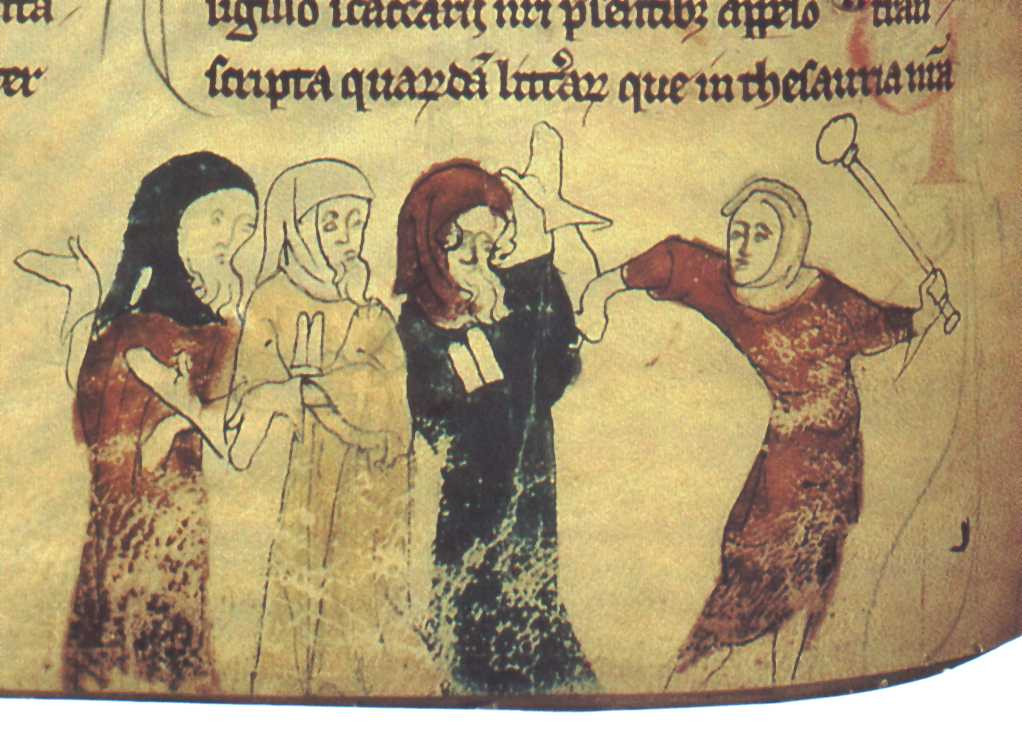
Jews wearing Jewish badges and being beaten by English people as they are forced to leave.
A contemporary illustration showing the expulsion of the Jews. Image shows the white double tabula that Jews in England were mandated to wear by law.

The Edict of Expulsion was a royal decree expelling all Jews from the Kingdom of England that was issued by Edward I on 18 July 1290; it was the first time a European state is known to have permanently banned their presence.[a] The date of issuance was most likely chosen because it was a Jewish holy day, Tisha B'Av, which commemorates the destruction of Jerusalem and other disasters the Jewish people have experienced. Edward told the sheriffs of all counties he wanted all Jews expelled before All Saints' Day (1 November) that year.

Jews were allowed to leave England with cash and personal possessions, but debts they were owed, homes, and other buildings—including synagogues and cemeteries—were forfeit to the king. While there are no recorded attacks on Jews during the departure on land, there were acts of piracy in which Jews died, and others were drowned as a result of being forced to cross the English Channel at a time of year when dangerous storms are common. There is evidence from personal names of Jewish refugees settling in Paris and other parts of France, as well as Italy, Spain and Germany. Documents taken abroad by the Anglo-Jewish diaspora have been found as far away as Cairo. Jewish properties were sold to the benefit of the Crown, Queen Eleanor and selected individuals, who were given grants of property.

The edict was not an isolated incident but the culmination of increasing antisemitism in England. During the reigns of Henry III and Edward I, anti-Jewish prejudice was used as a political tool by opponents of the Crown, and later by Edward and the state itself. Edward took measures to claim credit for the expulsion and to define himself as the protector of Christians against Jews, and following his death, he was remembered and praised for the expulsion. The expulsion embedded antisemitism into English culture of the medieval and early modern period; such antisemitic beliefs included that England was unique because there were no Jews. The expulsion edict remained in force for the rest of the Middle Ages, but was overturned more than 365 years later during the Protectorate, when in 1656 Oliver Cromwell informally permitted the resettlement of the Jews in England.

Background

[edit]

The first Jewish communities in the Kingdom of England were recorded some time after the Norman Conquest in 1066, moving from William the Conqueror's towns in northern France.[2] Jews were viewed as being under the direct jurisdiction and property of the king,[3] making them subject to his whims. The monarch could tax or imprison Jews as he wished, without reference to anyone else.[4][b] A very small number of Jews were wealthy because Jews were allowed to lend money at interest while the Church forbade Christians from doing so, which was regarded as the sin of usury.[6] Capital was in short supply and necessary for development, including investment in monastic construction and allowing aristocrats to pay heavy taxes to the crown, so Jewish loans played an important economic role,[7] although they were also used to finance consumption, particularly among overstretched, landholding Knights.[8]

The Church's highest authority, the Holy See, had placed restrictions on the mixing of Jews with Christians, and at the Fourth Lateran Council in 1215 had mandated the wearing of distinctive clothing such as tabula or Jewish badges.[9] These measures were adopted in England at the Synod of Oxford in 1222. Church leaders made the first allegations of ritual child sacrifice, such as crucifixions at Easter in mockery of Christ, and the accusations began to develop into themes of conspiracy and occult practices. King Henry III backed allegations made against Jews of Lincoln after the death of a boy named Hugh, who soon became known as Little Saint Hugh.[10] Such stories coincided with the rise of hostility within the Church to the Jews.[11]

Discontent increased after the Crown destabilised the loans and debt market. Loans were typically secured through bonds that entitled the lender to the debtor's land holdings. Interest rates were relatively high and debtors tended to be in arrears. Repayments and actual interest paid were a matter for negotiation and it was unusual for a Jewish lender to foreclose debts.[12] As the Crown overtaxed Jews, they were forced to sell their debt bonds at reduced prices to quickly raise cash. Rich courtiers would buy the cut-price bonds, and could call in the loans and demand the lands that had secured the loans.[8] This caused the transfer of the land wealth of indebted knights and others, especially from the 1240s, as the taxation of Jews became unsustainably high.[13] Leaders like Simon de Montfort then used anger at the dispossession of middle-ranking landowners to fuel antisemitic violence at London, where 500 Jews died; Worcester; Canterbury; and many other towns.[14] In the 1270s and 1280s, Queen Eleanor amassed vast lands and properties through this process, causing widespread resentment and conflict with the Church, which viewed her acquisitions as profiting from usury.[15] By 1275, as the result of punitive taxation, the crown had eroded the Jewish community's wealth to the extent taxes produced little return.[16][c]

Steps towards expulsion

[edit]

The first major step towards expulsion took place in 1275 with the Statute of the Jewry, which outlawed all lending at interest and allowed Jews to lease land, which had previously been forbidden. This right was granted for the following 15 years, supposedly giving Jews a period to readjust;[18] this was an unrealistic expectation because entry to other trades was generally restricted.[19] Edward I attempted to convert Jews by compelling them to listen to Christian preachers.[20]

Text of a statute in Latin
Extract of the Statute of the Jewry, c. 1275

The Church took further action, for example John Peckham the Archbishop of Canterbury campaigned to suppress seven London synagogues in 1282.[21] In late 1286, Pope Honorius IV addressed a special letter or "rescript" to the Archbishops of York and Canterbury claiming Jews had an evil effect on religious life in England through free interaction with Christians, and calling for action to be taken to prevent it. Honorius's demands were restated at the Synod of Exeter.[22]

Jews orchestrated the coin clipping crisis of the late 1270s, when over 300 Jews—over 10% of England's Jewish population—were sentenced to death for interfering with the currency.[23] The Crown profited from seized assets and payments of fines by those who were not executed, raising at least £16,500.[24][d] While it is unclear how impoverished the Jewish community was in these last years, historian Henry Richardson notes Edward did not impose any further taxation from 1278 until the late 1280s.[26] It appears some Jewish moneylenders continued to lend money against future delivery of goods to avoid usury restrictions, a practice that was wholly known to the Crown because debts had to be recorded in a government archa or chest where debts were recorded.[e] Others found ways to continue trading and it is likely others left the country.[28]

Expulsion of the Jews from Gascony

[edit]

Local or temporary expulsions of Jews had taken place in other parts of Europe,[f] and regularly in England. For example, Simon de Montfort expelled the Jews of Leicester in 1231,[30] and in 1275, Edward I had permitted the Queen mother Eleanor to expel Jews from her lands and towns.[31][g]

In 1287, Edward I was in his French provinces in the Duchy of Gascony while trying to negotiate the release of his cousin Charles of Salerno, who was being held captive in Aragon.[33] On Easter Sunday, Edward broke his collarbone in an 80-foot (24 m) fall, and was confined to bed for several months.[34] Soon after his recovery, Edward ordered the expulsion of local Jews from Gascony.[35] His immediate motivation might have been the need to generate funds for Charles' release,[36] but many historians, including Richard Huscroft, have said the money raised by seizures from exiled Jews was negligible and that it was given away to mendicant orders (i.e. friars), and therefore see the expulsion as a "thank-offering" for Edward's recovery from his injury.[37]

After his release, in 1289, Charles of Salerno expelled Jews from his territories in Maine and Anjou, accusing them of "dwelling randomly" with the Christian population and cohabiting with Christian women. He linked the expulsion to general taxation of the population as "recompense" for lost income. Edward and Charles may have learnt from each other's experience.[38]

Expulsion

[edit]

By the time he returned to England from Gascony in 1289, Edward I was deeply in debt.[39] At the same time, his experiment to convert the Jews to Christianity and remove their dependence on lending at interest had failed; the fifteen-year period in which Jews were allowed to lease farms had ended. Also, raising significant sums of money from the Jewish population had become increasingly difficult because they had been repeatedly overtaxed.[40]

In 14 June 1290, Edward summoned representatives of the knights of the shires, the middling landowners, to attend Parliament by 15 July. These knights were the group that was most hostile to Jews and usury. On 18 June, Edward sent secret orders to the sheriffs of cities with Jewish residents to seal the archae containing records of Jewish debts. The reason for this is disputed; it could represent preparation for a further tallage to be paid by the Jewish population or it could represent a preparatory step for expulsion.[41] Parliament met on 15 July; there is no record of the Parliamentary debates so it is uncertain whether the Crown offered the Expulsion of the Jews in return for a vote of taxation or whether Parliament asked for it as a concession. Both views are argued. The link between these seems certain given the evidence of contemporaneous chronicles and the speed at which orders to expel the Jews of England were made, possibly after an agreement was reached.[42] The taxation granted by Parliament to Edward was very high; at £116,000 it was probably the highest of the Middle Ages.[43] In gratitude, the Church later voluntarily agreed to pay tax of a tenth of its revenue.[44]

Original text of a letter from Edward I
Letter from King Edward I to the Sheriff of Gloucester, dated 18 July 1290

On 18 July, the Edict of Expulsion was issued.[45] The text of the edict is lost.[46] On the Hebrew calendar, 18 July of that year was 9 Av (Tisha B'Av) 5050, commemorating the fall of the Temple at Jerusalem; it is unlikely to be a coincidence.[47] According to Roth, it was noted "with awe" by Jewish chroniclers.[48] On the same day, writs were sent to sheriffs saying all Jews were to leave by All Saints' Day, 1 November 1290, and outlining their duties in the matter.[49]

Proclamations ordering the population not to "injure, harm, damage or grieve" the departing Jews were made. Wardens at the Cinque Ports were told to make arrangements for the Jews' safe passage and cheap fares for the poor, while safe conduct was arranged for dignitaries,[40] such as the wealthy financier Bonamy of York.[50] There were limits on the property Jews could take with them. Although a few favoured persons were allowed to sell their homes before they left,[51] the vast majority had to forfeit any outstanding debts, homes and immobile property, including synagogues and cemeteries.[40]

Image of a letter from Edward I
Letter from King Edward I to the Treasurer and Barons of the Exchequer, dated 5 November 1290

On 5 November, Edward wrote to the Barons of the Exchequer, giving the clearest-known official explanation of his actions. In it, Edward said the Jews had broken trust with him by continuing to find ways to charge interest on loans. He labelled them criminals and traitors, and said they had been expelled "in honour of the Crucified [Jesus]". Interest to be paid on debts seized by the Crown was to be cancelled.[52]

The Jewish refugees

[edit]

The Jewish population in England at the time of the expulsion was relatively small, perhaps as few as 2,000 people, although estimates vary.[53] Decades of privations had caused many Jews to emigrate or convert.[54] Although it is believed most of the Jews were able to leave England in safety, there are some records of piracy leading to the death of some expelled Jews. On 10 October, a ship of poor London Jews had chartered, which a chronicler described as "bearing their scrolls of the law",[h] sailed toward the mouth of the Thames near Queenborough en route to France. While the tide was low, the captain persuaded the Jews to walk with him on a sandbank; as the tide rose, he returned to the ship, telling the Jews to call upon Moses for help. It appears those involved in this incident were punished.[56] Another incident occurred in Portsmouth, where sailors received a pardon in 1294,[57] and a ship is recorded as drifting ashore near Burnham-on-Crouch, Essex, the Jewish passengers having been robbed and murdered.[58] The condition of the sea in autumn was also dangerous; around 1,300 poor Jewish passengers crossed the English Channel to Wissant near Calais for 4d each.[i] Tolls were collected by the constable of the Tower of London from those leaving on their departure, of 4d or 2d for "poor Jews".[60] Some ships were lost at sea and others arrived with their passengers destitute.[61]

It is unclear where most of the migrants went. Those arriving in France were initially allowed to stay in Amiens and Carcassonne but permission was soon revoked. Because most of the Anglo-Jewry still spoke French, historian Cecil Roth speculates most would have found refuge in France. Evidence from personal names in records show some Jews with the appellation "L'Englesche" or "L'Englois" (ie, the English) in Paris, Savoy and elsewhere. Similar names can be found among the Spanish Jewry, and the Venetian Clerli family claimed descent from Anglo-Jewish refugees. The locations where Anglo-Jewish texts have been found is also evidence for the possible destination of migrants, including places in Germany, Italy, and Spain. The title deeds to an English monastery have been found in the wood store of a synagogue in Cairo, where according to Roth, a refugee from England deposited the document.[62] In the rare case of Bonamy of York, there is a record of him accidentally meeting creditors in Paris in 1292.[50] Other individual cases can be speculated about, such as that of Licoricia of Winchester's sons Asher and Lumbard, and her grandchildren, who were likely among the exiles.[63]

Disposal of Jewish property

[edit]
Interior of a building with a vaulted roof
167 and 169 King Street, The Music House, Norwich: one of two surviving Jewish houses dating from before the expulsion. Such properties were forfeit and sold or gifted by the Crown.

Following the expulsion, the Crown seized Jewish property. Debts with a value of £20,000 were collated from the archae from each town with a Jewish settlement. In December, Hugh of Kendall was appointed to dispose of the property seized from the Jewish refugees, the most-valuable of which consisted of houses in London. Some of the property was given away to courtiers, the Church and the royal family's circle in a total of 85 grants. William Burnell received property in Oxford which he later gave to Balliol College; for example, Queen Eleanor's tailor was granted the synagogue in Canterbury. Sales were mostly completed by early 1291 and around £2,000 was raised, £100 of which was used to glaze windows and decorate the tomb of Henry III in Westminster Abbey.[64] It appears there was no systematic attempt to collect the £20,000 worth of seized debts. The reasons for this could include the death of Queen Eleanor in November 1290, concerns over a possible war with Scotland, or an attempt to win political favour by providing benefit to those previously indebted.[65]

After the Expulsion

[edit]

Jewish presence in England after the Expulsion

[edit]

It is likely the few Jews remaining in England after the expulsion were converts. At the time of the expulsion, there were around 100 converted Jews in the Domus Conversorum, which provided accommodation to Jews who had converted to Christianity.[66] The last of the pre-1290 converts Claricia, the daughter of Jacob Copin, died in 1356, having spent the early part of the 1300s in Exeter, where she raised a family.[67] Between the Expulsion of the Jews in 1290 and their informal return in 1655, there continue to be records of Jews in the Domus Conversorum up to and after 1551. The expulsion is unlikely to have been wholly enforceable.[68] Four complaints were made to the king in 1376 that some of those trading as Lombards were actually Jews.[66]

Propagandising the Expulsion

[edit]
A drawing of a shrine with a very high, narrow design
The Shrine of Little Saint Hugh, commemorating a blood libel, at Lincoln Cathedral

After the expulsion, Edward I sought to position himself as the defender of Christians against the supposed criminality of Jews. Most prominently, he continued personal veneration of Little Saint Hugh of Lincoln, a child whose death had been falsely attributed to ritual murder by Jews.[69] After the death of his wife Queen Eleanor in late 1290, Edward reconstructed the shrine, incorporating the Royal Coat of Arms, in the same style as the Eleanor crosses.[70] It appears to have been an attempt by Edward to associate himself and Eleanor with the cult. According to historian Joe Hillaby, this "propaganda coup" boosted the circulation of the Saint Hugh myth, the most famous of the English blood libels, which is repeated in literature and the "Sir Hugh" folk songs into the twentieth century.[71] Other efforts to justify the expulsion can be found in the Church, for instance in the canonisation evidence submitted for Thomas de Cantilupe,[72] and on the Hereford Mappa Mundi.[73]

Significance

[edit]
A painting of Edward I of England
Edward I used antisemitism as an instrument of state policy.

The permanent expulsion of Jews from England and tactics employed before it, such as attempts at forced conversion, are widely seen as setting a significant precedent and an example for the 1492 Alhambra Decree.[74] Traditional narratives of Edward I have sought to downplay the event, emphasising the peacefulness of the expulsion or placing its roots in Edward's pragmatic need to extract money from Parliament;[75] more recent work on the Anglo-Jewish community's experience have framed it as the culmination of a policy of state-sponsored antisemitism.[76] These studies place the expulsion in the context of the execution of Jews for coin clipping and the first royal-sponsored attempts at converting Jews to Christianity, saying this was the first time a state had permanently expelled all Jews from its territory.[77]

For Edward I's contemporaries, there is evidence the expulsion was seen as one of his most prominent achievements. It was named alongside his wars of conquest in Scotland and Wales in the Commendatio that was widely circulated after his death, saying Edward I outshone the Pharoahs by exiling the Jews.[78]

The expulsion had a lasting effect on medieval and early-modern English culture. Antisemitic narratives became embedded in the idea of England as unique because it had no Jews, and of the English as God's chosen people, superseding the Jews. Jews became an easy target of literature and plays, and tropes such as child sacrifice and host desecration persisted.[79] Jews began to settle in England after 1656,[80] and formal equality was achieved by 1858.[81] According to medieval historian Colin Richmond, English antisemitism left a legacy of neglect of this topic in English historical research as late as the 1990s.[82] The story of Little Saint Hugh was repeated as fact in local guidebooks in Lincoln in the 1920s, and a private school was named after Hugh around the same time. The logo of the school, which referenced the story, was altered in 2020.[83]

Apology

[edit]

In May 2022, the Church of England held a service that the Archbishop of Canterbury Justin Welby described as a formal "act of repentance" on the 800th anniversary of the Synod of Oxford in 1222. The Synod passed a set of laws that restricted the right of Jews in England to engage with Christians, which directly contributed to the expulsion of 1290.[84]

See also

[edit]

Notes

[edit]

Citations

[edit]
  1. ^ Roth 1964, p. 90, and footnote 2
  2. ^ Roth 1964, p. 4.
  3. ^ a b Glassman 1975, p. 14
  4. ^ a b Rubinstein 1996, p. 36.
  5. ^ Langmuir 1990, pp. 294–5, Hyams 1974, pp. 287–8
  6. ^ Hillaby & Hillaby 2013, p. 374-8, Huscroft 2006, pp. 76–7
  7. ^ Mundill 2010, pp. 25, 42, Stacey 1994, p. 101, Singer 1964, p. 118
  8. ^ a b Hyams 1974, p. 291.
  9. ^ Hillaby & Hillaby 2013, pp. 364–365.
  10. ^ Hillaby & Hillaby 2013, pp. 46–7.
  11. ^ Langmuir 1990, p. 298.
  12. ^ Tolan 2023, p. 140, Hyams 1974, p. 289
  13. ^ Parsons 1995, pp. 123, 149–51, Hillaby & Hillaby 2013, pp. 13, 364, Morris 2009, p. 86, Tolan 2023, pp. 140, 170, Hyams 1974, p. 291
  14. ^ Mundill 2002, pp. 41–42.
  15. ^ Hillaby & Hillaby 2013, p. 13.
  16. ^ Hillaby & Hillaby 2013, pp. 364–5, Huscroft 2006, pp. 90–91
  17. ^ Hillaby & Hillaby 2013, pp. 364–5
  18. ^ Prestwich 1997, p. 345.
  19. ^ Huscroft 2006, pp. 118–20.
  20. ^ Tolan 2023, p. 172.
  21. ^ Tolan 2023, pp. 172–3.
  22. ^ Tolan 2023, pp. 177–8.
  23. ^ Rokéah 1988, p. 98.
  24. ^ a b Rokéah 1988, pp. 91–92.
  25. ^ National Archives 2024.
  26. ^ Richardson 1960, p. 216.
  27. ^ Hillaby & Hillaby 2013, pp. 95–7.
  28. ^ Huscroft 2006, pp. 140–42.
  29. ^ Morris 2009, p. 226
  30. ^ Mundill 2002, p. 60.
  31. ^ Huscroft 2006, pp. 146–7.
  32. ^ Hillaby & Hillaby 2013, pp. 141–43.
  33. ^ Huscroft 2006, p. 145.
  34. ^ Tolan 2023, p. 180.
  35. ^ Prestwich 1997, p. 306.
  36. ^ Prestwich 1997, p. 346, Richardson 1960, pp. 225–7
  37. ^ Huscroft 2006, pp. 145–6, Tolan 2023, pp. 180–81, Morris 2009, p. 226, Dorin 2023, p. 159
  38. ^ Huscroft 2006, pp. 146–149, Tolan 2023, pp. 181–82, Morris 2009, p. 227, Dorin 2023, p. 160
  39. ^ Prestwich 1997, p. 307.
  40. ^ a b c Roth 1964, p. 85.
  41. ^ Huscroft 2006, pp. 150–151, Richardson 1960, p. 228
  42. ^ Stacey 1997, pp. 78, 100–101.
  43. ^ Prestwich 1997, p. 343, Stacey 1997, p. 93
  44. ^ Huscroft 2006, pp. 151–153, Leonard 1891, p. 103
  45. ^ Prestwich 1997, p. 343.
  46. ^ Roth 1964, p. 85, note 1.
  47. ^ Richmond 1992, pp. 44–45, Roth 1962, p. 67
  48. ^ Quotation in Roth 1964, p. 85
  49. ^ Huscroft 2006, p. 151.
  50. ^ a b Hillaby & Hillaby 2013, p. 434.
  51. ^ Huscroft 2006, p. 156.
  52. ^ Hillaby & Hillaby 2013, p. 138.
  53. ^ Mundill 2002, p. 27.
  54. ^ Huscroft 2006, pp. 86–87, 140–41.
  55. ^ Quoted by Roth 1964, p. 87.
  56. ^ Roth 1964, pp. 86–87, Prestwich 1997, p. 346
  57. ^ Roth 1964, p. 87, see footnote 1.
  58. ^ Huscroft 2006, p. 157.
  59. ^ National Archives 2024
  60. ^ Ashbee 2004, p. 36.
  61. ^ Roth 1964, p. 87.
  62. ^ Roth 1964, pp. 87–88.
  63. ^ Abrams 2022, p. 93.
  64. ^ Huscroft 2006, pp. 157–9.
  65. ^ Huscroft 2006, p. 160.
  66. ^ a b Roth 1964, p. 133.
  67. ^ Huscroft 2006, p. 161.
  68. ^ Roth 1964, p. 132.
  69. ^ Stacey 2001, pp. 176–7.
  70. ^ Stocker 1986, pp. 114–6.
  71. ^ Hillaby 1994, p. 94—98.
  72. ^ Strickland 2018, p. 463.
  73. ^ Strickland 2018, pp. 429–31.
  74. ^ Richmond 1992, pp. 44–45, Roth 1964, p. 90, Huscroft 2006, p. 164
  75. ^ Richmond 1992, pp. 44–45.
  76. ^ Stacey 2001, p. 177.
  77. ^ Roth 1964, p. 90, Stacey 2001, Skinner 2003, p. 1, Huscroft 2006, p. 12
  78. ^ Strickland 2018, pp. 455–6
  79. ^ Richmond 1992, pp. 55–7, Strickland 2018, Shapiro 1996, p. 42, Tomasch 2002, pp. 69–70, Despres 1998, p. 47, Glassman 1975 See chapters 1 and 2
  80. ^ Roth 1964, pp. 164–6.
  81. ^ Roth 1964, p. 266.
  82. ^ Richmond 1992, p. 45.
  83. ^ Martineau 1975, p. 2, Tolan 2023, p. 188
  84. ^ TOA Staff 2022, Gal 2021

Sources

[edit]
  • Abrams, Rebecca (2022). Licoricia of Winchester: Power and Prejudice in Medieval England (1st ed.). Winchester: The Licoricia of Winchester Appeal. ISBN 978-1-3999-1638-7.
  • Ashbee, Jeremy (2004). "The Tower of London and the Jewish expulsion of 1290". Transactions. 55. London and Middlesex Archaeological Society: 35–37. Archived from the original on 14 November 2024. Retrieved 26 August 2024.
  • Brand, P. (2014). "New Light on the Expulsion of the Jewish Community from England in 1290" (PDF). Reading Medieval Studies. XL: 101–116. ISSN 0950-3129.
  • Despres, Denise (1998). "Immaculate Flesh and the Social Body: Mary and the Jews". Jewish History. 12: 47. doi:10.1007/BF02335453.
  • Dorin, R. (2023). "No Return: Jews, Christian Usurers, and the Spread of Mass Expulsion in Medieval Europe". Histories of Economic Lif. 36. doi:10.1093/jcs/csae030.
  • Gal, Hannah (22 July 2021). "The Church apologizes for Expulsion 800 years later – repenting for sins". Jerusalem Post. Archived from the original on 7 September 2023. Retrieved 3 January 2024.
  • Glassman, Bernard (1975). Antisemitic Stereotypes Without Jews: Images of the Jews 1290–1700. Detroit: Wayne State University Press. ISBN 9780814315453. OL 5194789M.
  • Hillaby, Joe (1994). "The ritual-child-murder accusation: Its dissemination and Harold of Gloucester". Jewish Historical Studies. 34: 69–109. JSTOR 29779954.
  • Hillaby, Joe; Hillaby, Caroline (2013). The Palgrave Dictionary of Medieval Anglo-Jewish History. Basingstoke: Palgrave Macmillan. ISBN 9780230278165. OL 28086241M.
  • Huscroft, Richard (2006). Expulsion: England's Jewish Solution. Stroud: Tempus. ISBN 9780752437293. OL 7982808M.
  • Hyams, Paul (1974). "The Jewish minority in Medieval England, 1066–1290". Journal of Jewish Studies. xxv (2): 270–293. doi:10.18647/682/JJS-1974. Archived from the original on 4 February 2024. Retrieved 4 January 2024.
  • Langmuir, Gavin (1990). History, Religion and Antisemitism. Berkeley: University of California Press. ISBN 0520061411. OL 2227861M.
  • Leonard, George Hare (1891). "The Expulsion of the Jews by Edward I. An essay in explanation of the Exodus, A.D. 1290". Transactions of the Royal Historical Society. 5. Cambridge University Press on behalf of the Royal Historical Society: 103–146. doi:10.2307/3678048. JSTOR 3678048. S2CID 162632661.
  • Martineau, Hugh (1975). Half a Century of St Hugh's School, Woodhall Spa. Horncastle: Cupit and Hindley.
  • Morris, Marc (2009). A Great and Terrible King: Edward I and the Forging of Britain. London: Windmill Books. ISBN 9780099481751. OL 22563815M.
  • Mundill, Robin R. (2002). England's Jewish Solution. Cambridge: Cambridge University Press. ISBN 9780521520263. OL 26454030M.
    —— (2010), The King's Jews, London: Continuum, ISBN 9781847251862, LCCN 2010282921, OCLC 466343661, OL 24816680M
  • National Archives (2024). "Currency converter: 1270–2017". National Archives. Archived from the original on 13 June 2017. Retrieved 16 January 2024.
  • Parsons, John Carmi (1995). Eleanor of Castile: Queen and Society in Thirteenth Century England. New York: St. Martin's Press. ISBN 0312086490. OL 3502870W.
  • Prestwich, Michael (1997) [1988], Edward I, New Haven: Yale University Press, ISBN 0300071574, OL 704063M
  • Richardson, Henry (1960). English Jewry under Angevin Kings. London: Methuen. OL 17927110M.
  • Richmond, Colin (1992). "Englishness and Medieval Anglo-Jewry". In Kushner, Tony (ed.). The Jewish Heritage in British History. Frank Cass. pp. 42–59. ISBN 0714634646. OL 1710943M.
  • Rokéah, Zefira Entin (1988). "Money and the hangman in late Thirteenth Century England: Jews, Christians and coinage offences alleged and real (Part I)". Jewish Historical Studies. 31: 83–109. JSTOR 29779864.
  • Roth, Cecil (1962) [Originally published July 1933 in the Jewish Chronicle]. "England and the Ninth of Ab". Essays and Portraits in Anglo-Jewish History. The Jewish Publication Society of America. pp. 63–67. OL 5852410M – via Internet Archive.
    —— (1964) [1941]. A History of the Jews in England (Third ed.). Oxford: Clarendon Press. ISBN 9780198224884. OL 22039212M. {{cite book}}: ISBN / Date incompatibility (help)
  • Rubinstein, W. D. (1996). A History of the Jews in the English-Speaking World: Great Britain. New York: Macmillan Press. ISBN 0333558332. OL 780493M.
  • Shapiro, James (1996). Shakespeare and the Jews (Twentieth Anniversary ed.). Chichester, West Sussex: Columbia University Press. ISBN 9780231178679. OL 28594904M.
  • Singer, S. A. (1964). "The Expulsion of the Jews from England in 1290". The Jewish Quarterly Review. 55 (2): 117–136. doi:10.2307/1453793. JSTOR 1453793.
  • Skinner, Patricia (2003). "Introduction". In Skinner, Patricia (ed.). Jews in Medieval Britain. Woodbridge: Boydell Press. pp. 1–11. ISBN 0851159311. OL 28480315M.
  • Stacey, Robert C. (1994). "Jewish Lending and the Medieval English Economy". In Britnell, Richard; Campbell, Bruce (eds.). A Commercialising Economy? England 1000–1300. Manchester: Manchester University Press. pp. 78–101. Archived from the original on 16 February 2024. Retrieved 17 January 2024.
    —— (1997). "Parliamentary negotiation and the Expulsion of the Jews from England". In Prestwich, Michael; Britnell, Richard H.; Frame, Robin (eds.). Thirteenth Century England: Proceedings of the Durham Conference, 1995. Vol. 6. Woodbridge: Boydell Press. pp. 77–102. ISBN 978-0-85115-674-3. OL 11596429M. Archived from the original on 4 February 2024. Retrieved 4 January 2024.
    —— (2001). "Anti-Semitism and the Medieval English State". In Maddicott, J. R.; Pallister, D. M. (eds.). The Medieval state: Essays Presented to James Campbell. London: The Hambledon Press. pp. 163–77. OL 46016M. Archived from the original on 4 February 2024. Retrieved 4 January 2024.
  • Strickland, Debra Higgs (2018). "Edward I, Exodus, and England on the Hereford World Map" (PDF). Speculum. 93 (2): 420–69. doi:10.1086/696540. S2CID 164473823. Archived (PDF) from the original on 22 December 2023. Retrieved 4 January 2024.
  • Stocker, David (1986). "The Shrine of Little St Hugh". Medieval Art and Architecture at Lincoln Cathedral. Leeds: British Archaeological Association. pp. 109–117. ISBN 9780907307143. OL 2443113M.
  • TOA Staff (8 May 2022). "After 800 years, Church of England apologizes to Jews for laws that led to Expulsion". Times of Israel. Archived from the original on 9 May 2022. Retrieved 12 April 2023.
  • Tolan, John (2023). England's Jews: Finance, Violence, and the Crown in the Thirteenth Century. Philadelphia: University of Pennsylvania Press. ISBN 9781512823899. OL 39646815M.
  • Tomasch, Sylvia (2002), "Postcolonial Chaucer and the Virtual Jew", in Delany, Sheila (ed.), Chaucer and the Jews, London: Routledge, pp. 43–58, ISBN 9780415938822, OL 7496826M
[edit]
Revisions and contributorsEdit on WikipediaRead on Wikipedia
from Grokipedia
The Edict of Expulsion was a royal issued by King Edward I of on 18 1290, ordering the permanent banishment of approximately 2,000 to 3,000 from the kingdom by (1 November) that year. The edict permitted Jews to depart with their movable possessions after selling immovable property under royal oversight, while confiscated synagogues, cemeteries, and outstanding debts owed to Jewish lenders, thereby extinguishing those obligations to the benefit of Christian debtors. This measure represented the culmination of mounting restrictions on Jewish economic activities, particularly , which had been prohibited for Christians but permitted—and increasingly resented—for since their readmission under in 1066. Edward I's decision was driven by a combination of fiscal pragmatism, parliamentary pressure, and popular exacerbated by events such as the 1255 of and recurrent pogroms. In exchange for the expulsion, the king secured a substantial tax grant from to fund his military campaigns, including wars in and , after earlier statutes like the 1275 Statute of the Jewry had already curtailed Jewish moneylending and confined Jews to manual trades they were ill-equipped to pursue. Implementation involved sheriffs enforcing departure, with reports of violence and asset seizures, though some Jews reportedly evaded expulsion by converting or fleeing earlier. The edict's enforcement marked the first complete and enduring expulsion of Jews from a Western European realm, remaining in force until their informal readmission in 1656 under , amid debates over economic utility rather than moral reversal.

Historical Context

Arrival and Integration of Jews in England

Jews arrived in England shortly after the of 1066, invited by from in to serve as financiers, as Christian doctrine prohibited among Christians, creating a demand for Jewish moneylenders to fund royal consolidation, castle construction, and military efforts. No organized Jewish presence existed in England prior to this event. The newcomers, numbering initially in the dozens of families, were granted direct royal protection, designating them as the king's or serfs, which positioned them outside the feudal system and exempted them from local lord jurisdiction while subjecting them to crown oversight and taxation. This status provided security against arbitrary violence but rendered their welfare dependent on the monarch's favor, with the king deriving revenue from their lending activities through tallages and fines. Under Henry I (r. 1100–1135), a was issued affirming Jewish to reside freely, , own for synagogues and cemeteries, and enforce contracts via royal courts, thereby formalizing their legal integration and encouraging settlement expansion. This document, later confirmed by successors, underscored the crown's pragmatic reliance on Jewish economic contributions for stability. Jewish communities coalesced in urban centers proximate to royal castles for protection, including (where the Jewry in the city developed by the late ), (with an early around 1087–1100), , , and Lincoln by the . These settlements featured distinct quarters, rabbinical leadership, and institutions like mikvehs, allowing religious observance amid economic engagement with Christian society through and . While socially segregated to mitigate tensions, intermingled commercially, lending to nobles and , which embedded them in the kingdom's fiscal framework despite underlying cultural distinctions.

Economic Role in Lending and Usury

In medieval , following the of 1066, were initially permitted to engage in commerce and finance, but guild exclusions and land ownership restrictions increasingly channeled their economic activities toward moneylending. The Catholic Church's , rooted in interpretations of biblical prohibitions, deemed —charging on loans—a for Christians, particularly when lending to fellow Christians, creating a legal and moral vacuum that could fill since Deuteronomy 23:20 permitted on loans to foreigners. This niche positioned Jewish communities as key providers of credit to the , , and , facilitating , agricultural improvements, and royal expenditures beyond what informal Christian lending could support. By the 12th and 13th centuries, Jewish lenders dominated high-value loans, with figures like extending vast sums to Henry II for military campaigns, amassing a fortune that, upon his death in 1186, required royal oversight to collect outstanding debts exceeding £100,000—equivalent to a significant portion of the king's annual revenue. Under Henry III (r. 1216–1272), served as a critical fiscal resource, with extracting tallages such as £6,000 in 1230 for army pay and £10,000 in 1236 by holding ten prominent as security to compel communal payments. Edward I (r. 1272–1307) continued this pattern, borrowing heavily for wars in and , but intensified taxation—culminating in a 1275 of the Jewry banning and converting to "merchants"—which eroded their lending capacity by 1280, as debts owed to them were increasingly seized or nullified by . This role, while economically vital for enabling royal liquidity and aristocratic consumption, fostered dependency and exploitation, as kings like Henry III and I treated Jewish wealth as a taxable asset, imposing arbitrary levies that by the 1270s left many communities impoverished and unable to sustain prior lending volumes. Empirical records from the Exchequer of the Jews indicate that Jewish loans underpinned crown finance during periods of fiscal strain, such as the Barons' Wars, yet the system's unsustainability arose from unchecked royal extractions rather than inherent Jewish practices.

Emerging Religious and Social Frictions

theological doctrines portraying as collectively responsible for the contributed to pervasive religious antagonism in medieval , reinforced by ecclesiastical decrees that barred from while permitting to lend money at interest to non-. This economic niche, combined with sermons and Church councils emphasizing Jewish otherness, fostered perceptions of as spiritually alien and exploitative. The Fourth of 1215, convened by , mandated distinctive clothing for to prevent intermingling, a measure adopted in by 1253 through royal statute requiring yellow badges, heightening social segregation and visibility for harassment. Blood libel accusations exemplified escalating religious paranoia, beginning with the 1144 case of , where local clergy alleged Jews ritually murdered a Christian boy to use his blood in rites, a claim unsupported by evidence but propagated through hagiographic texts. The 1255 Lincoln incident involving eight-year-old Hugh, whose body was found in a pit, led to royal intervention under Henry III; over 90 Jews were imprisoned in the , 18 executed after coerced confessions, and the case fueled nationwide fervor, with Hugh venerated as a martyr despite papal skepticism toward such libels. These fabrications, often coinciding with or economic distress, incited mobs and justified seizures of Jewish property, as chroniclers like amplified the myths without verification. Social frictions intensified amid Crusading zeal and indebtedness, culminating in the 1189-1190 pogroms triggered by Richard I's coronation; in , over 150 Jews died in a after seeking refuge, with debts to Jewish lenders burned to evade repayment. Baronial resentment over Jewish financial roles, protected yet taxed heavily by the crown, bred communal violence, as seen in Lincoln where ritual murder claims masked local animosities. By the late , cumulative restrictions—banning construction, Christian employment by Jews, and interfaith interactions—solidified Jews' status as perpetual outsiders, eroding earlier Norman-era protections and paving the way for expulsion.

Precursors to the Edict

From the late onward, English faced escalating legal restrictions that curtailed their economic activities and . Prohibitions on land ownership prevented from engaging in , confining them primarily to moneylending, which Christians were barred from practicing due to usury bans. Exclusion from Christian guilds further limited trade opportunities, reinforcing economic isolation. These measures intensified under royal decrees. Jews were required to pay parochial dues to local rectors, abstain from meat during , and refrain from criticizing , with violations risking severe penalties. Blasphemy against became a capital offense, and Jews were mandated to attend conversion sermons while prohibited from employing Christian wetnurses or servants. The 1275 , enacted by Edward I, marked a pivotal escalation by outlawing entirely, the cornerstone of Jewish finance, and mandating repayment of existing debts by Easter 1276; it also confined Jews to specific towns, imposed a for identification, levied a special annual of three pence per person over age twelve, and restricted occupations to manual trades like butchery or tailoring. Parallel to these restrictions, outbreaks of violence compounded Jewish vulnerability. The 1144 case of introduced accusations in , alleging ritual murder of Christian children for , sparking local hostility though no immediate ensued. Similar claims fueled the 1255 Lincoln incident involving Hugh, where 91 were imprisoned and 18 executed after confessions extracted under , inspiring Chaucer's Prioress's Tale and perpetuating anti-Jewish sentiment. Mass violence peaked in the pogroms of 1189–1190 amid Crusader fervor and coronation unrest. In on March 16, 1190, approximately 150 —nearly the entire community—were massacred after seeking refuge in Clifford's Tower; many committed to avoid attackers led by debtor Richard de Malebis, while survivors faced forced conversions or slaughter. Comparable riots struck , Lynn, and Stamford, killing scores and destroying Jewish property, prompting royal intervention to reassert crown protection over Jewish assets. These intertwined legal curbs and violent episodes eroded Jewish security, fostering dependency on royal safeguarding while breeding resentment over perceived fiscal exploitation, setting the stage for broader expulsion.

Expulsion from Gascony as Precedent

In 1287, while administering the —a territory under English crown control—King Edward I issued orders expelling all from the region. This action followed Edward's recovery from a period of illness during his stay in and mirrored the financial mechanisms later employed in , including the seizure of Jewish-held property by the crown and the redirection of outstanding debts owed to directly to royal coffers. The expulsion affected a modest Jewish engaged primarily in moneylending and , though precise numbers of individuals displaced remain undocumented in contemporary records. The expulsion demonstrated the logistical and fiscal viability of mass removal for , serving as a practical precursor to the broader Edict of Expulsion from three years later. By confiscating assets and converting debts into royal revenue—estimated to yield significant sums without parliamentary consent— tested enforcement mechanisms, such as sheriffs' oversight of departures and asset inventories, which were refined and scaled for the 1290 decree. Unlike sporadic local pogroms or restrictions, this was a systematic royal initiative, unopposed by local and justified partly on grounds of alleged and ritual crimes, though primarily driven by the crown's need to liquidate Jewish wealth amid ongoing military expenditures in and . Historians note that the Gascony precedent emboldened Edward's approach in , where similar economic pressures from wars and depleted treasuries prompted the full-domain expulsion, but without the partial reversals seen in , where some reportedly returned before subsequent orders in 1292 reaffirmed the ban. This earlier action underscored Edward's willingness to exploit Jewish vulnerability for fiscal gain, setting a template that prioritized enrichment over long-term , as debts transferred to the king often went uncollected, disrupting credit flows. The lack of ecclesiastical protest or international repercussions further validated the policy's feasibility for expansion to the realm proper.

Fiscal Pressures on the Crown and Jewish Wealth

I ascended the throne in 1272 amid inherited debts from his father Henry III's reign, exacerbated by costly military campaigns, including the conquest of in 1277 and 1282–1283, which required substantial funding through extraordinary levies. By the late 1280s, preparations for conflicts in and , coupled with his return from crusade in 1289, left the crown deeply indebted and reliant on parliamentary grants for revenue. To secure these funds, negotiated with barons and , offering concessions such as the expulsion of to facilitate approval of a one-third on movables amounting to approximately £116,000. Jews in , treated as royal wards since the , served as a primary fiscal resource through and associated taxation, with extracting tallages—arbitrary levies—that totaled around 200,000 marks between 1219 and 1272 alone. Under , this intensified; despite their economic role in lending to nobles and , Jews faced repeated tallages, such as those in 1277 and 1278 that yielded as their wealth eroded, and a 1287 assessment of 20,000 marks aimed at squeezing residual assets.) These impositions reflected 's view of Jewish communities as a captive source of , with bonds and pledges from debtors often forfeited or redeemed under royal pressure to offset war costs. The Statute of the Jewry in 1275, promulgated by , prohibited —the Jews' principal occupation—forcing them into crafts, agriculture, or trade where legal barriers and social hostility limited success, accelerating communal impoverishment. Historians note this legislation exhausted Jewish financial capacity, as prior tallages had already depleted liquid assets, leaving many unable to sustain even reduced economic activities by the 1280s. Continued exactions post-1275, including for non-payment, underscored the crown's strategy of exploiting a diminishing resource until viable alternatives, like Italian bankers, reduced dependence on Jewish . By 1290, with Jewish wealth largely exhausted, the expulsion enabled to seize remaining chattels, synagogues, and cemeteries, while transferring outstanding debts owed to —estimated in the tens of thousands of —into royal control for collection or sale, providing a final fiscal windfall amid broader parliamentary concessions. This move not only liquidated Jewish holdings but aligned with Edward's need to demonstrate fiscal restraint to gain elite support for taxation, prioritizing short-term gains over long-term credit networks.

Issuance and Execution of the Edict

Content and Royal Proclamation

The Edict of Expulsion consisted of writs issued by King Edward I on 18 July 1290 to the sheriffs of every English county, formally decreeing the removal of all Jews from the realm. These documents, addressed individually to each sheriff, proclaimed that the Jewish population must depart England no later than All Saints' Day, 1 November 1290, under penalty of arrest and potential execution for any who remained beyond the deadline. The royal emphasized the orderly execution of the expulsion, directing sheriffs to ensure safe passage for departing and prohibiting or molestation against them or their during transit. were permitted to liquidate and transport their movable goods, chattels, and proceeds from sales (excluding , silver vessels, or plate), while their immovable properties, including houses and synagogues, were forfeited to . Outstanding debts owed to were likewise seized by the king, who assumed responsibility for collecting them, often allowing Christian debtors partial relief in repayment. Sheriffs received explicit instructions to oversee the process without prejudice, including provisions for transport—paid for the able-bodied and at reduced rates for the poor—and the issuance of safe-conduct letters for specific individuals. One such to the Sheriff of , preserved in the , exemplifies the standardized language used, notifying the recipient of the expulsion decree and mandating compliance to prevent any from lingering in the county after the appointed date. This framework balanced the king's assertion of authority with nominal safeguards, reflecting the edict's dual role as both punitive measure and fiscal opportunity.

Timeline of Enforcement and Compliance

On 18 July 1290, King Edward I issued the Edict of Expulsion, accompanied by writs dispatched simultaneously to the sheriffs of all English counties, directing them to proclaim the decree in their jurisdictions and to enforce its provisions without delay. These instructions required sheriffs to protect from during the departure process, to oversee the sale of movable goods and realization of debts, and to ensure departure by (1 November 1290), with death as the penalty for any remaining thereafter. The Crown retained rights to Jewish , synagogues, and cemeteries, while debts owed to Jews were to be redirected to royal coffers after partial reimbursement for travel costs. From late July through October 1290, enforcement proceeded under oversight, with concentrated in major towns and ports to facilitate asset liquidation and embarkation. Royal mandates prohibited violence against departing , and sheriffs were authorized to hire ships for transport, primarily to destinations in and the , with the subsidizing passages up to a fixed amount per person. By (29 September 1290), preliminary collections of Jewish bonds and tallies were underway, aiding fiscal preparations for property seizure. Approximately 2,000 to 3,000 , constituting England's entire organized Jewish community, complied by gathering at coastal ports such as , Dover, and during late October. The deadline of 1 November 1290 marked the principal wave of departures, with most Jews embarking under armed escorts to prevent pogroms, though isolated incidents of local harassment occurred despite prohibitions. Post-deadline, sheriffs conducted searches for non-compliant individuals, resulting in the and execution of a small number who attempted to remain hidden or evade ports; however, widespread compliance minimized such cases. A royal letter dated 5 November 1290 to the Treasurer and Barons of the initiated the systematic inventory and redistribution of abandoned Jewish estates, signaling the completion of expulsion enforcement. By early 1291, escheators confirmed the realm free of Jewish presence, with residual administrative efforts focused on adjudication and allocation to creditors or , yielding substantial revenues that offset expulsion costs. A minority—estimated at fewer than 300—converted to to avoid exile, receiving royal pardons and allowances, though most such conversions predated the edict's final phases. No significant organized resistance or return attempts were recorded in contemporary accounts, underscoring the edict's effective implementation through centralized royal authority and local enforcement.

Immediate Consequences

Movements and Fate of Jewish Refugees

The approximately 3,000 subject to the Edict of Expulsion were ordered to depart by (November 1), 1290, with royal sheriffs tasked to escort them to ports for embarkation. Departures occurred mainly from , , and other coastal towns, where ships were arranged under crown oversight, though chroniclers noted instances of violence, , and delays inflicted by local populations and officials. Refugees were permitted to take only portable and , limited to 5 marks per family plus debts owed to them, leaving immovable assets like homes and lands to royal seizure; this provision, intended to facilitate orderly exit, nonetheless rendered most arrivals on the continent economically vulnerable. Primary destinations included northern France, the (such as and Brabant), and the regions of , with smaller groups recorded in and Iberia. Personal names in French records, such as those of former English Jewish families appearing in notarial documents shortly after 1290, provide evidence of settlement in urban centers like and , where they joined established communities. In the and , refugees dispersed to cities with existing Jewish quarters, leveraging familial or commercial ties, though integration was hampered by local suspicions and economic competition. The fate of these refugees was marked by immediate hardship and long-term precarity; deprived of and often arriving with diminished funds after transit costs and bribes, many depended on aid from host communities or kin networks for survival. Scholarly estimates suggest that while some reestablished moneylending or roles, leveraging portable skills and reputations for creditworthiness, a significant portion faced , with reports of or manual labor among former financiers. Further displacements loomed, as enacted its own expulsion in 1306, scattering English-origin Jews eastward into the or southward, where anti-Jewish measures persisted; isolated returns to occurred covertly but were rare and punishable by death.

Seizure and Management of Abandoned Property

Following the Jewish exodus by 1 November 1290, sheriffs across , acting under writs issued on 18 July 1290, seized all abandoned property, encompassing like houses and synagogues, alongside any untaken movables. Jews had been permitted to carry cash, valuables, and personal effects, but immovable assets escheated to . Urban Jewish houses, typically stone structures in designated quarters such as those in and , were inventoried and either auctioned publicly or distributed as to Edward I's allies and courtiers. Synagogues faced appropriation, often leading to conversion for Christian worship or other royal uses. The process prioritized rapid liquidation to fund crown needs, though administrative costs offset gains. Debts outstanding to expelled Jews, valued at approximately £20,000, transferred directly to royal control, with collection managed via the rather than the defunct Jewish Exchequer. Recovery proved incomplete, as many debtors defaulted, yielding limited net revenue beyond the expulsion's primary fiscal boon—a parliamentary grant of £116,346 on movables. Overall, reinforced royal authority over former Jewish assets, integrating them into the broader while curtailing usury-based lending.

Long-Term Ramifications

Persistence of Jewish Exclusion in

The Edict of Expulsion of 1290 was never formally revoked by subsequent English monarchs, maintaining a legal prohibition on Jewish residence in for 366 years until their tacit readmission in 1656 under . During this exclusion period (1290–1655), were officially barred from entering or settling in the realm, with the original decree enforced through royal writs to sheriffs and reinforced by ongoing statutes that treated as incompatible with Christian society. This legal continuity stemmed from the crown's alignment with ecclesiastical pressures for religious uniformity, as well as parliamentary acts like the 1353 confirmation of expulsion under Edward III, which imposed penalties including death for any found in the kingdom after the deadline. Enforcement waned over time due to geographic isolation and the absence of a resident Jewish population, but sporadic discoveries of covert Jewish activity underscored the ban's persistence. In the , small numbers of Portuguese Marranos—crypto-Jews fleeing the —arrived and integrated as nominal Christians, with figures like Dr. Hector Nunes serving as physician to Queen Elizabeth I while concealing their origins; such individuals numbered fewer than a dozen documented cases and faced execution if exposed as practicing Jews. Royal policy under and early Stuarts upheld the exclusion, as evidenced by Queen Elizabeth I's 1594 order expelling five "notorious Jewes" detected in , and James I's 1604 refusal of readmission petitions citing divine disfavor. Economic guilds and the opposed formal resettlement, fearing competition in trade and threats to Christian doctrine, which perpetuated the status quo amid England's insular Protestant identity. The ban's endurance reflected broader causal factors beyond initial fiscal motives of 1290, including the crown's reduced reliance on Jewish moneylending after the development of Italian banking networks and domestic credit systems by the . Attempts at readmission gained traction only during the ; in December 1655, Cromwell convened the Whitehall Conference, where merchants and clergy reiterated opposition, but his pragmatic allowance of Jewish merchants—starting with Sephardic arrivals from —effectively ended exclusion without parliamentary repeal, as Jews received licenses to trade by 1656. Full legal emancipation awaited the , with the edict's shadow lingering in statutes until the Jews Relief Act of 1858 removed remaining civil disabilities.

Effects on English Economy and Governance

The expulsion provided an immediate fiscal windfall to through the seizure of Jewish-owned , synagogues, and approximately £16,500 in cash and valuables, alongside the collection of outstanding debts owed to Jewish lenders, which were redirected to royal coffers. In exchange, approved a one-time grant of £116,000—the largest of the —to fund Edward I's military campaigns, demonstrating how the served as leverage in royal-parliamentary negotiations over . This transaction underscored a shift in toward greater parliamentary involvement in , as the king traded minority expulsion for consensual revenue, rather than relying solely on arbitrary tallages previously imposed on Jewish communities. Longer-term, the removal of England's roughly 2,000–3,000 , who had dominated domestic moneylending due to Christian prohibitions on , created a credit vacuum that filled by turning to Italian merchant-bankers such as the Riccardi of and later the . These foreign lenders provided larger-scale financing for royal wars and administration but at higher costs and with greater geopolitical risks, as seen in Edward's default on debts to the Riccardi in 1294, which contributed to their . Domestically, the absence of Jewish intermediaries may have slowed small-scale access for and , potentially impeding broader in an era when bans limited native alternatives. In , the eliminated a specialized administrative apparatus—the Jewish , established in 1194 for monitoring Jewish finances—which had generated royal revenue through regulated tallages and fines but also fostered and overexploitation. Its dissolution streamlined crown finances by redirecting Jewish wealth directly to the of Receipt, reducing bureaucratic layers while exposing the monarchy's vulnerability to foreign creditors. The policy also reinforced in matters of expulsion and property seizure, setting precedents for later dealings with alien merchants, though it highlighted fiscal dependencies that persisted until the development of parliamentary subsidies and duties in the . Overall, these shifts promoted a more centralized, parliament-integrated fiscal but at the cost of diversified domestic financial networks.

Role in Shaping National Narratives and Identity

The Edict of Expulsion of 1290 played a pivotal role in consolidating a Christian-centric national narrative in , framing the realm as a purified, unified Christian under royal authority. Medieval chroniclers depicted the expulsion as an act of pious kingship, aligning Edward I's decree with divine favor and the eradication of and ritual impurity, which reinforced perceptions of as a realm set apart by its adherence to Christian orthodoxy. This portrayal, evident in works like those of the Annales Monastici, contributed to a historiographical that celebrated the event as a marker of national renewal, sidelining Jewish contributions to and in favor of stories emphasizing communal harmony post-expulsion. In subsequent centuries, the Edict embedded antisemitic motifs into English cultural memory, portraying the absence of Jews as a source of moral and spiritual superiority, which bolstered ideas of English as God's elect nation superseding biblical . Literary and theological texts from the late medieval and early modern periods, such as those analyzed in studies of Judaism's representation, recast "Englishness" in opposition to Jewish "otherness," initiating patterns of exclusionary identity that influenced Reformation-era narratives of Protestant purity and national sovereignty. This demonization extended to , where accusations persisted despite the expulsion, sustaining a mythic framework of the realm's inherent against perceived eternal threats. Historiographically, the Edict has been reevaluated as emblematic of evolving concepts of belonging, where the crown's enforcement of religious homogeneity prefigured modern notions of tied to confessional identity, though early modern apologists like those in the 1753 Jew Bill debates invoked it to argue against readmission, preserving its legacy in debates over national character. Such interpretations highlight how the event's memory, rather than its economic drivers, dominated narratives of state power and cultural cohesion, with the 1290 deadline—All Saints' Day—symbolizing a closure to medieval pluralism.

Analytical Perspectives

Causal Analysis: Economic Incentives versus Religious Pretexts

Edward I's expulsion of the Jews in 1290 was driven primarily by economic imperatives, as the king faced mounting war debts from campaigns in Wales, Scotland, and Gascony, necessitating a financial settlement with Parliament. In exchange for the edict, Parliament granted Edward a substantial tax levy of £116,000, equivalent to a fifteenth on movables, which historians identify as the key bargaining chip that secured legislative support. This arrangement capitalized on widespread resentment toward Jewish moneylending, which had filled a credit gap prohibited to Christians by canon law, allowing the crown to seize Jewish assets, including bonds and property, thereby offsetting royal debts and eliminating burdensome creditors. Religious pretexts, while pervasive in medieval , served more as facilitating rhetoric than the core causal driver. Anti-Jewish sentiment, fueled by ecclesiastical condemnations of and episodic blood libels—such as the 1255 case of —provided a veneer of moral justification, aligning the edict with papal pressures and popular piety. However, the timing of the expulsion, immediately following the parliamentary grant and after decades of royal exploitation of Jewish wealth through heavy tallages (e.g., £20,000 levied in 1275), underscores that economic exhaustion of Jewish utility preceded religious framing. Edward's prior policies, including the 1275 Statute of the Jewry banning and confining to crafts, had already diminished their economic role, rendering expulsion a strategic pivot to extract final value via confiscation rather than a spontaneous outburst of zealotry. Contemporary chroniclers and fiscal records reveal awareness of these pragmatic motives, with the edict's enforcement yielding immediate revenues from forfeited estates and redirected debts, estimated to bolster Edward's amid fiscal strain. While amplified compliance and muted opposition, causal primacy lies in incentives: without the tax concession's allure, expulsion lacked the political-economic logic observed in Edward's calculated . This pattern echoes broader medieval expulsions, where rulers leveraged religious narratives to mask asset grabs, but England's case exemplifies how parliamentary dynamics tipped the balance toward economic realism over unadulterated prejudice.

Historical Significance and Comparative Expulsions

The Edict of Expulsion of 1290 marked a pivotal moment in European history as the first comprehensive, state-enforced removal of an entire Jewish population from a major Western kingdom, setting a for subsequent ethnoreligious purges that reshaped demographic and economic landscapes. Affecting roughly 3,000 individuals—comprising about 2,000 families—the decree, promulgated on July 18, 1290, mandated departure by November 1, with seizing Jewish lands, houses, and debts owed by nobles, yielding immediate fiscal benefits estimated in tens of thousands of pounds beyond the parliamentary tax of £116,000 granted in exchange for . This action not only eradicated Jewish communities established since the but also reinforced monarchical authority over parliamentary finance, as I traded expulsion for unprecedented taxation, highlighting causal primacy of economic extraction over professed religious justifications like bans or accusations. Comparatively, the English expulsion paralleled but preceded 's 1306 ban under Philip IV, which displaced around 100,000 to confiscate assets and void royal debts, yet differed in its longevity— readmitted intermittently for renewed exploitation until 1394, whereas England's remained absolute until 1656. Similar patterns emerged in southern Italy's forced conversions and expulsions circa 1290-1300, driven by Angevin rulers' fiscal needs amid usury restrictions that funneled Jewish roles into lending, but these were regionally fragmented unlike England's unified realm-wide enforcement. By contrast, Spain's 1492 expelled or converted 200,000-300,000 and Muslims, achieving broader ethnoreligious cleansing in a consolidating state, yet echoed England's model of property seizure to fund warfare, underscoring a medieval trend where rulers exploited anti-Jewish sentiment to consolidate power and wealth, often under clerical endorsement despite papal inconsistencies on expulsion legality. The Edict's enduring significance lies in its contribution to Western Europe's shift toward confessional homogeneity, expelling not only Jews but also residual Muslims by the 13th century, fostering national identities predicated on Christian exclusivity that influenced later policies like Portugal's 1497 edict. Unlike fragmented expulsions, which targeted urban Jewish lenders piecemeal from the 13th century onward, England's success stemmed from centralized governance and popular acquiescence, averting the repeated cycles of invitation and banishment seen elsewhere; this permanence amplified networks, redirecting Jewish capital to and , while domestically enabling Italian and Flemish merchants to supplant Jewish intermediaries in credit markets. Modern historians, drawing on financial records and parliamentary negotiations, reassess the Edict of Expulsion as primarily driven by fiscal imperatives rather than unadulterated religious zeal. Edward I, having depleted Jewish credit resources through heavy tallages—totaling over £200,000 between 1270 and 1280—secured parliamentary approval for the banishment in exchange for a one-time grant of £116,000, the largest of the medieval era. This view contrasts with contemporaneous chronicles emphasizing antisemitic tropes, highlighting instead how the Crown's exploitation of Jewish moneylending, followed by its prohibition in 1275, rendered the community economically redundant and politically expendable. Scholars like Rowan Dorin situate the event within a broader 13th-century pattern of expelling usurers—Jewish and Christian alike—across , underscoring causal economic pressures over exceptional . In 2022, the issued a formal apology for its role in fostering anti-Jewish legislation, specifically referencing the 1222 synodal statutes under that restricted Jewish-Christian interactions and economic activities, thereby contributing to the conditions culminating in the 1290 expulsion. The apology, approved by the General Synod, acknowledged these measures as "dehumanizing" and part of a legacy of "shameful actions" that fueled , though it focused on precedents rather than the royal itself. No equivalent apology has emanated from the UK government or monarchy, despite occasional commemorative events marking the edict's anniversary. The Edict of Expulsion, issued as a royal proclamation rather than parliamentary , has never undergone formal . Its operative force effectively lapsed with the informal readmission of under in 1656–1657, facilitated by diplomatic overtures from and economic arguments favoring Sephardic merchants, without necessitating legislative override. Subsequent , such as the Jews Relief Act 1858 granting civil rights, and evolution have rendered its prohibitions obsolete, though occasional claims—often from fringe legal theorists—persist that the absence of explicit abrogation maintains a technical bar on Jewish entry or settlement. Mainstream legal scholarship dismisses such interpretations, attributing them to misunderstanding the prerogative nature of medieval edicts, which yielded to later sovereign actions and statutory frameworks without requiring codal revocation.

References

Add your contribution
Related Hubs
User Avatar
No comments yet.