Hubbry Logo
Edith WilsonEdith WilsonMain
Open search
Edith Wilson
Community hub
Edith Wilson
logo
8 pages, 0 posts
0 subscribers
Be the first to start a discussion here.
Edith Wilson
Edith Wilson
from Wikipedia

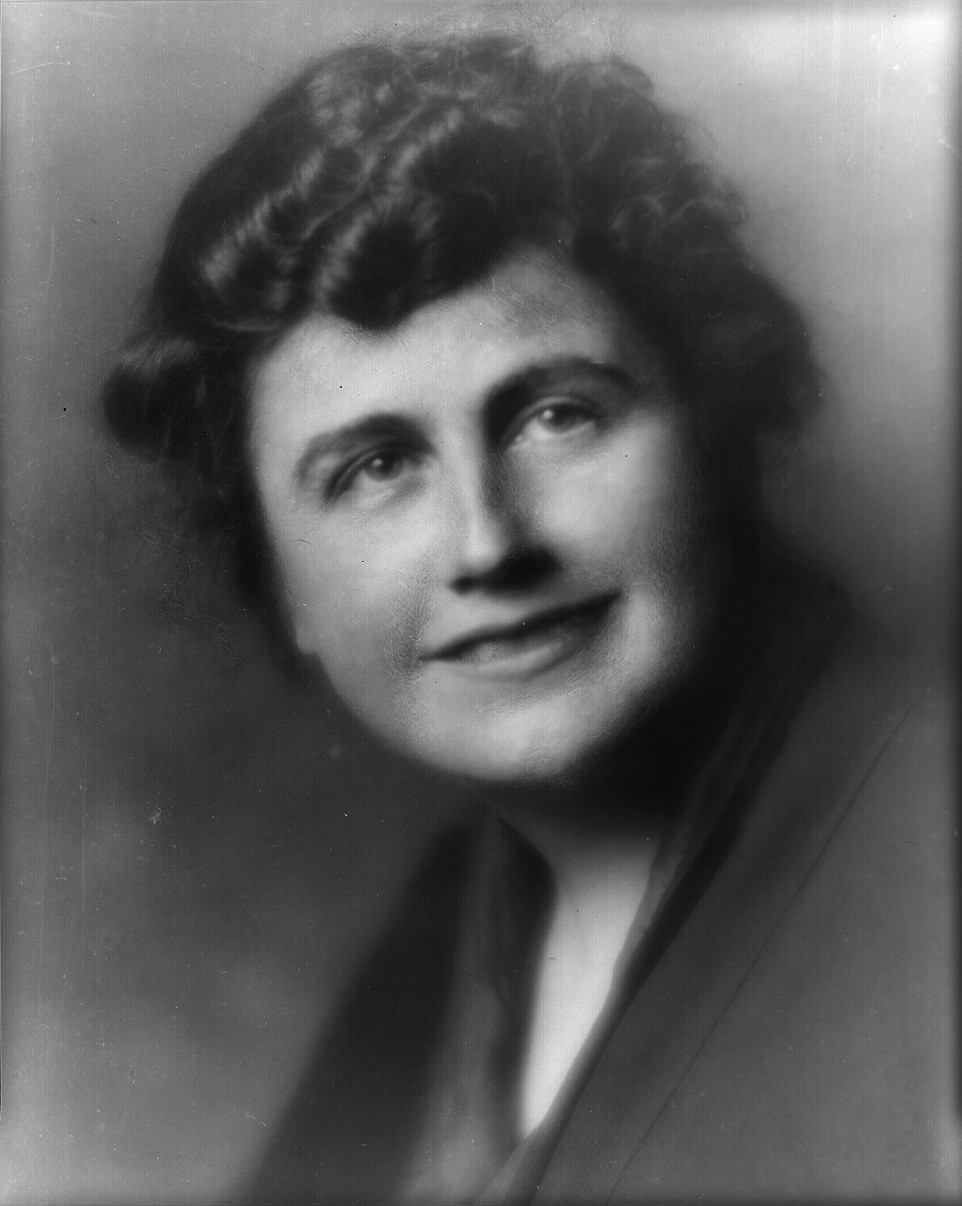
Edith Wilson (née Bolling, formerly Galt; October 15, 1872 – December 28, 1961) was First Lady of the United States from 1915 to 1921 as the second wife of President Woodrow Wilson. She married the widower Wilson in December 1915, during his first term as president. Edith Wilson played an influential role in President Wilson's administration following the severe stroke he suffered in October 1919. For the remainder of her husband's presidency, she managed the office of the president, a role she later described as a "stewardship", and determined which communications and matters of state were important enough to bring to the attention of the bedridden president.[1][2]

Key Information

Early life and education

[edit]
Edith Bolling in her youth

Edith Bolling was born October 15, 1872, in Wytheville, Virginia, to circuit court judge William Holcombe Bolling and his wife Sarah "Sallie" Spears (née White).[3] Her birthplace, the Bolling Home, is now a museum located in Wytheville's Historic District.[4]

Bolling was a descendant of the first settlers to arrive at the Virginia Colony. Through her father, she was also a descendant of Mataoka, better known as Pocahontas.[5][6][7] Her father was descended from Pocahontas's granddaughter Jane Rolfe, who married Robert Bolling,[8] a wealthy slave-owning planter and merchant.[9][10] Additionally, she was related, either by blood or through marriage, to Thomas Jefferson, Martha Washington, Letitia Tyler, and the Harrison family.[11]

Edith was the seventh of eleven children, two of whom died in infancy.[12] The Bollings were some of the oldest members of Virginia's slave-owning, planter elite prior to the American Civil War. After the war ended and slavery was abolished, Edith's father turned to the practice of law to support his family.[13] Unable to pay taxes on his extensive properties, and forced to give up the family's plantation seat, William Holcombe Bolling moved to Wytheville, where most of his children were born.[14]

The Bolling household was a large one, and Edith grew up within the confines of a sprawling, extended family. In addition to eight surviving siblings, Edith's grandmothers, aunts and cousins also lived in the Bolling household. Many of the women in Edith's family lost husbands during the war.[15] The Bollings had been staunch supporters of the Confederate States of America, were proud of their Southern planter heritage, and in early childhood, taught Edith in the post‑Civil War South's narrative of the Lost Cause. As was often the case among the planter elite, the Bollings justified slave ownership, saying that the slaves that they owned had been content with their lives as slaves and had little desire for freedom.[16]

Education

[edit]

Edith had little formal education. While her sisters were enrolled in local schools, she was taught how to read and write at home. Their paternal grandmother, Anne Wiggington Bolling, played a large role in her education. Crippled by a spinal cord injury, Grandmother Bolling was confined to bed. Edith had the responsibility to wash her clothing, turn her in bed at night, and look after her 26 canaries.[citation needed]

In turn, Grandmother Bolling oversaw Edith's education, teaching her reading, writing, basic math skills, speaking a hybrid language of French and English, and making dresses. She also instilled in Edith a tendency to make quick judgments and hold strong opinions, personality traits Edith would exhibit her entire life.[17] William Bolling read classic English literature aloud to his family at night, hired a tutor to teach Edith, and sometimes took her on his travels. The Bolling family attended church regularly, and Edith became a lifelong, practicing Episcopalian.[18]

When Edith was 15, her father enrolled her at Martha Washington College (a precursor of Emory and Henry College), a finishing school for girls in Abingdon, Virginia.[18] William Holcombe Bolling chose it for its excellent music program.[19] Edith proved to be an undisciplined, ill-prepared student. She was miserable there, complaining of the school's austerity: the food was poorly prepared, the rooms too cold, and the daily curriculum excessively rigorous, intimidating, and too strictly regimented.[20] Edith left after only one semester.[21] Two years later, Edith's father enrolled her in Powell's School for Girls in Richmond, Virginia. Years later, Edith noted that her time at Powell's was the happiest time of her life.[17] Unfortunately for Edith, the school closed at the end of the year after the headmaster suffered an accident that cost him his leg. Concerned about the cost of Edith's education, William Bolling refused to pay for any additional schooling, choosing instead to focus on educating her three brothers.[22]

First marriage

[edit]

While visiting her married sister in Washington, D.C., Edith met Norman Galt (1864–1908), a prominent jeweler of Galt & Bro. The couple married on April 30, 1896, and lived in the capital for the next 12 years. In 1903, she bore a son who lived only for a few days. The difficult birth left her unable to have more children.[23] In January 1908, Norman Galt died unexpectedly at the age of 43. Edith hired a manager to oversee his business, paid off his debts, and with the income left to her by her late husband, toured Europe.[24]

First Lady of the United States

[edit]

Marriage to Woodrow Wilson

[edit]
Wilson's official White House portrait

In March 1915, the widow Galt was introduced to recently widowed U.S. President Woodrow Wilson at the White House by Helen Woodrow Bones (1874–1951). Bones was the president's first cousin and served as the official White House hostess after the death of Wilson's wife, Ellen Wilson. Wilson took an instant liking to Galt and proposed soon after meeting her. However, the couple were troubled by rumors that Wilson had cheated on his wife with Galt[25] and even that Wilson and Galt had murdered the First Lady. Distressed at the effect such wild speculation could have on respect for the presidency and on his personal reputation, Wilson suggested that Edith Bolling Galt back out of their engagement. Instead, she insisted on postponing the wedding until the end of the official year of mourning for Ellen Axson Wilson.[26]

Wilson married Galt on December 18, 1915, at her home in Washington, D.C.[27] There were 40 guests. The groom's pastor, Reverend Dr. James H. Taylor of Central Presbyterian Church, and the bride's, Reverend Dr. Herbert Scott Smith of St. Margaret's Episcopal Church, Washington, D.C., officiated jointly at the ceremony.[citation needed][28]

Early role as First Lady

[edit]

As First Lady during World War I, Edith Bolling Wilson had relatively few opportunities to be a social hostess, especially after the United States' entry into the war in April 1917.[27] In wartime, she observed gasless Sundays, meatless Mondays, and wheatless Wednesdays to set an example for the federal rationing effort. Similarly, she set sheep to graze on the White House lawn rather than use manpower to mow it, and had their wool auctioned off for the benefit of the American Red Cross.[29] Additionally, Edith Wilson became the first First Lady to travel to Europe during her term. She visited Europe with her husband on two separate occasions, in 1918 and 1919, to visit troops and to sign the Treaty of Versailles. During this time, her presence amongst the female royalty of Europe helped to cement America's status as a world power and propelled the position of First Lady to an equivalent standing in international politics.[30] Meanwhile, Woodrow Wilson's health was failing under the stress of the presidency, and she devoted much effort to trying to keep him fit.[27]

Increased role after husband's stroke

[edit]
Woodrow Wilson's first posed photograph after his stroke. He was paralyzed on his left side, so Edith holds a document steady while he signs. June 1920.

Following his attendance at the Paris Peace Conference in 1919, Woodrow Wilson returned to the United States to campaign against strong non-interventionist sentiment for the ratification of the peace treaty and of the League of Nations Covenant. However, in October he suffered a stroke that left him bedridden and partially paralyzed.[31]

Edith Wilson and others in the President's inner circle (including his physician and a few close friends) hid the true extent of the president's illness and disability from the American public.[31][32][33] Edith also took over a number of routine duties and details of the executive branch of the government from the onset of Wilson's illness until he left office almost a year and a half later. From October 1919 to the end of Wilson's term on March 4, 1921, Edith, acting in a role she later described as a "stewardship", decided who and which communications and matters of state were important enough to bring to the bedridden president.[34] Edith Wilson later wrote:

I studied every paper sent from the different Secretaries or Senators and tried to digest and present in tabloid form the things that, despite my vigilance, had to go to the President. I, myself, never made a single decision regarding the disposition of public affairs. The only decision that was mine was what was important and what was not, and the very important decision of when to present matters to my husband.

Edith became the sole communication link between the President and his Cabinet. She required they send her all pressing matters, memos, correspondence, questions, and requests.[30]

Edith took her role very seriously, even successfully pushing for the removal of Secretary of State Robert Lansing after he conducted a series of Cabinet meetings without the President (or Edith herself) present.[35][36] She also refused to allow the British ambassador, Edward Grey, an opportunity to present his credentials to the president unless Grey dismissed an aide who was known to have made demeaning comments about her.[30][37] She assisted President Wilson in filling out paperwork, and would often add new notes or suggestions. She was made privy to classified information, and was entrusted with the responsibility of encoding and decoding encrypted messages.[38]

Analysis and criticism of role

[edit]

In My Memoir, published in 1939, Edith Wilson justified her self-proclaimed role of presidential "steward", arguing that her actions on behalf of Woodrow Wilson's presidency were sanctioned by Wilson's doctors; that they told her to do so for her husband's mental health.[39] Edith Wilson maintained that she was simply a vessel of information for President Wilson; however, others in the White House did not trust her. Some believed that the marriage between Edith and Woodrow was hasty and controversial. Others did not approve of the marriage because they believed that Woodrow and Edith had begun communicating with each other while Woodrow was still married to Ellen Wilson.[38]

In 1921, Joe Tumulty (Wilson's chief of staff) wrote: "No public man ever had a more devoted helpmate, and no wife a husband more dependent upon her sympathetic understanding of his problems ... Mrs. Wilson's strong physical constitution, combined with strength of character and purpose, has sustained her under a strain which must have wrecked most women."[40] In subsequent decades, however, scholars were far more critical in their assessment of Edith Wilson's tenure as First Lady. Phyllis Lee Levin concluded that the effectiveness of Woodrow Wilson's policies was unnecessarily hampered by his wife, "a woman of narrow views and formidable determination".[41] Judith Weaver opined that Edith Wilson underestimated her own role in Wilson's presidency. While she may not have made critical decisions, she did influence both domestic and international policy given her role as presidential gatekeeper.[42] Howard Markel, a medical historian, has taken issue with Edith Wilson's claim of a benign "stewardship". Markel has opined that Edith Wilson "was, essentially, the nation's chief executive until her husband's second term concluded in March of 1921".[43] While a widow of moderate education for her time, she nevertheless attempted to protect her husband and his legacy, if not the presidency, even if it meant exceeding her role as First Lady.[44] This period of her life was dramatized in the 2021 historical fiction podcast Edith! starring Rosamund Pike.[45][46]

Later years

[edit]

Upon leaving the White House in March 1921, Edith and Woodrow Wilson moved into a home on S Street NW in Washington, D.C. There she cared for the former president until his death on February 3, 1924. In subsequent years, she headed the Woman's National Democratic Club's board of governors when the club opened formally in 1924 and published her memoir in 1939.[47]

On December 8, 1941, the day after Japan's attack on Pearl Harbor, President Franklin D. Roosevelt asked Congress to declare war, taking pains to draw a link with Wilson's April 1917 declaration of war. Edith Wilson was present during Roosevelt's address to Congress.[48] On April 14, 1945, she attended Roosevelt's funeral at the White House.[49] She later attended the January 20, 1961 inauguration of President John F. Kennedy.[50]

Edith Wilson died of congestive heart failure on December 28, 1961, at age 89. She was to have been the guest of honor that day at the dedication ceremony for the Woodrow Wilson Bridge across the Potomac River between Maryland and Virginia, on what would have been her husband's 105th birthday.[51] She was buried next to her husband at the Washington National Cathedral.[52]

Legacy

[edit]
Edith Wilson with Eleanor Roosevelt in later life.

Wilson left her home to the National Trust for Historic Preservation, with a condition that it be made into a museum honoring her husband. The Woodrow Wilson House opened as a museum in 1964. To the Library of Congress, Mrs. Wilson donated first President Wilson's presidential papers in 1939, then his personal library in 1946.[53]

The Edith Bolling Wilson Birthplace Foundation & Museum in Wytheville, Virginia was established in 2008. The foundation has stabilized the first lady's birthplace and childhood home; it had been identified in May 2013 by Preservation Virginia as an Endangered Historic Site. The foundation's programs and exhibits aspire to build public awareness "honoring Mrs. Wilson's name, the contributions she made to this country, the institution of the presidency, and for the example she sets for women." The Foundation shares First Lady Mrs. Wilson's journey "From Wytheville to The White House".[citation needed]

In 2015, a former historic bank building in Wytheville, located on Main Street, was dedicated to the First Lady and bears her name. Adapted as the Bolling Wilson Hotel, it serves Wytheville residents and travelers alike.[54]

References

[edit]

Bibliography

[edit]
[edit]
Revisions and contributorsEdit on WikipediaRead on Wikipedia
from Grokipedia

Edith Bolling Wilson (October 15, 1872 – December 28, 1961) was the second wife of U.S. President Woodrow Wilson and served as First Lady from December 1915 to March 1921. Born in Wytheville, Virginia, to a family descended from early colonial figures including Pocahontas, she was previously married to Washington, D.C., jeweler Norman Galt from 1896 until his death in 1908. Widowed and childless after her first marriage, she wed the widowed Wilson shortly after the death of his first wife, Ellen, in 1914, becoming stepmother to his three daughters.
During , Wilson supported the war effort through public campaigns for fuel and food conservation, including planting a , and assisted in selling Liberty Bonds, though her public activities were constrained by traditional expectations of the role. The most defining aspect of her tenure occurred after President Wilson's severe on October 2, 1919, which left him partially paralyzed and cognitively impaired; she then implemented a "" system, personally screening visitors, correspondence, and decisions, relaying only select matters to her husband and conveying his purported responses, thereby managing without formally invoking constitutional succession mechanisms. This arrangement, which concealed the extent of Wilson's disability from the public and Cabinet for over a year, has generated enduring controversy, with some historians viewing it as a pragmatic shield against political chaos amid debates over the and the League of Nations, while others criticize it as an unconstitutional usurpation of power by an unelected spouse that prioritized personal loyalty over institutional norms. Following Wilson's death in 1924, Edith Wilson retreated from public life but actively preserved his legacy, co-founding the Foundation, protecting his presidential papers, and occasionally advising on historical matters until her own death at age 89. Her actions during the stewardship period remain a subject of debate regarding the boundaries of spousal influence in governance and the risks of executive incapacity without clear protocols, predating the 25th Amendment by decades.

Early Life and Family

Ancestry and Childhood in Virginia

Edith Bolling Wilson was born on October 15, 1872, in Wytheville, Virginia, to William Holcombe Bolling, a lawyer and circuit court judge (1837–1899), and Sallie Spiers White Bolling (1843–1925), who had married in 1860. She was the seventh of eleven children, including siblings Rolfe, Gertrude, Annie, William, Bertha, Charles, John, Richard, Julian, and Geraldine, of whom nine survived to adulthood. The family resided in a commercial building on Main Street in Wytheville after relocating there following the Civil War, sharing crowded quarters with extended relatives and household servants, some of whom were formerly enslaved individuals who remained with the family. The Bolling family traced its roots to prominent early Virginia settlers of English and Native American descent, with Edith's lineage including descent from through her marriage to and subsequent generations leading to the Bolling line via . Additional ancestral connections linked her to figures such as , , Letitia Tyler, members of the Harrison family, and , reflecting the intertwined elite networks of colonial and antebellum society. Edith's childhood unfolded in a Southern context marked by economic strain despite the family's aristocratic pretensions, with impoverished relatives contributing to a of up to twenty occupants and a challenging domestic environment often romanticized in later accounts. She received limited formal schooling in her early years, instead pursuing home-based studies under the guidance of her grandmother, Anne Wigginton Bolling, until approximately , fostering amid the familial demands of caring for younger siblings and managing duties.

Family Dynamics and Socioeconomic Context

Edith Bolling was the seventh of eleven children born to William Holcombe Bolling and Sarah "Sallie" Spiers White Bolling, with nine siblings surviving to adulthood. Her father, born in 1837, trained as a lawyer and attained the position of circuit court judge for Wythe and Pulaski counties in 1870, shortly before her birth on October 15, 1872, in Wytheville, Virginia; this role offered professional prominence but limited financial security in the postwar South. Her mother, born in 1843, managed the household, which encompassed parents, ten children, grandmothers, extended relatives, occasional boarders, dogs, and 26 canaries, fostering an environment of multigenerational interdependence and domestic bustle characteristic of large Southern families adapting to Reconstruction-era constraints. The Bollings traced descent from Virginia's colonial , including ties to early settlers, yet the (1861–1865) devastated their economic standing by destroying the family's Bedford County plantation, where enslaved labor had previously supported operations. Relocation to Wytheville reflected broader postwar upheaval, as and agrarian decline forced many aristocratic lineages into judicial, mercantile, or modest pursuits amid dominance and regional poverty. William Bolling's judgeship mitigated total destitution, enabling the rearing of a large brood, though the embodied the and resilience demanded by Virginia's stalled , where former elites grappled with lost wealth and social reconfiguration. Family interactions centered on communal support, with Edith's position amid numerous siblings likely instilling habits of and kin , though specific relational tensions remain undocumented in primary accounts; the emphasis on paternal authority and maternal homemaking aligned with prevailing Southern Presbyterian values upheld by the Bollings. This context shaped her upbringing in a milieu of , where aristocratic heritage coexisted with practical necessities like boarding to supplement income.

Education and Early Influences

Formal Schooling and Self-Education

Edith Bolling received her early instruction at home under the tutelage of her paternal grandmother, Anne Wigginton Bolling, who taught her reading, writing, and other basics until October 1887. This reflected the family's modest financial circumstances and the era's norms for girls in rural , where resources prioritized sons' advancement over daughters' extended schooling. In October 1887, at age 15, Bolling enrolled at Martha Washington College, a finishing school for young women in Abingdon, Virginia, where she focused on music studies. She departed after one semester—or possibly one year—due to homesickness, illness, and inadequate facilities at the institution. Later, in autumn 1889 at age 17, she attended the Richmond Female Seminary (also known as Powell's School) in Richmond, Virginia, for additional coursework, but this ended abruptly in spring 1890 when the seminary closed following an injury to its founder. With the seminary's closure, her parents ceased funding further formal education, redirecting efforts toward her brothers' opportunities amid family financial constraints. Historical accounts indicate no documented pursuits of structured self-education, such as independent reading programs or autodidactic studies, in her youth; her knowledge acquisition remained largely confined to familial and domestic spheres typical of Southern women of her class and time.

Exposure to Southern Culture and Values

Edith Bolling was born on October 15, 1872, in , a small Appalachian town emblematic of post-Civil War Southern society, where she was raised as the seventh of eleven children in a prominent family descended from early colonial settlers, including claimed ties to , , , and . The Bolling household occupied a commercial building on , accommodating up to twenty people, including extended relatives and emancipated Black individuals who remained as loyal servants, illustrating the paternalistic racial and class hierarchies that persisted in the Jim Crow-era South despite emancipation. This multigenerational, servant-dependent environment fostered values of familial interdependence, , and white Southern identity rooted in antebellum traditions and the "Lost Cause" narrative of Confederate heritage. Her father's role as a judge reinforced respect for legal authority and community order, while the family's aristocratic self-conception—emphasizing lineage over economic constraints—instilled a sense of cultural superiority and regional pride, evident in Edith's later delight in her Southern roots. Formal was minimal and home-centered until age fifteen, when she studied briefly under her grandmother Wigginton Bolling before short, unsuccessful stints at Martha Washington College in 1887 and Richmond Female Seminary in 1889, reflecting a preference for informal, family-guided learning over institutionalized Northern models and underscoring traditional Southern emphases on domesticity, religiosity, and gendered roles within a hierarchical society. This upbringing in a resource-scarce yet lineage-proud setting shaped resilient, conservative values, including absorption of prevailing Jim Crow prejudices against , which aligned with the era's systemic racial realism rather than egalitarian ideals.

First Marriage and Independence

Marriage to Norman Galt and Family Life

Edith Bolling married Norman Galt, owner of the established jewelry firm Galt & Bro., on April 30, 1896, at Episcopal Church in . The couple had met four years earlier while Edith visited her married sister in the capital, where Galt, born in 1864, operated his family business founded in 1802. Following the wedding, the Galts resided in , for the next twelve years, with Norman assuming sole ownership of the jewelry enterprise shortly after their union. In September 1903, Edith gave birth to a son who died within three days, leaving the couple childless. The marriage provided Edith with a stable, affluent domestic life amid the city's social circles, though details of their daily routines remain sparse in contemporary accounts. Norman Galt died unexpectedly of uremic poisoning on January 28, 1908, at age 43, ending the twelve-year partnership.

Widowhood, Business Management, and Financial Autonomy

Following the sudden death of her husband, Norman Galt, from a rare liver ailment on January 28, 1908, Edith Galt inherited ownership of the family's established Washington, D.C., jewelry firm, Galt & Bro., along with its significant debts. Determined to maintain the business, Galt appointed a competent manager, Henry C. Galt (no relation), to oversee daily operations while she directed overall strategy, systematically paying off the debts and steering the firm back to profitability through shrewd oversight. Under her stewardship from to , the business thrived, providing her with substantial income that afforded rare for a widow of her era; this enabled extensive travels to —visiting , , and multiple times—and solidified her status among Washington, D.C.'s social elite without reliance on family support. By the time of her courtship with , Galt had sold the firm for a handsome profit, further securing her economic self-sufficiency and allowing her to enter the marriage on .

Courtship and Second Marriage

Meeting Woodrow Wilson and Rapid Romance

Edith Bolling Galt, a 42-year-old who had successfully managed her late husband Norman Galt's jewelry store in , since his death in 1908, was introduced to President in March 1915 by his first cousin Helen Woodrow Bones. Bones, who had assumed hostess duties at the following the death of Wilson's first wife on August 6, 1914, facilitated the meeting at a social gathering in the capital. Wilson, then 58 and seeking companionship after his bereavement, found immediate rapport with the poised and attractive Galt, leading to her first dinner invitation on March 23, 1915. The courtship progressed swiftly, marked by frequent invitations to the and an exchange of affectionate letters from Wilson expressing his admiration and growing affection. On May 4, 1915, scarcely two months after their initial , Wilson proposed , an advance that surprised Galt given their brief acquaintance and his public position. She initially declined, citing reservations about the suitability of for the president amid potential opposition from his daughters and concerns over public propriety following his recent widowhood. Despite this, their interactions continued, with Wilson persisting in his suit through correspondence and personal appeals. By October 6, 1915, after a spanning approximately seven months, Galt accepted Wilson's renewed proposal, and their engagement was publicly announced that day. The couple wed on December 18, 1915, in a private ceremony at Galt's Washington home, attended only by close family and friends, with Presbyterian minister Dr. James H. Preston officiating. At the time, Wilson was 59 and Galt 43; the expedited timeline of their romance, while rooted in mutual attraction, elicited some contemporary criticism for its perceived hastiness in the context of Wilson's presidential duties and prior loss.

Wedding, Public Scrutiny, and Integration into Presidential Circle

Edith Bolling Galt married President on December 18, 1915, in a private ceremony at her residence on 20th Street in The event, attended by about 50 friends and relatives, was officiated by Reverend Dr. Cary T. Grayson, Wilson's physician, and marked the first time a sitting U.S. president wed while in office. Galt, aged 43, had been widowed since 1908, while Wilson, 59, had lost his first wife, , to on August 6, 1914. Their courtship, initiated after a March 1915 introduction by Helen Woodrow Bones, Wilson's cousin, progressed rapidly, with an engagement announced on October 6, 1915. The marriage drew immediate public and media scrutiny, fueled by its haste—less than 17 months after Ellen Wilson's death—and the unconventional optics of a president's amid national duties. Newspapers disseminated rumors of scandalous affairs involving Wilson and speculated that Galt's influence may have hastened Ellen's demise, portraying the union as unseemly or opportunistic. Critics within political circles and the press questioned Wilson's judgment, with some viewing the whirlwind romance as a distraction from pressing issues like the escalating European war; however, broader public sentiment proved surprisingly supportive, accepting the couple's happiness despite initial controversy. Following the wedding, Edith Wilson integrated swiftly into the presidential circle, assuming the First Lady's social duties with a focus on entertaining and wartime conservation efforts, such as promoting food rationing. Unlike her predecessor, she engaged deeply in Wilson's political orbit, serving as a confidante who screened correspondence and advised on appointments, leveraging her from managing Galt's jewelry firm to navigate Washington society. This role, while enhancing her influence, invited ongoing observation from cabinet members and aides, who noted her assertive presence in discussions prior to Wilson's 1919 stroke. Her transition solidified the couple's public image as partners, though it foreshadowed debates over her advisory capacity in governance.

Initial Role as First Lady

Social Responsibilities and World War I Contributions

Upon the ' entry into in April 1917, Edith Wilson significantly reduced White House social entertaining to align with national austerity, eliminating public tours, the Easter Egg Roll, and New Year's Day receptions while minimizing formal dinners. She hired a social secretary to handle these constrained duties, which included occasional official appearances at balls, banquets, and theater events. Wartime conditions limited opportunities for elaborate hosting, shifting emphasis from traditional first lady protocol to practical support for the war. Wilson contributed to food conservation as the first woman to sign the U.S. Food Administration pledge, exemplifying personal restraint to free resources for troops. At the , she enforced "Hooverizing" by instituting meatless Mondays and wheatless Wednesdays, planted a , and grazed sheep on the grounds to eliminate mowing labor and fuel costs; the sheep's wool was auctioned during the war, generating about $50,000 for relief efforts. In Red Cross volunteering, she worked afternoon shifts in uniform at Union Station, distributing sandwiches and coffee to departing servicemen. She knitted trench helmets, sewed pajamas, pillowcases, and blankets for soldiers, promoted sales to finance the war, and replied to soldiers' letters, positioning herself as a model for women's home-front participation. These actions aligned with broader federal campaigns to mobilize civilian resources, though her role remained subordinate to the president's oversight.

Personal Influence on Wilson Pre-Stroke and Domestic Policies

Edith Bolling Wilson exerted significant personal influence on President from their courtship in March 1915 through his October 1919 stroke, serving as his closest confidante and advisor on both personal and political matters. During their engagement, Wilson shared state secrets and discussed cabinet frustrations with her, fostering a dynamic where she provided emotional support and informal counsel that shaped his decision-making. Following their marriage on December 18, 1915, this influence deepened; Wilson relied on her to review documents, attend cabinet meetings, and manage his schedule, effectively positioning her as a gatekeeper who filtered influences and advised on congressional relations. In domestic affairs, Edith Wilson's input manifested through her advocacy for personnel changes and her role in wartime mobilization efforts. Early in their relationship, she privately urged Wilson to remove due to his pacifist stance amid escalating tensions with , contributing to Bryan's resignation on June 8, 1915, before their marriage but during active courtship discussions. As , she promoted domestic conservation measures during , instituting "meatless Mondays" and "wheatless Wednesdays" at the in to encourage national compliance with food , and auctioning wool from sheep grazed on the , raising approximately $50,000 for the Cross. These initiatives supported the administration's domestic policy of voluntary resource conservation to bolster the without formal legislation. On , a key domestic issue, Edith Wilson opposed federal enfranchisement, favoring state-level implementation, which aligned with and reinforced Wilson's initially cautious public stance despite private pressures from suffragists. Her views, rooted in traditional gender roles, likely delayed Wilson's stronger endorsement; he did not address in favor of the amendment until January 1918, after the 1917 arrests of suffragists picketing the —an action he authorized—amid ongoing protests. This personal opposition did not alter the eventual passage of the 19th Amendment in 1919, but it exemplifies her indirect sway over the timing of domestic shifts. Overall, while not authoring legislation, her pre-stroke role emphasized advisory influence on implementation and personnel, prioritizing stability and alignment with Wilson's progressive yet measured domestic agenda.

Response to Wilson's Stroke

The October 1919 Stroke and Medical Cover-Up

On October 2, 1919, President suffered a severe ischemic in the bathroom of his private quarters, shortly after returning from a strenuous speaking tour promoting ratification of the and U.S. entry into the League of Nations. The episode followed a collapse due to a severe headache during a speech in , on September 25, 1919, which had already prompted cancellation of the remaining tour dates. Immediate symptoms included weakness () in the left hand and leg, rapidly progressing to (), accompanied by a deficit in the left ; speech remained initially intact, with no evidence of hemorrhage. Dr. Cary T. Grayson, Wilson's personal physician, promptly diagnosed the event as an ischemic but withheld the full extent of its debilitating nature from the public, , and Cabinet members. Official bulletins minimized the condition as "nervous exhaustion" or a temporary digestive ailment, avoiding any mention of or incapacity. Grayson refused to certify Wilson's formally, thereby blocking discussions of or succession under prevailing constitutional interpretations, as no mechanism like the later 25th Amendment existed. Edith Wilson, informed immediately of the stroke's gravity, collaborated with Grayson to initiate a aimed at concealing Wilson's incapacitation to preserve presidential continuity and his policy priorities, particularly League ratification. From mid-October to mid-November 1919, she restricted access to Wilson to only family, physicians, and minimal staff, effectively isolating him while controlling incoming information. In one instance during a December 1919 visit by a delegation, Edith concealed Wilson's paralyzed left arm beneath a bedsheet and arranged his bed in shadowed lighting to obscure visible impairments. The persisted despite Wilson's profound debility; he remained bedridden, required assistance for daily functions, and struggled to perform basic tasks like signing documents, rendering him unable to fulfill presidential duties independently until the end of his term on March 4, 1921. justified her gatekeeping in her as mere filtration of urgent matters into simplified summaries—termed "tabloid form"—to prevent overtaxing Wilson, insisting she made no independent policy decisions. This approach, however, delayed broader awareness of the crisis, with partial press revelations emerging only by February 1920.

Establishment of Gatekeeping Mechanisms

Following Woodrow Wilson's debilitating on , 1919, Edith Wilson, in consultation with his physician Cary Grayson, promptly implemented strict protocols to restrict access to the president and filter incoming information, effectively positioning herself as the primary intermediary between Wilson and the executive branch. Grayson advised her to prioritize only the most critical matters for Wilson's attention, thereby initiating a system where she reviewed all correspondence, memoranda, and visitor requests before any reached the president, who was largely confined to the bedroom due to partial paralysis and cognitive impairments. This mechanism excluded most cabinet members and congressional leaders from direct contact, with Edith determining admissibility based on perceived necessity, often deferring decisions or relaying simplified summaries to Wilson when consultation occurred. Edith coordinated with a small cadre of trusted aides, including Secretary Joseph Tumulty and Grayson, to manage the flow of state affairs, establishing routines such as daily briefings limited to vetted items and the redirection of routine administrative tasks to department heads without presidential input. She personally screened documents in the presidential study, prioritizing issues aligned with Wilson's pre-stroke priorities like the League of Nations while shielding him from contentious or voluminous materials that might exacerbate his condition, a process she later described in her memoir as a protective "" to preserve governmental continuity. This gatekeeping extended to public communications, where official announcements minimized the stroke's severity—labeling it "nervous exhaustion"—to prevent demands for or invocation of succession under Article II, Section 1 of the Constitution. The mechanisms formalized over subsequent weeks, with Edith assuming authority to veto meetings and endorse routine approvals in Wilson's name, relying on her intimate knowledge of his views to simulate continuity while insulating him from stressors; for instance, she barred opponents of the Versailles from access, influencing the treaty's ratification failure by curating the information Wilson received on legislative opposition. Historical analyses note that this selective filtering, while enabling short-term stability, distorted policy deliberation by bypassing broader advisory input, as evidenced by cabinet frustrations documented in contemporary diaries. These protocols persisted until Wilson's partial recovery in early 1920, though Edith retained veto power over access through the end of his term on March 4, 1921.

Stewardship of the Presidency

Filtering Information and Decision Protocols

Following Woodrow Wilson's on October 2, 1919, which left him partially paralyzed and cognitively impaired, Edith Wilson instituted rigorous protocols for filtering information to and from the president, positioning herself as the central intermediary for all executive matters. She screened incoming correspondence, memos, and visitor requests, assessing their priority based on her judgment of national urgency and Wilson's fragile health, often excluding cabinet members and congressional leaders from direct access until January 1920 for visitors and April 1920 for formal cabinet meetings. This gatekeeping extended to simplifying policy documents and issues into brief summaries or yes/no queries suitable for Wilson's limited capacity, ensuring only select items reached him for review via nods, whispers, or signatures, while routine decisions were deferred or handled through her relayed approvals. Consultations under these protocols were narrowly focused on medical advice from Wilson's physician, Dr. Cary T. Grayson, to avoid exacerbating his condition, rather than seeking input from the broader administration, which Edith viewed as potentially destabilizing. She maintained that her role was stewardship, not substitution, claiming in her 1939 memoir, My Memoir, that "I myself never made a single decision regarding the disposition of public affairs … The only decision that was mine was … when to present matters to my husband." Historians, however, assess this as an , noting that her selective filtering effectively shaped executive outputs by determining what Wilson encountered and how it was framed, sustaining governance for the remaining 17 months of his term without invoking constitutional succession mechanisms. These protocols prioritized presidential stability and Wilson's recovery over immediate transparency, allowing the administration to function on for non-crisis issues while blocking challenges to his authority, such as resignation pressures from political opponents. By centralizing , prevented the full revelation of Wilson's incapacity, a approach she defended as protective necessity amid the post-World War I political climate.

Key Administrative and Policy Continuations

Edith Wilson ensured administrative continuity by deferring routine to the cabinet and departmental heads, who operated under Woodrow Wilson's established directives while she vetted incoming matters for presidential review. This "stewardship" approach, as she termed it, involved presenting only high-priority or aligned issues to Wilson, allowing the bureaucracy to handle demobilization of forces, postal operations, and federal budgeting without interruption. For legislative actions, Wilson, with Edith's assistance in guiding his impaired hand, signed or vetoed bills to maintain governance, including his veto of the on October 27, 1919—25 days post-stroke—which sought to enforce the Eighteenth Amendment on , though overrode it on October 28, enacting national alcohol bans effective January 1920. Other routine measures, such as appropriations for ongoing federal programs, proceeded via proxy signatures, preventing a vacuum in essential services. In , the administration upheld Wilson's prior commitments, including non-intervention in the and refusal to recognize the Bolshevik regime, as articulated by acting Frank Polk and later confirmed by appointee in 1920 communications. This stance reflected continuity in isolationist-leaning internationalism, with troop withdrawals from advancing per pre-stroke plans, though the unyielding opposition to Senate reservations on the —filtered through Edith's access controls—contributed to its defeats on November 19, 1919, and March 19, 1920. Domestically, policy inertia preserved progressive-era reforms like antitrust enforcement and labor mediation, with the cabinet addressing post-war strikes and economic transitions absent new presidential initiatives. Edith's consultations with select advisors, such as Albert Burleson, prioritized stability over innovation, averting cabinet resignations en masse despite tensions over Wilson's incapacity.

Controversies and Criticisms

Allegations of De Facto Presidency and Constitutional Violations

Critics of Edith Wilson's role following her husband's , 1919, stroke alleged that she exercised presidential authority by controlling access to , filtering incoming information, and simplifying policy matters for his limited review, thereby effectively governing the executive branch for the remaining 17 months of his term. This arrangement, which Edith termed a "," was accused of transforming her into an unelected surrogate president, with decisions on pardons, appointments, and foreign correspondence passing through her judgment before reaching the incapacitated Wilson. Prominent detractors, including Senator (R-N.M.), publicly condemned the setup as a "petticoat government," declaring on the Senate floor that "Wilson is not acting. Mrs. Wilson is president," implying an unconstitutional usurpation of by a private citizen. Rumors intensified claims that personally signed official documents, though primary accounts indicate she instead prepared digests of issues and obtained Wilson's nods or signatures where feasible, without evidence of outright . These allegations gained traction amid the League of Nations debate, where opponents attributed stalled U.S. to Wilson's impaired state and Edith's selective mediation, which prioritized his isolation over broader consultation. Constitutionally, the absence of a defined mechanism for presidential disability—unlike the later Twenty-fifth Amendment, ratified in 1967 partly in response to this episode—left succession dependent on informal presidential resignation or death, with Vice President sidelined and uninformed of the full extent of Wilson's incapacity. Detractors argued this violated Article II, Section 1, which vests "the executive Power" solely in the president, by delegating core duties to an unaccountable figure without congressional or vice-presidential involvement, potentially breaching the and oath to "faithfully execute" the office. While no formal or legal challenge materialized, the controversy highlighted vulnerabilities in the pre-25th Amendment framework, with some legal scholars later positing that such de facto delegation could warrant accountability akin to that for executive officers.

Specific Criticisms: Deception, Policy Impacts, and Succession Evasion

Edith Wilson's role in concealing the extent of President Woodrow Wilson's incapacitation following his October 2, 1919, drew sharp rebukes for deliberate , as she restricted access to the president and misrepresented his condition to Cabinet members, , and the public. By controlling who could see Wilson and filtering communications, she fostered an illusion of his active , with physician Cary Grayson issuing misleading bulletins that downplayed the stroke's severity, such as claiming on October 3, 1919, that Wilson had merely experienced "digestive upset." Critics, including Senator , accused her of orchestrating a "petticoat government," arguing that this secrecy undermined public trust and democratic during a period of national recovery from . Historical analyses contend that this cover-up persisted for approximately 18 months, until Wilson's term ended in March 1921, preventing informed oversight by elected officials and exacerbating partisan gridlock over the . Her influence extended to substantive policy decisions, where she effectively vetoed or prioritized matters based on her own judgments, often without Wilson's full comprehension due to his cognitive impairments, which included partial paralysis and impaired speech. Edith reviewed all incoming documents, deciding unilaterally whether to present them to Wilson or dismiss them outright; for instance, she blocked several Cabinet nominees and stalled diplomatic initiatives she deemed unwise, such as concessions on of Nations covenant that might have garnered Senate support. This "," as she termed it in her 1935 memoir My Memoir, resulted in policy inertia, notably contributing to the 's rejection of the on November 19, 1919, and March 19, 1920, as Wilson's intransigence—filtered through her gatekeeping—foreclosed compromises during critical debates. Detractors, including contemporaries in , argued that her interventions introduced personal biases, such as a reported sympathy for Southern perspectives on , into federal , potentially skewing responses to domestic issues like postwar labor strikes and economic readjustment from 1919 to 1921. The evasion of presidential succession norms represented a profound constitutional lapse, as Edith and Wilson's inner circle rebuffed calls for Vice President to assume acting powers under Article II precedents, despite Wilson's evident inability to discharge duties after left him and mentally diminished for months. No formal mechanism like the later 25th Amendment existed, but critics highlighted the failure to invoke Cabinet certification of incapacity or prompt resignation, with Wilson clinging to office until January 1921 amid rumors that forced partial disclosures, such as Grayson's November admission of a "serious" condition. This reticence, motivated by loyalty and fear of legacy tarnishment, evaded succession protocols outlined in the of 1886, prioritizing personal control over institutional continuity and risking national stability during events like the and coal miners' strike. Historians have faulted this approach for establishing a of executive opacity, arguing it subverted the framers' for responsive and exposed vulnerabilities in unchecked spousal authority absent clear legal guardrails.

Defenses: Stability Maintenance and Spousal Loyalty

Edith Wilson's defenders argue that her stewardship from October 1919 to March 1921 preserved governmental continuity amid a constitutional vacuum, as the U.S. Constitution lacked provisions for presidential incapacity until the 25th Amendment's ratification in 1967. By filtering correspondence, visitors, and decisions, she prevented a disruptive handover to , whom contemporaries viewed as unreliable due to personal habits and reluctance to assume power without explicit certification of Wilson's inability. This approach avoided potential policy reversals, such as on the , ensuring administrative functions proceeded without immediate crisis during Wilson's partial paralysis and cognitive impairments. Proponents emphasize that her gatekeeping maintained stability by staging controlled demonstrations of Wilson's viability, such as the December 5, 1919, meeting with Senators Albert Fall and Gilbert Hitchcock, where she concealed his left-side with a blanket to counter incapacity rumors. Historian Rebecca Boggs Roberts, in her analysis of Wilson's post-stroke period, contends that Edith's management silenced critics and upheld executive legitimacy, framing it as pragmatic crisis aversion rather than overreach. Without her intervention, defenders posit, the risked or opportunistic shifts, as evidenced by the absence of congressional action to invoke succession protocols. Her actions stemmed from spousal loyalty, prioritizing Wilson's recovery and legacy over personal ambition, as she filtered stressors to shield his fragile health while consulting him on select matters. Edith rejected "petticoat government" accusations by senators, asserting in response that her role was solely to safeguard the presidency's integrity until her husband's return to duty, resuming a conventional position thereafter. In her 1938 memoir, she maintained that Wilson retained ultimate responsibility, underscoring a duty-bound rather than usurpation. This perspective aligns with views portraying her as a devoted , driven by marital commitment amid medical secrecy from physicians like Cary Grayson, who supported limited exposure to aid recuperation.

Post-Presidency and Widowhood

Withdrawal from Public Life and Estate Management

Following Woodrow Wilson's death on February 3, 1924, Edith Wilson largely withdrew from public engagements, retreating to a private existence at their home on S Street in , where the couple had resided since March 4, 1921. She declined overtures for greater political involvement, such as a vice-presidential nomination in , prioritizing seclusion over active roles. Edith Wilson managed the S Street property—purchased for $150,000 in 1921—with assistance from longtime staff, including butler Isaac Scott and his wife Mary, who handled household duties into the . She preserved the Georgian Revival mansion and its contents, including mementos from Wilson's career, largely unaltered to reflect his post-presidential life, avoiding modifications beyond practical updates like an elevator installation. In handling broader estate matters, Edith Wilson donated Wilson's presidential papers to the on January 11, 1939, and his personal library in 1946, ensuring archival preservation. She also sold the Galt & Bro. Jewelers business, inherited from her first husband Norman Galt upon his 1908 death and previously managed by her, to its employees in 1934. Upon her own death on December 28, 1961, she bequeathed the fully furnished S Street home to the , which opened it as the President House in 1963. This act secured the property as a static memorial, reflecting her commitment to maintaining Wilson's domestic legacy without public fanfare.

Defense of Wilson's Legacy and Memoir Publication

Edith Wilson devoted the years following 's death on February 3, 1924, to safeguarding his presidential legacy, including curating public images of him and countering narratives from former administration officials such as and Colonel Edward House, whose memoirs portrayed Wilson as isolated or ineffective. She maintained oversight of Wilson's papers and artifacts, ensuring that depictions aligned with her view of him as a principled leader committed to ideals like the League of Nations, while limiting access that might reveal vulnerabilities from his 1919 stroke. This protective stance extended to her social engagements in , where she hosted figures including incoming first ladies and advised on Wilson-related commemorations, such as her presence at the in 1961 for the signing of legislation establishing the Woodrow Wilson Memorial Commission. In 1938, Wilson published My Memoir with , framing it as both a personal and a defense of her husband's administration, dedicated "To my Husband, , who helped me build... a temple wherein are enshrined memories of his great spirit." The book explicitly justified her post-stroke role from October 1919 to March 1921 as a temporary "" or "presidential filter," in which she screened visitors, prioritized urgent matters, and simplified complex issues for Wilson's review without usurping executive authority or formulating policy herself. She argued this approach aligned decisions with Wilson's preexisting preferences, drawing on his physicians' assessments of partial paralysis and cognitive limitations to prioritize his recovery over full disclosure, which she claimed would have exacerbated his condition. Wilson contended that her interventions averted a destabilizing power transition under the Constitution's disability clause, which might have elevated —whom she and Wilson viewed as unprepared—and risked derailing ongoing initiatives like ratification efforts amid post-World War I tensions. By invoking traditional notions of spousal loyalty and female moral guardianship, she positioned her actions as an ethical imperative to sustain governmental functionality and shield Wilson's vision from political adversaries, including opponents like . The memoir thus reframed potential overreach as pragmatic continuity, emphasizing that no major decisions deviated from Wilson's intent and that stability during the period prevented broader national disruption.

Death and Historical Reassessments

Final Years, Death, and Burial

Following Woodrow Wilson's death on February 3, 1924, Edith Wilson resided in their , home at 2340 S Street NW, where she maintained a low public profile while safeguarding her husband's papers and reputation against critics. She hosted occasional gatherings for diplomats and political figures, preserving social connections in the capital's elite circles, and traveled to before to participate in commemorations of Wilson's advocacy. In 1939, she published her memoir, My Memoir, which detailed her "stewardship" during Wilson's incapacity and emphasized her actions as protective rather than power-seeking. Upon her death, she bequeathed the S Street residence to the as a to Wilson, stipulating its use to honor his legacy. Edith Wilson died on December 28, 1961, at her Washington home from , at the age of 89; that day marked the anniversary of Woodrow Wilson's birth, and she had been scheduled as guest of honor at a related dedication ceremony. Her funeral service occurred at , after which she was interred there in a vault beneath the floor of Wilson Bay in the , adjacent to her husband's sarcophagus—the only presidential couple buried in

Modern Scholarly Views and Recent Biographies

Recent biographies portray Edith Wilson as a multifaceted figure whose influence extended beyond her controversial "" following Woodrow Wilson's October 2, 1919 stroke, emphasizing her pre-White House independence as a jewelry owner and her strategic navigation of Washington society. In Untold Power: The Fascinating Rise and Complex Legacy of Edith Wilson (2023), Rebecca Boggs Roberts details Wilson's ascent from Appalachian roots to political insider, arguing that her gatekeeping role preserved executive functionality during 17 months of presidential incapacity, though it involved concealing the stroke's severity from Cabinet members and . Roberts highlights specific instances, such as Wilson's veto of certain pardons and her filtering of correspondence, as evidence of discretionary power exercised without formal authority. Historians debate whether this constituted de facto presidency or mere spousal intervention, with evidence from physician Cary Grayson indicating Wilson decided which matters reached the president and simplified documents for his impaired review, effectively shaping outcomes on domestic and . William Hazelgrove's Madam President: The Secret Presidency of Edith Wilson (2016) asserts she functioned as acting chief executive, managing schedules, signing routine documents in Wilson's name, and influencing appointments amid the absence of succession protocols before the 25th Amendment. Modern analyses, including Roberts', critique the opacity that delayed recovery transparency and contributed to legislative gridlock, such as the Senate's rejection of the on November 19, 1919, yet credit her with averting immediate crisis through continuity. Scholarly consensus views Wilson neither as outright usurper nor passive aide, but as a pragmatic operator whose actions reflected era-specific norms of marital loyalty and institutional fragility, influencing later discussions on presidential . Recent works shift from early 20th-century —labeling her actions a "petticoat government"—to recognition of her role in evolving precedents, though without endorsing claims of independent policymaking unsupported by primary records.

References

Add your contribution
Related Hubs
User Avatar
No comments yet.