


Community hub
Recent from talks
Contribute something
Nothing was collected or created yet.
Açaí palm
View on Wikipedia
| Açaí palm | |
|---|---|

| |
| Açaí palms on the Rio Negro in Brazil | |
Scientific classification 
| |
| Kingdom: | Plantae |
| Clade: | Tracheophytes |
| Clade: | Angiosperms |
| Clade: | Monocots |
| Clade: | Commelinids |
| Order: | Arecales |
| Family: | Arecaceae |
| Genus: | Euterpe |
| Species: | E. oleracea
|
| Binomial name | |
| Euterpe oleracea | |
| Synonyms[1] | |
| |
The açaí palm (/əˈsaɪ.iː/; Portuguese: [asaˈi] ⓘ, from Nheengatu asai),[2] Euterpe oleracea, is a species of palm tree (Arecaceae) cultivated for its fruit (açaí berries, or simply açaí), hearts of palm (a vegetable), leaves, and trunk wood. Global demand for the fruit has expanded rapidly in the 21st century, and the tree is cultivated for that purpose primarily.
The species is native to eastern Amazonia, especially in Brazil, mainly in swamps and floodplains. Açaí palms are tall, slender trees growing to more than 25 m (82 ft) tall, with pinnate leaves up to 3 m (9.8 ft) long.[3] The fruit is small, round, and black-purple in color. The fruit became a staple food in floodplain areas around the 18th century,[4][5] but its consumption in urban areas and promotion as a health food only began in the mid-1990s along with the popularization of other Amazonian fruits outside the region.[5]
Name
[edit]The folk etymology says that chief Itaqui ordered all newborns put to death owing to a period of famine. When his own daughter gave birth and the child was sacrificed, she cried and died beneath a newly sprouted tree. The tree fed the tribe and was called açaí because that was the daughter's name (Iaçá) spelled backwards.[6]
Its specific epithet oleracea means "vegetable" in Latin and is a form of holeraceus (oleraceus).[7][8]
Fruit
[edit]
The fruit, commonly known as açaí or açaí berry,[9] is a small, round, black-purple drupe about 25 mm (1 in) in circumference, similar in appearance to a grape, but smaller and with less pulp and produced in branched panicles of 500 to 900 fruits. The exocarp of the ripe fruits is a deep purple color, or green, depending on the kind of açaí and its maturity. The mesocarp is pulpy and thin, with a consistent thickness of 1 mm (0.04 in) or less. It surrounds the voluminous and hard endocarp, which contains a single large seed about 7–10 mm (0.3–0.4 in) in diameter. The seed makes up about 60–80% of the fruit. The palm bears fruit year round but the berry cannot be harvested during the rainy season.
Cultivation
[edit]There are two harvests: one is normally between January and June, while the other is between August and December, producing larger volumes.[10] In 2022, the state of Pará, which accounts for 90% of Brazil's total açaí economy, produced 8,158 tonnes (17,985,000 lb) of açaí berries, generating US$26 million in revenue.[11] The 2022 production was 209 times greater than the volume produced in 2012.[11]
Child labor concern
[edit]Children as young as 13 years old are employed as laborers to harvest the fruit, using machetes to clear paths in the rainforest, and climbing trees up to 70 feet (21 m) tall without harnesses to collect berries in the canopy, a process leading to falls and severe injuries in some children.[11]
Cultivars
[edit]Few named cultivars exist, and varieties differ mostly in the nature of the fruit:
- Branco ("White") is a rare variety local to the Amazon estuary in which the berries do not change color, but remain green when ripe. This is believed to be due to a recessive gene since only about 30% of 'Branco' palm seeds mature to express this trait.[12]
- BRS-Pará was developed in 2004 by the Brazilian Agricultural Research Agency. The pulp yield ranges from 15% to 25%.[13]
- BRS Pai d'Égua is the newest cultivar developed by the Brazilian Agricultural Research Agency.[14]
Nutritional content
[edit]A powdered preparation of freeze-dried açaí fruit pulp and skin was reported to contain (per 100 g of dry powder) 534 calories, 52 g carbohydrates, 8 g protein, and 33 g total fat. The carbohydrate portion included 44 g of dietary fiber with low sugar levels, and the fat portion consisted of oleic acid (56% of total fats), palmitic acid (24%), and linoleic acid (13%).[15] The powder was also shown to contain (per 100 g) negligible vitamin C, 260 mg calcium, 4 mg iron, and 1002 IU vitamin A.[15]
Anthocyanins
[edit]Anthocyanins define the blue pigmentation of açaí and the antioxidant capacity of the plant's natural defense mechanisms[16] and in laboratory experiments in vitro.[17] Anthocyanins in açaí accounted for only about 10% of the overall antioxidant capacity in vitro.[18] The Linus Pauling Institute and European Food Safety Authority state that "the relative contribution of dietary flavonoids to (...) antioxidant function in vivo is likely to be very small or negligible".[19][20][21] Unlike in controlled test tube conditions, anthocyanins have been shown to be poorly conserved (less than 5%) in vivo, and most of what is absorbed exists as chemically modified metabolites destined for rapid excretion.[22][23]
A powdered preparation of freeze-dried açaí fruit pulp and skin was shown to contain cyanidin 3-O-glucoside and cyanidin 3-O-rutinoside as major anthocyanins (3.19 mg/g).[24] The powdered preparation was also reported to contain twelve flavonoid-like compounds, including homoorientin, orientin, taxifolin deoxyhexose, isovitexin, scoparin, as well as proanthocyanidins (12.89 mg/g), and low levels of resveratrol (1.1 μg/g).[15]
Marketing
[edit]In the 1980s, the Brazilian Gracie family marketed açaí as an energy drink or as crushed fruit served with granola and bananas; this demand led to the building of cottage industries and processing plants to pulp and freeze açaí for export.[25]
Scams
[edit]In the early 2000s, numerous companies advertised açaí products online, with many ads featuring counterfeit testimonials and products.[25][26][27] In 2009, açaí scams were ranked No. 1 on the U.S. Federal Trade Commission's "scams and rip-offs" list, so that by 2011 sales of açaí flattened as the fad waned.[25]
According to the Washington, D.C.–based Center for Science in the Public Interest thousands of consumers had trouble stopping recurrent charges on their credit cards when they canceled free trials of some açai-based products.[28][29] In 2003, American celebrity doctor Nicholas Perricone included açaí berries among "superfoods", but such extravagant marketing claims regarding açaí as miracle cures for everything from obesity to attention-deficit disorder were challenged in subsequent studies[which?].[30]
The FTC handed down an $80 million judgement in January 2012 against five companies that were marketing açaí berry supplements with fraudulent claims that their products promoted weight loss and prevented colon cancer. One company, Central Coast Nutraceuticals, was ordered to pay a $1.5 million settlement.[31][32]
Production
[edit]
Brazil is a major producer, particularly in the state of Pará, which alone in 2019 produced more than 1.2 million tons of açaí, an amount equal to 95% of Brazil's total.[33]
Chagas disease
[edit]Several studies have implicated açaí fruit in the transmission of Chagas disease.[34] This is a risk when unpasteurized uncleaned fruits are consumed, and has been found in the regions where the fruit is harvested.
Uses
[edit]As a food product
[edit]Fresh açaí has been consumed as a dietary staple in the region around the Amazon river delta for centuries.[25][35] The fruit is processed into pulp for supply to food product manufacturers or retailers, sold as frozen pulp, juice, or an ingredient in various products from beverages, including grain alcohol, smoothies, foods, cosmetics and supplements.[10] In Brazil, it is commonly eaten as açaí na tigela.
In a study of three traditional Caboclo populations in the Brazilian Amazon, açaí palm was described as the most important plant species because the fruit makes up a major component of their diet, up to 42% of the total food intake by weight.[36]

Açaí na tigela (known in English as açaí bowl) is a Brazilian dessert made from frozen açaí berry purée, served in a bowl and topped with other fruit and granola.[37][38]
Dietary supplement
[edit]As of 2008, no açaí products have been evaluated by the FDA, and their efficacy is doubtful.[27]
As of 2009, there is no scientific evidence that açaí consumption affects body weight, promotes weight loss or has any positive health effect.[39]
Açaí oil
[edit]
Açaí oil is suitable for cooking or as a salad dressing, but is mainly used in cosmetics as shampoos, soaps or skin moisturizers.[40]
The oil compartments in açaí fruit contain polyphenols such as procyanidin oligomers and vanillic acid, syringic acid, p-hydroxybenzoic acid, protocatechuic acid, and ferulic acid, which were shown to degrade substantially during storage or exposure to heat.[40] Although these compounds are under study for potential health effects, there remains no substantial evidence that açaí polyphenols have any effect in humans.[15][40] Açaí oil is green in color, has a bland aroma, and is high in oleic and palmitic fatty acids.[41]
Other uses
[edit]Leaves of the palm may be made into hats, mats, baskets, brooms and roof thatch for homes, and trunk wood, resistant to pests, for building construction.[42] Tree trunks may be processed to yield dietary minerals.[43]
Comprising 80% of the fruit mass, açaí seeds may be ground for livestock food or as a component of organic soil for plants. Planted seeds are used for new palm tree stock, which, under the right growing conditions, can require months to form seedlings.[42][44] Seeds may become waste in landfills or used as fuel for producing bricks.[45]
Research
[edit]Orally administered açaí has been tested as a contrast agent for magnetic resonance imaging (MRI) of the gastrointestinal system.[46][47] Its anthocyanins have also been characterized for stability as a natural food coloring agent.[48]
Gallery
[edit]-
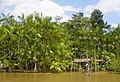 A grove of açaí palms in Brazil
 -

-
 An açaí harvest
 -
 Japanese açaí candy


See also
[edit]References
[edit]- ^ "Synonyms for Euterpe oleracea Mart., Hist. Nat. Palm. 2: 29 (1824)". Royal Botanic Gardens, Kew, UK. 2017.
- ^ "acai". Oxford English Dictionary (Online ed.). Oxford University Press. (Subscription or participating institution membership required.)
- ^ "Palm trees" (PDF). The Food and Agriculture Organization of the United Nations. Archived (PDF) from the original on 18 May 2019.
- ^ Zarin, Daniel; Alavalapati, Janaki R. R.; Schmink, Marianne; Putz, Frances E. (2004). Working Forests in the Neotropics: Conservation Through Sustainable Management?. Columbia University Press. ISBN 9780231129077.
- ^ a b Brondízio, Eduardo S.; Safar, Carolina A.M.; Siqueira, Andréa D. (1 March 2002). "The urban market of Açaí fruit (Euterpe oleracea Mart.) and rural land use change: Ethnographic insights into the role of price and land tenure constraining agricultural choices in the Amazon estuary". Urban Ecosystems. 6 (1): 71. Bibcode:2002UrbEc...6...67B. doi:10.1023/A:1025966613562. ISSN 1573-1642. S2CID 25276291.
- ^ "Acai – What is it and Where Does it Come From?". International Business Times. 10 September 2009. Retrieved 20 June 2018.
- ^ Parker, Peter (2018). A Little Book of Latin for Gardeners. Little Brown Book Group. p. 328. ISBN 978-1-4087-0615-2.
oleraceus, holeraceus = relating to vegetables or kitchen garden
- ^ Whitney, William Dwight (1899). The Century Dictionary and Cyclopedia. Century Co. p. 2856.
L. holeraceus, prop. oleraceus, herb-like, holus, prop. olus (oler-), herbs, vegetables
- ^ Marcason, W. (2009). "What is the Açaí Berry and Are There Health Benefits?". Journal of the American Dietetic Association. 109 (11): 1968. doi:10.1016/j.jada.2009.09.017. PMID 19857637.
- ^ a b "Worldwide demand for açaí is growing". Fresh Plaza. Archived from the original on 31 July 2017. Retrieved 1 May 2017.
- ^ a b c Vargas Jones J (13 March 2024). "Children in Brazil are climbing 70-foot-high trees so you can eat açaí berries". CNN. Retrieved 13 March 2024.
- ^ DuVal, A (2010). "Açaí Branco: Maintaining Agrobiodiversity through a Local Seed System in the Amazon Estuary" (PDF). Tropical Bulletin: Yale University Tropical Resources Institute. 29.
- ^ "Cultivar de açaizeiro BRS Pará – Portal Embrapa". www.embrapa.br. Retrieved 20 December 2018.
- ^ Brazilian Agricultural Research Agency
- ^ a b c d Schauss, AG; Wu, X; Prior, RL; Ou, B; Patel, D; Huang, D; Kababick, JP (2006). "Phytochemical and nutrient composition of the freeze-dried amazonian palmberry, Euterpe oleraceae Mart. (acai)". J Agric Food Chem. 54 (22): 8598–603. Bibcode:2006JAFC...54.8598S. doi:10.1021/jf060976g. PMID 17061839.
- ^ Simon PW (1996). "Plant Pigments for Color and Nutrition". Vegetable Crops Research Unit, Agricultural Research Service, U.S. Department of Agriculture, Department of Horticulture, University of Wisconsin, Madison, WI.
- ^ De Rosso VV, Morán Vieyra FE, Mercadante AZ, Borsarelli CD (October 2008). "Singlet oxygen quenching by anthocyanin's flavylium cations". Free Radical Research. 42 (10): 885–91. doi:10.1080/10715760802506349. hdl:11336/54522. PMID 18985487. S2CID 21174667.
- ^ Lichtenthäler R, Rodrigues RB, Maia JG, Papagiannopoulos M, Fabricius H, Marx F (February 2005). "Total oxidant scavenging capacities of Euterpe oleracea Mart. (Açaí) fruits". Int J Food Sci Nutr. 56 (1): 53–64. doi:10.1080/09637480500082082. PMID 16019315. S2CID 10683560.
- ^ Lotito SB, Frei B (2006). "Consumption of flavonoid-rich foods and increased plasma antioxidant capacity in humans: cause, consequence, or epiphenomenon?". Free Radic. Biol. Med. 41 (12): 1727–46. doi:10.1016/j.freeradbiomed.2006.04.033. PMID 17157175.
- ^ Williams RJ, Spencer JP, Rice-Evans C (April 2004). "Flavonoids: antioxidants or signalling molecules?". Free Radical Biology & Medicine. 36 (7): 838–49. doi:10.1016/j.freeradbiomed.2004.01.001. PMID 15019969.
- ^ Scientific Opinion on the substantiation of health claims related to various food(s)/food constituent(s) and protection of cells from premature aging, antioxidant activity, antioxidant content and antioxidant properties, and protection of DNA, proteins and lipids from oxidative damage pursuant to Article 13(1) of Regulation (EC) No 1924/20061 Archived 7 November 2021 at the Wayback Machine, EFSA Panel on Dietetic Products, Nutrition and Allergies (NDA)2, 3 European Food Safety Authority (EFSA), Parma, Italy, EFSA Journal 2010; 8(2):1489
- ^ "Flavonoids". Linus Pauling Institute, Micronutrient Information Center, Oregon State University. 2015. Retrieved 8 June 2015.
- ^ Manach, C; Williamson, G; Morand, C; Scalbert, A; Rémésy, C (2005). "Bioavailability and bioefficacy of polyphenols in humans. I. Review of 97 bioavailability studies". American Journal of Clinical Nutrition. 81 (1 Suppl): 230S – 242S. doi:10.1093/ajcn/81.1.230S. PMID 15640486.
- ^ Gallori, S. (2004). "Polyphenolic Constituents of Fruit Pulp of Euterpe oleracea Mart. (Acai palm)". Chromatographia. 59 (11–12). doi:10.1365/s10337-004-0305-x. S2CID 94388806.
- ^ a b c d Colapinto, John (30 May 2011). "Strange Fruit". The New Yorker.
- ^ Ellin, Abbey (12 March 2009). "Pressing Açaí foraçaí Answers". The New York Times.
- ^ a b James, SD (12 December 2008). "'Superfood' açaí may not be worth price: Oprah's Dr. Oz says açai is healthy but no cure-all; Dieter feels ripped off". ABC News. Archived from the original on 19 December 2008. Retrieved 30 December 2008.
- ^ "Oprah is coming after bad Internet Marketers". Adotas. Archived from the original on 1 July 2010. Retrieved 10 September 2009.
- ^ "AG warns about deceptive weight loss supplement offer". King5 News. Archived from the original on 31 August 2009. Retrieved 9 September 2009.
- ^ Colapinto, John. "Strange Fruit". The New Yorker. Retrieved 14 May 2021.
- ^ "Marketers of acai products fined $1.5 million for false claims and unfair billing". Consumer Reports. 9 January 2012. Retrieved 2 November 2017.
- ^ "Internet Marketers of Acai Berry Weight-Loss Pills and "Colon Cleansers" to Pay $1.5 Million to Settle FTC Charges of Deceptive Advertising and Unfair Billing". Federal Trade Commission. 9 January 2012. Retrieved 2 November 2017.
- ^ Jorge Sauma; Caio Maia (15 March 2019). "Caminhos do açaí: Pará produz 95% da produção do Brasil, fruto movimenta US$ 1,5 bi e São Paulo é o principal destino no país". Globo (in Portuguese). Retrieved 13 March 2022.
- ^ Andrade, Rodrigo de Oliveira (11 January 2019). "Açaí fruit can transmit Chagas disease". SciDev.Net. SciDev.Net. Retrieved 13 April 2025.
- ^ de Santana, A.C. (2017). "Açaí pulp demand in the retail market of Belem, state of Para". Revista Brasileira de Fruticultura. 39. doi:10.1590/0100-29452017102.
- ^ Murrieta RS, Dufour DL, Siqueira AD (1999). "Food consumption and subsistence in three Caboclo populations on Marajo Island, Amazonia, Brazil". Human Ecology. 27 (3): 455–75. Bibcode:1999HumEc..27..455M. doi:10.1023/A:1018779624490. S2CID 150562421.
- ^ Aislyn Greene (20 June 2015). "The Surprising History of the Açaí Bowl". AFAR Media. Retrieved 10 July 2023.
- ^ Kugel, Seth (24 February 2010). "Açaí, a Global Super Fruit, Is Dinner in the Amazon". The New York Times. ISSN 0362-4331. Retrieved 10 July 2023.
- ^ Center for Science in the Public Interest (23 March 2009). "CSPI Warns Consumers about Web-Based Açai Scams". CSPI. Retrieved 2 September 2012.
- ^ a b c Pacheco-Palencia LA, Mertens-Talcott S, Talcott ST (June 2008). "Chemical composition, antioxidant properties, and thermal stability of a phytochemical enriched oil from Açaí (Euterpe oleracea Mart.)". J Agric Food Chem. 56 (12): 4631–6. Bibcode:2008JAFC...56.4631P. doi:10.1021/jf800161u. PMID 18522407.
- ^ Neida, S; Elba, S. (2007). "Characterization of the acai or manaca (Euterpe oleracea Mart.): a fruit of the Amazon". Arch Latinoam Nutr (in Spanish). 57 (1): 94–8. PMID 17824205.
- ^ a b Silva, S. & Tassara, H. (2005). Fruit Brazil Fruit. São Paulo, Brazil, Empresa das Artes
- ^ Dyer, A. P. 1996. Latent energy in Euterpe oleracea. Biomass Energy Environ., Proc. Bioenergy Conf. 9th.
- ^ Plotkin MJ, Balick MJ (April 1984). "Medicinal uses of South American palms". J Ethnopharmacol. 10 (2): 157–79. doi:10.1016/0378-8741(84)90001-1. PMID 6727398.
- ^ Cheeseman, G-M. (December 2010). "How sustainability is embedded in Sambazon". The Guardian. Retrieved 1 May 2017.
- ^ Córdova-Fraga T, de Araujo DB, Sanchez TA, et al. (April 2004). "Euterpe olerácea (Açaí) as an alternative oral contrast agent in MRI of the gastrointestinal system: preliminary results". Magn Reson Imaging. 22 (3): 389–93. doi:10.1016/j.mri.2004.01.018. PMID 15062934.
- ^ Sanchez, Tiago Arruda; Elias, Jorge; Colnago, Luiz Alberto; de Almeida Troncon, Luiz Ernesto; de Oliveira, Ricardo Brandt; Baffa, Oswaldo; de Araujo, Dráulio Barros (September 2009). "Clinical Feasibility of Açai (Euterpe olerácea) Pulp as an Oral Contrast Agent for Magnetic Resonance Cholangiopancreatography". Journal of Computer Assisted Tomography. 33 (5): 666–671. doi:10.1097/RCT.0b013e31819012a0. ISSN 0363-8715. PMID 19820489.
- ^ Del Pozo-Insfran D, Brenes CH, Talcott ST (March 2004). "Phytochemical composition and pigment stability of Açaí (Euterpe oleracea Mart.)". J Agric Food Chem. 52 (6): 1539–45. Bibcode:2004JAFC...52.1539D. doi:10.1021/jf035189n. PMID 15030208.
Further reading
[edit]- Craft P, Riffle RL (2003). An encyclopedia of cultivated palms. Portland, Oregon, United States: Timber Press. ISBN 0-88192-558-6.
- Nicholas Gill. "How Açaí Helped Save Amazonian Forests". NewWorlder.
External links
[edit]- Pictures of açaí palms trees and fruit from an article by The Nature Conservancy.
- "Acai 'super-fruit' not so great". The World, Public Radio International
| International | |
|---|---|
| National | |

Açaí palm
View on GrokipediaTaxonomy and Etymology
Botanical Classification
The açaí palm is scientifically classified as Euterpe oleracea Mart., a species within the genus Euterpe of the palm family Arecaceae (order Arecales, class Liliopsida, phylum Tracheophyta, kingdom Plantae).[7][8] This classification was established by Carl Friedrich Philipp von Martius in his 1824 work Historia Naturalis Palmarum, based on morphological characteristics of specimens from the Amazon region.[8] The genus Euterpe comprises several Neotropical palm species, with E. oleracea serving as the type species, distinguished taxonomically by its caespitose (clustering) growth habit and adaptation to floodplain environments, in contrast to solitary-stemmed congeners.[2][9] Synonyms for E. oleracea include Euterpe badiocarpa Barb. Rodr. and Catis martiana O.F.Cook, reflecting historical nomenclatural variations prior to stabilization under the current binomial.[10] Reclassifications have been informed by morphological traits such as fruit color and stem architecture, with genetic analyses of chloroplast genomes further validating species boundaries and phylogenetic placement within tribe Euterpeae.[11] For instance, E. oleracea exhibits distinct plastome synteny and molecular markers differentiating it from close relatives like Euterpe precatoria Mart., which features solitary stems, larger fruits, and occurrence in upland, non-flooded habitats of western Amazonia.[12][13] These distinctions underscore E. oleracea's primary association with eastern Amazonian varzea forests, aiding precise identification amid sympatric distributions.[9]Name Origins
The name "açaí" derives from the Tupi language of indigenous Amazonian peoples, specifically from the term ïwasa'i or a similar variant in Proto-Tupi-Guarani, translating to "fruit that cries" or "fruit that expels water," a reference to the liquid juice extracted from the fruit during processing.[14][15] This etymology reflects the plant's practical utility in traditional contexts, where the pulp's watery yield is prominent, rather than any mythological narrative.[16] In Brazilian Portuguese, the word is spelled açaí, incorporating the cedilla under the "c" to denote the /s/ sound and acute accents on the "a" and "i" for stress and pronunciation (/a.saˈi/).[17] Upon adoption into English, it is commonly rendered as "acai" without diacritics, simplifying orthography while retaining approximate phonetics as /ɑː.saɪ.iː/ or similar.[18] This variation emerged through linguistic borrowing during the plant's introduction to global markets in the late 20th century, prioritizing accessibility over precise orthographic fidelity.[17]Description and Habitat
Physical Characteristics
The açaí palm (Euterpe oleracea) exhibits a clustering growth habit, producing multiple slender stems from a shared root base, with mature plants typically reaching heights of 15 to 30 meters.[19][20] Each stem measures 10 to 20 cm in diameter and develops a gray-brown coloration with age.[21] The crown consists of 8 to 14 pinnate leaves, each up to 3 to 4 meters long, featuring a prominent bluish-green to reddish crownshaft formed by the leaf sheaths, which measure 0.9 to 1.6 meters in length.[22][21] The petioles are curved, 10 to 20 cm long, and glabrous.[22] The root system is hydrophytic, comprising a mass of epigeous roots equipped with pneumatophores that facilitate gas exchange in waterlogged soils.[20] As a monoecious species, the palm produces branched inflorescences up to 1 meter long, emerging below the leaves, with female flowers larger than male ones.[23] These give rise to infructescences bearing clusters of small, round drupes, approximately 1 cm in diameter, that ripen to a dark purple-black hue.[24] Flowering occurs throughout the year, with peaks during rainy periods, followed by fruit maturation several months later, aligning with environmental cues such as seasonal water levels.[9][20] In wild forms, mature palms support 4 to 8 stems per cluster, contributing to aggregate fruit yields of up to 90 kg per plant annually under optimal conditions, whereas cultivated variants may exhibit adjusted stem densities through propagation practices, potentially altering per-stem productivity while maintaining core morphological traits.[19][25]Native Distribution and Ecology
The açaí palm (Euterpe oleracea) is native to the tropical wetlands of northern South America, with its primary range encompassing the estuary floodplains of the Amazon basin in Brazil, particularly the state of Pará, and extending to adjacent regions in Colombia, Ecuador, French Guiana, Guyana, Suriname, and Trinidad.[26][2] It thrives in periodically flooded environments such as várzea (whitewater floodplain forests) and igapó (blackwater flooded forests), where seasonal inundation by nutrient-rich river waters supports its growth, limiting natural dispersal to similar wetland habitats.[20][27] In these ecosystems, E. oleracea forms dense monodominant stands, contributing to nutrient cycling through leaf litter decomposition during flood retreats and serving as a critical forage source for frugivorous wildlife, including birds, bats, and fish that consume its fruits.[28][29] Its fibrous root system and adaptation to anaerobic soils enable it to stabilize riverbanks and enhance soil fertility via sediment trapping, underscoring its role in maintaining várzea biodiversity despite the habitat's dynamic hydrological regime.[30] Recent empirical data indicate vulnerability to climatic shifts, with droughts correlating to reduced fruit yields; for instance, analysis of production records from 2000–2018 in Pará revealed average drops of up to 30% in hotter-than-normal years due to the palm's shallow roots limiting access to subsurface water.[31] Additionally, rising sea levels exacerbate salinity intrusion in Amazon estuary várzea, altering fruit quality and palatability as observed in local harvest assessments from 2020 onward.[32][33]History of Use and Commercialization
Traditional Indigenous Practices
Indigenous groups in the Amazon, including Caboclo communities of mixed ancestry and Tukano peoples, have historically relied on the açaí palm (Euterpe oleracea) as a key dietary staple, particularly in riverine and floodplain environments. The fruit's pulp was traditionally processed by soaking clusters in water to loosen the skin and flesh from seeds, then mashed or beaten into a thick, viscous porridge often mixed with manioc (cassava) flour for texture and sustenance, forming a primary caloric source alongside fish and other foraged items.[34] [35] In ethnographic studies of Caboclo populations, açaí accounted for up to 42% of total food intake by weight, underscoring its role in sustaining households through seasonal floods when other resources were scarce.[36] The palm's heart-of-palm (palmito) was also extracted by felling select trees, providing a tender, nutrient-dense vegetable incorporated into meals or used medicinally; in the Pará region, juice from the heart was applied to wounds to staunch bleeding and promote healing.[37] [38] Traditional accounts document additional applications of açaí extracts for treating fevers, skin ailments, digestive issues, and parasitic infections among Amazonian indigenous groups, reflecting empirical observations of its astringent and anti-inflammatory properties passed through oral knowledge.[39] These practices, rooted in pre-colonial resource management, emphasized selective harvesting to maintain palm groves without widespread depletion, as evidenced by sustained stands in ethnohistorically documented areas.[40]Modern Commercial Development
In the 1990s, açaí gained widespread popularity across Brazil, driven by its association with gym and fitness culture, particularly in cities like Rio de Janeiro and São Paulo. Promoted by the Gracie family in jiu-jitsu training as a low-sugar energy booster for athletes, surfers, and beachgoers, it became a staple post-workout snack. Its visibility surged through media exposure, including the soap opera Malhação, which portrayed it as an energy food and contributed to national demand preceding international exports.[41] Initial commercial exports of açaí from Brazil commenced in the early 1990s, when entrepreneurs Jeremy and Ryan Black from Southern California began importing the fruit to the United States, marking the transition from local Amazonian consumption to international trade.[42] This development built on earlier mechanized processing advancements in Brazil during the 1970s, which facilitated wider domestic distribution before global expansion.[43] Post-2000, exports experienced rapid growth amid rising demand in health-conscious markets, particularly in the U.S., Europe, and Asia. Brazilian açaí shipments escalated from 60 kg in 1999 to over 15,000 tonnes by 2021, driven by processed products like frozen pulp.[44] By 2023, exports had surged more than 16,000% over the prior decade, with Pará state contributing 94% of Brazil's volume, highlighting the region's dominance in scaling production for overseas markets.[45] [46] Efforts to diversify cultivation beyond tropical origins emerged with a 2025 pilot program in Canal Point, Florida, where açaí palms are being grown using proprietary BioActivium™ organic soil technology to adapt to local conditions and enable U.S.-based supply chains.[47] This initiative aims to shorten transport times and enhance freshness for North American consumers, potentially reducing import dependency.[48]Cultivation and Harvesting
Agronomic Practices and Cultivars
The açaí palm (Euterpe oleracea) is primarily propagated from seeds, which are sown in well-draining, moist, acidic substrates to promote germination, typically taking several weeks to months under warm, humid conditions mimicking Amazonian floodplains. Vegetative propagation via separation of offshoots from mature clumps is less common but feasible in clumping varieties, allowing for clonal replication while maintaining genetic uniformity.[2] Seedlings are planted at spacings of 5 × 5 meters, yielding approximately 400 clumps per hectare for fruit production, with initial fruiting occurring 3–4 years post-planting.[2][49] Traditional agronomic practices emphasize floodplain (várzea) agroforestry systems, where palms are selectively thinned amid native vegetation to enhance light penetration and fruit yields without full forest clearance, preserving ecological functions in Amazon estuary wetlands.[50] In contrast, modern monoculture plantations on cleared floodplains or irrigated uplands increase palm density but reduce associated tree species diversity and riparian forest integrity, potentially compromising long-term soil fertility and resilience.[51][52] Upland cultivation requires supplemental irrigation to replicate floodplain hydrology, as palms demand consistent moisture for optimal growth.[53] Key cultivars developed by Brazilian institutions include BRS Pará, selected for precocious fruiting, average fruit weights exceeding 1 gram, and pulp yields of 15–25 grams per 100 grams of fruit, with approximately 625 fruits per kilogram.[54][55] This variety achieves higher overall productivity compared to wild ecotypes, supporting up to 20 kg of fruit per palm annually under managed conditions, though production cycles align with seasonal peaks from July to January.[56] BRS Pai d'Égua, suited for irrigated non-floodplain sites, balances yields across seasons (46% off-season from January to June), enhancing pulp extraction efficiency.[53] Fertilization protocols involve slow-release formulations rich in potassium and magnesium (e.g., 3:1:3 or 4:1:6 NPK ratios), applied 3–4 times annually to support fruit development without excess nitrogen that could promote excessive vegetative growth.[57] Pruning focuses on removing dead or brown fronds and thinning overcrowded ramets in clumps to direct resources toward fruiting stems, performed post-harvest to minimize stress.[49] Pest management targets leaf-cutting ants (Atta and Acromyrmex spp.), prevalent in Neotropical agroecosystems, through integrated approaches like nest destruction and biological controls, as chemical barriers alone yield inconsistent results.[58] Disease risks include vectors of Chagas disease (Trypanosoma cruzi), such as Triatoma spp. triatomines inhabiting palm crowns, which contaminate fruits via fecal droppings during processing; management entails crown inspection, vector exclusion during harvest, and avoiding ingestion of unprocessed pulp to mitigate oral transmission.[59][60] These practices prioritize empirical yield optimization while addressing biotic threats inherent to humid tropical cultivation.[61]Labor Conditions and Safety Risks
Açaí harvesting requires workers to manually climb tall, slender palms typically 15-25 meters in height using rudimentary techniques, such as looping ropes around the trunk or employing climbing sticks, without standard safety harnesses or protective gear. This method exposes climbers to acute risks of falls, which can result in fractures, spinal injuries, or death, as well as lacerations from machetes used to cut fruit bunches and stings from venomous insects or snakes encountered during ascents. In the Amazon region, particularly Pará state, such hazards are compounded by unstable tree trunks that may break under weight, leading to documented cases of fatal accidents, including a reported instance where a harvester fell and succumbed to knife wounds.[62][63][64] Child labor remains a feature of açaí extraction in remote Brazilian areas, driven by poverty and limited economic alternatives, with children as young as 8 years old participating in climbs up to 20 meters. The U.S. Department of Labor lists açaí among goods produced with child labor, citing hazardous conditions involving heights and sharp tools. A 2023 Brazilian Ministry of Labor and Employment operation identified child labor violations on açaí plantations in Pará, while 2024 investigations in Macapá revealed minors scaling 21-meter trees without harnesses to supplement family income. These practices persist despite legal prohibitions, as families in impoverished riverine communities rely on harvesting for survival.[65][64][66] Economic pressures exacerbate safety risks, as harvesters receive low payments—often equivalent to R$5 per load or $6-16 daily—prompting rushed climbs to increase volume amid volatile market prices for raw pulp. While some commercial operations have introduced alternative harvesting tools like telescopic poles to reduce climbing needs, adoption remains limited in traditional extractive zones due to cost barriers and the premium on fresh, hand-picked fruit. These incentives from global demand have not yet translated into widespread safety improvements, sustaining injury-prone methods in small-scale production.[67][68][69]Production and Economics
Global Output and Statistics
Brazil produces over 85% of the world's açaí berries, with the state of Pará accounting for the majority of domestic output.[70] In 2022, production across the Brazilian Amazon reached 247,000 metric tons, reflecting an 8.8% increase from the prior year.[71] Global production remains concentrated in tropical regions, though volumes from secondary producers like Peru are minimal, with exports totaling just 313 tons in 2024.[72] The global açaí berry market was valued at USD 1.23 billion in 2024 and is projected to reach USD 1.38 billion in 2025, driven by demand for pulp and derived products.[73] Export volumes of frozen açaí pulp have expanded significantly, with Brazil directing 31% of its shipments to the United States in 2024 and substantial portions to European markets.[74] Açaí processing generates substantial by-products, including pits that constitute up to 85% of fruit weight and yield an estimated 550,000 tons of waste annually in Brazil.[45] These pits are increasingly utilized for applications such as bioplastics, activated carbon, and bioactive compound extraction to mitigate waste.[45][75] Efforts to expand cultivation beyond traditional tropics include 2025 pilot programs in Florida, where partnerships aim to adapt açaí palms to subtropical conditions using enhanced soil techniques for potential local production.[76]Economic Impacts in Brazil
The açaí palm (Euterpe oleracea) supports rural livelihoods in Brazil, especially in Pará state, where extractivism and agroforestry generate verifiable income for smallholders and families. In 2022, national açaí production reached a value of BRL 6.17 billion, with Pará contributing over 90% of output through managed floodplain and estuarine systems, enabling market access that boosts household earnings via fruit sales and processing.[25][77] This activity sustains approximately 200,000 hectares of native stands, providing recurring revenue streams that exceed subsistence agriculture in low-interest scenarios, thereby reducing poverty through diversified, forest-based economies.[61] Economic evaluations highlight the net present value (NPV) of açaí management at US$1,337–$6,930 per hectare over multi-decade rotations in Amazon estuary floodplains, surpassing clear-cutting for timber or conversion to pasture due to sustained yields from thinned, standing canopies.[78] These figures, derived from cash flow models incorporating harvest cycles and market prices, incentivize preservation of forest structure over destructive alternatives, as extractivism yields higher long-term returns without full deforestation.[79] Agroforestry initiatives, such as those supported by international development programs, further amplify income by integrating açaí with other species, increasing sales volumes and family earnings—evidenced in related palm projects where 2-ton annual harvests generate around US$2,000 per household through local markets.[80] This approach promotes causal poverty alleviation via voluntary, profit-oriented conservation, contrasting extractive models reliant on subsidies, and underscores açaí's role in valorizing intact forests for sustained economic viability in Brazil's Amazon region.[81]Market Trends and Exports
The global açaí berry market is projected to expand at a compound annual growth rate (CAGR) of 7.6% from USD 1.74 billion in 2025 to USD 3.62 billion by 2035, driven by rising consumer demand for antioxidant-rich superfoods in functional beverages, supplements, and ready-to-eat products.[70] This growth trajectory reflects broader trends in health and wellness, with açaí's branding as a nutrient-dense Amazonian fruit appealing to markets prioritizing natural ingredients.[82] In North America, demand has fueled significant market expansion, with the regional market generating USD 433.8 million in 2024 and expected to grow at a CAGR of 6.7% from 2025 to 2030, primarily through processed forms like frozen pulp used in smoothies and bowls.[83] This surge is attributed to the fruit's integration into urban wellness trends and retail channels, though projections vary across reports due to differing methodologies in capturing import and consumption data.[73] Brazilian exports, dominated by processed products to preserve shelf life, increasingly focus on frozen pulp, which forms the bulk of international shipments alongside dried powders and juices.[84] Pulp segments hold over 59% of the global market share, underscoring the shift from fresh fruit to value-added exports that meet logistical demands of distant markets.[73] Competition from the juçara palm (Euterpe edulis), a related species yielding similar berries with high antioxidant content, is emerging as a sustainable alternative, potentially challenging açaí's dominance through lower environmental impact in harvesting.[85] Financialization trends include targeted investments in supply chain infrastructure, as evidenced by private equity backing for processors like Frooty to scale production amid surging global orders in 2024.[86] These early-stage capital inflows aim to stabilize sourcing from Amazonian regions while addressing scalability constraints.[87]Fruit Characteristics
Morphology and Processing
The fruit of the açaí palm (Euterpe oleracea) is a drupe measuring 1.0 to 2.0 cm in diameter, characterized by a spherical shape and a pericarp that transitions from green in immature stages to lilac or purple upon maturation.[1] [88] Each drupe contains a single large seed enveloped by a thin, oily pulp layer and stringy fibrous sheaths, with fruits aggregating in clusters comprising hundreds of individual berries.[1] [19] The seed constitutes approximately 80% to 90% of the fruit's total weight, rendering pulp extraction inefficient and generating substantial waste.[89] [90] Post-harvest processing involves depulping to separate the mesocarp (pulp) and exocarp from the endocarp-enclosed seed, typically via mechanical pressing or maceration with water in industrial or artisanal settings.[91] [92] This yields a puree-like pulp, while the seeds—often discarded as waste—are fibrous and represent the majority of byproducts.[89] Ripening is indicated by the pericarp's color shift to dark purple, signaling harvest readiness; at ambient temperatures, fresh fruits maintain viability for about one week before quality degradation.[88] [93] Freezing the extracted pulp promptly extends shelf life to several months, mitigating enzymatic browning and microbial spoilage common in tropical conditions.[94] [95] Wild-harvested açaí fruits generally exhibit lower pulp yields and potentially smaller individual berry sizes compared to cultivated varieties, which have been selectively bred for enhanced pulp content and overall productivity.[56] Intensified cultivation practices can increase bunch densities and annual outputs per palm, though fruit morphology remains broadly consistent across wild and domesticated populations.[51]Nutritional Profile
The nutritional profile of açaí pulp, based on laboratory analyses of Euterpe oleracea fruit, features high lipid and fiber content relative to typical fruits, with macronutrient composition varying by processing method such as freezing or freeze-drying.[1] Commercial frozen pulp provides approximately 72 kcal per 100 g, consisting of 4.9 g total fat (predominantly unsaturated, with oleic acid comprising 61.4% of fatty acids), 5.8 g carbohydrates (less than 0.25 g sugars), 1 g protein, and 5.33 g dietary fiber.[96] Freeze-dried pulp, concentrated on a dry basis, exhibits elevated values: up to 49 g lipids per 100 g (primarily monounsaturated and polyunsaturated fatty acids), 9 g protein, substantial fiber (up to 27 g per 100 g), and low net carbohydrates, yielding around 527 kcal per 100 g.[97] [98]| Nutrient (per 100 g freeze-dried pulp) | Approximate Amount | Source Notes |
|---|---|---|
| Total fat | 49 g | Mostly unsaturated (oleic, linoleic)[97] |
| Dietary fiber | 27 g | Higher than most fruits[98] [1] |
| Protein | 9 g | Includes essential amino acids[97] |
| Carbohydrates (total, low net) | ~15 g | Lower than typical fruits, minimal sugars[1] [98] |