Hubbry Logo
Stationary bicycleStationary bicycleMain
Open search
Stationary bicycle
Community hub
Stationary bicycle
logo
8 pages, 0 posts
0 subscribers
Be the first to start a discussion here.
Stationary bicycle
Stationary bicycle
from Wikipedia
Stationary bicycle
Magnetic resistance mechanism
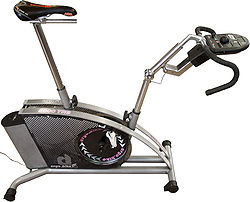
Exercise bike 2020
A hybrid exercise bike and elliptical machine

A stationary bicycle (also known as exercise bicycle, exercise bike, spinning bike, spin bike, or exercycle) is a device used as exercise equipment for indoor cycling. It includes a saddle, pedals, and some form of handlebars arranged as on a (stationary) bicycle.[1][2]

A stationary bicycle is usually a special-purpose exercise machine resembling a bicycle without wheels.[citation needed] It is also possible to adapt an ordinary bicycle for stationary exercise by placing it on bicycle rollers or a trainer. Rollers and trainers are often used by racing cyclists to warm up before racing, or to train on their own machines indoors.

History

[edit]

The ancestors of modern stationary bicycles date back to the end of the eighteenth century. The Gymnasticon was an early example.

Types

[edit]

Some stationary bike models feature handlebars that are connected to the pedals so that the upper body can be exercised along with the lower body (much like an elliptical trainer). Most exercise bikes come with mechanisms to apply resistance to the pedals, enhancing the intensity of the exercise. Resistance mechanisms include magnets, fans, and friction mechanisms. Some models allow the user to pedal backwards to exercise antagonist muscles which are not exercised in forward pedaling. Exercise bicycles are typically manufactured using a crankshaft and bottom bracket, which turns a flywheel by means of a belt or chain. The bearings on these moving parts wear with use and may require replacement.

Specialized indoor bicycles manufactured using a weighted flywheel at the front are used in the indoor cycling exercises called spinning.

People on exercise bikes

A variety of indoor mini-cycles, sometimes referred to as exercise pedallers, have emerged as portable, low-cost substitutes for traditional stationary bicycles.[3] They are useful when exercisers are unable to access their stationary bicycles from their homes or local gyms when travels or at work.

A folding mini-cycle, built with a friction mechanism

Uses

[edit]

Exercise bikes are used for exercise, to increase general fitness, for weight loss, and for training for cycle events. The exercise bike has long been used for physical therapy because of the low-impact, safe, and effective cardiovascular exercise it provides. The low-impact movement involved in operating an exercise bike does not put much stress on joints and does not involve sporadic motions that some other fitness equipment may require.[citation needed] However, as with typical biking, extended use of a stationary bike has been linked to decreased sexual function.[4]

Stationary bikes are also used for physical testing, i.e. as ergometers for measuring power. Traditionally this is done by imposing a certain level of resistance mechanically and/or measuring this.[5] gives a good overview. Modern ergometers and even many consumer exercise bikes are fitted with electronic sensors and displays.

Ergometers, such as CEVIS (Cycle Ergometer with Vibration Isolation and Stabilization System), are used in space (e.g. in the ISS) to counter cardiovascular deconditioning in the microgravity environment.[6]

Exercise bikes are frequently used in cardiac rehabilitation programs to help individuals recover from heart-related conditions or surgeries. The controlled and adjustable nature of stationary biking makes it an ideal choice for gradually improving cardiovascular health after cardiac events.[7]

See also

[edit]

References

[edit]
Revisions and contributorsEdit on WikipediaRead on Wikipedia
from Grokipedia
A stationary , also known as an exercise bike, is a fixed indoor fitness device that simulates the pedaling action of a traditional to provide low-impact cardiovascular exercise, typically consisting of a , pedals, and handlebars arranged to allow users to cycle in place without forward movement. The origins of the stationary trace back to the late 18th century, with the Gymnasticon patented in 1796 by English inventor Francis Lowndes as an early mechanical device featuring wooden treadles, flywheels, and handlebars to exercise the body's joints, primarily for therapeutic purposes in orthopedics. By the late , indoor pedaling machines emerged to enable exercise without outdoor travel, reflecting a shift toward using for and stamina building rather than transportation. Significant modern developments began in the , including the 1932 invention of the Exercycle by the Exercycle company, a motorized stationary bike that gained popularity among U.S. presidents like Roosevelt and Eisenhower, as well as celebrities such as . Contemporary stationary bicycles come in several types to suit different fitness needs and user preferences: upright bikes, which mimic the posture of a for a full-body engagement; recumbent bikes, featuring a reclined seat with back support to reduce strain on the lower back and joints; and dual-action bikes, which incorporate movable handlebars for simultaneous upper- and lower-body workouts. Advancements in the and , such as Keene Dimick's 1968 addition of for progress tracking and Schwinn's 1978 Airdyne model with air resistance, further enhanced their functionality for cardiorespiratory training and physiotherapy. In the and , the introduction of spinning classes by Johnny G. in 1987 revolutionized group , leading to branded programs like in 2006 and a global market projected to reach $800 million by 2026. Regular use of stationary bicycles offers proven benefits, including improvements in aerobic capacity by 8–10.5% through consistent sessions, reductions in systolic and diastolic , enhancements to lipid profiles such as increased HDL cholesterol and decreased triglycerides, and positive changes in like reduced fat mass while preserving lean muscle. These machines are particularly valued for their in and settings, low injury risk compared to outdoor , and applications in rehabilitation, such as for knee osteoarthritis patients, where they help alleviate pain and improve function. Their adoption surged during the for safe, isolated workouts, underscoring their role in promoting across diverse populations.

Overview

Definition and Basic Principles

A stationary bicycle is typically a human-powered featuring pedals, a , and a frame that enables users to pedal in place, generating resistance to simulate for cardiovascular and muscular conditioning. Motorized versions exist for therapeutic purposes, assisting pedaling in rehabilitation settings. Unlike mobile bicycles, it remains fixed to provide a controlled indoor workout environment, typically adjustable for intensity through various resistance mechanisms. The basic principles of stationary cycling revolve around that replicate the leg propulsion of outdoor biking while removing external challenges such as balance and variations. Pedaling engages the lower body in a cyclic motion, primarily activating the , hamstrings, glutes, and calves during the power phase, with supporting muscles like the tibialis anterior aiding recovery, all while maintaining a seated posture that minimizes stress. This setup allows for focused , emphasizing rhythmic lower-limb movement to enhance without the need for core stabilization against forward motion or environmental factors. Stationary bicycles emerged as an indoor alternative to outdoor cycling to enable consistent training in controlled settings, unaffected by , , or , thereby supporting year-round fitness routines. In contrast to ellipticals, which involve full-body motion with gliding steps, or rowers that emphasize upper-body pulling and total-body engagement, stationary bikes prioritize lower-body pedaling for targeted leg strength and cardio benefits with non-, low-impact action.

Key Components

The frame forms the foundational structure of a stationary bicycle, providing stability and support for the rider during use. Typically constructed from durable or aluminum alloys, it accommodates different riding postures: upright frames promote a vertical, forward-leaning position similar to , while recumbent frames feature a reclined backrest for enhanced spinal support and reduced strain on the lower back. The frame's design also includes a stable base with adjustable leveling feet to ensure balance on various floor surfaces, preventing tipping during intense workouts. The , or , is a critical ergonomic component positioned atop the frame's seat post, allowing for height and fore-aft adjustments to align the rider's hips and knees properly for efficient pedaling. Many models offer cushioned with gel inserts for prolonged comfort, and in recumbent variants, an integrated backrest further distributes weight to minimize pressure points. Pedals, attached to the crank arms at the bottom bracket, feature toe cages, adjustable straps, or clipless mechanisms to secure the feet and optimize power transfer during rotation, accommodating various shoe types for both casual and performance-oriented users. Handlebars extend from the front of the frame, serving as a primary point of support to maintain posture and control body position. Adjustable in height and reach, they enable customization for different lengths and riding styles, such as a more aerodynamic drop position on upright models or wider grips on recumbents for upper body stability. Variations in handlebar design exist across upright and recumbent types to suit specific ergonomic needs, though core functionality remains consistent. In many models, the drive system links the pedals to a weighted via a or belt, translating the rider's motion into rotational for a smooth, continuous pedaling experience. Belt-driven systems are favored for their quiet operation and low maintenance, while drives offer a more authentic feel but require periodic lubrication. The typically weighs 6–22 kilograms depending on the model and intended use, maintaining to simulate real-world riding dynamics. A display console, mounted on the handlebars or frame, provides real-time feedback on essential metrics such as elapsed time, estimated traveled, and simulated speed, helping users track progress and maintain motivation. Basic models feature LCD screens, while advanced ones integrate sensors for additional monitoring. Safety features enhance user protection, including a wide, weighted base for inherent stability and protective covers over moving parts like chains or belts to prevent entanglement. Many designs incorporate an emergency stop button, typically located near the console or handlebars, allowing immediate cessation of motion in case of imbalance or discomfort.

History

Early Inventions

The earliest precursors to the stationary bicycle emerged in the late as human-powered vehicles designed for personal mobility, laying the groundwork for later exercise-oriented adaptations. In 1779, French inventors and M. Masurier developed a four-wheeled , propelled by the rider's feet pushing against the ground, which represented one of the first documented efforts to create a pedal-less running machine for efficient short-distance travel. This device, exhibited publicly in , highlighted the potential for leg-driven propulsion but remained mobile rather than fixed for indoor use. A pivotal advancement came in 1796 with the invention of the Gymnasticon by British physician Francis Lowndes, marking the first known stationary exercise machine resembling a modern stationary bicycle. Patented that year, the Gymnasticon featured wooden treadles connected to hand cranks and flywheels, allowing users to simulate pedaling and rowing motions while seated in a recumbent position; it was explicitly designed to provide voluntary or involuntary motion to the limbs, joints, and muscles for therapeutic purposes. Lowndes intended the device primarily for medical therapy, targeting ailments such as and other conditions limiting outdoor activity, while also enabling indoor exercise during inclement weather to promote overall physical health without the risks of mobile transport. Although innovative, the Gymnasticon saw limited commercial production, suggesting it influenced subsequent designs more than achieving widespread adoption. The brought further refinements as pedal-driven bicycles evolved, inspiring stationary adaptations for controlled exercise. Scottish blacksmith constructed the first pedal-propelled two-wheeled vehicle in , incorporating wooden cranks and rods to drive the rear wheel, which demonstrated the feasibility of mechanical leg power. By the late , as mobile bicycles gained popularity, rudimentary stationary devices appeared in and the , allowing riders to pedal against resistance without forward motion, primarily motivated by the need for year-round fitness amid urban constraints and harsh winters. Early commercial attempts materialized toward the century's end, driven by patents for trainers that converted existing bicycles into stationary setups. In , a notable example was the trainer, a roller-based device enabling high-wheel bicycles to be used indoors for skill maintenance and conditioning, preserved today in collections like Prague's National Technical Museum. In the United States, inventor Albert Schock patented a bicycle wheel in the , featuring adjustable rollers to simulate road resistance; marketed to racing cyclists, it addressed the challenges of off-season preparation, as evidenced by Schock's own endurance feats, such as covering 1,009 miles in six days in 1886. These inventions, while niche, bridged the gap to 20th-century by emphasizing therapeutic and fitness applications over transportation.

20th-Century Developments

In the early , stationary bicycles began to incorporate friction-based resistance mechanisms, which used a belt or pad pressed against a to simulate pedaling effort, marking a shift toward more reliable exercise devices for both home and institutional use. A significant milestone was the invention of the Exercycle by the Exercycle Corporation, a motorized stationary bike that provided adjustable resistance and gained popularity among U.S. presidents like and , as well as celebrities. Companies like the Swedish firm , established in , contributed to this development by producing durable bicycles that laid the groundwork for later ergometers, though their first dedicated friction-loaded model, the Monark 519, emerged in the 1940s as a precursor to the iconic 1954 ergometer with precise calibration for workload measurement. Following , a surge in public interest in , driven by concerns over sedentary lifestyles and health campaigns, propelled the commercialization of affordable home stationary bicycles. Manufacturers introduced compact, upright models with adjustable friction resistance suitable for domestic spaces, capitalizing on the era's emphasis on preventive health and family wellness routines. By the mid-century, innovations like Schwinn's 1978 Airdyne model utilized a fan-based resistance system, where pedaling drove wind-generating blades to provide proportional opposition without mechanical wear, appealing to users seeking upper- and lower-body engagement in home settings. The 1970s and 1980s saw further refinements with the integration of electronic monitors on stationary bikes, allowing real-time tracking of metrics such as speed, distance, and calories burned through basic digital displays. This era's craze, popularized by figures like , boosted stationary bike adoption in group classes and home workouts, emphasizing rhythmic pedaling to upbeat music for cardiovascular benefits. Concurrently, medical professionals increasingly adopted these devices for rehabilitation, particularly recumbent models introduced in clinics during the early 1980s, which offered low-impact support for patients recovering from injuries or surgeries by reducing joint stress while promoting circulation. By the 1990s, the rise of spin bikes transformed into a high-intensity, instructor-led phenomenon, spearheaded by South African cyclist Johnny G. Goldberg's invention of the Spinner bike, featuring a weighted and adjustable to mimic outdoor road conditions and foster communal motivation in studios. Pre-digital consoles from this period, reliant on mechanical dials and limited readouts, have since become obsolete in favor of more advanced interfaces, though they represented a pivotal step toward interactive fitness equipment.

Types

Upright Models

Upright stationary bicycles are designed to replicate the riding position of traditional bicycles, positioning the rider in a vertical posture with a forward-leaning stance over the handlebars. This configuration promotes an upright while engaging the upper body for balance and control during pedaling. Key design features include an adjustable height to accommodate various leg lengths and movable handlebars that allow users to customize the reach and angle for optimal , ensuring a comfortable fit for extended sessions. These models typically feature a padded saddle and a frame that supports weights up to 300 pounds, with some incorporating ergonomic grips to reduce hand fatigue. Unlike recumbent variants that support the back in a reclined position, upright models demand active core stabilization to maintain posture. Upright bicycles encompass several sub-variants tailored to different workout intensities. Basic fitness bikes prioritize comfort and versatility, often with wider, cushioned seats and straightforward pedal adjustments suitable for general cardio routines. In contrast, spin bikes, a specialized upright subtype, incorporate heavy flywheels—typically weighing 35 to 50 pounds—to generate momentum, enabling high-intensity interval training and simulating the feel of outdoor cycling in group classes. The forward-leaning posture of upright models offers advantages such as greater engagement of core muscles alongside the legs, enhancing overall stability and strength during workouts. However, this position can place higher stress on the lower back and wrists compared to more supportive designs, potentially leading to discomfort for users with preexisting conditions. In commercial settings, upright models dominate gym cardio areas due to their space-efficient design and familiarity. Popular brands include Schwinn, known for durable upright bikes like the model with adjustable features, and Life Fitness, whose Club Series+ upright bikes are widely installed in fitness centers for their robust construction and user-friendly interfaces. Peloton's original upright bike, prior to advanced digital integrations, exemplifies a high-end option favored for its smooth pedaling and prevalence in both home and studio environments.

Recumbent and Specialized Variants

Recumbent stationary bicycles feature a reclined seating position with an integrated backrest for support and pedals positioned forward of the rider, promoting a more natural spinal alignment compared to upright models. This design distributes body weight evenly across the seat and back, significantly reducing pressure on the lower back and minimizing strain during extended sessions. The ergonomic setup makes recumbents particularly suitable for individuals with back issues, as it allows for low-impact cardiovascular exercise while maintaining proper posture. Recumbents are prominent within rehabilitation settings, where their supportive structure facilitates recovery for patients with or spinal conditions by enabling sustained pedaling without exacerbating . Their role in programs includes building strength and endurance post-surgery or injury, with studies confirming reduced stress during use. Among specialized variants, mini pedal exercisers offer a compact, portable alternative for targeted lower-body workouts, often used under desks or in small spaces for rehabilitation or daily activity. These devices provide non-weight-bearing cardio that improves circulation, burns calories (approximately 70–90 kilocalories per hour), and enhances leg endurance, though they offer less benefit for bone health compared to weight-bearing exercises. These devices emerged as affordable options in the , exemplified by ed designs emphasizing ease of storage and operation without a full frame. Upper-body ergometers, another niche variant, incorporate cranks alongside or instead of leg pedals, allowing for full-body engagement or isolated upper-limb training, which is valuable in for those with lower-body limitations. Development of these machines traces back to mid-20th-century ergometry advancements, with modern models like those from NuStep originating in the and commercialized by the for . Fan bikes, or air bikes, represent hybrid models that use a rear-mounted fan for resistance, engaging both s and legs through push-pull handlebars, ideal for (HIIT). These gained traction in communities in the , building on earlier fan-based designs to support explosive, full-body efforts.

Comparison of Upright and Recumbent Models

Neither upright nor recumbent stationary bicycles is universally superior; the optimal choice depends on individual fitness goals, experience level, and physical condition. Recumbent models generally provide superior comfort, lumbar support, joint friendliness, and ease of use, making them particularly suitable for beginners, older adults, or individuals with back pain, joint issues, or limited mobility. The reclined position distributes weight evenly and reduces strain, allowing for longer and more consistent exercise sessions. Upright models facilitate more intense workouts, greater overall muscle engagement including the core and upper body, higher potential calorie burn through increased effort, and a riding experience that more closely simulates traditional outdoor cycling. Both types can achieve comparable calorie expenditure when exercise intensity is matched, though upright models often enable higher overall intensity.

Mechanics

Resistance Systems

Resistance systems in stationary bicycles simulate the pedaling effort encountered on roads or trails by applying opposing forces to the or equivalent mechanism, allowing users to control workout intensity through adjustable loads. These systems vary in design, leveraging different physical principles to generate that opposes the rider's input, thereby influencing power output and pedaling feel. The choice of system affects levels, durability, needs, and the smoothness of resistance progression, with modern designs prioritizing low and precise control. Friction resistance, one of the earliest and simplest methods, employs brake pads—typically made of felt or —that press directly against the flywheel's rim to create drag through mechanical contact. This system allows manual adjustment via a tension knob, providing immediate and linear increases in resistance as builds, but it generates and from the rubbing action. Over time, the pads wear down due to abrasion, necessitating periodic replacement to maintain consistent performance, which can lead to uneven resistance if not addressed. Magnetic resistance utilizes permanent or electromagnets positioned near a metal to induce eddy currents or repel , generating opposition without physical contact between components. This contactless approach results in exceptionally quiet operation and minimal wear, as resistance is adjusted electronically or mechanically by varying the magnet-to-flywheel distance or , offering multiple predefined levels for precise control. Common in contemporary upright and recumbent models, magnetic systems provide a smooth pedaling experience with low losses, though they may introduce a slight delay in response compared to friction-based alternatives. Air or fan resistance involves a large propeller or fan blade attached to the flywheel, where pedaling motion drives air through the blades to produce aerodynamic drag that scales quadratically with rotational speed. As the rider increases effort, the fan spins faster, creating greater wind resistance that automatically amplifies the load without manual adjustments, mimicking variable terrain challenges. The Assault AirBike exemplifies this system, featuring a 25-inch steel fan for intense, high-resistance workouts that engage both upper and lower body through integrated arm handles. This method is durable and maintenance-free but can be noisy due to airflow, making it suitable for high-intensity interval training. Fluid or water resistance employs an or paddle mechanism submerged in a sealed filled with viscous , such as or , where blades displace the liquid to generate progressive drag proportional to the square of the . As pedaling accelerates, the pushes against stationary vanes within the chamber, building a smooth, escalating resistance that feels natural and consistent across speeds, with adjustability often achieved by altering volume or . This system offers low noise and even load distribution, ideal for rehabilitation or steady-state efforts, though the added weight of the increases overall machine mass. The power output PP in any stationary bicycle resistance system is fundamentally determined by the equation P=τ×ωP = \tau \times \omega, where τ\tau represents the torque produced by the resistance mechanism and ω\omega is the angular velocity of the flywheel. Torque τ\tau varies by system type—for instance, deriving from frictional force in pad-based designs, eddy currents in magnetic setups, aerodynamic drag in fan systems, or viscous shear in fluid mechanisms—directly influencing the rider's perceived effort and measurable performance metrics when integrated with console displays.

Drive and Control Mechanisms

Stationary bicycles employ various drive systems to transmit pedaling motion from the cranks to the and resistance mechanism, with chain-driven and belt-driven types being the most common. Chain-driven systems, often found in spin bikes, utilize a metal similar to those on outdoor bicycles, offering durability and efficient power transfer that simulates an authentic road-riding experience. These systems are robust for high-intensity use but can produce from chain links and require periodic to prevent wear. In contrast, belt-driven mechanisms use a reinforced rubber or belt to connect the pedals to the , providing a quieter operation and lower maintenance needs due to the absence of metal-on-metal contact. Belt drives deliver a smoother pedaling feel with reduced , making them suitable for home environments or group classes where is a concern, though they may stretch over time and offer slightly less precise power transmission compared to chains. The serves as a weighted rotating disc connected to the drive system, providing that mimics the of forward motion on an actual . By maintaining rotational after each pedal , it creates a natural pedaling rhythm and prevents abrupt stops or starts, enhancing the realism of the workout. Flywheel weights typically range from 8 to 45 pounds, with heavier models around 30 to 40 pounds common in spin bikes to increase and resistance simulation. Control mechanisms on stationary bicycles allow users to adjust the resistance applied through the drive system, typically via manual or electronic interfaces. Manual tension knobs, often friction-based, enable riders to incrementally increase or decrease load by tightening or loosening a against the , providing straightforward control for basic models. Electronic selectors, found on more advanced ergometers, use digital interfaces or buttons to precisely modulate resistance levels, often to measure and display power output in watts for consistent performance tracking. Proper of these ergometers involves verifying power accuracy against known standards, as manufacturer settings can vary, ensuring reliable wattage readings during use. Maintenance of drive and control s is essential for longevity and smooth operation. Chain-driven bikes require monthly with a bike-specific oil to reduce and prevent , while belts generally need no but should be inspected for wear or stretching. Common issues include belt slippage, which can occur from loose tension or buildup and is resolved by tightening the belt or replacing it if damaged. Regular cleaning of the drive area and checking tension knobs for smooth adjustment help avoid disruptions in power transfer to the resistance .

Uses and Applications

Fitness and Training

Stationary bicycles serve as effective tools for , enhancing aerobic through sustained pedaling efforts. Regular use, particularly 2–3 sessions per week, can increase maximal oxygen uptake (VO₂max) by 8–10.5% over 12 weeks, thereby improving overall in healthy individuals. This benefit stems from the ability to maintain consistent effort levels, which promotes adaptations in the cardiovascular system similar to those from outdoor but in a controlled environment. In terms of energy expenditure, moderate- to vigorous-intensity stationary cycling typically burns 500–900 kcal per hour for adults weighing 70–90 kg, depending on resistance, , and effort level. This caloric output supports and fat loss when combined with dietary control, with studies showing up to a 3.1% reduction in body mass after 12 weeks of . Spinning classes enhance intensity and calorie burn by incorporating high-effort intervals and motivational elements, promoting greater energy expenditure for weight loss goals. Training on stationary bicycles encompasses various modes tailored to fitness goals, including steady-state rides for building aerobic base and high-intensity intervals for boosting anaerobic capacity. Steady-state sessions involve maintaining a constant effort for 30–60 minutes at 50–70% of maximum , fostering without excessive . alternates short bursts of high effort (e.g., 1–4 minutes at 80–90% maximum ) with recovery periods, enhancing power output and . Recent integrations of smart technology, such as apps providing real-time feedback and virtual routes as of 2024, further support structured . Group-based spin classes amplify these training modes by incorporating motivational elements, such as instructor-led routines and communal energy, which increase adherence and effort levels. Participants in group exercise settings report higher enjoyment and persistence, with social cohesion contributing to sustained participation over individual sessions. These classes often blend steady-state and interval segments, set to music, to simulate varied terrains and promote psychological . For athletes, particularly cyclists, stationary bicycles enable precise indoor training to replicate race conditions and improve performance metrics like functional threshold power. Platforms like , introduced in 2014, allow virtual simulations of routes and group rides, facilitating structured workouts that enhance speed and without weather dependencies. Professional cyclists use these sessions for off-season base building and interval-specific drills, achieving comparable physiological gains to outdoor efforts. Compared to outdoor cycling, stationary biking offers superior control over intensity and duration, eliminating variables like wind resistance and terrain changes that can disrupt pacing. However, it lacks the full-body stabilization and environmental stimuli of riding, potentially reducing overall muscle and mental variety. This makes it ideal for targeted fitness sessions but complementary to outdoor practice for comprehensive skill development.

Rehabilitation and Therapy

Stationary bicycles are widely used in rehabilitation settings due to their low-impact nature, which minimizes stress on joints while promoting mobility and strength recovery. For individuals recovering from knee osteoarthritis, low-intensity stationary biking has been shown to effectively reduce and improve fitness levels comparable to higher-intensity exercises. Similarly, in post-surgery recovery for knee procedures, stationary biking enhances knee and leg mobility and strength by allowing controlled, adjustable pedaling that avoids excessive joint loading. For hip rehabilitation following total , ergometer cycling contributes to significant improvements in patient-reported outcomes, such as reduction and functional mobility, when incorporated early in the recovery process. Stationary bicycles, including recumbent models with ergonomic seating that support the back, are suitable for patients with spinal conditions, such as , as cycling promotes lumbar flexion and potentially reduces spinal compression during exercise. These models provide a stable posture that alleviates on the spine, making them appropriate for older adults or those with in rehabilitation programs. Home-based cycling protocols using ergometric bicycles tailored to such patients have demonstrated feasibility and adherence without exacerbating symptoms. Therapeutic protocols often emphasize low-resistance settings to prioritize endurance and over intensity, enabling gradual progression in recovery. Backward pedaling on stationary bikes targets different muscle groups, such as the and hamstrings, and reduces tibiofemoral compressive loads in the , benefiting patients with disorders like or meniscal damage. As of 2025, integrations like electromyographic with stationary cycling have shown enhanced neuromuscular control in rehabilitation. In modern practice, they form a core component of programs, where supervised sessions on stationary bikes improve cardiovascular efficiency and endurance following events like . These programs typically involve progressive aerobic training, starting with short durations and building to sustained efforts several times weekly. By facilitating home-based or in-clinic therapy without reliance on outdoor activities, stationary bicycles help reduce the carbon emissions associated with patient transportation to rehabilitation facilities, contributing to lower overall environmental pollution from therapy-related travel.

Health Effects

Physiological Benefits

Stationary bicycle use provides significant cardiovascular benefits, including improvements in aerobic capacity and reductions in blood pressure. Regular training on a stationary bike for 8 weeks has been shown to increase VO2 max by approximately 10-12% in sedentary to recreationally active adults, enhancing overall endurance and oxygen utilization during exercise. Additionally, aerobic exercise such as stationary cycling contributes to lowering systolic blood pressure by an average of 5-7 mmHg and diastolic blood pressure by 3-4 mmHg in sedentary populations, as evidenced by meta-analyses of intervention studies. These gains stem from enhanced cardiac output and vascular function, with one study reporting a 6% increase in peak cardiac output after 12 weeks of sprint interval training on a stationary bike. In terms of and metabolic effects, stationary cycling supports fat loss and improves insulin sensitivity, particularly in or individuals. A 12-week program involving three 55-minute sessions per week led to significant reductions in body mass and increases in mass among women with , alongside improvements in profiles such as a 10% rise in HDL . Furthermore, 8 weeks of , including modalities like stationary biking, has been demonstrated to decrease insulin levels and HOMA-IR scores in young women with , indicating enhanced metabolic efficiency without substantial . These effects help mitigate risks associated with by promoting better glucose regulation. For weight loss purposes, stationary cycling can burn 500-900 kcal per hour for adults weighing 70-90 kg, depending on intensity, while focusing on leg endurance with low impact on joints; spinning classes can enhance this intensity. Under-desk cycling, utilizing compact pedal exercisers, serves as a non-weight-bearing form of cardiovascular exercise that enhances circulation, increases calorie expenditure by approximately 70-90 kcal per hour over sedentary sitting, and builds leg endurance, particularly beneficial for office workers aiming to incorporate low-impact activity into their routines. However, as a non-weight-bearing activity, it offers limited benefits for bone density compared to weight-bearing exercises. Stationary bicycle exercise also benefits by reducing stress through endorphin release, with notable evidence from the post-2020 period highlighting its role in pandemic-era home use. Systematic reviews of studies during the show that regular , such as , significantly alleviates anxiety (standardized mean difference [SMD] -0.81), depression (SMD -1.02), and stress (SMD -1.05), particularly with sessions of 30-40 minutes performed 3-5 times weekly. This mood-enhancing effect is attributed to neurochemical changes and improved in isolated settings. Long-term outcomes of regular include decreased risks of and heart , offering benefits comparable to outdoor without environmental exposure hazards. Prospective cohort data from over 7,000 adults with indicate that regular is associated with at least a 24% lower risk of all-cause mortality and a substantially reduced mortality ( 0.57 for 150-299 minutes weekly), independent of other physical activities. These reductions persist over years, underscoring stationary biking as a sustainable intervention for chronic prevention in controlled indoor environments, with expected similar benefits.

Potential Risks and Considerations

While stationary bicycles offer numerous physiological benefits, such as improved cardiovascular health, prolonged or improper use can lead to overuse injuries, particularly in the knees and perineal area. Knee strain, often manifesting as , is one of the most common issues due to repetitive motion and improper bike fit, which can cause in the or . Perineal numbness, reported in 22-91% of cases, arises from sustained pressure on the nerves and blood vessels in the genital region during seated pedaling, potentially leading to temporary in men or reduced sensation in women. A 2016 review highlighted this risk, noting that narrow or poorly designed seats exacerbate vascular compression, reducing penile blood flow by up to 66%. Subsequent analyses confirmed these associations but emphasized that risks diminish with wider seats and shorter sessions, countering earlier concerns of permanent decline. Ergonomic factors play a significant role in mitigating or aggravating these issues, as poor posture—such as excessive forward lean or inadequate saddle height—can strain the lower back, leading to lumbar pain in regular users. This occurs when the spine adopts a flexed position, overloading the core muscles and intervertebral discs, particularly in upright models without adjustable support. To address this, experts recommend seat height adjustments to align the at a 25-35 degree bend at the bottom of the pedal and handlebar positioning to maintain a neutral spine, reducing on the lower back by promoting an upright torso. Intense sessions on stationary bicycles also pose risks of overheating, as the enclosed environment lacks natural airflow, elevating core body temperature and increasing compared to outdoor . Additionally, standard models may lack for users with disabilities, such as those with mobility impairments or spinal conditions, potentially exacerbating exclusion without adaptive features like low-entry frames or motorized assistance. To minimize these risks, users should incorporate a 5-10 minute warm-up with low-resistance pedaling to enhance blood flow and lubrication, alongside consistent hydration—aiming for 500-750 ml of per hour of moderate intensity—to prevent and heat-related strain. Following 2022 ergonomics guidelines from bodies, regular bike fits by professionals and session limits of 45-60 minutes for beginners can further safeguard against injury.

Modern Advancements

Smart Technology Integration

Contemporary stationary bicycles integrate smart sensors to deliver precise, real-time performance data, enabling users to optimize their workouts effectively. Heart rate monitors, typically connected via Bluetooth-enabled chest straps or embedded in handlebars, track cardiovascular exertion to ensure training zones are maintained. sensors measure pedal (RPM), helping riders refine pedaling efficiency, while power meters quantify output in watts, providing an objective measure of effort independent of speed or resistance. For example, Wahoo's smart systems incorporate built-in power meters for accurate wattage tracking during sessions. Bluetooth connectivity facilitates integration with popular fitness applications, allowing seamless data synchronization and long-term progress logging. Metrics from rides can be uploaded to platforms like for route mapping and performance analytics or for virtual training environments, supporting structured plans without manual input. Schwinn Fitness stationary bikes, for instance, pair directly with apps including , , and to export , , and power data. AI-driven automated adjustments elevate by dynamically altering resistance based on user profiles, fitness levels, and ongoing metrics, reducing the need for manual interventions. These systems analyze inputs like and power output to scale intensity in real time, promoting safer and more adaptive sessions. The CAROL Bike utilizes AI algorithms to instantly calibrate motorized resistance during REHIT (Reduced-Exertion High-Intensity Interval Training) sessions, which can improve VO2 max by up to 12% in eight weeks through just three five-minute workouts per week, tailoring sprints to individual capabilities for optimal cardiovascular benefits in short workouts. Leading brands exemplify this integration, with 's original screen-equipped stationary bike launched in 2012 and subsequently enhanced through 2025 innovations like Peloton IQ, an AI system that offers real-time coaching via to guide form and adjust resistance, along with new hardware featuring swivel displays and upgraded specifications for improved connectivity. Similarly, RENPHO's AI Smart Bike employs automated resistance changes across 24 levels, synced with app-based courses for dynamic .

Virtual and Connected Features

Virtual reality (VR) integration in stationary bicycles enables users to experience immersive simulations of outdoor routes through headset-linked applications. For instance, VZfit, an app compatible with headsets, pairs with a cadence attached to the bike's pedals to translate pedaling into virtual movement across global landscapes, such as through virtual cities or trails. This setup, which requires no additional hardware beyond the sensor and a stable connection, has been refined through updates including guided rides and in-game maps as of 2022, with ongoing compatibility support into 2025. Similarly, apps like Holofit extend VR to stationary bikes by syncing with Bluetooth-enabled equipment for interactive virtual environments. Online platforms have transformed stationary cycling into a social and competitive activity via classes and multiplayer racing features. , a leading virtual training app, supports 24/7 races across various fitness levels, allowing users to join events with real-time avatars on shared digital courses, fostering a without physical proximity. The platform's growth in the is evident in its expansion to include structured workouts, national championships, and live event calendars, with user participation surging during this period due to enhanced multiplayer functionalities. These features enable synchronized group rides and competitions, where cyclists' efforts influence virtual performance metrics like speed and elevation. Internet of Things (IoT) capabilities allow stationary bicycles to sync seamlessly with wearables, creating integrated home gym ecosystems for comprehensive activity tracking. Devices such as smart bikes from or Body Bike Connect transmit performance data like power output and cadence to compatible wearables via , enabling real-time synchronization with apps for holistic fitness monitoring. This connectivity extends to environmental benefits, as on stationary bikes can reduce the need for travel to gyms or outdoor routes, potentially lowering associated carbon emissions from vehicles. Studies on IoT wearables in fitness underscore how such integrations facilitate accurate from multiple sources, enhancing user through automated insights. Looking toward future trends, AI personalization is emerging to tailor workouts dynamically on stationary bicycles, with models like the CAROL Bike using algorithms to adapt REHIT-based high-intensity sessions based on user to improve VO2 max for efficient fitness gains in minimal time. Similarly, the Renpho AI Smart Bike employs biometric to generate customized plans via a companion app, incorporating over 70 workout options. By 2025, integrations are advancing virtual workouts, as seen in platforms like OliveX's fitness incorporating for immersive, avatar-based group sessions in digital worlds. These developments, including AI-driven avatars and VR gyms, promise to further blend social connectivity with personalized exercise in expansive virtual environments.

References

Add your contribution
Related Hubs
User Avatar
No comments yet.