



Recent from talks
Contribute something
Nothing was collected or created yet.
United States Foreign Intelligence Surveillance Court
View on Wikipedia
The United States Foreign Intelligence Surveillance Court (FISC; also called the FISA Court) is a U.S. federal court established under the Foreign Intelligence Surveillance Act of 1978 (FISA) to oversee requests for surveillance warrants against foreign spies inside the United States by federal law enforcement and intelligence agencies.
Key Information


FISA was created by the U.S. Congress based on the recommendations of the Senate's Church Committee, which was convened in 1975 to investigate illicit activities and civil rights abuses by the federal intelligence community.[1] Pursuant to the law, the FISC reviews requests to conduct physical and electronic surveillance within the U.S. concerning "foreign intelligence information" between "foreign powers" and "agents of foreign powers" suspected of espionage or terrorism; such requests are made most often by the National Security Agency (NSA) and the Federal Bureau of Investigation (FBI).
From its opening in 1978 until 2009, the court was housed on the sixth floor of the Robert F. Kennedy Department of Justice Building;[2][3] since 2009, it has been relocated to the E. Barrett Prettyman United States Courthouse in Washington, D.C.[2][3]
Warrants
[edit]Each application for one of these surveillance warrants (called a FISA warrant) is made before an individual judge of the court. The court may allow third parties to submit briefs as amici curiae. When the U.S. Attorney General determines that an emergency exists, the Attorney General may authorize the emergency employment of electronic surveillance before obtaining the necessary authorization from the FISC, if the Attorney General or their designee notifies a judge of the court at the time of authorization and applies for a warrant as soon as practicable but not more than seven days after authorization of such surveillance, as required by 50 U.S.C. § 1805.
If an application is denied by one judge of the court, the federal government is not allowed to make the same application to a different judge of the court but may appeal to the United States Foreign Intelligence Surveillance Court of Review. Such appeals are rare: the first appeal from the FISC to the Court of Review was made in 2002 (In re Sealed Case No. 02-001), 24 years after the founding of the court.
FISA warrant requests are rarely denied. During the 25 years from 1979 to 2004, 18,742 warrants were granted, while only four were rejected. Fewer than 200 requests had to be modified before being accepted, almost all of them in 2003 and 2004. The four rejected requests were all from 2003, and all four were partially granted after being submitted for reconsideration by the government. Of the requests that had to be modified, few were before the year 2000. During the next eight years, from 2004 to 2012, there were over 15,100 additional warrants granted, and another seven being rejected. Over the entire 33-year period, the FISA court granted 33,942 warrants, with only 12 denials – a rejection rate of 0.03 percent of the total requests.[4] This does not include the number of warrants that were modified by the FISA court.[5]
| Year | # Requests submitted |
# Requests approved |
# Requests modified |
# Requests denied |
|---|---|---|---|---|
| 1979[7] | 199 | 207 | 0 | 0 |
| 1980 | 319 | 322 | 1 | 0 |
| 1981 | 431 | 433 | 0 | 0 |
| 1982 | 473 | 475 | 0 | 0 |
| 1983 | 549 | 549 | 0 | 0 |
| 1984 | 635 | 635 | 0 | 0 |
| 1985 | 587 | 587 | 0 | 0 |
| 1986 | 573 | 573 | 0 | 0 |
| 1987 | 512 | 512 | 0 | 0 |
| 1988 | 534 | 534 | 0 | 0 |
| 1989 | 546 | 546 | 0 | 0 |
| 1990 | 595 | 595 | 0 | 0 |
| 1991 | 593 | 593 | 0 | 0 |
| 1992 | 484 | 484 | 0 | 0 |
| 1993 | 509 | 509 | 0 | 0 |
| 1994 | 576 | 576 | 0 | 0 |
| 1995 | 697 | 697 | 0 | 0 |
| 1996 | 839 | 839 | 0 | 0 |
| 1997 | 749 | 748 | 0 | 0 |
| 1998 | 796 | 796 | 0 | 0 |
| 1999 | 886 | 880 | 0 | 0 |
| 2000 | 1,005 | 1,012 | 1 | 0 |
| 2001 | 932 | 934 | 4 | 0 |
| 2002 | 1,228 | 1,228 | 0 | |
| 2003 | 1,727 | 1,724 | 79 | 4 [c] |
| 2004 | 1,758 | 1,754 | 94 | 0 |
| 2005 | 2,074 | 2,072 | 61 | 0 |
| 2006 | 2,181 | 2,176 | 73 | 1 |
| 2007 | 2,371 | 2,370 | 86 | 4 |
| 2008 | 2,082 | 2,083 | 2 | 1 |
| 2009 | 1,329 | 1,320 | 14 | 2 |
| 2010 | 1,511 | 1,506 | 14 | 0 |
| 2011 | 1,676 | 1,674 | 30 | 0 |
| 2012 | 1,789 | 1,788 | 40 | 0 |
| 2013 | 1,588 | 1,588 | 34 | 0 |
| 2014 | 1,379 | 1,379 | 19 | 0 |
| 2015 | 1,457 | 1,456 | 80 | 5 |
| 2016 | 1,485 | 1,451 | 310 | 34 |
| 2017 | 1,372 | 948 | 310 | 34 |
| Totals | 41,222 | 40,668 | 1,252 | 85 |
Notes:
- ^ Excludes physical searches
- ^ Two modifications that were later reversed by the United States Foreign Intelligence Surveillance Court of Review, in a case entitled In re Sealed Case No. 02-001.
- ^ All four were later partially granted, after being submitted for reconsideration by the government.
On May 17, 2002, the court rebuffed Attorney General John Ashcroft, releasing an opinion that alleged that the FBI and Justice Department officials had "supplied erroneous information to the court" in more than 75 applications for search warrants and wiretaps, including one signed by FBI Director Louis J. Freeh.[8] Whether this rejection was related to the court starting to require modification of significantly more requests in 2003 is unknown.
On December 16, 2005, The New York Times reported that the Bush administration had been conducting surveillance against U.S. citizens without specific approval from the FISA court for each case since 2002.[9] On December 20, 2005, Judge James Robertson resigned his position with the court, apparently in protest of the secret surveillance,[10] and later, in the wake of the Snowden leaks of 2013, criticized the court-sanctioned expansion of the scope of government surveillance and its being allowed to craft a secret body of law.[11] The government's apparent circumvention of the court started prior to the increase in court-ordered modifications to warrant requests.
In 2011, the Obama administration secretly won permission from the Foreign Intelligence Surveillance Court to reverse restrictions on the National Security Agency's use of intercepted phone calls and e-mails, permitting the agency to search deliberately for Americans' communications in its massive databases. The searches take place under a surveillance program Congress authorized in 2008,[12] under Section 702 of the Foreign Intelligence Surveillance Amendment Act (Section 1881a et seq in FISA).[13] Under that law, the target must be a foreigner "reasonably believed" to be outside the United States, and the court must approve the targeting procedures in an order good for one year. But a warrant for each target would thus no longer be required. That means that communications with Americans could be picked up without a court first determining that there is probable cause that the people they were talking to were terrorists, spies or "foreign powers". The FISC also extended the length of time that the NSA is allowed to retain intercepted U.S. communications from five years to six years with an extension possible for foreign intelligence or counterintelligence purposes. Both measures were done without public debate or any specific authority from Congress.[14]
Secrecy
[edit]Because of the sensitive nature of its business, the court is a "secret court" – its hearings are closed to the public. While records of the proceedings are kept, they also are unavailable to the public, although copies of some records with classified information redacted have been made public. Due to the classified nature of its proceedings, usually only attorneys licensed to practice in front of the US government are permitted to appear before the court. Because of the nature of the matters heard before it, court hearings may need to take place at any time of day or night, weekdays or weekends; thus, at least one judge must be "on call" at all times to hear evidence and decide whether or not to issue a warrant.
A heavily redacted version of a 2008 appeal by Yahoo![15] of an order issued with respect to NSA's PRISM program had been published for the edification of other potential appellants. The identity of the appellant was declassified in June 2013.[16]
Criticism
[edit]There has been growing criticism of the court since the September 11, 2001 attacks. This is partly because the court sits ex parte – in other words, in the absence of anyone but the judge and the government present at the hearings.[3] This, combined with the minimal number of requests that are rejected by the court has led experts to characterize it as a rubber stamp (former National Security Agency analyst Russ Tice called it a "kangaroo court with a rubber stamp").[17] The accusation of being a "rubber stamp" was rejected by FISA Court president Reggie B. Walton who wrote in a letter to Senator Patrick J. Leahy: "The annual statistics provided to Congress by the Attorney General ... – frequently cited to in press reports as a suggestion that the Court's approval rate of application is over 99% – reflect only the number of final applications submitted to and acted on by the Court. These statistics do not reflect the fact that many applications are altered to prior or final submission or even withheld from final submission entirely, often after an indication that a judge would not approve them."[18] He added: "There is a rigorous review process of applications submitted by the executive branch, spearheaded initially by five judicial branch lawyers who are national security experts and then by the judges, to ensure that the court's authorizations comport with what the applicable statutes authorize."[19] In a following letter Walton stated that the government had revamped 24.4% of its requests in the face of court questions and demands in time from July 1, 2013, to September 30, 2013.[20][21][22] This figure became available after Walton decided in the summer of 2013 that the FISC would begin keeping its own tally of how Justice Department warrant applications for electronic surveillance fared – and would track for the first time when the government withdrew or resubmitted those applications with changes.[22] Some requests are modified by the court but ultimately granted, while the percentage of denied requests is statistically negligible (11 denied requests out of around 34,000 granted in 35 years – equivalent to 0.03%).[6][17][23][24] The accusation that the FISC is a "rubber stamp" court was also rejected by Robert S. Litt (General Counsel of Office of the Director of National Intelligence): "When [the Government] prepares an application for [a section 215 order, it] first submit[s] to the [FISC] what's called a "read copy", which the court staff will review and comment on. [A]nd they will almost invariably come back with questions, concerns, problems that they see. And there is an iterative process back and forth between the Government and the [FISC] to take care of those concerns so that at the end of the day, we're confident that we're presenting something that the [FISC] will approve. That is hardly a rubber stamp. It's rather extensive and serious judicial oversight of this process."[25]
A 2003 Senate Judiciary Committee Interim Report on FBI Oversight in the 107th Congress by the Senate Judiciary Committee: FISA Implementation Failures cited the "unnecessary secrecy" of the court among its "most important conclusions":
The secrecy of individual FISA cases is certainly necessary, but this secrecy has been extended to the most basic legal and procedural aspects of the FISA, which should not be secret. This unnecessary secrecy contributed to the deficiencies that have hamstrung the implementation of the FISA. Much more information, including all unclassified opinions and operating rules of the FISA Court and Court of Review, should be made public and/or provided to the Congress.[26]
Allegations of bias
[edit]In a July 2013 interview, Senator and privacy advocate Ron Wyden described the FISC warrant process as "the most one-sided legal process in the United States". "I don't know of any other legal system or court that really doesn't highlight anything except one point of view", he said. Later in the interview he said Congress should seek to "diversify some of the thinking on the court".[27]
Elizabeth Goitein, a co-director of the Liberty and National Security Program of the Brennan Center for Justice at the New York University School of Law, has criticized the court as being too compromised to be an impartial tribunal that oversees the work of the NSA and other U.S. intelligence activities.[28] Since the court meets in secret, hears only the arguments of the government prior to deciding a case, and its rulings cannot be appealed or even reviewed by the public, she has argued that: "Like any other group that meets in secret behind closed doors with only one constituency appearing before them, they're subject to capture and bias."[28]
A related bias of the court results from what critics such as Julian Sanchez, a scholar at the Cato Institute, have described as the near certainty of the polarization or groupthink of the judges of the court. Since all of the judges are appointed by the same person (the Chief Justice of the United States), hear no opposing testimony and feel no pressure from colleagues or the public to moderate their rulings, Sanchez claims that "group polarization is almost a certainty", adding that "there's the real possibility that these judges become more extreme over time, even when they had only a mild bias to begin with".[28]
Appointment process
[edit]The court's judges[29] are appointed solely by the Chief Justice of the United States without confirmation or oversight by the U.S. Congress.[30] This gives the chief justice the ability to appoint like-minded judges and create a court without diversity.[31][32] "The judges are hand-picked by someone who, through his votes on the Supreme Court, we have come to learn has a particular view on civil liberties and law enforcement", Theodore Ruger, a professor at the University of Pennsylvania Law School, said with respect to Chief Justice John Roberts. "The way the FISA is set up, it gives him unchecked authority to put judges on the court who feel the same way he does."[30] And Stephen Vladeck, a law professor at the University of Texas School of Law, added, "Since FISA was enacted in 1978, we've had three chief justices, and they have all been conservative Republicans, so I think one can worry that there is insufficient diversity."[33] As of June 2024, eight of the eleven judges sitting on the FISA court were appointed to federal district courts by Republican presidents.
There are some reform proposals. Senator Richard Blumenthal from Connecticut proposed that each of the chief judges of the 12 major appeals courts select a district judge for the surveillance court; the chief justice would still pick the review panel that hears rare appeals of the court's decisions, but six other Supreme Court justices would have to sign off. Another proposal authored by Representative Adam Schiff of California would give the president the power to nominate judges for the court, subject to Senate approval, while Representative Steve Cohen proposed that Congressional leaders pick eight of the court's members.[34]
Judicial and public oversight
[edit]Stephen Vladeck, a professor at the University of Texas School of Law, has argued that, without having to seek the approval of the court (which he has said merely reviews certifications to ensure that they – and not the surveillance itself – comply with the various statutory requirements), the U.S. Attorney General and the Director of National Intelligence can engage in sweeping programmatic surveillance for one year at a time.[35] There are procedures used by the NSA to target non-U.S. persons[36] and procedures used by the NSA to minimize data collection from U.S. persons.[37] These court-approved policies allow the NSA to do the following:[38][39]
- keep data that could potentially contain details of U.S. persons for up to five years;
- retain and make use of "inadvertently acquired" domestic communications if they contain usable intelligence, information on criminal activity, threat of harm to people or property, are encrypted, or are believed to contain any information relevant to cybersecurity;
- preserve "foreign intelligence information" contained within attorney–client communications; and
- access the content of communications gathered from "U.S. based machine[s]" or phone numbers in order to establish if targets are located in the U.S., for the purposes of ceasing further surveillance.
Jameel Jaffer, the ACLU's deputy legal director, said in light of revelations that the government secured telephone records from Verizon and Internet data from some of the largest providers that safeguards that are supposed to be protecting individual privacy are not working.[19] Elizabeth Goitein, co-director of the Liberty and National Security Program at the Brennan Center for Justice in New York, wrote in the Wall Street Journal that when courts make mistakes, the losing party has the right to appeal and the erroneous decision is reversed. "That process cannot happen when a secret court considers a case with only one party before it."[19]
According to The Guardian, "The broad scope of the court orders, and the nature of the procedures set out in the documents, appear to clash with assurances from President Obama and senior intelligence officials that the NSA could not access Americans' call or email information without warrants".[38] Glenn Greenwald, who published details of the PRISM surveillance program, explained:
that this entire process is a fig leaf, "oversight" in name only. It offers no real safeguards. That's because no court monitors what the NSA is actually doing when it claims to comply with the court-approved procedures. Once the Fisa court puts its approval stamp on the NSA's procedures, there is no external judicial check on which targets end up being selected by the NSA analysts for eavesdropping. The only time individualized warrants are required is when the NSA is specifically targeting a US citizen or the communications are purely domestic. When it is time for the NSA to obtain Fisa court approval, the agency does not tell the court whose calls and emails it intends to intercept. It instead merely provides the general guidelines which it claims are used by its analysts to determine which individuals they can target, and the Fisa court judge then issues a simple order approving those guidelines. The court endorses a one-paragraph form order stating that the NSA's process "'contains all the required elements' and that the revised NSA, FBI and CIA minimization procedures submitted with the amendment 'are consistent with the requirements of [50 U.S.C. § 1881a(e)] and with the fourth amendment to the Constitution of the United States'". As but one typical example, The Guardian has obtained an August 19, 2010, Fisa court approval from Judge John D. Bates which does nothing more than recite the statutory language in approving the NSA's guidelines. Once the NSA has this court approval, it can then target anyone chosen by their analysts, and can even order telecoms and internet companies to turn over to them the emails, chats and calls of those they target. The Fisa court plays no role whatsoever in reviewing whether the procedures it approved are actually complied with when the NSA starts eavesdropping on calls and reading people's emails. The guidelines submitted by the NSA to the Fisa court demonstrate how much discretion the agency has in choosing who will be targeted. ... The only oversight for monitoring whether there is abuse comes from the executive branch itself: from the DOJ and Director of National Intelligence, which conduct "periodic reviews ... to evaluate the implementation of the procedure". At a hearing before the House Intelligence Committee Tuesday afternoon, deputy attorney general James Cole testified that every 30 days, the Fisa court is merely given an "aggregate number" of database searches on US domestic phone records. ... The decisions about who has their emails and telephone calls intercepted by the NSA is made by the NSA itself, not by the Fisa court, except where the NSA itself concludes the person is a US citizen and/or the communication is exclusively domestic. But even in such cases, the NSA often ends up intercepting those communications of Americans without individualized warrants, and all of this is left to the discretion of the NSA analysts with no real judicial oversight.[40]
Deputy Attorney General James M. Cole and NSA Deputy Director John C. Inglis cited the court's oversight in defending the constitutionality of the NSA's surveillance activities before during a hearing before the House Judiciary Committee in July 2013. Representative Jerrold Nadler, challenged Cole's defense of the program's constitutionality, and he said the secrecy in which the court functioned negated the validity of its review. "The fact that a secret court unaccountable to public knowledge of what it's doing ... may join you in misusing or abusing the statutes is of no comfort whatsoever", Nadler said.[41] Orin Kerr, a law professor at George Washington University, said the secrecy that comes along with national security makes it difficult to evaluate how the administration carries out the wide authority Congress has given it. "FISA court judges hear all of this and they think it's legal," Kerr said. "What we really don't know, though, are what the FISA court's opinions say."[19]
Secret law
[edit]In July 2013, The New York Times published disclosures from anonymous government whistleblowers of secret law written by the court holding that vast collections of data on all Americans (even those not connected in any way to foreign enemies) amassed by the NSA do not violate the warrant requirements of Fourth Amendment to the U.S. Constitution. It reported that anyone suspected of being involved in nuclear proliferation, espionage or cyber-attacks, according to the court, may be considered a legitimate target for warrantless surveillance. Acting like a parallel U.S. Supreme Court, the court greatly broadened the "special-needs" exception to do so.[42]
The newspaper reported that in "more than a dozen classified rulings, the nation's surveillance court has created a secret body of law giving the National Security Agency the power to amass vast collections of data on Americans".[42][a] It also wrote, with respect to the court:
In one of the court's most important decisions, the judges have expanded the use in terrorism cases of a legal principle known as the 'special needs' doctrine and carved out an exception to the Fourth Amendment's requirement of a warrant for searches and seizures ... The special needs doctrine was originally established in 1989 by the Supreme Court in a ruling allowing the drug testing of railway workers, finding that a minimal intrusion on privacy was justified by the government's need to combat an overriding public danger. Applying that concept more broadly, the FISA judges have ruled that the N.S.A.'s collection and examination of Americans' communications data to track possible terrorists does not run afoul of the Fourth Amendment, the officials said. That legal interpretation is significant, several outside legal experts said, because it uses a relatively narrow area of the law – used to justify airport screenings, for instance, or drunken-driving checkpoints – and applies it much more broadly, in secret, to the wholesale collection of communications in pursuit of terrorism suspects.[42]
The "special-needs" doctrine is an exemption to the Fourth Amendment's Warrants Clause which commands that "no Warrants shall issue, but upon probable cause, supported by Oath or affirmation, and particularly describing the place to be searched, and the persons or things to be and seized". The U.S. Supreme Court has recognized an exemption to the Warrants Clause "outside the foreign intelligence context, in so-called 'special-needs' cases. In those cases, the Court excused compliance with the Warrant Clause when the purpose behind the governmental action went beyond routine law enforcement and insisting upon a warrant would materially interfere with the accomplishment of that purpose. See, Vernonia School District 47J v. Acton, 515 U.S. 646, 653 (1995) (upholding drug testing of highschool athletes and explaining that the exception to the warrant requirement applied "when special needs, beyond the normal need for law enforcement, make the warrant and probable-cause requirement[s] impracticable (quoting Griffin v. Wisconsin, 483 U.S. 868, 873 (1987))); Skinner v. Ry. Labor Execs. Ass'n, 489 U.S. 602, 620 (1989) (upholding regulations instituting drug and alcohol testing of railroad workers for safety reasons); cf. Terry v. Ohio, 392 U.S. 1, 23-24 (1968) (upholding pat-frisk for weapons to protect officer safety during investigatory stop)".[43] The U.S. Foreign Intelligence Surveillance Court of Review concluded on August 22, 2008, in the case In re Directives [redacted text] Pursuant to Section 105B of the Foreign Intelligence Surveillance Act, that the "special-needs" doctrine applied by analogy to justify a foreign intelligence exception to the warrant requirement for surveillance undertaken for national security purposes and directed at a foreign power or an agent of a foreign power reasonably believed to be located outside the U.S.[43][44][45][46]
James Robertson – a former judge for the U.S. District Court for the District of Columbia, who, in 2004, ruled against the Bush administration in the Hamdan v. Rumsfeld case, and also served on the FISC for three years between 2002 and 2005 – said he was "frankly stunned" by the newspaper's report that court rulings had created a new body of law broadening the ability of the NSA to use its surveillance programs to target not only terrorists but suspects in cases involving espionage, cyberattacks and weapons of mass destruction.[47] Geoffrey R. Stone, a professor of constitutional law at the University of Chicago, said he was troubled by the idea that the court is creating a significant body of law without hearing from anyone outside the government, forgoing the adversarial system that is a staple of the American justice system. He said, "That whole notion is missing in this process".[42]
The court concluded that mass collection of telephone metadata (including the time of phone calls and numbers dialed) does not violate the Fourth Amendment as long as the government establishes a valid reason under national security regulations before taking the next step of actually examining the contents of an American's communications. This concept is rooted partly in the special needs doctrine. "The basic idea is that it's O.K. to create this huge pond of data", an unnamed U.S. official said, "but you have to establish a reason to stick your pole in the water and start fishing".[42] Under the new procedures passed by the U.S. Congress in the FISA Amendments Act of 2008, even the collection of metadata must be considered "relevant" to a terrorism investigation or other intelligence activities. The court has indicated that while individual pieces of data may not appear "relevant" to a terrorism investigation, the total picture that the bits of data create may in fact be relevant, according to U.S. officials with knowledge of the decisions.[42]
A secret ruling made by the court that redefined the single word "relevant" enabled the NSA to gather phone data on millions of Americans. In classified orders starting in the mid-2000s, the court accepted that "relevant" could be broadened to permit an entire database of records on millions of people, in contrast to a more conservative interpretation widely applied in criminal cases, in which only some of those records would likely be allowed.[48] Under the Patriot Act, the Federal Bureau of Investigation can require businesses to hand over "tangible things", including "records", as long as the FBI shows it is reasonable to believe the things are "relevant to an authorized investigation" into international terrorism or foreign intelligence activities. The history of the word "relevant" is key to understanding that passage. The Supreme Court in 1991 said things are "relevant" if there is a "reasonable possibility" that they will produce information related to the subject of the investigation. In criminal cases, courts previously have found that very large sets of information did not meet the relevance standard because significant portions – innocent people's information – would not be pertinent. But the court has developed separate precedents, centered on the idea that investigations to prevent national-security threats are different from ordinary criminal cases. The court's rulings on such matters are classified and almost impossible to challenge because of the secret nature of the proceedings. According to the court, the special nature of national-security and terrorism-prevention cases means "relevant" can have a broader meaning for those investigations, say people familiar with the rulings.[48]
People familiar with the system that uses phone records in investigations have said that the court's novel legal theories allow the system to include bulk phone records, as long as there are privacy safeguards to limit searches. NSA analysts may query the database only "when there is a reasonable suspicion, based on specific facts, that the particular basis for the query is associated with a foreign terrorist organization", according to Director of National Intelligence James Clapper.[48] The NSA database includes data about people's phone calls – numbers dialed, how long a call lasted – but not the actual conversations. According to Supreme Court rulings, a phone call's content is covered by the Constitution's Fourth Amendment, which restricts unreasonable searches, but the other types of data are not.[48]
"Relevant" has long been a broad standard, but the way the court is interpreting it, to mean, in effect, "everything", is new, said Mark Eckenwiler, a lawyer who until December 2012 was the Justice Department's primary authority on federal criminal surveillance law. "I think it's a stretch" of previous federal legal interpretations, said Eckenwiler. If a federal attorney "served a grand-jury subpoena for such a broad class of records in a criminal investigation, he or she would be laughed out of court".[48] Given the traditional legal definition of relevant, Timothy Edgar, a former top privacy lawyer at the Office of the Director of National Intelligence and the National Security Council in the Bush and Obama administrations, noted it is "a fair point" to say that someone reading the law might believe it refers to "individualized requests" or "requests in small batches, rather than in bulk database form". From that standpoint, Edgar said, the reinterpretation of relevant amounts to "secret law".[48]
Controversies
[edit]2013 NSA controversy
[edit]In June 2013, a copy of a top-secret warrant, issued by the court on April 25, 2013, was leaked to London's The Guardian newspaper by NSA contractor Edward Snowden.[49][50][51][52][53] That warrant orders Verizon Business Network Services to provide a daily feed to the NSA containing "telephony metadata" – comprehensive call detail records, including location data[54] – about all calls in its system, including those that occur "wholly within the United States, including local telephone calls".[55] The Obama administration published on July 31, 2013[56][57] a FISA Court ruling supporting an earlier order requiring a Verizon subsidiary to turn over all of its customers' phone logs for a three-month period, with rules that must be followed when accessing the data.[58]
The document leaked to The Guardian acted as a "smoking gun" and sparked a public outcry of criticism and complaints[49][59][60] that the court exceeded its authority and violated the Fourth Amendment by issuing general warrants.[61] The Washington Post then reported that it knew of other orders, and that the court had been issuing such orders, to all telecommunication companies, every three months since May 24, 2006.[62]
Since the telephone metadata program[63] was revealed, the intelligence community, some members of Congress, and the Obama administration have defended its legality and use. Most of these defenses involve the 1979 Supreme Court decision Smith v. Maryland which established that people do not have a "reasonable expectation" of privacy for electronic metadata held by third parties like a cellphone provider.[64] That data is not considered "content", theoretically giving law enforcement more flexibility in collecting it.[65]
On July 19, 2013, the court renewed the permission for the NSA to collect Verizon customer records en masse.[66][67] The U.S. government was relying on a part of the third-party doctrine. This notion said that when a person has voluntarily disclosed information to a third party – in this case, the telephony metadata – the customer no longer has a reasonable expectation of privacy over the numbers dialed nor their duration. Therefore, this doctrine argued, such metadata can be accessed by law enforcement with essentially no problem.[68] The content of communications are, however, subject to the Fourth Amendment. The Foreign Intelligence Surveillance Court held in October 2011, citing multiple Supreme Court precedents, that the Fourth Amendment prohibition against unreasonable searches and seizures applies to the contents of all communications, whatever the means, because "a person's private communications are akin to personal papers".[69]
Former FISC judge Colleen Kollar-Kotelly, who provided the legal foundation for the NSA amassing a database of all Americans' phone records, told associates in the summer of 2013 that she wanted her legal argument out.[70] Rulings for the plaintiff in cases brought by the ACLU on September 10 and 12, 2013, prompted James Clapper to concede that the government had overreached in its covert surveillance under part 215 of FISA and that the Act would likely be amended to reflect Congressional concern.[71]
The American Civil Liberties Union, a customer of Verizon, asked on November 22, 2013, a federal district court in Lower Manhattan, New York to end the NSA phone call data collection program. The ACLU argued that the program violated the U.S. Constitution's guarantees of privacy and information as well as exceeding the scope of its authorizing legislation, Section 215 of the Patriot Act. The U.S. government countered that the program is constitutional and that Congress was fully informed when it authorized and reauthorized Section 215. Moreover, a government lawyer said, the ACLU has no standing to bring the case because it cannot prove that its members have been harmed by the NSA's use of the data.[72]
2016 presidential election controversy
[edit]In November 2016, Louise Mensch reported on the news website Heat Street that, after an initial June 2016 FBI request was denied, the FISA court had granted a more narrowly focused October request from the FBI "to examine the activities of 'U.S. persons' in Donald Trump's campaign with ties to Russia".[73] On 12 January 2017, BBC journalist Paul Wood reported that, in response to an April 2016 tip from a foreign intelligence agency to the CIA about "money from the Kremlin going into the US presidential campaign", a joint taskforce had been established including representatives of the FBI, the Department of the Treasury, the Department of Justice, the CIA, the Office of the Director of National Intelligence and the National Security Agency. In June 2016, lawyers from the Department of Justice applied to the FISA court for "permission to intercept the electronic records from two Russian banks". According to Wood, this application was rejected, as was a more narrowly focused request in July, and the order was finally granted by a different FISA judge on 15 October, three weeks before the presidential election.[74] On January 19, The New York Times reported that one of its sources had claimed "intelligence reports based on some of the wiretapped communications had been provided to the White House".[75]
On 13 March, the Senate Intelligence Committee demanded that the Trump administration provide evidence to support the President Trump's claim that former President Obama had wiretapped Trump Tower.[76] On 16 March, the Committee reported that they had seen no evidence to support Trump's accusation that the Obama administration tapped his phones during the 2016 presidential campaign.[77]
On Fox News on 14 March, commentator Andrew Napolitano said, "Three intelligence sources have informed Fox News that President Obama went outside the chain of command. ... He used GCHQ. What is that? It's the initials for the British intelligence spying agency. Simply by saying to them, 'The president needs transcripts of conversations involving candidate Trump's conversations' he's able to get it and there's no American fingerprints on this." Two days later, on 16 March, White House press spokesperson, Sean Spicer, read this claim to the press. A GCHQ spokesman responded: "Recent allegations made by media commentator Judge Andrew Napolitano about GCHQ being asked to conduct 'wiretapping' against the then president elect are nonsense. They are utterly ridiculous and should be ignored."[78] On 17 March, the U.S. issued a formal apology to the United Kingdom for the accusation.[79]
On April 11, The Washington Post reported that the FBI had been granted a FISA warrant in the summer of 2016 to monitor then-Trump foreign policy adviser Carter Page. According to the report, "The FBI and the Justice Department obtained the warrant targeting Carter Page's communications after convincing a Foreign Intelligence Surveillance Court judge that there was probable cause to believe Page was acting as an agent of a foreign power, in this case Russia, according to the officials." The report also states that the warrant has been renewed multiple times since its first issue.[80] These warrants were criticized in the controversial Nunes memo for allegedly being issued on the basis of evidence gathered by politically motivated sources.[81]
Composition
[edit]When the court was founded, it was composed of seven federal district judges appointed by the Chief Justice of the United States, each serving a seven-year term, with one judge being appointed each year. In 2001, the USA PATRIOT Act expanded the court from seven to eleven judges, and required that at least three of the Court's judges live within twenty miles (32 km) of the District of Columbia. No judge may be appointed to this court more than once, and no judge may be appointed to both the Court of Review and the FISA court.
Chief Justice John Roberts has appointed all of the current judges.[42]
Membership
[edit](as of 10 July 2025[update])[82][83][84][85][86][87][88]
Former members
[edit]Note that the start dates of service for some judges conflict among sources.[89][90][91][92][93][94]
Seat succession
[edit]
|
|
|
| ||||||||||||||||||||||||||||||||||||||||||||||||||||||||||||||||||||||||||||||||||||||||||||||||||||||
|
|
|
| ||||||||||||||||||||||||||||||||||||||||||||||||||||||||||||||||||||||||||||||||||||||||||||||||||
|
|
|
| ||||||||||||||||||||||||||||||||||||||||||||||||||||||||||||||||||
See also
[edit]

References
[edit]Explanatory notes
[edit]- ^ The phrase "secret law written by the court" is a little misleading, because the distinction between "creating" a body of law rather than "writing" is important, since courts do not have the authority to write law, even if the end result is very close to the same.
Citations
[edit]- ^ Cohen, David B.; Wells, John Wilson (2004). American National Security and Civil Liberties in an Era of Terrorism. New York City: Palgrave Macmillan. p. 34. ISBN 978-1-403-96200-3.
- ^ a b Wilber, Del Quentin (March 2, 2009). "Surveillance Court Quietly Moving". The Washington Post. Archived from the original on March 1, 2014. Retrieved July 10, 2013.
- ^ a b c Leonnig, Carol D.; Nakashima, Ellen; Gellman, Barton (June 29, 2013). "Secret-Court Judges Upset at Portrayal of 'Collaboration' with Government". The Washington Post. Archived from the original on June 30, 2013. Retrieved July 10, 2013.
{{cite news}}: CS1 maint: multiple names: authors list (link) "For about 30 years, the court was located on the sixth floor of the Justice Department's headquarters, down the hall from the officials who would argue in front of it. (The court moved to the District's federal courthouse in 2009.)" - ^ (subscription required) Evan, Perez (June 9, 2013). "Secret Court's Oversight Gets Scrutiny". The Wall Street Journal. Archived from the original on February 19, 2015. Retrieved June 20, 2013.
- ^ Harwood, Matthew (February 8, 2014). "The terrifying surveillance case of Brandon Mayfield". Al Jazeera America. Archived from the original on March 6, 2014. Retrieved December 6, 2014.
- ^ a b Staff (May 4, 2012). "Foreign Intelligence Surveillance Act Court Orders 1979–2014". Electronic Privacy Information Center. Archived from the original on July 23, 2015. Retrieved July 27, 2015.
- ^ "FISA Annual Reports to Congress – 1979". Archived from the original on July 21, 2013. Retrieved July 3, 2013.
- ^ Shenon, Philip (August 23, 2002). "Secret Court Says F.B.I. Aides Misled Judges in 75 Cases". The New York Times. Archived from the original on December 8, 2015. Retrieved July 11, 2013.
- ^ Risen, James; Lichtblau, Eric (December 16, 2005). "Bush Lets U.S. Spy on Callers Without Courts". The New York Times.
- ^ Leonnig, Carol D.; Linzer, Dafna (December 21, 2005). [1]Archived April 29, 2017, at the Wayback Machine "Spy Court Judge Quits In Protest – Jurist Concerned Bush Order Tainted Work of Secret Panel". The Washington Post (via Information Clearing House). Retrieved July 11, 2013.
- ^ Roberts, Dan (July 9, 2013). "US must fix secret Fisa courts, says top judge who granted surveillance orders". The Guardian. Archived from the original on August 9, 2013. Retrieved July 11, 2013.
- ^ Pub. L. 110–261: Foreign Intelligence Surveillance Act of 1978 Amendments Act of 2008 (text) (PDF)
- ^ "A guide to FISA §1881a: The law behind it all, Privacy International". Archived from the original on October 21, 2020. Retrieved October 19, 2020.
- ^ Nakashima, Ellen (September 8, 2013). "Obama administration had restrictions on NSA reversed in 2011". The Washington Post. Archived from the original on March 31, 2014. Retrieved February 3, 2014.
- ^ "Archived copy" (PDF). Archived (PDF) from the original on August 3, 2019. Retrieved January 1, 2016.
{{cite web}}: CS1 maint: archived copy as title (link) - ^ Miller, Claire Cain; Perlroth, Nicole (June 28, 2013). "Secret Court Declassifies Yahoo's Role in Disclosure Fight". Bits (blog of The New York Times). Archived from the original on June 30, 2013. Retrieved July 11, 2013.
- ^ a b Ackerman, Spencer (June 6, 2013). "Fisa Chief Judge Defends Integrity of Court over Verizon Records Collection – Reggie Walton Tells The Guardian Claims Foreign Intelligence Surveillance Court 'Is a Rubber Stamp [Are] Absolutely False' – Revealed: NSA Collecting Phone Records of Millions of Verizon Customers Daily". The Guardian. Archived from the original on July 31, 2013. Retrieved July 11, 2013.
- ^ Walton, Reggie B. (July 29, 2013). "2013-07-29 Letter of FISA Court president Reggie B. Walton to the Chairman of the U.S. Senate Judiciary Committee Patrick J. Leahy about certain operations of the FISA Court". leahy.senate.gov. Archived from the original on August 18, 2013. Retrieved August 25, 2013.
- ^ a b c d Barnes, Robert (June 8, 2013). "Secrecy of surveillance programs blunts challenges about legality". The Washington Post. Archived from the original on January 26, 2014. Retrieved February 12, 2014.
- ^ Masnick, Mike (August 16, 2013). "FISA Court Argues To Senate That It's Not A Rubber Stamp". TechDirt. Archived from the original on October 20, 2013. Retrieved October 22, 2013.
- ^ "2013-10-11 Letter of FISC president Reggie B. Walton to U.S. Senator Charles S. Grassley". Mike Masnick. Techdirt. Archived from the original on October 23, 2013. Retrieved October 22, 2013.
- ^ a b Leonnig, Carol D. (October 15, 2013). "Secret court says it is no rubber stamp; work led to changes in U.S. spying requests". The Washington Post. Archived from the original on December 20, 2013. Retrieved October 22, 2013.
- ^ Greenwald, Glenn (May 3, 2013). "The Bad Joke Called 'the FISA Court' Shows How a 'Drone Court' Would Work – Newly Released Data Show That the Government Submitted 1,789 Eavesdropping Requests Last Year, and None Was Rejected". The Guardian. Archived from the original on September 8, 2013. Retrieved July 12, 2013.
- ^ Staff (December 19, 2005). "Toobin: Bush on 'Questionable Legal Footing'". CNN. Archived from the original on July 19, 2013. Retrieved July 12, 2013.
- ^ Pauley III, William H. (December 27, 2013). "United States District Court Southern District of New York: American Civil Liberties Union v. James R. Clapper (13 Civ. 3994) (WHP) -Footnote 3 at page 8: Testimony before the House Pennanent Select Committee on Intelligence, dated Jun. 18, 2013, Robert Litt, General Counsel, Office of the Director of National Intelligence at 17-18 (ECF No. 33-13)" (PDF). American Civil Liberties Union. Archived (PDF) from the original on December 30, 2013. Retrieved December 28, 2013.
- ^ Leahy, Patrick; Grassley, Charles; Specter, Arlen (February 2003). Interim Report on FBI Oversight in the 107th Congress by the Senate Judiciary Committee: FISA Implementation Failures. Washington, D.C.: U.S. Congress Senate Judiciary Committee (via Federation of American Scientists). OCLC 51857861. Archived from the original on January 13, 2013. Retrieved July 12, 2013.
{{cite book}}: CS1 maint: multiple names: authors list (link) - ^ Fahrenthold, David A. (July 28, 2013). "With NSA Revelations, Sen. Ron Wyden's Vague Warnings About Privacy Finally Become Clear". The Washington Post. Archived from the original on July 29, 2013. Retrieved July 29, 2013.
- ^ a b c Klein, Ezra (July 5, 2013). "Did You Know John Roberts Is Also Chief Justice of the NSA's Surveillance State?". The Washington Post. Wonkblog. Archived from the original on July 9, 2013. Retrieved July 10, 2013.
Only one of the 11 members is a Democrat.
- ^ "The Foreign Intelligence Surveillance Court". The Washington Post. June 7, 2013. Archived from the original on February 22, 2014. Retrieved February 12, 2014.
- ^ a b Walsh, Joan (July 9, 2013). "John Roberts' Scary Secret Powers – Running the Shadowy FISA Court, Where 10 of 11 Judges He Appointed Are Republican, Could Even Trump His SCOTUS Role". Salon. Archived from the original on July 13, 2013. Retrieved July 13, 2013.
- ^ Savage, Charlie (July 25, 2013). "Roberts's Picks Reshaping Secret Surveillance Court". The New York Times. Archived from the original on August 13, 2013. Retrieved February 10, 2014.
- ^ Savage, Charlie (February 7, 2014). "N.S.A. Program Gathers Data on a Third of Nation's Calls, Officials Say". The New York Times. Archived from the original on March 9, 2014. Retrieved February 10, 2014.
- ^ Shiffman, John; Cooke, Kristina (June 21, 2013). "The Judges Who Preside over America's Secret Court". Reuters. Archived from the original on March 10, 2016. Retrieved July 13, 2013.
- ^ (registration required) Savage, Charlie (July 25, 2013). "Roberts's Picks Reshaping Secret Surveillance Court". The New York Times. Archived from the original on July 26, 2013. Retrieved July 26, 2013.
- ^ Vladeck, Steve (May 22, 2013). "Why Clapper Matters: The Future of Programmatic Surveillance". lawfareblog.com. Archived from the original on May 14, 2013. Retrieved July 18, 2013.
- ^ Staff (June 20, 2013). "Procedures Used by NSA to Target Non-US Persons: Exhibit A – Full Document – Top-Secret Documents Show Fisa Judges Have Signed Off on Broad Orders Allowing the NSA to Make Use of Information 'Inadvertently' Collected from Domestic US Communications Without a Warrant – Revealed: The Secret Rules That Allow NSA to Use US Data Without a Warrant". The Guardian. Archived from the original on January 3, 2017. Retrieved July 13, 2013.
- ^ Staff (June 20, 2013). "Procedures Used by NSA to Minimize Data Collection from US Persons: Exhibit B – Full Document – The Documents Detail the Procedures the NSA Is Required to Follow to Target 'Non-US Persons' under Its Foreign Intelligence Powers – And What the Agency Does to Minimize Data Collected on US Citizens and Residents – Revealed: The Secret Rules That Allow NSA to Use US Data Without a Warrant". The Guardian. Archived from the original on August 24, 2013. Retrieved July 13, 2013.
- ^ a b Greenwald, Glenn; Ball, James (June 20, 2013). "The Top Secret Rules That Allow NSA to Use US Data Without a Warrant – Fisa Court Submissions Show Broad Scope of Procedures Governing NSA's Surveillance of Americans' Communication – Document One: Procedures Used by NSA to Target Non-US Persons – Document Two: Procedures Used by NSA to Minimise Data Collected from US Persons". The Guardian. Archived from the original on July 31, 2013. Retrieved July 13, 2013.
{{cite news}}: CS1 maint: multiple names: authors list (link) - ^ Ellen Nakashima, Barton Gellman & Greg Miller (June 21, 2013). "New documents reveal parameters of NSA's secret surveillance programs". The Washington Post. Archived from the original on February 17, 2014. Retrieved February 13, 2014.
- ^ Greenwald, Glenn (June 18, 2013). "Fisa Court Oversight: A Look Inside a Secret and Empty Process – Obama and Other NSA Defenders Insist There Are Robust Limitations on Surveillance But the Documents Show Otherwise". The Guardian. Archived from the original on September 8, 2013. Retrieved July 13, 2013.
- ^ Watkins, Aiy (July 17, 2013). "Skeptical Congress Turns Its Spycam on NSA Surveillance". McClatchy Washington Bureau. Archived from the original on July 18, 2013. Retrieved July 18, 2013.
- ^ a b c d e f g Lichtblau, Eric (July 6, 2013). "In Secret, Court Vastly Broadens Powers of N.S.A." The New York Times. Archived from the original on July 9, 2013. Retrieved July 9, 2013.
Unlike the Supreme Court, the FISA court hears from only one side in the case – the government – and its findings are almost never made public.
- ^ a b Selya, Bruce M. (August 22, 2008). "United States Foreign Intelligence Surveillance Court of Review Case No. 08-01 In Re Directives [redacted text] Pursuant to Section 105B of the Foreign Intelligence Surveillance Act" (PDF). U.S. Foreign Intelligence Surveillance Court of Review (via the Federation of American Scientists). Archived (PDF) from the original on August 3, 2019. Retrieved July 15, 2013.
- ^ Risen, James; Lichtblau, Eric (January 15, 2009). "Court Affirms Wiretapping Without Warrants". The New York Times. Archived from the original on March 28, 2013. Retrieved January 16, 2009.
{{cite news}}: CS1 maint: multiple names: authors list (link) - ^ (subscription required) Perez, Evan (January 16, 2009). "Court Backs U.S. Wiretapping". The Wall Street Journal. Archived from the original on August 31, 2021. Retrieved January 16, 2009.
- ^ Wilber, Del Quentin; Smith, R. Jeffrey (January 16, 2009). "Intelligence Court Releases Ruling in Favor of Warrantless Wiretapping". The Washington Post. Archived from the original on August 31, 2021. Retrieved July 15, 2013.
{{cite news}}: CS1 maint: multiple names: authors list (link) - ^ Braun, Stephan (July 9, 2013). "Former Judge Admits Flaws in Secret Court". Associated Press (via ABC News). Archived from the original on July 11, 2013. Retrieved July 10, 2013.
- ^ a b c d e f Valentino-Devries, Jennifer; Gorman, Siobhan (July 8, 2013). "Secret Court's Redefinition of 'Relevant' Empowered Vast NSA Data-Gathering". The Wall Street Journal.
- ^ a b Greenwald, Glenn (June 5, 2013). "NSA Collecting Phone Records of Millions of Verizon Customers Daily – Exclusive: Top Secret Court Order Requiring Verizon to Hand Over All Call Data Shows Scale of Domestic Surveillance under Obama". The Guardian. Archived from the original on August 16, 2013. Retrieved July 12, 2013.
- ^ Greenwald, Glenn; Ackerman, Spencer (June 27, 2013). "NSA Collected US Email Records in Bulk for More Than Two Years under Obama – Secret Program Launched by Bush Continued 'Until 2011' – Fisa Court Renewed Collection Order Every 90 Days – Current NSA Programs Still Mine US Internet Metadata". The Guardian. Archived from the original on July 31, 2013. Retrieved July 10, 2013.
{{cite news}}: CS1 maint: multiple names: authors list (link) - ^ Greenwald, Glenn; Ackerman, Spencer (June 27, 2013). "How the NSA Is Still Harvesting Your Online Data – Files Show Vast Scale of Current NSA Metadata Programs, with One Stream Alone Celebrating 'One Trillion Records Processed'". The Guardian. Archived from the original on August 4, 2013. Retrieved July 10, 2013.
{{cite news}}: CS1 maint: multiple names: authors list (link) - ^ (registration required) Savage, Charlie; Wyatt, Edward; Baker, Peter (June 6, 2013). "U.S. Confirms That It Gathers Online Data Overseas". The New York Times. Archived from the original on June 15, 2013. Retrieved July 10, 2013.
{{cite news}}: CS1 maint: multiple names: authors list (link) - ^ Nakashima, Ellen (June 6, 2013). "Verizon Providing All Call Records to U.S. under Court Order". The Washington Post. Archived from the original on June 6, 2013. Retrieved July 10, 2013.
- ^ Secondary Order, July 19, 2013, archived from the original on May 14, 2019, retrieved December 13, 2016
- ^ Vinson, Roger (April 25, 2013). "In Re Application of the Federal Bureau of Investigation for an Order Requiring the Production of Tangible Things from Verizon Business Network Services, Inc. on Behalf of MCI Communication Services, Inc. d/b/a Verizon Business Services" (PDF). U.S. Foreign Intelligence Surveillance Court (via the Electronic Privacy Information Center). Archived (PDF) from the original on June 21, 2013. Retrieved June 20, 2013.
- ^ Nakashima, Ellen (July 31, 2013). "Newly Ceclassified Documents on Phone Records Program Released". The Washington Post. Archived from the original on July 2, 2014. Retrieved August 4, 2013.
- ^ Savage, Charlie; Sanger, David E. (July 31, 2013). "Senate Panel Presses N.S.A. on Phone Logs". The New York Times. Archived from the original on August 3, 2013. Retrieved August 4, 2013.
{{cite news}}: CS1 maint: multiple names: authors list (link) - ^ Vinson, Roger (April 25, 2013). "FISA Court Primary Order Collection 215". FISA Court (via DocumentCloud). Archived from the original on February 22, 2014. Retrieved August 4, 2013.
- ^ (registration required) Savage, Charlie; Wyatt, Edward (June 5, 2013). "U.S. Is Secretly Collecting Records of Verizon Calls". The New York Times. Archived from the original on June 6, 2013. Retrieved June 6, 2013.
{{cite news}}: CS1 maint: multiple names: authors list (link) - ^ Nakashima, Ellen; Markon, Jerry; O'Keefe, Ed (June 6, 2013). "Administration, Lawmakers Defend NSA Program to Collect Phone Records". The Washington Post. Archived from the original on June 7, 2013. Retrieved July 10, 2013.
{{cite news}}: CS1 maint: multiple names: authors list (link) - ^ Goldenberg, Suzanne (June 14, 2013). "Al Gore: NSA's Secret Surveillance Program 'Not Really the American Way' – Former Vice-President – Not Persuaded by Argument That Program Was Legal – Urges Congress and Obama to Amend the Laws". The Guardian. Archived from the original on September 4, 2013. Retrieved July 12, 2013.
- ^ Gellman, Barton (June 15, 2013). "U.S. Surveillance Architecture Includes Collection of Revealing Internet, Phone Metadata". The Washington Post. Archived from the original on June 18, 2013. Retrieved July 12, 2013.
- ^ Priest, Dana (August 9, 2013). "Piercing the confusion around NSA's phone surveillance program". The Washington Post. Archived from the original on February 1, 2014. Retrieved August 14, 2013.
- ^ Peterson, Andrea (December 4, 2013). "The NSA says it 'obviously' can track locations without a warrant. That's not so obvious". The Washington Post's The Switch. Archived from the original on December 5, 2013. Retrieved December 6, 2013.
- ^ Sottek, T.C. (July 17, 2013). "Lawmakers Blast Phone Surveillance Dragnet: 'We Have a Very Serious Violation of the Law' – Can Congress Rein in Its Own Demons?". The Verge. Archived from the original on July 20, 2013. Retrieved July 18, 2013.
- ^ Whittaker, Zack (July 19, 2013). "Verizon's Secret Data Order Timed to Expire, but NSA Spying to Carry On". Zero Day (blog of ZDNet). Archived from the original on July 25, 2013. Retrieved July 29, 2013.
- ^ King, Rachel (July 19, 2013). "Foreign Intelligence Surveillance Court Asserts Authority over Phone Records". Between the Lines (blog of ZDNet). Archived from the original on July 26, 2013. Retrieved July 29, 2013.
- ^ Farivar, Cyrus (July 19, 2013). "Snowden Be Damned: Government Renews US Call Record Order – Again, Feds Argue There's No 'Legitimate Expectation of Privacy' over Metadata". Ars Technica. Archived from the original on July 23, 2013. Retrieved July 29, 2013.
- ^ John D Bates (October 3, 2011). "[redacted]" (PDF). pp. 73–74. Archived (PDF) from the original on July 11, 2019. Retrieved September 16, 2013.
- ^ Ellen Nakashima & Carol D. Leonnig (October 13, 2013). "Effort underway to declassify document that is legal foundation for NSA phone program". The Washington Post. Archived from the original on October 13, 2013. Retrieved October 22, 2013.
- ^ Fisa judge: Snowden's NSA disclosures triggered important spying debate Archived January 3, 2017, at the Wayback Machine, Ackerman, Spencer. The Guardian. September 13, 2013. Accessed September 14, 2013.
- ^ Nakashima, Ellen (November 23, 2013). "ACLU asks court to end NSA surveillance program that collects phone call data". The Washington Post. Archived from the original on March 11, 2016. Retrieved November 23, 2013.
- ^ "EXCLUSIVE: FBI 'Granted FISA Warrant' Covering Trump Camp's Ties To Russia". Archived from the original on November 8, 2016. Retrieved March 5, 2017.
- ^ Paul Wood (January 12, 2017). "Trump 'compromising' claims: How and why did we get here?". BBC. Archived from the original on September 21, 2018. Retrieved March 7, 2017.
- ^ Schmidt, Michael S.; Rosenberg, Matthew; Goldman, Adam; Apuzzo, Matt (January 20, 2017). "Intercepted Russian Communications Part of Inquiry into Trump Associates". The New York Times. Archived from the original on January 20, 2017. Retrieved March 7, 2017.
- ^ "Intelligence committee demands evidence from Trump administration over 'wire-tap' claim". News.com.au. March 13, 2017. Archived from the original on March 16, 2017. Retrieved March 17, 2017.
- ^ Source: AAP (March 16, 2017). "The Senate Intelligence Committee sees no evidence the Obama administration tapped Donald Trump's phones during the presidential campaign". Archived from the original on March 17, 2017. Retrieved March 16, 2017.
- ^ Barney Henderson (March 17, 2017). "GCHQ issues rare public statement to dismiss Trump Tower wiretapping claims as 'utterly ridiculous'". The Telegraph. Archived from the original on March 17, 2017. Retrieved March 17, 2017.
- ^ Steven Swinford (March 17, 2017). "US makes formal apology to Britain after White House accuses GCHQ of wiretapping Trump Tower". The Telegraph. Archived from the original on March 22, 2017. Retrieved March 17, 2017.
- ^ Ellen Nakashima, Devlin Barrett and Adam Entous (April 11, 2017). "FBI obtained FISA warrant to monitor former Trump adviser Carter Page". The Washington Post. Archived from the original on April 12, 2017. Retrieved April 11, 2017.
- ^ "FBI Warns Of 'Grave Concerns' About 'Accuracy' Of GOP Snooping Memo". NPR.org. January 31, 2018. Archived from the original on December 14, 2020. Retrieved February 12, 2018.
- ^ "Federation of American Scientists – The Foreign Intelligence Surveillance Court: 2016 Membership". Archived from the original on April 22, 2016. Retrieved April 6, 2016.
- ^ "FOREIGN INTELLIGENCE SURVEILLANCE COURT FOREIGN INTELLIGENCE SURVEILLANCE COURT OF REVIEW Current and Past Members June 2021" (PDF). Archived (PDF) from the original on June 23, 2021. Retrieved August 31, 2021.
- ^ "Current Membership - Foreign Intelligence Surveillance Court | Foreign Intelligence Surveillance Court | United States". www.fisc.uscourts.gov. Retrieved April 27, 2023.
- ^ Posses, Shayna (May 19, 2017). "New Jersey Federal Judge Named To Surveillance Court". Law360. Archived from the original on July 21, 2018. Retrieved December 15, 2017.
- ^ Harrison, Judy (May 15, 2019). "Federal judge in Maine appointed to Foreign Intelligence Surveillance Court". Bangor Daily News. Archived from the original on May 19, 2019. Retrieved May 16, 2019.
- ^ "The Foreign Intelligence Surveillance Court: Current Membership". Archived from the original on June 1, 2020. Retrieved August 11, 2018.
- ^ "Current Membership - Foreign Intelligence Surveillance Court". Foreign Intelligence Surveillance Court. Retrieved May 30, 2024.
- ^ *Savage, Charlie (May 2013). "Foreign Intelligence Surveillance Court and Foreign Intelligence Surveillance Court of Review: Current and Past Members". The New York Times (via DocumentCloud). Archived from the original on July 31, 2013. Retrieved July 26, 2013.
- Savage, Charlie (July 25, 2013). "Roberts's Picks Reshaping Secret Surveillance Court". The New York Times. Archived from the original on July 31, 2013. Retrieved July 26, 2013.
- ^ Aftergood, Steven (February 7, 2014). "FISA Court Appointments, Potential Reforms, and More from CRS". Secrecy News. Archived from the original on February 21, 2014. Retrieved February 7, 2014.
- ^ "The Foreign Intelligence Surveillance Court – 2014 Membership". Federation of American Scientists. n.d. Archived from the original on November 22, 2018. Retrieved May 21, 2014.
- ^ Ingram, David (March 25, 2014). "Thomas Hogan Named Presiding Judge of Foreign Intelligence Surveillance Court". The Huffington Post. Archived from the original on May 21, 2014. Retrieved May 21, 2014.
- ^ "Foreign Intelligence Surveillance Court 2015 Membership". Federation of American Scientists. n.d. Archived from the original on April 16, 2019. Retrieved March 9, 2016.
- ^ Staff (n.d.). "The Foreign Intelligence Surveillance Court – 2013 Membership". Federation of American Scientists. Archived from the original on March 22, 2016. Retrieved July 13, 2013.


| International | |
|---|---|
| National | |
| Other | |

United States Foreign Intelligence Surveillance Court
View on GrokipediaEstablishment and Legal Framework
Origins in Response to Historical Abuses
Prior to the establishment of the Foreign Intelligence Surveillance Court (FISC), U.S. intelligence agencies conducted extensive warrantless surveillance on American citizens, often without judicial oversight or adherence to constitutional standards, leading to widespread privacy violations. The Senate Select Committee to Study Governmental Operations with Respect to Intelligence Activities, known as the Church Committee and chaired by Senator Frank Church, conducted hearings from January 1975 to April 1976 that exposed these abuses, including illegal wiretapping, mail interception, and infiltration of domestic groups by agencies such as the FBI, CIA, and NSA.[6][7] The committee's six final reports, released in 1976, documented over 300,000 individuals subjected to surveillance under programs that blurred the line between foreign intelligence and domestic political monitoring, violating Fourth Amendment protections against unreasonable searches.[8] Key examples included the FBI's COINTELPRO (Counter Intelligence Program), initiated in 1956 and active until 1971, which targeted civil rights leaders, anti-war activists, and political dissidents through tactics such as anonymous letters, forged documents, and unauthorized electronic surveillance to disrupt lawful activities.[9] The CIA's Operation CHAOS, running from 1967 to 1974, amassed files on approximately 300,000 U.S. citizens suspected of anti-war involvement, despite the agency's charter prohibiting domestic operations, and involved warrantless collection of personal data in coordination with other agencies.[6] Additionally, NSA programs like Project Minaret (1967–1973) and Project Shamrock (1945–1975) intercepted millions of international telegrams involving Americans without warrants, often for non-intelligence purposes such as monitoring journalists and politicians.[10] These operations, justified under broad executive interpretations of national security, frequently lacked probable cause and targeted U.S. persons based on political views rather than foreign threats, as evidenced by declassified documents reviewed by the Church Committee.[6] The Church Committee's findings, prompted by post-Watergate scrutiny, revealed systemic overreach where presidents from Franklin D. Roosevelt onward authorized warrantless surveillance without congressional or judicial checks, culminating in recommendations for statutory reforms to curb executive abuse.[8] In direct response, Congress enacted the Foreign Intelligence Surveillance Act (FISA) on October 25, 1978, creating the FISC as a specialized Article III court to review government applications for surveillance warrants targeting foreign powers or agents, thereby imposing judicial safeguards absent in prior practices.[7][11] This framework aimed to balance intelligence needs with civil liberties, requiring probable cause determinations for electronic surveillance and physical searches, a causal reaction to the documented history of unchecked agency actions that had eroded public trust in intelligence oversight.[10]Creation under the Foreign Intelligence Surveillance Act
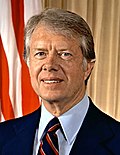
The Foreign Intelligence Surveillance Court (FISC) was established by the Foreign Intelligence Surveillance Act (FISA) of 1978, enacted as Public Law 95-511 and signed into law by President Jimmy Carter on October 25, 1978.[12][13] FISA authorized the executive branch to conduct electronic surveillance and physical searches for foreign intelligence purposes but required prior judicial approval through the FISC for such activities targeting foreign powers or their agents within the United States, distinguishing it from standard criminal wiretap procedures under Title III of the Omnibus Crime Control and Safe Streets Act of 1968.[14][15] Under Section 103 of FISA, the Chief Justice of the United States designates seven district judges from at least seven of the thirteen judicial circuits to serve on the FISC, with no two judges from the same circuit; these judges serve staggered seven-year terms and may be reappointed upon expiration.[1][16] The court's jurisdiction is limited to reviewing ex parte applications submitted by the Attorney General for orders approving surveillance or searches, applying a probable cause standard that the target is a foreign power or agent thereof engaged in activities threatening national security.[3][15] FISA also created a Foreign Intelligence Surveillance Court of Review (FISCR) to hear appeals from FISC denials, consisting of three district or circuit judges designated by the Chief Justice, though such appeals have been rare.[7][3] Proceedings occur in secret, with sessions held in the District of Columbia or other secure locations as designated, ensuring classified information remains protected while providing a check on executive surveillance authority.[1] The act's framework aimed to balance national security needs with Fourth Amendment protections, mandating that surveillance minimize acquisition and retention of non-pertinent U.S. persons' communications.[14][13]Evolution through Amendments and Key Statutes
The Foreign Intelligence Surveillance Act (FISA), enacted on October 25, 1978 (Pub. L. 95-511), established the FISC to oversee applications for electronic surveillance and physical searches targeting foreign powers or agents of foreign powers, requiring probable cause determinations by judges selected from the federal district courts.[14] Subsequent amendments expanded the court's jurisdiction to include pen register and trap-and-trace devices, initially added through the Intelligence Authorization Act for Fiscal Year 1995 (Pub. L. 103-359, October 14, 1994), which permitted such orders for foreign intelligence purposes under modified standards less stringent than those for criminal investigations.[14] The USA PATRIOT Act, signed into law on October 26, 2001 (Pub. L. 107-56), significantly broadened FISC's scope by authorizing roving wiretaps that could follow targets across devices or locations without specifying exact facilities; "lone wolf" provisions allowing surveillance of non-U.S. persons not affiliated with foreign powers but suspected of terrorism or espionage; and Section 215 orders for the production of tangible business records, including library and telephone metadata, upon a showing relevant to an authorized investigation.[17] These changes shifted FISA from a primarily foreign-focused regime toward greater domestic applicability, with the FISC reviewing thousands of such applications annually in the post-9/11 era, though critics noted the low denial rate—under 1%—raising questions about the court's oversight rigor.[17] In response to executive branch assertions of inherent Article II authority for warrantless surveillance revealed in 2005, Congress passed the Protect America Act of 2007 (Pub. L. 110-55, August 5, 2007), a temporary measure immunizing telecommunications providers for prior assistance and authorizing broad acquisitions of foreign communications transiting U.S. facilities without individualized FISC warrants.[17] This expired after six months but informed the FISA Amendments Act of 2008 (Pub. L. 110-261, July 10, 2008), which codified Section 702 to permit warrantless targeting of non-U.S. persons reasonably believed to be abroad for foreign intelligence purposes, subject to FISC-approved targeting and minimization procedures to protect incidentally collected U.S. person data.[18] The 2008 Act also granted retroactive immunity to providers and established the Foreign Intelligence Surveillance Court of Review for appeals, enhancing the FISC's role in certifying broad surveillance programs while centralizing ex parte approvals.[19] Revelations of bulk metadata collection under Section 215, validated by FISC orders but challenged in ACLU v. Clapper (2013), prompted the USA FREEDOM Act, enacted June 2, 2015 (Pub. L. 114-23), which prohibited bulk collection of domestic telephony records, requiring instead targeted production from third-party providers upon specific selection terms and FISC order; it also mandated appointment of independent amicus curiae advocates for novel legal issues and declassification of significant FISC opinions to promote transparency.[20] Later reauthorizations, such as the USA FREEDOM Reauthorization Act of 2020 (Pub. L. 116-260, December 27, 2020), extended Section 215 with heightened record-keeping requirements and FBI querying restrictions, while Section 702 underwent periodic renewals under the FISA Amendments Act Reauthorization, most recently in April 2024 for two years, amid debates over "backdoor searches" of U.S. persons data without warrants.[21] These reforms aimed to balance national security imperatives with Fourth Amendment constraints, though empirical data on incidental collection volumes—estimated in millions annually—continues to fuel scrutiny of the FISC's secretive proceedings.[18]Court Structure and Composition
Judicial Appointments and Terms
The judges of the United States Foreign Intelligence Surveillance Court (FISC) are designated by the Chief Justice of the United States from among the active judges of the federal district courts. Under 50 U.S.C. § 1803(a), the Chief Justice publicly selects 11 such judges, ensuring representation from at least seven of the thirteen United States judicial circuits to promote geographic diversity.[22] This selection process occurs without formal nomination or Senate confirmation, distinguishing FISC appointments from standard Article III judicial vacancies.[1] Each designated judge serves a single, non-renewable term of up to seven years on the FISC, during which they continue their full-time duties on their home district courts.[1] Terms are staggered across the 11 judges, with approximately one or two expiring annually to maintain institutional continuity and prevent wholesale turnover.[1] The Chief Justice also designates one of the 11 as the presiding judge, who serves in that role for a maximum of seven years and coordinates court operations, including the assignment of applications for surveillance orders.[22] This appointment mechanism, established by the Foreign Intelligence Surveillance Act of 1978, centralizes authority in the Chief Justice to expedite the assembly of a specialized bench focused on national security matters, though it has drawn scrutiny for concentrating influence in one Supreme Court justice without external checks.[22] Since Chief Justice John Roberts assumed office in 2005, he has designated all current FISC judges, enabling consistent application of interpretive precedents across rotations.[23]Organizational Features and Location
The United States Foreign Intelligence Surveillance Court (FISC) is composed of eleven federal district judges designated by the Chief Justice of the United States from among judges serving on the district courts.[1] These judges are nominated by the President and confirmed by the Senate prior to their district court service, and they must undergo security clearances for access to classified information.[1] Terms on the FISC are staggered, with each judge serving a maximum of seven non-consecutive years to ensure continuity and rotation; the selection requires representation from at least seven judicial circuits, and at least three judges must reside in the Washington, D.C., area to facilitate operations.[1][7] Administratively, the court features a presiding judge responsible for overall leadership, supplemented by a weekly duty judge system where individual judges rotate to review and rule on government surveillance applications expeditiously, often outside regular sessions.[1] Support includes a clerk's office for case management and financial administration, as well as legal advisors to assist in proceedings; in complex matters, the court may appoint amici curiae to provide independent perspectives.[1] All proceedings remain ex parte, with the government presenting applications without adversarial input, and decisions are classified unless declassified by the court or required by law.[1] The FISC convenes in Washington, D.C., operating from secure facilities within the federal judiciary infrastructure to accommodate its classified nature.[1] This central location enables prompt handling of nationwide intelligence applications while maintaining proximity to executive branch agencies involved in foreign intelligence matters.[1]Succession and Rotation of Judges
The Chief Justice of the United States Supreme Court appoints the eleven judges of the Foreign Intelligence Surveillance Court (FISC) from among sitting federal district court judges, ensuring representation from at least seven regional circuits and including at least three judges from districts within the Washington, D.C. metropolitan area.[1] Each appointee must have been nominated by the President and confirmed by the Senate for their underlying district judgeship.[1] Terms of service on the FISC last seven years, with appointments staggered across the initial designations under the Foreign Intelligence Surveillance Act of 1978 to promote continuity—one term expiring roughly every year thereafter.[1] [24] Succession occurs through direct appointment by the Chief Justice upon the expiration of a predecessor's term, without automatic elevation or carryover from prior service; the process prioritizes maintaining circuit diversity and judicial experience in national security matters, though no statutory mandate requires the latter.[1] [7] Terms are generally non-renewable immediately, limiting any single judge to no more than seven consecutive years, though reappointment after an interval is permissible.[1] In practice, this results in one to two vacancies filled annually, with the Chief Justice exercising sole discretion in selections, a mechanism that has drawn scrutiny for concentrating authority without Senate confirmation for the FISC role itself.[1] [25] Rotation of duties ensures no judge presides full-time over FISC proceedings; instead, appointees continue their primary district court caseloads while traveling to Washington, D.C., to review surveillance applications on a scheduled, rotating basis—typically one week at a time for each active judge.[16] [7] This system distributes workload across the panel, with a single judge or three-judge panel assigned per application as needed, fostering specialized yet temporary engagement with classified matters.[7] The Chief Justice separately designates the Presiding Judge from among the eleven for a concurrent seven-year term to oversee administrative functions, including case assignments and court rules.[26] This rotation mitigates institutional insularity but has been critiqued for potential inconsistencies in application reviews due to varying judicial tenures and expertise levels.[27]Jurisdiction and Operational Procedures
Scope of Surveillance Authority
The Foreign Intelligence Surveillance Court's (FISC) authority under the Foreign Intelligence Surveillance Act (FISA) primarily involves reviewing executive branch applications to authorize electronic surveillance, physical searches, and related intelligence-gathering tools targeted at foreign powers or their agents for the purpose of acquiring foreign intelligence information. Established in 1978, this jurisdiction is codified in 50 U.S.C. §§ 1801–1885 and requires the court to determine probable cause that the target is a foreign power—defined as a foreign government, faction, or entity engaged in international terrorism—or an agent of a foreign power, such as individuals involved in espionage, sabotage, or terrorism on behalf of such entities.[28][1] For U.S. persons targeted under Title I, applications must demonstrate probable cause of specific foreign intelligence-related crimes like espionage or terrorism, distinguishing it from domestic criminal investigations under Title III of the Omnibus Crime Control and Safe Streets Act, which require probable cause of a crime.[29][14] The court's orders under Title I (50 U.S.C. §§ 1801–1813) authorize electronic surveillance of communications facilities within the United States, limited to a specified duration (up to 90 days for non-U.S. persons, 7 days initially for U.S. persons with extensions) and subject to minimization procedures to protect the privacy of uninvolved U.S. persons.[30][31] In addition to Title I, the FISC authorizes physical searches under Title III of FISA (50 U.S.C. §§ 1821–1827), which parallel electronic surveillance standards but apply to tangible items or premises, again requiring probable cause tied to foreign intelligence objectives rather than general criminality.[1] The court also oversees pen register and trap-and-trace devices (Titles IV and V, 50 U.S.C. §§ 1841–1846), as well as orders for the production of tangible things such as business records under Section 215 (50 U.S.C. § 1861), where applications must certify relevance to authorized investigations of foreign powers or agents conducted to protect against international terrorism or clandestine intelligence activities.[32] These authorities do not extend to purely domestic surveillance or warrantless collection absent foreign intelligence nexus; for instance, traditional criminal wiretaps fall outside FISC jurisdiction.[14] A significant expansion occurred with Section 702 of FISA (50 U.S.C. § 1881a), added by the FISA Amendments Act of 2008, under which the FISC approves broad targeting procedures rather than individual warrants for surveilling non-U.S. persons reasonably believed to be located outside the United States to acquire foreign intelligence via U.S.-based electronic communication service providers (PRISM) or upstream collection of communications transiting U.S. infrastructure.[33][1] This programmatic authorization, renewed periodically (most recently through April 2026 following 2024 amendments requiring warrants for certain U.S. person queries), mandates minimization of incidentally collected U.S. person data but permits warrantless acquisition when the target and purpose align with foreign intelligence definitions, excluding U.S. persons as primary targets.[34] Section 704 extends similar oversight to U.S. persons abroad, requiring individualized probable cause findings.[1] Overall, the FISC's scope emphasizes national security over law enforcement, with approvals conditioned on compliance with statutory definitions excluding routine domestic activities.[28]Application Review and Warrant Standards
The Foreign Intelligence Surveillance Court (FISC) conducts ex parte review of applications submitted by the U.S. Department of Justice for orders authorizing electronic surveillance or physical searches of targets believed to be foreign powers or their agents under Title I of the Foreign Intelligence Surveillance Act (FISA), as codified in 50 U.S.C. §§ 1801–1813.[1] These applications, typically initiated by the Federal Bureau of Investigation (FBI) and certified by the Attorney General, must detail the target's identity, the facilities or places to be surveilled, the type of information sought, and supporting facts establishing statutory compliance. The court's presiding judge or duty judge examines the submission for adherence to legal requirements, often without oral arguments or adversarial input, though modifications to applications may be requested if deficiencies are identified. Issuance of a FISC order, functioning as a warrant, requires the judge to affirmatively find probable cause that the target is a foreign power—defined to include foreign governments, international terrorist organizations, or entities engaged in clandestine intelligence activities—or an agent thereof, excluding U.S. persons solely on the basis of First Amendment-protected activities.[31] Additional criteria mandate that the surveillance pertains to foreign intelligence information, such as the capabilities, intentions, or activities of foreign powers, and that a significant purpose (as amended post-2001) is to acquire such data rather than evidence of domestic crimes.[31] The order must specify the target, locations, information sought, means of surveillance, and duration, not exceeding 90 days for non-U.S. persons or 120 days initially for U.S. persons with extensions possible upon reapplication.[31] Applications must also certify the implementation of minimization procedures to limit the acquisition, retention, and dissemination of nonpublic information about U.S. persons incidentally collected, ensuring compliance with constitutional protections while permitting necessary intelligence handling.[28] These procedures, approved by the Attorney General and FISC, require procedures to discard irrelevant U.S. person data within specified periods unless it meets exceptions for foreign intelligence value or evidence of crimes.[14] The court verifies that the application includes all requisite affidavits, certifications under 50 U.S.C. § 1804, and, for U.S. person targets, assurances that the information could not reasonably be obtained by normal investigative techniques. Subsequent amendments have refined these standards; for instance, the USA PATRIOT Act of 2001 modified the "sole purpose" test to "a significant purpose" for foreign intelligence, broadening applicability to cases with mixed criminal and intelligence objectives, while the FISA Amendments Act of 2008 introduced distinct certification processes under Section 702 for targeting non-U.S. persons abroad without individualized probable cause warrants.[18] In Section 702 reviews, the FISC assesses annual certifications for compliance with targeting and minimization directives rather than per-target warrants, though probable cause remains required for querying collected data involving U.S. persons in certain contexts.[33] Denials or modifications occur when applications fail these benchmarks, emphasizing the court's role in gatekeeping executive requests.[16]Ex Parte Proceedings and Secrecy Protocols
The Foreign Intelligence Surveillance Court (FISC) conducts its proceedings on applications for surveillance orders exclusively on an ex parte basis, meaning the United States government is the sole party presenting arguments and evidence to the court, with no representation or notification provided to the targeted individuals or entities.[1][14] This structure, mandated by the Foreign Intelligence Surveillance Act of 1978 (FISA), as codified in 50 U.S.C. § 1803, ensures that sensitive intelligence sources, methods, and operational details remain undisclosed to prevent compromising national security efforts.[35] A single presiding judge, selected from the court's roster of eleven Article III federal judges appointed by the Chief Justice of the United States, reviews each application in isolation, often in chambers, without oral arguments or cross-examination.[36] Secrecy protocols under FISA classify all FISC proceedings, applications, orders, and supporting materials as national security information, exempt from routine public disclosure requirements under laws such as the Freedom of Information Act.[26] This classification stems from the statutory imperative to safeguard foreign intelligence collection, as targets notified of surveillance could alter behaviors, alert accomplices, or destroy evidence, thereby nullifying the intelligence value.[37] Court records are stored in secure facilities at the E. Barrett Prettyman United States Courthouse in Washington, D.C., with access restricted to cleared personnel, and electronic surveillance orders typically authorize collection for periods of up to 90 days for individuals or 120 days for groups, renewable ex parte upon government demonstration of continued probable cause.[7] While the USA FREEDOM Act of 2015 (Pub. L. 114-23) mandated semi-annual aggregate statistics on applications and some declassification of significant opinions at the government's discretion, the core ex parte and classified framework persists to prioritize operational efficacy over transparency. These protocols reflect a deliberate congressional balance favoring executive efficiency in foreign intelligence gathering, as evidenced by the near-unanimous approval rates—over 99% from 1979 to 2019—attributable in part to the absence of adversarial scrutiny, though judges have denied or modified thousands of applications when probable cause thresholds under 50 U.S.C. § 1805 are unmet. Declassification occurs selectively, such as through voluntary government releases following public controversies like the 2013 Edward Snowden disclosures, but remains exceptional to avoid revealing interpretive precedents that could aid foreign adversaries in evading detection. Critics, including civil liberties advocates, argue this opacity fosters potential overreach, yet statutory design underscores the causal necessity of secrecy for preventing threats where public proceedings would inherently undermine the warrants' purpose.[38]Effectiveness in National Security
Contributions to Preventing Threats
The Foreign Intelligence Surveillance Court (FISC) has facilitated the prevention of terrorist threats by approving surveillance applications under the Foreign Intelligence Surveillance Act (FISA), enabling intelligence agencies to gather critical evidence on foreign powers and their agents involved in international terrorism. Through its review of Title I warrant applications and Section 702 certifications, the court has authorized targeted collection that has directly contributed to disrupting plots, as evidenced in declassified government assessments. For instance, FISC-approved procedures under Section 702 allowed the National Security Agency (NSA) to collect foreign communications revealing operational details of threats, which were then used to initiate domestic investigations.[39][30] A prominent example is the 2009 New York City subway bombing plot led by Najibullah Zazi, an al Qaeda operative. Section 702 surveillance, conducted pursuant to FISC-approved certifications, captured an email from Zazi seeking instructions on detonating explosives, providing the initial lead that prompted Federal Bureau of Investigation (FBI) scrutiny via a National Security Letter and subsequent FISA warrants. This intelligence uncovered Zazi's travel from Pakistan, acquisition of bomb precursors, and coordination with accomplices, leading to arrests on September 19, 2009, and guilty pleas or convictions for all involved, thereby averting an attack that could have killed thousands.[39][40] Additional cases highlight FISC's role in broader counterterrorism efforts. In 2013–2015, Section 702 collection under FISC oversight tracked ISIS recruiter Shawn Parson, exposing his network and plans to attack U.S. military targets, resulting in his elimination in Syria in September 2015 and disruption of associated cells. Similarly, from 2014 to 2016, NSA monitoring authorized by FISC certifications located ISIS leader Hajji Iman, enabling a U.S. airstrike that killed him on March 24, 2016, and degraded his operational command structure. These outcomes demonstrate how FISC's procedural approvals have supported the identification of terrorist plans and neutralization of key figures, with official reports attributing such successes to FISA authorities' effectiveness in acquiring foreign intelligence on terrorism.[39][41] Government testimony further underscores the cumulative impact, noting that FISA surveillance, including FISC-vetted programs, has foiled multiple terrorist plots and patched vulnerabilities since 2001, often by providing unique insights into foreign adversaries' intentions that traditional methods could not yield. While exact numbers of prevented threats remain classified to protect sources and methods, declassified examples and annual transparency reports affirm that FISC's rigorous ex parte reviews have balanced national security imperatives with statutory safeguards, contributing to the absence of major foreign-directed attacks on U.S. soil post-9/11.[42][43]Statistical Record of Approvals and Modifications
The Foreign Intelligence Surveillance Court (FISC) processes applications for electronic surveillance and physical searches under Title I of the Foreign Intelligence Surveillance Act (FISA), with statistical records compiled from annual reports submitted by the Department of Justice to Congress and the Administrative Office of the U.S. Courts. These records track applications submitted, approvals granted, modifications required, and denials issued, revealing a pattern of near-universal approval historically, punctuated by rare outright rejections and an uptick in modifications reflecting heightened judicial review. Modifications typically involve government revisions to targeting procedures, minimization requirements, or probable cause showings to meet FISA's standards under 50 U.S.C. § 1805.[44][45] From 1979 to 2015, the FISC received approximately 24,400 applications, approving over 99.9% without denial, with total outright denials numbering fewer than 20 across all years—often zero annually—and modifications sporadic, totaling under 500 instances. This high approval rate persisted amid rising application volumes, peaking at over 2,000 per year in the mid-2000s following expanded counterterrorism authorities post-September 11, 2001. Denials remained negligible until 2016, when scrutiny intensified under post-Snowden reforms and the USA FREEDOM Act of 2015, which mandated more detailed reporting of substantive modifications and partial denials previously not distinguished from approvals.[46][44] Subsequent years showed increased denials and modifications as application numbers declined, partly due to alternative authorities like Section 702 of FISA (50 U.S.C. § 1881a) shifting bulk collection burdens. For instance, in 2016, 34 denials accompanied 310 modifications out of 1,485 applications, while by 2022, denials stabilized at 23 amid 358 submissions. These figures include both full denials and cases where applications were withdrawn after court-ordered changes, indicating the court's role in enforcing compliance rather than blanket rejection. Section 702 certifications, renewed annually, have similarly high approval rates, with modifications to targeting or minimization procedures in select years but no outright denials since inception in 2008.[46][45]| Year | Applications Submitted | Approved | Modified | Denied |
|---|---|---|---|---|
| 2016 | 1,485 | 1,451 | 310 | 34 |
| 2017 | 1,372 | 948 | 353 | 71 |
| 2018 | 1,142 | 830 | 245 | 67 |
| 2019 | 863 | 586 | 224 | 53 |
| 2020 | 489 | 334 | 121 | 34 |
| 2021 | 391 | 271 | 97 | 23 |
| 2022 | 358 | 249 | 87 | 23 |