Hubbry Logo
search
logo

Fire prevention

logo
Community Hub0 Subscribers
Read side by side
from Wikipedia

Fire prevention is a function of many fire departments. The goal of fire prevention is to educate the public on the precautions that should be taken to prevent potentially harmful fires from occurring. It is a proactive method of preventing fire-based emergencies and reducing the damage caused by them. Fire prevention education can take the form of videos, pamphlets, and banners. Often, the messages and lessons are simple tips. Many fire departments will have one or more Fire Prevention Officers, which may also be a routine duty of firefighters.[1]

Safe practices

[edit]

Smoke detector installation

[edit]

The National Fire Protection Association identifies that 3 out of 5 deaths that occur during fires happen in homes that do not have smoke detectors installed or homes that do not have working smoke detectors. Research shows that the chances of dying in a fire are cut in half when smoke detectors are present. It is recognized that 74 percent of homes do have working smoke detectors installed.[2]

Generally taught more to adults (particularly homeowners), a core part of fire prevention outreach involves encouraging people to ensure that they have an adequate number of smoke detectors installed in their home and how to maintain them.

  • Smoke detectors are to be tested regularly to make certain that they are in good working order. These steps can significantly reduce deaths in household fires, particularly at night when people are sleeping.
  • Smoke detectors generally make a persistent beeping sound when their batteries run low, and a key part of fire prevention outreach involves encouraging people to replace batteries promptly instead of just removing them to make the beeping stop.

Sprinkler system usage

[edit]

A wet-pipe sprinkler system is an automatic sprinkler system in which the supply valves are open and the system is charged with water. They are the quickest at getting water on the fire and are the simplest to maintain. Wet-pipe systems are installed where indoor temperatures can be maintained at or above 40 degrees Fahrenheit (4 °C). If the outside temperature is below freezing and the interior temperature is less than 40 degrees Fahrenheit, the steel sprinkler piping, which rapidly conducts heat and rapidly loses it, will cause the pipes to freeze. The frozen area may be isolated and near an opening or uninsulated portion of the building which could be enough to put the whole system out of service.

Stoves have sometimes caused accidental fires.

Reduction of false alarms

[edit]

Much of fire prevention education also involves advice on how to reduce false alarms. False alarms have the potential to waste manpower and resources, which may be needed desperately during a real emergency. In addition, firefighters responding to calls in fire engines are at increased risk of traffic collisions when driving under emergency conditions. In 2008 the state of New York found that 18% of firefighter deaths in the line of duty had occurred whilst responding to calls.[3]

Stop, drop and roll

[edit]

Stop, drop and roll is often taught as part of fire protection education efforts as it is both a simple technique and an effective way of extinguishing burning clothing. It is particularly suited to children who may panic if their clothing catches fire and they do not know how to put it out.

Target Audiences and Those at Risk

[edit]

These groups of people are those that are considered at higher risk for fires and should are the target of fire prevention education in a way to better protect them from fire emergencies. These are also target audience such as students that can benefit from the knowledge of how to prevent fires from starting in their homes.

Students

[edit]
Firefighters teaching a class of young students about how to properly use a fire extinguisher

Children are a major target of fire prevention knowledge. Firefighters will often visit schools and teach students the basics of fire protection and fire safety, including how to evacuate from a burning building and how to prevent fires by avoiding dangerous activities such as playing with matches. Though fire can be a source of fascination for young children, the potential for accidents, as a result, is high. Fire prevention often aims to teach children not to play with fire so that they do not accidentally cause one.

One of the most critical jobs of a firefighter is search and rescue. For young children, it is important that firefighters are seen as people they can follow and trust. A firefighter in bunker gear breathing with an air tank could be an unfamiliar sight, especially to a child. One way a child can get used to or trust a firefighter is seeing a firefighter dress, step by step, seeing that they are a person wearing a uniform and protective equipment. Furthermore, being able to walk up and touch the firefighter can reassure the child that he or she is a real person.

Elderly and disabled people

[edit]

Elderly and disabled people are potentially at greater risk in emergency situations as a result of poor mobility or intellectual disability from age. Fire prevention outreach often involves ensuring that these groups have a clearly defined plan of what to do in the event of an emergency and easy access to emergency exits.

Elderly people are considered by the United States Fire Administration those to be the ages of 65 and older and those that have mental and physical impairments and may rely heavily on medical supplements to get through their everyday lives. [4]

Landlords and caretakers

[edit]

In many jurisdictions, landlords are responsible for implementing fire prevention and fire safety measures in accordance with various laws.[5] Landlords must perform regular fire safety risk assessments in order to identify if any properties could be potentially harmed by fires.

Hoarders

[edit]

Hording is the disorder in which a person or group of people have a difficulty throwing away things they no longer need or parting away with any kind of possession because they believe that they will need to save them for something. Hoarding can range from mild cases that may not have a very heavy impact on a person’s life to severe cases where the daily function of the person is hindered by their actions [6]

Hoarding becomes a great fire hazard in severe cases because of the number of items that may pile up. Often the homes of hoarders will block exits that provide a means of escape for the occupants. Firefighters that are responding to an emergency in the home of hoarders may not be able to get to the occupants as quickly because they are obstructed from entering the building. Because of the increased fire load a hoarding environment creates, those who live in occupancies in close proximity may be affected because of amplified smoke and fire conditions.[7]

Smokers

[edit]

According to the world health organization consensus there are around 1.3 billion smokers worldwide, 80 percent of those smokers are identified as those that live in low income area and middle income areas. [8]

While smoking is a commonly accepted thing that many people do in their daily lives out in public or in their own home it is important for those that smoke to know the fire risk they present. Approximately 500 smokers as well as nonsmokers are killed in fires that start because of improperly discarded cigarettes and ashes. Fires caused by smoking are the most preventable of all. Most fires that involve smoking start inside the home, when a smoker does not properly dispose of their ashes or cigarette butts, they can fall into things such as couches and chairs which quickly ignite. Smokers who discard their cigarettes and ashes in the trash can start fires that lead to other collateral damage. [9]

Fire prevention inspections

[edit]

Many fire departments have fire prevention divisions, which consist of groups of firefighters who conduct building inspections to make sure they are compliant with fire codes; they also visit schools and daycare centers to make presentations about arson, malicious false alarms, and fire safety. Fire Prevention Officers may also conduct tours of their fire house for visitors. They demonstrate what each of their apparatuses does, and sometimes will don their bunker gear to show what a firefighter wears into a fire.

A typical fire prevention division consists of a Chief Fire Prevention Officer and Fire Prevention Officers. Those in the Fire Prevention Division have their own insignia, such as epaulets with two thin bars that read "FIRE PREVENTION OFFICER" below them; crescents on their helmets; and collar pins. Depending on its budget, a division may have its own fire vehicle.

National Observance and History of Fire Protection Month

[edit]

Many fire departments observe "Fire Prevention Month" for all of October. Fire departments may visit schools, hang banners, give firehouse tours or hold open houses.[citation needed] Various fire organizations and fire professionals from all across the country attend, along with a number of students and teachers. Songs and entertainment regarding fire safety are also available making fire education fun. Guest speakers are also a large part of fire protection week.

Fire Prevention Week started in 1922 by the Nation Fire Protection Association. Having been started in 1922 and continued every year from then on, the observance of Fire Prevention Week is considered the longest running public health celebration in the United States. This observance was started in honor of the Great Chicago Fire that occurred on October 8th, 1871. This is why Fire Prevention Week occurs every October and specifically on the week that October 9th falls.[10]

See also

[edit]

References

[edit]
Revisions and contributorsEdit on WikipediaRead on Wikipedia
from Grokipedia
Fire prevention refers to the proactive measures and strategies implemented to avoid the initiation of fires, encompassing hazard identification, risk reduction, public education, and enforcement of safety codes and standards.[1] According to the National Fire Protection Association (NFPA), these efforts are integral to a broader ecosystem that includes eight interdependent components: prevention, building and fire codes, enforcement, education, engineering and technology, emergency response, economic impact and incentives, and research, all working together to minimize fire risks and protect lives and property.[1] In the United States, effective fire prevention has significantly reduced fire incidents over decades; for instance, total reported fires in 2023 numbered 1.39 million, representing a 54% decline from 1980 levels, while civilian fire deaths dropped 44% to 3,670 and injuries fell 56% to 13,350 during the same period.[2] These improvements are attributed to advancements in prevention practices, such as widespread adoption of smoke alarms—which cut the risk of dying in a home fire by more than half (54%) when functioning properly—and stricter building regulations.[3] Despite this progress, fires still caused an estimated $23 billion in direct property damage in 2023, underscoring the ongoing need for vigilant prevention to address persistent challenges like residential cooking fires and electrical malfunctions.[2] Key aspects of fire prevention include community risk reduction programs, which focus on eliminating hazards through inspections and awareness campaigns, as well as the development and application of codes like NFPA 1 (Fire Code) that regulate fire safety in buildings and facilities.[4] International efforts, such as those aligned with NFPA standards, emphasize tailored strategies for diverse settings, from homes to industrial sites, ensuring comprehensive coverage against ignition sources like open flames, faulty wiring, and combustible materials.

Fundamentals of Fire Prevention

Definition and Importance

Fire prevention refers to the proactive measures designed to eliminate or mitigate fire hazards before ignition occurs, encompassing engineering solutions, educational initiatives, and enforcement of regulations.[5] This approach integrates the "three E's"—engineering (such as designing fire-resistant structures), education (public awareness campaigns), and enforcement (compliance with fire codes)—to systematically reduce the risk of fire outbreaks.[6] The importance of fire prevention is underscored by its profound impact on public health and economic stability, as uncontrolled fires result in significant loss of life and property worldwide. According to the World Health Organization, fires cause approximately 180,000 deaths annually, with the majority occurring in low- and middle-income countries due to inadequate prevention measures. These efforts are part of a broader NFPA Fire & Life Safety Ecosystem comprising eight interdependent components that work together to minimize fire risks. Historically, the shift toward prevention-focused strategies gained momentum following catastrophic events like the Great Chicago Fire of 1871, which destroyed over 17,000 structures and left 100,000 people homeless, prompting the adoption of stricter building codes and the establishment of Fire Prevention Week to commemorate the disaster.[7] This evolution marked a transition from primarily reactive firefighting to comprehensive prevention frameworks, influencing modern fire safety standards globally.[8] Effective fire prevention has demonstrably reduced fire incidence and severity, as evidenced by a 52% decline in reported U.S. home structure fires since 1980, from 734,000 incidents to 352,000 in 2023, attributed to widespread adoption of prevention practices like smoke alarms and code enforcement.[9] These benefits highlight how prevention not only saves lives but also fosters safer communities through sustained, multifaceted efforts.[9]

Common Causes and Risk Factors

In residential settings, cooking equipment remains the predominant ignition source for structure fires, accounting for 49% of incidents between 2019 and 2023, often due to unattended stoves or improper use of oils and fats.[10] Heating equipment follows as a significant contributor, responsible for 20% of such fires during the same period, primarily from portable heaters placed too close to combustible materials or malfunctioning fixed systems.[10] Electrical distribution and lighting equipment also pose a notable risk, involved in 9% of home fires, typically arising from faulty wiring, overloaded circuits, or damaged appliances.[10] Key risk factors amplifying these ignition sources include human error, such as leaving cooking unattended or misusing extension cords, which contributes to the majority of preventable incidents across fire types.[9] Poor maintenance exacerbates vulnerabilities, with neglected heating systems or uninspected electrical installations leading to failures under stress.[11] Environmental influences, particularly wildfires, have intensified due to climate change-driven droughts and higher temperatures, resulting in increased frequency and severity in the 2020s, as seen in expanded burned areas across western North America.[12] Emerging risks from lithium-ion battery failures in electric vehicles and consumer devices, such as e-bikes and laptops, have shown a marked uptick, with over 800 incidents reported in New York City alone since 2022, often triggered by overcharging or physical damage.[13] These fires are challenging to suppress due to thermal runaway reactions, contributing to rising injuries and property damage in urban areas.[13] Globally, fire incidence varies significantly, with developing countries experiencing higher rates of industrial fires—such as in textile factories—attributable to lax enforcement of safety regulations and inadequate infrastructure, leading to disproportionate fatalities compared to developed nations.[14] For instance, low-income regions have reported a 300% rise in urban fire incidents over recent decades, underscoring the role of regulatory gaps in perpetuating these trends.[14]

Structural and Technological Measures

Detection and Alarm Systems

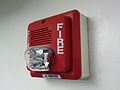
Detection and alarm systems are essential components of fire prevention, designed to identify fire hazards at their inception and notify occupants promptly to facilitate evacuation. These systems primarily include smoke detectors, heat detectors, and carbon monoxide (CO) alarms, each tailored to detect specific fire signatures. Smoke detectors operate by sensing particles in the air, with two primary technologies: ionization and photoelectric. Ionization detectors use a small radioactive source to ionize air, detecting changes caused by fast-flaming fires with small particles, making them responsive to quick-burning materials like paper or wood.[15] In contrast, photoelectric detectors employ a light beam and photocell to identify larger smoke particles from smoldering fires, such as those involving upholstery or electrical wiring, which produce slower-burning but equally dangerous smoke.[16] Heat detectors, meanwhile, monitor temperature rises, activating at fixed thresholds (typically 135–175°F) or rapid rate-of-rise patterns, ideal for areas like kitchens or garages where smoke detection might trigger false alarms.[17] CO alarms complement these by detecting colorless, odorless carbon monoxide gas from incomplete combustion sources like faulty heaters, alerting to poisoning risks before fire ignition.[16] Advancements in the 2020s have introduced smart detection systems integrating artificial intelligence (AI) and Internet of Things (IoT) technologies for predictive alerting. These systems analyze data from multiple sensors, environmental patterns, and even video feeds to forecast fire risks, such as overheating appliances, and send real-time notifications via apps or connected devices. For instance, IoT-enabled frameworks have demonstrated a 30% reduction in fire detection and notification times compared to traditional systems, enhancing early intervention.[18] Dual-sensor or multi-criteria detectors combining ionization, photoelectric, and heat elements further improve reliability by addressing diverse fire types.[16] Installation guidelines, as outlined in the National Fire Protection Association (NFPA) 72 standard, 2025 edition, emphasize strategic placement to maximize coverage and minimize delays. In residential settings, smoke alarms must be installed inside every bedroom, outside each sleeping area in hallways, and on every level of the home, including basements but excluding unfinished attics or garages. Alarms should be mounted on ceilings at least 4 inches from walls or on walls between 4–12 inches from the ceiling, avoiding corners where smoke may pool.[16] Interconnection is required so that activation of one alarm sounds all others, ensuring whole-home alerting. For optimal performance, testing should occur monthly by pressing the test button, with batteries replaced at least annually or immediately upon low-battery chirps; hardwired units with battery backups need similar checks.[17] The effectiveness of these systems is well-documented, with working smoke alarms reducing the risk of death in home fires by more than 50% by providing critical early warnings, allowing occupants an average of 2–3 minutes to escape.[19] In the United States, where adoption is high at nearly 99% of households, this has contributed to a 60% drop in fire death rates per 1,000 incidents from 2018–2022 when alarms operate.[19] Proper maintenance is crucial to sustain effectiveness and prevent system failures or nuisances. Dust accumulation can impair sensors, so alarms should be vacuumed gently every six months, while avoiding sprays or cleaners that could damage internals.[17] To minimize false alarms, which account for up to 80% of activations in some settings and can lead to occupant desensitization, place detectors at least 10 feet from cooking appliances, bathrooms, or high-humidity areas, and ensure professional verification for interconnected systems.[17] Alarms have a lifespan of 10 years, after which full replacement is necessary to comply with manufacturer and NFPA recommendations.[16]

Suppression and Containment Systems

Suppression and containment systems are engineered technologies designed to actively extinguish or confine fires upon detection, minimizing spread and damage in buildings. These systems typically activate automatically in response to heat, smoke, or flames, delivering extinguishing agents such as water, foam, or gases to targeted areas. Unlike passive measures, they intervene post-ignition to control fire dynamics, often integrating with detection systems for rapid response.[20] Automatic sprinkler systems represent the most common form of suppression, categorized into wet-pipe, dry-pipe, and pre-action types based on their configuration and application. Wet-pipe systems maintain water under pressure in the piping at all times, allowing immediate discharge from activated sprinklers in heated environments like offices and residences; they are the simplest and most reliable for general use. Dry-pipe systems use pressurized air to hold back water in the pipes, preventing freezing in unheated spaces such as parking garages or cold storage; upon heat activation, the air escapes, and water flows to the open heads. Pre-action systems combine elements of both, requiring dual triggers—such as a detection signal and subsequent heat activation—to fill pipes and discharge water, reducing the risk of accidental water release in water-sensitive areas like data centers or museums.[20][21] For environments involving flammable liquids, foam suppression systems deploy aqueous film-forming foam (AFFF) or alcohol-resistant variants through specialized nozzles or integrated sprinkler heads to smother hydrocarbon or polar solvent fires. These systems, governed by NFPA 16, create a blanket that suppresses vapors and cools surfaces, essential for storage tanks, aircraft hangars, or chemical facilities handling fuels like gasoline or diesel. Clean-agent gas systems, suitable for protecting electronics and high-value assets, release electrically non-conductive gases such as FM-200 (HFC-227ea) or inert mixtures like IG-541, which interrupt the chemical reaction of fire without leaving residue or damaging equipment; they comply with NFPA 2001 and are ideal for server rooms or telecommunications hubs.[22][23] In operation, individual sprinkler heads activate when fusible links or glass bulbs reach temperatures typically between 135°F and 170°F for ordinary hazard classifications, with 155°F as a standard threshold for many commercial settings; only affected heads discharge, conserving water while targeting the fire source. According to NFPA data, sprinklers operate effectively in 89% of incidents where fires are large enough to activate them, often controlling blazes with just one or two heads.[24] These systems can integrate with building HVAC for enhanced smoke containment, where fire alarms trigger dampers and fans to pressurize stairwells or exhaust smoke, as outlined in NFPA 92, preventing toxic spread and aiding evacuation.[25] Installation of suppression systems follows stringent standards, particularly in high-risk commercial buildings under the 2024 International Building Code (IBC), which mandates automatic sprinklers in occupancies like assembly spaces over 300 occupants, mercantile areas exceeding 12,000 square feet, and storage facilities with high-piled combustibles per Section 903. Retrofitting existing structures with these systems can reduce property loss by approximately 50% in fire events, alongside insurance premium discounts of up to 20%, though initial costs range from $2 to $7 per square foot depending on building complexity; federal tax incentives under Section 179 allow full expensing up to $1 million for qualifying installations.[26][27] Recent advances emphasize eco-friendly suppressants amid global regulations phasing out ozone-depleting halons under the Montreal Protocol and hydrofluorocarbons (HFCs) via the 2020 AIM Act, which mandates an 85% reduction in HFC production by 2036. Alternatives like 3M Novec 1230 (FK-5-1-12), a fluorinated ketone with zero ozone depletion potential and low global warming potential, have gained adoption for clean-agent applications, while low-expansion foams with reduced PFAS content address environmental concerns in flammable liquid protection.[28]

Building Design and Safety Standards

Building design and safety standards incorporate passive fire prevention measures to minimize ignition risks, limit fire spread, and facilitate safe evacuation through strategic architecture and material selection. These standards emphasize the use of fire-resistant materials, such as Type X gypsum board, which provides a fire-resistance rating of up to one hour when used in wall assemblies, helping to slow flame propagation and protect structural integrity during initial fire stages.[29] Compartmentalization further enhances safety by dividing buildings into fire-rated sections using barriers like fire walls and floors, designed to contain fires within specific areas for durations typically ranging from one to four hours, thereby allowing time for occupant egress and emergency response.[30] Egress paths are mandated to ensure multiple escape routes, with requirements for at least two means of egress per floor in most occupancies, positioned to provide unobstructed access to the exterior and limit travel distance to exits to no more than 200 feet in unsprinklered buildings.[31] Major codes governing these designs include the International Building Code (IBC), whose 2024 edition integrates enhanced provisions from the International Wildland-Urban Interface Code (IWUIC) to address wildfire zones, mandating defensible space, ignition-resistant construction, and setbacks for structures in high-risk areas.[32] The NFPA 101 Life Safety Code complements this by setting minimum requirements for building construction, occupancy classifications, and means of egress to protect occupants from fire hazards through compartmentalization and exit arrangements.[33] These codes prioritize holistic resilience, ensuring designs integrate passive features like fire-rated assemblies with active systems such as sprinklers for comprehensive protection. Global variations reflect regional fire risks and priorities; in the European Union, the EN 13501-1 standard classifies building materials by reaction to fire into Euroclasses A1 (non-combustible) through F (highly flammable), focusing on smoke production and flame spread for linings, insulation, and facades to prevent rapid fire growth.[34] In contrast, U.S. codes under the IBC and NFPA emphasize automatic sprinkler systems in most new commercial buildings over 5,000 square feet and high-rise structures, integrating them as a core design element to suppress fires early.[35] Adaptations for climate-vulnerable areas, such as Australia's post-2019-2020 bushfires, incorporate defensible space requirements under AS 3959:2018, mandating vegetation clearance zones of at least 30 meters around buildings and ember-resistant materials to mitigate radiant heat and ember attacks.[36] Compliance extends to site-specific zoning and electrical standards to avert ignition sources; hazardous materials storage must be segregated in dedicated, fire-rated enclosures or separated by at least 20 feet from other buildings, as defined in NFPA 101 for high-hazard areas to prevent chain reactions.[37] Electrical wiring standards require arc-fault circuit interrupters (AFCIs) in residential branch circuits, per the National Electrical Code, to detect and interrupt dangerous arcing faults that cause over 50% of electrical fires by de-energizing circuits before ignition occurs.[38]

Behavioral and Personal Practices

Safe Habits in Daily Life

Adopting safe habits in daily life is essential for reducing the risk of fires in residential and workplace settings, where human behavior often contributes to ignition sources. These practices focus on vigilance during routine activities, proper material handling, and maintaining clear environments to prevent accidental starts. By integrating these behaviors, individuals can significantly lower the incidence of common fire hazards, which account for a substantial portion of preventable incidents. In the kitchen, where cooking remains the leading cause of home fires, accounting for 48% of reported home structure fires annually from 2020 to 2024, individuals should never leave cooking unattended, as this is a primary factor in such incidents.[39] Always stay in the kitchen while frying, boiling, grilling, or broiling food, and use a timer for oven tasks to check regularly without leaving the home.[40] Keep flammable items such as oven mitts, wooden utensils, food packaging, towels, and curtains at least 12 inches away from the stovetop to avoid ignition from heat or open flames.[40] For electrical and heating appliances, unplug small devices like toasters or coffee makers when not in use to prevent potential faults or overheating that could lead to fires.[41] With space heaters, which contribute to 29% of heating-related fires, maintain at least a 3-foot clearance from combustible materials such as furniture, bedding, or paper, and never leave them unattended.[42] Safe smoking practices further mitigate risks by fully extinguishing cigarettes in deep, sturdy ashtrays placed away from flammables, smoking outdoors when possible, and avoiding smoking near medical oxygen or while drowsy.[43] Proper storage habits are crucial for hazardous materials; store gasoline in approved, sealed containers outdoors or in well-ventilated areas away from heat sources like water heaters or pilot lights, keeping quantities minimal (no more than 5 gallons).[44] For candles, use sturdy, non-tippable holders on stable surfaces, keeping them at least 12 inches from anything combustible, and never leave them burning unattended, as this misuse causes one in five candle fires.[45] Additionally, avoid accumulating clutter near doors, hallways, or exits to ensure unobstructed paths, as blocked routes exacerbate fire spread and escape challenges.[46] Recent increases in urban e-bike battery fires, with 268 incidents reported in New York City alone in 2023—up significantly from prior years—highlight the need for specific charging protocols. In 2024, fires rose slightly to 277, but deaths declined to 6 from 18 in 2023 following the enactment of safety standards like UL 2849.[47] Charge lithium-ion batteries at room temperature using manufacturer-provided or certified chargers on a non-flammable surface, never leaving them unattended, and avoid overcharging or using damaged equipment to prevent thermal runaway.[48] Store batteries in cool, dry locations away from direct sunlight or heat sources, and dispose of faulty ones through certified recycling programs.[48]

Immediate Response Techniques

When a fire is detected or clothing ignites, immediate actions can significantly increase survival chances by minimizing exposure to flames and smoke. These techniques focus on self-protection and rapid escape, often triggered by the activation of detection systems like smoke alarms.[49] If clothing catches fire, the "stop, drop, and roll" method is a critical self-extinguishment technique developed in the 1970s to reduce the approximately 150 annual U.S. home fire deaths from clothing ignition reported between 2015 and 2019.[49] First, stop moving immediately to avoid fanning the flames with air currents.[50] Next, drop to the ground and cover the face with hands to protect the airway and eyes from heat and embers.[50] Then, roll over and back or side to side on the ground until the flames are fully extinguished, smothering the fire by cutting off oxygen.[50] If unable to roll, a blanket or towel can be used to smother the flames after dropping.[50] For evacuation during a structure fire, prioritize escaping quickly while avoiding smoke inhalation and heat sources. Crawl low under smoke, as most deadly heat and toxic gases rise to the ceiling, keeping breathable air closer to the floor.[51] Before opening a closed door, feel the knob and door surface with the back of the hand; if it feels hot or smoke is seeping underneath, do not open it and use an alternate exit to avoid drawing fire into the space.[51] Always use stairs for evacuation rather than elevators, which may fail or be commandeered by responders during a fire.[52] Portable fire extinguishers can be used on small, contained fires if safe to do so, following the PASS method outlined by fire safety standards. Pull the pin to unlock the operating mechanism while holding the extinguisher upright and pointing the nozzle away from the body.[53] Aim the nozzle low at the base of the fire to target the fuel source.[53] Squeeze the handle steadily to discharge the agent, then sweep the nozzle side to side across the fire's width at its base until it is out.[53] For general home use, select a multi-purpose ABC extinguisher, which is effective against ordinary combustibles (Class A), flammable liquids (Class B), and energized electrical equipment (Class C) without conducting electricity.[54] Once out of immediate danger, alert emergency services by calling 911 and providing clear, concise information to expedite response. State the exact location, including address, building details, and any landmarks; describe the emergency type and severity, such as "house fire with smoke visible"; and include your name and phone number if requested.[55][51] Remain calm and answer all dispatcher questions to ensure accurate aid.[55]

Considerations for Vulnerable Populations

Children and Educational Environments

Children under five years of age face twice the risk of dying in a home fire compared to the general population, primarily due to their limited mobility and understanding of dangers.[56] A significant child-specific risk involves playing with matches or lighters, which serve as the ignition source in approximately 65% of home fires started by children at play.[57] In educational settings, school laboratories present additional hazards, such as uncontrolled chemical reactions during experiments like the "rainbow demonstration" using flammable alcohols, which has led to multiple student injuries from flash fires over the past 15 years.[58] Prevention strategies emphasize childproofing homes and schools to restrict access to ignition sources, including installing safety latches and locks on cabinets storing flammable materials, matches, or lighters.[59] Age-appropriate education begins around five years old, incorporating hands-on activities like fire drills that teach children to crawl low under smoke, stop-drop-and-roll, and identify escape routes without relying on elevators.[60] Programs such as the NFPA's Risk Watch curriculum provide structured, grade-level modules for preschool through eighth grade, linking teachers, safety experts, and parents to build skills in fire prevention and response.[61] To mitigate school-based risks, annual fire safety inspections are mandated to verify clear access to emergency exits, functional fire alarms, and properly maintained extinguishers, ensuring compliance with standards like those from NFPA 101.[62] Following the 2020 pandemic, fire safety education for children adapted to virtual formats, including immersive virtual reality drills and online interactive modules that simulate escape scenarios and reinforce prevention behaviors.[63]

Elderly, Disabled, and High-Risk Groups

Older adults, particularly those aged 65 and older, face elevated risks of fire-related injuries and fatalities due to factors such as reduced mobility, cognitive impairments, and forgetfulness, which can lead to hazards like unattended cooking. Individuals in this age group are twice as likely to die in a home fire compared to the general population, with the risk increasing to three times for those aged 75 and older.[64] More than one-third (39%) of home fire fatalities occur among those 65 and older.[65] Unattended cooking is a leading cause of these incidents, accounting for a disproportionate share of deaths among seniors aged 85 and older, who face a 5.5 times higher risk of dying in cooking fires than the overall population.[66] To mitigate these risks, prevention strategies for older adults emphasize accessible home modifications and routine checks, such as installing smoke alarms with bed shakers or strobe lights for those with hearing loss and ensuring clear pathways for mobility aids like walkers or wheelchairs.[67] Caregivers or family members should conduct monthly smoke alarm tests and discuss personalized escape plans, including living on ground floors or near exits to facilitate quicker evacuation.[67] Programs like the National Fire Protection Association's (NFPA) Steps to Safety initiative provide tailored guidance, promoting habits such as using cooking timers and avoiding oxygen use near open flames to reduce ignition sources.[64] People with disabilities encounter unique challenges in fire prevention and evacuation, including sensory or mobility limitations that can delay detection or escape, with physical disabilities ranking as the second leading factor in residential fire fatalities at 30%.[68] For those who are deaf or hard of hearing, specialized smoke alarms equipped with vibrating pads, flashing strobe lights, or even external beacons are essential adaptations to ensure timely alerts.[68] Individuals using wheelchairs or with limited mobility benefit from structural changes like widened doorways, fire-resistant ramps to exterior exits, and evacuation chairs or devices for multi-story homes, allowing independent or assisted descent without reliance on elevators.[69] High-risk groups, such as those with hoarding behaviors, face amplified fire dangers due to cluttered environments that obstruct exits, impede firefighter access, and fuel rapid fire spread; in hoarding-related fires, only 40% are contained to the room of origin, compared to 90% in non-hoarding incidents.[70] Hoarding disorder affects approximately 2.6% of the population, with higher prevalence among those over 60, often exacerbating risks by crowding cooking or heating equipment with flammable materials.[71] Interventions include professional home assessments to clear at least three feet around heat sources and maintain unobstructed windows and doors, integrated with mental health support to address underlying behaviors.[71] Smokers and individuals with alcohol-impaired judgment represent additional high-risk categories, as smoking materials ignited an estimated 13,900 home structure fires in 2023, causing a disproportionate 23% of home fire deaths despite comprising only 5% of such incidents.[72] For smokers, especially in bed, prevention involves strict rules like using deep, stable ashtrays placed on sturdy surfaces away from bedding and never smoking while drowsy or under the influence.[73] Alcohol impairment contributes to up to 40% of residential fire deaths by dulling judgment and response times, with males showing higher rates of possible impairment (13%) in fatal incidents.[74] Tailored plans, such as the U.S. Fire Administration's (USFA) resources for at-risk audiences, recommend home safety evaluations and buddy systems where caregivers monitor high-risk activities to enhance overall protection.[68]

Inspections and Regulatory Frameworks

Conducting Fire Safety Inspections

Fire safety inspections are systematic evaluations conducted by qualified professionals to identify potential fire hazards, verify the functionality of protective systems, and ensure adherence to established safety protocols in buildings and facilities. These inspections typically involve a combination of visual assessments, functional testing, and documentation to pinpoint issues such as improper storage of flammable materials, faulty electrical wiring, or obstructed egress paths. By proactively addressing these risks, inspections play a crucial role in preventing fire incidents and minimizing their impact on occupants and property.[75] The responsibility for conducting fire safety inspections generally falls to fire marshals, certified fire inspectors, and authorized personnel from local fire departments or state agencies. In commercial and public settings, such as offices and schools, these inspections are often performed by fire marshals who enforce fire codes through on-site visits. For educational environments like schools, state fire safety units or local authorities conduct targeted inspections to assess compliance with standards tailored to high-occupancy areas. While home inspections are less routine, fire marshals or certified inspectors may perform them in response to complaints or as part of community risk reduction programs, focusing on residential hazards like smoke detectors and heating equipment.[76][77][78] The inspection process begins with a review of documentation, such as previous reports and maintenance records, followed by a comprehensive walkthrough of the premises. Inspectors perform visual checks for hazards including frayed wiring, excessive storage near heat sources, and blocked emergency exits, while also testing critical systems like smoke detectors, fire alarms, and sprinklers to confirm operational integrity. Documentation is essential, with standardized checklists used to record findings, often aligned with guidelines from organizations like OSHA for workplaces. In commercial buildings, these inspections occur annually to maintain ongoing safety, as recommended for systems like portable fire extinguishers and suppression equipment. During the process, brief assessments of detection and suppression systems, such as verifying alarm connectivity and sprinkler coverage, help ensure holistic protection without delving into design specifics.[79][80][81] Advanced tools enhance the thoroughness of inspections, particularly for detecting concealed issues. Thermal imaging cameras are widely employed to identify overheating electrical components or hidden hotspots in walls and ceilings, as mandated by NFPA 70B for annual electrical inspections to prevent arc flash and fire risks. Since 2022, drones equipped with cameras have been increasingly utilized in large facilities, such as warehouses and high-rise structures, to access hard-to-reach areas like roofs and facades for rapid hazard scanning, improving efficiency and safety for inspectors. These technologies allow for non-invasive detection of issues that traditional methods might miss, contributing to more precise risk assessments.[82][83][84] Upon completion, inspections result in detailed reports outlining corrective actions, such as repairs to defective equipment or removal of hazards, with timelines for compliance. If violations are found, inspectors issue citations to compel remediation, ensuring hazards are addressed promptly. The overall effectiveness of these inspections is evident in their contribution to risk reduction.[85][86] Fire prevention is governed by a complex framework of laws and standards that mandate compliance to protect lives and property. In the United States, the National Fire Protection Association (NFPA) develops consensus-based codes, such as NFPA 1 (Fire Code) and NFPA 101 (Life Safety Code), which serve as model standards adopted or referenced by all 50 states and many local jurisdictions, often with amendments to address regional needs.[87][88] Internationally, frameworks like the United Kingdom's Regulatory Reform (Fire Safety) Order 2005 consolidate prior legislation, requiring responsible persons in non-domestic premises to perform fire risk assessments, implement preventive measures, and maintain safety systems to eliminate or reduce fire hazards.[89][90] Responsibilities for compliance fall on property owners, managers, and employers, with specific duties outlined for different settings. Landlords of multi-family residential units must ensure compliance with adopted fire codes, including installing and maintaining smoke alarms, fire extinguishers, and sprinklers, as well as conducting annual inspections of portable fire extinguishers where required by state or local regulations based on NFPA standards.[91] In workplaces, the Occupational Safety and Health Administration (OSHA) standard 29 CFR 1910.39 requires employers to develop and implement written fire prevention plans that identify hazards, establish housekeeping procedures to control ignition sources and fuels, and train employees on evacuation and response, with plans kept accessible for review.[5][92] Non-compliance carries significant penalties, including civil fines and criminal liability, with amounts varying by jurisdiction and severity.[93] The 2017 Grenfell Tower fire in the UK, which killed 72 people due to rapid fire spread via combustible cladding, prompted reforms across Europe, including stricter building regulations on cladding materials and enhanced accountability for manufacturers and regulators, influencing EU-wide discussions on harmonizing fire safety standards for high-rise residential buildings.[94][95] Recent updates reflect emerging risks, particularly in sustainable infrastructure. The 2024 editions of the International Building Code (IBC) and International Fire Code (IFC), which incorporate NFPA references, now include specific requirements for electric vehicle (EV) charging stations, mandating installation per NFPA 70 (National Electrical Code) with provisions for ventilation, signage, and emergency shutoffs to mitigate battery fire hazards in parking structures.[96][97] For green buildings, the 2024 International Energy Conservation Code (IECC) integrates EV readiness into energy-efficient designs, requiring dedicated spaces and infrastructure in new multi-family and commercial structures to balance sustainability with fire prevention, such as enhanced electrical systems to prevent overloads from renewable integrations.[98] Additionally, the 2025 edition of NFPA 72 introduces updates to inspection, testing, and maintenance requirements for fire alarm and detection systems, emphasizing improved reliability and integration with emerging technologies.[99]

Education, Awareness, and Global Perspectives

Public Education and Campaigns

Public education and campaigns form a cornerstone of fire prevention efforts in the United States, aiming to raise awareness and foster safer behaviors through structured, nationwide initiatives. The National Fire Protection Association (NFPA) has sponsored Fire Prevention Week annually since 1922, observed during the week of October 9 to commemorate the Great Chicago Fire of 1871.[7] In 1925, President Calvin Coolidge proclaimed it a national observance, emphasizing education for children, adults, and teachers to reduce fire casualties via firefighter-led public outreach.[7] Recent themes, such as the 2024 focus on "Smoke alarms: Make them work for you!" and the 2025 theme "Charge into Fire Safety™: Lithium-Ion Batteries in Your Home," highlight practical steps like installing and maintaining detectors—which cut the risk of dying in a home fire by 60% when functioning properly—and safe handling of emerging hazards like lithium-ion batteries.[3][17][100] These campaigns employ diverse methods to engage communities effectively. School programs, such as NFPA's Sparky School House, deliver interactive lesson plans, videos, and activities for preschool through fifth-grade students, teaching hazard recognition and escape planning.[101] Videos and pamphlets from organizations like the U.S. Fire Administration (USFA) provide accessible guidance on topics like home heating safety and electrical risks, often distributed at community events.[102] Community drills, coordinated by local fire departments, simulate emergencies to practice evacuation, reinforcing immediate response techniques like stop, drop, and roll.[4] In the 2020s, digital innovations have expanded reach, with apps and augmented reality (AR) tools like Kidde's "Prepare. Plan. Practice." simulator enabling virtual home fire drills to build familiarity with hazards without real-world risk.[103] Targeted campaigns demonstrate measurable impacts on public behavior. A community-based intervention study found modest improvements in fire safety practices, such as escape planning, among participating families, underscoring the value of sustained education.[104] Similarly, evaluations of programs like the American Red Cross Home Fire Campaign indicate enhancements in knowledge and adoption of preventive actions, including smoke alarm installation.[105] For wildfire contexts, prevention education has proven cost-effective, with damages reduced by factors up to 35 times the investment in awareness efforts.[106] To ensure broad accessibility, campaigns prioritize inclusivity through multilingual and digital resources. NFPA offers easy-to-read fire safety handouts in nearly 20 languages, covering smoke alarms and escape planning, to support immigrant communities.[107] USFA's pictographs, tested for low-literacy audiences, convey universal messages via illustrations for high-risk groups.[108] Online platforms, including NFPA's free training modules and USFA's self-study courses, deliver content to remote areas, enabling virtual drills and hazard education without geographic barriers.[109]

Historical Development and International Approaches

The Great Fire of London in 1666, which destroyed over 13,200 houses and much of the city's medieval core, marked a pivotal moment in fire prevention history by prompting the introduction of the first comprehensive building regulations, including mandates for brick construction, wider streets, and fire-resistant materials to limit fire spread.[110][111] These reforms shifted urban planning toward proactive fire safety, influencing global standards for centuries. In the United States, the establishment of Fire Prevention Week in 1922 by the National Fire Protection Association (NFPA), proclaimed nationally in 1925 and timed to commemorate the Great Chicago Fire of 1871, institutionalized annual public education on fire risks and prevention techniques.[7] A significant evolution occurred in the 1970s, driven by technological advances and policy changes, as fire prevention emphasized early detection and suppression over mere suppression after ignition. The U.S. Federal Fire Prevention and Control Act of 1974 spurred research leading to widespread adoption of affordable smoke alarms, reducing home fire death risks by 60% in equipped residences, while innovations like improved firefighter gear and fire-resistant materials addressed systemic vulnerabilities identified in reports such as "America Burning."[112][113] This era's focus on integration of technology into building codes and community practices laid the groundwork for modern prevention strategies worldwide. Internationally, approaches to fire prevention vary by regional hazards and cultural contexts, often integrating local environmental risks. In Japan, strict seismic-fire codes, evolved since the 1924 national seismic design code following the Great Kanto Earthquake, mandate earthquake-resistant structures with embedded fire suppression features, such as automatic sprinklers and compartmentation, to prevent post-disaster conflagrations; these were further strengthened in 1981 under the New Anti-seismic Structure Standard, with over 87% of new buildings meeting these seismic standards.[114][115] In India, a series of deadly factory fires, including the 2021 Pune chemical plant incident that killed 18 workers, prompted enhanced community-based monitoring and awareness initiatives, with local governments promoting volunteer fire watch groups and stricter industrial inspections to address overcrowding and poor electrical safety in high-risk zones. The 2024 World Fire Congress established a global fire service leadership network to strengthen services worldwide, emphasizing integrated fire management, capacity building in low-resource areas, and data-driven risk reduction through Communities of Practice.[116] Emerging gaps in traditional prevention, particularly climate-induced vulnerabilities, have spurred adaptive strategies. In the Mediterranean region, where rising temperatures exacerbate wildfire risks, prescribed burns are increasingly used for fuel management; studies in southern Europe show these controlled fires reduce subsequent wildfire severity by 11-24%.[117][118] In China, AI-driven pilots for urban fire monitoring, such as IoT-enabled predictive systems in cities like Guiyang, use big data and near-field communication chips to detect risks in real-time, forecasting outbreaks before they escalate and integrating with drone-based suppression for high-rise and industrial areas.[119][120] Key milestones underscore this global progression, including the 1980s mandates for automatic sprinklers in multifamily and commercial buildings under updated model codes like NFPA 13R (first published in 1989), which controlled fires in over 99% of activated cases and significantly lowered property losses.[121] In the 2020s, amid a doubling of global extreme wildfire activity linked to climate change, sustainable prevention has gained prominence, with strategies like ecosystem restoration and community resilience programs in fire-prone areas aiming to mitigate burned area increases projected at 14% by 2030 through reduced emissions and enhanced fuel breaks.[122][123]

References

User Avatar
No comments yet.