Hubbry Logo
First-person narrativeFirst-person narrativeMain
Open search
First-person narrative
Community hub
First-person narrative
logo
8 pages, 0 posts
0 subscribers
Be the first to start a discussion here.
First-person narrative
from Wikipedia

A first-person narrative (also known as a first-person perspective, voice, point of view, etc.) is a mode of storytelling in which a storyteller recounts events from that storyteller's own personal point of view, using first-person grammar such as "I", "me", "my", and "myself" (also, in plural form, "we", "us", etc.).[1][2] It must be narrated by a first-person character, such as a protagonist (or other focal character), re-teller, witness,[3] or peripheral character.[4][5] Alternatively, in a visual storytelling medium (such as video, television, or film), the first-person perspective is a graphical perspective rendered through a character's visual field, so the camera is "seeing" out of a character's eyes.

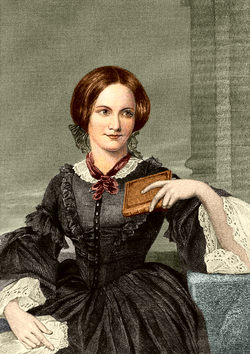
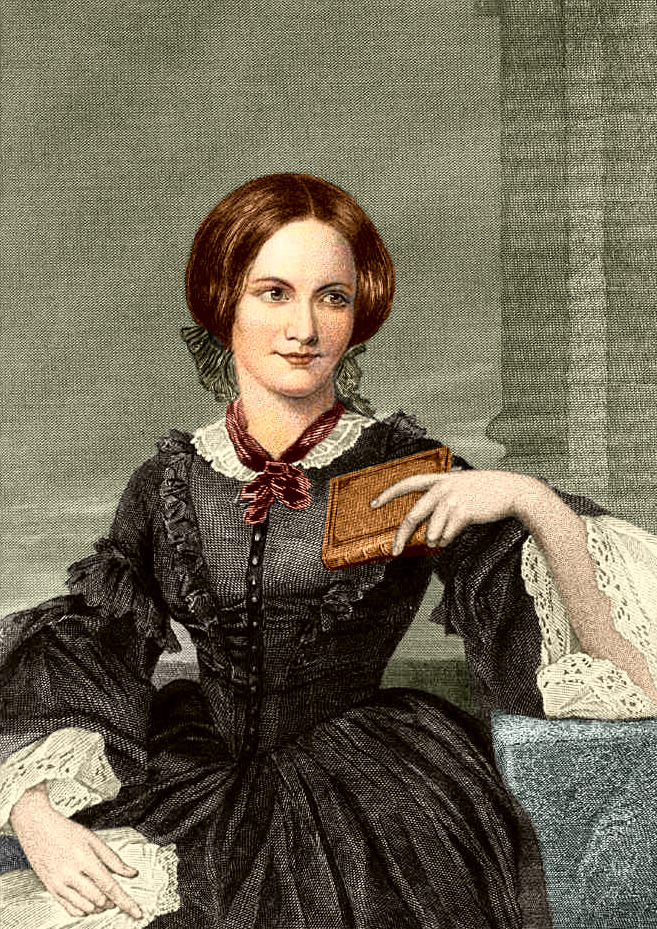
Charlotte Brontë, the author of Jane Eyre, which is known as "the classic example of first-person narrative"

A classic example of a first-person protagonist narrator is Charlotte Brontë's Jane Eyre (1847),[1] in which the title character is telling the story in which she herself is also the protagonist:[6] "I could not unlove him now, merely because I found that he had ceased to notice me".[7] Srikanta by Bengali writer Sarat Chandra Chattopadhyay[8] is another first-person perspective novel which is often called a "masterpiece".[9][10][11] Srikanta, the title character and protagonist of the novel, tells his own story: "What memories and thoughts crowd into my mind, as, at the threshold of the afternoon of my wandering life, I sit down to write the story of its morning hours!"[12]

This device allows the audience to see the narrator's mind's eye view of the fictional universe,[13] but it is limited to the narrator's experiences and awareness of the true state of affairs. In some stories, first-person narrators may relay dialogue with other characters or refer to information they heard from the other characters, in order to try to deliver a larger point of view.[6] Other stories may switch the narrator to different characters to introduce a broader perspective. An unreliable narrator is one that has completely lost credibility due to ignorance, poor insight, personal biases, mistakes, dishonesty, etc., which challenges the reader's initial assumptions.[14]

Point of view device

[edit]

An example of the telling of a story in the grammatical first person, i.e. from the perspective of "I", is Herman Melville's Moby-Dick, which begins with "Call me Ishmael."[15]

First-person narration may sometimes include an embedded or implied audience of one or more people.[15] The story may be told by a person directly undergoing the events in the story without being aware of conveying that experience to readers; alternatively, the narrator may be conscious of telling the story to a given audience, perhaps at a given place and time, for a given reason.

Identity

[edit]

A story written in the first person is most often told by the main character, but may also be told from the perspective of a less important character as they witness events, or a person retelling a story they were told by someone else.[3]

Reliability

[edit]

First-person narration presents the narrative through the perspective of a particular character. The reader or audience sees the story through the narrator's views and knowledge only.[16] The narrator is an imperfect witness by definition, because they do not have a complete overview of events. Furthermore, they may be pursuing some hidden agenda (an "unreliable narrator").

Character weaknesses and faults, such as tardiness, cowardice, or vice, may leave the narrator unintentionally absent or unreliable for certain key events. Specific events may further be colored or obscured by a narrator's background since non-omniscient characters must by definition be laypersons and foreigners to some circles, and limitations such as poor eyesight and illiteracy may also leave important blanks. Another consideration is how much time has elapsed between when the character experienced the events of the story and when they decided to tell them. If only a few days have passed, the story could be related very differently than if the character was reflecting on events of the distant past. The character's motivation is also relevant. Are they just trying to clear up events for their own peace of mind? Make a confession about a wrong they did? Or tell a good adventure tale to their beer-guzzling friends? The reason why a story is told will also affect how it is written.[3] Why is this narrator telling the story in this way, why now, and are they to be trusted? Unstable or malevolent narrators can also lie to the reader. Unreliable narrators are not uncommon.

In the first-person-plural point of view, narrators tell the story using "we". That is, no individual speaker is identified; the narrator is a member of a group that acts as a unit. The first-person-plural point of view occurs rarely but can be used effectively, sometimes as a means to increase the concentration on the character or characters the story is about. Examples include:

Other examples include Twenty-Six Men and a Girl by Maxim Gorky, The Treatment of Bibi Haldar by Jhumpa Lahiri, During the Reign of the Queen of Persia by Joan Chase, Our Kind by Kate Walbert, I, Robot by Isaac Asimov, and We Didn't by Stuart Dybek.[18]

First-person narrators can also be multiple, as in Ryūnosuke Akutagawa's In a Grove (the source for the movie Rashomon) and Faulkner's novel The Sound and the Fury. Each of these sources provides different accounts of the same event, from the point of view of various first-person narrators.

There can also be multiple co-principal characters as narrator, such as in Robert A. Heinlein's The Number of the Beast. The first chapter introduces four characters, including the initial narrator, who is named at the beginning of the chapter. The narrative continues in subsequent chapters with a different character explicitly identified as the narrator for that chapter. Other characters later introduced in the book also have their "own" chapters where they narrate the story for that chapter. The story proceeds in a linear fashion, and no event occurs more than once, i.e. no two narrators speak "live" about the same event.

The first-person narrator may be the principal character (e.g., Gulliver in Gulliver's Travels), someone very close to them who is privy to their thoughts and actions (Dr. Watson in Sherlock Holmes stories) or one who closely observes the principal character (such as Nick Carraway in The Great Gatsby). These can be distinguished as "first-person major" or "first-person minor" points of view.

Narrators can report others' narratives at one or more removes. These are called "frame narrators": examples are Mr. Lockwood, the narrator in Wuthering Heights by Emily Brontë; and the unnamed narrator in Heart of Darkness by Joseph Conrad. Skilled writers choose to skew narratives, in keeping with the narrator's character, to an arbitrary degree, from ever so slight to extreme. For example, the aforementioned Mr. Lockwood is quite naive, of which fact he appears unaware, simultaneously rather pompous, and recounting a combination of stories, experiences, and servants' gossip. As such, his character is an unintentionally very unreliable narrator and serves mainly to mystify, confuse, and ultimately leave the events of Wuthering Heights open to a great range of interpretations.

A rare form of the first person is the first-person omniscient, in which the narrator is a character in the story, but also knows the thoughts and feelings of all the other characters. It can seem like third-person omniscient at times. A reasonable explanation fitting the mechanics of the story's world is generally provided or implied unless its glaring absence is a major plot point. Three notable examples are The Book Thief by Markus Zusak, where the narrator is Death, From the Mixed-Up Files of Mrs. Basil E. Frankweiler, where the narrator is the titular character but is describing the story of the main characters, and The Lovely Bones by Alice Sebold, where a young girl, having been killed, observes, from some post-mortem, extracorporeal viewpoint, her family's struggle to cope with her disappearance. Typically, however, the narrator restricts the events relayed in the narrative to those that could reasonably be known.

Autobiography

[edit]

In autobiographical fiction, the first-person narrator is the character of the author (with varying degrees of historical accuracy). The narrator is still distinct from the author and must behave like any other character and any other first-person narrator. Examples of this kind of narrator include Jim Carroll in The Basketball Diaries and Kurt Vonnegut, Jr. in Timequake (in this case, the first-person narrator is also the author). In some cases, the narrator is writing a book—"the book in your hands"—and therefore he has most of the powers and knowledge of the author. Examples include The Name of the Rose by Umberto Eco, and The Curious Incident of the Dog in the Night-Time by Mark Haddon. Another example is a fictional "Autobiography of James T. Kirk" which was "Edited" by David A. Goodman who was the actual writer of that book and playing the part of James Kirk (Gene Roddenberry's Star Trek) as he wrote the novel.

Detective fiction

[edit]

Since the narrator is within the story, he or she may not have knowledge of all the events. For this reason, the first-person narrative is often used for detective fiction, so that the reader and narrator uncover the case together. One traditional approach in this form of fiction is for the main detective principal assistant, the "Watson", to be the narrator: this derives from the character of Dr. Watson in Sir Arthur Conan Doyle's Sherlock Holmes stories.

Forms

[edit]

First-person narratives can appear in several forms; interior monologue, as in Fyodor Dostoevsky's Notes from Underground; dramatic monologue, also in Albert Camus' The Fall; or explicitly, as Mark Twain's Adventures of Huckleberry Finn.

Other forms include temporary first-person narration as a story within a story, wherein a narrator or character observing the telling of a story by another is reproduced in full, temporarily, and without interruption shifting narration to the speaker. The first-person narrator can also be the focal character.

Styles

[edit]

With a first-person narrative it is important to consider how the story is being told, i.e., is the character writing it down, telling it out loud, thinking it to themselves? And if they are writing it down, is it something meant to be read by the public, a private diary, or a story meant for one other person? The way the first-person narrator is relating the story will affect the language used, the length of sentences, the tone of voice, and many other things. A story presented as a secret diary could be interpreted much differently than a public statement.[3]

First-person narratives can tend towards a stream of consciousness and interior monologue, as in Marcel Proust's In Search of Lost Time. The whole of the narrative can itself be presented as a false document, such as a diary, in which the narrator makes explicit reference to the fact that he is writing or telling a story. This is the case in Bram Stoker's Dracula. As a story unfolds, narrators may be aware that they are telling a story and of their reasons for telling it. The audience that they believe they are addressing can vary. In some cases, a frame story presents the narrator as a character in an outside story who begins to tell their own story, as in Mary Shelley's Frankenstein.

First-person narrators are often unreliable narrators since a narrator might be impaired (such as both Quentin and Benjy in Faulkner's The Sound and the Fury), lie (as in The Quiet American by Graham Greene, or The Book of the New Sun series by Gene Wolfe), or manipulate their own memories intentionally or not (as in The Remains of the Day by Kazuo Ishiguro, or in Ken Kesey's One Flew Over the Cuckoo's Nest). Henry James discusses his concerns about "the romantic privilege of the 'first person'" in his preface to The Ambassadors, calling it "the darkest abyss of romance."[19][20]

One example of a multi-level narrative structure is Joseph Conrad's novella Heart of Darkness, which has a double framework: an unidentified "I" (first person singular) narrator relates a boating trip during which another character, Marlow, uses the first person to tell a story that comprises the majority of the work. Within this nested story, it is mentioned that another character, Kurtz, told Marlow a lengthy story; however, its content is not revealed to readers. Thus, there is an "I" narrator introducing a storyteller as "he" (Marlow), who talks about himself as "I" and introduces another storyteller as "he" (Kurtz), who in turn presumably told his story from the perspective of "I".

Films

[edit]

First-person narration is more difficult to achieve in film; however, voice-over narration can create the same structure.[15]

An example of first-person narration in a film would be the narration given by the character Greg Heffley in the film adaptation of the popular book series Diary of a Wimpy Kid.

See also

[edit]

References

[edit]
Revisions and contributorsEdit on WikipediaRead on Wikipedia
from Grokipedia
First-person narrative is a fundamental literary technique in which a story is recounted from the perspective of one or more characters within the narrative, typically employing pronouns such as "I" or "we" to convey events, thoughts, and emotions directly from the narrator's viewpoint. This approach immerses readers in the subjective experience of the narrator, limiting the scope to what that character knows, perceives, or feels, and often fostering a sense of immediacy and intimacy. Unlike third-person perspectives, it emphasizes personal insight over omniscient observation, making it particularly effective for exploring internal conflicts and . Key characteristics of first-person narrative include its inherent subjectivity, which can introduce or unreliability into the , as the narrator's account may reflect personal prejudices, limited , or deliberate . This technique allows for deep access to the narrator's , revealing motivations, doubts, and sensory details in a way that builds emotional resonance and character development. Advantages include heightened reader engagement through direct emotional connection and the ability to convey a distinctive voice that mirrors the character's personality or cultural background. However, it restricts broader perspectives on other characters or events outside the narrator's awareness, potentially narrowing the story's scope unless multiple first-person voices are employed. In , first-person narrative has been employed across genres, from novels and short stories to memoirs, to heighten tension and authenticity; for instance, in F. Scott Fitzgerald's (1925), Nick Carraway's first-person account provides a reflective lens on the excesses of the while revealing his own evolving judgments. Similarly, Harper Lee's (1960) uses young Scout Finch's narration to explore themes of and through a child's innocent yet perceptive eyes, blending autobiography-like intimacy with . Other classic examples include Herman Melville's (1851), where Ishmael's voice draws readers into the obsessions of the crew, and Edgar Allan Poe's "The Cask of Amontillado" (1846), featuring Montresor's chilling confession that underscores themes of revenge and madness. These works illustrate how first-person narrative not only drives plot through personal revelation but also challenges readers to question the narrator's reliability, enriching interpretive layers.

Fundamentals

Definition and Characteristics

A first-person narrative is a mode in which the events are recounted from the perspective of a character who participates in them, using first-person pronouns such as "I," "me," "my," and sometimes "we" to denote the narrator's identity and experiences. This approach confines the narration to the narrator's personal knowledge, sensations, and perceptions, excluding details outside their direct involvement or awareness. According to narratologist Gérard Genette, such narratives are typically homodiegetic, meaning the narrator functions as a character within the story, blending the roles of experiencer and recount-er. Central characteristics of first-person narration include its subjective viewpoint, which immerses readers in the narrator's internal , revealing thoughts, , and biases in an intimate manner that heightens emotional engagement. This subjectivity often manifests as a lens, where the narrating "I" reflects on the experiencing "I" with the benefit of hindsight, potentially introducing interpretive distortions or personal emphases. The scope remains restricted to the narrator's experiential limits, such as sensory observations and emotional responses, thereby creating a focused but potentially incomplete portrayal of events. In terms of mechanics, first-person narratives employ pronouns to establish immediacy and personal agency, distinguishing them from other voices through consistent self-reference. This subjective framework can extend to unreliable , where the narrator's biases or limitations lead to discrepancies between their account and verifiable events, underscoring the technique's emphasis on personal truth over objectivity.

Comparison to Other Narrative Perspectives

First-person , in which the story is told from the perspective of a character using "I," stands in contrast to third-person , where an external narrator refers to characters as "he," "she," or "they." Third-person can be omniscient, granting access to multiple characters' thoughts and a broader scope of events, or limited, focusing on one character's perceptions while maintaining objectivity. This allows for greater flexibility in depicting simultaneous actions or unperceived details, fostering a sense of detachment that enhances epic or multifaceted . In comparison, first-person confines the narrative to the narrator's subjective knowledge and experiences, creating emotional immediacy but restricting the view to what the "I" perceives, often resulting in gaps that build intrigue. Second-person narration, employing "you" to address the reader directly as the protagonist, is far rarer and typically experimental. It immerses the by blurring the line between reader and character, evoking a sense of direct involvement or universal applicability to experiences like trauma or choice. Unlike first-person's intimate "I" voice, which fosters personal through the narrator's , second-person can feel distancing or disorienting, as it imposes the 's on the reader without the comfort of a distinct self-narrator. This direct address contrasts sharply with first-person's authenticity, prioritizing participatory effects over subjective confinement. The advantages of first-person narration include heightened and , as the limited knowledge of the narrator mirrors the reader's discovery process, drawing them into the character's emotional and perceptual world. It excels in conveying personal growth or memory, providing authentic insight that third-person objectivity might dilute. However, disadvantages arise from this subjectivity: the narrative cannot depict events outside the narrator's , potentially hindering plot breadth, and it introduces risks of unreliability, where the "I" voice may or distort facts. Overall, first-person heightens tension through gaps and promotes strong reader identification with the narrator's voice, effects less pronounced in the more expansive third-person or the alienating second-person modes.

Literary Device Elements

Identity and Character Perspective

In first-person narrative, the narrator's identity is intrinsically linked to the protagonist, creating an overlap where the storyteller is a participant in the events recounted, often using homodiegetic narration to embed personal experiences directly into the discourse. This fusion enhances reader immersion by emphasizing the narrator's personal stakes, fostering emotional authenticity as the "I" voice conveys intimate motivations and vulnerabilities that draw audiences into the character's subjective world. For instance, the immediacy of this perspective minimizes the distance between experiencer and relator, allowing readers to inhabit the narrator's mindset with heightened empathy. The narrator's background, motivations, and blind spots introduce inherent and subjectivity, filtering events through a personal lens that shapes their portrayal and invites multiple layered interpretations from readers. In literary theory, this subjectivity arises from the narrator's stance—encompassing attitudes toward the and content—which colors descriptions and omits alternative viewpoints, often reflecting cultural or psychological limitations. Such can manifest as selective or ideological tilt, enriching the text by prompting critical engagement with the incomplete or skewed account provided. Protagonist-narrator dynamics further complicate this identity through temporal or structural distinctions, such as a child narrator reflecting retrospectively as an adult, which juxtaposes youthful against mature and highlights personal evolution. In cases of multiple first-person narrators sharing a story, dynamics emerge from intersecting perspectives, where each "I" reveals overlapping yet divergent views of the same events, amplifying relational tensions and collective subjectivity. These variations underscore the fluidity of identity, as the narrator-protagonist duality allows for self-reflexive commentary that blurs past and present selves. The introspective lens of first-person narration uniquely grants access to psychological depth, exposing internal conflicts, fragmented memories, and processes of growth that would be inaccessible in other perspectives. This depth manifests through direct revelation of cognitive and emotional layers, such as unresolved traumas or epiphanies, enabling a nuanced exploration of the narrator's psyche that fosters profound reader connection. Elements of unreliability may tie to this identity when subjective distortions arise from emotional turmoil, further intensifying the portrayal of inner complexity.

Reliability and Narrative Voice

In first-person narrative, a reliable narrator maintains a consistent voice that aligns with the implied author's normative framework, presenting events with a degree of objectivity limited by personal perspective while fostering trust through factual consistency and self-reflective awareness. This alignment is achieved via techniques such as retrospective evaluation and ethical maturity in recounting experiences, allowing readers to accept the account as authoritative within the story's bounds. Conversely, an introduces distortions—either deliberate or unwitting—stemming from factors like madness, deception, or naivety, which undermine the narrative's credibility. Common techniques include internal contradictions, strategic omissions of key details, and ironic hindsight that reveals discrepancies between the narrator's claims and evident realities. These elements signal to readers that the narrator's perceptions are filtered through subjective limitations, including identity biases that color interpretations without full self-recognition. Narrative voice plays a pivotal in establishing reliability, with variations in tone—such as confessional admissions or defensive justifications—either reinforcing trust or heightening suspicion. A consistent, self-aware tone builds , while shifts toward or evasion introduce , prompting readers to question the underlying truth and thematic intentions. The interplay of reliability and voice profoundly impacts interpretation, compelling active reader engagement as they navigate potential deceptions to uncover deeper meanings. This dynamic often generates thematic ambiguity, enhancing suspense in psychological narratives through anticipated revelations or twists that reframe the story.

Historical Context

Origins in Ancient and Early Literature

The earliest instances of first-person narrative appear in , particularly within where third-person narration predominates but incorporates embedded first-person speeches to convey character perspectives and emotional depth. In Homer's (c. BCE), the bardic narrator frames the overarching story in third person, yet characters such as Achilles and deliver extended first-person monologues and dialogues that reveal personal motivations and inner conflicts, marking an early technique for subjective voicing within a larger epic structure. This embedding of first-person elements served to humanize heroic figures and simulate oral performance dynamics, bridging communal with individual . Roman literature extended these practices into more sustained first-person forms, notably in fragmented novels that experimented with personal narration amid satirical or picaresque adventures. (c. 60 CE), surviving in incomplete sections, employs a first-person narrator, Encolpius, to recount his misadventures in a decadent society, blending autobiography-like reflection with comic exaggeration to critique imperial excess. This approach influenced later prose fiction by prioritizing the narrator's subjective lens over objective epic . In classical developments, first-person narrative gained introspective depth through religious and rhetorical works; Augustine's Confessions (c. 397–400 CE) stands as a proto-autobiographical text, structured as a direct address to in first person, chronicling the author's spiritual journey and psychological turmoil to model Christian conversion. Such uses in epics, oratory, and confessional writing highlighted first-person as a tool for authenticity and persuasion. During the medieval and periods, first-person narrative evolved through frame structures and personal essays, adapting to emerging literate audiences while echoing oral roots. Geoffrey Chaucer's (c. 1387–1400) employs a first-person pilgrim-narrator, Geoffrey, to frame interconnected tales told by diverse characters, creating a polyphonic subjective voice that reflects social variety and authorial irony. This device drew from oral storytelling but formalized it in writing, allowing multiple first-person perspectives within a unified narrative arc. Michel de Montaigne's Essays (1580) further advanced subjective first-person reflection, presenting fragmented personal meditations on human experience that prioritize the author's inner voice and skepticism, influencing the introspective tone of later . These developments occurred amid a cultural shift from oral traditions—where first-person elements mimicked spoken testimony in communal settings—to written introspection, enabling deeper self-examination but facing limited adoption due to the enduring dominance of third-person epic forms in heroic and religious texts. Oral performances often featured embedded first-person speeches for immediacy, but written literature gradually favored sustained personal narration as literacy expanded, laying groundwork for modern subjective storytelling without fully displacing objective modes.

Development in Modern and Contemporary Works

The first-person narrative rose to prominence in the amid the Romantic movement's emphasis on and personal experience, as exemplified in William Wordsworth's (1850), a poetic that constructs the through introspective to trace the poet's intellectual and emotional growth. This focus on the inner life extended into , where Charlotte Brontë's (1847) employed first-person to deliver an intimate, autodiegetic voice, allowing readers direct access to the protagonist's psychological depth and moral reflections. These works marked a shift toward subjective , prioritizing emotional authenticity over objective detachment. In the , modernist innovations further expanded first-person techniques, with James Joyce's Ulysses (1922) pioneering stream-of-consciousness to immerse readers in characters' fragmented inner monologues, elevating personal perception as a core mode. Postmodern developments introduced unreliability into this perspective, as in Vladimir Nabokov's (1955), where the first-person narrator Humbert Humbert manipulates truth through self-justifying , blurring distinctions between confession and deception to critique authority. The era's societal influences, particularly Sigmund Freud's theories of the unconscious, fueled confessional literature by encouraging first-person explorations of repressed desires and psychic conflicts in both and . Contemporary trends since 2000 reflect globalization's impact, amplifying multicultural first-person voices that represent diverse identities and hybrid cultural experiences, as seen in the proliferation of autofiction drawing from global migrant narratives. Digital memoirs have emerged as innovative first-person forms, integrating personal storytelling with multimedia elements to document autobiographical memory in networked environments. Hybrid structures blend memoir with essayistic or speculative modes, challenging linear self-representation, while adaptations to short forms like flash fiction condense first-person introspection into intense, immediate vignettes that capture fleeting psychological moments.

Genre Applications

Autobiography and Personal Narratives

Autobiography in the first-person narrative involves the direct recounting of life events from the author's personal experience, providing an intimate, subjective lens on historical and personal realities. This form emphasizes the narrator's voice as both witness and , often blending factual details with selective to construct a coherent self-portrait. The result is a narrative that prioritizes emotional truth and personal insight over objective detachment, allowing readers to engage with the author's inner world. Historical examples illustrate the power of first-person in documenting lived experiences under . 's Narrative of the Life of Frederick Douglass, an American Slave (1845) exemplifies this through its vivid, firsthand account of enslavement, escape, and advocacy, which sold over 30,000 copies by 1850 and fueled the abolitionist movement. Similarly, Anne Frank's The Diary of a Young Girl (1947) offers a poignant, unfiltered record of hiding from Nazi persecution, capturing the daily fears and hopes of a Jewish teenager in . These works highlight how first-person narratives can serve as primary sources, preserving authentic voices amid historical trauma. Authenticity in first-person autobiographies often grapples with the tension between objective truth and shaping, as authors reconstruct events through potentially biased recollections influenced by time and emotion. biases, such as selective recall favoring emotionally significant moments, can introduce unreliability without deliberate fabrication. In contemporary contexts, ghostwritten works exacerbate ethical concerns, raising questions about attribution and deception when the credited author's voice is largely crafted by another, potentially misleading readers on the 's genuineness. Legal issues may arise if undisclosed ghostwriting violates contracts or disclosure norms, underscoring the need for transparency in non-fictional self-representation. Subtypes of first-person autobiography extend beyond traditional memoirs to include travelogues, which chronicle personal journeys and cultural encounters in a reflective, first-person style to explore self-discovery through movement. Spiritual autobiographies focus on inner transformations and journeys, detailing shifts from doubt to enlightenment as a arc of personal redemption. In recent evolutions, graphic memoirs combine visual art with first-person text to depict life stories, enhancing emotional depth through illustrations that convey identity and trauma. Similarly, podcasts have emerged as an audio format for personal narratives, allowing authors to recount autobiographies dynamically, often incorporating interviews to blend with for immersive authenticity.

Detective and Mystery Fiction

In detective and mystery fiction, the first-person narrative perspective has been a staple since the genre's early development, often positioning the narrator as a close observer or the investigator themselves to immerse readers in the puzzle-solving process. This approach, pioneered in Edgar Allan Poe's "The Murders in the Rue Morgue" (1841), where the narrator serves as a companion to detective , allows for a limited viewpoint that mirrors the detective's incremental discoveries, heightening suspense by withholding information from the reader just as it is from the narrator. A prominent example is Arthur Conan Doyle's stories, where Dr. John Watson narrates in the first person, providing an intimate yet fallible account of Holmes's deductions that engages readers as active participants in the mystery. The limitations of first-person narration in this genre create deliberate effects, such as restricted access to clues, which builds tension and encourages reader deduction alongside the narrator. By confining revelations to what the narrator knows or observes, authors craft suspense through partial truths, often using the perspective to plant red herrings or exploit unreliability for dramatic twists. Agatha Christie's The Murder of Roger Ackroyd (1926) exemplifies this, with the first-person narrator, Dr. James Sheppard, concealing his own culpability until the finale, subverting reader expectations and redefining narrative trust in detective stories. This technique not only intensifies the intellectual challenge but also underscores the genre's emphasis on logical unraveling, as the narrator's voice becomes a tool for misdirection without violating fair-play rules established in early detective fiction. Within subgenres, first-person narration adapts to distinct tones and structures. In hardboiled noir, it delivers an intimate, cynical portrayal of the urban underbelly through the detective's voice, as seen in Raymond Chandler's (1939), where private eye narrates with gritty introspection, blending moral ambiguity and streetwise commentary to evoke the era's disillusionment. This perspective fosters a style that humanizes the tough protagonist, allowing readers to experience the corruption and isolation firsthand. Conversely, cozy mysteries often feature sleuths as first-person narrators to convey warmth and accessibility, emphasizing puzzles over ; for instance, in many works by authors like or modern cozy writers, the narrator's relatable curiosity draws readers into lighthearted investigations. Modern variations in psychological thrillers extend first-person narration to flawed investigators, amplifying and blurring lines between and to deepen reader engagement with deduction. Tana French's (2007), the first Dublin Murder Squad novel, uses Rob Ryan's first-person account to explore trauma's impact on reasoning, creating a layered mystery where personal unreliability complicates the plot. This evolution enhances the genre's focus on mental acuity, as the narrator's subjective lens invites readers to question not just the crime but the storyteller's psyche, influencing contemporary fiction's emphasis on character-driven .

Horror and Psychological Genres

In the horror genre, first-person narration fosters a profound sense of personal vulnerability and by immersing readers directly in the protagonist's subjective experience of fear. This perspective allows authors to convey dread through the narrator's internal confessions, making the terror feel immediate and inescapable, as the audience shares the character's limited and often distorted viewpoint. For instance, in Edgar Allan Poe's "" (1843), the unnamed narrator's obsessive account of murdering an old man due to his "vulture eye" builds suspense through the protagonist's frantic assertions of sanity, which paradoxically reveal his madness and guilt, amplifying the . This technique heightens the intimacy of the , transforming the reader's into in the unfolding atrocity. Supernatural elements in horror are particularly effective in first-person narratives because they emerge from the narrator's subjective doubt, blurring the line between rational perception and otherworldly intrusion. The protagonist's firsthand reports of eerie phenomena—such as unexplained sounds or visions—instill uncertainty, as readers must question whether the events stem from external forces or the narrator's unraveling psyche. This approach is evident in H.P. Lovecraft's works, like "The Thing on the Doorstep" (1937), where the first-person frame narrator, Daniel Upton, recounts a tale of body-swapping horror that evokes cosmic dread through his growing realization of sanity's fragility. In psychological genres, first-person narration excels at depicting internal turmoil and descent into madness, often through unreliable narrators who confess their fractured minds in a confessional, therapy-like manner. This voice enables exploration of duality and , drawing readers into the character's . Chuck Palahniuk's Fight Club (1996), narrated by an insomniac everyman, exemplifies this by revealing the protagonist's split personality—his , Tyler Durden—through escalating personal revelations that culminate in a shocking identity twist, underscoring themes of alienation and consumerism-induced . Such narratives treat the reader's perspective as a mirror to the character's instability, fostering unease about the reliability of one's own perceptions. Key techniques in these genres include sensory immersion, where vivid, first-person descriptions of tactile horrors—racing heartbeats, clammy skin, or hallucinatory whispers—evoke visceral terror, and unreliable perception, which deliberately blurs and to mimic mental disintegration. These methods create a claustrophobic atmosphere, as the narrator's biased lens withholds objective truth, compelling readers to piece together the horror themselves. In contemporary examples, online stories frequently employ first-person accounts to simulate found personal journals or eyewitness testimonies, enhancing their viral, pseudo-realistic dread by mimicking everyday digital confessions. Mark Z. Danielewski's House of Leaves (2000) pushes this further with nested first-person layers—a tattoo artist's footnotes, a filmmaker's documentary script, and a scholarly —each voice layering subjective terror around a labyrinthine house, evoking cultural anxieties about isolation and the unknown through experimental, disorienting .

Forms and Techniques

Epistolary and Diary Formats

Epistolary novels constitute a subset of first-person narrative where the story unfolds through an exchange of letters or other correspondence between characters, simulating the authenticity of personal communication. This format originated in the , with Samuel Richardson's (1740) serving as a seminal example, in which the protagonist's letters to her parents detail her moral struggles and daily experiences, emphasizing intimate emotional revelation. Bram Stoker's Dracula (1897) exemplifies a more complex epistolary structure by blending letters with entries, newspaper clippings, and phonograph transcripts, allowing fragmented accounts from multiple characters to build suspense and horror. Diary formats within first-person narrative present events through sequential journal entries, mimicking the immediacy of real-time reflection and personal introspection. Helen Fielding's (1996) employs this technique effectively, chronicling the protagonist's chaotic life in dated entries that capture her witty, unfiltered thoughts on relationships and self-improvement. The advantages of diary formats include heightened immediacy, as entries often adopt a "writing to the moment" style that conveys raw emotion and spontaneity, fostering a direct connection between reader and narrator. However, drawbacks arise from temporal gaps between entries, which can leave narrative events unexplained or reliant on the diarist's selective memory, potentially disrupting continuity. In , hybrid epistolary forms incorporate digital correspondence such as emails and text messages, adapting the traditional structure to modern communication while enhancing themes of and fragmented truth. Rainbow Rowell's Attachments (2011) integrates workplace emails alongside narrative prose to reveal characters' private exchanges, creating an eavesdropping effect that underscores hidden desires and misunderstandings. Similarly, Janice Hallett's (2021) constructs its mystery through a chain of emails, texts, and documents, simulating the partial, biased perspectives of a community group. These hybrids amplify the voyeuristic intimacy of first-person narrative by presenting incomplete, technology-mediated glimpses into characters' lives, often blurring the line between public and private disclosure. Overall, epistolary and formats in first-person narrative cultivate realism by emulating authentic documents, drawing readers into the subjective immediacy of individual voices while enabling multiple viewpoints through diverse correspondents or entries. This approach not only heightens emotional engagement but also highlights narrative unreliability, as partial truths emerge from biased, first-hand accounts.

Stream of Consciousness and Interior Monologue

Stream of consciousness is a narrative technique often employed in first-person literature that seeks to replicate the natural, associative flow of a character's thoughts and sensations in a nonlinear fashion, often bypassing conventional syntax and chronology to reflect the fragmented psyche. This approach, rooted in psychological realism, presents internal experiences as they arise, including sensory impressions, memories, and emotional shifts, without the filtering of an external narrator. A prominent example appears in William Faulkner's The Sound and the Fury (1929), where the first-person narrations of Quentin and Jason Compson immerse readers in their fragmented thoughts and memories, shifting nonlinearly through time to illustrate the technique's capacity to convey subjective turmoil. Closely allied to , interior in first-person involves the transcription of a character's unvoiced thoughts, either directly or indirectly, to reveal inner motivations and conflicts. In its direct or dramatic form, the quotes thoughts verbatim as if articulated internally, often integrating perceptions of external events to heighten immediacy and mimic spoken . Conversely, indirect interior merges the character's mental content with subtle narrative guidance, blending personal reflections with descriptive elements for a more modulated access to the psyche. This distinction allows authors to balance raw authenticity with structural coherence in first-person accounts. Authors employing these techniques frequently omit , such as periods and commas, to evoke the uninterrupted of , while incorporating repetition of words or motifs to underscore fixation or emotional intensity. Such devices, though innovative, pose readability challenges by creating disorienting, dense passages that demand active reader engagement to parse the mental flux. These methods profoundly deepen character in first-person narratives by exposing layers and subjective truths, marking a cornerstone of modernist innovation that has shaped experimental fiction's emphasis on interiority over external action.

Styles and Media Adaptations

Stylistic Variations in Literature

First-person narratives in literature exhibit a range of formal styles that emphasize elegance and reflection, as seen in Daniel Defoe's (1719), where the protagonist's retrospective account employs a straightforward yet to convey and spiritual growth amid isolation. This contrasts sharply with more colloquial modern approaches, such as J.D. Salinger's (1951), which adopts a raw, voice through the teenage narrator Holden Caulfield's slang-filled monologues to capture youthful alienation and authenticity. Experimental variations further diversify first-person styles, incorporating multilingual in immigrant narratives to reflect cultural hybridity and linguistic fluidity, as explored in works that alternate languages to mirror the narrator's bicultural experience. Fragmented postmodern techniques appear prominently in Vonnegut's (1969), where the non-linear, time-shifting first-person perspective disrupts chronological flow to underscore the disorientation of war and fate. Cultural styles in first-person narratives often draw from oral traditions in indigenous literature, infusing written accounts with rhythmic, communal elements that prioritize over linear , as evident in Native American texts that blend spoken with personal . Feminist perspectives add another layer, employing intimate, subversive first-person voices to challenge patriarchal structures, exemplified by Margaret Atwood's (1985), where the narrator's fragmented reflections expose gendered oppression through a lens of suppressed agency. Notable authors have left distinct signatures on first-person styles. Ernest Hemingway's sparse, understated "I" in (1926) uses economical prose to evoke emotional restraint and expatriate disillusionment, prioritizing implication over exposition. Ralph Ellison's (1952) employs a rhythmic, jazz-inflected first-person to articulate racial invisibility and identity struggle. Toni Morrison's Beloved (1987) integrates haunting, polyphonic first-person elements rooted in African American to confront trauma and remembrance.

Uses in Film, Television, and Interactive Media

In film, first-person narration is often achieved through voice-over techniques, where the protagonist's internal thoughts and reflections are conveyed directly to the audience, enhancing emotional intimacy and subjective insight. A seminal example is Billy Wilder's Sunset Boulevard (1950), which employs a posthumous voice-over from the deceased protagonist Joe Gillis, blending noir stylistic cues with first-person retrospection to control viewer perception and underscore themes of delusion and power. This approach, rooted in film noir traditions, allows filmmakers to externalize internal monologues that would otherwise remain invisible on screen. Subjective camera work further immerses viewers in the narrator's perspective by simulating their point of view, as seen in David Slade's Hard Candy (2005), where tight, probing shots and occasional POV angles heighten tension and mimic the protagonist's psychological entrapment, creating a visceral sense of vulnerability. Television adapts first-person narrative through episodic formats that leverage direct address and mockumentary styles, enabling characters to break the fourth wall and share personal viewpoints in real-time. The American version of The Office (2005–2013) exemplifies this via its mockumentary structure, where talking-head interviews and on-camera asides deliver first-person confessions from ensemble characters, fostering comedic intimacy and authenticity in workplace dynamics. In limited-series formats, first-person elements appear in memoir-inspired narratives, such as those drawing from personal testimonies to explore trauma and identity, allowing viewers to align closely with the protagonist's emotional arc across concise episodes. These techniques contrast with film's linear voice-overs by incorporating serialized fragmentation, which mirrors the episodic nature of lived experience. Interactive media extends first-person narrative into participatory realms, particularly in video games, where players embody the "I" through audio logs and decision-driven stories that deepen immersion. In BioShock (2007), audio diaries serve as diegetic first-person accounts from Rapture's inhabitants, revealing backstory and moral dilemmas through collectible, voiced monologues that players activate, effectively turning environmental exploration into a collective narrative puzzle. Choose-your-own-adventure apps, such as those in the series, employ first-person decision trees where users select actions as the , influencing plot branches and personal outcomes in text-based or visual formats. This amplifies agency, allowing narratives to unfold dynamically based on user choices. Adapting first-person techniques to visual and interactive media presents unique challenges, particularly in visualizing internal thoughts that literature conveys through textual introspection. Filmmakers and showrunners must externalize subjective experiences via voice-overs, symbolic visuals, or editing to avoid exposition dumps, as internal monologues risk disrupting pacing in time-bound formats. The rise of virtual reality (VR) addresses this by enabling full first-person point-of-view (POV) immersion, where users inhabit the narrative space—such as in cinematic VR experiences that induce embodied perspectives through 360-degree environments—contrasting literature's intimate, reader-imagined textual depth with media's sensory immediacy and spatial constraints. Innovations like VR thus innovate by merging player agency with narrative implication, though they demand careful design to balance ambiguity and emotional engagement.

References

Add your contribution
Related Hubs
User Avatar
No comments yet.