Hubbry Logo
Ford Falcon (EB)Ford Falcon (EB)Main
Open search
Ford Falcon (EB)
Community hub
Ford Falcon (EB)
logo
8 pages, 0 posts
0 subscribers
Be the first to start a discussion here.
Ford Falcon (EB)
Ford Falcon (EB)
from Wikipedia

Ford Falcon (EB)
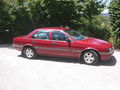
Ford Fairmont (EB) sedan
Overview
ManufacturerFord Australia
Also calledFord Fairmont (EB)
ProductionAugust 1991 – August 1993
Body and chassis
ClassFull-size
Body style4-door sedan
5-door station wagon
LayoutFront-engine, rear-wheel-drive
RelatedFord Fairlane (NC)
Ford LTD (DC)
Powertrain
Engine3.9 L Ford I6 (petrol; EB I)
4.0 L Ford I6 (petrol; EB II)
5.0 L Windsor V8 (petrol)
Transmission4-speed M85LE automatic (3.9 I6)
4-speed M91LE automatic (4.0 I6)
4-speed M95LE automatic (V8)
5-speed manual
Chronology
PredecessorFord Falcon (EA)
SuccessorFord Falcon (ED)

The Ford Falcon (EB) is a full-sized car that was produced by Ford Australia from 1991 to 1993. It was the second iteration of the fifth generation of the Falcon and also included the Ford Fairmont (EB)—the luxury-oriented version. It launched shortly before the Holden Commodore VP.

Introduction and changes

[edit]

Visually, the 1991 EB Falcon remained nearly identical to its predecessor, including carrying over the 3.9-litre Ford straight-six engine and four-speed M85LE automatic. The most noticeable changes were the transfer of the Ford emblem from the tip of the bonnet to the grille and a full-length applique bridging the gap between the tail lights, featuring reversing lamps on both sides of the rear number plate. Additionally, the C-pillar air vents were removed.[1] The return of the V8 engine since its demise in the Ford Falcon (XE) of 1982 was welcomed by the motoring press. The V8 was paired to the four-speed M95LE automatic transmission. Changes also were made to the front suspension geometry, giving the EB a much better level of grip and steering feel.[1] With the new model, Ford reintroduced the sports oriented GT specification level, an exclusive 250-unit run celebrating the 25th anniversary of the first original Falcon GT.[2] The first XR6 and XR8 sports models appeared in the EB series.[3]

Model range

[edit]

Series I

[edit]

The model range of the first series on sale from August 1991 comprised these variants:

  • GL
  • S
  • S XR8
  • Fairmont
  • Fairmont Ghia

Series II

[edit]

The revised Series II (EB II) model, appearing in showrooms in April 1992, had the six-cylinder engine upsized by 35 cm3 (from 3949 to 3984 cm3). This brought the nominal total swept capacity to 4.0 litres.[1] The automatic transmission was updated to the M91LE specification, and the electronics were also improved, and the styling was tweaked. The base model now had body-coloured bumpers, and the previously matte black plastic exterior door handles were now given a glossy finish. The update reportedly cost A$1 million.[1]

Innovation became an evident strength in the EB II: antilock brakes became an option, a Falcon first, and in 1993, a lap sash centre rear seatbelt became standard.[1] The EB also introduced the "Smartlock" security locking system. South Australian Police revealed the operational success of "Smartlock" by inviting four professional car thieves to steal either a Holden Calais (VN) or an EB specified with the locking system. The successful theft of the motor vehicle meant the thief could keep the vehicle indefinitely. The thieves made off with the VN in under 60 seconds, but gave up on the EB after four days' efforts. Therefore, the EB was classified unstealable.[1] Foam-filled A pillars also featured, which greatly increased crush protection and stiffened the frame, thus helping to reduce noise, vibration, and harshness.[1]

The rarest model was the SS, with just 10 produced. The EB II SS was built to be successful under Group 3E Series Production Cars, five were absorbed immediately into production car racing. The forthcoming Tickford-enhanced S XR6 replaced the role of the SS.[4]

Production of the EB Falcon range totalled 36,374 with 84,847 examples of the EB II being produced.[1] The EB II was replaced by the Ford Falcon (ED) in August 1993.

The EB II was the last Falcon to be assembled at the Wiri plant in New Zealand, the ED and onwards series being imported fully built up from Australia.

Note: GLi and Fairmont were available with either the 4.0-litre I6 or 5.0-litre V8. S and S XR6 were only available with 4.0-litre, and the S XR8 offered the 5.0-litre V8.

  • GLi
  • S
  • S XR6
  • S XR8
  • Fairmont
  • Fairmont Ghia
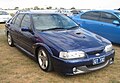
  • GT

XR and GT by Tickford

[edit]

The EB Series II had the first models from the joint venture between Ford and Tickford Vehicle Engineering. A new model was introduced, the S XR6, featuring Tickford enhancements to the engine and suspension. Similarly, the S XR8 was improved over the existing Series I S XR8.[3] TVE reintroduced the sports orientated 25th anniversary EB Falcon GT specification level, an exclusive 250-unit run celebrating the 25th anniversary of the first original Falcon GT.[5]

Motorsport

[edit]

The Falcon (EB) SS was raced in the 1993 Australian Production Car Championship, with Mal Rose claiming a championship win, after finishing first four times in six rounds.

Marking the return of the Falcon to top-level touring car racing for the first time since 1984, the Group A 5.0-litre touring car specification EB Falcon had impressive success in the 1993 Australian Touring Car Championship. This was the first season run under the new Group 3A rules, with the EB winning seven of nine rounds. Glenn Seton Racing carried the bulk of success, with drivers Glenn Seton and 1980 World Drivers Champion Alan Jones finishing first and second, respectively. The Dick Johnson Racing Falcons driven by John Bowe and Dick Johnson managed to score third and fifth.

The Seton team's second EB Falcon driven by Geoff Brabham and David Parsons won the 1993 Sandown 500 (the first Falcon to win the Sandown endurance race since Allan Moffat in an XB Falcon GT hardtop in 1974), though a mid-year aerodynamic package given to the Holden Commodore (VP)'s made the Falcons not as competitive at Bathurst. The Falcon received its own upgrade in 1994 with the addition of small wings on the side of the front air dam, which brought it back into contention. This allowed the DJR Falcon driven by Dick Johnson and John Bowe to win both the 1994 Sandown 500 and the 1994 Tooheys 1000 at Bathurst. This was the Falcon's first Bathurst win since Johnson and John French won the crash-shortened 1981 race in an XD Falcon and the Falcon's 9th Phillip Island/Bathurst win overall.

See also

[edit]
  • Ford Falcon (XF) – this utility pickup and panel van of the Falcon line ran concurrently with the EB series of sedans and wagons.

References

[edit]
Revisions and contributorsEdit on WikipediaRead on Wikipedia
from Grokipedia
The Ford Falcon (EB) is a manufactured by from July 1991 to August 1993, serving as the second iteration of the fifth-generation Falcon platform introduced with the preceding EA series. It was produced in sedan and wagon body styles at Ford's Broadmeadows and Campbellfield plants in Victoria, targeting the Australian market with a focus on family transport, performance variants, and competition against rivals like the . Key updates from the EA model included minor exterior styling revisions, such as relocated side indicator lights, a centered Blue Oval grille badge, and wider 195/75R14 tires on 6-inch rims for improved stability. The suspension was firmer with uprated springs, gas dampers, increased negative camber, and enhanced castor geometry, contributing to better handling and ride quality. In mid-1992, the EB2 facelift introduced optional (ABS), improved noise-vibration-harshness (NVH) measures, seatbelt pretensioners, enhanced security features, and rollover protection for greater safety. Engine options centered on a 4.0-liter overhead-cam inline-six producing 148 kW of power in EB2 guise (up from 120 kW in early models), paired with either a five-speed manual or four-speed . A significant highlight was the reintroduction of V8 power with the fuel-injected 5.0-liter Windsor V8, delivering 165 kW at 4,500 rpm and 388 Nm of at 3,000 rpm—90 kg lighter than prior V8s from the 1970s and 1980s—available across select trims for enhanced performance. The lineup encompassed base and GLi sedans and wagons for everyday use, upscale Fairmont and Fairmont Ghia models with luxury appointments like improved seats and higher specification levels, and sporty S variants. Performance-oriented options included the S-XR6 with a tuned inline-six, the S-XR8 packing the V8 alongside a and sports suspension, and a limited-run 25th GT (250 units) featuring the 5.0-liter V8, upgraded brakes, and distinctive styling to commemorate Ford Australia's Falcon heritage. Under the leadership of executive Jac Nasser, the EB emphasized engineering refinements and V8 revival to boost competitiveness, marking a high point in the fifth-generation Falcons before the transition to the ED series in 1993. These models solidified the Falcon's role as an Australian icon, blending practicality with optional high-performance capability in a rear-wheel-drive package tailored for local roads and preferences.

Overview

Introduction

The Ford Falcon (EB) is a full-size automobile produced by from August 1991 to August 1993, serving as the second iteration of the fifth-generation lineup. This model was offered in sedan and body styles, with the standard EB complemented by the luxury-oriented Fairmont EB variants, including the upscale Fairmont Ghia trim. It succeeded the Ford EA (produced from 1988 to 1991) and was later replaced by the ED series in August 1993. Tailored specifically for Australian driving conditions, the EB Falcon emphasized robust durability, generous interior space, and strong value positioning within the large car segment, where it directly competed against the dominant . Ford Australia's strategy with the EB focused on refining the platform to better suit local preferences for reliable family transport capable of handling diverse road and climate challenges. Upon its debut, the EB Falcon introduced subtle styling updates over the EA, such as a revised front grille incorporating the Blue Oval badge, while significantly reintroducing the option after its absence since 1982. This move, featuring the 5.0-liter Windsor V8 in select models like the S-XR8, aimed to recapture performance enthusiasts and bolster Ford's competitive edge in the domestic market.

Development and Background

The development of the Ford Falcon EB series was initiated in the late as a mid-cycle refresh of the preceding EA platform, which had launched in , to rectify reported handling deficiencies and consumer complaints regarding ride quality. engineers focused on key goals such as enhancing front suspension geometry to improve response and road grip, drawing from extensive testing conducted in the harsh conditions of the Australian to ensure durability on rough, unsealed roads. Market research during this period revealed declining sales for the EA Falcon amid intensifying competition from Holden's Commodore, which offered superior features like a four-speed , as well as pressure from imported luxury sedans eroding the large car segment. To counter this and preserve the Falcon's status as an iconic Australian vehicle, the EB project emphasized affordable enhancements, including the reintroduction of the 5.0-liter option to appeal to traditional buyers seeking V8 performance without premium pricing. Design influences for the EB stemmed from collaboration between Ford Australia's local team and global Ford engineering groups, with adaptations tailored for right-hand drive configurations and the demands of Australia's varied road networks, including corrugated tracks. Aerodynamic refinements were informed by testing inherited from the EA development, which had achieved a of 0.34 to 0.36, ensuring the EB maintained efficient airflow while incorporating minor body tweaks for better stability. The project faced significant budget and timeline pressures in the aftermath of Australia's 1980s economic recession, which limited resources and prompted reliance on shared components from the EA platform to control costs. Despite these constraints, Ford prioritized targeted upgrades in areas like suspension and powertrain integration, allowing the EB to evolve incrementally without a full redesign.

Design and Engineering

Exterior and Body Styles

The Ford Falcon (EB) was available in two primary body configurations: a four-door sedan and a five-door . These styles shared a unibody construction designed for durability in Australian conditions, with the sedan's overall length measuring 4,811 mm and a of 2,794 mm, while the wagon extended to 5,003 mm in length on a 2,923 mm . weights varied by variant and body style, typically ranging from 1,514 kg for base sedans to around 1,566 kg for wagons. Exterior styling on the EB introduced subtle refinements over the preceding EA model, including the relocation of the Ford oval emblem to the center of the grille and updated side indicator designs for a cleaner appearance. The front was revised with smoother integration of bumpers and air intakes, contributing to aerodynamic enhancements that achieved a of approximately 0.35. Underbody panels were also modified to reduce , supporting overall efficiency in the Australian market. Wheel options emphasized practicality and style, with base models fitted to 14-inch and higher trims featuring 15-inch wheels in sizes up to 6.5J, paired with 195/65R15 tires. The color palette expanded to include several metallic finishes, such as and Silver, alongside solid tones like Dynasty Red, allowing for customization suited to local preferences. These elements combined to give the EB a more modern and cohesive exterior profile while maintaining the robust build required for diverse Australian driving environments.

Interior, Safety, and Chassis

The Ford Falcon EB featured a spacious five-seat interior designed for family use, with options for cloth or vinyl upholstery depending on the trim level. Base GL models included durable vinyl or cloth benches, while higher variants like the Fairmont offered velour-trimmed seats for added comfort. The dashboard underwent a redesign for improved ergonomics, incorporating analog gauges, a tilt-and-reach adjustable steering column (standard except on base GL with column-shift automatic), and a new left footrest to enhance driver positioning. Optional power features, such as height-adjustable front seats with lumbar support, were available in upmarket trims like the Fairmont Ghia, promoting better long-distance comfort. Wide doors and a high roofline facilitated easy entry and exit, particularly beneficial for rear passengers. Safety in the EB emphasized passive protections suited to the era, with standard three-point seatbelts fitted across all seating positions to secure occupants during impacts. The EB Evolution variant (Series II) introduced optional (ABS) as a three-channel Bendix unit, improving control on slippery Australian roads, alongside seat-belt pretensioners for quicker restraint deployment. Dual front airbags were not available, as they predated widespread mandates, but the body structure incorporated reinforced to absorb frontal collision energy and enhanced rollover protection through a stronger shell. These measures reflected Ford's focus on occupant safety without advanced electronics. The EB's chassis utilized an independent front suspension with short-long arm (SLALS) geometry, featuring unequal-length control arms, coil springs, and an anti-roll bar for responsive handling, paired with rack-and-pinion steering. The rear employed a live axle setup with Watts linkage and coil springs on sedans (leaf springs on wagons), providing stability under load. Track widths measured 1,546 mm at the front and 1,533 mm at the rear, contributing to a planted stance on varied terrain. Suspension tuning was revised for Australian conditions, with stiffer springs, gas-charged dampers, and firmer bushings to reduce body roll while maintaining softer compliance over potholes; camber was adjusted to increase negative camber (from approximately -0.25° in the prior EA) and caster increased to 3.5° for better straight-line stability. Noise, vibration, and harshness (NVH) levels were mitigated through additional insulation, though some road and wind noise persisted. In wagon models, the design allowed up to 2,622 liters of cargo space with rear seats folded, aided by a wide, low-loading floor.

Powertrain

Engines

The Ford Falcon EB featured a range of inline-six and V8 petrol engines derived from Ford's established lineup, emphasizing durability and compliance with Australian emissions standards of the early . The base was a 3.9-liter overhead-camshaft (OHC) inline-six in Series I models (produced from July 1991 to April 1992), utilizing central (CFI) for efficient fuel delivery, producing 120 kW of power at 4,250 rpm and 311 Nm of at 3,250 rpm. This , an evolution of the long-running Ford I6 , prioritized low-end for everyday driving while maintaining a simple, robust construction suitable for the Australian market. In Series II models (from April 1992 to August 1993), the inline-six was enlarged to 4.0 liters with multi-point (MPFI) standard across the lineup, boosting output to 148 kW at 4,500 rpm and 348 Nm at 3,750 rpm for improved throttle response and emissions control. Higher-performance variants, such as the XR6, tuned the 4.0-liter engine further to 161 kW and 366 Nm through enhanced intake and exhaust systems, though base applications focused on balanced performance rather than peak power. The OHC architecture contributed to the engine's reputation for longevity, with many units exceeding 300,000 km before major service, though high-mileage examples often experienced timing chain stretch leading to rattles and potential misalignment if not addressed. The V8 option, reintroduced for the EB series after a hiatus, was a 5.0-liter Windsor V8 with MPFI, delivering 165 kW at 4,500 rpm and 388 Nm of torque at 3,000 rpm, exclusively paired with a four-speed to handle its low-rev torque characteristics. This engine, sourced from Ford's U.S. operations and adapted for local tuning, offered superior refinement and power for luxury and performance models like the Fairmont Ghia, while meeting Australian Design Rules for emissions through its electronic fuel management. Like the inline-six, it employed an OHV design for ease of maintenance, with common high-mileage concerns including timing chain wear under sustained heavy loads. Fuel system advancements marked a key evolution, with Series I base models using CFI on the 3.9-liter inline-six for simpler operation and cost-effectiveness, while optional MPFI and the Series II's full adoption of MPFI improved atomization, reduced emissions, and enhanced drivability across the range. Efficiency varied by configuration, with combined fuel consumption typically ranging from 11 to 14 L/100 km for inline-six models under Australian testing standards (ADR 37/00), and higher at around 14 L/100 km city for the V8; both required 91 RON unleaded for the inline-six and 95 RON for the V8 to optimize performance and prevent knocking. These engines complied with era-specific Australian emissions regulations, focusing on and limits with catalytic converters.

Transmissions and Performance Specs

The Ford Falcon EB utilized a rear-wheel-drive as standard across all models, with a available as an option specifically for V8-equipped variants to improve traction under load. Final drive ratios varied by configuration, typically 3.08:1 for manual transmissions and 3.23:1 for automatics, balancing and . For inline-six models, the manual transmission option was a 5-speed Borg-Warner T5 gearbox, known for its lightweight aluminum housing and overdrive top gear, with a first gear of 3.45:1 suited to the engine's characteristics; it paired with a single dry-plate rated for everyday and moderate loads. Automatic transmissions included the 4-speed M91LE unit in Series I models for the inline-six, featuring a lock-up to reduce slippage during highway cruising and electronically controlled shift patterns optimized for smooth progression and efficiency. In Series II and for V8 applications, the upgraded 4-speed M95LE automatic was employed, with similar lock-up functionality and refined shifting for better high-speed stability. Performance figures for the EB Falcon reflected its integration, with the inline-six automatic achieving 0-100 km/h in approximately 9 seconds and a top speed of around 180 km/h, while the V8 automatic improved to 8.5 seconds for 0-100 km/h and over 200 km/h top speed. Braking performance, enhanced by optional ABS on higher trims, delivered stopping distances of about 40 meters from 100 km/h under dry conditions, contributing to composed handling. Towing capacity reached up to 2,000 kg braked for sedans, with wagons rated higher at around 2,300 kg, supported by limits of 500-600 kg depending on body style and equipment.

Model Range

Series I Variants

The Ford Falcon EB Series I was launched in in August 1991 as the initial iteration of the EB model range, produced until the mid-1992 Series II update. A total of 36,374 units were built during this period, encompassing sedan and body styles across various trim levels. The entry-level GL variant served as the base model, available in both sedan and wagon configurations, powered by a 3.9-litre inline-six paired with either a five-speed manual or four-speed . Standard features on the GL included an AM/FM radio, manual door locks, and basic cloth upholstery, emphasizing affordability for fleet and family buyers. The mid-spec S model built on the GL with enhanced trim, such as improved interior fabrics, a driver's seat height adjuster, remote boot and fuel door releases, a power antenna, and an optional , while retaining the same 3.9-litre options and adding available alloy wheels for a sportier appearance. Luxury-oriented variants included the Fairmont, which upgraded the GL with velour seats, power windows, and a tilt-adjustable steering wheel for greater comfort. The top-tier Fairmont Ghia further elevated refinement with features like a , automatic climate control, and 15-inch alloy wheels, available in sedan and forms with the same transmission choices. The performance-oriented S XR8 marked the return of V8 power to the Falcon lineup, featuring a 5.0-litre , sports-tuned suspension, upgraded brakes, and 15-inch wheels, offered only as a sedan with manual or automatic transmissions; no six-cylinder XR6 variant was available at launch. Pricing for Series I models started at approximately AUD 24,042 for the GL sedan, rising to AUD 39,530 for the Fairmont Ghia sedan, positioning the range competitively against rivals like the .

Series II Variants

The Series II update to the Ford Falcon EB lineup was introduced in April 1992, representing a mid-cycle refresh that addressed initial criticisms of the Series I while enhancing mechanical refinement and safety. This revision included a displacement increase for the standard inline-six engine to 4.0 liters with electronic (EFI), boosting output to 148 kW from the previous 3.9-liter version's 120 kW. Key new features emphasized improved drivability and security, with (ABS) made available as an option across the entire range for better stopping control, particularly in wet conditions. The Smartlock ignition immobilizer was also introduced, providing an electronic theft deterrent by preventing engine start without the correct key code. Additionally, a revised four-speed , designated M95LE for V8 models, offered smoother shifts through updated electronic controls and management. The model range expanded with performance-oriented additions, including the new S XR6 variant featuring a tuned 4.0-liter inline-six producing 161 kW and 365 Nm, paired with a sporty comprising front and rear spoilers, alloy wheels, and firmer suspension for enhanced handling. The S XR8 received updates to align with the Series II mechanicals, retaining its 5.0-liter V8 while incorporating the revised transmission. A particularly rare offering was the SS variant, limited to just 10 units built for in Group 3E Series ; it utilized a tuned 4.0-liter inline-six delivering 161 kW, with upgraded and braking components. Pricing adjustments reflected the added value, with the top-line Ghia sedan positioned at approximately AUD 35,000, while entry-level S models gained enhanced standard equipment such as to appeal to fleet and private buyers seeking comfort features. Overall, 84,847 units of the Series II were produced before the transition to the ED series in August 1993.

Performance and Special Editions

XR and GT Models

The XR8 variant was introduced with the original Ford Falcon EB in July 1991, while the XR6 was added as part of the EB Series II update in late 1992, offering sporty variants developed in collaboration with to provide enhanced over standard models. The S XR6 featured a Tickford-tuned 4.0-litre inline-six producing 161 kW at 4600 rpm and 365 Nm at 3000 rpm, achieved through modifications including a higher-flow , revised profiles, increased compression to 9.1:1, and upgrades, paired with sports seats for improved driver support. Complementing this, the S XR8 utilised a 5.0-litre tuned by Tickford to deliver 165 kW at 4500 rpm and 388 Nm at 3500 rpm, incorporating performance extractors and other enhancements for a more aggressive power delivery. The flagship GT model, also a Tickford project, was launched in November 1992 as a limited-edition celebration of the Falcon's 25th anniversary in , with 255 production units (240 for the Australian market numbered 1-240 and 15 exported to numbered NZ1-NZ15), plus 10 pre-production vehicles (P01-P10), totaling 265 to emphasise its exclusivity. It employed a 5.0-litre outputting 200 kW at 5250 rpm and 420 Nm at 4000 rpm, equipped with multi-point and EEC-IV engine management for refined performance. Standard features included Bilstein shock absorbers for superior handling, 16-inch alloy wheels, and sport seats upholstered in leather for enhanced comfort and lateral support during spirited driving. Tickford's engineering contributions extended to both XR and GT models, focusing on dynamic improvements such as aerodynamic body kits with front air dams and side skirts, a 30 mm suspension drop via stiffer springs and recalibrated dampers, and upgraded with larger vented discs for better . Inside, the models featured a Momo leather-wrapped and a digital tachometer for precise , alongside bolstered seats to maintain occupant security under high lateral loads. Performance testing highlighted the XR8's capabilities, with a 0-100 km/h acceleration time of 7.4 seconds, underscoring its V8 prowess in everyday scenarios. The GT achieved a top speed of 228 km/h, positioning it as a high-velocity halo vehicle capable of showcasing Ford's engineering ambitions. Priced at AUD 62,500 upon release, the GT served as a premium flagship to elevate the lineup's brand prestige and attract performance enthusiasts.

Limited Editions and Tuning

The Ford Falcon EB was a rare special produced by to support efforts in the 1992 Australian Production Car Championship. Only 10 units were built, each featuring a tuned 4.0-litre inline-six producing 161 kW and 365 Nm of , paired with a Borg Warner T5 five-speed . Key enhancements included anti-lock brakes, a V8-spec , a free-flowing 3-inch , upgraded suspension, and improved braking components, with subtle aerodynamic additions like spoilers and badging. These vehicles were restricted to purchasers holding a CAMS and debuted competitively in May 1992, ultimately securing the 1993 championship title with driver Mal Rose, as Ford shifted focus to V8 Supercar . Beyond factory specials, aftermarket tuning has remained popular among EB owners, focusing on enhancing the inline-six and V8 powertrains through bolt-on modifications. Local tuners offer kits for the 4.0-litre inline-six, capable of boosting output to around 200 kW when combined with upgraded fuel injectors and engine management remapping, providing significant torque gains for street use. Common modifications include cold air intakes and exhaust systems from Australian specialists, which typically yield 10-20% power increases while improving throttle response and under light loads. chips, such as custom J3 units, further optimize and fuel delivery for modified engines, ensuring reliable gains without compromising drivability. Due to their scarcity, EB SS models command high collectibility, with well-preserved examples fetching premium prices at auctions, often exceeding AUD 50,000 reflecting their and limited production. The tuning community sustains interest through dedicated events, such as Falcon-specific meets organized by enthusiast clubs, where modified EBs showcase aftermarket enhancements and share technical knowledge.

Production and Market

Manufacturing Process

The Ford Falcon (EB) was assembled at Ford Australia's Broadmeadows Assembly Plant in Campbellfield, Victoria, which served as the primary facility for large car production during the early 1990s. This plant handled the full vehicle assembly, including sedans and wagons, with operations supported by the adjacent Geelong facility for engine casting and machining. The manufacturing process followed a conventional automotive sequence, beginning with the stamping of panels to form body components. These panels were then joined using robotic stations to create the body-in-white structure, a method introduced in the late 1980s to enhance precision and efficiency in body construction. Following , the bodies underwent painting, which included cathodic electrodeposition—a process that applied a protective primer coat via immersion in an electrified paint bath to provide corrosion resistance, particularly important for Australia's varied climates. The painted bodies proceeded to the trim line for installation of interior components, glass, and wiring, before the —consisting of locally produced inline-six or V8 engines mated to transmissions—was fitted in the final assembly area. Component sourcing emphasized local supply to meet content requirements, including body panels, elements, and engines cast at the plant. Specialized electronics and certain transmission components were imported from Ford's global operations, primarily the , to integrate advanced features like electronic . Quality control incorporated end-of-line testing protocols to verify (NVH) levels, as well as wheel alignment and functional integrity after full assembly. All EB Falcons complied with the relevant Australian Design Rules (ADRs) of the era, including ADR 37/00 for vehicle emissions and standards for braking and occupant protection. These measures ensured reliability in local conditions, with production totaling 121,221 units across the EB and EB II series from July 1991 to August 1993.

Sales, Reception, and Legacy

The EB series marked a commercial turnaround for following the underwhelming reception of the preceding EA model, with total production reaching 121,221 units across its run from to . The Series II variant significantly outsold the initial Series I by a of approximately 2:1, reflecting refinements that boosted appeal and contributing to Ford's approximately 50% in the large car segment alongside rival . Annual sales figures underscored this recovery, with the Falcon claiming 57,832 units in to narrowly edge out the and secure the top-selling position in , followed by 62,663 units in to retain leadership amid improving economic conditions. Critical reception highlighted the EB's strengths in engineering updates, earning praise for the return of the 5.0-liter option, which delivered smooth performance and strong torque, and for notable handling improvements through stiffer suspension and wider tires that enhanced grip and response. Wheels magazine (now WhichCar) awarded it 4 out of 5 stars, commending these changes as a $46 million that transformed ride and positioned the EB as a credible challenger to the . However, reviewers criticized the dated interior plastics and persistent issues like road noise and wind roar, which detracted from the overall refinement. The EB's market impact was substantial, enabling Ford to regain competitive ground after the EA's launch struggles and directly influencing the subsequent ED redesign with carried-over enhancements in safety and suspension. By mid-1993, as Australia's economy recovered from and demand for large cars strengthened, the EB was phased out in favor of the ED series, concluding its production run in August 1993. In Australian automotive culture, the EB Falcon endures as an icon, evoking the rugged, high-performance ethos reminiscent of earlier models featured in films like , symbolizing local manufacturing pride and V8 heritage. Its legacy is evident in rising collector interest, with well-maintained examples fetching $10,000 to $20,000 in today's market, driven by nostalgia and the model's role in revitalizing Ford's presence during a pivotal era. While detailed variant-specific sales breakdowns remain scarce, modern restoration trends emphasize preserving original V8 configurations for enthusiast appeal.

Motorsport

Touring Car Success

The Ford Falcon EB entered high-level in the 1993 Australian (ATCC), the inaugural season under Group 3A regulations that prioritized Australian-manufactured vehicles with 5.0-litre V8 engines. The EB's redesigned body facilitated requirements by meeting minimum production and weight standards for the category. This allowed teams like Glenn Seton Racing (GSR) and (DJR) to develop competitive packages, adapting the road car's with reinforcements for enhanced rigidity while retaining the core structure to comply with rules limiting modifications. GSR dominated the nine-round series, with Glenn Seton clinching the drivers' title by securing victories in four rounds and seven of the 18 individual races, often leveraging the EB's balanced handling and the tuned V8's torque delivery. Teammate Alan Jones supported the effort with two round wins, ensuring a one-two finish for the team and Ford's overall supremacy in the early V8 era. DJR contributed to Ford's strong showing, as John Bowe took the opening round at Amaroo Park in an EB, demonstrating the model's reliability under race conditions despite close competition from Commodores and imported M3s. Ford entries, primarily EBs from these squads, captured the first seven rounds before a late-season resurgence. In endurance events, the EB proved its mettle at the 1993 Sandown 500, where GSR's entry driven by and David Parsons secured victory after 161 laps amid high attrition. Preparations for the race included a stiffer to handle sustained loads and aerodynamic revisions, such as adjusted front and rear spoilers, to improve high-speed stability on the 3.10 km circuit. The 5.0-litre V8, derived from the road-going unit but optimized with high-flow components, delivered superior power and , outpacing rivals in the 499 km contest and underscoring the EB's adaptability to prototype-like demands.

Production Car Racing

The Ford Falcon EB demonstrated strong competitiveness in production car racing through near-stock configurations, particularly in the Australian Production Car Championship under Group 3E regulations, which emphasized minimal modifications to maintain series production integrity. In 1993, privateer driver Mal Rose secured the overall championship title driving a Ford EB Falcon SS equipped with its standard 5.0-litre Windsor , achieving four victories across the six-round series held at circuits including Amaroo Park, Lakeside, and Eastern Creek. Rose's success highlighted the EB SS's advantages in outright and class competitions against a diverse field of imports and local rivals, with another EB SS entered by Kevin Burton finishing third in the standings. The EB Falcon's performance edge stemmed from its V8 powertrain's superior low-end torque delivery, producing 395 Nm compared to competitors like the R32 GT-R's 353 Nm from its 2.6-litre inline-six, enabling better acceleration out of corners on technical Australian tracks despite the Japanese car's higher peak power. Modifications were limited to safety essentials such as a , , and racing harnesses, preserving the factory 165 kW output while adhering to rules that imposed weight penalties on V8 models—typically adding to equalize against lighter inline-six or four-cylinder entries. Local tuning expertise from Australian teams offset these penalties, allowing the EB to dominate multiple classes, including outright wins over V8 Holdens and turbocharged imports. These results underscored the EB SS's status as one of Australia's rarest factory-prepared race cars, with only 10 road-going examples produced to support its racing .

References

Add your contribution
Related Hubs
User Avatar
No comments yet.