Hubbry Logo
Insertion (genetics)Insertion (genetics)Main
Open search
Insertion (genetics)
Community hub
Insertion (genetics)
logo
8 pages, 0 posts
0 subscribers
Be the first to start a discussion here.
Insertion (genetics)
from Wikipedia
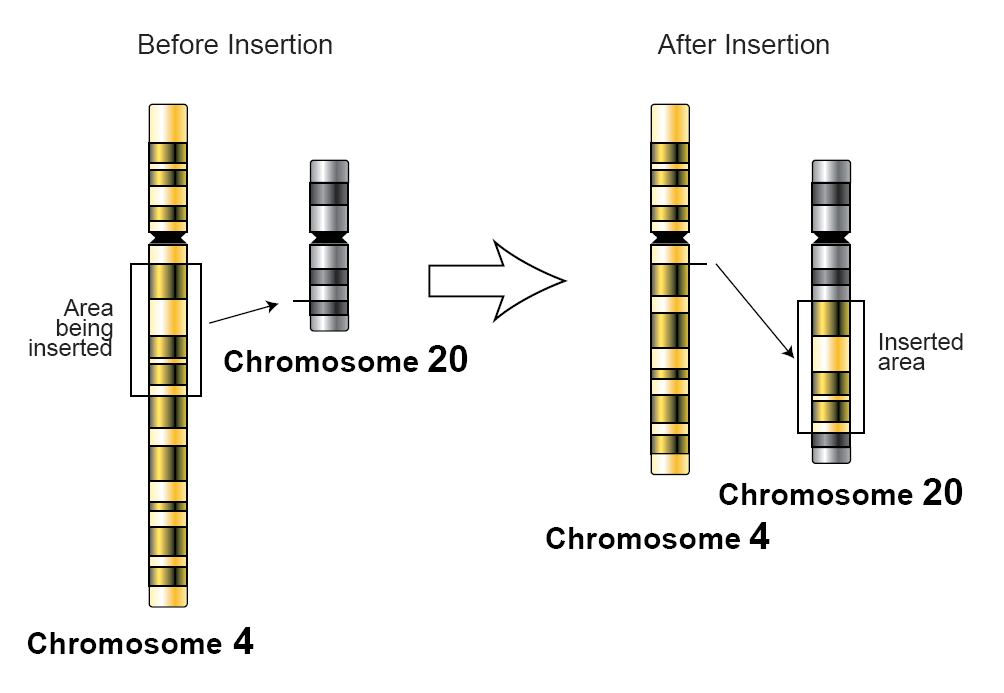
An illustration of an insertion at chromosome level

In genetics, an insertion (also called an insertion mutation) is the addition of one or more nucleotide base pairs into a DNA sequence. This can often happen in microsatellite regions due to the DNA polymerase slipping. Insertions can be anywhere in size from one base pair incorrectly inserted into a DNA sequence to a section of one chromosome inserted into another. The mechanism of the smallest single base insertion mutations is believed to be through base-pair separation between the template and primer strands followed by non-neighbor base stacking, which can occur locally within the DNA polymerase active site.[1] On a chromosome level, an insertion refers to the insertion of a larger sequence into a chromosome. This can happen due to unequal crossover during meiosis.

N region addition is the addition of non-coded nucleotides during recombination by terminal deoxynucleotidyl transferase.

P nucleotide insertion is the insertion of palindromic sequences encoded by the ends of the recombining gene segments.

Trinucleotide repeats are classified as insertion mutations[2][3] and sometimes as a separate class of mutations.[4]

Methods

[edit]

Zinc finger nuclease(ZFN), Transcription activator-like effector nucleases (TALEN), and CRISPR gene editing are the three main methods used in the former research to achieve gene insertion. And CRISPR/Cas tools have already become one of the most used methods to present research.[citation needed]

Based on CRISPR/Cas tools, different systems have already been developed to achieve specific functions. For example, one strategy is double-strand nucleases cutting system, using the normal Cas9 protein with single guide RNA (sgRNA) and then achieving the gene insertion through end-joining or dividing cells with the DNA repair system.[5] Another example is the prime editing system, which uses Cas9 nickase and the prime editing guide RNA (pegRNA) carrying the target genes.[5]

One limitation of current technology is that the size for DNA precise insertion is not large enough[6] to meet the demand for genome research. RNA-guided DNA transposition is an emerging area to solve this problem.[7] More efficient methods are expected to be developed and applied in the genome engineering area.

Effects

[edit]

Insertions can be particularly hazardous if they occur in an exon, the amino acid coding region of a gene. A frameshift mutation, an alteration in the normal reading frame of a gene, results if the number of inserted nucleotides is not divisible by three, i.e., the number of nucleotides per codon. Frameshift mutations will alter all the amino acids encoded by the gene following the mutation. Usually, insertions and the subsequent frameshift mutation will cause the active translation of the gene to encounter a premature stop codon, resulting in an end to translation and the production of a truncated protein. Transcripts carrying the frameshift mutation may also be degraded through Nonsense-mediated decay during translation, thus not resulting in any protein product. If translated, the truncated proteins frequently are unable to function properly or at all and can result in any number of genetic disorders depending on the gene in which the insertion occurs.[8]

In-frame insertions occur when the reading frame is not altered as a result of the insertion; the number of inserted nucleotides is divisible by three. The reading frame remains intact after the insertion and translation will most likely run to completion if the inserted nucleotides do not code for a stop codon. However, because of the inserted nucleotides, the finished protein will contain, depending on the size of the insertion, multiple new amino acids that may affect the function of the protein.[citation needed]

See also

[edit]

References

[edit]

Further reading

[edit]
Revisions and contributorsEdit on WikipediaRead on Wikipedia
from Grokipedia
In , an insertion is a type of chromosomal involving the addition of one or more —or even larger segments such as or chromosomes—into a DNA sequence, typically occurring within a or between . These additions can range from a single to millions of and are distinct from other like substitutions or deletions. Insertions most commonly arise during DNA replication due to errors by DNA polymerase, such as slippage on repetitive sequences, or from exposure to mutagens including chemicals and ionizing radiation that damage DNA and lead to repair inaccuracies. Less frequently, they result from transposon activity, where mobile genetic elements insert themselves into new genomic locations, or from viral integrations. The effects of insertions depend on their size, location, and the affected ; small insertions (one to a few ) in coding regions often cause frameshift mutations by altering the of the , leading to a completely different sequence downstream and usually resulting in a truncated or nonfunctional protein. Larger insertions may disrupt , inactivate regulatory elements, or cause , potentially contributing to ary changes or disease if they interrupt essential functions. In non-coding regions, effects can be subtler, such as altered levels. Notable examples include trinucleotide repeat expansions, a specialized form of insertion where short sequences are abnormally amplified; for instance, excessive CGG repeats in the FMR1 gene cause , leading to and behavioral challenges by silencing the gene. Similarly, CAG repeat insertions in the HTT gene underlie , producing a toxic protein that damages neurons and causes progressive neurodegeneration. Smaller insertions, such as those in the CFTR gene, contribute to certain cases of by disrupting chloride ion transport and causing respiratory and digestive issues.

Definition and Classification

Definition

An insertion mutation is a type of characterized by the addition of one or more into , which lengthens the and may disrupt or alter function. This contrasts with deletions, where are removed from the , and substitutions, where a single is replaced by another; insertions uniquely involve net addition of genetic material, often classified as either small-scale (e.g., single base) or large-scale structural variants depending on size. Insertions can arise in diverse genomic contexts, including coding regions such as exons or non-coding introns, promoter and enhancer regulatory elements, or intergenic spacers between genes. Their scale varies widely, from single that may cause frameshifts in protein-coding sequences to larger fragments exceeding several kilobases, potentially introducing new genetic material like transposable elements. Structural variants are commonly defined as insertions >50 , though thresholds vary (e.g., >1 kb in some studies). The concept of insertion mutations emerged from early 20th-century genetic studies in model organisms like Drosophila melanogaster, where spontaneous and induced variations suggested additions or rearrangements in genetic material. Key milestones emerged in the 1940s and 1950s with Barbara McClintock's pioneering work on maize, identifying transposable elements capable of inserting into and excising from the genome, thus establishing a major mechanism for such mutations.

Types of Insertions

Insertions in genetics are classified by size, origin, and genomic location to facilitate understanding of their diversity and implications. Classifications by size distinguish small insertions, typically ranging from 1 to 50 base pairs (bp), which often arise as indels during DNA replication errors such as polymerase slippage. Large insertions exceed 50 bp (often >1 kb) and frequently involve mobile elements like transposons or viral sequences. Small insertions and deletions together contribute significantly to human genetic variation, accounting for approximately 18% of detected variants in genomic surveys identifying millions of such events across populations. By origin, insertions are categorized as endogenous or exogenous. Endogenous insertions originate from within the host , such as those mediated by retrotransposons like LINE-1 elements that duplicate and reintegrate host sequences. Exogenous insertions introduce foreign DNA, including viral integrations (e.g., retroviral proviruses) or sequences acquired via in prokaryotes. Genomic location further refines classification into intragenic and intergenic types. Intragenic insertions occur within genes, potentially affecting exons to alter coding sequences or introns to influence splicing, whereas intergenic insertions lie in non-coding regions between genes and may impact regulatory elements. A specific subtype includes tandem repeats, such as microsatellites, which form repetitive insertion units often linked to replication slippage. Tandem duplications represent another subtype, where short segments are copied adjacently, comprising the majority of recent small insertions in human genomes.

Mechanisms of Insertion

Natural Mechanisms

Natural mechanisms of insertion in encompass spontaneous processes that introduce new DNA sequences into the without external intervention. These include errors during and repair, mobilization of endogenous transposable elements, viral integrations, and recombination events, all of which contribute to genomic variability across organisms. Replication-based errors are a primary source of small insertions, particularly in repetitive sequences. During , polymerase slippage—also known as slipped-strand mispairing—occurs when the DNA polymerase temporarily dissociates and realigns on repetitive regions, leading to the addition of extra nucleotides in the newly synthesized strand. This mechanism is especially prevalent in microsatellites and tandem repeats, where misalignment facilitates loop-out structures that result in insertions of 1–several base pairs. Another replication-associated process involves (NHEJ) during double-strand break repair; NHEJ ligates broken ends without a homologous template, often incorporating random nucleotides from nearby sequences or fill-in synthesis, thereby generating small insertions at the junction. NHEJ is error-prone and predominates in non-dividing cells, with insertions occurring in a significant fraction of repair events depending on the break context. Transposable elements (TEs) drive larger insertions through autonomous mobility, conserved across eukaryotes. DNA transposons employ a cut-and-paste mechanism, where transposase enzymes excise the element from one genomic site and insert it elsewhere, often creating short target site duplications (2–8 bp) at the new location. In contrast, retrotransposons utilize a copy-and-paste strategy: they are transcribed into RNA, reverse-transcribed into DNA, and integrated via target-primed reverse transcription, amplifying their copy number. Prominent examples include long interspersed nuclear elements (LINEs, such as human L1, ~6 kb) and short interspersed nuclear elements (SINEs, such as Alu, ~300 bp), which rely on L1-encoded for mobility; L1 insertions alone account for ~17% of the . The transposition rate for human L1 elements is estimated at 1 in 95–270 births per generation, reflecting their ongoing activity despite host silencing mechanisms. Viral integration represents another endogenous insertion pathway, particularly through retroviruses. Endogenous retroviruses (ERVs) arise when retroviral DNA, reverse-transcribed from , is inserted into the host via the viral integrase , which catalyzes strand transfer into the host . In humans, ERVs comprise approximately 8% of the , remnants of ancient infections fixed over evolutionary time. Additional processes include unequal crossing-over during , which generates larger duplications (insertions) by misalignment of homologous chromosomes with similar sequences, such as low-copy repeats; this is rare, occurring at frequencies below 10^{-4} per in model systems. In , horizontal facilitates insertions via (uptake and integration of ) or conjugation (direct transfer), enabling rapid acquisition of gene cassettes; these mechanisms are pervasive, with transfer rates varying by but often exceeding 10^{-5} per cell under optimal conditions. These natural insertions, evolutionarily conserved from prokaryotes to eukaryotes, underpin genomic plasticity.

Artificial Methods

Artificial methods for DNA insertion in genetics involve engineered tools designed to introduce specific genetic material into a genome with precision, primarily for research and therapeutic purposes. Early approaches relied on nucleases (ZFNs), developed in the mid-1990s by fusing DNA-binding domains to the nuclease cleavage domain, which creates targeted double-strand breaks (DSBs) in DNA. These DSBs are then repaired via (HDR) using a provided donor DNA template to insert the desired sequence, enabling gene addition or correction. Similarly, transcription activator-like effector nucleases (TALENs), introduced in 2010, employ customizable TALE proteins linked to for sequence-specific DSBs, followed by HDR-mediated insertion of donor DNA, offering improved specificity over ZFNs in some applications. The advent of CRISPR-based systems in 2012 revolutionized artificial insertions by utilizing the endonuclease guided by a single-guide (sgRNA) to generate precise DSBs, which facilitate insertions through either HDR with a donor template for accurate integration or (NHEJ) for smaller indels. A significant advancement is , developed in 2019, which employs a prime editor (a nickase fused to a ) and a prime editing guide (pegRNA) to directly insert small sequences (up to several dozen base pairs) without DSBs, reducing risks of unwanted mutations. By 2025, refinements in , including optimized pegRNA designs and , have boosted efficiencies to up to 80% in certain cell types, enhancing its utility for precise small insertions. Emerging techniques build on principles to enable larger insertions without DSBs, such as RNA-guided transposition systems using CRISPR-associated transposases (CASTs). These systems, initially characterized around 2019 and advanced through 2023-2025 studies involving protein and structural engineering, direct activity via sgRNA to integrate DNA payloads up to 10 kb seamlessly into target sites, mimicking natural transposition but with programmable specificity. For single-nucleotide insertions, variants predominate, though base editors—primarily designed for substitutions—have been adapted in some contexts to facilitate minimal insertions via and repair pathways. These methods find applications in , such as inserting functional copies of genes like CFTR for or HBB for , and in research for generating transgenic model organisms to study . However, challenges persist, including off-target effects from activity and low HDR efficiencies, typically ranging from 10-20% in non-dividing cells, which limit precise insertions. As of 2025, delivery has advanced with (AAV) vectors for systemic administration and lipid nanoparticles for targeted organ delivery, improving accessibility for therapeutic insertions in tissues like the liver and .

Effects of Insertions

Molecular Effects

Insertions in coding regions that are not multiples of three induce frameshift mutations by altering the of the during . This shift changes the grouping of codons downstream of the insertion site, often resulting in a completely different sequence and the introduction of a premature , leading to truncated, nonfunctional proteins. For instance, consider the original mRNA sequence ATG GAA TTA (encoding methionine-glutamic acid-leucine); inserting a single after the second codon yields ATG GAA ATT A... (methionine-glutamic acid-isoleucine-...), altering all subsequent and potentially creating a soon after. Such frameshift insertions frequently trigger the (NMD) pathway, a mechanism that recognizes premature termination codons more than 50-55 upstream of an exon-exon junction and degrades the aberrant mRNA to prevent production of faulty proteins. NMD activation involves ribosomal pausing at the premature stop, recruitment of UPF proteins, and subsequent mRNA degradation via , deadenylation, or endonucleolytic cleavage, reducing mRNA levels by 75-100%. Approximately 70-80% of rare small exonic insertions (<0.05 ) are predicted to be gene-damaging, often through loss-of-function effects like those from frameshifts. Small insertions are particularly prone to causing frameshifts compared to larger ones divisible by three. In contrast, in-frame insertions, consisting of multiples of three, preserve the and insert additional into the protein sequence without shifting codons. These can generate fusion-like proteins by adding peptide segments that disrupt , stability, or interactions, or alter active sites by modifying catalytic residues or substrate-binding pockets. For example, single-residue insertions may enrich in secondary structures like alpha-helices, potentially affecting or post-translational modifications. Insertions in non-coding regions exert regulatory effects by interfering with gene expression machinery. In promoters or enhancers, they can disrupt transcription factor binding sites, reducing or abolishing recruitment of and thereby lowering transcription initiation rates; for instance, insertions near enhancer elements in introns, such as those in the human β-globin gene, impair processing efficiency. In introns, insertions may create cryptic splice sites, activating patterns that include or exclude unintended exons, leading to or inclusion of intronic sequences and resultant aberrant mRNAs. Examples include intronic insertions activating donor sites, causing pseudoexon inclusion and frameshifts in mature transcripts. Large insertions, such as transposons, can induce epigenetic changes by recruiting silencing complexes that establish domains. These insertions often trigger pathways, producing small interfering RNAs that guide lysine 9 methylation (H3K9me) via methyltransferases like Clr4 or SETDB1, recruiting HP1 proteins to compact and impose transcriptional silencing. Coupled with at CpG sites, this heterochromatin formation spreads bidirectionally, introducing repressive marks that propagate through cell divisions and silence nearby genes.

Organismal Effects

Insertions in genes can disrupt protein function at the cellular level, often leading to impaired cellular processes such as proliferation, metabolism, and survival. For instance, transposon insertions into essential genes frequently inactivate protein-coding sequences, resulting in growth defects, reduced , or outright due to loss of vital functions. Similarly, small insertions (indels) in coding regions alter protein structures, compromising enzymatic activities and causing metabolic alterations, as seen in cases where insertions in metabolic genes lead to deficiencies that disrupt biochemical pathways and cellular . At the organismal level, insertions in developmental genes can profoundly affect morphogenesis and phenotype. A well-studied example is the white-eye mutation in Drosophila melanogaster, caused by the insertion of a Doc retrotransposon into the promoter region of the white locus, which blocks pigment production and results in altered eye coloration and associated visual impairments. Such disruptions in developmental regulators can lead to broader morphological changes, including abnormal tissue patterning and organ development in model organisms. Insertions contributing to gene duplications can enhance organismal traits through increased , providing adaptive advantages. In , tandem duplications of genes, often initiated by unequal crossing-over or insertion events, amplify capabilities, conferring resistance to pesticides by elevating levels that metabolize toxins more efficiently. This dosage effect allows affected organisms to survive environmental stressors that would otherwise be lethal. The organismal consequences of insertions differ markedly between somatic and germline cells. Somatic insertions occur in non-reproductive tissues post-zygotically and affect only the individual organism, often leading to localized phenotypes such as tissue-specific dysfunction or uncontrolled growth in affected areas, as observed in cancer where somatic insertions contribute to genomic . In contrast, germline insertions arise in reproductive cells and are heritable, propagating across generations and influencing the entire organism from early development onward. Insertions on can interact with dosage compensation mechanisms, particularly in mammals where inactivation balances between sexes. insertions on the undergo dynamic regulation during dosage compensation, with increased activity on the active X potentially amplifying expression imbalances that affect cellular and organismal phenotypes, such as in reproductive tissues. In cancer genomes analyzed by (TCGA), somatic insertions, including those from , account for a notable fraction of mutations—approximately 10-20% in certain cohorts—driving oncogenic transformations through gene disruption and regulatory changes.

Detection and Analysis

Detection Methods

Sequencing-based methods represent a cornerstone for detecting genetic insertions, leveraging next-generation sequencing technologies to identify sequence gaps or anomalies in aligned reads. Short-read sequencing, such as Illumina platforms, excels at detecting small insertions (typically 1-50 base pairs) by identifying split reads, discordant read pairs, or alignment gaps during mapping to a . Tools like MELT and INSurVeyor analyze paired-end short-read data to pinpoint insertions with high precision, achieving detection rates exceeding 90% for microindels under 4 base pairs. However, short-read approaches struggle with larger insertions due to fragmented coverage, missing over 50% of structural variants greater than 50 base pairs. In contrast, long-read sequencing technologies, including PacBio and Oxford Nanopore as of 2025, provide superior resolution for large insertions and structural variants by generating continuous reads spanning thousands of base pairs, enabling direct visualization of insertion breakpoints without reliance on assembly. These methods have revolutionized detection of complex insertions, such as those in repetitive regions, with studies demonstrating enhanced sensitivity for all insertion sizes compared to short-read approaches, particularly in diverse human genomes. For instance, long-read sequencing in pooled samples has facilitated high-throughput identification of structural variants, including insertions, across populations. Long-read techniques are especially advantageous for large-scale insertions that short-read methods often overlook. Polymerase chain reaction (PCR)-based detection targets potential insertion sites using primers designed to flank the insertion or amplify across the junction, confirming presence through amplicon size shifts or sequencing of products. This approach is particularly effective for validating known or suspected insertions in targeted genes, with methods like thermal asymmetric interlaced PCR (TAIL-PCR) enabling of flanking sequences in insertion libraries. Array comparative genomic hybridization (aCGH) complements PCR by detecting copy number changes associated with duplicative insertions, hybridizing differentially labeled test and reference DNA to arrays to reveal gains or losses at high resolution. aCGH has proven valuable for identifying exonic copy-number variations, including those from insertions, in clinical diagnostics. Microscopy techniques, such as (FISH), allow direct visualization of large chromosomal insertions by hybridizing fluorescently labeled probes to specific DNA sequences on or chromosomes. FISH is widely used to map insertion locations and confirm structural rearrangements, providing spatial resolution for variants not easily captured by sequencing alone. This method detects insertions through signal patterns, such as extra fluorescent spots indicating duplicated material. Advancements in 2025 have integrated into variant calling, enhancing detection accuracy across sequencing modalities. AI-assisted tools like DeepVariant employ convolutional neural networks to classify pileup images from short- and long-read data, improving sensitivity for insertions by reducing false positives and handling complex alignments. These tools achieve superior performance in identifying indels, including insertions, in diverse genomic contexts, with ongoing developments enabling joint processing of read types for comprehensive variant discovery.

Analytical Techniques

Analytical techniques for insertions in involve post-detection characterization to elucidate their functional consequences, structural features, and population-level implications. Functional tools such as ANNOVAR and the Ensembl Variant Effect Predictor (VEP) are widely used to predict the impacts of detected insertions on genes and proteins, including assessments of whether they disrupt coding sequences, alter splice sites, or introduce frameshifts. For instance, ANNOVAR annotates insertions by integrating genomic context, gene models, and regulatory elements to classify potential effects like loss-of-function variants. Similarly, VEP evaluates insertions across transcripts, providing consequences such as disruptions or triggers. These tools process sequencing data from detection methods to generate prioritized variant lists for further study. To assess actual expression changes induced by insertions, analysis quantifies transcript levels and identifies fusion events or altered splicing patterns, revealing how insertions perturb gene regulation. Structural analysis of insertions employs advanced assembly algorithms to resolve their sequences and integration sites, particularly for complex or repetitive elements. Graph-based methods in tools like Verkko, updated in 2025, facilitate de novo assembly of insertion-containing regions by constructing De Bruijn graphs from long-read data, enabling accurate reconstruction of insertion breakpoints and flanking sequences. Phylogenetic comparisons further trace the evolutionary origin of insertions by aligning sequences across and inferring insertion events on ancestral branches, distinguishing recent de novo insertions from ancient ones shared among lineages. In , allele frequency databases such as the gnomAD update provide insights into the commonality of insertions across diverse ancestries, aiding in the classification of rare versus polymorphic variants. (LD) analysis estimates the evolutionary age of insertions by measuring decay in associations surrounding the site, with slower decay indicating older insertions due to accumulated recombination events. For validation, CRISPR-based approaches recreate insertions in cell lines to confirm causality, such as by introducing the exact sequence via and observing phenotypic or molecular outcomes. Quantitative metrics like CADD pathogenicity scores integrate multiple annotations to predict deleteriousness, where scores greater than 20 signify the top 1% most harmful insertions genome-wide.

Biological Significance

Role in Genetic Diseases

Insertions in the genome play a significant role in causing genetic diseases by disrupting gene function, leading to monogenic disorders, cancers, and other pathologies. In monogenic diseases, trinucleotide repeat expansions are a prominent example, where repetitive DNA sequences insert and expand within genes, altering protein production. For instance, in , expansion of CAG repeats in the HTT gene results in elongated polyglutamine tracts in the protein, contributing to neuronal degeneration. Similarly, arises from CGG repeat expansions in the of the gene, which hypermethylates the promoter and silences , impairing synaptic function. Smaller insertions can also contribute to disease; for example, insertions in the CFTR gene cause frameshift mutations in some cases of , disrupting chloride ion transport and leading to respiratory and digestive issues. In cancer, insertions can activate oncogenes or inactivate tumor suppressors through . Retroviral integrations, such as those by avian leukosis virus (ALV) in chickens, insert near proto-oncogenes like c-myc, driving aberrant expression and development. In humans, insertions, which are short interspersed nuclear elements, have been implicated in disrupting tumor suppressor genes; for example, an Alu insertion in the CBL gene's enhancer region downregulates its expression in cases. Structural variants, including insertions, are estimated to contribute to 5–20% of Mendelian disorders based on 2018 analyses of the OMIM database. Population disparities further influence disease burden; repeat expansion mutations show higher frequencies in certain ancestries, such as elevated CAG expansions in Huntington's among individuals of European descent compared to Asian populations. Therapeutic strategies increasingly target these insertions, with gene editing tools like offering promise to excise or correct them. Preclinical studies using have shown potential to excise hexanucleotide repeat expansions in C9orf72-associated , reducing toxic elements in models without off-target effects. Similar approaches are advancing for .

Role in Evolution

Insertions, particularly those mediated by transposable elements (TEs), play a pivotal role in generating that fuels evolutionary processes across generations. Transposon insertions can create novel exons or regulatory elements, thereby diversifying patterns and enabling adaptation to new environmental pressures. For instance, Alu elements, which are primate-specific short interspersed nuclear elements (), have been shown to mediate by providing splice sites that incorporate new exons into transcripts, thus expanding the functional repertoire of genes in lineages. This mechanism exemplifies how transposition, a natural process of mobile element insertion, contributes to evolutionary innovation by altering splicing landscapes without requiring de novo mutations. In adaptive evolution, insertions facilitate gene duplications that allow for subfunctionalization, where duplicated genes acquire specialized roles, enhancing organismal fitness. A prominent example is the expansion of (OR) gene families in mammals, driven by tandem duplications often involving retrotranspositional insertions, which have enabled sensory adaptations to diverse ecological niches. Similarly, in , horizontal gene transfer via or insertions introduces antibiotic resistance genes, rapidly disseminating adaptive traits across populations and driving microbial evolution in response to selective pressures like antimicrobial use. These events underscore how insertions promote functional diversification at both eukaryotic and prokaryotic levels. While many insertions contribute to adaptive change, the majority undergo neutral or deleterious drift, with approximately 90% being either selectively neutral or purged from populations due to purifying selection. However, some insertions become fixed and co-opted for beneficial functions; for example, endogenous retroviruses (ERVs) in mammals have been exapted to support placental development, with syncytin genes derived from ERV envelope proteins facilitating fusion essential for . This fixation highlights the long-term evolutionary potential of previously neutral elements. Transposable elements, largely derived from ancient insertions, constitute about 45% of the based on recent assemblies, serving as a vast reservoir for evolutionary raw material. A key adaptive event involves the increased copy number of the AMY1 gene, resulting from segmental duplications akin to insertion events, which enhanced salivary production and digestion efficiency in human populations transitioning to agriculture-dependent diets. Such copy number variations demonstrate how insertions drive population-level adaptations to dietary shifts over millennia.

References

Add your contribution
Related Hubs
User Avatar
No comments yet.