Hubbry Logo
Sex organSex organMain
Open search
Sex organ
Community hub
Sex organ
logo
8 pages, 0 posts
0 subscribers
Be the first to start a discussion here.
Sex organ
Sex organ
from Wikipedia
Not found
Revisions and contributorsEdit on WikipediaRead on Wikipedia
from Grokipedia
Sex organs, also known as reproductive organs or genitalia, are specialized biological structures in sexually reproducing organisms across animals, , and fungi that produce gametes, secrete hormones, and facilitate and fertilization. These organs develop from undifferentiated embryonic or primordial tissues and exhibit dimorphism between sexes or , with shared evolutionary origins enabling diverse reproductive strategies. Sex organs vary widely across taxa: in animals, they include gonads and associated structures for gamete production and transfer; in flowering plants, flowers house stamens and pistils; and in fungi, specialized hyphae or fruiting bodies enable mating and spore formation. Detailed structures and functions differ by group and are covered in subsequent sections.

Terminology and Classification

Definitions

Sex organs, also referred to as reproductive organs, are specialized biological structures in sexually reproducing organisms that produce gametes—such as or eggs—or otherwise facilitate , setting them apart from structures involved in asexual propagation. These organs are essential for the generation of through the fusion of gametes, a process central to across eukaryotes. The term "sex organ" originates from the Latin sexus, denoting the division into male and female categories, and organum, referring to a functional instrument or part of the body. The compound term "sex organ" first appeared in biological literature in the mid-19th century (1847). Early systematic descriptions of such structures date to the amid advancements in , appearing in works by physicians like , who examined reproductive generation in animals. This etymological foundation underscores the historical emphasis on and differentiation in anatomical studies. Sex organs proper are distinguished from accessory reproductive components, such as glands or ducts that aid in gamete transport or nourishment; the primary sex organs, or gonads, in animals are the testes and ovaries, which directly generate s and hormones. In , analogous primary structures include anthers, which produce male gametes in , and ovules, which house female gametes. This distinction highlights the core gamete-producing role of sex organs, excluding supportive tissues. The concept of sex organs accommodates a range of sexual systems beyond strict male-female separation, including hermaphroditism, where individuals bear both organs either simultaneously or sequentially across their lifespan. Such diversity reflects evolutionary adaptations in reproductive strategies, enabling flexibility in mating and exchange among .

Types and Variations

Sex organs are broadly classified by their primary functions in gamete production. Male sex organs, such as testes in vertebrates, are spermatogenic structures specialized for producing and storing cells. Female sex organs, exemplified by ovaries, are oogenic and responsible for generating ova or eggs, often involving processes like and follicular development. In hermaphroditic organisms, combined sex organs like ovotestes contain both spermatogenic and oogenic tissues, enabling the production of both types within a single individual. These functional types manifest in diverse sexual systems across organisms. involves separate sexes, where individuals develop exclusively male or female sex organs, as seen in many animals like fruit flies (). Hermaphroditism, prevalent in about one-third of animal species excluding insects, features individuals with both male and female organs; this can support self-fertilization in species like certain flatworms or cross-fertilization in snails. , an asexual mode, typically occurs in females with functional oogenic organs but no fertilization, as in and species; however, rudimentary male organs may still develop in some cases without contributing to reproduction. The size and complexity of sex organs vary widely, reflecting organismal evolution. In simple forms like (Ectocarpus species), sex organs consist of haploid gametophytes producing small, motile gametes with minimal dimorphism and nonrecombining sex-determining regions of about 1 million base pairs. At the opposite end, mammalian sex organs exhibit high complexity, with layered structures like the multilayered testes and associated ducts in males, involving extensive vascularization, hormonal regulation, and genetic control via diploid . Non-binary variations occur when sex organs display mixed or ambiguous traits, as in conditions. These involve discrepancies in gonadal, chromosomal, or anatomical development, such as ovotestes or atypical genitalia. Estimates of prevalence in humans range from 0.05% to 1.7% of live births, depending on inclusion criteria for atypical traits.

Evolutionary Development

Origins in Early Eukaryotes

The precursors to eukaryotic sex organs can be traced to genetic exchange mechanisms in prokaryotes, such as , where genetic material is transferred between cells without specialized structures. In , for instance, the enables direct cell-to-cell transfer of DNA via a , representing a form of non-organ-based sexual exchange that facilitated long before the evolution of true . However, these processes lack differentiated gametes or dedicated organs, marking them as primitive analogs rather than true sex organs, which emerged with the advent of eukaryotes. The transition to eukaryotic hinged on the origin of , a process that arose approximately 1.2 billion years ago and enabled the production of genetically diverse haploid s from diploid cells, setting the stage for differentiation. This meiotic innovation, essential for sexual cycles, likely coevolved with early mitotic mechanisms in the last eukaryotic common ancestor, allowing for recombination and reduction division. Genetically, genes—ancient transcription factors conserved across eukaryotes—played a regulatory role in coordinating formation and early reproductive development, influencing patterns of cell differentiation in primitive sexual systems. In early eukaryotes like protists and algae, sexual reproduction began with isogamy, where similar-sized gametes fuse, and progressively evolved toward anisogamy, featuring dissimilar gametes of varying sizes and motility, laying the groundwork for sex organ analogs. This transition is exemplified in volvocine green algae, where unicellular Chlamydomonas exhibits isogamy with cells directly functioning as gametes, while multicellular relatives like Volvox show anisogamy with specialized structures such as oogonia producing large, non-motile eggs and smaller antheridia or sperm packets. These simple gametangia—enclosed chambers for gamete production—represent the earliest structural precursors to sex organs, facilitating protected gamete maturation and release in aquatic environments. Fossil evidence supports this timeline, with Bangiomorpha pubescens, a red alga from 1.047-billion-year-old rocks in , preserving the oldest known sexual structures: differentiated filaments bearing sporangia-like bodies interpreted as gametangia, indicating anisogamous and . This demonstrates that complex sexual traits, including dimorphic gametes, had already evolved in early multicellular eukaryotes, predating the diversification of major eukaryotic lineages.

Diversification in Multicellular Lineages

In multicellular lineages, the diversification of sex organs represents a key evolutionary innovation that enhanced protection, fertilization efficiency, and beyond the isogamous systems of early eukaryotes. This progression involved the integration of sex organs with somatic structures, driven by selective pressures in diverse environments. In metazoans, sex organs evolved from primordial germ cells (PGCs) specified during early embryogenesis, often through inductive signals from somatic tissues or maternally inherited determinants. These PGCs migrate to and differentiate within the s, which form from the , providing enclosure and support for . The distinction between internal and further shaped gonad complexity; in many basal metazoans, such as echinoderms, correlates with simpler gonads open to the , while in bilaterians promoted enclosed gonads with ducts, facilitated by formation that allowed for hydrostatic pressure and organ suspension. For instance, coelomic outpocketings in enterocoelous animals contributed to gonad development by creating protected spaces for gamete maturation. In the plant lineage, sex organs diversified with the transition to terrestrial habitats around 470 million years ago during the , when bryophyte-like ancestors evolved from aquatic charophyte algae. Early land retained gametangia—multicellular archegonia for egg production and antheridia for —in the dominant generation, adaptations that protected gametes from via protective jackets. Over time, as the generation became dominant in vascular plants, these structures evolved into more complex forms: antheridia gave way to pollen-producing microsporangia, while archegonia transformed into with integuments for enhanced protection, culminating in seed plants, where tubes facilitate delivery to the , with non-motile in most lineages (siphonogamy) enabling water-independent fertilization, although some gymnosperms such as cycads and Ginkgo retain motile, flagellated that swim brief distances internally. This shift was tightly linked to terrestrial challenges, including water-independent fertilization. Fungal sex organs adapted through the of specialized reproductive structures that capitalized on filamentous growth. Primitive involved hyphal fusion between compatible haploid partners, leading to without immediate . This established a prolonged dikaryotic phase, unique to ( and ), where unfused nuclei coexist in hyphae, enabling coordinated growth before . In ascomycetes, dikaryotic cells form linear asci for ascospore production, while in basidiomycetes, they develop into club-shaped basidia within fruiting bodies, which function as organ-like structures for dispersal. The dikaryotic state likely evolved to balance and stability, facilitating the formation of complex fruiting bodies that enhance release in terrestrial niches. Across these lineages, key evolutionary drivers included and environmental factors. favored , where disruptive selection on size led to small, mobile male gametes ( or ) and larger, nutrient-rich female gametes (eggs or ova), as modeled by Parker et al., who demonstrated that optimal size differences minimize mobility costs for small gametes while maximizing viability for large ones. In , environmental pressures like habitat aridity drove pollination syndromes—convergent floral traits (e.g., color, scent) adapted to specific pollinators—enhancing efficiency. These forces collectively promoted organ complexity by linking gamete dimorphism to somatic investments in protection and dispersal.

Sex Organs in Animals

Vertebrate Structures

In , sex organs originate from bipotential structures during embryonic development. The gonads form as indifferent ridges from the and coelomic epithelium around the 5th week of in higher vertebrates, consisting of an outer cortex and inner medulla capable of differentiating into either testes or ovaries depending on genetic or environmental cues. Parallel to this, two pairs of genital ducts develop: the Wolffian ducts (mesonephric), which form the male reproductive tract in the presence of androgens, and the Müllerian ducts (paramesonephric), which develop into the female tract when (AMH) is absent. In males, the SRY gene on the (in mammals and some other groups) initiates testis differentiation by promoting formation, leading to AMH secretion that regresses Müllerian ducts and testosterone production that stabilizes Wolffian ducts; in females, the absence of SRY allows ovarian development driven by genes like FOXL2 and WNT4. These mechanisms vary across classes, with genetic sex determination (GSD) dominant in mammals and birds, while environmental factors like influence reptiles, amphibians, and some . In and amphibians, are often external or superficially located, reflecting their oviparous reproductive strategies. ovaries produce —clusters of eggs released for —while testes release () through the or genital pores; connect to Wolffian or Müllerian ducts in non-teleost , but teleosts often use specialized testicular or ovarian ducts formed by posterior elongation. Amphibians exhibit similar via discharge, with males possessing paired testes containing seminiferous tubules for and females having lobed ovaries that release oocytes through oviducts into the during ; fat bodies adjacent to provide nutritional support for production. Sex determination in these groups is highly plastic, often involving GSD with XX/XY or ZW/ZZ systems, or environmental cues, allowing for phases or in some species. Reptiles and birds feature more internalized gonads adapted to terrestrial environments, with seasonal gonadal changes tied to environmental cycles. In reptiles, testes and ovaries develop internally from bipotential ridges, with Wolffian and Müllerian ducts differentiating based on GSD or (TSD); for example, in , incubation temperature during a critical embryonic period determines sex, with warmer conditions often producing females via influences on genes like and DMRT1. Birds, with ZW/ZZ GSD (females heterogametic), have asymmetric gonads in females (a functional left with the right regressed) and paired testes in males, both connected to Müllerian ducts that regress in males via AMH; gonadal size fluctuates seasonally with photoperiod and hormones, supporting through cloacal sperm transfer. Mammals represent an evolutionary advancement in , where female sex organs are modified for internal and . Ovaries and testes derive from the same indifferent gonads as in other vertebrates, with Wolffian ducts forming , , and in males, and Müllerian ducts developing into fallopian tubes, , and upper in females. The facilitates placenta formation—a chorioallantoic structure enabling maternal-fetal and —while mammary glands, homologous to reptilian glands but specialized, produce for postnatal nourishment, regulated by imprinted genes like IGF2 and signaling. This adaptation enhances offspring survival but imposes high energetic costs on females. Comparative anatomy reveals deep homologies in vertebrate sex organs, underscoring shared evolutionary origins over 500 million years. The germinal epithelium—a layer of somatic cells (Sertoli in males, granulosa in females) enclosing germ cells—is conserved across classes, forming spermatogenic cysts in fish and amphibians that evolve into seminiferous tubules in amniotes for radial spermatogenesis. Wolffian and Müllerian ducts show homology as pronephric derivatives, with their differentiation controlled by conserved genes like DMRT1 (testis-promoting) and FOXL2 (ovary-promoting), despite variations in sex determination mechanisms. These structures highlight the modular evolution of reproductive systems, adapting to diverse ecologies while retaining core developmental pathways.

Invertebrate Structures

Invertebrates exhibit a remarkable diversity of sex organs, ranging from rudimentary gonadal masses to elaborate hermaphroditic systems tailored to their aquatic or terrestrial habitats and reproductive strategies. These structures facilitate external or , often adapted for broadcast spawning in marine environments or direct transfer in more complex forms. Unlike vertebrates, invertebrate sex organs prioritize efficiency in production and dispersal, with many species lacking specialized copulatory organs and relying on environmental cues for synchronization. In the basal phyla Porifera (sponges) and (jellyfish, corals, and anemones), true sex organs are absent, replaced by simple gonadal masses or tissues dedicated to gamete production. Sponges are often sequentially hermaphroditic, producing eggs first from amoebocytes retained within the spongocoel, followed by broadcast into the water for ; larvae develop and settle nearby. similarly engage in broadcast spawning, releasing eggs and from polyps or medusae in synchronous bundles triggered by lunar cycles or changes, with some species acting as simultaneous hermaphrodites producing both in the same individual; fertilization occurs externally in the water column, yielding free-swimming larvae. These porous release sites function as basic gamete outlets, emphasizing dispersal over structural complexity in these filter-feeding groups. Annelids (segmented worms) and mollusks display more differentiated hermaphroditic organs, enabling and environmental adaptations. Many annelids, such as earthworms, are simultaneous hermaphrodites with paired gonads in specific segments; the , a glandular band, secretes mucus to form protective cocoons around fertilized eggs during mutual sperm exchange. In mollusks, hermaphroditism prevails in about 63% of marine species, with organs like the gonoducts merging male and female functions; for instance, squids use muscular siphons to expel eggs or packets during in open water. These structures support high reproductive output, with correlating to limited larval dispersal in both phyla. Arthropods feature paired gonads connected to dedicated ducts, reflecting their exoskeletal constraints and diverse behaviors. In , ovaries consist of telotrophic or panoistic ovarioles forming lobes that produce yolk-rich , with oviducts often fusing into a single genital chamber for storage and deposition; internal via spermatophores is common. Spiders possess sac-like ovaries linked to a common , complemented by spermathecae—specialized sacs in females for long-term storage after , allowing delayed fertilization of batches. These ducts open ventrally, adapting to the for efficient transfer during rituals. Echinoderms, such as , house gonads as tufts or sacs within the coelomic cavity, suspended along radial canals and innervated by cords for hormonal regulation. In , these gonadal tufts produce gametes seasonally, with oocytes maturing under the influence of relaxin-like peptides from surrounding tissues; occurs via synchronized spawning. Notably, echinoderm gonads exhibit regeneration capabilities, restoring full function after arm or injury through of coelomic cells, a trait enhancing survival in predator-rich habitats. Unique adaptations include in certain , where individuals switch sexes to optimize . For example, caridean shrimps like Processa edulis mature as males before transitioning to females via an intersexual phase, maximizing early mating opportunities while reserving larger body sizes for egg brooding. Parasitic , such as flukes (trematodes in Platyhelminthes), feature hermaphroditic organs simplified for host-specific lifecycles, with a single set of male and female gonads producing vast numbers of eggs for transmission via feces, though lacking complex external structures found in free-living relatives. These features underscore the evolutionary flexibility of invertebrate sex organs in response to ecological pressures.

Sex Organs in Plants

In Flowering Plants

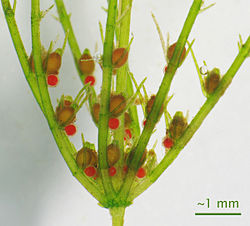
In flowering plants, or angiosperms, the sex organs are specialized structures within flowers that facilitate reproduction through and fertilization. The male reproductive organs, collectively known as the androecium, consist of stamens, each comprising a filament that supports an anther containing pollen sacs. grains, which serve as the male gametophytes, develop within these sacs from haploid microspores produced by and are released to be transferred to the female organs. The female reproductive organs, or , form the pistil, which includes the stigma for receiving , the style connecting the stigma to the , and the enclosing ovules that contain the female gametophytes. These ovules house the egg cells essential for fertilization. A hallmark of angiosperm reproduction is , a unique to this group where a single delivers two cells to the . One fuses with the to form a diploid , which develops into the , while the second combines with two polar nuclei in the central cell to produce a triploid that nourishes the . This efficient mechanism enhances viability and contributes to the evolutionary success of angiosperms. Flowers exhibit variations in sex organ arrangement to promote cross-pollination. Perfect flowers contain both functional stamens and pistils, as seen in roses, while imperfect flowers have only one set, either staminate () or pistillate (). Plants may be monoecious, bearing separate and flowers on the same individual, such as corn, or dioecious, with distinct and plants, like willows. These configurations reduce self-fertilization and encourage . Adaptations in floral sex organs enhance efficiency and prevent . guides, often visible as patterns on petals, direct pollinators like bees to the reproductive parts, while scents attract specific visitors such as moths. mechanisms, governed by the highly polymorphic S-locus genes, ensure that from genetically identical individuals is rejected; for instance, in gametophytic systems, matching S-alleles trigger pistil enzymes like S-RNases to degrade incompatible RNA. These traits have coevolved with pollinators to optimize . The sex organs of angiosperms underpin global agriculture, as approximately 90% of plant species and most food crops derive from these plants, with about 35% of world food production relying on animal of their flowers for yield. For example, pollinator-dependent crops like fruits and highlight how disruptions in these processes can impact .

In Non-Flowering Plants

Non-flowering , encompassing gymnosperms, ferns and their allies, and bryophytes, exhibit sex organs that are typically more primitive and exposed compared to the enclosed structures in flowering , reflecting their evolutionary retention of ancestral reproductive strategies. These groups demonstrate a clear , where the haploid phase often bears the sex organs independently of the diploid . Fertilization in these generally relies on or wind for dispersal, contrasting with the animal-mediated common in angiosperms. In gymnosperms, which include about 1,000 extant species predominantly in the conifer group, reproduction occurs through naked seeds lacking protective fruit enclosures. Male sex organs are housed in pollen cones, or microstrobili, which contain microsporangia that produce pollen grains via meiosis in microspore mother cells. For example, in pine trees, these pollen cones are small and clustered, releasing wind-dispersed pollen that carries sperm nuclei to female structures. Female sex organs reside in ovulate cones, where megasporangia within ovules produce megaspores that develop into female gametophytes; each scale of the cone typically bears two ovules, each containing a single megasporocyte that undergoes meiosis to yield a functional megaspore. This heterosporous condition allows for separate male and female gametophyte development within the cones, with pollen tubes facilitating sperm delivery to the egg without requiring free water. Ferns and their allies, such as horsetails and whisk ferns, feature sex organs on a free-living, heart-shaped called a prothallus, which emerges from haploid spores dispersed by wind. Male antheridia, resembling small sausages, develop on the underside of the prothallus and release multiflagellated that swim through water films to reach female archegonia, flask-shaped structures each containing a single . This water-dependent fertilization highlights the retention of motile gametes from algal ancestors, with the independent phase allowing separate from the dominant, vascular generation. Archegonia and antheridia may form on the same prothallus in homosporous ferns, promoting self-fertilization, though some species exhibit unisexual gametophytes. Bryophytes, including mosses and liverworts, possess multicellular sex organs exclusively on the , which is the dominant, free-living phase in their life cycle. Antheridia are capsule-like and produce numerous flagellated , while archegonia are flask-shaped with a single at the base; both structures often cluster at the tips of gametophyte shoots. Fertilization requires external water, as swim toward archegonia guided by chemotactic signals from the female organs, a process that limits bryophytes to moist habitats. Post-fertilization, the diploid develops into a dependent on the maternal gametophyte for nutrition, underscoring the evolutionary primacy of the gametophyte in these basal land plants. Evolutionarily, non-flowering retain free-living gametophytes that enable direct environmental interaction for sex organ development, a trait linking them to early land plant ancestors, while gymnosperms advanced protection and wind dispersal to reduce water dependence. This contrasts with the reduced, enclosed gametophytes in flowering , where sex organs integrate into complex flowers for enhanced efficiency.

Sex Organs in Fungi

Reproductive Structures

In fungi, reproductive structures facilitate through specialized organs that produce spores via , often following , the fusion of hyphae from compatible . These structures vary across fungal phyla, reflecting adaptations to diverse environments and dispersal strategies. In Ascomycetes, occurs within sac-like housed in ascocarps, which are fruiting bodies dedicated to and ascospore formation. Asci develop linearly or in clusters within these ascocarps, where diploid nuclei undergo to yield eight haploid ascospores per , typically arranged in a single file. Ascocarps take forms such as the flask-shaped perithecia seen in molds like , which open via an ostiole to release ascospores. Basidiomycetes feature club-shaped as their primary reproductive structures, typically borne on the surfaces of fruiting bodies like gills or caps. Each arises from a dikaryotic hyphal cell and undergoes followed by , producing four haploid externally on sterigmata. In gilled such as , line the of gills, enabling efficient spore discharge. Fungi in Mucoromycota (formerly Zygomycetes) produce simpler reproductive structures in the form of zygospores, resulting from the fusion of multinucleate hyphae of opposite . This creates a thick-walled, multinucleate zygospore within a fusion zone, where and occur later to form haploid spores upon . For example, in species, zygospores develop between suspensor hyphae, providing against adverse conditions. Fungal fruiting bodies exhibit remarkable diversity in size and form, ranging from microscopic cleistothecia—closed, spherical ascocarps in certain Ascomycetes—to large like species in Basidiomycetes, which can exceed 20 cm in diameter and release billions of spores. precedes the development of these organs, initiating dikaryotic growth that culminates in structured spore-bearing tissues. Adaptations in these structures enhance spore dispersal and reproductive success, with many spores evolved for aerial release through ballistic mechanisms or wind currents to reach suitable substrates. Mycorrhizal associations, particularly in Basidiomycetes and some Ascomycetes, further boost reproductive outcomes by linking fungal networks to host , facilitating exchange that supports fruiting body formation and spore viability.

Mating Systems

In fungi, mating systems regulate sexual compatibility through specialized genetic loci known as regions, which consist of idiomorphic alleles—non-homologous sequences that function as distinct genetic elements—to enforce and prevent self-fertilization. In ascomycetes like yeasts, the MAT locus typically encodes transcription factors that control cell identity and initiate the sexual cycle, ensuring that only opposite can fuse and proceed to . These loci promote by restricting mating to compatible partners, a mechanism conserved across fungal lineages to avoid . Fungal mating systems are broadly categorized as bipolar or tetrapolar based on the genetic architecture of compatibility determination. Bipolar systems rely on a single locus with two idiomorphic alleles (e.g., MATa and MATα in ), resulting in only two and simplifying compatibility to a unifactorial control. In contrast, tetrapolar systems, prevalent in basidiomycetes, involve two unlinked loci—often the homeodomain (HD) locus regulating nuclear pairing and the pheromone-receptor (P/R) locus controlling cell recognition—yielding at least four and potentially thousands of compatible combinations per . This multifactorial setup evolved from bipolar ancestors through locus divergence, enhancing opportunities in diverse environments. Basidiomycetes exhibit particularly complex mating systems, with multiallelic loci enabling vast numbers of ; for example, certain like possess over 20,000 unique specificities due to hundreds of alleles at each locus. Compatibility is mediated by signaling, where lipopeptide pheromones from one bind G-protein-coupled receptors on a compatible partner, triggering hyphal fusion, gene activation, and synchronized nuclear migration without immediate fusion. This pheromone-receptor specificity ensures precise one-to-many interactions, far exceeding the binary systems of most ascomycetes, and supports expansive in natural populations. Upon compatible , basidiomycetes enter a prolonged dikaryotic phase, characterized by persistent binucleate hyphal cells where the two parental nuclei coexist without , providing a unique n+n nuclear condition that drives the growth of fruiting bodies and spore-producing organs. This phase is maintained through specialized clamp connections at hyphal : during mitosis, a lateral outgrowth (the clamp) forms, allowing one nucleus to migrate into it while the other divides in the main hypha, ensuring both daughter compartments receive one nucleus of each type and preventing loss of dikaryosis. Clamp connections thus facilitate the spatial coordination essential for reproductive organ development, such as basidiocarps, and are a hallmark of basidiomycete . While sexual mating dominates in many fungi, asexual species or those without an observed sexual cycle—formerly classified in the artificial group Deuteromycota—lack dedicated sex organs and mating-type loci but achieve through parasexual cycles. These cycles begin with hyphal between genetically distinct strains, forming transient heterokaryons, followed by rare diploid formation via , mitotic crossing-over, and eventual haploidization through irregular chromosome loss. This process generates recombinant progeny without , serving as an alternative to and enabling adaptation in ostensibly asexual lineages like . Modern genomic studies have illuminated the evolutionary dynamics of mating-type loci, demonstrating how allele shuffling, gene duplications, and losses at idiomorphic regions foster transitions between bipolar and tetrapolar systems to bolster fungal . For instance, post-2020 applications of CRISPR-Cas9 have been used to modify mating-type s in basidiomycetes like Lentinula edodes, revealing roles in reproductive compatibility.

Sex Organs in Humans

Male Anatomy

The consists of primary sex organs responsible for production and synthesis, along with accessory structures that facilitate transport and , and external genitalia adapted for copulation. These components develop under the influence of genetic and hormonal factors, with the testes serving as the central site for and production. The system ensures the delivery of viable while maintaining optimal conditions for through and fluid contributions to . The primary organs include the testes, paired oval structures located within the scrotum, each measuring approximately 4-5 in length in adults. Within the testes, seminiferous tubules house the process of spermatogenesis, where diploid spermatogonia undergo meiosis to produce haploid spermatozoa, supported by Sertoli cells that provide nourishment and structural integrity. Interstitial Leydig cells, situated between the tubules, secrete testosterone, the primary male androgen essential for maintaining spermatogenesis, secondary sexual characteristics, and libido. Adjacent to each testis is the epididymis, a coiled duct about 6 meters long when uncoiled, where immature sperm from the seminiferous tubules undergo maturation over 10-14 days, acquiring motility and fertilizing capacity through exposure to specific proteins and ions in the epididymal fluid. Accessory structures include the , a muscular duct extending from the to the , which propels via peristaltic contractions during . The , paired glands posterior to the , secrete a viscous, alkaline rich in , prostaglandins, and clotting proteins, contributing approximately 60-70% of volume to provide energy for and aid in post-. The prostate gland, surrounding the , adds 20-30% of volume through its slightly acidic secretions containing (PSA), , and , which liquefy the coagulum and support viability. Together, these structures form , a composite comprising less than 5% cells, with the accessory glands ensuring nutrient supply, pH buffering (around 7.2-8.0), and protection against the vaginal environment. External genitalia encompass the and . The comprises three erectile tissues: two dorsal corpora cavernosa and a ventral corpus spongiosum surrounding the , all encased in fibrous tunica albuginea. During , parasympathetic stimulation triggers release from endothelial cells in the corpora cavernosa, relaxing via cyclic GMP elevation, increasing blood inflow, and trapping it to achieve rigidity for penile . The , a skin-covered sac suspending the testes, maintains testicular 2-3°C below core body temperature (approximately 34-35°C) through contraction of dartos and cremaster muscles in response to thermal and sympathetic signals, preventing heat-induced impairment of . Development of male anatomy begins with testicular differentiation around week 7, driven by SRY on the , leading to gonadal descent by birth. Pubertal activation occurs via pulsatile (GnRH) from the , stimulating pituitary secretion of (FSH) and (LH); FSH promotes proliferation and initiation, while LH induces testosterone production, triggering testicular enlargement, penile growth, and development over 2-5 years. A common disorder, (undescended testes), affects 1-3% of full-term newborns but persists in about 1% by age 1 year, increasing risks of and if untreated, often requiring surgical orchidopexy. Physiologically, is a continuous cycling every 16 days within the seminiferous , with the full duration from spermatogonium to mature spermatozoon spanning approximately 74 days. Adult males produce approximately 100-200 million daily across both testes, with efficiency varying by age and health; only a fraction (about 30-50%) of initiated germ cells complete maturation due to apoptotic checkpoints ensuring quality. This output, combined with epididymal storage (up to 2 weeks), supports reproductive capacity, though factors like can reduce yield.

Female Anatomy

The consists of internal and external organs that support production, fertilization, implantation, , and birth. The primary internal organs include the ovaries, fallopian tubes, , , and , while the external genitalia collectively form the . These structures are adapted for cyclical hormonal changes that enable and , with the ovaries serving as the central endocrine glands producing and progesterone. The ovaries are paired almond-shaped gonads located in the , each containing numerous follicles that house developing oocytes for . During fetal development, a is born with approximately 1-2 million primordial follicles, but only about 400 viable s mature and are over her reproductive lifetime due to ongoing . After , the ruptured follicle transforms into the , a temporary endocrine structure that secretes progesterone to maintain the uterine lining for potential implantation; if does not occur, the degenerates, leading to . The fallopian tubes, or oviducts, extend from the ovaries to the and serve as the site of fertilization, where meet the ovulated ; their fimbriated ends capture the egg, and ciliated transports it toward the over 3-4 days. The , a muscular organ, features a thick for contractions during labor and an inner that thickens cyclically for implantation. The , the lower uterine neck, produces mucus that changes consistency with hormonal fluctuations to facilitate or block entry, while the is a flexible canal connecting the cervix to the external environment, aiding in intercourse, , and . External genitalia, known as the vulva, encompass the mons pubis, labia majora and minora, clitoris, and vestibular glands. The labia majora are fatty folds providing protection, while the labia minora enclose the vaginal and urethral openings. The clitoris, a highly sensitive erectile structure homologous to the penis, contains approximately 10,000 nerve endings, with a 2022 study estimating an average of 10,281 myelinated nerve fibers in the dorsal nerves, contributing to sexual arousal and pleasure. The Bartholin's glands, located near the vaginal entrance, secrete mucus for lubrication during sexual activity, reducing friction and supporting comfort. The menstrual cycle, averaging 28 days, regulates these structures through hormonal interplay orchestrated by gonadotropin-releasing hormone (GnRH) from the hypothalamus, which stimulates pituitary release of follicle-stimulating hormone (FSH) and luteinizing hormone (LH). The follicular phase (days 1-14) involves FSH-driven follicle growth and rising estrogen, thickening the endometrium; ovulation is triggered by an LH surge around day 14, releasing the egg. The luteal phase (days 15-28) features progesterone dominance from the corpus luteum, preparing the uterus for implantation; if no fertilization occurs, hormone levels drop, causing endometrial shedding as menstruation. Common variations include (PCOS), affecting 5-10% of reproductive-aged women, characterized by ovarian cysts, irregular cycles, and due to disrupted . typically occurs around age 51, marking the end of reproductive years through ovarian follicle depletion, leading to permanent cessation of and declining levels, which can impact bone health and cardiovascular function.

References

Add your contribution
Related Hubs
User Avatar
No comments yet.