Hubbry Logo
search
logo
Groix
Groix
current hub
1596510

Groix

logo
Community Hub0 Subscribers
Read side by side
from Wikipedia

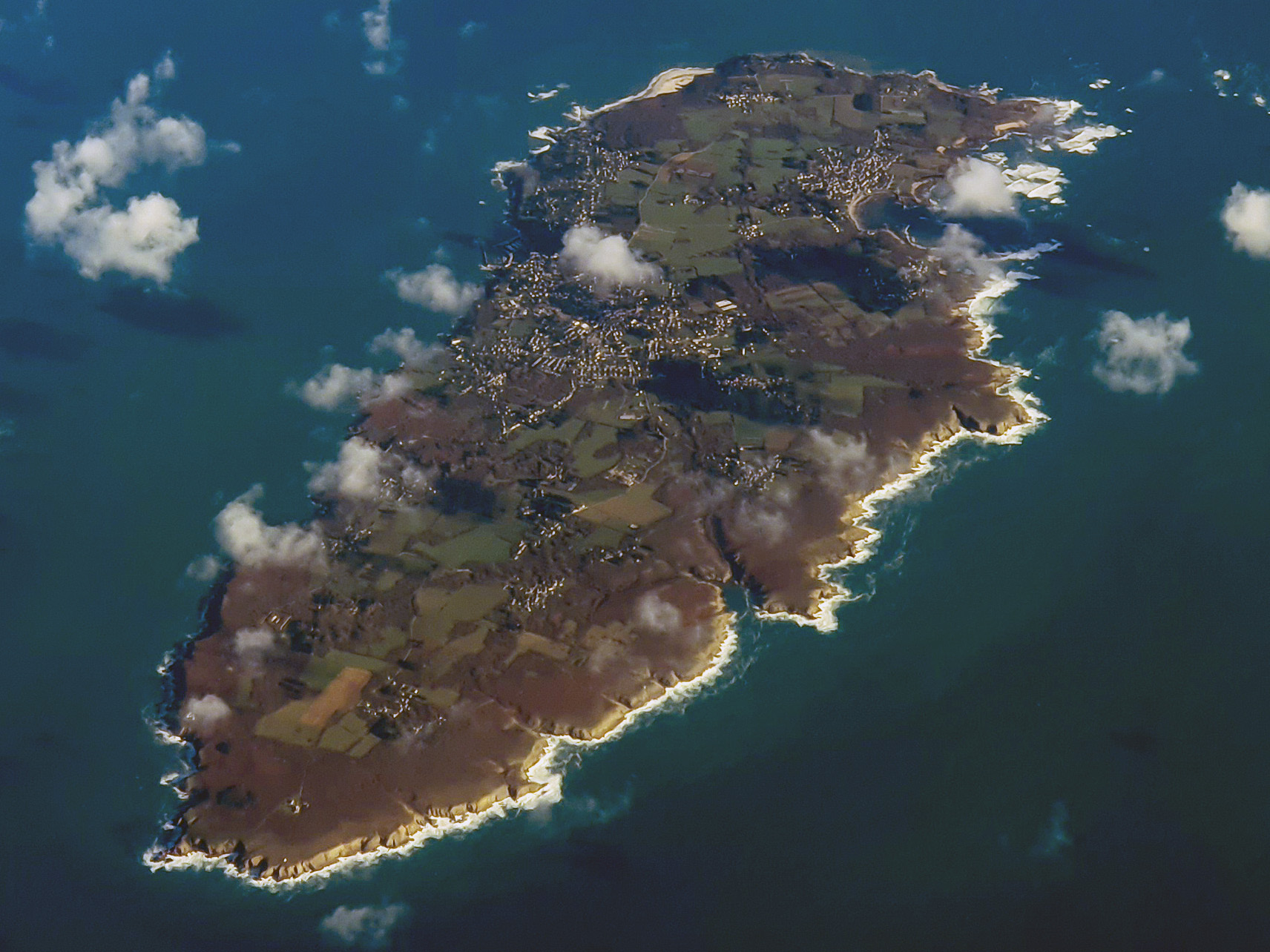
Groix (French pronunciation: [ɡʁwa]; Breton: Enez Groe) is an island and a commune in the Morbihan department of the region of Brittany in north-western France.

Key Information

Groix lies a few kilometres off the coast of Lorient. Several ferries a day run from Lorient to Groix.

There are a few small towns on the island. High cliffs are on its north coast and sandy beaches in secluded coves on the south coast. Groix is also home to a wide variety of sea birds. Groix is also famous for hosting the only convex beach in Europe, which also moves following sea currents. During the last 15 years, the beach moved half a kilometer (546.807 yards) westbound.

The geology of Groix is distinct from that of the nearby continent, and the east and south coasts have been designated a mineral nature reserve since 1982.[citation needed] More than 60 minerals can be found on the island, particularly blue glaucophane (observable on the surface), epidote or garnet.[citation needed] The island mainly consists of schist.[citation needed]

A major naval battle between Britain and France took place off Groix in 1795.

The island is the major setting in the fourth book of The Enzo Files - 'Freeze Frame' - by author Peter May.

Climate

[edit]
Climate data for Groix (1981–2010 averages)
Month Jan Feb Mar Apr May Jun Jul Aug Sep Oct Nov Dec Year
Record high °C (°F) 15.4
(59.7)
16.6
(61.9)
22.8
(73.0)
25.8
(78.4)
29.7
(85.5)
35.6
(96.1)
35.3
(95.5)
35.2
(95.4)
31.0
(87.8)
26.5
(79.7)
19.5
(67.1)
16.0
(60.8)
35.6
(96.1)
Mean daily maximum °C (°F) 9.5
(49.1)
9.5
(49.1)
11.5
(52.7)
13.6
(56.5)
16.6
(61.9)
19.2
(66.6)
21.0
(69.8)
21.3
(70.3)
19.8
(67.6)
16.3
(61.3)
12.7
(54.9)
10.2
(50.4)
15.1
(59.2)
Mean daily minimum °C (°F) 5.7
(42.3)
5.3
(41.5)
6.8
(44.2)
7.9
(46.2)
10.8
(51.4)
13.3
(55.9)
15.1
(59.2)
15.3
(59.5)
13.8
(56.8)
11.7
(53.1)
8.8
(47.8)
6.4
(43.5)
10.1
(50.2)
Record low °C (°F) −9.4
(15.1)
−8.0
(17.6)
−6.2
(20.8)
−1.0
(30.2)
0.4
(32.7)
5.8
(42.4)
7.8
(46.0)
8.4
(47.1)
7.6
(45.7)
1.8
(35.2)
−2.4
(27.7)
−6.0
(21.2)
−9.4
(15.1)
Average precipitation mm (inches) 95.7
(3.77)
70.6
(2.78)
65.0
(2.56)
61.3
(2.41)
59.2
(2.33)
42.2
(1.66)
42.7
(1.68)
39.1
(1.54)
56.4
(2.22)
92.3
(3.63)
91.3
(3.59)
98.9
(3.89)
814.7
(32.07)
Average relative humidity (%) 87 86 85 82 84 83 83 83 83 86 86 88 84.7
Source 1: Météo France[3]
Source 2: Infoclimat.fr (humidity, 1961–1990)[4]

Population

[edit]
Historical population
YearPop.±% p.a.
1968 3,161—    
1975 2,727−2.09%
1982 2,605−0.65%
1990 2,472−0.65%
1999 2,275−0.92%
2007 2,291+0.09%
2012 2,223−0.60%
2017 2,263+0.36%
Source: INSEE[5]

Inhabitants of Groix are called Groisillons in French.

[edit]

See also

[edit]

References

[edit]

Bibliography

[edit]
[edit]
Revisions and contributorsEdit on WikipediaRead on Wikipedia
from Grokipedia
Groix (Breton: Enez Groe) is a small island and commune in the Morbihan department of Brittany, northwestern France, situated in the Atlantic Ocean approximately 6 kilometers southeast of Lorient.[1] Covering an area of 14.8 square kilometers with dimensions of about 8 kilometers in length and 3 kilometers in width, it has a population of 2,308 (2022).[2][3] The island features diverse terrain, including steep, wild cliffs on its western side contrasting with gentler eastern slopes dotted by sandy beaches, pine groves, and over 60 varieties of minerals, such as the distinctive blue glaucophane.[1] Geologically formed over 400 million years ago from the collision of tectonic plates, Groix has been inhabited since prehistoric times, as evidenced by megalithic sites and polished stone axes indicating early exchanges with the mainland.[1][4] It experienced Viking occupation in the early medieval period, with archaeological finds including graves, weapons, and the only Viking boat discovered on French soil, before becoming part of the lordship of Hennebont and later Christianized in the 11th century with the establishment of parishes like Locmaria.[5] In the 19th and early 20th centuries, Groix emerged as France's leading tuna fishing port, with around 200 yawl vessels operating from its harbors and tuna fishing providing employment for up to 2,000 islanders between 1870 and 1940, a legacy symbolized by the tuna weathervane atop its church steeple.[1][6] Today, the island is a cherished eco-tourism haven, reachable by a 45-minute ferry from Lorient, attracting visitors for its pristine nature reserves, shifting beaches like the convex Grands Sables that moves up to 10 meters annually due to winds, and activities including coastal hiking trails, cycling paths, kayaking, and diving.[7][1] Cultural highlights include the Ecomuseum in a former tuna cannery, historic chapels, and World War II-era German bunkers on the Pen-Men cliffs, all underscoring Groix's blend of natural beauty, maritime history, and sustainable development.[1][5]

Geography

Location and Extent

Groix is a commune and an island in the Morbihan department of the Brittany region in northwestern France.[1] Its Breton name is Enez Groe.[8] The island is positioned in the Atlantic Ocean, approximately 14 km off the coast from the city of Lorient in the Gulf of Morbihan area. It lies at coordinates approximately 47°38′N 3°27′W.[9] The nearest mainland port is Lorient, while surrounding islands include Belle-Île-en-Mer to the southwest, as well as smaller islets like Houat and Hoëdic nearby.[1] Groix extends about 8 km in length and 3 km in width, encompassing a total area of 14.82 km².[10] The administrative boundaries of the commune fully cover the entire island, with no exclaves or detached territories.[10]

Geology and Topography

The geology of Groix is dominated by metamorphic rocks formed during the Variscan orogeny in the Late Paleozoic era, approximately 380–360 million years ago, when the collision between the Gondwana and Laurussia supercontinents subjected oceanic crust to high-pressure conditions.[11] This tectonic event produced a retrogressive metamorphic sequence transitioning from eclogite facies, characterized by omphacite and garnet assemblages, through blueschist facies with glaucophane and lawsonite, to lower-grade greenschist conditions.[12] The island's metabasites and metasediments, primarily Ordovician in protolith age, preserve evidence of subduction-related burial to depths of 25–40 km before exhumation during collisional tectonics.[13] Groix stands out as a premier locality for studying high-pressure/low-temperature metamorphism, with its blueschist terrains offering insights into ancient subduction dynamics in the Ibero-Armorican arc.[14] Unique to the island are abundant garnets, particularly almandine-rich varieties derived from the breakdown of eclogitic minerals, which weather into the heavy mineral fraction of local sands.[15] These garnets, comprising up to 80% of heavy minerals in some beach deposits, tint certain shores red, such as at Sables Rouges, highlighting the island's role in mineral provenance studies.[16] Topographically, Groix presents a varied terrain shaped by its metamorphic basement and post-orogenic uplift, with the western half forming a plateau averaging 40 m elevation, incised by steep valleys and fringed by dramatic cliffs rising to about 47 m at sites like Pen Men.[17] These western cliffs, often sheer and exposed to Atlantic swells, enclose wild coves and pockets of fine sandy beaches with convex profiles, such as at Grands Sables d'Herlin, where longshore drift creates distinctive shoreline curvature.[18] In contrast, the eastern coast features gentler slopes descending to low cliffs and sheltered bays, facilitating calmer depositional environments. The hilly interior, reaching a maximum elevation near 42 m, supports a mosaic of fields, meadows, and woodlands, reflecting Quaternary weathering of the resistant schists and gneisses.[19] Hydrographically, Groix lacks major rivers due to its compact 15 km² area and permeable bedrock, relying instead on ephemeral small streams that drain the interior plateaus and contribute to localized sediment transport.[17] Coastal erosion dominates the island's dynamic margins, particularly along the exposed western cliffs, where wave action and storm surges sculpt sea stacks, arches, and pocket beaches from the fractured metamorphic rocks.[20]

Climate

Groix experiences a temperate oceanic climate, classified as Cfb under the Köppen-Geiger system, characterized by mild temperatures year-round and significant maritime influence.[21] This classification reflects the absence of dry seasons and summers that are cool rather than hot, with high humidity levels typically ranging from 70-90% due to the surrounding Atlantic waters.[22] The island's position off the coast of Brittany exposes it to consistent westerly winds and frequent mists, particularly in the cooler months, which contribute to a damp atmosphere and occasional foggy conditions.[22] The annual average temperature is 11.7°C, with minimal extremes that rarely fall below -5°C or rise above 30°C.[23] Summers are mild, peaking in July and August with average highs of 20.2°C and 20.5°C, respectively, and lows around 14.4-14.5°C, providing comfortable conditions without oppressive heat. Winters are cool but not severe, with January and February averages of 7.2°C and 7.0°C, respectively, and minimums of 4.9°C and 4.7°C; frost is infrequent due to the moderating oceanic effects. Spring and autumn serve as transitional seasons, with March and October averages of 8.3°C and 13.0°C, bridging the cooler and warmer periods smoothly.[23] Precipitation averages 969 mm annually, distributed relatively evenly across the year but with a pronounced wetter period from October to December, when monthly totals reach 100-115 mm, often accompanied by stronger winds averaging 16 km/h in December.[23] Summers are drier, with July seeing only 50 mm, though rain remains possible on about 8-9 days per month during this time. The island receives approximately 1,750 sunshine hours per year, with the brightest periods in summer (210-230 hours in June-August) and the least in winter (60-90 hours in November-December).[23] This microclimate is somewhat warmer and sunnier than interior Brittany, owing to the Gulf Stream's role in transporting warm waters northward, which tempers local temperatures and enhances solar exposure compared to more continental areas.[24]

History

Prehistory and Early Settlement

Archaeological surveys on Groix have identified over 150 prehistoric sites, spanning from the Mesolithic to the Roman period, indicating continuous human activity facilitated by the island's geological stability during periods of lower sea levels.[25] Evidence of Neolithic farming communities (c. 4500–2500 BCE) appears in the form of megalithic monuments, including passage graves, menhirs, dolmens, tumuli, and stone alignments, which reflect settled agro-pastoral societies integrated into regional exchange networks.[26][25] These structures, numbering more than 150 sites documented through systematic inventories from 1989 to 2006, underscore Groix's role in broader Breton insular communities that imported materials like Grand Pressigny flint via long-distance trade, comprising about 1% of local lithic assemblages.[26][25] In the Bronze Age (c. 2000 BCE), settlements and elite burial sites, such as stone cists containing faience beads and other luxurious goods, attest to continued occupation and social differentiation among island dwellers.[27] These tumuli and alignments, similar to those on the mainland, highlight Groix's participation in Atlantic Bronze Age networks, with artifacts suggesting connections to Armorican elite practices.[27] The Iron Age (c. 800 BCE–50 CE) features artifacts like tools and pottery sherds, alongside burial sites and defensive structures indicative of early Celtic influences from the Veneti tribe in southern Armorica.[25] A key example is the Camp de Kervedan cliff castle, excavated in 1936, which served as a promontory fort typical of Celtic oppida, providing evidence of fortified settlements overlooking coastal access points for trade.[25] Direct Roman period (c. 50 BCE–400 CE) evidence remains minimal, limited to scattered finds within broader surveys, though the island's proximity to the Gaulish mainland implies occasional use as a maritime waypoint.[25] Sites like Camp des Romains yield primarily Iron Age sherds, with no substantial Roman infrastructure identified.

Medieval Period and Viking Influence

The Christianization of Groix occurred within the broader context of Brittany's evangelization, which commenced in the 5th and 6th centuries through the efforts of Celtic monks fleeing Anglo-Saxon invasions in Britain; these missionaries, known as the Breton saints, established early religious sites across Armorica, including dedications to figures like Saint Tudy, a 6th-century holy man associated with monastic foundations in the region.[28] On Groix itself, tangible evidence of this transition appears later, with the construction of chapels and the repurposing of potential pagan sites into Christian loci beginning in the early medieval period; place names such as Locmaria (dedicated to the Virgin Mary), Loc-Tudy (to Saint Tudy), and Locqueltas reflect this shift, where "loc" denotes a sacred enclosure or hermitage tied to saintly cults.[29] By the 11th century, the Abbey of Sainte-Croix de Quimperlé, founded around 1029 by Count Alain Cagniart of Cornouaille, played a pivotal role in formalizing Christianity on the island through the erection of additional chapels and monasteries, marking the consolidation of monastic influence amid the lingering pagan elements. These developments not only facilitated the island's spiritual integration but also laid the groundwork for emerging communities centered on religious and subsistence activities. Viking raids and occupations impacted Groix during the 9th and 10th centuries, as Scandinavian seafarers exploited Brittany's coastal islands as strategic bases for incursions into the Atlantic and Loire regions, disrupting local settlements and trade routes. Archaeological evidence from the island underscores this presence: a unique Viking warrior burial, excavated in 1906 near the coast at Lanquidy, dates to circa 900–1000 CE and contains cremated remains, iron swords, a scabbard chape, and distinctive shield bosses—artifacts indicating a high-status warrior, the only such Scandinavian-style grave discovered in Brittany.[30] This burial, likely part of temporary Norse encampments rather than permanent colonization, suggests Groix served as a logistical hub for raids, with the site's selection reflecting the Vikings' tactical use of offshore locations for shelter and resupply during broader assaults on Breton territories. The incursions, which intensified after 843 CE, contributed to regional instability but waned by the late 10th century following the consolidation of Breton resistance under leaders like Alain Barbe-Torte. By the 11th century, Groix had integrated into the feudal structures of the newly unified Duchy of Brittany, established in 939 CE after the expulsion of Viking forces and the triumph of Nominoë's successors. The island initially fell under the lordship of Hennebont, a key viscounty in the duchy, where manorial systems organized land tenure, labor, and defense among Breton nobles vassalized to Duke Conan I of Rennes.[5] This arrangement evolved when, in the early 11th century, Groix was donated to the Benedictine Abbey of Sainte-Croix de Quimperlé, granting the monks seigneurial rights over its resources and fostering the growth of small fishing villages around the religious centers.[31] Such feudal ties reinforced the duchy's hierarchical governance, with Groix's coastal hamlets contributing to early maritime economies while remaining embedded in the abbey's ecclesiastical domain, a pattern typical of Breton insular lordships during this era.

Modern Era and Fishing Boom

In the mid-19th century, the economy of Île de Groix underwent a significant transformation as the island's residents shifted from sardine and coastal fishing to targeting albacore tuna around 1870, in anticipation of declining sardine stocks. This change was driven by the abundance of tuna in the Bay of Biscay and the potential for larger-scale operations, leading to the establishment of five canning factories on the island by the early 20th century. These factories processed the catch for export to markets in Switzerland, England, Germany, and Algeria, integrating Groix into broader European trade networks.[7] By the early 1900s, Port Tudy had emerged as France's premier tuna port, accommodating around 200 vessels known as dundees—sailboats equipped with long fishing rods for line fishing. The industry employed up to 2,000 of the island's approximately 3,000 residents, encompassing fishermen, shipowners, cannery workers, blacksmiths, carpenters, and support roles such as pharmacists producing specialized ointments for sea-related ailments. This boom period, lasting until 1940, revolved around seasonal tuna campaigns from June to October, with the entire community mobilized around the fishery, including women and children in processing tasks. The iconic dundees became symbols of Groix's maritime prowess, fostering a vibrant port life at Port Tudy that built on medieval precedents for small-scale fishing.[32][6] The tuna boom was interrupted by World War II, during which Groix was occupied by German forces who constructed bunkers and fortifications, using the island as an ammunition stockpile and destroying prehistoric sites like the Pen Men dolmen in the process. These defenses, part of the Atlantic Wall, included additions to the 18th-century Fort Surville, severely disrupting local activities and isolating the island from mainland France. Post-war recovery was hampered by the global collapse of tuna stocks due to overfishing and economic hardships, leading to the rapid decline of the industry by the late 1940s. In the 1950s, islanders diversified into scallop fishing, which became a key sector, while the population declined from a peak of around 3,500 in 1901 to about 2,300 as of 2023. Cultural preservation efforts, such as the founding of the Ecomuseum in a former tuna cannery in 1983, helped maintain the island's maritime heritage amid growing tourism. In response to earlier challenges, islanders pursued diversification into other sectors, such as scallop fishing and emerging tourism, while integrating into the modern French administrative framework through improved ferry links and regional development initiatives.[5][33][34][35][1]

Administration and Demographics

Local Government

Groix functions as a commune within the Morbihan department (code 56) of the Brittany region (code 53) in northwestern France.[36] It belongs to the arrondissement of Lorient (code 561), which encompasses 58 communes and supports coordinated administrative services across the area.[37] The commune's integration into the Brittany region was affirmed through the 2016 territorial reforms that restructured France's administrative divisions into 13 regions, preserving Brittany's boundaries and competencies. The local government operates through an elected municipal council comprising a mayor and 19 councilors, selected via universal suffrage every six years.[38] As of May 2025, Marie-Françoise Roger serves as mayor, having been elected by the council following the resignation of her predecessor, Dominique Yvon; she oversees key functions such as urban planning, public services, and fiscal policy.[39] The council plays a central role in island-specific management, including environmental protection measures like the oversight of the François Le Bail Nature Reserve, which covers significant coastal and terrestrial habitats to preserve biodiversity and limit development impacts.[40] Groix's INSEE code is 56069, facilitating statistical tracking and administrative identification within national frameworks.[36] Politically, the commune engages with regional bodies, notably through participation in the Association des Îles du Ponant (AIP), which coordinates policies on insularity challenges such as transport, energy, and sustainable development across 15 Atlantic and Channel islands, including Groix.[41] Additionally, as a member of Lorient Agglomération—a community of 25 communes—Groix collaborates on shared competencies like waste management and economic development, adapting them to the island's unique geographic constraints.[42]

Population Statistics

As of the 2022 INSEE census, the commune of Groix has a permanent population of 2,308 residents.[43] This yields a population density of 156 inhabitants per square kilometer across the island's land area.[43] When accounting for seasonal residents and those counted separately, the effective total as of 2022 was 2,303 individuals.[43] The population has exhibited modest growth in recent years, increasing from 2,247 residents in 2014 to 2,308 in 2022, representing a 2.7% rise overall.[43][44] Historically, Groix experienced peaks during the fishing era of the early 1900s, when the population surpassed 2,500 and reached highs around 5,800 by 1911, driven by maritime activities.[45] Following World War II, numbers declined steadily post-1940 due to economic shifts away from fishing, dropping to 3,161 by 1968 and stabilizing near current levels after further fluctuations.[43][45] Demographically, the population is slightly skewed toward females, with about 47% male and 53% female as of 2017 data, a pattern that persisted into 2022 at 47.3% male.[43] The island features an aging demographic, with a median age of approximately 52 years, higher than the regional average of 44, reflecting trends in rural and insular communities influenced by retirement migration and limited youth retention.[46] This aging profile contributes to a density that remains moderate relative to the island's compact 14.8 km² extent, as noted in geographic descriptions.

Economy

Historical Industries

In the 18th century, agriculture formed the backbone of Groix's economy, characterized by small-scale subsistence farming on narrow, stone-walled plots known as sillons or seillons, which were adapted to the island's poor, acidic soils. Crops such as cereals and potatoes were cultivated alongside livestock rearing, primarily managed by women while men pursued maritime activities, providing essential food security for the island's population.[47][48] Small-scale sardine fishing complemented this, employing chaloupes (7–9 meter boats) equipped with long nets and baited with cod eggs, peaking in the early 19th century with around 150 vessels and 600 fishermen by 1820.[49] Shipbuilding, tied to these maritime needs, involved constructing wooden fishing vessels in local yards during the 19th and early 20th centuries, supporting fleet expansion and repairs but remaining secondary to primary production.[48] From 1870 to 1940, tuna fishing dominated Groix's economy, emerging as the primary employer and transforming the island into France's leading tuna port by the early 20th century. Specialized dundees (sailing yawls up to 70 tonnes) crewed by six men used line fishing techniques with tangons (outrigger poles) to target albacore and bluefin tuna in Atlantic waters, landing over 1.2 million kilograms in 1912 alone from a fleet of 272 vessels. Port-based processing, including the 1936 invention of canned tuna au naturel by local manufacturer Firmin Tristan, facilitated exports and sustained around 1,500 fishermen and related workers, dwarfing earlier sectors in scale and revenue.[49][48] This era's fishing boom, peaking around 1910, is detailed in accounts of the modern era's maritime expansion.[50] The tuna industry's collapse by the 1950s stemmed from overfishing depleting stocks, disruptions during World War II—including the loss of 173 fishermen in World War I and further wartime damages—and global market shifts favoring motorized fleets in competing ports like Concarneau. Motorization post-1933 and industrial canning advancements accelerated the decline of traditional line fishing, rendering the dundees obsolete by 1959 and forcing economic diversification, including a transition to tourism in later decades.[49][48][50]

Contemporary Sectors

Tourism has emerged as the dominant economic sector on Île de Groix since the 1960s, transitioning from a fishing-dependent economy to one reliant on seasonal visitors attracted by the island's pristine beaches, extensive hiking trails, and eco-tourism opportunities centered on its natural biodiversity.[51] The island welcomes approximately 200,000 visitors annually, significantly boosting local revenues through accommodations such as hotels, campsites, and gîtes, while generating numerous seasonal jobs in hospitality and guiding services.[51] This influx supports year-round commerce but poses challenges like infrastructure strain during peak summer months.[52] Aquaculture, particularly organic mussel farming, remains a key component of Groix's marine economy, with operations emphasizing sustainable practices in the open sea to produce high-quality, certified products.[53] However, the sector faced significant setbacks in 2024 due to unexplained pollution affecting mussel stocks, leading to a near-complete loss of production for that year and impacting 2025 output, though recovery efforts including community support have aided partial resumption as of late 2025.[54][55] Commercial fishing has shifted to small-scale, sustainable methods focusing on local seafood species, moving away from the historical emphasis on tuna and aligning with broader regional efforts to preserve marine resources.[56] Other economic activities on Groix are limited but diverse, including small-scale organic agriculture that produces vegetables, cider, and specialty items like escargots through bio-certified market gardeners and farmers utilizing the island's 300 hectares of arable land.[57] Artisan crafts thrive via local markets and workshops, featuring handmade goods that complement the tourism trade, while remote services such as digital freelancing have grown with improved connectivity, enabling some year-round employment.[58] The unemployment rate aligns closely with Brittany's regional average of 6.0% as of 2024 (rising slightly to 6.1% in Q2 2025), reflecting a stable but constrained job market influenced by the island's isolation.[59][60]

Culture and Heritage

Cultural Identity

The cultural identity of Groix is deeply rooted in its Breton heritage, reflecting the island's position within the Celtic traditions of southern Brittany. Bilingual signage in French and Breton is a visible marker of this influence, with road signs and place names incorporating the local dialect to affirm linguistic continuity despite the island's near-complete shift to French in daily use. This practice aligns with broader efforts in the Morbihan department to promote the Breton language, as noted by linguists documenting the island's historical dialect variations between its eastern and western regions.[61][62] Community traditions emphasize festivals and events that celebrate Breton customs, particularly those intertwined with the island's maritime past. Religious pardons, such as those honoring patron saints like Saint Catherine, feature processions and communal gatherings that echo historical Christianization while incorporating traditional music and dance. The Cercle Celtique Barde Bleimor, a local association, organizes initiations to Breton dances and music, along with pic-noz evening parties featuring lively fest-noz sessions that foster intergenerational participation. These events, including the annual Fête du Port and balades des thoniers, highlight sea-themed rituals without delving into commercial aspects.[63][64][65] Island-specific folklore tied to sea life reinforces a collective narrative of resilience and mysticism, with legends like that of the sabbat boat ferrying revelers to Groix's shores or the monstrous sea creatures haunting coastal grottos shaping local storytelling. Associations such as Enezig play a key role in preserving this Celtic identity by safeguarding the Breton language and oral traditions unique to the island.[66][63][67] In modern times, Groix's culture blends tourism with authentic local customs, evident in events like the Festival International du Film Insulaire (FIFIG), which spotlights insular themes and draws visitors to engage with community narratives. The 2025 edition, held August 20-24, focused on islands of Quebec.[68] The population exhibits a strong sense of insularity, manifested through environmental stewardship initiatives, including participation in European projects like FREIIA that promote sustainable island development and biodiversity conservation, such as protecting rare bee species and managing coastal erosion. This commitment underscores a harmonious integration of heritage preservation with ecological responsibility.[69][70][71]

Notable Sites and Monuments

Port Tudy, the island's primary harbor on the eastern coast, developed with a jetty in 1792 and a major mole in 1860, later fully protected by 1935. It was a key tuna fishing port in the late 19th and early 20th centuries, accommodating approximately 200-300 sailing vessels. Lined with colorful shipowners' houses featuring granite facades and maritime motifs, the quays reflect this era's prosperity, while exhibits on traditional fishing techniques are displayed nearby.[72][1][73] The island's beaches and coastal sites highlight its unique geology and biodiversity. Plage des Sables Rouges, near Pointe des Chats on the southern coast, features sand tinted red by garnet minerals eroded from ancient rocks, earning Groix the nickname "Garnet Island."[1] In contrast, Plage des Grands Sables on the western shore is one of Europe's few convex beaches, where the shoreline curves outward due to sediment dynamics, offering white sands and clear waters. The western cliffs, particularly around Pointe de Pen Men, form dramatic formations of metamorphic rocks such as blueschists and schists, and host the François Le Bail Nature Reserve, a protected bird sanctuary for species like northern fulmars and European shags.[74][16] Heritage buildings dot the landscape, preserving Groix's religious and utilitarian past. The Phare de Pen Men, a 27-meter tower built in 1839 at the island's western tip, is the Morbihan's most powerful lighthouse with a 54-kilometer range.[75] Chapels such as Notre-Dame du Calme in Le Méné and Sainte-Anne in La Trinité served as focal points for island pardons and community gatherings.[76] Traditional wash-houses, like the Fontaine et Lavoir de Groix in the village center, exemplify 19th-century rural hygiene practices, with stone basins fed by natural springs.[77] Megalithic sites, including the Neolithic dolmen at Pointe des Chats (circa 2500 BCE) and various menhirs and tumuli from the Bronze Age, form part of over 30 prehistoric archaeological sites scattered across the island, revealing prehistoric settlement patterns.[25] Cultural institutions deepen understanding of Groix's heritage. The Écomusée de l'Île de Groix, housed in the former Romieux tuna cannery at Port Tudy since 1984, showcases island life through boat models, tools, and exhibits on fishing and mining traditions.[78] The adjacent Musée de Groix complements this with displays on social history, including the Maison Traditionnelle de Kerlard, a restored 19th-century fisherman-farmer dwelling illustrating vernacular architecture.[79] These sites collectively underscore Groix's evolution from prehistoric outpost to maritime hub.

Transport and Infrastructure

Access to the Island

The primary means of access to Groix is by ferry from the mainland ports in Brittany, France, with services accommodating both passengers and vehicles. Year-round ferry operations are provided by BreizhGo Océane from Lorient's ferry terminal, with crossings taking approximately 45 minutes and featuring five round trips daily, starting at 6:50 a.m. and concluding with the last return at 7:30 p.m..[80] During the peak summer months of July and August, the frequency increases to 6-9 round trips per day from Lorient, enhancing accessibility for tourists, while additional seasonal services operate from nearby ports such as Port-Louis (35 minutes, by Escal'Ouest) and Doëlan (by operators like Traversée Cadou).[80][81][82] These ferries, such as those from BreizhGo Océane, have capacity for cars and larger vehicles alongside foot passengers, facilitating convenient transport to the island.[80] Passenger fares for a round-trip from Lorient in 2025 range from €37.50 for adults in the normal period to €40.70 during high season, with reduced rates for youths (€27.60) and children (€22.50); seasonal options from other ports start at around €22 for adults when booked online.[83][81] Services from all ports are subject to weather-related cancellations, particularly during storms in the Atlantic approaches.[84] Groix has no airport, making maritime travel the only practical option, though private helicopter charters are occasionally available from regional heliports but remain rare, costly (often exceeding €500 per person), and similarly weather-dependent.[85]

Internal Mobility

The internal mobility on Île de Groix is characterized by a compact road network suited to the island's modest size of approximately 15 square kilometers, with around 56 kilometers of roads in total, though traffic remains limited due to the low population density and emphasis on sustainable alternatives.[86] Car rentals are readily available at Port Tudy, the main arrival point, through local providers offering vehicles like compact cars for those preferring independent exploration, though the island's scale makes extensive driving unnecessary.[87] Public transport options include seasonal bus services operated by IZILO, with line 113 providing connections from Port Tudy to key locations such as Le Bourg, Locmaria, and various beaches, featuring regular stops at points of interest and enhanced frequency during summer months.[88] These services, now including two electric minibuses introduced in 2024, support eco-friendly intra-island travel, with fares kept affordable to encourage use over private vehicles.[89] Cycling and walking dominate as promoted sustainable modes, with bike and electric scooter rentals widely available near the port from outlets like Coconut's Location and A Bicyclette, catering to tourists seeking low-impact navigation across the island's varied terrain.[90] The extensive coastal paths, including the GR 34 trail forming a 25- to 30-kilometer loop around the island, offer scenic routes through cliffs, coves, and beaches, influenced by the rugged topography that shapes accessible hiking and biking itineraries.[91] There are no rail lines or internal ferry services, reinforcing the focus on pedestrian and non-motorized options for internal movement.[84]

References

User Avatar
No comments yet.