


Community hub
Recent from talks
Contribute something
Nothing was collected or created yet.
HMCS Star
View on Wikipedia
| HMCS Star | |
|---|---|
 | |
| Active | 1923 to present |
| Country |  Canada Canada |
| Branch |  Royal Canadian Navy Royal Canadian Navy |
| Type | Naval Reserve Division |
| Role | Reserve unit |
| Size | Approx. 250 |
| Part of | Canadian Forces Naval Reserve |
| Garrison/HQ | 650 Catharine St N, Hamilton, Ontario L8L 4V7 |
| Motto | Diligentia (Diligence) |
| Colours | Royal Blue and Gold |
| Anniversaries |
|
| Equipment | Various types of inboard and outboard rigid-hull inflatable boats |
| Decorations | Canadian Forces War of 1812 Commemorative Banner |
| Battle honours |
|
| Commanders | |
| Commanding Officer | Lieutenant-Commander Michael Di Berardo |
HMCS Star is a Canadian Forces Naval Reserve Division (NRD) located in Hamilton, Ontario. Dubbed a stone frigate, HMCS Star is a land-based naval establishment for training part-time sailors as well as functioning as a local recruitment centre for the Royal Canadian Navy (RCN). The second oldest of 24 naval reserve divisions located in major cities across Canada, Star was stood up on 15 March 1923 as the Royal Canadian Naval Volunteer Reserve (RCNVR) Hamilton Half Company and then on 1 November 1941 as HMCS Star.[1]
Namesake
[edit]Named after HMS Lord Melville/Star, the Royal Navy 14-gun brig launched at Kingston, Ontario, on 20 July 1813, the name Star honours the Royal Navy's presence on Lake Ontario and the defense of Canada during the War of 1812.[2]
History
[edit]Early history (1800s)
[edit]Naval activity in Hamilton Harbour can be traced as far back as the late 18th and early 19th century when HMS Lord Melville, later HMS Star, of the British Provincial Marine and Royal Navy plied Lake Ontario conducting coastal protection operations.
During the Rebellions of 1837, a naval militia from Hamilton led by Canadian loyalist Sir Allan McNab and Royal Navy Captain Andrew Drew, ignited a diplomatic crisis known as the Caroline Affair, when a group of Hamiltonians captured the Canadian rebel supply vessel, SS Caroline, allegedly killing an American crew member and then setting fire to the ship before sending it over Niagara Falls.[3][4] The Caroline Affair led to the legal principle of the "Caroline test" which states that the necessity for [self-defense] must be "instant, overwhelming, and leaving no choice of means, and no moment for deliberation". Today, the "Caroline test" remains a part of customary international law.[5]
The Militia Act of 1855 authorized the formation of Volunteer Marine Companies within the Province of Canada.[6] Fearing invasion from the United States, seven years later on 31 January 1862, the Hamilton Volunteer Naval Company was stood up under the command of Captain Thomas Harbottle and Lieutenant George P. Malcomson.[4][7]
With the American Civil War ending, in 1866 the Hamilton Naval Brigade was called out on short periods of active duty guarding the city and manning steamboats in response to Fenian cross-border raids.[6] For their service during the Fenian Raids, Hamilton's naval volunteers were awarded the Canada General Service Medal with the Fenian Raid 1866 bar.[8][9] Two years later, with the passage of a Militia Act of 1868, the Naval Companies of Garden Island, Toronto, Hamilton, Dunnville and Port Stanley were requested to signal their intention to remain in active service. All the units, including Hamilton, failed to meet the February 1869 deadline and therefore Hamilton's first, formal naval reserve unit ceased to exist.[10]
First World War (1914–1918)
[edit]When the Royal Canadian Navy was formed on 4 May 1910, there was no corresponding naval reserve until 1914 when the Royal Navy Canadian Volunteer Reserve (RNCVR) was stood up with minimal government support. Two years later, in 1916, the Hamilton Committee was formed to recruit sailors for the overseas division new RNCVR. The Committee included well known Hamiltonians, such as Hamilton city Alderman Captain George J. Guy and John H. Collinson, the first headmaster of Highfield School for Boys.[11]
Between the wars (1923–1939)
[edit]On 31 January 1923, Privy Council Order #139 established the Royal Canadian Naval Volunteer Reserve (RCNVR) and on 15 March 1923 Lieutenant Ralph H. Yeates was appointed as the first commanding officer of the Hamilton Half Company (RCNVR).[12][13] The Half Company initially shared offices with the Navy League in the Imperial Building on the corner of Main Street East & Hughson Street South in Hamilton. On 2 November 1923, the Half Company moved into the W. Grant Sail Loft on the corner of Bay Street North and Burlington Streets, sharing its building with Sea Cadets who had been formed six years earlier. On 2 July 1935, the Hamilton Half Company moved to the Williamson & Company Vinegar Works building at 41 Stuart Street, between Bay & MacNab where it stayed until 1943.[14][15]
Second World War (1939–1945)
[edit]On 1 November 1941, the Hamilton Half Company was commissioned as HMCS Star and became a major recruiting depot and wartime training barracks for the Royal Canadian Navy and the Women's Royal Canadian Naval Service (WRCNS). As late as 14 October 1941, the unit was considered to be called HMCS Brant, but the name was changed, likely to avoid confusion with a recently launched corvette HMCS Brantford.[14]
On 7 May 1942 it was announced by the Navy that each major naval reserve unit would help meet the growing demand for technically skilled sailors within the fleet by training personnel in specialist skills. Shifting from a purely recruiting role and now to one of specialist training, Star was assigned to train new sailors in radio and electrical engineering. With that, 130 young men from across Canada were assigned to Hamilton and their training was divided between Star, Westdale Technical School (radio work) and Hamilton Technical Institute (electrical engineering). Due to the large complement of sailors at Star, a full medical and dental service was added to the unit.[16]
In the winter of 1942, the University Naval Training Division (UNTD) concept was introduced in Hamilton by Professor A. W. "Jack" Baker, when he stood up an experimental reserve training division at the Ontario Agricultural College (OAC) in Guelph. Attached to HMCS Star for the school term, Baker aimed to establish other Naval Training Units at universities across Canada to secure recruits who will otherwise enter the army's Canadian Officers Training Corps (COTC) or the air force's University Air Training Plan (UATP).
In February 1943, with the success of the UNTD in Guelph, Professor Baker was brought into the RCNVR as an Acting Lieutenant Commander (SB) and appointed to the position of Staff Officer University Naval Training at McMaster University in Hamilton. Under Naval Order 2854 dated 19 June 1943, Baker set out across the country to establish 15 UNTDs.[17][18] By the time the UNTD program was shut down in 1968, over 7,800 reserve officers were commissioned, of which 500 had trained at Star; and of whom 53 lost their lives during the Second World War.[4]
On 1 February 1943, the Department of National Defence purchased 2.04 hectares (5.0 acres) near Eastwood Park from the City of Hamilton to accommodate the growing unit. On 24 April 1943, the foundations were laid for a new HMCS Star building, with the opening occurring six months later.[19] Intended as a prototype for Naval Reserve structures, the building demonstrated good craftsmanship and handling of materials.[19] At this time, HMCS Star had a strength of approximately one thousand personnel with 681 in trades training, 281 undergoing basic training and 56 officers.[14][20]
Between 1941 and 1945, HMCS Star enlisted and trained 7,490 officers, men, and women for service during the Second World War and Hamilton sailors were to display dauntless courage and resourcefulness during the war. The Distinguished Service Medal was awarded to Chief Petty Officer Donald Portree, Torpedoman Dan Gearing and Signaller Eugine Tobin.[21][14]
Cold War (1945–1989)
[edit]Following the Second World War, HMCS Star returned to a peacetime footing, reactivating in October 1946 as a reserve division.[22]
In June 1949, a party of sailors from the unit made a visit to former RCN corvettes being readied to be scrapped at Hamilton's steel mills. Their visit was to salvage whatever material would be of instructional value to the Division and to bring back memories to those that served on the ships during the war.[23] In the same month the wardroom at Star was the first wardroom in the Royal Canadian Navy to be fitted with a television receiver, with programs coming in from as far as Buffalo, New York.[23]
In July 1949, a training programme for naval reserve air maintenance personnel was announced to be opened at HMCS Star. The program featured specialist training and instruction in naval aircraft maintenance for 100 personnel. Full training equipment, including Supermarine Seafire aircraft was provided by RCN Air Station, HMCS Shearwater, with training being conducted in addition to the normal week-day drill.[24]
In August 1949, HMCS Star provided a Fairmile-B class motor launch, two harbour craft, a cutter and two whalers to Exercise "Operation Seahorse" carried out in the Burlington Beach area. This navy, army and air force reserve exercise included transferring Royal Canadian Army Service Corps personnel and supplies from boats to amphibious DUKWs and then to shore while under aerial attack. The ships from Star succeeded in landing the army force, while Air Force reserve pilots conducted low level strafing attack and flour bag "bombardment" on the attackers.[25] Earlier that same year, HMCS Star personnel aboard HMCS Portage participated in a similar inter-service assault landing exercise at Port Stanley, Ontario.[26]
In January 1950, the HMCS Star Boxing Club was formed from the ship's company and the Hamilton Sea Cadet corps. The club staged fights with bouts between the Star crew and fighters from the Ontario Agricultural College of Guelph and Shamrock Athletic Club of Hamilton.[27][28][29] During the same year, HMCS Star operationalized its first radar set conducting training and tracking ships entering and exiting Hamilton Harbour.[30]
In June 1950, the unit sent its Fairmile-B class motor launch, PTC 706, to partake in exercise "Operation Beaver", a tri-service reserve beach assault manoeuvre at Port Stanley, Ontario. The exercise involved land units, including the Elgin Regiment, Kent Regiment, Essex Fusiliers and the Windsor Essex Scottish Regiment; sea units, including PTC 779 from HMCS Prevost, PTC 762 from HMCS Hunter and PTC 706 from HMCS Star; and 11 aircraft from the No. 420 City of London Auxiliary Squadron, Royal Canadian Air Force (RCAF).[31] During that same summer, PTC 706 spent weekends away from Star conducting various evolutions and making Ports of call to Port Dalhousie, Toronto, Youngstown, Cobourg, and Rochester, New York.[32] In mid-August 1950, PTC 706 joined the minesweeper HMCS Portage and other Fairmiles from Toronto and Kingston for fleet manoeuvres off Presq'ile.[33]
In November 1950, when hurricane winds caused by the Great Appalachian Storm struck the head of Lake Ontario and waves washed away lake shore cottages from Van Wagners beach, approximately 50 officers and sailors from Star and UNTD Guelph were amongst the first to respond as rescue crews. The sailors filled and placed heavy sandbags on temporary dikes, rigged lifelines and helped in other ways. In the midst of the rescue operation, the sailors were recalled back to the unit to rescue three Fairmiles (PTC 706, PTC 721 and PTC 761), turned over to a Hamilton yard for winter storage, that had broken their lines.[34]
In 1951, a new reserve summer Great Lakes Training Scheme was set up to provide basic naval training on the Great Lakes for new recruits and officers. Administered by the commanding officer of HMCS Prevost, Commander F.R.K. Naften, the program was conceived to provide seagoing experience for men of the RCN(R) who have not completed the six-month new entry training program. Before being sent to ships and fleet establishments, until they were considered sufficiently trained, the new scheme was intended to give new sailors the experience they needed on the Great Lakes. With six motor launches at his disposal, the new Reserve Training Commander Great Lakes called upon PTCs from HMCS Star, York, Cataraqui, Prevost, Hunter and Griffin to form the "Fairmile Flotilla". From 16 to 17 June, the flotilla conducted its first task, "Operation Beaver II", a 1,700 reserve troop tri-service amphibious landing and airdrop exercise at Erieau.[35] Prior to the amphibious landing of nearly 500 army troops on three beaches from the Fairmiles, PTC 716 from York laid a smokescreen and paratroopers from the 1st Battalion, Royal Canadian Regiment captured an airfield at nearby Chatham to allow friendly air support. Buzzing the "enemy" craft and ground troops with flour bags, a squadron of Harvard and Mustang aircraft, from No. 420 City of London Auxiliary Squadron, RCAF took on the role of enemy air forces.[35] After the successful exercise, the flotilla spent the rest of the summer conducting other sailing activities and evolutions on Lake Ontario, Lake Huron, and Lake Superior before returning to their units.[35][36]
In 1954, HMCS Star, stood up a sub-unit (tender) located in Kitchener, Ontario for just over ten years from 1 June 1954 until 30 November 1964. During its short existence, the tender's location moved from the former Canadian Women's Army Corps (CWAC) Training Base at Knollwood Park, then co-locating with the Royal Highland Fusiliers of Canada and finally to a fabric factory at 130 Weber Street West. Numbering 95 sailors in 1956, the detachment grew to 114 personnel by 1957. If the detachment was to become an actual Naval Reserve Division, discussions were that it would be named after the former World War II WRCNS training facility in Galt, CONESTOGA. Reductions in defence spending resulted in the closing the Kitchener tender in 1964.[37][38]
In 1952, HMCS Star's importance as a naval training facility was bolstered by the establishment of the Great Lakes Training Centre (Fleet School Hamilton), making Hamilton the summer home to thousands of naval reservists from all over Canada.[39]
In 1953, HMCS Star gained another neighbour, HMCS Patriot, another stone frigate transplanted from Halifax, Nova Scotia. Established now in Hamilton, HMCS Patriot housed the Commanding Officer, Naval Divisions (COND), the forerunner to today's Royal Canadian Naval Reserve Command Headquarters. Previously based in Toronto during the Second World War under the title Commanding Officer, Reserve Divisions (CORD), COND now supervised 21 naval divisions across Canada and directed the summer operations of the Great Lakes fleet reserve training ships, HMCS Porte St. Louis, HMCS Porte St. Jean, and former air force supply vessel HMCS Scatari, permanently stationed at HMCS Star for use by the reservists.[40][41]
In 1953, a Naval Reserve Air Squadron (No. 1 Training Air Group) was established at HMCS York in Toronto sending HMCS Star one Hawker Hurricane and two Supermarine Seafire aircraft to be housed at RCAF Station Hamilton, now known as the John C. Munro Hamilton International Airport. Not given its own squadron, due to its close proximity to Toronto, the crew from HMCS Star maintained a support unit for ground crew and maintenance conducting joint training with HMCS York at RCAF Station Downsview in Toronto.[41]
With the unification of the Canadian Armed Forces in the mid-1960s, significant changes came to HMCS Star. In 1964, The Great Lakes Training Centre was disbanded, as was the naval air arm maintenance unit. In 1967, The Hamilton Service Battalion and The Hamilton Medical Company, later renamed 23 Service Battalion and 23 Medical Company, took over HMCS Patriot /COND building after the closure of their Burlington Street Armoury in September of that year. In 1969, the base now called Canadian Forces Reserve Barracks Hamilton was placed under control of CFB Toronto.
Post Cold War (1990–present)
[edit]On 27 September 1997, HMCS Star officially opened their new building, replacing all of the original World War II-era buildings that had housed the Division since its commissioning in 1941.
In 2003, the destroyer HMCS Haida, was moved to a site directly in front of HMCS Star, serving as a lasting memorial to the veterans of Canada's Navy, and a testament to the ongoing connection between Hamilton and this heritage.[4]
Today,[when?] HMCS Star is the home to over 200 naval reservists and generates trained individuals and teams for Royal Canadian Navy's domestic and international operations, while at the same time supporting the Canadian Armed Forces efforts to connect with Canadians through the maintenance of a broad national presence.[42]
Tenders
[edit]HMCS Haidee (II) (1941–1942) – power cruiser[43]
HMCS Pathfinder (1941–1945) – training ship[44]
Listerville (YTS 578) (1945–1950) – boom defence tug[45][46]
HC 210/YFL 113 (1946–1970) – boom attendant vessel/harbour craft[47]
Beaver (PTC 706) (1948–1956) – Fairmile-B motor launch[48][49][50]
Cougar III (PTC 704) (1956) – Fairmile-B class motor launch[51][52]
Plainsville (W01/YTS 587) (Ville class) – tugboat
Battle honours
[edit]For the bicentennial of the War of 1812, HMCS Star was presented with the Canadian Forces War of 1812 Commemorative Banner. The banner honours the contribution of HMS Lord Melville/Star during the War of 1812.[55]
Badge
[edit]Description
[edit]Azure an estoile Or charged with a maple leaf Gules.[56]
Significance
[edit]The device used for the badge is an "estoile" or heraldic star. The red maple leaf, an emblem of Canada, indicates that the "star" pertains to Canada.[56]
Commanding officers
[edit]HMCS Star has had 38 commanding officers:[57]
- Lieutenant Commander Kevin Ng, CD (2025–present)
- Lieutenant Commander Michael Di Berardo, CD (2022–2025)
- Lieutenant Commander Marie-Sonya Sowa, CD (2020–2022)
- Commander Stephen Churm, CD (2016–2020)
- Lieutenant Commander Glenn Woolfrey, MMM, CD (2012–2016)
- Lieutenant Commander Shekhar Gothi, CD (2010–2012)
- Lieutenant Commander Dana Baars, CD (2008–2010)
- Lieutenant Commander Glenna Swing, CD (2005–2008)
- Lieutenant Commander Neil S. Bell, CD (2002–2005)
- Lieutenant Commander Doug Martin, CD (1998–2002)
- Lieutenant Commander Peter Duynstee, CD (1995–1998)
- Commander Alaric Woodrow, CD (1991–1995)
- Commander Douglas Yate Sen Mark, CD (1988–1991)
- Commander Robert James “Bob” Williamson, CD (1985–1988)
- Commander Douglas Stewart “Doug” Woodliffe, CD (1982–1985)
- Commander Robert Hugh “Bob” Bowman, CD (1979–1982)
- Commander Martin John “Marty” Pandzich, CD (1975–1979)
- Commander Frederick Joseph Lee, CD (1971–1975)
- Commander Colin DiCenzo, CD (1969–1971)
- Commander Ross Taylor “Buck” Bennett, CMM, (1966–1969)
- Commander Harry Tilbury (1964–1966)
- Commander Bob Galbraith Wilson (1963–1964)
- Commander Wilf Houghton (1958–1963)
- Acting Commander John Henry Curtis (1953–1958)
- Acting Commander George Holcombe Parke (1950–1953)
- Commander Samuel Foster Ross (1946–1950)
- Acting Lieutenant Commander William Hugh Adamson (1946–1946)
- Acting Lieutenant Commander Robert Guy Baker (1946–1946)
- Acting Commander Colin Stinson Glassco (1945–1946)
- Acting Commander Reginald (Cowboy) Jackson (1944–1945)
- Lieutenant John McFetrick (1941–1944)
- Lieutenant Walter Herbert Bruce Thomson (1941–1941)
- Lieutenant Frank Elwood Waterman (1940–1941)
- Lieutenant William Morrison (1940–1940)
- Acting Lieutenant John Cyril Hart (1937–1940)
- Lieutenant Henry Lloyd George Westland (1934–1937)
- Lieutenant William George Beaver (1929–1934)
- Lieutenant Ralph Howard Yeates (1923–1929)
Notable former members
[edit]Rear Admiral Jennifer Bennett (1975–1979) – former commander of the Canadian Naval Reserve from 2007 to 2011 and named as one of Canada's 100 Most Powerful Women in 2011[58]
Commodore Ross Bennett (1947, 1963, 1966–1969) – former judge of the Ontario Court of Justice (Provincial Division)[59]
Gwynne Dyer (1959–1965) – former senior lecturer in war studies at the Royal Military Academy Sandhurst and London-based independent Canadian journalist[60]
David Etchells (1955) – member of Canadair CL-215 water bomber test team[61]
Waldron Fox-Decent (1961–1962) – former professor at University of Manitoba and chairperson of the board of directors of the Workers Compensation Board[62]
Seth Grossmith (1952) – former NASA test pilot and fourth naval officer elected to Canada's Aviation Hall of Fame[63]
William Jarvis (1952) – former politician in the province of Ontario, Canada[64]
Joseph Kirkpatrick (1954–1961) – former Ontario Provincial Court judge[65]
Robert Nixon (1946–1950) – retired politician in the province of Ontario, Canada[66]
Morris Perozak (1951–1954) – former Ontario Provincial Court judge [67]
Graham Scott (1966) – former Ontario Deputy Minister of Health, Deputy Minister of the Environment, and CEO of Cancer Care Ontario[68]
Donald Sheppard (1948) – Canada's only F4U Corsair ace of the Second World War, and the first British Royal Navy Fleet Air Arm pilot of any nation to become an ace in the war against Japan[69][70]
Gallery
[edit]-
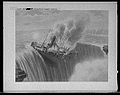 Destruction of the American steamboat Caroline
 -
 First location of HMCS Star on Bay St. Hamilton, ON
 -
 Recruiting advertisement for the Royal Naval Canadian Volunteer Reserve, Overseas Division
 -
 Hawker Hurricane at Canadian Warplane Heritage Museum C-GCWH, YHM Hamilton, ON (John C. Munro Hamilton International Airport)
 -
 Russian SBML 36-pounder Gun captured at Sevastopol in 1855, given to Hamilton by Queen Victoria in 1860 and mounted as a centennial project in 1967 outside HMCS Star.
 -
 HMCS Haida berthed at Pier 9, on Hamilton Harbour, directly alongside HMCS Star
 -
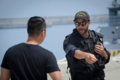 HMCS Star sailor on Naval Security Team workup training prior to deployment in 2017
 -
 HMCS Star sailors crane a RHIB during Exercise Wentworth Shield 2018


,_Canada_PP1383218449.jpg)


References
[edit]- ^ "Chronology of Canadian Naval Reserve Divisions". www.nauticapedia.ca. Retrieved 2017-03-31.
- ^ "Unit's Portal (Home)". Navy.forces.gc.ca. 2012-03-01. Archived from the original on April 19, 2012. Retrieved 2012-09-11.
- ^ Morton, Desmond. "Remember the Caroline: The Temptations of Unilateralism". The Canadian Encyclopedia. Retrieved 2017-03-31.
- ^ O'Brien, John (2001-09-27). International Law. Taylor & Francis. ISBN 978-1-84314-305-5.
- ^ a b "Early Days". www.nauticapedia.ca. Retrieved 2017-03-31.
- ^ "The Hamilton Naval Company 1862–1869 & The Fenians". hamiltonnaval.ca. Retrieved 2017-03-31.
- ^ "Canada General Service Medal, Seaman John S. McLeod, Hamilton Naval Brigade – North America". www.emedals.com. Retrieved 2017-03-31.
- ^ "The Hamilton Naval Company 1862–1869 & The Fenians". hamiltonnaval.ca. Retrieved 2017-03-31.
- ^ "Early Days".
- ^ "Royal Naval Canadian Volunteer Reserve (RNCVR)". hamiltonnaval.ca. Retrieved 2017-03-31.
- ^ Gimblett, Richard H.; Hadley, Michael L. (2010-11-16). Citizen Sailors: Chronicles of Canada's Naval Reserve, 1910–2010. Dundurn. ISBN 9781459711600.
- ^ "Security Check Required". www.facebook.com. Retrieved 2017-03-31.
- ^ a b c d "H.M.C.S. STAR". hamiltonnaval.ca. Retrieved 2017-03-31.
- ^ WAHC. "Williamson & Company Vinegar Works | Workers' City". workerscity.ca. Retrieved 2017-03-31.
- ^ Williamson, Commander Robert J. (1991). HMCS Star "A Naval Reserve History". Hamilton: HMCS Star. p. 30.
- ^ Williamson, Robert (September 2011). "SOURCE OF A UNTD MYTH" (PDF). THE NEWSLETTER of the U.N.T.D. Association of Canada. 3: 9.
- ^ MacFarlane, John M. "A Short History of the University Naval Training Division (UNTD)". www.nauticapedia.ca. Retrieved 2018-10-08.
- ^ a b "HistoricPlaces.ca – HistoricPlaces.ca". www.historicplaces.ca. Retrieved 2017-03-31.
- ^ Record, The (12 November 2011). "They kept the sea lanes open". www.therecord.com. Retrieved 2017-03-31.
- ^ "WarMuseum.ca – Democracy at War – Hamilton, Ontario, a City at War – Canada and the War". www.warmuseum.ca. Retrieved 2017-03-31.
- ^ "Crowsnest Magazine Archive | Crowsnest Issue: 03 - 1951". readyayeready.com. Retrieved 2018-10-08.
- ^ a b "1949-06.pdf" (PDF). docs.google.com. Retrieved 2018-10-08.
- ^ "Crowsnest Magazine Archive | Crowsnest Issue: 07 - 1949". readyayeready.com. Retrieved 2018-10-08.
- ^ "Crowsnest Magazine Archive | Crowsnest Issue: 08 - 1949". readyayeready.com. Retrieved 2018-10-08.
- ^ "Crowsnest Magazine Archive | Crowsnest Issue: 09 - 1949". readyayeready.com. Retrieved 2018-10-08.
- ^ "Crowsnest Magazine Archive | Crowsnest Issue: 02 - 1950". readyayeready.com. Retrieved 2018-10-08.
- ^ "Crowsnest Magazine Archive | Crowsnest Issue: 03 - 1950". readyayeready.com. Retrieved 2018-10-08.
- ^ "Crowsnest Magazine Archive | Crowsnest Issue: 04 - 1950". readyayeready.com. Retrieved 2018-10-08.
- ^ "Crowsnest Magazine Archive | Crowsnest Issue: 06 - 1950". readyayeready.com. Retrieved 2018-10-08.
- ^ "Crowsnest Magazine Archive | Crowsnest Issue: 08 - 1950". readyayeready.com. Retrieved 2018-10-08.
- ^ "Crowsnest Magazine Archive | Crowsnest Issue: 09 - 1950". readyayeready.com. Retrieved 2018-10-08.
- ^ "Crowsnest Magazine Archive | Crowsnest Issue: 10 - 1950". readyayeready.com. Retrieved 2018-10-08.
- ^ "Crowsnest Magazine Archive | Crowsnest Issue: 01 - 1951". readyayeready.com. Retrieved 2018-10-08.
- ^ a b c "Crowsnest Magazine Archive | Crowsnest Issue: 08 - 1951". readyayeready.com. Retrieved 2018-10-08.
- ^ "Crowsnest Magazine Archive | Crowsnest Issue: 06 - 1952". readyayeready.com. Retrieved 2018-10-08.
- ^ "Chronology of Canadian Naval Reserve Divisions". www.nauticapedia.ca. Retrieved 2017-03-31.
- ^ "Kitchener Tender | Hamilton Naval Heritage Association". Retrieved 2021-02-14.
- ^ Gimblett, Richard H.; Hadley, Michael L. (2010-11-16). Citizen Sailors: Chronicles of Canada's Naval Reserve, 1910–2010. Dundurn. ISBN 9781459705333.
- ^ Naval Headquarters (n.d.). "The University Naval Training Divisions" (PDF). Naval Historical Section – via Naval Headquarters, Ottawa.
- ^ a b Williamson, Robert (1991). HMCS STAR – A Naval Reserve History. Hamilton: HMCS Star.
- ^ "HMCS NCSM Star". www.facebook.com. Retrieved 2017-03-31.
- ^ MacFarlane, John M. "Ship details". www.nauticapedia.ca. Retrieved 2018-10-07.
- ^ "HMCS PATHFINDER | Hamilton Naval Heritage Association". hamiltonnaval.ca. Retrieved 2018-10-07.
- ^ MacFarlane, John M. "Ship details". www.nauticapedia.ca. Retrieved 2018-10-07.
- ^ Briggs, Dr. Steve. "RUSSEL BROTHERS Ltd. Steelcraft winch boat and warping tug builders from Owen Sound, Ontario". stevebriggs.netfirms.com. Retrieved 2018-10-07.
- ^ MacFarlane, John M. "Ship details". www.nauticapedia.ca. Retrieved 2018-10-07.
- ^ Gimblett, Richard H.; Hadley, Michael L. (2010-11-16). Citizen Sailors: Chronicles of Canada's Naval Reserve, 1910-2010. Dundurn. ISBN 9781459705333.
- ^ MacFarlane, John M. "Ship details". www.nauticapedia.ca. Retrieved 2018-10-07.
- ^ "ML106 "HMCS" BEAVER| Hamilton Naval Heritage Association". hamiltonnaval.ca. Retrieved 2018-10-07.
- ^ MacFarlane, John M. "Ship details". www.nauticapedia.ca. Retrieved 2018-10-07.
- ^ MacFarlane, John M. "Where Did the RCN Motor Launches Get To?". www.nauticapedia.ca. Retrieved 2018-10-07.
- ^ MacFarlane, John M. "Ship details". www.nauticapedia.ca. Retrieved 2018-10-07.
- ^ "HMCS SCATARI AKS 514 IRCS: CZFZ Voice Call Sign: Marian| Hamilton Naval Heritage Association". hamiltonnaval.ca. Retrieved 2018-10-07.
- ^ Government of Canada, National Defence. "National Defence | Canadian Armed Forces | News Release | The Government of Canada Honours Canadian Soldiers and Sailors Who Fought in the War of 1812". www.forces.gc.ca. Archived from the original on 1 April 2017. Retrieved 2017-03-31.
- ^ a b "Canadian Forces Naval Reserve & shore based training facilities – Military Badges, Crests, Flags & Seals – Military Clipart". www.milbadges.com. Retrieved 2017-03-29.
- ^ "Commanding Officers Hamilton Half Company RCNVR, Hamilton Division RCNVR & HMCS STAR | Hamilton Naval Heritage Association". Retrieved 2019-11-23.
- ^ Strombo.com. "Canada's 100 Most Powerful Women". George Stroumboulopoulos Tonight. Retrieved 2018-10-07.
- ^ MacFarlane, John M. "Biographical data". www.nauticapedia.ca. Retrieved 2018-10-07.
- ^ MacFarlane, John M. "Biographical data". www.nauticapedia.ca. Retrieved 2018-10-07.
- ^ MacFarlane, John M. "Biographical data". nauticapedia.ca. Retrieved 2018-10-07.
- ^ MacFarlane, John M. "Biographical data". www.nauticapedia.ca. Retrieved 2018-10-07.
- ^ MacFarlane, John M. "Biographical data". nauticapedia.ca. Retrieved 2018-10-07.
- ^ MacFarlane, John M. "Biographical data". www.nauticapedia.ca. Retrieved 2018-10-07.
- ^ MacFarlane, John M. "Biographical data". www.nauticapedia.ca. Retrieved 2018-10-07.
- ^ MacFarlane, John M. "Biographical data". nauticapedia.ca. Retrieved 2018-10-07.
- ^ MacFarlane, John M. "Biographical data". nauticapedia.ca. Retrieved 2018-10-07.
- ^ MacFarlane, John M. "Biographical data". www.nauticapedia.ca. Retrieved 2018-10-07.
- ^ MacFarlane, John M. "Biographical data". www.nauticapedia.ca. Retrieved 2018-10-07.
- ^ Ralph, Wayne (2008-09-11). Aces, Warriors and Wingmen: The Firsthand Accounts of Canada's Fighter Pilots in the Second World War. John Wiley & Sons. ISBN 9780470158142.
| Components | |
|---|---|
| Bases | |
| Ships | |
| Aircraft (RCAF) | |
| History | |
| Units |
|
| Leadership | |

.svg)
HMCS Star
View on GrokipediaHistory
Origins in the 19th century
The area around Hamilton Harbour, known as the Head of the Lake, saw initial European settlement by United Empire Loyalists in the late 18th century following the American Revolutionary War, with British authorities establishing early maritime outposts to support supply lines on Lake Ontario amid ongoing tensions with the newly independent United States. During this period, British naval operations focused on securing the Great Lakes region, laying the groundwork for local involvement in defense efforts, though permanent establishments were limited until the early 19th century.[4] Naval activity intensified during the War of 1812, when British forces utilized Hamilton Harbour's sheltered waters for strategic maneuvers on Lake Ontario. In September 1813, HMS Lord Melville (renamed HMS Star in 1814), a 14-gun brig launched at Kingston, participated in the Burlington Races—a series of naval engagements near the harbour—to contest American control of the lake, highlighting the site's emerging role in British Provincial Marine operations.[5] These actions underscored Hamilton's geographical importance as a natural harbor protected by the Burlington Peninsula, fostering early local interest in maritime defense.[6] By the early 19th century, Hamilton Harbour became a hub for shipbuilding and maritime trade, driven by the completion of the Burlington Canal in 1826, which linked the inner harbor to Lake Ontario and enabled larger vessel traffic. Shipyards such as those at Zealand's Wharf and Robertson's produced schooners and steamers, including the 1863 launch of the Hercules and the 1873 Columbia, supporting grain exports, timber shipments, and passenger services that employed hundreds of carpenters and sailors.[6] This commercial vitality cultivated a skilled workforce and community familiarity with naval architecture, forming a foundational base for volunteer maritime units in Upper Canada.[7] The Rebellion of 1837 brought direct naval-related involvement from Hamilton residents during the Caroline Affair. On December 29, 1837, Colonel Allan MacNab, a prominent Hamilton militia leader, commanded a force of Upper Canadian volunteers that crossed the Niagara River to seize and burn the American steamer Caroline, which had been supplying rebels on Navy Island.[8] The raid, justified by British authorities as anticipatory self-defense against imminent threat, set a precedent in international law articulated by U.S. Secretary of State Daniel Webster as requiring necessity "instant, overwhelming, leaving no choice of means, and no moment for deliberation."[9] MacNab's Hamilton-based 13th Battalion contributed significantly to the operation, reinforcing local militia ties to naval interdiction tactics.[10] Maritime defense evolved further amid the Fenian Raids of 1866, when Irish-American Fenians invaded from Buffalo, New York, aiming to pressure Britain over Irish independence. The Hamilton Naval Company, formed in 1862 as one of Canada's first volunteer naval brigades, mobilized under Captain Thomas Harbottle to patrol Lake Ontario aboard the steamer Passport, armed with an Armstrong cannon, in support of federal forces repelling the incursions at Ridgeway and Fort Erie.[11] Fourteen members of the company received the Canada General Service Medal with the Fenian Raid 1866 clasp for their service, demonstrating Hamilton's growing capacity for organized naval volunteering.[11] These events solidified the harbour's legacy as a cradle for Canadian naval traditions leading into the 20th century.[12]World War I recruitment (1914–1918)
In response to the outbreak of World War I, the Royal Naval Canadian Volunteer Reserve (RNCVR) was authorized on May 14, 1914, as a mechanism to recruit Canadian volunteers for service with the Royal Navy, marking the first organized naval reserve effort in the country.[13] In Hamilton, Ontario, this initiative built briefly on longstanding 19th-century naval traditions among local maritime enthusiasts, leading to the formation of a dedicated Hamilton Recruiting Committee for the RNCVR in 1916.[14] Chaired by Captain George J. Guy, a prominent city alderman and head of the Hamilton Branch of the Navy League of Canada, the committee included vice-chairman John H. Collinson—later the first headmaster of Hamilton Collegiate Institute—and other community leaders such as L. Smith, Gadsby, F. Washington, G. Pratt, and E. Waterman as secretary.[14] The committee organized local recruitment drives targeting able-bodied men from Hamilton and surrounding areas, emphasizing service in the Royal Navy to defend against German naval threats. A surviving 1916 photograph documents one early group of 22 Hamilton recruits alongside two petty officers, attired in naval uniforms issued locally, which suggests the committee facilitated initial orientation and equipping at a rudimentary Hamilton facility.[15] These efforts contributed to the national RNCVR total of approximately 8,000 enlisted officers and ratings, drawn from communities across Canada.[16] Hamilton recruits, like their RNCVR counterparts nationwide, received basic training in Canada before deployment, often proceeding to advanced instruction in the United Kingdom or at facilities such as Halifax.[13] They were dispatched to European theaters and Canadian coastal waters, serving aboard Royal Navy vessels and the 136 patrol boats manned by RNCVR personnel to counter U-boat activities, including escort duties for the Allied convoy system implemented from 1917 onward.[14] Notable sacrifices included Hamilton natives Ernest Clement, who died in 1916, and Herbert Bottrill, who succumbed in 1920 from war-related injuries, underscoring the local toll of these operations.[14] Following the Armistice on November 11, 1918, the Hamilton Recruiting Committee was dissolved as wartime needs subsided, with the broader RNCVR standing down amid postwar demobilization and budget cuts.[17] The force was formally disbanded on January 31, 1923, via Privy Council Orders Nos. 139 and 140.[18] The RNCVR's demonstrated effectiveness in rapidly mobilizing citizen-sailors informed subsequent reserve reforms, highlighting the need for a peacetime structure; this legacy directly influenced the creation of the Royal Canadian Naval Volunteer Reserve later that year, which ultimately provided about 80% of the Royal Canadian Navy's manpower for World War II.[17]Formation and interwar years (1923–1939)
The Hamilton Half Company of the Royal Canadian Naval Volunteer Reserve (RCNVR) was established on March 15, 1923, as part of a broader initiative to establish volunteer reserve units across Canada, building on recruitment precedents from World War I.[17] This unit, initially commanded by Lieutenant Ralph Howard Yeates who attested on March 26, 1923, began with a complement of 50 men that quickly expanded to 56, with an additional 25 on a waiting list, making Hamilton the first city to meet its quota by mid-March.[17] The formation aligned with the creation of the RCNVR on January 31, 1923, voted by Parliament to bolster the Royal Canadian Navy amid post-war budget constraints, with an initial authorized strength of 1,000 personnel nationwide.[19] Early operations commenced at the Navy League headquarters in the 614 Imperial Building at Main and Hughson streets in Hamilton.[17] On November 2, 1923, the unit relocated to 469 Bay Street, a former Reid Engine Works and Grant’s Sail Loft, providing more suitable space for initial activities.[17] In 1924, it moved from the Customs House to the Drill Hall to accommodate growing needs, followed by another relocation in July 1935 to 41 Stuart Street, a repurposed vinegar works, which offered expanded facilities for training and administration during the interwar period.[17] Training programs emphasized foundational naval skills, particularly seamanship and gunnery, using equipment such as a 27-foot Montague rig whaler for practical drills and a 12-pounder gun for artillery instruction.[17] Reservists participated in a varied regimen that included ceremonial drills, sports like soccer, football, baseball, and boxing to build physical fitness and unit cohesion, as well as later additions covering damage control, firefighting, first aid, and sailing to prepare for potential mobilization.[17] These efforts were supported by the unit's integration into the Royal Canadian Navy structure through amendments to the Naval Service Act, which formalized the RCNVR's role in providing trained personnel to supplement the permanent force.[17] By 1936, the Hamilton Half Company was redesignated as the Hamilton Division of the RCNVR, reflecting its maturation within the naval reserve framework and alignment with national defense priorities during the interwar years.[17] This period saw steady growth, with the unit contributing to the RCNVR's expansion from 12 initial half companies to 19 by the late 1930s, fostering a reserve force capable of rapid expansion if needed.[20]World War II contributions (1939–1945)
With the outbreak of World War II, HMCS Star rapidly expanded its role as a vital training center for the Royal Canadian Naval Volunteer Reserve (RCNVR). On November 1, 1941, it was commissioned as a tender to HMCS Stadacona. It became an independent stone frigate on September 1, 1942, and relocated to temporary facilities at Eastwood Park in 1943.[17] This commissioning enabled the unit to significantly scale up its operations, ultimately enlisting and training 7,490 officers, men, and women for active service by 1945.[17] Building on its interwar foundations in reserve training, HMCS Star focused on preparing personnel for the demanding conditions of naval warfare, particularly in response to the escalating Battle of the Atlantic.[17] A pivotal development came in 1943 with the establishment of the University Naval Training Division (UNTD), a national program that recruited university students, starting at McMaster University under HMCS Star's initial auspices before expanding to other institutions. The UNTD delivered instruction in seamanship, navigation, and signaling, training over 7,800 cadets nationwide from 1943 to 1968.[21] These cadets, often deferred from immediate active duty to complete their studies, formed a critical cadre of leadership talent for the Royal Canadian Navy (RCN). Of the approximately 500 UNTD cadets trained at HMCS Star, 53 lost their lives during the war.[21] Trained personnel from HMCS Star were instrumental in Atlantic convoy escort operations, a cornerstone of Allied victory in the Battle of the Atlantic.[17] Many served aboard key vessels, including the armed merchant cruiser HMCS Jervis Bay, the corvette HMCS Spikenard—sunk by U-boat in 1941—and the minesweeper HMCS Poundmaker, which supported the Normandy landings in 1944.[17] Representing approximately 10% of the RCN's wartime personnel, these contributions helped safeguard transatlantic supply lines against German submarine threats.[17]Postwar reactivation and Cold War operations (1945–1989)
Following the end of World War II, Commander Samuel Foster Ross was appointed commanding officer on May 1, 1946, and HMCS Star was reactivated as a peacetime naval reserve establishment on October 21, 1946. Ross served until 1950.[17] This reactivation marked a shift from wartime mobilization to reserve training, with an initial complement of 65 officers and 735 ratings, establishing it as the fifth-largest reserve division in Canada at the time.[17] Building on its World War II legacy of training over 10,000 personnel, the unit focused on recruiting, professional development in naval skills, public relations, and community engagement.[17] Training programs emphasized practical reserve readiness, incorporating equipment for gunnery, radar, asdic, torpedo operations, communications, engineering, electrical systems, accounting, and medical training.[17] In the early postwar years, reservists trained on frigates during the 1950s and 1960s, transitioning to coastal patrol craft such as Y.F.P.s after 1960, with cruises to destinations including the United Kingdom, Bermuda, Hawaii, and Alaska—though later limited to coastal waters.[17] Additional activities encompassed seamanship, firefighting, first aid, sailing, sports, and public service initiatives like blood donor clinics, alongside weekend camps at sites such as Winona or Niagara-on-the-Lake for marksmanship and fieldcraft.[17] To expand regional capabilities, HMCS Star hosted the Great Lakes Training Centre (GLTC) from 1952 to 1968, where it trained over 300 new entries by 1954 using minesweepers, Fairmiles, and later vessels like Porte St. Louis and Porte St. Jean.[17] In May 1954, HMCS Star established a tender in Kitchener under Acting Commander J.H.R. Kirkpatrick, comprising 40 officers and men, to support local recruitment and training; it was disestablished in 1964 amid fiscal restraints and defense cutbacks.[17] During the Cold War, the division contributed to NATO-aligned operations through participation in exercises and anti-submarine warfare (ASW) drills, such as a mock submarine attack off Frenchman's Bay on 16 August 1955 and a NATO naval review at the Canadian National Exhibition on 23 August 1959 involving eight Royal Canadian Navy ships.[17] These efforts extended into the 1980s under the Maritime Coastal Defence Organization (MCDO), including NATO Naval Control of Shipping exercises that enhanced anti-submarine readiness and interoperability.[17] Infrastructure developments supported this expanded role, including the construction of a new armory with a cornerstone laid on 14 October 1954 at a cost of $300,000, along with the COND headquarters and drill deck improvements under Commander Williamson.[17] By the 1980s, HMCS Star had grown to sustain approximately 300 reservists, reflecting robust recruitment and training initiatives amid Cold War demands.[17]Modern operations and developments (1990–present)
In 1995, the temporary World War II-era structures at HMCS Star's site in Eastwood Park were demolished to make way for a modern facility. The new building at 650 Catharine Street North in Hamilton opened officially on 27 September 1997 during a ceremony attended by Minister of National Defence Art Eggleton, providing state-of-the-art training spaces, administrative offices, and community engagement areas for the Naval Reserve Division. This relocation and upgrade enhanced HMCS Star's capacity to support local reservists while maintaining its role as a key training hub in the Great Lakes region.[22] The arrival of the National Historic Site HMCS Haida on 30 August 2003 marked a significant development, as the World War II Tribal-class destroyer was berthed at Pier 9 directly in front of HMCS Star's facility. This proximity has enabled collaborative community events, including annual Remembrance Day parades, educational tours for students, and joint ceremonies such as the Naval Reserve Centennial celebrations in 2023, strengthening public ties to naval heritage and recruitment efforts.[3][23] HMCS Star sustains a contingent of approximately 250 naval reservists who train for domestic and international roles, including contributions to Operation Apollo (2001–2003), where Canadian Naval Reserve personnel provided logistical and security support amid the global campaign against terrorism. Reservists from the division continue to participate in ongoing Great Lakes deployments, such as hosting HMCS Harry DeWolf in October 2024 for public tours and joint exercises, promoting operational readiness and regional maritime security.[24][25] Post-2016, HMCS Star has advanced diversity recruitment through initiatives like the high school co-op Basic Training Program, which welcomed 54 students in January 2025 to introduce underrepresented youth to naval careers, aligning with broader Canadian Armed Forces efforts to enhance inclusivity. As part of Naval Reserve integration into CAF modernization up to 2025, the division incorporates updated training protocols and equipment interoperability, supporting fleet readiness amid initiatives like the Inflection Point 2025 restructuring for agile, multi-domain operations.[26][27]Organization and Facilities
Location and infrastructure
HMCS Star is located at 650 Catharine Street North in Hamilton, Ontario, situated on the shores of Hamilton Harbour along Lake Ontario.[28] This strategic position provides direct access to the water for training exercises and supports the unit's role in naval reserve operations.[29] The current facility was constructed and officially opened on 27 September 1997 as a state-of-the-art replacement for the original World War II-era temporary wooden structures, which had included offices, messes, barracks, a drill hall, and training areas.[22][30] The modern building encompasses dedicated spaces for training, administration, and support functions tailored to the needs of the Canadian Forces Naval Reserve Division.[29] Positioned adjacent to the HMCS Haida National Historic Site at 658 Catharine Street North, the facility enhances public engagement with Canadian naval heritage, as Haida—a preserved Tribal-class destroyer—serves as a key attraction managed by Parks Canada and open to visitors.[31][32] This close proximity facilitates collaborative events and educational outreach related to maritime history.[29]Tenders and affiliated units
HMCS Star has historically operated tenders as sub-units to extend its reach for recruitment and training in surrounding regions. The most notable example was the Kitchener Tender, established on 1 June 1954 under the command of Lieutenant-Commander J.R.H. Kirkpatrick of the Royal Canadian Naval Reserve, to facilitate local naval reserve activities in southwestern Ontario. This tender operated for over a decade, focusing on basic training and recruitment until its paid-off on 30 November 1964 due to defence spending reductions during the Cold War era.[33][34][35] In addition to land-based sub-units, Star affiliated with several small training vessels as tenders to support seamanship drills and localized operations. Plainsville, a Ville-class wooden tug built in 1944 by Russel Brothers, served as a training tender from approximately 1962, providing hands-on experience in navigation and boat handling for reserve personnel. It was later joined by Listerville in 1982, which was renamed Cavalier in 1974; both vessels operated until their paid-off in 1991 as part of broader reserve fleet rationalizations. These tenders emphasized practical skills development, allowing Star to conduct drills on Lake Ontario without relying solely on the parent unit's facilities.[36][37] Post-1990 developments saw the re-establishment of regional affiliations to bolster recruitment in growing areas. In 2019, Star created the Region of Waterloo Detachment as a satellite unit in Kitchener, Ontario, marking the first permanent naval reserve presence in the Waterloo Region since the 1964 closure. This detachment, comprising over 80 sailors as of 2024, conducts localized training, including damage control and basic seamanship, while supporting Star's overall mission through seasonal deployments and community outreach. The unit was formally launched on 21 January 2023 to enhance accessibility for potential recruits in the region and remains active, hosting events such as a commemorative parade on 11 October 2025.[38][39][40][41]Symbols and Traditions
Namesake
HMCS Star is named after HMS Star, a 14-gun brig that served in the Royal Navy's Lake Ontario squadron during the War of 1812. Originally launched as HMS Lord Melville in July 1813 at Kingston, Ontario, by the Provincial Marine, the vessel was renamed Star on 22 January 1814 to reflect its role in British naval operations.[42] This renaming occurred amid efforts to strengthen British defenses on the Great Lakes following the declaration of war against the United States in June 1812. The ship's service underscored Hamilton's maritime heritage, as it participated in key engagements defending the western Lake Ontario region, including the Burlington Races on 28 September 1813 near present-day Burlington, adjacent to Hamilton. During this action, Lord Melville/Star helped Commodore Sir James Lucas Yeo's squadron evade and outmaneuver American forces, securing temporary British naval superiority on the lake and protecting vital supply lines for Upper Canada's defenses.[42][43] This contribution highlighted the strategic importance of local ports like Hamilton in the broader context of Great Lakes defense against American incursions.[44] Upon the formation of the Hamilton division of the Royal Canadian Naval Volunteer Reserve on 15 March 1923, the name Star was adopted to honor these early naval traditions and the legacy of British-Canadian maritime efforts in the region. This choice connected the new reserve unit to Hamilton's longstanding involvement in naval activities, dating back to 19th-century volunteer companies, and symbolized continuity in local contributions to Canada's naval defense.[3][2]Badge
The badge of HMCS Star features a blue field (azure) upon which is superimposed a gold heraldic star (estoile Or) charged at its centre with a red maple leaf (gules).[1][45] This design was originally approved by the Canadian Heraldic Authority on 9 February 1948, with the blazon confirmed on 15 December 2008.[46] The estoile symbolizes the unit's name, derived from the historical Royal Navy vessel HMS Star, which served during the War of 1812 after being renamed from the Provincial Marine ship Lord Melville.[45][3] The red maple leaf represents Canadian identity and sovereignty, underscoring Star's role as a Royal Canadian Navy reserve division.[1][45] Collectively, these elements evoke themes of naval guidance and national service, aligning with the unit's motto Diligentia (Diligence).[1] In practice, the badge appears on naval uniforms, such as sewn patches on combat attire and embroidered blazer crests worn by personnel during formal events.[47][48] It is also incorporated into unit flags, ensigns, and official correspondence to denote affiliation with HMCS Star in Hamilton, Ontario, fostering esprit de corps among reservists.[47][49] Reproduction for non-official purposes requires authorization from the Canadian Heraldic Authority to maintain its integrity as a symbol of military heritage.[46]Battle honours
HMCS Star perpetuates the battle honours of seven Royal Navy warships that previously bore the name Star (or variant), through continuous service: Star (1652), Star (1701), Star (1740), Star (1778), Star (1805), Star (1810), and Lord Melville/Star (1813). The unit bears the following official battle honours as a shore establishment in the Royal Canadian Navy (RCN) lineage: Dover, 1652, for participation in the Battle of Goodwin Sands against Dutch forces; Martinique, 1809, recognizing the capture of the French island during the Napoleonic Wars; and Guadeloupe, 1810, for the subsequent British conquest of the colony.[1][50] In 2012, for the bicentennial of the War of 1812, HMCS Star was awarded the Defence of Canada Banner, commemorating the participation of its namesake Lord Melville/Star in the conflict.[50] In the RCN, battle and theatre honours are awarded to units, including reserve divisions, for creditable participation in combat operations against an armed enemy, where the unit performs an allotted task contributing to operational success. Eligibility requires presence in the theatre, active engagement, and significant contribution, often measured by personnel deployment thresholds such as 20% of authorized strength for at least 30 days in qualifying operations. Shore establishments like Star qualify through cumulative service of affiliated personnel on deployed ships or squadrons that meet these criteria.[51] These recognitions highlight Star's role in providing trained sailors for key RCN campaigns without direct unit deployment as a seagoing vessel.Personnel
Commanding officers
The commanding officers of HMCS Star are selected during the annual Active Posting Season (APS) and announced by the Commander of the Royal Canadian Navy.[52] This ensures that officers leading reserve divisions like Star possess the expertise to oversee training, recruitment, and community engagement in a part-time force structure. HMCS Star has had 38 commanding officers since its establishment as the Hamilton Half Company of the Royal Canadian Naval Volunteer Reserve (RCNVR) on 15 March 1923. The following table lists them chronologically, including ranks and approximate tenures where documented.| No. | Rank and Name | Tenure |
|---|---|---|
| 1st | Lt Ralph Howard Yeates | 15 Mar 1923 – 1 Nov 1929 |
| 2nd | Lt William George Beaver | 15 Dec 1929 – 1 Apr 1934 |
| 3rd | Lt Henry Lloyd George Westland | 1 Apr 1934 – 4 Feb 1937 |
| 4th | A/Lt John Cyril Hart | 4 Feb 1937 – 10 Jun 1940 |
| 5th | Lt William Morrison | 10 Jun 1940 – 1 Nov 1940 |
| 6th | Lt Frank Elwood Waterman | 12 Nov 1940 – 15 Feb 1941 |
| 7th | Lt Walter Herbert Bruce Thomson | 15 Feb 1941 – 30 Apr 1941 |
| 8th | Lt John McFetrick | 1 May 1941 – 20 Feb 1944 |
| 9th | A/Cdr Reginald (Cowboy) Jackson | 28 Feb 1944 – 29 Mar 1945 |
| 10th | A/Cdr Colin Stinson Glassco | 29 Mar 1945 – 14 Jan 1946 |
| 11th | A/LCdr Robert Guy Baker | 14 Jan 1946 – 1 Mar 1946 |
| 12th | A/LCdr William Hugh Adamson | 1 Mar 1946 – 1 May 1946 |
| 13th | Cdr Samuel Foster Ross | 1 May 1946 – 27 Nov 1950 |
| 14th | A/Cdr George Holcombe Parke | 27 Nov 1950 – 1 Dec 1953 |
| 15th | A/Cdr John Henry Curtis | 1 Dec 1953 – Dec 1958 |
| 16th | Cdr Wilf Houghton | Dec 1958 – 19 Feb 1963 |
| 17th | Cdr Bob Galbraith Wilson | 19 Feb 1963 – May 1964 |
| 18th | Cdr Harry Tilbury | May 1964 – 29 Jul 1966 |
| 19th | Cdr Ross Taylor “Buck” Bennett, CMM | 2 Aug 1966 – 1969 |
| 20th | Cdr Colin DiCenzo | 1969 – 1971 |
| 21st | Cdr Frederick Joseph Lee | 1971 – 1975 |
| 22nd | Cdr Martin John “Marty” Pandzich | 1975 – 1979 |
| 23rd | Cdr Robert Hugh “Bob” Bowman | 1979 (18 Sep 1979) – 1982 |
| 24th | Cdr Douglas Stewart “Doug” Woodliffe | 1982 (30 Nov 1982) – 1985 |
| 25th | Cdr Robert James “Bob” Williamson | 1985 – Jun 1988 |
| 26th | Cdr Douglas Yate Sen Mark | Jul 1988 (11 Sep 1988) – Jun 1991 |
| 27th | Cdr Alaric Woodrow | Jul 1991 – Jun 1995 |
| 28th | LCdr Peter Duynstee | Jul 1995 (24 Sep 1995) – Jun 1998 |
| 29th | LCdr Doug Martin | Aug 1998 (26 Sep 1998) – Jul 2002 |
| 30th | LCdr Neil Spencer Bell | Jul 2002 (22 Sep 2002) – Jun 2005 |
| 31st | LCdr Glenna Swing | Jul 2005 (17 Sep 2005) – Aug 2008 |
| 32nd | LCdr Dana Baars | Aug 2008 – 26 Jul 2010 |
| 33rd | LCdr Shekhar Gothi | 27 Jul 2010 – 14 Aug 2012 |
| 34th | LCdr Glenn Woolfrey, MMM | 15 Aug 2012 (29 Sep 2012) – 30 Jun 2016 |
| 35th | Cdr Stephen Churm | 1 Jul 2016 (1 Oct 2016) / Cdr 1 Jan 2019 – 25 Jun 2020 |
| 36th | LCdr Marie-Sonya Sowa | 26 Jun 2020 – 5 Jul 2022 |
| 37th | LCdr Mike DiBerardo | 5 Jul 2022 – APS 2025 |
| 38th | LCdr Kevin Ng | APS 2025 – present |