Hubbry Logo
Harold Wilson plot allegationsHarold Wilson plot allegationsMain
Open search
Harold Wilson plot allegations
Community hub
Harold Wilson plot allegations
logo
8 pages, 0 posts
0 subscribers
Be the first to start a discussion here.
Harold Wilson plot allegations
from Wikipedia

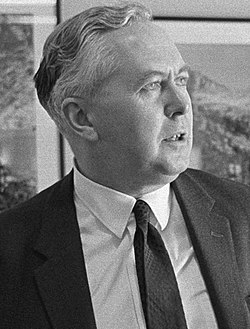
Harold Wilson (1964)

Since the mid-1970s, a variety of allegations have emerged regarding British Labour Prime Minister Harold Wilson, who served as the prime minister of the United Kingdom from 1964 to 1970 and 1974 to 1976. These range from Wilson having been a Soviet agent (a claim which MI5 investigated and found to be false[citation needed]), to Wilson being the victim of treasonous plots by conservative-leaning elements in MI5 and the British military (e.g., the Clockwork Orange plot), claims which Wilson himself made.

Background

[edit]

Soviet defector Anatoliy Golitsyn is said to have told a British intelligence officer that Wilson was a KGB operative and that former Labour Party leader Hugh Gaitskell had been assassinated by the KGB to have the pro-US Gaitskell replaced as party leader by Wilson.[1] However, Christopher Andrew, the official historian for Britain's MI5,[2] has described Golitsyn as an "unreliable conspiracy theorist".[3]

In his memoir Spycatcher (1987), former MI5 officer Peter Wright stated that the head of the CIA's Counterintelligence Division, James Angleton, told him that Wilson was a Soviet agent when Wilson became Prime Minister after the 1964 general election. Wright said that Angleton referred to this assertion coming from a source (whom he did not name but who was probably Golitsyn). Golitsyn's words had been frequently taken heed of by Angleton, who had grown suspicious of the loyalty of many political figures, such as Henry Kissinger.[4] According to Wright, Angleton offered to provide further information on the condition that MI5 guarantee to keep the allegations from "political circles",[5] but the management of MI5 declined to accept restrictions on the use of the information and Angleton told them nothing more.[citation needed]

According to Wright, at the end of the 1960s MI5 received information from two Czechoslovak defectors, Josef Frolík and František August, who had fled to the West, alleging the Labour Party had "almost certainly" been penetrated by the Soviets. The two gave a list of Labour MPs and trade unionists as Soviet agents.[5]

MI5 maintained a file on Wilson under the name of Henry Worthington. It repeatedly investigated him over the course of several decades, before officially concluding that Wilson had had no relationship with the KGB. Nor did it ever find evidence of Soviet penetration of the Labour Party.[6][7]

The 1968 plot

[edit]

In his 1976 memoir Walking on Water, Hugh Cudlipp recounts a meeting he arranged at the request of Cecil King, the head of the International Publishing Corporation (IPC), between King and Lord Mountbatten of Burma, then-Prince Charles' great uncle and mentor. The meeting took place on 8 May 1968. Attending were Mountbatten, King, Cudlipp, and Sir Solly Zuckerman, the Chief Scientific Adviser to the British government.

According to Cudlipp:

[Cecil] awaited the arrival of Sir Solly and then at once expounded his views on the gravity of the national situation, the urgency for action, and then embarked upon a shopping list of the Prime Minister's shortcomings. He explained that in the crisis he foresaw as being just around the corner, the Government would disintegrate, there would be bloodshed in the streets and the armed forces would be involved. The people would be looking to somebody like Lord Mountbatten as the titular head of a new administration, somebody renowned as a leader of men, who would be capable, backed by the best brains and administrators in the land, to restore public confidence. He ended with a question to Mountbatten—would he agree to be the titular head of a new administration in such circumstances?[8]

Mountbatten asked for the opinion of Zuckerman, who stated that the plan amounted to treason and left the room. Mountbatten expressed the same opinion, and King and Cudlipp left.[9] King subsequently decided to override the editorial independence of the Daily Mirror when he instructed the paper to publish a front-page article he had written that called for Wilson to be removed through some sort of extra-parliamentary action. The board of the IPC met and demanded his resignation for this breach of procedure and the damage to the interests of IPC as a public company. He refused, so was dismissed by the board on 30 May 1968.[10]

In addition to Mountbatten's refusal to participate in King's mooted plot, there is no evidence of any other conspirators. Cudlipp himself appears to see the meeting as an example of extreme egotism on King's part.[9]

A later memoir by Harold Evans, who was editor of The Sunday Times in 1968, said that The Times had egged on King's plans for a coup:

Rees-Mogg's Times backed the Conservative Party in every general election, but it periodically expressed yearnings for a coalition of the right-centre. In the late 1960s it encouraged Cecil King's notion of a coup against Harold Wilson's Labour Government in favour of a government of business leaders led by Lord Robens. In the autumn election of 1974, it predicted that economic crisis would produce a coalition government of national unity well inside five years and urged one there and then between Conservatives and Liberals.[11]

William Rees-Mogg called for a coalition in an 8 December 1968 Times editorial entitled "The Danger to Britain", a day before King visited the Times office.[12]

A BBC programme The Plot Against Harold Wilson, broadcast in 2006, reported that, in tapes recorded soon after his resignation, Wilson stated that for eight months of his premiership he did not "feel he knew what was going on, fully, in security". Wilson alleged two plots, in the late 1960s and mid-1970s respectively. He said that plans had been hatched to install Louis Mountbatten as interim prime minister. He also claimed that ex-military leaders had been building up private armies in anticipation of "wholesale domestic liquidation". On a separate track, elements within MI5 had also, the BBC programme reported, spread black propaganda that Wilson and Marcia Williams (Wilson's private secretary) were Soviet agents, and that Wilson was an IRA sympathiser, apparently with the intention of helping the Conservatives win the February 1974 election.[13]

Alleged 1974 military coup plot

[edit]

On the BBC television programme The Plot Against Harold Wilson, broadcast on 16 March 2006 on BBC2, it was claimed there were threats of a coup d'état against the Wilson government, which were corroborated by leading figures of the time on both the left and the right. Wilson told two BBC journalists, Barrie Penrose and Roger Courtiour, who recorded the meetings on a cassette tape recorder, that he feared he was being undermined by MI5. The first time was in the late 1960s after the Wilson Government devalued the pound sterling but the threat faded after Conservative leader Edward Heath won the election of 1970. However, after a coal miners' strike Heath decided to hold an election to renew his mandate to govern in February 1974 but lost narrowly to Wilson. There was again talk of a military coup, with rumours of Lord Mountbatten as head of an interim administration after Wilson had been deposed.[14] In 1974 the army occupied Heathrow Airport on the grounds of training for possible IRA terrorist action at the airport. Although the military stated that this was a planned military exercise, Downing Street was not informed in advance, and Wilson himself interpreted it as a show of strength, or warning, being made by the army.[15]

The Peter Wright allegations and Clockwork Orange

[edit]

Peter Wright claimed that he was confronted by two of his MI5 colleagues and that they said to him: "Wilson's a bloody menace and it's about time the public knew the truth", and "We'll have him out, this time we'll have him out." Wright alleged that there was a plan to leak damaging information about Wilson and that this had been approved by "up to thirty officers". As the 1974 election approached, the plan went, MI5 would leak selective details of the intelligence about Labour leaders, especially Wilson, to "sympathetic" journalists. According to Wright, MI5 would use their contacts in the press and the trade unions to spread around the idea that Wilson was considered a security risk. The matter was to be raised in Parliament for "maximum effect". However Wright declined to let them see the files on Wilson and the plan was never carried out; but Wright does claim it was a "carbon copy" of the Zinoviev letter which was believed to have helped destabilise the first Labour Government in 1924.[16]

On 22 March 1987 former MI5 officer James Miller claimed that the Ulster Workers' Council strike of 1974 had been promoted by MI5 to help destabilise Wilson's government.[17]

In July 1987, Labour MP, Ken Livingstone used his maiden speech to raise the allegations of a former Army press officer, Colin Wallace, that the Army press office in Northern Ireland had been used in the 1970s as part of a smear campaign, codenamed Clockwork Orange, against Harold Wilson and other British and Irish politicians.[18]

Recent scholarship

[edit]

In The Defence of the Realm (2009), the first authorised history of MI5, by Christopher Andrew, it was shown that MI5 kept a file on Wilson from 1945, when he became an MP – because communist civil servants claimed that he had similar political sympathies. However, Defence of the Realm claims that there was no conspiracy against Wilson, and repeats the Callaghan government claim that there was no bugging of 10 Downing Street.[19] Doubt was cast on this claim, however, in 2010 when newspaper reports made detailed allegations that the bugging of 10 Downing Street had been omitted from the history for "wider public interest reasons". The government did not issue a denial of the allegations. In 1963, on Harold Macmillan's orders following the Profumo affair, MI5 bugged the cabinet room, the waiting room, and the prime minister's study until the bugs were removed in 1977 on James Callaghan's orders. From the records it is unclear if Harold Wilson or Edward Heath knew of the bugging, and no recorded conversations were retained by MI5, so the bugs were possibly never activated.[20]

Intelligence historian Jon Moran, concluded in 2014:

The characterisation of Harold Wilson as paranoid does not take account of the political context of the time, which was characterised by a political style generally which applied to both left and right (including MI5 itself). The suspicion of Wilson and others towards the activities of the security services and other figures resulted from concrete domestic and international developments ... Andrew is correct to be sceptical, and there remains limited evidence of a 'plot', if a plot is defined as a tightly organised high-level conspiracy with a detailed plan. However there is evidence of a conspiracy: a loosely connected series of unlawful manoeuvres against an elected government by a group of like-minded figures.[21]

See also

[edit]

References

[edit]

Notes

[edit]
[edit]
Revisions and contributorsEdit on WikipediaRead on Wikipedia
from Grokipedia
The Harold Wilson plot allegations refer to a series of claims asserting that British Prime Minister , who led Labour governments from 1964 to 1970 and 1974 to 1976, was subjected to conspiracies by factions within , the military, media magnates, and other establishment figures intent on discrediting or deposing him amid economic crises, policies, and perceived vulnerabilities to Soviet influence. Wilson himself articulated these suspicions in private recordings made shortly after his abrupt resignation on 16 March 1976, alleging sustained pressure from a "small group" potentially linked to foreign intelligence, which he believed had eroded his authority over several years. Key elements include a purported 1968 scheme by Daily Mirror chairman Cecil King, involving Admiral Lord Mountbatten and others, to install a technocratic replacement government; discussions of military contingency plans amid 1974's miners' strike and three-day week; and MI5's alleged "Clockwork Orange" operation to fabricate scandals implicating Labour leaders in corruption or immorality. These narratives drew from defectors' warnings of Wilson's ties, internal dissent over his reforms, and leaks to journalists that fueled press campaigns portraying his administration as inept or subversive. Official probes, such as Hunt's 1977 inquiry and Robert Armstrong's 1987 review, uncovered no substantiation for coordinated plots within security agencies, attributing much friction to legitimate counter-subversion efforts amid tensions. Notwithstanding these findings, declassified documents reveal MI5's long-term file on Wilson, routine of his associates, and unauthorized briefings that amplified opposition, suggesting institutional resistance short of outright insurrection but indicative of deep-seated elite antagonism toward his government's direction.

Contextual Background

Wilson's Governments and Policy Challenges

Harold Wilson's first Labour government took office on 16 October 1964 following a victory with a slim majority of four seats in the . The administration inherited a deficit and faced immediate pressure to defend the pound sterling's fixed of $2.80, amid growing speculative attacks on the currency. Efforts to stabilize the economy through stop-go policies, including credit squeezes and import surcharges, proved insufficient, exacerbating industrial unrest and contributing to a loss of international confidence. A key policy initiative was the National Plan of 1965, aimed at achieving 25% over four years through and investment incentives, but it was abandoned by 1966 due to sterling crises and lacked enforcement mechanisms. rose steadily, reaching 3.7% by 1967, while attempts at voluntary prices and incomes policies clashed with resistance, leading to frequent wage disputes. The government's reluctance to devalue earlier prolonged the crisis, culminating in the 18 November 1967 of the pound by 14% to $2.40, which Wilson defended in a televised claiming the value of the pound "in your pocket" was unchanged, though critics viewed it as a humiliating reversal. This event intensified domestic political divisions and eroded public trust in Labour's economic management. Foreign policy challenges compounded domestic woes, including the by on 11 November 1965, prompting UN sanctions that strained Britain's ties without resolving the crisis. Wilson's refusal to commit combat troops to the preserved domestic support but irritated U.S. relations, while defense cuts announced in 1968, withdrawing forces , signaled a retreat from global commitments amid fiscal pressures. Pursuits of East-West included Wilson's 1968 visit to the , yet these overtures fueled intelligence concerns over potential Soviet influence, given ongoing tensions and espionage cases like the Portland Spy Ring uncovered in 1961. Wilson's second government, formed after the February 1974 election as a minority administration and secured with a three-seat following the poll, confronted a more acute economic downturn triggered by the . Inflation surged above 24% by 1975, driven by commodity price shocks and wage-price spirals, while public sector borrowing escalated. The attempted "" with trade unions to moderate pay claims collapsed amid widespread strikes, including those by coal miners that threatened energy supplies and echoed the 1972-1974 industrial actions. Sterling faced renewed speculative pressure, depleting reserves and necessitating interventions, setting the stage for the 1976 IMF bailout under successor . These interlocking crises of and labor militancy undermined governance stability, contributing to Wilson's unexpected resignation on 16 March 1976. Overall, both terms highlighted structural vulnerabilities in Britain's postwar , including overreliance on sterling as a and weak productivity growth, which policies failed to decisively address.

Intelligence Community Tensions and Soviet Suspicions

During Harold Wilson's first premiership (1964–1970), frictions emerged between his Labour government and over security vetting, intelligence coordination, and perceived leniency toward potential communist influences amid economic devaluation and union militancy. Wilson's 1968 establishment of an Intelligence Coordinator role, headed by figures like Denis Greenhill, sought to centralize oversight of , , and , prompting resistance from agency heads wary of diluted operational independence and politicized direction. These strains were compounded by reciprocal distrust: Wilson suspected of unauthorized and leaks to , while some officers viewed his administration's policies—such as rapprochement with and tolerance of Soviet trade links—as compromising . Allegations of Soviet ties to Wilson surfaced prominently in the mid-1960s, fueled by CIA counterintelligence director James Jesus Angleton's transmittal to of claims from Soviet defector Golitsyn, who asserted Wilson had been KGB-recruited during 1940s–1950s visits and that rival Labour leader was assassinated to facilitate his ascent. responded by opening a personal file on Wilson (codenamed "Worthington") in 1964, tracking associations with figures like Soviet Joseph Kagan—ennobled by Wilson despite lingering Eastern ties—and , later exposed as a asset. However, Director-General Martin Furnivall and successors dismissed the spy narrative after vetting, citing lack of corroboration from or defectors; a 1975 briefing to Wilson acknowledged a "small group of disaffected members" privately endorsing the suspicions but affirmed institutional rejection. Persistent doubts among a faction of officers, including Peter Wright, eroded trust, with claims of Wilson's communist sympathies rooted in his wartime role and routine Soviet diplomatic contacts misconstrued as evidence of control. archives from Vasili Mitrokhin's 1992 defection confirmed Wilson as a cultivation target but yielded no proof, aligning with MI5's conclusions of baseless intrigue rather than verified penetration. Official histories, such as Christopher Andrew's 2009 account, attribute the episode to paranoia and isolated malcontents, not systemic subversion, though it highlighted intelligence community's unease with Labour's governance amid heightened Soviet espionage threats.

Specific Plot Allegations in the 1960s

The 1968 Cecil King Initiative

In , amid Britain's ongoing sterling crisis following the 1967 devaluation of the pound and widespread discontent with Harold Wilson's Labour government, Cecil King, chairman of the International Publishing Corporation (IPC) and a major stakeholder in the , initiated discussions aimed at replacing the administration with an emergency coalition of non-political figures. King, frustrated by what he viewed as governmental incompetence, arranged a private meeting on 8 May 1968 at the London residence of Admiral of the Fleet Lord Louis Mountbatten, inviting Mountbatten, editor Hugh Cudlipp, and Solly Zuckerman, the government's Chief Scientific Adviser. During the meeting, King proposed ousting Wilson and forming a temporary government led by business leaders and experts, with Mountbatten serving as a figurehead to restore stability; he argued that the situation resembled the 1931 financial crisis that toppled the Labour government of , urging immediate action to avert national collapse. Mountbatten, who had previously expressed private reservations about Wilson's leadership, rejected the overture outright, reportedly stating that it amounted to and that he would have no part in subverting constitutional processes; Cudlipp later recounted King's intensity, describing him as advocating for a decisive intervention without specifying military involvement. Zuckerman, present as a government insider, did not endorse the plan and subsequently informed Wilson of the discussions, contributing to their containment. The initiative did not progress beyond this exploratory conversation, lacking broader institutional support or operational details such as or security service involvement. On 22 May 1968, was abruptly dismissed from his IPC chairmanship following a board revolt, precipitated in part by his publication of a front-page editorial implicitly calling for Wilson's removal, which stated that "the British people have had enough of [Wilson] and his government." In a 1981 letter declassified from the files, King denied orchestrating a "coup," dismissing media portrayals as exaggerated and claiming the meeting involved only informal talk of governmental shortcomings, though contemporaneous accounts from participants like Cudlipp affirm King's proactive role in floating the emergency government concept.

Escalation in the 1970s

The 1974 Heathrow Deployment and Coup Rumors

In June 1974, shortly after Harold Wilson's re-election as , units, including armoured vehicles, were deployed to in as part of an unannounced exercise. The operation involved tanks positioned on the runway and troops securing key areas, ostensibly for anti-terrorism training amid heightened IRA threats, but it occurred without prior notification to Wilson or his . Wilson, informed only after the fact by contacts, interpreted the deployment as a potential or rehearsal for a , given the political instability following the miners' strike and economic crisis. These suspicions were fueled by Wilson's aide (later Baroness Falkender), who recalled the event as suspicious and linked it to broader intelligence community distrust of the Labour government. Rumors circulated among Wilson's inner circle that the exercise, codenamed or associated with contingency plans like a supposed "Cromwell " for civil unrest suppression, indicated preparations by right-wing military elements to seize control of strategic assets such as airports, stations, and . Proponents of the coup theory pointed to the lack of transparency as evidence of deliberate exclusion of the elected civilian leadership, echoing earlier tensions from the economic emergencies where military involvement in domestic affairs had been debated. The allegations gained traction in retrospective accounts, including Wilson's post-resignation discussions with journalists, where he explicitly voiced fears of a military overthrow similar to those in Greece or Chile. A 2006 BBC documentary, The Plot Against Harold Wilson, highlighted the Heathrow incident as part of a pattern of covert actions against the government, drawing on interviews with former insiders who claimed retired intelligence officers and military figures had discussed interventionist scenarios. However, official military records framed the deployment as routine readiness training, with no declassified evidence confirming coup intent, though the episode amplified Wilson's paranoia about subversion within the security apparatus.

Operation Clockwork Orange Forgery Campaign

Operation Clockwork Orange was a initiative conducted by British military intelligence in from 1973 to 1974, involving the creation and dissemination of forged documents to discredit left-wing political figures and destabilize the Labour government under . The operation, code-named after Anthony Burgess's novel, was overseen by press officers including , who later described it as a psyops effort to link politicians to IRA sympathies or scandals through fabricated evidence. Key methods included forging Labour Party leaflets, such as a fake commemorative document for the anniversary of Bloody Sunday that allegedly endorsed republican violence, and other materials purporting to show financial improprieties or subversive ties among senior Labour members. These forgeries were distributed to journalists and select contacts to generate media smears, aiming to erode public support for Wilson's administration amid economic crises and IRA bombings. Wallace claimed the campaign targeted figures like and broader efforts extended to Wilson himself, fueled by intelligence suspicions of his alleged Soviet leanings, though direct evidence tying forgeries specifically to Wilson remains circumstantial and contested. The operation's exposure came via Wallace's disclosures after his 1981 conviction for —later quashed in 1996—prompting a 1990 government admission that Clockwork Orange had existed as a program, though officials minimized its scope and denied any coup intent against Wilson. MI5's 1987 internal review, commissioned by , found no substantiation for organized plots or forgery rings targeting the , attributing such claims to exaggerated accounts by figures like Peter Wright. Critics, including declassified document analysts, argue the campaign exemplified institutional biases within intelligence circles against Labour's perceived weakness on security, but lack of surviving files—many reportedly destroyed—hampers verification, with Wallace's testimony as the despite his personal grievances against the .

Revelations from Insiders

Peter Wright's Spycatcher Claims

Peter Wright, an officer specializing in technical surveillance from 1955 until his retirement in 1976, detailed in his 1987 memoir a series of allegations concerning suspected Soviet infiltration at high levels of British government, including . Wright asserted that he and other personnel harbored grave suspicions about Wilson's loyalty, stemming from Wilson's dozen documented trips to the and countries between 1947 and 1952 as a young politician and academic, as well as his business associations with figures like textile magnate Joseph Kagan and publisher , both of whom had ties to Soviet interests. These concerns were amplified, according to Wright, by warnings from CIA counterintelligence chief and KGB defector Anatoly Golitsyn, who in 1968 claimed Wilson had been recruited as a Soviet agent in the 1940s and that Labour leader Hugh Gaitskell's 1963 death from a heart attack was an assassination to pave Wilson's path to power. In , claimed that these suspicions culminated in an internal during Wilson's second premiership (1974–1976) to undermine and ultimately force his , portraying it as a defensive measure against perceived communist of the state. He alleged that approximately 30 officers had tacitly or explicitly approved the plot, which involved plans for electronic bugging of Wilson's office, recruitment of his personal staff to gather compromising material, and orchestration of a "" to leak to about Wilson's personal finances, extramarital affairs, and pro-Soviet leanings. positioned himself as a peripheral participant, motivated by fears that Wilson's government was enabling Soviet influence through lax security policies and tolerance of left-wing extremists. Wright's narrative extended to broader dissatisfaction with Wilson's administration, including resentment over economic crises, devaluation of the pound in 1967, and perceived softness on matters, such as Wilson's 1968 dismissal of rumors about Soviet of Labour's 1966 campaign. He contended the plot drew inspiration from similar CIA concerns about Wilson, with Angleton reportedly labeling him "the most dangerous politician in " due to alleged KGB code-names linking him to Soviet operations. However, in subsequent interviews, Wright retracted the scale of involvement, reducing the number of committed officers to 8 or 9 at most, with only one actively pursuing destabilization efforts, and conceded that his book's depiction of the episode was "unreliable" and exaggerated for dramatic effect. The Thatcher government sought to suppress Spycatcher's publication in the UK through injunctions, citing national security risks from its disclosures, though it was widely available abroad and serialized in The Sunday Times.

Official Responses and Investigations

Government Inquiries and MI5 Denials

In response to allegations of plots against Prime Minister , conducted internal investigations, concluding that claims of a within the service were unfounded, as detailed in the agency's official historical account of the so-called "Wilson Plot." This position was reaffirmed following the 1987 publication of Peter Wright's , which alleged that around officers, including Wright himself, had discussed ways to undermine Wilson's government due to suspicions of his Soviet sympathies; 's review found no substantiating evidence for such organized efforts. A contemporaneous government inquiry in 1987, prompted by 's revelations and parliamentary pressure, similarly determined that the security services had not plotted against Wilson, dismissing the accusations as lacking credible support. This finding aligned with an examination by the , which probed related claims of intelligence misconduct but uncovered no proof of a coordinated coup or destabilization campaign targeting Wilson's Labour administrations. During a November 23, 1988, debate on security services' conduct toward prime ministers, then-Prime Minister reported that all interviewed officers had "categorically denied" involvement in any anti-Wilson activities, emphasizing the absence of evidence for treasonable behavior or cover-ups within the agency. These official responses maintained that while individual officers may have harbored personal doubts about Wilson's reliability—stemming from Cold War-era surveillance of his contacts—no institutional actions crossed into subversion, with attributing persistent rumors to a mix of media and disaffected ex-agents' unsubstantiated memoirs.

Declassified Evidence and Recent Disclosures

In July 2022, the UK National Archives released files under the title “Allegations concerning a possible coup in ,” documenting discussions among figures including , chairman of the International Publishing Corporation, Lord Mountbatten, and Lord Zuckerman on May 8, , regarding the potential replacement of amid economic crisis and sterling concerns. 's entry from that date referenced perceived worries from the Queen about the nation's state, while Zuckerman later described the meeting as “rank treachery.” However, a 1981 note in the file assessed no serious materialized, corroborated by 's own 1981 letter to Sir Robert Armstrong dismissing coup talk as “nonsense” with “no foundation in fact.” These disclosures also confirmed MI5's maintenance of a personal file on Wilson under the pseudonym “Henry Worthington,” spanning investigations into alleged Soviet ties and other suspicions during his premierships. In December 2023, further releases included dozens of files on MI5 activities linked to the Wilson allegations, revealing surveillance of left-wing organizations like the National Council for Civil Liberties and trade unions, as well as internal debates over oversight amid claims of wrongdoing. Yet, key documents—such as those detailing purported Soviet infiltration within and core elements of the “Wilson plot”—remain withheld under section 3(4) of the Public Records Act for “special reasons,” perpetuating gaps in the record despite official inquiries finding no substantiation for conspiracies against Wilson.

Analysis of Credibility

Evidence Supporting Plot Theories

In 1968, Cecil King, chairman of the International Publishing Corporation, reportedly convened a meeting at his home with Army officer Colonel Ian Crozier and others to discuss forming an emergency government to replace Harold Wilson's Labour administration amid economic crisis, proposing a non-political under figures like Lord Mountbatten. Proponents interpret this as indicative of high-level plotting involving media, military, and establishment figures, though King later described such discussions as exploratory rather than actionable. Former officer Peter Wright, in his 1987 memoir , alleged that a faction within , numbering up to 30 officers, actively conspired to undermine Wilson by feeding to the press and questioning his loyalty, motivated by suspicions of Soviet ties and his perceived weakness on security matters. Wright claimed CIA counterpart James Angleton shared intelligence suggesting Wilson's vulnerability to compromise, and that 's internal mole hunts fueled leading to destabilization efforts. These assertions, drawn from Wright's firsthand experience in 's , are cited by theorists as insider testimony of institutional , despite Wright's acknowledged personal grievances and the lack of corroborating documents. Operation Clockwork Orange, an MI5-linked forgery campaign in the early 1970s, produced fabricated documents smearing Labour figures including Wilson, , and with invented scandals involving sex, drugs, and IRA ties, which were disseminated to journalists to erode public support. , a former information officer, confirmed in 1990 testimony that the operation targeted Wilson's government to provoke crisis, with forgeries traced to desks; proponents view this as direct evidence of aimed at . The June 1974 deployment of 1,200 troops to under Operation Macro, authorized without prior notification to Wilson during heightened IRA threat alerts, is presented as a provocative military maneuver signaling readiness for intervention, especially amid concurrent economic turmoil and rumors of civil unrest. Wilson himself referenced this in private correspondence as heightening his fears of a "deeply subversive" plot, corroborated by declassified files showing the government's sensitivity to unauthorized security escalations. Declassified documents and investigative accounts, such as David Leigh's The Wilson Plot (1988), highlight patterns of leaked dossiers to media outlets like The Times and Daily Mirror alleging Wilson's communist sympathies, with sources traced to security service contacts, suggesting coordinated smearing beyond routine leaks. Recent archival releases, including missing files on alleged Soviet infiltration of MI5 noted in 2023, are argued by researchers to indicate ongoing suppression of evidence that could validate Wilson's concerns about internal threats.

Counterarguments and Lack of Substantiation

Official investigations and statements from the UK Security Service have consistently found no evidence of any organized plot or conspiracy against within or related agencies. The historical record explicitly states that, following scrutiny of the allegations, "no evidence or indication has been found of any plot or conspiracy against Lord Wilson by or within the Security Service." This assessment draws from internal reviews and declassified materials up to the service's documented evaluations, emphasizing that claims of systematic lacked corroborative documentation or witness testimony beyond anecdotal reports. Peter Wright's assertions in Spycatcher (1987), which alleged MI5 factions plotted to undermine Wilson through surveillance and leaks, have been undermined by Wright's own subsequent retraction. In a 1988 BBC Panorama programme, Wright admitted that elements of the book's depiction of the supposed plot were inaccurate, retracting claims of coordinated treasonous activity. Critics, including security analysts, have noted that Wright's narrative relied heavily on unverified personal suspicions and second-hand accounts, potentially amplified for commercial appeal, as the memoir generated significant royalties amid its publication battles. No independent corroboration from MI5 records or other officers has validated the scale of intrigue Wright described. Events cited as plot indicators, such as the military deployment at , align more directly with responses to economic turmoil and industrial unrest than orchestrated coups. Declassified files indicate the troop movement addressed potential strikes disrupting fuel supplies during the three-day week energy crisis, with no archival evidence linking it to anti-Wilson machinations; rather, it reflected standard contingency planning amid 1.2 million unemployed and exceeding 24% by early 1975. Similarly, Operation Clockwork Orange's forged documents targeting Labour figures were limited to a small-scale internal effort exposed and halted by , without proven impact on Wilson's tenure or broader destabilization. Wilson's abrupt resignation on March 16, 1976, after announcing it unexpectedly during a with the Queen, has been attributed by contemporaries and later disclosures to personal health decline rather than external pressure. Wilson, aged 60, cited exhaustion and short-term memory issues, corroborated by archives revealing his increasing alcohol consumption and cognitive impairments in his final months, rendering him unable to sustain public engagements or writings post-office. Economic failures, including the requiring IMF intervention, and internal Labour divisions over and , provided prosaic stressors absent direct ties to subversion in verified records. No forensic link exists between alleged plots and the timing of his exit, which biographers frame as voluntary amid these cumulative burdens. The persistence of plot narratives owes more to media amplification and whistleblower incentives than empirical substantiation, with declassified evidence since the yielding fragmented surveillance logs but no "" of . Skeptics argue that Wilson's own —evidenced by his beliefs in constant electronic monitoring and infiltration—may have conflated routine oversight of left-leaning figures with targeted , a dynamic unproven by cross-verified . Absent primary documents or multiple independent attestations, the allegations remain speculative, contrasting with substantiated governmental critiques of Wilson's policies on unrelated grounds like economic mismanagement.

Broader Implications for Wilson's Resignation

Wilson's abrupt announcement of resignation as on 16 March 1976, effective 5 May, occurred against a backdrop of economic turmoil—including 24% , sterling crises, and IMF negotiations—that strained his . He publicly attributed the decision to personal factors, stating he had no intention of seeking a fifth electoral term and wished to depart at the height of his influence after 13 years in office across two administrations. Subsequent archives released in 2024 reveal that Wilson was grappling with undiagnosed cognitive impairment, likely early-onset , which impaired his ability to compose speeches or articles and contributed to a sense of exhaustion. Allegations of security service intrigue, popularized by Peter Wright's 1987 memoir , posited that a faction within —initially claimed to number 30 officers, later revised to eight—engaged in leaks, , and to destabilize Wilson and precipitate his exit, viewing him as potentially compromised by Soviet influences. Wright, a former MI5 expert, alleged these efforts intensified in the mid-1970s, exploiting Wilson's growing about electronic bugging and institutional betrayal, which he confided to aides. Such claims imply that the psychological toll of perceived threats from within the intelligence community may have accelerated his withdrawal, compounding internal Labour divisions and policy fatigue. Official assessments, including a 1987 under and MI5's internal reviews, rejected the existence of any coordinated plot, finding no evidence of and attributing the rumors to isolated grievances, bureaucratic frictions, and Wright's self-aggrandizing amid his post-retirement disputes with the service. These denials highlight the challenges in verifying insider accounts from figures like Wright, whose allegations faced legal suppression in the UK and were critiqued for lacking corroboration beyond his . The episode's wider ramifications extend to enduring questions about the autonomy of Britain's intelligence apparatus relative to elected executives, exposing ideological tensions where MI5's anti-communist ethos clashed with Labour's détente-oriented and domestic reforms. It parallels U.S. Watergate-era scandals in fostering perceptions of "" interference, though without comparable prosecutorial outcomes, and has sustained demands for transparency amid withheld files on related Soviet penetration claims. Ultimately, the unsubstantiated plot theories underscore how unproven suspicions can amplify leadership vulnerabilities, potentially hastening resignations in polarized institutional environments, while reinforcing calls for statutory oversight of security services to mitigate future erosions of democratic accountability.

References

Add your contribution
Related Hubs
User Avatar
No comments yet.