Hubbry Logo
Tony BennTony BennMain
Open search
Tony Benn
Community hub
Tony Benn
logo
8 pages, 0 posts
0 subscribers
Be the first to start a discussion here.
Contribute something
Tony Benn
Tony Benn
from Wikipedia

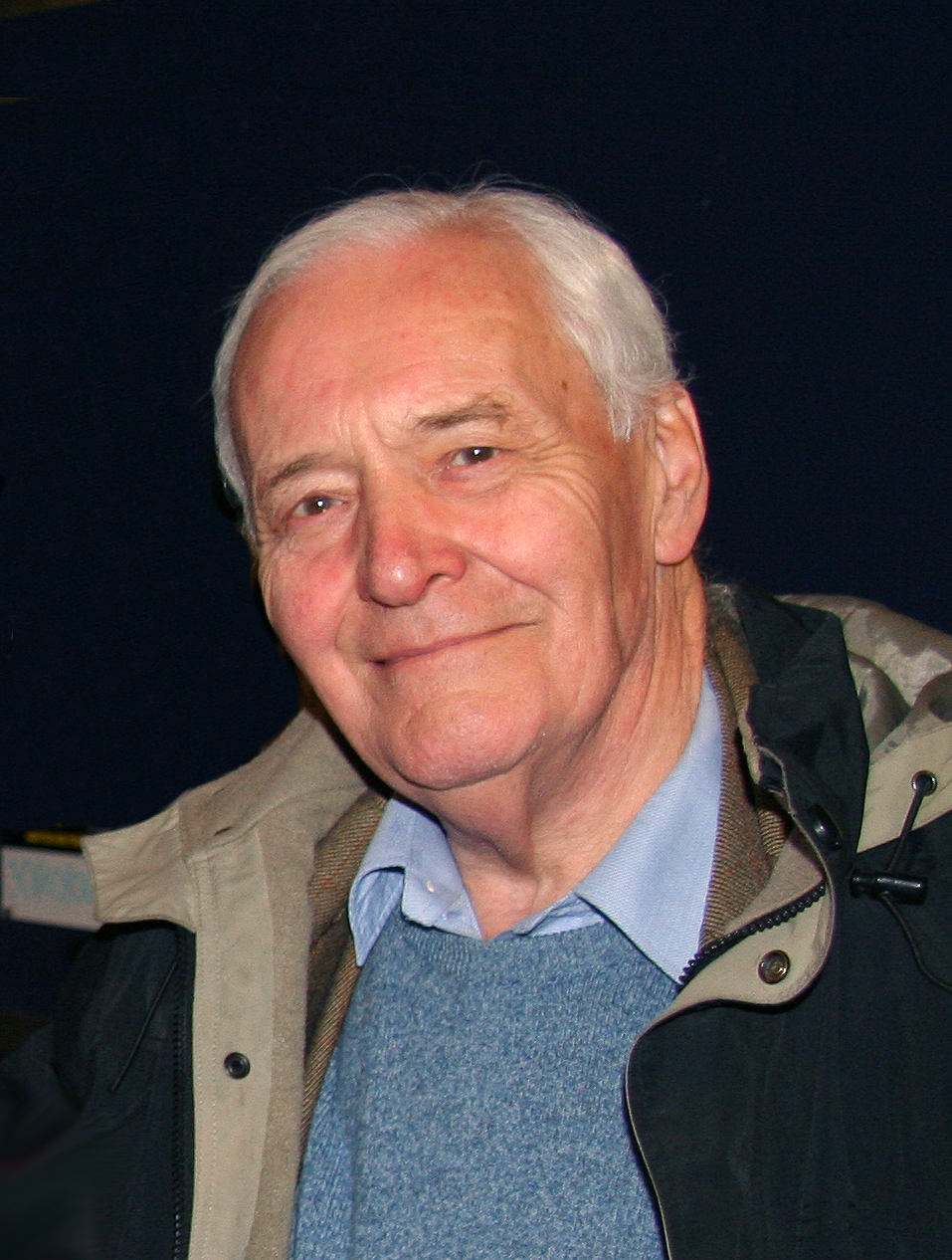
Anthony Neil Wedgwood Benn (3 April 1925 – 14 March 2014), known between 1960 and 1963 as The Viscount Stansgate, was a British Labour Party politician and political activist who served as a Cabinet minister in the 1960s and 1970s. He was the Member of Parliament (MP) for Bristol South East and Chesterfield for 47 of the 51 years between 1950 and 2001. He later served as President of the Stop the War Coalition from 2001 to 2014.

Key Information

The son of a Liberal and later Labour Party politician, Benn was born in Westminster and privately educated at Westminster School. He was elected for Bristol South East at the 1950 general election but on his father's death he inherited his peerage, which prevented him from continuing to serve as an MP. He fought to remain in the House of Commons and campaigned for the ability to renounce the title, a campaign which eventually succeeded with the Peerage Act 1963. He was an active member of the Fabian Society and served as chairman from 1964 to 1965. He served in Harold Wilson's Labour government, first as Postmaster General, where he oversaw the opening of the Post Office Tower, and later as Minister of Technology.

Benn served as Chairman of the National Executive Committee from 1971 to 1972 while in Opposition. In the Labour government of 1974–1979, he returned to the Cabinet as Secretary of State for Industry and subsequently served as Secretary of State for Energy. He retained that post when James Callaghan succeeded Wilson as Prime Minister. When the Labour Party was in opposition through the 1980s, he emerged as a prominent figure on the left wing of the party and unsuccessfully challenged Neil Kinnock for the Labour leadership in 1988. After leaving Parliament at the 2001 general election, Benn was President of the Stop the War Coalition until his death in 2014.

Benn was widely seen as a key proponent of democratic socialism and Christian socialism, though in regards to the latter he supported the United Kingdom becoming a secular state and ending the Church of England's status as an official church of the United Kingdom.[2][3] Originally considered a moderate within the party, he was identified as belonging to its left wing after leaving ministerial office. The terms Bennism and Bennite came into usage to describe the left-wing politics he espoused from the late 1970s and its adherents. He was an influence on the political views of Jeremy Corbyn, who was elected Leader of the Labour Party a year after Benn's death, and John McDonnell, who served as Shadow Chancellor of the Exchequer under Corbyn.

Early life and family

[edit]

Benn was born in Westminster, London, on 3 April 1925.[4][5] He had two brothers, Michael (1921–1944), who was killed in the Second World War and David (1928–2017), a specialist in Russia and Eastern Europe.[6] Following the Thames flood in January 1928 their house was uninhabitable so the Benn family moved to Scotland for over 12 months.[7] Their father, William Benn, was a Liberal Member of Parliament from 1906 who crossed the floor to the Labour Party in 1928 and was appointed Secretary of State for India by Ramsay MacDonald in 1929, a position he held until the Labour Party's landslide electoral defeat in 1931.[8]

William Benn was elevated to the House of Lords and given the title of Viscount Stansgate in 1942, the new wartime coalition government was short of working Labour peers in the upper house.[9] Tony Benn was subsequently titled with the honorific prefix, The Honourable. In 1945–1946, William Benn was the Secretary of State for Air in the first majority Labour Government.[10]

Benn's mother, Margaret Benn (née Holmes, 1897–1991), was a theologian, feminist and the founder President of the Congregational Federation. She was a member of the League of the Church Militant, which was the predecessor of the Movement for the Ordination of Women; in 1925, she was rebuked by Randall Davidson, the Archbishop of Canterbury, for advocating the ordination of women. His mother's theology had a profound influence on Benn, as she taught him that the stories in the Bible were mostly about the struggle between the prophets and the kings and that he ought in his life to support the prophets over the kings, who had power, as the prophets taught righteousness.[11]

Benn was for over 30 years a committed Christian.[12] He said that the teachings of Jesus Christ had a "radical political importance" on his life, and made a distinction between the historical Jesus as "a carpenter of Nazareth" who advocated social justice and egalitarianism and "the way in which he's presented by some religious authorities; by popes, archbishops and bishops who present Jesus as justification for their power", believing this to be a gross misunderstanding of the role of Jesus.[13] He believed that it was a "great mistake" to assume that the teachings of Christianity are outdated in modern Britain and Higgins wrote in The Benn Inheritance that Benn was "a socialist whose political commitment owes much more to the teaching of Jesus than the writing of Marx".[13][14] (Indeed, he did not read The Communist Manifesto until he was in his 50s.[15]) "The driving force of his life was Christian socialism," according to Peter Wilby, linking Benn to the "high-minded" founding roots of Labour.[15]

Later in his life, Benn emphasised morality and righteousness, as well as ethical principles of Nonconformism. On Desert Island Discs he said that he had been powerfully influenced by "what I would call the Dissenting tradition" (that is, the English Dissenters who left or were ejected from the established church, one of whom was his ancestor William Benn).[16] "I've never thought we can understand the world we lived in unless we understood the history of the church", Benn said to the Catholic Herald. "All political freedoms were won, first of all, through religious freedom. Some of the arguments about the control of the media today, which are very big arguments, are the arguments that would have been fought in the religious wars. You have the satellites coming in now—well, it is the multinational church all over again. That's why Mrs Thatcher pulled Britain out of UNESCO: she was not prepared, any more than Ronald Reagan was, to be part of an organisation that talked about a New World Information Order, people speaking to each other without the help of Murdoch or Maxwell."[17]

According to Wilby in the New Statesman, Benn "decided to do without the paraphernalia and doctrine of organised religion but not without the teachings of Jesus".[18] Although Benn became more agnostic as he became older, he was intrigued by the connexions between Christianity, radicalism and socialism.[19] Wilby also wrote in The Guardian that although former Chancellor Stafford Cripps described Benn as "as keen a Christian as I am myself", Benn wrote in 2005 that he was "a Christian agnostic" who believed "in Jesus the prophet, not Christ the king", specifically rejecting the label of "humanist".[20]

Both of Benn's grandfathers were Liberal Party MPs; his paternal grandfather was John Benn, a politician, MP for Tower Hamlets and later Devonport, who was created a baronet in 1914 (and who founded a publishing company, Benn Brothers) and his maternal grandfather was Daniel Holmes, MP for Glasgow Govan.[21][22] Benn's contact with leading politicians of the day dates back to his earliest years. He met the Prime Minister, Ramsay MacDonald, when he was five years old and described him as "A kindly old gentleman [who] leaned over me and offered me a chocolate biscuit. I've looked at Labour leaders in a funny way ever since".[23] Benn also met former Liberal Prime Minister David Lloyd George when he was 12 and later recalled that, while still a boy, he once shook hands with Mahatma Gandhi, in 1931, while his father was Secretary of State for India.[24]

During the Second World War, Benn joined and trained with the Home Guard from the age of 16, later recalling in a speech made in 2009, "I could use a bayonet, a rifle, a revolver, and if I'd seen a German officer having a meal I'd have tossed a grenade through the window. Would I have been a freedom fighter or a terrorist?"[25][26] In July 1943, Benn enlisted in the Royal Air Force as an aircraftsman 2nd Class.[27] His father and elder brother Michael (who was later killed in an accident) were already serving in the RAF. He was granted an emergency commission as a pilot officer (on probation) on 10 March 1945.[28] As a pilot officer, Benn served as a pilot in South Africa and Southern Rhodesia.[29] In June 1944, he made his first solo flight, at RAF Guinea Fowl, an RAF Elementary Flying Training School, in Southern Rhodesia.[30] The aircraft was a Canadian-built Fairchild Cornell. In a 1993 article recounting the experience, he said, "I always thought that I would feel a sense of panic when I saw the ground coming up at me on my first solo, but strangely enough I didn't feel anything but exhilaration ...".[31] He relinquished his commission with effect from 10 August 1945, three months after the war ended in Europe on 8 May and just days before the war with Japan ended on 2 September.[32]

Benn in 1947

After attending Eaton House day school near Sloane Square, Benn entered Westminster School, and studied at New College, Oxford, where he read Philosophy, politics and economics and was elected President of the Oxford Union in 1947.[33][34] In later life, Benn removed public references to his private education from Who's Who. In 1970 all references to Westminster School were removed,[35] and in the 1975 edition his entry stated: "Education—still in progress". In the 1976 edition, almost all details were omitted except his name, jobs as a Member of Parliament and as a Government Minister, and address; the publishers confirmed that Benn had sent back the draft entry with everything else struck through.[36] In the 1977 edition, Benn's entry disappeared entirely,[37] and when he returned to Who's Who in 1983, he was listed as "Tony Benn" and all references to his education or service record were removed.[35]

In 1972, Benn said in his diaries that "Today I had the idea that I would resign my Privy Councillorship, my MA and all my honorary doctorates in order to strip myself of what the world had to offer".[35] While he acknowledged that he "might be ridiculed" for doing so,[38] Benn said that "'Wedgie Benn' and 'the Rt Honourable Anthony Wedgwood Benn' and all that stuff is impossible. I have been Tony Benn in Bristol for a long time."[35] In October 1973, he announced on BBC Radio that he wished to be known as Mr. Tony Benn rather than Anthony Wedgwood Benn,[39] and his book Speeches from 1974 is credited to "Tony Benn".[40] Despite this name change, social historian Alwyn W. Turner writes: "Just as those with an agenda to pursue still call Muhammed Ali by his original name ... so most newspapers continued to refer to Tony Benn as Wedgwood Benn, or Wedgie in the case of the tabloids, for years to come."[35]

Benn met Caroline Middleton DeCamp (born 13 October 1926, Cincinnati, Ohio, United States) over tea at Worcester College, Oxford, in 1949; just nine days after meeting her, he proposed to her on a park bench in the city. Later, he bought the bench from Oxford City Council and installed it in the garden of their home in Holland Park. Tony and Caroline had four children—Stephen, Hilary, Melissa, a feminist writer, and Joshua—and 10 grandchildren. Caroline Benn died of cancer on 22 November 2000, aged 74, after a career as an educationalist.[41]

Two of Benn's children have been active in Labour Party politics. His eldest son Stephen was an elected Member of the Inner London Education Authority from 1986 to 1990. His second son Hilary was a councillor in London, stood for Parliament in 1983 and 1987, and became Labour MP for Leeds Central in 1999. He was Secretary of State for International Development from 2003 to 2007, and then Secretary of State for Environment, Food and Rural Affairs until 2010, later serving as Shadow Foreign Secretary (2015–16).[42] This makes him the third generation of his family to have been a member of the Cabinet, a rare distinction for a modern political family in Britain. Benn's granddaughter Emily Benn was the Labour Party's youngest-ever candidate[43] when she failed to win East Worthing and Shoreham in 2010.[44] Benn was a first cousin once removed of the actress Margaret Rutherford.[45]

Benn and his wife Caroline became vegetarian in 1970, for ethical reasons, and remained so for the rest of their lives. Benn cited the decision of his son Hilary to become vegetarian as an important factor in his own decision to adopt a vegetarian diet.[46][47][48]

Early parliamentary career

[edit]

Member of Parliament, 1950–1960

[edit]

Following the Second World War, Benn worked briefly as a BBC Radio producer. On 1 November 1950, he was selected to succeed Stafford Cripps as the Labour candidate for Bristol South East, after Cripps stood down because of ill-health. He won the seat in a by-election on 30 November 1950.[49] Anthony Crosland helped him get the seat as he was the MP for nearby South Gloucestershire at the time. Upon taking the oath on 4 December 1950[50] Benn became "Baby of the House", the youngest MP, for one day, being succeeded by Thomas Teevan, who was two years younger but took his oath a day later.[51] He became the "Baby" again in 1951, when Teevan was not re-elected. In the 1950s, Benn held middle-of-the-road or soft left views, and was not associated with the young left wing group around Aneurin Bevan.[52]

As MP for Bristol South East, Benn helped organise the 1963 Bristol Bus Boycott[53] against the colour bar of the Bristol Omnibus Company against employing black and Asian drivers. Benn said that he would "stay off the buses, even if I have to find a bike", and Labour leader Harold Wilson also told an anti-apartheid rally in London he was "glad that so many Bristolians are supporting the [boycott] campaign", adding that he "wish[ed] them every success".[54]

Peerage reform

[edit]

Benn's father was created Viscount Stansgate in 1942 when Winston Churchill increased the number of Labour peers to aid political work in the House of Lords; at this time, Benn's elder brother Michael, then serving in the RAF, was intending to enter the priesthood and had no objections to inheriting a peerage. However, Michael was later killed in an accident while on active service in the Second World War, and this left Benn as the heir-apparent to the peerage. He made several unsuccessful attempts to renounce the succession.[52]

In November 1960, Lord Stansgate died. Benn automatically became a peer, preventing him from sitting in the House of Commons. The Speaker of the Commons, Sir Harry Hylton-Foster, did not allow him to deliver a speech from the bar of the House of Commons in April 1961 when the by-election was being called.[55] Continuing to maintain his right to abandon his peerage, Benn fought to retain his seat in a by-election caused by his succession on 4 May 1961. Although he was disqualified from taking his seat, he was re-elected. An election court found that the voters were fully aware that Benn was disqualified, and declared the seat won by the Conservative runner-up, Malcolm St Clair, who was at the time also the heir presumptive to a peerage.[56]

Benn continued his campaign outside Parliament. Within two years, though, the Conservative Government of the time, which had members in the same or similar situation to Benn's (i.e., who were going to receive title, or who had already applied for writs of summons), changed the law.[57][58] The Peerage Act 1963, allowing lifetime disclaimer of peerages, became law shortly after 6 pm on 31 July 1963. Benn was the first peer to renounce his title, doing so at 6.22 pm that day.[59] St Clair, fulfilling a promise he had made at the time of his election, then accepted the office of Steward of the Manor of Northstead, disqualifying himself from the House (outright resignation not being possible). Benn returned to the Commons after winning a by-election on 20 August 1963.[52]

Benn was a supporter of abolishing the House of Lords.[60]

In government, 1964–1970

[edit]
Tony Benn during the official presentation of Concorde, 11 December 1967.

In the 1964 Government led by Harold Wilson, Benn was Postmaster General, where he oversaw the opening of the Post Office Tower, then the UK's tallest building, and the creations of the Post Bus service and Girobank. He proposed issuing stamps without the monarch's head, but this met with private opposition from Elizabeth II.[61] Instead, the portrait was reduced to a small profile in silhouette, a format that is still used on commemorative stamps.[62]

Benn also led the government's opposition to the "pirate" radio stations broadcasting from international waters, which he was aware would be an unpopular measure.[63] He claimed that some of these stations were causing interference to emergency radio used by shipping,[64] although he was not responsible for introducing the Marine Broadcasting Offences Bill when it came before Parliament at the end of July 1966 for its first reading.[65]

Earlier in the month, Benn was promoted to Minister of Technology, which included responsibility for the development of Concorde and the formation of International Computers Ltd. (ICL). The period also saw government involvement in industrial rationalisation, and the merger of several car companies to form British Leyland.[66] Following Conservative MP Enoch Powell's 1968 "Rivers of Blood" speech to a Conservative Association meeting, in opposition to Harold Wilson's insistence on not "stirring up the Powell issue",[67] Benn said during the 1970 general election campaign:

The flag of racialism which has been hoisted in Wolverhampton is beginning to look like the one that fluttered 25 years ago over Dachau and Belsen. If we do not speak up now against the filthy and obscene racialist propaganda ... the forces of hatred will mark up their first success and mobilise their first offensive...Enoch Powell has emerged as the real leader of the Conservative Party. He is a far stronger character than Mr. Heath. He speaks his mind; Heath does not. The final proof of Powell's power is that Heath dare not attack him publicly, even when he says things that disgust decent Conservatives.[67]

The mainstream press attacked Benn for using language deemed as intemperate as Powell's language in his "Rivers of Blood" speech (which was widely regarded as racist),[67] and Benn noted in his diary that "letters began pouring in on the Powell speech: 2:1 against me but some very sympathetic ones saying that my speech was overdue".[68] Harold Wilson later reprimanded Benn for this speech, accusing him of losing Labour seats in the 1970 general election.[69]

During the 1970s Benn publicly defended Marxism, saying:

The Communist Manifesto, and many other works of Marxist philosophy, have always profoundly influenced the British labour movement and the British Labour Party, and have strengthened our understanding and enriched our thinking. It would be as unthinkable to try to construct the Labour Party without Marx as it would be to establish university faculties of astronomy, anthropology or psychology without permitting the study of Copernicus, Darwin or Freud, and still expect such faculties to be taken seriously.[70][71]

Labour lost the 1970 election to Edward Heath's Conservatives and upon Heath's application to join the European Economic Community, a surge in left-wing Euroscepticism emerged.[72] Benn "was stridently against membership",[73] and campaigned in favour of a referendum on the UK's membership. The Shadow Cabinet voted to support a referendum on 29 March 1972, and as a result Roy Jenkins resigned as Deputy Leader of the Labour Party.[74]

In government, 1974–1979

[edit]

In the Labour Government of 1974, Benn was Secretary of State for Industry and as such increased nationalised industry pay, provided better terms and conditions for workers such as the Health and Safety at Work etc. Act 1974 and was involved in setting up worker cooperatives in firms which were struggling,[75] the best known being at Meriden, outside Coventry, producing Triumph Motorcycles. In 1975, he was appointed Secretary of State for Energy, immediately following his unsuccessful campaign for a "No" vote in the referendum on the UK's continued membership of the European Community (Common Market). Later in his diary, (25 October 1977) Benn wrote that he "loathed" the EEC; he claimed it was "bureaucratic and centralised" and "of course it is really dominated by Germany. All the Common Market countries except the UK have been occupied by Germany, and they have this mixed feeling of hatred and subservience towards the Germans".[76]

Harold Wilson resigned as Leader of the Labour Party and Prime Minister in March 1976. Benn later attributed the collapse of the Wilson government to cuts enforced on the UK by global capital, in particular the International Monetary Fund.[77] In the resulting leadership contest Benn finished in fourth place out of the six cabinet ministers who stood—he withdrew as 11.8 per cent of colleagues voted for him in the first ballot. Benn withdrew from the second ballot and endorsed Michael Foot; James Callaghan eventually won. Despite not receiving his support in the second and third rounds of the vote, Callaghan kept Benn on as Energy Secretary. In 1976, there was a sterling crisis, and Chancellor of the Exchequer Denis Healey sought a loan from the International Monetary Fund. Underlining a wish to counter international market forces which seemed to penalise a larger welfare state, Benn publicly circulated the divided Cabinet minutes in which a narrow majority of the Labour Cabinet under Ramsay MacDonald supported a cut in unemployment benefits in order to obtain a loan from American bankers. As he highlighted, these minutes resulted in the 1931 split of the Labour Party in which MacDonald and his allies formed a National Government with Conservatives and Liberals. Callaghan allowed Benn to put forward the Alternative Economic Strategy, which consisted of a self-sufficient economy less dependent on low-rate fresh borrowing, but the AES, which according to opponents would have led to a "siege economy", was rejected by the Cabinet.[78] In response, Benn later recalled that: "I retorted that their policy was a siege economy, only they had the bankers inside the castle with all our supporters left outside, whereas my policy would have our supporters in the castle with the bankers outside."[77] Benn blamed the Winter of Discontent on these cuts to socialist policies.[77]

Upon the death of Mao Zedong in 1976, Benn described Mao as "one of the greatest—if not the greatest—figures of the twentieth century: a schoolteacher who transformed China, released it from civil war and foreign attack and constructed a new society there" in his diaries, adding that "he certainly towers above any twentieth-century figure I can think of in his philosophical contribution and military genius".[79] On his trip to the Chinese embassy after Mao's death, Benn recorded in an earlier volume of his diaries that he was "a great admirer of Mao", while also admitting that "he made mistakes, because everybody does".[80]

During Benn's time as energy minister from 1975 to 1979 he supported nuclear power in the United Kingdom. Later in his life he became an opponent of nuclear power, attributing his time as running it as a minister to persuading him it was not cheap, safe or peaceful.[81][82] When asked in an interview in January 2009 on what he had changed his mind on over the course of his life he expanded on this issue by saying:

"Nuclear power, for example. In 1955 when Eisenhower said he was going for 'Atoms for Peace' I became a passionate supporter of it. Having been brought up on the Bible I liked the idea of swords into ploughshares. I advocated nuclear power as Minister of Technology. I was told, and believed, that nuclear power was cheap, safe and peaceful. Having been in charge of nuclear power I discovered it wasn't cheap, wasn't safe and when I left office I was told that during my period as Secretary of State for Energy, plutonium from our nuclear power stations went to the Pentagon to make nuclear weapons. So every nuclear power station in Britain is a bomb factory for America. I was utterly shaken by that. Nothing in the world would now induce me to support nuclear power. It was a mistake."[83]

Move to the left

[edit]

By the end of the 1970s, Benn's views had shifted to the left wing of the Labour Party. He attributed this political shift to his experience as a Cabinet Minister in the 1964–1970 Labour Government. Benn ascribed his move to the left to four lessons:

  1. How "the Civil Service can frustrate the policies and decisions of popularly elected governments"
  2. The centralised nature of the Labour Party which allowed the Leader to run "the Party almost as if it were his personal kingdom"
  3. "The power of industrialists and bankers to get their way by use of the crudest form of economic pressure, even blackmail, against a Labour Government"
  4. The power of the media, which "like the power of the medieval Church, ensures that events of the day are always presented from the point of the view of those who enjoy economic privilege"[84]

As regards the power of industrialists and bankers, Benn remarked:

Compared to this, the pressure brought to bear in industrial disputes by the unions is minuscule. This power was revealed even more clearly in 1976 when the International Monetary Fund secured cuts in our public expenditure. ... These [four] lessons led me to the conclusion that the UK is only superficially governed by MPs and the voters who elect them. Parliamentary democracy is, in truth, little more than a means of securing a periodical change in the management team, which is then allowed to preside over a system that remains in essence intact. If the British people were ever to ask themselves what power they truly enjoyed under our political system they would be amazed to discover how little it is, and some new Chartist agitation might be born and might quickly gather momentum.[85]

Benn's philosophy consisted of a form of syndicalism, state planning where necessary to ensure national competitiveness, greater democracy in the structures of the Labour Party and observance of Party Conference decisions.[86] Alongside an alleged 12 Labour MPs,[87] he spent 12 years affiliated with the Institute for Workers' Control, beginning in 1971 when he visited the Upper Clyde Shipyards, arguing in 1975 for the "labour movement to intensify its discussion about industrial democracy".[88]

He was vilified by most of the press while his opponents implied and stated that a Benn-led Labour Government would implement a type of Eastern European state socialism,[89] with Edward Heath referring to Benn as "Commissar Benn"[90] and others referring to Benn as a "Bollinger Bolshevik".[35] Despite this, Benn was overwhelmingly popular with Labour activists in the constituencies: a survey of delegates at the Labour Party Conference in 1978 found that by large margins they supported Benn for the leadership, as well as many Bennite policies.[91]

He publicly supported Sinn Féin and the unification of Ireland, although in 2005 he suggested to Sinn Féin leaders that it abandon its long-standing policy of not taking seats at Westminster (abstentionism). Sinn Féin in turn argued that to do so would recognise Britain's claim over Northern Ireland, and the Sinn Féin constitution prevented its elected members from taking their seats in any British-created institution.[92] A supporter of the Scottish Parliament and political devolution, Benn however opposed the Scottish National Party and Scottish independence, saying: "I think nationalism is a mistake. And I am half Scots and feel it would divide me in half with a knife. The thought that my mother would suddenly be a foreigner would upset me very much."[93]

In British politics during this period, the term "Bennism" came into use to describe the conviction politics, economic, social and political ideology of Tony Benn; and an exponent or advocate of Bennism was regarded as a "Bennite".[94][95][96]

In opposition, 1979–1997

[edit]
Benn speaks at the 5th National Convention of the Democratic Socialist Organizing Committee in Philadelphia, May 1981

In a keynote speech to the Labour Party Conference of 1980, shortly before the resignation of party leader James Callaghan and election of Michael Foot as successor, Benn outlined what he envisaged the next Labour Government would do. "Within days", a Labour Government would gain powers to nationalise industries, control capital and implement industrial democracy; "within weeks", all powers from Brussels would be returned to Westminster, and the House of Lords would be abolished by creating one thousand new peers and then abolishing the peerage. Benn received tumultuous applause.[97] On 25 January 1981, Roy Jenkins, David Owen, Shirley Williams and Bill Rodgers (known collectively as the "Gang of Four") launched the Council for Social Democracy, which became the Social Democratic Party in March. The "Gang of Four" left the Labour Party because of what they perceived to be the influence of the Militant tendency and the Bennite "hard left" within the party.[98][99] Benn was highly critical of the SDP, saying that "Britain has had SDP governments for the past 25 years."[100]

Benn speaking at the Glastonbury Festival in 2008

Benn stood against Denis Healey, the party's incumbent deputy leader, triggering the 1981 deputy leadership election, disregarding an appeal from Michael Foot to either stand for the leadership or abstain from inflaming the party's divisions. Benn defended his decision insisting that it was "not about personalities, but about policies". The result was announced on 27 September 1981; Healey retained his position by a margin of barely one per cent. The decision of several soft left MPs, including Neil Kinnock, to abstain triggered the split of the Socialist Campaign Group from the left of the Tribune Group.[1] After Argentina invaded the Falkland Islands in April 1982, Benn argued that the dispute should be settled by the United Nations and that the British Government should not send a task force to recapture the islands. The task force was sent, and following the Falklands War, they were back in British control by mid-June. In a debate in the Commons just after the Falklands were recaptured, Benn's demand for "a full analysis of the costs in life, equipment and money in this tragic and unnecessary war" was rejected by Margaret Thatcher, who stated that "he would not enjoy the freedom of speech that he put to such excellent use unless people had been prepared to fight for it".[101]

For the 1983 election Benn's Bristol South East constituency was abolished by boundary changes, and he lost to Michael Cocks in the selection of a candidate to stand in the new winnable seat of Bristol South. Rejecting offers from the new seat of Livingston in Scotland, Benn contested Bristol East, losing to the Conservative's Jonathan Sayeed in June 1983. Foot resigned as leader following the defeat which reduced Labour to only 209 MPs, while Healey also decided to step down as deputy leader. However Benn's absence from parliament meant that he was unable to stand in the resulting leadership contest as only MPs were eligible to be candidates.[102] Benn's absence from the contest was reported by The Glasgow Herald to leave Neil Kinnock as "the favourite Left-wing candidate".[102] Ultimately Kinnock won the contest, formally replacing Foot as party leader in October of that year.[103]

In a by-election, Benn was elected as the MP for Chesterfield, the next Labour seat to fall vacant, after Eric Varley had left the Commons to head Coalite. On the day of the by-election, 1 March 1984, The Sun newspaper ran a hostile feature article, "Benn on the Couch", which purported to be the opinions of an American psychiatrist.[104]

Newly elected to a mining seat, Benn was a supporter of the 1984–85 UK miners' strike, which was beginning when he returned to the Commons, and of his long-standing friend, the National Union of Mineworkers leader Arthur Scargill. However, some miners considered Benn's 1977 industry reforms to have caused problems during the strike; firstly, that they led to huge wage differences and distrust between miners of different regions; and secondly that the controversy over balloting miners for these reforms made it unclear as to whether a ballot was needed for a strike or whether it could be deemed as a "regional matter" in the same way that the 1977 reforms had been.[105][106] Benn also spoke at a Militant tendency rally held in 1984, saying: "The labour movement is not engaged in a personalised battle against individual cabinet ministers, nor do we seek to win public support by arguing that the crisis could be ended by the election of a new and more humane team of ministers who are better qualified to administer capitalism. We are working for a majority labour government, elected on a socialist programme, as decided by conference."[107]

In June 1985, three months after the miners admitted defeat and ended their strike, Benn introduced the Miners' Amnesty (General Pardon) Bill into the Commons, which would have extended an amnesty to all miners imprisoned during the strike. This would have included two men convicted of murder (later reduced to manslaughter) for the killing of David Wilkie, a taxi driver driving a non-striking miner to work in South Wales during the strike.[108]

Benn stood for election as party leader in 1988, against Neil Kinnock, following Labour's third successive defeat in the 1987 general election, losing by a substantial margin, and received only about 11 per cent of the vote. In May 1989 he made an extended appearance on Channel 4's late-night discussion programme After Dark, alongside among others Lord Dacre and Miles Copeland. During the Gulf War, Benn visited Baghdad in order to try to persuade Saddam Hussein to release the hostages who had been captured.[109]

Benn supported various LGBT social movements, which were then known as gay liberation;[110] Benn had voted in favour of decriminalisation in 1967.[111] Talking about Section 28 of the Local Government Act 1988, a piece of anti-gay legislation preventing the "promotion of homosexuality", Benn said:

if the sense of the word "promote" can be read across from "describe", every murder play promotes murder, every war play promotes war, every drama involving the eternal triangle promotes adultery; and Mr. Richard Branson's condom campaign promotes fornication. The House had better be very careful before it gives to judges, who come from a narrow section of society, the power to interpret "promote".[111]

Benn later voted for the repeal of Section 28 during the first term of Tony Blair's New Labour Government, and voted in favour of equalising the age of consent.[111]

In 1990, he proposed a "Margaret Thatcher (Global Repeal) Bill", which he said "could go through both Houses in 24 hours. It would be easy to reverse the policies and replace the personalities—the process has begun—but the rotten values that have been propagated from the platform of political power in Britain during the past 10 years will be an infection—a virulent strain of right-wing capitalist thinking which it will take time to overcome."[112]

In 1991, with Labour still in opposition and a general election due by June 1992, he proposed the Commonwealth of Britain Bill, abolishing the monarchy in favour of the United Kingdom becoming a "democratic, federal and secular commonwealth", a republic with a written constitution. It was read in Parliament a number of times until his retirement at the 2001 election, but never achieved a second reading.[113] He presented an account of his proposal in Common Sense: A New Constitution for Britain.[114]

The bill included the following:

In the same year, Benn also received a Pipe Smoker of the Year award, claiming in his acceptance speech that "pipe smoking stopped you going to war".[116]

In 1991, Benn reiterated his opposition to the European Commission and highlighted an alleged democratic deficit in the institution, saying: "Some people genuinely believe that we shall never get social justice from the British Government, but we shall get it from Jacques Delors. They believe that a good king is better than a bad Parliament. I have never taken that view."[117][118] This argument has also been used by many on the right-wing Eurosceptic wing of the Conservative Party, such as Daniel Hannan MEP.[119] Jonathan Freedland writes in The Guardian: "For [Tony Benn], even benign rule by a monarch was worthless because the king's whim could change and there'd be nothing you could do about it."[120]

Prior to retirement, 1997–2001

[edit]

In 1997, the Labour Party under the leadership of Tony Blair won the general election in a landslide, after 18 years of Conservative Party rule. Despite later calling Labour under Blair "the idea of a Conservative group who had taken over Labour"[121] and saying that "[Blair] set up a new political party, New Labour",[122] his political diaries Free at Last show that Benn was initially somewhat sympathetic to Blair, welcoming a change of government. Benn supported the introduction of the national minimum wage, and welcomed the progress towards peace and security in Northern Ireland (particularly under Mo Mowlam). He was supportive of the extra money given to public services in the New Labour years but believed it to be under the guise of privatisation. Overall, his concluding judgement on New Labour is highly critical; he describes its evolution as a way of retaining office by abandoning socialism and distancing the party from the trade union movement,[123] adopting a presidentialist style of politics, overriding the concept of the collective ministerial responsibility by reducing the power of the Cabinet, eliminated any effective influence from the annual conference of the Labour Party and "hinged its foreign policy on support for one of the worst presidents in US history".[124]

Benn strongly objected to the bombing of Iraq in December 1998,[125] calling it immoral and saying: "Aren't Arabs terrified? Aren't Iraqis terrified? Don't Arab and Iraqi women weep when their children die? Doesn't bombing strengthen their determination? ... Every Member of Parliament tonight who votes for the government motion will be consciously and deliberately accepting the responsibility for the deaths of innocent people if the war begins, as I fear it will."[126] Benn also opposed the 1999 NATO bombing of Yugoslavia.[127]

Several months prior to his retirement, Benn was a signatory to a letter, alongside Niki Adams (Legal Action for Women), Ian Macdonald, Gareth Peirce, and other legal professionals, that was published in The Guardian newspaper on 22 February 2001 condemning raids of more than 50 brothels in the central London area of Soho. At the time, a police spokesman said: "As far as we know, this is the biggest simultaneous crackdown on brothels and prostitution in this country in recent times", the arrest of 28 people in an operation that involved around 110 police officers.[128] The letter read:

In the name of "protecting" women from trafficking, about 40 women, including a woman from Iraq, were arrested, detained and in some cases summarily removed from Britain. If any of these women have been trafficked ... they deserve protection and resources, not punishment by expulsion. ... Having forced women into destitution, the government first criminalised those who begged. Now it is trying to use prostitution as a way to make deportation of the vulnerable more acceptable. We will not allow such injustice to go unchallenged.[129]

Retirement and final years, 2001–2014

[edit]
Benn about to join the March 2005 anti-war demonstration in London

Benn chose not to seek re-election at the 2001 general election, saying he was "leaving parliament in order to spend more time on politics."[130] Along with former Prime Minister Edward Heath, Benn was permitted by the Speaker to continue using the House of Commons Library and Members' refreshment facilities. Shortly after his retirement, he became the President of the Stop the War Coalition.[109] He became a leading figure of the British opposition to the War in Afghanistan from 2001 and the Iraq War, and in February 2003 he travelled to Baghdad to meet Saddam Hussein. The interview was broadcast on British television.[131]

He spoke against the war at the February 2003 protest in London organised by the Stop the War Coalition, with police saying it was the biggest ever demonstration in the UK with about 750,000 marchers, and the organisers estimating nearly a million people participating.[132] In February 2004 and 2008, he was re-elected President of the Stop the War Coalition.[133]

He toured with a one-man stage show and appeared a few times each year in a two-man show with folk singer Roy Bailey. In 2003, his show with Bailey was voted 'Best Live Act' at the BBC Radio 2 Folk Awards.[134][135] In 2002, he opened the "Left Field" stage at the Glastonbury Festival. He continued to speak at each subsequent festival; attending one of his speeches was described as a "Glastonbury rite of passage".[136] In October 2003, he was a guest of British Airways on the last scheduled Concorde flight from New York to London. In June 2005, he was a panellist on a special edition of BBC One's Question Time edited entirely by a school-age film crew selected by a BBC competition.[137]

On 21 June 2005, Benn presented a programme on democracy as part of the Channel 5 series Big Ideas That Changed The World. He presented a left-wing view of democracy as the means to pass power from the "wallet to the ballot". He argued that traditional social democratic values were under threat in an increasingly globalised world in which powerful institutions such as the International Monetary Fund, the World Bank and the European Commission are unelected and unaccountable to those whose lives they affect daily.[138]

Tony Benn and Giles Fraser speaking at Levellers' Day, Burford, 17 May 2008

On 27 September 2005, Benn became ill while attending the annual Labour Party Conference in Brighton and was taken by ambulance to the Royal Sussex County Hospital after being treated by paramedics on-the-scene at the Brighton Centre. Benn reportedly fell and struck his head. He was kept in hospital for observation and was described as being in a "comfortable condition".[139] He was subsequently fitted with an artificial pacemaker to help regulate his heartbeat.[140]

In a list compiled by the magazine New Statesman in 2006, he was voted twelfth in the list of "Heroes of our Time". In September 2006, Benn joined the "Time to Go" demonstration in Manchester the day before the final Labour Party Conference with Tony Blair as Leader of the Labour Party, with the aim of persuading the Government to withdraw troops from Iraq, to refrain from attacking Iran and to reject replacing the Trident missile and submarines with a new system. He spoke to the demonstrators in the rally afterwards.[141] In 2007, he appeared in an extended segment in the Michael Moore film Sicko giving comments about democracy, social responsibility and healthcare, saying "If we can find the money to kill people, we can find the money to help people."[142] A poll by the BBC Two The Daily Politics programme in January 2007 selected Benn as the UK's "Political Hero" with 38% of the vote, narrowly defeating Margaret Thatcher, who had 35%.[143]

For the 2007 Labour Party leadership election, Benn backed the left-wing MP John McDonnell in his unsuccessful bid. In September 2007, Benn called for the government to hold a referendum on the EU Reform Treaty.[144] In October 2007, aged 82, and when it appeared that a general election was about to be held, Benn reportedly announced that he wanted to stand, having written to his local Constituency Labour Party offering himself as a prospective candidate for the newly drawn Kensington seat. His main opponent would have been the incumbent Conservative MP for the predecessor seat of Kensington and Chelsea, Malcolm Rifkind.[145][146] However, there was no election held in 2007, and so the boundary changes did not take effect until the eventual election in 2010, when Benn was not a candidate and the new seat was won by Rifkind.

Benn on the cover of Dartford Living, September 2009

In early 2008, Benn appeared on Scottish singer-songwriter Colin MacIntyre's album The Water, reading a poem he had written himself.[147][148] In September 2008, he appeared on the DVD release for the Doctor Who story The War Machines with a vignette discussing the Post Office Tower; he became the second Labour politician, after Roy Hattersley to appear on a Doctor Who DVD.[149]

At the Stop the War Conference 2009, he described the wars in Iraq and Afghanistan as "Imperialist war(s)" and discussed the killing of American and allied troops by Iraqi or foreign insurgents, questioning whether they were in fact freedom fighters, and comparing the insurgents to a British Dad's Army, saying: "If you are invaded you have a right to self-defence, and this idea that people in Iraq and Afghanistan who are resisting the invasion are militant Muslim extremists is a complete bloody lie. I joined Dad's Army when I was sixteen, and if the Germans had arrived, I tell you, I could use a bayonet, a rifle, a revolver, and if I'd seen a German officer having a meal I'd have tossed a grenade through the window. Would I have been a freedom fighter or a terrorist?"[25]

In an interview published in Dartford Living in September 2009, Benn was critical of the Government's decision to delay the findings of the Iraq Inquiry until after the general election, stating that "people can take into account what the inquiry has reported on but they've deliberately pushed it beyond the election. Government is responsible for explaining what it has done and I don't think we were told the truth."[150] He also stated that local government was strangled by Margaret Thatcher and had not been liberated by New Labour.[150]

In 2009, Benn was admitted to hospital and An Evening with Tony Benn, scheduled to take place at London's Cadogan Hall, was cancelled. He performed his show, The Writing on the Wall, with Roy Bailey at St Mary's Church, Ashford, Kent, in September 2011, as part of the arts venue's first Revelation St. Mary's Season.[151] In July 2011 Benn was awarded an honorary doctorate from the University of Glamorgan, Wales.[152]

Tony Benn speaking at the Tolpuddle Martyrs' Festival and Rally 2012

Benn headed the "coalition of resistance", a group which was opposed to the UK austerity programme.[153][154] In interviews in 2010 with Amy Goodman on Democracy Now! and 2013 with Afshin Rattansi on RT UK, Benn claimed that the actions of New Labour in the leadup to and aftermath of the Iraq War were such that the former Prime Minister Tony Blair should be tried for war crimes.[155][156] Benn also claimed in 2010 that Blair had lost the "trust of the nation" regarding the war in Iraq.[157]

In 2012, Benn was awarded an honorary degree from Goldsmiths, University of London. He was also the honorary president of the Goldsmiths Students' Union, who successfully campaigned for him to retract comments dismissing the Julian Assange rape allegations.[158][159] In February 2013, Benn was among those who gave their support to the People's Assembly in a letter published by The Guardian newspaper.[160] He gave a speech at the People's Assembly Conference held at Westminster Central Hall on 22 June 2013.

Benn was consistently one of the most vocal critics of British membership of the European Union in Parliament, citing the EU's "democratic deficit" as a main point of contempt.[161] In 2013, Benn reiterated his previous opposition to European integration. Speaking to the Oxford Union on the alleged overshadowing of the EU debate by "UKIP and Tory backbenchers", he said:

I took the view that having fought [Europeans in the Second World War] that we should now work with them, and co-operate, and that was my first thought about it. Then how I saw how the European Union was developing, it was very obvious that what they had in mind was not democratic. ... And the way that Europe has developed is that the bankers and the multinational corporations have got very powerful positions, and if you come in on their terms, they will tell you what you can and cannot do. And that is unacceptable. My view about the European Union has always been not that I am hostile to foreigners, but that I am in favour of democracy ... I think they're building an empire there, they want us to be a part of their empire and I don't want that.[162]

Illness and death

[edit]

In 1990, Benn was diagnosed with chronic lymphatic leukaemia and given three or four years to live; at this time, he kept the news of his leukaemia from everyone except his immediate family. Benn said: "When you're in parliament, you can't describe your medical condition. People immediately start wondering what your majority is and when there will be a by-election. They're very brutal."[163] This was revealed in 2002 with the release of his 1990–2001 diaries.[163]

Benn had a stroke in 2012, and spent much of the following year in hospital.[164] He was reported to be "seriously ill" in hospital in February 2014.[165] Benn died at home on 14 March 2014, surrounded by his family, at the age of 88.[166]

Benn's funeral took place on 27 March 2014 at St Margaret's Church, Westminster.[167][168] His body had lain in rest at St Mary Undercroft in the Palace of Westminster the night before the funeral service.[169] The service ended with the singing of "The Red Flag".[170] His body was then cremated; the ashes were expected to be buried alongside those of his wife at the family home near Steeple, Essex.[171]

Figures from across the political spectrum praised Benn following his death,[172][173] and the leaders of all three major political parties (the Conservatives, Labour and the Liberal Democrats) in the United Kingdom paid tribute.

Conservative leader and Prime Minister David Cameron said:

... he was an extraordinary man: a great writer, a brilliant speaker, extraordinary in Parliament, and a great life of public and political and parliamentary service. I mean, I disagreed with most of what he said. But he was always engaging and interesting, and you were never bored when reading or listening to him, and the country a great campaigner, a great writer, and someone who I'm sure whose words will be followed keenly for many, many years to come.[174][175]

Deputy Prime Minister, Nick Clegg called Benn an "astonishing, iconic figure" and a "veteran parliamentarian, he was a great writer, he had great warmth and he had great conviction ... his political life will be looked back on with affection and admiration".[175]

Leader of the Opposition and Labour leader Ed Miliband, who knew Benn personally as a family friend, said:

I think Tony Benn will be remembered as a champion of the powerless, as a conviction politician, as somebody of deep principle and integrity. The thing about Tony Benn is that you always knew what he stood for, and who he stood up for. And I think that's why he was admired right across the political spectrum. There are people who agreed with him and disagreed with him, including in my own party, but I think people admired that sense of conviction and integrity that shone through from Tony Benn.[174][175]

Personal life

[edit]

Benn was a lifelong teetotaler and a vegetarian.[176] He was known for his "fondness for a mug of tea and a pipe",[177] and Benn himself jokingly said that throughout his life he had drunk enough tea to "float the QE2".[178] In 2003, he participated in the Royal Society of Chemistry's tasting event on how to make a cup of tea.[179]

Diaries and biographies

[edit]
External videos
video icon Interview with Benn on his diaries, July 13, 1994, C-SPAN

Benn was a prolific diarist.[180] Nine volumes of his diaries have been published. The final volume was published in 2013.[181] Collections of his speeches and writings were published as Arguments for Socialism (1979), Arguments for Democracy (1981), (both edited by Chris Mullin), Fighting Back (1988) and (with Andrew Hood) Common Sense (1993), as well as Free Radical: New Century Essays (2004). In August 2003, London DJ Charles Bailey created an album of Benn's speeches (ISBN 1-904734-03-0) set to ambient groove.

He made public several episodes of audio diaries he made during his time in Parliament and after retirement, entitled The Benn Tapes, broadcast originally on BBC Radio 4. Short series have been played periodically on BBC Radio 4 Extra.[182] A major biography was written by Jad Adams and published by Macmillan in 1992; it was updated to cover the intervening 20 years and reissued by Biteback Publishing in 2011: Tony Benn: A Biography (ISBN 0-333-52558-2). A more recent "semi-authorised" biography with a foreword by Benn was published in 2001: David Powell, Tony Benn: A Political Life, Continuum Books (ISBN 978-0826464156). An autobiography, Dare to be a Daniel: Then and Now, Hutchinson (ISBN 978-0099471530), a reference to the Old Testament prophet in the lions' den, was published in 2004.[183]

There are substantial essays on Benn in the Dictionary of Labour Biography by Phillip Whitehead, Greg Rosen (eds), Politicos Publishing, 2001 (ISBN 978-1902301181) and in Labour Forces: From Ernie Bevin to Gordon Brown, Kevin Jefferys (ed.), I.B. Tauris Publishing, 2002 (ISBN 978-1860647437). American Michael Moore dedicates his book Mike's Election Guide 2008 (ISBN 978-0141039817) to Benn, with the words: "For Tony Benn, keep teaching us".[184]

On 5 March 2019, it was announced that a large political archive of Benn's speeches, diaries, letters, pamphlets, recordings and ephemera had been accepted in lieu of £210,000 inheritance tax and allocated to the British Library. The audio recordings total to thousands of hours of content.[185]

Plaques

[edit]

During his final years in Parliament, Benn placed three plaques within the Houses of Parliament. Two are in a room between the Central Lobby and Strangers' Gallery that holds a permanent display about the suffragettes.[186] The first was placed in 1995. The second was placed in 1996 and is dedicated to all who work within the Houses of Parliament.

The third is dedicated to Emily Wilding Davison, who died for the cause of "Votes for women", and was placed in the broom cupboard next to the Undercroft Chapel, where Davison is said to have hidden during the night of the 1911 census in order to establish her address as the House of Commons.[187][188]

In 2011, Benn unveiled a plaque in Highbury, North London, to commemorate the Peasants' Revolt of 1381.[189]

Legacy

[edit]

In Bristol, where Benn first served as a member of parliament, a number of tributes exist in his honour. A bust of him was unveiled in Bristol's City Hall in 2005.[190][191] In 2012 Transport House on Victoria Street, headquarters of Unite the Union's regional office, was officially renamed Tony Benn House and opened by Benn himself.[192] As of 2015 he appears, alongside other famous people associated with the city, on the reverse of the Bristol pound's £B5 banknote.[193]

Benn told the Socialist Review in 2007:

I'd like to have on my gravestone: "He encouraged us." I'm proud to have been in the parliament that introduced the health service, the welfare state and voted against means testing. I did my maiden speech on nationalising the steel industry, put down the first motion for the boycott of South African goods, and resigned from the shadow cabinet in 1958 because of their support for nuclear weapons.

I think you do plant a few acorns, and I have lived to see one or two trees growing: gay rights, freedom of information, CND. I'm not claiming them for myself but you feel you have encouraged other people and see the arguments developing.

I'm not ashamed of making mistakes. I've made a million mistakes and they're all in the diary. When we edit the diary—which is cut to around 10 per cent—every mistake has to be printed because people look to see if you do. I would be ashamed if I thought I'd ever said anything I didn't believe to get on, but making mistakes is part of life, isn't it?[194]

Benn was widely seen as a key proponent of democratic socialism.[195] He was described as "one of the few UK politicians to have become more left-wing after holding ministerial office".[196] Harold Wilson, his former boss, maintained that Benn was the only man he knew who "immatures with age".[197]

He has been cited as being a key mentor to future leader of the Labour Party Jeremy Corbyn, with his Shadow Chancellor John McDonnell commenting that "they would discuss everything under the sun. Jeremy was very close to Tony right up until the end."[198] Corbyn was elected as leader of the Labour Party a little over a year after Benn's death, an act which Hilary Benn said would have made his father feel "thrilled".[199]

Styles and arms

[edit]
  • Anthony Wedgwood Benn, Esq. (1925 – 12 January 1942)
  • The Hon. Anthony Wedgwood Benn (12 January 1942 – 30 November 1950)
  • The Hon. Anthony Wedgwood Benn, MP (30 November 1950 – 17 November 1960)
  • The Rt Hon. The Viscount Stansgate (17 November 1960 – 31 July 1963)
  • Anthony Wedgwood Benn, Esq. (31 July – 20 August 1963)
  • Anthony Wedgwood Benn, Esq., MP (20 August 1963 – 1964)
  • The Rt Hon. Anthony Wedgwood Benn, MP (1964 – October 1973)
  • The Rt Hon. Tony Benn, MP (October 1973 – 9 June 1983)
  • The Rt Hon. Tony Benn (9 June 1983 – 1 March 1984)
  • The Rt Hon. Tony Benn, MP (1 March 1984 – 14 May 2001)
  • The Rt Hon. Tony Benn (14 May 2001 – 14 March 2014)

Arms

[edit]
Coat of arms of Tony Benn
Notes
The arms shown with the coronet of a viscount, as borne by Benn between 1960 and 1963.
Coronet
that of a viscount
Escutcheon
Argent two Barrulets Gules between in chief as many Dragons' Heads erased and in base a Pencil and Pen in saltire proper tied with a Lace Azure pendent therefrom a Torteau charged with Figures "1914".

Bibliography

[edit]

See also

[edit]

References

[edit]
[edit]
Revisions and contributorsEdit on WikipediaRead on Wikipedia
from Grokipedia
Anthony Neil Wedgwood Benn (3 April 1925 – 14 March 2014), commonly known as Tony Benn, was a British Labour Party politician, cabinet minister, and diarist who renounced his hereditary viscountcy under the to retain his seat in the . Born into a politically active family, Benn served as a pilot during , studied at Oxford University, and was first elected as for South East in a 1950 , beginning a parliamentary career that lasted until 2001. Benn held several senior government roles under prime ministers and , including from 1964 to 1966, where he oversaw the introduction of the world's first system and the sale of premium bonds; Minister of Technology from 1966 to 1970, promoting industrial innovation such as the supersonic airliner; and for Energy from 1975 to 1979, during which he advocated for public ownership of resources. Over time, Benn shifted toward more radical positions within the Labour Party, emerging as a prominent advocate for , of industry, unilateral , and withdrawal from the , positions that positioned him as a key figure in the party's left wing during the 1970s and 1980s. His career was defined by extensive diary-writing, spanning over 50 years and published in multiple volumes, offering detailed accounts of Labour's internal debates, government decisions, and personal reflections that revealed tensions between moderate and militant factions. Benn's challenges to party leadership, including unsuccessful bids for deputy leadership in 1981, and his support for trade union actions like the 1984–1985 miners' strike, fueled controversies and contributed to Labour's electoral defeats, with critics viewing his influence as exacerbating the party's ideological divisions. Despite this, his commitment to grassroots activism and principled stands, such as renouncing aristocratic privilege for elected office, cemented his legacy as a polarizing yet enduring voice for socialist ideals in British politics.

Early Life and Entry into Politics

Family Background and Education

Anthony Neil Wedgwood Benn was born on 3 April 1925 in to William Wedgwood Benn, a politician who began his career as a Liberal MP before switching to Labour, serving as (1929–1931) and for Air (1940–1942), and who was elevated to the as 1st in 1942, and Margaret Eadie Holmes, a theologian and early advocate for the in the . The Benn family maintained a tradition of public service and politics dating to the late , with Benn's paternal grandfather, , and maternal grandfather, Daniel Holmes, both having served as Liberal MPs; this environment immersed Benn in political discourse from childhood. He had one older brother, Michael Julius Wedgwood Benn (1921–1944), an RAF pilot killed in action during the Normandy campaign in . Benn attended , a leading independent boys' day school in , where he developed an interest in politics and journalism. In 1943, at age 18, he deferred university to enlist in the Royal Air Force, training as a pilot in and serving until 1945 without combat deployment. He then matriculated at , to read (PPE), a degree he completed in 1948; during his time there, he edited the student magazine and was elected president of the in 1947, honing skills in public speaking and debate.

Inheritance of Peerage and Renunciation Efforts

Upon the death of his father, William Wedgwood Benn, 1st , on 17 November 1960, Anthony Wedgwood Benn automatically inherited the hereditary as 2nd , which disqualified him from continuing to sit as for South East, a he had held since 1950. Under existing law, hereditary peers were barred from the , prompting Benn to immediately attempt of the title, though no legal mechanism existed at the time to permit such action. Benn launched a sustained campaign for legislative reform, introducing private member's bills in 1961 and 1962 to enable peers to disclaim their titles, but both failed due to insufficient parliamentary support amid broader debates on reform. His efforts gained traction following the 1960 precedent and aligned with growing calls to modernize the peerage system, culminating in the government's introduction of the Peerage Bill in late 1962, which evolved into the after amendments, including provisions for female hereditary peers to enter the Lords. The Peerage Act received on 31 July 1963, allowing for lifetime renunciation of peerages within one year of inheritance or succession, and Benn became the first individual to exercise this right, formally disclaiming the viscountcy just 22 minutes after the Act took effect. This enabled his return to the via a in South East on 20 August 1963, where he won with a majority of 13,448 votes. The renunciation was for Benn's lifetime only, preserving the title's potential succession to his , as occurred upon his death in 2014 when his eldest son, Stephen Benn, became 3rd .

First Election to Parliament

Tony Benn, then aged 25, was selected as the Labour Party candidate for the Bristol South East by-election, triggered by the resignation of the incumbent MP, Sir Stafford Cripps, who stepped down as Chancellor of the Exchequer and from his parliamentary seat in October 1950 due to terminal illness. The by-election occurred amid the post-war Labour government under Clement Attlee, with the constituency having been a safe Labour seat under Cripps since 1935. The contest took place on 30 November 1950, and Benn won decisively, holding the seat for Labour against the Conservative challenger. This victory represented a generational continuation of his family's political involvement, as Benn became the third member of his lineage to enter the , following his father William Wedgwood Benn and grandfather Sir John Benn. Benn took his seat on 4 December 1950, entering as its youngest member and beginning a tenure that would last until his disqualification upon inheriting his father's hereditary a decade later.

Parliamentary Career and Government Roles

Early Moderation as MP, 1950–1964

Benn entered as the Labour MP for Bristol South East following a on 30 November 1950, triggered by the retirement of due to illness; he took his seat on 4 December 1950 as the youngest member of the Commons at age 25. During the brief Labour of 1950–1951, he held no ministerial position but focused on constituency work and parliamentary contributions informed by his background as a pilot and producer. After the Labour defeat in the 1951 general election, Benn remained in opposition for the next decade, where his positions aligned with the party's moderate wing rather than the more ideological Bevanites led by . He declined to join Bevanite groups, emphasizing practical modernization over factional disputes, and in the 1955 Labour leadership contest supported , the centrist candidate, against Bevan. Viewed as a technocrat prioritizing expertise in areas like and over doctrinal , Benn contributed to debates on technological policy and , reflecting a pragmatic approach uncharacteristic of his later radicalism. In 1957, he was appointed a frontbench opposition spokesman on the RAF, leveraging his wartime service to critique government defense procurement without opposing multilateral alliances like . Benn's tenure was interrupted in November 1960 upon succeeding to the Viscount Stansgate peerage following his father's death, disqualifying him from the Commons under existing law. Campaigning for reform, he supported the private member's Peerage Bill, which evolved into the Peerage Act 1963 permitting renunciation of hereditary titles; he disclaimed the peerage on 6 March 1963 and won the resulting by-election for Bristol South East on 20 August 1963 with a reduced majority of 8,000 votes amid controversy over the vacancy's legality. Upon his return, Benn maintained his moderate profile, advocating for efficient public services and technological advancement in speeches on post-war reconstruction, until Labour's victory in the October 1964 general election elevated him to government.

Ministerial Positions under Wilson, 1964–1970

Following the Labour Party's narrow victory in the October 1964 general election, Tony Benn was appointed , a non-Cabinet position responsible for postal services and telecommunications. In this role, he oversaw the public opening of the Tower—then Britain's tallest structure at 620 feet—on 19 May 1966, symbolizing technological progress in communications infrastructure. Benn also spearheaded efforts to curb unauthorized offshore "pirate" radio stations, which broadcast popular music outside control, by introducing the Marine Broadcasting Offences Act; the legislation received on 15 August 1967, criminalizing supply and advertisement to such stations. After Labour's increased majority in the March 1966 general election, Benn was promoted to Minister of Technology on 1 July 1966, entering the Cabinet with oversight of key industrial sectors including , computers, and . The ministry aimed to foster amid economic challenges, absorbing functions from the Ministry of . A prominent initiative under Benn was continued support for the Anglo-French supersonic passenger jet, a treaty project facing cost overruns; he represented Britain at its official presentation on 11 December 1967 in and advocated persistence for national prestige, technological leadership, and employment in his Bristol constituency where components were manufactured. Additionally, Benn backed the 1968 merger of and to form , intended to create a competitive national automobile champion against foreign rivals. He held the post until Labour's defeat in the June 1970 general election.

Shift to Radicalism and Return to Government, 1970–1979

Following the Labour Party's defeat in the June 1970 general election, Benn lost his position as Minister of Technology and entered opposition, during which he gravitated toward the party's left wing, emphasizing and . This shift was influenced by industrial disputes, including his support for the work-in that began in July 1971, where he advocated preserving jobs through public ownership rather than closures proposed by the Conservative government. Benn participated in marches and negotiations with union leaders like , arguing that the dispute exemplified the need for state intervention to counter corporate rationalization. In opposition, Benn also emerged as a leading critic of British entry into the (EEC), viewing it as an undemocratic supranational entity that would constrain socialist policies. On 28 October 1971, he voted against the European Communities Bill, joining 68 other Labour MPs in rebellion against the , which contributed to the bill's narrow passage by 356 to 244. He served as Chairman of the Labour Party's National Executive Committee from 1971 to 1972, using the role to promote left-wing resolutions on and party . Labour's return to power in the February 1974 election saw Benn reappointed to government as for Industry on 5 March 1974, tasked with implementing the commitments to extend public ownership and industrial participation. In this role until June 1975, he pursued planning agreements with 25 major firms to involve workers and government in , while overseeing nationalizations such as the full takeover of in 1975 and advancing proposals for and under the eventual 1977 Aircraft and Industries Act. These efforts clashed with Harold Wilson's preference for moderation, as Benn pressed for rapid state control to avert closures and secure employment, exemplified by his on industrial strategy released in June 1974. Amid intra-cabinet divisions, Benn campaigned vigorously for a "No" vote in the June 1975 EEC referendum, arguing in public letters and debates that continued membership would subordinate British sovereignty to unaccountable institutions, hindering and policies. The 67% "Yes" majority led to perceptions of his isolation, prompting his transfer to for in a July 1975 reshuffle interpreted as a demotion by Wilson. In this post until May 1979, Benn established the British National Oil Corporation via the 1975 Petroleum and Submarine Pipe-lines Act, aiming to secure state participation in revenues—reaching 51% stakes in key fields—to fund social programs rather than private profit. He also defended industry subsidies against market pressures and resisted rapid nuclear expansion, prioritizing through public ownership amid the oil crises. Labour's 1979 loss ended his ministerial tenure, amid ongoing tensions over his advocacy for uncompromised .

Key Policy Initiatives in Industry and Energy

As Minister of Technology from October 1966 to June 1970, Tony Benn pursued an industrial strategy emphasizing state support for advanced sectors to enhance Britain's global competitiveness. He strongly advocated for the continuation and funding of the Anglo-French supersonic airliner project, initiated in 1962, which involved significant investment in and aimed to develop a commercial aircraft capable of Mach 2 speeds; the first flight took place on 2 1969 under his oversight. This initiative reflected Benn's commitment to selective intervention in key industries, including and , though it faced criticism for high costs exceeding £1 billion by completion. In his brief role as for Industry from October 1974 to June 1975, Benn implemented Labour's manifesto commitments for expanded public ownership and industrial planning. He introduced the Industry Act 1975, which created the National Enterprise Board (NEB) to acquire shares in and provide financial support to strategically important companies, with initial funding of £700 million to foster investment in manufacturing and technology. Benn also promoted voluntary planning agreements between government and the top 100 firms to coordinate investment and employment strategies, arguing for compulsory measures if needed to counter market failures, though these faced resistance from business leaders concerned over state overreach. As for Energy from June 1975 to May 1979, Benn focused on asserting state control over emerging resources amid the . He oversaw the establishment of the British National Oil Corporation (BNOC) on 15 December 1975 via the Oil Taxation Act, granting it rights to a 51% stake in future fields to secure revenues for national benefit rather than private profit. On 18 June 1975, shortly before the portfolio change, Benn participated in ceremonies marking the first commercial landing at the Isle of Grain terminal from the field, hailing it as a milestone for . His policies prioritized reinvesting oil income into industry and social programs, rejecting full and advocating public ownership to mitigate boom-bust cycles, despite internal debates and compromises on participation levels.

Intra-Party Conflicts and Leadership Challenges

Campaign for Deputy Leadership, 1981

In early 1981, amid Labour Party internal reforms following the 1979 general election defeat, Tony Benn announced his candidacy for deputy leadership on 3 April, challenging incumbent . The contest utilized a newly adopted system, allocating 40% of votes to affiliated trade unions, 30% to constituency Labour parties (CLPs), and 30% to the parliamentary party, reflecting left-wing efforts to dilute MPs' dominance in leadership selections. Benn's platform emphasized party democratization, mandatory reselection of MPs, and socialist policies, galvanizing support from grassroots activists and left-wing factions like the Campaign for Labour Party Democracy. A third candidate, , entered the race as a tactical move by moderates to split the left-wing vote, with opponents organizing discreet meetings to secure his nomination. The campaign featured hustings and union lobbying, marked by allegations of block vote manipulations and threats of deselection against MPs opposing Benn. In the first ballot at the Labour conference on 27 September 1981, Healey received 44.536%, Benn 36.639%, and Silkin 18%; Silkin's elimination transferred most of his support, particularly from unions like the , to Benn in the runoff. Healey ultimately prevailed in the second with 50.426% to Benn's 49.547%, a margin of 0.879%. Benn dominated CLP votes but lost heavily among MPs, where abstentions by seven Tribune Group members further hindered his chances. Despite the defeat, Benn viewed the narrow result as a victory, privately celebrating it in his audio as "the most tremendous result," interpreting it as of surging left-wing influence within the party despite lacking formal power. The contest exacerbated Labour's divisions, contributing to the formation of the Social Democratic Party by defecting moderates and foreshadowing further leftward shifts in subsequent elections.

Associations with Hard-Left Factions

Benn's shift toward radical in the late positioned him as a leader of the "Bennite" movement, which aligned with intra-party factions advocating extensive , , and party democratization, often in collaboration with Trotskyist entryists. He participated in the Institute for Workers' Control, attending its conferences that drew shop stewards and promoted industrial self-management, influencing his advocacy for extending such models beyond individual firms. A central association was with the Campaign for Labour Party Democracy (CLPD), founded in 1973, where Benn allied with its push for mandatory reselection of MPs—a mechanism that empowered local activists and facilitated control by organized left groups, including Trotskyists. By 1980, CLPD-backed reforms, supported by Benn, had altered Labour's National Executive Committee composition to favor the left, enabling resolutions for widespread nationalization at the 1980 party conference. Benn provided firm backing to the Labour Party's youth wing, then dominated by supporters, and collaborated with them in CLPD initiatives during the 1970s. While not a Militant member, his 1981 deputy leadership campaign received organizational support from the group, which had infiltrated constituency parties and endorsed his platform against party moderates; viewed Benn's as a vehicle for advancing entryist goals, though tensions arose post-1983 when he critiqued their tactics amid Labour's electoral rout. In 1982, following his narrow defeat in the deputy leadership contest, Benn founded the of Labour MPs as a hard-left parliamentary faction, comprising around 20-30 members who rejected compromises with the party's , such as those backing or . The group, headed by Benn until his 1983 reselection loss in Bristol East, prioritized opposing , advocating unilateral , and challenging leadership on economic radicalism, distinguishing itself from the broader Tribune Group by its intransigence toward centrist reforms. This alignment exacerbated perceptions of Benn as emblematic of Labour's "hard left," contributing to the 1981 Social Democratic Party split by figures citing undue influence from such factions.

Impact on Labour Party Unity

Tony Benn's challenge for the Labour Party's deputy leadership in 1981 against incumbent intensified internal divisions, culminating in a narrow defeat for Benn by 50.43% to 49.57% on the final ballot at the on 27 . The contest, marked by allegations of procedural irregularities and bloc voting by trade unions, exposed a chasm between the party's left wing, advocating mandatory reselection of MPs and radical policy shifts, and moderates seeking electability. Benn's campaign mobilized support from constituency parties and unions aligned with his vision of , but it alienated centrists who viewed his platform as unrealistic and conducive to electoral suicide. This polarization accelerated the departure of prominent moderates, including , , , and Bill Rodgers—the ""—who formed the Social Democratic Party (SDP) in March 1981, citing the rising influence of Bennite radicals and entryist groups as intolerable. The SDP split fragmented the anti-Conservative vote, aiding Margaret Thatcher's 1983 , where Labour garnered only 27.6% of the vote amid a critics dubbed the "longest in history" for its commitments to unilateral and EEC withdrawal—positions Benn championed. Benn's tolerance of the Militant Tendency, a Trotskyist faction infiltrating Labour through entryism, further eroded unity by emboldening hard-left activism that moderates deemed subversive. He provided platform support to Militant-led Labour Youth and resisted early expulsions, framing opposition as anti-democratic, which prolonged factional strife and prompted Kinnock's subsequent purge after 1983 to restore party discipline. While Benn argued his stance preserved intra-party democracy against establishment control, empirical outcomes—repeated electoral defeats from 1979 to 1992—underscore how his advocacy for uncompromised leftism prioritized ideological purity over coalition-building, hindering Labour's capacity to challenge Conservative dominance.

Opposition Activism and Foreign Policy Stances

Opposition to European Integration

Tony Benn's opposition to European integration developed in the late 1960s, as he came to view the (EEC) as incompatible with and national sovereignty. Initially supportive of European technological cooperation during his tenure as Minister of Technology from 1966 to 1970, Benn shifted after analyzing the , which he believed entrenched capitalist structures and limited Britain's ability to implement independent economic policies such as extensive . By 1971, he aligned with Labour's stance against Edward Heath's entry negotiations, voting against the European Communities Bill in on 28 1971. In a speech on 17 March 1972 to the Christian Socialist Movement, Benn criticized the government's push for accession, arguing it would erode national by transferring control over British affairs to supranational bodies, threaten democratic to UK voters, and impose economic constraints that hindered progressive reforms. He advocated for a to let the public decide, emphasizing that EEC membership prioritized elite consensus over elected representation. Benn played a prominent role in the campaign against continued membership, serving as a leading voice in Labour's "No" faction despite the party's internal divisions under . In a letter to his East constituents dated around January 1975, he warned that "Britain’s continuing membership of the would mean the end of Britain as a completely self-governing nation," as it transferred sovereign powers to unelected authorities, subjected the to unalterable Community laws and taxes, and rendered ministers unaccountable to for EEC obligations. The resulted in a 67.2% vote to remain on 5 June 1975, but Benn's campaign highlighted concerns over the EEC's and its role as a barrier to socialist policies like the Alternative Economic Strategy. Throughout the 1970s and 1980s, Benn maintained that EEC integration—later evolving into the —prioritized corporate interests and eroded , famously stating in later reflections that required governments answerable to elected bodies rather than distant bureaucracies. He argued the EEC functioned as an undemocratic of capitalist states, incompatible with and public ownership, a view reinforced by his experiences in EEC negotiations during the Wilson governments. This stance influenced Labour's 1983 general election , which pledged withdrawal from the EEC to restore full national control over trade, industry, and —a position Benn championed within the party's left wing.

Critiques of Military Interventions

Tony Benn consistently critiqued British and allied interventions as manifestations of that prioritized geopolitical interests over human lives and diplomatic alternatives. He argued that such actions often exacerbated conflicts rather than resolving them, citing historical precedents where force led to prolonged instability and civilian suffering. Benn opposed the 1956 , describing the Anglo-French-Israeli invasion of as an unjustified imperial venture that undermined Britain's moral authority and invited international condemnation. As a Labour MP, he aligned with party leaders like in condemning the military action as a miscalculation that ignored Egyptian sovereignty over the canal and failed to secure long-term strategic goals. His stance reflected early anti-colonial sentiments, emphasizing that military coercion could not substitute for negotiated settlements amid pressures. During the 1982 Falklands War, Benn vocally dissented against the Thatcher government's dispatch of a , advocating instead for United Nations-mediated negotiations with to avoid bloodshed. He criticized the conflict's escalation as fueled by , warning that it diverted attention from domestic economic woes and risked unnecessary —over 900 military deaths occurred before the Argentine surrender on June 14, 1982. Benn faulted Labour's frontbench for insufficient opposition, arguing in parliamentary debates and his diaries that the war exemplified how bilateral disputes could be resolved peacefully without invoking colonial-era reflexes. Benn's opposition extended to the 1991 Gulf War, where he voted against authorization for British forces to join the US-led coalition expelling Iraqi troops from Kuwait, contending that underlying causes like regional resource disputes warranted sanctions and diplomacy over bombardment. In a February 17, 1998, House of Commons debate on potential Iraq bombings, he reiterated this critique, noting the prior war's toll—equivalent to seven and a half Hiroshimas in explosive yield—and questioning Western selective outrage, as Saddam Hussein's invasion of Kuwait went unstopped initially despite UN resolutions. He challenged the hypocrisy of arming Iraq during the 1980-1988 Iran-Iraq War, only to decry its aggression later, and urged recognition of civilian anguish, famously asking if Iraqi women did not weep for their children amid sanctions-induced deaths estimated at over 500,000 by UNICEF reports at the time. On the Vietnam War, Benn expressed growing reservations during his 1960s ministerial tenure, recording in diaries his discomfort with Harold Wilson's tacit support for US escalation despite public neutrality; by 1968, amid revelations of over 500,000 US troops and millions of Vietnamese casualties, he aligned with Labour left critics decrying the intervention as neo-colonial overreach. His broader anti-interventionism, including against the 1986 US bombing of —which he warned presaged retaliatory terrorism like the attack—stressed that unilateral strikes bred cycles of violence without addressing root grievances such as proxy conflicts and arms proliferation. Benn advocated in war decisions, often invoking first-hand Blitz experiences to underscore war's futility for ordinary people.

Later Parliamentary Opposition, 1979–2001

Following the Labour Party's defeat in the 1979 general election, Tony Benn continued serving as the for South East until the constituency's abolition in the boundary review. Unable to secure the nomination for the new East seat, Benn contested the election there independently but was unsuccessful. He returned to via a in Chesterfield on 15 March 1984, after the sitting Labour MP Eric Varley resigned to join the Social Democratic Party; Benn won with a majority of 8,527 votes. As a backbench opposition MP, Benn advocated for radical socialist policies, including unilateral and withdrawal from the , positions that deepened intra-party divisions amid Margaret Thatcher's Conservative government. In September 1981, Benn challenged for the Labour deputy leadership, framing the contest as a battle for the party's socialist soul; he narrowly lost with 49.574% of the vote to Healey's 50.426%, a margin of 0.852%, which highlighted fractures within Labour under leader . Benn's campaign mobilized left-wing support through constituency and ballots, but critics, including Healey, later attributed such internal strife to Labour's electoral weaknesses in the 1980s. During the 1982 , Benn opposed military action, calling for a peace march and mediation rather than British reclamation of the islands from , arguing it escalated imperial conflicts unnecessarily. He similarly supported the National Union of Mineworkers in the 1984–1985 strike against pit closures, speaking at rallies across coalfields, criticizing Thatcher's government for undermining workers' rights, and framing the dispute as a defense of . Benn mounted another leadership challenge in 1988 against , receiving 11% of the vote in a contest dominated by Kinnock's 77%, underscoring his marginalization within a party shifting toward . In 1991, he vehemently opposed the , protesting Britain's involvement in the US-led coalition against Iraq's invasion of ; in parliamentary debates, Benn demanded a substantive vote on military authorization and decried the conflict as bypassing democratic scrutiny. Throughout the 1990s, as Labour under John Smith and moderated its platform, Benn remained a consistent , critiquing , expansions, and emerging orthodoxies. On 22 March 2001, in his valedictory speech, Benn announced his retirement at the upcoming , stating he wished to "spend more time on politics" outside after 51 years as an MP. His departure from Chesterfield, which he held until 2001, marked the end of a parliamentary career defined by principled but often divisive opposition activism.

Retirement, Writings, and Personal Life

Post-Retirement Advocacy and Public Speaking

Following his retirement from Parliament on 11 May 2001, Tony Benn stated that he sought to devote more time to politics outside the constraints of Westminster. He launched a national touring series titled "An Evening with Tony Benn" in 2001, featuring public talks on his political experiences and socialist principles. These events allowed direct engagement with audiences, emphasizing grassroots activism over institutional roles. Benn intensified his advocacy against military interventions, becoming president of the in 2003, a position he held until his death. He was active in the coalition from 2002, opposing the invasions of and , and delivered a keynote speech at the Hyde Park demonstration on 15 February 2003, estimated as the largest anti-war protest in British history with over one million participants. Later, he campaigned against interventions in and , speaking at the coalition's international conference on 30 November 2013. Benn maintained a busy schedule of public appearances at festivals and rallies, including speeches at the Festival's Left Field stage in 2002, 2007, and 2008, where he addressed themes of and community . He was a regular speaker at the Tolpuddle Martyrs' Festival, attending annually from at least 2000 through 2013, often describing the event as a source of inspiration for labor movement causes. Frequent guest on programs such as Any Questions? and , Benn used these platforms to critique policies until health declined after a 2009 .

Diaristic and Biographical Works

Benn maintained a lifelong practice of daily diary entries, beginning in his youth and continuing until shortly before his death, amassing over 15 million words in handwritten and later taped records that chronicled his political engagements, personal reflections, and critiques of establishment policies. These diaries, often edited by Ruth Winstone, offer unfiltered insights into intra-Labour conflicts, cabinet deliberations, and his advocacy for radical reforms, serving as both autobiographical narrative and historical testimony to mid-20th-century British socialism. The published volumes commence with early career documentation. Years of Hope: Diaries, Letters and Papers, 1940–1962, released in 1994, covers his wartime service as a pilot, inheritance of the viscountcy, renunciation of his peerage in 1963 to retain his Commons seat, and initial parliamentary struggles under Clement Attlee and Hugh Gaitskell. Out of the Wilderness: Diaries 1963–1967, published in 1987, details his aviation ministry role, the 1966 devaluation crisis, and growing disillusionment with Harold Wilson's pragmatic leadership. Office Without Power: Diaries 1968–1972, issued in 1988, recounts his demotion to Trade and Industry after advocating stronger nationalizations, amid sterling's pressures and EEC entry debates. Mid-career volumes capture peak influence and discord. Against the Tide: Diaries 1973–1976 (1989) and Conflicts of Interest: Diaries 1977–1980 (1990) depict his Energy Secretary tenure, pushing for oil nationalization and alternative energy amid 1970s , and clashes with James Callaghan's IMF accommodations. The End of an Era: Diaries 1980–1990 (1992) documents his deputy leadership campaigns, entanglements, and opposition to Kinnock's moderations, revealing Benn's view of as capitalist entrenchment. A 1995 compilation, The Benn Diaries: 1940–1990, selectively abridges these for broader accessibility, emphasizing Benn's consistency in prioritizing democratic accountability over electoral expediency. Post-1997 retirement diaries shift to external and introspection. Free at Last: Diaries 1991–2001 (2002) covers anti-EU stances, protests, and family life after relinquishing East. More Time for Politics: Diaries 2001–2007 (2007) and A Blaze of Autumn Sunshine: The Last Diaries 2007–2012 (2013) reflect on opposition rallies, appearances, and health decline, underscoring enduring commitments to and constitutional reform while acknowledging electoral isolation from mainstream Labour. These later entries, less policy-focused, blend political commentary with personal candor, such as his pipe-smoking routines and archival obsessions, but maintain critiques of and as sovereignty threats. Benn's diaries, totaling over 600,000 words in print, have been praised for evidentiary value in revealing causal links between ideological rigidity and party fractures, though detractors like cited them as evidence of Benn's messianic self-perception.

Family, Lifestyle, and Death

Benn married Caroline Middleton DeCamp, an American educator and theologian, in 1949. The couple had four children: , , , and . later served as a Labour MP and cabinet minister, while pursued and authorship. Caroline Benn died of cancer on 22 November 2000. Benn adopted an austere personal lifestyle, becoming a vegetarian in the for ethical reasons and abstaining entirely from alcohol as a lifelong teetotaller. He was famed for his extreme consumption, drinking vast quantities daily from large mugs—reportedly enough over his lifetime to "float the QE2." In later years, after retiring from , he lived in a modest flat in London's , where he hosted visitors with simple fare like baked beans on toast and maintained a rigorous daily routine of diary-keeping and reading. Benn died peacefully at his home in on 14 March 2014, aged 88, after a long illness stemming from a in 2012. His body lay in rest on 26 March in the Palace of Westminster's Chapel of , one of only two non-MPs to receive such an honor. The funeral service occurred the following day at St Margaret's Church, Westminster, attended by hundreds including political figures from across the spectrum; it concluded with the singing of "," the Labour Party anthem, amid applause and tears.

Political Ideology

Core Principles of Democratic Socialism

Tony Benn's conception of democratic socialism emphasized the extension of democratic accountability beyond electoral politics into the economic sphere, arguing that true socialism required empowering ordinary people to control the decisions affecting their lives rather than substituting state bureaucracy for private capital. He contended that "socialism is all about democracy," distinguishing it from mere nationalization, which he viewed as state management of essential services without inherent socialist content unless paired with participatory mechanisms. This principle drew from his advocacy for industrial democracy, including workers' cooperatives and participation in enterprise governance, as exemplified by his support for the Upper Clyde Shipbuilders work-in during 1971–1972, where he backed employee-led resistance to closures as a model for redistributing economic power. Central to Benn's framework was the interrogation of power structures through five key questions: who holds power, in whose interests it is exercised, who pays the cost, who makes the decisions, and how they are held accountable. He applied these to critique both corporate monopolies and undemocratic state socialism, as in the Soviet model, which he rejected as authoritarian usurpation rather than genuine socialism interlinked with democracy. In parliamentary debates, Benn linked socialism's future to universal democratic values, insisting on public investment with accountability to fill economic gaps left by private markets, while opposing concentrated elite control in favor of parliamentary sovereignty and grassroots involvement. This approach aimed at social justice through education, openness, and the dismantling of unaccountable hierarchies, positioning democracy as inherently revolutionary against capitalist abuses. Benn's principles rejected top-down in isolation, favoring syndicalist elements like worker self-management alongside selective state intervention for national competitiveness, always subordinated to oversight. He argued that without such extensions of —encompassing and local control—socialism devolved into the very it sought to eradicate, a view he articulated in writings like (), where public ownership demanded corresponding public input to avoid replicating inequities. This commitment to " against the abuses" of power underscored his lifelong insistence that 's essence lay in enabling people to challenge and reshape systems through informed participation, rather than deferring to experts or markets.

Economic Nationalization and Workers' Control

Tony Benn advocated for the of key sectors of the British economy as a means to democratize economic and prioritize public welfare over private profit motives. He argued that public ownership of industries such as banking, , and strategic would enable state-directed toward and industrial modernization, countering what he saw as the inefficiencies of market-driven allocation. This stance built on the post-World War II nationalizations under but sought further extension, including the top 25 firms and resources, as outlined in the Alternative Economic Strategy (AES) developed by Benn and left-wing Labour figures in the mid-1970s. The AES proposed nationalizing the clearing banks and major companies to redirect capital flows away from speculative activities and toward productive domestic , a policy Benn promoted during Labour's internal debates in 1975–1976. As for Industry from March 1974 to 1975, Benn implemented nationalizations aligned with the Labour , including on April 16, 1975, following its financial collapse, and the Aircraft and Shipbuilding Industries Act 1975, which transferred seven shipbuilders and six firms to public ownership by July 1978. The Industry Act 1975, introduced under his tenure, established the National Enterprise Board with £700 million in funding to acquire stakes in private firms, aiming to foster public intervention in failing sectors while preserving some private involvement. Benn justified these measures in parliamentary speeches as necessary to reverse industrial decline, citing Britain's manufacturing output share falling from 38% of GDP in 1950 to under 30% by 1974, and to secure jobs amid rising unemployment exceeding 600,000 by early 1975. Benn emphasized within nationalized industries to avoid top-down and ensure to employees rather than distant state officials. He promoted "," including worker representation on boards, elected management, and profit-sharing schemes, drawing from European models like Germany's co-determination while adapting them to British trade union structures. In a debate hosted by the Institute for Workers' Control, Benn argued that without worker involvement replicated capitalist hierarchies, advocating instead for shop-floor assemblies to influence production decisions. This principle informed his support for worker-led initiatives, such as providing £1.1 million in government loans to the Scottish Daily News in April 1975, which employed 500 workers but collapsed after five months due to distribution challenges, and the Meriden motorcycle , funded with £3.5 million in 1975 to sustain 200 jobs post-Triumph collapse. Benn's vision integrated with as complementary mechanisms for redistributing economic power, contending that private ownership concentrated control among a minority while required participatory safeguards to align with socialist goals. He critiqued earlier nationalizations for insufficient worker input, as seen in his 1979 book , where he called for mandatory consultation rights and veto powers for workers in state firms. Despite opposition from Labour moderates and business lobbies, who viewed such proposals as disruptive to efficiency, Benn maintained that from experiments demonstrated potential for higher when workers shared in , though remained contested.

Views on Sovereignty and Imperialism

Tony Benn championed as the cornerstone of British democracy, arguing that ultimate power must reside with elected representatives accountable to the electorate rather than supranational institutions. In the 1975 , he campaigned vigorously for withdrawal, contending that EEC membership transferred legislative authority from Westminster to unelected bodies in , thereby eroding democratic control. He famously asserted in a 1991 speech that the subordinated national parliaments to a "cabal of bankers and businessmen," prioritizing over . Benn extended this critique beyond , opposing encroachments on by international financial bodies like the and by American foreign policy influence, which he viewed as equally corrosive to independent decision-making. His stance aligned with a first-principles emphasis on devolving power to citizens through referendums and transparency, such as advocating televised parliamentary proceedings and greater access to government documents, to prevent . This position, shared paradoxically with conservative Eurosceptics like despite ideological differences, stemmed from Benn's conviction that sovereignty pooling diluted without commensurate democratic gains. On , Benn adopted a staunch anti-imperialist posture rooted in socialist internationalism, condemning British colonial legacies and post-colonial interventions as extensions of capitalist exploitation. He supported efforts in the and , critiquing the British Empire's historical suppression of , and later framed modern variants—such as corporate dominance in developing nations—as " under a new form," where multinational firms supplanted state actors in extracting resources. In a 2004 interview, he described resistance to such dynamics as essential to global progress, linking to and . Benn's opposition manifested in parliamentary speeches against military engagements, including the 2003 invasion, which he decried on February 25, 2003, as a recurrence of imperial hubris driven by oil interests and agendas, echoing earlier critiques of the Falklands conflict in 1982. He advocated unilateral and alliances he saw as perpetuating Western hegemony, while endorsing anti-apartheid campaigns and as counters to ongoing imperial structures. These views, articulated in writings like Arguments for Democracy (1981), positioned not merely as historical but as a causal barrier to socialist reforms worldwide, necessitating reclamation at both national and global scales.

Criticisms and Empirical Failures

Economic Policy Outcomes and Critiques

Tony Benn's tenure as for Industry from 1974 to 1975 involved aggressive state intervention, including the of and firms via the Aircraft and Industries Act 1977, which transferred ownership of around 50 companies to public control, and endorsement of the Report's recommendations for , leading to its effective in 1975 with an initial £200 million escalating to £2.5 billion in planned investment over eight years. These measures aimed to safeguard employment and modernize industries but expanded the public sector's share of manufacturing output to over 25% by the decade's end, amid broader Labour commitments to nationalize banking and insurance sectors that were partially realized. Empirical outcomes revealed systemic inefficiencies in nationalized entities, with productivity growth in state-owned manufacturing lagging at approximately 0.5% annually during the , compared to 2-3% in comparable private sectors elsewhere in , due to overmanning—often 20-50% above efficient levels—and resistance to cost-cutting from union influence. exemplified this, capturing just 1.5% of the global car market by 1979 despite subsidies, as chronic quality issues, labor disputes (including 1,100 strikes in 1975 alone), and managerial politicization eroded competitiveness against Japanese and German rivals. Similarly, the supersonic jet program, which Benn publicly championed as a symbol of technological during its 1967 rollout and subsequent development, incurred £1.134 billion in overruns by completion in 1976—far exceeding initial estimates—with only 14 aircraft sold against projections of 200, yielding no commercial profitability and diverting resources from viable alternatives. Macroeconomic fallout intertwined with these micro-level failures, as Benn's opposition to fiscal restraint and advocacy for the Alternative Economic Strategy (AES)—encompassing import quotas, 25 additional nationalizations, and demand stimulus to target 3% unemployment—clashed with the , where industrial subsidies and accommodations fueled a current account deficit of £1.5 billion (3.7% of GDP) and forced an IMF loan of $3.9 billion under terms that Benn decried as capitulation to . Inflation surged to 24.2% in 1975, outpacing peers, while unemployment doubled to 1.5 million by 1979, with attributed by analysts to policy-induced -price spirals rather than solely exogenous oil shocks, as UK's union militancy (manifest in 29.5 million lost working days to strikes in 1979) amplified supply rigidities absent in more flexible economies like . Critiques from economists such as those at the Institute of Economic Affairs emphasized that Benn's model neglected profit incentives and market signals, fostering political allocation of capital—e.g., repeated bailouts for loss-making and sectors totaling £1-2 billion annually by late decade—over , resulting in taxpayer burdens equivalent to 2-3% of GDP and a relative GDP decline versus and . While Benn attributed woes to global factors and capitalist sabotage, causal analysis points to endogenous distortions: nationalized firms' often fell below 1%, versus 5-10% in privatized post-1980s benchmarks, underscoring how power entrenched and deterred innovation. Subsequent privatizations under Thatcher reversed some trends, with productivity in ex-public sectors rising 2-3% annually post-1980, validating arguments that Benn's interventionism prolonged structural rather than resolving it.

Role in Labour's Electoral Weakness

Benn's challenge for the Labour Party's deputy leadership in 1981 against incumbent Denis Healey exemplified the internal strife that undermined the party's electoral prospects. In the final ballot on September 27, 1981, Benn secured 49.6% of the vote from MPs, MEPs, and trade union and constituency delegates, falling just 0.8 percentage points short of Healey's 50.4%. This razor-thin margin, achieved despite opposition from the party establishment, galvanized the left but exposed profound divisions, prompting the formation of the Social Democratic Party (SDP) by moderate Labour figures including Roy Jenkins and Shirley Williams later that year. The SDP-Liberal Alliance subsequently siphoned significant votes from Labour in the 1983 general election, contributing to the party's collapse to 27.6% of the national vote—its lowest share since 1918—and only 209 seats against the Conservatives' 397. Benn's advocacy for radical policies, including mandatory reselection of MPs and a shift toward emphasizing extensive and anti-EEC stances, intensified these fractures. Although not formally in the shadow cabinet under , Benn's influence permeated the 1983 manifesto, "The New Hope for Britain," which committed to nuclear , withdrawal from the , of banks and insurance companies, and repeal of Thatcher-era restrictions. These positions, rooted in Bennite principles, alienated moderate and middle-class voters; contemporary polls indicated majority opposition to EEC exit (around 60-70% favored membership) and unilateralism (support hovered at 20-30%). Labour MP Gerald Kaufman later described the document as "the longest suicide note in history," reflecting its perceived detachment from voter priorities amid economic stabilization under Thatcher. The electoral toll persisted into subsequent cycles, with Labour's vote share climbing modestly to 30.8% in 1987 but still yielding defeat, as distanced the party from Bennite extremism through policy reviews targeting and . Benn's 1988 leadership bid against Kinnock garnered only 11% support, underscoring the left's diminished viability. Critics within Labour, including figures like , attributed prolonged weakness to the Bennite insistence on ideological purity over broad appeal, which prioritized intra-party —such as the shift to one-member-one-vote balloting—over policies resonant with the electorate, delaying recovery until Tony Blair's 1990s moderation. Empirical vote trends confirm this: Labour's share eroded from 36.9% in 1979 amid the left's post-defeat ascendancy, bottoming in 1983 before gradual rebound tied to centrist pivots.

Personal and Media Controversies

In 1960, following the death of his father, Tony Benn inherited the hereditary peerage of Viscount Stansgate, which disqualified him from sitting as a Member of Parliament under existing constitutional rules, sparking a personal and legal controversy that lasted over three years. Benn campaigned vigorously for legislative change to renounce the title, arguing it conflicted with his democratic principles and public mandate as MP for Bristol South East, but faced opposition from traditionalists who viewed the peerage system as integral to British heritage. The resulting 1,005-day "political exile" from Parliament drew media scrutiny, with outlets like The Times framing it as a challenge to monarchical prerogative, while Benn's persistence highlighted tensions between elected representation and aristocratic inheritance. Benn's otherwise avoided major scandals, characterized by his long to Caroline Middleton DeCamp from 1949 until her death in 2000 and his rooted in Methodist upbringing, countering later media labels like "champagne socialist" as unfounded given his abstention from alcohol. Critics occasionally pointed to his aristocratic background—son of a Labour —as hypocritical for a radical socialist, though Benn addressed this by publicly emphasizing his rejection of unearned privilege through the peerage fight. Media controversies centered on persistent vilification by mainstream outlets, which portrayed Benn as a "loony leftist" and existential threat to moderation, especially during the and amid Labour's internal divisions. Newspapers owned by figures like accused him of intemperate rhetoric akin to Powell's, using his advocacy for and anti-EEC stance to amplify fears of economic chaos, often prioritizing commercial interests over balanced reporting as Benn himself charged. This coverage intensified after his deputy leadership bid, with tabloids caricaturing his bearded, pipe-smoking as emblematic of fringe , contributing to his electoral defeats while bolstering his among supporters as a press victim. Post-retirement, media shifted to patronizing tributes, downplaying his earlier "dangerous" label but rarely reassessing the biased framing that marginalized his critiques of corporate power.

Legacy and Reassessments

Influence on Contemporary Left-Wing Movements

Tony Benn's commitment to and intra-party reform exerted significant influence on the resurgence of the Labour Party's left wing under Jeremy Corbyn's leadership, which began with Corbyn's election as party leader on September 12, 2015. Corbyn, a longtime associate of Benn who credited him as a key ideological influence, incorporated elements of Benn's vision into Labour's 2017 and 2019 manifestos, including proposals for widespread of utilities and railways, enhanced workers' representation on corporate boards, and opposition to measures—policies that mirrored Benn's advocacy for and public ownership during his tenure as Industry Secretary in the 1970s. , Corbyn's Shadow Chancellor from 2015 to 2020, similarly drew on Benn's frameworks for fiscal policy, emphasizing alternative economic models to that prioritized redistribution and state intervention. The pro-Corbyn group , established in October 2015 to bolster grassroots mobilization, replicated tactics from Benn's 1970s and 1980s campaigns, such as deputy leadership bids and rule changes aimed at shifting power from party elites to members. Scholarly examinations describe this as a continuity of "Bennism," with both movements employing member-driven insurgencies to challenge centrist dominance, though benefited from digital tools unavailable in Benn's era. Benn's emphasis on transparency and accountability in political institutions informed Corbyn-era pushes for mandatory reselection of MPs and expanded voting rights, fostering a perception of revived internal within Labour. Benn's longstanding , articulated in opposition to the European Economic Community's 1973 entry and later the , shaped left-wing skepticism toward the in contemporary movements, influencing Labour's 2019 Brexit policy of negotiating a re-run with a commitment to remain only if a jobs-focused deal was secured. This stance echoed Benn's prioritization of national sovereignty for implementing socialist policies, a view that resonated in factions critical of supranational constraints on fiscal . Beyond , Benn's writings and speeches, compiled in posthumous collections like those marking his 2025 centenary, continue to inform activist networks focused on and radicalism, sustaining his role as a symbolic figurehead for radical left organizing despite the marginalization of Corbynite elements under Keir Starmer's since April 2020.

Centenary Reflections and Long-Term Evaluations

The centenary of Tony Benn's birth on April 3, 1925, prompted academic and activist commemorations assessing his ideological persistence amid shifting political landscapes. A conference titled "The Benn Legacy," hosted by the on April 12-13, 2025, examined his influence on contemporary democratic and socialist thought, drawing scholars to evaluate Benn's advocacy for expanded against entrenched institutional power. Similarly, left-leaning outlets published anthologies and essays underscoring his relevance, such as a collection highlighting his "radical democratic instincts and internationalist vision" as antidotes to modern capitalist excesses. These events largely framed Benn as an unyielding critic of , with contributors like those in portraying him as a transnational left whose battles exemplified generational struggles for equity. Long-term evaluations reveal a divide between admirers and skeptics on Benn's net impact. Proponents, often from socialist circles, credit his trajectory—eschewing inherited in via the Peerage Act and intensifying radicalism post-1970s—for modeling principled dissent, as evidenced by his anti-war interventions and push for , which inspired ongoing campaigns against and . Morning Star, a communist-affiliated daily, lauded him in 2025 as "one of the most significant figures in the history of British socialist ," emphasizing his role in sustaining left-wing critique during neoliberal dominance. Conversely, analytical reviews, such as Andy Beckett's in the London Review of Books, acknowledge Benn's "unusually strong faith" in mass empowerment but note its isolation from pragmatic governance, as his solutions clashed with electoral realities and yielded limited systemic change despite decades in . Empirically grounded reassessments highlight causal shortcomings in Benn's prescriptions. His championing of , while ideologically consistent, correlated with operational failures in state-run entities; for instance, , under his Industry Ministry oversight from 1974-1975, accrued losses surpassing £800 million by 1977 amid productivity lags and quality declines, per government audits, underscoring tensions between ideological purity and market incentives. Labour Party histories attribute prolonged opposition spells—four defeats from 1979-1992 partly to Bennite factions' resistance to modernization, fracturing unity under Michael Foot's 1983 manifesto, which polled just 27.6% amid internal strife Benn exacerbated through deputy leadership bids. These outcomes temper hagiographic views, suggesting Benn's legacy endures more as inspirational dissent than viable blueprint, vindicated selectively in sovereignty debates (e.g., his 1975 "No" aligning with later critiques) but critiqued for prioritizing doctrinal battles over adaptive realism.

Balanced Assessment of Achievements versus Shortcomings

Tony Benn's principal achievements lay in his ideological influence and activist role within the Labour Party, where he galvanized the left wing during the 1970s by articulating demands for greater and , fostering internal debates that shaped party platforms despite ultimate rejection by leadership. His support for the 1971 work-in exemplified effective grassroots mobilization, as 8,000 workers occupied yards to protest closures, compelling the Heath government to provide £35 million in funding by October 1972 to sustain three of four yards and avert immediate mass redundancies, preserving industrial capacity in a key sector. In the 1981 deputy leadership contest, Benn secured 49.6% of votes against Denis Healey's 50.4%, nearly shifting party power dynamics toward mandatory reselection of MPs and broader , though the narrow defeat reinforced centrist control. Conversely, Benn's policy interventions as for Industry highlighted shortcomings in delivering sustainable outcomes, as nationalizations he championed, such as in 1975 following the Ryder Report, required initial capital injections of £1.264 billion alongside £260 million in , escalating to £11 billion in total taxpayer subsidies by the late —equivalent to approximately $22 billion in 2009 dollars—yet yielding persistent losses, strikes, and market share erosion to foreign competitors, culminating in the firm's effective failure and partial under Thatcher. The broader economic context of the 1974–1979 Labour government, amid which Benn advocated the Alternative Economic Strategy of import controls and expanded , featured with inflation surging to 24.2% in 1975 before IMF-mandated austerity in 1976, GDP growth averaging under 2% annually in the mid-decade slump, and rising to 1.5 million by 1979, outcomes that empirically underscored the limits of state-led intervention without productivity gains. These tensions reveal a core imbalance: while Benn's uncompromising advocacy sustained socialist discourse and inspired subsequent figures like , the empirical record of associated policies—marked by fiscal burdens, inefficiency, and Labour's 1979 electoral defeat after internal left-right strife—demonstrated causal disconnects between radical prescriptions and viable growth, prioritizing doctrinal purity over pragmatic adaptation to global competition and fiscal constraints, thereby prolonging the party's opposition until Blair's centrist pivot in 1997.

References

Add your contribution
Related Hubs
Contribute something
User Avatar
No comments yet.