Hubbry Logo
Hoodoo GurusHoodoo GurusMain
Open search
Hoodoo Gurus
Community hub
Hoodoo Gurus
logo
8 pages, 0 posts
0 subscribers
Be the first to start a discussion here.
Hoodoo Gurus
Hoodoo Gurus
from Wikipedia

Hoodoo Gurus are an Australian rock band formed in Sydney in 1981[4] by Dave Faulkner (songwriter, lead singer and guitarist) and later joined by Richard Grossman (bass), Mark Kingsmill (drums), and Brad Shepherd (guitar, vocals, harmonica).[5] Their popularity peaked in the mid- to late 1980s with albums Mars Needs Guitars!, Blow Your Cool! and Magnum Cum Louder.

Key Information

Hoodoo Gurus had a string of pop-rock singles including "Leilani" (1982), "Tojo" (1983), "My Girl" (1983), "I Want You Back" (1984), "Bittersweet", "Like Wow – Wipeout" (1985), and "What's My Scene?" (1987).[4] After touring the United States from 1984 onward they gained popularity on the U.S. college rock circuit with the singles "Come Anytime" (1989)[6] reaching no. 1 and "Miss Freelove '69" (1991)[7] reaching No. 3 on the Billboard Modern Rock Tracks chart.[8] The Hoodoo Gurus' biggest Australian single was their 1987 top-3 song "What's My Scene?".[9] The song was parodied for the National Rugby League 2000s theme "That's My Team".[10][11]

The Hoodoo Gurus were inducted into the Australia's 2007 ARIA Hall of Fame.[12][13] The band's induction announcement stated that the Gurus were one of the most "inventive, lyrically smart and exciting" bands from Australia.[14] From 1960s power pop and garage punk to hard rock and funky psychedelic kitsch, the group's music stood out from Sydney's Detroit-inspired bands.[4]

History

[edit]

1981–1983: Formation

[edit]

Three Hoodoo Gurus founders were from Perth protopunk and punk bands: Dave Faulkner (guitar) of The Legendary Manikins, who left after a fallout with frontman Robbie Porritt, James Baker (drums) of The Victims,[15] who had also been with Roddy Radalj (aka Roddy Ray'Da) (guitars)[16] in The Scientists,[4][17] and the third founding member, Kimble Rendall (guitars) was formerly in Sydney punk rockers XL Capris.[4][18] The three guitarists Faulkner, Rendall and Radalj met at an end-of-1980 New Year's Eve party and were joined by Baker to form Le Hoodoo Gurus.[19]

Le Hoodoo Gurus unorthodox line-up of three guitars and no bass player created a unique sound that fused pop melodies, punk guitars and an American trash culture ethic.[4] This was captured on their first single, "Leilani", released in October 1982, on Phantom Records.[20] This told the story of a maiden sacrificed to the gods and an erupting volcano while her true love looked on helplessly.[4] They dropped the 'Le', to become Hoodoo Gurus, not long after the single's release.[4] As the Hoodoo Gurus, they gave their first ever performance on a segment of the kids' TV program Simon Townsend's Wonder World; this was followed by a performance alongside a man and his singing dog, on The Don Lane Show.[21]

Rendall left in 1982 before the release of "Leilani", and went on to become a music video and film director.[21][22] Rendall was second unit director on the latter two Matrix films, The Matrix Reloaded and The Matrix Revolutions, as well as I, Robot. Rendall also directed the slasher film, Cut in 2000.[22] Rendall was effectively replaced by Clyde Bramley (bass guitar, backing vocals) from Sydney bands The Hitmen and Super K.[4][5]

Radalj was not happy with Rendall's leaving or Faulkner's greater influence and left the Gurus.[19] He was replaced by ex-Fun Things guitarist Brad Shepherd, who had been Bramley's flatmate.[23] Bramley and Shepherd had both been in The Hitmen and Super K.[4][24] Faulkner wrote "I Want You Back" in response to Radalj's public dissatisfaction with the Gurus.[25] Radalj went on to perform with a number of other acts, including The Johnnys, Love Rodeo, The Dubrovniks and Roddy Ray'Da & the Surfin' Caesars.[16] As Roddy Ray'Da, he released Lost, Lonely and Vicious in 1990, Orgazmatazz a year later and Mouthful of Chicken in 1993.[26]

1983–1984: Stoneage Romeos

[edit]
Drummer Mark Kingsmill with Hoodoo Gurus

Gurus new line-up (Baker, Bramley, Faulkner and Shepherd) recorded the band's first album in 1984, Stoneage Romeos.[5] The title came from a 1955 Three Stooges short Stone Age Romeos. The album was dedicated to characters from Get Smart, F-Troop and Petticoat Junction.[4] They were awarded 'Best Debut Album' of 1984 at the July 1985 Countdown Music Awards.[27] When Stoneage Romeos was released in America it stayed at number 1 in the Alternative/College charts for seven weeks, becoming one of the most played albums for the year on the college network.[28]

Initially a cult inner-city act, their popularity expanded due to regular airplay on radio station Triple J and nationwide pop TV show Countdown from mid-1983. Their breakthrough single "My Girl" was accompanied by a video clip featuring a dog trainer with his once champion greyhound. Members of Spiderbait described seeing the video for the first time as "a beautiful, classic pop song".[29] Some viewers insisted the song was "written about a dog".[25] This was closely followed by "I Want You Back", which featured animated plastic model dinosaurs. Both videos were aired frequently raising the group's profile around the country.[21]

Original drummer James Baker was sacked from the band in August 1984[4][30][31] and was replaced by Mark Kingsmill (The Hitmen, New Christs, Screaming Tribesmen, Hellcats and Super K).[5] Based on the success of Stoneage Romeos the Hoodoo Gurus, with their new drummer, then embarked on their first tour of the United States in late 1984.[19]

1985–1993: From Mars to Kinky

[edit]

Following the US tour the Hoodoo Gurus went into the studio and recorded their second album, Mars Needs Guitars! (1985). The title was a twist on a Sci Fi B movie titled Mars Needs Women. The album's first single, "Bittersweet", had a more subdued regular-looking video. The Hoodoo Gurus played Europe and the United States including sell-out shows at London's Hammersmith Palais and a two-month tour as special guests with The Bangles.[25]

Baker's firing upset some fans and critics. Despite subsequent fan speculation about the single "Poison Pen”, songwriter Faulkner said it was not about band issues but rather about a relationship that had turned bitter.[25] Baker had been involved with The Beasts of Bourbon as a side project from 1983[31] and now concentrated on their 1984 album The Axeman's Jazz, subsequently he founded James Baker Experience and The Dubrovniks (latter two included Radalj), Novakill and eventually The Painkillers.[32]

Gurus' peak of popularity was in the mid-to-late 1980s with the albums Mars Needs Guitars!, Blow Your Cool! and Magnum Cum Louder. The albums reached no. 140 (1986), no. 120 (1987) and no. 101 (1989) on the American Billboard 200 album charts respectively.[33] The band's 1987 'Blow Your Cool' concert tour took them to 19 countries playing 204 venues. A concert from the Ritz in New York City was broadcast by MTV America. The 'Magnum Cum Louder' tour in 1990, with dates in Europe, America and Australasia; included Japan for the first time. Based on their extensive touring of America, the band gained a solid following in the U.S. with regular exposure on US college radio (and later MTV's 120 Minutes) and even developed a big fan base in Brazil.[13][25] The third album Blow Your Cool! let go of some of the peripheral quirkiness and just concentrated on the band's pop power. Members of their international peer group The Bangles and Dream Syndicate contributed backing vocals to some songs. Then, Hoodoo Gurus decided to opt out of its record contract, tying up the group in legal wranglings for more than a year. In 1988 Richard Grossman (ex Matt Finish, Divinyls)[34] replaced Clyde Bramley on bass.[4] The most stable line-up of Faulkner, Grossman, Kingsmill, and Shepherd saw Hoodoo Gurus from 1988 to the break-up in January 1998.[35]

After two albums under their new contract, Magnum Cum Louder and 1991's Kinky, which reached no. 101 and 172 on the American Billboard 200 album charts respectively[33] the band then released in 1992 two compilations at once, Electric Soup, which contained the band's hits and Gorilla Biscuit, which was made up of B-sides and rarities.

Kinky provided the single "Miss Freelove '69" which reached no. 19 on the ARIA Singles Chart,[7] and no. 3 on the Billboard Modern Rock Tracks chart in 1991. Another single of the same year "1000 Miles Away" reached no. 37 in Australia.[36] It was adopted by the crew of Royal Australian Navy frigate HMAS Canberra as its unofficial anthem in 1993, playing it whenever its ships left port.[37] Hoodoo Gurus played a concert, including "1000 Miles Away", on-board HMAS Canberra during its last voyage prior to decommissioning in 2005.[38]

Crank through to the Bullet (1994–1998)

[edit]

They followed Kinky with Crank in 1994. The 'Crank' world tour took the Gurus through USA, Canada, Europe and included a one-month tour of Brazil.[4] Faulkner also composed the soundtrack to Laurie McInnes' 1994 feature film Broken Highway.[39] In 1995, the Gurus collaborated with The Masters Apprentices frontman Jim Keays on an updated rendition of "Turn Up Your Radio". The song was included on a new Masters' Best of album, as well as being issued as a single.[40]

In 1996 they moved to Mushroom Records for the release of their next album, Blue Cave. The band then undertook a national tour of Australian tour with US outfit The Posies and local band Drop City. Touring commitments were curtailed when Kingsmill severed tendons and nerves in his arm as a result of an onstage accident.[41] Once Kingsmill recovered, the Gurus completed their 'Circus Maximus' Australian tour by end of 1996. In January 1997, Faulkner announced that the band would be breaking up in December. March saw the Gurus undertake another tour of Brazil, where they played a concert in front of 40,000 people. The Gurus commenced their final Australian tour, the three-month 'Spit the Dummy' tour, in October 1997. The tour coincided with the release of the double compilation album Armchair Gurus/Electric Chair, which made no. 29 on the national chart. The band played its final show in Melbourne on 11 January 1998.[35][42] The show made up for dates missed during December 1997, when Faulkner was ill.[35]

In November 1998 Mushroom issued the Hoodoo Gurus' live album, Bite the Bullet. The songs had been recorded during the band's 'Spit the Dummy' farewell tour. The standard, single album version was joined by a limited edition, triple CD version subtitled Director’s Cut. It included the additional CDs, Doppelgänger (a collection of live-to-air Broadcasts from between 1983 and 1996) and Bubble and Squeak (a collection of outtakes and oddities).[43]

Although Hoodoo Gurus officially split in 1998 they signed with Acadia Records, who released the band's career-spanning compilation Ampology in October 2000.

1998–2003: Hoodoo hiatus – side projects and solo work

[edit]

Grossman

[edit]
Grossman, April 2012

From 1990 onwards, Grossman has been involved in a side project, Ghostwriters, with Rob Hirst from Midnight Oil.[34] Ghostwriters have released four albums with 2007's Political Animal on Sony BMG. Shepherd had played with Ghostwriters on their albums Ghostwriters in 1991 and Fibromoon in 1999.[24][34] During 2001, Grossman performed 20 concerts with long-time friend Matt Moffitt (1956–2003) singer-songwriter and founder of Matt Finish. Grossman had been an early member of Matt Finish,[34] he returned to perform and record Just a Short Note (Best of) released in December 2001.[44][45] The Kelly Gang was a 2004 project Grossman formed with Jack Nolan, they brought in Hirst and Scott Aplin (Waikiki) to record Looking for the Sun; Shepherd performed as a session musician.[46]

Shepherd

[edit]

Shepherd was briefly involved with Beasts of Bourbon alongside fellow Guru, James Baker.[24] He recorded their four-track CD, From the Belly of the Beasts, a live 1984 performance at the Trade Union Club, Sydney.[47] Shepherd's tenure with Beasts ended after Baker was sacked from the Gurus.[48] He joined another ex-Guru, Roddy Radalj, in Roddy Ray'Da and the Surfin' Caesars during 1989.[24]

Guitarist and singer-songwriter Shepherd backstage at Hotel Rottnest, April 2012

In 1999, following Gurus break-up, Shepherd recorded "Alex Chilton" for The Replacements tribute album, I'm in Love... With That Song (Antfarm Records).[citation needed] He also produced Shutterspeed's debut 1999 EP, Up Go The Shutters and co-produced their second EP, Well Ain't That Something A Good Thing's Comin' on Laughing Outlaw Records. Shepherd went on to form a new band, The Monarchs (initially known as The Honkies), together with Andy Kelly on bass (Glide), Greg Hitchcock on guitar (The Neptunes, The Kryptonics, New Christs, The Verys, Challenger 7, You Am I, The Dearhunters)[49] and his brother Murray Shepherd (Harpoon, The Fun Things, Screaming Tribesmen) on drums. The Monarchs played with The Meanies, Even, You Am I, Joe Strummer and The Hellacopters.[50] In August 1999 The Monarchs recorded a self-financed album with Wayne Connolly and in 2000 they released their first single, "2001" b/w "This Is All I Can Do" (Ivy League Records); this was followed by their debut album, Make Yer Own Fun, in October 2001, on Shock Records.[24]

Faulkner

[edit]
Faulkner at Hotel Rottnest, April 2012

Antenna was Faulkner's side project (1998–1999) collaborating with long-time friend Kim Salmon (The Cheap Nasties, The Manikins, The Scientists, Beasts of Bourbon), also in Antenna were Justin Frew and Stuart McCarthy (both of Southend). Antenna recorded an album mid-1998, and then made its live debut at the Telstra Concert of the Century/Mushroom 25th anniversary in November 1998. The concert coincided with the release of the band's debut single, "Come on Spring", and album, Installation.[51] Guest performers on the album included Matt Thomas (The Mavis's) on "All Rise", and Christina Amphlett (Divinyls) on "Divine". "Come on Spring" reaching no. 64 on the 1998 Triple J Hottest 100 list. Antenna appeared on the 1999 Big Day Out tour but disbanded soon after.

Faulkner also wrote original music for the films Broken Highway (1993) and The Sum of Us (1994) starring Russell Crowe and Jack Thompson.[52] Faulkner was one of the new entries in the 2007 edition of Who's Who in Australia.[53]

Persian Rugs

[edit]

In September 2001, the four ex-Gurus (Faulkner, Grossman, Kingsmill & Shepherd) performed as The Moops and were later called Persian Rugs.[54][55] At Homebake 2001, (8 December) both Hoodoo Gurus and Persian Rugs performed separate sets.[55][56] Persian Rugs recorded a five-track EP Mr. Tripper in June 2002, Grossman then left, and Shepherd recommended bassist Kendall James as his replacement[57] (ex Thurston Howlers, Crusaders).[58] With James, the Persian Rugs recorded their debut album Turkish Delight, released in August 2003.[59]

Persian Rugs provided the track "Be My Guru" for the Hoodoo Gurus' tribute album Stoneage Cameos (2005)[60] (see Stoneage Romeos) and by that time Hoodoo Gurus, with Grossman on bass, had already reformed.

The Persian Rugs was me doing a complete '60s revival sort of thing. Also, in a funny way, it was my own sort of version of retaliating at all the critics who always harped on the Gurus' '60s influences: "You want to hear what I do when I do '60s? Here it is!" But I also had a whole lot of songs after the Gurus broke up, and though I rehearsed them with different musicians, they just couldn't seem to get the flavor of what I was trying to do. It became obvious to me that there was only one band that could play these songs the way I wanted to hear them. So Mach Schau, far from us coming back and being "middle aged" and writing for an older fan base, we just wanted to make a hard rocking record that out-did anything we'd ever done. We really blew a gasket on that one—it's our Presence, like Led Zeppelin.

— Dave Faulkner, [19]

2003–2012: Regroup and ARIA Hall of Fame

[edit]
Grossman and Shepherd

By early 2003 Hoodoo Gurus had re-formed to record "That's My Team" as the promotional theme for the National Rugby League between 2003 and 2007 (a CD was released September 2003 – see "What's My Scene?") with all profits donated to breast cancer charities.[61] The original film clip of "What's My Scene?" included shots of band members in Wests and Cronulla jumpers.

On 17 November 2003 EMI Records announced Hoodoo Gurus' reformation to record a new album, Mach Schau; they also released the track "White Night" as a radio-only single.[62] In January 2004 the band co-headlined the annual Big Day Out festival with Metallica and The Strokes.[63] Proudly Australian – celebrate Australia Day 2004 which included "Nothing's Changing My Life" by Hoodoo Gurus was a four-track give-away CD.[64] "Nothing's Changing My Life" (February 2004) was released as a single with Mach Schau following in March.[65] The 'Mach Schau' tour started in Perth late in March and was joined by Spiderbait from April to June.[66] EMI reissued expanded/remastered editions of all Hoodoo Gurus albums (from February 2005); also released was Tunnel Vision (2005), a two-DVD set compiling every Gurus' video, never-before-seen live material and a retrospective documentary, "Be My Guru".

The band performed at the 2006 NRL Grand Final.

In 2007, Hoodoo Gurus was inducted into the ARIA Hall of Fame.[13] The band were inducted by HG Nelson of Triple J's This Sporting Life.[67] They performed "The Right Time" and "I Want You Back" at the ceremony and subsequently toured with fellow inductees Radio Birdman.[68]

The citation for the band's nomination includes:

For two and a half decades the Hoodoo Gurus have consistently been one of the most inventive, lyrically smart and exciting rock'n'roll bands Australia has ever produced... along the way they've influenced an entire generation of bands which explains why the likes of You Am I, The Living End, Dallas Crane, Grinspoon and many others queued up a few years back to pay tribute to the band's 1984 debut album, Stoneage Romeos

— ARIA.[13]

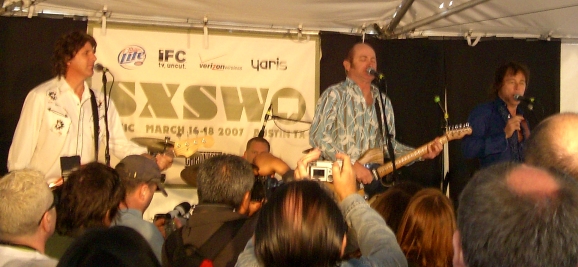
Hoodoo Gurus toured during 2007 including several US dates,[69] kicking off at the South By Southwest (SXSW) Music Festival in Austin, Texas[70] (see SXSW photo above), performances in Europe, including the Azkena Festival (Spain).[71] This was followed by a national tour of Australia called 'Clash of the Titans' with The Stems and Radio Birdman.[72] Their tour poster depicts the three bands as 'Heavyweights' of the Australian music scene. Another solo tour started late in 2007 (including performances at the Apollo Bay Music Festival,[73] Splendour in the Grass,[74] Meredith Music Festival,[75] and the St Kilda Festival[76]) and continued into 2008.[77] There are tentative plans to release a new album in 2009, although little material has been written so far.[78] In June 2008 The Age newspaper commemorated 50 years of Australian rock 'n' roll (the anniversary of the release of Johnny O'Keefe's "Wild One") by selecting the Top 50 Australian Albums, with Stoneage Romeo coming in at no. 5 on the list.[79][80] The Hoodoo Gurus performed at the Glastonbury Festival in the United Kingdom on 29 June 2008.[81][82]

Hoodoo Gurus performed on 14 March 2009 for Sound Relief at the Sydney Cricket Ground.[83] Sound Relief was a benefit concert for victims of the Victorian Bushfire Crisis and the Queensland Floods.[84] Appearing with Hoodoo Gurus at the Sydney concert were, Coldplay, Eskimo Joe, Icehouse, Jet, Josh Pyke, Little Birdy, The Presets, Wolfmother, You Am I and additional artists.[85]

In March 2009 the Hoodoo Gurus also signed a new recording contract with Sony Music Australia, the deal includes the band's back catalogue as well as a new album, the band's ninth and the first since the release of Mach Schau in 2004.[86][87] Brad Shepherd said it had the potential to be "a career defining record".[88] During the process of writing the album Dave Faulkner said in reference to the eclectic mix of songs ready for the album that "rather than stopping myself writing something, I just didn't artificially force myself to write in any direction".[88] The album was originally scheduled for release in September 2009 but they were not happy with the final mix.[89]

We weren't really satisfied with the studio we were in and a whole lot of things, so we had to pull the plug on that and then rethink. We just had to eat the expense, you know, we had to give them a week's cancellation (fee).

— Dave Faulkner[89]

Hoodoo Gurus then sent their songs off to Durango, Colorado, where Ed Stasium, who worked on the band's previous albums Kinky and Crank worked with Faulkner. Faulkner flew to the US after Hoodoo Gurus performed in Japan,[90] their first performances there in over 20 years.[89]

In August 2009 it was revealed that Shepherd had been diagnosed with cancer and was recovering from recent surgery.[91] It was his second cancer diagnosis, having had a melanoma removed five years earlier.[91]

The first single from their new album, "Crackin' Up", was released in December 2009[92] and received some airplay on Australian radio stations.[93] The album, Purity of Essence, was released on 16 March 2010 in Australia and internationally on 11 May 2010.[94]

On 3 October 2010, Hoodoo Gurus toured to London, UK, performing at O2 Shepherd's Bush Empire.[95]

In 2011, they were inducted into the Music Victoria Hall of Fame.[96]

In April 2012 the band played a series of concerts titled Dig it Up! in Australian capital cities, to celebrate 30 years since the release of their debut single "Leilani". At the concerts, the band performed the whole of their debut album Stoneage Romeos and other hits. Also playing as part of the Dig It Up! tour were Australian bands Died Pretty and The Hard Ons, as well as international bands such as Redd Kross, The Sonics and The Fleshtones.

2013–present: Continued performances and Chariot of the Gods

[edit]

In April 2013, the band hosted invitational concerts across the Australian capital cities, performing Mars Needs Guitars, and will be joined by Blue Öyster Cult, Flamin' Groovies, Buzzcocks, and Peter Case.

2014 saw the release of Gravy Train, an EP featuring three new songs and a remake of their first single "Leilani".

In January 2015, it was announced that Kingsmill would be retiring from the band. His last performances were on 22 and 23 May 2015, at the "Be My Guru – Evolution Revolution" concerts at Sydney's Powerhouse Museum, performed as the opening to the city's annual Vivid Festival. The concerts reunited all eight past and present band members for a two-hour set covering their beginnings as Le Hoodoo Gurus in 1982 all the way through to 2010's Purity of Essence.

The band headlined the 'A Day on the Green' concert series in March 2016, with Sunnyboys, Violent Femmes, Died Pretty, and Ratcat.[97]

In early 2018, the group announced a vinyl reissue campaign called the Hoodoo Gurus Record Club, entailing the reissue on coloured vinyl of their back catalogue up to Purity of Essence, which also included the album the group recorded as the Persian Rugs in 2000. The first release through the campaign was Stoneage Romeos on 1 June 2018, with a general public release on 7 September.

On 26 May 2018, the group held a benefit concert for the Tathra bushfire with artists The Badloves, 1927 and local talents Daniel Champagne, Corey Legge, The Figmentz, Erin McMahon, and Melanie Horsnell. The 'Band Together' concert sold out and ticket sales helped raise over half of the $250,000 target[98] towards helping residents affected by the bushfire in March 2018.

We all saw the terrible fires and what they did to people's lives. We are people with empathy and wanted to do what we could.

— Dave Faulkner

[99] On 13 January 2019, Hoodoo Gurus headlined the 'Under the Southern Stars' concert tour of five states starting off at Hastings, Victoria, with performances in Tasmania, Queensland, New South Wales and South Australia scheduled throughout January. Appearing with Hoodoo Gurus at the Hastings concert were Eskimo Joe, You Am I, The Superjesus, British India, The Getaway Plan and Scott Darlow.[100]

In July 2020, the band released the single "Hung Out to Dry". The song features on the vinyl version of the Gurus' tenth studio album, Chariot of the Gods,[101] released in March 2022.

Members

[edit]
Current members
Grossman, Faulkner, Nik Rieth and Shepherd at Hastings Foreshore 2019
  • Dave Faulkner – lead vocals, guitar, keyboards (1981–1998, 2003–present)
  • Brad Shepherd – guitar, backing and occasional lead vocals, harmonica (1982–1998, 2003–present)
  • Richard Grossman – bass, backing vocals (1988–1998, 2003–present)
  • Nik Rieth – drums (2015–present)
Former members
  • James Baker – drums (1981–1984; died 2025)
  • Roddy Radalj – guitar, backing vocals (1981–1982)
  • Kimble Rendall – guitar, backing vocals (1981–1982; died 2025)
  • Clyde Bramley – bass, backing vocals (1982–1988)
  • Mark Kingsmill – drums (1984–1998, 2003–2015)

Timeline

[edit]

Discography

[edit]

Awards and nominations

[edit]

ARIA Music Awards

[edit]

The ARIA Music Awards is an annual awards ceremony that recognises excellence, innovation, and achievement across all genres of Australian music. They commenced in 1987. Rowe was inducted into the Hall of Fame in 2007.[13][14][102]

Year Nominee / work Award Result
1993[103] Electric Soup / Gorilla Biscuit – Paul McNeil, Richard All Best Cover Art Won
1996[104] "Waking Up Tired" (dir. John Witteron) Best Video Nominated
Blue Cave Best Pop Release Nominated
1997 "Down on Me" – Charles Fisher Producer of the Year Won
2005[105] Tunnel Vision Best Music DVD Nominated
2007 Hoodoo Gurus ARIA Hall of Fame inductee

The Age EG Awards

[edit]

The Age EG Awards are an annual awards night celebrating Victorian music. They commenced in 2005.

Year Nominee / work Award Result
2011 Hoodoo Gurus Hall of Fame inductee

Countdown Australian Music Awards

[edit]

Countdown was an Australian pop music TV series on national broadcaster ABC-TV from 1974 to 1987, it presented music awards from 1979 to 1987, initially in conjunction with magazine TV Week. The TV Week / Countdown Awards were a combination of popular-voted and peer-voted awards.[106]

Year Nominee / work Award Result
1983 Charles Fisher for work with Hoodoo Gurus Best Record Producer Nominated
1984[27] Stoneage Romeos Best Debut Album Won

References

[edit]
[edit]
Revisions and contributorsEdit on WikipediaRead on Wikipedia
from Grokipedia
The Hoodoo Gurus are an Australian rock band formed in in 1981 by songwriter and frontman Dave Faulkner alongside drummer , both formerly of the Perth punk band the Victims. Known for their guitar-driven infused with energy, jangly influences, and witty, pop culture-referencing lyrics that blend rock clichés with bittersweet storytelling, the band achieved enduring success in through a string of radio-friendly hits and ten studio albums, while cultivating a cult international following in the and . Inducted into the in 2007, they disbanded in 1998 before reforming in 2003, continuing to tour and record, including their tenth studio album Chariot of the Gods (2022), with ongoing activity as of late 2025 following the deaths of founding members Baker in May 2025 and guitarist Kimble Rendall in April 2025. The band's debut single, "Leilani," released in 1982, hinted at their surf-rock and B-movie inspired sound, but it was their 1984 breakthrough album Stoneage Romeos—featuring tracks like "I Want You Back" and "Tojo"—that propelled them to national prominence, earning them the Countdown Music Award for Best Debut Album and peaking at number 28 on the Australian charts. Subsequent releases like Mars Needs Guitars! (1985) and Magnum Cum Louder! (1989) solidified their reputation for catchy, hook-laden songs with dual-guitar interplay and Faulkner's distinctive, operatic vocals, yielding top-40 singles such as "What's My Scene?" and "Come Anytime." Their music, often evoking the joyful intelligence of acts like R.E.M. or The Cure but rooted in Australian pub rock traditions, has influenced generations of local artists and maintained a timeless appeal through compilations like the triple-platinum Electric Soup (1992). Over their four-decade career, the Hoodoo Gurus evolved from their original lineup—Faulkner, Baker, Rod Radalj on guitar, and Kimble Rendall on guitar—to a core group including Brad Shepherd on guitar and, in later years, bassist Rick Grossman and drummer Mark Kingsmill, though recent lineups incorporated Clyde Bramley and Darcy Condon. Despite limited mainstream breakthroughs abroad, their raw energy and cult status earned them spots on bills with international acts and features in media like the TV show Thank God You're Here via "Come Anytime," while their 2010 album Purity of Essence demonstrated ongoing vitality. As of November 2025, following tributes to Baker—whose propulsive drumming defined their early sound—the band continues to perform, with tours extending into 2026, including a symphonic concert, affirming their resilience after 45 years as one of Australia's most beloved rock outfits.

History

1981–1983: Formation and early years

The Hoodoo Gurus were formed in in early 1981 as a side project by Dave Faulkner (vocals and guitar), who had recently relocated from Perth after his punk band The Victims disbanded, along with drummer , also ex-The Victims. Guitarists Roddy Radalj (ex-The Scientists) and Kimble Rendall (ex-XL Capris) completed the initial lineup at a party in , initially dubbing the group Le Hoodoo Gurus to evoke a "French Colonial" accent in their sound. With an unorthodox configuration of three guitars and drums but no bass, the band rehearsed for nine months, drawing from Faulkner's exposure to 1960s and New York punk during a 1979 trip, amid 's thriving and pub rock scene that emphasized raw energy in venues like the Trade Union Club. The group's debut performance occurred on September 4, 1981, in the basement refectory of Sydney's (now the ), described by Faulkner as a "bunker-like" space with poor acoustics where the band was "pretty terrible." Their second gig soon followed, supporting Rendall's former band XL Capris at the Sydney Trade Union Club, helping them integrate into the local circuit of alternative acts blending punk, garage, and influences. By late 1982, Radalj and Rendall departed, prompting a shift to a more conventional setup with the addition of guitarist and bassist Clyde Bramley (ex-The Hitmen), while the band shortened its name to Hoodoo Gurus. This lineup released the debut single "Leilani"/"Leilani II" in October 1982 on Phantom Records, a surf-tinged garage track that captured their energetic style and marked their first recording. In 1983, after shopping unsigned demos around , the band secured a deal with local label Big Time Records, issuing the single "Tojo" in June, which further established their presence in the pub rock ecosystem before entering the studio for their debut .

1983–1984: Stoneage Romeos

In 1983, the Hoodoo Gurus signed with Australian independent label Big Time Records, which released their early singles including "Tojo" ahead of their debut . The band recorded at Trafalgar Studios in with Alan Thorne, capturing their raw energy in a concise 11-track session completed in late 1983. The album was released in March 1984 by Big Time Records in , featuring standout tracks such as the surf-tinged epic "Leilani," the punchy "Tojo," and the upbeat "My Girl." Its sound blended garage rock's gritty edge with power pop's melodic hooks, drawing on '60s influences like and the while infusing Faulkner's clever, narrative-driven songwriting. In September 1984, issued the album internationally, including in the and , broadening its reach beyond . Stoneage Romeos peaked at No. 29 on the Australian albums chart and later achieved gold certification for sales exceeding 35,000 copies domestically. To promote the release, the band undertook an extensive national tour across , building on their growing live reputation for high-energy performances. In late , they embarked on their first U.S. tour, playing key venues and supporting the album's American rollout, which included stops in cities like and New York. Music videos for "Leilani" and "Tojo," directed with a playful, low-budget aesthetic, aired on and helped introduce the band's visuals to international audiences. Critics praised for its witty, absurd lyrics—often riffing on pop culture and historical quirks—and its infectious, energetic sound, which established the band's humorous identity laced with surf-rock vibes and unpretentious fun. The album's optimistic raggedness and self-aware absurdity resonated widely, earning it enduring acclaim as a cornerstone of Australian rock. In the U.S., it topped college radio charts for four weeks, fostering a dedicated among alternative listeners.

1985–1988: Mars Needs Guitars and Blow Your Cool!

Following the success of their debut album, the Hoodoo Gurus signed with Big Time Records, distributed by EMI in Australia, for their second studio album, Mars Needs Guitars!, released in March 1985 and produced by Mark Opitz. The album featured standout tracks such as "Bittersweet" and "Like Wow - Wipeout!", blending garage rock energy with polished pop hooks, and it peaked at No. 5 on the Australian Kent Music Report Albums Chart while achieving triple platinum status in the country. Internationally, the record marked a breakthrough, reaching No. 140 on the US Billboard 200 after an extensive promotional tour across the United States in 1985, where the band's energetic live shows built a dedicated following. The "Like Wow - Wipeout!" music video received rotation on MTV, further exposing the group to American audiences and solidifying their presence in the college rock scene. In 1987, the band returned with Blow Your Cool!, released in April on Big Time Records and co-produced by Opitz and the group themselves, emphasizing a brighter, more radio-friendly sound while retaining their signature witty edge. The album peaked at No. 2 on the charts, driven by the "What's My Scene?", which climbed to No. 3 and became the band's biggest domestic hit, earning widespread airplay and accolades for its infectious chorus and cultural commentary. Another single, "In the Wild", highlighted the album's thematic exploration of escapism and adventure, contributing to its commercial momentum. The period saw the Hoodoo Gurus expand their touring footprint, including support slots for established acts like The Kinks and Iggy Pop during 1987-1988 US dates, alongside European performances that broadened their global appeal. College radio play in the US amplified their growing fanbase, with tracks from both albums resonating on alternative stations and fostering a cult following amid the band's maturation. Internally, frontman Dave Faulkner's songwriting evolved, increasingly incorporating pop culture references—from film nods to everyday absurdities—that added layers of clever irony to the group's power-pop anthems. This phase represented the band's commercial zenith in Australia, leveraging major label support to transition from local heroes to international contenders.

1989–1993: Magnum Cum Louder and Kinky

The Hoodoo Gurus released their fourth studio album, Magnum Cum Louder, in June 1989 through . Produced by , the album showcased the band's signature energy with standout tracks including "Come Anytime" and "Axegrinder," the latter highlighting guitarist Brad Shepherd's contributions. It peaked at No. 13 on the Albums Chart in and reached No. 101 on the , reflecting the band's growing international profile. The "Come Anytime," written by frontman Dave Faulkner, climbed to No. 27 on the Singles Chart and topped the Modern Rock Tracks chart at No. 1, marking a breakthrough in the American scene. Building on their prior exposure from tours dating back to , the band embarked on an extensive North American tour to promote the album, performing dozens of shows and solidifying their there. In April 1991, the Hoodoo Gurus followed with Kinky, their fifth studio album, self-produced by the band and released via . Featuring a more polished production with psychedelic undertones influenced by rock, it included singles like "Miss Freelove '69" (peaking at No. 19 on the ARIA Singles Chart) and "1000 Miles Away." The album reached No. 8 on the ARIA Albums Chart in but only No. 172 on the , indicating a dip in American momentum. Between 1991 and 1993, the band maintained a rigorous touring schedule, including dates across and the , as well as supporting on select Australian shows. However, internal tensions arose, culminating in guitarist Brad Shepherd's departure in 1992; he was temporarily replaced to sustain live commitments. Faulkner's songwriting dominance grew during this era, with him penning most tracks on Kinky and infusing lyrics with themes of relationships and absurdity, such as in "Miss Freelove '69." Critics praised Magnum Cum Louder for its infectious hooks and heavier edge, calling it a high point of the band's catalog full of catchy melodies. In contrast, Kinky received mixed reviews, with some faulting its slicker sound for diluting the raw energy of prior releases, though it retained the Gurus' humorous flair. The period's declining sales foreshadowed broader challenges in the 1990s landscape.

1994–1998: Crank, Blue Hearts and Electric Soup, and The Bullet

In March 1994, Hoodoo Gurus released their sixth studio album, Crank, through in . The album marked a return to a rawer sound following the more polished production of their previous effort, Kinky. Produced primarily by the band with assistance from engineer , Crank featured 13 tracks exploring themes of relationships and personal disillusionment, including standout songs like "The Right Time" and "You Open My Eyes." The , "The Right Time," was issued in October 1993 and peaked at No. 14 on the ARIA Singles Chart, while follow-up "You Open My Eyes" reached No. 43 in January 1994. Crank itself debuted at No. 2 on the ARIA Albums Chart, showcasing the band's enduring domestic popularity despite shifting musical landscapes. Following the album's release, Hoodoo Gurus embarked on an extensive tour to support Crank, including multiple dates across and a North American leg that highlighted their growing international . The band's stable lineup—Dave Faulkner on vocals and guitar, on guitar, Rick Grossman on bass, and Mark Kingsmill on drums—remained intact, delivering energetic performances that emphasized their roots amid the rising dominance of . These tours, however, occurred against a backdrop of commercial challenges, as the grunge explosion from acts like Nirvana and overshadowed established bands like the Gurus, leading to limited U.S. exposure and declining international sales. By 1996, the band had transitioned to , releasing their seventh studio album, In Blue Cave (often stylized as Blue Cave), which blended original material with retrospective covers and re-recordings, serving as a reflective double-disc set limited to a smaller initial pressing. Produced by Charles Fisher and the band, the album peaked at No. 18 on the ARIA Albums Chart and included tracks like "Big Deal" and "Down on Me," nodding to their heritage while incorporating introspective lyrics on fatigue and change. A reissued version of their 1992 singles compilation Electric Soup accompanied it that year, further emphasizing the retrospective focus with hits like "What's My Scene?" and "Come Anytime," distributed independently to capitalize on core fan loyalty amid waning major-label support. From 1996 to 1998, Hoodoo Gurus' activities grew sporadic, with occasional Australian shows reflecting increasing band fatigue and disinterest in the relentless touring cycle. In January 1997, frontman Dave Faulkner announced the group's impending breakup, citing creative exhaustion after nearly two decades. The band concluded with a farewell concert on 11 January 1998 in , after which issued the live album , capturing performances from the "Spit the Dummy" tour and underscoring their shift toward self-managed distribution in a grunge-saturated market that had diminished their commercial momentum.

1998–2003: Hiatus and side projects

Following the release of their 1998 live album , which captured performances from their final Australian tour, the Hoodoo Gurus entered a period of inactivity, effectively beginning a hiatus after 17 years since their formation in 1981. There was no formal announcement of a breakup or dissolution; instead, the band simply ceased group activities, with their last performance taking place in on 11 January 1998. The decision stemmed from a combination of factors, including creative burnout after years of intensive touring and recording, a desire among members for personal and musical exploration to avoid the band "blandening," and shifting dynamics in the music industry, particularly the waning support from modern-rock radio in the late that had stalled their international momentum. During this five-year span, the members focused on individual pursuits outside the band. Frontman Dave Faulkner took on production roles and contributed to side projects, including the short-lived Persian Rugs, a garage-rock outfit featuring all four Gurus members that recorded material as a creative outlet. Mark Kingsmill worked as a for various artists, leveraging his experience from prior bands like the Hitmen and New Christs. Bassist Rick Grossman engaged in teaching music and selective collaborations, drawing on his background with acts like the . Guitarist participated in brief musical stints and guest appearances, maintaining his profile through sporadic performances. Despite the band's dormancy, their legacy persisted through archival releases, such as the 2001 career-spanning compilation Ampology, issued by , which collected key tracks from their eight and helped sustain visibility among fans. Bootleg recordings of live shows also circulated informally, reflecting ongoing interest from their dedicated audience. As the hiatus progressed, informal conversations among the members resurfaced by late , prompted by external opportunities like an invitation to perform at the Homebake festival; this ultimately led to their decision to regroup without long-term commitments.

2003–2012: Reunion and ARIA Hall of Fame

In November 2003, Hoodoo Gurus announced their reunion to mark the 20th anniversary of their debut album Stoneage Romeos, reforming with Dave Faulkner on lead vocals and guitar, Rick Grossman on bass, Mark Kingsmill on drums, and on guitar and vocals after a five-year hiatus. The band, which had disbanded in 1998, cited the invitation from as a key catalyst for the reactivation, bringing renewed energy to their classic sound. Following the reunion, Hoodoo Gurus embarked on extensive Australian tours in , including the nationwide "Back to the " trek that featured over 30 dates across major cities and regional venues. Their return culminated in the release of the studio album Mach Schau on March 15, , through Music , which included singles like "Nothing's Changing My Life" and marked their first new material in eight years. In 2005, the band issued the remastered and expanded edition of their 1996 album Blue Cave, adding bonus tracks and celebrating the ongoing legacy of their '90s output amid continued anniversary festivities for . On July 18, 2007, Hoodoo Gurus were inducted into the at a ceremony in , recognizing their contributions to Australian since 1981. The induction highlighted their string of '80s hits and enduring influence, with the band performing live at the event alongside other inductees like . From 2007 to 2012, the band maintained a schedule of sporadic live performances, focusing on nostalgia-driven festival slots and special events rather than frequent touring, including a headline show at the Gold Coast 600 Supercars event on October 22, 2011. During this period, no new studio album appeared until Purity of Essence in 2010, supplemented by archival reissues and live footage releases like the 2004 DVD , which captured performances from their reunion shows. Their sustained popularity was evident in bookings on nostalgia circuits and major Australian festivals, drawing crowds eager for revivals of tracks like "What's My Scene" and "Come Anytime."

2013–2025: Later years, Chariot of the Gods, and anniversary tours

Following their induction into the , the Hoodoo Gurus sustained strong visibility through consistent touring in the 2010s, maintaining the core lineup of Dave Faulkner, Rick Grossman, , and Nik Rieth that had anchored their 2003 reunion. From 2013 to 2019, the band performed at major Australian festivals, including headlining the Dig It Up! Invitational across cities like and in April 2013, and appearing at the inaugural Under the Southern Stars festival on the Gold Coast in 2019. The group marked their 35th anniversary with a series of shows in 2017, including co-headlining events with in March. They also resumed U.S. touring after a decade-long hiatus, playing dates from to in October and November 2019 to promote new material. After delays due to the , the Hoodoo Gurus released their tenth studio album, Chariot of the Gods, on March 11, 2022, through Big Time Records—their first full-length in 14 years. Produced by Dave Faulkner and Wayne Connolly, the album features 14 tracks on CD (with three bonus songs on vinyl), blending the band's signature jangle-rock with garage and power-pop elements. Preceding the release were singles "Hung Out to Dry" in July 2020 and the title track "Chariot of the Gods," which highlighted themes of resilience and satire. The album debuted and peaked at No. 7 on the ARIA Albums Chart, marking their highest charting release since 1996. In 2023, the band returned to the U.S. for an extensive tour from April to May, their first since 2019, spanning venues from , to and including a performance at in . Late that year, they announced plans for 2024, centering on anniversary celebrations of their debut album. The Back to the Stoneage tour launched in September 2024 in the U.S., with the band performing in full—celebrating its 40th anniversary—followed by a selection of hits; dates included Thalia Hall in on September 19. The tour continued across from November 2024 to early 2025, hitting venues like Anita's Theatre in and The Forum in , before extending to in April 2025 with shows in , , and . On October 17, 2025, they released a 40th anniversary deluxe 2LP edition of Mars Needs Guitars!, featuring remastered tracks, bonus material, and handwritten lyrics in a limited-edition booklet. A special Symphonic Gurus concert was announced for January 29, 2026, at Music Bowl in , where the Hoodoo Gurus will perform with the full . In April 2025, founding guitarist Kimble Rendall died at age 67. In May 2025, founding drummer died at age 71 from cancer. The band issued tributes to both members and announced a reduction in touring activity following these losses, performing select shows in 2025 while focusing on legacy projects as of November 2025. Recent lineups have occasionally incorporated Clyde Bramley on bass.

Band members

Current members

The current lineup of Hoodoo Gurus, stable since 2015, features Dave Faulkner on lead vocals and rhythm guitar, on lead guitar and backing vocals, Richard Grossman on bass guitar and backing vocals, and Nik Rieth on drums. Dave Faulkner serves as the band's primary songwriter, lead vocalist, and rhythm guitarist; as the founding member since 1981, he has provided consistent leadership through the group's reunion in 2003 and subsequent activities. Brad Shepherd, who joined in 1982, plays lead guitar and contributes backing vocals and harmonies, often incorporating techniques that define the band's rock sound. Richard Grossman, a member since 1988, handles bass guitar and backing vocals; prior to joining, he played with the , and he holds qualifications in music production engineering. Nik Rieth joined as drummer in 2015, replacing longtime member Mark Kingsmill upon his retirement; Rieth previously performed with bands including the Celibate Rifles and Radio Birdman, bringing extensive experience in Australian rock scenes.

Former members

The Hoodoo Gurus' early lineup featured several key contributors who shaped the band's initial sound before departing amid lineup changes in the mid-1980s. Founding guitarist Roddy Radalj played from 1981 to 1982, helping establish the group's distinctive three-guitar attack alongside Dave Faulkner and Kimble Rendall. He co-wrote the debut single "Leilani" (1982), which showcased the band's garage rock influences and marked their first release on Remper Records. Radalj's tenure ended due to internal disagreements following Rendall's exit and Faulkner's increasing creative control; he subsequently formed the cow-punk outfit The Johnnys (1982–1984) and later pursued a solo career as Roddy Ray'Da, releasing albums like Roddy Ray'Da (1989) and collaborating on various projects including the Surfin' Caesars. Fellow founding member Kimble Rendall served as guitarist and from 1981 to 1982, contributing to the band's formation at a New Year's Eve party and their inaugural TV appearance on . His connections in the music scene aided early opportunities, though he departed shortly after "Leilani" to focus on other pursuits. Post-Hoodoo Gurus, Rendall built a renowned career as a music video director, helming clips for (including ""), , and ; he also worked in film and television production until his death in April 2025 at age 67. Drummer , another co-founder, provided the band's rhythmic backbone from 1981 to 1985, drawing on his punk roots from The Victims and to drive their energetic live shows and recordings. He performed on the debut album (1984) and the follow-up Mars Needs Guitars! (1985), helping propel the group toward commercial success. Baker exited amid scheduling conflicts and later joined influential acts like the Beasts of Bourbon and a Scientists reunion, while also forming Antenna in 1998; he passed away in May 2025 at age 71 following a battle with cancer. Bassist Clyde Bramley joined in 1982 following Rendall's departure, filling the low-end role and stabilizing the rhythm section until 1988. During his tenure, he contributed to three albums—Mars Needs Guitars! (1985), Blow Your Cool! (1987), and Magnum Cum Louder (1989)—and toured extensively, supporting the band's rise in the Australian and international rock scenes. Bramley left to pursue other opportunities and later reunited with The Hitmen while maintaining a presence in Sydney's pub rock circuit. Drummer Mark Kingsmill joined in 1984, replacing , and provided the band's driving rhythm for over three decades until his retirement in 2015. He contributed to nearly all of the band's albums from Blow Your Cool! (1987) onward and was part of the stable lineup that achieved commercial success and the 2003 reunion.

Timeline

The Hoodoo Gurus experienced several lineup changes in their early years before achieving stability with their core four members from 1988 onward, which contributed to the band's longevity.
PeriodMembers
1981–1982Dave Faulkner (guitar, vocals), Roddy Radalj (guitar), Kimble Rendall (guitar), James Baker (drums)
1982–1985Dave Faulkner (guitar, vocals), Brad Shepherd (guitar), Clyde Bramley (bass), James Baker (drums)
1985–1988Dave Faulkner (guitar, vocals), Brad Shepherd (guitar), Clyde Bramley (bass), Mark Kingsmill (drums)
1988–1998Dave Faulkner (guitar, vocals), Brad Shepherd (guitar), Rick Grossman (bass), Mark Kingsmill (drums)
1998–2003Hiatus (all members inactive)
2003–2015Dave Faulkner (guitar, vocals), Brad Shepherd (guitar), Rick Grossman (bass), Mark Kingsmill (drums)
2015–presentDave Faulkner (guitar, vocals), Brad Shepherd (guitar), Rick Grossman (bass), Nik Rieth (drums)

Musical style and influences

Style

The Hoodoo Gurus' music is primarily rooted in a revival infused with , surf rock, and influences, characterized by jangly guitars and driving rhythms that evoke the energetic spirit of mid-century rock 'n' roll. Their sound often blends kitschy garage-rock elements with punchy hooks, creating a rollicking, genre-bending style that avoids overly polished production in favor of raw, infectious energy. A key signature element is frontman Dave Faulkner's witty and ironic , which frequently explore themes of pop culture, relationships, and everyday absurdities through humorous song titles like "Tojo" and "What's My Scene?," delivering cheeky commentary with a knowing grin rather than overt cynicism. The band's style evolved notably across their career, beginning with the raw, high-octane energy of their 1984 debut , which featured slushy pop hooks alongside expansive garage-rock tracks that captured their punk-inflected origins. By the mid-1980s, as heard on Blow Your Cool! (1987), their sound gained a polished sheen while retaining driving rhythms and jangly guitar work, broadening their appeal with more refined arrangements. In the 1990s, albums like Kinky (1991) introduced greater experimentation, incorporating demi-psychedelic elements and funky to expand beyond straight-ahead garage revivalism. Their 2022 release marked a return to these foundational roots, emphasizing garage-rock gems with nods to their early work and a renewed focus on high-energy, good-humored rock 'n' roll. In 2025, the 40th anniversary edition of Mars Needs Guitars! further highlighted their enduring garage and style. Production-wise, the Hoodoo Gurus consistently prioritized a live feel, emphasizing memorable hooks and visceral rhythms over dense layering or heaviness, deliberately steering clear of the grunge-era's aggressive in favor of their lighter, surf-tinged palette. This approach kept their music accessible and fun, mirroring the band's humorous lyrical bent. Within the Australian scene, their style aligns closely with contemporaries like The Church and Sunnyboys, sharing a jangly, -driven aesthetic that highlighted melodic garage influences amid the era's punk and waves.

Influences

The Hoodoo Gurus' music drew extensively from the raw, energetic style of garage rock bands, including and ? and the Mysterians, whose distorted guitars and urgent vocals informed the group's punchy riffs and straightforward song structures. Surf rock instrumentalists like also exerted a strong influence, shaping the band's melodic guitar lines and surf-tinged rhythms evident in tracks like "My Pal" from their debut album . These early inspirations were compounded by the punk and scenes in Australia, particularly the aggressive drive of The Saints and the psychedelic edge of , which fueled the Gurus' high-octane live shows and DIY ethos during their formation in . Dave Faulkner's prior experience in the Perth punk band The Victims provided a foundational punk energy, emphasizing fast tempos and unpolished attitude that transitioned seamlessly into Hoodoo Gurus' sound. This punk lineage extended to American acts, signaling deep admiration for and MC5's and confrontational style. Faulkner's childhood exposure to 1960s icons like , , , and further rooted his songwriting in hooks and witty narratives. The vibrant pub rock scene of the served as a crucial incubator, where the Gurus refined their blend of influences amid a circuit of rowdy venues that demanded tight, crowd-pleasing sets. International exposure through U.S. college radio in the mid- introduced affinities with American indie acts like The Replacements, whose heartfelt, rootsy punk expanded the Gurus' songcraft toward more narrative-driven rock. Faulkner's lyrics frequently incorporated cultural references from films and history, such as the allusions in "Tojo," which nods to the Japanese general without delving into political advocacy, maintaining a focus on over ideology. In the , their album Kinky subtly integrated influences from the era, incorporating grungier textures while preserving the garage-punk core. By the 2020s, anniversary tours and releases like Chariot of the Gods leaned into nostalgia for garage and punk, reinforcing the timeless appeal of their foundational inspirations.

Discography

Studio albums

The Hoodoo Gurus' studio discography spans four decades, beginning with their debut in the mid-1980s and culminating in recent releases. Their albums consistently blended energy with pop sensibilities, achieving commercial success primarily in , where all releases charted. The band's ten full-length studio efforts are detailed below, highlighting release information, chart performance, and track counts. Stoneage Romeos, the band's debut studio album, was released in 1984 by Big Time Records in association with RCA. It peaked at No. 29 on the Australian Kent Music Report charts and contains 11 tracks. The album was certified gold by the Australian Recording Industry Association (ARIA) for sales exceeding 35,000 units in Australia. The follow-up, Mars Needs Guitars!, arrived in 1985 via EMI and marked the band's growing international profile. It reached No. 5 on the Australian charts and No. 176 on the US Billboard 200, featuring 10 tracks. The album achieved 3× platinum certification in Australia for shipments exceeding 210,000 units. In 1987, Blow Your Cool! was issued by , peaking at No. 2 on the Australian charts with 12 tracks. It attained gold certification in . The 1989 release Magnum Cum Louder came out on RCA, peaking at No. 13 on the Australian charts and comprising 11 tracks. It also reached gold status in the Australian market. RCA followed with Kinky in 1991, the band's fifth studio album, which charted at No. 8 in and includes 12 tracks. The album was certified gold by . Crank, released in 1994 by BMG, peaked at No. 2 on the Australian ARIA charts and features 13 tracks. It achieved gold certification in . The 1996 album Blue Cave (also known as In Blue Cave) was released by , peaking at No. 18 on the ARIA Albums Chart with 14 tracks (including a ). It received positive reviews but no . After reforming in 2003, the band released Mach Schau in 2004 via , which peaked at No. 67 on the ARIA Albums Chart and contains 13 tracks. The album marked their return to recording. In 2010, Purity of Essence was issued by , peaking at No. 16 on the ARIA Albums Chart with 13 tracks. Produced with Charles Fisher, it demonstrated the band's continued vitality. After a 12-year gap, the Hoodoo Gurus returned with Chariot of the Gods in 2022 on / Big Time Records, debuting at No. 7 on the ARIA Albums Chart with 14 tracks. The album underscored the band's enduring appeal in their home country.

Compilation albums

The Hoodoo Gurus have released several compilation albums that collect their singles, B-sides, and rarities, helping to sustain the band's visibility during hiatus periods following their initial in 1998. Electric Soup was released in September 1992 by as a singles collection spanning the band's early career, featuring 19 tracks including hits like "What's My Scene," "Come Anytime," and B-sides such as "Leilani" in a remastered form. The album peaked at No. 3 on the Albums Chart and was certified triple platinum in for shipments exceeding 210,000 units. Ampology, issued in October 2000 by EMI (with a 2001 CD edition), is a double-disc retrospective focusing on the band's 1980s output, compiling 40 tracks such as "Tojo," "I Want You Back," and rarities like "Axegrinder" alongside remastered versions of early singles. This set highlights the group's garage rock roots and peaked at No. 76 on the ARIA Albums Chart. Gold Watch: 20 Golden Greats, the band's most recent major compilation, came out in March 2012 via Hoodoo Gurus Records as a post-reunion best-of package, including 20 selections like "My Girl," "Bittersweet," and a new track "Use-By Date," with remastered audio from across their discography. It reached No. 15 on the ARIA Albums Chart and was certified gold shortly after release.

Singles

The Hoodoo Gurus have released more than 20 singles over their career, many of which served as key promotional tracks for their studio albums and achieved varying degrees of commercial success, particularly on Australian charts during the and early 1990s. Their singles often highlighted the band's signature blend of , , and surf-inspired sounds, with several crossing over to international audiences, including alternative radio. While some tracks like "Bittersweet" saw release primarily in the market, the majority targeted Australian listeners and contributed to the band's enduring popularity in their home country. Early singles laid the foundation for the band's breakthrough. The debut, "Leilani," originally issued in 1982 as Le Hoodoo Gurus on Phantom Records and re-released in 1984 following the success of their album , introduced their quirky, narrative-driven style and climbed to No. 33 on the charts. This track's re-release helped solidify their domestic presence before expanding internationally. From 1985 to 1988, the band scored their first major hits amid growing popularity. "Like Wow - Wipeout," the lead single from Mars Needs Guitars!, peaked at No. 15 on the charts in 1985, capturing surf-rock energy that resonated widely. The 1987 release "What's My Scene?" from Blow Your Cool! marked their commercial peak, reaching No. 3 in and becoming a staple of 1980s rock radio. "In the Wild," another track from Blow Your Cool!, followed in 1988 and entered the charts at No. 43, showcasing the band's evolving production with producer Mark Opitz. The late 1980s and early 1990s saw continued chart activity with a focus on alternative markets. "Come Anytime" from Magnum Cum Louder! debuted in 1989 and peaked at No. 27 on the ARIA Singles Chart, while also topping the US Billboard Modern Rock Tracks chart, highlighting their trans-Pacific appeal. That same year, "Axegrinder" from the same album reached No. 58 in Australia, offering a heavier, riff-driven sound. In 1991, "Miss Freelove '69" from Kinky achieved No. 19 on the ARIA charts and No. 3 on the US Modern Rock Tracks, blending psychedelic elements with pop hooks. Later releases reflected a maturing catalog amid lineup changes and hiatuses. "Less Than Honest" from Crank in 1994 entered the ARIA charts at No. 96, signaling a shift toward more introspective lyrics. The 1998 single "The Bullet," tied to their final pre-hiatus album Electric Soup, received airplay but did not chart prominently in Australia. Following their 2015 reunion, the band issued fresh material that evoked their classic era. "Hung Out to Dry" appeared in 2020 as part of anniversary celebrations, emphasizing raw garage vibes without major chart impact. In 2022, "Chariot of the Gods" served as the title track for their comeback album, receiving positive reviews for its energetic drive and limited radio play in Australia.
YearSingleAlbumPeak Position (AUS)
1982/1984Leilani33
1985Like Wow - WipeoutMars Needs Guitars!15
1987What's My Scene?Blow Your Cool!3
1988In the WildBlow Your Cool!43
1989Come AnytimeMagnum Cum Louder27
1989AxegrinderMagnum Cum Louder58
1991Miss Freelove '69Kinky19
1994Less Than HonestCrank96
1998The BulletElectric Soup-
2020Hung Out to Dry--
2022Chariot of the GodsChariot of the Gods-

Awards and nominations

ARIA Music Awards

The Hoodoo Gurus were inducted into the in 2007, acknowledging their influence on Australian . In 1993, their Electric Soup/Gorilla Biscuit won the ARIA Award for Best Cover Art.
YearCategoryWorkResult
2007ARIA Hall of FameHoodoo GurusInducted
1993Best Cover ArtElectric Soup/Gorilla BiscuitWon

Other awards

In the pre-ARIA era, the Hoodoo Gurus won Best Debut Album for (1984) at the 1985 Countdown Australian Music Awards. In 2011, the band was inducted into the Music Victoria Hall of Fame.

References

Add your contribution
Related Hubs
User Avatar
No comments yet.