Hubbry Logo
Howard BuffettHoward BuffettMain
Open search
Howard Buffett
Community hub
Howard Buffett
logo
8 pages, 0 posts
0 subscribers
Be the first to start a discussion here.
Howard Buffett
Howard Buffett
from Wikipedia

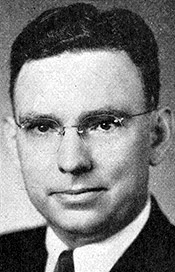
Howard Homan Buffett (August 13, 1903 – April 30, 1964) was an American businessman, investor, and politician. He was a four-term Republican United States Representative for the state of Nebraska. He was the father of Warren Buffett, the businessman and investor.

Key Information

Early life

[edit]

Howard Buffett was born in Omaha, Nebraska, to Henrietta Duvall Buffett and Ernest P. Buffett, owners of a grocery business. Ernest P. Buffett's parents were second cousins, both having mainly English descent. The Buffet surname (renamed to Buffett) originates in France with a Huguenot weaver, named John Buffett, who became Buffett's first American Buffett ancestor when he immigrated to New York in the late-1600s.[1]

Howard Buffett attended public schools and graduated from the University of Nebraska in Lincoln, Nebraska, in 1925. While a student, Buffett was a brother of the Alpha Sigma Phi fraternity. He married Leila Stahl on December 27, 1925. The Buffetts were active members of the Dundee Presbyterian Church.[2] After failing to secure a job in the family grocery business, he started a small stock brokerage firm.[3]

Career

[edit]

Entering the investment business, Buffett also served on the Omaha board of education from 1939 to 1942. In 1942 he ran for the U.S. House of Representatives in the Nebraska district in which Omaha was located. In that election, Buffett was seen as "a Republican sacrificial lamb in Nebraska's second district when FDR was a popular wartime leader."[4] Nevertheless, he went on to win the Republican nomination in the primary and then the subsequent general election.

He was reelected twice. In 1948 he again was the Republican nominee for another term, but was defeated for reelection; however, he was the Republican nominee for the office again in 1950 and won the office back. In 1952 Buffett decided against seeking another term and returned to his investment business in Omaha, Buffett-Falk & Co., in which he worked until shortly before his death.[5] He also served as the campaign manager for conservative Senator Robert A. Taft in Taft's 1952 presidential campaign.[6]

According to Warren Buffett biographer Roger Lowenstein:

'Unshakably ethical, Howard refused offers of junkets and even turned down a part of his pay. During his first term, when congressional salary was raised from $10,000 to $12,500, Howard left the extra money in the Capitol disbursement office, insisting that he had been elected at the lower salary.' His wife said he considered only one issue when deciding whether or not to vote for a bill: 'Will this add to, or subtract from, human liberty?'[4]

Political philosophy

[edit]

Howard Buffett is remembered for his highly libertarian Old Right stance, having maintained a friendship with Murray Rothbard for a number of years.[7] He "would invariably draw 'zero' ratings from the Americans for Democratic Action and other leftist groups."[8]

Buffett was a vocal critic of the Truman Doctrine and the Marshall Plan.[4] Of the Truman Doctrine, he said: "Our Christian ideals cannot be exported to other lands by dollars and guns."[9] Buffett was also "one of the major voices in Congress opposed to the Korean adventure,"[8] and "was convinced that the United States was largely responsible for the eruption of conflict in Korea; for the rest of his life he tried unsuccessfully to get the Senate Armed Services Committee to declassify the testimony of CIA head Admiral Roscoe H. Hillenkoetter, which Buffett told [Rothbard] established American responsibility for the Korean outbreak."[10] The CIA failed to predict the Marxist invasion of the Republic of Korea in 1950, just as it had failed to predict the Soviet Atomic Bomb the previous year, it was these intelligence failures that Rear Admiral Hillenkoetter testified about.

Speaking on the floor of Congress, he opposed military interventionism:

Even if it were desirable, America is not strong enough to police the world by military force. If that attempt is made, the blessings of liberty will be replaced by coercion and tyranny at home. Our Christian ideals cannot be exported to other lands by dollars and guns. Persuasion and example are the methods taught by the Carpenter of Nazareth, and if we believe in Christianity we should try to advance our ideals by his methods. We cannot practice might and force abroad and retain freedom at home. We cannot talk world cooperation and practice power politics.[10][11]

In the summer of 1962, he wrote "an impassioned plea... for the abolition of the draft" in the New Individualist Review.[6] Buffett wrote:

When the American government conscripts a boy to go 10,000 miles to the jungles of Asia without a declaration of war by Congress (as required by the Constitution) what freedom is safe at home? Surely, profits of U.S. Steel or your private property are not more sacred than a young man's right to life.[6]

In addition to non-interventionism overseas,[12] Howard Buffett strongly supported the gold standard because he believed it would limit the ability of government to inflate the money supply and spend beyond its means.[13] His son Warren Buffett is not an advocate of the gold standard.[14][15]

Personal life

[edit]

Buffett married Leila Stahl Buffett (March 18, 1904 – August 30, 1996). Together, they had three children, one son and two daughters:

He died on May 30, 1964 at the age of 60, from cancer.[18][19]

Publications

[edit]

References

[edit]
[edit]
Revisions and contributorsEdit on WikipediaRead on Wikipedia
from Grokipedia
Howard Homan Buffett (August 13, 1903 – April 30, 1964) was an American businessman and Republican politician who represented in the for four terms between 1943 and 1953. A staunch advocate of , he championed the gold standard to constrain federal fiscal excess and protect , arguing that "human freedom rests on gold redeemable money" as a check against inflationary policies. Buffett opposed foreign aid, the draft, and post-World War II interventions such as the , prioritizing constitutionalism and over expansive executive power. He was the father of investor .

Early Life

Upbringing and Family Background

Howard Homan Buffett was born on August 13, 1903, in Omaha, . He was the son of Ernest Platt Buffett, a businessman who owned and operated grocery stores in Omaha, and Henrietta Duvall Buffett. The Buffett family, of Huguenot ancestry, maintained a middle-class through Ernest's grocery enterprises, which included establishing the first Buffett & Son store at 4901 Underwood Avenue in 1915. Growing up in Omaha during the early , amid the Progressive Era's economic expansions in the Midwest, Buffett experienced an environment blending urban commerce with surrounding agrarian influences, fostering foundational values of diligence and prudent resource management within a family-centered setting.

Education and Initial Influences

Buffett attended public schools in , graduating from Central High School in 1921. He then pursued higher education at the University of Nebraska in Lincoln, earning a in 1925, reportedly majoring in . Following graduation, Buffett entered the business in as a , navigating the expansive economic conditions of the late , characterized by rapid market growth and speculative activity prior to the 1929 crash. This early immersion in private-sector emphasized hands-on market dynamics over theoretical or regulatory frameworks, cultivating a preference for decentralized economic rooted in individual enterprise. His experiences in sales and brokerage during this period of prosperity reinforced a pragmatic toward expansive government interventions, aligning with an emerging commitment to limited authority that would define his later perspectives.

Business Career

Early Ventures in Finance and Investment

Howard H. Buffett entered the field of in 1926, shortly after graduating from the University of Nebraska in 1925. Unable to secure employment in his family's grocery business, he established a small brokerage firm in , where he operated as a amid the speculative fervor of the late . By 1931, Buffett partnered with George Sklenicka to form an in Omaha, appointing as sales manager and relocating operations to a bank building, which laid the groundwork for what would become Buffett-Falk & Co. This venture emphasized brokerage services during a period of economic volatility, reflecting Buffett's hands-on involvement in local financial markets. The Wall Street Crash of October 1929 severely tested Buffett's early enterprise; as a , he faced immense pressure from clients' losses and reportedly secluded himself at home to avoid confrontations, underscoring the personal toll of the downturn on small operators who prioritized client relationships over aggressive . Despite the market's collapse, which wiped out billions in value and triggered the , Buffett's firm endured without evidence of heavy reliance on margin debt or bubble-chasing tactics that ensnared many contemporaries.

Investment Philosophy and Practices

Howard Buffett, as an Omaha-based in the and , centered his approach on preserving through assets resistant to monetary , drawing from direct of market volatility during the . He prioritized tangible-backed value over speculative paper instruments, recognizing that government-induced inflation eroded nominal gains and real , as evidenced by the post-1933 dollar devaluation following the suspension of redeemability. This empirical caution stemmed from his brokerage experience amid the 1929 crash, where client losses and systemic instability highlighted the perils of fiat expansion without metallic anchors. Buffett's tenets critiqued paper money as a tool for unchecked fiscal expansion, advocating instead for investments aligned with sound money principles to mitigate causal risks of collapse seen in historical precedents like post-World War I Germany and Russia. In practice, this manifested in favoring commodities and real assets—such as those hoarded by individuals facing currency depreciation—over equities vulnerable to policy distortions, as fiat systems incentivize hoarding tangibles to safeguard against value erosion. He argued that redeemable gold standards impose discipline on deficits, fostering environments where productive investments thrive without inflationary interference, linking monetary integrity directly to capital preservation. Viewing enterprise as integral to individual autonomy, Buffett opposed interventions like and that warp price signals and misallocate resources, insisting markets best reflect genuine scarcity and utility under stable currency. His , rooted in first-hand Depression-era brokerage amid rising U.S. from 1930 to 1946, emphasized causal realism: without constraints, governments prioritize short-term spending over long-term value, compelling investors to seek intrinsic worth in assets decoupled from manipulated dollars. This framework prioritized empirical outcomes over theoretical optimism, distinguishing his resistance to fiat illusions from later value-oriented adaptations.

Political Career

Entry into Politics and Elections

Howard H. Buffett entered politics amid growing concerns over federal overreach during the era, viewing public service as a bulwark against expansive government programs that he believed undermined fiscal discipline and local autonomy. As an Omaha investment broker and former school board member, Buffett campaigned in 1942 for on platforms advocating intervention in the economy and skepticism toward escalating wartime commitments following U.S. entry into . Despite being positioned as a long-shot Republican challenger against the backdrop of President Franklin D. Roosevelt's wartime popularity, Buffett secured victory in the general on November 3, 1942, assuming office in the 78th Congress on January 3, 1943. Buffett's reelection successes in and demonstrated sustained support for his emphasis on postwar fiscal restraint and resistance to inflationary policies, as Nebraska voters in the Omaha area favored his calls for reduced federal spending amid reconversion from wartime production. These victories aligned with broader Republican gains in the 80th , where conservatives pushed back against [New Deal](/page/New Deal) legacies. However, in the 1948 election, Buffett lost his bid for another term, as intraparty tensions emerged with the GOP's gradual pivot toward more activist international postures. Demonstrating resilience, Buffett reclaimed the seat in the 1950 midterm elections, capitalizing on voter discontent with Truman administration policies to return for the 82nd Congress. This comeback reflected lingering appeal for his core messages of economic prudence, though it proved short-lived; he fell short in the Republican primary for renomination, amid the party's alignment with Dwight D. Eisenhower's internationalist agenda and the rising tide of consensus that marginalized strict non-interventionists within the GOP.

Congressional Service and Key Votes

Howard H. Buffett represented Nebraska's 2nd congressional district in the U.S. House of Representatives during the 78th, 79th, and 80th Congresses from January 3, 1943, to January 3, 1949, and in the 82nd Congress from January 3, 1951, to January 3, 1953. Throughout his tenure, Buffett consistently advocated for fiscal conservatism and constitutional limits on federal power, often diverging from Republican leadership on issues involving expanded government spending and international entanglements. His voting record reflected a commitment to reducing wartime expenditures and scrutinizing proposals that could lead to inflation or executive overreach. In 1945, Buffett opposed the Bretton Woods Agreements Act (H.R. 2401), which implemented the and World Bank, voting against reporting the bill from the House Banking and Currency Committee alongside Representatives Frederick C. Smith and Jessie Sumner. He argued that the agreements posed risks of dollar devaluation and excessive federal involvement in global finance, positions that aligned with his broader concerns over stability. Buffett voted against the 1947 Greek-Turkish Aid Act, which provided $400 million in assistance under the to counter communist influence, viewing it as an unconstitutional expansion of foreign aid that burdened American taxpayers without clear benefits. Similarly, in 1948, he cast a nay vote on the establishing the , criticizing the $12 billion program as fiscally irresponsible and likely to foster dependency abroad while inflating domestic costs. These stances prioritized domestic economic health over international commitments, even amid bipartisan support for postwar recovery efforts. In 1947, Buffett participated in congressional inquiries into the Voice of America, expressing alarm over its potential for domestic propaganda dissemination, which he believed violated First Amendment principles and risked government of U.S. citizens. His efforts contributed to heightened scrutiny of federal information programs, underscoring his dedication to curbing executive branch expansions into areas reserved for private discourse. Overall, Buffett's key votes emphasized restraint in federal spending and adherence to constitutional boundaries, frequently placing principle above party consensus.

Post-Congressional Activities

After leaving in January 1953, Buffett returned to , where he resumed his business pursuits as an investment broker. He maintained his focus on financial enterprises, including banking activities, while cautioning against the risks of fiat currency and excessive expenditure even in private endeavors. Buffett remained engaged in conservative advocacy, serving on the Board of Trustees for Americans for Constitutional Action, an organization dedicated to promoting principles. Through such roles and his networks among Old Right figures, he influenced paleoconservative thought, aligning with figures like via shared commitments to fiscal restraint and , though direct campaign involvement was limited by his health. Buffett died of cancer on April 30, 1964, at age 60 in Omaha, shortly before the escalation of policies favoring full fiat money that he had long warned would undermine economic liberty and personal freedoms.

Political Philosophy

Advocacy for Sound Money and Gold Standard

Buffett maintained that a -backed was indispensable for safeguarding individual liberty, as it imposed automatic fiscal discipline on governments prone to . In his May 4, 1948, address published in The Commercial and Financial Chronicle, he asserted that "human freedom rests on redeemable ," arguing that without the option to convert paper into , citizens lost the means to verify and restrain monetary debasement. He linked this to broader causal chains of , warning that systems enabled politicians to promise control while pursuing policies that eroded , as 's fixed supply historically acted as a "silent watchdog" against unlimited public expenditure. Drawing on empirical historical evidence, Buffett cited the Republic's of 1923, where unchecked money printing transformed stable marks into worthless paper, paving the way for social unrest and ; he contrasted this with periods under redeemability, where such extremes were curbed by the metal's scarcity and verifiability. Similarly, he critiqued the U.S. 's post-1933 trajectory, noting that President Roosevelt's on April 5, 1933, prohibited private ownership and later devalued the from $20.67 to $35 per —a 41% reduction in its parity—severing public accountability and initiating a era of serial devaluations that halved the 's by 1948. Buffett reasoned from first principles that money's core function as a stable , rather than a malleable policy instrument, demanded redeemability to prevent governments from treating currency as a tool for wealth redistribution via . Opposing Keynesian prescriptions for managed currencies, which normalized deficit financing as economic stimulus, Buffett introduced congressional resolutions urging a return to convertibility, emphasizing that only compulsory redemption could compel fiscal balance amid post-World War II debts exceeding $250 billion. He advocated auditing reserves to ensure claims matched holdings, arguing in that restoring private ownership rights would expose discrepancies and restore trust, as evidenced by pre-1933 practices where citizens could demand coin at . These efforts highlighted his view that money's elasticity fueled endless deficits—U.S. federal spending had risen from $8.8 billion in to $98.4 billion in 1945—ultimately threatening prosperity unless tethered to 's immutable standard.

Non-Interventionist Foreign Policy Views

Howard H. Buffett championed a non-interventionist foreign policy grounded in adherence to the U.S. Constitution's , arguing that executive-led military engagements without congressional declarations represented unconstitutional overreaches that eroded domestic liberties and invited fiscal ruin. He consistently opposed peacetime , viewing it as a gateway to permanent that prioritized state over individual , as evidenced by his votes against draft extensions in 1948 and 1962. Buffett warned that such policies, amplified by rhetoric, would foster endless foreign handouts and interventions under pretexts of global leadership, ultimately promoting the very communism they purported to combat. In practice, Buffett critiqued wartime and post-war expansions of U.S. influence, including opposition to a proposed Arabian oil in 1944 as imperial exploitation of smaller nations, and rejection of the Greek-Turkish Aid Bill on March 18, 1947, as an initial step toward intercontinental entanglement. He vehemently opposed President Truman's 1950 commitment of forces to the absent a formal , contending it exemplified executive warmongering; Buffett pushed for declassification of CIA Director Roscoe H. Hillenkoetter's testimony revealing the war's unwinnability, highlighting how classified intelligence masked strategic folly. During , while serving in from 1943, he assailed and economic controls tied to prolonged conflict, foreseeing their extension into peacetime empire-building. Buffett advocated prioritizing unrestricted commerce with all nations over binding alliances or , asserting that interventions sowed resentment and blowback while benefiting special interests at taxpayers' expense; he likened foreign adventurism to "exploitation of small lands," predicting it would diminish U.S. as a non-imperial . His positions prefigured critiques of the military-industrial complex by decrying how and bureaucratic inertia perpetuated conflicts, as in his 1946 floor speeches against British loans and Churchill's influence that fueled globalist . Though detractors branded Buffett an isolationist or appeaser for resisting bipartisan consensus on , his foresight aligned with later evidence of debt-fueled quagmires, such as the Korean War's escalation of U.S. defense outlays from $13.1 billion in 1950 to over $50 billion by 1953 without decisive victory. Buffett's alliances with Old Right figures like bolstered anti-interventionist Republicans, contributing to early congressional pushback against and expansions, even as the eroded broader party resistance.

Commitment to Constitutional Limits on Government

Buffett maintained a strict constructionist view of the Constitution, confining federal authority to the enumerated powers in Article I, Section 8 and rejecting broader interpretations that gained traction after the New Deal's expansion of administrative agencies and regulatory powers. He contended that deviations from this framework enabled unchecked executive and legislative growth, fundamentally altering the balance intended by the framers to safeguard against centralized tyranny. This stance positioned him against the domestic statism of both Roosevelt's New Deal and Truman's Fair Deal, which he saw as eroding the republic's republican character through deficit-financed interventions that bypassed constitutional checks. Central to Buffett's critique was the welfare state's creation of moral hazards, where provisions supplanted personal responsibility and , leading to dependency and fiscal unsustainability rather than genuine societal advancement. He opposed such programs as unconstitutional intrusions that incentivized over productive effort, arguing they inverted the causal incentives necessary for individual and communal flourishing. Buffett extended this reasoning to both political parties, faulting Republicans and Democrats alike for acquiescing to centralization, which he linked directly to diminished by concentrating coercive power in Washington at the expense of local . In advocating , Buffett emphasized their role as a decentralized mechanism to preserve , allowing experimentation and closer to the people while curtailing federal ambitions that historically preceded regimentation and loss of freedoms. His unwavering application of these principles—evident in floor speeches decrying peacetime and undeclared wars as violations of divided powers—drew acclaim from Old Right conservatives for principled consistency, even as progressive critics dismissed it as obstructionist; yet, adherence to such limits has empirically correlated with restrained public debt growth and averted inflationary spirals in pre-New Deal eras.

Personal Life

Marriage and Family Dynamics

Howard H. Buffett married Leila Stahl on December 26, 1925, in West Point, Nebraska. The couple had three children: Doris Eleanor Buffett (born 1928), Warren Edward Buffett (born August 30, 1930), and Roberta Buffett (born circa 1933). The Buffett household in Omaha prioritized frugality and modesty, even as Howard achieved success as a stockbroker and congressman during the Great Depression era. Family life avoided extravagance, reflecting Howard's determination to shield his children from the financial hardships he had experienced earlier in life. Meals often featured vigorous discussions of news and economic issues, with Howard leading debates in a forceful manner to encourage critical thinking among the children. Parenting emphasized firm adherence to principles alongside support for individual pursuits, instilling values of and without indulgence. Leila contributed a disciplined presence, while Howard's approach focused on providing stability and avoiding the repetition of past economic vulnerabilities for his family.

Relationship with Son

Howard Buffett profoundly influenced his son Warren's ethical framework in and investing, emphasizing as paramount. Warren has publicly credited his father with imparting that "it took 20 years to build a and 20 minutes to lose it," advising that keeping this in mind would lead to different decisions in life. He described Howard as his foremost teacher and stated, "The best gift I was ever given was to have the father I had when I was born," highlighting the foundational role of Howard's unwavering honesty in shaping his approach to and personal conduct. Howard, as a operating Buffett-Falk & Co. from 1931, provided Warren early exposure to financial markets, fostering an initial interest in stocks and principles that Warren later refined under mentors like . Despite this ethical transmission, notable intellectual divergences emerged, particularly on and government intervention, where Warren adopted a more pragmatic stance than his father's strict . Howard championed the standard, arguing that "paper systems end in collapse" and linking human freedom to redeemable gold-backed currency, as expressed in his congressional writings and advocacy against policies. Warren, conversely, has dismissed as unproductive—"a lump of something" with no yield—favoring investments in assets that generate income, such as farmland or businesses, and viewing U.S. debt as sustainable due to the dollar's status. This contrast underscores a selective : Warren emulated Howard's emphasis on personal integrity and independent thinking but eschewed his ideological commitments to sound money and , reflecting a causal prioritization of ethical realism over rigid policy prescriptions.

Publications and Writings

Major Articles and Speeches

One of Howard Buffett's prominent articles, "Human Freedom Rests on Gold Redeemable Money," published on May 6, 1948, in The Commercial and Financial Chronicle, contended that the suspension of gold redeemability in the United States since 1933 facilitated government overreach by removing fiscal constraints on spending and enabling inflation, which erodes individual economic independence. Buffett supported this with historical precedents, such as Russia's recent ruble devaluation (exchanging 10 old rubles for 1 new) and China's near-worthless fiat currency (e.g., CNC notes valued at $680,000 for $5 in goods), arguing that paper money systems invariably collapse into chaos without gold backing. He critiqued the Federal Reserve's role in propping up government bonds, asserting it masked market signals and lacked the "compulsion" of redeemability to limit deficits, as evidenced by pre-1933 U.S. policy where citizens could exchange paper for gold, curbing excessive issuance. The piece's data-driven approach, quoting "The owner of such gold redeemable currency has economic independence" and warning that fiat enables totalitarian control akin to Lenin or Hitler outlawing private gold, immediately drew attention in financial circles, prompting reprints and citations in sound money advocacy. In congressional speeches recorded in the Congressional Record, Buffett applied similar causal reasoning to critique Federal Reserve secrecy and operations, linking opaque monetary policies to inflationary outcomes without public oversight. On March 20, 1947, he opposed H.R. 2233, which would authorize direct purchases of government securities up to $5 billion, arguing it functioned as an inflationary mechanism bypassing market discipline and enabling unchecked deficit financing, potentially habit-forming like historical hyperinflations in . He cited specific data, including a 50% rise in U.S. living costs over the prior year and exports of 299,417,000 bushels of grain in the eight months ending February 1947 (pushing wheat prices to $3 per bushel), to demonstrate how such policies strained domestic resources while funding foreign commitments like $400 million in aid to and . Buffett highlighted global gold price disparities (e.g., $82 per ounce in versus $35 in the U.S.) as evidence of devaluation, framing the bill as a step toward totalitarian by eroding taxpayer control over borrowing. These remarks, delivered amid postwar fiscal debates, elicited immediate pushback from bill supporters and amplified calls for monetary transparency in proceedings. Buffett's speeches on foreign entanglements, also in the Congressional Record, dissected policy failures through empirical links to domestic costs, such as on March 25, 1948, when he questioned unilateral aid programs that risked perpetual U.S. involvement abroad, advocating reliance on international bodies like the to avoid fiscal overextension. He inserted materials critiquing State Department secrecy, as on June 16, 1947, regarding domestic propaganda efforts tied to , warning that hidden operations obscured causal chains from interventions to inflated budgets and eroded liberties. These data-focused interventions, avoiding emotional appeals, spurred contemporaneous discussions on isolationist alternatives within Republican ranks, though they faced majority opposition in votes on aid and UN-related measures.

Influence of Writings on Conservative Thought

Howard Buffett's writings on sound money and limited government resonated within emerging libertarian and conservative intellectual circles, particularly through personal correspondences and reprints that preserved his critiques of fiat currency and interventionism. Murray Rothbard, a foundational figure in modern libertarianism, engaged in extended correspondence with Buffett, viewing him as an exemplar of the "Old Right" for his staunch opposition to imperialism, central banking, and the erosion of constitutional restraints. Rothbard later referenced Buffett's insights in works like The Betrayal of the American Right, highlighting his analysis of U.S. culpability in conflicts such as Korea, informed by declassified intelligence reports. This exchange influenced Rothbard's development of non-interventionist theory, adapting Buffett's emphasis on monetary discipline as a bulwark against war financing. Buffett's articles, including his 1948 piece "Human Freedom Rests on Gold Redeemable Money," were reprinted in financial periodicals like The Commercial and Financial Chronicle and circulated in libertarian outlets such as The New Individualist, where his 1962 essay against appeared alongside contributions from other individualist thinkers. These publications amplified his arguments that abandoning convertibility would enable unchecked and governmental overreach, ideas that prefigured and informed the Austrian revival. , a later congressman and advocate, embodied Buffett's principles in policy debates, with contemporaries noting Paul's positions as a direct parallel to Buffett's congressional speeches against Federal Reserve-induced . Mainstream Keynesian economists, dominant in post-World War II academia, largely dismissed Buffett's warnings as relics of dogma, prioritizing demand-management models over commodity-backed money. Yet subsequent events lent empirical credence to his causal linkage between fiat systems and inflation: the August 15, 1971, —ending dollar-gold convertibility—ushered in the "Great Inflation," with U.S. consumer prices rising at an average annual rate of 7.1% from 1973 to 1982, far exceeding the 1.9% average under the Bretton Woods era. This outcome substantiated Buffett's 1950s predictions that regimes inevitably foster fiscal irresponsibility, as deficits ballooned from $6.5 billion in fiscal year 1970 to over $73 billion by 1983 without gold's restraining discipline. Libertarian journals subsequently republished his essays to underscore this vindication, reinforcing their role in conservative critiques of central banking.

Legacy

Impact on Libertarian and Conservative Movements

Howard Buffett exemplified the Old Right's commitment to libertarian principles within , prioritizing non-interventionist and strict constitutional limits over the interventionist tendencies that came to define post-World War II Republican orthodoxy. As a four-term congressman, he actively resisted the Cold War consensus, serving as A.. Taft's Midwestern in the presidential race and opposing policies such as the , which he warned would entangle the in perpetual foreign commitments. His unyielding stance against and the positioned him as a "pure libertarian" amid a shifting toward , bridging pre-war with later anti-war libertarianism. Buffett's opposition to Buckleyite fusionism—'s synthesis of with aggressive —highlighted his marginalization within mainstream . Refusing to endorse in 1952 over divergences, Buffett effectively ended his congressional career, as the Eisenhower faction consolidated power and sidelined Old Right dissenters. Critics at the time dismissed him as fringe for rejecting the bipartisan interventionist paradigm, yet his warnings about the domestic encroachments of foreign adventurism, including permanent military drafts and fiscal burdens, echoed in subsequent libertarian critiques. Through personal correspondences and shared platforms, Buffett mentored figures resisting the warfare-welfare state, notably maintaining a friendship with economist , who later praised him as a key Old Right leader. His advocacy influenced paleolibertarian thought by preserving classical liberal skepticism of empire, prefiguring modern non-interventionists like , often analogized as Buffett's ideological successor in Congress. The prescience of Buffett's positions gained vindication in libertarian and conservative circles following the post-9/11 wars, where prolonged engagements in and substantiated Old Right fears of imperial overreach eroding and fiscal solvency. His critiques, documented in anti-war literature and gold-standard advocacy, continue to inform movements wary of neoconservative interventionism, underscoring the enduring appeal of his constitutionalist framework amid critiques of establishment .

Enduring Relevance of His Principles

Buffett's advocacy for sound money, rooted in the gold standard as a check against unchecked , finds validation in the U.S. national debt exceeding $38 trillion as of October 2025, a figure that has ballooned amid persistent deficits and currency expansion. He warned that abandoning gold redeemability would enable and erode fiscal discipline, allowing politicians to finance deficits without immediate accountability, a dynamic evident in cycles of monetary expansion that have devalued the and fueled wealth transfers from savers to debtors. Empirical data on post-1940s correlates with the shift to systems, where annual deficits now routinely surpass $1 trillion, amplifying risks of debt spirals he foresaw as threats to . His non-interventionist stance, emphasizing constitutional limits on foreign entanglements, underscores the fiscal burdens of prolonged conflicts, with post-9/11 wars alone incurring budgetary costs and obligations totaling approximately $8 trillion through fiscal year 2023, including future veteran care. These expenditures, often financed through borrowing rather than taxation, mirror Buffett's critique of overseas commitments as drivers of domestic fiscal decay, diverting resources from middle-class prosperity and contributing to inequality via inflationary financing and opportunity costs in and . Data from war cost analyses reveal that such interventions have not only escalated national liabilities but also entrenched globalist policies that prioritize alliances over self-reliance, eroding the productive base Buffett championed for representative governance. While progressive critics have dismissed Buffett's positions as reactionary , labeling him the "isolationist of all isolationists" in campaigns, conservative and libertarian analysts hail them as prescient amid evidence of -driven inequality and expenditures outpacing GDP growth in affected eras. Prioritizing causal links from to wealth erosion—such as the 1970s or recent post-pandemic surges—over ideological narratives, his principles highlight how normalized and interventionism have systematically undermined the empirical foundations of he defended.

References

Add your contribution
Related Hubs
User Avatar
No comments yet.