Hubbry Logo
HuskyHuskyMain
Open search
Husky
Community hub
Husky
logo
12 pages, 0 posts
0 subscribers
Be the first to start a discussion here.
Husky
Husky
from Wikipedia
Not found
Revisions and contributorsEdit on WikipediaRead on Wikipedia
from Grokipedia
A husky is a general term for a type of used as s in northern regions, originating from and areas. These working s are known for their endurance, speed, and ability to pull s over and in harsh conditions. Characterized by thick double coats for insulation, erect ears, bushy tails often carried over the back, and athletic builds, huskies typically range from medium to large size, with weights varying by type from 35 to over 100 pounds. Developed over thousands of years by indigenous peoples such as the Chukchi of and of for transportation, , and , huskies were bred for efficiency in packs rather than individual strength. Genetic evidence traces their ancestry to ancient dogs in around 35,000–30,000 years ago, with sled pulling emerging about 3,000 years ago. They played crucial roles in exploration, including the , Roald Amundsen's 1911 expedition, and the 1925 Nome serum run, where teams delivered antitoxin across 600 miles of blizzard conditions. Prominent breeds and types include the (a recognized breed from , known for ), Alaskan Husky (a performance type often mixed for speed), Labrador Husky (from eastern Canada), Mackenzie River Husky (a historical freight type), and Sakhalin Husky (a rare Siberian type). While some like the and are formally recognized by kennel clubs, others are landraces or working lines without strict standards. Temperamentally, huskies are energetic, independent, and sociable, making them suitable for active lifestyles but requiring substantial exercise and secure enclosures to curb escape tendencies. Today, huskies continue in sled racing like the Iditarod, search-and-rescue, and as companions, though their high energy suits them best for owners who can provide space and stimulation. They generally have lifespans of 10–15 years, with common health concerns including and eye issues, varying by type.

Background

Etymology

The term "husky" for sled dogs originated in the mid-19th century among English speakers in , deriving from "Esquimaux dog" or "Eskimo dog," which referred to the working dogs used by Inuit peoples for transportation in regions. This usage was first recorded in 1852 in , building on earlier references to the people themselves, such as "hoskey" in 1830 as a variant of "Eskimo." The word itself stems from 18th-century dialectical corruptions of "Eskimo," a term of Algonquian origin meaning "eaters of raw meat," applied broadly to Indigenous inhabitants and their animals. However, the term "Eskimo" is considered derogatory by many Inuit and , who prefer "Inuit" or specific group names. The evolution of "husky" involved regional phonetic variations documented in explorer and trader accounts from the 1700s and 1800s, including "Ehuskemay" (1743, ), "Ossaki" (1861, Baffin coast), and "Huskemaw" (1924, ), often abbreviated to "husky" by the late . These naming conventions in reflected the dogs' association with communities, where they were integral to for and , leading to the dogs being called "husky dogs" by extension from the people's nickname. In , early accounts by explorers distinguished local sled dogs under terms like those used by , but the English "husky" influenced broader regional nomenclature as trade and migration increased in the . By the early , the term "husky" was extended to Siberian imports, particularly Chukchi-bred sled dogs brought to starting in for racing and mining support, as settlers often conflated them with indigenous varieties due to shared working roles and appearances. This confusion arose from limited geographic knowledge among Canadian and American pioneers, who applied the familiar "husky" label to these "Siberian" dogs despite their distinct origins in northeastern .

History

Husky-type dogs, encompassing various sled dog breeds, demonstrate a close genetic relationship to the gray wolf (Canis lupus) and the extinct Taimyr wolf population from . Genomic analysis of ancient and modern samples has shown that high-latitude breeds, including those akin to huskies, received admixture from a now-extinct Taimyr wolf lineage that diverged from present-day wolves around 35,000 years ago. This accounts for 1.4% to 27.3% of the ancestry in modern breeds such as the and Greenland sled dog, highlighting their evolutionary ties to ancient northern wolf populations. The origins of husky-type dogs trace to across , , and , where these canines were selectively bred for and survival in harsh environments. Genetic studies confirm that specialized sled dogs accompanied Thule culture migrants—ancestors of the —from into the North American , with evidence of their presence in regions like linked to indigenous groups around 1300 AD. These dogs formed distinct lineages adapted to local conditions, maintaining genetic continuity with ancient Siberian ancestors while diverging from other global populations. The late 19th and early 20th centuries marked significant developments in husky history through key events that influenced their spread and breeding. During the of the 1890s, prospectors imported larger European freighting dogs, leading to crossbreeding with native Arctic sled dogs to enhance hauling capacity over long distances in and . This mixing contributed to the emergence of versatile husky variants prized for endurance. The further elevated the profile of Siberian Huskies, as teams of these dogs relayed life-saving 674 miles across in subzero conditions, with lead dogs like covering extraordinary distances. Organized amid an threatening the isolated town, the relay succeeded due to the huskies' speed and resilience, sparking national acclaim and promoting the breed's importation to the for racing and working roles.

Characteristics

Physical Traits

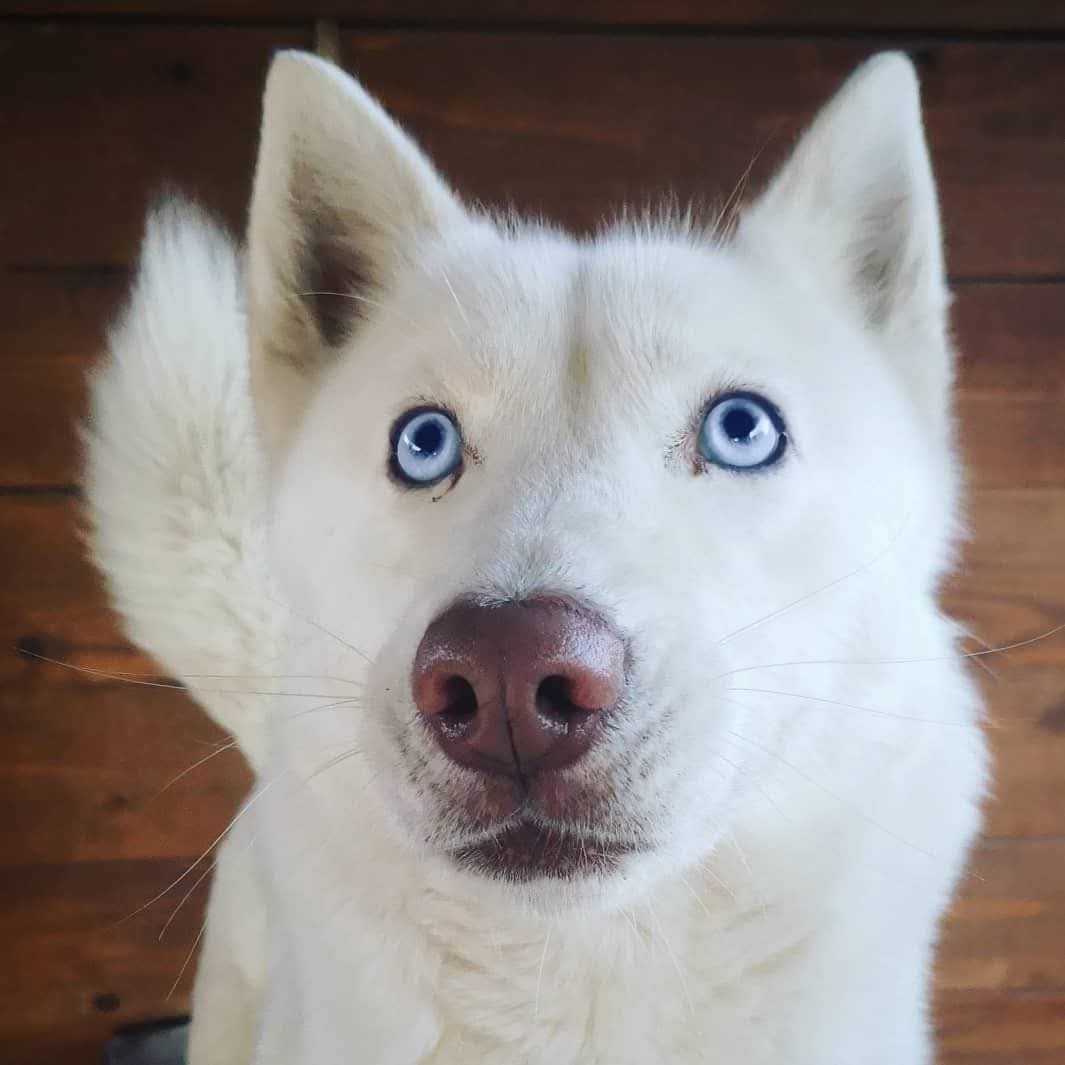
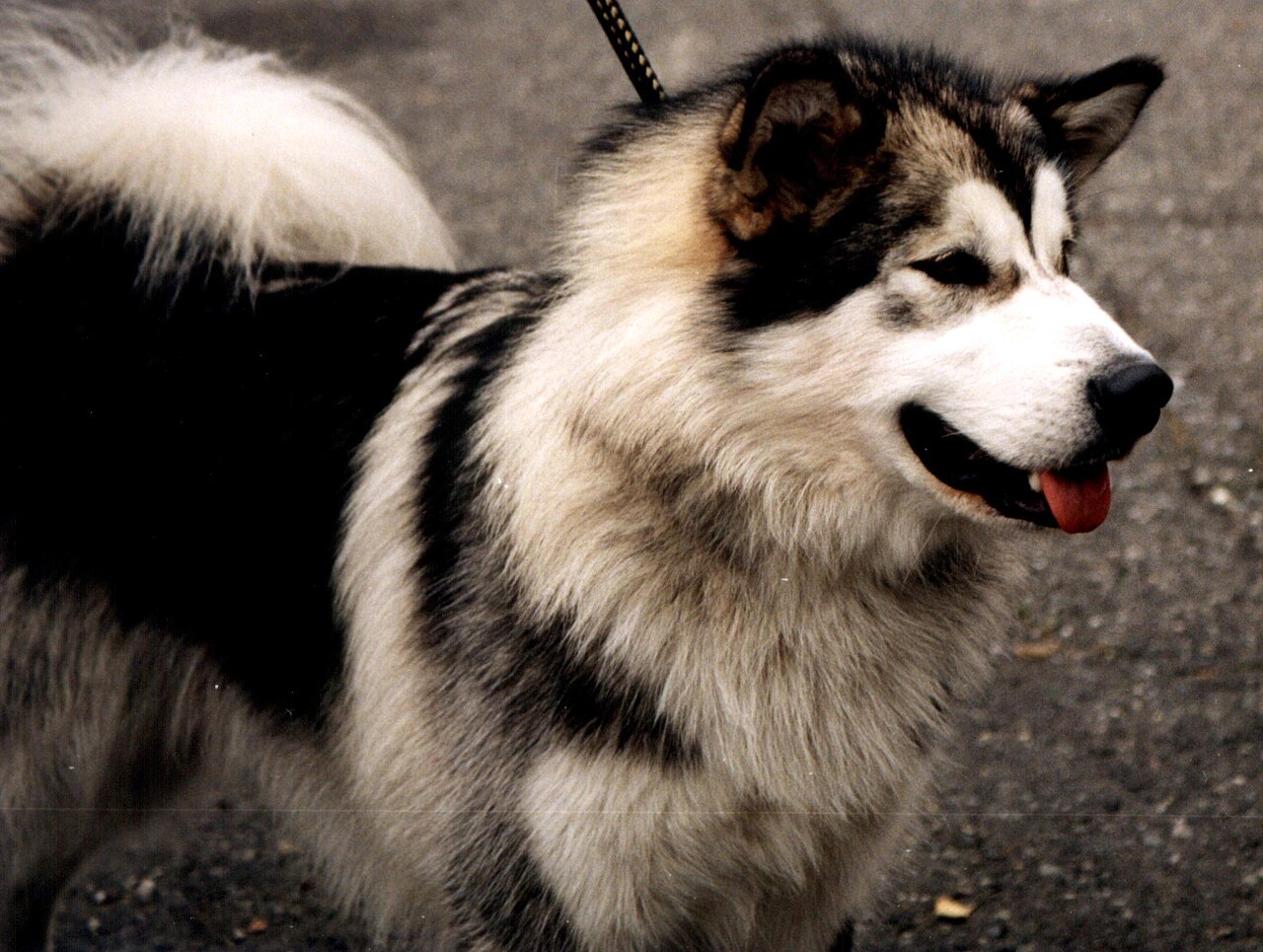
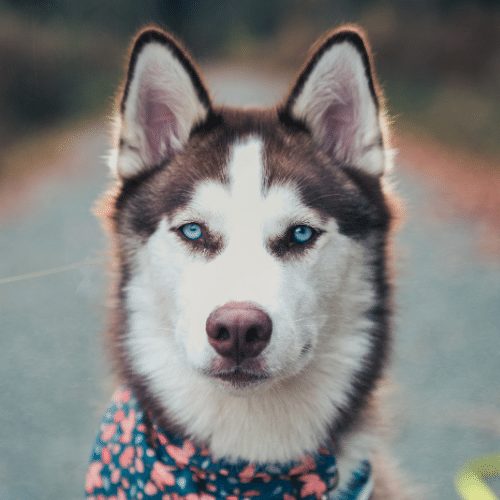
Husky-type dogs are characterized by a thick double coat adapted for harsh northern environments, consisting of a dense, insulating undercoat and a longer, coarser outer coat of guard hairs that repels moisture and provides protection. This structure traps a layer of warm air close to the body, enabling effective in subzero conditions. The undercoat is particularly plush and soft, serving as the primary barrier against cold, while seasonal shedding—often referred to as "blowing coat"—occurs twice annually, allowing these dogs to partially adapt to warmer climates by reducing insulation thickness. In terms of build, huskies typically range from 35 to 90 pounds in , depending on the type, with a lean, athletic frame that emphasizes endurance over bulk. Their bodies feature a deep chest for capacity, a straight back for efficient movement, and powerful, muscled legs with compact feet that distribute on snow and . This conformation supports prolonged physical exertion, such as pulling sleds over long distances. Eye colors vary notably among huskies, including , , or heterochromia, where one eye is and the other , a trait linked to genetic pigmentation patterns. Physiologically, huskies exhibit adaptations suited to northern , including a highly efficient that adjusts to variable food availability, such as during periods of on extended journeys. This metabolic flexibility allows them to maintain levels with minimal intake by slowing basal rates when needed, preventing . They tolerate extreme cold, down to approximately -50°F (-46°C), through their coat's insulation and circulatory efficiencies that minimize heat loss, but remain vulnerable to overheating in warm conditions without full shedding, as their dense fur impairs cooling. These traits underscore their stamina, which manifests in sustained behavioral .

Temperament and Behavior

Huskies are known for their high energy levels and independent nature, traits stemming from their breeding as dogs in harsh environments. Originally developed for pack-based work pulling over long distances, they exhibit strong that foster cooperation within groups but can manifest as stubbornness during , as they prioritize their instincts over constant direction. Unlike many dogs that bark frequently, huskies are highly vocal through , whining, and other expressive sounds, a inherited from their wolf-like ancestors to communicate over vast distances in pack settings. This vocalization serves purposes such as coordinating with team members, signaling emotions, or responding to external stimuli like sirens, and it underscores their communicative and social temperament rather than territorial aggression. Huskies display a playful and affectionate personality, forming strong bonds with humans and other dogs when properly socialized from a young age. Their outgoing and friendly disposition makes them agreeable companions, though they may show some reserve with strangers, reflecting a gentle yet alert demeanor suited to family life. As pack-oriented animals, huskies thrive on social interaction and require ample mental stimulation to channel their instincts productively, preventing boredom-induced destructive behaviors such as digging or escaping enclosures. Without sufficient engagement, their innate drive for activity—rooted in working roles—can lead to restlessness, emphasizing the need for active environments that mimic their historical pack dynamics.

Breeds and Types

Siberian Husky

The is a medium-sized breed developed by the of northeastern , who selectively bred these dogs over thousands of years for their endurance in pulling sleds and herding across harsh conditions. Originating from the Chukotka region, the breed's ancestors were valued for their speed, strength, and ability to thrive in extreme cold, serving as essential companions and transport animals for the indigenous Chukchi in daily life and long-distance travel. This emphasized traits like agility and resilience, distinguishing the from larger Arctic breeds while maintaining its role as a vital part of Chukchi culture. In 1909, the breed was introduced to when Russian fur trader William Goosak imported a team of to , to compete in the 408-mile All Alaska Sweepstakes race, marking the beginning of their use in organized . Subsequent imports by figures like Charles "Shorty" Harris and further popularized the breed among Alaskan mushers, who appreciated its performance in competitive events during the early 20th century. The (AKC) officially recognized the in 1930, establishing breed standards that describe it as quick and light on its feet, with males standing 21 to 23.5 inches at the and weighing 45 to 60 pounds, and females measuring 20 to 22 inches tall and weighing 35 to 50 pounds. Key physical features include erect triangular ears, a bushy tail carried in a sickle curve over the back, almond-shaped eyes in shades of brown or blue, and a medium-length double coat that comes in a variety of colors such as black and white, red and white, or gray and white, often with distinctive facial markings. The breed gained international fame through its pivotal role in the 1925 diphtheria serum run to , where teams of , led by renowned musher and his lead dog , relayed life-saving over 675 miles in subzero temperatures to combat a deadly outbreak, saving numerous lives in the isolated region. , a , covered an extraordinary 264 miles of the relay, demonstrating the breed's legendary stamina and loyalty under duress. Today, the maintains a stable global population numbering in the tens of thousands, with annual AKC registrations consistently placing it among the top 20 most popular breeds in the United States, and it remains actively involved in sports, conformation shows, and as a symbol of heritage. The breed shares genetic ancestry with other sled dogs, tracing back to ancient northeast Eurasian lineages that adapted to extreme environments.

Alaskan Husky

The is a non-standardized, mixed-breed type of developed specifically for high-performance racing in , prioritizing speed, endurance, and efficiency over uniform appearance. Originating from Siberian Huskies imported to in the early , the breed evolved through selective crossbreeding with working dogs such as Pointers, German Shepherds, , and Salukis to enhance athletic traits like sprint speed and stamina, particularly as snowmobiles diminished traditional freighting roles in the and . This open breeding approach, driven by competitive mushers, resulted in a distinct genetic lineage optimized for rather than show standards. Physically, Alaskan Huskies exhibit significant variability in appearance, reflecting their admixed heritage; typical adults weigh between 35 and 75 pounds (16-34 kg) and stand 20 to 26 inches tall at the , with lean builds suited for . Coats can range from short and sleek (favoring sprint types) to medium-length double coats for cold-weather , in diverse colors and patterns that often deviate from purebred norms, such as non-conforming eye colors or markings. Unlike standardized breeds, they are not recognized by the or any major registry, as selection emphasizes functional performance metrics like speed (up to 40 km/h in sprints) and the ability to cover exceeding 1,600 km in events like the Iditarod. Genetic studies confirm their unique profile, with subpopulations for sprint and showing adaptations for aerobic capacity and cold tolerance. Alaskan Huskies dominate modern long-distance sled races, powering the majority of competitive teams in the and similar events due to their superior and . Many are retired from racing around 8-10 years old, after which they become available for through sled dog kennels, rescues, and organizations in and the upper , offering active homes opportunities to provide companionship for these high-energy athletes.

Labrador Husky

The Labrador Husky is a rare, primitive breed originating from the eastern Canadian region of , descending from dogs brought by —ancestors of the —around 1000 AD during their migrations from . These dogs, a subpopulation of the broader Canadian Inuit Dog lineage, adapted to the harsh environment through isolation, leading to interbreeding with local wolf populations that enhanced their size and resilience. By the mid-20th century, the breed faced near extinction due to mass culls of Inuit sled dogs by authorities between the 1950s and , reducing their numbers dramatically; efforts to revive them began in the through dedicated breeding programs focused on maintaining pure lines without crossbreeding. Physically, the Labrador Husky exhibits a wolf-like appearance with a lean yet powerful build, featuring larger paws for snow traction, a thick double coat often sable-tipped for insulation, and typically brown eyes distinguishing it from breeds like the . Adults weigh between 55 and 80 pounds, with males generally larger at 65-85 pounds and females at 55-75 pounds, reflecting their selective in isolated Labrador communities that resulted in greater size compared to other Canadian Inuit Dogs. Genetically, they share Arctic ancestry with the Canadian Eskimo Dog but remain distinct due to their geographic isolation and limited . Historically, Labrador Huskies served the as essential working dogs for transportation, pulling sleds loaded with up to 80 kg over distances of 25-120 km daily, and assisting in and by tracking prey and locating seal breathing holes with their keen senses. In the 19th and early 20th centuries, they supported fur traders and medical transport in 's remote areas. Today, with a small global population estimated in the low hundreds—all lines preserved by a handful of breeders in , such as those in —recovery efforts emphasize ethical breeding to sustain the breed's genetic purity and cultural significance without introducing external bloodlines.

Mackenzie River Husky

The Mackenzie River Husky emerged in the 1800s along the Mackenzie River in Canada's Northwest Territories, developed by Indigenous peoples as a working type of sled dog for transportation and survival in the harsh Arctic environment. These dogs formed the basis of local freighting teams, supporting fur traders and early settlers in navigating frozen rivers and tundra. Their origins trace to overlapping populations of native sled dogs adapted to subarctic conditions, emphasizing utility over standardized breeding. During the 1890s Klondike Gold Rush, Mackenzie River Huskies underwent significant crossbreeding with larger European freighting breeds, including St. Bernards and Newfoundlands, to enhance their capacity for hauling heavy supplies over vast distances in deep snow. This interbreeding, driven by the influx of prospectors and the demand for robust transport animals, resulted in a versatile working type prized by the and gold rush operators for its strength in remote, unforgiving terrain. The crosses aimed to combine the endurance of native stock with the power of imported dogs, making them essential for freighting operations amid the rush's logistical challenges. Physically adapted for freighting, Mackenzie River Huskies typically weigh 60 to 100 pounds, featuring a lean yet powerful build with long legs, deep chests, and dense double coats that provide insulation against extreme cold. Their endurance-focused conformation prioritizes sustained effort over speed, enabling them to pull loads for days in subzero temperatures and heavy snow. This reliability extended to polar expeditions, where teams of these dogs demonstrated exceptional performance in isolated, life-threatening conditions, contributing to explorations in the early . The population of declined sharply after due to the widespread adoption of mechanized transport, such as snowmobiles, airplanes, and railroads, which rendered traditional freighting obsolete. By the mid-20th century, their numbers had dwindled, and today they remain rare, with an estimated global population under 100 and no formal to preserve the type. Preservation efforts are limited to a few dedicated kennels, maintaining their legacy as a historical of the Canadian north.

Sakhalin Husky

The , also known as the Gilyak Laika or , is a critically endangered originating from Island in Russia's , developed over centuries by the indigenous Nivkh (Gilyak) people. These dogs were essential for survival in the harsh environment, primarily serving as sled dogs for transporting goods, mail, fish, and passengers over long distances in teams of up to 30, capable of covering 100-150 km daily at speeds of 10-11 km/h while pulling loads exceeding 70 kg. Additionally, they assisted in large game such as bears and seals, leveraging their stamina and obedience in snowy terrains. Physically, the Sakhalin Husky is a medium-to-large , typically weighing 30-40 kg (66-88 lbs) and standing 56-66 cm (22-26 inches) at the , with an elongated body, thick double coat for insulation, triangular face, amber eyes, erect ears, and a straight or slightly curved often carried low. Coat colors vary, including , red, gray, and , with being preferred by traditional Nivkh breeders for its visibility in . Genetically, as a primitive , it exhibits distinct traits from modern s, showing close relatedness to ancient populations similar to other Siberian sled dogs, with high retention of ancestral wolf-like features such as robust build and endurance. The breed's population plummeted in the due to Soviet-era industrialization, deliberate extermination campaigns in to reduce maintenance costs, and the widespread adoption of snowmobiles, reducing their utility; by 1989, only about 20 individuals remained on . Recent estimates indicate approximately 20 survive in their native region as of the early 2020s, with small numbers possibly in the U.S. and . Revival efforts by Russian breeders and enthusiasts began in the , including initiatives supported by local oil companies like Exxon Neftegaz in 2021 to restore populations, but the breed lacks international recognition from major kennel clubs such as the FCI or AKC.

Roles and Uses

Sled Pulling and Racing

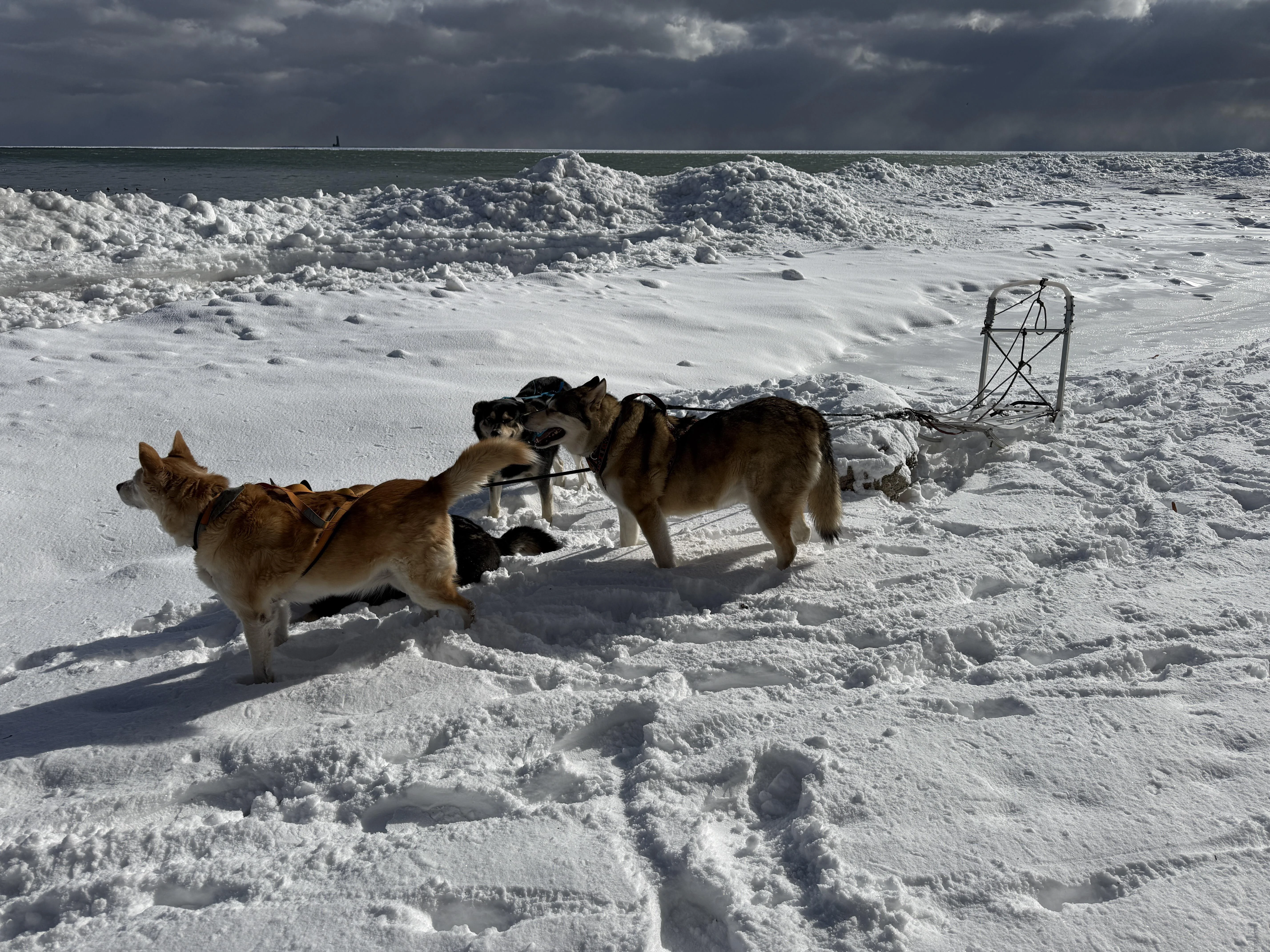
Huskies have long been integral to sled pulling, originating as working dogs in regions where they transported freight over snow and ice. Historically, teams of huskies pulled loads up to 1,000 pounds using traditional X-back harnesses, which distribute pulling force evenly across the dog's body and shoulders to prevent during heavy freighting tasks. These harnesses, often made from durable materials like or , connect to a gangline that links the dogs in a single-file formation, allowing efficient power transfer over long distances on frozen terrain. Sled dog teams are organized into specific positions to optimize performance and control. Lead dogs, positioned at the front, are selected for their intelligence and responsiveness to musher commands, guiding the team through routes and turns. Swing dogs follow immediately behind, assisting with sharp maneuvers by swinging the team's momentum around corners, while team dogs in the middle provide the bulk of the pulling power. Wheel dogs, the strongest and most reliable, are placed closest to the sled to handle tight turns, absorb shocks from uneven , and aid in braking by digging their feet into the surface when the musher applies the 's foot . This formation enables teams to manage pace through verbal cues like "easy" to slow down or "hike" to accelerate, conserving energy for endurance over and ice. The role of huskies in sled pulling evolved from essential freighting in indigenous and early settler communities to a competitive sport in the 20th century, with organized races emerging in Alaska around the 1910s. Major events include the Iditarod Trail Sled Dog Race, covering approximately 1,000 miles from Anchorage to Nome, and the Yukon Quest, a similarly demanding 1,000-mile course between Fairbanks, Alaska, and Whitehorse, Yukon. These races emphasize strategic pace management, where mushers balance bursts of speed up to 15 miles per hour with sustained efforts to cover vast distances, often requiring dogs to brake using wheel positions and musher intervention for safety on ice. Alaskan Huskies, known for their endurance, often excel in these competitions.

Other Working Roles

In indigenous Arctic communities, such as those of the in northeastern , huskies served multifaceted roles beyond primary , including guarding settlements and aiding in protection during nomadic lifestyles. These dogs, developed by the Chukchi for in extreme conditions, were integral to survival, with cultural legends depicting sled dogs as guardians of the , rejecting those who mistreated them during life. Historically, huskies played pivotal roles in expeditions, leveraging their physical endurance to transport supplies and personnel across unforgiving ice. During the early , Siberian huskies were employed in ventures, such as Admiral Richard Byrd's expeditions, where teams hauled essential loads over vast distances in subzero temperatures. Their stamina and adaptability to cold climates enabled explorers to cover terrain inaccessible by other means, contributing to significant scientific and geographic advancements. In modern contexts, huskies continue to excel in utilitarian tasks suited to cold environments, including search-and-rescue operations. During , Siberian huskies were utilized in the U.S. Army's Search and Rescue Unit, where their keen senses and resilience in freezing conditions facilitated the location of downed pilots and the delivery of aid in remote northern areas. Additionally, individual huskies have been trained for work, providing emotional support in healthcare settings, particularly in cooler climates where their calm demeanor and cold tolerance align with patient needs; for instance, therapy huskies visit hospitals and care homes to comfort the seriously ill. Huskies demonstrate adaptability for non-snow tasks through carting on dry land, where wheeled rigs replace sleds to harness their pulling strength for recreational or practical . This activity, often called urban or sulkying, allows a single husky or to tow carts over trails or paths, maintaining their working heritage in warmer seasons or snow-free regions. The use of huskies persists in contemporary Siberian and Alaskan native practices, where they remain essential for and transportation in traditional lifestyles. In regions like northwestern , indigenous hunters rely on huskies for navigating and pursuing marine mammals, fostering a symbiotic relationship shaped by centuries of coexistence amid environmental challenges.

As Companion Pets

Huskies have gained popularity as companion pets, particularly the , which ranks 26th in the American Kennel Club's 2024 breed popularity list due to their loyal and friendly nature that fosters strong bonds with family members. Their sociable temperament makes them well-suited for households seeking an engaging and affectionate , though their independent streak requires consistent interaction to maintain harmony. As high-energy working breeds, huskies demand at least 1-2 hours of vigorous daily exercise to prevent boredom, which can lead to destructive behaviors such as escaping or digging. Without sufficient outlets like long runs, hikes, or play sessions, their innate drive to roam—rooted in sled-pulling heritage—often results in attempts to break free from enclosures. Huskies thrive in homes with spacious, securely fenced yards that allow for safe exploration and activity, rather than confined living, where their needs may overwhelm limited spaces unless owners commit to extensive off-site exercise. When properly socialized and trained from a young age, they exhibit strong compatibility with children, displaying playful gentleness, and can coexist with other pets, especially s, due to their pack-oriented instincts. Many huskies enter companion roles through adoption programs for retired sled dogs, such as those offered by or Good Times Sled Dog Adoption, where former racers transition well to active households providing cold climates and outdoor lifestyles. These dogs often prove rewarding pets for experienced owners ready for their enduring energy levels. In some areas, huskies face restrictions from apartment complexes, homeowners associations, or insurance providers due to their wolf-like appearance and inclusion on lists of perceived high-risk breeds, though no U.S. states outright ban ownership of huskies.

Health and Welfare

Common Health Issues

Husky-type dogs, including the , are predisposed to several hereditary eye conditions that can lead to vision impairment or blindness. For the , hereditary cataracts, characterized by lens opacities, have an incidence of approximately 8% among examined individuals, often linked to genetic factors such as variants in the CPT1A gene. (PRA), a affecting the photoreceptor cells, is particularly notable in the , where it follows an pattern primarily impacting males. Blue-eyed face an elevated risk for , often associated with uveodermatologic (UDS), an autoimmune condition with bilateral ocular inflammation; this breed accounts for about 8% of reported UDS cases in one study of 167 dogs, though exact incidence rates vary by population. Other Husky types show variations: Alaskan Huskies, often crossbred for racing, may have lower rates of hereditary eye issues due to but are prone to injuries from intense work; Labrador Huskies share some eye conditions with but have additional risks from genetics, such as progressive rod-cone degeneration PRA; Mackenzie River Huskies, being rarer, have limited data but similar northern breed predispositions; the near-extinct lacks comprehensive studies. Skeletal and dermatological issues also commonly affect Huskies due to their growth patterns and nutritional sensitivities. Hip dysplasia, an abnormal development of the hip leading to and lameness, occurs at a relatively low rate of 2-5% in compared to other breeds, though rapid growth during puppyhood can exacerbate stress; rates in Alaskan Huskies may be similar or slightly higher due to for speed. Zinc-responsive dermatosis, manifesting as scaling, crusting, and alopecia around the eyes, mouth, and pads, is prevalent in northern breeds like the , often stemming from impaired zinc absorption or diets low in bioavailable , particularly during periods of accelerated growth in juveniles; this is also noted in other Husky types. The average lifespan for is 12-14 years, but working sled dogs may experience reduced longevity due to cumulative physical demands and environmental exposures. Lifespans for other types vary: Alaskan Huskies in racing may live 10-12 years, while Huskies average 10-14 years. Environmental factors pose significant risks to Huskies' thermoregulation, given their adaptations for cold climates. Overwork in extreme cold, especially if dogs become wet or exhausted during , can lead to , as even cold-tolerant breeds like Siberian Huskies lose body heat rapidly under such conditions. In warmer environments, heatstroke is a concern, particularly following seasonal shedding when the double coat transitions but may temporarily reduce insulation efficiency; Huskies in hot climates show heightened susceptibility, with body temperatures potentially exceeding 107°F (41.2°C) during exertion. Their dense double coat, which insulates against both cold and heat by trapping air layers, can influence vulnerabilities if shedding is incomplete or if exposed to prolonged temperature extremes. These risks apply similarly across Husky types, though mixes like Alaskan may tolerate heat slightly better due to varied .

Care and Maintenance

Huskies possess a thick double that sheds heavily twice a year, typically in spring and fall, requiring regular to manage loose undercoat and prevent matting. During these biannual shedding periods, daily brushing with a pin brush or undercoat rake can remove substantial amounts of , helping to keep the dog's healthy and reducing loose around the home. This applies to all Husky types, though coat density varies slightly in mixes like Alaskan Huskies. Owners should bathe Huskies infrequently, only as needed, since their self-cleaning typically requires just a few baths annually unless the dog is being shown. A is essential for Huskies to support their energy demands and muscle maintenance, with recommendations ranging from 25-30% protein content, adjusted based on activity level—lower in summer (around 20-25%) and higher in winter or for working dogs (up to 32%). Feedings should consist of two to three meals per day using AAFCO-compliant food suited to the stage, with portions monitored to prevent , as Huskies can be prone to weight gain if overfed. Active types like Alaskan Huskies may require higher caloric intake during racing season. Due to their high energy levels requiring mental and physical stimulation, Huskies need consistent exercise regimens, such as 5-10 miles of running or brisk walking spread across the week to satisfy their endurance bred for sled pulling. This can include daily sessions of 30-60 minutes of vigorous activity like , , or play in a secure area, always on a or in a fenced space to curb their instinct to run. Working breeds like Mackenzie River Huskies may need more structured endurance training. Routine maintenance includes nail trimming every 4-6 weeks to prevent overgrowth and discomfort during movement, using appropriate dog nail clippers or grinders. Ear cleaning should be performed weekly or as needed with a veterinarian-approved solution and balls to remove debris and prevent infections, especially given their erect ears that can trap moisture. Veterinary recommendations for Huskies emphasize annual eye exams by a veterinary ophthalmologist to screen for breed predispositions like cataracts or . In warmer climates where are more prevalent, year-round flea prevention through topical treatments or oral medications is advised to protect their dense from infestations. For non-Siberian types, screening should include breed-specific tests, e.g., in Labrador Huskies.

Conservation and Culture

Conservation Status

The Sakhalin Husky is considered critically endangered, with a very small confined primarily to Island. Similarly, the Labrador Husky is classified as threatened, with a very small of individuals worldwide, maintained through targeted preservation efforts as of the 1970s. The Mackenzie River Husky, a historical freight , numbers fewer than 100 alive as of 2022, mostly within dedicated kennels. These rare husky types confront significant threats from environmental and human-induced changes. and urbanization are eroding habitats, diminishing and traditional sledding routes essential for their working roles, while the rise of modern technologies like snowmobiles has accelerated population declines since the mid-20th century. In isolated populations, poses a further risk, leading to reduced and heightened susceptibility to hereditary issues. Conservation efforts focus on genetic preservation and breeding programs to counteract these pressures. For the Mackenzie River Husky, recent genomic studies have analyzed DNA from surviving dogs to trace ancestry and inform diversity maintenance, emphasizing the breed's mixed heritage from Arctic and European lines. Canadian initiatives for the Labrador Husky include registries and selective breeding started in the 1970s to rebuild numbers from near-extinction, prioritizing pure lines for sustainability. Although specific revival programs for the Sakhalin Husky in Russia post-2010 remain limited in documentation, broader wildlife conservation frameworks in the region support efforts to protect indigenous landraces amid ongoing threats.

Cultural Significance

Huskies hold a revered place in the folklore of indigenous peoples, particularly the Chukchi of northeastern and the of , where they are depicted as indispensable survival partners essential to human endurance in harsh environments. Among the Chukchi, legends portray huskies as guardians of the , with two sled dogs stationed at the gates of to bar entry to those who mistreated canines during their lives, underscoring the profound bond and mutual dependence between the people and their dogs. oral traditions similarly integrate dogs into narratives of resilience, such as the myth of half-human, half-dog beings born from a union symbolizing the intertwined fates of humans and canines in the . These stories emphasize the dogs' role not just as tools for hunting and travel but as familial protectors whose loyalty ensured communal survival against famine and isolation. In popular media, huskies have been immortalized as symbols of heroism and loyalty, amplifying their cultural icon status. The 2006 film Eight Below, directed by Frank Marshall, dramatizes the true story of a team of sled dogs—including Siberian huskies—left behind in Antarctica, highlighting their instinctual survival and devotion amid extreme adversity. Similarly, the bronze statue of Balto, a lead sled dog in the 1925 Serum Run to Nome, Alaska, stands in New York City's Central Park as a enduring tribute to canine bravery in delivering life-saving diphtheria antitoxin through blizzard conditions; unveiled in 1925 with Balto present, it attracts visitors as a beacon of Arctic exploration's human-animal partnership. Huskies embody modern symbolism in adventure branding and advocacy, representing unyielding endurance and . The Iditarod Trail Sled Dog Race, an annual 1,000-mile trek across , serves as a for perseverance, with its Red Lantern award—given to the last finisher—celebrating the grit of mushers and their husky teams in homage to historical dog-powered journeys. In indigenous rights movements, huskies symbolize the erosion of traditions, as seen in Canada's 1950s–1960s mass slaughter of sled dogs (qimmiit), which disrupted communities' self-sufficiency and sparked ongoing inquiries into colonial impacts; the federal government's 2024 apology acknowledged this as a "terrible historic " tied to heritage preservation efforts. Globally, huskies permeate pop culture through mascots and digital phenomena that accentuate their "wolf-dog" mystique, blending wild allure with approachable charm. Sports teams like the Huskies feature live Alaskan Malamutes as mascots, such as Dubs, to evoke team spirit and regional identity rooted in northern resilience. Online, huskies inspire memes and viral content portraying their dramatic expressions and wolfish features as humorous stand-ins for untamed independence, fostering a widespread fascination that reinforces their image as enigmatic yet endearing companions.

References

Add your contribution
Related Hubs
User Avatar
No comments yet.