


Community hub
Recent from talks
Contribute something
Nothing was collected or created yet.
Isa Mustafa
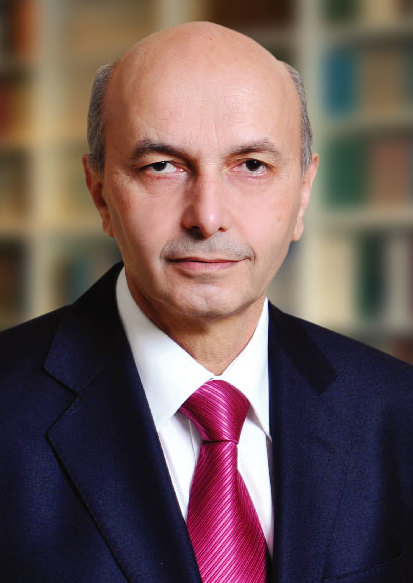
View on WikipediaIsa Mustafa ([iˈsa musˈtafa] ⓘ; born 15 May 1951) is a retired Kosovar politician. Mustafa was the mayor of Pristina from December 2007 to December 2013 and served as the prime minister of Kosovo between December 2014 and September 2017. He was the leader of the Democratic League of Kosovo (LDK) between 2010 and 2021.
Key Information


.svg)
Early life
[edit]Mustafa was born in the village of Prapashtica, in the Gollak Highlands of the District of Pristina, Kosovo on 15 May 1951, to Kosovo Albanian parents.[1] He and his family speak Albanian in the Gheg dialect of the language. He finished primary and high school in Pristina, and attended the University of Pristina in the Faculty of Economics, where he obtained a master's degree and a PhD.[1] In 1974 he began his professional work, as an examiner at the University of Pristina.[1]
Political career
[edit]Isa Mustafa began his political career in the early 1980s, when he became the head of the municipal government of Pristina, from 1984 to 1988.[1] In the 1990s, as Yugoslavia started to break up, Mustafa became the Minister of Economy and Finances of the government of the Republic of Kosova, in exile, headed by Bujar Bukoshi.[1] During this time, an arrest warrant for Mustafa was issued within Yugoslavia – which did not become international, making it possible for him to work in Western Europe. Mustafa did not apply for any political asylum, and was able to return to Kosovo anytime if needed.[1]
After the Kosovo War ended on 1999, he returned home, but returned to politics only in 2006 as a High Political Advisor of the then President of Kosovo, Fatmir Sejdiu.
In December 2007, he became the mayor of Pristina in local elections, beating the vice president of the Democratic Party of Kosovo (PDK) and one of the ex-commanders of the Kosovo Liberation Army (UÇK), Fatmir Limaj.[2] He won a second term as Mayor of Pristina in November 2009.[2]
On 7 November 2010, he became the leader of the Democratic League of Kosovo, beating Fatmir Sejdiu in the party leadership election by 235 votes to 124.[3]
On 1 December 2013, he lost re-election to the position of Mayor of Pristina, in what was seen as a major upset, to upcoming politician Shpend Ahmeti. The upset was especially dramatic seeing as it happened in what had been historically known as a Democratic League of Kosovo stronghold.
On 8 December 2014, he became the Prime Minister of Kosovo in a coalition with the Democratic Party of Kosovo. With a PhD in Economics, he claimed his government would be focused on the economic development of the country.
While addressing the Assembly of Kosovo on 22 September 2015 regarding an agreement with Serbia on autonomy for Kosovo's ethnic Serb minority and another agreement defining the border between Kosovo and Montenegro, Mustafa was pelted with eggs by opposition Assembly lawmakers. He later continued his address while being shielded with an umbrella by his bodyguards.[4]
On 10 May 2017, Mustafa lost a vote of no-confidence and decided not to stand in the next election. Instead he nominated Avdullah Hoti as the Democratic League candidate for prime minister. Mustafa stayed on as Prime Minister until his successor Ramush Haradinaj was elected by parliament in September 2017 following a parliamentary election.
On 3 August 2019, Isa Mustafa was re-elected as leader of the Democratic League of Kosovo for the third time.
On 10 July 2020, Mustafa announced on his Facebook page that he was diagnosed with COVID-19.[5] On 1 August 2020, he revealed on his Facebook page that he had fully recovered from the disease.
On 15 February 2021, Mustafa announced he would be standing down as the leader of the Democratic League of Kosovo after a poor result in the 2021 elections. He officially resigned at the LDK convention on 14 March 2021, and was succeeded by Lumir Abdixhiku, who named Mustafa as the honorary president of LDK the same day.
Government
[edit]Personal life
[edit]Mustafa is married to Qevsere Mustafa and has three children, two sons and a daughter.[6]
References
[edit]- ^ a b c d e f "Biografia" (in Albanian). isamustafa.info. Archived from the original on 21 July 2011. Retrieved 7 November 2010.
- ^ a b "Local Election in Kosovo: Independence accomplished - New goals ahead for Kosovo". World Security Network. 28 October 2009. Archived from the original on 16 July 2011. Retrieved 7 November 2010.
- ^ "Mustafa: Nuk i kam blerë votat" (in Albanian). Gazeta Express. 7 November 2010. Archived from the original on 16 November 2010. Retrieved 7 November 2010.
- ^ "Lawmakers Throw Eggs At Kosovo's Prime Minister". Radio Free Europe/Radio Liberty. September 22, 2015. Retrieved September 24, 2015.
- ^ Facebook https://www.facebook.com/IsaMustafaKS/. Retrieved July 10, 2020.
{{cite web}}: Missing or empty|title=(help) - ^ "Prime Minister's Biography – Isa Mustafa". Kosovo Prime Minister's Office. Archived from the original on June 10, 2009.
External links
[edit]
 Republic of Kosova Republic of Kosova(Recognized only by Albania) (1992–2000) |
|
|---|---|
 UN-administered Kosovo UN-administered Kosovo(2000–2008) | |
 Republic of Kosovo Republic of Kosovo(Recognized by 116 UN member states) (2008–present) | |
| International | |
|---|---|
| National | |
| People | |
| Other | |

Isa Mustafa
View on GrokipediaEarly life and education
Family background and childhood
Isa Mustafa was born on May 15, 1951, in the village of Prapashtica in the Gollak Highlands of the Pristina district, Kosovo, then part of the Socialist Federal Republic of Yugoslavia.[10][11] His parents were ethnic Kosovo Albanians, and his family spoke the Gheg dialect of the Albanian language, reflecting the linguistic and cultural heritage of the Albanian-majority population in the region.[10] The family originated from rural Kosovo, a predominantly agricultural area with limited economic opportunities in the post-World War II era under Yugoslav socialist governance, which emphasized collectivization and industrialization but left peripheral regions like Kosovo underdeveloped. Mustafa completed his primary and secondary education in the urban center of Pristina, indicating a likely relocation from the rural village to the capital for better access to schooling and services.[12] During his childhood, Mustafa grew up in a Muslim family amid the multi-ethnic but Albanian-dominated demographic of Kosovo, where Yugoslav policies promoted federal unity while maintaining Serb oversight in administrative structures, fostering a context of cultural preservation for Albanian identity through language and traditions despite broader assimilation efforts.[13] This period was marked by the socio-economic challenges of a peripheral province, including modest living standards and reliance on state employment and agriculture.[10]Academic training and early influences
Isa Mustafa completed his undergraduate studies in economics at the Faculty of Economics, University of Pristina, graduating in 1974.[14][15] He then pursued advanced education, earning a master's degree in organizational sciences focused on financial management from the Faculty of Organizational Sciences in Belgrade.[14][16] Mustafa later obtained a PhD in economics from the University of Pristina, establishing his expertise in the field.[17][18] His doctoral work aligned with the economic priorities of the era, reflecting engagement with development and planning concepts prevalent in Yugoslav academia. Upon graduation, Mustafa immediately entered academia as a lecturer at the University of Pristina in 1974, initiating his teaching role in economics amid the socialist economic structures of Yugoslavia, which featured centralized planning and self-management systems as core instructional elements.[4][19] This period shaped his foundational understanding of state-directed economic strategies, though specific early publications from the 1970s remain undocumented in available records.Professional career prior to politics
Economic and advisory roles
During the 1980s, under the Socialist Autonomous Province of Kosovo within Yugoslavia, Isa Mustafa held key administrative positions focused on economic planning and municipal development. From 1984 to 1988, he served as chairman of the Executive Council of Pristina, overseeing local economic policies, resource allocation, and urban planning initiatives in a centrally planned socialist economy characterized by worker self-management and federal subsidies.[2][20] In this capacity, Mustafa advised on infrastructure maintenance and industrial support, though the province faced broader economic stagnation amid Yugoslavia's mounting debt crisis and hyperinflation, with Kosovo's per capita GDP lagging behind the federal average at around 30-40% by the mid-1980s.[21] Concurrently, Mustafa functioned as director of the Kosovo Planning and Development Agency, producing economic reports and strategies for regional growth, including projections for sectoral investments in agriculture, mining, and light industry—key pillars of Pristina's economy at the time.[20] These efforts aligned with federal directives emphasizing self-sufficiency, but causal impacts on metrics like local output growth remain constrained by the system's rigid planning and external shocks, such as the 1980s oil price fluctuations and inter-republic fiscal imbalances that reduced transfers to underdeveloped areas like Kosovo. No specific projects under Mustafa's direct oversight, such as measurable expansions in housing stock or industrial capacity, are distinctly documented beyond general municipal operations. In 1991, amid escalating political tensions and the establishment of parallel Kosovo institutions, Mustafa was appointed director of the Kosovo Planning and Development Agency, where he contributed to advisory economic analyses for the provisional government's finance and economy portfolio, including foundational frameworks for post-Yugoslav fiscal systems.[4] This role emphasized data-driven planning for self-governance, though implementation was limited by Serbia's revocation of Kosovo's autonomy in 1989 and ensuing isolation from federal resources.Academic contributions
Isa Mustafa has been a professor of economics at the Faculty of Economics, University of Pristina, where he earned his master's degree and PhD in the field.[22] His teaching focused on advanced economic topics, including master's-level courses assigned by the faculty's administration.[22] Mustafa's research contributions center on economic development challenges in Kosovo and the surrounding region. In 2001, he co-authored the working paper Prospects for Economic Development in Kosova and Regional Context, which examined post-conflict economic hurdles such as high unemployment, infrastructural deficits, and integration barriers within the Balkan framework, drawing on empirical data from the late 1990s.[23] This analysis emphasized structural factors influencing growth prospects, including resource allocation and comparative regional performance. He further contributed to scholarly documentation of Kosovo's economy in the edited volume Kosova: A Monographic Survey, authoring sections on economic development trends up to 1999, with attention to sectoral outputs and historical patterns under Yugoslav administration.[24] These works highlight Mustafa's emphasis on data-driven assessments of regional economic imbalances, though limited public citations reflect the constrained academic publishing environment in Kosovo during that era.Political career
Initial involvement in the 1980s
Isa Mustafa's initial foray into politics occurred within the structures of the League of Communists of Yugoslavia during the late socialist era, beginning with roles in communist youth organizations in Kosovo. As an ethnic Albanian cadre, he advanced through the party's youth wing, eventually representing Kosovo's branch at the federal Yugoslav level in the late 1970s or early 1980s, selected for his ability to compete with delegates from other republics.[25][15] This positioning aligned him with the multi-ethnic communist framework under Josip Broz Tito, emphasizing loyalty to centralized authority amid underlying ethnic frictions. By 1984, Mustafa had ascended to the chairmanship of the Executive Council of Pristina, effectively serving as the municipal head until 1988, while concurrently directing aspects of Kosovo's economic planning apparatus.[20] In this capacity, he operated within the Yugoslav system's emphasis on administrative control and economic coordination, navigating the aftermath of the 1981 Kosovo protests—Albanian-led demonstrations demanding elevated provincial status that prompted federal crackdowns and heightened Serb-Albanian distrust—by adhering to party directives that prioritized stability over separatist inclinations.[25] His tenure reflected pragmatic alignment with communist hierarchies, which suppressed nationalist expressions to maintain the federation's balance of power among republics and provinces. Mustafa's active involvement waned toward the decade's end as Slobodan Milošević consolidated power in Serbia and revoked Kosovo's autonomy in March 1989 through constitutional amendments, triggering mass resignations among Albanian officials and a purge of perceived disloyal communists.[20] Sidelined amid this shift toward centralized Serb dominance and rising Albanian nationalism, he entered a political hiatus through the 1990s, withdrawing from public roles as parallel Albanian institutions emerged in response to Belgrade's policies.[25]Mayoralty of Pristina (2007–2013)
Isa Mustafa was elected mayor of Pristina in the 2007 Kosovan local elections as the candidate of the Democratic League of Kosovo (LDK), securing victory in the second round on December 8, 2007, against Fatmir Limaj of the Democratic Party of Kosovo (PDK).[26] These elections, held amid anticipation of Kosovo's impending independence, marked Mustafa's return to leading the municipal government, a role he had previously held from 1984 to 1988 under Yugoslav administration.[27] Mustafa was re-elected in the November 15, 2009, local elections—the first held after Kosovo's declaration of independence on February 17, 2008—with approximately 58 percent of the vote in the first round, reflecting strong support in the capital amid post-independence stabilization efforts.[28] During his tenure, which extended until December 2013, he oversaw urban infrastructure projects, including the construction of Ibrahim Rugova Square and Zahir Pajaziti Square, the latter funded by a 4.7 million euro allocation from the municipal budget initiated in 2012.[29] [30] Additional efforts focused on road expansions to address growing traffic demands in the expanding capital, though critics noted persistent issues with illegal constructions and administrative inefficiencies.[15] [31] In the 2013 local elections, Mustafa sought a third term but was defeated in the December 1 run-off by Shpend Ahmeti of the Self-Determination Movement, ending his mayoralty after the municipal budget for that year reached 63.37 million euros, primarily directed toward public services and development.[32] [33] Post-independence challenges, including the integration of returnees and fiscal management in a newly sovereign entity, were navigated under constrained resources, with limited public data on budget execution rates or debt accumulation during this period.[34]Leadership of the Democratic League of Kosovo (2010–2021)
Isa Mustafa was elected as leader of the Democratic League of Kosovo (LDK) on November 7, 2010, defeating former leader Fatmir Sejdiu in the party's internal elections.[35] His ascension marked a shift toward a more pragmatic approach within the party, founded by Ibrahim Rugova, emphasizing institutional stability and economic reform over purely nationalist rhetoric.[36] Under Mustafa's leadership, LDK pursued a strategy focused on European Union integration, positioning the party as a proponent of Kosovo's Euro-Atlantic aspirations and dialogue with Serbia under international auspices.[37] This platform contributed to electoral success in the June 8, 2014, parliamentary elections, where LDK obtained 25.2 percent of the vote, securing 37 seats and second place behind the Democratic Party of Kosovo (PDK).[38] Following the vote, Mustafa negotiated a coalition with PDK leader Hashim Thaçi, formalized on November 20, 2014, to form a government despite ideological differences, prioritizing governance continuity over opposition status.[39][40] Subsequent elections revealed stagnation and decline, with LDK maintaining approximately 25 percent in 2017 but facing voter fatigue from coalition compromises that alienated the party's reformist base.[38] Internal dynamics exacerbated these challenges; Mustafa's tenure saw accusations of autocratic control, including intimidation of rivals and suppression of factional competition, which stifled generational renewal and contributed to party fragmentation.[41][42] LDK statutes under Mustafa prohibited formal factions, fostering centralized decision-making but breeding dissatisfaction among younger members and Rugova loyalists seeking ideological purity.[42] The culmination occurred in the February 14, 2021, parliamentary elections, where LDK suffered its worst historical result, prompting Mustafa's resignation the following day as a gesture of accountability for the defeat.[3][43] This outcome reflected causal factors including prolonged coalition governance with PDK, perceived as pragmatic but eroding LDK's distinct identity, alongside rising populist alternatives that capitalized on public disillusionment.[3]Parliamentary and advisory positions
In 2006, Mustafa served as economic advisor to Kosovo President Fatmir Sejdiu, providing counsel on policy matters during a period of provisional institutions under United Nations administration.[44] Following the June 2014 parliamentary elections, Mustafa was elected Speaker of the Assembly of Kosovo on July 17, 2014, securing 65 votes from 82 attending deputies in a session marked by the absence of Democratic Party of Kosovo (PDK) representatives, who contested the proceedings' legitimacy.[45] In this role, he oversaw the assembly's constitutive session and initial legislative activities, including debates on government formation amid coalition tensions between the Democratic League of Kosovo (LDK), PDK, and other parties. His speakership emphasized procedural fairness but lasted only until December 9, 2014, when he transitioned to the premiership after a PDK-LDK coalition agreement.[40] Amid post-October 2019 election deadlock, Mustafa was reelected Speaker on December 26, 2019, again with 65 votes in a session convened without agreement from the Vetëvendosje party, highlighting LDK's strategy to support a minority government from opposition benches rather than join a coalition.[46] This interim position focused on maintaining assembly functionality during stalled negotiations but proved transient, dissolving into early elections by early 2020 due to unresolved coalition instability and procedural challenges.[47]Premiership (2014–2017)
Government formation and coalition dynamics
Following the June 8, 2014, parliamentary elections in Kosovo, where the Democratic Party of Kosovo (PDK) secured 30.38% of the vote and 37 seats in the 120-seat assembly, and the Democratic League of Kosovo (LDK) obtained 25.24% and 30 seats, no single party achieved a majority, necessitating coalition negotiations.[48] Prolonged deadlock ensued, with initial attempts at a PDK-LDK alliance faltering amid disputes over ministerial allocations and leadership roles, until President Atifete Jahjaga mediated a breakthrough.[49] On November 20, 2014, PDK leader Hashim Thaçi and LDK leader Isa Mustafa signed a coalition agreement in principle, enabling the formation of a grand coalition controlling 67 seats and prioritizing institutional stability over ideological alignment.[39] The pact formalized power-sharing, with Mustafa designated prime minister, Thaçi as deputy prime minister and foreign minister, and LDK retaining oversight of key portfolios such as economy and finance while PDK dominated security and justice ministries, reflecting a pragmatic division to balance influence rather than a unified policy platform.[40][50] The Kosovo Assembly voted to invest the government on December 9, 2014, with 81 votes in favor, marking the end of six months of post-election impasse and providing initial legislative stability through the coalition's combined majority.[51] This arrangement initially mitigated risks of paralysis by leveraging PDK's incumbency experience and LDK's administrative expertise, though underlying frictions—stemming from the parties' historical rivalry and lack of programmatic convergence—surfaced early.[50] Emerging tensions arose primarily from opposition groups, notably Vetëvendosje, which captured 13.59% of the vote and 11 seats in 2014, positioning itself as a vocal critic of the coalition's perceived elite pact and using parliamentary disruptions to challenge its legitimacy from the outset. These dynamics highlighted the coalition's reliance on internal discipline over broad consensus, with Vetëvendosje's protests foreshadowing sustained obstructionism that tested governmental cohesion.[52]Domestic policy initiatives
During Isa Mustafa's premiership from December 2014 to September 2017, the government advanced anti-corruption efforts primarily through the implementation of the existing Anti-Corruption Strategy and Action Plan for 2013–2017, which included codifying regulations for prevention and establishing foundational oversight mechanisms for the Anti-Corruption Agency.[53] Progress was noted in preliminary confiscations of assets linked to high-level corruption cases, though enforcement remained uneven, with EU assessments highlighting incremental advancements in tracking organized crime alongside persistent gaps in prosecution.[54] Judicial reforms were pursued in alignment with EU accession requirements under the Stabilisation and Association Agreement, focusing on legislative alignment for rule-of-law standards, but lacked major standalone enactments, with emphasis instead on institutional cooperation to address corruption confined to Kosovo's territory, such as fiscal fraud.[55] In public services, the administration prioritized allocations for education and health sectors, announcing plans for salary increases for teachers, healthcare workers, and civil servants to address retention issues amid budgetary stability.[56] The government pledged to operationalize a health insurance fund, delaying rollout to 2017 for preparatory measures, aiming to enhance service delivery through formalized coverage mechanisms.[57] Decentralization initiatives built on prior frameworks by supporting local fiscal capacities, with projects under Mustafa's tenure increasing municipal own-source tax revenues as part of broader EU-assisted reforms to devolve administrative functions.[58] The government's handling of widespread opposition protests from late 2015 to 2016, which disrupted parliamentary sessions through tear gas releases by lawmakers, involved deploying police for order maintenance, resulting in the arrest of nine opposition MPs following a February 19, 2016, incident in the assembly chamber.[59] Street demonstrations saw police use of tear gas against protesters throwing stones and firebombs, as in January 2016 clashes near government buildings, with Prime Minister Mustafa condemning the actions as unconstitutional while rejecting calls for resignation.[60] [61] These measures sustained governmental operations amid over a dozen parliamentary disruptions but drew criticism for escalating tensions without addressing underlying grievances through dialogue.[62]Economic policies and performance
During Isa Mustafa's premiership from December 2014 to September 2017, the government prioritized economic integration with the European Union, including advocacy for visa liberalization to facilitate trade, remittances, and labor mobility, though this objective was not achieved by the end of his term due to unmet conditions such as border demarcation with Montenegro and domestic political opposition.[63][64] Policies also emphasized the Stabilization and Association Agreement (SAA) with the EU, signed in 2015 and entering force in 2016, aimed at fostering regulatory alignment and investment inflows, alongside ongoing privatization of state-owned enterprises through the Kosovo Privatization Agency to generate revenue and efficiency gains.[65] These measures sought to reduce reliance on remittances, which constituted over 10% of GDP, but structural barriers like weak rule of law limited their impact.[66] Economic growth averaged approximately 3-4% annually, with real GDP expanding by 3.4% in 2015 and 3.4% in 2016, driven primarily by private consumption and remittances rather than export-led or investment surges.[67][68] Foreign direct investment (FDI) net inflows rose modestly to $247 million in 2016 from lower prior levels, reaching $323 million in 2017, equivalent to about 5-6% of GDP, though this remained below regional peers due to perceived risks in governance and contract enforcement.[66][69] Unemployment persisted at high levels, fluctuating between 30% and 35% of the labor force, with youth rates exceeding 50%, reflecting insufficient job creation in non-agricultural sectors despite growth.[70][71] Fiscal policy maintained prudence, with budget deficits contained below 2% of GDP on average, supported by revenue from privatization and taxes, while public debt remained low at around 15-17% of GDP by 2017, up from earlier years but sustainable amid global low-interest conditions.[72][73] However, growth's dependence on external factors like diaspora transfers—exacerbated by stalled visa liberalization—highlighted vulnerabilities, as domestic investment and productivity gains were modest, contributing to persistent inequality and limited poverty reduction.[74]| Indicator | 2014 | 2015 | 2016 | 2017 |
|---|---|---|---|---|
| GDP Growth (%) | ~2.5 | 3.4 | 3.4 | ~4.0 |
| Unemployment Rate (%) | 30.0 | 35.3 | 32.9 | 27.5 |
| FDI (USD million, net) | ~200 | ~250 | 247 | 323 |
| Public Debt (% GDP) | ~10 | ~14 | ~16 | ~17 |