Hubbry Logo
Jacob BeserJacob BeserMain
Open search
Jacob Beser
Community hub
Jacob Beser
logo
8 pages, 0 posts
0 subscribers
Be the first to start a discussion here.
Jacob Beser
Jacob Beser
from Wikipedia

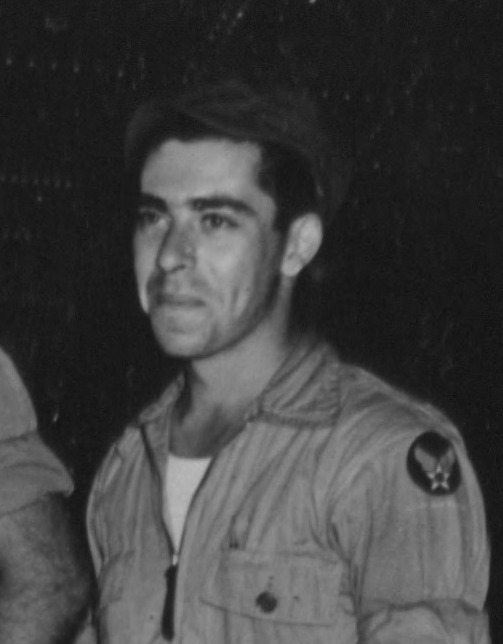
Jacob Beser (May 15, 1921 – June 17, 1992) was a lieutenant in the United States Army Air Forces who served during World War II. Beser was the radar specialist aboard the Enola Gay on August 6, 1945, when it dropped the Little Boy atomic bomb on Hiroshima. Three days later, Beser would become a crewmember aboard Bockscar when the Fat Man bomb was dropped on Nagasaki. He was the only person to have served as a strike crew member of both of the 1945 atomic bomb missions.[1]

Key Information

Background

[edit]

Jacob Beser grew up in Baltimore, Maryland. He attended the Baltimore City College (high school) and graduated in June 1938. Beser then studied mechanical engineering at The Johns Hopkins University, also in Baltimore, but dropped out the day after the attack on Pearl Harbor to enlist in the Army Air Forces. He was Jewish and extremely restless to get into the fight against Hitler.[2]

Because of his training and educational background, Beser was sent to Los Alamos and worked on the Manhattan Project in the area of weapons firing and fusing. There, he met or worked with various luminaries such as Robert B. Brode, Norman Ramsey, Niels Bohr, Enrico Fermi, Edward Doll, and General Leslie Groves.[3]

Mission

[edit]

The 509th Composite Group, which Beser served in, was the army unit tasked with deploying the atomic bombs. To practice for the mission, they used practice bombs called "pumpkins", designed to be similar to the Fat Man atomic bomb. The unit began training on December 17, 1944, at the Wendover Army Air Field in Utah, before being deployed to the island of Tinian in May 1945. The unit's First Ordnance Squadron was responsible for handling the bombs.[4]

On August 6, 1945, the first atomic bomb to be used in combat was dropped by a B-29 Superfortress bomber, the Enola Gay, over the Japanese city of Hiroshima, killing 70,000 people, including 20,000 Japanese combatants and 20,000 Korean slave laborers. The thirteen-hour mission to Hiroshima, under the command of pilot Colonel Paul Tibbets, began at 0245 Tinian time. By the time the Enola Gay rendezvoused with its two accompanying B-29 Superfortresses at 0607 over Iwo Jima, the group was three hours from the target area. "Little Boy's" detonation was triggered by radar sensors on the bomb that measured its altitude as it fell. Beser's job was to monitor those sensors and ensure that there was no interference that could have detonated it prematurely. The bomb fell away from the aircraft at 09:15:17 Tinian time. Beser did not watch the bomb detonate but he heard the bomb's radar signals switch on and then cut off at the moment the intense light generated by its detonation filled the plane.

Three days later, in a second B-29 Superfortress bomber, Bockscar, Beser repeated this task over Nagasaki with Fat Man, the plutonium implosion bomb that became the second and last atomic bomb used in combat. Beser was the only crew member to accompany both atomic bomb missions, and along with the commanding officers/pilots, had a scientific understanding of the new weapons' potential and destructiveness, as a result of his earlier high school and university education.

Later life

[edit]

In 1946, Beser was one of the founding members of Sandia National Laboratories, in New Mexico. He came home to Baltimore and in the mid-1950s began a long career working on defense projects for Westinghouse.

Beser was asked about his atomic bomb missions in numerous interviews, and responded like the following:

For years I have been asked two questions. (1) Would you do it again? (2) Do you feel any guilt for having been a part of Hiroshima's destruction?

One has to consider the context of the times in which decisions are made. Given the same set of circumstances as existed in 1945, I would not hesitate to take part in another similar mission.

No I feel no sorrow or remorse for whatever small role I played. That I should is crazy. I remember Pearl Harbor and all of the Japanese atrocities. I remember the shock to our nation that all of this brought. I don't want to hear any discussion of morality. War, by its very nature, is immoral. Are you any more dead from an atomic bomb than from a conventional bomb?[5]

He wrote a book about the experiences of participating in both flights; Hiroshima & Nagasaki Revisited was written in 1988.

Beser was an amateur ("ham") radio operator, holding the callsign W3NOD.[6]

He was inducted into the "Hall of Fame" of his alma mater high school, Baltimore City College, the third oldest public high school in America.

Military decorations

[edit]

His decorations include:[7]

V
Bronze star
USAAF Technical Observer Badge
Silver Star
Distinguished Flying Cross Air Medal Air Force Outstanding Unit Award
with "V" device
American Campaign Medal Asiatic-Pacific Campaign Medal
with bronze campaign star
World War II Victory Medal

Silver Star citation

[edit]
Beser, Jacob
First Lieutenant, U.S Army Air Forces
393d Bombardment Squadron, 509th Composite Group, 20th Air Force
Date of Action: August 6, 1945
Headquarters, 20th Air Force, General Orders No. 69 (September 22, 1945)
Citation:

Captain (Air Corps) Jacob Beser (ASN: 0-66), United States Army Air Forces, for gallantry in action while engaged in aerial flight against the Japanese Empire on 6 August 1945. Lieutenant Beser was the Radar Countermeasures Officer for a combat crew of the B-29 aircraft of the 393d Bombardment Squadron, 509th Composite Group, 20th Air Force, which flew from a base in the Marianas Islands to drop on the city of Hiroshima, Japan, the first atomic bomb to be used in warfare. Flying 1500 miles over open water to the coast of Japan, they manned their assigned positions and crossed the island of Shikoku and the Inland Sea. They constantly faced the danger of being hit by anti-aircraft fire, enemy fighters, or suffering mechanical or other failures which would intensify the risks of carrying this powerful missile. Throughout the mission the element of hazard from the unknown prevailed, for this was the first time that this bomb, much more destructive than any other in existence, had been dropped from an airplane. The effect it would have on the airplane and these crew members was only to be estimated. Shortly after 0900 they brought the plane in over the city, and at 0915 the bomb release was pressed. The bomb cleared, and fell toward the planned objective. They then headed from the area and, despite a minor effect from the detonation, returned safely to their home base. By their courage and skillful performance of duty achieved in outstanding fashion despite the dangers involved in accomplishment of this historic mission, these individuals distinguished themselves by extraordinary achievement and reflect great credit on themselves and the Army Air Forces.[8]

See also

[edit]
  • Tsutomu Yamaguchi – the only survivor acknowledged by the Japanese government to have been on the ground during both nuclear detonations in combat (the Asahi Shimbun located 160 dual-bomb survivors, total).

Notes

[edit]

Further reading

[edit]
[edit]
Revisions and contributorsEdit on WikipediaRead on Wikipedia
from Grokipedia
Jacob Beser (May 15, 1921 – June 16, 1992) was a lieutenant in the United States Army Air Forces who served as radar countermeasures officer during with the 509th Composite Group's 393rd Bombardment Squadron. He holds the distinction of being the only service member to participate in both atomic bombing missions over , flying aboard the to drop the bomb on on August 6, 1945, and aboard the to drop the bomb on on August 9, 1945. Born in Baltimore, Maryland, to Jewish parents, Beser studied mechanical engineering at before enlisting in the Army Air Forces in 1942, where he trained in radio operations and technology at Scott Field, Illinois. Commissioned as a , he was recruited for the Manhattan Project's aerial operations due to his expertise in countering enemy detection, a critical role to prevent Japanese forces from intercepting the B-29 Superfortresses via signals emitted by the bomb instrumentation. During the missions, Beser monitored for incoming threats and managed electronic countermeasures, ensuring the success of the strikes without detection. For his service, particularly on the Nagasaki mission where he neutralized potential radar interceptions under high-risk conditions, Beser received the , along with the Distinguished Flying Cross and . Postwar, he continued in aviation electronics and defense-related work, consistently defending the atomic bombings as necessary to end the war and save lives.

Early Life and Education

Family Background and Childhood

Jacob Beser was born on May 15, 1921, in , , to Nicholas M. Beser (1889–1950) and Rose Lutzky Beser (1895–1967), both of whom were part of the city's Jewish community. The family resided in , where Nicholas and Rose had married in 1919 and raised at least four children, including Jacob and his sister Naomi (1924–1952). Beser grew up in Baltimore during the interwar period, attending local public schools in a working-class Jewish neighborhood environment typical of the city's Eastern European immigrant-descended communities. He graduated from , the city's premier public high school, in 1938 at age 17. Little is documented about specific childhood experiences or family occupations beyond this urban Jewish upbringing, which emphasized education and community ties amid the economic challenges of the .

Academic Pursuits and Pre-War Career Aspirations

Beser completed his secondary education at , graduating in 1938. Following this, he enrolled at to study , reflecting an early interest in technical fields that aligned with emerging industrial demands. His coursework at the university emphasized foundational principles of mechanics, , and design, preparing students for roles in , , or related sectors. Prior to the United States' entry into , Beser's academic trajectory indicated aspirations toward a professional career, potentially in or electronics, given the era's rapid advancements in these areas. However, on December 8, 1941—the day after the —he interrupted his studies to enlist in the U.S. Army Air Forces, prioritizing military service over completing his degree. This decision deferred any immediate post-graduation plans, though his technical aptitude later proved instrumental in wartime assignments involving and .

Military Enlistment and Training

Entry into the U.S. Army Air Forces

Following the Japanese on December 7, 1941, Jacob Beser, then a 20-year-old student in his senior year at , withdrew from the institution and enlisted in the U.S. Army Air Corps the following day, December 8. His decision was driven by a desire to contribute to the war effort amid the national crisis, leveraging his technical aptitude honed through prior studies and self-taught skills in electronics, including operation. Beser entered the Aviation Cadet Program, initially aspiring to train as a pilot or navigator, and was promptly accepted owing to his strong academic record in mathematics and engineering. Basic training commenced shortly thereafter at Army Air Corps facilities, where Beser's proficiency in technical subjects redirected his path from flight operations toward specialized electronics and systems. By early 1942, as the Army Air Corps transitioned into the U.S. Army Air Forces (USAAF) under expanded wartime organization, Beser completed initial indoctrination and was commissioned as a , assigned to radar countermeasures training at specialized schools such as the Massachusetts Institute of Technology's Radiation Laboratory. This entry positioned him within the USAAF's burgeoning technical cadre, critical for countering enemy detection technologies in high-altitude bombing campaigns.

Specialization in Radar Technology

Beser enrolled in mechanical engineering studies at in 1938, gaining foundational knowledge in and technical systems that later informed his military specialization. He enlisted in the U.S. Army Air Forces on December 8, 1941, immediately following the attack, leveraging his academic background for assignment to technical roles rather than . By spring 1944, Beser had advanced to project officer at Orlando Army Air Base in , where he instructed night fighter observers on communications protocols and electronic countermeasures, honing skills in signal detection and interference mitigation essential for operations. This training emphasized jamming techniques and electronic warfare tactics to evade enemy detection systems, drawing on emerging WWII technologies like the AN/APS-15 jammer deployed on B-29 Superfortresses. Following this, Beser transferred to the 9th Bomb Group for B-29 proficiency training at Dalhart Army Air Field, Texas, and later Fairmont Army Air Field, Nebraska, where he specialized as a radar countermeasures officer. In this capacity, he mastered monitoring hostile radar emissions, deploying chaff dispensers, and configuring onboard jammers to disrupt Japanese ground-based and airborne early-warning systems, such as the IFF interrogators and search radars operational by 1944. His expertise ensured aircraft electronic security, particularly protecting sensitive proximity fuzes reliant on radar altimeters for detonation timing, a critical adaptation for high-altitude bombing runs. This specialization positioned Beser uniquely for high-stakes missions, as radar countermeasures were vital against Japan's evolving defenses, including coastal radar networks that could detect inbound formations at ranges exceeding 100 miles by mid-1945. Through rigorous simulations and live exercises, he integrated radar data with systems, enabling precise evasion maneuvers while maintaining mission integrity amid potential signal interference.

Assignment to the Manhattan Project

Recruitment to the 509th Composite Group

In spring 1944, while serving as a project officer at Orlando Army Air Base in , where he trained night fighter observers in communications and electronic procedures and oversaw equipment integration for new bomb groups, Beser sought a transfer to through . His personnel records were flagged for a classified special assignment, preventing the overseas posting and redirecting him internally first to the 9th Bomb Group and then, following a minor disciplinary incident, to the 393rd Bombardment Squadron at Wendover Army Airfield, . Beser's selection for the newly forming stemmed from his demonstrated expertise in systems and electronics, particularly relevant amid concerns over Japanese detection and interception capabilities during high-altitude B-29 missions. Colonel , commander of the group, and physicist Dr. Robert Brode personally identified him as suitable for a role involving countermeasures and electronic fusing mechanisms, prioritizing his technical skills over those of personnel deemed more irreplaceable in non-field capacities. Upon assignment to the 509th at in , Beser contributed to the development and testing of the atomic bomb's electronic fusing systems, bridging his prior knowledge with the Project's delivery requirements under strict secrecy protocols. This recruitment positioned him as the group's radar countermeasures officer, a role critical to mitigating enemy defenses during the impending .

Preparation for Special Operations

Beser arrived at Wendover Army Air Field in in September 1944 following his selection for the , where the unit conducted highly classified training tailored to the delivery of atomic weapons under oversight. The group's regimen emphasized from B-29 Superfortresses modified for the "Silverplate" project, including practice drops of 5,000-pound "" bombs—non-explosive replicas shaped to match the atomic bomb's for accurate of release, , and escape maneuvers. This training, spanning late 1944 to early 1945, incorporated radar-assisted navigation and bombing techniques to prepare for potential obscured conditions over , with Beser contributing his expertise from prior B-29 radar observer duties at Fairmont Army Air Field. In January 1945, elements of the 393rd Bombardment Squadron, including radar personnel like Beser, detached to and for specialized overwater exercises simulating long-range Pacific missions, focusing on high-altitude , , and endurance flights exceeding 20 hours to build proficiency for the 3,000-mile transpacific legs. As the designated countermeasures for the strike aircraft, Beser calibrated and tested electronic jamming equipment during these sessions to disrupt enemy ground-based s, drawing on his foundational training from the Radar Course at Boca Raton Field (October 1942–January 1943) and subsequent instruction roles in applied tactics. This preparation addressed Japanese defensive capabilities, including coastal warning networks capable of detecting inbound formations up to 150 miles out, by prioritizing signal detection, frequency hopping, and deployment protocols to maintain mission secrecy and surprise. Beser's work extended to Los Alamos Laboratory, where his electronics background supported refinements in bomb firing circuits and fusing systems to synchronize detonation with radar-altimeter triggers amid variable release conditions. Throughout, the operations adhered to stringent compartmentalization, with personnel sworn to secrecy under threat of , isolating the group from standard Air Forces channels to prevent leaks about the atomic payload's nature. By April 1945, these efforts culminated in readiness for deployment to Tinian, where final rehearsals integrated full mission profiles against simulated Japanese targets.

Atomic Bombing Missions

Hiroshima Mission: Role on the Enola Gay

First Lieutenant Jacob Beser served as the radar countermeasures officer aboard the B-29 Superfortress during its mission to drop the "Little Boy" uranium atomic bomb on , , on August 6, 1945. Assigned to the , Beser's specialized role involved operating electronic equipment to detect and counter Japanese signals, ensuring the aircraft's approach remained undetected. The , commanded by Colonel Paul W. Tibbets Jr., departed North Field on Tinian at 2:45 a.m. local time, following a 1,500-mile flight path over the Pacific to avoid known defenses. Beser's duties extended to safeguarding the bomb's fuse, which detonated "" at an optimal altitude of approximately 1,900 feet above the target. He monitored frequencies for stray Japanese transmissions that could prematurely trigger the fuse or damage electronic components, a critical precaution given the weapon's reliance on precise barometric and proximity sensing. Throughout the approach, Beser reported no enemy contacts, confirming the success of the mission's stealth tactics, including high-altitude flight and . At 8:15 a.m. Hiroshima time, the bombardier released the 9,700-pound bomb from 31,000 feet; Beser tracked its 43-second descent via radar until detonation, observing the resulting shockwave and mushroom cloud from the aircraft's position. His real-time monitoring contributed to the uninterrupted execution of the strike, which yielded an explosive yield equivalent to 15 kilotons of TNT and devastated the city without interference from ground-based defenses.

Nagasaki Mission: Role on the Bockscar

First Lieutenant Jacob Beser served as the radar countermeasures officer aboard the B-29 Superfortress Bockscar during its mission to drop the Fat Man plutonium implosion-type atomic bomb on on August 9, 1945. As the sole individual to participate in both atomic bombing raids—having flown on the Enola Gay for three days earlier—Beser's specialized role focused on electronic warfare to shield the aircraft from Japanese detection systems. Beser's primary duties involved operating AN/APS-15 radar detection equipment to scan for Japanese ground-based or airborne signals that could reveal the bomber's approach, while preparing to deploy jamming transmitters to disrupt enemy targeting if interception was imminent. The Bockscar, commanded by Major Charles W. Sweeney, departed North Field on Tinian Island at 02:45 local time, carrying a crew of 11, including Beser in the electronic countermeasures position alongside radar operator Edward Buckley. En route, the mission faced mechanical issues, including a malfunctioning transferring unintended fuel to reserve tanks, but Beser's monitoring confirmed no radar locks from Japanese defenses, averting potential fighter intercepts or anti-aircraft barrages guided by early-warning radars. Over the primary target of , persistent cloud cover obscured visual bombing runs, prompting a switch to as the secondary target after approximately 30 minutes of circling. Beser continued sweeps during this delay, ensuring the formation—accompanied by observation aircraft and Big Stink—remained undetected amid rising risks of enemy alert. At 11:02 JST, bombadier Captain Kermit K. Beahan released from 28,900 feet, detonating 1,650 feet above the Valley with a yield of approximately 21 kilotons; Beser's countermeasures vigilance supported the uninterrupted bomb run, as Japanese flak and fighters appeared only post-detonation, too late to threaten . The aircraft landed safely at Okinawa due to low fuel, with Beser later recalling the mission's tension from potential radar-guided threats but affirming the effectiveness of U.S. electronic preparations in neutralizing them.

Technical Contributions and Expertise

Radar Countermeasures During Bombings

During the atomic bombing missions, First Lieutenant Jacob Beser functioned as the radar countermeasures officer aboard both the on August 6, 1945, and the on August 9, 1945, operating specialized equipment to detect Japanese emissions and mitigate threats from enemy air defenses. His primary duties involved monitoring search frequencies with receivers such as the SCR-587 or associated systems integrated into the B-29's countermeasures suite, enabling early warning of potential tracking by Japanese ground-based radars like the IJA Type 3 Mark 1 Model 4, which operated in the metric waveband. This setup allowed for the selective deployment of passive measures, including (known as "Window" in Allied terminology) to create false echoes, or active jamming via transmitters to degrade enemy returns and prevent accurate plotting of the aircraft's position. A key objective was safeguarding the integrity of the bombs' detonation mechanisms against inadvertent radar interference, particularly for the Fat Man plutonium implosion device, which relied on barometric altimeters with echo-ranging backups to measure altitude precisely for airburst initiation at approximately 1,800 feet above ground level. Beser's vigilance ensured that no hostile signals could mimic ground reflections or trigger proximity effects that might cause premature arming or detonation, a risk theorized from on Japanese radar capabilities but unencountered in practice due to the missions' high-altitude approach (around 31,000 feet) and the limited coverage of Japan's wartime network, which prioritized coastal and urban areas over inland targets like and . Throughout both flights, Beser reported no detections of active Japanese radar locks or signals strong enough to necessitate countermeasures activation, reflecting the effectiveness of the 509th Composite Group's operational secrecy, including radio silence and formation flying with escort and weather aircraft to mask the strike planes. This absence of engagement—despite Japan's deployment of over 300 radars by mid-1945—permitted undetected penetration of airspace, with post-mission analysis confirming that defensive fighters and anti-aircraft batteries reacted only after the bombs' release, too late to interdict the bombers. Beser's role thus exemplified the integration of radar intelligence and electronic warfare in high-stakes strategic bombing, contributing to the missions' success without recorded instances of countermeasure employment.

Ensuring Mission Success Amid Japanese Defenses

Jacob Beser served as the radar countermeasures officer aboard both the and , tasked with detecting and neutralizing potential Japanese threats that could compromise the atomic bombing missions. His primary responsibility involved operating specialized equipment, such as the AN/APS-15 radar warning receiver, to monitor enemy radar emissions in real-time, identifying signals from Japanese early-warning, fire-control, or gun-laying radars. This monitoring was critical because Japanese radar-directed anti-aircraft artillery and fighter interceptors posed risks to the B-29s, which flew at altitudes exceeding 30,000 feet to evade most defenses, yet remained vulnerable to detection over southern . A key concern was the potential for Japanese radar signals to interfere with the atomic bombs' radar altimeters, which used proximity fuzes designed for airburst detonation at optimal altitudes—approximately 1,900 feet for over and 1,650 feet for over . Beser’s duties included alerting the crew to any incoming signals that might mimic ground returns and trigger premature explosion, which could have neutralized the bombs' destructive yield far above the targets or alerted defenses prematurely. Countermeasures available to him encompassed deploying (known as "" in Allied operations) to jam or confuse returns, though the missions prioritized stealthy routing over Japan's less-defended southern approaches to minimize engagements. During the Hiroshima mission on August 6, 1945, Beser reported no hostile radar locks throughout the 2,900-mile round trip from Tinian, despite Japanese coastal radars detecting inbound aircraft around 0700 hours local time; these signals were dismissed by Japanese operators as routine reconnaissance flights, preserving the element of surprise. Similarly, on the Nagasaki run three days later, amid deteriorating weather and a fuel-critical diversion, his vigilant scanning confirmed absence of radar-directed threats, even as Bockscar navigated obscured visibility over secondary targets like Kokura. No chaff deployment was required in either case, underscoring the effectiveness of high-altitude tactics combined with Beser's expertise in signal analysis. Beser’s contributions ensured the missions evaded coordinated defensive responses, allowing the bombs to detonate undetected until impact, which Japanese records later confirmed lacked prior warnings of the scale involved. This undetected approach facilitated the strategic shock of the attacks, as post-mission analyses revealed Japanese air defenses were not scrambled in time to intercept the lone strike formations effectively. His role, performed without prior combat experience in radar ops but honed through training, highlighted the integration of electronic warfare in high-stakes operations, earning him recognition for maintaining operational secrecy amid evolving Pacific Theater threats.

Post-War Professional and Personal Life

Career in Electronics and Defense Industries

Following , Beser contributed to the establishment of in , where he worked on military electronics projects as part of the Army Corps of Engineers' efforts to construct facilities for the Atomic Energy Commission. In 1951, he transitioned to private industry, joining in as a mechanical engineer, where he focused on developing armored tanks for the U.S. Army and remained until 1956. From 1956 onward, Beser pursued a lengthy tenure at Westinghouse Electric Corporation's Defense and Electronic Systems Center in , specializing in systems, technologies, and related defense until his retirement in 1985. His roles there involved engineering contributions to military hardware, leveraging his wartime expertise in radar countermeasures and electronic systems. This career trajectory underscored his sustained involvement in U.S. defense innovation, bridging atomic-era technologies with Cold War-era advancements in and weaponry.

Family Life and Community Involvement

Jacob Beser was born on May 15, 1921, in , , to parents Nicholas M. Beser (1889–1950) and Rose Lutzky Beser (1895–1967). He had a sister, Naomi H. Beser (1924–1952). Beser married Sylvia Rosen in 1949, and the couple remained together for 43 years until his death. They resided in , outside , and had four sons: Larry, Nicholas, Eric (residing in ), and Jerome. At the time of his death, Beser was survived by his wife, sons, and eight grandchildren. Post-war, Beser engaged in public speaking and educational outreach, delivering lectures on his wartime experiences, including at Johns Hopkins University and numerous appearances organized for Baltimore County Public Schools. He authored Hiroshima No. 1 (later editions titled Hiroshima and Nagasaki Revisited), published in 1988, which detailed the atomic missions and his reflections following a visit to the Japanese cities for the 40th anniversary commemorations in 1985. During these events, Beser interacted with Japanese attendees, including one woman who expressed forgiveness for his role in the bombings. He participated in veteran organizations and contributed to historical discussions on World War II, defending the bombings as necessary to avert greater casualties from a potential invasion of Japan. Beser's farewell services were held at Baltimore Hebrew Congregation, reflecting his ties to the local Jewish community.

Reflections on the Atomic Bombings

Justification Based on Strategic Necessity

Jacob Beser maintained that the atomic bombings of and on August 6 and 9, 1945, respectively, were strategically essential to expedite the end of and avert far greater losses from a projected Allied invasion of . He argued that , the planned invasion commencing November 1, 1945, would have entailed deploying 3 million Allied troops and 3,000 aircraft against approximately 5 million Japanese defenders, resulting in a "bloodbath" with hundreds of thousands of American casualties alone, including a diversionary assault on anticipated to cost 300,000 lives. Beser emphasized that the bombings achieved in two missions what conventional firebombing campaigns, such as the March 9-10, 1945, raid (which killed 83,600 using 279 B-29s and 1,667 tons of incendiaries), could not replicate efficiently, as replicating Hiroshima's destruction would have required 220 B-29s dropping 2,100 tons of bombs over multiple sorties. In his view, prolonging the war with lesser means constituted an immorality, as the objective was "to bring the war to a speedy conclusion and to minimize if you could total casualties." Beser consistently defended President Harry S. Truman's decision as correct, stating he was "in complete agreement in 1945 and will be until the day I die," framing the bombings as a necessary of approximately 300,000 Japanese deaths against the potential loss of "unknown hundreds of thousands, if not millions of lives" from , including over 1 million casualties amid 3 million Japanese homeland defenders. He contextualized this within Japan's unyielding aggression, including the , 1941, attack, asserting that "the Japanese, like the Germans, earned everything they received" in 1945's wartime exigencies. Beser rejected alternatives like sustained conventional bombing as insufficient to compel surrender without extending the conflict indefinitely, which would have amplified overall fatalities on both sides. In post-war reflections, Beser described the bombings as "merciful" relative to ongoing firebombing, which had already devastated Japanese cities without yielding capitulation, and underscored their role in shocking Japan's military leadership into on August 15, 1945, thereby halting further Allied advances. He countered revisionist critiques by prioritizing causal outcomes—rapid war termination over moral qualms about weaponry—insisting that war's inherent immorality lay not in the tool but in its prolongation, and that the atomic option minimized total human cost based on 1945 intelligence. While acknowledging unforeseen effects in hindsight, Beser upheld the strategic calculus as sound, having prevented a homeland invasion that U.S. planners estimated could claim up to 1 million Allied lives alongside massive Japanese military and civilian tolls.

Responses to Moral and Historical Criticisms

Beser maintained that the atomic bombings were morally defensible as the most expedient means to conclude World War II, arguing that "war by its very nature is immoral" but that prolonging the conflict through inferior weaponry would constitute greater immorality by extending suffering and casualties. He emphasized that the bombings employed "the best weapon to get it over with in a hurry," contrasting this with conventional firebombing raids, such as the March 9-10, 1945, operation over Tokyo that destroyed 15.8 square miles and killed 83,600 civilians using just 279 aircraft, to underscore that atomic weapons, while devastating, accelerated Japan's surrender without equivalent prolongation of total warfare. In addressing historical critiques positing alternatives like a non-combat demonstration, Beser countered that such a tactic risked undermining the threat's credibility, stating, "Suppose we invited the world to witness this test and the thing fizzled?"—potentially requiring a repeat and delaying resolution. He supported President Truman's authorization, affirming "the buck stops here" with the , and rejected personal culpability, describing his role as "a cog in the wheel" within a chain of command executing strategic necessity. Beser rebutted claims of unnecessary aggression by citing Japan's rejection of the on July 26, 1945, and their mobilization of 5 million troops, including 2 million for homeland defense, which would have opposed the planned invasion starting November 1, 1945, involving 3 million Allied troops and 3,000 aircraft with projected massive losses on both sides. He viewed the bombings as merciful in this context, prioritizing "a speedy conclusion and to minimize if you could total casualties," while noting initial unawareness of radiation's full extent among mission personnel.

Death and Honors

Final Years and Passing

After retiring in 1985 as a deputy program manager and engineer at , where he had worked since the mid-1950s on and defense-related projects, Beser resided in , outside . In his later years, he remained engaged with his wartime experiences, authoring the book Hiroshima and Nagasaki Revisited in 1988, which detailed the atomic missions and his return visits to the Japanese cities in 1985 for the 40th anniversary, during which he participated in ABC and television broadcasts. He also pursued personal interests such as boating and contributed to Jewish community organizations, including the Hebrew Immigrant Aid Society and Baltimore Hebrew Congregation. Beser died of cancer on June 17, 1992, at his home in Pikesville at the age of 71. He was survived by his wife, Sylvia Rosen Beser, four sons—Larry, Nicholas, Eric, and Jerome—a sister, Sonia Snyder, and eight grandchildren. Beser was buried at Baltimore Hebrew Cemetery in .

Military Decorations and Recognition

Jacob Beser was awarded the Medal for gallantry in action while participating in the atomic bombing mission over on August 6, 1945, as the radar countermeasures officer aboard the . The decoration, authorized by General Order No. 69 from Headquarters, on September 20, 1945, recognized his role in ensuring the mission's success despite enemy defenses. Beser also received the Distinguished Flying Cross for extraordinary achievement in aerial flight while serving as a in the 393rd Bombardment Squadron, . This award highlighted his technical expertise in countermeasures during combat operations against Japanese targets. In addition, he was decorated with the for meritorious achievement in aerial flight, further acknowledging his contributions to the 509th Composite Group's efforts. These valor awards, alongside campaign medals such as the Asiatic-Pacific Campaign Medal, underscored Beser's critical, dual-mission participation as the sole crew member present for both atomic strikes on and .

Legacy and Influence

Impact on Nuclear History Narratives

Beser's singular role as the only individual to participate in both the Hiroshima (August 6, 1945) and Nagasaki (August 9, 1945) atomic bombing missions provided a distinctive firsthand perspective that reinforced orthodox historical interpretations emphasizing the weapons' decisiveness in prompting Japan's unconditional surrender on August 15, 1945. As radar countermeasures officer aboard the Enola Gay and Bockscar, he countered Japanese detection efforts and contributed to operational success, details he later documented to underscore the missions' technical precision amid wartime constraints, including limited prior knowledge of radiation effects. His accounts, drawn from direct experience rather than post-hoc reconstruction, lent empirical weight to arguments that the bombs averted Operation Downfall—the planned invasion of Japan's home islands set for November 1, 1945, involving 3 million Allied troops and 3,000 aircraft, with projected casualties far exceeding the bombings' toll. In lectures and his 1988 book Hiroshima and Nagasaki Revisited, Beser justified the bombings through first-principles assessment of alternatives, noting that replicating Hiroshima's destruction conventionally would require 220 B-29 bombers delivering 2,100 tons of incendiaries—far surpassing the efficiency of prior firebombings like Tokyo's March 9-10, 1945, raid, which killed 83,600 with 279 aircraft and 1,667 tons. He critiqued revisionist narratives, often advanced by post-war peace movements, for decontextualizing the events from Japan's rejection of the (July 26, 1945) and its militarist leadership's internal delays, arguing instead that the bombs' shock value compelled surrender by demonstrating unsustainable devastation against a regime unwilling to yield without decisive force. This framing, supported by references to Japanese archival sources like Kyodo News Agency records, challenged claims minimizing the bombs' causal role or portraying them as gratuitous, prioritizing causal chains rooted in strategic imperatives over moral absolutism detached from the Pacific theater's cumulative brutalities. Beser's emphasis on evaluating actions within their historical milieu—viewing as inherently immoral but terminable only through overwhelming means—has influenced nuclear by humanizing the American operational viewpoint and providing a bulwark against biased reinterpretations that overlook empirical data on projected losses or Japan's pre-surrender preparations for total resistance. His Jewish-American background further contextualized the missions as part of combating Axis aggression, including Nazi threats, adding a layer of principled realism to defenses of the decision amid later ethical debates. While not altering core facts like the bombings' civilian toll (approximately 140,000-200,000 deaths by late ), Beser's narratives persist in scholarly and public discourse as evidence-based correctives, advocating nuclear restraint for future conflicts while affirming the context's exigencies.

Family Perspectives and Ongoing Reconciliation Efforts

Ari Beser, grandson of Jacob Beser through his son, has publicly reflected on his grandfather's role in the atomic bombings while advocating for , emphasizing the horrors witnessed by survivors without repudiating the strategic context of . In interviews and writings, Beser describes learning from family stories about his grandfather's motivation to combat and Imperial Japan, yet he prioritizes documenting testimonies to foster understanding and prevent future nuclear use. A key aspect of ongoing involves Beser's decade-long with Kosuzu Harada, granddaughter of Shigeyoshi Morimoto, a Japanese engineer who survived the bombing on , 1945, while working underground. Both grandchildren share a commitment to their forebears' antinuclear stances—Jacob Beser expressed in speeches that the bombings, while necessary to end the war, underscored the peril of —and collaborate on initiatives, including joint appearances at the International Symposium for Peace in on August 2, 2025, titled "The Road to : Legacies of and ." This partnership exemplifies third-generation efforts to bridge divides, with Beser and Harada asserting that personal connections across historical antagonism demonstrate reconciliation's feasibility, as evidenced by their co-authored reflections in publications. Beser, a Fulbright-National Geographic fellow, has produced multimedia projects like "The ," which juxtapose American crew perspectives with survivor narratives to promote empathy and policy advocacy for a nuclear-free world.

References

Add your contribution
Related Hubs
User Avatar
No comments yet.