Hubbry Logo
Pikesville, MarylandPikesville, MarylandMain
Open search
Pikesville, Maryland
Community hub
Pikesville, Maryland
logo
8 pages, 0 posts
0 subscribers
Be the first to start a discussion here.
Pikesville, Maryland
from Wikipedia

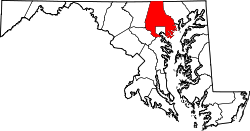
Pikesville is a census-designated place (CDP) in Baltimore County, Maryland, United States. Pikesville is just northwest of the Baltimore city limits. It is the northwestern suburb closest to Baltimore.

Key Information

The population was 30,764 at the 2010 census.[2] The corridor along Interstate 795, which links Pikesville, Owings Mills, and Reisterstown to the Baltimore Beltway (Interstate 695), contains one of the larger Jewish populations in Maryland.

Geography

[edit]

Pikesville is located at 39°22′45″N 76°42′18″W / 39.37917°N 76.70500°W / 39.37917; -76.70500 (39.379039, −76.705091).[3]

According to the United States Census Bureau, the CDP has a total area of 32.1 square kilometres (12.4 sq mi), of which 32.0 square kilometres (12.4 sq mi) is land and 0.07 square kilometres (0.027 sq mi), or 0.22%, is water.[4]

Demographics

[edit]
Historical population
CensusPop.Note
196018,737
197024,15928.9%
198022,555−6.6%
199024,81510.0%
200029,12317.4%
201030,7645.6%
202034,16811.1%
[5]

As of the census[6] of 2010, there were 30,764 people and 13,642 households residing in the CDP. The population density was 2,490.8 people per square mile. There were 14,323 housing units. The racial makeup of the CDP was 77.0% White, 14.5% African American, 0.1% Native American, 6.0% Asian, 0.1% Pacific Islander, and 1.6% from two or more races. Hispanic or Latino of any race were 2.7% of the population.

As of the 2000 census, there were 12,747 households, out of which 24.1% had children under the age of 18 living with them, 54.9% were married couples living together, 7.0% had a female householder with no husband present, and 36.1% were non-families. 30.5% of all households were made up of individuals, and 14.9% had someone living alone who was 65 years of age or older. The average household size was 2.25 and the average family size was 2.81.

In the CDP, the population was spread out, with 19.7% under the age of 18, 5.3% from 18 to 24, 24.4% from 25 to 44, 27.0% from 45 to 64, and 23.6% who were 65 years of age or older. The median age was 45 years. For every 100 females, there were 86.0 males. For every 100 females age 18 and over, there were 81.0 males.

The median income for a household in the CDP was $58,598, and the median income for a family was $78,002 (these figures had risen to $73,846 and $100,237 respectively as of a 2007 estimate[7]). Males had a median income of $52,079 versus $37,179 for females. The per capita income for the CDP was $41,035. About 5.0% of families and 6.9% of the population were below the poverty line, including 4.4% of those under age 18 and 11.5% of those age 65 or over.

In 2000, 19.3% of Pikesville residents identified as being of Russian heritage. Virtually all of them are Ashkenazi Jews whose ancestors immigrated from the Russian Empire.[8] In 2000, 3.7% of Pikesville residents identified as being of Ukrainian American heritage. This was the highest percentage of Ukrainian Americans of any place in Maryland.[9] 2% of the city were descended from Eastern European countries other than Russia and Ukraine. The majority of them are of Ashkenazi Jewish ancestry. 8% of Pikesville's residents were German, 7% Polish, 4% Irish, 3% English, and 2% Italian.[10]

Jewish community

[edit]

In the 19th and early 20th centuries Jewish immigrants to the Baltimore area first formed enclaves in East Baltimore not far from Johns Hopkins Hospital in neighborhoods such as Broadway East, Jonestown, Middle East and Oliver. After World War II, the Jewish community moved outside of Baltimore City into Pikesville, a sleepy outpost on a major road that led to Western Maryland. During the Vietnam War, and exacerbated by riots in 1968, many Jewish businesses left northwestern Baltimore following this exodus.

Pikesville (and more recently its neighboring communities to the north, Owings Mills and Reisterstown) have been considered the center of the Baltimore area's Jewish community since the mid-1950s. Many of the region's largest and most established synagogues, Jewish schools, and kosher dining establishments are located in or near Pikesville.

History

[edit]

Pikesville, Maryland, was named for the American soldier and explorer Zebulon Pike (1779–1813). While there are places named for Pike in many other states, Pikesville, Maryland, is the only contemporary place named "Pikesville".

Education

[edit]

Pikesville is served by several elementary, middle, and high schools and higher-education facilities:

Public

[edit]

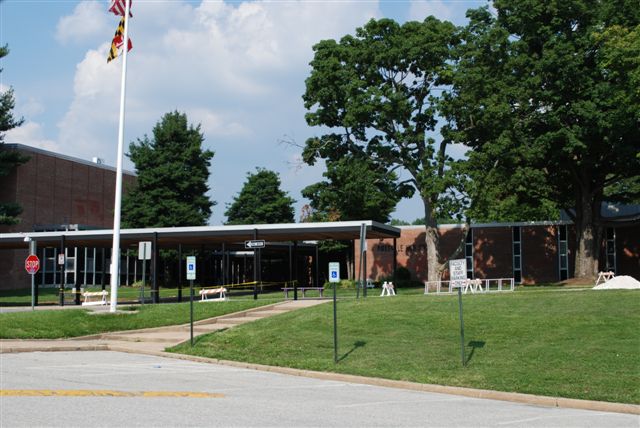
All public schools in Pikesville are part of the Baltimore County Public Schools system.

  • Fort Garrison Elementary School
  • Milbrook Elementary
  • Bedford Elementary School
  • Summit Park Elementary School
  • Wellwood International School (elementary)
  • Winand Elementary
  • Northwest Academy of Health Sciences (Formerly Old Court Middle School)
  • Pikesville Middle School
  • Sudbrook Magnet Middle School
  • Pikesville High School
  • Milford Mill Academy (Formerly Milford Mill High School)

Independent

[edit]

Higher education

[edit]

Government

[edit]

The Maryland State Police is headquartered at 1201 Reisterstown Road in the Pikesville CDP.[12][13]

Transportation

[edit]

Roads

[edit]

Public transportation

[edit]

The Baltimore Metro Subway runs through Pikesville, with two stops in the area, both named for the roads on which they are located: Milford Mill and Old Court.

Maryland Transit Administration bus routes serving Pikesville include nos. 83 and 89 on Reisterstown Road, 83 and 37 on Old Court Road, 85 on Milford Mill Road/Slade Avenue, and 34 and on Smith Avenue.

Notable people

[edit]

Pikesville in national/international news

[edit]

Vernon Lee Evans was a key figure in the battle against lethal injection in Maryland and other states. Prior to Maryland's outlawing of capital punishment in 2013, he and Anthony Grandison were on death row for the murders of two clerks at the Warren House Motel (currently a Howard Johnson) in Pikesville in 1983. Governor Martin O'Malley commuted both men's sentences in 2014, along with those of the other two men who were, at the time, on Maryland's death row.[18]

Ziad Jarrah, a suspected terrorist involved in the 9/11 attacks, was pulled over two days earlier for speeding in Pikesville.[19]

On April 25, 2024, Dazhon Darien, the Athletic Director at Pikesville High School, was arrested on terms of falsifying an audio recording of the Principal making racist and antisemitic remarks using artificial intelligence.[20]

References

[edit]
[edit]
Revisions and contributorsEdit on WikipediaRead on Wikipedia
from Grokipedia
Pikesville is an unincorporated in , located immediately northwest of City and serving as a suburban residential community. As of the , the was 34,168 residents. The area is characterized by a diverse , including a substantial Jewish population estimated at over 31,000 individuals in the early , which has established Pikesville as a primary hub for Jewish cultural, educational, and religious institutions in the Baltimore region. This community supports numerous synagogues, private Jewish schools, and kosher businesses, contributing to a median household income of approximately $97,218 as of recent estimates. Originally settled around 1770 and formally developed in the early , Pikesville derives its name from American explorer . The locale evolved from rural origins into a suburban enclave, benefiting from its proximity to while maintaining distinct community features such as parks, recreational facilities, and commercial corridors. Economically, Pikesville relies on sectors including healthcare, , and retail, with residents often commuting to or nearby areas for employment. Local governance falls under Baltimore County, which oversees services like public safety through the Pikesville Precinct and community recreation programs.

Geography

Location and boundaries


Pikesville is an unincorporated census-designated place (CDP) in Baltimore County, Maryland, situated immediately northwest of Baltimore City limits. The community lies in the central portion of Baltimore County, with its central point at coordinates 39.3743° N, 76.7225° W.
The Pikesville CDP encompasses a land area of 12.3 square miles. Its formal boundaries, as defined for purposes, align with visible geographic features including major roadways and rail lines. documents delineate the core Pikesville study area bounded to the north by Interstate 695, to the east by Park Heights Avenue and the Baltimore -Baltimore line, and to the south and west by the CSX rail line. Reisterstown Road ( Route 140) bisects the area as its primary north-south commercial corridor.

Physical features and climate

Pikesville occupies the Plateau , characterized by rolling hills, upland terrain, and moderate elevations averaging 463 feet (141 meters) above . The area's topography includes gentle slopes and valleys formed by streams that drain into the watershed, with underlying geology consisting of metamorphic and igneous rocks typical of the region. The locality experiences a , marked by hot, humid summers and cool, occasionally snowy winters. Annual precipitation averages 46 inches (1,170 mm), distributed relatively evenly throughout the year, while snowfall totals about 19 inches (480 mm). Average temperatures range from lows of 26°F (-3°C) in to highs of 88°F (31°C) in , with and seeing the highest levels. Monthly highs in winter hover around 41–44°F (5–7°C), and precipitation in and averages 3.1–3.3 inches (79–84 mm).

History

Early settlement and naming

The region now known as Pikesville, located in Baltimore County, was originally inhabited by Native American tribes, including the Piscataway and Nentego (also known as Nanticoke) peoples, who utilized the area's woodlands and waterways for hunting, fishing, and agriculture prior to European contact. European colonization of the broader County area commenced in the mid-17th century, following the county's formal establishment around 1659–1660 as part of the , with early settlers primarily engaging in farming on land grants amid ongoing displacement of indigenous populations through treaties and conflicts. The specific community of Pikesville emerged in the early as a planned village on land owned by Dr. James Smith, a physician who subdivided his property to create an early suburban enclave approximately 9 miles northwest of central , facilitating access via emerging turnpikes like the Baltimore-Reisterstown Road. This development coincided with post-War of 1812 infrastructure projects, including the 1816 initiation of for the U.S. Arsenal in Pikesville, which utilized land purchased from Smith and underscored the area's strategic positioning. Pikesville derives its name from Zebulon Montgomery Pike (1779–1813), the U.S. Army officer and explorer renowned for his expeditions into the territories, including the 1806–1807 trek that identified the peak later named in his honor; Pike's death during the siege of in the elevated his posthumous fame, prompting numerous place names across the , including this village established shortly thereafter. Initial growth was modest, centered on taverns, mills, and the arsenal, reflecting its role as a rural outpost transitioning toward suburban character amid Baltimore's expansion.

Suburban development in the 19th and early 20th centuries

Pikesville emerged as an early of when Dr. James Smith founded the village in 1815 on his property in Baltimore County, intending it as a residential outpost for city dwellers. Growth remained modest through much of the , constrained by the area's eight-mile distance from central and the lack of viable transportation links; no horse car lines or railroads connected it as late as 1829. Transportation advancements catalyzed suburban expansion starting in the 1870s. The Pikesville horse car line, introduced in 1874, shortened commute times and drew initial residential settlement by enabling daily travel to for work. Electrification of Baltimore's streetcar system in the 1890s extended trolley lines outward, fostering a ring of modest commuter villages including Pikesville along routes like Reisterstown Road, where service began in 1894. These lines supported denser housing clusters oriented toward affluent and middle-class commuters seeking escape from urban density. Into the early , improved roads and the rise of motor vehicles by further democratized access, spurring incremental lot subdivisions and like the Pikesville Armory, constructed in 1903 to serve the expanding community's military and civic needs. This era's development emphasized single-family homes amid rolling terrain, prioritizing proximity to while preserving rural character until interwar pressures intensified.

Post-World War II expansion and Jewish influx

Following , Pikesville underwent significant suburban expansion as part of broader trends in County, fueled by the return of veterans under the , the postwar , and improved transportation infrastructure such as electrified streetcar lines and later highways. War-related industries, including the Aircraft Company employing up to 53,000 workers, stimulated economic growth and housing demand, leading to a surge in residential construction with modest brick neo-colonial homes added in the 1940s and 1950s. County's suburban population expanded rapidly, with housing units increasing from approximately 9,000 building permits in 1947 to 26,000 by 1952, reflecting a broader 87% rise in suburban county populations across during the decade. Concurrently, Pikesville attracted a substantial influx of Jewish families migrating northward from City's denser enclaves, particularly in the , as wealthier segments of the sought larger homes and suburban amenities amid national trends toward outward relocation. This movement was precipitated by demographic shifts in the city, where African American populations expanded into former Jewish neighborhoods, prompting Jewish residents to relocate to outer suburbs like Pikesville and Fallstaff for socioeconomic stability and cohesion. By , the Jewish was actively migrating across Northern into areas including Pikesville, establishing it as a key hub in the northwest corridor. By 1968, over 90 percent of Baltimore's approximately 106,000 resided in the northwest , with Pikesville emerging as a primary concentration point due to its proximity to the city, access via Reisterstown Road, and development of supporting institutions like synagogues and community centers. This influx transformed Pikesville from a modest outpost into a vibrant suburban enclave, where Jewish families prioritized access to quality education, retail districts, and religious facilities, contributing to the area's cultural and economic profile. The migration aligned with causal drivers of , including low-interest home loans and automobile-dependent lifestyles, while reflecting preferences for environments offering greater homogeneity and reduced urban frictions compared to changing city demographics.

Demographics

The population of Pikesville, a in Baltimore County, has exhibited consistent growth over recent decades, consistent with broader suburban expansion patterns in the region. U.S. Decennial data record 24,815 residents in 1990, rising to 29,123 in 2000 for a decadal increase of 17.4%. Growth moderated to 5.6% in the following decade, reaching 30,764 by 2010. The 2010s saw renewed expansion, with the population climbing 11.1% to 34,168 as enumerated in the 2020 .
Census YearPopulationDecadal Percent Change
199024,815
200029,123+17.4%
201030,764+5.6%
202034,168+11.1%
The 2023 (ACS) 5-year estimate indicates 34,253 residents, reflecting an approximate annual growth rate of 0.1% to 0.5% in the post-2020 period amid stabilizing suburban demographics. Covering 12.3 s, Pikesville maintains a of 2,774 persons per .

Racial and ethnic composition

According to the U.S. Census Bureau's (ACS) 5-year estimates for 2018–2022, Pikesville's racial composition is dominated by individuals identifying as (non-Hispanic), who constitute 70.7% of the population, followed by or African American (non-Hispanic) at 17.0%. Asian (non-Hispanic) residents account for 4.9%, while those reporting two or more races (non-Hispanic) make up 4.4%. Smaller proportions include individuals identifying as some other race (non-Hispanic) at 1.1% and American Indian/Alaska Native (non-Hispanic) at 0.2%. Hispanic or Latino residents of any race comprise 4.6% of the population, based on 2020 Decennial Census data totaling 1,560 individuals out of an approximate population of 34,000 in recent estimates. This figure aligns with ACS data showing or Latino (non-Hispanic races) subgroups, such as White Hispanic at about 1.2% and other race Hispanic at 1.4% of the total. The table below summarizes the primary racial and ethnic categories from the ACS 2018–2022 estimates (population ≈34,253):
CategoryPercentage
(non-Hispanic)70.7%
Black or African American (non-Hispanic)17.0%
Asian (non-Hispanic)4.9%
Two or more races (non-Hispanic)4.4%
or Latino (any race)4.6%
These distributions reflect Pikesville's suburban character in County, with a notable concentration of non-Hispanic residents historically tied to mid-20th-century development patterns, though Black population shares have increased over time per county-level trends. ACS estimates, while comprehensive, are subject to sampling variability compared to the decennial , which provides a full count but less frequent updates.

Religious demographics and Jewish population

Pikesville hosts a predominantly Jewish religious profile within its demographics, with exerting a profound influence on community institutions and daily life. The 2020 Baltimore Jewish Community Study, conducted by and local Jewish organizations, identifies the Pikesville area as home to approximately 21,000 Jewish individuals—22% of the greater Jewish population of 95,400—residing in roughly 8,900 Jewish households. This concentration positions Pikesville as a primary hub for Jewish residence in the region, encompassing zip codes like 21208 where synagogues, yeshivas, and kosher establishments proliferate. Within the Jewish community, Orthodox adherence is prominent, aligning with Baltimore-wide figures where 21% of Jewish adults (about 15,700) identify as Orthodox, a proportion among the highest in U.S. Jewish communities and up from 17% in 2010. A 2021 analysis by the Jewish Community Relations Council of Greater Baltimore, drawing from the 2020 study, estimates the Orthodox Jewish population exceeds 20,000 regionally, with a substantial share in Pikesville due to its array of Orthodox synagogues and eruvim facilitating religious observance. Earlier 2010 data from the Greater Baltimore Jewish Community Study reported 31,100 Jewish persons in 13,000 households in the Pikesville area, suggesting either boundary variations in survey definitions or demographic shifts, such as out-migration or fertility rate adjustments. Data on non-Jewish religious groups in Pikesville remains sparse, as U.S. Census Bureau inquiries exclude , relying instead on community surveys or county-level proxies. Baltimore County, which encompasses Pikesville, reports Catholics comprising 34% of adherents (153,243 individuals), Evangelical Protestants 14% (62,367), and Mainline Protestants 11% (50,484) based on 2020 estimates from the Association of Religion Data Archives, though these figures likely underrepresent Pikesville's Jewish skew and overstate Christian proportions locally. The absence of granular Pikesville-specific non-Jewish data underscores Judaism's outsized role, with minimal documented presence of other faiths like or relative to the total population of 34,300 as of 2023.

Economy

Employment sectors and income levels

In 2023, the median household income in Pikesville was $97,218, reflecting its status as an affluent suburb of . The stood at $70,883, with a poverty rate of 7.93%. These figures indicate higher-than-average earnings compared to the national median household income of approximately $75,000, driven by a concentration of professional and service-oriented roles. The employed population of Pikesville totaled 15,490 individuals in 2023, marking a 3.54% decline from the previous year amid broader post-pandemic labor market adjustments. Residents predominantly work in white-collar sectors, with , , , and arts occupations comprising a significant share of the . Key industries employing Pikesville residents include and social assistance (2,889 workers), educational services (2,603 workers), and , scientific, and technical services (2,001 workers). Leading occupations feature roles (1,937 workers), health diagnosing and treating practitioners (1,861 workers), and education, instruction, and library positions (1,737 workers), underscoring a reliance on skilled, knowledge-based rather than or manual labor. This occupational profile aligns with the area's demographics, including a substantial professional class, and supports elevated income levels through commuting to nearby metropolitan opportunities.

Commercial districts and business environment

Pikesville's primary commercial district centers along the Reisterstown Road corridor, designated as a Baltimore County Commercial Revitalization District (CRD) spanning approximately 1,337 acres bounded by I-695, the CSX Railroad, Park Heights Avenue, and the Baltimore City line. This area hosts a mix of retail outlets including anchor stores like Target and Walgreens, alongside restaurants, professional offices for law, real estate, and financial services, and personal care establishments. Smaller shopping centers such as Dumbarton Square and Pikesville Shopping Center contribute to the district's retail footprint, offering convenience-oriented services to local residents. The business environment reflects a suburban retail and , bolstered by proximity to affluent residential neighborhoods and major hubs in healthcare and within a 3-mile radius encompassing over 4.5 million square feet of . Retail vacancy rates in the district hovered around 5.1% in 2018 assessments, lower than office vacancies at 12.1%, indicating steadier demand for consumer-facing operations amid competition from nearby centers like the at Woodholme. However, challenges persist, including congestion, limited availability, safety concerns, and aging , which have contributed to higher-than-county-average vacancies and hindered evening economic activity. Revitalization efforts, guided by the 2018 Pikesville Commercial District Study and subsequent , emphasize infrastructure upgrades such as streetscaping, parking decks, and mixed-use developments to enhance and aesthetic appeal. County allocated $325,000 for streetscaping and capital projects in fiscal years 2022 and 2023, with further investments including $9.5 million committed in December 2024 for redeveloping the historic Pikesville Armory into a community hub featuring senior services, athletic fields, and event spaces, expected to open in spring 2025. The district's formal CRD designation in late 2024 enables tax incentives for property improvements and business expansions, aiming to counter competitive pressures from online retail and adjacent developments while leveraging the area's established family-owned enterprises.

Education

Public school system

Public education in Pikesville is administered by (BCPS), which serves over 110,000 students across 176 in the county as of the 2023-2024 school year. The district assigns students to based on attendance zones, with Pikesville residents primarily attending local elementary, middle, and high , though magnet and choice programs allow applications to specialized institutions like Western School of Technology and Eastern Technical High . BCPS earned an average star rating of 3.3 out of 5 in the 2024 Maryland School Report Card, reflecting moderate overall performance amid statewide challenges in post-pandemic recovery. Elementary schools in the Pikesville area include Fort Garrison Elementary, Elementary, and Wellwood International School, among others. Fort Garrison Elementary, a emphasizing gifted and talented , ranks in the top 20% of Maryland elementaries, with 47% of students proficient in math and 62% in reading based on state assessments. Other elementaries like show similar strengths in proficiency metrics, contributing to the area's reputation for solid early options. At the middle school level, Pikesville Middle School serves grades 6-8 with approximately 905 students and a student-teacher ratio of 15:1. State test scores indicate low proficiency rates, at 6% in math and 28% in reading, placing it in the bottom 50% of middle schools. The school was designated for Additional Targeted Support and Improvement in 2023-2024 due to performance gaps under Maryland's accountability system. Sudbrook Magnet Middle School offers an alternative for qualifying students, focusing on STEM and pathways. Pikesville High School, the primary public high school for the area, enrolls about 908 students in grades 9-12 and ranks 78th among public high schools. It provides courses and maintains a four-year rate exceeding 90% in recent years, outperforming district averages. The school's diverse student body, with significant representation from Black, White, and Asian subgroups, reflects Pikesville's demographics, though proficiency in core subjects places it in the top 50% statewide. Career and technical education options through BCPS magnets supplement the curriculum for vocational preparation.

Private and religious institutions

Pikesville hosts several private Jewish day schools and yeshivas catering primarily to the area's Orthodox community, emphasizing alongside general academics. Beth Tfiloh Dahan Community School, a Modern Orthodox institution, provides education from preschool through grade 12, with an enrollment of approximately 800 students across its divisions, integrating with secular curricula. Talmudical Academy of Baltimore, operated by Yeshivas Chofetz Chaim, serves boys from nursery through high school, focusing on individualized and limudei kodesh instruction with a student body exceeding 500. Krieger Schechter Day School offers a coeducational, dual-language program in Hebrew and English for grades K-8, serving around 335 students with a student-teacher ratio of 7:1, rooted in Conservative Jewish values. Yeshivas Toras Simcha, a Haredi elementary for boys in prekindergarten through grade 6, enrolls about 115 students and prioritizes instilling enthusiasm for learning through small classes and observance. Additional religious institutions include Mesivta Kesser Torah of , a high school for boys emphasizing advanced Talmudic studies, and Yeshivas Lev Shlomo, which provides programs in a focused religious environment. These schools reflect Pikesville's demographic, where Orthodox Jewish families constitute a significant portion, driving demand for institutions that align religious observance with education. Secular private options are limited within Pikesville proper, with families often accessing nearby independent schools like The for progressive, non-religious education.

Access to higher education

Pikesville residents enjoy convenient access to a range of higher education institutions within the Baltimore metropolitan region, facilitated by the area's road networks and public transit. Key nearby options include and in Towson, approximately 8 miles north; the (CCBC), with multiple campuses serving Baltimore County residents; (UMBC), about 12 miles southwest; and in Baltimore, roughly 10 miles southeast. These institutions offer diverse programs, from associate degrees at CCBC to advanced research at Johns Hopkins, enabling both local attendance and commuting without relocation. Educational attainment statistics reflect strong utilization of these opportunities. According to the U.S. Census Bureau's , the percentage of Pikesville adults aged 25 and older with at least a exceeds 92%, surpassing the Baltimore-Columbia-Towson metro area average, while or higher attainment aligns closely with or above regional benchmarks, indicating effective pathways to postsecondary . Community colleges like CCBC provide affordable entry points, with programs in fields such as business, health professions, and tailored to local needs. High school preparation supports transition to higher education. Pikesville High School offers coursework and exams, contributing to its ranking as the 78th best public high school in for 2025, with graduates demonstrating college readiness through acceptances to institutions including CCBC and beyond. For instance, a 2021 graduate achieved a 4.2 GPA and received offers from 15 colleges, underscoring the school's role in fostering postsecondary success. State initiatives, such as the Maryland Higher Education Outreach and College Access Program (MD-HEOCAP), further enhance access by funding nonprofit efforts to boost college awareness and completion among eligible residents.

Government and administration

Governance under Baltimore County

Pikesville, an unincorporated , receives all governmental services and administration directly from Baltimore County, which lacks independent municipal authority. Baltimore County functions under a charter with an executive-council structure, featuring a single elected overseeing thirteen principal agencies responsible for areas such as public safety, recreation, and environmental services applicable countywide, including Pikesville. The executive role, filled by Kathy Klausmeier as of her swearing-in on January 7, 2025, entails managing daily operations, proposing budgets, and enforcing ordinances, with no separate administrative layer for Pikesville. The Baltimore County Council, comprising seven members each elected from single-member districts to four-year terms, exercises legislative powers including budget adoption, , and taxation, directly impacting unincorporated areas like Pikesville without intermediary local bodies. Pikesville lies within the county's Second Council District, represented by Israel "Izzy" Patoka, who handles constituent services, advocates for district-specific initiatives such as revitalization projects, and participates in council-wide decisions affecting local infrastructure and public welfare. County-level departments deliver tailored services, including law enforcement through the Pikesville Precinct under the and community recreation via the Greater Pikesville Recreation Office, which coordinates programs and facilities without autonomous governing powers. Community engagement in Pikesville occurs via resident participation in county advisory commissions and direct liaison with offices, rather than through any elected village or , ensuring alignment with broader county policies on , , and fiscal management.

Local political representation and policies

Pikesville, an unincorporated community, is governed by Baltimore County, with no independent municipal government. Residents participate in county-wide elections for the County Executive and the seven-member , where local representation is determined by councilmanic districts. As of October 2025, Pikesville falls within Council District 2, which encompasses northwest County areas including Pikesville, portions of Towson, and surrounding neighborhoods. District 2 is represented by Israel C. "Izzy" Patoka, a Democrat first elected in 2018 and re-elected in 2022 for a term ending in 2026. Patoka's priorities include environmental protection, budget management, and community-centered land use planning, with specific engagement on Pikesville issues such as neighborhood preservation and commercial revitalization. The broader county leadership includes County Executive Johnny Olszewski Jr., a Democrat serving since 2019, who oversees executive policies impacting Pikesville, including infrastructure and development initiatives. Key county policies affecting Pikesville emphasize commercial revitalization and infrastructure investment. The Pikesville Commercial Revitalization District, established to counter aesthetic decline and encourage economic renewal, guides and development under the Baltimore County Zoning Regulations, including provisions for central community hubs in areas zoned DR5.5 with public utilities. In fiscal year 2022, the county allocated $225,000 for streetscaping and $100,000 in 2023 for capital projects to support these efforts. Recent policies include a $9.5 million investment announced on December 6, 2024, for redeveloping the Pikesville Armory into recreational facilities with outdoor fields, paths, and playgrounds, complemented by state tax credits under the Catalytic Revitalization program. In February 2023, the county settled a dispute with Pikesville owners over billing, adjusting rates to reflect actual usage and avoiding legal escalation. The proposed FY26 budget further supports Pikesville through new centers. Baltimore is undergoing to expand the to nine seats for the 2026 elections, potentially altering District 2 boundaries and representation.

Transportation

Road infrastructure

Pikesville's road infrastructure primarily revolves around a network of state-maintained arterials and local roads that facilitate connectivity to Baltimore City and broader Baltimore County. Maryland Route 140 (Reisterstown Road) serves as the principal north-south corridor, extending through the community and linking it to downtown Baltimore southward and Reisterstown, Westminster, and points north. Parallel to MD 140, Maryland Route 129 (Park Heights Avenue) functions as an alternative route for local traffic, offering parallel access while avoiding congestion on Reisterstown Road. These routes intersect at key points, such as the Reisterstown Road and Park Heights Avenue junction, which supports commercial activity but experiences elevated traffic volumes. Access to the regional highway system is provided via Interstate 695 (Baltimore Beltway), with an interchange at Reisterstown Road enabling efficient circumferential travel around . Maryland Route 133 (Old Court Road) offers east-west traversal, connecting Reisterstown Road to Park Heights Avenue and aiding intra-community movement. The Pikesville Commercial District relies on these roadways for internal circulation, though studies have identified needs for enhanced and parking management to support business districts. Baltimore County Department of Public Works and Transportation (DPWT) oversees ongoing maintenance and upgrades, including paving and resurfacing projects on local roads as part of 2024-2025 initiatives. Recent efforts include considerations for treatments on segments like Old Court Road between Reisterstown Road and Rolling Road to improve multimodal safety. The State Highway Administration has also implemented intelligent monitoring and lane controls on I-695 segments near Pikesville as part of broader transportation system management. Revitalization plans emphasize and parking improvements to address commercial corridor demands.

Public transit options

Pikesville residents primarily rely on the (MTA) for public transit, with local bus routes providing connections to Baltimore's broader rail network. Key services include LocalLink bus route 83, which operates between Pikesville and the Old Court station on the Metro SubwayLink, covering approximately 4 miles and facilitating transfers to subway service toward and . Additional LocalLink routes, such as 85 and 89, serve the area along Reisterstown Road, linking to nearby Metro stations like Rogers Avenue or Mondawmin for further subway access. There are no direct Light RailLink or stations within Pikesville, requiring bus transfers for access to these systems. The nearest Metro SubwayLink terminus at Owings Mills is reachable via bus in about 15-20 minutes, while Light RailLink stations, such as those at or , involve additional transfers from subway or bus hubs like Penn Station. For MARC service to , or other regional destinations, the closest stations are West Baltimore or Halethorpe, accessible by bus in roughly 20-30 minutes depending on traffic and route. Fares for MTA local bus and rail services are $2.00 for a one-way trip as of 2023, with day passes available for $4.60 to encourage multi-modal use. Service frequencies vary, with peak-hour buses running every 15-30 minutes on major routes like LocalLink 83, though off-peak and weekend schedules are less frequent. Real-time tracking is available via the MTA's Transit app or website for planning trips from Pikesville.

Community and culture

Jewish institutions and orthodox life

Pikesville serves as a hub for Baltimore's Orthodox Jewish , which constitutes over 20% of the region's approximately 95,400 , exceeding 20,000 individuals concentrated in the area. The neighborhood's Jewish population, estimated at 31,100 persons across 13,000 households as of 2010, supports a dense network of religious and communal infrastructure tailored to Orthodox observance. Prominent Modern Orthodox synagogues include Beth Tfiloh Congregation, a leading institution offering extensive religious services, Torah classes, and year-round programming for a diverse membership. Suburban Orthodox Congregation emphasizes meaningful , , and shiurim (lessons) under Shmuel Silber. Moses Montefiore Anshe Emunah Hebrew Congregation operates as an open Modern Orthodox shul with scheduled services and community events. Educational facilities integral to Orthodox life encompass Beth Tfiloh Congregation & Community School, providing preschool through grade 12 instruction in a Modern Orthodox framework. The Kosloff Torah Academy High School, affiliated with networks, further supports advanced Jewish learning. Kosher infrastructure bolsters daily Orthodox practice, featuring the Seven Mile Market, the largest kosher supermarket in the United States at over 55,000 square feet, alongside 27 certified eateries such as Yesh Hummus & Grill and Shlomo's Kosher Meat & Fish Market. A single mikvah serves ritual immersion needs, contributing to the area's self-sufficiency for observant families.

Cultural events and community organizations

Pikesville hosts annual cultural events that emphasize arts, music, and family engagement, often leveraging the historic Pikesville Armory as a central venue. The Pikesville Arts and Crafts Festival showcases local vendors offering handmade goods, alongside community tables, free airbrushed temporary tattoos, and a dedicated children's art corner to foster creative participation. Similarly, PopUp! at the Armory presents larger-than-life inflatable artworks, drawing families to the site for interactive, visually striking installations that highlight contemporary sculpture and community vibrancy. Music-focused gatherings include the "Jazz at the Armory" series, organized by the Pikesville Armory Foundation in collaboration with local producers; these free, all-ages concerts feature professional ensembles and aim to build intergenerational connections through live performances in the Armory's spaces. The 14th annual Pikesville Fall , held in early September as of 2025, brings together residents for seasonal celebrations including food, entertainment, and local exhibits, underscoring the area's community spirit. Broader regional events like the 4th Annual Taste of Northwest extend into Pikesville, offering outdoor family activities that promote local cuisine and networking among northwest County residents. Key community organizations drive these initiatives and broader civic efforts. The Pikesville Communities Corporation, a nonprofit board representing local neighborhoods, focuses on enhancing residential through advocacy, planning, and resident services within defined geographical boundaries. 1,000 Friends of Pikesville, Inc., another citizen-led nonprofit, supports economic revitalization by promoting Main Street development and projects. The Pikesville Armory Foundation spearheads the transformation of the former military site into an arts-oriented hub, hosting events that integrate play, creativity, and economic growth to serve diverse local needs. These groups collaborate with Baltimore County entities, such as the Pikesville Senior Center, to organize inclusive programs that address intergenerational engagement.

Public safety

Pikesville's overall crime rate exceeds the national average, largely due to elevated property crime incidence. An analysis of Federal Bureau of Investigation Uniform Crime Reporting data indicates a violent crime victimization risk of 1 in 290 residents annually, slightly lower than the U.S. average of approximately 1 in 263, while property crime risk stands at 1 in 45, higher than the national figure of about 1 in 51. These rates position Pikesville as safer than 19% of U.S. communities for overall crime but only 37% for violent offenses specifically. In Baltimore County Precinct 4, which encompasses Pikesville, historical data identifies it as one of the county's lower-crime areas alongside Precinct 8. County-wide, major crime categories experienced substantial declines from 2017 to 2020 under traditional Uniform Crime Reporting, with ongoing reductions noted in National Incident-Based Reporting System data implemented since 2021. Violent crimes such as aggravated assault and have followed this downward trajectory, though property offenses like remain persistent concerns in suburban enclaves like Pikesville. Preliminary 2025 figures reveal a reversal in Baltimore County homicides, with increases reported relative to prior years, amid broader regional variations where adjacent Baltimore City saw double-digit drops in gun violence. This uptick contrasts with national mid-2025 trends of declining violent crime across major cities, potentially attributable to localized factors including post-pandemic recovery disparities and enforcement shifts. Pikesville-specific incident mapping shows sporadic burglaries and thefts but limited violent escalations, underscoring its relative stability within the precinct.

Targeted incidents against Jewish residents

In August 2022, antisemitic graffiti was spray-painted on multiple mailboxes in Pikesville, targeting the property of Maryland Delegate Joe Vogel and other residents in the area. Local authorities condemned the act as a , with Vogel stating it represented a direct attack on the Jewish community. A pro-Israel sign in Pikesville was slashed for the second time in December 2023, amid a reported national surge in antisemitic incidents following the attack on . Community members attributed the vandalism to anti-Jewish animus, reflecting broader tensions in areas with visible Jewish populations. In September 2024, leaders from the Orthodox Jewish community in Pikesville and nearby northwest suburbs expressed alarm over a series of robberies and carjackings disproportionately affecting visibly identifiable , such as those wearing traditional attire like black hats or wigs. While not all were officially classified as hate crimes, the pattern prompted calls for enhanced security, with representatives joining Jewish advocates in highlighting the vulnerability of the group. On August 6, 2025, Kitchen Design Idan, a Jewish- and Israeli-owned business in Pikesville displaying Israeli flags, was vandalized with spray paint and defaced flags in an act police investigated as a motivated by . The perpetrator, 39-year-old Jonathon Wagner, was arrested and charged with multiple counts of malicious destruction of property, including one enhanced for bias based on race or . This incident occurred against a statewide backdrop where anti-Jewish hate crimes constituted 72% of -based incidents reported in over the prior year.

Law enforcement and security measures

The primary law enforcement agency serving Pikesville is the (BCoPD), which operates Precinct 4 headquartered at 215 Milford Mill Road, Suite 105, in the community. This precinct handles routine policing, emergency response, and investigations for Pikesville's unincorporated areas, including patrol operations, traffic enforcement, and community outreach programs aimed at . In response to elevated threats, particularly against the Jewish community following the October 7, 2023, Hamas attack on Israel, BCoPD has intensified coordination with local Jewish institutions, reaffirming commitments to enhanced patrols and rapid response to suspicious activity. Precinct 4 participates in annual High Holidays security briefings with Jewish organizations to align on threat assessments, information sharing, and deployment strategies. For major observances like Rosh Hashana in 2024, police collaborated with synagogues on bolstered presence, including uniformed officers and barriers to deter potential disruptions. Supplementary security measures include the Shomrim, a nonprofit volunteer group focused on Jewish neighborhoods in Pikesville and surrounding areas, which assists BCoPD by monitoring via community cameras, advocating for victims, and reporting incidents to expedite official responses. Jewish institutions have implemented physical upgrades such as gated fencing, surveillance systems, and armed guards, often assessed through the Jewish Council's director, who provides recommendations tailored to sites like synagogues and schools. These layered approaches emphasize vigilance, with public calls from BCoPD to report anomalies immediately via 911 or non-emergency lines.

Notable people

Business and professional figures

Ryan J. Millman and Harvis N. Kramer, both raised in Pikesville, co-founded Nations Photo Lab in 2005 as college students at the University of , initially capitalizing on demand for and sorority event . By 2013, the company had expanded into a prominent online photo processing and printing service, operating from a 100,000-square-foot facility in , with annual revenues exceeding $20 million and a workforce of over 200 employees. Millman, as CEO, and Kramer, as COO, oversaw innovations in digital photo products, including custom prints, albums, and canvases, positioning the firm as a competitor to larger players like . Mark J. Beran, a longtime professional based at Woodholme in Pikesville, has served as PGA head professional since 1987, mentoring players and managing operations at the facility. Known for inclusive hiring practices, Beran employed diverse staff, including women and individuals from varied backgrounds, contributing to the club's reputation in the Mid-Atlantic PGA section. His career highlights include competitive play and instructional programs that supported local amateur development.

Entertainment and sports personalities

Robin Quivers, born August 8, 1952, in Pikesville, Maryland, is a , author, and actress best known as the longtime news anchor and co-host on , a role she has held since 1981. Quivers, who graduated from the of with a nursing degree before serving as a U.S. Air Force captain and later entering broadcasting, has co-authored books including Quivers: A Life (1995) and contributed to the show's syndication across over 60 markets. Marc Platt, born April 14, 1957, in Pikesville, is a film, television, and theater producer whose credits include the Academy Award-nominated (2016), the Wicked film adaptations (2024–), and Broadway productions like (2007). After earning a law degree from , Platt served as president of production at and later headed before founding Marc Platt Productions, which has developed projects such as Cruella (2021). Michael H. Shamberg (1952–2014), raised in Pikesville, was a filmmaker and music video producer who directed and produced videos for New Order, including "True Faith" (1987) and "Blue Monday" (1988), earning MTV awards and influencing early aesthetics. Shamberg founded Factory Records' New York office and worked with artists like before transitioning to independent film production. Benjamin Warschawski, a 1993 graduate of Pikesville High School, is a Swiss recognized for performances in and cantorial music, blending classical with Jewish liturgical traditions. He has performed internationally, including cantorial concerts and operatic roles, and received Pikesville High's Distinguished in 2002 for his operatic achievements. In sports, Howard Offit, a Pikesville native and Pikesville High School alumnus, distinguished himself as a lacrosse face-off specialist at Johns Hopkins University, where he contributed to three consecutive national championships from 1979 to 1981 and earned All-American honors. Offit, who began playing at age 14 in Baltimore County, later coached at Georgetown University for over 35 years, focusing on face-off techniques, and was inducted into the Greater Washington D.C. Jewish Sports Hall of Fame in 2025.

Political and community leaders

Shelly Hettleman, a graduate of Pikesville Senior High School, has served as State Senator for District 11 since January 2020, following her tenure as a Delegate from 2015 to 2019; the district encompasses Pikesville and surrounding areas of Baltimore County. She chairs the Maryland Legislative Jewish Caucus as of 2024 and has advocated for community initiatives including the Pikesville Armory redevelopment. Israel "Izzy" Patoka represents Baltimore County Council District 2, which includes Pikesville, having been elected in November 2018 and re-elected in 2022; he launched his campaign for from his Pikesville home in September 2025. Prior to his council role, Patoka served as Executive Director of the Governor's Office of Community Initiatives under . In the , District 11 includes Pikesville; Cheryl E. Pasteur has represented subdistrict 11A since 2023, focusing on judiciary matters, while Dana M. Stein has served subdistrict 11B since 2019, acting as Speaker Pro Tem. leadership in Pikesville centers on revitalization and civic groups. Tom Fekete serves as president of the Pikesville Improvement Corporation, formed in 2025 to preserve historic charm, enhance sidewalks, and partner with local businesses amid a $15 million area investment. Patterson leads both the Pikesville Township Association and Pikesville Communities Corporation, earning recognition as a 2024 County Community Hero for advocacy. The Pikesville Armory Foundation, driving the site's redevelopment into a regional hub since its 2024 groundbreaking, features leaders like Brian Friedlander, president of the Greater Pikesville Recreation Council, and Barry Nabozny, a broker and Jewish Orthodox community figure. Ruth Goldstein, president of 1000 Friends of Pikesville, contributes to preservation efforts as an author and advocate. Ken Gelula, founding of CHAI—a and organization—also advises on local initiatives.

Recent developments

Infrastructure and revitalization projects

The Pikesville Revitalization Action Plan, developed by Baltimore County following a commercial district study and community input, outlines goals for economic enhancement, including the redevelopment of the Historic Pikesville Armory and streetscape improvements. In 2022, the county allocated $225,000 for streetscaping, with an additional $100,000 budgeted in 2023 for capital projects supporting these revitalization initiatives. Central to these efforts is the transformation of the Pikesville Armory into a multi-use community hub, with County committing $9.5 million in December 2024 for outdoor features such as multi-purpose sports fields, walking paths through gardens, and an ADA-compliant playground. The overall $95 million project, led by the Pikesville Armory Foundation and Seawall Development, includes indoor and courts, an indoor walking path, cafés, intergenerational spaces, art galleries in historic garages, co-working areas, and educational programs. In January 2025, the Department of Housing and awarded the project a 2025 Catalytic Revitalization to promote economic growth, job creation, and community improvements. Infrastructure projects managed by the Baltimore County Department of Public Works and Transportation include ongoing road, water, sewer, and related developments mapped for Pikesville as of 2024. Highway improvements encompass repairs to concrete on Interstate 795 from Owings Mills to Pikesville, initiated in March 2025 by the Maryland State Highway Administration. The broader I-695 bridge replacement and reconstruction project, started in 2020, extends impacts to Pikesville-area connectivity and is scheduled for completion in fall 2025. In April 2025, the Pikesville Improvement Corporation began initiatives to enhance sidewalks, partner with local businesses, and preserve historical charm, aiming to boost commercial vitality. These combined efforts seek to address aging infrastructure while fostering sustainable growth in the commercial district.

Notable events and news coverage 2020–2025

In December 2023, investigated two cases at synagogues in Pikesville, amid a reported surge in antisemitic incidents following the October 7, 2023, Hamas attack on Israel. Local Jewish leaders described the acts as empowering perpetrators amid heightened tensions, with community members strengthening security measures rather than yielding to intimidation. A vandalism incident in Pikesville in August 2025 underscored persistent antisemitic activity in the area, which hosts a significant Jewish population. This occurred against a backdrop of broader increases in antisemitic and protests across during the , often linked to geopolitical events. On October 7, 2025, a domestic-related incident in Pikesville escalated into a nearly seven-hour barricade situation, leaving a 32-year-old woman and a 48-year-old man hospitalized with injuries. County Police arrested the suspect, who had barricaded himself in a residence after the attack, with witnesses reporting a heavy presence and road closures. Community revitalization efforts gained attention in April 2025, when the Pikesville Improvement Corporation announced initiatives to restore historic charm, building on a $15 million state investment in the Pikesville Armory site. Later that year, the Armory hosted its inaugural PopUp! Inflatable Art Festival from September 11 to 28, featuring large-scale public sculptures to promote cultural engagement.

References

Add your contribution
Related Hubs
User Avatar
No comments yet.