Hubbry Logo
Jesus nutJesus nutMain
Open search
Jesus nut
Community hub
Jesus nut
logo
8 pages, 0 posts
0 subscribers
Be the first to start a discussion here.
Jesus nut
Jesus nut
from Wikipedia
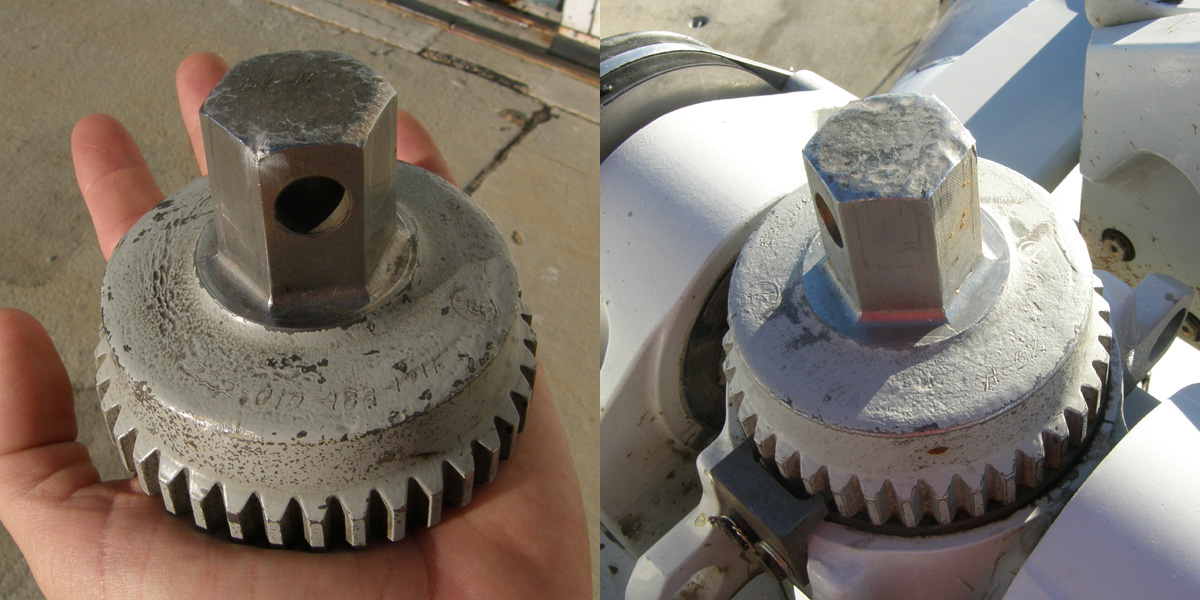
The Main rotor attach nut, or "Jesus nut", from a Bell 222U, shown in hand for size perspective (left) and installed with locking key (right)

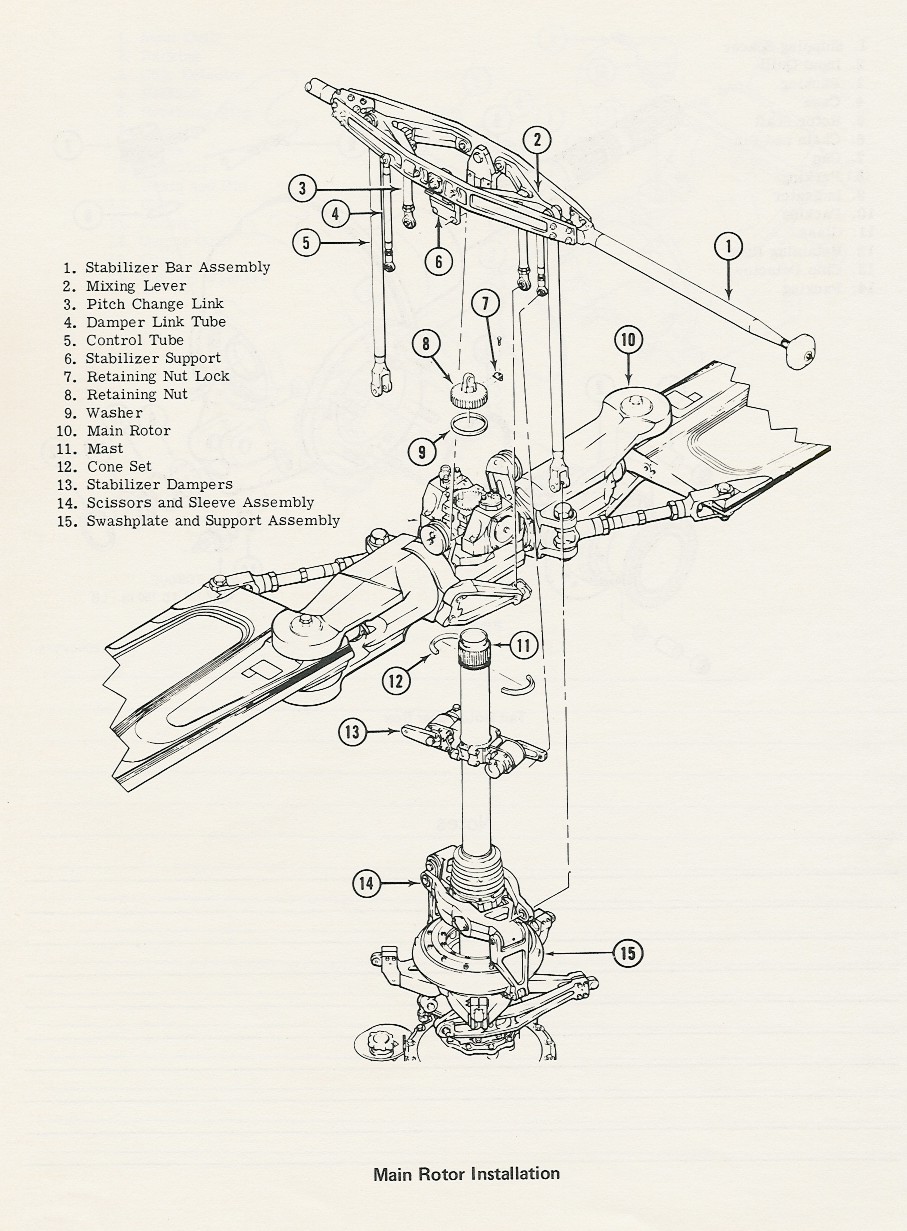
The main rotor retaining nut[1] or mast nut, often jokingly referred to as the Jesus nut, holds the main rotor to the mast of some helicopters. The related slang term Jesus pin refers to the lock pin used to secure the retaining nut. A failure of this nut is likely to result in a crash. More generally, Jesus nut (or Jesus pin) is used to refer to any component that is a single point of failure and whose breakdown would result in catastrophic consequences, the suggestion being that in such case the only thing left to do would be to pray to Jesus.

Origin of name

[edit]

The term Jesus nut may have been coined by American soldiers in Vietnam;[2] the Vietnam War was the first war to feature large numbers of soldiers riding in helicopters. The term may also have originated with the PBY Catalina, which had two Jesus bolts holding the wing onto the fuselage.[3]

If the main rotor retaining nut were to fail in flight, the rotor would detach from the helicopter,[4] hence the idea that all that would then be left for the crew to do would be to "pray to Jesus." The nut/pin must be checked before the flight, even though real-world examples of the Jesus nut/pin failing are rare. For example, in 2000, the mast nut of a Bell 206B was removed to be repainted and was not restored and checked prior to a test flight. The helicopter crashed within ten minutes of takeoff, killing the two occupants.[5][6]

Other contexts

[edit]

More recently, the term has been more generically applied throughout engineering to include any single component whose failure would cause catastrophic failure of the entire system.

Another use for the term is found in rock climbing, in which it refers to the first piece of protection (some of which are also called "nuts") placed on a pitch.[7] This piece must be placed to resist an outward pull as well as a downward pull in order to avoid the possibility of a "zipper", in which the outward pull on the rope from the belayer arresting a falling climber pulls protection pieces from the bottom up. In addition, the Jesus nut prevents the possibility of a factor-two fall onto the belay anchor.[8]

In literature, the term "Jesus nut" first appeared in print in Elaine Shepard's 1967 book The Doom Pussy, a recollection of her experiences with aviators in the early part of the Vietnam War.[9] It was later popularized in Chickenhawk by Robert Mason, a narrative about his experiences as a pilot in the war.[10]

Marine M60A1 tank crew used the term "Jesus pin" in reference to a breech pin located on the 105mm main gun that needed to be removed in order to disassemble the breech block. A dropped pin would disappear into the tank's hull, putatively causing one or more members of the crew to cry out "Jesus" as an expletive.[citation needed]

See also

[edit]

Notes

[edit]

References

[edit]
Revisions and contributorsEdit on WikipediaRead on Wikipedia
from Grokipedia
The Jesus nut, also known as the main rotor retaining nut or mast nut, is a critical mechanical component in certain designs that secures the main rotor assembly to the rotor mast, preventing detachment during flight. This single-point fastening device, typically a large, high-strength nut, is essential for maintaining the structural integrity of the rotor system, and its failure would result in the immediate loss of lift and control, rendering the aircraft unflyable. The term originated as slang among helicopter pilots and crew, particularly during the era, evoking the idea that if the nut fails, the only recourse is prayer—hence "." In helicopters such as the (commonly called the Huey), the Jesus nut is a prominent feature in the main rotor hub assembly, where it threads onto the top of the mast to lock the rotor in place against extreme aerodynamic and vibrational loads. Maintenance protocols for this component are rigorous, involving torque checks, inspections for wear or thread damage, and often the use of locking mechanisms like cotter pins or to ensure reliability, as it represents a classic in engineering. The slang has persisted in culture beyond use, applying to similar retaining nuts in other single-main-rotor helicopters like early Bell models, underscoring the high-stakes nature of rotor attachment in vertical flight. While modern designs may incorporate redundant systems or to mitigate such risks, the Jesus nut remains a symbol of the unforgiving precision required in helicopter .

Helicopter Applications

Definition and Role

The Jesus nut, a term for the main rotor retaining nut or mast nut, is the primary that secures the main rotor assembly to the helicopter's mast or shaft. This component connects the rotor hub to the , transmitting engine power to the rotor blades to generate lift and while maintaining structural integrity during all phases of flight. Its essential role involves preventing detachment of the rotor system under operational stresses, thereby supporting the full weight of the and the dynamic loads imposed by the rotating s, including substantial centrifugal forces that can reach 8-12 tons per in s and up to 40 tons in larger models. These forces arise from the high rotational speeds required for lift, compounded by aerodynamic loads such as , drag, and variations during maneuvers like turns, where load factors increase. Failure of this nut would result in the rotor lifting off the shaft, causing immediate and total loss of lift, rendering the uncontrollable. In traditional helicopter designs, the Jesus nut represents a single-point risk, as there is no redundant to secure the assembly, emphasizing the need for precise installation and ongoing monitoring. It is particularly prominent in semi-rigid systems, which use two blades with hinges, and fully articulated systems, featuring three or more blades with individual , feathering, and lead-lag hinges to accommodate and ensure stability. The slang name highlights this criticality, evoking reliance on divine intervention should it fail.

Mechanical Design

The mechanical design of the Jesus nut prioritizes exceptional strength and precision to secure the main rotor hub to the mast under high dynamic loads, including centrifugal forces, , and aerodynamic stresses. Design features vary by model; for example, it is constructed from advanced high-strength alloys, such as 18 Ni in the C-250 grade in the AH-64 , which offers superior resistance to shear, tension, and . This material exhibits a minimum yield strength of 250 , ultimate of 255 , elongation of at least 6%, reduction in area of 45%, and between 48 and 53 Rockwell C, often with a plating for protection. Key design features include robust internal threading for mating with the mast, along with auxiliary elements like 12 threaded bolt holes in models such as the AH-64 Apache to accommodate securing bolts. These bolts are torqued to 225 in-lbs in a sequential pattern to induce compressive preload, supplemented by locking mechanisms including an upper retainer plate and lockring to mitigate vibration-induced loosening. Size variations occur across models, with diameters typically ranging from 3 to 8 inches or more to accommodate differing mast dimensions and load requirements. For instance, the UH-1 Iroquois uses a nut approximately 3-4 inches in . Integration involves screwing the nut onto the upper end of the static mast until hand-tight, followed by final torquing and bolting to clamp the rotor hub assembly firmly in place. This positions the nut atop the hub, directly retaining the main rotor blades and bearings while interfacing with the broader rotor system, including the hub's connection to the swashplate below for cyclic and collective control inputs. Load considerations in the design ensure structural integrity through model-specific torque values applied via hydraulic or specialized tools, achieving the necessary preload for operational stresses. A factor of safety of 1.5 is applied to external and inertia loads in normal category rotorcraft, accounting for dynamic conditions in the rotor system.

Etymology and Cultural Significance

Origin of the Term

The term "Jesus nut" refers to the main rotor retaining nut on certain helicopters, and its name derives from the dramatic exclamation a pilot might make—"Jesus!"—should it fail in flight, resulting in the rotor separating from the mast and causing immediate catastrophe, thereby implying reliance on divine intervention for survival. The term may have earlier roots in fixed-wing aviation, such as with the PBY Catalina seaplane, but emerged as slang among U.S. military helicopter pilots during the Vietnam War (1960s–1970s) as rotary-wing aircraft entered widespread combat use. Pilots and mechanics, facing the high-stakes reliability of these machines, coined the phrase to highlight the nut's singular critical function. The terminology solidified as standard within communities, reflecting the intense operational demands on rotor systems in that conflict. Documented references to the "Jesus nut" appear in publications by the 1970s, such as the September–October 1975 issue of Flight Comment, a Canadian Forces , where it was discussed in the context of a real incident involving potential rotor detachment. The term gained broader cultural traction through pilot memoirs, including Robert Mason's 1983 book Chickenhawk, which vividly describes Vietnam-era operations and underscores the nut's life-or-death importance among crews.

Usage in Aviation Culture

Within aviation culture, the term "Jesus nut" embodies humor among pilots and mechanics, serving as a wry acknowledgment of the component's life-or-death importance while providing a mechanism for stress relief in high-pressure environments. This is frequently uttered during pre-flight checks and briefings to highlight the need for rigorous of the main retaining nut, diffusing anxiety over its potential without descending into overt . The dark wit inherent in the name—implying that only divine intervention could save the crew if it loosens—helps foster camaraderie and resilience in the face of inherent risks associated with rotary-wing flight. The phrase appears prominently in aviation literature and training contexts as a memorable mnemonic device to reinforce critical safety protocols. In Robert Mason's 1983 memoir Chickenhawk, which recounts his experiences as a U.S. Army helicopter pilot during the Vietnam War, the "Jesus nut" is invoked to convey the visceral fear and meticulous attention pilots devote to this single point of retention, popularizing the term beyond military jargon. Similarly, it features in instructional materials from aviation organizations, where instructors use the evocative nickname to emphasize torque verification during rotor assembly, ensuring trainees internalize the procedure's gravity. References also surface in Vietnam War-era documentaries and pilot oral histories, underscoring its role in narratives of aerial combat and survival. The term persists robustly in both and today, retaining its slang status decades after its origins among Vietnam War pilots. In modern operations, from utility missions to search-and-rescue, it continues to be referenced in briefings and informal discourse, occasionally extending as analogous nicknames for pivotal fasteners in maintenance routines. This enduring usage reflects its utility in perpetuating across generations of aviators.

Safety Considerations

Maintenance and Inspection

The Federal Aviation Administration (FAA) mandates rigorous maintenance protocols for helicopter rotor systems, including the main rotor retaining nut, through regulations outlined in 14 CFR Part 43 and supported by Advisory Circular (AC) 43-4B, which emphasizes inspections for high-stress components like those in main rotors to detect corrosion and cracking. Pre-flight inspections require a visual check of the nut for security, looseness, or visible damage, while periodic inspections occur at intervals such as 100 flight hours or annually, involving detailed examination for cracks, corrosion, and proper torque in accordance with manufacturer guidelines from entities like Bell Helicopter. For example, Bell's maintenance manuals specify torque verification of the retaining nut to 250-275 foot-pounds (339-373 Nm) for the 206 model and 520-780 foot-pounds (705-1057 Nm) for the 212 model, within 5-10 hours after installation, followed by security checks during 100-hour/12-month inspections. Tools and techniques for inspection include calibrated torque wrenches to verify preload, as improper torquing can lead to under the high loads inherent to rotor attachment, and penetrant testing ( penetrant method) to identify cracks or surface defects in threaded areas. Replacement intervals are condition-based rather than fixed, with the nut replaced if such as overheating (detected via TEMP-PLATE indicators changing from white to black) or wear exceeds limits, though some operational guidelines suggest evaluation every 100-500 flight hours during major overhauls. Common failure modes to monitor include thread from excessive during torquing or , and manifesting as pitting or powdery deposits on or surfaces, particularly in humid or saltwater environments. All inspections, torquing, and replacements must be logged in the aircraft's maintenance records per FAA requirements, including details of findings, actions taken, and compliance with airworthiness directives. Mechanics performing these tasks must hold FAA Airframe and Powerplant () certification with a rating and work under a Part 145 repair station if applicable, ensuring adherence to standardized on nondestructive inspection techniques and application to mitigate risks from the nut's critical role in rotor retention. Despite its critical nature, documented failures of the main rotor retaining nut leading to detachment are extremely rare in civil operations, attributable to rigorous and measures.

Redundancy Measures

To mitigate the risk of the main rotor retaining nut, commonly known as the Jesus nut, becoming a single point of failure, helicopter designs incorporate secondary retention systems that provide backup security against loosening or detachment due to vibration or fatigue. These include safety wires, which are installed through holes in the nut and adjacent components to prevent rotation; locknuts that thread onto the primary nut for additional clamping force; and circlips or retaining rings that snap into grooves to hold the assembly in place. Such measures ensure that even if the primary nut begins to back off, the secondary systems maintain attachment long enough for the pilot to execute an emergency procedure. Advances in engineering have introduced self-locking nuts for the main rotor attachment, featuring deformed threads, inserts, or metal prevailing torque mechanisms that resist unscrewing under operational stresses without requiring additional locking hardware. In modern helicopters like the EC135, the bearingless composite main rotor system employs integrated flex beams and to distribute loads more evenly, reducing the reliance on a single retaining nut and lowering the overall probability of failure through enhanced structural integrity. Additionally, fail-safe retainers, such as a patented cup-shaped annular disk that encases the nut with minimal clearance, act as a device to secure the rotor head to the mast even if the nut fractures, enabling controlled descent. Regulatory frameworks have evolved to enforce these redundancies, with the Federal Aviation Administration's 14 CFR Part 29 airworthiness standards for transport category rotorcraft requiring critical components like the main rotor attachment to incorporate designs that account for damage tolerance and fatigue resistance. Post-1980s amendments, informed by incident analyses, emphasize dual-path retention and inspection criteria to prevent catastrophic detachment, ensuring that rotor systems can sustain partial failures without loss of control. These standards have driven industry-wide improvements, contributing to a significant reduction in main rotor system accident rates in civil helicopters.

Notable Incidents

Historical Accidents

Documented cases of jesus nut or main rotor retaining nut failures are rare due to rigorous protocols, but fleet-wide issues have occurred. In 1989, inspections of AH-64 Apache helicopters revealed cracks in eight main rotor hub retention nuts (part number 7-3114111102) from a specific batch, attributed to hydrogen-assisted under hoop stresses. This prompted a temporary grounding of the fleet and recommendations for material upgrades to C-200 grade and cadmium-plated bolts. While not explicitly termed "jesus nut" (a more common in single-main-rotor designs like the UH-1), these retention nuts serve a similar critical role in securing the rotor assembly. Another early incident involved a departing without the mast nut installed, leading to rotor separation shortly after takeoff and the crash of the aircraft, killing the two occupants. This event, reported in forums, underscores the consequences of oversights but lacks a specific date or model in available records.

Recent Events

In April 2025, a Bell 206L-4 operated by New York Helicopter Tours on a sightseeing tour crashed into the near , on April 10, resulting in six fatalities, including the pilot and five passengers from a Spanish family. Eyewitness video showed the main rotor detaching mid-flight, followed by the fuselage plummeting into the water. experts speculated that a in the main rotor retaining nut, known as the jesus nut, or mast bumping—where the rotor hub strikes the mast—may have contributed, potentially due to nut loosening, improper torque, or other mechanical issues. The (NTSB) investigation (ERA25MA171) confirmed an in-flight breakup after a severe yaw, with key components recovered, but the exact cause remains under investigation as of November 2025. The (FAA) grounded the operator and reviewed records, focusing on compliance with torque specifications for rotor components, amid reports of high winds during the flight. In April 2024, a L-3 (N17592) experienced a in the servo cylinder extension arms due to pits, leading to loss of control authority and a precautionary landing near , with no injuries. While not a direct jesus nut detachment, this incident highlighted risks in high-stress fittings similar to those in rotor retention systems, prompting NTSB recommendations for enhanced inspections on aging fleets. These events have contributed to broader FAA scrutiny of safety, including updates to standards for advanced air mobility (AAM) systems like electric vertical takeoff and landing () vehicles. The FAA's 2025 Roadmap for Advanced Air Mobility Aircraft Type emphasizes special class designs with redundancy to mitigate single-point failures, drawing from traditional incident lessons.

Other Applications

Climbing and Mountaineering

In rock climbing and mountaineering, the term "Jesus nut" or "Jesus pin" denotes the first piece of protection placed by the leader immediately after departing the belay anchor, typically a nut, cam, piton, or bolt inserted into a crack or feature. This gear serves as the initial safeguard against a leader fall; its failure would transfer the full force directly to the belay anchor, potentially resulting in catastrophic consequences for the entire system. The nomenclature draws from aviation slang for a vital single-point failure component, adapted to emphasize the life-dependent trust placed in this placement. The term gained traction among U.S. climbers during the 1970s and 1980s, coinciding with the rise of techniques on expansive big walls, where sparse protection placements heightened reliance on early, robust gear. On iconic routes such as those on in , the Jesus nut often refers to the lowest or initial protection piece, such as a hammered into a fissure or an aluminum cam set in a parallel crack, connected via a that may incorporate carabiners for reduced weight and enhanced durability. These materials are selected for their high tensile strength, with s typically forged from to withstand hammering and dynamic loads, while modern cams use spring-loaded aluminum lobes for reliable expansion in irregular rock. Safety protocols in climbing stress avoiding sole dependence on the Jesus nut by prioritizing immediate backup placements to distribute fall forces across multiple points, thereby minimizing single-point failure risks. This approach aligns with UIAA standards for equipment, such as UIAA 125 (2025 edition) for frictional anchors including passive protections like nuts (with strength ratings typically ranging from 6 to 14 kN depending on size) and spring-loaded camming devices (demanding similar load capacities and gate-opening resistance, typically 8 to 14 kN), which ensure gear can handle factor-2 falls without deformation. Belay anchors must be constructed to SRENE principles (solid, equalized, redundant, and efficient) and backed by a "bomber" Jesus nut placed as close as 1-2 meters above the station to limit potential whipper distances and anchor loading. Failure to implement redundancies, such as equalizing two or more pieces early, has been highlighted in climbing safety analyses as a common error leading to accidents.

General Engineering Usage

In engineering disciplines beyond aviation and climbing, the term "Jesus nut" has evolved into slang for any critical load-bearing component that represents a single point of failure, where its breakdown would trigger a cascading system-wide . This metaphorical usage emphasizes the high-stakes vulnerability of such elements, akin to a kingpin or in machinery that secures primary structural integrity. For instance, in , it may describe pivotal fasteners in load-distributing systems like bridge supports, where failure could compromise the entire structure. Examples of this application appear in , such as the central locking nut on high-performance vehicle wheels, where loosening could lead to detachment and loss of control, as highlighted in analyses of center-lock systems. In , the term has been invoked since the to denote essential modules or databases that, if compromised, halt operations entirely, such as a primary in distributed task queues. This extension underscores the need for in fault-tolerant designs, mirroring principles in standards like , which mandate mitigation of single-point failures in automotive electrical and electronic systems to prevent hazardous outcomes. The cultural adoption of "Jesus nut" as engineering slang proliferated post-2000 in technical publications and discussions, reflecting broader awareness of systemic risks in manufacturing and technology sectors. By the , it appeared in engineering media to illustrate catastrophic vulnerabilities, promoting discussions on resilient design over single dependencies. This linguistic shift parallels historical engineering texts emphasizing human error and failure modes, though the term itself gained traction through practical anecdotes in professional contexts.

References

Add your contribution
Related Hubs
User Avatar
No comments yet.