Hubbry Logo
Jimmy PiersallJimmy PiersallMain
Open search
Jimmy Piersall
Community hub
Jimmy Piersall
logo
8 pages, 0 posts
0 subscribers
Be the first to start a discussion here.
Jimmy Piersall
Jimmy Piersall
from Wikipedia

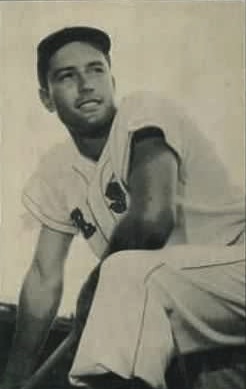
James Anthony Piersall (November 14, 1929 – June 3, 2017) was an American baseball center fielder who played 17 seasons in Major League Baseball (MLB) for five teams, from 1950 through 1967. Piersall was best known for his well-publicized battle with bipolar disorder that became the subject of a book and a film, Fear Strikes Out.

Key Information

Early life

[edit]

Piersall led the Leavenworth High School (Waterbury, Connecticut) basketball team to the 1947 New England championship, scoring 29 points in the final game.

Early athletic career

[edit]
Piersall with President John F. Kennedy in 1962

Piersall became a professional baseball player at age 18, having signed a contract with the Boston Red Sox in 1948. He reached Major League Baseball in 1950, playing in six games as one of its youngest players.

In 1952, he earned a more substantial role with the Red Sox, frequently referring to himself as "the Waterbury Wizard," a nickname not well received by teammates.[citation needed] On June 10, 1953, he set the Red Sox club record for hits in a nine-inning game, with six. He established himself as one of the game's best defensive outfielders, leading AL center fielders in fielding percentage and total zone runs five times each.

Personal problems

[edit]

On May 24, 1952, just before a game against the New York Yankees, Piersall engaged in a fistfight with Yankee infielder Billy Martin.[1] Following the brawl, Piersall briefly scuffled with teammate Mickey McDermott in the Red Sox clubhouse. After several such incidents, including Piersall spanking the four-year-old son of teammate Vern Stephens in the Red Sox clubhouse during a game, he was demoted to the minor league Birmingham Barons on June 28.

In less than three weeks with the Barons, Piersall was ejected on four occasions, the last coming after striking out in the second inning on July 16. Prior to his at-bat, he had acknowledged teammate Milt Bolling's home run by spraying home plate with a water pistol.

Receiving a three-day suspension, Piersall entered treatment three days later at the Westborough State Hospital in Massachusetts. Diagnosed with "nervous exhaustion", Piersall underwent electroshock therapy and began taking a new drug called Lithium which leveled out his moods.[2] He spent the next seven weeks in the facility and missed the remainder of the season.[3]

Piersall returned to the Red Sox in the 1953 season, finishing ninth in voting for the MVP Award.

He once stepped up to bat wearing a Beatles wig and playing "air guitar" on his bat, led cheers for himself in the outfield during breaks in play, and "talked" to Babe Ruth behind the center field monuments at Yankee Stadium. In his autobiography, Piersall commented, "Probably the best thing that ever happened to me was going nuts. Who ever heard of Jimmy Piersall until that happened?"

Later athletic career

[edit]

Piersall was selected to the American League All-Star team in 1954 and 1956. By the end of the 1956 season, in which he played all 156 games, he posted a league-leading 40 doubles, scored 91 runs, drove in 87, and had a .293 batting average. The following year, he hit 19 home runs and scored 103 runs. He won a Gold Glove Award in 1958.

On December 2, 1958, Piersall was traded to the Cleveland Indians for first baseman Vic Wertz and outfielder Gary Geiger. Piersall was reunited with his former combatant Billy Martin, who also had been acquired by the team.

In a Memorial Day doubleheader at Chicago in 1960, he was ejected in the first game for heckling umpire Larry Napp, then after catching the final out of the second game, whirled around and threw the ball at the White Sox' scoreboard. He later wore a little league helmet during an at-bat against the Detroit Tigers, and after a series of incidents against the Yankees, Indians team physician Donald Kelly ordered psychiatric treatment on June 26.

After a brief absence, Piersall returned only to earn his sixth ejection of the season on July 23, when he was banished after running back and forth in the outfield while Ted Williams of the Red Sox was at bat. His subsequent meeting with American League president Joe Cronin and the departure of manager Joe Gordon seemed to settle Piersall down for the remainder of the season.

Piersall came back during the 1961 season, earning a second Gold Glove while also finishing third in the batting race with a .322 average. However, he remained a volatile player, charging the mound after being hit by a Jim Bunning pitch on June 25, then violently hurling his helmet a month later, earning him a $100 fine in each case.

Despite the minor eruptions, Piersall earned a $2,500 bonus for improved behavior, but was dealt to the Washington Senators on October 5. The outfielder was then sent to the New York Mets on May 23, 1963, for cash and a player to be named later.

In a reserve role with the second-year team, Piersall played briefly under manager Casey Stengel. In the fifth inning of the June 23 game against the Philadelphia Phillies, Piersall hit the 100th home run of his career, off Phillies pitcher Dallas Green. He ran around the bases in the correct order but facing backwards as he made the circuit.[4]

One month after reaching the milestone, Piersall was released by the Mets, but he found employment with the Los Angeles Angels on July 28. He would finish his playing career with them, playing nearly four more years before moving into a front office position on May 8, 1967. In a 17-season career, Piersall was a .272 hitter with 104 home runs and 591 RBIs in 1,734 games.

Career after retirement from baseball

[edit]

In 1955, his book Fear Strikes Out, co-authored by Al Hirshberg, was published. It became the subject of a 1957 movie version, Fear Strikes Out, in which Piersall was portrayed by Anthony Perkins and his father by Karl Malden, directed by Robert Mulligan. Piersall eventually disowned the film because of what he saw as its distortion of the facts, including over-blaming his father for his problems. Many years later, Piersall authored The Truth Hurts, in which he details his ouster from the Chicago White Sox organization.

Tommy John recalled a conversation with Piersall in 1964 in which Piersall offered an explanation for his antics. "Look at me," Piersall said. "I'm way past my prime, but I'm making forty grand a year. You know why? Because people come out to the ball park and expect to see me go crazy. So every once in a while I'll give them a thrill and do something nuts, like sit on the outfield fence or argue with an umpire. Just enough for people to enjoy. It keeps me in the money. Besides, I have nine kids to feed."[5]

Piersall had broadcasting jobs with the Oakland A's in 1972, the Texas Rangers beginning in 1974 (doing color and play-by-play for televised games), and with the Chicago White Sox from 1977 to 1981, when he was teamed with Harry Caray. He ultimately was fired after excessive on-air criticism of team management.

In February 1986, Chicago Cubs general manager Dallas Green, off whom he had hit the infamous "backward" home run as a pitcher, hired Piersall as a roving minor league outfield coach and he served in that capacity until his departure in 1999.

For 14 years, Piersall also was an on-air baseball analyst and contributor for WSCR radio, Chicago's sportstalk radio station, from 1992 until 2006.

Piersall, who wintered in Arizona, was invited to a White House event honoring the 2004 World Series champion Boston Red Sox on March 2, 2005. According to a Red Sox official, the White House prepared a guest list of about 1,000 for the event, scheduled to be staged on the South Lawn. "This is a real thrill for a poor kid from Waterbury, Connecticut," Piersall said. "I'm a 75-year-old man. There aren't many things left." He also said he visited the White House once before as guest of U.S. President John F. Kennedy.

On September 17, 2010, Piersall was inducted into the Boston Red Sox Hall of Fame.[6] Piersall was inducted into the Baseball Reliquary's Shrine of the Eternals in 2001.[7]

Television

[edit]

Piersall appeared as a mystery guest on the television show What's My Line? that aired on April 28, 1957. The guest panelist that day was U.S. Senator George Smathers of Florida; Arlene Francis said during the show that Smathers was in New York "to open the mental health drive". It was Smathers who correctly guessed Piersall's identity.[8]

Piersall briefly appeared as himself on The Lucy Show with Lucille Ball and Gale Gordon. The first episode of the show's fourth season titled "Lucy at Marineland", it originally was broadcast on September 13, 1965. The plot has Lucy, Mr. Mooney and Lucy's son, Jerry meeting Jimmy who is making a public appearance at Marineland on the Palos Verdes Peninsula.

Personal life

[edit]

Piersall was married three times. He had nine children with his first wife, Mary. They divorced in 1968. He resided in Wheaton, Illinois until his death, with his third wife Jan, whom he married in 1982.[9] He was a Roman Catholic.[10]

Piersall died in Wheaton, Illinois on June 3, 2017, at the age of 87.[11][12]

See also

[edit]

References

[edit]

Publications

[edit]
  • Piersall, Jim and Al Hirshberg. Fear Strikes Out: The Jim Piersall Story. Boston: Little, Brown & Company (1955); University of Nebraska Press (1999). ISBN 978-0803287617.
  • Piersall, Jimmy and Dick Whittingham. The Truth Hurts. Contemporary Books (1985). ISBN 978-0809253777.
[edit]
Revisions and contributorsEdit on WikipediaRead on Wikipedia
from Grokipedia
James Anthony "Jimmy" Piersall (November 14, 1929 – June 3, 2017) was an American professional baseball center fielder who played 17 seasons in (MLB) from 1950 to 1967, appearing for the Boston Red Sox, Indians, Washington Senators, , and Los Angeles/California Angels. Born in , during the , Piersall grew up idolizing the Red Sox and signed with the team in 1948 after starring in local leagues. Over his career, he batted .272 with 104 home runs and 591 RBIs, earning two selections (1954, 1956), two Gold Glove Awards (1958, 1961), and leading the in doubles with 40 in 1956. His defensive skills and speed made him a standout , highlighted by a 6-for-6 performance in a single game on June 10, 1953. Piersall's life was marked by profound challenges, including a diagnosis of , which led to a highly publicized breakdown and hospitalization in after just 56 games with the Red Sox. He returned to the majors in 1953 following electroshock therapy and support from his wife, doctor, and teammates, going on to play effectively for several more years. In 1955, Piersall co-authored the Fear Strikes Out with Al Hirshberg, candidly detailing his struggles to combat the stigma of mental illness in sports; the book was adapted into a 1957 starring , though Piersall later criticized its portrayal. His on-field antics, such as running the bases backward after hitting his 100th in 1963 with the Mets, reflected his exuberant and unpredictable personality. After retiring as a player in 1967, Piersall transitioned into broadcasting, joining the Chicago White Sox radio team from 1977 to 1981 alongside Harry Caray, where he became known for his outspoken commentary. He also worked in minor league management, MLB front offices, and as an outfield instructor for the Chicago Cubs, while appearing in television roles like an episode of The Lucy Show. Piersall was inducted into the Boston Red Sox Hall of Fame in 2010 and the Chicagoland Sports Hall of Fame in 2012; he died in Wheaton, Illinois, at age 87 following a prolonged illness, survived by his wife Jan and nine children.

Early Life

Family Background

Jimmy Piersall was born on November 14, 1929, in Waterbury, Connecticut, to John Piersall, a house painter who struggled with employment during the Great Depression, and his wife, Mary, who suffered from mental illness requiring periodic institutionalization. The family maintained a modest working-class lifestyle in Waterbury, a factory city marked by economic hardship, where John's intermittent work as a painter supported their basic needs amid broader financial instability. John Piersall was a strict and domineering father who pressured his young son into from an early age, envisioning a professional career for him and forbidding participation in other sports like football to prevent injuries. His expectations were intense, often enforced through physical punishments such as striking Jimmy with a strap for misbehavior or failing to meet athletic standards, which Piersall later described as a mix of love and fear in his . Piersall's mother provided a quieter, more supportive presence in the household despite her own severe health challenges, which frequently led to her treatment at and added emotional strain to the family dynamic. These parental influences and the unstable home environment likely contributed to the anxiety and fears that manifested in Piersall's later struggles.

Youth and Early Athletics

Jimmy Piersall attended Leavenworth High School in , where he emerged as a standout multi-sport athlete, particularly in and . As a senior in 1947, he captained the team to the New England Interscholastic Championship at the , scoring 29 of the team's 51 points in a 51-44 victory over Durfee High School of , in the final game. This triumph highlighted his competitive intensity and leadership, as he had previously guided the team to three consecutive championship finals. Piersall's baseball talent surfaced even earlier, as he became a local sensation at age 14 by starring in a Waterbury men's league against players twice his age. Motivated in part by his father's demanding expectations to succeed in sports, Piersall honed his skills as an in high school and games, drawing attention from scouts. Upon graduating in 1947, he fielded offers from multiple teams but signed a contract with the Boston Red Sox in 1948 at age 18 for a $2,000 bonus, opting for the organization that aligned with his aspirations despite overtures from rivals like the New York Yankees and . Assigned to the Class A Scranton Red Sox of the Eastern League for his debut professional season in 1948, Piersall quickly adapted, batting .281 with 12 home runs and 92 RBIs over 141 games, leading the league in the latter category and establishing himself as a promising prospect.

Professional Baseball Career

Minor Leagues and MLB Debut

Jimmy Piersall signed with the Boston Red Sox as an amateur free agent in 1948 following his high school career and was assigned to the Louisville Colonels of the Class AAA American Association for the 1949 season. Playing primarily in center field, he batted .271 in 125 games, establishing himself as a promising defensive outfielder with strong range and arm strength. His performance showed steady improvement in the field, though he struggled offensively at times against advanced pitching. In 1950, Piersall returned to Louisville, where he hit .255 over 131 games while continuing to refine his defensive skills under manager Mike Ryba, who praised him as a future star . Late in the season, on , he made his major league debut with the Red Sox, appearing in six games and going 2-for-7 (.286) with a double before being sent back to the minors. Adapting to proved challenging, as Piersall dealt with after moving away from his family in and intense pressure from scouts and organization expectations, which exacerbated early signs of anxiety stemming from familial demands to succeed. Piersall's breakthrough came in 1951 when, after a brief stint with Louisville (.310 in 17 games), he was promoted to the of the Class AA Southern Association. There, he excelled, batting .346 with 15 home runs and 83 RBIs in 121 games, earning selection to the league's team and helping Birmingham win the and Dixie Series, where he hit .476 against . His speed and defensive prowess in center field made him a standout, positioning him for a more permanent call-up to .

Boston Red Sox Tenure

Piersall secured a full-time position with the Boston Red Sox in 1952, transitioning from to early in the season. He started hot, batting .400 over his first ten games in , which highlighted his potential as a dynamic young player. However, his performance waned amid the onset of issues, limiting him to 56 games with a .267 average, eight doubles, and one . Despite the challenges, Piersall demonstrated strong defensive capabilities in right field, leveraging his exceptional speed—clocked at 6.4 seconds to first base—and powerful throwing arm to make several standout plays. In 1953, Piersall rebounded to become a cornerstone of the Red Sox outfield, playing 151 games primarily in right field while occasionally shifting to center. He batted .272 with 159 hits, three home runs, and 52 RBIs, leading the American League with 19 sacrifice hits and finishing ninth in MVP voting with 17% of the vote. A career highlight came on June 10, when he went 6-for-6 with a double in the first game of a doubleheader against the St. Louis Browns, powering an 11-2 victory and tying a Red Sox record for hits in a nine-inning game. His speed and arm strength were pivotal in the outfield, where he posted a .980 fielding percentage and contributed to the team's 84-70 record, good for fourth place in the AL. Piersall's tenure with the Red Sox extended through 1958, during which he solidified his reputation as a Glove-caliber , winning the award that year with elite range and 11 assists. Over his seven full seasons (1952–1958) plus a brief appearance in 1950 with , he amassed 1,034 hits while maintaining a .275 with the team while patrolling with renowned agility. On December 2, 1958, the Red Sox traded him to the Cleveland Indians in exchange for Gary Geiger and Vic Wertz.

Cleveland Indians and Subsequent Teams

Following his departure from the Boston Red Sox after the 1958 season, Piersall was traded to the Cleveland Indians on December 2, 1958, in exchange for Vic Wertz and outfielder Gary Geiger. He adjusted effectively to the new team, securing a regular role in the outfield and contributing reliably with his defensive skills during his three seasons there from 1959 to 1961. Despite occasional on-field antics, such as ejections for arguing calls, Piersall maintained consistent play, particularly in center field, where his speed and range bolstered the Indians' defense. After the 1961 season, Piersall was traded to the Washington Senators on October 5, 1961, for pitcher Dick Donovan, outfielder , and infielder Jim Mahoney. He spent the full 1962 season and part of 1963 with the Senators, serving primarily as a but expressing dissatisfaction with the team's performance and environment. On May 23, 1963, midway through the season, he was dealt to the in exchange for manager , who returned to Washington to play first base. His brief tenure with the expansion Mets lasted until July 27, 1963, during which he appeared in 40 games but struggled offensively before being released. One month later, on July 28, 1963, Piersall signed with the Los Angeles Angels as a free agent and finished the season with them, providing veteran outfield depth. He remained with the Angels—renamed the California Angels in 1965—for the next four years, playing in 87 games in 1964 as a part-time outfielder before transitioning to a reserve role amid declining production. Ongoing management of his mental health challenges enabled him to continue competing, but injuries, including a hamstring issue in 1963 and a shoulder problem later, compounded by age-related slowdowns, limited his effectiveness. Piersall retired after the 1967 season at age 37, following a minimal appearance in four hitless plate appearances early that year, marking the end of his 17-season major league career.

Career Highlights and Statistics

Jimmy Piersall enjoyed a 17-season career from 1950 to 1967, primarily as a for the Red Sox, Indians, Washington Senators, , and California Angels. Over 1,734 games, he compiled a .272 with 1,604 hits, 104 home runs, and 591 runs batted in, while stealing 115 bases and posting a .332 . His offensive contributions were solid but not elite, highlighted by a career-high .293 average and 40 doubles in , when he led the majors in doubles. Piersall earned two American League All-Star selections in 1954 and 1956, showcasing his speed and defensive prowess during Boston's competitive years. He received Gold Glove Awards in 1958 with the Indians and 1961 with the Senators, recognizing his elite play. In , shortly after his recovery from personal difficulties, Piersall had a standout performance, going 6-for-6 in a doubleheader game against the , demonstrating his resilience on the field. Defensively, Piersall was among the premier center fielders of the and , leading the in outfield putouts three times (1953, 1956, 1957) and in fielding five times (1956, 1957, 1960–1962). His career .990 fielding ranks 31st all-time among center fielders with at least 500 games at the position, and he topped the in Defensive WAR in 1955 and 1956. Piersall's range and arm strength made him a standout, with advanced metrics like Total Zone Runs showing him leading the league multiple times in the . Piersall's career included colorful on-field moments that highlighted his energetic personality, such as backward after hitting his 100th career on June 23, 1963, while with the Mets—a that drew both amusement and a fine but cemented his reputation as a memorable figure. His base-stealing ability, with 115 thefts, underscored his speed, particularly in his early Red Sox years where he often patrolled with agility.

Mental Health Struggles

The 1952 Breakdown

During the early months of the 1952 season, Jimmy Piersall exhibited increasingly erratic behavior as a with the Boston Red Sox, amid the pressures of his major league debut and a positional shift from outfield to ordered by manager . Starting in May, incidents included a heated shouting match and physical altercation with New York Yankees infielder on May 24 at , arguments with umpires leading to ejections, such as on May 11 at , and a clubhouse shoving match with teammate Mickey McDermott on May 26. These outbursts were compounded by severe anxiety, , and mounting stress from his domineering father's lifelong expectations to excel in , as well as the intense scrutiny of performing in Boston's high-pressure environment. Piersall's condition deteriorated further in June and July, with additional on-field antics like taunting on June 11 and climbing onto the grandstand roof at on July 16 to heckle an umpire, culminating in his admission to on July 22, 1952, for observation, followed by transfer to Westborough State Hospital on July 23. There, he was initially diagnosed with nervous exhaustion but later determined to have manic depression, a condition now known as , characterized by extreme mood swings that aligned with his observed highs of hyperactivity and lows of emotional collapse. The diagnosis was influenced by his family history, including his mother's repeated hospitalizations for mental illness. Treatment at Westborough involved (ECT), commonly used in the to manage severe psychiatric symptoms, along with initial trials of mood-stabilizing medications, though specifics like came later in his life. Confined for approximately seven weeks until early , Piersall endured the therapy strapped to a bed, experiencing disorientation and memory lapses as side effects. This intervention interrupted his season after just 56 games, with the Red Sox placing him on the ineligible list, effectively sidelining him for the remainder of 1952 and marking a profound career setback at age 22.

Recovery, Return to Baseball, and Lifelong Management

Following his hospitalization for manic depression in the summer of 1952, Piersall was released from Westborough State Hospital in early September of that year after undergoing electroshock therapy and initial counseling. He spent the remainder of the season recuperating at home with family support, avoiding further institutionalization through a combination of rest and medical oversight from the Boston Red Sox organization. Piersall made a full return to professional baseball during in 1953, transitioning to right field for the Red Sox and appearing in 151 games that season with a .272 . Although he faced initial adjustment challenges, including occasional behavioral lapses, his performance stabilized over time, aided by mood-stabilizing medication such as , which was prescribed post-hospitalization and which he continued taking for over 50 years to manage his . This pharmacological intervention, combined with ongoing therapy, enabled him to sustain a 17-year major league career without another extended absence. Despite these measures, Piersall experienced milder episodes later in his career, notably in 1960 while with the Cleveland Indians, where he was ejected from games seven times and sought psychiatric care in July of that year. These incidents were handled outpatient, reflecting improved management strategies that prevented recurrence of the severe 1952 crisis and allowed him to continue playing across multiple teams. Piersall began advocating against mental health stigma through public discussions, including interviews where he openly addressed his experiences and credited electroshock therapy, , and strong family support—particularly from his wife—for enabling his professional longevity. His 1955 autobiography, , co-authored with Al Hirshberg, further amplified these efforts by detailing his recovery and receiving widespread acclaim for destigmatizing in sports. Over the long term, Piersall maintained his playing career until early May 1967, when he retired with the California Angels following a performance decline at age 37, after having suffered a injury the previous year. In later reflections, he acknowledged that his illness profoundly shaped his outgoing yet volatile personality, straining personal relationships while fostering resilience through familial bonds and treatment adherence.

Post-Playing Career

Broadcasting Roles

After retiring from playing in 1967, Jimmy Piersall entered baseball , beginning with a role as a radio for the in 1972, where he worked alongside Monte Moore and Jim Woods on KEEN-AM. His tenure with the Athletics was brief but marked his entry into media, leveraging his playing experience to provide insightful commentary on the team that won the that year. Piersall expanded his broadcasting career in 1974 as a television color analyst and occasional play-by-play announcer for the Texas Rangers, contributing to local telecasts that year. He then joined the in 1977 as a television and radio broadcaster, partnering with the legendary for what became one of the most entertaining duos in media history. Their broadcasts, covering home games on and radio, were renowned for Piersall's candid and humorous style, often laced with unfiltered opinions on players' performances and team strategies, which drew both praise for authenticity and criticism for abrasiveness. Piersall's White Sox stint lasted until 1981, when he was fired amid controversies stemming from his outspokenness, including public criticisms of management and players, as well as incidents like a 1980 on-air scuffle with a reporter and off-color remarks during appearances. Despite the polarizing nature of his commentary—which included memorable rants and lighthearted antics that entertained fans—Piersall's partnership with Caray helped boost listenership and viewership for White Sox games during a period of team struggles. He occasionally returned for guest spots in later years but did not secure a long-term role with another major league team.

Coaching and Other Ventures

After retiring from playing, Piersall transitioned into coaching roles within professional baseball. In 1973, he managed the Orangeburg Cardinals, a Class A affiliate of the St. Louis Cardinals in the Western Carolinas League, where the team finished with a 50-72 record. He later served as a coach for the Texas Rangers in 1975 and worked as a part-time outfield coach for the from 1977 to 1980, though he was dismissed in 1980 amid conflicts with players and management. In the mid-1980s, Piersall joined the Chicago Cubs organization as a roving instructor, a position he held starting in 1986 and continuing for over a decade, traveling to minor-league affiliates to teach defensive techniques and to prospects. His coaching style was direct and demanding, emphasizing punctuality, discipline, and precise footwork in the ; he mentored players such as , whom he initially critiqued harshly but later praised for his potential as a top , and , who credited Piersall's expertise in play for aiding his development into a major-league coach. These roles allowed Piersall to consult on techniques for MLB teams, drawing from his own career as a two-time Gold Glove winner. Beyond baseball, Piersall briefly ventured into other fields in the early 1970s. He served as of the Roanoke Buckskins, a minor-league professional football team in the Atlantic Coast Football League, from 1969 to 1971, helping to promote ticket sales and manage operations during the team's time in . He also managed a for a short period, though details on the location and duration remain limited. Piersall maintained lifelong ties to youth development through his involvement with , where his passion for originated during his childhood at a local club in . As an alumnus, he was inducted into the organization's Alumni Hall of Fame, recognizing his achievements as a professional athlete and his roots in the club's programs that fostered his early athletic skills.

Personal Life

Marriages and Children

Piersall married his first wife, Mary Teevan, on October 22, 1949, in Scranton, Pennsylvania. The couple had nine children, though Piersall's demanding baseball career and mental health challenges often kept him absent from home, contributing to family stress. Their marriage ended in divorce in early 1968. Following the divorce, Piersall entered a second marriage in the late 1960s to a woman in Roanoke, Virginia, but it was short-lived and concluded in divorce during his tenure with the Texas Rangers in the 1970s. Limited details are available about this union. In 1982, Piersall married Janet Weber Jones, known as Jan, in Oak Brook, Illinois; this third marriage brought stability to his and endured until his . The divorce from Mary led to Piersall rarely living near his children, straining family relations amid his ongoing struggles, though bonds improved and reconciliations developed in adulthood. By the time of his , he was a father of nine, with many grandchildren and great-grandchildren.

Later Years and Death

In the 1980s, Piersall relocated to , with his wife Jan, whom he had married in 1982, where they focused on family life and his involvement in the local community, including at Wheaton Bible Church. He made occasional public appearances, such as speaking engagements and church events, even as health challenges increased in his later decades. Piersall continued his broadcasting career with the from 1977 until 1983, when he was fired for his outspoken criticism of players and management. Throughout his 80s, Piersall managed his with lithium therapy, a regimen he had maintained for over 50 years following his initial , and sought psychiatric care as needed, including after incidents in 1972 and 1980. In interviews during this period, he reflected on the regrets of his earlier struggles and the triumphs of his recovery and work, emphasizing gratitude for the support that enabled his long life. He also faced physical health issues, including two major heart surgeries and a 2015 of , which he addressed through rehabilitation and medical care. Piersall died on June 3, 2017, at the age of 87 in a care facility in Wheaton after a prolonged illness. A memorial service was held on June 23, 2017, at Wheaton Bible Church, attended by several hundred people, including former teammates such as and , as well as family members. He was survived by his wife Jan, nine children from his first marriage, 36 grandchildren, and numerous great-grandchildren.

Legacy

Publications and Adaptations

Jimmy Piersall co-authored his first book, Fear Strikes Out: The Jim Piersall Story, with sportswriter Al Hirshberg in 1955, published by . The candidly chronicled his mental breakdown during the 1952 season, his treatment at Westborough State Hospital, and his eventual return to professional play with the Boston Red Sox. Initially serialized in excerpts in , the book achieved bestseller status, appearing on best-seller list for one week. Its therapeutic writing process allowed Piersall to reflect on his experiences, blending raw honesty with moments of humor to depict the pressures of athletic ambition and familial expectations. The success of led to two notable media adaptations. In 1955, it was adapted into a television episode for the anthology series Climax!, directed by Allen Reisner and starring as Piersall, with portraying his wife; the episode aired on August 18 and emphasized the psychological toll of his upbringing and career. Two years later, released a feature film version directed by in his directorial debut, with in the lead role as Piersall and as his domineering father. The film, which dramatized Piersall's struggles and recovery, earned positive critical reception for its sensitive handling of themes and grossed approximately $2.4 million in domestic rentals, a moderate performance for the era that nonetheless amplified public discourse on psychiatric issues in sports. Piersall continued his writing career with later publications that showcased his distinctive voice. In 1984, he co-authored The Truth Hurts with Richard Whittingham, published by Contemporary Books, which focused on his experiences as a broadcaster for the and offered frank insights into the behind-the-scenes world of sports media. His across these works remained consistently candid and humorous, serving as a means for Piersall to process personal challenges while entertaining readers with anecdotal reflections on life. These books collectively sold tens of thousands of copies in their initial releases, contributing to Piersall's role in destigmatizing discussions through personal narrative. The adaptations and publications, particularly , played a pivotal part in raising early awareness about mental illness among athletes, influencing cultural perceptions long before broader societal shifts in the 1970s and beyond.

Advocacy and Cultural Impact

Jimmy Piersall played a pioneering role in destigmatizing mental illness within the sports world by openly sharing his experiences with , beginning with his widely publicized breakdown in 1952 and continuing through his autobiography and public appearances, which helped shift perceptions at a time when such issues were largely concealed. His candidness broke new ground, inspiring subsequent generations of athletes to address their own challenges, including figures like , who faced similar public struggles with and emotional turmoil later in their careers. Post-retirement, Piersall remained actively involved in advocacy, delivering speeches to organizations and communities on managing and recovery, where he was frequently sought as a due to his personal resilience. He was affiliated with the (), appearing on their "Famous People" poster that highlights individuals who have advanced awareness of conditions. Piersall's cultural legacy endures as a symbol of resilience in baseball and beyond, exemplified by his exceptional defensive skills, including a career outfield fielding percentage of .990 that ranked among the highest in major league history and underscored his reliability despite personal adversities. This aspect of his career contributed to his recognition in multiple halls of fame, such as the Waterbury Hall of Fame in his hometown, the Red Sox Hall of Fame in 2010, the Chicagoland Sports Hall of Fame in 2012, and the Birmingham Barons Hall of Fame in 2013. His story, amplified through publications like Fear Strikes Out, served as a tool for broader advocacy, encouraging open dialogue about vulnerability in high-pressure professions. Upon his death in 2017, tributes from the community and advocates emphasized Piersall's lasting impact in altering views on athlete vulnerability, with organizations like the Red Sox honoring his courage in battling mental illness throughout his life and career. These remembrances highlighted how his trailblazing openness paved the way for modern initiatives supporting in sports.

References

Add your contribution
Related Hubs
User Avatar
No comments yet.