


Community hub
Recent from talks
Contribute something
Nothing was collected or created yet.
Juhi Chawla
View on Wikipedia
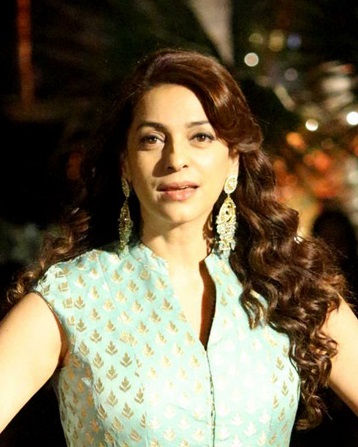
Juhi Chawla Mehta (née Chawla; born 13 November 1967) is an Indian actress. She established herself as one of the leading actresses of Hindi cinema from the late 1980s through the early 2000s.[1] Recognised for her comic timing and vivacious on-screen persona, she is the recipient of several accolades, including two Filmfare Awards.[2] As of 2025, she is the wealthiest Indian actress, with a net worth of ₹7,790 crore (US$920 million).[3]
Key Information


After winning the 1984 Miss India beauty pageant, Chawla made her acting debut with a brief appearance in the Hindi film Sultanat (1986), and had her breakthrough role in the tragic romance film Qayamat Se Qayamat Tak (1988), which earned her the Filmfare Award for Best Female Debut. The year 1993 was key in her career, as she gained recognition for her starring roles in Lootere, Aaina, Darr, and Hum Hain Rahi Pyar Ke, winning the Filmfare Award for Best Actress for the lattermost.[2] Further success came in 1997 with Deewana Mastana, Yes Boss, and Ishq.[2][4]
In the following decade, Chawla began playing against type in art-house projects, garnering critical acclaim for her performances in Jhankaar Beats (2003), 3 Deewarein (2003), My Brother Nikhil (2005), I Am (2011) and Gulaab Gang (2014). She also starred in several Punjabi films, including the biopics Shaheed Udham Singh (2000), Des Hoyaa Pardes (2004), Waris Shah: Ishq Daa Waaris (2006) and Sukhmani – Hope for Life (2010). Among her television work, she was a talent judge on the third season of the dance reality show Jhalak Dikhhla Jaa (2009) and had supporting roles in the streaming series Hush Hush (2022) and The Railway Men (2023).
Chawla has been married to industrialist Jay Mehta since 1995, with whom she has two children. Along with her husband and Shah Rukh Khan, she is the co-owner of the Indian Premier League cricket team Kolkata Knight Riders. Along with Khan, she co-founded the production company Dreamz Unlimited, which produced three films, beginning with their self-starring Phir Bhi Dil Hai Hindustani (2000).
Early life
[edit]Juhi Chawla was born in Ambala, Haryana on 13 November 1967.[5][6][7][8] Her father was an officer of the Indian Revenue Service (IRS).[9] She completed her schooling at Fort Convent School, Bombay (present-day Mumbai),[10] and graduated from Sydenham College, Bombay.[11] Chawla was the winner of the Miss India title in 1984.[12] She also won the Best Costume Award at the Miss Universe contest in 1984.[13]
Career
[edit]Breakthrough (1986–1990)
[edit]Chawla's debut role in Bollywood was a small part in the 1986 film Sultanat. In 1987, she starred in Kannada-Tamil bilingual film Premaloka (Paruva Ragam in Tamil) directed and produced by V Ravichandran.[14] The Kannada version turned out to be a major commercial success and proved to be a break-through film for the lead cast and technical crew.[citation needed]
She got her first major Hindi cinema role in Qayamat Se Qayamat Tak in 1988, in which she starred with Aamir Khan. The film, a modern-day adaption of Shakespeare's Romeo and Juliet, was both a major critical and commercial success, with Khan and Chawla becoming "overnight stars".[15] It won the Filmfare Award for Best Film, and Chawla became the first actress to win the Filmfare Award for Lux New Face of the Year, also receiving her first nomination for Best Actress.[16] Chawla's pairing with Aamir Khan and their on-screen chemistry was often cited by the media as successful.[17] The film has since attained a cult status, with The Times of India ranking it among the "Top 25 Must See Bollywood Films", calling it "one of the landmark films of Hindi cinema" and crediting it with making "Aamir Khan and Juhi Chawla household names".[18][19] Premankur Biswas of First Post wrote in a retrospective review, "Juhi Chawla, with her flouncy ghagra and passive but assertive demeanor was an early predecessor to the sexually liberated Bollywood heroines of today. She wore what she wanted and initiated a relationship with the man she desired".[20] The team Premaloka reunited in 1989 for the Kannada film Kindari Jogi and was declared a musical hit. In the same year she debuted in Telugu cinema with the film Vicky Daada co-starring Nagarjuna.
Established actress (1990–1997)
[edit]In 1990, she starred in Pratibandh. She also received her second Best Actress nomination at Filmfare for the film. Her other releases that year included the family drama Swarg alongside Rajesh Khanna and Govinda, which marked the first of several collaborations with director David Dhawan. In 1991, she collaborated third time with actor-director V Ravichandran for his multilingual directorial Shanti Kranti (Nattukku Oru Nallavan in Tamil). The film, made with an expensive budget, underperformed at the box office leading into huge losses to the makers. The Tamil version saw her pairing opposite Rajinikanth. In 1992, she appeared in Bol Radha Bol alongside Rishi Kapoor, for which she received her third Filmfare nomination for Best Actress.[21][22] Another pairing with Aamir Khan in Daulat Ki Jung resulted in negative reviews.[23]
In 1993, Chawla appeared in four films.[24] Her first release was the action romance film Lootere, directed by Dharmesh Darshan and starring Sunny Deol, Naseeruddin Shah, Chunkey Pandey and Anupam Kher. She played a young woman who receives witness protection through the service of a bodyguard, played by Deol, with whom she eventually falls in love. This was the first movie in which she was cast in a glamorous role. Later, she was cast in two movies produced by Yash Chopra. The first was the romantic drama Aaina, which saw Chawla and Amrita Singh play sisters falling for the same man, played by Jackie Shroff. Her third film that year was Mahesh Bhatt's romantic comedy Hum Hain Rahi Pyar Ke opposite Aamir Khan, which was a success with both critics and audiences.[25] Her performance as a Tamilian runaway, which required her to master Tamil language and dialect, met with acclaim and established her as a comic actress.[26][1][27] Writing for The Indian Express, Udaya Tara Nayar noted that she played her role "to perfection".[24] She won a Filmfare Award for Best Actress for her work.[28] The last film she appeared in that year was the musical psychological thriller Darr, directed by Yash Chopra. The film was one of the highest-grossing films of the year, making it Chawla's fourth consecutive box office hit of the year. Darr was also a major critical success, winning several awards including the National Film Award for Best Popular Film Providing Wholesome Entertainment. She played Kiran, a young woman about to get married with her fiancé (Deol) when she becomes the object of a young man's (Khan) obsession.[25]
Subsequently, she played leading roles in several films, most notably as Saraswati in David Dhawan's Andaz (1994), Laxmi in Surendra Kumar Bohra's Saajan Ka Ghar (1994), Bela in Rajiv Mehra's Ram Jaane (1995), Sandhya in Naajayaz (1995), which marked one of her rare collaborations with Ajay Devgn, and Kiran in David Dhawan and Boney Kapoor's Loafer (1996), and all of them emerged as critical and commercial successes. She received critical acclaim for her performance as a battered wife in Abbas Mustan's thriller Daraar (1996), and she received a nomination of Filmfare Award for Best Actress for her performance in the film. The film was not a major commercial success, but Chawla's performance earned her positive reviews. She was also offered Karisma Kapoor's role in Dil To Pagal Hai (1997), but she turned it down.[29] Chawla's career had hit its peak, and she regained mainstream success in 1997 with the romantic comedies Yes Boss, Deewana Mastana and Ishq, all becoming box office hits.[4][30][31] Ishq became one of the top-earners of the year, and earned critical praise for the performances of its four leads.[32]
In the romantic comedy Yes Boss, she played a model who becomes the love interest of an ad agency owner and his ambitious employee, played by Aditya Pancholi and Shah Rukh Khan, respectively. Yes Boss opened to favourable reviews and did well commercially, and Chawla received a seventh Filmfare nomination for her portrayal, which was described by Screen as "spirited".[33] In a 1998 retrospective review for The Times of India, Khushboo Tiwari called it "a quintessential ‘90s romcom" and took note of Chawla's chemistry with Khan.[34] In the comedy Deewana Mastana, Chawla played Dr. Neha Sharma, love interest to both Kapoor and Govinda and ends up marrying Salman Khan. The film was a commercial success. Her other release of the year was Mr and Mrs Khiladi alongside Akshay Kumar. The film turned out to be an average grosser at the box-office.
Setback (1998–1999)
[edit]In 1998, she appeared once again alongside Shah Rukh Khan in Duplicate, the film was produced by Yash Johar and directed by Mahesh Bhatt. Despite ranking as the 12th highest grosser of the year, the film underperformed at the box office upon its release.[35] The same year, she appeared in Hrishikesh Mukherjee's swan song Jhooth Bole Kauwa Kaate alongside Anil Kapoor; the film was received well by critics for its reminiscence of Mukherjee's films, with one critic calling it a "a classy comedy".[36][37] The same year, she also appeared in Priyadarshan's rural drama Saat Rang Ke Sapne opposite Arvind Swamy. The film underperformed at the box-office, but Khalid Mohamed wrote of her that she is "only saving grace. Lovely to look at and an instinctive actress, she's a likeable as ever."[38] The same year, she starred in the Malayalam detective comedy Harikrishnans opposite Mohanlal and Mammootty. Harikrishnans was a commercial success.[39]
In 1999, she appeared in Arjun Pandit opposite Sunny Deol.[40][17] She played a woman who seeks revenge in the film and described her character as "a role with negative shades".[26] The film was the thirteenth highest-grossing film of 1999, and emerged as a critical and commercial success. Chawla's work was well received in this movie.[41][42][43] The same year, she also starred opposite Sanjay Dutt in the adventure film Safari, a critical and commercial failure.[44] She worked free of charge in the Punjabi-language biographical film Shaheed Udham Singh, based on the life of Udham Singh.[45]
Resurgence and professional expansion (2000–2009)
[edit]In 2000, alongside Shah Rukh Khan and Aziz Mirza, she opened a production company called Dreamz Unlimited. The romantic comedy Phir Bhi Dil Hai Hindustani was the company's first production starring Chawla and Khan. Upon release, the film underperformed at the box office,[46][47] though over the years it has been appreciated for its bold theme on media wars. Chawla's performance as the journalist Ria Banarjee received appreciation from the critics.[48][49] Rediff critic Swapna Mitter wrote, "This is probably one of Juhi's best performances. She has never looked better... and once again, like Hum Hain Rahi Pyar Ke, she shows a flair for comedy."[50] Her other release of the year was Rakesh Roshan's delayed Karobaar: The Business of Love, which was in the making for over five years and failed upon release.[51][52] She played a small role in Gang.[53]
In 2001, she appeared in the action comedy One 2 Ka 4 with Shah Rukh Khan, in their seventh collaboration and with Jackie Shroff, the film was a flop at the box office. Chawla played three roles in the film; a haryanvi maid, a bar dancer and an undercover cop. While the film was noticed for its serious content, her comedic performance won acclaim from several critics.[54] Vinayak Chakravorty wrote, "But the winner here is Juhi — that vintage comic flair of Hum Hain Raahi Pyaar Ke almost comes back from the dead."[55] Similarly, Nikhat Kazmi of The Times of India "The only saving grace in this sea of confusion is Juhi. As a fast talking Haryanvi loudmouth who has the hots for her 'Ricky Martin' (Shahrukh), she is an absolute delight."[56] The Hindu agreed with this observation, further noting her "unfailing sense of humour" and timing, which "few can match".[57] Another release of the year was the comedy Aamdani Atthani Kharcha Rupaiyaa opposite Govinda. Around the same time, she signed a Kannada film Adhishesha, in which she was to star opposite her Premaloka co–star V. Ravichandran.[58]

Having taken a one-year break from film work, Chawla started appearing in independent and art films, and her work included critically acclaimed films Jhankaar Beats, 3 Deewarein (both 2003), 7½ Phere and My Brother Nikhil (both 2005), and Bas Ek Pal (2006).[59][60] Jhankaar Beats, a musical comedy and a tribute to music director R. D. Burman, saw her play the wife of an aspiring musician. She won a Star Screen Award for Best Supporting Actress for 3 Deewarein, which earned her positive reviews.[61] Director Kukunoor wrote the film with Chawla in mind, aspiring to change her image.[62] Robert Koehler of Variety wrote, "Chawla gradually settles into a role that contains at least three different character layers to it."[63] Chawla said 3 Deewarein was a mould-breaking film in her career, and spoke of the revealing experience in making non-mainstream films which require a more realistic approach to acting and minimal use of make-up.[64] She acted opposite Gurdas Mann in the Punjabi-language feature Des Hoyaa Pardes (2004) which was warmly received. She said she chose the part because upon reading the script, she identified a "tremendous scope for performance".[65] The film won the National Film Award for Best Feature Film in Punjabi.
Set in Goa between 1986 and 1994, Onir's My Brother Nikhil centers on the character of Nikhil (played by Sanjay Suri), a young man who is tested HIV-positive. Chawla co-starred as Anamika Kapoor, a schoolteacher by profession and Nikhil's loving and supportive elder sister, who accepts his same-gender partner and stands by his side through his struggle. The film opened to a welcome reception by critics, and Chawla's performance was particularly praised.[60] Khalid Mohamed was highly approving of her portrayal: "Above all, Juhi Chawla is perfect. Her effortless blend of conflicting emotions is what A-class acting is all about. Ms Chawla is a diamond in this little gem of a movie."[66] She starred alongside Irfan Khan in 7½ Phere. Hindustan Times commended her comic performance.[67]
In 2006, she appeared in the ensemble drama Salaam-e-Ishq: A Tribute To Love directed by Nikhil Advani.[68] She collaborated with Onir once again with in the drama Bas Ek Pal (2006) alongside Urmila Matondkar and Sanjay Suri. She played Ira Malhotra, a battered wife who refuses to leave her possessive husband for religious reasons. The film opened to positive reviews.[69] Subhash K. Jha wrote of Chawla that she "uses her ability to portray hurt and guilt with minimum effort."[70] The same year she starred in another Punjabi film, the historical drama Waris Shah: Ishq Daa Waaris, which won a National Film Award. According to the BBC, the film "bears the hallmarks of a quality production".[71] The film is based on the life of Punjabi poet Waris Shah during the times he wrote the poem Heer.[72][73]
Chawla and Manoj Bajpayee played a married couple in Ganesh Acharya's drama Swami (2007), which follows their financial struggles to secure proper education for their intelligent son. Reviews of the film were varied.[74] Tanveer Bookwala of Rediff appreciated the film for its simple story and for giving the lead pair "the chance to be unconventional and subtle and they do not fail to deliver."[75]
Chawla then appeared in Ravi Chopra's Bhoothnath (2008) with Amitabh Bachchan, in which she made her singing debut with the song "Chalo Jaane Do", the film was a moderate success and Chawla was appreciated for her role. Manish Gajjar from BBC wrote, "Juhi Chawla's brilliant comic timing as Banku's mum has you in stitches."[76] Another film called Krazzy 4 with Irfan Khan and Arshad Warsi was released in 2008, the film failed to do well at the box office. In 2009, she appeared in a cameo appearance in Luck By Chance to play a comic part for which she dyed her hair blonde. The film and Chawla's performance got highly positive reviews and got a good opening at the box office.[77]
Intermittent acting roles (2010–present)
[edit]Chawla starred in Onir's critically acclaimed anthology film I Am (2010). Unfolded in several chapters, the film starred Chawla alongside Manisha Koirala in an episode named "I Am Megha". She played the title role of a Kashmiri Pandit who travels back to her hometown in Srinagar, having been driven out of it years ago.[78] For her performance, Chawla was awarded the Best Actress award at the 13th London Asian Film Festival and Award for Excellence in Hindi Cinema at the Asiavision Movie Awards.[79] Her performance also earned her a nomination for the Filmfare Award for Best Supporting Actress. Rajeev Masand wrote, "Juhi Chawla is a portrait of suppressed vulnerability as she confronts her feelings about an old home and an old friend."[80]
Chawla next starred in the action comedy Son of Sardaar (2012) opposite Sanjay Dutt, which was poorly received by critics. Live Mint called it "the worst portrayal of Punjabiyat in Hindi cinema", although it referred to her part as "the only unique role in the film" and further noted, "An actor with proven talent for comedy, Chawla makes Pammi, her character, pathetic as well as feisty."[81] The film earned ₹169.98 crore (US$20 million) worldwide.[82]
After a period of limited work in films, Chawla made a comeback in 2014 with Gulaab Gang opposite her once-archrival Madhuri Dixit. The film, in which Chawla and Dixit played ruthless political rivals, marked Chawla's role as an antagonist. Her portrayal of Sumitra Devi, a shrewd and conniving politician, was widely appreciated by critics.[83] Shubhra Gupta of The Financial Times described her character as "the sort of politician that men have played for ever: hungry for power, will stop at nothing, not even murder and mayhem. She rules with an iron fist and a sneer."[84] Hindustan Times wrote, "An effective hero needs a larger-than-life villain. In this case, it is Juhi Chawla who marries her sister to a rapist and apparently killed her husband to get political power. Like most corrupt politicians we see onscreen, she is an opportunist who lusts for power. It speaks well about her acting prowess that we come to hate the otherwise effervescent Juhi in this film."[85] Anupama Chopra wrote, "Her perverse wickedness is the best part of the film", but called it a "a one-note character".[86] Rajeev Masand called her "terrific" in the part and concluded a scathing review of the film asserting, "if you must watch this film, watch it for Juhi Chawla's inspired performance."[87] She received a second Filmfare nomination for Best Supporting Actress.[88] The same year she also appeared with Helen Mirren and Om Puri in a guest role in the Steven Spielberg-produced Hollywood film The Hundred Foot Journey.[89]
In 2016, she starred in the woman-centric drama Chalk n Duster with Shabana Azmi. The film received mixed reviews from critics and Chawla's performance was well received. In a critical review for The Hindu, Namrata Joshi noted "Azmi and Chawla who, with their dignified presence and easy camaraderie stop you from heading to the exit door."[90] Rohit Vats of Hindustan Times liked the film for its "well told ethics versus greed story" and mentioned Chawla's heartwarming presence.[91] In 2017, she played an Indian defence minister in the Alt Balaji web series The Test Case.[92]
Chawla starred in the web series Hush Hush, which released on Amazon Prime Video in 2022.[93]
Off-screen work
[edit]In 1998, Chawla participated in a concert tour entitled Awesome Foursome alongside Shah Rukh Khan, Kajol, and Akshay Kumar across the United Kingdom, Canada and the United States.[94]
In 2009, Chawla featured as a talent judge, for the third season of Sony Entertainment Television India's dance reality show, Jhalak Dikhhla Jaa alongside Saroj Khan and Vaibhavi Merchant.[95] In 2011, she hosted Colors's kid's chat-show Badmaash Company- Ek Shararat Hone Ko Hai.[96]
In 2008, Chawla, in partnership with Shah Rukh Khan and her husband Jay Mehta, acquired ownership rights for the franchise representing Kolkata in the Twenty20 cricket tournament Indian Premier League (IPL) for US$75.09 million, and named the team Kolkata Knight Riders (KKR).[97] The team won in 2012[98] and repeated the feat in 2014.[99]
Delhi High Court imposed a ₹20 lakh fine on Chawla after it found a lawsuit filed by Chawla against the setting up of 5G wireless networks to be 'frivolous'. The fine was later reduced to ₹2 lakh.[100][101][102]
Personal life
[edit].jpg)
Chawla married industrialist Jay Mehta in 1995. The couple has two children. In an interview Chawla revealed that her daughter Jhanvi wants to be a writer, instead of joining films.[103]
Her brother Bobby Chawla was the CEO of Red Chillies Entertainment. He suffered a massive stroke in 2010 after a dinner party.[104] After being in coma for about four years, he died on 9 March 2014. Her sister, Sonia, died of cancer on 30 October 2012.[105] Chawla is a vegetarian.[106]
Reception and media image
[edit].jpg)
Chawla is considered in the media as one of the most popular actresses of Bollywood.[107] India Today named her in their "Top Bollywood Actresses" list.[108] Chawla appeared in Box Office India's "Top Actresses" list from 1992 to 1997.[109] She was also placed in Times of India's "50 Beautiful Faces" list.[110] In 2024, Chawla became the richest actress in India, with a net worth of ₹4,600 crore (US$540 million). In 2025, several websites reported her net worth to be ₹7,790 crore (US$920 million).[111][112]
As an actor, throughout most of her early career, she was particularly recognised for her comic timing and vivacious on-screen persona.[27][46] Despite her success, Chawla has faced periods of commercial decline.[113][47] Asked about some of the commercial flunctuations in her career, Chawla attributed them to wrong choices.[113] Following the birth of her daughter and amidst the poor box-office performance of Chawla's work in the early 2000s, Chawla took a short break from acting in 2001 and spoke of her intention to come back with more serious roles.[47] Eventually she felt her new choices had given her a new identity and constant interest.[114] Several outlets noted her transition to serious cinema.[59] Chawla said that with films like 3 Deewarein and My Brother Nikhil she received satisfaction as an actor.[115]
Awards and nominations
[edit]Chawla has received two Filmfare Awards. She won the Best Female Debut for Qayamat Se Qayamat Tak and Best Actress for Hum Hain Rahi Pyar Ke. She received six more Best Actress nominations for Qayamat Se Qayamat Tak, Pratibandh, Bol Radha Bol, Darr, Daraar and Yes Boss. In addition to this, she received Best Supporting Actress nomination for I Am and Gulaab Gang.[116]
See also
[edit]References
[edit]- ^ a b Verma, Sukanya (11 March 2004). "The real stars of Bollywood". Rediff.com. Archived from the original on 10 March 2011. Retrieved 29 May 2009.
- ^ a b c Kothari, Jitendra (26 June 2001). "Juhi Chawla — Back On The Public's Radar". India Today. Archived from the original on 26 June 2001. Retrieved 17 May 2023.
- ^ "India's richest actress hasn't done a film in 2 years; earned Rs 3,190 cr in one year, has a mammoth Rs 7,790 crore empire". The Indian Express. 2 October 2025. Retrieved 2 October 2025.
- ^ a b "Top India Total Nett Gross 1997". Box Office India. Archived from the original on 8 April 2020. Retrieved 30 April 2020.
- ^ Saran, Renu (25 February 2014). Encyclopedia of Bollywood–Film Actresses. Diamond Pocket Books Pvt Ltd. p. 39. ISBN 978-93-5083-691-0.
- ^ Khattar, Sohan Singh; Kar, Reena (26 July 2021). Know Your State Haryana. Arihant Publications India limited. p. 234. ISBN 978-93-257-9038-4.
- ^ Samat, Hafidah (18 January 2000). "Astro News". New Straits Times. Retrieved 16 November 2023.
- ^ Varma, Lipika (12 November 2017). "Juhi Chawla turns 50, shares fond memories, plans for milestone birthday". Deccan Chronicle. Retrieved 16 November 2023.
- ^ "Shah Rukh is still very simple at heart: Juhi Chawla". The Times of India. 13 February 2014. Archived from the original on 2 March 2014. Retrieved 1 March 2014.
- ^ "Never thought Juhi would take to acting". The Times of India. 13 January 2011. Archived from the original on 24 December 2013. Retrieved 25 March 2013.
- ^ "Happy Birthday, Juhi". Rediff.com. 14 November 2008. Retrieved 12 May 2024.
- ^ Juhi Chawla - Femina 1990-1981! Contestants - Indiatimes.com Archived 16 May 2013 at the Wayback Machine. Feminamissindia.indiatimes.com (28 April 2011). Retrieved 23 December 2013.
- ^ "Rare pictures of Juhi Chawla from her pageant journey – BeautyPageants". Femina Miss India. Archived from the original on 29 December 2022. Retrieved 7 February 2023.
- ^ Suresh, Sunayana (5 June 2014). "Premaloka was my acting school: Juhi Chawla". Indiatimes movies.
- ^ Ayaz, Shaikh (29 April 2018). "30 years of QSQT: The film that made Aamir Khan-Juhi Chawla overnight stars and changed the template for Hindi film hero". The Indian Express. Archived from the original on 3 August 2020. Retrieved 30 April 2020.
- ^ "Filmfare Awards Listing" (PDF). Archived from the original (PDF) on 12 June 2009. Retrieved 19 December 2019.
- ^ a b Srinivasan, V S (27 March 1998). "The rise, fall and rise of Juhi Chawla". Rediff.com. Archived from the original on 29 January 2007. Retrieved 8 June 2009.
- ^ Kanwar, Rachna (3 October 2005). "25 Must See Bollywood Movies". Indiatimes movies. Archived from the original on 15 October 2007. Retrieved 30 April 2020.
- ^ Derné, Steve (1995). Culture in Action: Family Life, Emotion, and Male Dominance in Banaras, India. SUNY Press. p. 97. ISBN 0-7914-2425-1.
- ^ Biswas, Premankur (29 April 2013). "25 years of Qayamat Se Qayamat Tak: Why it's one of Bollywood's best". Firstpost. Archived from the original on 31 August 2020. Retrieved 30 April 2020.
- ^ "Filmfare Nominations 1992". The Times of India. Archived from the original on 16 July 2012.
- ^ "Filmfare nominations 1997". Archived from the original on 17 October 2013.
- ^ Krishnaswamy, N. (10 January 1992). "Daulat Ki Jung". The Indian Express. Express Group. Retrieved 26 February 2022.
- ^ a b Tara Nayar, Udaya (28 November 1993). "Juhi's test". The Indian Express.
- ^ a b "Box Office Report 1993". Archived from the original on 19 January 2012.
- ^ a b Taliculam, Shamila (19 January 2000). "There have been many ups and downs". Rediff. Archived from the original on 29 January 2018. Retrieved 1 May 2020.
- ^ a b Doval, Nikita (21 March 2005). "Juhi II". The Times of India. India. Archived from the original on 14 September 2005. Retrieved 29 May 2009.
- ^ "The Winners - 1993". The Times of India. Archived from the original on 9 July 2012. Retrieved 8 April 2007.
- ^ "Box Office Report 1994". Archived from the original on 7 January 2013.
- ^ "On a dream run". Screen. Express India. 13 February 1998. Archived from the original on 23 August 2003. Retrieved 1 May 2020.
- ^ Gupta, Rakhee (25 October 1998). "She was almostnumber one". The Tribune. Archived from the original on 2 August 2020. Retrieved 1 May 2020.
- ^ Chopra, Anupama (8 December 1997). "Same Old Story". India Today. Archived from the original on 9 February 1999. Retrieved 10 May 2020.
- ^ "A SLICK COMEDY". Screen. 25 July 1997. Archived from the original on 7 January 2005. Retrieved 30 April 2020.
- ^ Tiwari, Khushboo (18 July 2018). "21 years of 'Yes Boss': Here's why the Shah Rukh Khan starrer is still a quintessential '90s romcom". The Times of India. Archived from the original on 12 October 2020. Retrieved 1 May 2020.
- ^ Mohamed, Khalid (1998). "DOUBLE OR QUITS". Filmfare - Bombay Talkies. Archived from the original on 1 October 1999. Retrieved 1 May 2020.
- ^ Taliculam, Sharmila (5 December 1998). "Once more, with feeling". Rediff. Archived from the original on 2 August 2020. Retrieved 1 May 2020.
- ^ Mohamed, Khaled (2 October 1999). "THOSE WERE THE DAYS". Filmfare - Bombay Talkies. Archived from the original on 2 October 1999. Retrieved 1 May 2020.
- ^ Mohamed, Khalid (1998). "WASTE SIDE STORY". Filmfare. The Times Hroup. Archived from the original on 2 October 1999. Retrieved 1 May 2020.
- ^ Radhakrishnan, M. G. (5 October 1998). "Two endings of 'Harikrishnans' make it a hit but run into rough weather with CBFC". India Today. Archived from the original on 2 August 2020. Retrieved 1 May 2020.
- ^ "Box Office 1999". Box Office India. Archived from the original on 8 July 2011. Retrieved 29 April 2020.
- ^ Mohamed, Khalid (3 September 1999). "Out, out, bloodsport". Bombay Talkies. Archived from the original on 13 February 2002. Retrieved 1 May 2020.
- ^ "Holy Cowl". Filmfare. 3 May 1999. Archived from the original on 22 June 2001. Retrieved 1 May 2020.
- ^ Vasudevan, R. (1999). "Arjun Pandit". Hindustan Times. Archived from the original on 24 January 2000. Retrieved 1 May 2020.
- ^ Taliculam, Sharmila (10 June 1999). "Pretty beastly". Rediff. Archived from the original on 2 August 2020. Retrieved 1 May 2020.
- ^ Singh, Nonika (1 April 2000). "Mahaul ab theek hai". The Tribune. Archived from the original on 5 March 2016. Retrieved 1 May 2020.
- ^ a b Taliculam, Sharmila (19 January 2000). "There have been many ups and downs". Rediff.com. Archived from the original on 4 March 2016. Retrieved 29 May 2009.
- ^ a b c "Not The End". The Tribune. 10 May 2001. Archived from the original on 9 July 2018. Retrieved 10 August 2009.
- ^ "PHIR BHI DIL HAI HINDUSTANI(FILMFARE ONLINE)". Filmfare. 24 January 2000. Archived from the original on 21 June 2001. Retrieved 1 May 2020.
- ^ Vasudevan, R. (2000). "Phir Bhi Dil Hao Hindustani". Hindustan Times. Archived from the original on 6 June 2000. Retrieved 1 May 2020.
- ^ Mitter, Swapna (21 January 2000). "I love my car -- and my country". Rediff. Archived from the original on 2 August 2020. Retrieved 1 May 2020.
- ^ Ashar, Urvashi (2000). "Karobaar". Filmfare. Archived from the original on 22 June 2001. Retrieved 1 May 2020.
- ^ Kothari, Jitendra (2000). "Karobaar — Business As Usual". India Today. Archived from the original on 22 February 2001. Retrieved 10 May 2020.
- ^ Charavorthy, Vinayak (2000). "GANG". Hindustan Times. Archived from the original on 10 August 2001. Retrieved 1 May 2020.
- ^ Kothari, Jitendra (2001). "One Too Many Plots Spoil This Potboiler". India Today. Archived from the original on 10 April 2001. Retrieved 10 May 2020.
- ^ Charavorthy, Vinayak (20 August 2001). "ONE2 KA4". Hindustan Times. Archived from the original on 20 August 2001. Retrieved 1 May 2020.
- ^ Kami, Nikhat (2001). "One 2 Ka 4". The Times of India. Archived from the original on 3 October 2001. Retrieved 2 May 2020.
- ^ "Not just by crime and punishment..." The Hindu. 1 April 2001. Archived from the original on 18 February 2004. Retrieved 20 May 2020.
- ^ "Launch of new Kannada cinema 'Adishesha' starring Crazy Star Ravichandran". viggy.com. Archived from the original on 9 August 2021. Retrieved 9 August 2021.
- ^ a b Verma, Sukanya (19 March 2008). "Readers pick: Bollywood's most under-rated". Rediff.com. Archived from the original on 13 October 2018. Retrieved 21 April 2009.
- ^ a b Ghosh, Samrudhi (13 November 2016). "Juhi Chawla turns 49: Here's why the talented actor should not retire anytime soon". India Today. Archived from the original on 5 March 2022. Retrieved 5 March 2022.
- ^ Mahesh, Chitra (15 August 2003). "Theen Deewarein". The Hindu. Archived from the original on 25 February 2008. Retrieved 1 May 2020.
- ^ Vijayakar, Rajiv (20 August 2011). "Heartfelt stories". Deccan Herald. Archived from the original on 5 March 2022. Retrieved 5 March 2022.
- ^ Koehler, Robert (11 June 2003). "3 Walls". Variety. Archived from the original on 2 August 2020. Retrieved 1 May 2020.
- ^ Sahani, Alaka (8 January 2016). "Now I sign movies for different reasons, but solid ones". The Indian Express. Archived from the original on 5 March 2022. Retrieved 5 March 2022.
- ^ Tandon, Aditi (10 February 2004). "No more romantic leads". The Tribune. Archived from the original on 2 August 2020. Retrieved 1 May 2020.
- ^ Mohamed, Khalid (27 March 2005). "Emotional rescue". Mid-Day. Archived from the original on 20 February 2006. Retrieved 27 September 2011.
- ^ Archana (30 July 2005). "7 1/2 Phere". Hindustan Times. Archived from the original on 2 January 2006. Retrieved 1 May 2020.
- ^ Adarsh, Taran (25 January 2007). "Salaam-E-Ishq". Bollywood Hungama. Archived from the original on 16 July 2007. Retrieved 1 May 2020.
- ^ "Bas Ek Pal is a slice of art". Hindustan Times. Indo-Asian News Service. 16 September 2006. Archived from the original on 2 August 2020. Retrieved 1 May 2020.
- ^ K. Jha, Subhash (15 September 2006). "Bas Ek Pal". The Times of India. Archived from the original on 1 September 2020. Retrieved 1 May 2020.
- ^ Joshi, Poonam (5 September 2006). "Waris Shah - Ishq Daa Waaris". BBC. Archived from the original on 15 September 2020. Retrieved 1 May 2020.
- ^ Rajwade, Gayatri (24 August 2006). "Juhi, Divya excited to work in Waris Shah". The Tribune. Archived from the original on 2 August 2020. Retrieved 1 May 2020.
- ^ Varma, Lipika (1 December 2006). "Chirpy Chawla chirps again". The Telegraph. Archived from the original on 2 August 2020. Retrieved 1 May 2020.
- ^ Mohamed, Khalid (8 June 2007). "Review: Swami". Hindustan Times. Archived from the original on 2 August 2020. Retrieved 1 May 2020.
- ^ Bookwala, Tanveer (8 June 2007). "Swami is sweet and simple". Rediff. Archived from the original on 15 October 2018. Retrieved 1 May 2020.
- ^ Gajjar, Manish (16 May 2008). "Bhoothnath". BBC. Archived from the original on 12 October 2020. Retrieved 1 May 2020.
- ^ "Juhi Chawla dons blonde look for 'Luck By Chance'". The Hindu. Chennai, India. 21 January 2009. Archived from the original on 4 November 2012. Retrieved 27 January 2009.
- ^ "'I Am Megha' is about the plight of Kashmiri Pandits: Juhi". The Indian Express. 20 December 2009. Archived from the original on 12 October 2020. Retrieved 1 May 2020.
- ^ "Onir, Juhi felicitated". Hindustan Times. 4 April 2011. Archived from the original on 2 August 2020. Retrieved 1 May 2020.
- ^ Masand, Rajeev (29 April 2011). "Bollywood's rare high-quality weekend". News18. Archived from the original on 2 August 2020. Retrieved 1 May 2020.
- ^ Sharma, Sanjukta (12 November 2012). "Film Review". Livemint. Archived from the original on 12 February 2015. Retrieved 1 May 2020.
- ^ "SOf Sardaar Box Office". Bollywood Hungama. 13 November 2012. Archived from the original on 12 October 2019. Retrieved 1 May 2020.
- ^ Ramnath, Nandini (7 March 2014). "Film review". Livemint. Archived from the original on 2 August 2020. Retrieved 1 May 2020.
- ^ Gupta, Shubhra (7 March 2014). "Movie review Gulaab Gang: Drive into Madhuri Dixit's make-believe world". The Financial Express. Archived from the original on 17 August 2020. Retrieved 1 May 2020.
- ^ Kaushal, Sweta (7 March 2014). "Movie review: Gulaab Gang is no women's liberation statement". Hindustan Times. Archived from the original on 2 August 2020. Retrieved 1 May 2020.
- ^ Chopra, Anupama (8 March 2014). "Gulaab Gang is messy, illogical". Hindustan Times. Archived from the original on 2 August 2020. Retrieved 1 May 2020.
- ^ Masand, Rajeev (7 March 2014). "'Gulaab Gang' review: The film is muddled and forgettable". News18. Archived from the original on 2 August 2020. Retrieved 1 May 2020.
- ^ "Nominations for the 60th Britannia Filmfare Awards". Filmfare. 19 January 2015. Archived from the original on 10 January 2016. Retrieved 1 May 2020.
- ^ Bhattacharya, Roshmila (29 November 2013). "Juhi Chawla shooting for a Spielberg production". The Times of India. Archived from the original on 12 October 2020. Retrieved 29 November 2013.
- ^ Joshi, Namrata (15 January 2016). "Chalk & Duster: Irritatingly preachy". The Hindu. ISSN 0971-751X. Archived from the original on 3 August 2020. Retrieved 7 July 2021.
- ^ Vats, Rohit (15 January 2016). "Chalk N Duster review: It's a well told ethics versus greed story". Hindustan Times. Archived from the original on 6 April 2020. Retrieved 7 July 2021.
- ^ Jain, Arushi (1 February 2018). "The Test Case review: Watch this ALTBalaji web series for the stellar performances". The Indian Express. Archived from the original on 9 July 2021. Retrieved 7 July 2021.
- ^ "Hush Hush: Juhi Chawla, Ayesha Jhulka to make digital debut in Amazon Prime series". The Indian Express. 8 March 2021. Archived from the original on 30 January 2023. Retrieved 7 March 2023.
- ^ Joshi, Namrata; Abreu, Robin (14 October 1998). "The big gig". India Today. Archived from the original on 25 July 2014. Retrieved 17 July 2014.
- ^ "Jhalak Dikhlaa Jaa Judges". Archived from the original on 10 March 2009.
- ^ "Juhi Chawla: Badmash Company is a sunshine kinda show". Rediff. 23 September 2011. Archived from the original on 6 March 2019. Retrieved 6 March 2019.
- ^ Kuber, Girish (9 February 2008). "Shah Rukh Khan's Kolkata IPL team to be called Night Riders or Knight Riders". The Economic Times. Archived from the original on 12 October 2020. Retrieved 23 April 2020.
- ^ Garg, Swati (29 May 2012). "IPL victory puts KKR in the black". Business Standard. Archived from the original on 10 August 2013. Retrieved 30 May 2012.
- ^ "Kolkata Knight Riders Beat Kings XI Punjab to Clinch Second IPL Title in Three Years". NDTV. 2 June 2014. Archived from the original on 9 August 2014. Retrieved 28 July 2014.
- ^ "Juhi Chawla didn't pay ₹20 lakh cost for 5G case yet, plea filed". Hindustan Times. 22 January 2022. Archived from the original on 5 July 2022. Retrieved 13 July 2022.
- ^ "Delhi HC reduces Juhi Chawla's penalty from Rs 20 Lakh to Rs 2 lakh in 5G lawsuit". ThePrint. 27 January 2022. Archived from the original on 5 July 2022. Retrieved 13 July 2022.
- ^ "5G Roll Out: Court Grants Week To Juhi Chawla To Deposit Rs 20 Lakh Fine". NDTV.com. 1 July 2022. Archived from the original on 14 July 2022. Retrieved 13 July 2022.
- ^ "Juhi Chawla reveals when her Kids would debut in Films". news.biharprabha.com. Indo-Asian News Service. Archived from the original on 4 March 2016. Retrieved 14 February 2014.
- ^ Banerjee, Soumyadipta (15 January 2013). "My world collapsed with my brother: Juhi Chawla". The Times of India. Archived from the original on 19 September 2015. Retrieved 11 May 2019.
- ^ Gupta, Priya (10 March 2014). "After losing my mom, my brother Bobby was my anchor till he went into coma: Juhi Chawla". The Times of India. Archived from the original on 24 March 2017. Retrieved 11 May 2019.
- ^ "Juhi Chawla: Interesting facts" Archived 25 January 2023 at the Wayback Machine. The Times of India. Retrieved 24 January 2023.
- ^ Tara Nayar, Udaya (27 November 1994). "Who's In, Who's Out". The Indian Express. Express Group. Archived from the original on 18 February 2023. Retrieved 25 February 2022.
- ^ "Top heroines of Bollywood". India Today. Archived from the original on 27 March 2020. Retrieved 28 March 2020.
- ^ "Top Actresses". Box Office India. Archived from the original on 4 January 2012. Retrieved 24 April 2020.
- ^ "Photos - 50 Beautiful Faces: 100 years of Indian Cinema". The Times of India. Retrieved 20 November 2020.
- ^ "Juhi Chawla becomes India's richest actress with ₹ 4,600 crore net worth". Bollywood Hungama. 18 October 2024. Retrieved 18 October 2024.
- ^ "India's richest actress hasn't done a film in 2 years; earned Rs 3,190 cr in one year, has a mammoth Rs 7,790 crore empire". The Indian Express. 2 October 2025. Retrieved 2 October 2025.
- ^ a b Gupta, Rakhee (25 October 1998). "She was almost number one". The Tribune. Archived from the original on 2 August 2020. Retrieved 26 February 2022.
- ^ Pereira, Priyanka (29 October 2012). "The Seriously Funny Actor". The Indian Express. Archived from the original on 12 October 2020. Retrieved 1 May 2020.
- ^ Mohamed, Khalid (2 December 2011). "Star mothers". Khaleej Times. Archived from the original on 5 March 2022. Retrieved 5 March 2022.
- ^ List of awards and nominations received by Juhi Chawla Rediff.com via Bollywood Hungama Retrieved 25 August 2021
External links
[edit]


.svg)
| International | |
|---|---|
| National | |
| Artists | |
| People | |
| Other | |
Juhi Chawla
View on GrokipediaEarly years
Childhood and family background
Juhi Chawla was born on 13 November 1967 in Ambala, Haryana, to Dr. S. Chawla, a Punjabi officer in the Indian Revenue Service, and Mona Chawla, a Gujarati executive who worked in housekeeping for hotel groups including the Oberoi and Taj, eventually heading the department for the latter.[12][13][14] Following her birth, the family briefly lived in Delhi before relocating to Ludhiana, Punjab, where Chawla experienced a middle-class upbringing alongside her elder brother Sanjeev "Bobby" Chawla (d. 2014), who served as CEO of Red Chillies Entertainment, and her younger sister Sonia Chawla (d. 2012).[15][16][12][17] From an early age, Chawla developed a passion for performing arts, including dance and music, shaped by her family's supportive environment; she trained in Kathak dance and studied classical singing for several years.[18] Her father emphasized discipline and the value of education, encouraging her academic pursuits, while her mother provided cultural exposure through Gujarati traditions and her own career in hospitality, fostering Chawla's appreciation for the arts.[12]Education and entry into pageantry
Juhi Chawla completed her early schooling in Ludhiana, Punjab, before her family relocated to Mumbai, where she attended Fort Convent School.[19] She later pursued higher education at Sydenham College in Mumbai, graduating with a degree in commerce and economics.[19][20] Her undergraduate studies were interrupted when she participated in the Femina Miss India 1984 pageant as a college student, winning the title at the age of 17.[21] This victory qualified her to represent India at the Miss Universe 1984 pageant in Miami, Florida, where she competed against contestants from 81 countries and won the Best National Costume award for her traditional Indian attire designed by Ritu Kumar.[21][22] During the Miss Universe event, Chawla engaged in interactions with international contestants, sharing experiences of cultural diversity and preparing for the competition's various rounds, including interviews and swimsuit presentations.[22] The pageant garnered significant media attention for her poise and the innovative national costume, which featured a lehenga and nose ring, marking her emergence as a public figure. Her family provided crucial support during these early endeavors, encouraging her participation in the pageants.[23]Acting career
Debut and breakthrough (1986–1990)
Juhi Chawla entered the film industry at the age of 18 with a minor role in the 1986 Bollywood epic Sultanat, directed by Mukul S. Anand and starring Dharmendra, Sunny Deol, Sridevi, and Karan Kapoor. The ambitious production, envisioned as a grand historical drama, featured Chawla in a brief appearance but ultimately failed commercially, incurring significant losses for its producers due to poor audience reception and box-office performance.[24][25][26] Chawla's career gained momentum with her breakthrough performance in the 1988 romantic tragedy Qayamat Se Qayamat Tak, directed by Mansoor Khan and co-starring Aamir Khan in his leading debut. Inspired by Shakespeare's Romeo and Juliet, the film depicted a forbidden love story amid family feuds, with Chawla portraying the innocent and vibrant Rashmi, earning widespread critical acclaim for her fresh, emotive acting that captured youthful romance and tragedy. Produced on a modest budget of ₹10 million, it emerged as a major commercial hit, grossing ₹50 million worldwide and ranking among the highest-grossing Hindi films of 1988, propelling both leads to stardom.[27][28][29] In the following years, Chawla took on supporting roles that increased her visibility in mainstream Hindi cinema, including a guest appearance as Devika in Yash Chopra's romantic drama Chandni (1989), where she shared screen space with Sridevi and Rishi Kapoor. Her foray into regional cinema during this period included the Bengali film Amar Prem (1989), a romantic drama opposite Prosenjit Chatterjee, and the Kannada musical Kindari Jogi (1989) with V. Ravichandran, both of which were well-received and highlighted her adaptability across languages as a promising newcomer. These early ventures, building on her Miss India 1984 pageant win that opened doors to auditions, solidified her position as a versatile actress in Hindi and South Indian industries.[30][31]Rise to prominence (1990–1997)
Following her breakthrough in the late 1980s, Juhi Chawla solidified her position in Bollywood through a series of commercially successful films that highlighted her comedic timing and charm. In 1990, she starred in Swarg, a drama directed by David Dhawan, where she played the female lead opposite Govinda, and the film emerged as a box-office hit, grossing significantly against its modest budget.[32] By 1992, Chawla delivered back-to-back successes with Bol Radha Bol, a comedy-thriller alongside Rishi Kapoor that became a hit with its light-hearted narrative and her bubbly performance, earning over ₹4.75 crore nett in India.[33] The same year, Raju Ban Gaya Gentleman, directed by Aziz Mirza and co-starring Shah Rukh Khan in his early lead role, was a commercial success that blended romance and humor, further boosting her popularity among audiences.[34] Chawla's career reached a defining moment in 1993 with Hum Hain Rahi Pyar Ke, directed by Mahesh Bhatt, where she portrayed Vaijanti Iyer, a nurturing governess who manages a factory owner's three children while falling in love with their widowed father, played by Aamir Khan.[1] Her heartfelt and versatile performance in the family entertainer earned her the Filmfare Award for Best Actress at the 1994 ceremony, marking her first major acting accolade and cementing her reputation for emotionally resonant roles.[35] The film was a critical and commercial success, appealing to family audiences with its blend of romance, comedy, and drama. Throughout the period, Chawla frequently collaborated with Shah Rukh Khan, creating on-screen chemistry that spanned genres. Their pairing in Raju Ban Gaya Gentleman (1992) introduced a fresh romantic dynamic, while Darr (1993), a psychological thriller directed by Yash Chopra, showcased her in a dramatic role as the object of obsession, contributing to the film's blockbuster status.[36] By 1997, Yes Boss, a romantic comedy where she played a ambitious office worker opposite Khan's scheming subordinate, highlighted their comedic rapport and became a hit, praised for her effervescent portrayal.[36] She also explored diverse characters, notably in Aaina (1993), a family drama directed by Deepak Sareen, where she essayed the supportive sister Reema in a dual-lead setup with Amrita Singh, earning acclaim for her nuanced emotional depth.[37] These films underscored Chawla's status as one of Bollywood's top heroines during the 1990s, with multiple hits like Darr, Hum Hain Rahi Pyar Ke, and Yes Boss driving strong box-office performance and establishing her as a versatile leading lady capable of carrying both commercial entertainers and character-driven stories.[1] Her consistent successes from 1990 to 1997, including several films that ranked among the year's top-grossers, reflected her broad appeal and solidified her prominence in the industry.[38]Career setbacks (1998–2000)
Following her peak in the early to mid-1990s with a string of commercial successes, Juhi Chawla encountered initial career challenges in 1998 through films that failed to resonate with audiences, often reinforcing perceptions of her being limited to light-hearted, comedic roles. Duplicate, directed by Mahesh Bhatt and co-starring Shah Rukh Khan in a dual role, was released on May 8, 1998, and portrayed Chawla as the naive love interest Sonia in a crime-comedy narrative; despite a budget of ₹9.5 crore, it earned ₹10.17 crore nett in India, marking it as a flop at the box office.[39] Critics noted the film's reliance on over-the-top humor, which highlighted Chawla's bubbly persona but drew complaints of formulaic typecasting in such effervescent characters, contributing to its underwhelming reception.[40] Similarly, Doli Saja Ke Rakhna, a romantic drama helmed by Priyadarshan and opposite Akshaye Khanna, premiered on November 27, 1998, with a budget of ₹4.25 crore but grossed only ₹2.36 crore nett domestically, resulting in a disaster verdict; the story of young love clashed with audience expectations, and reviews criticized its clichéd portrayal of Chawla in a conventional, innocent heroine mold, exacerbating typecasting concerns.[41][42] Chawla's foray into regional cinema during this period yielded mixed outcomes, failing to revitalize her Hindi film momentum amid shifting industry dynamics. In Harikrishnans, a Malayalam mystery-comedy directed by Fazil and featuring Mammootty and Mohanlal, she played the pivotal role of Ganga in 1998; the film became the highest-grossing Malayalam release of the year, collecting over ₹5.6 lakh in its first week alone and achieving blockbuster status in Kerala, though its regional focus limited broader career implications for Chawla.[43] By contrast, her Hindi venture Gang (2000), a drama with Jackie Shroff and Nana Patekar under Mazhar Khan's direction, struggled significantly, earning just ₹2.33 crore nett against expectations and receiving a disaster verdict, as its protracted production and outdated narrative alienated viewers.[44] Personal milestones compounded these professional hurdles, leading to a noticeable reduction in lead roles as the decade ended. Chawla's marriage to industrialist Jay Mehta in 1995, kept largely secret until around 1997 due to fears it would derail her career at its height, began influencing her choices; she later reflected on the industry's bias against married actresses, prompting a gradual shift in priorities toward family amid the anticipation of motherhood—her first child arrived in 2001—resulting in fewer film commitments.[45] Box office trends reflected this slowdown: all three of her 1998 Hindi releases (Saat Rang Ke Sapne, Duplicate, and Jhooth Bole Kauwa Kaate) flopped, yielding a zero success ratio for the year, while 1999 and 2000 saw only sporadic leads like Arjun Pandit (average) and Phir Bhi Dil Hai Hindustani (flop), signaling diminished offers.[42] Media coverage at the time portrayed her as facing "fading appeal" against emerging competition from younger stars like Karisma Kapoor and Rani Mukerji, who dominated romantic and dance-oriented roles in the late 1990s.[46]Resurgence and expansion (2001–2010)
Following a period of career challenges in the late 1990s, Juhi Chawla made a notable return to mainstream cinema with the action thriller One 2 Ka 4 (2001), where she starred opposite Shah Rukh Khan as a resilient single mother entangled in a murder investigation. The film, directed by Shashilal K. Nair, marked her first major lead role in several years and highlighted her ability to blend emotional depth with high-energy sequences, contributing to its moderate box-office success. This comeback was followed by supporting appearances in romantic dramas like Dil Vil Pyar Vyar (2002), allowing her to gradually re-establish her presence in the industry through selective projects.[47] Chawla's resurgence gained momentum in parallel cinema with her poignant portrayal of Anamika, the supportive wife grappling with her husband's paralysis in the LGBTQ+-themed drama My Brother... Nikhil (2005), directed by Onir. The film addressed HIV/AIDS stigma and familial bonds in the queer community, earning widespread critical acclaim for its sensitive handling of taboo subjects, with Chawla's performance praised for its emotional authenticity and restraint. She further showcased her comedic timing in the musical satire Jhankaar Beats (2003), playing the pregnant and witty Shanti opposite Sanjay Suri, in a story of friendship and amateur music dreams that blended humor with heartfelt moments. Similarly, in the black comedy 7½ Phere: More Than a Wedding (2005), she portrayed the ambitious director Asmi, navigating family chaos and reality TV antics alongside Irrfan Khan, adding levity to the film's exploration of marital traditions. Her role in the ensemble romantic thriller Bas Ek Pal (2006), as a woman caught in a web of infidelity and tragedy, further demonstrated her versatility in intimate, character-driven narratives.[48][49] In 2000, Chawla co-founded the production company Dreamz Unlimited with longtime collaborator Shah Rukh Khan and director Aziz Mirza, aiming to support innovative storytelling outside conventional commercial formats. The banner's debut project, the satirical drama Phir Bhi Dil Hai Hindustani (2000), featured Chawla and Khan as rival journalists exposing media corruption, earning praise for its timely critique despite modest box-office returns. Dreamz Unlimited continued with Paheli (2005), a folk fantasy directed by Amol Palekar in which Chawla appeared in a cameo as a village woman, while Khan led the dual-role narrative of a ghost and husband; the film represented India's Oscar submission for Best Foreign Language Film that year. These ventures underscored Chawla's shift toward multifaceted involvement in cinema.[50][51]Selective roles and digital ventures (2011–present)
Following her active phase in the early 2000s, Juhi Chawla adopted a more selective approach to acting, prioritizing roles that aligned with her evolving career interests and personal commitments. In 2011, she took on a supporting role as the displaced Kashmiri pandit Megha in the anthology film I Am, directed by Onir and released theatrically that year after a 2010 festival premiere, portraying a woman grappling with personal loss and resilience. For this performance, she won the Best Actress award at the London Asian Film Festival.[52] Chawla returned to lead roles in mainstream Hindi cinema with Son of Sardaar (2012), where she played Parmeet 'Pammi' Kaur, the spirited love interest in this action-comedy remake of the Telugu film Maryada Ramanna, starring alongside Ajay Devgn and Sanjay Dutt. The following year, in Ramaiya Vastavaiya (2013), she essayed a prominent role as Jayantabai, contributing to the film's ensemble dynamic in this family-oriented romantic drama. Her antagonistic turn came in Gulaab Gang (2014), directed by Soumik Sen, where she portrayed the cunning politician Sumitra Devi, a ruthless rival to Madhuri Dixit's vigilante leader, earning acclaim for her shift to a negative character in this women-centric action film.[53] In 2016, Chawla appeared in the ensemble social drama Chalk n Duster, playing the dedicated teacher Jyoti Thukral opposite Shabana Azmi, highlighting issues in the Indian education system through their collaborative efforts to support underprivileged students. She made a brief cameo appearance as herself in the song sequence of Zero (2018), a romantic drama starring Shah Rukh Khan, adding a nostalgic touch amid the film's star-studded guest spots. Extending her reach to regional cinema, Chawla featured in a special appearance as Anupama in the Telugu thriller The Ghost (2021), directed by Praveen Sattaru, opposite Nagarjuna Akkineni, where her role provided key emotional depth to the narrative.[54] Marking her transition to digital platforms, Chawla debuted on OTT with Hush Hush (2022), a Prime Video thriller series created by Tanuja Chandra, in which she played Ishi Sangamitra, a formidable lobbyist entangled in a web of secrets with a group of women. Critics noted her nuanced portrayal, emphasizing the character's commanding presence and emotional layers in a story inspired by ensemble dramas like Big Little Lies. She followed this with a supporting role as Rajeshwari Janglay, the principled Director General of Personnel in Indian Railways, in the Netflix miniseries The Railway Men (2023), which dramatized the 1984 Bhopal gas tragedy; her performance was praised for bringing authority and empathy to the bureaucratic response amid the crisis.[55][56] In 2025, Chawla is set to star in a lead role in the theatrical drama Sanatta: The Silence, directed by Talat Jani and scheduled for release on November 28. By late 2025, her on-screen output remained limited to cameos, voice work, and selective projects like this upcoming film, reflecting a deliberate choice to balance acting with family responsibilities, as she has expressed in interviews prioritizing time with her children over frequent commitments. This period underscores broader industry challenges like ageism, where opportunities for women over 50 often dwindle, prompting her focus on meaningful, sporadic projects rather than volume.[57][58]Other professional pursuits
Film production and direction
In 1999, Juhi Chawla co-founded the production company Dreamz Unlimited alongside actor Shah Rukh Khan and director Aziz Mirza, with the goal of creating content-driven films that emphasized storytelling over commercial formulas.[59] The venture began modestly, with each partner investing Rs. 5 lakh, totaling Rs. 15 lakh, under the mentorship of industry veteran Yash Chopra.[60] Dreamz Unlimited's debut project was the 2000 satirical comedy Phir Bhi Dil Hai Hindustani, directed by Aziz Mirza and starring Chawla and Khan, which lampooned media sensationalism and corruption in Indian journalism.[61] The company followed with the historical drama Asoka in 2001, co-produced with Arclightz & Films and featuring Khan in the lead role as the Mauryan emperor.[62] Subsequent releases included the romantic drama Chalte Chalte in 2003, which became a commercial success.[63] After Dreamz Unlimited wound down around 2005, with Khan transitioning to his own banner Red Chillies Entertainment, Chawla incorporated Juhi Chawla Productions Private Limited in 1995.[64] Chawla has no major directorial credits but has actively mentored emerging talent in the industry, advocating for investments in new filmmakers and actors to foster innovative and socially conscious content.[65] Her production choices, such as Phir Bhi Dil Hai Hindustani's critique of societal issues, have highlighted themes of social relevance and empowered female perspectives in Hindi cinema.[61]Television hosting and endorsements
Juhi Chawla ventured into television primarily through reality shows and hosting gigs, marking her presence beyond films during periods of selective acting roles. In 2009, she served as a judge on the third season of the dance reality series Jhalak Dikhhla Jaa on Sony Entertainment Television, alongside Saroj Khan and Vaibhavi Merchant, where her engaging and supportive feedback was noted for encouraging participants.[66] She later hosted the children's chat show Badmaash Company: Ek Shararat Hone Ko Hai on Colors TV in 2011, a lighthearted Saturday evening program featuring kids' antics and celebrity guests, which allowed her to showcase her bubbly persona.[67] In 2017, Chawla narrated and hosted Sharanam: Safar Vishwaas Ka, a spiritual exploration series on the EPIC channel, drawing from her personal interest in faith and mythology to guide viewers through sacred sites.[68] Beyond hosting and judging, Chawla made notable guest appearances on popular talk and reality formats. She featured on Koffee with Karan in season 4 (2014), sharing anecdotes with Madhuri Dixit about their careers and debunking rivalry rumors in a candid episode. She also appeared as a special guest on reality shows like the finale of India's Got Talent season 5 (2014), performing alongside judges and contestants.[69] Additionally, Chawla lent her voice to animated projects, voicing Yashoda in the 3D film Krishna Aur Kans (2012), where her maternal warmth enhanced the character's emotional depth, and Sita in Ramayana: The Epic (2010), contributing to the mythological narrative's accessibility for younger audiences.[70] Chawla's enduring appeal as the quintessential "girl-next-door" has made her a sought-after endorser for consumer brands, leveraging her relatable charm to connect with family demographics and drive sales. In the 1990s, she became an icon for Pepsi through ads like the Lehar Pepsi campaign featuring Remo Fernandes, embodying youthful energy that boosted the brand's market penetration among urban youth.[71] She endorsed Lux soap in the mid-2000s alongside Shah Rukh Khan and Hema Malini, promoting beauty secrets in a campaign that highlighted her natural glow and contributed to the product's positioning as an everyday essential.[72] Later deals included Kurkure (2000s snack ads emphasizing fun family moments), Maggi (instant noodles with quick meal themes), and Emami Boroplus (2020 hygiene range, aligning with her health-conscious image during the pandemic).[71] These endorsements, spanning food, beauty, and wellness sectors, have been a steady income stream, forming a key part of her pre-2025 wealth accumulation alongside acting and early business ventures.[73]Sports ownership and business investments
Juhi Chawla has been a co-owner of the Kolkata Knight Riders (KKR), an Indian Premier League (IPL) cricket franchise, since its inception in 2008, alongside actor Shah Rukh Khan and her husband, industrialist Jay Mehta.[74] The team, valued at over ₹7,000 crore by 2025, has secured IPL titles in 2012, 2014, and 2024, with the latest victory significantly elevating its brand value and contributing to the owners' wealth growth.[75] Beyond sports, Chawla's investments span real estate, particularly in premium Mumbai properties, which form a key pillar of her portfolio alongside her husband's involvement.[76] Through ties to the Mehta Group, she has stakes in textiles and industrial sectors, including cement, diversifying her business interests.[77] Additionally, she holds equity in startups and entertainment ventures, stemming from her past collaborations with Shah Rukh Khan such as Dreamz Unlimited, which laid the groundwork for entities like Red Chillies Entertainment's visual effects arm Red Chillies VFX established in 2006.[6] These investments have propelled Chawla's net worth to ₹7,790 crore (approximately US$920 million) as of 2025, according to the Hurun India Rich List, with her KKR stake alone valued at ₹4,600 crore in 2024 and endorsements playing a supporting role.[78] Her marriage to Jay Mehta in 1995 has further integrated her into the Mehta Group's operations, enhancing her entrepreneurial footprint.[11]Philanthropy and activism
Environmental and health advocacy
Juhi Chawla has been a vocal advocate against the potential health risks posed by electromagnetic radiation from wireless networks, particularly focusing on 5G technology. In May 2021, she filed a civil suit in the Delhi High Court alongside two minors, seeking a halt to the 5G rollout in India until comprehensive studies on its adverse effects on human health, animals, and the environment were conducted. The petition highlighted concerns over irreversible damage from increased radiofrequency radiation exposure, emphasizing the need for prior impact assessments. The court dismissed the suit in June 2021, imposing a fine of ₹20 lakh on the petitioners, which was later reduced to ₹2 lakh in January 2022 after Chawla volunteered to work with the Delhi State Legal Services Authority (DSLSA) for the cause of marginalised women and children. To raise awareness about radiation hazards, Chawla has distributed anti-radiation chips to friends, family, and associates, encouraging their installation on mobile devices as a precautionary measure against cell phone emissions. Chawla promotes sustainable living through various platforms, emphasizing practices like yoga for holistic health, organic farming to preserve soil integrity, and anti-plastic initiatives to reduce environmental pollution. She frequently shares these messages on Instagram, where her posts as recent as 2025 advocate for chemical-free agriculture, home-grown produce, and zero-plastic lifestyles, inspiring followers to adopt eco-friendly habits. For instance, she has highlighted the benefits of yoga in maintaining personal well-being amid environmental challenges and detailed her own organic farming efforts at her Wada farmhouse near Mumbai, where she invited landless farmers during the 2020 COVID-19 lockdown to cultivate chemical-free crops. Her anti-plastic campaigns include calls to ban single-use disposables, drawing from her personal policy of eliminating plastic from her home and office, which she promotes via social media reels and stories to combat ocean and river pollution. Chawla actively participates in environmental events, including Earth Day celebrations and tree-planting drives, to foster community involvement in conservation. In 2021, she revealed having planted over 55,000 trees in the preceding two years as part of broader afforestation efforts, urging fans to contribute similarly on occasions like her birthday. In 2025, she continued her afforestation efforts by planting 1,000 trees to celebrate Shah Rukh Khan's 60th birthday in November and 500 trees for her son Arjun's birthday in July, promoting community involvement in conservation.[79][80] She has served as an ambassador for Earth Day Network in India since 2020, using the platform to push for single-use plastic bans in sports venues and promote recycled materials. Additionally, Chawla has supported WWF-India through event participation, such as attending their 2007 art exhibition on wildlife conservation to amplify calls for greener practices. Her business interests, including co-ownership of the Kolkata Knight Riders IPL team, have aided these efforts by implementing eco-friendly measures like biodegradable packaging for merchandise. Following motherhood in the early 2000s, Chawla underwent a personal shift toward a more eco-conscious lifestyle, integrating health-focused and sustainable choices that influenced her public advocacy. This transition deepened her commitment to organic living and radiation awareness, as she prioritized family well-being by avoiding plastics and promoting natural farming, which she credits with enhancing her campaigns on environmental health.Animal welfare and social causes
Juhi Chawla has actively promoted animal welfare through her advocacy for vegetarianism, aligning with efforts to reduce animal exploitation in food industries. In 2024, PETA India recognized her as one of the most beautiful vegetarian celebrities, highlighting her role in inspiring others to adopt plant-based diets for ethical reasons.[81] Chawla's commitment to social causes includes supporting education initiatives for underprivileged children. She has endorsed the work of Smile Foundation, participating in their fundraising events, such as the 2012 Standard Chartered Mumbai Marathon, to aid programs providing quality education and healthcare to disadvantaged youth across India.[82] Additionally, she serves as a philanthropist for Children's Hope India, an organization dedicated to holistic development of children from low-income backgrounds through education, nutrition, and medical support.[83] In the area of women's empowerment, Chawla has voiced strong opinions on gender equality, emphasizing that women possess inherent strength and do not require external movements to affirm their power, as expressed in interviews where she critiqued societal pressures on homemakers.[84] Chawla attended the 2025 Prayag Maha Kumbh Mela, taking a holy dip in the Triveni Sangam, which she described as a profoundly spiritual moment that brought peace and joy.[85]Personal life
Marriage and family
Juhi Chawla began dating industrialist Jay Mehta after they met through common friends at a dinner party in the early 1990s, with Mehta pursuing her through romantic gestures such as sending a truckload of red roses for her birthday and exchanging daily love letters. The couple dated for three years before marrying in 1995 in a private, low-key ceremony attended by only 80 to 90 close family members and friends, after initial plans for a grand event with 2,000 guests were scaled back due to Chawla's concerns about the impact on her acting career at its peak.[86][87] The marriage was between Chawla, a Hindu, and Mehta, also a Hindu, reflecting their shared commitment to family values while maintaining privacy from media scrutiny to safeguard Chawla's acting career at its peak. The couple welcomed daughter Jhanvi Mehta on February 21, 2001, and son Arjun Mehta in 2003; Jhanvi, an aspiring writer passionate about literature, represented the family's co-owned team, Kolkata Knight Riders, at the IPL 2025 auction.[88][89][90] Chawla and Mehta prioritize a blended family life centered on joint values and discretion, with the couple raising their children away from the public eye. Following Jhanvi's birth, Chawla significantly reduced her film work to focus on motherhood, leading to a temporary career hiatus before selective comebacks.[91]Lifestyle and interests
Juhi Chawla resides in an ancestral home in Mumbai's Malabar Hill neighborhood, a multi-story property rebuilt in the 1970s that blends traditional Indian elements with modern comforts.[92] She embraces a low-key lifestyle, prioritizing quiet, introspective days over public extravagance, often retreating to her personal spaces for rejuvenation. Her routine incorporates yoga, beginning with stretches and poses directed toward the morning sun to foster physical and mental vitality. Meditation forms a key part of her practices, as evidenced by sessions at sacred sites like the Kashi Vishwanath Temple alongside spiritual guide Sadhguru.[93] Chawla nurtures a deep interest in gardening, tending to a lush balcony and terrace garden at home where she cultivates organic vegetables and herbs; she also owns a farm near Mumbai focused on sustainable, chemical-free farming, which she visits to oversee planting and harvesting.[94] Chawla's spiritual inclinations draw from diverse traditions, including a notable influence from the International Society for Krishna Consciousness (ISKCON), where she has delivered motivational speeches on lifestyle and integrity at their temples.[95] She regularly visits ashrams and spiritual centers, such as those during the 2025 Maha Kumbh Mela in Prayagraj, where she stayed at the Juna Akhara and other ashrams, immersing herself in the vibrant atmosphere of devotion and community. At the event, she took a holy dip in the Triveni Sangam, later describing the moment as the most beautiful and transformative experience of her life, filled with profound peace and connection.[96] Beyond spirituality, Chawla pursues creative and culinary hobbies that ground her daily life. She enjoys painting as a relaxing outlet and reading for intellectual stimulation, often turning to these amid her serene home environment. As a committed vegetarian since her marriage, she derives pleasure from cooking simple, nutritious meals using fresh produce from her garden, emphasizing wholesome, home-grown ingredients in her vegetarian diet. Chawla maintains an active presence on Instagram via her handle @iamjuhichawla, sharing glimpses of her interests through posts on gardening, spiritual reflections, and family moments, with updates continuing into November 2025, including tree-planting tributes for loved ones' birthdays.[79] In the wake of her 2021 lawsuit challenging the 5G rollout due to potential health risks from radiofrequency radiation on humans, animals, and the environment—which was ultimately dismissed by the Delhi High Court in June 2021 with a fine of ₹20 lakh later reduced to ₹2 lakh in 2022—Chawla has integrated a stronger focus on natural living into her routine.[97][98] This manifests through Ayurvedic healing methods, avoidance of synthetic exposures, and advocacy for organic practices that align with her overall commitment to holistic health and well-being.Public image and legacy
Critical reception and media portrayal
Juhi Chawla received widespread acclaim in the 1990s for her bubbly and relatable portrayals of the girl-next-door archetype, which resonated with audiences through films like Qayamat Se Qayamat Tak (1988), Hum Hain Rahi Pyar Ke (1993), and Ishq (1997), where her natural charm and comic timing were highlighted as key strengths.[99] Critics praised her ability to infuse everyday vulnerability and vivacity into these roles, establishing her as a refreshing presence amid the era's more dramatic heroines.[100] However, during this period, some of her films, such as Darr (1993), faced criticism for over-romanticizing obsessive pursuit and stalking, with her character's victimization portrayed in ways that blurred lines between romance and toxicity, influencing broader debates on gender dynamics in Bollywood thrillers.[101] As Chawla transitioned to more mature characters in the 2000s and 2010s, reviewers lauded her versatility, particularly in antagonistic roles that subverted her earlier image. In Gulaab Gang (2014), her depiction of the corrupt politician Madam Ji was celebrated for its melodramatic intensity and malicious gusto, with critics noting how she invested the typically male-coded villainy with pathological flair, marking a career highlight.[102] This evolution continued in her resurgence through independent cinema, where I Am (2011) earned praise for her emotional depth as Megha, a Kashmiri Pandit grappling with loss and identity; her portrayal conveyed suppressed vulnerability and long-harbored melancholy without relying on her signature giggles, demonstrating nuanced range in a heartfelt anthology segment.[103] Media outlets have long portrayed Chawla as the "eternal girl-next-door," a tabloid staple emphasizing her timeless smile and approachable persona, even as she aged into multifaceted roles.[104] In 2025 coverage, her wealth—estimated at ₹7,790 crore following a 69% surge driven by stakes in Kolkata Knight Riders and family businesses—recast her as a "self-made mogul," the richest Bollywood actress and sixth among India's top self-made women, surpassing figures like Hrithik Roshan and Amitabh Bachchan.[11] Gender studies analyses of her oeuvre highlight how roles like Madam Ji in Gulaab Gang challenged stereotypes by embodying female ambition and ruthlessness, critiquing patriarchal power structures while addressing industry disparities in women-led narratives.[105]Cultural impact and wealth recognition
Juhi Chawla attained iconic status in 1990s Bollywood as a leading figure in romantic cinema, captivating audiences with her debut in Qayamat Se Qayamat Tak (1988), a film that marked a pivotal shift toward youthful, melody-driven love stories and challenged traditional patriarchal norms in Hindi films.[106] Her portrayal of the innocent yet spirited Rashmi, opposite Aamir Khan, became synonymous with the era's fresh romantic archetype, influencing subsequent generations of storytelling. By 2025, the film's cultural resonance persists through ongoing media references and memes on platforms like TikTok, where clips from its songs and scenes continue to inspire tributes and viral content celebrating its timeless appeal.[107] Chawla's rise from winning Femina Miss India in 1984, without any film industry lineage, embodies a narrative of merit-based success that inspires aspiring actresses navigating Bollywood's competitive landscape. This outsider-to-star trajectory, highlighted in discussions of her self-made journey, underscores the potential for talent to overcome nepotistic barriers. Her legacy is further acknowledged through cameo appearances in modern productions, such as her brief role in the international film The Hundred-Foot Journey (2014), where she represents enduring Bollywood charm in a global context.[108][109] In the financial realm, Chawla's recognition peaked with the M3M Hurun India Rich List 2025, where she ranked as India's wealthiest actress and sixth among India's top self-made women, boasting a net worth of ₹7,790 crore— a 69% increase from ₹4,600 crore the previous year. This milestone stems primarily from her savvy business ventures, including stakes in the Kolkata Knight Riders cricket franchise and Red Chillies Entertainment, rather than her acting career alone, earning media acclaim for her entrepreneurial prowess. Globally, Chawla maintains a devoted fanbase within the Indian diaspora, amplified by her high-profile collaborations and appearances at international forums like the 3rd Global Entertainment and Media Summit, where she has discussed expanding opportunities in the industry.[11][110][108][111]Awards and nominations
Filmfare Awards
Juhi Chawla received her first Filmfare recognition at the 34th Filmfare Awards in 1989, winning the Best Female Debut (then known as the Filmfare Award for Lux New Face of the Year) for her breakthrough performance as Rashmi in the romantic tragedy Qayamat Se Qayamat Tak (1988), which marked her entry into Hindi cinema alongside Aamir Khan.[112] This award highlighted her fresh appeal and established her as a promising talent in the industry. She earned her second Filmfare win at the 39th Filmfare Awards in 1994 for Best Actress, portraying the nurturing Vaiyjan in the family comedy Hum Hain Rahi Pyar Ke (1993), directed by Mahesh Bhatt, where her portrayal of a woman managing a household and romantic entanglements was praised for its warmth and versatility.[35] This victory solidified her status during the 1990s, a decade in which she became one of Bollywood's most awarded leading ladies.[113] Throughout her career, Chawla accumulated multiple Filmfare nominations, particularly for Best Actress in the 1990s, reflecting her range across genres from thrillers to romances. Notable nominations include Best Actress for the obsessive role in the psychological thriller Darr (1993) at the 1994 ceremony, and for her spirited performance as Seema in the workplace comedy Yes Boss (1997) at the 1998 ceremony. These accolades, totaling around 10 nominations across categories, underscored her prominence as a 1990s award favorite, with critics noting her effervescent charm and emotional depth as key to her repeated recognition.[113]| Year (Ceremony) | Category | Film | Result |
|---|---|---|---|
| 1989 (34th) | Best Female Debut | Qayamat Se Qayamat Tak | Won[112] |
| 1994 (39th) | Best Actress | Hum Hain Rahi Pyar Ke | Won[35] |
| 1994 (39th) | Best Actress | Darr | Nominated[113] |
| 1998 (43rd) | Best Actress | Yes Boss | Nominated[113] |