Hubbry Logo
Kai KenKai KenMain
Open search
Kai Ken
Community hub
Kai Ken
logo
8 pages, 0 posts
0 subscribers
Be the first to start a discussion here.
Kai Ken
Kai Ken
from Wikipedia
Kai Ken
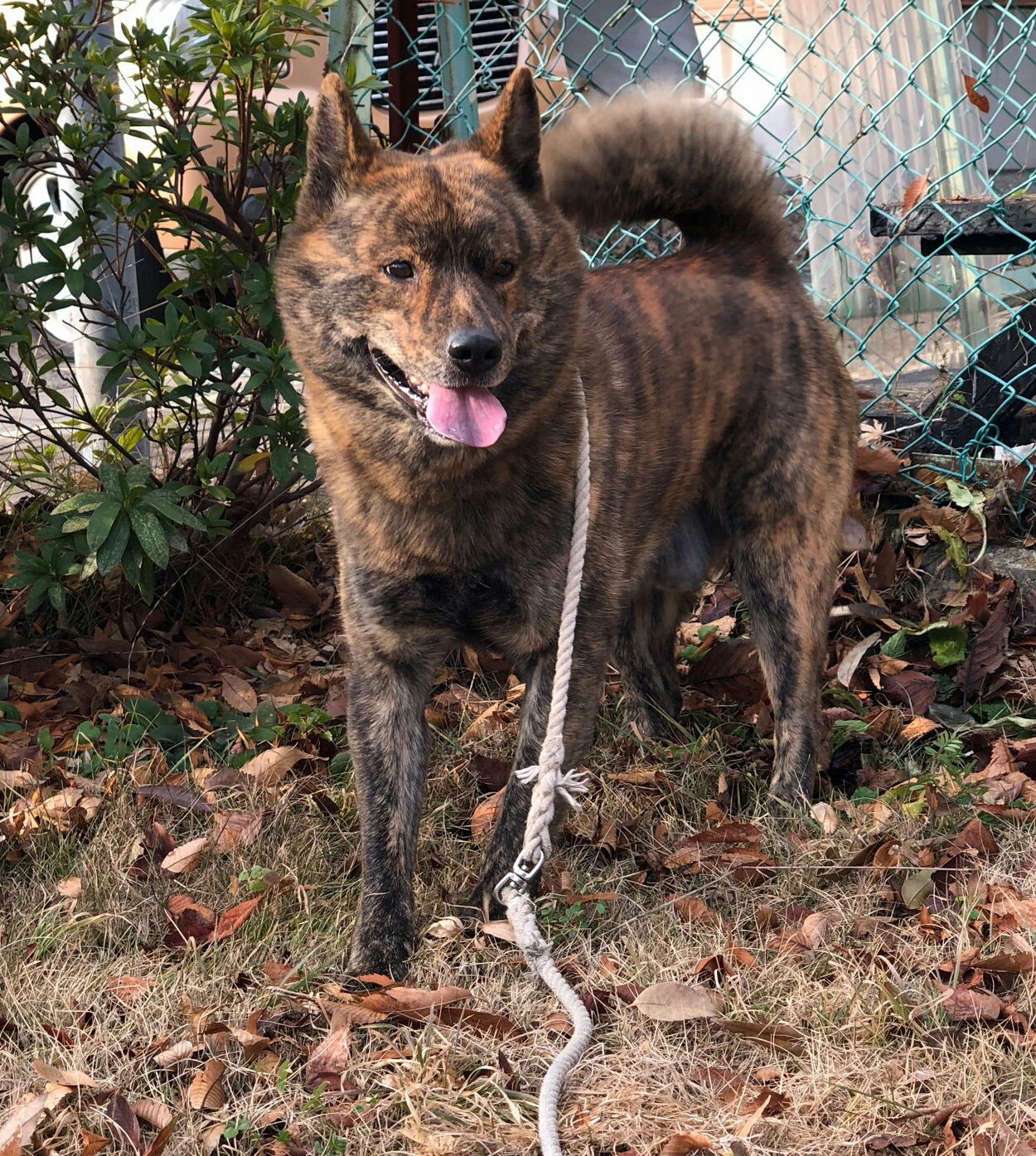
A Kai Ken
Other namesKai
Common nicknamesTora Dog
OriginJapan
Traits
Height Males 50–56 cm (20–22 in)
Females 45–51 cm (18–20 in)
Weight 11–25 kg (25–55 lb)
Coat Double coat of medium length
Color Black brindle, red brindle and brindle.
Kennel club standards
Japan Kennel Club standard
Fédération Cynologique Internationale standard
Dog (domestic dog)

The Kai Ken (甲斐犬, Kai Inu,[1][2] Kai-ken[2][3]; Japanese pronunciation: [kaꜜi i.nɯ],[1] also called the Tora Inu or Tiger Dog) is a breed of dog native to the Kai region, Yamanashi Prefecture, Japan,[4] where it is a national monument. It is a rare dog even in its native land and is one of the six native Japanese dog breeds protected by the Nihon Ken Hozonkai.[5]

Appearance

[edit]
Stuffed specimen of Kai Ken named "Kai-kuro-go" at the National Museum of Nature and Science, Tokyo, Japan
Kai Ken puppy

The Kai Ken is a medium-sized dog with a wedge shaped head and prick ears. Males are typically 18 to 22 inches at the shoulder, while the females are slightly smaller, 17 to 20 inches at the shoulder. The tail may be curled over the back, or carried in a sickle position. Limbs should be strong and hocks should be well developed reflecting the dogs’ history of mountain life. The coat is of harsh texture, medium length, and comes in various shades of brindle ("tiger" stripes). There are three main recognized shades of brindle: the Aka-tora (red), Chu-tora (middle), and Kuro-tora (black).[6] Puppies are born a solid color, and their brindle markings develop as they age, sometimes taking as long as five years before fully showing.

Temperament

[edit]
Kuro-tora Kai Ken
Chu-tora Kai Ken

The Kai Ken is intelligent, agile, alert and brave. They are natural hunters and make good watch dogs, being reserved with strangers but loyal to their families. They are friendly, often good with children and are not usually aggressive towards other dogs. Many love to swim, and have been known to cross rivers and climb trees while chasing their prey.[7]

History

[edit]

The Kai Ken was split off from the Nihon Ken (Japanese Dog) landrace during the creation of the Nihon Ken Hozonkai (NIPPO) and named after Kai Province in Yamanashi Prefecture where the breed is said to have originated.

Being an agile and effortless climber, the Kai Ken was used to hunt in steep mountainous terrain in Yamanashi where's its primary quarry was the Japanese serow (Kamoshika), deer, wild boar, and occasionally bear.

After the creation of NIPPO in 1928, the Kai Ken was designated a national monument in Japan in 1933. In 1931 the Kai Ken Aigokai Archived 2017-04-05 at the Wayback Machine (KKA) was formed and became the primary Preservation Society for the breed in Japan and still is today.

[edit]
  • Many Kai Kens play important roles in the Yoshihiro Takahashi's series Silver Fang and its sequel, Weed, including the brothers Kurotora, Chūtora, and Akatora. In the sequel, Ginga Densetsu Weed, Kurotora's son, Kagetora, stars as an important character, with his less prominently featured brothers, Harutora and Nobutora, and cousins Dodo, Buru, Shōji, and Shigure.
  • Another Yoshihiro Takahashi's manga, Kacchū no Senshi Gamu featured a villainous Kai Ken named Gama.
  • Chu, a Canine Warrior from the 2006 video game Ōkami, is also a Kai Ken.
  • Oswald "Ozzy" (played by Little Bear), a 600 year old magic dog in the movie The Amazing Wizard of Paws from 2015 by director Bryan Michael Stoller.
  • Rover, a large dog monster who becomes the main character's pet later in the series, in One-Punch Man is based on a Kai Ken.
  • The mascot of Yamanashi Prefecture in Central Japan, Takeda Hishimaru (武田菱丸), is a Kai Ken samurai based on the historical figure of Takeda Shingen.[8]

See also

[edit]

References

[edit]
[edit]
Revisions and contributorsEdit on WikipediaRead on Wikipedia
from Grokipedia
The Kai Ken, also known as the Tora Ken or "Tiger Dog," is a rare medium-sized spitz-type breed native to , distinguished by its athletic, muscular build and unique coat that gives it a wolf-like appearance. Originating from the rugged mountainous region of Kai (modern-day ) near , it is one of the six indigenous Nihon Ken breeds preserved by the and designated a by the Japanese government in 1934. Bred for centuries as a versatile capable of tracking and retrieving large game such as deer and boar in challenging terrain, the Kai Ken remains highly valued today for its agility, endurance, and strong pack-oriented instincts. The breed's history traces back over 3,000 years to ancient Japanese dogs brought by migrants from the Asian mainland, with the modern Kai Ken "discovered" in its pure form in by explorer Mr. Ōgasawara Haruo during expeditions in the Kai mountains. Efforts to preserve the breed began shortly after, with the formation of the Kai Ken Aigokai preservation society in 1931, which maintains the primary registry and promotes ethical breeding to protect its genetic purity. Despite its ancient roots, the Kai Ken remains one of the rarest dog breeds globally, with an estimated population of 12,000 to 14,000 individuals, primarily in , and limited presence elsewhere due to strict export restrictions until recent decades. Physically, the Kai Ken adheres to the Nihon Ken Hozonkai breed standard, featuring a well-balanced, sturdy frame with well-developed muscles and a height of 49–55 cm (19–22 inches) for males and 46–52 cm (18–20 inches) for females, weighing 11–25 kg (25–55 lbs). Its double coat consists of a stiff, straight outer layer and a soft, dense undercoat, exclusively in brindle patterns—red brindle, black brindle, or standard brindle—that intensify with age and provide camouflage in forested environments. The head is wedge-shaped with a tapered muzzle, erect triangular ears, and almond-shaped eyes that convey alertness, while the tail is curled or carried over the back; overall, the breed exhibits sexual dimorphism, with males appearing more robust and females more refined. In temperament, the Kai Ken is intelligent, loyal, and devoted to its , often forming strong bonds within a pack-like structure, but it can be reserved or aloof with strangers, making early essential for well-rounded behavior. Athletic and alert, it excels in activities requiring endurance, such as or sports, and serves as an effective watchdog due to its vigilant nature, though it prefers evasion over confrontation unless protecting its pack. Generally healthy with a lifespan of 12–16 years, the breed may be prone to conditions like patellar luxation, allergies, and seizures, necessitating routine health screenings from reputable breeders. As a low-maintenance companion for active owners, the Kai Ken thrives with daily exercise, moderate grooming, and positive reinforcement training, adapting well to various living situations provided its needs for mental and physical stimulation are met.

Physical Characteristics

Appearance and Coat

The Kai Ken is characterized by its spitz-type physique, blending fox-like alertness with wolfish athleticism in a sturdy, well-balanced frame. This conformation contributes to its agile and nimble appearance, evoking the image of a or through its overall build and coloration. The hallmark of the breed is its coat, known as the "tora-iro" pattern, featuring stripes overlaid on a base of red, tan, or , which provides natural in forested environments. The recognizes three variations— (kuro-tora), medium (chu-tora), and red (aka-tora)—with the stripes appearing clear yet soft, resembling a drawing on a rich red to deep background; red is the rarest. Puppies are typically born with solid coats, with the pattern emerging and evolving over the first five years of life. The coat is double-layered for weather resistance, consisting of stiff, coarse outer guard hairs that stand off the body and a soft, dense undercoat, often forming a characteristic mane around the . Hair is shorter on the head, ears, and legs, while the tail features longer, brush-like ; the texture remains naturally clean with minimal shedding except during seasonal undercoat loss twice a year. Faults in the standard include non-brindle patterns, faded colors, or woolly coats lacking the upright outer layer. Facial features include a moderately broad skull tapering to a pointed yet not snipy muzzle, erect triangular ears that are firmly pricked and angled forward, and almond-shaped eyes with dark brown irises and black rims, conveying an expression of composed boldness and straightforward honesty. The nose is black with a straight bridge, lips are tight and pigmented, and the bite is scissors with strong white teeth. The tail is high-set, thick, and strong, typically carried in a sickle, sword, or curled position over the back when the dog is confident.

Size and Build

The Kai Ken is a medium-sized characterized by a well-balanced and sturdy build that emphasizes functionality for hunting in rugged mountainous terrain. According to the (FCI) breed standard, the ideal height at the is 50 cm (19.7 inches) for males and 45 cm (17.7 inches) for females, with a tolerance of +3 cm. This compact stature contributes to the breed's agility and endurance, with a height-to-body length ratio of 10:11, creating a slightly rectangular yet nearly square-proportioned that supports efficient movement over uneven ground. In terms of weight, males typically range from 30-40 pounds (14-18 kg), while females are slightly lighter at 25-35 pounds (11-16 kg), maintaining a lean, athletic frame without excess bulk. The Kai Ken's skeletal structure features a deep chest with moderately sprung ribs for optimal lung capacity, a straight and short back for stability, and a broad, muscular loin that enhances power during climbs and pursuits. Well-muscled forelegs with straight, heavy forearms and moderately sloping shoulders, combined with strong hindquarters boasting well-developed hocks and moderate angulation, provide the endurance and propulsion needed for traversing steep, rocky areas. Sexual dimorphism is pronounced in the Kai Ken, with males exhibiting a broader head, thicker , and more robust musculature overall, while females display a more refined and slightly less massive conformation, though both genders share the same athletic proportions. This distinction is considered essential to the , where a lack of clear differences between sexes is deemed a fault.

Temperament and Behavior

Personality Traits

The Kai Ken is renowned for its profound and toward its family, often forming an exceptionally strong bond with one primary person while remaining devoted to the household as a whole. This devotion stems from its historical role as a companion and protector, making it a trustworthy guardian that prioritizes the of its loved ones. The breed's and further enhance these qualities, enabling it to quickly assess situations and respond with keen awareness. However, Kai Kens typically exhibit a reserved or aloof demeanor toward strangers, approaching new people with caution rather than immediate warmth. This independent thinking can sometimes manifest as stubbornness, reflecting the breed's self-reliant nature honed through generations of in rugged terrain. In terms of protective instincts, the Kai Ken is naturally watchful and vigilant, serving as an effective alert dog without resorting to undue aggression. It will bark to notify its family of potential threats but generally avoids physical confrontations unless necessary, balancing its guardianship role with a composed . This protective streak is tempered by the breed's overall gentleness toward familiar individuals, contributing to its reputation as a reliable family protector. Kai Kens possess a high , particularly in their younger years when they are playful and eager for activity, necessitating ample exercise to channel their vitality constructively. As adults, they maintain this energetic disposition but can adapt to provide calm companionship when their physical and mental needs are met through daily routines like walks or play. Regarding vocalization, they tend to bark alertly in response to stimuli but are not excessively noisy, especially in well-exercised environments where boredom-induced barking is minimized.

Trainability and Family Suitability

The Kai Ken is renowned for its high intelligence and quick learning ability, making it responsive to training when approached with positive reinforcement methods. These dogs thrive under consistent, firm leadership to counter their independent streak, often excelling in activities such as agility and obedience competitions due to their agility and eagerness to please. Early is essential for the Kai Ken to mitigate its natural wariness toward strangers and unfamiliar animals, fostering a more adaptable . With proper exposure from puppyhood, they integrate well into environments, showing toward children when raised together, though is recommended around young children due to their size and energetic nature. As a family companion, the Kai Ken suits active households or individuals who can commit to regular exercise and engagement, forming strong bonds with owners while remaining reserved with outsiders. They are compatible with other dogs when introduced gradually but may not be ideal for homes with small pets due to their hunting heritage; novice owners or families with very young children may find their independent nature challenging without experienced handling. In terms of adaptability, Kai Kens flourish in homes with secure yards where they can expend energy, yet they can tolerate apartment living provided they receive ample daily exercise to prevent boredom or separation anxiety from prolonged solitude.

History and Origins

Discovery and Early Development

The Kai Ken traces its pre-modern roots to ancient medium-sized village dogs that inhabited , likely descending from spitz-type ancestors brought by the Jomon and Yayoi peoples thousands of years ago. These early dogs were utilized by locals in the remote mountainous areas of the Kai region (modern-day ) for centuries, where the rugged terrain around isolated them from crossbreeding with other canines, thereby maintaining their genetic purity and distinct traits. This isolation fostered a renowned for its and endurance in hunting wild game such as deer, boar, and . The formal discovery of the Kai Ken as a distinct occurred in , when preservationists examples among hunters in the isolated mountainous of Kai near . Observers noted the dogs' uniform coats—ranging from light to dark tiger-like patterns—and their exceptional hunting prowess, attributes that set them apart from other Japanese dogs while highlighting their adaptation to the challenging alpine environment. The uniformity in appearance and behavior was attributed to the natural barriers of the , which prevented intermixing and preserved the population's homogeneity. Initial development efforts began in the early 1930s, spearheaded by Daisuke Adachi, a in , who encountered a striking brindle-coated Kai dog in 1931 and subsequently traced and collected superior specimens from villages like Ashiyasu to initiate programs. Adachi's work focused on standardizing the breed's type through careful pairings that emphasized its athletic build, intelligence, and hunting instincts, marking the transition from local utility dog to recognized breed. In November 1931, Adachi co-founded the Kai Ken Aigokai, the first dedicated breed club and registry, which played a pivotal role in organizing early breeding records and promoting preservation.

Preservation as a Native Breed

In 1934, the Japanese government designated the Kai Ken as a , recognizing it as one of the nation's six protected native dog breeds alongside the Akita Inu, , , , and [Shiba Inu](/page/Shiba Inu). This status underscored the breed's cultural and historical significance as a rugged mountain originating from the , emphasizing efforts to safeguard its genetic purity and traditional role in Japanese heritage. Following , the Kai Ken faced severe challenges from wartime destruction and post-war modernization, including the firebombing of Kofu that obliterated the headquarters of the Kai Ken Aigokai preservation society. Few native Japanese dogs survived the conflict overall, but the Kai Ken endured in part due to its geographic isolation in mountainous regions and utility in police and work, though numbers dwindled amid food shortages and societal shifts away from traditional breeding. Dedicated breeders revived the breed in the through renewed exhibitions and dog shows organized by preservation groups, restoring organized efforts to maintain its lineage and prevent further decline. The , founded in 1928 as Japan's primary registry for native breeds, has played a pivotal role in the Kai Ken's domestic preservation by enforcing strict standards for purity, registering pedigrees, and promoting the breed through national shows and educational initiatives. This organization, often referred to as NIPPO, focuses on protecting all six Nihon Ken breeds from crossbreeding and dilution, ensuring the Kai Ken remains a symbol of Japan's indigenous canine heritage while supporting local breeders in who prioritize its hunting prowess over commercialization. Historical limitations on exports, imposed by preservation societies like the to protect genetic integrity, restricted the breed's international spread until the late , with initial imports to places like the occurring sporadically in the 1960s and gaining momentum from the 1980s onward through select breeders. As of 2025, the Kai Ken population in is estimated at 12,000 to 14,000 individuals, reflecting steady but limited growth under these protective measures.

Recognition and Standards

Kennel Club Affiliations

The Kai Ken has been fully recognized by the Japanese Kennel Club (JKC) since 1934 as one of Japan's native breeds. This early acknowledgment underscores its status as a protected heritage dog within , where it remains a symbol of national pride. Internationally, the (FCI) has recognized the Kai Ken since 1982, placing it in Group 5 ( and primitive types), Section 5 (Asian and related breeds). The breed's FCI standard, originally published on December 20, 1994, emphasizes its role as a and companion, with updates confirming its definitive acceptance. In the United States, the (AKC) has recorded the Kai Ken in its Service (FSS) since 1997, allowing for pedigree tracking and limited event participation. The breed advanced to the AKC Miscellaneous Class effective June 29, 2022, enabling competition in select events, though it has not yet achieved full recognition in a working or sporting group as of November 2025. Complementing this, the (UKC) fully recognized the Kai Ken on January 1, 1997, classifying it in the Guardian Dog Group for its protective instincts and versatility. Outside these major bodies, the Kai Ken's affiliations are limited, reflecting its rarity globally; it is considered a vulnerable breed beyond due to small population numbers and export restrictions. Efforts by breed clubs, such as the Kai Ken Society of America, continue to promote international acceptance through , events, and alignment with standards from organizations like the FCI and UKC.

Breed Standards and Conformation

The Kai Ken is recognized as a medium-sized, well-balanced Spitz-type , characterized by a sturdy build, agile frame, and dignified expression that emphasizes overall harmony rather than exaggerated features. According to the FCI , ideal specimens exhibit a height-to-length of approximately 10:11, with males ideally measuring 50 cm (tolerance +3 cm) and females 45 cm (tolerance +3 cm) at the , promoting a compact yet powerful physique suited for mountainous terrain. (Note: The standard specifies ranges of 49–55 cm for males and 46–52 cm for females.) Key conformation points include an alert posture with high-set pricked ears, a straight topline maintained during movement, and powerful hindquarters providing propulsion for agile navigation. The head features a broad , triangular eyes with dark irises, and a scissor bite, while the body displays a deep chest, moderate tuck-up, and a high-set carried in a or curled position. The double coat is medium-length, with a coarse outer layer and dense undercoat forming a distinctive mane; it must be (black, red, or medium variants) without solid colors, as non-brindle patterns result in disqualification for purebreds. In the show ring, the Kai Ken should demonstrate a confident and composed , remaining keen and alert without or , reflecting its natural vigilance as a hunter. Movement is evaluated as a free, agile trot with moderate reach and drive, single-tracking at speed, and a level topline, underscoring the breed's nimbleness. Standards vary slightly by organization: the Japanese Kennel Club (JKC), aligned with FCI guidelines, prioritizes hunting utility and functional agility, while the (AKC) and (FCI) emphasize preservation of traditional type, including dual body conformations ("deer" for ranginess and "boar" for sturdiness) given equal merit. Common faults include oversize or undersize beyond tolerances, poor bite (overshot or undershot), dilute or faded colors, and lack of , with disqualifications for unpricked ears, dropped tail, or markings.

Health and Care

Common Health Concerns

The Kai Ken is generally considered a robust and healthy breed, with an average lifespan of 12 to 15 years when bred responsibly and provided appropriate care. Due to its status as a rare breed with a limited , the overall prevalence of health issues remains low, though inbreeding in isolated populations can elevate risks for certain genetic conditions. Responsible breeding practices, including health screenings, are emphasized by breed organizations to maintain the breed's vitality and minimize hereditary problems. Among genetic predispositions, poses a moderate in Kai Ken, attributed to their active and muscular build, which can lead to joint stress, stiffness, limited , and during exercise. (PRA), including variants like PRA-PRCD and PRA-CRD4/CORD-1, is another concern; these autosomal recessive conditions cause progressive eye degeneration, potentially leading to blindness by 3 to 5 years of age or earlier vision loss starting around 6 months. Patellar luxation, a genetic knee misalignment, is also reported, often requiring surgical or medical management to alleviate lameness. , specifically autoimmune thyroiditis, has been noted as a potential elective screening area, though it is not among the most prevalent issues in the breed. , where one or both testicles fail to descend, is a genetic issue in some males, and affected dogs should not be bred. Other health concerns include food allergies, which affect some individuals and manifest as itchy skin, hotspots, or gastrointestinal upset, often linked to ingredients like or ; a 5-month elimination trial is recommended for . Cardiac issues, such as heart murmurs (which may be innocent and resolve by 4 months or indicate more serious conditions like valvular septal defects), and occasional seizures (potentially tied to unknown causes or liver shunts) have been observed in a subset of Kai Ken. To mitigate these risks, the Kai Ken Society of America and other breed clubs strongly recommend Orthopedic Foundation for Animals (OFA) and Canine Health Information Center () certifications, including radiographs for hips and patellar luxation, DNA testing for PRA, cardiac evaluations, and thyroid screening where applicable. These protocols help ensure breeding stock is free from detectable hereditary defects, promoting longer, healthier lives for the breed.

Grooming, Exercise, and Maintenance

The Kai Ken possesses a medium-length double coat consisting of a coarse outer layer and a dense undercoat, which requires weekly brushing to distribute natural oils, prevent matting, and keep the coat healthy. During the primary shedding seasons in spring and fall, when the undercoat is shed heavily, brushing should increase to several times per week to manage and reduce shedding around the home. The breed is naturally clean and odor-free, necessitating infrequent baths—typically only when the dog becomes dirty—with more frequent bathing possibly required during heavy shedding periods to maintain . Nails should be trimmed every three to four weeks to prevent overgrowth and discomfort, while ears require regular cleaning with a damp cloth or vet-approved solution to remove and avoid infections, particularly given the breed's erect . Dental care, including weekly brushing with dog-safe toothpaste, is also recommended to support overall maintenance. As a moderately active and intelligent breed, the Kai Ken demands 60 to 90 minutes of vigorous daily exercise to channel its energy and prevent boredom-induced behaviors such as destructiveness or excessive barking. Suitable activities include on varied terrain, playing fetch, , or structured like agility courses, which leverage the dog's , climbing ability, and love for . Mental is equally vital, with puzzle toys, scent , or obedience training sessions helping to engage its sharp mind and reduce anxiety from under-. Lack of adequate physical and mental outlets can lead to restlessness, emphasizing the need for consistent routines tailored to the breed's heritage. Nutrition for the Kai Ken should consist of high-quality, commercially prepared formulated for active medium-sized breeds, providing balanced proteins, fats, and carbohydrates to support its lean, athletic build. Portion control is essential, typically around 2 to 2.5 cups per day divided into two meals, adjusted based on age, activity level, and weight to prevent while accommodating the breed's tendency to self-regulate intake. Fresh, clean water must be available at all times to promote hydration, especially after exercise. Consult a for personalized dietary plans, including potential senior formulas as the dog ages. The Kai Ken thrives in a living environment with secure boundaries, as its strong and adventurous nature make it prone to escaping unsecured areas. A tall, sturdy —at least 6 feet high—is crucial for yards to contain the dog during play, while leashing is mandatory during walks to curb sudden pursuits. The breed adapts well to apartment living provided exercise needs are met, but it prefers cooler climates where its double coat provides insulation without overheating, avoiding prolonged exposure to extreme heat. Indoor companionship suits its clean habits and loyalty, though access to a fenced outdoor space enhances its well-being.

Cultural Role

Traditional Uses in Japan

The Kai Ken has long been valued in as a versatile and agile , particularly suited to the mountainous regions of , where it was traditionally employed to pursue large game such as deer, , and . Its remarkable endurance allows it to traverse rugged terrain over extended periods, while its innate pack cooperation enables effective teamwork with hunters and other dogs to corner and hold prey. This adaptability made the breed indispensable for local hunters facing challenging environments, from dense forests to steep slopes. Culturally, the Kai Ken is affectionately known as "Tora Ken" or Tiger Dog, a nickname derived from its distinctive coat pattern that resembles stripes, symbolizing its fierce bravery and protective nature. Designated a by the Japanese government in 1934, the breed holds a revered place in regional traditions as a loyal guardian, reflecting the deep bond between Yamanashi locals and their native dogs. This symbolism underscores its role beyond mere utility, embedding it in the cultural fabric of rural as an emblem of resilience and . In terms of working traits, the Kai Ken excels as a scent tracker, adept at following game trails through varied landscapes, and is proficient in to cross rivers or retrieve quarry from water. It also demonstrates strong retrieving abilities, bringing down and carrying game efficiently, which enhances its value in hunts for both small and large animals. These qualities persist today, with the breed still actively used by hunters in for pursuing and deer, maintaining its practical legacy in contemporary rural activities. Through its hunting roles, the Kai Ken has contributed to management in rural by aiding in the control of overpopulated like , which can damage ecosystems and if unchecked. This ongoing involvement helps preserve ecological balance in mountainous areas, supporting sustainable land use in regions like Yamanashi. In recent decades, the Kai Ken has experienced growing interest in Western countries, particularly since the early , driven by selective imports from that have expanded the breed's beyond initial zoo placements in the and limited arrivals in the . Enthusiasts value its rarity and distinctive coat, leading to increased visibility in dog shows, such as those under the American Kennel Club's (AKC) Miscellaneous Class, where the breed competes in conformation and performance events. platforms have amplified this appeal, with owners sharing content highlighting the Kai Ken's athleticism and wolf-like agility, contributing to a niche but dedicated following among rare breed aficionados. In the United States, the breed remains exceedingly rare, with a small population sustained by preservation-focused breeding through the AKC's Service. The Kai Ken's presence in underscores its symbolic role as a guardian tied to Japanese heritage. In , notably Yoshihiro Takahashi's Ginga Nagareboshi Gin and its sequel Ginga Densetsu Weed, Kai Ken characters such as the brothers Akatora, Chutora, and Kurotora embody bravery and in epic narratives of wild dog packs defending against threats. These depictions portray the breed as archetypal protectors, resonating with its historical roots and inspiring fan appreciation worldwide. While not central to major films like those featuring other native breeds, the Kai Ken's cultural footprint extends through occasional endorsements by Japanese media and viral online clips of their feats, such as nimble mountain traversals, which highlight their enduring mystique. Conservation initiatives play a vital role in sustaining the Kai Ken amid extinction risks from its low numbers and geographic isolation. The Kai Ken Society of America (KKSA), as the AKC's official parent club, maintains pedigrees via the Foundation Stock Service and supports awareness campaigns to promote ethical breeding and importation, aiming to diversify the gene pool while adhering to Japanese standards. Breed rescue efforts, coordinated informally through KKSA members and broader AKC networks, focus on rehoming to prevent abandonment, as seen in cases of rescued Kai Kens from hoarding situations in Japan that underscore the need for global vigilance. Today, Kai Kens serve contemporary roles that blend their traditional traits with modern applications, including potential as therapy dogs for their calm demeanor and as search-and-rescue candidates leveraging their and scenting ability in rugged terrain. As emblems of Japan's natural monuments, they appear at international exhibitions like the Nihon Ken Heritage Specialty shows, where the six native breeds are showcased to educate on cultural preservation and . These events, hosted by organizations such as the , highlight the Kai Ken's status as a protected heritage breed, fostering cross-cultural appreciation.

References

Add your contribution
Related Hubs
User Avatar
No comments yet.