Hubbry Logo
Lew RockwellLew RockwellMain
Open search
Lew Rockwell
Community hub
Lew Rockwell
logo
8 pages, 0 posts
0 subscribers
Be the first to start a discussion here.
Lew Rockwell
Lew Rockwell
from Wikipedia

Key Information

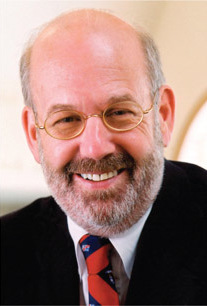
Llewellyn Harrison Rockwell Jr. (born July 1, 1944) is an American author, editor, and political consultant. A libertarian and a self-professed anarcho-capitalist,[1] he founded and is the chairman of the Mises Institute, a non-profit promoting the Austrian School of economics.

After graduating from university, Rockwell had jobs at the conservative Arlington House Publishers, the radical-right John Birch Society, and the traditionalist Hillsdale College.[2][3] Reading the works of Murray Rothbard, who became his mentor, led Rockwell to become an ardent believer in Austrian economics and what he calls "libertarian anarchism". Rockwell was chief of staff to Congressman Ron Paul from 1978 to 1982, and was a founding officer and former vice president at Ron Paul & Associates, which published political and investment-oriented newsletters bearing Paul's name.[4][5] Racist and homophobic content in those newsletters became a controversy in Paul's later campaigns; Rockwell denied ghostwriting it but acknowledged a role in the promotion.[6][7] Rockwell partnered with Rothbard in 1982 to found the Mises Institute in Alabama, where as of 2025, Rockwell still serves as chairman.[8]

Rockwell's website, LewRockwell.com, was launched in 1999. The website features articles about political philosophy, economics, and contemporary politics. The website's motto is "anti-war, anti-state, pro-market".

Life and career

[edit]

Rockwell was born in Boston, Massachusetts, in 1944. After college,[specify] Rockwell worked at Arlington House publishers[when?] and became acquainted with the works of Ludwig von Mises.[9]

A former lifetime member of the radical-right John Birch Society, Rockwell worked in its Member's Monthly Message Department before resigning amid disputes with the society's leaders.[when?][3] In the mid-1970s, Rockwell worked at the traditionalist Hillsdale College in fundraising and public relations.[9][2]

Rockwell met the anarcho-capitalist Murray Rothbard in 1975 and credits Rothbard with convincing him to abandon minarchism and reject the state completely.[10][9] In 1985, Rockwell was named a contributing editor to Conservative Digest.[11] Rockwell also served as Vice President of the Center for Libertarian Studies in Burlingame, California,[when?] which published the Rothbard-Rockwell Report.[12] Rockwell was closely associated with Rothbard until Rothbard's death in 1995.

Work for Ron Paul (1978–)

[edit]

Rockwell was Ron Paul's congressional chief of staff from 1978 to 1982[13][14] and was a consultant to Paul's 1988 Libertarian Party campaign for President of the United States.[15] He was vice-chair of the exploratory committee for Paul's run for the 1992 Republican Party nomination for president.[16]

Ron Paul newsletters

[edit]

Rockwell was a founding officer and former vice president at Ron Paul & Associates,[17] which was one of the publishers of a variety of political and investment-oriented newsletters bearing Paul's name.[4][5]

In January 2008, during Ron Paul's 2008 presidential campaign, James Kirchick of The New Republic uncovered a collection of Ron Paul newsletters that contained "decades worth of obsession with conspiracies, sympathy for the right-wing militia movement, and deeply held bigotry against blacks, Jews, and gays."[5][18] For instance, one issue approved of the slogan "Sodomy = Death" and said homosexuals suffering from HIV/AIDS "enjoy the pity and attention that comes with being sick".[5]

Most of the articles contained no bylines.[5] Numerous sources alleged that Rockwell had ghostwritten the controversial newsletters;[19] Rockwell is listed as "contributing editor" on physical copies of some newsletters[20][21] and listed as sole Editor of the May 1988 "Ron Paul investment Newsletter".[22] Reason magazine reported that "a half-dozen longtime libertarian activists – including some still close to Paul" had identified Rockwell as the "chief ghostwriter" of the newsletters,[17] as did former Ron Paul Chief of Staff (1981–1985) John W. Robbins.[23]

Rockwell admitted to Kirchick that he was "involved in the promotion" of the newsletters and wrote the subscription letters but denied ghostwriting the articles. He said there were "seven or eight freelancers involved at various stages" of the newsletter's history and indicated another individual who had "left in unfortunate circumstances" and "is now long gone", but whom he did not identify, was in charge of editing and publishing the newsletters.[6] Rockwell has described discussion of the newsletters scandal as "hysterical smears aimed at political enemies."[24] Ron Paul himself repudiated the newsletters' content and said he was not involved in the daily operations of the newsletters or saw much of their content until years later.[19] In 2011, Paul's spokesperson Jesse Benton said that Paul had "taken moral responsibility because they appeared under his name and slipped through under his watch".[25]

Mises Institute (1982–)

[edit]

In 1982, Rockwell founded the Ludwig von Mises Institute in Auburn, Alabama, and is chairman of the board.[26]

The Mises Institute published Rockwell's Speaking of Liberty, an anthology of editorials which were originally published on his website, along with transcripts from some of his speaking engagements. The institute hosted conferences on secession;[27] Rockwell wrote before a 1995 conference, "We'll explore what causes [secession] and how to promote it."[5]

Burton Blumert, Rockwell, economist and philosopher David Gordon, and Murray Rothbard.

Paleolibertarianism (1980s–2000s)

[edit]

Rothbard, Rockwell and others described their views as paleolibertarian to describe their cultural conservatism fused with their otherwise anti-statist beliefs.[10][28] They forged a "paleo alliance" between paleolibertarians and paleoconservatives in the form of the John Randolph Club in 1989, which allied the Mises Institute and the paleoconservative Rockford Institute.[10][29]

In a 2007 interview, Rockwell revealed he no longer considered himself a "paleolibertarian" and was "happy with the term libertarian." He explained "the term paleolibertarian became confused because of its association with paleoconservative, so it came to mean some sort of socially conservative libertarian, which wasn't the point at all..."[30]

LewRockwell.com (1999–)

[edit]

Rockwell's website, LewRockwell.com, formed in 1999, features articles and blog entries by various columnists and writers.[10] Its motto is "anti-war, anti-state, pro-market".[31] There also is a weekly podcast called The Lew Rockwell Show.[32] As of March 2017, it was in the top 10,000 websites in the United States.[33] LewRockwell.com publishes articles questioning United States participation in World War II, opposing "economic fascism" and supporting Austrian economics and secessionism.[34][independent source needed] The website is primarily home to right-libertarian authors, although left-wing anti-war writers have been featured.[35][independent source needed] The academic Tanni Haas wrote in his 2011 book on political bloggers that of the 20 figures he interviewed, "none have more radical views" than Rockwell, whose avowed goal was to "do everything he can to undermine the state".[36] Rockwell and his website have also promoted neo-Confederate views.[27][3][37][38]

Brian Doherty of Reason wrote that the site's "Mises Institute-associated writers" tend to emphasize the domestic and international fallout from government action.[39] Conservative writer Jonah Goldberg of National Review wrote that the site regularly hosts invective against icons of American mainstream conservatism, including National Review, The Weekly Standard, neoconservatives, and William F. Buckley Jr.[40] A writer in The American Conservative described the site as paleolibertarian and "an indispensable source" of news on Ron Paul.[41] The site published InfoWars articles by the conspiracy theorist Paul Joseph Watson from 2011 to 2016.[42] The site has been criticized for presenting articles which advocate HIV/AIDS denialism, the view that HIV does not cause AIDS,[43] and the view that vaccines cause autism.[44]

Other activities and views

[edit]
Lew Rockwell speaking at an event hosted by the Mises Institute.

Rockwell's paleolibertarian ideology, like Rothbard's in his later years, combines a right-libertarian theory of anarcho-capitalism based on natural rights with the cultural conservative values and concerns of paleoconservatism, and he identifies strongly with the modern Rothbardian tradition of Austrian economics. In politics, he advocates federalist or Anti-Federalist policies as means to achieve increasing degrees of freedom from central government and secession for the same political decentralist reasons. Rockwell has called environmentalism "an ideology as pitiless and Messianic as Marxism."[45][non-primary source needed]

Rockwell is Catholic.[46]

Books

[edit]

Author

[edit]
  • Speaking of Liberty (2003; online e-book) ISBN 0-945466-38-2
  • The Left, The Right, and The State (2008; online e-book) ISBN 978-1-933550-20-6
  • Against the State: An Anarcho-Capitalist Manifesto (2014) ISBN 0990463109
  • Fascism vs. Capitalism (2013) ISBN 1494399806
  • Against The Left: A Rothbardian Libertarianism (2019) ISBN 978-0-9904631-5-3

Editor

[edit]

Further reading

[edit]

See also

[edit]

References

[edit]
[edit]
Revisions and contributorsEdit on WikipediaRead on Wikipedia
from Grokipedia
Llewellyn Harrison Rockwell Jr. (born July 1, 1944) is an American author, editor, political consultant, and leading proponent of and the . He is best known for founding the Ludwig von Mises Institute in 1982, a non-profit organization dedicated to advancing scholarship in free-market economics, individual , and opposition to intervention, where he continues to serve as chairman. Rockwell previously worked as editorial assistant to and as chief of staff to Congressman , roles that informed his advocacy for libertarian principles rooted in first-principles reasoning against state coercion. In 1999, he launched LewRockwell.com, an influential website aggregating libertarian commentary on politics, economics, and culture, emphasizing voluntaryism and critique of empire and fiat money. His key achievements include authoring works such as Against the State: An Anarcho-Capitalist Manifesto, which outlines a vision for through and market processes, and co-developing —a fusing rigorous with cultural traditionalism to cultivate alliances beyond conventional libertarian demographics. Rockwell's efforts have significantly expanded the reach of Misesian thought, funding research and education independent of state-influenced academia. A defining controversy involves newsletters published under Ron Paul's name during Rockwell's association, which included racially inflammatory content; while some associates implicated Rockwell in their production as part of a direct-mail , he has denied authoring the passages, attributing them to freelance writers, amid claims amplified by outlets with documented left-leaning biases.

Personal Background

Early Life and Education

Llewellyn Harrison Rockwell Jr. was born on July 1, 1944, in , . His father, a supporter of the "Old Right" and Robert A. Taft's 1952 Republican presidential campaign, instilled early ideological influences by providing him with Henry Hazlitt's , fostering an interest in free-market principles from a young age. Rockwell attended Tufts University, where he earned a Bachelor of Arts degree. During his undergraduate years, he engaged with conservative student activism, including membership in Young Americans for Freedom.

Professional Trajectory

Early Career and Influences

Llewellyn Harrison Rockwell Jr. was born in Boston, Massachusetts, in 1944. His father, an "Old Right" Republican opposed to the New Deal and U.S. entry into World War II, introduced him to libertarian ideas early; at age 12 in 1956, Rockwell received a copy of Henry Hazlitt's Economics in One Lesson, which shaped his initial economic views. As a youth, he debated these positions in school and encountered Ayn Rand, whose self-taught intellect impressed him, though his later thinking diverged toward Austrian economics. Rockwell's intellectual influences drew from Old Right figures such as Robert Taft, Garet Garrett, , , , Frank Chodorov, and Charles Tansill, alongside classical authors like and emphasizing and . He sympathized with anti-statist elements in the Old Right and certain anti-war stances, rejecting both mainstream conservatism's interventionism and left-wing collectivism. By adulthood, emerged as his primary intellectual mentor, solidifying Rockwell's commitment to rooted in private ; Rothbard later served as vice president of the institution Rockwell founded. The Austrian School, from to and Rothbard, provided the economic foundation, with Mises personally influencing Rockwell through direct collaboration. In his early professional life, Rockwell worked as an editor at Arlington House Publishers, where he edited works by Hazlitt and brought three previously out-of-print books by back into circulation, including an unpublished monograph. From 1979 to 1981, he served as chief of staff for Congressman on , aiding Paul's advocacy for and sound money. These roles honed Rockwell's application of libertarian principles to policy, bridging theoretical influences with practical politics before he co-founded the Ludwig von Mises Institute in 1982 with Rothbard and Paul.

Collaboration with Ron Paul

Lew Rockwell served as to U.S. Congressman from 1979 through the early 1980s, during Paul's initial tenure representing . In this role, Rockwell managed Paul's office operations and supported efforts to advance libertarian policies, including opposition to fiat currency and central banking, drawing on Austrian economic principles. Their partnership emphasized critiques of government intervention and promotion of free-market alternatives, with Rockwell facilitating Paul's communications and legislative initiatives. In 1982, Rockwell established the in , with as an early and ongoing supporter who helped propagate its focus on Austrian economics through speeches and endorsements. Paul contributed financially and intellectually to the institute's founding phase, aligning with Rockwell's vision to counter mainstream via seminars, publications, and educational programs. This collaboration extended to joint advocacy for sound money policies, as Paul frequently referenced Mises Institute scholars in congressional testimony and campaigns. By 1984, Paul and Rockwell co-founded Ron Paul & Associates, a for-profit firm that produced newsletters and investment advisories under Paul's name to disseminate libertarian viewpoints and financial guidance to subscribers. The venture, which operated into the 1990s, generated revenue exceeding $1 million annually by the mid-1980s through paid subscriptions emphasizing market predictions and anti-statist analysis. Rockwell played a central role in editing and content direction, collaborating closely with Paul on themes like ending the and reducing foreign entanglements. Their professional ties persisted beyond Paul's congressional returns in 1987 and 1997, with Rockwell providing strategic input on Paul's presidential bids in 1988, 2008, and 2012, including platform development rooted in and . Paul has credited Rockwell's influence in shaping his economic stances, while both continued joint appearances and writings critiquing central planning. This enduring alliance amplified paleolibertarian ideas, blending free-market advocacy with against state expansion.

Founding and Leadership of the Mises Institute

In December 1981, Llewellyn H. Rockwell Jr. obtained approval from Margit von Mises, the widow of economist , to establish an institute dedicated to advancing the . Rockwell formally founded the in October 1982, selecting , as its location to operate independently of university affiliations and their associated ideological constraints. Rockwell has served continuously as chairman of the institute since its inception, overseeing its expansion into a key center for libertarian scholarship. Under his leadership, the organization developed flagship programs such as Mises University, initiated in 1986 to provide in-depth instruction in Austrian economics and related disciplines. From the outset, Rockwell collaborated with economist , who contributed significantly to the institute's intellectual direction and became its academic vice president, helping to propagate Misesian ideas against prevailing Keynesian and neoclassical paradigms. The institute's non-profit structure relies on private donations, enabling it to maintain in publishing works and hosting seminars that critique state interventionism.

Establishment of LewRockwell.com

LewRockwell.com was founded in 1999 by Llewellyn H. Rockwell Jr. and Burton S. Blumert, both identified as anarcho-capitalists, to serve as a daily news and opinion website. The site's establishment aimed to propagate anti-war, anti-state, and pro-market perspectives, continuing the intellectual legacy of economist , with whom Rockwell had closely collaborated through the Ludwig von Mises Institute. Blumert, a California-based coin dealer and longtime financial supporter of libertarian causes, partnered with Rockwell to create a platform for dissenting views against government intervention and central banking, drawing on their shared networks from the founded in 1982. From its inception, the website featured contributions from libertarian writers, emphasizing and critiques of , quickly becoming a hub for paleolibertarian discourse. Early content focused on opinion pieces and analyses that challenged mainstream narratives on , , and , aligning with Rothbard's emphasis on over coercive state power.

Intellectual Framework

Development of Paleolibertarianism

emerged in the late 1980s as a strategic fusion of anarcho-capitalist economics and , primarily developed by Llewellyn Rockwell in close collaboration with to counter the perceived within mainstream . Rockwell, who had founded the Institute in 1982 to advance Austrian economics, provided an institutional foundation for these ideas through scholarly programs and publications. The philosophy sought to build a broad anti-statist coalition by appealing to traditional values, , and opposition to centralized power, positioning libertarians as defenders of Western civilization against egalitarian policies and state expansion. In January 1990, Rockwell articulated the core tenets in his essay "The Case for Paleo-Libertarianism," published in Liberty magazine, where he criticized fellow libertarians for exhibiting a "hatred of Western culture" and advocated allying with paleoconservatives to reject affirmative action, the 1964 Civil Rights Act's more intrusive provisions, and other statist interventions while upholding personal ethics and family structures. Rockwell coined the term "paleolibertarian" to denote this pre-1960s style of libertarianism, emphasizing rigorous intellectual secession from modern statism through education, revisionist history, and cultural critique rather than electoral fusionism, which he viewed as a failed 1960s experiment. This manifesto responded to the Libertarian Party's drift toward cultural liberalism and Rothbard's earlier disillusionment with left-leaning alliances, aiming instead for a right-wing populist strategy post-Cold War. To disseminate paleolibertarian thought, Rockwell and Rothbard launched the Rothbard-Rockwell Report in 1990, serving as a platform for uncompromised advocacy of free markets, anti-interventionism, and traditional . Rothbard expanded on the political tactics in his January 1992 pamphlet "Right-Wing Populism: A Strategy for the Paleo Movement," published in the newsletter, which proposed harnessing working-class resentment against elites, , and cultural decay to advance libertarian goals without diluting economic rigor. This approach, influenced by the Mises Institute's focus on property rights and , prioritized long-term cultural transformation over short-term partisan gains, fostering a movement that Rockwell described as recapturing the "edge and rigor" of pre-war .

Promotion of Austrian Economics

Rockwell founded the Ludwig von Mises Institute in 1982 with the explicit purpose of promoting the Austrian school of economics, particularly the Misesian tradition, which emphasized praxeology, subjective value theory, and critiques of central planning. The institute, initially supported by figures such as Murray Rothbard as academic vice president and Margit von Mises as first chairman, aimed to counter the dominance of mainstream Keynesian and neoclassical economics in academia by providing an alternative framework rooted in deductive reasoning from human action. Under Rockwell's chairmanship, the organization has grown to include a dedicated campus in Auburn, Alabama, housing archives, a library, and facilities for scholarly work. Through the Mises Institute, Rockwell has overseen extensive educational initiatives to disseminate Austrian principles, including the annual Mises University program, which since its inception has trained thousands of students in topics such as theory, , and the impossibility of socialist calculation. Seminars, fellowships, and online courses further extend this outreach, attracting participants from over 100 countries and fostering a network of scholars applying Austrian methods to contemporary issues like and . These efforts prioritize rigorous, non-empiricist analysis over mathematical modeling, aligning with the school's . Rockwell has personally advanced Austrian economics via writings and editorial work, notably his 1982 lecture "Why Austrian Economics Matters," delivered at , which outlines the school's core tenets—including as a driver of market coordination and the fallacy of aggregation in statistics like GDP—and argues for its superiority in explaining real-world economic phenomena over interventionist policies. He has edited key texts, such as Rothbard's expansions of Misesian theory, and through the institute's Quarterly Journal of Austrian Economics, promoted peer-reviewed research upholding the tradition's emphasis on and . In 2018, Rockwell received the Roland Baader Award from the Institute of Austrian for his lifelong contributions to the school's dissemination.

Critiques of State Power and Cultural Decay

Rockwell's critiques of state power center on its role as an inherently coercive institution that monopolizes violence and undermines voluntary cooperation. Drawing from Austrian economics and the natural rights tradition, he argues that the state lacks legitimacy, deriving its authority not from consent but from force, as evidenced by historical patterns of taxation, conscription, and regulation that persist regardless of public opposition. In works like his seminar "Against the State," Rockwell posits that stateless societies, organized through private property and markets, could provide security, dispute resolution, and governance more efficiently and justly than government monopolies. He contends that empirical evidence from private arbitration firms and historical mutual aid societies demonstrates the feasibility of non-state alternatives, contrasting this with the state's record of inefficiency and abuse. He extends this analysis to the modern "," portraying it as an unelected bureaucracy intertwined with corporate interests that perpetuates endless wars and , eroding individual under the guise of . Rockwell highlights specific instances, such as the U.S. interventions in and initiated post-2001, which he attributes to state expansion rather than genuine defense needs, costing trillions and fostering blowback. Even purportedly conservative regimes, in his view, embrace "red-state fascism" by expanding domestic controls like the , illustrating how state power corrupts ideological allies. Regarding cultural decay, Rockwell integrates these anti-state arguments with a defense of traditional norms, arguing that government intervention accelerates societal breakdown by subsidizing vice and dependency. Through , co-developed with in the early 1990s, he advocates fusing radical with to counter and propagated by welfare states and public education. He cites rising divorce rates—from 2.2 per 1,000 population in to 5.2 in , per U.S. data—as partly attributable to laws and tax policies that disincentivize family formation, fostering atomization. State-sponsored and entitlement programs, in his analysis, dilute cultural cohesion by prioritizing economic migrants over assimilation, leading to observed in urban enclaves with elevated crime rates uncorrelated to poverty alone but to institutional breakdown. Rockwell maintains that the state's promotion of "equality" via and redistribution masks power grabs, as seen in the expansion of administrative agencies since the , which enforce ideological conformity over merit. This causal chain—from inflating away savings to cultural —undermines the bourgeois virtues essential for market societies, per his Rothbardian framework. Empirical trends, such as declining birth rates in Western nations (e.g., U.S. at 1.6 in 2023, below replacement) and rising deaths (over 100,000 annually since 2020), are linked to state-induced moral hazards rather than inevitable progress. He proposes cultural renewal through and voluntary associations, rooted in America's pre-progressive traditions, as the antidote to both and decay.

Controversies

Ron Paul Newsletters Allegations

In the 1980s and early 1990s, a series of newsletters published under Ron Paul's name, including the Ron Paul Political Report, Ron Paul’s Freedom Report, The Ron Paul Investment Letter, and Ron Paul Survival Letter, contained passages with racially charged, homophobic, and conspiratorial content. Examples included assertions that "order was only restored in L.A. when it came time for the blacks to pick up their welfare checks three days after the riots started," predictions of black "1.5 million" urban criminals engaging in a "genocide" against whites, and claims that Martin Luther King Jr. was a "world-class philanderer" who "seduced underage girls and boys." These publications, produced by Ron Paul & Associates—a firm founded by Lew Rockwell to handle Paul's business ventures after his 1984 Libertarian presidential run—generated substantial revenue, with one estimate indicating nearly $1 million in earnings during 1993 alone from sales tied to the newsletters' subscriber base. Allegations have centered on Rockwell's role as the primary ghostwriter of the inflammatory material, given his position as Paul's congressional chief of staff from 1978 to 1982 and his subsequent management of the newsletter operation through Ron Paul & Associates. A 2008 investigation by Reason magazine, drawing on interviews with libertarian movement veterans, a former Paul campaign staffer, and other associates, concluded that Rockwell, alongside possible collaborators like Murray Rothbard and Gary North, authored the "angry-sounding" race-baiting sections to broaden appeal among conservative and survivalist audiences amid declining libertarian readership in the late 1980s. Former Paul chief of staff John W. Robbins (1981–1985) publicly urged Rockwell in 2008 to admit responsibility for the "puerile, racist" content, asserting that Rockwell had handled much of the writing during that period. Stylistic analysis by Reason reporters matched phrases and rhetorical patterns in the newsletters to Rockwell's known writings, such as his promotion of paleolibertarian themes emphasizing cultural conservatism alongside anti-statism. Rockwell has consistently denied authoring the racist or homophobic passages, acknowledging only that he contributed some non-controversial economic and political analysis but attributing the offensive material to unnamed freelancers or others within the operation; he has characterized scrutiny of the newsletters as "hysterical smears aimed at political enemies." Ron Paul has repudiated the content, stating in multiple interviews from 2008 onward that he did not write the newsletters, had not reviewed them closely at the time due to his medical practice and congressional duties, and viewed them as a regrettable delegation error by associates. Associates interviewed by outlets including The Washington Post and The New Yorker have claimed Paul was "deeply involved" in the business and signed off on content as part of a deliberate marketing strategy to exploit racial fears for subscriber growth, though Paul and his defenders maintain he holds no such views and that the episodes reflect isolated excesses rather than ideological endorsement. The controversy resurfaced during Paul's 2008 and 2012 presidential campaigns, prompting no formal legal repercussions but highlighting tensions within libertarian circles over paleolibertarian tactics blending anti-government rhetoric with cultural provocations.

Accusations of Racism and Associations

Accusations of racism directed at Lew Rockwell primarily arise from his formulation of in collaboration with during the late 1980s and early 1990s, a framework that prioritized alliances between libertarians and cultural conservatives skeptical of , mass , and state-enforced . Critics contended that this approach, articulated in Rothbard's 1990 essay "Right-Wing Populism: A Strategy for the Paleo Movement," implicitly catered to racially resentful constituencies by emphasizing preservation of traditional Western cultural norms over universalist individualism. Political scientist Jean Hardisty, a feminist activist associated with the left-leaning watchdog group Political Research Associates, described as incorporating "explicit , anti-Semitism, and " in her 1999 analysis of right-wing mobilization. Hardisty's assessment, drawn from observations of alliances between libertarians and paleoconservatives like , exemplifies a tendency in progressive scholarship to interpret opposition to or civil rights expansions as endorsement of , though such characterizations often overlook the underlying commitment to rights over collective remedies. Rockwell's institutional ties, including his role at the , have drawn scrutiny for associating with figures like , whose 2018 book Getting Libertarianism Right defends covenant communities' rights to expel members whose behaviors threaten social cohesion—a position Hoppe frames as anti-democratic realism but which opponents, including critics, have labeled as permitting racial or ethnic sorting under the guise of voluntary exclusion. Hoppe's lectures and writings, hosted or promoted through Mises-affiliated channels since the , underscore accusations that Rockwell's network provides a platform for views prioritizing cultural homogeneity, potentially at the expense of racial minorities. Content on LewRockwell.com has amplified these claims, featuring essays since the site's 1999 launch that challenge the as an unconstitutional override of , arguing it compels private actors to ignore individual merit in favor of racial quotas. Detractors, particularly from cosmopolitan libertarian outlets, interpret such critiques—echoing Rockwell's own 2003 defense of paleo positions against charges of bigotry—as veiled tolerance for discrimination, especially given the site's publication of pieces questioning "systemic racism" narratives and highlighting disparities in outcomes as behavioral rather than institutional. These interpretations persist despite the site's emphasis on empirical data over identity-based explanations, reflecting ideological divides where media and academic sources with documented left-leaning biases frame property-based arguments as proxies for prejudice.

Responses and Empirical Rebuttals

Rockwell has repeatedly denied writing the inflammatory passages in the Ron Paul newsletters, asserting that his role was confined to managing the publication's business operations and composing subscription appeals, while disclaiming knowledge of or approval for the racist content attributed to unnamed contributors. In response to investigative reports implicating him based on anonymous former associates' recollections, Rockwell emphasized that no documentary evidence, such as drafts or correspondence, links him directly to the authorship, characterizing the claims as speculative and motivated by political opposition during Paul's 2008 and 2012 campaigns. Ron Paul similarly disavowed the content, stating in January 2008 that he took "moral responsibility" for insufficient oversight but had not reviewed or endorsed the specific language, which he condemned as contrary to his principles of individual liberty irrespective of race. Empirical scrutiny reveals that allegations of Rockwell's authorship rest primarily on circumstantial stylistic similarities and unverified insider accounts rather than forensic evidence like handwriting analysis or metadata from the era's print production; for instance, a 2008 Reason magazine probe identified patterns matching Rockwell's polemical style in some issues but relied on sources who had fallen out with the operation, without producing attributable manuscripts. Regarding broader accusations of racism tied to paleolibertarianism, Rockwell counters that such labels conflate opposition to state-enforced egalitarianism—such as welfare programs and affirmative action, which he argues empirically exacerbate dependency and intergenerational poverty across demographics—with personal animus toward racial groups. In a 2014 essay, he defined racism narrowly as irrational hatred of individuals due to ancestry, rejecting expansive interpretations that deem statistical commentary on crime rates or cultural outcomes as inherently bigoted, and cited historical examples where government interventions, not private prejudices, fueled ethnic conflicts. Paleolibertarian strategy, co-developed with Murray Rothbard in the late 1980s, aimed to merge Austrian economics with culturally conservative rhetoric to attract working-class Americans alienated by libertarianism's perceived cosmopolitanism, emphasizing decentralized communities and voluntary associations over federal overreach; critics' portrayals as white nationalist overlook its explicit rejection of state racial policies, as evidenced by Rothbard's 1990 break from left-libertarians to prioritize anti-imperialism and secessionism as paths to ethnic self-determination without hierarchy. The Mises Institute, under Rockwell's founding leadership since 1982, has published works by economists like Thomas Sowell and Walter E. Williams—black scholars critiquing government distortions in racial wealth gaps—and hosts seminars condemning coercive collectivism, including Nazi racial pseudoscience, which Ludwig von Mises himself refuted in Omnipotent Government (1944) as antithetical to catallactic individualism. Accusations from outlets like the Southern Poverty Law Center often amplify associations with paleoconservatives like Pat Buchanan without addressing the framework's core causal claim: cultural decay stems from centralized power, not innate racial traits, a position supported by cross-national data on post-welfare state outcomes in homogeneous versus diverse societies. Mainstream media amplifications during election cycles exhibit partisan incentives, as seen in coordinated 2011-2012 coverage prioritizing narrative over primary sourcing, whereas Rockwell's output consistently advocates private discrimination law under anarcho-capitalism, where market penalties deter bigotry more effectively than statutes, evidenced by declining private club exclusions post-Civil Rights era due to reputational costs.

Publications

Books as Author

Llewellyn H. Rockwell Jr. has authored books that articulate his advocacy for , free markets, and critiques of , often compiling essays from his writings or presenting systematic arguments against government intervention. Speaking of Liberty (2003), published by the Institute, collects 44 essays originally appearing in newsletters and journals from 1994 to 2000, covering topics in economic theory, history, and defenses of individual liberty against state encroachments. The Left, the Right, and the State (2008), issued by the Ludwig von Mises Institute, examines how both leftist and rightist traditionalism historically bolster state expansion, arguing instead for a consistent anti-statist rooted in voluntary cooperation. Fascism versus Capitalism (2013), also from the Ludwig von Mises Institute, contends that represents a form of rather than genuine , using historical analysis to distinguish free-market enterprise from corporatist interventions that undermine . Against the State: An Anarcho-Capitalist Manifesto (2014), self-published via Rockwell Communications LLC, applies 's framework of and to contemporary U.S. policy, advocating the replacement of coercive with market-based .

Books as Editor

Rockwell edited The Economics of Liberty in 1981, a collection of essays by originally published in The Libertarian Forum from 1969 to 1984, emphasizing the application of to dismantle state interventions in markets, property rights, and individual freedoms. The volume compiles Rothbard's critiques of , taxation, and monopolies, arguing for a pure market order as the foundation of prosperity and justice. In 1985, he edited The Gold Standard: Perspectives in the Austrian School, featuring contributions from economists such as , , and Hans Sennholz, which defends the gold standard as a bulwark against inflationary policies and central banking. The book includes historical analyses and theoretical arguments tracing monetary to state expansion, with an introduction highlighting gold's role in limiting government overreach. The Free Market Reader, edited by Rockwell in 1988 and published by the , gathers articles from the institute's newsletter The Free Market, covering topics from business cycles to antitrust myths, authored by figures like Rothbard and . It serves as an accessible primer on free-market advocacy, refuting interventionist fallacies through empirical examples and praxeological reasoning. Rockwell also edited The Irrepressible Rothbard in 2000, a selection of essays by from The Rothbard-Rockwell Report (1990–1995), spanning cultural commentary, political strategy, and economic analysis against . The collection underscores Rothbard's polemical style in opposing war, welfare, and , positioning as a viable alternative to both left and right collectivism.

Enduring Impact

Influence on Libertarian Thought

Lew Rockwell exerted substantial influence on libertarian thought by co-founding the Ludwig von Mises Institute in 1982 alongside Murray Rothbard, Margit von Mises, and Burton Blumert, establishing a dedicated institution for advancing Austrian economics and anarcho-capitalist principles independent of state funding or mainstream academic influence. As chairman and primary organizer, Rockwell directed the Institute's programs, which by the 2020s had educated over 30,000 students through seminars, fellowships, and publications, fostering a rigorous critique of central banking, fiat money, and government interventionism central to libertarian economics. This institutional framework preserved and amplified Rothbard's synthesis of libertarianism with natural rights theory, influencing subsequent generations of thinkers like Hans-Hermann Hoppe and Joseph Salerno in their developments of argumentation ethics and private property anarchism. In collaboration with Rothbard during the late and early , Rockwell articulated as a between libertarian and cultural traditionalism, aiming to build a broad coalition against progressive cultural shifts and neoconservative . Rockwell's 1990 essay "The Case for Paleo-Libertarianism" in magazine outlined this approach, rejecting with establishment conservatism in favor of decentralist, secessionist tendencies rooted in Old Right and free-market radicalism. This framework emphasized defending Western cultural norms alongside economic liberty, influencing libertarian critiques of and state-sponsored , as seen in works by associated scholars decrying the erosion of voluntary associations under egalitarian mandates. Rockwell's launch of LewRockwell.com in 1999 created a prolific online hub for daily libertarian commentary, aggregating essays from over 100 contributors on topics from to anti-imperialist , amassing millions of annual readers and popularizing concepts like "war is the health of the state" in contemporary discourse. Through this platform and his editorship of Rothbard's manuscripts, Rockwell bridged theoretical with practical activism, notably supporting Ron Paul's 1988 Libertarian presidential campaign and subsequent congressional runs, thereby injecting Misesian ideas into mainstream political debates. His emphasis on , nullification, and cultural secession as non-violent paths to challenged minarchist compromises, reinforcing libertarianism's radical edge against both left-wing and right-wing nationalism.

Recent Activities and Commentary

In recent years, Rockwell has maintained his position as chairman of the Ludwig von Mises Institute, overseeing educational initiatives that promote Austrian economics and libertarian principles. On August 4, 2025, he published a commentary emphasizing the institute's Mises University program, which introduces students to the works of and , underscoring the need to counter through rigorous intellectual training. The institute, under his leadership, also organized the Supporters Summit in , from October 16–18, 2025, fostering discussions among donors and scholars on advancing free-market thought. Through LewRockwell.com, which Rockwell founded and continues to direct, the platform has sustained daily publication of articles critiquing government overreach, foreign interventions, and economic centralization, aligning with his long-standing anarcho-capitalist perspective. Content curated during 2024–2025 has addressed topics such as potential escalations toward , U.S. policies in the , and domestic authoritarian trends, often attributing causality to state power rather than individual actors. Rockwell's personal output has been selective, focusing on institutional over frequent appearances, with no major interviews or speeches documented in 2024–2025 searches of primary sources. This approach reflects a strategic emphasis on building enduring libertarian amid perceived cultural and , prioritizing empirical critiques of and over transient media engagements.

References

Add your contribution
Related Hubs
User Avatar
No comments yet.