Recent from talks
Contribute something
Nothing was collected or created yet.
Homestead principle
View on WikipediaThis article contains too many or overly lengthy quotations. (October 2025) |

| Part of a series on |
| Liberalism |
|---|
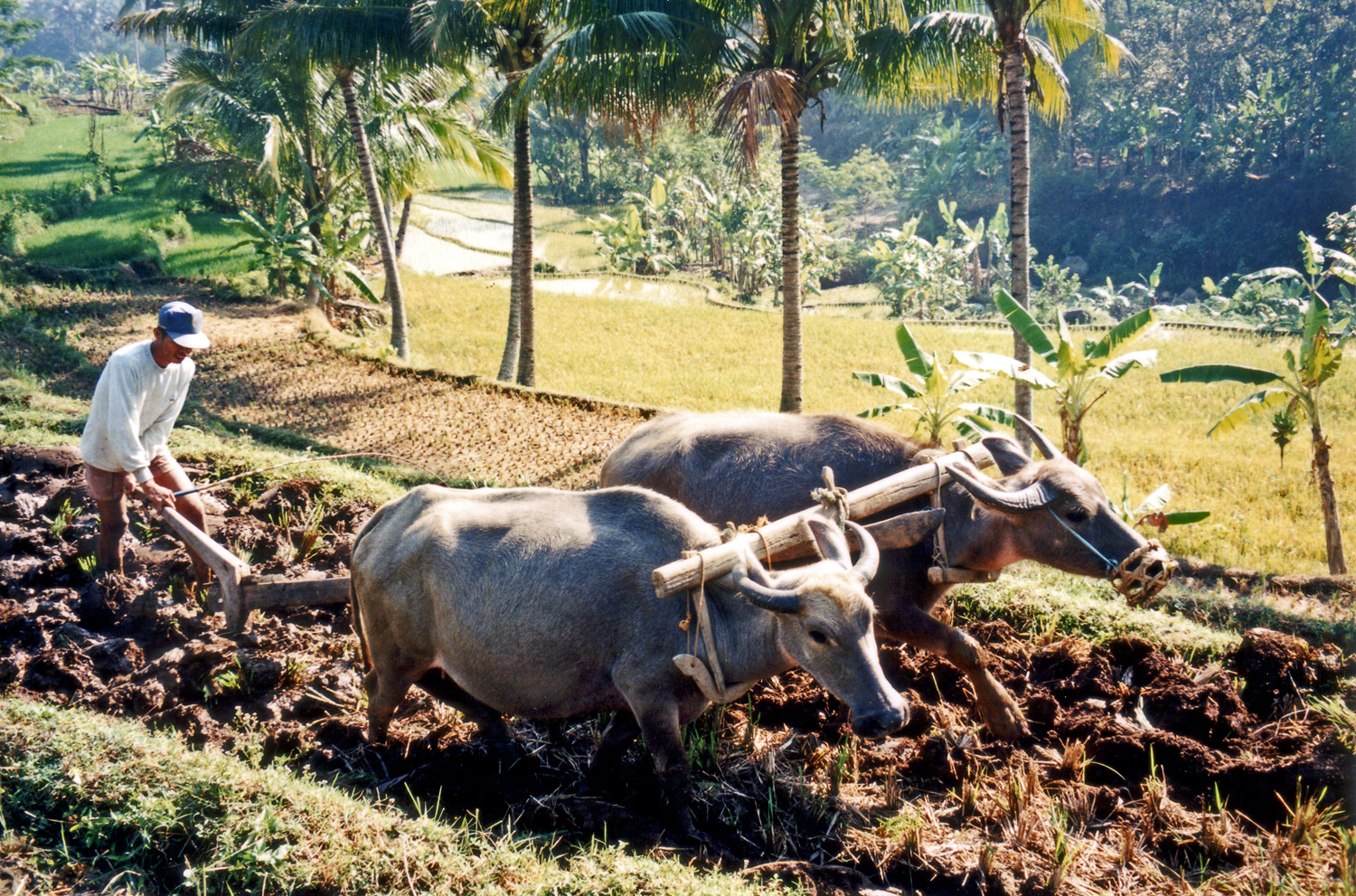
The homestead principle is the principle by which one gains ownership of an unowned natural resource by performing an act of original appropriation. Appropriation could be enacted by putting an unowned resource to active use (as with using it to produce some product[a]), joining it with previously acquired property, or by marking it as owned (as with livestock branding).
Homesteading is one of the foundations of Rothbardian anarcho-capitalism and right-libertarianism.
In political philosophy
[edit]Mohammad
[edit]In Islam, a "dead" land (not previously owned or under use by the public) can be owned by "reviving" it, as per the prophetic saying: "If anyone revives dead land, it belongs to him, and the unjust root has no right."[1]
This principle, however, does not deprive the community from some common rights in the land, including the right to pass water through it to the neighbor's land, for example.[2]
John Locke
[edit]In his 1690 work Second Treatise of Government, Enlightenment philosopher John Locke advocated the Lockean proviso which allows for homesteading. Locke saw the mixing of labour with land as the source of ownership via homesteading:[3]
Though the earth and all inferior creatures be common to all men, yet every man has a property in his own person. This nobody has any right to but himself. The labour of his body and the work of his hands, we may say, are [likewise] properly his. Whatsoever, then, he removes out of the state that Nature hath provided and left it in, he hath mixed his labour with it, and joined to it something that is his own, and thereby makes it his property.
Furthermore, Locke held that individuals have a right to homestead private property from nature only so long as "there is enough, and as good, left in common for others".[4] The Lockean proviso maintains that appropriation of unowned resources is a diminution of the rights of others to it, and would only be acceptable if it does not make anyone else worse-off.
Pope Pius XI
[edit]In his encyclical Quadragesimo Anno, Pope Pius XI affirmed homesteading as the source of ownership:[5]
That ownership is originally acquired both by occupancy of a thing not owned by any one and by labor, or, as is said, by specification, the tradition of all ages as well as the teaching of Our Predecessor Leo clearly testifies. For, whatever some idly say to the contrary, no injury is done to any person when a thing is occupied that is available to all but belongs to no one; however, only that labor which a man performs in his own name and by virtue of which a new form or increase has been given to a thing grants him title to these fruits (Paragraph 52).
Murray Rothbard
[edit]| Part of a series on |
| Anarcho-capitalism |
|---|
Libertarian philosopher and Austrian School economist Murray Rothbard argued that homesteading includes all the rights needed to engage in the homesteading action, including nuisance and pollution rights. He writes:[6]
Most of us think of homesteading unused resources in the old-fashioned sense of clearing a piece of unowned land and farming the soil. ... Suppose, for example, that an airport is established with a great deal of empty land around it. The airport exudes a noise level of, say, x decibels, with the sound waves traveling over the empty land. A housing development then buys land near the airport. Some time later, the homeowners sue the airport for excessive noise interfering with the use and quiet enjoyment of the houses. Excessive noise can be considered a form of aggression but in this case the airport has already homesteaded x decibels worth of noise. By its prior claim, the airport now "owns the right" to emit x decibels of noise in the surrounding area. In legal terms, we can then say that the airport, through homesteading, has earned an easement right to creating x decibels of noise. This homesteaded easement is an example of the ancient legal concept of "prescription", in which a certain activity earns a prescriptive property right to the person engaging in the action.
Rothbard interpreted the physical extent to which a homesteading act establishes ownership in terms of the relevant "technological unit", which is the minimal amount necessary for the practical use of the resource. He writes:[6]
If A uses a certain amount of a resource, how much of that resource is to accrue to his ownership? Our answer is that he owns the technological unit of the resource. The size of that unit depends on the type of good or resource in question, and must be determined by judges, juries, or arbitrators who are expert in the particular resource or industry in question.
Anthony de Jasay
[edit]Hungarian political philosopher Anthony de Jasay argued that a homesteader, having a claim prior to any other, must be prima facie considered the owner of the resource, in accordance with the principle "let ownership stand":[7]
[If] taking first possession of a thing is a feasible act of his that is admissible if it is not a tort (in this case not trespass) and violates no right; but this is the case by definition, i.e., by the thing being identified as "unowned". Taking exclusive possession of it is, in terms of our classification of possible acts, a liberty, and as such only a contrary right can obstruct or oppose it.
14 The opponent of this simple thesis is trying to have it both ways: He is both asserting that the thing has no legitimate first owner from whom a second or nth owner could have legitimately obtained it by agreed transfer, and that there is nevertheless somebody who has been and still is entitled to use the thing and therefore can validly object to being excluded from it. But an entitlement to use the thing is an at least partial antecedent ownership claim needing an owner, or the permission of an owner, before it can be made; ownership cannot both exist yet not exist.
If, on the other hand, the objectors have been using the thing without being entitled to it, because no third party had excluded them by taking first possession, and because they were unable, unwilling, or uninterested to perform the act of taking first possession themselves (whatever that act may consist of), their enjoyment of the thing was precarious, not vested. Its appropriation by a third party may have deprived them of an uncovenanted advantage, but it did not violate their rights.
Hans-Hermann Hoppe
[edit]Similarly to de-Jasay, Hans-Hermann Hoppe argues that the denial of the homesteading rule entails a performative contradiction. That is because honest argumentation must presuppose an intersubjectively ascertainable (i.e. justifiable) norm, and all norms not relying on the original establishment of a physical (and therefore evident) link to the owner are subjective in nature, and therefore contradict the presuppositions of argumentation. He writes:[8]
Further, if one were not allowed to appropriate other resources through homesteading action, i.e., by putting them to use before anybody else does, or if the range of objects to be homesteaded were somehow limited, this would only be possible if ownership could be acquired by mere decree instead of by action. However, this does not qualify as a solution to the problem of ethics, i.e., of conflict-avoidance, even on purely technical grounds, for it would not allow one to decide what to do if such declarative claims happened to be incompatible. More decisive still, it would be incompatible with the already justified self-ownership, for if one could appropriate resources by decree, this would imply that one could also declare another person's body to be one's own. Thus, anyone denying the validity of the homesteading principle – whose recognition is already implicit in arguing two persons' mutual respect for each other's exclusive control over his own body – would contradict the content of his proposition through his very act of proposition making.
According to commentators, he initially to a labour theory of property view and later to a first possession theory of property view.[9]
Ayn Rand
[edit]Ayn Rand did not elaborate on the characteristics of homesteading, but she expressed support for compatible laws such as favourably citing the Homestead Act (1862):[10]
A notable example of the proper method of establishing private ownership from scratch, in a previously ownerless area, is the Homestead Act of 1862, by which the government opened the Western frontier for settlement and turned "public land" over to private owners. The government offered a 160 acre farm to any adult citizen who would settle on it and cultivate it for five years, after which it would become his property. Although that land was originally regarded, in law, as "public property", the method of its allocation, in fact, followed the proper principle (in fact, but not in explicit ideological intention). The citizens did not have to pay the government as if it were an owner; ownership began with them, and they earned it by the method which is the source and root of the concept of "property": By working on unused material resources, by turning a wilderness into a civilized settlement. Thus, the government, in this case, was acting not as the owner but as the custodian of ownerless resources who defines objectively impartial rules by which potential owners may acquire them.
Linda and Morris Tannehill
[edit]Linda and Morris Tannehill argued in their 1970 book The Market for Liberty that physically claiming the land (e.g. by fencing it in or prominently staking it out) should be enough to obtain good title:[11]
An old and much-respected theory holds that for a man to come into possession of a previously unowned value it is necessary for him [sic] to mix his labor with the land to make it his own. But this theory runs into difficulties when one attempts to explain what is meant by 'mixing labor with land'. Just how much labor is required, and of what sort? If a man [sic] digs a large hole in his land and then fills it up again, can he be said to have mixed his labor with the land? Or is it necessary to effect a somewhat permanent change in the land? If so, how permanent? ... Or is it necessary to effect some improvement in the economic value of the land? If so, how much and how soon? ... Would a man lose title to his land if he had to wait ten months for a railroad line to be built before he could improve the land? ... And what of the naturalist who wanted to keep his land exactly as it was in its wild state to study its ecology? ... [M]ixing one's labor with the land is too ill-defined a concept and too arbitrary a requirement to serve as a criterion of ownership.
In law
[edit]There are two different legal systems from which land ownership, and its scope, derive: Common law and statute law. A frequent issue of contention in both cases is the ownership of resources passing across property, such as streams or rivers, to which others downstream may assert property / water rights, and underground resources, such as subterranean water and minerals.
For limits to ownership above land, an old principle in the law is ad coelum, meaning that property rights extend "to the sky" (and below the earth). In the past, rights to "the sky" have been unenforcable – birds need take little notice of humans' overhead property rights – but with modern technology extending human reach, the idea of ad coelum rights may change.[b][d]
Common law
[edit]
Common law provides the ad coelum ("to the sky") doctrine by which landowners own everything below and above the land, up to the sky and below the earth to its core, with the exception of volatile minerals such as natural gas. The rules governing what constitutes homesteading were not specified by common law but by the local statutory law. Common law also recognizes the concept of adverse possession ("squatters' rights").[14] Murray Rothbard criticized this doctrine as incompatible with his own homestead principle as a literal application prevent aircraft from traveling over someone's land,[b] further arguing:[15]
But is the practical problem of aviation the only thing wrong with the ad coelum rule? Using the homesteading principle, the ad coelum rule never made any sense, and is therefore overdue in the dustbin of legal history. If one homesteads and uses the soil, in what sense is he also using all the sky above him up into heaven? Clearly, he isn't.
So long as the aircraft did not damage or disturb the land, the owner would not have a claim.[b] By the same principle, ownership of mineral and water resources on or under the land would also require homesteading, otherwise being left unowned.
Statutory law
[edit]In the 19th century, a number of governments formalized the homestead principle by passing laws that would grant property of land plots of certain standardized size to people who would settle on it and "improve" it in certain ways (typically, built their residence and started to farm at least a certain fraction of the land). Typically, such laws would apply to territories recently taken from their indigenous inhabitants, and which the state would want to have populated by farmers. Examples include:
- New South Wales: Crown Lands Acts (1861)
- Canada: Dominion Lands Act (1872)
- United States: Florida Armed Occupation Act (1842), Homestead Act (1862)
See also
[edit]Footnotes
[edit]- ^ The property-creating "production" is almost always expected to be dirt farming. Some forms of farming, e.g. ranching or cattle grazing, may be explicitly included or explicitly excluded by statute, or merely expected or not recognized by social or legal convention. Non-agricultural uses of land that may or may not confer ownership – depending on statute, or convention, or philosopher – include extraction of 'wild' or natural resources such as venison, mast, timber, or ore, including mundane mining, such as gravel extraction.
- ^ a b c d
Some jurisdictions establish height limits to trespass, for example low-flying aircraft may cross over property, but must remain above a certain height limit (often above 500 feet[12]). In 1946 the U.S. the Supreme Court established a height-limit to property rights when it ruled in United States v. Causby (in the context of air traffic) that a landowner's exclusive use of private property ends at an altitude of 365 feet (111+1/4m) above the land surface.[13] In their ruling, the justices renounced the principle of ad coelum as manifestly unworkable in modern practice.
FAA and FCC regulations require tall buildings and tall antennas (typically taller than 50 feet) to be clearly marked with warning lights, hence at that height landowners' free use of their property (say, to loft a tethered balloon) becomes encumbered, although only slightly. Note however, that the regulations do not prevent use of the property to build tall structures per se; they merely require that tall structures, when built, must be marked so that they are clearly visible at all times. Above some height any tall structure must be registered with the FAA, with narrow antenna towers being of particular concern, and having lower altitude limits, since they may on occasion be more difficult for pilots to see than tall buildings.
The only case where tall structures are expressly forbidden to property owners is when slender towers are tall enough to cross a property line, should they fall (hence possible and eventually likely trespass by the fallen tower on a neighbor's property) or if the structure impinges on an existing air traffic right of way, such as the approach path to an airport. In that special case, the right of way itself constitutes an established property right to the airspace, which belongs to the airport, even if it extends beyond the airport property-line.
- ^ In fact, in the absence of exceptional authority created by statute, the drone is illegal property trespass even when it belongs to law enforcement – say a surveillance drone – if the law enforcement agents who launched the drone have no search warrant, or they do have a warrant, but have failed to present it to the property owner or resident.
- ^ For example, with ad coelum rights to the sky over one's property, the presence of a low-flying[b] drone overhead constitutes trespass.[c] Since there is no complicating issue of threatening a human life, only some person's possession, it would appear that any landowner has a free and clear right to shoot down a drone intruding over the property, just as he or she would have in the case of an intruding nuisance dog. In either case, the drone owner or the dog owner may be intensely upset by the loss of property or the companion animal, but would have no moral grounds nor legal recourse, due to the drone or dog's violation of the landowner's property right. This is well established in both common law and in some statute law in the case of a trespassing dog, but not so in the case of the new technology – the intruding drone aircraft – where neither statute nor common law has had time to sort out most of the issues involved, in most places.
References
[edit]- ^ al-Madanī, Malik ibn Anas. Muwatta Imam Malik - Judgements. Archived from the original on 5 February 2024. Retrieved 5 February 2024.
- ^ أ. د. الحسين بن محمد شواط و د. عبدالحق حميش (2 September 2014). "نظرية التملك في الفقه الإسلامي". Alukah (in Arabic). Archived from the original on 5 February 2024. Retrieved 5 July 2024.
- ^ a b Locke, John (1689). The Two Treatises of Government. London: A. Millar, et al. Book II, Chap 5, §27. Archived from the original on 11 March 2015. Retrieved 16 March 2015.
- ^ Second Treatise of Government, Chapter V, paragraph 27. See[3]
- ^ "Quadragesimo Anno (May 15, 1931) | PIUS XI". www.vatican.va. Archived from the original on 1 June 2020. Retrieved 29 December 2021.
- ^ a b Rothbard, Murray N. (1997). Applications and Criticism from the Austrian School. Cheltenham, UK: Elgar. ISBN 1858985706.
- ^ deJasay, Anthony (1997). Against Politics: On government, anarchy, and order (1. publ. ed.). London: Routledge. p. 173. ISBN 0415170672.
- ^ Hoppe, Hans-Hermann (2006). The Economics and Ethics of Private Property: Studies in political economy and philosophy (PDF) (2nd ed.). Auburn, AL: Ludwig von Mises Institute. p. 199. ISBN 0945466404. Archived (PDF) from the original on 26 November 2013. Retrieved 13 September 2014.
- ^ Dominiak, Łukasz. (2023). Mixing Labor, Taking Possession, and Libertarianism: Response to Walter Block. Studia Z Historii Filozofii, 14(3): 169–195.
- ^ Rand, Ayn (1964). "The Property Status of Airwaves". The Objectivist Newsletter. 3. Archived from the original on 1 January 2011. Retrieved 14 February 2012.
- ^ Tannehill, Linda; Tannehill, Morris (2007) [1970]. The Market for Liberty. Auburn, AL: Ludwig von Mises Institute. pp. 57–58. ISBN 978-0930073015. OCLC 69269. "free text". Ludwig van Mises Institute. Auburn, AL. 18 August 2014. Archived (PDF) from the original on 7 March 2012. Retrieved 22 August 2021.
- ^ 14 CFR 91.119 "Minimum safe altitudes: General". Legal Information Institute. Cornell University Law School. Archived from the original on 22 August 2021. Retrieved 22 August 2021.
- ^
The United States Supreme Court ruled in 1946 that private property owners have exclusive rights to the airspace above their land, up to an altitude of 365 feet
see SCotUS (1946) United States v. Causby 328 U.S. 256, pp. 266–267 - ^ Lehman, Jeffrey; Phelps, Shirelle (2005). West's Encyclopedia of American Law, Vol. 6 (2 ed.). Detroit: Thomsom/Gale. p. 61. ISBN 978-0314201591.
- ^ Rothbard, Murray (1982). "Law, property rights, and air pollution" (PDF). Cato Journal. 2 (1). Archived (PDF) from the original on 21 September 2014. Retrieved 13 September 2014 – via Ludwig von Mises Institute.
External links
[edit]- Bordewich, Fergus M. (18 May 2012). "'The Homestead Act' – how the West was really won". The Wall Street Journal (opinion article).
Homestead principle
View on GrokipediaDefinition and Core Concepts
Fundamental Principles of Original Appropriation
Original appropriation constitutes the initial acquisition of property rights over unowned natural resources, deriving from the foundational axiom of self-ownership, whereby individuals possess absolute dominion over their own bodies and the labor they expend. This principle posits that unowned resources—such as land, water, or raw materials in a state of nature—remain available for claim by the first actor who brings them under productive control without infringing on prior rights. Self-ownership extends to the fruits of labor, enabling the transformation of external resources into owned property through deliberate human action, as unowned goods lack defined boundaries or enforced exclusivity until appropriated. A core mechanism of this appropriation is the act of first occupancy or transformation, where the appropriator establishes a pattern of use that excludes others, grounded in the non-aggression principle that prohibits interference with others' persons or holdings. Unlike mere discovery or symbolic claims, valid appropriation demands tangible effort, such as clearing land for cultivation or extracting minerals for production, to demonstrate control and prevent waste of scarce resources. This ensures that resources enter the realm of human utilization, aligning with causal realities of scarcity: unappropriated resources yield no value and remain vulnerable to rival claims, while homesteading imposes order through specified use. Empirical historical precedents, such as frontier settlements where settlers gained title through sustained improvement rather than nominal possession, illustrate this principle's practical application in establishing enduring property titles.[2] John Locke's formulation in his Second Treatise of Government (1689) emphasized labor-mixing as the justificatory act: by joining personal effort to unowned matter—such as enclosing common land or gathering acorns—one annexes it from the communal provision of nature, provided the appropriation leaves "enough and as good" for others. Locke illustrated this with examples like tilling soil or picking apples, arguing that labor adds value and creates entitlement, as "whatsoever then he removes out of the State that Nature hath provided... he hath mixed his Labour with, and joyned to it something that is his own." However, subsequent libertarian refinements, notably by Murray Rothbard in The Ethics of Liberty (1982), critiqued Locke's proviso as unnecessary and rejected it in favor of strict first-use priority, asserting that any non-aggressive homesteading—defined as original use establishing a specific, ongoing pattern—validates title without compensatory clauses, as scarcity does not require equal shares but efficient allocation via voluntary exchange. Rothbard's approach prioritizes homesteading's requirement for continued productive employment over one-time mixing, preventing absentee or dormant claims that fail to homestead resources effectively.[2]Relation to Labor Theory of Property
The homestead principle originates from John Locke's labor theory of property, articulated in his Second Treatise of Government (1689), where he posits that individuals have a natural right to the fruits of their labor and acquire ownership of previously unowned natural resources by mixing their labor with them, such as by cultivating land or gathering acorns from common woods. Locke argued that this appropriation does not violate others' rights as long as "enough and as good" remains for others, a proviso later critiqued and often rejected in libertarian extensions of the theory. Murray Rothbard, in The Ethics of Liberty (1982), explicitly adopts and refines this framework as the "homestead principle," defining original appropriation as the process by which an individual gains rightful title to unowned scarce resources through the first use or transformation via labor, without incorporating Locke's proviso, which Rothbard viewed as unnecessary and potentially incompatible with absolute property rights.[9] Rothbard extends the principle beyond Lockean examples of land cultivation to encompass intellectual creation, homesteading of abandoned property, and even the libertarian resolution of historical injustices like slavery, where ownership would revert to those whose labor was mixed with the resource, such as freed slaves on plantations they had worked.[9] This formulation emphasizes self-ownership as the axiomatic foundation, deriving property rights causally from the act of transforming unowned matter, thereby avoiding collectivist claims to commons. Critics like Stephan Kinsella argue that Locke's "mixing labor" metaphor can be misleading, as it implies a physical commingling that risks conflating labor ownership with resource ownership; instead, Kinsella favors a first-occupancy or possession-based variant of homesteading to establish title without invoking labor as the sole criterion, though he acknowledges its compatibility with Rothbardian ethics.[10] Empirical applications, such as U.S. Homestead Acts from 1862 onward, reflect partial Lockean influences by granting title to land improved through settlement and labor, though these statutes incorporated government allocation rather than pure first-use appropriation.[11] The principle thus serves as a causal mechanism for resolving disputes over unowned resources, privileging productive transformation over mere discovery or state fiat.Philosophical Origins
John Locke's Contributions
John Locke articulated the core theoretical foundations of the homestead principle in his Second Treatise of Government (1689), particularly in Chapter V, "Of Property." He reasoned from natural law that God granted the earth and its resources to humanity in common for their sustenance and benefit.[2] Nonetheless, individuals possess an inherent property right in their own persons, including the labor of their bodies and hands, which no one else can claim.[2] Locke argued that by mixing this personal labor with previously unowned natural resources—such as gathering acorns from the forest or picking apples from an unclaimed tree—the laborer removes those resources from the common domain and establishes private ownership over them, as the labor becomes inseparable from the object.[2] This act of original appropriation through productive effort transforms what was held in common into exclusive property, provided it aligns with natural bounds.[2] Locke extended this logic to land, asserting that uncultivated or "waste" land acquires value and ownership through human improvement, such as plowing, planting, and enclosing it to yield sustenance.[2] He illustrated this with the example of Native American lands in the New World, where vast uncultivated expanses remained common despite habitation, justifying European settlement and cultivation as a legitimate means of appropriation that increased overall productivity without violating prior claims.[2] To prevent overreach, Locke imposed two key provisos: the spoilage limitation, prohibiting appropriation beyond what one can use before it perishes (as excess acorns rotting unused would waste God's bounty), and the sufficiency proviso, requiring that appropriators leave "enough and as good" resources untouched for others in the common stock.[2] These constraints ensured that initial takings did not infringe on others' equal natural rights to sustain themselves through labor.[2] This labor-mixing doctrine provided a first-principles justification for private property emerging from a pre-political state of nature, independent of civil government or collective consent, emphasizing individual agency in creating value from inert matter.[2] Locke's framework influenced subsequent property theories by prioritizing productive use over mere occupancy, though interpretations of the provisos' ongoing applicability vary; he maintained they were largely satisfied through invention, trade, and the spoilage prohibition's evolution via money and commodification, which enabled accumulation without waste.[2]Early Influences and Variations
The homestead principle, as articulated in later libertarian thought, draws from earlier natural law traditions that grappled with the transition from common resources to private ownership. Hugo Grotius (1583–1645), a Dutch jurist, influenced subsequent theories by arguing in De Jure Belli ac Pacis (1625) that unowned resources in the state of nature could become property through first occupation or voluntary agreement, emphasizing tacit consent to prevent disputes among equals.[12] This occupatio-based approach prioritized possession over transformative labor, differing from later emphases on productive effort.[13] Samuel Pufendorf (1632–1694), a German philosopher, extended Grotius's framework in De Jure Naturae et Gentium (1672), contending that while individual labor on common goods created a provisional claim, exclusive property required communal consent to establish enforceable rights and maintain social peace.[14] Pufendorf's variation integrated moral theology, viewing property as a postlapsarian institution ordained by God to mitigate scarcity after the Fall, but still dependent on collective ratification rather than unilateral action.[15] These ideas, rooted in ius gentium (law of nations), provided a contractual basis for appropriation that Locke would adapt by subordinating consent to labor's moral sufficiency.[12] Pre-Lockean variations also appeared in scholastic and Roman legal traditions. Thomas Aquinas (1225–1274), in Summa Theologica (c. 1274), justified private property as a human convention derived from natural law's allowance for stewardship, arguing that common ownership suits use but division enhances providence and reduces strife, without specifying original acquisition mechanisms like labor mixing.[16] Roman jurists, as codified in the Digest of Justinian (533 CE), endorsed acquisition of res nullius (ownerless things) via occupatio—simple seizure or cultivation—establishing precedents for unowned land claims through effective control, which echoed in Grotius but lacked the ethical proviso against waste.[14] These diverse strands—occupational, consensual, and stewardship-oriented—highlighted tensions between individual initiative and communal harmony, informing Locke's synthesis while revealing the principle's evolution from pragmatic possession to principled entitlement.[12]Development in Libertarian and Anarcho-Capitalist Thought
Murray Rothbard's Extensions
Murray Rothbard integrated the homestead principle into his anarcho-capitalist framework by deriving it from the axiom of self-ownership, positing that individuals first own their bodies and then extend ownership to unowned external resources through the first act of occupation and labor-mixing, thereby establishing absolute property rights without reliance on utilitarian justifications.[1] This approach extends Locke's labor theory by grounding it in natural rights rather than proviso-limited appropriation, asserting that such homesteading transforms previously unowned matter into private domain, applicable to land, goods, and resources.[9] Rothbard rejected Locke's proviso—that appropriation must leave "enough and as good" for others—as empirically unfulfillable and incompatible with genuine property rights, arguing that homesteading inherently increases the value and utility of resources rather than depleting them for subsequent users.[9] Under this view, the first occupier or transformer holds indefeasible title, with historical property holdings presumed just unless traceable to specific acts of aggression like conquest or enslavement, in which case restitution to victims or their heirs takes precedence, or the asset reverts to unowned status for new homesteading by non-aggressors.[1] A key extension appears in Rothbard's 1969 essay "Confiscation and the Homestead Principle," where he applied the principle to state-held or stolen property, treating such assets as unowned and subject to immediate homesteading by those currently occupying and laboring upon them, excluding state agents complicit in aggression.[4] For instance, he contended that upon emancipation, U.S. slaves should have homesteaded the plantations they worked, receiving land and tools as "40 acres and a mule," while Russian serfs in 1861 ought to have claimed the estates they tilled; similarly, workers in nationalized factories or students in state universities would gain ownership proportional to their use and contribution, prioritizing direct users over indirect taxpayers.[4] Rothbard further extended homesteading to intangible resources and externalities, such as air and water, where initial use establishes title, including "easement" rights; for example, a factory or airport that first pollutes at a certain level homesteads a limited right to that degree of emission, provided it does not constitute aggression against identifiable persons or property beyond homesteaded bounds.[17] This framework supports denationalization without compensation to the state, emphasizing restitution to victims of aggression over egalitarian redistribution.[4]Hans-Hermann Hoppe and Anthony de Jasay
Hans-Hermann Hoppe integrates the homestead principle into his argumentation ethics, contending that engaging in discourse presupposes self-ownership and the libertarian property ethic, wherein unowned resources are rightfully appropriated through original acts of homesteading by first users.[18] He maintains that property rights arise from specific, time-bound individual actions establishing exclusive control, as the alternative—denying homesteading—renders argumentation impossible by undermining the control over external goods necessary for survival and propositional exchange.[18] To resolve the latecomer problem, Hoppe prioritizes claims based on the temporal sequence and specificity of prior "embordering" efforts, such as labor investment creating an objective, intersubjectively verifiable link to the resource, thereby rejecting egalitarian reallocations as aggressive violations of established rights.[19] Anthony de Jasay upholds the homestead principle as the legitimate origin of property through first possession of unowned goods, describing it as a feasible, non-tortious act that imposes no duties on non-owners since no antecedent claims exist to violate.[20] He defends unconditional original appropriation, eschewing the Lockean proviso's requirement to leave "enough and as good" for others, on grounds that such a condition arbitrarily subordinates the pioneer's exclusionary rights to hypothetical future demands.[21] De Jasay's framework equates property with effective exclusion—e.g., enclosing land—granting the homesteader prima facie moral priority, as challenges to this act presuppose rights that only emerge from similar appropriations.[20] Hoppe and de Jasay converge in affirming homesteading's unilateral validity against collectivist objections, emphasizing its foundation in scarcity-driven conflict resolution via chronological priority rather than consensus or redistribution.[21] Their analyses highlight the principle's logical inescapability: without first-occupancy rules, rivalrous goods invite perpetual dispute, whereas homesteading establishes enforceable boundaries aligned with non-aggression.[19][20]Ayn Rand and Objectivist Perspectives
Ayn Rand's Objectivism derives property rights from the metaphysical requirements of human life as a rational, productive being, positing that individuals gain ownership of unowned natural resources through the act of transforming them via rational effort and production. In this framework, mere occupancy or primitive use does not confer title; instead, property emerges from creating value that sustains life, aligning with the homestead principle's emphasis on original appropriation by labor but grounded in egoistic ethics rather than Lockean natural law. Rand argued that "the right to property is their only implementation" of all rights, as without it, the right to life cannot be exercised through action on reality.[22] This perspective is illustrated in Rand's defense of European settlement in the Americas, where she contended that Native American tribes held no valid claim to vast lands because they failed to develop them productively into a civilized society, leaving resources in a state of unused potential. In a 1972 Ford Hall Forum question-and-answer session, Rand stated: "They didn't have any rights to the land, and there was no reason for anyone to respect any. What was it that they were fighting for? [...] The white man settled down, he created a magnificent country." Objectivists, including the Ayn Rand Institute, endorse historical applications like the Homestead Act of 1862, under which settlers gained private deeds to approximately 270 million acres of Midwest prairie through the "productive act of farming it, parcel by parcel," exemplifying legitimate appropriation from unowned frontiers.[23][24] Objectivist thinkers extend this to reject communal or proviso-based limits on appropriation, asserting that rational production overcomes scarcity without moral obligation to preserve "enough and as good" for non-producers, as human ingenuity converts inert matter into life-sustaining goods. Leonard Peikoff, Rand's intellectual heir, upholds this by emphasizing property as essential to individual sovereignty, derived not from social convention but from the objective needs of survival qua man. While Objectivism prioritizes intellectual and industrial creation over rudimentary homesteading, it affirms the principle as a valid mechanism for initial title where resources remain untouched by prior rational effort.[22]Legal Applications
Common Law Foundations
The common law doctrine of possession, originating in medieval English jurisprudence, establishes a foundational mechanism for acquiring property rights through demonstrable use and control, paralleling the homestead principle's emphasis on original appropriation via labor or occupation. Possession requires two essential elements: corpus possessionis, denoting physical control or custody over the resource, and animus possidendi, signifying the intent to hold it as owner against others.[25][26] These criteria, adapted from Roman influences but integral to common law actions like trover for chattels and novel disseisin for land, enabled claimants to assert rights over unowned or abandoned items by proving exclusive dominion, thereby rewarding productive engagement over mere nominal title.[27] For personal property, the first occupier or finder could gain title against third parties, subject to the true owner's superior claim, reflecting an early recognition that non-use diminishes entitlement.[28] In the context of real property, common law prioritized seisin—actual possession—as the root of title, with remedies like the assize of novel disseisin protecting recent possessors from wrongful ousters as early as the 12th century under Henry II's reforms.[29] This possessory focus extended to waste or vacant lands, where enclosure and improvement by squatters could ripen into recognized rights, prefiguring homestead logic by tying ownership to tangible transformation rather than inheritance or grant alone. Historical precedents, such as 13th-century cases under the Statute of Westminster (1275), reinforced that prolonged possession without challenge conferred presumptive ownership, underscoring the principle that idle resources invite appropriation by those who render them productive. Adverse possession represents the doctrine's most direct legal application to homestead-like scenarios, allowing a trespasser to extinguish the record owner's title through open, notorious, continuous, exclusive, and hostile occupation for a prescribed period—typically 10 to 20 years in England post-1833 Real Property Limitation Act, and varying from 5 to 30 years across U.S. jurisdictions.[30][31] Courts require proof of the same corpus and animus elements, ensuring the claimant treats the land as their own, often via improvements or cultivation, which mirrors homesteading by reallocating rights from non-users to active improvers.[32] This mechanism, rooted in equity to prevent stale claims and promote land utilization, has been upheld in cases like Bradstreet v. Huntington (1818) in the U.S., where long-term enclosure defeated prior title, though modern applications more frequently resolve boundary disputes than true squatting on wild lands.[33] Critics note its potential for abuse, yet it empirically validates the homestead tenet that sustained labor overrides dormant ownership, as evidenced by statutory periods designed to balance stability with incentives for vigilance.[34]Statutory Law and Homestead Acts
The Homestead Acts series of United States federal statutes enacted primarily in the 19th and early 20th centuries codified elements of the homestead principle by enabling individuals to claim ownership of unappropriated public lands through residency, cultivation, and other improvements, thereby transforming government-held resources into private property via productive labor.[11][35] The foundational Homestead Act, signed into law by President Abraham Lincoln on May 20, 1862, authorized any qualifying adult U.S. citizen or intended citizen who had not borne arms against the Union—typically heads of households over age 21—to file for up to 160 acres of surveyed public domain land upon payment of a nominal $18 filing fee.[11] Claimants were required to occupy the land continuously for five years, erect a dwelling, and demonstrate improvements such as farming at least 10 acres or equivalent development, after which they could secure full title for an additional $8 fee, effectively granting fee simple ownership without purchase price beyond administrative costs.[36][35] Subsequent statutes expanded and adapted this framework to address regional needs while retaining the core requirement of labor-based appropriation. The Southern Homestead Act of June 21, 1866, targeted reconstruction-era Southern states by reserving 4.6 million acres for freed slaves and loyal white settlers, imposing similar residency and improvement conditions but with preferences for African American applicants to promote economic independence.[36] The Timber Culture Act of March 3, 1873, permitted claims of 160 acres in exchange for planting and maintaining 40 acres of trees over eight years, extending the principle to afforestation as a form of productive use on treeless prairies.[35] Further refinements included the Desert Land Act of March 3, 1877, which allowed purchase of 640 acres at $1.25 per acre conditional on irrigation improvements within three years, and the Kinkaid Act of April 28, 1904, doubling claims to 640 acres in arid Nebraska territories to account for lower productivity, both emphasizing transformative labor on marginal lands.[35] These laws facilitated the transfer of approximately 270 million acres—equivalent to 10% of U.S. land area—from federal ownership to private hands between 1868 and 1934, when the program effectively ended due to diminished public domain availability, though Alaska's variant continued until 1986.[35][11] By statute, the acts prioritized empirical demonstration of value creation over mere speculation or inheritance, aligning with causal mechanisms of property genesis through human effort, though implementation faced challenges like fraudulent claims and Native American dispossession via prior treaties. No comparable comprehensive statutory homestead frameworks exist in other modern nations, with historical parallels limited to colonial-era policies in Canada and Australia that favored settlement but lacked the U.S. scale of free grants conditioned solely on improvement.[35] Modern U.S. state-level homestead exemptions, such as those protecting primary residences from creditors up to specified equity values (e.g., $75,000 in Mississippi), derive terminologically from these acts but serve protective rather than acquisitive functions, exempting family dwellings from forced sale without invoking original appropriation.[37]Criticisms and Alternative Views
Collectivist and Georgist Objections
Collectivists, particularly those in the Marxist tradition, reject the homestead principle as an ideological justification for private property that obscures class exploitation and historical dispossession. Karl Marx, in Capital, Volume I (1867), portrayed the emergence of private property not as voluntary labor-mixing with unowned resources but as "primitive accumulation," a coercive process exemplified by the English enclosures from the 15th to 19th centuries, where common lands were privatized, displacing peasants and creating a proletarian class dependent on wage labor. This critique holds that homesteading myths ignore the social character of production, allowing initial appropriators to exclude others from resources that, in pre-capitalist societies, were communally accessible, thereby perpetuating inequality under the guise of individual right. Pierre-Joseph Proudhon, an earlier anarchist socialist, encapsulated this view in What is Property? (1840) by declaring "property is theft," arguing that any exclusive claim to land or tools denies the equal right of all to the earth's bounty, rendering labor-based acquisition inherently unjust without collective consent. Georgists, inspired by Henry George, object to the homestead principle's extension to absolute private ownership of land, asserting that it conflates labor-created value with the inherent, community-generated worth of natural sites. In Progress and Poverty (1879), George analyzed how land values rise from societal factors like population density and public investments—rather than individual toil—enabling absentee owners to extract unearned rents that exacerbate poverty amid industrial progress, as seen in 19th-century urban speculation where unimproved lots yielded fortunes without productive use.[38] He advocated treating land as "common property" through a tax capturing 100% of its rental value, allowing private holding of improvements (buildings, crops) homesteaded via labor but recapturing site rents for public revenue to fund government without distorting production.[39] This position critiques Lockean homesteading as incomplete, since the principle's "mixing" applies validly to personal efforts but fails to account for land's fixed supply and external value accrual, which George quantified as the root of wealth disparities in nations like the United States, where by 1880 land speculation contributed to cycles of boom and depression.[40]Left-Anarchist Critiques
Left-anarchists, encompassing mutualists and anarcho-communists, reject the homestead principle's justification for permanent private property, viewing it as a mechanism that institutionalizes exclusion and hierarchy rather than deriving from natural or equitable use. Pierre-Joseph Proudhon critiqued such acquisition as inherently unjust, arguing that labor-based claims on land demand "something for nothing" by enabling the appropriator to monopolize a resource "indispensable to our existence" and thus "insusceptible of appropriation," thereby converting communal necessities into instruments of domination.[41] [42] This perspective holds that initial mixing of labor fails to account for land's social utility, allowing early appropriators to impose barriers that disadvantage subsequent users without ongoing contribution. The Anarchist FAQ elaborates that, even granting homesteading's origin story, it confers "ultimate decision-making power" to owners over scarce resources, mirroring state sovereignty and subordinating non-owners' liberty to the property holder's will, as seen in scenarios like an oasis monopolist excluding travelers.[43] Permanent titles from homesteading bind future generations to inherited inequalities, contradicting claims of non-aggression by enabling absentee ownership where rents extract surplus value from laborers, exacerbating disparities as "profits increase inequality in society."[43] Anarcho-communists extend this by emphasizing mutual aid over individual acts; Peter Kropotkin argued that land ownership obstructs collective cultivation and equitable distribution, advocating communal holding to align production with human needs rather than accumulation, as private claims historically relied on state-enforced enclosures that dispossessed commoners.[44] [45] Mutualists refine the objection by accepting labor initiation but limiting titles to occupancy and use, critiquing Lockean permanence for permitting speculation and landlordism that detach ownership from active contribution, thus fostering dependency akin to feudalism.[46] Enforcement of homestead rights, they contend, devolves into privatized coercion—defense agencies functioning as de facto states to safeguard elite interests, upholding wage hierarchies and restricting access, as evidenced by historical company towns where owners dictated terms via superior force.[43] These critiques prioritize use-based possession or commons to avert the causal chain from appropriation to systemic oppression, though they presuppose cooperative norms over market coordination.Empirical and Practical Challenges
The homestead principle encounters significant empirical hurdles when examined through historical applications approximating its logic, such as the United States Homestead Act of 1862, which distributed approximately 270 million acres to claimants but saw high failure rates due to environmental adversities like drought and soil hardness in regions such as the Great Plains, where annual rainfall averaged only 38 cm, leading to crop failures and abandonment.[47][48] Between 1863 and 1961, while about 1.6 million claims succeeded, the majority of entrants failed to fulfill residency and improvement requirements, often exacerbated by speculation that inflated land prices and displaced genuine settlers, with fraud permeating the process as claimants filed multiple bogus entries or used proxies.[49][50] Practical implementation reveals ambiguities in defining sufficient "labor mixing" to establish valid claims, as John Locke's framework lacks precision on qualifying acts—whether mere fencing, cultivation, or minimal enclosure suffices—leading to protracted disputes over title legitimacy in contested frontiers.[51] In resource rushes, such as 19th-century mining claims under the General Mining Law of 1872, homesteading incentives triggered rent-dissipating competitions where prospectors expended excessive effort and capital racing for stakes, yielding net social losses without proportional value creation, as evidenced by overinvestment in redundant explorations.[52] The Lockean proviso—that appropriation must leave "enough and as good" for latecomers—fails empirically in contemporary settings, where global population density and prior enclosures have rendered virgin land scarce; by 2020, over 90% of habitable terrestrial surface was under some claim or use, complicating new homesteading without violating residual access for others.[53] This scarcity amplifies enforcement challenges, as verifying unowned status or prior mixing in layered historical tenures demands costly adjudication, often devolving into violence or state intervention absent in pure theory.[54]Defenses and Implications
Responses to Criticisms
Proponents of the homestead principle, drawing from Rothbard's natural rights framework, counter collectivist objections by emphasizing that unowned resources become justly appropriated through the first transformative use, establishing exclusive title that preempts communal claims lacking prior labor investment. This avoids arbitrary redistribution, which would violate self-ownership by coercing individuals to share fruits of their actions without consent. Rothbard argues that collective entitlements presuppose aggression against earlier homesteaders, rendering them ethically invalid.[9] Against Georgist critiques positing land rents as communal due to location values, libertarians maintain that homesteading confers full ownership, including any resultant economic advantages, as the appropriator bears risks and improvements that enhance value. Rothbard deems land value taxation a moral expropriation, equivalent to seizing partial ownership from the titled holder, while economically distorting incentives to discover or develop underutilized land—e.g., a search-theoretic model shows a 100% unimproved value tax could render oil exploration unprofitable even at high yields, stifling innovation.[55][56] Left-anarchist rejections of private property as hierarchical are rebutted via Hoppe's argumentation ethics: denying exclusive homestead-derived rights leads to performative contradiction, as argumentation requires unchallenged control over one's body and aids (e.g., speech resources), presupposing property norms; without them, conflict resolution defaults to physical might, undermining rational discourse itself. Hoppe extends this to external goods, where homesteading enforces peaceful scarcity allocation in a stateless order.[57] Empirical challenges citing inequality or failure in historical applications, such as U.S. enclosures, are addressed by noting state interventions like subsidies and regulations distorted pure homesteading; the 1862 Homestead Act nonetheless transferred 270 million acres to 1.6 million families by 1934, spurring frontier development and GDP growth through incentivized cultivation, with studies confirming net positive economic effects despite residency distortions and arid tract challenges. Defenders argue private titles avert tragedy-of-the-commons overuse, as evidenced by sustained productivity on homesteaded versus communally managed lands.[58][36]Applications in Confiscation and Abolition
Murray Rothbard applied the homestead principle to justify the confiscation of property acquired through coercion, such as taxation or conquest, arguing that such assets revert to an unowned state and should be allocated to those who subsequently mix their labor with them.[4] In his 1969 essay, Rothbard contended that state-held property, derived from involuntary expropriation, lacks legitimate title and warrants seizure, with ownership then vesting in current productive users who have homesteaded the resources through occupation and transformation.[4] This approach prioritizes restitution to traceable victims where possible, but when original owners cannot be identified—as in cases of prolonged theft—the principle directs allocation to those demonstrating ongoing labor investment, thereby restoring property to private hands without creating new injustices.[4] For state-owned enterprises, Rothbard proposed immediate homesteading by workers, citing Yugoslavia's 1952 reforms as a partial model where factories were transferred to employee cooperatives, effectively recognizing the laborers' prior mixing of effort with the means of production.[4] He extended this to public universities, advocating transfer to students and faculty based on their tuition payments and daily use, with students holding primary claim as the direct payers akin to homesteaders.[4] Corporations heavily reliant on government contracts, such as those in the military-industrial complex exceeding 50% state revenue, would similarly face confiscation, with assets homesteaded by non-collaborative employees or dissolved to prevent perpetuation of state-enabled monopolies.[4] This framework, Rothbard argued, aligns with libertarian ethics by denationalizing resources through voluntary appropriation rather than arbitrary redistribution.[4] In the context of abolition, Rothbard critiqued the incomplete emancipation following the U.S. Civil War, noting the failure to provide reparations or land allotments—like the promised "40 acres and a mule"—to freed slaves from the estates of their former owners.[4] Under the homestead principle, plantation lands tilled by slaves for generations should have been homesteaded by those laborers, as their coerced yet transformative work established prior claim over idle or unjustly held property.[4] This unfinished restitution, he maintained, perpetuated cycles of poverty and fueled ongoing demands for reparations, underscoring how partial abolition leaves underlying property injustices intact.[4] Rothbard's reasoning extends to broader emancipatory efforts, such as denationalizing communal lands in socialist regimes by granting them to tilling peasants, ensuring abolition transitions coerced assets into legitimate private stewardship.[4]Modern Relevance and Proposals
The homestead principle retains relevance in libertarian proposals for privatizing vast federal land holdings in the United States, where approximately 640 million acres—about 28% of the nation's total land—are managed by agencies like the Bureau of Land Management, often with limited productive use. Advocates argue that applying homesteading to these assets would transfer ownership to individuals who invest labor in development, echoing historical precedents like the Homestead Act of 1862 while addressing modern inefficiencies in public resource management. For instance, economist Murray Rothbard proposed in 1969 that state-held property lacking legitimate prior appropriation could be rightfully homesteaded by those who occupy and transform it, providing a non-violent mechanism for reallocating abandoned or misused assets.[4] A 2025 policy outline, "Homesteading 2.0," recommends auctioning parcels under 0.1% of lower-value federal lands to screened buyers committed to residency and improvement, projecting economic benefits including job creation and reduced taxpayer burdens from land maintenance.[59] In space exploration, the principle underpins calls to establish property rights for celestial resources, countering the Outer Space Treaty of 1967's prohibitions on national sovereignty by emphasizing individual appropriation through labor. Policy analyst Rand Simberg outlined in a 2009 Competitive Enterprise Institute report that homesteading mined asteroids or lunar regolith—via extraction and utilization—would incentivize private ventures, potentially unlocking trillions in value from untapped extraterrestrial materials while fostering technological innovation. Complementary legislative efforts, such as the proposed Space Homestead Act, seek to recognize claims by private settlers on lunar or Martian surfaces after demonstrating habitation and resource development, aiming to bootstrap self-sustaining off-world economies without relying on government subsidies.[60] These frameworks address legal uncertainties that currently deter investment, as evidenced by stalled asteroid mining initiatives from firms like Planetary Resources, which folded in 2018 amid unclear title prospects. Digital applications extend the principle to unowned computational spaces in blockchain networks, where cryptocurrency mining serves as an act of appropriation by solving proofs-of-work to claim new units. Ethicists Philipp Bagus and David Howden contend that this process aligns with Lockean homesteading, as miners expend scarce resources—electricity and hardware—to transform abstract scarcity into owned tokens, thereby generating value from previously unclaimed digital frontiers.[61] Judicial precedents reinforce this, with the English High Court in 2019 classifying Bitcoin as property enforceable via private keys, implicitly validating first-mover labor in securing blockchain ledgers over collective or regulatory claims.[62] Such mechanisms have scaled globally, with Bitcoin's network securing over 1 million terahashes per second as of 2025 through decentralized mining, demonstrating empirical viability in preventing commons tragedies akin to overgrazing in physical unowned lands.[61]References
- https://wiki.mises.org/wiki/NAP
