Hubbry Logo
Little Darlin'Little Darlin'Main
Open search
Little Darlin'
Community hub
Little Darlin'
logo
7 pages, 0 posts
0 subscribers
Be the first to start a discussion here.
Little Darlin'
Little Darlin'
from Wikipedia
"Little Darlin'"
Single by The Diamonds
from the album America's Favorite Song Stylists
B-side"Faithful and True"
ReleasedFebruary 8, 1957
GenreRock and roll, doo-wop
Length2:05[1]
LabelMercury
SongwriterMaurice Williams
"Little Darlin'"
Song by Elvis Presley
from the album Moody Blue
ReleasedJuly 19, 1977
RecordedApril 24, 1977
GenreRock
Length1:56
LabelRCA Records
SongwriterMaurice Williams

"Little Darlin'" is a popular song made famous by the Diamonds.[2]

The Gladiolas' version

[edit]

It was written by a 16-year-old Maurice Williams with both melody and doo-wop accompaniment strongly emphasizing a calypso rhythm. First recorded in January 1957 by Williams' group the Gladiolas, it was quickly released as a single on Excello Records, a small swamp blues label owned by Nashville record man Earnie Young, who was responsible for creating the song's Latin feel, naming the group and ensuring Williams would retain the song's publishing. The recording, inspired by a book Williams was writing, and originally called "Little Darlin'/ The Beginning," is noted for its trademark doo-wop falsetto by Fred Mangum and its spoken bridge by Williams ("My Darlin' I need you ..."). The Gladiolas were from Lancaster, South Carolina, where they had been together since high school. The Gladiolas' version peaked at No. 11 on the R&B charts in April 1957, but barely dented the Hot 100. By 1959, Williams' group eventually became "Maurice Williams and the Zodiacs" with the rock 'n roll-R&B hit "Stay".

The Gladiolas' version was included in Robert Christgau's "Basic Record Library" of 1950s and 1960s recordings, published in Christgau's Record Guide: Rock Albums of the Seventies (1981).[3]

The Diamonds' version

[edit]

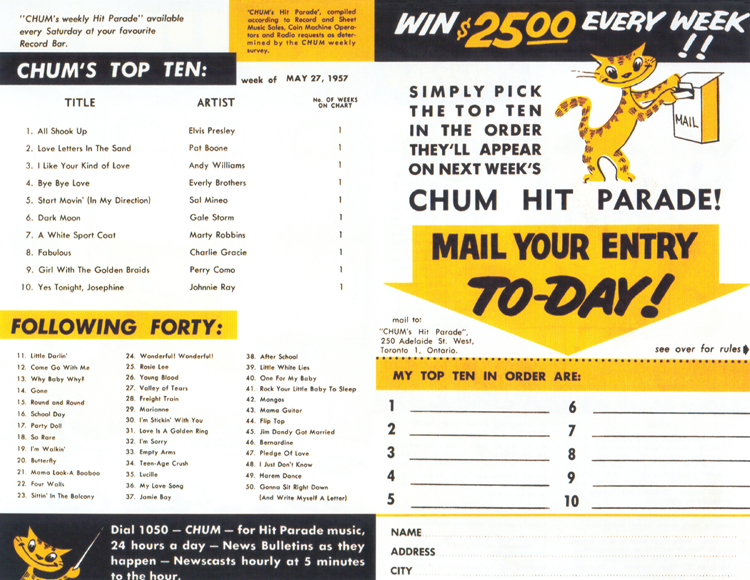
The Diamonds' successful cover version followed a month later.[2] The Diamonds were a Canadian pop group that evolved into a doo-wop group. The Diamonds' version reached number two in sales for eight weeks on the Billboard Hot 100. Billboard ranked this version as the No. 3 song for 1957. In Canada, the song was No. 11 on the premiere CHUM Chart, May 27, 1957.[4]

The Diamonds' version is generally considered superior. AllMusic critic Stephen Thomas Erlewine argues that the Diamonds "Little Darlin'" is an unusual example of a cover being better than the original:

[T]he Diamonds' take remained the bigger hit, and over the years, the better-known version. Normally, this would have been an outrage, but there's a reason why the Diamonds' version has sustained its popularity over the years: it's a better, fiercer recording. Both versions are good, even if they're a little silly, because it's a good doo wop song, giving each member of the quartet a lot to do. At times, the vocal phrases verge on self-parody -- the "ai-ya-yi-yai-yai-ya"'s or the "wella-wella"'s -- which may be why The Diamonds' version is superior.[5]

On the Pop Chronicles, host John Gilliland claimed that their version was in fact a parody of the genre.[2] Nonetheless, "Little Darlin'" (primarily the Diamonds' version, but to some extent the Gladiolas' version) remains an all-time rock 'n roll R&B classic.[2]

Other recordings

[edit]

See also

[edit]

References

[edit]
Revisions and contributorsEdit on WikipediaRead on Wikipedia
from Grokipedia
"Little Darlin'" is a song written by Maurice Williams (1938–2024) and first recorded by his group, the Gladiolas, in late 1956, reaching number 11 on the R&B chart upon its release in early 1957. The song achieved massive commercial success through a by the Canadian vocal quartet , released in February 1957, which peaked at number 2 on the for eight weeks and number 2 on the R&B chart, selling over a million copies and earning a gold certification. Characterized by its rhythmic percussion—claves in the original and in the Diamonds' version—and iconic vocal harmonies including the repeated "ah ya ya ya" , "Little Darlin'" exemplifies the rock 'n' roll era's blend of R&B and pop influences. Williams drew inspiration for the from a girl who also motivated his later hit "Stay," capturing themes of youthful longing and heartbreak through simple, repetitive pleas like "Little darlin', oh little darlin'." ' polished, upbeat rendition propelled the group to stardom as one of the first Canadian acts to achieve significant U.S. chart success. The song's enduring legacy includes its feature in the 1973 film , performances by at Woodstock in 1969, and covers by artists such as on his 1977 album , as well as its inclusion in the 1987 comedy Ishtar. It remains a staple of nostalgia, highlighting the era's vocal and cross-racial musical exchanges in early rock 'n' roll.

Background and Composition

Origins and Songwriting

Maurice Williams, born April 26, 1938, in , showed an early aptitude for music, in his church choir and absorbing influences from broadcasts on local radio stations like . By his mid-teens, he had formed the vocal group the Royal Charms with high school classmates at Barr Street High School, later renaming it the Gladiolas in 1956. It was during this period, at around age 15 or 16, that Williams composed "Little Darlin'" as one of his earliest original songs, drawing from his experiences in the vibrant local music scene of Lancaster. The song's creation stemmed from Williams' personal romantic turmoil, inspired by a high school sweetheart named Mary Shropshire, whom he dated around age 15 and who became the muse for both "Little Darlin'" and his later hit "Stay." Williams revealed that the lyrics reflected his unrequited affection, as he was simultaneously involved with two girls but longed for the one who did not fully reciprocate, capturing a narrative of regret and yearning for reconciliation. This autobiographical element infused the song with emotional authenticity, transforming a youthful heartbreak into a universal doo-wop ballad. Williams' background in , shaped by groups like the 5 Royales and the Charms, provided the harmonic foundation for "Little Darlin'," while his exposure to the calypso rhythms popular in the —through radio hits and cultural trends—contributed to the song's distinctive upbeat cadence, which he initially envisioned in a style akin to "Stand By Me" before adapting it further. The lyrics employ a straightforward verse-chorus structure to emphasize themes of apology and : verses plead for forgiveness ("Through the darkest night, remember what I say"), choruses repeat the affectionate call to "little darlin'," and a bridge heightens the emotional plea, underscoring the narrator's remorse over past mistakes in romance. This simple yet evocative framework highlights Williams' innate songwriting talent, prioritizing heartfelt expression over complexity.

Musical Style and Structure

"Little Darlin'" is a quintessential doo-wop song infused with calypso influences, prominently featuring a strong clave rhythm—a 2-3 syncopated beat pattern—in its accompaniment that drives the rhythmic foundation. This rhythmic element, derived from Cuban tresillo patterns (3+3+2) in the bass line, distinguishes it within the doo-wop genre while aligning with 1950s R&B's incorporation of Caribbean elements. The song follows a verse-chorus form augmented by a spoken-word bridge, with harmonies and call-and-response vocals that exemplify doo-wop's emphasis on group vocal interplay. These elements create a conversational dynamic between the lead singer and backing group, heightening emotional expression through layered, antiphonic lines. Composed in key—typically Bb major in published arrangements—and at a moderate of approximately 77 BPM, the track prioritizes rhythmic drive via prominent bass and percussion. Its harmonic structure relies on simple progressions, such as variations of the I-vi-ii-V cycle (e.g., C6-Am7-Dm7-G9 in demonstrative transpositions), which support the melody and facilitate the vocal harmonies without complexity.

Original Recording

The Gladiolas' Version

The Gladiolas were an R&B vocal group formed in , in 1953, originally under the name the Royal Charms, with Maurice Williams emerging as their leader and primary songwriter. Williams, born in Lancaster in 1938, drew from his early church singing experiences to shape the group's sound, and they recorded the original version of "Little Darlin'" in late 1956 in Nashville. This recording captured the essence of mid-1950s R&B, emphasizing a raw, group-oriented energy that reflected their regional roots in the Carolinas. The group's lineup during this period included Maurice Williams on lead vocals, supported by harmony singers Earl Gainey on tenor and guitar, Willie Jones on baritone, handling tenor and baritone duties while also playing , and Norman Wade on bass. These members contributed to the dynamic interplay central to the Gladiolas' performance, where Williams' commanding presence as lead was balanced by the collective vocal support, creating a sense of communal in the song's of and . Vocal highlights of the Gladiolas' version include Williams' prominent high during the "ah ya ya ya" refrains, which added emotional intensity to the plea-like verses, paired with the group's tight harmonies that incorporated rhythmic nonsense syllables like "ah ya ya ya" for texture. The delivery carried a raw, energetic feel, rooted in R&B traditions with a bluesy edge from the unadorned instrumentation, including clave percussion for the underlying rhythm—suggested by label owner Ernie Young, who also named the group—resulting in a less polished production that evoked a live-group intimacy rather than studio refinement.

Production and Initial Release

The Gladiolas recorded "Little Darlin'" in late 1956 at a small studio in Nashville, Tennessee, for Excello Records, a Nashville-based label known for rhythm and blues releases. The production, overseen by label owner Ernie Young, employed a minimal instrumental setup featuring piano, guitar, bass, and drums to spotlight the group's tight vocal harmonies and Maurice Williams's falsetto delivery. The single was issued in January 1957 as Excello 45-2101, backed with "Sweetheart Please Don't Go," reflecting the low-budget ethos of the label and the group's determination to capture their sound without major financial backing. Initial reception was positive within R&B circles, with the track peaking at No. 11 on the R&B chart and reaching No. 41 on the pop chart in April 1957, though its broader appeal was constrained by Excello's limited regional distribution primarily in the . After the single and a few follow-up releases that failed to achieve similar traction, The Gladiolas opted not to renew their two-year contract with Excello in 1958, leading to a brief period recording as The Excellos before reforming under in 1959.

The Diamonds' Cover

Recording and Release

, a Canadian quartet known for their clean-cut, pop-infused interpretations of material, recorded their cover of "Little Darlin'" in early 1957 in for . The group aimed to transform the original's raw R&B feel into a more accessible, upbeat track suited for mainstream audiences, aligning with the trends of the era. The lineup for the session included lead vocalist , tenor Ted Kowalski, baritone Phil Levitt, and bass Bill Reed, who provided the signature harmonious backing vocals. The recording was produced by David Carroll, whose orchestral arrangements emphasized a brighter tone with enhanced reverb and tighter rhythmic instrumentation compared to the source material. Mercury released the single on , 1957, under catalog number 71060, just weeks after the Gladiolas' original on Excello Records. The label had quickly greenlit the cover upon hearing the Gladiolas' demo, prompting a rushed production to seize the song's potential amid rising interest in vocal group harmony styles.

Chart Performance and Sales

' version of "Little Darlin'" peaked at number 2 on the Best Sellers in Stores chart for eight weeks in 1957, held out of the top position primarily by Elvis Presley's "." ranked it as the number 3 song on its year-end recap of top singles for that year. The track also reached number 2 on the R&B chart, demonstrating its crossover appeal. Internationally, the single achieved success, peaking at number 11 on Canada's inaugural CHUM Chart dated May 27, 1957. In the United States, it was certified gold for sales exceeding 1 million copies and remained on the chart for 26 weeks. The song's commercial performance significantly elevated ' career, marking their biggest hit and solidifying their status in the pop and scenes, while enhancing ' portfolio in the genre. By the end of 1957, it had sold over 1 million copies, positioning it among the year's leading singles.

Other Notable Covers

Early Covers and Reissues

Following the success of The Diamonds' 1957 cover, the track was frequently reissued in various compilations throughout the 1960s, capitalizing on the enduring popularity of doo-wop and rock 'n' roll nostalgia. For instance, it appeared on The Diamonds' 1962 album Galaxy of Golden Hits, a Mercury Records release that collected their early hits and served as a retrospective for fans of their vocal group style. Similarly, the original Gladiolas recording from 1957 was included in doo-wop anthologies during the decade, such as the 1960s-era collections on labels like Vee-Jay and Collectables, which preserved R&B roots amid the British Invasion's rise. These reissues often positioned "Little Darlin'" as a foundational doo-wop example, emphasizing its calypso-influenced rhythm without achieving new chart breakthroughs. In the late 1950s, several minor covers emerged, primarily by regional or international acts seeking to capitalize on the song's momentum but rarely extending beyond local airplay. Notable among these was Brazilian singer Lana Bittencourt's 1957 version, which adapted the melody for a flair and gained traction in as a hit single. That same year, The Q-Tees with The Jazzmen released an instrumental take, blending elements with the original's bass line for niche R&B audiences. Other efforts, such as those by Bob Miller and Jimmy Carroll in 1957 or the Italian group Franco e i G. 5 in 1958, remained obscure, peaking outside the U.S. Top 100 and functioning more as filler tracks on B-sides or EPs. The 1960s saw revivals of "Little Darlin'" in the context of tributes and pop covers, often by British Invasion-adjacent groups or vocal ensembles evoking 1950s nostalgia. and ' 1964 rendition, released as a single in the UK, incorporated a mod-pop arrangement but charted modestly, serving as a nostalgic nod amid . Similarly, The Four Seasons' 1965 cover on their album The 4 Seasons Entertain You retained the spoken-word intro but stayed album-bound without single release, appealing to their falsetto-driven fanbase. Other examples included The Classics IV's 1967 single, and Sha Na Na's 1969 live performance on their debut album, capturing a retro energy that foreshadowed revivals. These versions generally underperformed commercially, rarely cracking the Top 50, and were valued more for their stylistic reinterpretations than as standalone hits.

Later Covers Post-1970

One of the most prominent post-1970 covers of "Little Darlin'" was recorded by on April 24, 1977, during sessions for his final studio album, , released by RCA on July 19, 1977. Presley's rendition adopted a style, emphasizing guitar riffs and his characteristic vocal swagger, transforming the original into a lively, uptempo track that showcased his enduring affinity for 1950s influences. Although not issued as a single in the U.S., the song appeared on the album, which topped the Country Albums , and Presley frequently performed it live during his 1970s tours, adding to its exposure among fans. In the late 1970s and 1980s, several revival acts incorporated "Little Darlin'" into their repertoires, reflecting renewed interest in and amid the era's wave. The Kazoos Brothers, a novelty duo, released a humorous kazoo-infused version on their 1979 EP A Plate Full of Kazoos via Rhino Records, blending the song's harmonies with comedic instrumentation for a playful take. Similarly, Rocky Sharpe & The Replays delivered a high-energy cover in 1980 on their album Rockin' with the Replays, capturing the song's rhythmic bounce with prominent saxophones and echoing vocals, which aligned with the UK's 1980s teddy boy revival scene. , the British folk-rock band, included "Little Darlin'" in a medley on their 1987 live double album C'mon Everybody!, infusing it with their signature pub-rock energy alongside covers of other 1950s hits, though it did not achieve significant chart success. performed an acoustic live version during her early tours, documented on the 1982 Very Early Joan, highlighting the song's adaptability to folk interpretations. The 1990s and early 2000s saw niche covers in revival and circles, often performed at live events rather than achieving commercial breakthroughs. The Alley Cats, a prominent group, featured a harmonious rendition on their 1995 album , preserving the song's vocal layering in a contemporary street-corner style popular at harmony festivals. Post-2000, indie and tribute acts continued this trend; for instance, Ac·Rock released an version in 2006, emphasizing tight vocal arrangements suitable for choral performances. More recent examples include Conny and Duckies' 2019 cover, a lighthearted European take, and Tommy C's 2020 release, both gaining modest traction through online platforms without major chart impact. Maurice Williams, the song's writer and original performer with The Gladiolas, maintained its legacy through live performances with The Zodiacs well into the and early , often reprising it at doo-wop revival shows and festivals until his death on August 6, 2024, at age 86. While post-1970 covers rarely produced chart-toppers, the song's enduring appeal is evident in its streaming presence, with versions accumulating millions of plays on platforms like , particularly during nostalgic playlists and viral social media clips in the as of 2025. Tribute performances at events such as the International Doo-Wop Festival have kept it alive, occasionally featuring sampled elements in minor hip-hop beats, though no high-profile releases emerged by 2025.

Legacy and Cultural Impact

Critical Reception and Influence

Upon its release in 1957, "Little Darlin'" by received praise for its infectious melody and tight vocal harmonies, which exemplified the playful energy of at the height of its popularity. Critics highlighted the song's spoken-word bridge and rhythmic bounce as standout elements that captured the era's youthful exuberance. The original Gladiolas version, released earlier that year, was later recognized by music critic as an essential doo-wop recording in his Basic Record Library of 1950s and 1960s singles, underscoring its foundational role in the genre. The song played a key role in bridging with mainstream pop and rock, as ' cover helped propel into broader white audiences, contributing to the genre's crossover success during the late 1950s. Its harmonious structure influenced subsequent acts, including ' layered vocals in early surf rock. The stylistic elements of 1950s tracks like "Little Darlin'," including its spoken-word bridge, contributed to the retro rock 'n' roll ballad style of ' "" (lead vocal by ). This crossover dynamic exemplified how white covers often amplified black-originated R&B sounds into rock's emerging canon. Over the decades, "Little Darlin'" has been enshrined as a quintessential classic, frequently anthologized in doo-wop compilations for its enduring appeal and innovative blend of calypso rhythms with vocal group traditions. Following Maurice Williams' death on August 6, 2024, at age 86, obituaries lauded his songwriting , crediting "Little Darlin'"—composed when he was just 16—as a of his legacy that showcased his knack for crafting timeless, heartfelt hooks. Critics remain divided on the versions, with some preferring the Gladiolas' original for its authentic R&B grit and raw emotional delivery, viewing The Diamonds' polished rendition as a "whitened" that diluted the source material amid the racial barriers of music promotion. AllMusic's , however, counters that The Diamonds' take is a rare case where the cover surpasses the original through its heightened theatricality and production clarity. This debate highlights broader tensions in the era's cover practices, where white artists often achieved greater commercial dominance over black innovators. The Diamonds' rendition of "Little Darlin'" gained renewed prominence through its inclusion in films that highlighted nostalgia and humor. In George Lucas's 1973 coming-of-age movie , the song plays during a cruising scene, underscoring the era's youthful romance and rock 'n' roll spirit. Similarly, the 1987 comedy Ishtar features a comedic performance by stars and , who deliver an off-key, bumbling version amid the film's desert antics, parodying the song's earnest style. On television, "Little Darlin'" has appeared in various episodes and specials evoking retro themes. It was featured in the sixth episode of the BBC series Call the Midwife (2012), providing a lighthearted backdrop to mid-20th-century British life. The song also soundtracked a scene in the 2022 Amazon Prime series The Terminal List, enhancing a moment of reflection. In doo-wop revival programming, The Diamonds performed it on PBS specials like Doo Wop 51 (2000), celebrating the genre's enduring appeal. The track has been adapted for advertising to invoke 1950s innocence. In the late and , a modified version titled "Chicken Little" appeared in Kentucky Fried Chicken commercials, reworking the lyrics to promote their products with playful nostalgia. Culturally, "Little Darlin'" has been referenced as emblematic of rock history. Radio host John Gilliland described ' cover as a of doo-wop conventions during the 1969 Pop Chronicles series, highlighting its exaggerated spoken-word breakdown. In academic discussions, the song symbolizes the era's youthful optimism and genre-blending, as noted in analyses of narratives. In recent years, the song has experienced digital revivals. Following Maurice Williams's death on August 6, 2024, tributes in music outlets and obituaries spotlighted "Little Darlin'" alongside his more famous "Stay," prompting streams and shares on platforms like Spotify, where it features in 1950s nostalgia playlists. On TikTok, users have incorporated the track into 2020s challenges and edits as of 2024, blending its retro vibe with modern dance and lip-sync trends to celebrate doo-wop heritage.

References

Add your contribution
Related Hubs
User Avatar
No comments yet.