


Community hub
Recent from talks
Contribute something
Nothing was collected or created yet.
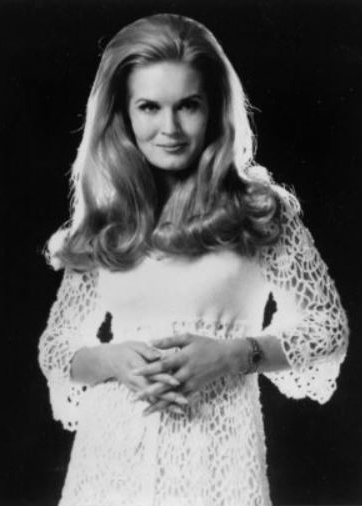
Lynn Anderson
View on Wikipedia
Lynn René Anderson (September 26, 1947 – July 30, 2015) was an American country singer and television personality. Her crossover signature recording, "Rose Garden", was a number one hit internationally. She also charted five number one and 18 top-ten singles on the Billboard country songs chart. Anderson is regarded as one of country music's most significant performers.[2][3]
Key Information


Born in Grand Forks, North Dakota, United States, she was raised in California by her mother, Liz Anderson, who was also a country music artist. Daughter Lynn was signed to a recording contract to Chart Records in 1966 after she was heard singing along with her mother at an industry function. Previously she had recorded some demo tapes of her mother's songs and appeared on television in California on regional country music shows. In 1967, she had her first top ten hit with the single "If I Kiss You (Will You Go Away)". Soon after, Anderson joined the cast of The Lawrence Welk Show, where she performed country music weekly to a national audience.
In 1970, Anderson signed with Columbia Records, where she was produced by her first husband, Glenn Sutton. She had her biggest commercial success with "Rose Garden". The song reached positions on the Billboard country, pop, and adult contemporary charts, also charting in the Top-5 in 15 other countries and earning her a Grammy Award for Best Female Country Vocal Performance. Throughout the decade, Anderson also had number-one hits with "You're My Man", "How Can I Unlove You", "Keep Me in Mind", and "What a Man My Man Is". She also became a television personality, with appearances on The Tonight Show, specials with Bob Hope and Dean Martin, and her own prime-time specials.
After a brief hiatus, Anderson returned with the studio album Back (1983). The album spawned three singles, including the top ten hit "You're Welcome to Tonight", with Gary Morris. She continued recording sporadically throughout the 1980s. This included a revival of the pop hit "Under the Boardwalk" and the studio album What She Does Best (1988). Anderson continued releasing new albums into the new millennium, such as 2004's The Bluegrass Sessions. Towards the end of her life, Anderson struggled with alcohol addiction, but continued performing until her death in 2015. For her work as a crossover artist, she was ranked on Rolling Stone's list of the "100 Greatest Country Artists of All Time" and CMTs "40 Greatest Women of Country Music".
Early life
[edit]Lynn Rene Anderson was born in Grand Forks, North Dakota, on September 26, 1947, to Casey and Liz Anderson.[4] Her grandparents were Scandinavian immigrants who established a North Dakota "saddle club". According to Anderson, she could ride horses before she could walk.[5] While she was still a young child, the family relocated to a subdivision in Fair Oaks, California.[6][4]
However, Anderson insisted that her parents move to a ranch, prompting the family to move to Sacramento, California. In Sacramento, the Andersons bought a ranch with two acres of land. The family raised horses, which she learned how to ride and care for. At the age of 9, Anderson won second place at a local horse-racing event in San Francisco, California.[5] Lynn also became interested in performing from an early age. Both her parents were aspiring songwriters who had formed friendships with west country performers.[6][7] Her performing and musical interests continued into high school. During her teens she landed a job working as a secretary for KROY in Sacramento.[6] Upon graduating, she became the station's secretary to the general manager.[5]
While working full-time, Lynn continued entering equestrian competitions. Once winning several competitions, she was dubbed the "California Horse Show Queen" in 1966.[4][6] While watching her daughter at these events, Liz Anderson was also composing songs. She sent her compositions to Los Angeles and Nashville, Tennessee, where they were heard by music executives.[5] Among the songs heard was "(My Friends Are Gonna Be) Strangers", which was recorded by Merle Haggard in 1964.[6] The song led producer Chet Atkins to sign Liz to a recording contract at RCA Victor. This prompted the family to relocate to Nashville.[5] Before officially moving, Liz took a brief trip with her daughter to Nashville in 1965. At a hotel, mother and daughter performed in an informal sing-along with several other artists. Also present at the sing-along was producer Slim Williamson. Impressed by her vocals, Williamson offered Lynn a recording contract of her own.[6] In 1966, she signed her first recording contract with Chart Records.[4]
Music career
[edit]1966–1969: Early country success and The Lawrence Welk Show
[edit]During a car ride, Liz Anderson composed a song titled "Ride, Ride, Ride". Her daughter liked the song and had an interest in cutting it at her new label. It was cut at her first recording session.[8] Although her debut single was 1966's "In Person",[9] it was "Ride, Ride, Ride" that became Anderson's first charting single.[6] Her next release was another Liz Anderson composition, "If I Kiss You (Will You Go Away)".[1] It was Anderson's first major hit as a music artist, reaching number five on the Billboard Hot Country Singles chart in 1967.[10] Her debut studio album of the same name was also released in 1967 and peaked at number 25 on the Billboard Top Country Albums chart.[11] She followed it with "Promises, Promises", which reached number four on the country singles list in February 1968.[12] Her second studio release of the same name reached number one on the country albums chart.[13]

When reviewing her 1999 Chart compilation, Greg Adams of AllMusic gave the recording four-and-a-half out of five stars. "Lynn Anderson made some of the best music of her career during her late-'60s period on the Chart label", Adams commented.[14] Billboard magazine also praised these early recordings. In reviewing Big Girls Don't Cry, writers took note of her mass appeal. "The material which includes her fine renditions of 'Honey' and 'Ring of Fire' is diversified and has appeal for all buyers", they wrote.[15]
In 1967, Anderson's career gained further momentum when she was cast on The Lawrence Welk Show.[6] Welk's son, Larry Welk, discovered an Anderson album cover and was drawn to her physicality. Larry's interest drew Lawrence Welk to audition and eventually cast her.[16] Anderson became the show's first country performer and toured with the cast nationwide.[6] However, she was dissatisfied with the material chosen for her to sing on the program and threatened to quit. After meeting with Welk, different arrangements were made for Anderson's performances.[16] The exposure led to continued music success. In 1967, she won the "Top Female Vocalist" award at the Academy of Country Music Awards.[17] She remained with The Lawrence Welk Show until 1968.[16]
While finding chart success and common ground with Welk, Anderson was not finding common ground with the Nashville establishment. "I was seen as a kid from California on the Welk show – not a real country artist", she stated. Thus, she chose to record more traditional material that would help associate her with Nashville's country music scene. Among these songs was a cover of the Osborne Brothers' "Rocky Top".[16] Anderson's version became a bigger hit than the original, climbing to number 17 on the Billboard country singles list in 1970.[18] She had country hits between 1968 and 1969 that further displayed a traditional country style, including "Big Girls Don't Cry", "That's a No No" and a cover of Hank Snow's "I've Been Everywhere".[6] Anderson's sixth studio album was a tribute to the traditional female country performers that preceded her. Entitled Songs That Made Country Girls Famous (1969), the album reached number nine on the country albums chart.[19][20]
1970–1980: "Rose Garden" and breakthrough
[edit]
In 1970, Anderson's recording contract was bought by Columbia Records and she began recording for the new label that year. Two years prior, she married songwriter and producer Glenn Sutton, who ultimately became her producer at the label. Her first Columbia release was the Sutton-penned "Stay There, Till I Get There".[21] The song became her fifth top ten hit on the Billboard Hot Country Singles chart, rising to number seven in 1970.[22] Her eighth studio album of the same name was also released in 1970. According to writer Greg Adams, the album resembled the traditional country of her previous Chart recordings.[6] Despite the success of Sutton's composition, Anderson claimed that it was hard for Sutton to provide additional material for her. His collaborator, Billy Sherrill, oversaw Sutton and chose many of his compositions for Tammy Wynette to record. "Glenn was very politically connected at Columbia and Epic...so I had to find songs from other sources, which is why a lot of my songs were written by other people", she commented in 2011.[21]

According to Anderson, she had found the original version of "Rose Garden" on "a Joe South album and loved it." She then brought it to the attention of Glenn Sutton. However, Sutton was against recording it because lines in the song were sung from a male perspective.[23] However, he eventually acceded to Anderson after she kept bringing the song into recording sessions.[24] Released as a single in October 1970, the song became Anderson's first number one single, topping the charts for five weeks.[9] It was also her first to crossover onto the Billboard Hot 100, peaking at number three in February 1971.[25] The song was an international hit, reaching the Top-5 in 15 other countries. [1] Its crossover success helped Anderson receive accolades from 13th Annual Grammy Awards, the Academy of Country Music and the Country Music Association.[26][17][27] Anderson's eleventh studio album, Rose Garden, was released in December 1970.[28] The record topped the Billboard country albums chart and spent 77 weeks on the survey altogether.[29] It was also her highest-peaking album on the Billboard 200 chart list, reaching number 19.[30] The record certified platinum in sales from the Recording Industry Association of America.[31]
Anderson followed "Rose Garden" with the singles "You're My Man" and "How Can I Unlove You", which both became number one hits on the Billboard country songs chart in 1971.[9] Both songs also registered on the Billboard adult contemporary chart, with "You're My Man" becoming a top ten hit on that survey.[32] The latter singles appeared on corresponding studio releases. This begun with You're My Man, which reached the top spot on the country albums list.[33] The project also peaked at number 99 on the Billboard 200.[34] Allmusic gave the album four out of five stars, praising the album's pop covers of "Knock Three Times" and "Proud Mary".[35] Her twelfth studio album was also titled How Can I Unlove You. It featured covers of "Take Me Home Country Roads" and "You've Got a Friend".[36] The record peaked at number two on the country albums chart[37] and number 132 on the Billboard 200.[38]
She continued to diversify her music by recording songs of different styles. In 1972, Anderson recorded Johnnie Ray's pop hit "Cry", which became a top five country hit for Anderson.[39] She also reached the top five with a version of Loggins and Messina's "Listen to a Country Song" and Joe South's "Fool Me".[40][21] She then covered The Carpenters' "Top of the World" after hearing it on their 1972 album, A Song for You.[41] Anderson's version reached number two on the Billboard country songs chart.[42] After discovering that Anderson's version had become a hit, The Carpenters released their own version for the pop market.[41]
In the 21st century, critics have taken notice of Anderson's various music styles. Writers Mary A. Bufwack and Robert K. Oermann commented that her diverse song subjects proved that she could be "poignant" and "downhearted".[40] Greg Adams of Allmusic thought that albums such as 1972's Cry had an easy listening style that made her music more marketable to different genres.[43]

Between 1973 and 1974, the singles "Keep Me in Mind" and "What a Man My Man Is" reached number one.[9] Anderson's success was also fueled by television appearances, especially during the second half of the decade. She appeared on prime-time shows The Brady Bunch Hour, The Tonight Show and The Midnight Special. Additionally, she collaborated with Dean Martin and Bob Hope on television and in concert.[44] Anderson hosted her own CBS television special in 1977.[40] Regular television appearances helped promote singles that were less successful. This included a one-episode appearance on Starsky and Hutch, where Anderson performed her 1977 single "Wrap Your Love All Around Your Man".[6] After her performance, the song reached number 12 on the Billboard country singles chart.[45] She had further top twenty country hits in the middle decade with "He Turns It into Love Again", "I've Never Loved Anyone More", and "All the King's Horses".[9] With declining chart success, Anderson adopted a newer image which was described by writers as "racy" and "skin tight".[4][40] The new style proved successful when she returned in 1979 with Karla Bonoff's "Isn't It Always Love". Anderson's version reached the top ten of the country charts.[1] Its success led to her 1979 album reaching the top 30 of the Billboard country albums chart.[46] In 1980, Anderson released her last studio album for Columbia Records called Even Cowgirls Get the Blues.[21] It produced two top 30 country singles, including the title track, which reached number 26.[9]
1982–1989: Hiatus and comeback
[edit]In 1980, Anderson left Columbia Records after remarrying two years prior.[21] Prior to her departure, it was claimed that Columbia intended to promote her as the company's answer to counterparts, Barbara Mandrell and Dolly Parton. Instead, Anderson moved to Louisiana with her second husband and raised a family.[40] With the exception of an album of re-recordings, she did not record for nearly three years.[21] In 1982, Anderson and Harold Stream divorced. She returned to Nashville that same year and began working with former CBS agent Bonnie Garner. In 1983, Garner helped her secure a new recording contract with the independent label Permian Records.[21]
In 1983, she released her 29th studio album, Back, on Permian. Writers Mary A. Bufwack and Robert K. Oermann called the album's music "emotional" and "bruised". "That's what I felt at the time", Anderson recalled of the album's choice of material.[40] Back was her last charting record, peaking at number 61 on the Billboard Top Country Albums list in 1983.[47] Two singles were spawned that became major hits. The first was "What I Learned from Loving You", a top twenty hit on the Hot Country Songs chart.[48] The second was a duet with Gary Morris called "You're Welcome to Tonight". It was Anderson's first top ten hit in five years, reaching number nine in 1984.[49]
In 1986, Permian Records filed for bankruptcy.[50] Although the label focused on artist management and production, it dropped all of its major artists, including Anderson.[51] During this period Anderson did not release full-length albums, but did record a single for MCA Records. Titled "Heart of the Matter," the track did not chart.[9][1] She then signed with Mercury Records in the second half of the decade.[4] In 1988, her cover of The Drifters' "Under the Boardwalk" became her highest-charting single in five years, peaking at number 24 on the Billboard country songs chart.[52] Her 30th studio album, What She Does Best, was issued on Mercury in 1988.[53] The record's title track was also spawned as a single and became a minor hit in 1988.[9] The album's third (and final) single, "How Many Hearts", was Anderson's last chart appearance in her career.[4][9] In March 1989, it peaked at number 69 on the Billboard country songs chart.[54]
1990–2015: New musical directions
[edit]Anderson left the major label market following her departure from Mercury in 1990. She began to diversify her career during this time.[4] In 1990, she appeared on the BBC Scotland drama The Wreck on the Highway.[55] She also recorded a variety of different musical genres.[4] In 1992, she released the studio album Cowboy's Sweetheart on the independent Laserlight label. The project was western-themed and included collaborations with Emmylou Harris and Marty Stuart.[1][56] Allmusic's Jason Ankeny gave the album 2.5 out of 5 stars, yet called it one of her "stronger albums".[57] In 1992, Billboard gave the album a positive response. "Anderson has never sounded better or more alluring than she does in this collection built around a western/living free motif", staff writers noted.[58] Six years later, Anderson released the Platinum Entertainment studio project, Latest and Greatest. The album included re-recordings of her hits, and also featured three new tracks. Two of the album's track were composed by Anderson's partner, Mentor Williams.[59] In their review, Allmusic commented that she no longer had her "girlish" edge, but rather a voice comparable to that of K.T. Oslin or Mary Chapin Carpenter.[60]

In 2000, Anderson released her first live record entitled Live at Billy Bob's Texas, which was issued on the Smith label.[1] Richie Unterberger of Allmusic gave the effort three out of five stars in his review, commenting, "This disc is not an electrifying find, but it's decent for what it is."[61] In June 2005, Anderson's 34th studio album, The Bluegrass Sessions was issued on the DM label. The album was a collection of Anderson's former hits recorded in a bluegrass style. The track listing included hits such as "Rose Garden", "You're My Man", and "Rocky Top".[62] Zac Johnson of Allmusic gave the release 2.5 out of 5 possible stars. Johnson questioned her authenticity when reviewing the record, noting that some songs sounded "a little forced".[63] Despite the critical response, The Bluegrass Sessions was nominated by the Grammy Awards for Best Bluegrass Album.[26][64]
Over the next several years, Anderson continued touring and performing as well. In 2007, Anderson was part of the lineup at the CMA Music Festival at the Riverfront Park. Other performers included Terri Clark and Lorrie Morgan.[65] In 2009, she performed at the Stagecoach Festival, which also included additional performers as well.[66] Between 2010 and 2011, she performed alongside the Metropole Symphony Orchestra for a series of concerts.[1] Anderson also continued recording music. In 2006, she released her 35th studio album, Cowgirl. The album was a collection of western songs, which were written (or co-written) with her mother. The project was released on her mother's label, Showboat Records.[67][68] A similar project was issued in 2010 entitled Cowgirl II on the same label.[69] According to Anderson, her reasons for releasing both western albums was to present the genre in a "sophisticated way" for people who did not know the music.[70]
In June 2015, Anderson released her final studio album Bridges.[1] The album was a collection of gospel material that included collaborations with The Martins and The Oak Ridge Boys. According to a 2015 interview with Anderson, it was her first album in ten years that she decided to promote.[71] It was also Anderson's first gospel collection and featured a reworking of Dobie Gray's "Drift Away" for the Christian market.[72] Writer Timothy Yap called the album's songwriting "top notch" in his review of the album.[71] Markos Papadatos of the Digital Journal gave it 4.5 out of 5 stars, calling the record "phenomenal".[73] The album was released a month prior to her death in July 2015.[4][55]
Equestrian career
[edit]In addition to her music career, Anderson was also an equestrian and professional horse racer. While she had equestrian credits before signing her first recording contract, Anderson continued pursuing it throughout her life.[68][74] Over the course of her life, Anderson had won 16 national championships, eight world championships and some celebrity championships.[74][70]

She often alternated between performing music concerts and participating in horse shows. "I'd go sing at a concert, then fly to a horse show, then fly back the next night for a concert. I was real serious about showing horses", she recounted.[21] Anderson also bred horses, most notably quarter horses. Among her bred horses, Doc Starlight, helped start a bloodline for cutting horses in the United States.[74] She was a lifelong member of the American Quarter Horse Association and participated in a variety of the organization's events. While she participated in many events, the cutting horse events were considered her favorites.[70]
Anderson kept show horses in Texas during the final years of her life. She also employed a horse trainer to keep the animals active and ready for competitions. Anderson traveled between Texas and her home in New Mexico to spend time with the horses.[70] She also raised horses at her ranch in New Mexico.[75] In a 1995 interview, Anderson told reporter Gene Stout that she mainly moved to New Mexico so that she could raise horses. "I’ve been kind of a cowgirl most of my life, so New Mexico is the perfect place for me. It suits me very well. Ninety percent of the time I’m in cowboy boots and a cowboy hat", she recounted.[76]
Anderson worked with disabled children and facilitated in learning to ride horses.[70] She helped establish a horse riding organization in Franklin, Tennessee called "Special Riders". Anderson was inspired to establish the organization after observing a child who had crutches and was unable to ride. Anderson also collaborated with a similar program in Texas called "Rocky Top Riders". Although not started by Anderson, the program was named for her 1970 country hit. She also established a clinic to help aspiring young female riders. Entitled "Rodeo Queen", the clinic focused on horse show activities, such as horse grooming and self-care.[68] She also worked with the North American Riding for the Handicapped Association (NARHA) for several years.[70]
Personal life
[edit]Marriages, relationships and family
[edit]Anderson was married twice and had three children.[41] Her first marriage to Glenn Sutton lasted from 1968 until 1977. The pair met after Sutton developed an interest in producing her music while at the Chart label.[21] Anderson stated that she had turned down several professional opportunities due to Sutton's disapproval.[77] This included touring in Vietnam with Bob Hope and acting in the film W.W. and the Dixie Dancekings. The pair continued collaborating musically until they divorced in 1977.[78] The couple had one child together, Lisa Sutton.[40]
In 1978, Anderson married Louisiana oilman and entrepreneur Harold "Spook" Stream. She had met Stream at a rodeo event and developed a romantic relationship shortly afterward.[78] The couple had two children together and divorced in 1982.[50] Anderson claimed that Stream had been physically abusive, stating that he had attempted to run her over with a vehicle and tried to hit her.[79] Following their divorce, Anderson and Stream fought over custody of their two children. Although attempting to gain visitation rights, Anderson ultimately lost custody of the children.[80][50]
Anderson reconnected with songwriter Mentor Williams following her divorce. The pair reunited at a Nashville press event, and the relationship turned romantic in 1989.[50][81] The two later moved to a ranch in Taos, New Mexico, the home state of Williams. Anderson and Williams lived in New Mexico until her death in 2015.[81] They never married but remained in a committed relationship. "He’s technically my boyfriend, but really he’s like my husband", Anderson said in 2013.[82]
Legal issues
[edit]
Anderson had issues with alcohol towards the end of her life. In December 2004, she was arrested and charged with driving under the influence in Denton, Texas. A driver following Anderson called the police after noticing her car weaving in and out of lanes. After failing a field sobriety test, she was arrested and released on a $1000 bond.[83] On January 24, 2005, Anderson was accused of shoplifting a Harry Potter DVD from a local supermarket in Taos, New Mexico. Upon her arrest she punched the arresting officer. She was charged with shoplifting, resisting arrest and assault on a police officer. The assault charges were later dropped.[84] The shoplifting charge was dropped, as long as Anderson agreed to not commit any further offenses.[85]
In May 2006, Anderson was arrested on a second DUI charge after a traffic accident near Española, New Mexico. According to police, Anderson failed a sobriety test and refused to take a breathalyzer test after her car hit the back of another car. No one was injured in the collision and she again was charged and released on bond.[86] Her last arrest occurred on September 11, 2014, after being involved in a minor traffic accident in Nashville, Tennessee, on West End Avenue.[87] Anderson was arrested after she admitted to drinking alcohol and taking prescription medication. She was booked on DUI and released on a $5,000 bond. She issued a statement and apologized to her fans. Anderson later went through rehabilitation at the Betty Ford Center.[88][85]
Death
[edit]Anderson died on July 30, 2015, at the Vanderbilt University Medical Center in Nashville, Tennessee, at the age of 67. She had been briefly hospitalized due to pneumonia after vacationing in Italy. The official cause of death was a heart attack.[89] At her funeral, friend Brenda Lee gave a speech, and several doves were released to commemorate her death.[90]
Anderson is interred in the mausoleum at Woodlawn Memorial Park in Nashville near her mother, Liz, who died in 2011. Her father, Clarence, died in 2018 and was interred next to his wife. That same year, Woodlawn Memorial Park Cemetery (referred to as "Cemetery of Country Stars") created "The Lynn Anderson Rose Garden", consisting of 200 Lynn Anderson Hybrid Rose Bushes (named for the singer by the National Rose Society of America), as a place of reflection and meditation, in honor of Anderson's signature song.[91]
Musical styles
[edit]
Anderson's music is rooted in the country genre.[92] It is also rooted in the sub-genres of the Nashville Sound,[93] Countrypolitan,[94] bluegrass,[63] western[21] and gospel.[71] Early on, Anderson had a traditional country style that featured instruments such as the steel guitar and the banjo.[95][6] These recordings also incorporated some elements of the Nashville Sound style.[93][96][97] Her style shifted after working alongside Glenn Sutton, who helped develop Anderson's music towards the Countrypolitan format by combining soft rock and adult contemporary.[98] This was first seen on her 1970 studio album, No Love at All. Reviewer Pemberton Roach said the album exemplified the style through its emotional lyrics and mature vocal stylings.[94] It was most apparent in "Rose Garden", which writer Richard Carlin called a "poppy, upbeat song" with rock accompaniment.[98]
As Anderson's music routinely crossed over into the pop field, it developed into adult contemporary and pop music.[93][43] Anderson recorded covers of pop hits for her studio releases during the 1970s. In his review of her 1972 album, Greg Adams commented on her shift: "Cry continues Lynn Anderson's trend toward pop music and away from songs written by her gifted mother, Liz Anderson."[43] Stephen Thomas Erlewine noted a similar trend in his review of her 2017 album, The Definitive Collection: "[It] winds up with a narrative, illustrating how Anderson drifted from the Nashville sound to easy listening by the end of the '70s, and by telling that story, this double disc lives up to its title's promise".[93] Anderson's singing voice has also been highlighted by writers and journalists. David Laing of The Guardian described her as having a "powerful alto voice."[75] Steve Huey of Allmusic called Anderson's voice "sweet but strong" in his biography of her career.[1]
Legacy, honours and achievements
[edit]Anderson has been widely regarded as one of country music's most significant female artists.[3][2][1] According to Mary A. Bufwack and Robert K. Oermann, Anderson brought female artists to a new level in the 1970s.[50] Steve Huey of Allmusic called her "one of the most popular female country singers of the early '70s".[1] Courtney Campbell of Wide Open Country called her "one of the most important female country music voices of her time".[99] At the time of her death, other country artists acknowledged her as a career inspiration, most notably Neal McCoy, Martina McBride and Mary Sarah.[100] Reba McEntire also saw Anderson as a musical inspiration: "I am a huge fan of Lynn’s. She was always so nice to me. She did so much for the females in country music. Always continuing to pave the road for those to follow."[101]
Writers and music journalists have most notably regarded Anderson as an important crossover music artist. In his book Historical Dictionary of Popular Music, author Norman Abjorensen viewed her as an artist that "took aim at the mainstream pop audience".[102] Bufwack and Oermann noted that Anderson's "Rose Garden" helped set the trend for female crossover artists in the 1970s.[40] Her crossover legacy has also been recognized for her national television appearances. In 2015, The Washington Post explained that Anderson was the first female country artist to appear on national television due to cast membership on The Lawrence Welk Show.[103] Courtney Campbell of Wide Open Country noted that she was the first female country performer to appear on The Tonight Show and headline at Madison Square Garden in New York City.[99]
Anderson has also been given honors and achievements as part of her legacy. Record World named her their "Artist of the Decade" between 1970 and 1980.[104] In the mid-1990s, a hybrid tea rose was created called "The Lynn Anderson Rose".[105] In 1999, Governor Don Sundquist of Tennessee made June 15 "Lynn Anderson Day" in the state. She was also inducted into the North American Country Music Association Hall of Fame the same year.[99]
In 2002, she was ranked by Country Music Television on their list of the "40 Greatest Women of Country Music".[106] She received a similar recognition when Rolling Stone included her on their list of the "100 Greatest Country Artists of All Time".[3] In 2017, her stage costumes and memorabilia were on display at the Country Music Hall of Fame and Museum. The Anderson exhibit was called "Keep Me in Mind".[107] The exhibit ran through 2018.[108] In 2018, daughter Lisa Sutton helped open the Lynn Anderson Rose Garden in Nashville to pay tribute to her career.[109] In 2019, she was inducted into the Western Music Association Hall of Fame.[110] In 2020, Anderson was featured in the PBS documentary "Iconic Women of Country". Female country artists, including Trisha Yearwood, discussed her legacy in the genre.[111] The same year, Anderson's eleventh studio album, Rose Garden, was remastered for its 50th anniversary. The new edition included liner notes from Clive Davis and Reba McEntire.[112]
Discography
[edit]Studio albums
- 1967: Ride, Ride, Ride
- 1967: Promises, Promises
- 1968: Big Girls Don't Cry
- 1969: With Love, from Lynn
- 1969: At Home with Lynn
- 1969: Songs That Made Country Girls Famous
- 1970: Uptown Country Girl
- 1970: Stay There 'Til I Get There
- 1970: No Love at All
- 1970: I'm Alright
- 1970: Rose Garden
- 1971: You're My Man
- 1971: How Can I Unlove You
- 1971: The Christmas Album
- 1972: Cry
- 1972: Listen to a Country Song
- 1973: Keep Me in Mind
- 1973: Top of the World
- 1974: Smile for Me
- 1974: What a Man My Man Is
- 1975: I've Never Loved Anyone More
- 1976: All the King's Horses
- 1977: I Love What Love Is Doing to Me/He Ain't You
- 1977: Wrap Your Love All Around Your Man
- 1978: From the Inside
- 1979: Outlaw Is Just a State of Mind
- 1980: Even Cowgirls Get the Blues
- 1982: The Best of Lynn Anderson: Memories and Desires
- 1983: Back
- 1988: What She Does Best
- 1992: Cowboy's Sweetheart
- 1998: Latest and Greatest
- 1999: Home for the Holidays
- 2005: The Bluegrass Sessions
- 2006: Cowgirl
- 2010: Cowgirl II
- 2015: Bridges
Filmography
[edit]| Title | Year | Role | Notes | Ref. |
|---|---|---|---|---|
| The Lawrence Welk Show | 1967–68 | Herself | [16] | |
| Tennessee Ernie Ford's White Christmas | 1972 | television special | [113] | |
| The Dean Martin Show | 1972–74 | [113] | ||
| Dean Martin Presents Music Country | 1973 | [114] | ||
| The Bobby Vinton Show | 1976 | [114] | ||
| Dolly | [113] | |||
| Hollywood Squares | 1976–79 | [114] | ||
| The Brady Bunch Hour | 1977 | [114] | ||
| The Lynn Anderson Special | television special | [113] | ||
| Starsky & Hutch | Sue Ann Grainger | [39] | ||
| The Wreck on the Highway | 1990 | Betsy Hall | [55] |
Awards
[edit]Anderson received many awards during the course of her career. This includes two from the Academy of Country Music,[115] one from the Country Music Association[116] and one from the Grammy Awards.[117]
References
[edit]Footnotes
[edit]- ^ a b c d e f g h i j k l Huey, Steve. "Lynn Anderson: Biography & History". Allmusic. Retrieved June 3, 2020.
- ^ a b Bufwack & Oermann 2003, p. 337-39.
- ^ a b c Johnston, Maura (June 15, 2017). "100 Greatest Country Artists of All Time (Lynn Anderson)". Rolling Stone. Retrieved June 25, 2020.
- ^ a b c d e f g h i j Dauphin, Chuck (July 31, 2015). "Lynn Anderson, Country Star Behind 'Rose Garden,' Dies at 67". Billboard. Retrieved June 2, 2020.
- ^ a b c d e Cusic, Don 2011, p. 176.
- ^ a b c d e f g h i j k l m Adams, Greg 2005, p. 1.
- ^ Dauphin, Chuck (June 30, 2015). "Lynn Anderson Talks 'Bridges' Album: 'You Never Know Where Your Next Deal Might Come From'". Billboard. Retrieved June 2, 2020.
- ^ Cusic, Don 2011, p. 176-77.
- ^ a b c d e f g h i Whitburn, Joel (2008). Hot Country Songs 1944 to 2008. Record Research, Inc. ISBN 978-0-89820-177-2.
- ^ ""If I Kiss You (Will Go Away)" chart history". Billboard. Retrieved June 3, 2020.
- ^ "Ride, Ride, Ride [album] chart history". Billboard. Retrieved June 3, 2020.
- ^ ""Promises, Promises" chart history [single]". Billboard. Retrieved June 3, 2020.
- ^ "Promises, Promises chart history [album]". Billboard. Retrieved June 3, 2020.
- ^ Adams, Greg. "Anthology: The Chart Years: Songs, Reviews, Credits". Allmusic.
- ^ "Album Reviews". Billboard. Vol. 80, no. 28. July 20, 1968. p. 73.
- ^ a b c d e Cusic, Don 2011, p. 177.
- ^ a b "Academy of Country Music: ACM Winners (Lynn Anderson)". Academy of Country Music. Retrieved June 3, 2020.
- ^ ""Rocky Top" chart history". Billboard. Retrieved June 3, 2020.
- ^ "Songs That Made Country Girls Famous chart history". Billboard. Retrieved June 3, 2020.
- ^ Adams, Greg. "Songs That Made Country Girls Famous: Lynn Anderson: Songs, Reviews, Credits". Allmusic. Retrieved June 3, 2020.
- ^ a b c d e f g h i j Cusic, Don 2011, p. 178.
- ^ ""Stay There, Till I Get There" chart history". Billboard. Retrieved June 4, 2020.
- ^ Davis, Doug. "'Rose Garden' was right for singer Lynn Anderson". Texarkana Gazette. Retrieved May 29, 2020.
- ^ Kosser, Michael (2006). How Nashville Became Music City U.S.A. New York: Hal Leonard Corporation. ISBN 0-634-09806-3.
- ^ ""Rose Garden" chart history [Hot 100]". Billboard. Retrieved June 4, 2020.
- ^ a b "Lynn Anderson: Artist". Grammy Awards. November 19, 2019. Retrieved June 4, 2020.
- ^ "Past Winners and Nominees: Lynn Anderson". Country Music Association Awards. Retrieved June 4, 2020.
- ^ Thompson, Gayle. "Country Music Memories: Lynn Anderson's 'Rose Garden' hits No. 1". The Boot. Retrieved May 25, 2020.
- ^ "Rose Garden chart history [album]". Billboard. Retrieved June 4, 2020.
- ^ "Rose Garden chart history (Billboard 200)". Billboard. Retrieved June 12, 2020.
- ^ "Search results for "Lynn Anderson"". Recording Industry Association of America. Retrieved June 12, 2020.
- ^ ""You're My Man" chart history [AC]". Billboard. Retrieved June 4, 2020.
- ^ "You're My Man chart history [album]". Billboard. Retrieved June 5, 2020.
- ^ "You're My Man chart history (album)". Billboard. Retrieved June 12, 2020.
- ^ Adams, Greg. "You're My Man: Lynn Anderson: Songs, Reviews, Credits". Allmusic. Retrieved June 12, 2020.
- ^ Adams, Greg. "How Can I Unlove You: Lynn Anderson: Songs, Reviews, Credits". Allmusic. Retrieved June 12, 2020.
- ^ "How Can I Unlove You chart history (album)". Billboard. Retrieved June 12, 2020.
- ^ "How Can I Unlove You chart history (Billboard 200)". Billboard. Retrieved June 24, 2020.
- ^ a b Adams, Greg 2005, p. 2.
- ^ a b c d e f g h Bufwack & Oermann 2003, p. 337.
- ^ a b c "Lynn Anderson, singer - obituary". The Telegraph. August 2, 2015. Retrieved June 4, 2020.
- ^ ""Top of the World" chart history". Billboard. Retrieved June 4, 2020.
- ^ a b c "Cry: Lynn Anderson: Songs, Reviews, Credits". Allmusic. Retrieved June 4, 2020.
- ^ Eriksmoen, Curt (July 31, 2011). "Country singer Lynn Anderson is a North Dakota native". The Bismarck Tribune. Retrieved June 5, 2020.
- ^ ""Wrap Your Love All Around Your Man" chart history". Billboard. Retrieved June 5, 2020.
- ^ "Outlaw Is Just a State of Mind chart history". Billboard. Retrieved June 12, 2020.
- ^ "Back chart history". Billboard. Retrieved June 8, 2020.
- ^ ""What I Learned from Loving You" chart history". Billboard. Retrieved June 8, 2020.
- ^ ""You're Welcome to Tonight" chart history". Billboard. Retrieved June 8, 2020.
- ^ a b c d e Bufwack & Oermann 2003, p. 338.
- ^ "Permian Records Is Dissolved". Billboard. December 20, 1986. p. 33.
- ^ ""Under the Boardwalk" chart history". Billboard. Retrieved June 8, 2020.
- ^ "What She Does Best: Lynn Anderson: Songs, Reviews, Credits". Allmusic. Retrieved June 8, 2020.
- ^ ""How Many Hearts" chart history". Billboard. Retrieved June 8, 2020.
- ^ a b c "Country Legend Lynn Anderson Dead at 67". Rolling Stone. July 31, 2015. Retrieved June 9, 2020.
- ^ Anderson, Lynn (June 1992). "Cowboy's Sweetheart (CD, 1992)". Laserlight.
- ^ "Cowboy's Sweetheart: Lynn Anderson: Songs, Reviews, Credits". Allmusic. Retrieved June 9, 2020.
- ^ Morris, Chris; Morris, Edward; Verna, Paul (October 17, 1992). "Album Reviews". Billboard. Vol. 104, no. 42. p. 57.
- ^ Anderson, Lynn (March 31, 1998). "Latest & Greatest (Liner Notes & Album Information)". Intersound Records. 1509592982.
- ^ "Latest & Greatest: Lynn Anderson: Songs, Reviews, Credits". Allmusic. Retrieved June 9, 2020.
- ^ Unterberger, Richie. "Live at Billy Bob's Texas: Lynn Anderson: Songs, Reviews, Credits". Billboard. Retrieved June 9, 2020.
- ^ Anderson, Lynn (June 28, 2005). "The Bluegrass Sessions (Liner Notes)". DM Records. 41382.
- ^ a b Johnson, Zac. "The Bluegrass Sessions: Lynn Anderson: Songs, Reviews, Credits". Allmusic. Retrieved June 9, 2020.
- ^ Gilbert, Calvin. "Wilson, Lynn Are Top Country Nominees at Grammys". Country Music Television. Archived from the original on February 4, 2015. Retrieved June 9, 2020.
- ^ "Music: Terri Clark Opening CMA Music Festival". Country Music Television. Archived from the original on June 10, 2020. Retrieved June 10, 2020.
- ^ Vrazel, Jarrod (January 21, 2009). "2009 Stagecoach Festival Lineup". A Country. Retrieved June 10, 2020.
- ^ Anderson, Lynn (September 20, 2008). "Cowgirl (Liner Notes and Album Information)". Showboat Records. 5637381915.
- ^ a b c Cusic, Don 2011, p. 180.
- ^ Anderson, Lynn (January 28, 2010). "Cowgirl II". Showboat Records. 0829017603024.
- ^ a b c d e f Armour, Philip (June 10, 2010). "At Home with Lynn Anderson". American Cowboy. Retrieved June 10, 2020.
- ^ a b c Yap, Timothy (October 2, 2014). "Country Music Veteran Lynn Anderson Releases New Gospel Album "Bridges"". Hallels. Retrieved June 10, 2020.
- ^ Dauphin, Chuck. "Lynn Anderson Talks 'Bridges' Album: 'You Never Know Where Your Next Deal Might Come From'". Billboard. Retrieved June 10, 2020.
- ^ Papadatos, Markos (June 29, 2015). "Review: Lynn Anderson phenomenal on new 'Bridges' studio album". Digital Journal. Retrieved June 10, 2020.
- ^ a b c "Country star, equestrian Lynn Anderson dies at 67". Horse Talk. August 16, 2015. Retrieved June 15, 2020.
- ^ a b "Lynn Anderson obituary". The Guardian. August 3, 2015. Retrieved June 15, 2020.
- ^ Stout, Gene (August 2015). "Lynn Anderson RIP: '95 interview revealed down-to-earth country star". Gene Stout.com. Retrieved June 15, 2020.
- ^ Cusic, Don 2011, p. 178-79.
- ^ a b Carlisle, Dolly. "Shaken by a Rough Divorce, Country Singer Lynn Anderson Is Now Husbanding Her Career". People. Retrieved June 18, 2020.
- ^ Hanauer, Joan. "NO ROSE GARDEN". United Press International. Retrieved June 18, 2020.
- ^ "People in the News: Lynn Anderson". Associated Press. Retrieved June 18, 2020.
- ^ a b Cusic, Don 2011, p. 179.
- ^ Addington, Jessica (August 16, 2013). "Q&A with Country Music Great – Lynn Anderson". Focus New Mexico. Retrieved June 18, 2020.
- ^ "Lynn Anderson Charged With DWI". Country Music Television. Archived from the original on March 10, 2016. Retrieved June 19, 2020.
- ^ "Lynn Anderson Accused Of Shoplifting". Billboard. Retrieved June 19, 2020.
- ^ a b "Lynn Anderson Charged With DUI". Country Music Television. Archived from the original on May 8, 2015. Retrieved June 19, 2020.
- ^ "Lynn Anderson Arrested on DUI Charge". Country Music Television. Archived from the original on March 10, 2016. Retrieved June 19, 2020.
- ^ Anderson, Lynn. "Anderson Arrested for DUI and Civil Consent". Nashville.gov. Retrieved September 13, 2014.
- ^ Tamburin, Adam (September 12, 2014). "Country legend Lynn Anderson charged with DUI". USA Today. Retrieved August 1, 2015.
- ^ "'Rose Garden' singer Lynn Anderson dies at 67". The Tennessean. Retrieved July 31, 2015.
- ^ Paulson, Dave. "Lynn Anderson's triumphs, talent remembered at funeral". The Tennessean. Retrieved June 19, 2020.
- ^ Paulson, Dave. "'Lynn Anderson Rose Garden' dedicated to late country star". The Tennessean. Retrieved March 3, 2025.
- ^ Cusic, Don 2011, p. 178-80.
- ^ a b c d Erlewine, Stephen Thomas. "The Definitive Collection: Lynn Anderson: Songs, Reviews, Credits". Allmusic. Retrieved June 24, 2020.
- ^ a b Roach, Pemberton. "No Love at All: Lynn Anderson: Songs, Reviews, Credits". Allmusic. Retrieved June 24, 2020.
- ^ Adams, Greg. "Songs That Made Country Girls Famous: Lynn Anderson: Songs, Reviews, Credits". Allmusic. Retrieved June 24, 2020.
- ^ "With Love, from Lynn: Lynn Anderson: Allmusic". Allmusic. Retrieved June 3, 2020.
- ^ "At Home with Lynn: Lynn Anderson: Songs, Reviews, Credits". Allmusic. Retrieved June 6, 2020.
- ^ a b Carlin, Richard (2019). Country Music: A Very Short Introduction. Oxford University Press. pp. 76–77. ISBN 9780190902865.
- ^ a b c Campbell, Courtney. "Lynn Anderson and Her 'Rose Garden' Tune Is Still on Our Minds". Wide Open Country. Retrieved June 25, 2020.
- ^ "Lynn Anderson Remembered by Martina McBride, Travis Tritt & More Country Stars". Billboard. Retrieved June 25, 2020.
- ^ Thompson, Gayle (August 3, 2015). "Dolly Parton Remembers Lynn Anderson". The Boot. Retrieved June 25, 2020.
- ^ Abjorensen, Normal (2017). Historical Dictionary of Popular Music. Rwoman & Littlefield. p. 123. ISBN 9781538102152.
- ^ "Lynn Anderson, Singer Who Topped the Charts in 1971, Dies at 67". The Washington Post. Retrieved June 25, 2020.
- ^ Wishart, David J. (2004). Encyclopedia of the Great Plains. University of Nebraska Press. p. 536. ISBN 9780803247871.
- ^ "Lynn Anderson Rose Garden". Nashville Rose Society. Retrieved June 25, 2020.
- ^ "40 Greatest Women Announced". Country Music Television. Archived from the original on March 5, 2016. Retrieved June 25, 2020.
- ^ Thompson, Gayle (September 27, 2017). "Lynn Anderson Remembered as a "Delightful Force of Nature" at Hall of Fame Exhibit". The Boot. Retrieved June 25, 2020.
- ^ "Lynn Anderson: Keep Me in Mind". Country Music Hall of Fame and Museum. Retrieved June 25, 2020.
- ^ Nicholson, Jessica (June 22, 2018). "Lynn Anderson Rose Garden Opens In Nashville". Music Row. Retrieved February 18, 2021.
- ^ "An American Cowgirl ~ Lynn Anderson is Inducted into The Western Music Association Hall of Fame". Lynn Anderson Rose Garden. Retrieved June 25, 2020.
- ^ Moore, Bobby (June 2020). "PBS Special 'Iconic Women of Country' Celebrates Kitty Wells, Loretta Lynn and Other Legends". Wide Open Country. Retrieved June 25, 2020.
- ^ Tramel, Jimmie (June 2, 2020). "Pop culture: 'Rose Garden' anniversary vinyl will include Reba McEntire note to Lynn Anderson". Tulsa World. Retrieved June 25, 2020.
- ^ a b c d Terrance, Vincent (2013). Television Specials: 5,336 Entertainment Programs, 1936-2012, 2d ed. McFarland. p. 358. ISBN 9781476612409.
- ^ a b c d Brooks, Tim; Marsh, Earle (2009). The Complete Directory to Prime Time Network and Cable TV Shows, 1946-Present. Random House. p. 340.
- ^ "Search results for "Lynn Anderson"". Academy of Country Music. Retrieved June 26, 2020.
- ^ "Past Winners and Nominees: Lynn Anderson". Country Music Association Awards. Retrieved June 26, 2020.
- ^ "Lynn Anderson: Artist". Grammy Awards. November 19, 2019. Retrieved June 26, 2020.
Books
[edit]- Adams, Greg (January 4, 2005). "Lynn Anderson: Greatest Hits (Liner Notes and CD biography)". Collectors' Choice Music: 1–2.
- Bufwack, Mary A.; Oermann, Robert K. (2003). Finding Her Voice: Women in Country Music: 1800–2000. Nashville, TN: The Country Music Press & Vanderbilt University Press. ISBN 0-8265-1432-4.
- Cusic, Don (2011). The Cowboy in Country Music: An Historical Survey with Artist Profiles. Jefferson, NC: McFarland and Company. ISBN 978-0786463145.
Further reading
[edit]- Bufwack, Mary A. (1998). "Lynn Anderson". In The Encyclopedia of Country Music. Paul Kingsbury (editor); New York: Oxford University Press, page 14.
External links
[edit]

Lynn Anderson
View on GrokipediaEarly years
Family background and childhood
Lynn René Anderson was born on September 26, 1947, in Grand Forks, North Dakota, to parents Clarence Selmer "Casey" Anderson and Elizabeth Jane "Liz" Anderson.[5][6] Her father, a World War II Navy veteran and mechanic, had been discharged shortly before her birth, while her mother, originally from Roseau, Minnesota, was an aspiring country musician skilled on the mandolin who later became a renowned songwriter.[5][6] The family initially settled in Grand Forks, where Liz raised young Lynn during Casey's intermittent Navy service.[5] In 1951, the Andersons relocated to Southern California after Casey's discharge, hoping he could attend school for jet engine training, though financial constraints led him to sell cars instead.[5][7] Liz and Lynn briefly returned to Grand Forks when Casey re-enlisted, but in 1956, Liz moved to Sacramento to advance her songwriting ambitions, with Casey joining the family permanently after his 1957 discharge.[5] This relocation to Sacramento marked a pivotal shift, as the family purchased a ranch where they raised horses, immersing Lynn in rural life amid California's agricultural landscape.[8] Growing up on the ranch, Lynn developed a deep affinity for horses from an early age, beginning to compete in equestrian events around age six.[5][8] Her passion led to participation in local horse shows, parades, and rodeos by her early teens, culminating in over 100 trophies and 600 ribbons by age 15, including a second-place finish in a horse-racing event at age nine.[9][8] This equestrian involvement not only shaped her formative years but also reflected the supportive family environment, where Liz's musical pursuits provided early exposure to country performances during home gatherings.[5][10]Entry into music and pageants
Building on her early childhood interest in equestrian activities, influenced by her family's background in horses, Anderson quickly excelled in related competitions and pageants. By 1966, she had achieved further recognition, being crowned the California Horse Show Queen at the State Fair, along with the title of Miss Sacramento Horseman's Association.[10][11][12] Drawing from her family's musical heritage, where her mother Liz Anderson was an aspiring songwriter, young Lynn began performing country music locally in Sacramento during her high school years. She sang and played guitar at various events, honing her skills under her mother's guidance, which included impromptu compositions during family trips to rodeos. These early appearances helped build her confidence and visibility in the local scene.[5][13] In 1966, Anderson took her first professional step in music when she signed with the small Nashville-based Chart Records label, following her mother's recent songwriting deal. Her debut single, "Ride, Ride, Ride"—written by Liz Anderson during a drive to the Salinas Rodeo— was released that year, marking the beginning of her recording career and tying her equestrian roots to her emerging musical path.[14][13][15]Music career
1960s: Early recordings and The Lawrence Welk Show
Anderson signed her first recording contract with Chart Records in 1966, at the age of 19, following performances alongside her mother at industry events in Nashville.[16] Her debut single, "In Person," was released that year but failed to chart significantly. The following year, she released her debut studio album, Ride, Ride, Ride, which peaked at number 25 on the Billboard Top Country Albums chart and featured her first charting single of the same name, reaching number 36 on the Hot Country Songs chart.[17] Anderson's breakthrough on the country charts came in 1967 with the release of "If I Kiss You (Will You Go Away)," which climbed to number 5 on the Billboard Hot Country Songs chart, marking her first top-10 hit.[17] This success was followed by "Promises, Promises" in 1967, another top-10 entry that peaked at number 4, showcasing her smooth vocal style and the label's focus on polished country productions. By 1969, Anderson had amassed four top-10 singles on the Hot Country Songs chart, including "No Another Time" (number 8) and "That's a No No" (number 2), solidifying her position as a rising star in Nashville's country music scene.[17] These early recordings, often written or co-produced by her mother Liz Anderson, emphasized themes of love and heartbreak, helping to establish Anderson's reputation for emotive, accessible country ballads. In 1967, shortly after her first top-10 hit, Anderson joined the cast of The Lawrence Welk Show as a regular performer, appearing weekly until 1969.[18] Her tenure on the popular ABC variety program, known for its family-friendly entertainment and mix of musical styles, provided significant national television exposure to audiences beyond traditional country listeners.[19] Performing alongside the Welk orchestra, Anderson often sang country-influenced pop tunes and duets, which broadened her appeal and introduced her to a crossover demographic, contributing to her growing fanbase.[3] This visibility on the show, watched by millions weekly, played a key role in elevating her profile ahead of her move to Columbia Records in 1970.[16]1970s: "Rose Garden" breakthrough and crossover success
In October 1970, Lynn Anderson achieved her breakthrough with the release of "(I Never Promised You a) Rose Garden" on Columbia Records, a song written by Joe South that became her signature hit.[16][1] The single topped the Billboard Hot Country Songs chart for five weeks and reached number three on the Billboard Hot 100, marking a significant crossover success into pop audiences.[16] It sold over one million copies, earning platinum certification from the RIAA for the associated album.[20] Building on this momentum, Anderson released several follow-up singles that dominated the country charts, including "How Can I Unlove You" in 1970, which held the number-one position on the Billboard Hot Country Songs chart for three weeks, and "You're My Man" in 1971, another number-one country hit.[21][22] Her 1973 cover of "Top of the World," originally by the Carpenters, peaked at number two on the country chart, further solidifying her mainstream appeal.[23] These tracks exemplified Anderson's countrypolitan style, characterized by lush orchestral arrangements and smooth vocal delivery, produced by her then-husband Glenn Sutton.[24] The accompanying albums Rose Garden (1970) and You're My Man (1971) both reached number one on the Billboard Top Country Albums chart, with Rose Garden also certified platinum and holding the top spot for 14 weeks.[20][22] This period marked Anderson's peak commercial dominance, as she became one of the few country artists to achieve sustained pop crossover success. Her international tours expanded her global reach, culminating in 1974 when she became the first female country artist to headline and sell out Madison Square Garden.[19]1980s: Hiatus, comeback, and chart returns
Anderson married oil executive Harold "Spook" Stream III in 1978, following her divorce from Glenn Sutton in 1977. After departing Columbia Records in 1980, she entered a hiatus from major recording projects, focusing on family life in Louisiana with Stream, though she occasionally performed live. The hiatus ended after their divorce in 1982, after which Anderson returned to Nashville and resumed her professional pursuits.[25] Anderson staged her comeback by signing with the independent Permian Records label in 1983, releasing the album Back that July, produced by Michael Clark.[25] The project yielded three singles: "What I Learned from Loving You," which peaked at number 18 on the Billboard Hot Country Singles chart; "You Can't Lose What You Never Had," reaching number 42; and the duet "You're Welcome to Tonight" with Gary Morris, her strongest chart performer of the era at number 9 in 1984.[26][25][25] These releases marked a partial return to the country charts, blending traditional sounds with contemporary production, though Permian's subsequent closure limited further output on the label.[27] In 1984, Anderson issued a non-album single, "Heart of the Matter," on MCA Records, which failed to chart but demonstrated her ongoing interest in mature, reflective themes of love and resilience.[28] She then signed with Mercury Records in 1987, culminating in the 1988 album What She Does Best, produced by Jerry Kennedy and Nelson Larkin.[29] Key singles included "Read Between the Lines" (number 40 on the country chart) and a cover of "Under the Boardwalk," which reached number 24, signaling a modest resurgence with covers and originals exploring emotional depth.[30] These efforts highlighted Anderson's adaptability in a changing country landscape, incorporating subtle pop influences while prioritizing lyrical introspection over high-energy crossover appeals.[31]1990s–2015: Later albums, gospel work, and final releases
In the 1990s, Anderson continued her recording career with independent labels, releasing several albums that revisited her country roots through covers and seasonal themes. Her 1992 studio album Cowboy's Sweetheart on Laserlight Records featured interpretations of classic Western swing and cowboy songs, including the title track originally popularized by Patsy Montana, and included guest vocals from Emmylou Harris on select cuts.[32] By 1998, Anderson signed with Platinum Entertainment for Latest and Greatest, which comprised re-recorded versions of her signature hits such as "Rose Garden" alongside new material, reflecting a blend of nostalgia and contemporary production to appeal to longtime fans.[33] Entering the 2000s, Anderson released The Bluegrass Sessions in 2004, a Grammy-nominated album reimagining thirteen of her biggest hits in bluegrass style, featuring collaborations with artists including Alison Krauss and Ricky Skaggs. She increasingly incorporated her Christian faith into her music, culminating in a dedicated shift toward gospel recordings later in the decade. She maintained a steady schedule of live performances, including a notable 2005 appearance at the Grand Ole Opry where she duetted "Rose Garden" with Martina McBride, showcasing her enduring stage presence and crossover appeal.[34] In 2009, Anderson contributed to compilations and live recordings that highlighted inspirational tracks, such as her cover of "Top of the World" on a Gusto Records release, emphasizing themes of resilience and joy drawn from her career-spanning catalog.[35] Anderson's final major project was the 2015 gospel album Bridges on Center Sound Productions, her 37th studio release and first full-length exploration of the genre, featuring collaborations with The Oak Ridge Boys on "Get Up Joseph" and The Martins on harmony vocals.[36] The album addressed themes of redemption, faith, and forgiveness through originals and covers like a gospel rendition of "Drift Away," with Anderson selecting the latter as its lead single shortly before her death.[37] Produced by Bil VornDick, Bridges included songwriting contributions from Paul Overstreet and Don Schlitz, underscoring Anderson's personal spiritual journey amid health challenges that limited her touring.[38] In the years leading up to this, she participated in tributes to her mother Liz Anderson's songbook, including features on 2013's The Best of Lynn and Liz Anderson compilation, which paired her vocals with archival recordings of Liz's compositions like "The Ways to Love a Man."[39] Anderson also made occasional television cameos, such as a 2010 concert special, while continuing Opry appearances and fan events until 2015.[40]Other pursuits
Equestrian career and competitions
Lynn Anderson developed a deep passion for horses from a young age, which blossomed into a notable equestrian career during her teenage years. In her teens, she achieved early success in horse shows, winning multiple California state championships and several regional championships, showcasing her skill and dedication to the sport.[41] These accomplishments laid the foundation for her lifelong commitment to equestrian pursuits, distinct from her celebrated music career. She achieved 16 national championships and 8 world championships, primarily in cutting horse events.[42] In the 1970s and 1980s, Anderson expanded her involvement by owning and breeding Quarter Horses, establishing a ranch in Nashville that became a hub for her equestrian endeavors.[43] Her expertise and business acumen in this field were evident as she managed the breeding program, contributing to the prominence of her horses in the industry. This period marked a significant phase of her life, blending her personal interests with professional ventures. Anderson’s competitive spirit continued into the 1980s, where she participated in professional events sanctioned by the American Quarter Horse Association (AQHA), earning recognition for her performances.[43] These efforts highlighted her multifaceted role as both a competitor and an advocate for the sport. In her later years, Anderson remained active in equestrian circles, participating in charity events related to horses through the 2000s. She also received honors from equine organizations, such as the Equine Industry Leader Award from the American Horse Publications, using her platform to promote horse welfare and education.[44] Her enduring commitment to the equestrian world left a lasting legacy, reflecting her dedication to both the competitive and charitable aspects of the industry.Television and film roles
Anderson gained prominence through her regular role as a singer and host on ABC's The Lawrence Welk Show from 1967 to 1969, where she was the first female country artist to appear weekly on national television, blending musical performances with hosting segments that introduced acts and themes.[45][2] This exposure led to guest hosting and acting opportunities, including her debut as the first female country performer on The Tonight Show Starring Johnny Carson in 1970.[2] She also made guest appearances on shows like Music Country U.S.A. in 1974.[46] Her television hosting extended to co-hosting the special Christmas at Sea World with Dean Martin in 1981, featuring holiday-themed entertainment and performances at the San Diego theme park.[47] Anderson also made recurring guest appearances on variety shows such as Hee Haw starting in 1970, where she participated in comedic sketches alongside musical numbers, and The Dean Martin Show, contributing to the program's country-flavored episodes in the early 1970s.[45] In acting roles, Anderson portrayed Sue Ann Grainger, a country singer stalked by a fan, in the 1978 episode "Deckwatch" of Starsky and Hutch.[48][49] She followed this with a role as Laura Pritchet in the made-for-TV movie Skinflint: A Country Christmas Carol (1979), a musical adaptation of A Christmas Carol set in a rural context, where she played the wife of the protagonist.[50][49] Later, she appeared in the TV movie XXX's & OOO's (1994), a country music-themed drama exploring personal relationships among performers.[51] In the 2000s, Anderson returned to television as a guest on TNN's Crook & Chase in a 2009 special episode, sharing anecdotes and performing in a format that highlighted country music history. Her Welk Show tenure had briefly boosted her early music career, but these later media roles underscored her versatility beyond singing.[45]Personal life
Marriages, relationships, and family
Anderson's first marriage was to songwriter and producer Glenn Sutton in 1968, whom she met during her time on The Lawrence Welk Show; the couple collaborated professionally, with Sutton producing many of her early hits, including "(I Never Promised You a) Rose Garden."[52] They had one daughter, Lisa Sutton, born in 1970, but the marriage ended in divorce in 1977 after nearly a decade strained by the demands of their music careers.[3] In 1978, Anderson married Texas oilman and horse breeder Harold "Spook" Stream III, with whom she shared an interest in equestrian activities; this union produced two children, daughter Melissa Hempel and son Gray Stream.[53][54] The couple divorced in 1982, and Anderson faced challenges balancing her touring schedule with raising her young children, often relying on her parents' assistance to manage family responsibilities during her professional commitments.[55] The divorce contributed to a brief hiatus from her music career in the early 1980s as she focused on family stability.[52] Following her second divorce, Anderson entered a long-term relationship with songwriter Mentor Williams, known for penning "Drift Away," and the couple lived together in Taos, New Mexico, until her death in 2015.[56] She remained close to her three children—Lisa Sutton, Melissa Hempel, and Gray Stream—and four grandchildren throughout her later years, crediting family as a grounding force amid her enduring career in country music.[3]Legal issues and public controversies
In the early 1990s, Anderson faced legal challenges stemming from her contentious divorce and custody battle over her two children with ex-husband Harold Stream III. In September 1991, she was sentenced to two days in jail for contempt of court after cursing at her children during a supervised visitation in Nashville, Tennessee, an incident that highlighted ongoing family tensions.[57] The following year, in August 1992, she was ordered to serve additional jail time for violating court orders by bad-mouthing Stream and his new wife to the children, further complicating her public image during a period of personal turmoil.[58] By the mid-1990s, Anderson encountered another legal setback when a Taos, New Mexico, judge issued a restraining order against her in 1995, following allegations from her former boyfriend that she had threatened him after their 12-year relationship ended.[10] These domestic disputes received coverage in local and entertainment media, portraying Anderson as struggling with personal relationships amid her equestrian interests and relocations. Anderson's later legal troubles increasingly involved alcohol-related incidents, beginning with a December 2004 arrest for driving while intoxicated (DWI) in Denton, Texas, where police found her asleep in her vehicle on the shoulder of Interstate 35W after reports of erratic driving.[59] She was released on $1,000 bond and later entered a rehabilitation program at the Betty Ford Center to address her alcoholism.[60] In January 2005, Anderson was arrested in Taos, New Mexico, for misdemeanor shoplifting after allegedly taking a Harry Potter DVD from a supermarket without paying; during the arrest, she reportedly punched a police officer, leading to an additional battery charge.[61] She pleaded not guilty initially but later entered a no-contest plea to the shoplifting charge, resulting in a sentence of 100 hours of community service; the battery charge was dropped as part of the plea deal.[62] This incident, covered extensively by outlets like Billboard and UPI, amplified concerns about her stability and contrasted sharply with her earlier wholesome country persona. The following year, in May 2006, Anderson faced another DUI charge near Española, New Mexico, after rear-ending another vehicle and failing field sobriety tests; she admitted to consuming alcohol prior to driving.[63] Police reported her blood-alcohol level was over the legal limit, leading to her arrest and vehicle impoundment. These repeated alcohol-related arrests drew media scrutiny from sources including The Boot and Noise11, underscoring her ongoing battles with addiction and tarnishing her legacy as a Grammy-winning artist known for hits like "Rose Garden." Despite family support during these difficulties, the controversies contributed to a narrative of personal decline in her public profile.[64]Health struggles and death
In the summer of 2015, Anderson was hospitalized for pneumonia shortly after returning from a trip to Italy.[65] The illness led to severe complications that weakened her condition.[66] On July 30, 2015, Anderson died at Vanderbilt University Medical Center in Nashville, Tennessee, at the age of 67.[67] The official cause of death was cardiac arrest.[67] A family statement confirmed her passing at the medical center, noting her enduring impact on fans and the music community.[66] Public visitation for Anderson took place on August 4, 2015, from 5 to 8 p.m., followed by a funeral service the next day at 11 a.m., both at Woodlawn-Roesch-Patton Funeral Home in Nashville.[68] In lieu of traditional flowers, the family encouraged donations to animal rescue organizations such as Proverbs 12:10 Animal Rescue and the Careity Foundation, honoring her lifelong passion for equestrian pursuits and animal welfare.[68]Artistry and legacy
Musical styles and influences
Lynn Anderson's music in the 1970s epitomized the countrypolitan style, characterized by lush orchestral arrangements, sophisticated production, and a blend of traditional country themes with pop sensibilities, which facilitated her crossover appeal. This approach, pioneered in Nashville during the late 1960s, smoothed out the raw edges of classic country with string sections, backing vocals, and rhythmic elements influenced by adult contemporary music, allowing Anderson's recordings to chart on both country and pop lists. Her signature hit "(I Never Promised You a) Rose Garden" exemplified this style through its polished instrumentation and optimistic narrative, marking a pinnacle of the genre's commercial viability.[69][70][71] Anderson's artistic influences were deeply rooted in her family and the broader country-pop landscape. Her mother, Liz Anderson, a prolific songwriter who penned Lynn's early hits like "Ride, Ride, Ride," profoundly shaped her career by providing material that highlighted her interpretive skills and emotional depth. Additionally, Anderson drew inspiration from Patsy Cline's emotive delivery and vocal control, often emulating such styles during her formative years while performing in equestrian settings. These influences, combined with an appreciation for pop vocalists who emphasized phrasing and range, contributed to her ability to bridge genres and achieve mainstream success.[53][72][13] In her later career, Anderson's style evolved toward gospel and folk elements, reflecting a shift toward more introspective and spiritually themed works. Albums like The Bluegrass Sessions (2004) incorporated acoustic instrumentation and traditional folk-country narratives, while her final release, Bridges (2015), embraced gospel with heartfelt renditions of faith-based songs emphasizing redemption and resilience. This progression underscored her versatility, prioritizing storytelling lyrics and raw emotional delivery over the orchestral polish of her earlier hits.[53][73] Critics praised Anderson's mezzo-soprano vocal range and precise phrasing, particularly in "Rose Garden," where her warm, controlled timbre conveyed optimism and vulnerability, enhancing the song's crossover resonance. Reviews highlighted her sophisticated delivery as a key factor in the track's enduring appeal, noting how it balanced country authenticity with pop accessibility.[74][75][76]Awards, honors, and cultural impact
Lynn Anderson received significant recognition for her contributions to country music, including the Country Music Association’s (CMA) Female Vocalist of the Year award in 1971, a testament to her vocal prowess and popularity during that era. She won the Grammy Award for Best Female Country Vocal Performance for her iconic hit "Rose Garden" in 1971. Additionally, Anderson earned two Academy of Country Music (ACM) awards for Top Female Vocalist in 1967 and 1970, the American Music Award for Favorite Female Country Artist in the 1970s, and was named Artist of the Decade (1970–1980) by Record World magazine.[2] Her accolades extend to prestigious inductions that honor her legacy. Anderson was posthumously inducted into the North Dakota Music Hall of Fame in 2017, recognizing her roots and enduring influence. She was also posthumously honored with a 2017 exhibit at the Country Music Hall of Fame, induction into the National Cowboy & Western Heritage Museum's Hall of Great Western Performers in 2018, and the International Western Music Association Hall of Fame in 2019. In 1995, a hybrid tea rose variety was named after her, and in 2018, The Lynn Anderson Rose Garden memorial was established at Woodlawn Memorial Park.[77][2][78] Anderson’s cultural impact is profound, particularly as a pioneering female crossover artist who bridged country and pop audiences. Her success inspired later generations of singers. Posthumously, her legacy has been celebrated through tributes like the 2024 commemorations of her birthday and the release of archival material, keeping her music alive for new audiences. With five #1 country singles on the Billboard chart and over 30 million records sold worldwide, her achievements demonstrate her massive scale of influence and enduring place in music history.[42]Works
Studio albums
| Year | Album | Label | Country peak | US peak | Certification |
|---|---|---|---|---|---|
| 1967 | Ride, Ride, Ride | Chart | 25 | — | — |
| 1967 | Promises, Promises | Chart | 1 | — | — |
| 1968 | Big Girls Don't Cry | Chart | 11 | — | — |
| 1969 | With Love, from Lynn | Chart | 22 | — | — |
| 1969 | At Home with Lynn | Chart | 19 | — | — |
| 1969 | Songs That Made Country Girls Famous | Chart | 9 | — | — |
| 1970 | Uptown Country Girl | Chart | 29 | — | — |
| 1970 | Songs My Mother Wrote | Chart | — | — | — |
| 1970 | I'm Alright | Chart | 33 | — | — |
| 1970 | Stay There 'til I Get There | Columbia | 28 | — | — |
| 1970 | No Love at All | Columbia | 22 | — | — |
| 1970 | Rose Garden | Columbia | 1 | 19 | Platinum |
| 1971 | You're My Man | Columbia | 1 | 99 | — |
| 1971 | How Can I Unlove You | Columbia | 2 | 132 | — |
| 1971 | The Christmas Album | Columbia | 13 (Christmas) | — | — |
| 1972 | Cry | Columbia | 2 | 114 | — |
| 1972 | Listen to a Country Song | Columbia | 3 | 160 | — |
| 1973 | Keep Me in Mind | Columbia | 7 | — | — |
| 1973 | Top of the World | Columbia | 7 | 179 | — |
| 1974 | Smile for Me | Columbia | 14 | — | — |
| 1974 | What a Man My Man Is | Columbia | 18 | — | — |
| 1975 | I've Never Loved Anyone More | Columbia | 20 | — | — |
| 1976 | All the King's Horses | Columbia | 28 | — | — |
| 1977 | Wrap Your Love All Around Your Man | Columbia | 28 | — | — |
| 1977 | I Love What Love Is Doing to Me | Columbia | 38 | — | — |
| 1978 | From the Inside | Columbia | — | — | — |
| 1979 | Outlaw Is Just a State of Mind | Columbia | 29 | — | — |
| 1980 | Even Cowgirls Get the Blues | Columbia | 37 | — | — |
| 1983 | Back | Permian | 61 | — | — |
| 1988 | What She Does Best | Mercury | — | — | — |
| 1992 | Cowboy's Sweetheart | Laserlight | — | — | — |
| 2006 | Cowgirl | Showboat | — | — | — |
| 2010 | Cowgirl II | Showboat | — | — | — |
| 2015 | Bridges | Center Sound | — | — | — |
Compilation albums
Selected compilation albums include:- The Best (Chart, 1968, peaked at 29 on country charts)[31]
- Greatest Hits (Columbia, 1972, peaked at 3 on country charts, 129 on pop)[31]
- Greatest Hits Vol. 2 (Columbia, 1976, peaked at 41 on country charts)[31]
- The World of Lynn Anderson (Columbia, 1971, peaked at 13 on country charts, 174 on pop)[31]
- With Strings (Chart, 1971)[31]
- Encore (Columbia, 1981)[31]
- Anthology: The Columbia Years (Renaissance, 1999)[31]
- 16 Biggest Hits (Columbia/Legacy, 2006)
- Portrait of an Artist (Cleopatra, 2011)[80]
Notable singles
Selected singles with top-10 country chart entries:| Year | Single | Country peak | US peak |
|---|---|---|---|
| 1967 | If I Kiss You (Will You Go Away) | 5 | — |
| 1967 | Promises, Promises | 4 | — |
| 1968 | No Another Time | 8 | — |
| 1969 | That's a No No | 2 | — |
| 1970 | (I Never Promised You a) Rose Garden | 1 | 3 |
| 1971 | You're My Man | 1 | 63 |
| 1971 | How Can I Unlove You | 1 | 63 |
| 1972 | Cry | 1 | — |
| 1973 | Keep Me in Mind | 1 | — |
| 1974 | What a Man My Man Is | 1 | 93 |
| 1973 | Top of the World | 2 | 74 |
Filmography
Lynn Anderson appeared in a variety of television programs, specials, and films throughout her career, often performing as a singer or guest star, with occasional acting roles. Her television work began with regular appearances on variety shows in the late 1960s and continued through hosting duties on country music specials in the 1990s. Below is a chronological list of her verified on-screen roles, excluding soundtrack-only contributions.| Year | Title | Role | Type | Notes |
|---|---|---|---|---|
| 1967–1969 | The Lawrence Welk Show | Performer/Self | TV Series | Regular cast member, featuring musical performances including duets with her mother Liz Anderson.[45] |
| 1969–1971 | The Johnny Cash Show | Guest/Self | TV Series | Multiple guest appearances performing her hits.[45] |
| 1970–1973 | Hee Haw | Guest/Self | TV Series | Several guest spots, including episodes in 1970 with Ray Charles and 1973 performances of "Rocky Top."[45][81] |
| 1971 | The Tonight Show Starring Johnny Carson | Guest/Self | TV Series | Multiple appearances as the first female country artist invited, performing songs like "Rose Garden."[45][82] |
| 1972–1973 | Tennessee Ernie Ford's White Christmas | Guest/Self | TV Special | Holiday music special performance.[83] |
| 1972–1973 | Country Music Hit Parade | Guest/Self | TV Special | NBC specials featuring country artists.[83] |
| 1973–1974 | Dean Martin Presents ... The Golddiggers | Guest/Self | TV Series | Guest performances on the variety show.[45] |
| 1975 | Starsky and Hutch | Actress (Sue Ann Grainger) | TV Series | Guest role in episode "The Las Vegas Roundabout."[84][49] |
| 1976 | The Brady Bunch Hour | Guest/Self | TV Series | Musical guest on the variety hour.[45] |
| 1976–1981 | The Midnight Special | Guest/Self | TV Series | Performances on the musical variety series.[83] |
| 1979 | Skinflint: A Country Christmas Carol | Actress (Laura Pritchet) | TV Movie | Lead role in the holiday musical adaptation.[49] |
| 1982 | Country Gold | Self | TV Movie | Appearance in the country music drama.[85] |
| 1992 | TNN's American Country Cowboy Special | Host/Self | TV Special | Hosted and produced the equestrian-themed special.[86] |
| 1994 | XXX's & OOO's | Actress (Self) | TV Movie | Appearance in the romantic comedy.[49] |
| 1994 | TNN Celebrity Cutting Horse Championships | Host/Self | TV Special | Hosted the equestrian competition special.[87] |