Hubbry Logo
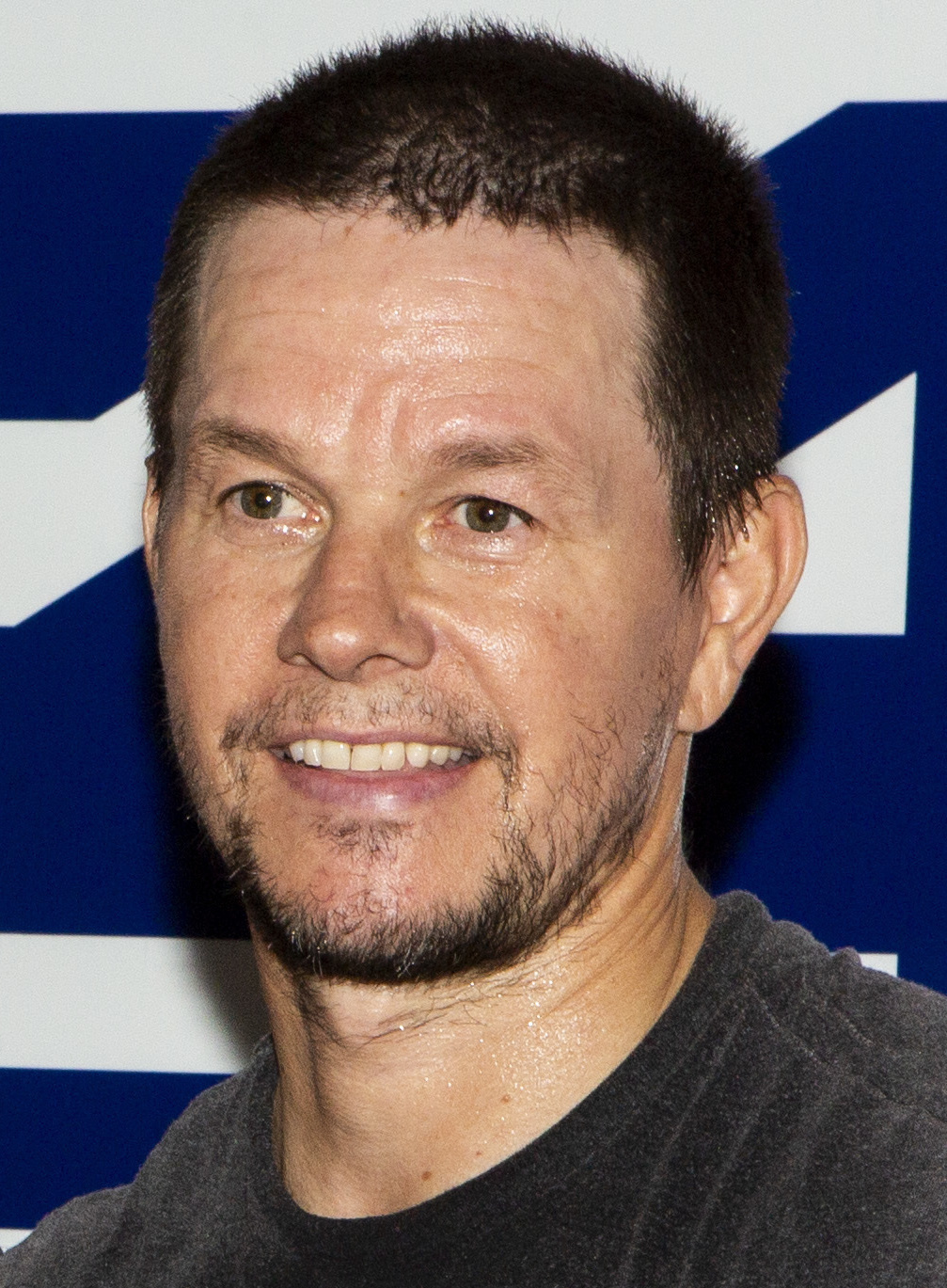
Mark WahlbergMark WahlbergMain
Open search
Mark Wahlberg
Community hub
Mark Wahlberg
logo
20 pages, 0 posts
0 subscribers
Be the first to start a discussion here.
Mark Wahlberg
Mark Wahlberg
from Wikipedia

Mark Robert Michael Wahlberg (born June 5, 1971),[1] formerly known by his stage name Marky Mark,[2] is an American actor, producer, and former rapper. His work as a leading man spans the comedy, drama, and action genres. He has received multiple accolades, including a BAFTA Award, and nominations for two Academy Awards, three Golden Globe Awards, and nine Primetime Emmy Awards.

Key Information

Wahlberg was born in Boston. As a youth, he took part in a number of violent and racially motivated attacks, resulting in a felony conviction. He gained fame as a member of the hip hop group Marky Mark and the Funky Bunch in the 1990s, with whom he released the albums Music for the People (1991) and You Gotta Believe (1992). Wahlberg made his screen debut in Renaissance Man (1994) and had his first starring role in Fear (1996). He received critical praise for his performance as porn actor Dirk Diggler in Boogie Nights (1997).

In the early 2000s, Wahlberg ventured into big-budget action movies, such as The Perfect Storm (2000), Planet of the Apes (2001), and The Italian Job (2003). He was nominated for the Academy Award for Best Supporting Actor for playing a police officer in the crime drama The Departed (2006). He was nominated for the Golden Globe Award for Best Actor for portraying Micky Ward in the sports drama biopic The Fighter (2010); as co-producer, he was nominated for the Academy Award for Best Picture. During the 2010s, Wahlberg landed successful comedy roles with The Other Guys (2010), Ted (2012), Ted 2 (2015), Daddy's Home (2015), and Daddy's Home 2 (2017). He also starred in the Transformers franchise films Transformers: Age of Extinction (2014) and Transformers: The Last Knight (2017). He was the world's highest-paid actor in 2017.

Wahlberg served as executive producer of five HBO series: the comedy-drama Entourage (2004–2011), the period crime drama Boardwalk Empire (2010–2014), the comedy-dramas How to Make It in America (2010–2011) and Ballers (2015–2019), and the documentary McMillions (2020). He is co-owner of the Wahlburgers chain and co-starred in the reality TV series about it. Wahlberg received a star on the Hollywood Walk of Fame in 2010.

Early life and family

[edit]

Mark Robert Michael Wahlberg was born on June 5, 1971, in the Dorchester neighborhood of Boston, Massachusetts. He is the youngest of nine children,[3] including actor Robert and singer/actor Donnie. His mother, Alma Elaine (née Donnelly; 1942–2021), was a bank clerk and a nurse's aide, and his father, Donald Edmond Wahlberg Sr. (1930–2008), was a U.S. Army veteran of the Korean War. After his parents divorced in 1982, he divided his time between them.[4]

Wahlberg's father was of Swedish and Irish descent. His mother was of Irish, English and French-Canadian ancestry.[5][6][7] On his mother's side of the family, he is distantly related to author Nathaniel Hawthorne.[8][9] Wahlberg was raised Catholic.[10][11]

Career

[edit]

Music career

[edit]

Wahlberg first came to fame as the younger brother of Donnie Wahlberg of the successful boy band New Kids on the Block. Mark, at age 13, was one of the group's original members, along with Donnie, but quit after a few months. Danny Wood, Jordan Knight, Jonathan Knight and Joey McIntyre all joined the group after Mark had left.[12]

In 1990, Wahlberg began recording with dancers/rappers Scott Ross (Scottie Gee), Hector Barros (Hector the Booty Inspector), Anthony Thomas (Ashley Ace), and Terry Yancey (DJ-T) as Marky Mark and the Funky Bunch, earning a hit with "Good Vibrations" from their debut album Music for the People. The record, produced by brother Donnie, hit number one on the Billboard Hot 100, later becoming certified as a platinum single. The second single, "Wildside", peaked at number five on Billboard's Hot Singles Sales chart and number 10 on the Billboard Hot 100.[13] It was certified as a gold single. Marky Mark opened for the New Kids on the Block during their last tour. Marky Mark and the Funky Bunch also had their own video game, titled Marky Mark and the Funky Bunch: Make My Video, which, despite the band's success, was a huge flop.[14][15] The second Marky Mark and the Funky Bunch LP, You Gotta Believe, was not as successful as the first, yielding only a minor hit single in the title track.[16]

In December 1992, while performing on the British TV show The Word, Wahlberg praised Shabba Ranks, who had stated gay people should be crucified. GLAAD condemned him and berated Calvin Klein for using him to promote their products.[17] A self-titled autobiographical picture book, Marky Mark, with images taken by Lynn Goldsmith and statements mostly by him, was also released.[18] Trying to resuscitate his music career, he had shifted to Hamburg, where he was produced under the label of East West Records by Frank Peterson and Alex Christensen.[19]

Wahlberg later collaborated with the late reggae/ragga singer Prince Ital Joe on the album Life in the Streets. The project combined rap vocals, electronic-infused ragga, and "European dancefloor" music, delivering the singles "Happy People", German number one hit "United", "Life in the Streets", and "Babylon", with Peterson and Christensen as producers.[20] Many of these tracks featured on the film Renaissance Man, starring Wahlberg and Danny Devito.

In 1995, he released a single titled "No Mercy", in support of his friend Dariusz Michalczewski, whom he had befriended earlier in the 1990s.[21] Michalczewski also appears in the music video of the song.[22] Wahlberg and Prince Ital Joe released another album in 1995 for Ultraphonic Records. Titled The Remix Album, it featured remixes from the duo's previous album, Life in the Streets, as well as Mark's solo track, "No Mercy".[23]

After his album with Ital Joe became a hit in Germany, he started putting together a musical act called One Love with him as its producer and also sometimes its lead singer. He also started production on a third studio album.[24] He featured in their song titled "That's the Way I Like It".[25] In 1996, Wahlberg returned to Hamburg to record a solo single titled "Hey DJ" with producer Toni Cottura.[26] Two more solo tracks titled "Feel the Vibe" and "Best of My Love" were released in 1997.[27][28]

In 2000, he was featured in the Black Label Society music video for "Counterfeit God", as a stand-in for the band's bassist.[29]

Film and TV career

[edit]
Wahlberg's Star at the Hollywood Walk of Fame

In 1993, Wahlberg made his acting debut in the television film The Substitute.[30] After this appearance, he dropped the "Marky Mark" name. His big screen debut came the next year, with the Danny DeVito feature Renaissance Man. A basketball fanatic, he caught the attention of critics after appearing alongside Leonardo DiCaprio in The Basketball Diaries (1995), a film adaptation of the Jim Carroll book of same name, playing the role of Mickey. He had his first starring role in James Foley's thriller film Fear (1996).

He earned positive reviews after films such as Boogie Nights (1997), The Big Hit (1998), Three Kings (1999), The Perfect Storm (2000), and Four Brothers (2005). During the early 2000s, Wahlberg appeared in remakes of 1960s films such as Planet of the Apes (2001), The Truth About Charlie (2002) (a remake of the 1963 film Charade), and The Italian Job (2003). His performance in I Heart Huckabees was voted the best supporting performance of the year in the 2004 The Village Voice Critics Poll. Wahlberg was originally cast as Linus Caldwell in Ocean's Eleven, but Matt Damon played the role instead. The two later worked together in The Departed.[31] Wahlberg was also considered for a role in the film Brokeback Mountain. It was originally intended to star Wahlberg and Joaquin Phoenix (with whom he appeared in the 2000 film The Yards) as Ennis Del Mar and Jack Twist, respectively, but both actors were uncomfortable with the film's sex scenes. The roles ultimately went to Heath Ledger and Jake Gyllenhaal, both of whom were nominated for Academy Awards for their performances.[32]

Wahlberg at the premiere of Max Payne in 2008

Wahlberg starred in the American football drama Invincible (2006), based on the true story of bartender Vince Papale. He was also executive producer and appeared in the HBO series Entourage (2004–2011) and its follow-up film (2015), which was loosely based on his experiences in Hollywood. In 2006, he appeared as Sean Dignam, an unpleasant, foul-mouthed Massachusetts State Police staff sergeant in Martin Scorsese's critically acclaimed thriller, The Departed, which netted him an Academy Award nomination for Best Supporting Actor, a Golden Globe nomination for Best Performance by an Actor in a Supporting Role in a Motion Picture, and a National Society of Film Critics Best Supporting Actor award.[33] Wahlberg was reunited with his The Basketball Diaries co-star Leonardo DiCaprio.[34]

Despite his felony conviction, which legally prohibits him from handling firearms, Wahlberg prepared for his role in Shooter (2007) by attending long-range shooting training at Front Sight Firearms Training Institute near Pahrump, Nevada. He was able to hit a target at 1,100 yards on his second day, a feat which usually takes weeks to achieve.[35] He had said in a number of interviews that he would retire at the age of 40 to concentrate on parenthood[36] and professional golf. However, in early 2007, he indicated that the latter was no longer the plan as "his golf game is horrible".[37] In 2007, he starred opposite Joaquin Phoenix in We Own the Night, a movie about a family of police officers in New York City.

He starred in M. Night Shyamalan's The Happening as Eliot Moore, which premiered in movie theaters on June 13, 2008. The same year, he played the title role in Max Payne, based on the video game of the same name. While promoting Max Payne, Wahlberg became involved in a playful feud with The Lonely Island's Andy Samberg. Samberg had done an impression of Wahlberg in a Saturday Night Live sketch titled "Mark Wahlberg Talks to Animals".[38][39] Wahlberg later appeared in a follow-up sketch parodying the original one, Samberg's impression of Wahlberg, and his own threats to Samberg.[40][41] He played Jack Salmon, the father of the protagonist, Susie, in Peter Jackson's The Lovely Bones (2009), a film adaptation of the Alice Sebold book of the same name.[42]

Wahlberg at the premiere of Transformers: Age of Extinction in 2014

In 2010, Wahlberg appeared with Steve Carell and Tina Fey in the romantic comedy Date Night, starred with Will Ferrell in the buddy cop film The Other Guys, and starred with Christian Bale in the boxing drama film The Fighter. In 2012, he starred as a former criminal in the action thriller Contraband, and also starred in Seth MacFarlane's hit comedy Ted, reprising his role in the 2015 sequel. Wahlberg later starred as Navy SEAL Marcus Luttrell in the war film Lone Survivor (2013), based on Luttrell's 2007 book of the same name. The film received commercial success and mostly positive reviews, and Wahlberg's performance was highly praised. Also in 2013, he starred in the true crime film Pain & Gain alongside Dwayne Johnson, and the action comedy film 2 Guns alongside Denzel Washington.

In 2014, Wahlberg starred in the remake of The Gambler, the 1974 James Caan film that was loosely inspired by the Dostoyevsky novella.[43][44] Also in 2014, Wahlberg was the producer of the reality show Breaking Boston, which was pulled off the air after its premiere had 311,000 viewers.[45] He executive-produced one episode of Wahlburgers, while co-starring in it.[46]

Walhlberg also starred in two films in the Transformers live-action film franchise: Transformers: Age of Extinction (2014) and Transformers: The Last Knight (2017). In 2015, he starred opposite Will Ferrell in the comedy Daddy's Home, reprising his role in the 2017 sequel.[47] In 2016, he starred in two Peter Berg films, Deepwater Horizon, a film about the 2010 Deepwater Horizon oil spill, and Patriots Day, a film about the 2013 Boston Marathon bombing.

Wahlberg topped the list of the world's highest-paid actors in 2017.[48] In 2018, his salary of $1.5 million for the reshoots for All the Money in the World stirred a gender pay gap controversy, as his co-star Michelle Williams had received less than $1,000 for the same reshoots. Wahlberg donated the money to the Time's Up initiative, a movement against sexual harassment co-founded by Williams.[49] In 2018, he starred in the family comedy-drama film Instant Family.

Wahlberg produced and starred in the espionage film Mile 22 (2018), and appeared in the Netflix film Spenser Confidential (2020), and the animated movie Scoob! (2020), which was his first voice acting role.[50] In 2022, Wahlberg starred in the Uncharted film, as Victor Sullivan, having originally been cast to play Nathan Drake years prior.[51] He then starred in the family movie Arthur the King (2024),[52] and the action films The Family Plan (2023, Apple TV+),[53] The Union (2024, Netflix),[54] and Flight Risk (2025).[55]

Besides Entourage, Wahlberg was also executive producer of the period crime drama Boardwalk Empire (2010–2014), the comedy-dramas How to Make It in America (2010–2011) and Ballers (2015–2019), and the documentary McMillions (2020).

Other ventures

[edit]

Advertising

[edit]

Wahlberg first displayed his physique in the "Good Vibrations" music video and most prominently in a series of underwear ads for Calvin Klein (1992)[56] shot by Herb Ritts, following it with Calvin Klein television advertisements.[57]

Magazine and television promotions sometimes featured Wahlberg exclusively or accompanied by model Kate Moss. Annie Leibovitz also shot a famous session of Wahlberg in underwear for Vanity Fair's annual Hall of Fame issue.[58] He also made a workout video titled The Marky Mark Workout: Form... Focus... Fitness (ISBN 1-55510-910-1).

In 2012, Wahlberg began serving as a brand ambassador for Marked, a line of sports nutrition supplements by GNC.[59]

In March 2017, AT&T announced that Wahlberg would become a spokesman and he would create original content for the mobile network division.[60]

Business interests

[edit]

Wahlberg is a co-owner of Wahlburgers, along with his brothers Donnie and Paul.[61] It was Mark's idea to expand Paul's restaurant in Hingham, Massachusetts into a full-fledged chain, with a reality show to promote it.[62]

In July 2013, Wahlberg bought an equity interest of the Barbados Tridents cricket team.[63] Wahlberg was introduced to the game by his friend Ajmal Khan, the club's chairman and Caribbean Premier League founder.[64][65] Following the announcement, Wahlberg stated, "I am a huge cricket fan now. I'm excited to be a part of the Limacol Caribbean Premier League because I know cricket is huge in the Caribbean and a rich part of the region's heritage. Sports and entertainment are a powerful combination, and the LCPL will appeal to a huge audience worldwide."[66]

In 2015, Wahlberg recruited rapper Sean Combs and billionaire Ronald Burkle to join him in investing in Aquahydrate, a bottled water brand Wahlberg discovered. Together, the three men own a majority stake in the company.[67] Wahlberg, together with former GNC executive Tom Dowd, co-founded Performance Inspired, a sports nutrition company launched in 2016.[68] In February 2017, Wahlberg was one of the investors who took part in a $6 million funding round for StockX, a sneaker resale marketplace.[69] In March 2019, Wahlberg bought a stake in the F45 fitness franchise.[70]

The original Mark Wahlberg Chevrolet on West Broad Steeet in Columbus, Ohio in 2021

On July 20, 2018, Wahlberg and his business partner, Jay Feldman, announced the purchase of Bobby Layman Chevrolet in Columbus, Ohio. The dealership was renamed Mark Wahlberg Chevrolet.[71] Due to the success of the dealership, local ABC affiliate WSYX reported in March 2020 that Haydocy Buick-GMC, right across the street from Mark Wahlberg Chevrolet, had filed paperwork with Ohio Secretary of State Frank LaRose to rename itself Mark Wahlberg Buick-GMC; Feldman later confirmed that he and Wahlberg were purchasing their second General Motors dealership in the city.[72] The deal became official on June 29, 2020, and also included Haydocy's Airstream and RV dealership, located next door at the car dealership's former Oldsmobile showroom. Shortly afterward, Wahlberg and Feldman announced they were purchasing Jack Maxton Chevrolet in nearby Worthington, Ohio, their fourth Columbus-area dealership, with plans to rename it Mark Wahlberg Chevrolet of Worthington.[73] A fifth dealership, Mark Wahlberg Chevrolet of Avon, was added in Avon, Ohio in July 2021; unlike the other dealerships, the Avon location is in Greater Cleveland, marking Wahlberg and Feldman's entry into Northeast Ohio.[74]

In 2021, Wahlberg, along with his producing partner/manager Stephen Levinson, launched Ballers Report, an online platform (and spin-off of their HBO series Ballers) that features inspiring business, entertainment and sports articles, videos and podcasts.[75]

In 2021, he invested in the Tequila brand Flecha Azul.[76]

In 2023, Wahlberg became Chief Brand Officer for F45 Training.[77]

[edit]

Wahlberg took part in racially motivated attacks as a teenager, in 1986 and 1988.[78] In June 1986, 15-year-old Wahlberg and three friends chased three black children while yelling "Kill the nigger, kill the nigger" and throwing rocks at them.[79] The next day, Wahlberg and the others followed a group of mostly black fourth-graders (including a victim from the previous day) taking a field trip on a beach, yelled racial epithets, threw rocks at them, and "summoned other white males who joined" in the harassment.[79][80] In August 1986, civil action was filed against Wahlberg for violating the civil rights of his victims, and Wahlberg and his friends were issued a civil rights injunction which served as a warning that they would be jailed if they committed another hate crime.[81][82][83][84]

In April 1988, Wahlberg, then 16, assaulted a middle-aged Vietnamese-American man on the street, calling him a "Vietnam fucking shit" and knocking him unconscious with a large wooden stick. Later the same day, he attacked Johnny Trinh, another Vietnamese-American, punching him in the eye. When Wahlberg was arrested and returned to the scene of the first assault, he told police officers: "I'll tell you now that's the mother-fucker whose head I split open."[85] Wahlberg later said he was on PCP at the time.[86] Investigators noted that Wahlberg "made numerous unsolicited racial statements about 'gooks' and 'slant-eyed gooks'".[87][88] He was arrested for attempted murder.[89] He was charged with two counts of assault and battery with a dangerous weapon, one count of marijuana possession, and criminal contempt for violating the prior civil rights injunction he received in 1986.[81] He pleaded guilty to felony assault and was sentenced to three months in jail, but served only 45 days of his sentence.[81][87][89] Wahlberg believed he had left the second victim permanently blind in one eye, though Trinh later said that he had actually lost his eye during the Vietnam War while serving in the Army of the Republic of Vietnam.[90][84][87][88]

In August 1992, Wahlberg fractured the jaw of his neighbor Robert Crehan.[91] Court documents state that Wahlberg, "without provocation or cause, viciously and repeatedly kicked" Crehan in the face, while another man, Derek McCall, held the victim on the ground. Wahlberg's attorney claimed that Wahlberg and McCall, who is black, were provoked after McCall was called a racial slur by Crehan.[92] The lawsuit was settled between the two parties, avoiding a criminal trial.[93]

In 2006, Wahlberg said the right thing for him to do would be to meet with Trinh and make amends.[89] Wahlberg engendered controversy in 2014 by applying for a pardon for his convictions from the State of Massachusetts.[94][95][87] According to the BBC, the debate about his suitability for a pardon raised "difficult issues, with the arguments on both sides being far-reaching and complex".[96] Wahlberg later said he regretted the attempt to obtain a pardon, and his petition was closed after he failed to answer a request from the pardon board as to whether he wanted it to remain open.[97][98] In 2016, Wahlberg said he had met with Trinh and apologized "for those horrific acts". Trinh released a public statement forgiving Wahlberg.[90][97]

Personal life

[edit]

Wahlberg started dating Rhea Durham in 2001. They had three children during the first seven years of their relationship, and married on August 1, 2009, at the Good Shepherd Catholic Church in Beverly Hills, near where they lived. They had another child five months after their wedding in January 2010.[99][100][101][102]

Wahlberg was booked to fly on American Airlines Flight 11 on September 11, 2001, but changed his plans the day before and travelled instead to Toronto to attend the Toronto International Film Festival.[103] He received backlash for stating in a 2012 interview, "If I was on that plane with my kids, it wouldn't have went down like it did". He added that "there would have been a lot of blood in that first-class cabin and then me saying, 'OK, we're going to land somewhere safely, don't worry.'" He issued an apology after family members of those killed on the flight expressed outrage.[104]

Wahlberg is Catholic,[105] and has described his religion as "the most important part" of his life; he goes to Mass twice on Sundays.[106] He fervently supports same-sex marriage despite the Church's opposition.[107] In September 2015, he apologized to Pope Francis over the crude jokes he made in the film Ted,[108] and he stated in an interview with Cardinal Blase Cupich of Chicago in 2017 that he sought forgiveness from God for playing a porn star in Boogie Nights.[109][110] He later stated on Andy Cohen's radio show that the interview "was a joke taken too seriously".[111] In 2023, Wahlberg stated that the Christian practices of fasting and prayer during Lent were meaningful to him, as he discussed using the Hallow Christian prayer app.[112]

Wahlberg established the Mark Wahlberg Youth Foundation in May 2001 for the purpose of raising and distributing funds to youth service and enrichment programs.[113] Wahlberg is active with The Good Shepherd Center for Homeless Women and Children.[114]

In 2022, Wahlberg and his family moved from Hollywood to Las Vegas.[115]

Filmography

[edit]

Discography

[edit]

Solo singles

[edit]
Year Title Peak chart positions Album
FIN
[116]
GER
[117]
SWI
[118]
1995 "No Mercy" 44 37 Non-album singles
1996 "Hey DJ" 17 58
1997 "Feel the Vibe"
"Best of My Love"
"—" denotes releases that did not chart or were not released

References

[edit]

Further reading

[edit]
[edit]
Revisions and contributorsEdit on WikipediaRead on Wikipedia
from Grokipedia
Mark Robert Michael Wahlberg (born June 5, 1971) is an American actor, producer, rapper-turned-businessman known for his transition from a troubled adolescence involving criminal convictions to a prominent career in entertainment and entrepreneurship. Raised in the working-class Dorchester neighborhood of Boston as the youngest of nine children in a family strained by his father's alcoholism and his mother's multiple jobs, Wahlberg dropped out of high school and engaged in street crime, drug use, and assaults, including two racially charged attacks on Vietnamese men in 1988 for which he served 45 days in jail after pleading guilty to felony assault. He rose to fame in the early 1990s as rapper Marky Mark with the Funky Bunch, scoring hits like "Good Vibrations" that topped the Billboard Hot 100, while modeling for Calvin Klein, before pivoting to acting with a breakout role as porn star Dirk Diggler in Boogie Nights (1997). Wahlberg's film career includes commercially successful action franchises like Transformers and comedies such as Ted, alongside dramatic turns in The Departed (2006) and The Fighter (2010), earning an Academy Award nomination for Best Supporting Actor in the latter for portraying Micky Ward's brother and trainer. As a producer, he has backed projects like the HBO series Entourage and developed his own production company, while venturing into business with the family-owned Wahlburgers burger chain, which expanded internationally from its 2011 Boston origins, and investments in fitness brands like F45 Training. Despite his professional achievements, Wahlberg's juvenile convictions have drawn scrutiny, including a failed 2014 bid for a Massachusetts pardon to mitigate ongoing professional barriers, underscoring debates over redemption and the lasting impact of early criminality.

Early Life

Family Background and Upbringing in Dorchester

Mark Robert Michael Wahlberg was born on June 5, 1971, in the Dorchester neighborhood of Boston, Massachusetts, the youngest of nine children to parents Donald Edmond Wahlberg Sr. and Alma Elaine Donnelly. Donald, a U.S. Army veteran of the Korean War, worked as a delivery driver and teamster, while Alma held jobs as a bank clerk and nurse's aide to support the family. The couple's children included daughters Debbie, Michelle, and Tracey, and sons Arthur, Paul, Jim, Robert, Donnie, and Mark; the family was of Irish Catholic descent with strong extended kin ties typical of Boston's working-class communities. Wahlberg's parents divorced in 1982, when he was 11 years old, leaving Alma to raise the children amid financial strain in their Dorchester home. Dorchester, a densely populated, blue-collar enclave with roots in Irish immigration, featured modest triple-decker housing and economic pressures from deindustrialization, fostering a environment of resilience amid limited resources. Alma supplemented her earnings with welfare assistance to provide for the large household, emphasizing family unity and Catholic values despite the hardships. The Wahlberg siblings' close bonds, forged in this setting, later influenced Mark's career choices, including collaborations with brothers like Donnie (born 1969) in music and Robert in acting. Upbringing in Dorchester instilled a streetwise pragmatism, shaped by the neighborhood's mix of community solidarity and urban grit, though the family's internal dynamics provided a counterbalance through shared responsibilities and parental guidance.

Adolescent Delinquency and Criminal Incidents

Wahlberg grew up in the working-class Dorchester neighborhood of Boston, where he became involved in street gangs and petty criminal activity during his early teenage years, including drug use and distribution. By age 13, he had begun experimenting with cocaine and marijuana, escalating to harder substances like PCP by his mid-teens, which contributed to erratic and violent behavior amid the area's socioeconomic challenges and ethnic tensions. These factors, combined with peer influences in a high-crime environment, led to multiple juvenile encounters with law enforcement, though specific details of pre-1986 arrests remain limited in public records. In 1986, at age 15, Wahlberg harassed a group of African American and Asian American teenagers, hurling rocks and racial slurs, which prompted a civil rights injunction from authorities to curb his pattern of racially motivated disturbances. This incident reflected broader animosities in Dorchester, where resentment toward Vietnamese immigrants—often linked to the Vietnam War—fueled sporadic youth violence, though Wahlberg later cited personal substance abuse as a primary driver rather than ideological prejudice. The most serious episode occurred on April 8, 1988, when 16-year-old Wahlberg, intoxicated on alcohol and under the influence of PCP, attempted to rob a convenience store in Dorchester. During the incident, he assaulted two Vietnamese men: he struck one in the face, rendering him unconscious, and beat the other over the head with a wooden stick while uttering racial epithets such as "Vietnam fucking gook." Initially charged with multiple felonies including attempted murder, he pleaded guilty to felony assault and battery in Dorchester District Court, receiving a two-year sentence at Deer Island House of Correction but serving only 45 days before parole, followed by probation and community service. These events, substantiated by court records and Wahlberg's own pardon application, underscore a phase of impulsive aggression tied to substance dependency and environmental pressures, rather than premeditated hate crimes, as evidenced by the lack of prior organized racist affiliations in documented accounts. The 1988 conviction carried lasting collateral effects, such as barriers to certain licenses, prompting Wahlberg's unsuccessful 2014-2016 bid for a gubernatorial pardon, which one victim opposed citing unacknowledged racial elements. No further adolescent convictions are recorded after 1988, marking a pivot influenced by family intervention and early music opportunities.

Music Career

Emergence as Marky Mark with the Funky Bunch

Mark Wahlberg, leveraging his familial ties to the New Kids on the Block through brother Donnie, pursued a distinct hip-hop path by adopting the stage name Marky Mark and forming the group Marky Mark and the Funky Bunch around 1990, recruiting dancers and rappers such as Scott Ross (Scottie Gee) and Hector Barros (Hector the Booty Inspector). This shift marked a departure from boy-band pop toward a new jack swing-influenced sound, emphasizing upbeat rhythms and Mark's charismatic frontman presence amid his prior legal troubles. The group's debut single, "Good Vibrations" featuring a sample from Loleatta Holloway's 1980 disco track, propelled their breakthrough when released in mid-1991, climbing to #1 on the Billboard Hot 100 for three weeks starting September 21 and earning platinum certification for over 1 million units sold. Their self-titled debut album, Music for the People, followed on July 23, 1991, via Interscope Records, peaking at #21 on the Billboard 200 and achieving RIAA platinum status by January 1992 with sales exceeding 1.1 million copies, driven by the single's momentum and follow-ups like "Wildside." This commercial ascent established Marky Mark as a viable white rapper in a genre dominated by Black artists, blending street credibility claims with mainstream appeal through music videos heavy on choreography and urban fashion.

Hit Albums, Singles, and Cultural Impact

Marky Mark and the Funky Bunch's debut album, Music for the People, released on July 23, 1991, achieved significant commercial success, reaching number 21 on the Billboard 200 and number 1 on the Top Heatseekers chart. The album was certified platinum by the RIAA on January 14, 1992, for sales exceeding 1 million copies in the United States, with additional platinum certification in Canada for 100,000 units. Its lead single, "Good Vibrations" featuring Loleatta Holloway, topped the Billboard Hot 100 on July 13, 1991, and was certified gold by the RIAA for 500,000 units shipped. Follow-up singles from the album, such as "Make My Funk the P-Funk," contributed to its momentum but did not replicate the chart dominance of the debut single. The group's follow-up album, You Gotta Believe, released in 1993, underperformed commercially compared to its predecessor, peaking outside the top 50 on the Billboard 200 and yielding modest single success, including the title track which reached number 51 on the Hot 100. This release marked the beginning of the act's decline in popularity, with no further RIAA certifications or major chart hits. Culturally, Marky Mark and the Funky Bunch's music bridged hip-hop beats with pop accessibility, propelling Wahlberg from a New Kids on the Block affiliate to a solo rap figurehead in the early 1990s mainstream. The "Good Vibrations" success, built on a sample of the Beach Boys' track overlaid with Holloway's disco vocals, exemplified commercial rap's formula for crossover appeal, influencing subsequent white-led hip-hop acts by demonstrating viability beyond urban audiences. Wahlberg's shirtless, baggy-pants stage persona extended to advertising, notably Calvin Klein campaigns that amplified his sex-symbol status and reinforced 1990s streetwear trends, though the music's impact waned as hip-hop evolved toward gangsta rap dominance. The era's output laid groundwork for Wahlberg's pivot to acting, with music revenues and visibility funding early film roles.

Decline and Shift from Rap to Acting

The second studio album by Marky Mark and the Funky Bunch, You Gotta Believe, released on September 15, 1992, marked a significant downturn in the group's commercial momentum. Unlike their debut Music for the People (1991), which had sold 1.5 million copies by March 1992 driven by the #1 hit "Good Vibrations," the follow-up failed to produce any top 40 singles on the Billboard Hot 100 and achieved only modest sales of approximately 220,000 units as of 2019. This underperformance reflected broader challenges in sustaining the white rap novelty act amid shifting hip-hop trends toward gangsta rap in the early 1990s, contributing to the group's effective disbandment by 1993. Wahlberg, seeking to escape the "Marky Mark" persona associated with teen-oriented pop-rap, began pivoting toward acting opportunities, including small roles and modeling gigs such as Calvin Klein underwear campaigns starting in 1992, which showcased his physicality and appealed to a different audience. By 1994, Wahlberg had secured his first substantial film role in Renaissance Man alongside Danny DeVito, signaling a deliberate career transition away from music amid the rap phase's waning viability. He later expressed a desire to distance himself from rap's influences to align with personal growth, avoiding the genre's associations with his turbulent youth, though he has not detailed specific causal factors beyond the evident commercial stall.

Acting and Entertainment Career

Initial Film Roles and Breakthrough Performances

Wahlberg transitioned from his music career to acting in the mid-1990s, following the decline of his rap persona Marky Mark. His film debut came in the 1994 comedy Renaissance Man, directed by Penny Marshall, where he portrayed Private Tommy Lee Haywood, an underachieving Army recruit taught by a civilian contractor played by Danny DeVito. The role required Wahlberg to undergo boot camp training, marking his initial effort to shed his rapper image through military discipline on screen. In 1995, Wahlberg appeared in The Basketball Diaries, an adaptation of Jim Carroll's memoir, playing the street-tough friend Mickey to Leonardo DiCaprio's protagonist. The film depicted adolescent drug addiction and featured intense dramatic scenes, providing Wahlberg with exposure in a supporting capacity amid a cast including DiCaprio, who was then rising to prominence. Critics noted Wahlberg's raw energy suited the gritty narrative, though the movie received mixed reviews overall. Wahlberg's first leading role arrived in the 1996 thriller Fear, where he starred as David McCall, a possessive boyfriend escalating to violence against his girlfriend's family, opposite Reese Witherspoon. The film, produced by Brian Grazer, grossed over $20 million domestically on a modest budget and highlighted Wahlberg's ability to portray obsessive intensity, though it drew comparisons to slasher tropes and faced criticism for sensationalism. The pivotal breakthrough occurred with Boogie Nights (1997), directed by Paul Thomas Anderson, in which Wahlberg played Eddie Adams/Dirk Diggler, a young adult film star navigating the 1970s porn industry's rise and fall. The performance, drawing on Wahlberg's own experiences with fame's underbelly, earned widespread critical acclaim for its vulnerability and physicality, with reviewers praising his transformation into a complex character amid ensemble stars like Burt Reynolds and Julianne Moore. The film achieved 91% approval on Rotten Tomatoes and a box office of $43 million worldwide, solidifying Wahlberg's shift to serious dramatic roles.

Establishment as Leading Man in Action and Drama

Following his breakthrough in independent dramas, Wahlberg transitioned to leading roles in major studio productions, blending action and dramatic elements to solidify his versatility. In 2000, he portrayed deckhand Bobby Shaftoe in The Perfect Storm, a survival drama directed by Wolfgang Petersen that depicted the real-life ordeal of a swordfishing boat crew, grossing $328.7 million worldwide against a $140 million budget and earning praise for Wahlberg's portrayal of a resilient everyman amid catastrophe. This role marked his entry into high-stakes ensemble action-dramas, leveraging his physical presence and Boston accent for authenticity. Wahlberg further established his action credentials with the 2001 remake Planet of the Apes, directed by Tim Burton, where he played astronaut Leo Davidson, crash-landing on a planet ruled by intelligent apes. The film, with a $140 million budget, generated $362.2 million globally, capitalizing on visual effects and Wahlberg's heroic lead to draw audiences despite mixed reviews critiquing the script over his performance. By 2003, The Italian Job, a heist thriller remake, featured Wahlberg as Charlie Croker leading a team of thieves in a gold robbery scheme using Mini Coopers; it earned $176.3 million worldwide on a $60 million budget, highlighting his charisma in fast-paced ensemble action and boosting his bankability as a lead. In dramatic territory, Wahlberg's turn as Staff Sgt. Sean Dignam, the tough-talking police sergeant, in Martin Scorsese's 2006 crime thriller The Departed showcased his intensity in a role requiring moral ambiguity and physical confrontations, contributing to the film's $291.5 million worldwide gross and four Academy Awards, including Best Picture. Critics noted his grounded performance amid stars like Leonardo DiCaprio and Jack Nicholson, affirming his dramatic range. Transitioning back to action, Shooter (2007) cast him as sniper Bob Lee Swagger in a conspiracy-driven tale of framed innocence, which, despite underperforming at $95 million against a $61 million budget, resonated with audiences for its tactical realism and Wahlberg's stoic heroism. These films collectively positioned Wahlberg as a reliable leading man capable of anchoring both explosive action sequences and character-driven drama, evidenced by his consistent mid-2000s output averaging over $150 million per major release. Later entries like Four Brothers (2005), where he led as adoptive brother Bobby Mercer in a vigilante revenge story blending family drama and street-level action, grossed $92.3 million worldwide and underscored his appeal in gritty, blue-collar narratives. By the late 2000s, roles in Max Payne (2008), adapting the video game with Wahlberg as a tormented detective in a noir action framework, further entrenched his action-hero archetype, even as critical reception varied, with the film's $85.4 million global take reflecting fan-driven interest over universal acclaim. This phase demonstrated Wahlberg's commercial viability, with his projects frequently recouping investments through his everyman toughness and commitment to physically demanding roles, distinguishing him from more stylized contemporaries.

Producing, Directing, and Recent Projects (2010s–2025)

Mark Wahlberg expanded his role in the entertainment industry during the 2010s by taking on producing responsibilities for numerous projects, often in collaboration with longtime partner Stephen Levinson. He served as executive producer for the HBO series Boardwalk Empire, which aired from 2010 to 2014 across five seasons, depicting the Prohibition-era criminal underworld in Atlantic City. Wahlberg also executive produced the comedy series Entourage, which concluded its run in 2011 after leveraging his early connections from the show's inception in 2004. In film, Wahlberg produced The Fighter (2010), a biographical sports drama in which he starred as boxer Micky Ward, earning the project multiple Academy Award nominations including Best Picture and Best Director for David O. Russell. He followed with producing credits on Ted (2012), a comedy directed by Seth MacFarlane that grossed over $549 million worldwide, and its 2015 sequel Ted 2. Other notable 2010s productions include Lone Survivor (2013), a war film based on the Afghanistan conflict that he starred in and produced, earning $154 million at the box office; Deepwater Horizon (2016), depicting the 2010 oil spill disaster; and Patriots Day (2016), chronicling the Boston Marathon bombing investigation. Wahlberg cited producing as a means to "create my own destiny" after growing frustrated with waiting for suitable acting roles. Wahlberg has no feature film directing credits as of October 2025, though he expressed interest in directing during a 2023 interview, stating intentions to explore it after accumulating producing and acting experience. In 2018, he co-founded Unrealistic Ideas, a production company focused on unscripted content including documentaries and podcasts, partnering with Archie Gips and Levinson. Into the 2020s, Wahlberg continued blending acting and producing in projects like Spenser Confidential (2020), a Netflix action film he starred in and produced; Father Stu (2022), a biographical drama about boxer-turned-priest Stuart Long that he produced and led; and the documentary MoviePass, MovieCrash (2024), examining the subscription service's rise and fall. Recent starring roles include The Union (2024), a Netflix spy thriller with Halle Berry, and Arthur the King (2024), an adventure film based on a true story of a stray dog joining a race team. Upcoming releases feature Wahlberg in Flight Risk (January 24, 2025), a thriller directed by Mel Gibson, Play Dirty (2025), an action heist film for Prime Video directed by Shane Black, and The Operator, a Netflix action thriller in which he stars as an ex-Tier One Operator working as a CIA clean-up man, based on a spec script by Harrison Query. He was filming Weekend Warriors in Massachusetts as of September 2025, a comedy produced by LeBron James.

Business Ventures

Restaurant Chain and Food Industry Investments

Wahlberg co-founded the casual dining burger restaurant chain Wahlburgers in 2011 alongside his brothers, chef Paul Wahlberg and actor Donnie Wahlberg, with the initial location opening in Hingham, Massachusetts. The venture originated from Paul Wahlberg's culinary expertise and family recipes, emphasizing fresh ingredients and signature items like the "Our Burger," which features government-inspected beef blended from chuck, brisket, and short rib. Wahlberg serves as a co-owner and brand ambassador, contributing to marketing efforts that leveraged his celebrity status, including a 2014 A&E reality series Wahlburgers documenting the family's operations and expansion. The chain pursued aggressive growth through company-owned outlets and franchising, beginning formal franchising discussions around 2015 and securing area development deals for locations including airports and international markets. By mid-2025, Wahlburgers operated approximately 55 to 60 locations across the United States and Canada, with plans for further international expansion into Asia announced in prior years. However, the brand faced operational challenges, closing several locations nationwide in 2025 amid broader industry pressures, reducing its footprint to around 50 while retaining core markets. Wahlberg reportedly earns a $40,000 franchise fee plus 5% royalty on gross sales per new franchised location, underscoring his ongoing financial stake in the enterprise. Beyond restaurants, Wahlberg has invested in food-adjacent products, including a 2012 stake in Aquahydrate, an electrolyte-enhanced alkaline water brand positioned for athletic hydration. He also backed SkinnyDipped, a company producing chocolate-dipped fruit snacks marketed as lower-calorie alternatives to traditional candy. These investments align with Wahlberg's interest in health-oriented consumer goods, though they represent smaller-scale commitments compared to the Wahlburgers chain. The chain has extended into retail via partnerships for pre-packaged burger patties and related products sold in grocery stores, further diversifying its food industry presence.

Fitness, Health, and Other Commercial Enterprises

Mark Wahlberg has pursued several commercial ventures in the fitness and health sectors, leveraging his personal commitment to rigorous daily workouts, which he has publicly documented as starting at 2:30 a.m. and incorporating strength training, cardio, and recovery protocols. In 2020, he invested in F45 Training, an Australian-origin high-intensity interval training franchise, becoming its chief brand officer and promoting its 45-minute functional workouts across over 1,700 global studios at the time. The company went public in July 2021 with an initial valuation exceeding $1.4 billion, yielding Wahlberg significant returns, though its stock price subsequently plummeted over 90% by mid-2022 amid operational challenges and market skepticism toward boutique fitness models. In 2019, Wahlberg co-founded MUNICIPAL, a performance apparel and footwear brand emphasizing durable "sport utility gear" for training and everyday use, incorporating technologies like M.Float cushioning in its shoes for activities including weightlifting and running. The line, which includes hoodies, joggers, underwear, and sneakers, generated approximately $5 million in annual revenue by 2025 and expanded into performance footwear for court sports and trail running. In November 2024, he announced Municipal Gym, a premium fitness center in Las Vegas partnering with EoS Fitness, featuring high-end equipment and his branded apparel integration to cater to serious trainees. Wahlberg has also invested in nutrition and recovery products aligned with his emphasis on clean fueling and muscle recovery. He holds an ownership stake in Performance Inspired Nutrition (PI Nutrition), a line of natural supplements including whey protein, creatine, and multivitamins marketed as alternatives to synthetic options, which he endorses for supporting intense training regimens. In 2012, he backed Aquahydrate, an electrolyte-enhanced alkaline water brand positioned for hydration during workouts. Additionally, in April 2021, he became a key stakeholder and brand ambassador for Power Plate, a vibration platform technology from Performance Health Systems, which he has used personally for 15 years to enhance circulation, flexibility, and post-workout recovery through whole-body vibration exercises. These investments reflect Wahlberg's focus on scalable health tools, though outcomes vary, with F45's downturn highlighting risks in franchise-dependent fitness models.

Production and Media Company Expansions

In 2004, Mark Wahlberg established Closest to the Hole Productions, his primary vehicle for executive producing scripted films and television series, including the HBO comedy Entourage (2004–2011), the drama Boardwalk Empire (2010–2014), and the sports series Ballers (2015–2019). The company has backed over a dozen feature films, such as The Fighter (2010), Lone Survivor (2013), and Ted (2012), generating combined worldwide box office earnings exceeding $2 billion by 2020. Seeking to diversify beyond narrative content, Wahlberg co-founded Unrealistic Ideas in February 2018 with producer Stephen Levinson and Archie Gips, focusing on non-fiction television formats like docuseries and documentaries. This venture produced the HBO Max series Wahl Street (2021), a six-episode examination of Wahlberg's personal investments and daily routines, which debuted on April 15, 2021, and attracted 1.2 million viewers in its first week. Unrealistic Ideas has since expanded its slate to include Hoodwinked: The James Hart Stern Story (announced 2019), a docuseries on redemption narratives, and a feature-length documentary on the rise and fall of BlackBerry smartphones, greenlit in August 2024 under director Eddie Schmidt. These projects mark a strategic shift toward unscripted media, leveraging Wahlberg's public persona to access entrepreneurial and biographical subjects while reducing reliance on high-budget fiction. By 2021, Wahlberg extended media operations through partnerships, including the formation of CrossCheck Media with TikTok influencer Josh Richards, aimed at digital-first content production in collaboration with Unrealistic Ideas. This initiative reflects broader adaptations to streaming and social platforms, though specific outputs remain limited as of 2025.

Youthful Assaults, Racial Elements, and Felony Conviction

In the mid-1980s, as a teenager in Boston's Dorchester neighborhood amid heightened racial tensions between Irish Catholic youth and minority groups, Mark Wahlberg participated in multiple assaults laced with racial epithets. One incident involved Wahlberg and associates hurling rocks at a group of African American schoolchildren during a field trip, while shouting slurs such as the N-word; this led to a civil rights injunction against him issued by a court. Another early altercation at age 13 saw Wahlberg attack a peer with a chain, contributing to his pattern of juvenile delinquency that also included drug dealing. The most serious offenses occurred on April 10, 1988, when 16-year-old Wahlberg targeted two Vietnamese immigrants in separate attacks that evening. Around 8:00 p.m., he confronted Ho Lam on Dorchester Street, yelling racial slurs including "Vietnam fucking shit," punching him in the head, and then striking him over the head with a large wooden stick (described in police reports as a club), causing Lam to require stitches for a head wound. Approximately four hours later, near midnight, Wahlberg assaulted Johnny Trinh, another Vietnamese man, by punching him repeatedly in the face and eye, resulting in severe bruising, a bloody eye, and Trinh's need for stitches; Trinh had already lost vision in that eye from a prior injury, though the assault exacerbated his condition. Wahlberg, tried as an adult despite his juvenile status, pleaded guilty to felony assault and battery with intent to maim or disfigure (for the stick attack on Lam) and misdemeanor assault and battery (for the punches to Trinh). The Suffolk County Superior Court sentenced him to two years in state prison for the felony, with a suspended sentence for the misdemeanor, but he served only 45 days at Deer Island House of Correction after time served and good behavior credits. These events reflected broader post-Vietnam War animosities in working-class Boston enclaves, where slurs against Vietnamese residents were common among some white youth, though Wahlberg later maintained the 1988 assaults were not initially racially motivated—a claim contested by victims and prosecutors citing the documented epithets.

Path to Rehabilitation Through Incarceration and Faith

Following his guilty plea to felony assault charges stemming from the April 10, 1988, attacks on two Vietnamese men in Boston, Wahlberg, then 16 years old and tried as an adult, was sentenced on March 6, 1989, to two years at the Deer Island House of Correction, with the remainder suspended on probation. He ultimately served 45 days of the sentence, a period he later described as a pivotal "wake-up call" that forced introspection amid isolation from his prior environment of drugs, alcohol, and street violence. During incarceration, Wahlberg spent much of his time in solitary reflection, reading the Bible and praying, which marked the onset of his spiritual recommitment after years of nominal Catholicism overshadowed by rebellion. This experience catalyzed a deliberate pivot away from self-destructive patterns; upon release, he abstained from substance abuse and criminal activity, crediting divine intervention for providing the discipline to redirect his energies toward music and eventually acting as constructive outlets. Wahlberg's faith deepened post-incarceration, evolving into a daily practice that he maintains sustained his long-term rehabilitation, including early-morning prayer routines and public affirmations of Catholicism as the foundation for personal accountability and family stability. He has emphasized that while many encounter faith in crisis only to abandon it later, his commitment endured, informing choices like rejecting roles conflicting with moral convictions and prioritizing sobriety over fame's temptations. This trajectory, from 45 days of confinement to decades of professional success without relapse, underscores incarceration's role in enforcing pause for causal self-examination, amplified by faith's framework for sustained behavioral reform.

Later Professional Disputes and Public Backlash

In late 2017, during reshoots for All the Money in the World following Kevin Spacey's removal amid sexual misconduct allegations, Mark Wahlberg received $1.5 million for his participation, while co-star Michelle Williams was compensated with less than $1,000 in per diem pay for equivalent work. The disparity, reported in January 2018, ignited widespread criticism amid the #MeToo movement, highlighting gender pay inequities in Hollywood; Williams herself acknowledged the gap publicly but expressed no resentment toward Wahlberg, attributing it to systemic industry norms rather than individual malice. Wahlberg subsequently donated his entire reshoot fee to the Time's Up Legal Defense Fund, though the incident damaged his public image temporarily by fueling narratives of entrenched male privilege in negotiations. In November 2014, Wahlberg petitioned the Massachusetts Parole Board for a pardon of his 1988 felony assault conviction, arguing his subsequent career success, family life, and charitable work demonstrated rehabilitation; the request explicitly avoided revisiting the racial slurs used against his Vietnamese victims during the attack. Opposition mounted from victims' advocates and one of the assaulted individuals, who emphasized the unacknowledged racial motivation, leading to public outrage and media scrutiny over perceived lack of remorse for hate-motivated violence. Wahlberg withdrew the application in 2016 amid the backlash, stating he did not wish to relive the past, a decision that preserved his professional standing but underscored ongoing sensitivity to his juvenile record in an era of heightened racial accountability. Wahlberg's history resurfaced prominently in June 2020 during Black Lives Matter protests following George Floyd's death, with social media and outlets cataloging his teenage incidents—including hurling rocks at Black children while using the N-word in 1986—as evidence of unresolved racism, prompting calls for boycotts of his projects despite his prior incarceration and professed personal transformation. Critics, including activists, highlighted perceived hypocrisy in his advocacy for faith-based redemption without explicit apologies for racial elements, though supporters noted the events occurred over 30 years prior under the influence of drugs and a troubled environment, with no similar adult offenses. At the 29th Screen Actors Guild Awards on February 26, 2023, Wahlberg faced online backlash for presenting the Outstanding Performance by a Cast award to the predominantly Asian ensemble of Everything Everywhere All at Once, given his 1988 conviction for assaulting Vietnamese men while uttering slurs like "Vietnam fucking shit." Detractors argued the selection overlooked more fitting presenters amid ongoing discussions of hate crimes, yet the event proceeded without formal disruption, reflecting selective public outrage tied to cultural timing rather than consistent professional repercussions.

Personal Life and Values

Marriage, Children, and Family Priorities

Mark Wahlberg began dating model Rhea Durham in 2001, and the couple married on August 1, 2009, in a private ceremony in Beverly Hills, California, attended by a small group including their three children at the time. The marriage followed eight years of dating, during which they welcomed their first child in 2003. As of August 2025, Wahlberg and Durham marked their 16th wedding anniversary with public tributes emphasizing enduring partnership and shared values. Wahlberg and Durham have four children: daughter Ella Rae (born September 2003, age 22 as of 2025), son Michael (born 2006, age 19), son Brendan (born 2008, age 17), and daughter Grace (born 2010, age 15). The family maintains a low public profile for the children, with rare red carpet appearances, such as the 2024 premiere of Flight Risk, where three of the children joined their parents. Wahlberg has described fatherhood as central to his life, often prioritizing their upbringing over professional commitments. Wahlberg structures his daily routine around family integration, waking at approximately 3:30 a.m. for prayer, exercise, and work but adhering to an early bedtime around 7:30 p.m. to align with family dinners and evenings. He relocated the family to Las Vegas in 2022 to provide a healthier environment away from Los Angeles' influences, citing benefits for his children's development and the family's overall well-being. Wahlberg actively coaches his children in fitness and imparts lessons on discipline and delayed gratification, viewing these as essential for their success amid his demanding career. This emphasis on family has influenced project selections, with Wahlberg declining roles that conflict with home life.

Catholic Conversion and Spiritual Practices

Mark Wahlberg was raised in a Catholic family in Dorchester, Massachusetts, attending parochial school and receiving sacraments including baptism and first communion, though he later drifted from the faith amid a youth marked by crime, drug use, and violence. Following his 1988 felony conviction for assault at age 16 and subsequent incarceration until 1989, Wahlberg recommitted to Catholicism, crediting a parish priest, Father Flavin, for guiding him away from drugs and crime toward embracing his childhood faith as a path to redemption. He has described this shift as submitting to God's will, which redirected his life from potential criminality toward disciplined work and sobriety achieved by age 13 prior to deeper spiritual renewal. Wahlberg's spiritual practices center on daily integration of prayer and scripture, beginning his routine at approximately 2:30 a.m. with 30 minutes of prayer followed by Bible reading, which he maintains as foundational to his success and moral grounding. He frequently attends daily Mass, emphasizing its role in sustaining his faith amid Hollywood's demands, and incorporates the rosary as a key devotional tool. Wahlberg has publicly stated that Catholicism is the most important aspect of his life, influencing decisions in career and family, and he promotes faith through endorsements like the Hallow prayer app and productions such as the 2022 film Father Stu, which mirrors his own redemption narrative.

Relocations, Daily Routines, and Philanthropic Efforts

Wahlberg was born and raised in the Dorchester neighborhood of Boston, Massachusetts, before relocating to Los Angeles in the early 1990s to pursue opportunities in music as Marky Mark and subsequent acting roles. As a longtime fan of the New England Patriots, in February 2026 during Super Bowl LX week in San Francisco, Wahlberg attended events such as the Fanatics Luncheon, was encountered by TMZ, and publicly predicted a Patriots victory over the Seattle Seahawks, though no confirmation exists of his attendance at the game itself. After establishing a long-term residence in California, he relocated his family to Las Vegas, Nevada, in 2022, citing desires to prioritize his children's athletic and professional aspirations amid Nevada's lower taxes and family-friendly environment. In October 2025, Wahlberg purchased a fully furnished $37 million Italian-style mansion in the gated Stone Creek Ranch community near Delray Beach, Florida, following the sale of his Las Vegas property, as part of a broader celebrity shift from high-tax states. Wahlberg adheres to a disciplined daily routine emphasizing faith, fitness, and family, typically beginning at 2:30 a.m. with wake-up followed by 15 minutes of prayer and meditation. He consumes a protein-focused breakfast around 3:15 a.m., then dedicates 3:40 to 5:15 a.m. to intense workouts including cardio, weight training, and flexibility sessions, often incorporating cryotherapy or other recovery methods. Post-workout meal follows at 5:30 a.m., with subsequent hours allocated to family time, business meetings, and creative work; he aims for bedtime by 7:30 p.m. to secure eight hours of sleep, adjusting slightly for film schedules but maintaining core elements like intermittent fasting and multiple daily prayers tied to his Catholic faith. In philanthropy, Wahlberg co-founded the Mark Wahlberg Youth Foundation in 2001 with his brothers Donnie and Paul, focusing on providing financial aid, mentorship, and community programs to help inner-city youth overcome socioeconomic barriers and achieve personal goals, such as education and sports aspirations. The foundation has hosted events like celebrity golf tournaments to raise funds and emphasizes ensuring no child is hindered by financial constraints. Additionally, Wahlberg has supported veterans' causes, including the Wounded Warrior Project—for which he received the James Gandolfini Award in 2015—and the Tunnel to Towers Foundation, contributing through endorsements and events to aid injured service members and first responders.

Legacy and Reception

Career Achievements and Box Office Success

Wahlberg's acting career, spanning over two decades, has generated substantial box office revenue, with his starring roles contributing to films that collectively earned more than $5 billion worldwide. Domestically, his movies have amassed $2.742 billion in ticket sales, placing him among the top 40 highest-grossing leading actors in U.S. history. Of the films in which he held leading roles as of 2014, 17 out of 21 exceeded $100 million globally, including five surpassing $500 million. His highest-grossing project remains Transformers: Age of Extinction (2014), which earned $1.1 billion worldwide despite mixed critical reception, capitalizing on the franchise's established audience for action spectacle. Other major commercial hits include Transformers: The Last Knight (2017), Ted (2012), Uncharted (2022) at $400.6 million, and Daddy's Home 2 (2017) at $176 million domestically, the latter securing him an estimated $15-17 million payday. These successes underscore his reliability in drawing audiences to high-budget action, comedy, and franchise entries, often prioritizing entertainment value over artistic depth. Critically, Wahlberg earned an Academy Award nomination for Best Supporting Actor for his role as a state police sergeant in Martin Scorsese's The Departed (2006), which grossed over $291 million worldwide and won Best Picture. As a producer, he received another Oscar nomination for Best Picture for The Fighter (2010), a biographical drama that highlighted his involvement in character-driven projects amid his action-heavy portfolio. Overall, these achievements reflect a career blending mass-market appeal with selective dramatic recognition, evidenced by 26 wins and 84 nominations across various awards bodies.
FilmWorldwide GrossYearNotes
Transformers: Age of Extinction$1.1 billion2014Highest-grossing starring role
Uncharted$400.6 million2022Video game adaptation
TedOver $500 million (franchise entry)2012R-rated comedy hit
The Departed$291.5 million2006Oscar-winning ensemble

Cultural Influence and Redemption Narrative

Wahlberg's persona as Marky Mark in the early 1990s contributed to pop culture by blending hip-hop with mainstream appeal, exemplified by the chart-topping single "Good Vibrations," which reached number one on the Billboard Hot 100 in 1991 and helped their debut album Music for the People achieve multi-platinum status with over two million copies sold domestically. His Calvin Klein underwear campaigns, launched in 1992, popularized provocative male modeling and influenced fashion advertising by emphasizing physical fitness and streetwise allure. This phase established him as a bridge between music, fashion, and emerging multimedia celebrity, paving the way for cross-genre transitions in entertainment. The shift to acting in the mid-1990s amplified his cultural footprint, with roles portraying gritty, redemptive characters that mirrored real-life resilience, such as the aspiring porn star in Boogie Nights (1997) and the determined boxer in The Fighter (2010), the latter earning him an Academy Award nomination and highlighting Boston's working-class ethos. Through producing hits like the HBO series Entourage (2004–2011), which satirized Hollywood ambition while drawing from his experiences, Wahlberg shaped perceptions of celebrity entrepreneurship and loyalty among peers. His ventures into fitness promotion, including investments in F45 Training studios starting in 2019 and advocacy for rigorous daily routines, have inspired public interest in discipline and wellness amid sedentary modern lifestyles. Central to Wahlberg's public image is a redemption narrative rooted in his 1988 felony assault conviction at age 16, for which he served 45 days in adult prison after violating probation on prior charges, prompting introspection and a pivot away from delinquency. Post-incarceration, guidance from a Catholic priest aided his recommitment to the faith of his upbringing, leading to practices like daily Mass attendance and viewing Catholicism as life's core priority by the early 2000s. This arc culminated in projects like Father Stu (2022), where he portrayed a self-destructive athlete's conversion to priesthood, drawing parallels to his own path of accountability and purpose amid past racial animus in offenses, which one victim affirmed as warranting forgiveness given evident reform. Wahlberg has articulated this narrative in emphasizing grace and persistence, stating that individuals should not abandon those redeemable through effort, informed by his avoidance of recidivism and focus on family and philanthropy since the 1990s. Though a 2014 pardon bid for the conviction was withdrawn in 2016 amid backlash, his sustained professional success—spanning over $5 billion in global box office—and unblemished record post-youth underscore a causal link between personal agency, faith-driven discipline, and societal reintegration, contrasting episodic media revivals of prior controversies. This story resonates as an exemplar of American individualism, where empirical evidence of behavioral change outweighs immutable history in assessing merit.

Criticisms, Selective Outrage, and Balanced Assessment

Wahlberg's history of racial assaults in the 1980s, including a 1988 felony conviction for assaulting two Vietnamese men while using anti-Asian slurs, has drawn renewed criticism during periods of heightened social awareness, such as the 2020 Black Lives Matter protests following George Floyd's death. After Wahlberg posted a message condemning Floyd's murder and calling for justice on June 7, 2020, social media users highlighted the discrepancy, labeling his stance hypocritical given his unexpunged record of hate-motivated violence. Critics argued that his failure to fully acknowledge the racial motivations in later apologies—often framing incidents as youthful "mistakes" without specifying slurs like "gook" or "slant-eye"—undermined claims of redemption. In professional contexts, backlash has included objections to Wahlberg's casting in roles combating prejudice, such as his 2021 Netflix film The Union, where he played a character fighting discrimination; outlets described this as emblematic of industry double standards, noting Hollywood's willingness to overlook his record while enforcing stricter accountability elsewhere. Similar scrutiny arose at the 2020 Screen Actors Guild Awards, where attendees and online commentators protested his presentation role, citing his assaults on Vietnamese immigrants as disqualifying amid anti-racism reckonings. Wahlberg's 2015 petition for a presidential pardon of his convictions, aimed at easing business licensing, further fueled debate, with opponents contending it minimized the severity of racially charged felonies without sufficient contrition. Instances of selective outrage appear tied to broader cultural and institutional biases, where Wahlberg's past resurfaces primarily during progressive advocacy peaks—like BLM—but fades amid his commercial successes, suggesting uneven scrutiny influenced by media narratives favoring redemption arcs for bankable stars. This pattern contrasts with more sustained cancellations of figures whose views challenge prevailing orthodoxies, as evidenced by Wahlberg's continued high-profile projects post-2020 controversies, including faith-themed films, while outlets like the New York Post have critiqued the industry's tolerance as hypocritical given zero-tolerance rhetoric elsewhere. No equivalent outrage has materialized for comparable historical offenses by other celebrities absent political misalignment, highlighting how source credibility in mainstream commentary often amplifies criticism selectively. A balanced assessment recognizes the gravity of Wahlberg's early crimes—documented assaults causing lasting harm—yet weighs them against verifiable post-incarceration evidence of transformation, including over 50 films, two Academy Award nominations for The Departed (2006) and Transformers: Age of Extinction (2014), and a felony-free record spanning decades. His public attribution of success to Catholic faith practices, daily prayer, and family prioritization—relocating to Nevada in 2022 for a healthier environment—aligns with observable outcomes like philanthropy via the Mark Wahlberg Youth Foundation and avoidance of further scandals. While incomplete apologies invite skepticism, empirical career longevity and lack of recidivism substantiate a redemption narrative over perpetual condemnation, underscoring that institutional forgiveness, though inconsistent, has enabled contributions outweighing isolated hypocrisies in output.

References

Add your contribution
Related Hubs
User Avatar
No comments yet.