


Community hub
Recent from talks
Contribute something
Nothing was collected or created yet.
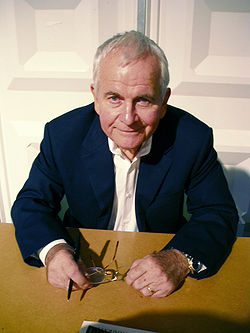
Ian Holm
View on Wikipedia
Sir Ian Holm Cuthbert (12 September 1931 – 19 June 2020) was an English actor. After graduating from RADA (Royal Academy of Dramatic Art) and beginning his career on the British stage as a member of the Royal Shakespeare Company, he became a successful and prolific performer on television and in film. He received numerous accolades including two BAFTA Awards and a Tony Award, along with a nomination for an Academy Award. He was knighted by Queen Elizabeth II in 1998 for services to drama.[1][2]
Key Information


Holm won the 1967 Tony Award for Best Featured Actor for his performance as Lenny in the Harold Pinter play The Homecoming. He won the Laurence Olivier Award for Best Actor for his performance in the title role in the 1998 West End production of King Lear. For his television roles he received two Primetime Emmy Award nominations for King Lear, and the HBO film The Last of the Blonde Bombshells (2003).
Holm gained acclaim for his role in The Bofors Gun (1968), winning the BAFTA Award for Best Actor in a Supporting Role. He was nominated for an Academy Award for Best Supporting Actor, and won a second BAFTA Award for his role as athletics trainer Sam Mussabini in Chariots of Fire (1981). Other notable films he appeared in include Alien (1979), Brazil (1985), Dreamchild (1985), Henry V (1989), Naked Lunch (1991), The Madness of King George (1994), The Fifth Element (1997), The Sweet Hereafter (1997), and The Aviator (2004). He played Napoleon in three unrelated works between 1974 and 2001. He gained wider appreciation for his role as the elderly Bilbo Baggins in Peter Jackson's The Lord of the Rings (2001-2003) and The Hobbit (2012-2014) film trilogies, with the last film in the latter, 2014's The Battle of the Five Armies, being his final film role.
Early life and education
[edit]Ian Holm Cuthbert was born on 12 September 1931 in Goodmayes, Essex, to Scottish parents, James Cuthbert and his wife Jean (née Holm). His father was a psychiatrist who worked as the superintendent of the West Ham Corporation Mental Hospital and was one of the pioneers of electric shock therapy; his mother was a nurse.[3][4][5][6][7] He had an older brother, who died when Ian was 12 years old.[8] Holm was educated at the independent Chigwell School in Essex.[3][8] His parents retired to Mortehoe in Devon and then to Worthing, where he joined an amateur dramatic society.[9]
A chance encounter with Henry Baynton, a well-known provincial Shakespearean actor, helped Holm train for admission to the Royal Academy of Dramatic Art, where he secured a place from 1950.[3][10] His studies were interrupted a year later when he was called up for National Service in the British Army,[10] during which he was posted to Klagenfurt, Austria, and attained the rank of Lance Corporal. They were interrupted a second time when he volunteered to go on an acting tour of the United States in 1952.[9] Holm graduated from the Royal Academy of Dramatic Art in 1953.[3]
He made his stage debut in 1954, at Stratford-upon-Avon, playing a spear carrier in a staging of Othello.[11] Two years later, he made his London stage debut in Love Affair.[11]
Career
[edit]Holm was an established actor in the Royal Shakespeare Company before he gained notice in television and film. He began in 1954 with minor roles, progressing to Puck in A Midsummer Night's Dream and the fool in King Lear.[10] In 1965, he played Richard III in the BBC serialisation of The Wars of The Roses, based on the RSC production of the plays. He gained acclaim for his role in the 1968 film The Bofors Gun, winning the BAFTA Award for Best Actor in a Supporting Role.[12] In 1969, he appeared in Moonlight on the Highway.[13] He took on minor roles in films such as Oh! What a Lovely War (1969),[14] Nicholas and Alexandra (1971),[15] Mary, Queen of Scots (1972)[16] and Young Winston (1972).[17]
In 1967 Holm won a Tony Award for Best Featured Actor in a Play as Lenny in The Homecoming by Harold Pinter. Holm appeared in the 1977 television mini-series Jesus of Nazareth as the Sadducee Zerah, and as the villain in March or Die. The following year he played J. M. Barrie in the award-winning BBC mini-series The Lost Boys,[18] In 1981, he played Frodo Baggins in the BBC radio adaptation of J. R. R. Tolkien's The Lord of the Rings.[19]
Holm's first film role to gain much notice was that of Ash, the "calm, technocratic" science officer – later revealed to be an android – in Ridley Scott's science-fiction film Alien (1979).[20] His portrayal of the running coach Sam Mussabini in Chariots of Fire (1981) earned him a special award at the Cannes Film Festival, a BAFTA award for Best Actor in a Supporting Role, and an Academy Award nomination for Best Supporting Actor.[20][21][22] In the 1980s, Holm played in Time Bandits (1981), Greystoke: The Legend of Tarzan, Lord of the Apes (1984) and Brazil (1985). He played Lewis Carroll, the author of Alice in Wonderland, in Dreamchild (1985).[23][24]
In 1989, Holm was nominated for a BAFTA award for the television series Game, Set and Match.[25] Based on the novels by Len Deighton, this tells the story of an intelligence officer (Holm) who finds a security leak at the heart of his network.[26] He continued to perform Shakespeare in films. He appeared with Kenneth Branagh in Henry V (1989)[27] and as Polonius to Mel Gibson's Hamlet (1990).[28] Holm was reunited with Branagh in Mary Shelley's Frankenstein (1994), playing the father of Branagh's Victor Frankenstein.[29]

Holm raised his profile in 1997 with two prominent roles, as the priest Vito Cornelius in Luc Besson's sci-fi The Fifth Element and the lawyer Mitchell Stephens in The Sweet Hereafter. In 2001 he starred in From Hell as the physician Sir William Withey Gull.[1] The same year, he followed up his radio role as Frodo by appearing as Frodo's older cousin Bilbo Baggins in the blockbuster film The Lord of the Rings: The Fellowship of the Ring. This brought him wider fame, somewhat overshadowing the rest of his acting career.[1] He returned for The Lord of the Rings: The Return of the King (2003), for which he shared a SAG award for Outstanding Performance by a Cast in a Motion Picture. He later reprised his role as the elderly Bilbo Baggins in the films The Hobbit: An Unexpected Journey and The Hobbit: The Battle of the Five Armies.[10] Martin Freeman portrayed the young Bilbo in those films.[30]
Holm was nominated for an Emmy Award twice, for a PBS broadcast of a National Theatre production of King Lear, in 1999; and for a supporting role in the HBO film The Last of the Blonde Bombshells opposite Judi Dench, in 2001.[31] He voiced Chef Skinner in the Pixar animated film Ratatouille (2007).[32] He appeared in two David Cronenberg films: Naked Lunch (1991) and eXistenZ (1999).[20] His acting was admired by Harold Pinter: the playwright once said: "He puts on my shoe, and it fits!"[33] Holm played Lenny in both the London and New York City premieres of Pinter's The Homecoming; the BBC wrote that he "electrified audiences" in the play.[22] He played Napoleon Bonaparte three times: in the television mini-series Napoleon and Love (1974), Terry Gilliam's Time Bandits (1981), and The Emperor's New Clothes (2001).[18] Holm received royal recognition for his contributions: he was made CBE in 1989 and knighted in 1998.[3]
Personal life
[edit]Holm was married four times:[34] to Lynn Mary Shaw in 1955 (divorced 1965); to Sophie Baker in 1982 (divorced 1986); to the actress Penelope Wilton, in Wiltshire, in 1991 (divorced 2001); and to the artist Sophie de Stempel in 2003. He had five children.[3][35]
Holm and Wilton appeared together in the BBC miniseries The Borrowers (1993). His last wife, Sophie de Stempel, was a protégée and a life model of Lucian Freud,[36] and an artist.[37]
He was made a Commander of the Order of the British Empire (CBE) in 1989 by Queen Elizabeth II.[1][2]
Holm was treated for prostate cancer in 2001.[34] He was diagnosed with Parkinson's disease in 2007.[38][39][40]
Death
[edit]
Holm died in hospital in London on 19 June 2020 at the age of 88.[41] According to Alex Irwin, Holm's agent, his death was related to Parkinson's disease.[21] His remains are interred on the western side of Highgate Cemetery.[42]
Posthumous image use
[edit]With the consent of his heirs, the role of android Rook was generated from Holm's archive data and computer-generated imagery for the 2024 film Alien: Romulus, the identical model to Ash, the character of the first Alien film, he played in 1979.[43][44]
Filmography
[edit]Film
[edit]Television
[edit]| Year | Title | Role | Notes | Ref. |
|---|---|---|---|---|
| 1965–1966 | The Wars of the Roses | Richard III | 2 episodes | |
| 1972–1974 | BBC Play of the Month | Khrushchov/Oedipus | 2 episodes | [59][60] |
| 1974 | Napoleon and Love | Napoleon I | 9 episodes | [61] |
| 1974–1975 | The Lives of Benjamin Franklin | Wedderburn | 3 episodes | [62] |
| 1975 | Private Affairs | David Garrick | Episode: Mr Garrick and Mrs Woffington | [63] |
| 1977 | The Man in the Iron Mask | Duval | Television film | [32] |
| Jesus of Nazareth | Zerah | Parts 1 & 2 | [3] | |
| Jubilee | Bill Ramsey | Episode: Ramsey | [64] | |
| 1978 | Do You Remember? | Walter Street | Episode: Night School | [65] |
| The Lost Boys | J. M. Barrie | 3 episodes | [66] | |
| Holocaust | Heinrich Himmler | 2 episodes | [32] | |
| Les Misérables | Thénardier | Television film | ||
| The Thief of Baghdad | The Gatekeeper | [67] | ||
| 1979 | All Quiet on the Western Front | Himmelstoss | [32] | |
| S.O.S. Titanic | Bruce Ismay | [68] | ||
| 1980 | We, the Accused | Paul Pressett | Miniseries; 5 episodes | [32] |
| The Misanthrope | Alceste | Television film | [69] | |
| 1981–2008 | Horizon | Narrator | Television documentary | [70][71] |
| 1982 | The Bell | Michael Meade | Television drama | [72] |
| Play for Today | Alexie | Television play (episode: Soft Targets) | [73] | |
| Tales of the Unexpected | Alan Corwin | Television play (episode: Death Can Add) | [74] | |
| 1985 | Television | Narrator | Television documentary series | [75] |
| 1986 | Murder by the Book | Hercule Poirot | Television film | [76] |
| 1988 | Game, Set and Match | Bernard Samson | 13 episodes | [77] |
| 1989 | The Tailor of Gloucester | The Tailor | Television film | [78] |
| The Endless Game | Control | 2 episodes | [79] | |
| 1991 | Uncle Vanya | Astrov | BBC TV | [80] |
| 1992 | The Borrowers | Pod Clock | 6 episodes | [32] |
| 1993 | The Return of the Borrowers | |||
| 1999 | Animal Farm | Squealer (voice) | Television film | [81] |
| 2003 | Monsters We Met | Narrator | Television documentary | [82] |
| 2004 | The Last Dragon | Television film | [83] | |
| 2005 | The Adventures of Errol Flynn | Television documentary | [84] | |
| 2009 | 1066: The Battle for Middle Earth | 2 episodes | [85][86] | |
| 2020 | Scary Stories Around the Fire | Teller (voice) | 2 episodes; podcast |
Theatre
[edit]| Year | Title | Role | Venue | Ref. |
|---|---|---|---|---|
| 1954– | Shakespeare plays | multiple roles | Royal Shakespeare Theatre, Stratford-upon-Avon | [10] |
| 1959 | A Midsummer Night's Dream | Puck | [87] | |
| King Lear | The Fool | [10] | ||
| 1962 | Troilus and Cressida | Troilus | Aldwych Theatre, London | [87] |
| 1965 | Henry V | Henry V | ||
| 1966 | Twelfth Night | Malvolio | Royal Shakespeare Theatre, Stratford-upon-Avon | |
| 1967 | Romeo and Juliet | Romeo | [10] | |
| The Homecoming | Lenny | Music Box Theatre, Broadway | ||
| 1997 | King Lear | Lear | Cottesloe Theatre, London |
Honours and accolades
[edit]- 1989: Commander of the Order of the British Empire (CBE) in the 1989 Birthday Honours.[88]
- 1998: Knighted in the 1998 Birthday Honours for services to drama.[89]
Bibliography
[edit]- Holm, Ian; Jacobi, Steven (2004). Acting My Life. London: Bantam Press. ISBN 978-0-593-05214-3. OCLC 56647423.
References
[edit]- ^ a b c d e "Ian Holm obituary: an actor of many facets". BFI. 21 June 2020. Archived from the original on 14 February 2021. Retrieved 7 February 2021.
- ^ a b "Sir Ian Holm: Lord of the Rings and Alien star dies aged 88". BBC News. 19 June 2020. Archived from the original on 22 February 2021. Retrieved 7 February 2021.
- ^ a b c d e f g Michael Billington & Ryan Gilbey (2020) "Sir Ian Holm obituary" Archived 19 June 2020 at archive.today The Guardian. Published 20 June 2020. Retrieved 20 June 2020.
- ^ "Ian Holm". Channel 4 Film. 2008. Archived from the original on 18 December 2007. Retrieved 22 January 2009.
- ^ "Ian Holm – Family and Companions". Yahoo! Movies. 2008. Archived from the original on 14 January 2006. Retrieved 22 January 2009.
- ^ "Excerpts from Loch Ness Presskit (1995)". aboutjamesfrain. 18 April 2004. Archived from the original on 2 July 2004. Retrieved 27 January 2009.
- ^ Sweet, Matthew (16 January 2004). "Film: Napoleon Complex". The Independent. pp. 8, 9.
- ^ a b Alan Strachan (2020) "Ian Holm: Versatile actor whose measured, gritty performances took him from Shakespeare to Hollywood" Archived 22 June 2020 at the Wayback Machine The Independent. Published 19 June 2020. Retrieved 20 June 2020.
- ^ a b Ian Holm with Steven Jacobi (2004). Acting My Life – Ian Holm. Bantam Books. ISBN 978-0-593-05214-3.
- ^ a b c d e f g "Obituary: Ian Holm". BBC. 19 June 2020. Archived from the original on 19 June 2020. Retrieved 19 June 2020.
- ^ a b Mel Gussow (2020) "Ian Holm, Malleable Actor Who Played Lear and a Hobbit, Dies at 88" The New York Times. Published 19 June 2020. Retrieved 20 June 2020.
- ^ a b "Film in 1969: BAFTA Awards". awards.bafta.org. Archived from the original on 22 January 2021. Retrieved 21 June 2020.
- ^ "Moonlight on the Highway (1969)" British Film Institute. Retrieved 20 June 2020.
- ^ "Oh! What a Lovely War (1969)" British Film Institute. Retrieved 20 June 2020.
- ^ "Nicholas and Alexandra (1971)" British Film Institute. Retrieved 20 June 2020.
- ^ "Mary, Queen of Scots (1972)" British Film Institute. Retrieved 20 June 2020.
- ^ "Young Winston (1972)" British Film Institute. Retrieved 20 June 2020.
- ^ a b Mike Barnes (2020) "Ian Holm, Oscar-Nominated Actor in 'Chariots of Fire,' Dies at 88" Archived 20 June 2020 at the Wayback Machine The Hollywood Reporter. Published 19 June 2020. Retrieved 20 June 2020.
- ^ "Review: The BBC Lord of the Rings Dramatization re-released by BBC AudioBooks America". www.tolkienlibrary.com. Archived from the original on 4 March 2016. Retrieved 24 December 2012.
- ^ a b c Peter Bradshaw (2020) "Ian Holm: a virtuoso actor of steel, sinew – and charm" Archived 20 June 2020 at the Wayback Machine The Guardian. Published 19 June 2020. Retrieved 20 June 2020.
- ^ a b Tsioulcas, Anastasia (19 June 2020). "Actor Ian Holm, Who Played King Lear To Bilbo Baggins, Has Died". NPR. Retrieved 8 November 2024.
- ^ a b "Obituary: Ian Holm" Archived 20 June 2020 at the Wayback Machine BBC News. Published 19 June 2020. Retrieved 20 June 2020.
- ^ "Dreamchild (1985)" British Film Institute. Retrieved 20 June 2020.
- ^ Roger Ebert (1986) "Dreamchild" film review Archived 21 September 2020 at the Wayback Machine. rogerebert.com. Published 10 January 1986. Retrieved 20 June 2020.
- ^ "Television in 1989: BAFTA Awards". awards.bafta.org. Archived from the original on 2 April 2015. Retrieved 21 June 2020.
- ^ O'Connor, John (23 March 1989). "13 Hours' Worth of British Spying on the 'Mystery' Series". The New York Times. Archived from the original on 6 February 2024. Retrieved 6 February 2024.
- ^ a b "Henry V". BFI. Archived from the original on 3 February 2024. Retrieved 6 February 2024.
- ^ a b "Hamlet". BFI. Archived from the original on 6 February 2024. Retrieved 6 February 2024.
- ^ "Mary Shelley's Frankenstein (1994)" British Film Institute. Retrieved 20 June 2020.
- ^ Rodrigo Perez (2012) "Review: ‘The Hobbit: An Unexpected Journey’ Rallies From A Goofy Opening To Become Another Thrilling, If Familiar, Action-Adventure Epic" Archived 24 October 2020 at the Wayback Machine IndieWire. Published 4 December 2012. Retrieved 20 June 2020.
- ^ "Ian Holm". Television Academy. Archived from the original on 22 June 2020. Retrieved 20 June 2020.
- ^ a b c d e f g h i j k l m n o p q r s t "Filmography for Ian Holm". Turner Classic Movies. Archived from the original on 22 June 2020. Retrieved 19 June 2020.
- ^ Brantley, Ben. THEATER REVIEW; Talk About a Reality Show. A Pinter Classic Is It Archived 5 March 2016 at the Wayback Machine. The New York Times 21 July 2001.
- ^ a b Holm, Ian; Jacobi, Steven (2004). Acting my Life. London: Bantam Press. pp. 220, 224, 313ff. ISBN 978-0-593-05214-3.
- ^ Telegraph Obituaries (19 June 2020). "Sir Ian Holm, gifted actor whose many films included Alien and The Lord of the Rings – obituary". The Telegraph. ISSN 0307-1235. Archived from the original on 20 June 2020. Retrieved 19 June 2020.
- ^ "Portrait of the actor and his fourth wife". The Daily Telegraph. London. 7 February 2004. Archived from the original on 30 June 2004. Retrieved 14 July 2008.
- ^ "Sophie De Stempel". Royal Drawing School. Archived from the original on 26 January 2024. Retrieved 26 January 2024.
- ^ Dagan, Carmel (19 June 2020). "Ian Holm, Shakespearean Actor Who Played Bilbo Baggins, Dies at 88". Variety. Archived from the original on 19 June 2020. Retrieved 19 June 2020.
- ^ "Lord of the Rings star Sir Ian Holm dies aged 88". BBC News. 19 June 2020. Archived from the original on 19 June 2020. Retrieved 19 June 2020.
- ^ "True Crime Stories: Baroness de Stempel (and family)". The Steeple Times. 27 May 2019. Archived from the original on 12 June 2020. Retrieved 19 June 2020.
- ^ Pulver, Andrew (19 June 2020). "Ian Holm, star of Lord of the Rings, Alien and Chariots of Fire, dies aged 88". The Guardian. Archived from the original on 19 June 2020. Retrieved 19 June 2020.
- ^ Cochran, Jason. "Highgate Cemetery: Coffins, Catacombs, and Celebrities in London's Creepy Necropolis". Frommer's. Archived from the original on 29 November 2023. Retrieved 26 January 2024.
- ^ Holub, Christian (18 August 2024). "How Alien: Romulus resurrected that character from the original film". Entertainment Weekly. Archived from the original on 16 August 2024. Retrieved 18 August 2024.
- ^ a b "How Did 'Alien: Romulus' Create Its Most Controversial Character?". The Hollywood Reporter. 23 August 2024.
- ^ "A Midsummer Night's Dream". BFI. Archived from the original on 23 October 2023. Retrieved 6 February 2024.
- ^ "March or Die". BFI. Archived from the original on 6 April 2023. Retrieved 6 February 2024.
- ^ "Inside the Third Reich". BFI. Archived from the original on 7 February 2024. Retrieved 6 February 2024.
- ^ Lambie, Ryan (4 June 2019). The Geek's Guide to SF Cinema. London: Robinson. p. 119. ISBN 978-1-4721-3985-6. OCLC 1027484713.
- ^ "Mr & Mrs Edgehill". BFI. Archived from the original on 6 February 2024. Retrieved 6 February 2024.
- ^ "The Naked Lunch". BFI. Archived from the original on 22 April 2023. Retrieved 6 February 2024.
- ^ "The Hour of the Pig". BFI. Archived from the original on 7 February 2024. Retrieved 6 February 2024.
- ^ Elley, Derek (17 November 1997). "Incognito". Variety. Archived from the original on 20 October 2020. Retrieved 20 June 2020.
- ^ "King Lear". BFI. Archived from the original on 6 February 2024. Retrieved 6 February 2024.
- ^ "Wisconsin Death Trip". BFI. Archived from the original on 7 February 2024. Retrieved 6 February 2024.
- ^ "Joe Gould's Secret". BFI. Archived from the original on 7 February 2024. Retrieved 6 February 2024.
- ^ Ebert, Roger. "The Emperor's New Clothes movie review (2002)". RogerEbert.com. Archived from the original on 23 June 2020. Retrieved 20 June 2020.
- ^ "Renaissance". MUBI. Archived from the original on 6 February 2024. Retrieved 6 February 2024.
- ^ Holub, Christian (18 August 2024). "How Alien: Romulus resurrected that character from the original film". Entertainment Weekly. Archived from the original on 16 August 2024. Retrieved 18 August 2024.
- ^ "King Oedipus". BFI Collections Search. Archived from the original on 21 June 2020. Retrieved 20 June 2020.
- ^ "BBC One – Play of the Month, The Wood Demon". BBC Programmes. 17 November 1974. Archived from the original on 21 June 2020. Retrieved 20 June 2020.
- ^ "Napoleon and Love". Nostalgia Central. 12 May 2004. Archived from the original on 22 June 2020. Retrieved 20 June 2020.
- ^ "Ian Holm Facts". Encyclopedia Britannica. Retrieved 20 June 2020.
- ^ "Private Affairs". The Radio Times. No. 2748. 8 July 1976. p. 15. ISSN 0033-8060. Archived from the original on 22 June 2020. Retrieved 20 June 2020.
- ^ "Jubilee". BBC Genome. 22 May 1977. Archived from the original on 6 February 2024. Retrieved 6 February 2024.
BBC One London
- ^ "Night School". British Universities Film & Video Council. Archived from the original on 22 June 2020. Retrieved 20 June 2020.
- ^ Banks-Smith, Nancy (12 October 1978). "Review: The Lost Boys". The Guardian.
- ^ "The Thief of Baghdad (1978)". Rotten Tomatoes. Archived from the original on 18 September 2020. Retrieved 20 June 2020.
- ^ "SOS Titanic – review". Radio Times. Archived from the original on 23 October 2020. Retrieved 20 June 2020.
- ^ "Festival: The Misanthrope". BBC Genome. 27 January 1980. Archived from the original on 1 June 2023. Retrieved 6 February 2024.
- ^ "Horizon (1964)". Video Detective. 2 May 1964. Archived from the original on 21 June 2020. Retrieved 20 June 2020.
- ^ "Horizon: A Race Against Time". The Radio Times. No. 3030. 3 December 1981. p. 43. ISSN 0033-8060. Archived from the original on 20 June 2020. Retrieved 20 June 2020.
- ^ "The Bell (1982)". FilmAffinity. Retrieved 6 February 2024.
- ^ "Soft Targets". Helen Mirren. 19 October 1982. Archived from the original on 6 February 2024. Retrieved 6 February 2024.
- ^ "Tales of the Unexpected — Season 5, Episode 10 Death Can Add". Rotten Tomatoes. Archived from the original on 6 February 2024. Retrieved 6 February 2024.
- ^ Rosenberg, Howard (19 April 1985). "The Best and Worst of Television". Los Angeles Times. Archived from the original on 5 February 2024. Retrieved 5 February 2024.
- ^ "TV REVIEW : Poirot Meets His Maker in A&E;'s 'Murder by the Book'". Los Angeles Times. 16 June 1990. Archived from the original on 26 August 2023. Retrieved 6 February 2024.
- ^ Ken Grieve, Patrick Lau (1988). Game, Set and Match (DVD).
- ^ "The Tailor of Gloucester (Original)". British Film Institute. Archived from the original on 26 January 2024. Retrieved 26 January 2024.
- ^ Loynd, Ray (20 January 1990). "TV Reviews : 'Endless Game' Is a Devious Spy Tale". The Los Angeles Times. Archived from the original on 5 May 2023. Retrieved 6 February 2024.
- ^ Drake, Sylvie (22 February 1991). "TV REVIEW : Late-Blooming Version of 'Uncle Vanya' : 'Great Performances' offers an Anglo-American production of the Russian classic in an adaptation by David Mamet". Los Angeles Times. Archived from the original on 15 April 2023. Retrieved 6 February 2024.
- ^ "Animal Farm (Original)". British Film Institute. Archived from the original on 26 January 2024. Retrieved 26 January 2024.
- ^ "Monsters We Met (2003, Série, 1 Saison) — CinéSéries" (in French). Archived from the original on 22 June 2020. Retrieved 20 June 2020.
- ^ The Last Dragon (DVD). Sony. 2005. 5035822764132.
- ^ The Adventures of Errol Flynn (DVD). Movies Unlimited. 2010.
- ^ "1066 Now Arriving in May". myReviewer.com. Archived from the original on 16 October 2015. Retrieved 16 May 2014.
- ^ Billen, Andrew (19 May 2009). "1066 The Battle for Middle Earth Moving on the Trouble with Working Women". The Times. London. Archived from the original on 15 June 2011.
- ^ a b Doran, Gregory (2020). "Ian Holm". Royal Shakespeare Company. Archived from the original on 27 January 2024. Retrieved 27 January 2024.
- ^ "No. 51772". The London Gazette (Supplement). 16 June 1989. p. 8.
- ^ "No. 55155". The London Gazette (Supplement). 15 June 1998. p. 2.
External links
[edit]- Ian Holm at the Internet Broadway Database
- Ian Holm at IMDb
- Ian Holm at the BFI's Screenonline
- Ian Holm at the TCM Movie Database
- Obituary: Ian Holm by BBC News. Published 19 June 2020.
- Sir Ian Holm obituary by The Guardian. Authors – Michael Billington and Ryan Gilbey. Published 19 June 2020.

Ian Holm
View on GrokipediaEarly life and education
Childhood and family background
Ian Holm Cuthbert was born on 12 September 1931 at Goodmayes Hospital in Goodmayes, Essex, a psychiatric facility where his father served as superintendent.[4] His parents were Scottish: his father, James Harvey Cuthbert, was a psychiatrist and pioneer of electric shock therapy, while his mother, Jean (née Holm), worked as a nurse at the same hospital.[5] Growing up in the shadow of the institution, Holm later reflected on his unusual birthplace, jokingly referring to himself as having been "born in a loony bin," which gave him an early, if indirect, exposure to themes of mental health and human vulnerability through his father's profession.[4] Holm's early years were marked by family dynamics centered on public service in medicine, though strained by personal loss; he had an older brother, Eric, who died around 1943 when Holm was about 12, deepening his childhood introspection. The family later relocated to Worthing in Sussex, where he found solace amid bullying by immersing himself in dramatic activities and joining an amateur dramatic group.[6] At the age of seven, he was inspired to pursue acting after seeing a production of Les Misérables, sparking a lifelong passion that contrasted with the reserved, service-oriented environment of his upbringing.[6] During World War II, as a young boy in Essex and later Sussex, Holm experienced the disruptions of the conflict, including air raids, though specific personal accounts of evacuation remain undocumented in his biographies. This wartime backdrop, combined with his familial influences, shaped a worldview attuned to emotional depth and resilience, laying the groundwork for his later transition to formal training at the Royal Academy of Dramatic Art.[1]Education and early training
Holm attended Chigwell Grammar School in Essex, where he endured bullying and found solace in his burgeoning interest in drama.[7] At the age of seven, he became determined to pursue acting after witnessing a production of Les Misérables, an experience that ignited his passion.[6] In 1950, Holm secured a place at the Royal Academy of Dramatic Art (RADA), embarking on a rigorous classical training program focused on Shakespearean techniques and ensemble performance.[8] His studies were interrupted by mandatory national service, during which he served as a lance-corporal in the Royal Army Service Corps, but he returned to complete his diploma in 1953.[9] This foundational education equipped him with the precision and versatility essential for the British stage, drawing from the post-war emphasis on disciplined, text-driven acting.[6]Career
Stage career
Ian Holm established himself as a prominent figure in British theatre during the 1960s through his association with the Royal Shakespeare Company (RSC), where he became a core ensemble member under artistic director Peter Hall following the company's formation in 1960.[1] His early RSC work included significant roles in the 1964-1965 Wars of the Roses history cycle, portraying the young Gloucester (foreshadowing Richard III) and Prince Hal evolving into Henry V, contributions that highlighted his versatility in Shakespeare's historical dramas.[10] Holm's breakthrough came in 1965 with his portrayal of Lenny in the world premiere of Harold Pinter's The Homecoming, staged by the RSC at the Aldwych Theatre under Hall's direction. As the menacing, verbally agile eldest son, Holm delivered an intense psychological performance described as a "savage peacock," capturing the character's predatory charm and underlying menace to critical acclaim.[1] This role marked his transition from supporting parts to leading status within the company, influencing modern interpretations of Pinter's taut family dynamics.[11] Throughout his RSC tenure, Holm excelled in Shakespearean roles, bringing physical precision and emotional depth to classic characters. He originated Puck in Peter Hall's 1959 production of A Midsummer Night's Dream at Stratford-upon-Avon, a mischievous sprite he reprised in a 1970 revival at the Round House, emphasizing the fairy's acrobatic energy and wry detachment.[10] His career culminated in a commanding turn as the titular King Lear in Richard Eyre's 1997 National Theatre production at the Cottesloe, portraying the monarch's descent into patriarchal ferocity and profound suffering with raw vulnerability.[1] Beyond Shakespeare, Holm originated key roles in contemporary works that showcased his command of introspective intensity. In 1976, he was cast as the charismatic salesman Hickey in the RSC's Aldwych revival of Eugene O'Neill's The Iceman Cometh, but withdrew after previews due to an acute onset of stage fright.[12] He later returned triumphantly in 1993 to create the role of the dying, irascible civil servant Andy in Pinter's Moonlight at the Almeida Theatre, infusing the character with scorching fury and existential despair amid themes of familial estrangement.[1] During the 1970s, Holm contributed to the RSC's ensemble culture through informal mentoring of younger actors, drawing on his experience to guide vocal and interpretive techniques in workshops, as seen in his collaborative influence on director John Barton during the Henry V preparations.[10] However, the 1976 stage fright episode precipitated a prolonged hiatus from theatre, limiting his stage appearances in the ensuing decades as he shifted focus to film and television. Holm's final major stage role was his Olivier Award-winning King Lear in 1997-1998, a production that overcame his persistent stage fright through innovative in-the-round staging and marked the effective end of his live theatre career.[4]Film and television career
Holm made his screen debut in the 1968 film The Bofors Gun, earning a BAFTA Award for Most Promising Newcomer to Leading Film Roles for his supporting performance as a military police sergeant.[13] His early film work included small but notable roles in period dramas such as The Fixer (1968), where he portrayed the interrogator Grubeshov, and the anti-war satire Oh! What a Lovely War (1969), as a sergeant-major, building on the disciplined intensity honed from his stage background.[1][14] A major breakthrough came in 1979 with his chilling portrayal of the android Ash in Ridley Scott's science-fiction horror Alien, where Holm's subtle conveyance of menace through restrained physicality and vocal modulation established him as a versatile screen presence capable of blending humanity with artificiality.[1] This role led to wider recognition, culminating in an Academy Award nomination for Best Supporting Actor for his depiction of the pragmatic athletics coach Sam Mussabini in the historical drama Chariots of Fire (1981), a performance praised for its sharp wit and emotional depth.[13] In the 1980s and 1990s, Holm balanced film and television, showcasing his range in dystopian and literary adaptations. On television, he took a leading role as the shadowy MI6 operative "Control" in the espionage miniseries The Endless Game (1989), adapted from John Gardner's novel and directed by Bryan Forbes, which highlighted his command of intrigue and moral ambiguity.[15] In films, he played the bureaucratic Mr. Kurtzmann in Terry Gilliam's surreal Brazil (1985), a caricature of oppressive conformity that underscored his skill in satirical roles, and the loyal Welsh captain Fluellen in Kenneth Branagh's Shakespeare adaptation Henry V (1989), bringing historical authenticity and quiet authority to the ensemble.[1][11] Holm's career peaked in the 2000s with his iconic turn as the hobbit Bilbo Baggins in Peter Jackson's The Lord of the Rings trilogy (The Fellowship of the Ring in 2001 and The Return of the King in 2003), a role that required him to embody whimsy, weariness, and inner conflict. Holm reprised his role as the elderly Bilbo Baggins in Peter Jackson's The Hobbit trilogy (2012–2014).[13] Later highlights included his portrayal of the unorthodox physician Dr. Francis Willis in the biographical drama The Madness of King George (1994), where he captured the doctor's blend of compassion and determination in treating the monarch's mental illness.[1] In animation, Holm lent his distinctive voice to the acerbic restaurant owner Skinner in Pixar's Ratatouille (2007), adding layers of skepticism and surprise to the culinary tale.[13] Throughout his screen career, Holm grappled with on-set anxiety stemming from a severe bout of stage fright during the 1976 production of The Iceman Cometh, which prompted a 20-year hiatus from live theater and a deliberate shift toward supporting character roles in film and television, where he felt more secure in delivering nuanced performances without the immediacy of a live audience.[12][16] This preference allowed him to excel in genres from horror to fantasy, often stealing scenes through economical gestures and vocal precision rather than dominating leads.[1]Personal life
Marriages and relationships
Ian Holm's first marriage was to Lynn Mary Shaw in 1955, with whom he had two daughters, Jessica and Sarah-Jane; the couple divorced in 1965.[1] Following the divorce, Holm entered a long-term relationship with photographer Bee Gilbert, lasting approximately a decade, during which they had a son, Barnaby, and a daughter, Melissa (also known as Lissy).[1][17] Holm's second marriage, to film stills photographer Sophie Baker, took place in 1982 and produced a son, Harry; the union ended in divorce in 1986 after Holm began an affair with actress Penelope Wilton.[1][18] In 1991, he married Wilton, his third wife and a fellow performer with whom he shared professional overlaps, including stage collaborations; they had no children together and divorced in 2002.[1] Holm's fourth and final marriage was to artist Sophie de Stempel in 2003, a union that lasted until his death in 2020; de Stempel, a protégée of Lucian Freud, created numerous portraits of Holm, capturing his likeness in oil during their time together.[1][19] Across these relationships, Holm fathered five children—three daughters and two sons—and navigated the challenges of parenthood amid his demanding acting career, which often required extensive travel and time away from home.[1] Known for his private nature, Holm rarely discussed his personal life in public, once noting in interviews that his repeated marriages reflected a pattern of rediscovering love after heartbreak, though he remained guarded about intimate details.[20]Health challenges
In 1976, during previews of the Royal Shakespeare Company's production of Eugene O'Neill's The Iceman Cometh, Ian Holm experienced a severe episode of stage fright that left him paralyzed with anxiety, causing him to walk off stage and curl up in his dressing room, unable to continue performing.[12][6] This incident marked the onset of a debilitating condition that led to a nearly 17-year hiatus from the stage, during which Holm avoided live theatre entirely, redirecting his career toward film, television, and radio work.[4][6] Throughout the 1980s, Holm underwent therapy and tried medication to manage his anxiety, but these efforts proved insufficient to fully overcome the fear, allowing only selective and limited returns to the stage beginning in 1993 with Harold Pinter's Moonlight.[6] The stage fright had no direct causal relation to his childhood exposure to mental health issues through his father's work as a psychiatrist at a psychiatric hospital, though Holm later reflected on parallels between his own experiences and the emotional intensities he observed growing up surrounded by patients.[20][21] In 2001, Holm was diagnosed with prostate cancer and underwent treatment, including hormone therapy in the UK and the US, from which he recovered.[6][22] Holm was diagnosed with Parkinson's disease around 2010, a detail he initially kept private even from close professional collaborators.[6][23] By the 2010s, the disease had progressed, impairing his mobility—he relied on a wheelchair for daily activities—and affecting his voice, which became a challenge for on-screen dialogue.[6] To cope, Holm used medication and physical therapy, supported by his wife, Sophie de Stempel, and carer Emmanuel Adeyoola, who facilitated outings and maintained his quality of life amid the symptoms.[6] The progression of Parkinson's significantly influenced Holm's professional choices, prompting a shift toward voice acting and brief on-camera appearances, such as his final role voicing Bilbo Baggins in The Hobbit: The Battle of the Five Armies (2014), where accommodations were made for his condition.[23] Although he did not publicly disclose the diagnosis during his lifetime—revealing it only privately to select individuals like director Peter Jackson—it ultimately raised awareness for the disease following announcements after his death.[23][24]Later years and death
Final professional engagements
In the final phase of his career, Ian Holm reprised his iconic role as the elderly Bilbo Baggins in Peter Jackson's The Hobbit film trilogy, consisting of The Hobbit: An Unexpected Journey (2012), The Hobbit: The Desolation of Smaug (2013), and The Hobbit: The Battle of the Five Armies (2014). This marked a poignant return to J.R.R. Tolkien's Middle-earth, building directly on his earlier portrayal of Bilbo in The Lord of the Rings trilogy (2001–2003), where he had brought depth and warmth to the character's reflective later years. Holm's appearances framed the narrative through Bilbo's storytelling to Frodo, emphasizing themes of legacy and reminiscence. Due to the advancing effects of Parkinson's disease, which Holm had been diagnosed with prior to filming, the production accommodated his physical challenges by bringing the Bag End set to a London studio. There, he filmed his scenes live-action while seated at a writing desk over four days, with assistance from his wife and Elijah Wood, delivering his performance with professionalism. Director Peter Jackson, in a tribute following Holm's death, recounted how the actor had kept his condition private but insisted on participating, noting that the experience taught him "so much" about dedication amid adversity. Jackson highlighted Holm's generosity and resilience. Accommodations during production included simplified setups to ease Holm's participation, ensuring his commitment shone through in the final product.[23][25] Following the release of The Hobbit: The Battle of the Five Armies in 2014, Holm effectively retired from on-camera work, citing the progression of Parkinson's as a key factor that confined him to a wheelchair and curtailed further physical roles. While he had earlier provided a memorable voice performance as the irritable chef Skinner in Pixar's Ratatouille (2007)—a role that continued to resonate through the film's enduring popularity and re-releases— no significant new projects, including voiceovers, narrations, or audiobooks, followed in the 2015–2019 period. This capstone to his screen career underscored Holm's enduring talent, with the Hobbit trilogy serving as a fitting culmination of his contributions to fantasy cinema.[26][27]Death and immediate tributes
Ian Holm died on 19 June 2020 at the age of 88 in a London hospital from complications related to Parkinson's disease, following a long battle with the condition.[24][28][29] His agent, Alex Irwin of Markham, Froggatt & Irwin, confirmed the news in a statement, noting that Holm "died peacefully in hospital, with his family and carer" at his side.[24][30] The announcement described Holm as "charming, kind and ferociously talented," emphasizing the profound loss felt by those who knew him.[24] In light of the COVID-19 pandemic restrictions, Holm's funeral was conducted privately, with no public details released regarding the burial to honor the family's wish for privacy.[31] The family issued no further statements beyond the agent's release and requested space during their period of mourning, with no public memorial service planned at the time.[24] Tributes from the entertainment industry arrived swiftly upon the announcement. Peter Jackson, the director of The Lord of the Rings trilogy in which Holm portrayed Bilbo Baggins, shared a heartfelt remembrance, calling him "a delightful and generous man" who brought joy to every set and whose quiet humor and professionalism made him an invaluable collaborator.[32] Elijah Wood, who played Frodo Baggins opposite Holm, mourned the loss on social media, writing, "Off to the Grey Havens goes dear Ian Holm. He was a lovely man," while praising his captivating performance as the iconic hobbit.[33][34] Major media outlets provided immediate and extensive coverage, reflecting on Holm's illustrious career. The Guardian highlighted his 1998 knighthood for services to drama and his BAFTA Award for Best Supporting Actor in Chariots of Fire (1981), as well as his role as Dr. Willis in The Madness of King George (1994), portraying him as a versatile force in British theatre and film.[24] Similarly, the BBC noted his CBE honor in 1989 and enduring legacy across stage and screen, from Shakespearean roles to sci-fi classics like Alien, underscoring the widespread admiration for his craft.[28]Posthumous legacy
Digital image recreations
Following Ian Holm's death in 2020, his digital likeness has been employed posthumously in film projects, most notably through advanced CGI and AI techniques to extend his presence in the Alien franchise. In the 2024 film Alien: Romulus, directed by Fede Álvarez, Holm's image was recreated as Rook, a synthetic android character that echoes his iconic role as Ash from the 1979 original Alien. This recreation utilized original 4K scans of Holm's performance footage from the 1979 film, combined with machine learning and generative AI for enhancements to facial movements, particularly the eyes and mouth, to generate new dialogue and expressions.[35][36] The project received explicit approval from Holm's estate, including his widow Sophie de Stempel and family members, who supported the endeavor as a respectful homage to his legacy in the series. Álvarez consulted de Stempel directly to discuss the concept, ensuring the portrayal aligned with Holm's wishes—he had reportedly expressed a desire to return to the Alien universe in his later years—and avoided exploitative replication by differentiating Rook from Ash in personality and function. The technical execution involved a hybrid approach: a practical animatronic body, sculpted from a life cast and puppeteered on set, overlaid with digital facial synthesis to match Holm's scanned likeness, rather than relying solely on full-body motion capture from another performer.[37][38][35] Reception to the recreation was mixed, with praise for its intent as a tribute but criticism for the initial theatrical version's uncanny appearance, described by some as clunky and robotic due to time constraints in post-production. In a January 2025 interview, Álvarez acknowledged these issues and confirmed revisions to the CGI for the home release, improving lighting, shadows, and overall integration to better honor the performance. Variety highlighted the updated version as a more seamless homage, though broader debates persist on the ethics of digital resurrection, particularly under SAG-AFTRA guidelines requiring estate consent to prevent unauthorized or demeaning uses of deceased actors' likenesses.[39][40] As of November 2025, no other major digital recreations of Holm have been realized in film or television. Holm's estate has emphasized guidelines for likeness usage that prioritize non-exploitative, artistically meaningful applications, aligning with industry standards to protect performers' legacies.[40][41]Enduring cultural influence
Ian Holm's tenure with the Royal Shakespeare Company (RSC) from 1960 onward established him as a pivotal figure in British theatre, influencing generations of character actors through his embodiment of RSC traditions that emphasized psychological depth and ensemble precision.[10] As a key performer in landmark productions like the 1960s Wars of the Roses cycle, Holm's measured intensity set a standard for interpreting complex roles, inspiring later RSC artists who built on this foundation of rigorous, introspective acting.[42] His portrayal of Ash in the 1979 film Alien became a seminal archetype for synthetic characters in science fiction, redefining androids as insidious, emotionless threats that prioritize corporate directives over human life, a trope echoed in subsequent films and series exploring artificial intelligence.[43] Similarly, Holm's depiction of Bilbo Baggins in Peter Jackson's The Lord of the Rings trilogy (2001–2003) and The Hobbit prequels (2012–2014) humanized the fantasy epic genre by infusing the hobbit with relatable vulnerability and quiet resilience, elevating ensemble narratives beyond spectacle to emotional authenticity.[44] Holm's contributions to British cinema were underscored by his BAFTA Award for Best Supporting Actor for Chariots of Fire (1981), where his role as trainer Sam Mussabini enriched the film's exploration of cultural tensions, helping to champion ensemble-driven stories that highlighted underrepresented voices in period dramas.[3] In voice acting, his performance as the scheming Skinner in Pixar's Ratatouille (2007) exemplified precise comic timing in animation, inspiring subsequent performers to blend subtlety with exaggeration in culinary and character-focused tales. Recent academic analyses in theatre scholarship have examined RSC-Pinter affiliations and Holm's collaborations with Harold Pinter for their enduring impact on modern dramatic tension.Filmography
Film roles
Ian Holm appeared in approximately 80 films over his career, spanning feature films, shorts, and cameos, with production peaks in the 1980s (around 15 credits) and 2000s (over 20 credits). The following table lists his film roles chronologically, including character names and notes on role types such as voice work or cameos where applicable.[45][46]| Year | Title | Role | Notes |
|---|---|---|---|
| 1968 | The Bofors Gun | Gunner Flynn | Supporting |
| 1968 | The Fixer | Grubeshov | Supporting |
| 1968 | A Midsummer Night's Dream | Puck | Supporting |
| 1969 | Oh! What a Lovely War | President Poincare | Cameo |
| 1969 | The Bed Sitting Room | Nurse Arthur | Supporting |
| 1969 | Moon Zero Two | First Lunar Policeman | Cameo |
| 1970 | A Severed Head | Martin Lynch-Gibbon | Lead |
| 1971 | Mary, Queen of Scots | David Rizzio | Supporting |
| 1971 | Nicholas and Alexandra | Yakovlev | Supporting |
| 1972 | Young Winston | George E. Buckle | Supporting |
| 1973 | The Homecoming | Lenny | Supporting |
| 1974 | Juggernaut | Nicholas Porter | Supporting |
| 1976 | Robin and Marian | King John | Supporting |
| 1976 | Shout at the Devil | Mohammed | Supporting |
| 1977 | March or Die | El Krim | Antagonist |
| 1979 | All Quiet on the Western Front | Detering | Supporting |
| 1979 | Alien | Ash | Supporting |
| 1980 | The Return of the Soldier | Dr. Anderson | Supporting |
| 1981 | Chariots of Fire | Sam Mussabini | Supporting |
| 1981 | Time Bandits | Napoleon | Cameo |
| 1983 | The Dead Zone | Dr. Sam Weizak | Supporting |
| 1984 | Greystoke: The Legend of Tarzan, Lord of the Apes | Capitaine Philippe D'Arnot | Supporting |
| 1984 | The Bounty | Captain Bligh | Supporting |
| 1985 | Brazil | Mr. Kurtzmann | Supporting |
| 1985 | Wetherby | Stanley Pilborough | Supporting |
| 1985 | Dreamchild | Rev. Charles L. Dodgson / Lewis Carroll | Lead |
| 1986 | The Name of the Rose | Jorge de Burgos | Supporting |
| 1986 | Biggles | Air Commodore Colonel William Raymond | Supporting |
| 1987 | The Dead | Mr. Gentley | Supporting |
| 1988 | Another Woman | Ken | Supporting |
| 1989 | Henry V | Captain Fluellen | Supporting |
| 1990 | Hamlet | Polonius | Supporting |
| 1991 | Naked Lunch | Tom Frost | Supporting |
| 1992 | The Hour of the Pig | Albertus | Supporting |
| 1992 | Blue Ice | Sir Hector | Supporting |
| 1994 | The Madness of King George | Dr. Willis | Supporting |
| 1994 | Frankenstein | Baron Victor Frankenstein | Supporting |
| 1996 | Big Night | Pascal | Co-lead |
| 1997 | The Fifth Element | Father Vito Cornelius | Supporting |
| 1997 | The Sweet Hereafter | Mitchell Stephens | Lead |
| 1997 | Night Falls on Manhattan | Liam Casey | Supporting |
| 1997 | A Life Less Ordinary | Naville | Supporting |
| 1998 | The Emperor's New Clothes | Napoleon | Lead |
| 1999 | eXistenZ | Kiri Vinokur | Supporting |
| 1999 | The Match | Big Tam | Supporting |
| 1999 | Simon Magus | Sir Oliver | Supporting |
| 2000 | Joe Gould's Secret | Joe Gould | Lead |
| 2000 | The Miracle Maker | Pontius Pilate | Voice |
| 2001 | From Hell | Sir William Gull | Antagonist |
| 2001 | The Lord of the Rings: The Fellowship of the Ring | Bilbo Baggins | Supporting |
| 2001 | The Others | Mr. Tuttle | Cameo |
| 2002 | The Lord of the Rings: The Two Towers | Bilbo Baggins | Cameo |
| 2003 | The Lord of the Rings: The Return of the King | Bilbo Baggins | Supporting |
| 2004 | The Day After Tomorrow | Terry Rapson | Supporting |
| 2004 | The Aviator | Professor Fitz | Cameo |
| 2004 | Garden State | Gideon Largeman | Supporting |
| 2005 | The Interpreter | Zuwanie | Antagonist |
| 2005 | Lord of War | Simeon Weisz | Supporting |
| 2006 | Chromophobia | Edward Aylesbury | Supporting |
| 2006 | Renaissance | Jonas Muller | Voice |
| 2006 | The Treatment | Dr. Ernesto Morales | Supporting |
| 2007 | Ratatouille | Skinner | Voice, antagonist |
| 2009 | 1066 | King Edward the Confessor | Short, lead |
| 2011 | The Hobbit: An Unexpected Journey | Old Bilbo Baggins | Framing role |
| 2012 | The Hobbit: The Desolation of Smaug | Old Bilbo Baggins | Cameo |
| 2014 | The Hobbit: The Battle of the Five Armies | Old Bilbo Baggins | Framing role |
Television roles
Holm's television career began in the mid-1960s with adaptations of Shakespearean works, marking his transition from stage to screen. His debut came in the BBC's The Wars of the Roses (1965), where he portrayed Richard III in a filmed production of the Royal Shakespeare Company's history cycle, earning early acclaim for his intense performance.[47] Throughout the late 1960s, Holm took on dual roles in anthology series, notably playing both Victor Frankenstein and the Creature in the ITV's Mystery and Imagination: Frankenstein (1968), a 70-minute adaptation that showcased his versatility in gothic horror.[48] In the 1970s, Holm featured in several BBC miniseries, including the recurring role of Napoleon Bonaparte in Napoleon and Love (1974), a dramatization of the emperor's romantic entanglements across eight episodes. He also appeared as the Sadducee Zerah in the international co-production Jesus of Nazareth (1977), a landmark miniseries directed by Franco Zeffirelli that reached audiences worldwide.[49] The 1980s saw Holm in lead and supporting roles in espionage and historical dramas. He played the spymaster "Control" in the four-part miniseries The Endless Game (1989), a Cold War thriller based on a Frederick Forsyth novel, opposite Albert Finney. Earlier in the decade, he had recurring appearances in series like The Power Game (1966 episodes) and Game, Set, and Match (1988), adapting Len Deighton's Bernie Samson novels as the intelligence officer Bernard Samson.[15] Holm's 1990s television work included voice and character roles in animated and live-action productions. He narrated and voiced characters in BBC adaptations. His portrayal of King Lear in the BBC's Performance series (1998) earned a Primetime Emmy nomination for Outstanding Lead Actor in a Miniseries or Movie.[50] Into the 2000s, Holm continued with family-oriented and dramatic fare. He voiced Pod Clock in the BBC's The Borrowers (1992 miniseries) and its sequel The Return of the Borrowers (1993), bringing charm to the tiny inventor in these adaptations of Mary Norton's novels. In The Last of the Blonde Bombshells (2000 HBO/BBC co-production), he played the supportive bandmate Patrick, garnering another Emmy nomination for Outstanding Supporting Actor in a Miniseries or Movie.[50] Later appearances were more selective due to health issues, but Holm made notable cameos, including contributions to historical documentaries and specials. Overall, Holm's TV output emphasized British broadcasting, with around 50 credits blending one-off dramas, series episodes, and miniseries, often highlighting his command of complex, authoritative figures.[21]Theatre roles
Ian Holm made his professional stage debut in 1954 at the Shakespeare Memorial Theatre in Stratford-upon-Avon, appearing as a spear carrier in a production of Othello.[21] He joined the Royal Shakespeare Company (RSC) in 1960, beginning a long association that spanned multiple seasons through 1978, during which he performed in over two dozen productions, including numerous Shakespearean roles and contemporary works.[1] In 1959, Holm played Puck in Peter Hall's production of A Midsummer Night's Dream at Stratford-upon-Avon, opposite Judi Dench as Titania, and also portrayed the Fool in King Lear alongside Charles Laughton as the titular king.[1] His RSC tenure intensified in the mid-1960s with the company's ambitious Wars of the Roses history cycle, directed by Peter Hall; Holm took on the roles of the young Duke of Gloucester (later Richard III) in 1963–1964, Prince Hal in the Henry IV plays in 1964, and Henry V in 1964 at Stratford and in a 1965 revival at London's Aldwych Theatre.[10] That same year, 1965, he originated the role of the menacing, entrepreneurial Lenny in Harold Pinter's The Homecoming at the Aldwych Theatre, a performance that transferred to New York in 1967 for a limited run at the Cort Theatre.[1] The production toured internationally, showcasing Holm's command of Pinter's taut dialogue and power dynamics.[10] Throughout the late 1960s and 1970s, Holm remained a core RSC ensemble member, appearing in revivals such as Richard III in 1966, where he reprised his Gloucester-to-Richard arc, and Twelfth Night in 1966 as Malvolio.[51] He balanced these with non-RSC engagements, including Manfred in Arnold Wesker's The Friends at the Roundhouse in 1970 and Nelson in Terence Rattigan's A Bequest to the Nation at the Haymarket Theatre in 1970.[1] During RSC seasons from 1965 to 1978, he contributed to workshops and experimental pieces, occasionally taking on directing duties in actor-led sessions while performing lead roles like Astrov in Chekhov's Uncle Vanya at the Hampstead Theatre in 1979, just after his RSC period ended.[1] Over his career, Holm amassed around 40 major theatre credits, many involving tours and revivals that extended the reach of RSC and National Theatre productions across the UK and abroad.[5] Holm's stage work was interrupted by severe stage fright starting in 1976, leading to a 17-year hiatus from live performances.[1] He returned triumphantly in 1993 as the dying patriarch Andy in Pinter's Moonlight at the Almeida Theatre, a role that captured his nuanced portrayal of familial bitterness and regret.[4] The following year, 1994, he played Duff in Pinter's Landscape at the Gate Theatre in Dublin before transferring to the National Theatre in London.[1] His final major role came in 1997–1998 as the tormented King Lear in Richard Eyre's production at the National Theatre's Cottesloe Theatre, a performance that toured the UK and was later adapted for television.[52] In 2001, Holm revisited Pinter with the role of the autocratic Max in a revival of The Homecoming at the Gate Theatre, Dublin, which then moved to London.[1]Awards and honours
Stage recognitions
Ian Holm's stage career earned him several prestigious accolades, beginning with the Evening Standard Theatre Award for Best Actor in 1965 for his portrayal of Henry V in the Royal Shakespeare Company's production. This recognition highlighted his command of Shakespearean roles early in his tenure with the RSC, where he had no major awards prior to 1965. Two years later, Holm received the Tony Award for Best Featured Actor in a Play for his performance as Lenny in Harold Pinter's The Homecoming on Broadway.[53] After a period of stage fright that limited his theater work in the 1970s and 1980s, Holm returned triumphantly in the 1990s, earning the Evening Standard Theatre Award for Best Actor in 1993 for his role in Pinter's Moonlight at the Almeida Theatre.[51] In 1998, Holm capped his stage recognitions with the Olivier Award for Best Actor for his titular performance in Richard Eyre's production of King Lear at the National Theatre.[54] These major wins underscored Holm's versatility in classical and contemporary works, solidifying his legacy as a leading figure in British theater before his later emphasis shifted toward film and television.[55]Screen and lifetime achievements
Holm's screen career garnered significant recognition, particularly during the 1980s when his nuanced portrayals in historical dramas elevated his profile internationally. His first BAFTA Award was for Best Actor in a Supporting Role in 1969 for The Bofors Gun. He received an Academy Award nomination for Best Supporting Actor in 1982 for his role as the athletics coach Sam Mussabini in Chariots of Fire, highlighting his ability to infuse complex, understated characters with emotional depth.[56] This nomination underscored the peak of his film accolades during that decade, where he balanced intensity and subtlety in period pieces. His contributions to British cinema were further honored by the British Academy of Film and Television Arts (BAFTA). Holm won the BAFTA Award for Best Actor in a Supporting Role in 1982 for Chariots of Fire, earning praise for his portrayal of a determined mentor figure.[57] He received a BAFTA nomination in 1995 for Best Actor in a Supporting Role as the physician Francis Willis in The Madness of King George, a performance that captured the era's medical and political tensions with wry precision.[57] On television, Holm earned Primetime Emmy Award nominations in 1999 for Outstanding Lead Actor in a Miniseries or Movie for King Lear and in 2001 for Outstanding Supporting Actor in a Miniseries or Movie for The Last of the Blonde Bombshells.[58] Later in his career, Holm's ensemble work in fantasy epics brought additional honors. He shared in the Screen Actors Guild Award for Outstanding Performance by a Cast in a Motion Picture in 2004 for The Lord of the Rings: The Return of the King, where the ensemble's collective achievement was recognized for its immersive storytelling; the casts of the previous installments, The Fellowship of the Ring (2002 nomination) and The Two Towers (2003 nomination), also received nods.[59] Over his screen career, Holm amassed more than 10 wins and nominations across major awards bodies, with his 1980s successes marking a pivotal era of critical acclaim. In acknowledgment of his broader impact on drama, Holm was appointed Commander of the Order of the British Empire (CBE) in 1989 and knighted in the 1998 New Year Honours for services to drama, becoming Sir Ian Holm. Although considered for the BAFTA Fellowship—a lifetime achievement honor—he did not receive it, yet his enduring screen legacy affirmed his status as a versatile character actor.Bibliography
- Holm, Ian; Jacobi, Steven (2004). ''Acting My Life: The Autobiography''. London: Bantam Press. ISBN 978-0-593-05214-3.[60]