Hubbry Logo
Boilerplate (spaceflight)Boilerplate (spaceflight)Main
Open search
Boilerplate (spaceflight)
Community hub
Boilerplate (spaceflight)
logo
8 pages, 0 posts
0 subscribers
Be the first to start a discussion here.
Boilerplate (spaceflight)
from Wikipedia
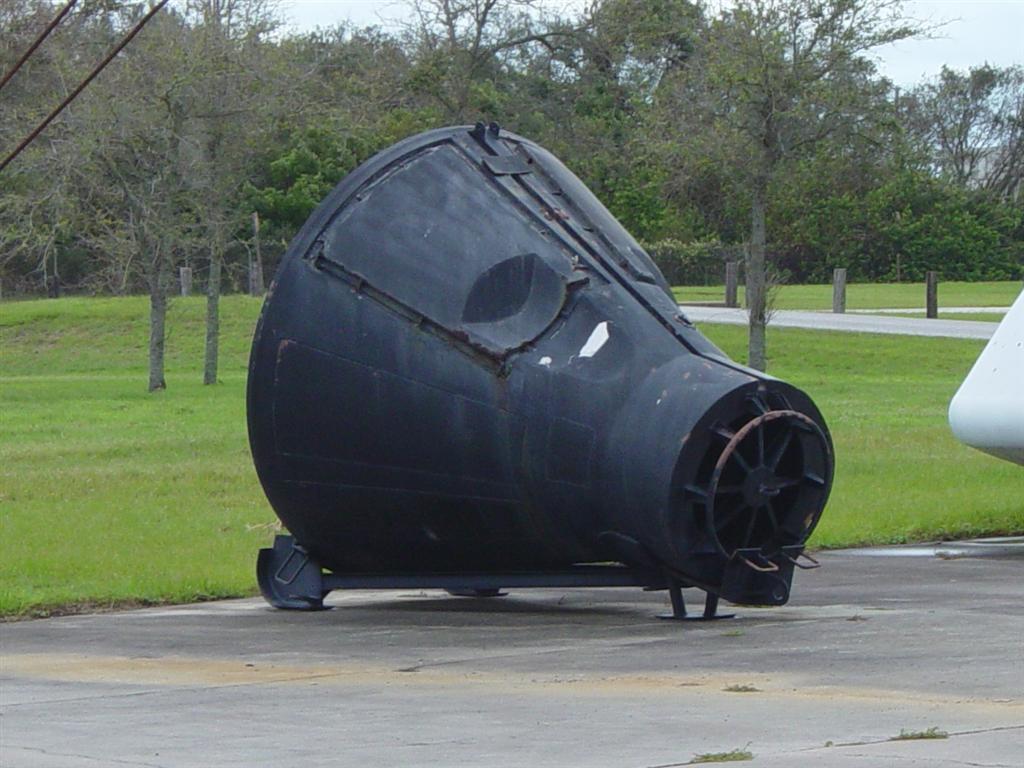
Boilerplate version of Gemini spacecraft on display at Air Force Space and Missile Museum, Cape Canaveral, Florida, October 15, 2004
The prototype Space Shuttle orbiter Enterprise in full boilerplate stack configuration with External Tank and SRBs ready to undergo vibration testing at the Marshall Space Flight Center, October 4, 1978

A boilerplate spacecraft, also known as a mass simulator, is a nonfunctional craft or payload that is used to test various configurations and basic size, load, and handling characteristics of rocket launch vehicles. It is far less expensive to build multiple, full-scale, non-functional boilerplate spacecraft than it is to develop the full system (design, test, redesign, and launch). In this way, boilerplate spacecraft allow components and aspects of cutting-edge aerospace projects to be tested while detailed contracts for the final project are being negotiated. These tests may be used to develop procedures for mating a spacecraft to its launch vehicle, emergency access and egress, maintenance support activities, and various transportation processes.

Boilerplate spacecraft are most commonly used to test crewed spacecraft; for example, in the early 1960s, NASA performed many tests using boilerplate Apollo spacecraft atop Saturn I rockets, and Mercury spacecraft atop Atlas rockets (for example Big Joe 1). The engine-less Space Shuttle Enterprise was used as a boilerplate to test launch stack assembly and transport to the launch pad. NASA's now-canceled Constellation program and ongoing Artemis program used boilerplate Orion spacecraft for various testing.

Mercury boilerplates

[edit]

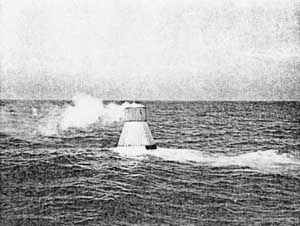
Mercury boilerplates were manufactured "in-house" by NASA Langley Research Center technicians prior to McDonnell Aircraft Company building the Mercury spacecraft. The boilerplate capsules were designed and used to test spacecraft recovery systems, and escape tower and rocket motors. Formal tests were done on the test pad at Langley and at Wallops Island using the Little Joe rockets.[1][2]

Etymology

[edit]

The term boilerplate originated from the use of boilerplate steel[3] for the construction of test articles/mock-ups. Historically, during the development of the Little Joe series of 7 launch vehicles, there was only one actual boilerplate capsule and it was called such since its conical section was made of steel at the Norfolk Naval Shipyard. This capsule was used in a beach abort test, and then subsequently used in the LJ1A flight. However, the term subsequently came to be used for all the prototype capsules (which in their own right were nearly as complicated as the orbital capsules). This usage was technically incorrect, as those other capsules were not made of boilerplate, but the boilerplate term had effectively been genericized.[citation needed]

Notable events

[edit]
Section sources.[4][5]
  • 1959 July 22 – First successful pad abort flight test with a functional escape tower attached to a Mercury boilerplate.
  • 1959 July 28 – A Mercury boilerplate with instrumentation to measure sound pressure levels and vibrations from the Little Joe test rocket and Grand Central abort rocket/escape tower.
  • 1959 September 9 – A Big Joe Atlas boilerplate Mercury (BJ-1) was successfully launched and flown from Cape Canaveral. This test flight was to determine the performance of the heat shield and heat transfer to the boilerplate, to observe flight dynamics of boilerplate during re-entry into the South Atlantic, to perform and evaluate capsule flotation and recovery system procedures, and to evaluate the entire capsule and rocket characters and system controls.[6]
  • 1960 May 9 – Beach Abort test with a launch escape system was successful.
  • 1961 February 25 – A successful drop test of the Mercury boilerplate spacecraft fitted with impact skirt, straps and cables, and a heat shield.[7]
  • 1961 March 24 – A successful Mercury-Redstone BD (MR-3) launched occurred with an apogee of 181 km (112 mi); first sub-orbital uncrewed flight.[7]

Photos

[edit]


Gemini boilerplates

[edit]

There were seven specifically named Gemini boilerplates: BP-1, 2, 3, 3A, 4, 5 and 201.[8] Boilerplate 3A had functional doors and had multi-uses for testing watertightness, flotation collars, and egress procedures.[citation needed] Other boilerplates were designated FA-1A, MSC 312, MSC 313 and MSC-307.[8]

Photos

[edit]

Apollo boilerplates

[edit]

NASA created a variety of Apollo boilerplates.[9]

Launch escape system tests (LES)

[edit]

Apollo boilerplate command modules were used for tests of the launch escape system (LES) jettison tower rockets and procedures:

Boilerplate tests

[edit]
  • BP-1 – Water impact tests[11]
  • BP-2 – Flotation tests storage[11]
  • BP-3 – Parachute tests[11]
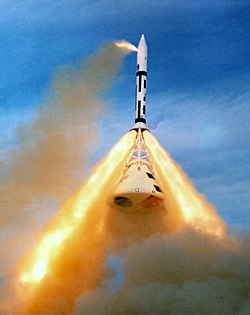
  • BP-6,-6B, – PA-1, later parachute drop test vehicle,[11] and LES pad abort flight test to demonstrate launch escape system's pad-abort performance at White Sands Missile Range.[12]
  • BP-9 with mission AS-105 (SA-10) test flight, Micro Meteoroid Dynamic Test; not recovered.[11]
  • BP-12 with mission A-001 test flight, now at former NASA Facility, Downey, California[10] to test the LES transonic abort flight performance at White Sands Missile Range.[12]
  • BP-13 with mission AS-101 (SA-6) test flight, not recovered.[11]
  • BP-14 with environmental control system tests, Oct. 22–29, 1964,[10] consisted of command module 14, service module 3, launch escape system 14, and Saturn launch adapters.[11]
  • BP-15 with mission AS-102 (SA-7) test flight, not recovered.[11]
  • BP-16 with mission AS-103 (SA-9) test flight, another Micro Meteoroid test, not recovered.[11]
  • BP-19A – VHF antenna, parachute drop tests;[11] now at the Columbia Memorial Space Center (former NASA Facility, Downey, CA)[13]
  • BP-22 with mission A-003 test flight; boilerplate on display at Johnson Space Center, Houston, TX[14]
  • BP-23 – LES high-dynamic-pressure abort flight performance tests at White Sands Missile Range.[12]
  • BP-23A – LES pad-abort flight performance tests with Canard, BPC, and major sequencing changes at White Sands Missile Range,[12] now displayed with SA-500D at the U.S. Space & Rocket Center, Huntsville, Alabama.[11]
  • BP-25 Command Module (CM) – Water recovery test, at Fort Worth Museum of Transportation[11](See BP-25 photo)
  • BP-26 with mission AS-104 (SA-8) test flight – another micro meterioid test.[11]
  • BP-27 command and service module with LES-16 – stack and engine gimbal test.[11] Now on display atop the vertical Saturn V at the U.S. Space & Rocket Center, Huntsville, Alabama.[15]
  • BP-28A – Impact tests[11]
  • BP-29 – Uprighting drop tests at Downey, CA, Oct. 30, 1964, on display at Barringer Crater, Arizona.[10][11]
  • BP-30 – Swing arm tests; currently on display at Kennedy Space Center's Apollo/Saturn V Center.[11]

Specific Apollo BP units

[edit]

BP-1101A

[edit]

BP-1101A was used in numerous tests to develop spacecraft recovery equipment and procedures. Specifically, 1101A tested the air bags as part of the uprighting procedure when the Apollo lands upside down in the water. The sequence of the bags inflating caused the capsule to roll and upright itself.[16]

This McDonnell boilerplate is now on loan to the Wings Over the Rockies Air and Space Museum,[17] Denver, Colorado, from the Smithsonian. BP-1101A has an external painted marking of AP.5. Examination of the interior in 2006 revealed large heavy steel ingots.[18] After further research, a new paint scheme was applied in June 2007.

BP-1102A

[edit]

BP-1102 was used for water egress trainer for all Apollo flights, including by the crew of Apollo 11, the first lunar landing mission. It was also adapted for mock-up interior components and used by astronauts to practice routine and emergency exits from the spacecraft.[citation needed]

It was then modified again where the interior was set up to be configured either as Apollo/Soyuz or a proposed five-person Skylab Rescue vehicle. With these two conversions, astronauts could train for those special missions. It was finally transferred from NASA to the Smithsonian in 1977, and is displayed now at the Udvar-Hazy Center with the flotation collar and bags that were attached to Columbia (the Apollo 11 Command Module) at the end of its historic mission.[19]

BP-1210

[edit]
BP-1210
Apollo 8 S-IVB rocket stage shortly after separation. The LM test article, a circular boilerplate model of the LM is visible with four triangular legs connecting it to the stage.

BP-1210 was used in landing and recovery training and to test flotation devices. It is on display outside the Stafford Air & Space Museum.[20]

BP-1220/1228 Series

[edit]

The purpose of this series design was to simulate the weight and other external physical characteristics of the Apollo command module. These prototypes were in the 9000 lb range for both laboratory water tanks and ocean tests. The experiments tested flotation collars, collar installations, and buoyancy characteristics. The Navy trained their recovery personnel for ocean collar installation and shipboard retrieval procedures. These boilerplates rarely had internal equipment.[21] See BP-1220 photo.

BP-1224
[edit]

BP-1224 was a component-level flammability-test program to test for design decisions on selection and application of non-metallic materials. Boilerplate configuration comparisons with command and service module 2TV-1 and 101 were performed by North American. The NASA review board decided on February 5, 1967, that the boilerplate configuration had determined a reasonable "worst case" configuration, after more than 1,000 tests were performed.[22] See BP-1224 photo set.

BP-1227
[edit]

Details regarding this test capsule are not clear, but most likely it was lost at sea somewhere between the Azores and the Bay of Biscay in early 1969, and recovered in June 1969 off Gibraltar by the Soviet fishing trawler Apatit (possibly a Soviet spy ship disguised as such, which was commonplace during the Cold War),[23][24][25][26] transferred to the port of Murmansk in the Soviet Union, and returned to the US in September 1970 by the USCGC Southwind.[27] It is now located in Grand Rapids, Michigan as a time capsule.[28][29] See BP-1227 photo. The only certainties about this capsule are that it was returned to the United States at Murmansk early in September 1970 during a visit by the USCG Southwind who returned it to the Naval Air Station, Norfolk, Virginia. There it remained until title was passed to the Smithsonian in April 1976 when it was passed on to Grand Rapids, Michigan to serve as a time capsule. Two official sources – the US Navy and the US Coast Guard – both say that it was lost by an ARRS (Aerospace Rescue and Recovery Squadron) unit training in recovery procedures. A contemporary account of its return quotes a NASA spokesman as saying, " ... as far as NASA can determine the object... the Navy lost two years ago."

Apollo Lunar Module

[edit]

A Lunar Module (LM) boilerplate, the LM test article, was launched with Apollo 8 to simulate the correct weight and balance of the LM which was not ready for the flight.

Space Shuttle boilerplates

[edit]
Facilities test article
The facilities test mockup is used to test the Mate-Demate Device at the Shuttle Landing Facility in Florida
Structural test article
The Structural Test Article undergoing tests at the Rockwell facility in California
Enterprise is jettisoned from the SCA during the first free-flight of the Approach and Landing Test programme
Enterprise lowered into Test Stand
Enterprise at KSC
Enterprise at Vandenburg
Enterprise in boilerplate configuration;
Left - Enterprise is lowered into the Dynamic Structural Test Facility for the Mated Ground Vibration Tests
Center - Enterprise is mated with ET and SRBs to undertake fit-check tests at KSC Pad 39A
Right - Enterprise with ET and SRBs in fit-check tests at SLC-6

As part of the Space Shuttle program, a number of boilerplate vehicles were constructed using various materials to undertake key tests of procedures, infrastructure and other elements that would take place during a Shuttle mission.

Facilities Test Article

[edit]

In 1977, the Marshall Space Flight Center (MSFC) constructed a simple steel and wood orbiter mockup to be used in fit check activities for various elements of the infrastructure needed to support the Space Shuttle, including roadway clearances and crane capabilities, as well as for testing in various buildings and structures used as part of the program, both at the MSFC and at the Kennedy Space Center. The mockup was designed to be the approximate size, shape and weight of an actual orbiter, and allowed these initial tests to be undertaken without using the far more expensive and delicate prototype orbiter, Enterprise.[30] Following its use as a test article, the mockup was stored until 1983, when it was refurbished and modified to more closely resemble an actual orbiter, before being displayed in Tokyo.[31]

Structural Test Article

[edit]

The Structural Test Article was built as a test vehicle intended for use in initial vibration testing to simulate entire flights.[32] The STA was built as essentially a complete orbiter airframe, but with a mockup of the crew compartment installed, and the thermal insulation only fitted to the forward fuselage.[33] The simulation testing of the STA was undertaken over the course of eleven months following its rollout in February 1978; at the time, it was intended that the prototype orbiter Enterprise would be converted into a full flight ready model, but the cost of undertaking this work, along with a number of design changes that had taken place between Enterprise being rolled out, and the final construction of the first operational orbiter, Columbia, meant that it was decided instead to upgrade the STA into a flight model. This began following the end of the STA testing in January 1979, with the completed orbiter, named as Challenger, rolled out in June 1982.[32]

Prototype

[edit]

Approach and landing tests

[edit]

In January 1977, the prototype orbiter Enterprise was delivered to Edwards Air Force Base in California for the beginning of its overall test programme, which would encompass flight tests, fit-check and procedures testing of the orbiter, its systems, the facilities and procedures required to launch, fly and land the spacecraft safely. During 1977, Enterprise was used in what was called the Approach and Landing Tests programme of testing, which encompassed mating the orbiter to the Shuttle Carrier Aircraft, a modified Boeing 747 to test the taxiing and flight characteristics of the Orbiter / SCA combination. This included flights of the combination in which Enterprise itself was powered up and crewed, to test crew procedures systems in flight, and finally a set of five so-called "free-flights", with Enterprise jettisoned from the SCA at altitude to land on its own, testing the orbiter's own flying and handling characteristics.[34]

Vibration and fit-check tests

[edit]

In March 1978, following its use in flight tests during the ALT program, Enterprise was taken to the MSFC in Huntsville, Alabama for use in the Mated Vertical Ground Vibration Test. This would see Enterprise mated to an empty External Tank and dummy Solid Rocket Boosters, creating a boilerplate version of the complete Space Shuttle stack for the first time. Inside the Dynamic Structural Test Facility at the MSFC, the stack was subjected to a series of vibration tests simulating the various stages that it would be subjected to during launch.[35]

Following its use at Huntsville, Enterprise was then taken to the Kennedy Space Center in Florida, where she was again used in full boilerplate configuration to this time test the procedures of assembling and transporting the stack from the Vehicle Assembly Building to Launch Complex 39, as well as procedures required upon its arrival at the launch pad.[36][37] In 1985, Enterprise was used again for this purpose, this time with the boilerplate configuration used to test the Air Force shuttle facilities at Vandenberg Air Force Base, including a full mating on the SLC-6 launch pad.[38]

Orion boilerplate

[edit]

Development

[edit]

The construction of the first Orion boilerplate,[39] was a basic mockup prototype to test the assembling sequences and launch procedures at NASA's Langley Research Center while Lockheed aerospace engineers assemble the first rocket motors for the spacecraft's escape tower. The first boilerplate went to Dryden Flight Research Center at Edwards, California, for integration of Lockheed's avionics and NASA's developmental flight instrumentation[40] prior to shipment to New Mexico's White Sands Missile Range for the first Orion pad abort test (PA-1) in 2009. On November 20, 2008 a complete test of the abort rockets took place in Utah.[41] PA-1 is the first of the six test events in Orion Abort Flight Test subproject. Lockheed Martin Corp. was awarded the contract to build Orion on August 31, 2006.[citation needed]

Other boilerplates would be used to test thermal, electromagnetic, audio, mechanical vibration conditions and research studies. These tests for the Orion spacecraft would be done at Plum Brook Station in the agency's Ohio-based Glenn Research Center.[42][43]

Photos

[edit]

Commercial spacecraft boilerplates

[edit]
Cygnus Mass Simulator side view

In the 2010s, several commercially designed space capsules used boilerplate units on the initial launches of new launch vehicles.

See also

[edit]

Notes

[edit]

References

[edit]
[edit]
Revisions and contributorsEdit on WikipediaRead on Wikipedia
from Grokipedia
A boilerplate spacecraft, also known as a mass simulator, is a nonfunctional mock-up engineered to match the external dimensions, weight, and center of gravity of a production flight vehicle, typically fabricated from steel to enable cost-effective testing of design, handling, and operational procedures without risking actual spacecraft components. These test articles have played a pivotal role in the development of U.S. since the late 1950s, beginning with , where they underwent extensive drop tests to validate capsule recovery techniques in both land and sea environments. In the Gemini and Apollo eras, boilerplates supported a wide array of evaluations, including , water impact stability studies, vibration and structural integrity assessments, and even flight qualification tests when integrated with launch vehicles. Notably, following the fire in 1967, boilerplate Command Module 1224 was instrumental in comprehensive flammability testing, enduring 102 deliberate ignitions under simulated flight and ground conditions to refine cabin materials and confirm reduced fire hazards for subsequent missions. This practice extended into modern programs, such as Orion, where boilerplate crew modules have been used for launch abort system evaluations, moment-of-inertia measurements, and recovery simulations to ensure safe return from deep-space missions. Overall, boilerplates have minimized risks and accelerated engineering progress by allowing iterative refinements to spacecraft systems prior to crewed flights.

Overview

Definition and Purpose

In spaceflight engineering, a boilerplate spacecraft refers to a non-flightworthy or constructed to mimic the , , center of gravity, and structural interfaces of an operational , while omitting functional systems such as , , or . These replicas, often built from simplified materials like welded or aluminum shells, serve as stand-ins during early development phases to validate design assumptions without the complexity or expense of fully equipped hardware. The primary purposes of boilerplate spacecraft include facilitating ground-based testing for vibration, acoustic loads, and structural integrity; simulating water impact dynamics and recovery procedures in drop tests from helicopters or ; supporting crew training through familiarization with entry, landing, and egress scenarios; and verifying compatibility during launch pad integration and abort system evaluations. By replicating real-world stresses in controlled environments, such as beach aborts or flotation stability trials, boilerplates help identify potential flaws in spacecraft configuration before committing to costly flight prototypes. One key advantage of boilerplates lies in their significantly lower production costs relative to flight-qualified hardware, which enables multiple units to be built and tested in parallel, thereby accelerating program timelines and reducing overall development risks. This approach proved essential in resource-constrained environments, allowing engineers to iterate designs rapidly without jeopardizing mission-critical components. Boilerplates first emerged in the late 1950s as part of U.S. manned initiatives, notably NASA's , which began in 1958 amid the intensifying competition with the to achieve milestones. This strategy de-risked ambitious goals by prioritizing safety and reliability through iterative, low-stakes validation in an era of accelerated technological advancement.

Types and Evolution

Boilerplates in are categorized into several variants based on their primary testing objectives, ranging from basic simulations to near-operational hardware. Simple boilerplates serve as mass and volume simulators, replicating the weight, dimensions, and center of gravity of flight to evaluate launch vehicle performance and ground handling without functional systems; early examples include steel shells used in the Mercury program for drop and impact tests to assess capsule stability during reentry. Dynamic test vehicles focus on escape, impact, and aerodynamic scenarios, incorporating partial systems like parachutes or abort mechanisms; the Apollo program's BP-23, for instance, underwent evaluations under high-dynamic-pressure conditions. Structural test articles act as load-bearing replicas to verify integrity under mechanical, thermal, and environmental stresses; in the , these included dedicated units like the orbiter structural test articles (STA) for vibration and fatigue assessments. Qualification units represent the highest fidelity, using near-flight hardware to certify components such as parachutes or abort systems; SpaceX's Crew Dragon qualification module was employed for pad abort and ground vibration tests prior to crewed flights. The evolution of boilerplates traces a progression from rudimentary prototypes in the 1950s to sophisticated, integrated test articles by the 2020s, paralleling advancements in U.S. space programs. In the Mercury era (1950s–early 1960s), boilerplates emphasized basic drop and Little Joe rocket tests to validate capsule aerodynamics and recovery, using non-aerodynamic shapes for initial escape tower evaluations. The 1960s Gemini and Apollo programs advanced this to dynamic and structural integrations, mating boilerplates with launchers like Little Joe II for full-vehicle abort simulations and water impact trials, enabling end-to-end mission rehearsals. By the 1970s, the Space Shuttle introduced full-scale orbiters such as Enterprise (OV-101), a boilerplate-like vehicle for approach and landing tests (ALT) that confirmed atmospheric flight characteristics without main engines. In the 2000s and beyond, post-Shuttle efforts like Orion and commercial vehicles adopted hybrid boilerplates with flight-representative elements for abort, parachute, and environmental qualification; NASA's Orion Boilerplate Test Unit supported splashdown recovery drills in 2014, while recent 2020s tests incorporated electromagnetic and acoustic simulations for Artemis missions. Key shifts in boilerplate development included transitions in materials and design to enhance realism and cost-efficiency. Early models relied on or wooden constructions for in rough tests, as seen in Mercury's boilerplate capsules fabricated from Norfolk Naval Shipyard . Subsequent programs shifted to aluminum alloys to better mimic flight hardware properties, improving accuracy in structural load tests during Apollo and Shuttle eras. Overall increased progressively, with boilerplates evolving from static mockups to dynamic, subsystem-integrated articles that validated significant portions of flight configurations before final assembly, reducing redesign risks across programs like Apollo where they informed critical aerodynamic and safety refinements. This trajectory extended to commercial adaptations by 2025, blending government and private sector approaches for reusable vehicle testing.

Mercury Program

Etymology and Early Development

engineers first applied the term "boilerplate" to in , referring to identical, mass-produced mockups intended to standardize testing protocols across the Mercury program. Early development of these boilerplate units occurred in-house at from to 1959, shortly after the agency's formation and amid heightened urgency following the Soviet Sputnik launches. Technicians constructed the units from welded steel hemispheres measuring 6.5 feet (78 inches) in diameter and weighing about 1,200 pounds each, creating simple yet robust structural articles. A total of 16 such units, labeled BP-1 through BP-16, were produced prior to awarding the primary development to in 1959. These boilerplates featured non-pressurized outer shells fitted with internal ballast to accurately replicate the center-of-gravity characteristics of flight-ready , along with mounting interfaces for escape towers and recovery systems. This design allowed for versatile ground and drop testing without the complexity of full operational hardware. The first unit, BP-1, was completed in November 1958, enabling immediate use in simulations to support the program's accelerated timeline. By facilitating and iterative evaluations of structural integrity, , and recovery mechanisms, the boilerplates were instrumental in propelling forward in the post-Sputnik era, helping bridge critical gaps in manned readiness before transitioning to production models.

Key Tests and Events

The Mercury program's boilerplate tests were essential for validating the spacecraft's , reentry capabilities, and recovery procedures prior to manned flights. These uncrewed demonstrations, conducted primarily in 1959, utilized nonfunctional mockups to simulate emergency scenarios and environmental stresses, ensuring the design's reliability under real-world conditions. Pad abort tests at , , focused on the escape tower's ability to rapidly separate the capsule from a malfunctioning setup. The first successful test occurred on July 22, 1959, when a boilerplate Mercury equipped with a production escape tower was fired, propelling it away from the test site before the tower jettisoned and the capsule descended via parachute to a safe . This validated the system's operational sequence, including thrust from the Grand Central Rocket motor, despite earlier simulations revealing nozzle malfunctions that caused pitching issues during ascent. High-altitude drop tests from C-130 aircraft, beginning in late 1958 and continuing into 1959, assessed the boilerplate's stability, parachute deployment, and post-landing flotation features. Conducted over sites like , , and offshore , these drops from progressively higher altitudes evaluated the addition of flotation collars and dye markers to aid visual location and buoyancy in water recoveries. The tests confirmed the spacecraft's aerodynamic behavior during freefall and refined extraction methods from the aircraft bay, contributing to overall landing system qualification. Orbital simulation was advanced through the Big Joe 1 mission on September 9, 1959, launching a boilerplate Mercury atop an from . This suborbital flight reached a peak altitude of 87 miles and covered 1,424 miles downrange, subjecting the partial to reentry temperatures up to 3,500°F while testing attitude control and recovery dynamics. Recovered intact by the USS Strong after approximately eight hours, the test demonstrated the ablative shield's effectiveness against heating and validated parachute sequencing, though minor issues with retrofire package separation were noted. Recovery training incorporated boilerplates in ocean-based simulations to train Navy and Air Force teams on post-splashdown operations. Exercises, such as the June 25, 1959, airdrop off , practiced helicopter hoist extractions and flotation device installations, with recoveries completed in about 2.5 hours using destroyer escorts. Additional simulations, including those tied to Little Joe flights like LJ-2 on December 4, 1959, honed procedures for astronaut egress and capsule retrieval, directly shaping the standardized Mercury recovery protocols employed in manned missions. These tests collectively uncovered critical flaws, such as premature escape system activation and tower separation failures observed in the initial Little Joe 1 flight on August 21, 1959, prompting redesigns to the jettison mechanisms and sensor integrations. All major boilerplate evaluations concluded before the first manned Mercury flight in May 1961, providing the empirical foundation for safe human spaceflight.

Gemini Program

Design Features

The Gemini boilerplate spacecraft were constructed by the McDonnell Aircraft Corporation between 1963 and 1964, with seven primary units designated BP-1 through BP-6 and an additional BP-3A. These test articles were constructed using steel or aluminum skin and stringer construction to simulate the titanium pressure vessel of operational Gemini spacecraft, incorporating adjustable ballast to replicate the weight, center of gravity, and moments of inertia of flight-ready vehicles. Key features of the boilerplates included replicas of the reentry module—measuring approximately 11 feet in length and 7.5 feet in maximum diameter, with a around 4,000 pounds—outfitted with operational hatches, windows, and mounting points for retro-rockets to support structural and systems evaluations. Adapter sections were also integrated to mimic compatibility with the , facilitating ground-based integration and launch simulations. Notable variations distinguished specific units for targeted testing roles; for instance, BP-1 featured watertight sealing to enable flotation assessments in water environments, while BP-3A was configured as an egress trainer with removable structural sections for repeated access practice. Compared to Mercury-era boilerplates, the Gemini designs were enlarged to support tandem seating for a two-person and included mockups of advanced components, such as periscopes for visual navigation and simulations to achieve accurate mass distribution during dynamic evaluations.

Testing and Training Uses

Boilerplates in the Gemini program played a crucial role in structural testing to ensure the could withstand launch vibrations. Boilerplate 2 (BP-2) was subjected to vibration tests on shake tables from August 20 to 24, 1964, at facilities, simulating Titan II launch loads including up to 11.2 g's across frequencies of 20 to 2000 cycles per second. These tests evaluated the structural integrity of the pressurized cabin mock-up, voice systems, suit and cabin atmosphere components, and ejection seats under dynamic conditions. Similarly, static articles No. 3 and No. 4 underwent tests simulating Titan launch loads up to 6g for launch and reentry dynamics, confirming a minimum structural margin of 23 percent above ultimate conditions. Environmental simulations using boilerplates focused on post-splashdown recovery and flotation stability in realistic sea conditions. Boilerplate 4 (BP-4) was deployed in the in May 1964 for rough water suitability tests with a flotation collar, enduring 4- to 8-foot waves and 20- to 25-knot winds to assess recovery operations. A related 36-hour manned post-landing systems qualification test with Static Article 5 (SA-5), a Gemini boilerplate, was conducted in the to evaluate environmental control and recovery aids under saltwater immersion, informing procedures for extended flotation durations up to 72 hours if needed. These tests qualified components like the UHF beacon and flashing lights, though initial failures due to water seepage led to design improvements such as enhanced potting for seals. Crew training emphasized egress and hatch operations in simulated post-splashdown scenarios. Boilerplate 3A (BP-3A), a steel mock-up with production components, was used at for egress drills from 1964 to early 1965, allowing astronauts to practice hatch jettison and escape under pyrotechnic sequencing and live drop conditions. These sessions, conducted at Weber Aircraft facilities and integrated with training, validated the compatibility of the escape system and for orbital environments, ensuring rapid crew exit in water or tilted orientations. Additionally, boilerplate models in water tanks supported broader egress training, simulating closed-hatch flotation to refine post-splashdown protocols. Ground support activities involved fit-checks and integration verifications at launch sites. Boilerplate 6 (BP-6), repurposed after the abandonment of the paraglider landing system, underwent fit-checks at Cape Kennedy with a Titan II mockup, identifying and resolving adapter alignment issues for spacecraft-to-launcher mating. These tests, part of preflight checkout and systems integration at the Eastern Test Range, ensured mechanical compatibility and operational readiness, including seat ejection from the pad and antenna pattern evaluations using C-band mock-ups. The collective outcomes of these pre-1965 boilerplate tests validated stability through environmental simulations, such as 14-day humidity exposure for aneroid mechanisms, directly influencing procedures for Gemini missions 3 through 12. For instance, recovery and egress refinements from BP-4 and BP-3A tests contributed to the successful splashdowns of Gemini V (8 days) and VII (14 days), while structural validations supported reliable launch integrations without anomalies in subsequent flights.

Apollo Program

Command and Service Module Tests

The Command and Service Module (CSM) boilerplate tests played a pivotal role in the Apollo program's development, focusing on validating the launch escape system (LES), reentry dynamics, and overall structural resilience under simulated mission stresses. These non-flight mockups allowed for iterative improvements without risking operational hardware, emphasizing escape scenarios, parachute deployment, and load-bearing capabilities to ensure crew safety during ascent, abort, and descent phases. By replicating the CSM's mass properties and interfaces, the tests provided empirical data that shaped the transition from Block I prototypes to the production Block II configuration. A primary focus was the LES, which relied on a solid-fueled rocket tower to rapidly separate the command module from a failing launch vehicle. On May 13, 1964, at White Sands Missile Range, boilerplate BP-12 underwent a high dynamic pressure (Q-ball) abort test as part of Little Joe II Mission A-001, where the escape tower successfully pulled the capsule clear of the launch vehicle while demonstrating effective spin recovery to stabilize the trajectory, despite a parachute failure during descent. This evaluation confirmed the LES's performance in maximum aerodynamic load conditions at transonic speeds, preventing tumbling and ensuring a stable separation path. Reentry and recovery systems were rigorously assessed through parachute and water impact trials to mitigate hazards. Boilerplate BP-23 participated in Mission A-002 on December 8, 1964, a high-altitude abort test that verified the three-parachute cluster's deployment and performance, reducing vertical velocity to survivable levels while maintaining orientation stability upon water contact. These results highlighted the need for reinforced risers and apex lines, enhancing the reliability of the 83-foot-diameter main parachutes in operational missions. Structural integrity tests targeted the CSM's ability to endure vibrational and accelerative forces from launch and atmospheric reentry. In 1964, BP-22 was mounted on a table to simulate dynamic environments, withstanding axial loads that qualified the interfaces between the ablative and the conical . This confirmed the shield's adhesion and thermal performance under peak deceleration, preventing or structural compromise during peak heating phases. Complementing this, BP-6's Pad Abort Test-1 on November 7, 1963, demonstrated structural resilience under high-thrust escape conditions. In total, 30 CSM boilerplates (BP-1 through BP-30) were produced from 1963 to 1969, constructed primarily from welded steel and aluminum alloys to form a 13-foot-tall conical command module shell weighing about 5,500 pounds, closely mimicking flight article center of gravity and inertia. The collective insights from these tests directly informed Block II CSM redesigns, such as refined LES sequencing and heat shield bonding—differentiating from Block I by improved crew safety features—substantially lowering abort probabilities and enabling safer manned flights from Apollo 7 onward. Some units, like BP-30, were later adapted for Skylab program studies.

Lunar Module Tests

Grumman Aircraft Engineering Corporation constructed several (LM) test articles, including Lunar Test Articles (LTAs) such as LTA-1 through LTA-10, between 1965 and 1968, serving as boilerplate replicas to evaluate structural integrity and mass properties without operational propulsion systems. These aluminum-framed models replicated the LM's basic configuration, including the descent and ascent stages, , and docking mechanisms, but omitted engines and complex subsystems to focus on foundational engineering challenges like weight distribution and vibration response during launch. Early units were used for initial static load assessments at Grumman's Bethpage facility, while later ones underwent integrated systems testing at NASA's Manned Spacecraft Center (now ). Landing gear performance was a primary focus, with tests including drop trials of full-scale and scaled models at NASA's to simulate lunar touchdown conditions in 1/6th environments using suspended setups dropped onto simulants. These trials assessed shock absorption and stability on uneven terrain at impact velocities up to 3 meters per second, validating the four-legged, deployable design's ability to handle descent rates up to 3 m/s while maintaining skirt clearance. LM-2, configured with , supported ground drop testing, though minor issues with footpad penetration in loose soils informed subsequent refinements. Rendezvous and docking simulations utilized dynamic test article models at Langley, where crews practiced visual acquisition and alignment maneuvers in a controlled zero-gravity analog from 1967 onward. These sessions emphasized the LM's handling qualities during ascent from the lunar surface back to the Command and Service Module, using overhead cables to counteract Earth's gravity and simulate orbital dynamics. Complementing this, structural proof testing applied overload factors of 1.5 times the expected lunar loads to confirm the airframe's margins against ascent stresses and impacts. Overall, these boilerplate efforts identified critical descent stage crush-up vulnerabilities under off-nominal landing attitudes, prompting redesigns to the honeycomb energy absorbers and increased mass to 68.4 pounds for plume heating protection. The validated configurations directly supported the LM-5's successful touchdown on July 20, 1969, achieving negligible gear stroking and 13.5 inches of engine clearance in the pad mode.

Notable Units and Incidents

One prominent Apollo boilerplate unit was BP-1102A, an aluminum mockup of the Block II Command Module designed by NASA's Manned Landing and Recovery Division. It served as the primary water egress trainer for all Apollo missions, including simulations for the crew—, , and Michael Collins—conducted in the on May 24, 1969. A significant incident occurred with BP-1227, a Block II boilerplate allocated for recovery force training. During a joint U.S.-U.K. exercise in the North Atlantic in May 1969, the unit was air-dropped but lost in fog and subsequently recovered by a . The capsule was returned to U.S. custody in September 1970 when the Coast Guard cutter Southwind docked in , USSR, marking a rare Cold War-era diplomatic handoff without formal protests. BP-13 provided early validation of Apollo hardware integration, launched on May 28, 1964, aboard vehicle SA-6 for Mission A-101. The boilerplate orbited 54 times, demonstrating command and service module compatibility with the before reentering over the on June 1, 1964; no recovery was attempted, but the test confirmed structural integrity during orbital operations. The final command and service module boilerplate, BP-30, arrived at in January 1968 for facility checkout but was repurposed in 1969 for program adaptation studies, including multiple docking adapter simulations in the . At least five Apollo boilerplate units remain preserved, serving as educational artifacts that informed post-Apollo training mockups for programs like and the . Notable examples include BP-25, the first completed unit delivered in August 1962 for initial water recovery tests at , and BP-1102A on display at the Smithsonian's Udvar-Hazy Center; others, such as BP-29 used for flotation evaluations, are held in the collection.

Space Shuttle Program

Approach and Landing Tests

The Approach and Landing Tests (ALT) program, conducted in 1977, utilized the Space Shuttle Enterprise (OV-101) to verify the orbiter's subsonic aerodynamic characteristics, flight control systems, and landing capabilities under simulated end-of-mission conditions. Enterprise, the first orbiter prototype, was constructed by Rockwell International at its Palmdale facility, with final assembly completed and rollout occurring on September 17, 1976. As a full-scale mockup without main engines or thermal protection tiles, it measured 122 feet in length and 78 feet in wingspan, designed specifically for atmospheric testing rather than orbital flight. The vehicle was delivered to NASA's Dryden Flight Research Center (now Armstrong Flight Research Center) at Edwards Air Force Base, California, on January 31, 1977, where it was mated to a modified Boeing 747 Shuttle Carrier Aircraft (SCA) for the test series. The ALT program comprised 13 flights divided into captive and free-flight phases, all performed between February and October 1977 to evaluate the orbiter's handling and pilot interfaces without risking a full orbital vehicle. The initial eight captive flights—five unmanned and three manned—tested structural airworthiness, separation dynamics, and basic systems while Enterprise remained attached to the SCA's fuselage. These flights, starting with the first on February 18, 1977, reached altitudes up to 25,000 feet and speeds of 250 knots, confirming the mated vehicle's stability and the orbiter's response to aerodynamic loads. Manned captive flights, crewed by astronauts Fred W. Haise and C. Gordon Fullerton, or Joe H. Engle and , introduced pilot control inputs to assess handling qualities and escape system feasibility. The five free flights, conducted from to October 26, 1977, represented the program's core, with Enterprise released from the SCA at approximately 20,000–24,000 feet to glide unpowered to a , simulating reentry descent. A drag-inducing tailcone was fitted during early flights for stability, later removed to test full aerodynamic performance; all occurred at , with the first four on the dry lakebed and the final on a concrete runway. Key objectives included validating low-speed , deploying at 300 knots, and evaluating pilot interfaces through the orbiter's digital system. Crews, including Haise and Fullerton for the inaugural free flight on , executed approaches at 300 knots and 10,000 feet, demonstrating precise control and . Outcomes from the ALT program confirmed the orbiter's ability to achieve landings with peak loads of up to 1.5 g, aligning with design predictions and informing modifications for operational vehicles like Columbia. Flight data revealed minor issues, such as pilot-induced oscillations during the fifth free flight on —lasting about four seconds and resolved through prior on digital controls—along with brake chatter, both addressed via software and hardware tweaks. The tests provided critical validation for the shuttle's winged reusability, shaping thermal tile configurations and approach profiles for subsequent orbiters, though Enterprise itself was not retrofitted for due to high costs.

Structural and Facilities Evaluations

The Structural Test Article (STA-099) was a full-scale, high-fidelity mockup of the Space Shuttle orbiter's , constructed by starting in November 1975 under NASA's NAS9-14000 . Designed specifically for ground-based structural validation, it featured a complete , wings, and tail assembly but lacked operational systems like engines or , instead incorporating simulated components to replicate flight stresses. Following rigorous testing, STA-099 was refurbished and redesignated as the flight vehicle Challenger (OV-099), a decision that proved more cost-effective than converting the earlier Enterprise due to its structural robustness and prior qualification. STA-099 underwent 11 months of intensive and beginning in at Rockwell's facilities in , using a custom 43-ton test rig to simulate dynamic environments. These evaluations subjected the to simulated ascent, orbital, reentry, and landing forces, confirming its ability to withstand extreme stresses without structural failure and validating design margins for the operational orbiters. The tests identified minor reinforcement needs, such as additional doublers on wing spars, which were incorporated into subsequent vehicles to enhance durability. The Facilities Test Article (FTA), known as Pathfinder, was built in 1977 at NASA's as a mockup primarily of and to assess ground compatibility. Weighing approximately 150,000 pounds to mimic the orbiter's mass distribution, it served to certify handling equipment, including the massive overhead cranes in the (VAB) at . Pathfinder's non-structural design allowed safe simulation of mating procedures with the external tank and solid rocket boosters without risking flight hardware. Pathfinder conducted fit-checks across key facilities, including the VAB, (OPF), and Launch Pad 39, where it verified alignments for stacking, transport, and launch preparations. These ground evaluations, performed in 1978, revealed clearance issues in the OPF, such as tight tolerances around doorways and service platforms, prompting modifications to ensure safe orbiter access and maintenance workflows. Overall, the STA and FTA programs provided critical pre-flight assurances, averting potential redesign costs estimated in the tens of millions by resolving infrastructure incompatibilities early.

Orion Program

Initial Development and Abort Tests

The initial development of Orion boilerplates during the late 2000s emphasized validation of the launch abort system (LAS) as part of NASA's shift from the to the initiative, with early units serving as nonfunctional mockups to simulate crew module dynamics without integrated or systems. These simplified structures, often constructed from aluminum to replicate the basic shape and properties of the full vehicle, weighed approximately 18,000 pounds and measured about 16 feet in , functioning as simulators to test interfaces with and eventual integration with the (SLS). , as the prime contractor, collaborated with centers including for design and fabrication, enabling initial ground handling evaluations at to refine procedures for assembly and transport. A key milestone in this phase was the Pad Abort-1 (PA-1) flight test on May 6, 2010, conducted at the U.S. Army's White Sands Missile Range in New Mexico to demonstrate the LAS's ability to rapidly separate the crew module from a launch pad in an emergency. The test vehicle consisted of a boilerplate crew module topped by the LAS, which included the abort motor, attitude control motors, and jettison motor; no operational avionics were present, relying instead on ballast to mimic the vehicle's center of gravity and inertial properties for realistic aerodynamic response. At liftoff, the abort motor ignited, delivering approximately 500,000 pounds of thrust to propel the stack upward, while the eight attitude control motors provided up to 7,000 pounds of thrust each for lateral maneuvering away from the pad. The PA-1 sequence unfolded over 135 seconds, with the boilerplate reaching a maximum altitude of about 6,336 feet and a peak of 539 mph before the attitude control and jettison motors fired to stabilize and shed tower, allowing drogue and main parachutes to deploy for a 6,900 feet downrange at 16.2 mph. This test confirmed the abort motor's ignition reliability, thrust vector control, and overall separation performance under zero- pad abort conditions, with all elements functioning nominally and parachutes deploying without damage. The resulting data validated LAS design assumptions, informing aerodynamic models and safety analyses that supported subsequent evaluations, including the 2014 Exploration Flight Test-1 (EFT-1) using flight hardware.

Integration and Ground Support

In the development of NASA's Orion spacecraft for the Artemis program, boilerplates and mockups have been essential for ground integration activities at the Kennedy Space Center's Vehicle Assembly Building (VAB), particularly in verifying compatibility with the Space Launch System (SLS) stack. Early planning in 2012 outlined the integration process, where Orion, including its service module and Launch Abort System, would be mated to the SLS via the Multi-Purpose Crew Vehicle Stage Adapter, using mockups to confirm mechanical and electrical interfaces prior to full-scale stacking operations. These fit-checks simulated key aspects of the launch configuration, ensuring safe handling of the combined stack weighing over 200,000 pounds for the core stage alone, though full Orion mass simulations were refined in later years. Subsequent ground support efforts utilized dedicated test articles, such as the Orion mass simulator installed atop the SLS core stage in the VAB during preparations for the uncrewed Artemis I mission (formerly EM-1). This steel barrel assembly replicated the spacecraft's mass and center of gravity—approximately 75,000 pounds for the crew module plus service module and launch abort system—to validate stacking procedures, crane operations, and facility readiness without exposing flight hardware to risks. Conducted around 2018–2021 as part of EM-1 ground testing, these activities confirmed pad abort facility configurations and overall integration flows, drawing on prior abort test data to support safe rollout to Launch Pad 39B. By bridging early dynamic tests with operational simulations, such boilerplate efforts minimized integration surprises for subsequent missions. Crew training has relied heavily on Orion mockups at NASA's Johnson Space Center (JSC), where the Space Vehicle Mockup Facility provides a full-scale replica for practicing ingress, egress, and emergency procedures. From 2015 onward, these facilities supported initial astronaut familiarization with Orion systems, evolving into comprehensive simulations for deep-space operations as the advanced. For the Artemis II crew—comprising NASA astronauts , Victor Glover, and , along with astronaut —training intensified between 2023 and 2025, including multi-day sessions in the Orion mockup for post-insertion checkout, deorbit operations, and recovery. These 2025 exercises at JSC Building 5 incorporated real-time scenarios, such as night launch simulations and environmental control system checks, to prepare the crew for the 10-day lunar flyby mission. The use of boilerplates in these integration and roles has contributed to risk reduction across the , informing procedures that helped address technical challenges like refinements following Artemis I. By 2025, with final stacking of the Artemis II Orion—named Integrity—completed in the VAB, the focus has shifted from boilerplates to flight spares and certification hardware, enabling the first crewed Orion test flight targeted for no earlier than February 2026. This progression has supported schedule stability despite prior delays, validating ground infrastructure for sustained lunar exploration.

Commercial Programs

SpaceX Dragon Qualification

The SpaceX Dragon qualification process utilized boilerplate hardware to verify the spacecraft's design for both cargo and eventual crewed missions under NASA's (COTS) program. The Qualification Unit, designated C100, was constructed in 2008 as a non-pressurized structural to simulate the Dragon capsule's shape, mass, and interfaces. This boilerplate underwent rigorous ground testing at SpaceX's Hawthorne facility, including vibration tests to assess launch loads and thermal-vacuum tests to replicate space environment conditions, ensuring the basic could withstand ascent stresses and orbital extremes. C100's design consisted of a simplified shell approximately 13 feet (4 m) in diameter and 15 feet (4.6 m) tall, weighing 9,500 pounds (4,300 kg), paired with a trunk simulator to represent the unpressurized service module, allowing focused evaluation of the PICA-X ablative interfaces without internal systems. Following ground qualification, C100 served as the for the inaugural launch on June 4, 2010, demonstrating the rocket's ability to deliver a representative mass to , though the unit was not designed for reentry or recovery. Orbital qualification advanced with COTS Demo Flight 1 on December 8, 2010, marking the debut of the operational C1 capsule atop a from . The mission achieved orbit after two burns, tested Draco thruster maneuvers for attitude control (despite one thruster anomaly), and executed a deorbit burn for reentry, culminating in a successful in the approximately 500 miles west of . Drogue parachutes deployed at 45,000 feet to stabilize the capsule, followed by three main parachutes at approximately 10,000 feet, validating recovery operations despite the high-impact ocean landing. This flight confirmed critical elements like heat shield performance during peak reentry heating of over 3,500 degrees Fahrenheit and overall spacecraft recoverability, paving the way for the first operational Commercial Resupply Services (CRS-1) mission in October 2012. By 2025, Dragon's development had matured into the reusable Crew Dragon variant, incorporating lessons from early qualification to enable pad abort system tests in May 2015 and subsequent crewed flights to the .

Boeing Starliner Parachute and Abort Tests

utilized boilerplate test articles for the to validate its and launch escape systems as part of NASA's , focusing on safe crew module recovery during nominal and contingency scenarios. These non-flightworthy mockups simulated the crew module's mass, dimensions, and interfaces, enabling ground-based and drop tests to assess deployment, descent stability, and landing dynamics without risking operational hardware. A series of parachute qualification tests occurred between 2017 and 2020, primarily involving balloon-lofted drops from in to simulate high-altitude deployments under various conditions, including night operations and partial failures. For instance, on June 25, 2019, a boilerplate was released from approximately 40,000 feet (12,200 meters) in a nighttime test, where two parachutes and one main parachute were intentionally disabled to evaluate margins; the remaining parachutes deployed successfully, stabilizing the capsule for a four-minute descent. These tests confirmed the five-parachute —comprising two drogues and three mains—could decelerate the approximately 13,000-pound (5,900 kg) crew module to a of around 18 mph (29 km/h) prior to airbag inflation, ensuring soft touchdowns with peak g-loads below 4g. Later evaluations, such as a December 2020 drop from 35,000 feet (10,700 meters), incorporated reused parachutes to assess durability for multiple missions. By early 2024, additional aircraft drops from a C-17 at tested upgraded designs, further refining landing reliability ahead of crewed flights. The pad abort test on November 4, 2019, at in demonstrated the launch escape system's ability to rapidly separate the crew module from a failing . A boilerplate equipped with (RCS) mockups and outfitted with the full and assembly ignited its four launch abort engines, producing approximately 160,000 pounds (710 kN) of to propel the capsule upward at over 600 mph (965 km/h). The sequence achieved crew module separation in about 1.5 seconds after ignition, followed by drogue deployment at 5,000 feet (1,500 meters); although one main failed to fully inflate due to a pin installation error, the system still enabled a safe landing with two parachutes and airbags, validating overall abort performance under worst-case pad conditions. The BP-3 boilerplate, completed in 2016 as a 15-foot (4.6-meter) diameter conical weighing around 13,000 pounds (5,900 kg), supported water recovery simulations despite Starliner's primary land-landing design. In April 2019, rescue teams used BP-3 off the coast to practice flotation stabilization and uprighting procedures, deploying inflatable bags to right the capsule in simulated ocean contingencies and train for crew extraction. These efforts contributed to the and abort systems' , directly informing the successful Orbital Flight Test-2 (OFT-2) in May 2022, where the flight vehicle demonstrated end-to-end landing capabilities. Following delays in the 2024 Crew Flight Test—where helium leaks and propulsion issues extended astronauts' stays aboard the International Space Station until their return via SpaceX Dragon on March 18, 2025—Boeing continued preparations for future missions using existing training facilities.

Other Commercial Examples

In commercial spaceflight programs beyond major crewed capsules like Dragon and Starliner, boilerplates and pathfinder units have played key roles in validating integration, structural integrity, and environmental resilience for cargo and lunar systems. For instance, Northrop Grumman utilized a Cygnus mass simulator as a pathfinder payload during the maiden flight of the Antares rocket in 2013, replicating the spacecraft's mass properties to assess launch vehicle performance and orbital insertion without risking flight hardware. This non-manned test article, measuring approximately 5 meters in height and weighing over 1,500 kg, provided critical data on dynamic loads during ascent, confirming compatibility for subsequent operational Cygnus missions to the International Space Station. Sierra Space has employed mockups and test articles for its Dream Chaser spaceplane, a reusable lifting-body designed for cargo resupply. A full-scale mockup was displayed publicly in 2022 to demonstrate design maturity and support partner integration, while the actual flight vehicle underwent vibration testing in 2024 at NASA's Neil A. Armstrong Test Facility to simulate launch acoustics and structural stresses in its stacked configuration with the Shooting Star cargo module. Earlier glide tests with engineering test articles, including a 2017 free-flight demonstration at , validated autonomous landing capabilities on runways, paving the way for uncrewed operations. Blue Origin has leveraged boilerplate mockups for its Blue Moon lunar lander family, supporting NASA's Human Landing System (HLS) architecture. In 2020, the company delivered a full-scale mockup of the crewed variant to NASA's for structural evaluations and human factors assessments, simulating descent and ascent profiles to inform design iterations for V. Ongoing development includes ground-based load testing for the Mark 1 cargo lander, aimed at verifying propellant transfer and landing gear performance under lunar gravity analogs, with an uncrewed demonstration targeted for 2026. Across these 2020s commercial efforts, a notable trend is the adoption of modular, reusable mockups incorporating 3D-printed components to accelerate testing cycles and reduce development costs, enabling of complex structures like engine mounts and fairings at a fraction of traditional expenses. This approach contrasts with historical flight hardware expenditures, emphasizing cost-effective validation for sustainable cargo and lunar missions.

References

Add your contribution
Related Hubs
User Avatar
No comments yet.