Hubbry Logo
R.530R.530Main
Open search
R.530
Community hub
R.530
logo
8 pages, 0 posts
0 subscribers
Be the first to start a discussion here.
R.530
R.530
from Wikipedia

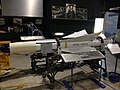
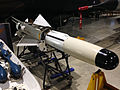
The Matra R.530 is a French medium to short range air-to-air missile. It was available in infrared homing and semi active radar homing as the main armament of the Mirage III which was able to carry a single missile in the centerline, the Mirage F1, which carried up to three, utilizing wing hardpoints, and the F-8 Crusader, also carrying two on the sides of the fuselage in French Navy service.

Key Information

Operational history

[edit]

The Israeli Heyl Ha'Avir (IDF/AF) purchased 15 semi-active radar-homing R.530 missiles from France, along with three training rounds and eight launch pylons, to go with the new Mirage IIICJ "Shahak". It was intended to complement the domestic Rafael Shafrir infrared-homing air-to-air missile. The missile was christened "Yahalom" (Hebrew for "diamond") in Israeli service and was issued to the No. 110 and No. 117 squadrons for their quick reaction alert (QRA) aircraft. Both squadrons achieved weapons qualification in 1964.[4]

On 29 November 1966, an Israeli Air Force Dassault Mirage III shot down two Egyptian MiG-19s which were trying to intercept an Israeli reconnaissance Piper J-3 Cub in Israeli airspace. The first MiG was destroyed with an R.530 fired from less than a mile away, marking the first aerial kill for the missile. The second MiG-19 was destroyed with cannon fire.[5]

During the Six-Day War, the R.530, as was common for early air-to-air missiles in the 1960s, proved to be chronically unreliable and difficult to use, especially in the close-range dogfights that characterized aerial combat in the war. The R.530 required a radar lock from the Cyrano radar of the Mirage III in order to be launched, but the Cyrano radar was severely hampered by ground clutter at low altitude, where most air combat took place during the Six-Day War, rendering the R.530 nearly useless. The weapon failed to achieve any kills during the Six-Day War.[4]

[edit]

Former operators

[edit]

See also

[edit]

Related development:

Similar weapons

References

[edit]
Revisions and contributorsEdit on WikipediaRead on Wikipedia
from Grokipedia
The Matra R.530 is a French medium- to short-range air-to-air missile developed in the late 1950s by Matra for use primarily as the main armament of Dassault Mirage III interceptors, with variants employing semi-active radar homing (SARH) or passive infrared (IR) guidance. It features a cruciform wing and tail control design, powered by a two-stage solid-propellant rocket motor, and entered operational service with the French Air Force in 1962. Development of the R.530 began in to equip French Vautour and aircraft for interceptor roles against bombers, with initial plans envisioning it as the sole armament before the addition of onboard guns. The variant, designated R.530, relies on continuous illumination from the launching aircraft's , while the IR variant, R.530 IR, uses a rear-aspect heat-seeking seeker for closer-range engagements. Approximately 4,000 units were produced, with a flyaway of around $44,000 in period dollars. Key specifications include a length of 3.28–3.29 meters, diameter of 0.263 meters, launch weight of 192–195 kg, of 27 kg, maximum speed of Mach 2.7, and effective range of 1.5–20 km. The missile was integrated on aircraft such as the Mirage III, Mirage V, Mirage F1, and F-8E Crusader, with operators including , , , and others before its retirement from most services. In combat, it achieved limited success, notably with the scoring one confirmed kill against an Egyptian MiG-19 prior to the 1967 using a Mirage III. It was later superseded by improved models like the series in the 1970s and 1980s.

Development

Origins and requirements

Following , the French aviation industry prioritized the development of advanced supersonic interceptors to rebuild and modernize the Armée de l'Air, focusing on capabilities to counter potential high-altitude bomber threats from the during the early period. This emphasis led to the 1953 specification for a lightweight, all-weather interceptor, which influenced the design of aircraft like the , a delta-wing supersonic fighter first conceptualized in late 1955 to achieve Mach 2 speeds and serve as a versatile platform for air defense. The Mirage III emerged as a key asset, intended to integrate with ground-based networks for rapid interception missions at high and medium altitudes. In July 1957, the French Air Force formalized its operational requirement for a new medium-range under the "Fiche program" designation AA26, aimed at equipping supersonic interceptors such as the III and Vautour to replace earlier short-range options like the 511. This need arose from the limitations of first-generation missiles, which lacked all-weather flexibility and engagement capabilities against sophisticated formations, requiring a system that could operate effectively in varied conditions, including countermeasures and poor visibility, as the final element in an integrated interceptor chain. The AA26 program sought a beyond-visual-range to extend the engagement envelope of French fighters, enabling frontal, rear, and multi-sector attacks while minimizing enemy penetration of airspace. Development of the R.530 began in earnest in 1957, with (Engins Matra) selected as the primary developer by French technical services in September 1958 following an initial design proposal in March of that year. The initial performance goals included a range of 10-15 kilometers to provide medium-range standoff capability, compatibility with the Mirage III's Cyrano radar for launch, and dual guidance options— (SARH) for all-weather operations and (IR) for close-range engagements—ensuring versatility across tactical scenarios. These specifications positioned the R.530 as a second-generation , building on prior French efforts while addressing the evolving demands of supersonic air combat.

Design process and testing

The design for the R.530 spanned from to 1962, focusing on phases that integrated aerodynamic, guidance, and elements to meet requirements for high- and medium-altitude threats. Full-scale development began in 1960, with selected as the primary contractor to oversee prototype fabrication and integration. Initial prototype flights occurred that year, utilizing the as a to evaluate captive-carry performance and basic under real flight conditions. In 1961, engineering teams conducted extensive testing to assess airflow over the missile's configuration, leading to iterative refinements in the seeker heads for improved and in the control surfaces for enhanced stability and maneuverability. These modifications addressed early flight data anomalies, optimizing the missile's response to dynamic scenarios. The year's efforts culminated in the first guided firing in January 1961, followed by a series of development firings through December 1962 that progressively validated guidance accuracy and boost-sustain sequencing. Live-fire evaluation trials in at the Landes range demonstrated the missile's operational viability, achieving successful intercepts at distances up to 12 km against representative targets. Over 50 test launches across the development program, including both radar-homing and variants, provided comprehensive data on reliability, with hit probabilities exceeding expectations in all-weather conditions. These results informed the final configuration, prompting a production decision in late and enabling initial deliveries to operational units in 1963.

Design

Airframe and aerodynamics

The R.530 missile employs a cylindrical, torpedo-shaped body designed for low drag and high-speed flight, with a length of 3.28 meters, a diameter of 0.26 meters, and a launch weight of 192 kilograms. The airframe features a cruciform configuration, including fixed long-chord steel honeycomb wings of low aspect ratio with a span of 1.10 meters, which provide primary lift and promote smooth airflow over the rear sections during supersonic maneuvers. These delta-like wings are indexed in line with the tail assembly to enhance aerodynamic stability. Control is achieved through fins with movable surfaces for pitch and yaw, driven by electric actuators that enable up to 15 g of lateral at high altitudes. The overall supports fin stabilization and is optimized for maximum speeds of Mach 2.7, allowing effective performance in beyond-visual-range engagements. This aerodynamic layout integrates seamlessly with the missile's guidance systems, ensuring precise tracking without compromising structural integrity.

Propulsion and warhead

The R.530 missile is propelled by a two-stage solid-fuel motor designated the , a dual- system developed by PROTAC using solid propellant. The initial boost generates 83 kN of for 2.7 seconds, providing rapid acceleration immediately after launch from the carrier aircraft. This is succeeded by the sustainer , which produces 3 kN of for 6.5 seconds to maintain momentum throughout the engagement envelope. The combined total impulse from these stages imparts an of up to 20 km while achieving a maximum speed of Mach 2.7. Upon completion of the sustainer burn, the attains a burnout and transitions to an inertially guided coast phase, allowing it to cover the remaining distance to the target without further powered flight. The consists of 27 kg of high-explosive fragmentation filling, optimized for air-to-air and fitted with both impact and proximity fuzes for versatile options. It ensures effective damage even in non-direct hits.

Guidance systems

The R.530 missile utilizes (SARH) in its primary radar-guided configuration, relying on illumination from the launching aircraft's to provide the necessary target reflection for homing. The seeker receives the reflected energy and guides the toward the target, enabling all-weather engagement capabilities across various altitudes and aspect angles. This requires the launch platform to maintain lock and illumination throughout the 's flight, limiting its use to scenarios where the aircraft can sustain line-of-sight tracking. In the infrared variant, the R.530 employs a passive heat-seeking seeker equipped with a () detector sensitive to emissions in the 3–5 micrometer , primarily targeting the of enemy aircraft engines. Developed as part of early French programs in the , this seeker supports rear-aspect and limited engagements by detecting thermal contrasts, offering an alternative to guidance in visual-range combat or electronic warfare environments. Guidance control is managed through a , which uses a gyroscopic reference head to compute trajectories by maintaining a constant bearing to the target, thereby minimizing miss distance during terminal phase. This enables high-maneuverability turns with lateral accelerations up to 15g, supported by control surfaces and aerodynamic stability, allowing effective pursuit even against maneuvering targets at speeds exceeding Mach 2.

Variants

R.530 IR

The R.530 IR is the passive infrared-homing variant of the Matra R.530 , developed for short-range engagements against heat-emitting targets such as engines. It debuted in 1963 alongside the radar-guided version, with the first production deliveries occurring in November of that year. The missile employs an interchangeable AD3501 seeker head manufactured by Electronique , featuring a narrow field-of-view of 2 degrees to focus on high-temperature sources while offering resistance to basic flares through simple . Its effective range spans 2-8 km, optimized for close-quarters combat where the infrared signature of the target is prominent. The launch envelope favors rear-aspect shots for reliable lock-on, with a minimum carrier aircraft speed of Mach 1.5 required to achieve sufficient missile acceleration and tracking stability. Approximately 1,500 units of the R.530 IR were produced, reflecting its role as a complementary to variants in French and export inventories. The R.530 IR integrates seamlessly with launch platforms like the and Mirage F1, typically carried on underwing or centerline pylons for air superiority missions. This variant shares the base and of the R.530 family but prioritizes passive, operation in visual-range scenarios.

R.530 EM

The R.530 EM is the () variant of the French Matra R.530 , developed specifically for beyond-visual-range intercepts against enemy . Introduced into operational service with the French Air Force and in 1963, it provided a medium-range capability with an effective engagement envelope of 10-18 km, depending on launch altitude and target aspect, but required the launching to acquire and maintain prior to firing. This version shared the same as the infrared-guided R.530 IR but utilized a seeker for all-aspect engagements, making it suitable for head-on or beam attacks in interceptor roles on platforms like the . The of the R.530 EM relied on continuous illumination of the target by the carrier aircraft's , such as the Cyrano series, from launch until intercept; this semi-active mode homed the missile on reflections from the illuminated target but imposed significant limitations on the pilot's ability to evade or reposition during the terminal phase, as breaking the radar beam would cause loss of guidance. The missile's solid-fuel motor propelled it to speeds exceeding Mach 2, enabling rapid closure rates in beyond-visual-range scenarios, though its performance was optimized for high-altitude intercepts rather than low-level dogfights. Over 4,800 R.530 missiles were produced in total through the late 1970s, with the EM variant forming a substantial portion of this output to meet export and domestic demands for radar-guided weaponry. Compared to contemporary infrared missiles, the R.530 EM offered improved resistance to certain electronic countermeasures due to its radar-based seeker, which could operate in varied weather conditions and against non-emitting targets, though it remained vulnerable to advanced jamming techniques prevalent in later conflicts. Its deployment emphasized coordinated tactics, where the launching aircraft acted as a dedicated illuminator, often in pairs or formations to maximize hit probability during Cold War-era air superiority missions.

Super 530 upgrades

The Super 530 series represented a significant of the original R.530 missile, addressing limitations in range, maneuverability, and electronic countermeasures resistance through redesigned , advanced , and enhanced . Introduced in the late and , these variants extended the missile's viability for French and export aircraft like the Mirage F1 and Mirage 2000, with production focusing on new builds rather than direct retrofits of existing R.530 units. The Super 530F, developed starting in 1968 and entering service in 1979, featured a completely redesigned while retaining the R.530's body diameter of 263 mm and launcher compatibility for seamless integration on the Mirage F1. Key enhancements included improved for all-weather and engagements, upgraded electronics with advanced flight controls enabling automatic and semi-automatic launch modes, and a more powerful solid-propellant motor that increased speed to Mach 4.6 and extended effective range to 30-35 km from the R.530's 18 km. The (SARH) seeker was refined for better , supporting a maximum load factor of +20 g compared to the original's +15 g. Approximately 1,486 Super 530F units were produced by 1998, primarily for French forces (650 units) and exports to nations including , , , and (550 units). Building on the F variant, the Super 530D entered service in specifically for the Mirage 2000, incorporating a monopulse pulse-Doppler seeker for improved resistance to and jamming, along with further electronics upgrades and refined flight controls for high-g maneuvers up to +30 g. Its lengthened body (380 cm versus 354 cm for the F) housed a more potent motor achieving Mach 5 speeds and over 40 km range, with enhanced low-altitude performance including a 1 km minimum launch distance and superior snap-down capability. Weighing 270 kg, the D variant prioritized roles against agile targets, with 1,371 units produced by 1998. These upgrades effectively phased out the baseline R.530 from frontline service by the early , as over 2,800 Super 530 missiles (F and D combined) were delivered to replace the older inventory.

Operational history

Introduction and early service

The Matra R.530 entered operational service with the French Air Force in 1963, marking a significant advancement in the nation's aerial interception capabilities as the primary armament for the fighters. The first squadron to receive R.530-equipped Mirage IIIC aircraft was Escadron de Chasse 1/2 "Cigognes," based at Dijon-Longvic Air Base, where the missile was integrated into frontline air defense operations. This deployment focused on familiarizing pilots with the missile's launch procedures and tactical employment during peacetime patrols and intercepts. The electromagnetic (EM) variant of the R.530 was specifically integrated with the Cyrano radar on the Mirage III, providing for beyond-visual-range engagements. The (IR) variant complemented this by offering homing without radar dependency, enhancing flexibility in mixed-load configurations on the Mirage III and other platforms like the II interceptor. Early training emphasized coordinated radar illumination for the EM version and visual acquisition for the IR, with pilots undergoing intensive simulations to achieve proficiency in mock combat scenarios. Initial deployments saw the R.530 in routine air sovereignty missions across , where its performance in 1964–1965 exercises validated its role in high-speed intercepts against simulated bomber threats. Export agreements began in 1965, with acquiring 164 R.530 missiles to arm its Mirage III fleet, followed by additional deliveries to for integration with its existing Mirage squadrons. These early international adoptions underscored the missile's reliability in allied training regimens, paving the way for broader proliferation.

Combat use and evaluations

The R.530 missile saw limited combat deployment, primarily by the during the lead-up to and throughout the in 1967. On November 29, 1966, an Israeli IIICJ downed an intruding Egyptian MiG-19 using an R.530, marking the missile's first confirmed aerial victory and the 's inaugural missile kill. However, during the itself, despite being carried on III fighters, the R.530 achieved no confirmed kills against Egyptian, Syrian, or Jordanian aircraft, such as MiG-21s encountered over and northern ; pilots reported difficulties in acquiring locks due to challenges in cluttered environments, leading to reliance on cannon fire for the 48 Arab fighters downed by Mirages. The employed the R.530 on Mirage F1CZ fighters during the Border War in the 1980s, particularly in operations over against Angolan and Cuban MiG-23s. However, the missile's operational use was constrained by technical limitations, including inability to withstand maneuvers exceeding 4g and frequent premature detonations from tail plumes. No confirmed kills were attributed to the R.530 in these encounters, contributing to its replacement by indigenous V3C missiles. Post-combat evaluations of the R.530 consistently highlighted its shortcomings as a fighter interceptor due to SARH constraints, including the need for tail-chase geometry and susceptibility to electronic countermeasures. Critics noted its original design prioritization for bomber interception over agile dogfighting, lacking all-aspect capability until addressed in later Super 530 upgrades; these analyses influenced subsequent missile developments emphasizing improved guidance resilience and launch flexibility.

Operators

Current operators

No active operators of the R.530 missile as of 2025; the missile has been largely phased out in favor of more advanced systems like the and series. Limited legacy stocks may exist in for training purposes.

Former operators

was an early adopter of the R.530 missile for its IIICJ fighters. The missile achieved its first confirmed aerial victory on November 29, 1966, when an Israeli III downed an Egyptian MiG-19 using the R.530 IR variant. retired the R.530 in the 1980s, replacing it with the Rafael Python series. The used the R.530 on its Mirage III and Mirage F1 CZ aircraft for air interception roles. It was retired in the . Iraq acquired the R.530 in the for its Mirage F1EQ interceptors and employed it during the Iran-Iraq War. Stocks were depleted during the , with remaining systems retired by 2003. Other former operators included , which used the R.530 on its Mirage III during the 1982 , firing examples without confirmed hits, and , where the Royal Australian Air Force integrated the missile on its Mirage IIIO until the aircraft's retirement in the late . Additional former operators include , Egypt, Greece, , and .

References

Add your contribution
Related Hubs
User Avatar
No comments yet.