


Community hub
Recent from talks
Contribute something
Nothing was collected or created yet.
L. B. Moerdani
View on WikipediaGeneral Leonardus Benjamin Moerdani (also publicly known as L. B. Moerdani or Benny Moerdani and in foreign media as Murdani; 2 October 1932 – 29 August 2004) was the Commander of the Indonesian National Armed Forces and Commander of the Kopkamtib from 1983 to 1988, and the Minister of Defense of the Republic of Indonesia from 1988 to 1993. During this time, he played an important role in Indonesian political and social life. He was noted as a Catholic leader in a predominantly Muslim country.
Key Information


Moerdani spent nearly his entire career in military intelligence,[2] and was sometimes described as a "spymaster."[3]
Early life
[edit]Moerdani was born on 2 October 1932 at Cepu, in the Blora Regency in Central Java, to R. G. Moerdani Sosrodirjo, a railway worker and his Indo Eurasian wife Jeanne Roech, who was half German. Moerdani was the 3rd out of 11 children. Although a Muslim, Moerdani Sosrodirjo tolerated his wife's and in their turn, his children's Catholic faith.[2]
Military career
[edit]Early military career
[edit]After the Indonesian Declaration of Independence on 17 August 1945, Moerdani was caught up in the wave of nationalism. In October 1945, aged 13, Moerdani took part in an assault on a Kempeitai headquarters in Solo after the Kempetai refused to surrender to Indonesian troops.[4] When the People's Security Army (TKR), the precursor to the Indonesian Armed Forces was formed, Moerdani joined a Student Army (Tentara Pelajar) unit which came under the authority of an Indonesian Army Brigade. During the Second Dutch military offensive, Moerdani was part of the Abdoel Latif Company of Tentara Pelajar defending the city of Surakarta. On the afternoon of 21 December 1948, Moerdani was wounded when his unit was engaged by a Dutch Universal Carrier. One of the bullet fired from the armored vehicle shattered his rifle buttstock and he was hit by the shrapnel, rendering him unconscious. He was immediately brought to safety by other members of the Tentara Pelajar.[5]
Post-independence
[edit]After Indonesian independence, Moerdani completed his education, graduating from middle school and going on to high school; in the meantime taking a part-time job helping his uncle sell goods.[6] In 1951, the Indonesian Government began undertaking demobilization but Moerdani's brigade was deemed to have performed well enough for its soldiers to continue serving with ABRI. Moerdani, together with his brigade enlisted with the Army Officers Education Center (P3AD) and began training in January 1951. At the same time, Moerdani also took part in the Infantry Trainers School (SPI).
Moerdani completed his military education from P3AD in April 1952 and from SPI in May 1952.[7] He was also given the rank of Chief Warrant Officer. 2 years later, in 1954, Moerdani received his commission as a Second Lieutenant and was stationed at TT III Siliwangi, which looked after the security of West Java.
KKAD/RPKAD
[edit]
In a bid to deal with the threat of Darul Islam, Colonel Alex Evert Kawilarang, the Commander of TT III Siliwangi formed the TT III Siliwangi Commando Unit (Kesko TT III). Their success interested the Army Headquarters in Jakarta to endorse the formation of a Special Forces Unit. As such, in 1954, the Army Commando Unit (Korps Komando Angkatan Darat or KKAD) was formed. Moerdani was assigned as a trainer for the soldiers wishing to join KKAD and was appointed Head of the Teaching Bureau. In 1955, KKAD went through a name change, and it was now known as the Army Paracommando Regiment (Resimen Para Komando Angkatan Darat or RPKAD). Not long after, Moerdani was appointed a Company Commander.[8]
As a member of RPKAD, Moerdani became part of the battle to suppress the Revolutionary Government of the Republic of Indonesia (PRRI), a Sumatran-based rebel group. In March 1958, Moerdani parachuted down behind enemy lines in Pekanbaru and Medan to prepare the groundwork for ABRI to take over the two cities. A month later, on 17 April 1958, Moerdani took part in Operation 17 August, an operation which struck the killing blow on the PRRI rebellion.[9] Moerdani's next assignment was against the Universal Struggle Charter (Permesta), another rebel group in Sulawesi. Similar to what he did in Sumatra, Moerdani and his troops laid down the foundations for an all out attack on Permesta who surrendered in June 1958.
After PRRI and Permesta's surrenders, Moerdani, was stationed in Aceh. In the beginning of 1960, he contemplated becoming an Army Aircraft Pilot but was dissuaded from it by Ahmad Yani who sent him to the United States to join the United States Army Infantry School at Fort Benning, Georgia. There, Moerdani took part in an Infantry Officers Advanced Course and trained with the 101st Airborne Division.
Papua
[edit]Moerdani returned to Indonesia in 1961 to find ABRI preparing itself for a takeover of West Irian. His first assignment was to train the paratroopers who were supposed to land behind enemy lines and infiltrate. As the months went on, the infiltration did not bring concrete results. In May 1962, Moerdani was assigned to lead a paratroop drop which consisted of RPKAD and Kostrad soldiers.[10] After landing in West Irian in late June 1962, Moerdani led his troops in fighting skirmishes against members of the Dutch Marine until the United Nations intervened in August 1962 and decided to give West Irian to Indonesia. Once there was a ceasefire, Moerdani was placed in charge of all the guerilla troops in West Irian.
By 1964, Moerdani was back in Jakarta again. His achievements during the West Irian campaign had caught the eye of President Sukarno who wanted to recruit him as a presidential bodyguard and marry him to one of his daughters.[11] Moerdani held his ground and rejected both offers.
Konfrontasi
[edit]In 1964, Moerdani and an RPKAD Battalion was sent to Borneo to fight a guerilla war against Malaysian and Commonwealth troops as part of the Indonesia-Malaysia confrontation. However, he did not spend a long time at Borneo, returning to Jakarta by September. At this stage, Moerdani had once again contemplated on expanding his career this time trying to decide between a career as a territorial commander in Borneo or as a military attaché. He picked the latter and had asked for a posting in Beijing.
Move to the Kostrad
[edit]At the end of 1964, a meeting of RPKAD officers was held and Moerdani was invited along. The topic of the meeting was to discuss removing crippled soldiers from RPKAD to which Moerdani objected.[12] News of Moerdani's objection found its way to Yani, who was now the Army Commander. Yani summoned Moerdani and accused him of insubordination. The meeting ended with Yani ordering Moerdani to move from RPKAD to Kostrad. Moerdani handed over command of his RPKAD battalion on 6 January 1965.
Moerdani's move from RPKAD to Kostrad had been a sudden one and there had been no position prepared for him. His first post was as an officer attached to the Operations and Training Bureau. His luck changed when Lieutenant Colonel Ali Murtopo found out that he was part of Kostrad. Having been acquainted with Moerdani during the West Irian campaign, Ali recognized Moerdani's potential and wanted to further develop it. Coincidentally, Ali at the time was the Intelligence Assistant for the 1st Combat Command, a Kostrad unit stationed in Sumatra in preparation for the confrontation ordered by Sukarno in response to the creation of Malaysia in the fall of 1963. Ali recruited Moerdani to be Deputy Intelligence Assistant and gave him his first taste of intelligence work as the armed forces were fighting in the dense Borneo jungles against the Malaysian Armed Forces alongside servicemen from the Commonwealth of Nations.
Salesman for Garuda
[edit]In addition to becoming Deputy Intelligence Assistant, Moerdani also became part of Ali's Special Operations (Opsus) intelligence team. His task was to gather intelligence on Malaysia from Bangkok under the cover of being a Garuda Indonesia ticket seller.[13] As 1965 wore on, his assignment also covered sending messages out by Army officers, tired and weary, who were not interested in the confrontation to the Malaysian government for the prospect of gaining a peaceful settlement.
30 September Movement
[edit]After the 30 September Movement was crushed on 1 October 1965 by Kostrad Commander Major General Suharto, Moerdani's activities intensified. He was joined by Ali and together they began working at laying the foundations for an end of the Confrontation. Their efforts culminated on 11 August 1966 when the Indonesian and Malaysian governments signed an agreement to normalise relations between the two nations.
Diplomatic career
[edit]Although peace had been reached, Moerdani stayed in Malaysia as chargé d'affaires. His first task was to ensure the release of Indonesian soldiers and guerilla fighters which had been caught during Confrontation.[14] In March 1968, with an ambassador finally assigned to Malaysia, Moerdani became the head of the Indonesian Consulate in Western Malaysia. At the same time, he continued being part of Opsus with the assignment of conducting surveillance on the goings on in the Vietnam War.
At the end of 1969 Moerdani was transferred to Seoul to become the Indonesian consul general at South Korea. He was promoted from colonel to brigadier-general in February 1970 just before he took up his post in Seoul.[15] In 1973, Moerdani's status was upgraded from consul general to chargé d'affaires.
Intelligence officer
[edit]Moerdani's diplomatic career came to an abrupt end with the Malari Incident in Jakarta in January 1974 and within a week of the incident, Moerdani had returned to Jakarta. President Suharto immediately gave him a collection of positions which gave him a lot of power. Moerdani became the Intelligence Assistant to the Minister of Defense and Security, Intelligence Assistant to the Commander of the Operational Command for the Restoration of Security and Order (Kopkamtib), Head of the Strategic Intelligence Centre (Pusintelstrat), and Deputy Head of the National Intelligence Coordinating Agency (Bakin).[16]
East Timor (Operation Seroja)
[edit]In 1975, Moerdani became deeply involved with the matter of East Timor's decolonization. In August 1975, Moerdani began sending Indonesian soldiers under the guise of volunteers to begin infiltrating East Timor.[14] The situation intensified on 28 November 1975 when Fretilin declared East Timor's independence. The intelligence operation ceased and a military operation, Operation Seroja (Operation Lotus) was set up in its stead. Despite it not being an intelligence operation, Moerdani continued to be involved, this time as the planner of the invasion. His method in planning the invasion drew the ire of colleagues because it kept some high command officers, such as Deputy ABRI Commander Surono and Kostrad Commander Leo Lopulisa in the dark when they should have been involved in the planning process.[17]
Garuda GA206 hijack
[edit]On 28 March 1981, Garuda Indonesia Flight 206, which was supposed to be flying from Jakarta to Medan was hijacked. The news arrived to Moerdani at Ambon where he was attending an ABRI Leadership meeting with ABRI Commander M Jusuf. Moerdani immediately left the meeting to go to Jakarta to prepare to take action, in the meantime the hijacked aircraft had landed at Bangkok's Don Muang Airport. Moerdani met with Suharto and secured the President's permission to use force in a bid to release the hostages; the rationale being that the hijackers should not be allowed to intimidate the aircraft pilots into flying to other countries.[18]
Accompanied by troops from the Battle Intelligence Troop Commando (Kopassandha), formerly RPKAD, Moerdani left for Thailand. Although his plan encountered some resistance, particularly from the Thai Government, there was finally an agreement to take the military action. On the morning of 31 March 1981, Moerdani personally led the Kopassandha troops to storm the aircraft, take back control of it, and save the hostages.
Commander of ABRI
[edit]Appointment
[edit]
In March 1983, Moerdani reached the pinnacle of his military career when Suharto named him as the Commander-in-Chief of ABRI and promoted him to the rank of full General. During the inauguration ceremony, Suharto gave recognition to Moerdani's loyalty by personally placing Moerdani's epaulettes on his shoulder.
Moerdani reached this position with the distinction of having never commanded a unit bigger than a battalion and having not served as a Regional Military Commander (Kodam) and Army Chief of Staff. In addition to the Commandership of ABRI, Moerdani was also appointed Commander of Kopkamtib, and retained his position in Pusintelstrat, which was renamed the Strategic Intelligence Agency (BAIS-ABRI). Unlike previous New Order ABRI Commanders, Moerdani was not appointed Minister of Defense and Security in a concurrent capacity.
Reorganization of ABRI
[edit]Moerdani immediately took steps to reorganize the Armed Forces, listing cutting costs, improving efficiency, and improving professionalism as his immediate goals.[19] During his term, in 1985 the Armed Forces was officially severed from the operational control of the Ministry of Defense to become a separate institution, reporting directly to the office of the President (in his/her capacity as Commander in Chief) while being assisted by the Minister of Defense in matters relating to its constitutional mandates.[20]


With regards to command structure, Moerdani first eliminated the Regional Defense Commands (Kowilhans), a command structure that had been created in 1969, as well as the joint service National Strategic Command ("Kostranas"). He then revamped the regional commands system for the Army, Navy, and Air Force. The Army's Military Regional Commands (Kodam) were reduced from 16 to 10, the Navy's 8 Regional Naval Commands (Kodaeral) were streamlined into 2 Fleet Headquarters, and the Air Force's 8 Regional Air Force Commands (Kodau) were similarly streamlined into 2 Air Operational Commands, with all commanding officers demoted to being liaison officers for the military regions, which became the primary area organisation for strategic, tactical, and territorial operations for all service branches.[21] The National Police was also reorganized with red tape being cut to allow Police forces at the lowest levels to take immediate action and response against criminal activities.
Moerdani also worked towards decreasing the non-military portion of the Armed Forces Academies' (Akabri) curriculum. To improve the quality of the academy's input as well as to strengthen the nationalist base, Moerdani conceptualized a senior high (pre-Academy) school to train the nation's brightest talents to later become members of the national elite group (the school, Taruna Nusantara, is now running and located side by side with the Military Academy in Magelang). Moerdani also improved cooperation between the Armed Forces of ASEAN countries.[22]
Tanjung Priok Incident
[edit]Moerdani's Catholic background came to the forefront in 1984 when together with KODAM V/Jaya Commander, Try Sutrisno, he ordered a crackdown on Islamist protesters at Tanjung Priok, Jakarta, which resulted in deaths. Moerdani claimed the protesters had been provoked and could not be controlled peacefully, so he ordered the crackdown.[23] Moerdani insisted he never wanted to persecute Muslims and conducted visits to Muslim schools around Java to improve his image with Muslims.
As ABRI Commander-in-Chief, Moerdani was arguably the de facto second most powerful man in social and political aspects of the Republic, after Suharto.
Political career
[edit]1988 People's Consultative Assembly (MPR) General Session
[edit]
By 1988, Moerdani's relationship with Suharto had soured. Although he was loyal to Suharto, Moerdani was assertive enough to criticize the President for the corruption and nepotism in the regime. By this time, Moerdani had also made an enemy out of Prabowo Subianto, Suharto's son in law.[citation needed]
1988 was an important year as it was the year of an MPR General Session, the venue in which the President and the Vice President is elected. As the General Session approached, Suharto began making signs that he wanted Sudharmono as his Vice President. According to Kivlan Zen, a close associate of Prabowo, this ran contrary to Moerdani, who wanted to become vice president himself.[24] As such, this seemed to have been the reason for Moerdani's discharge from the position of ABRI Commander in February 1988, although according to Robert Elson, this was done more because Suharto did not want Moerdani to be in control of the Armed Forces when Sudharmono was nominated. Robert Elson theorized of the possibility of Sudharmono's vice presidency being the final step before the Indonesian Presidency itself.[25]
Moerdani did not seem to give up. The same month the top brass of Golkar met to discuss the MPR General Session. On the matter of the vice presidential candidate the Bureaucrats and Functional factions unanimously agreed to nominate Sudharmono. The ABRI faction's nomination was delayed, with Moerdani continuing to procrastinate by claiming that he had not discussed the vice presidential nomination with Suharto yet. When pressured, Moerdani expressed his concern about Sudharmono's nomination although he did not give a specific reason. At one stage, he began giving subliminal signals that Try should be nominated as vice president. Try did not pick up on this and along with the other officers convinced a reluctant Moerdani that the ABRI Faction's vice presidential candidate would be Sudharmono.
Many believed that Moerdani was responsible for the controversy that continued to dog Sudharmono's nomination. It was believed that Brigadier General Ibrahim Saleh's attack on Sudharmono and the nomination of the United Development Party (PPP) Chairman Jailani Naro as vice president was Moerdani's work. Nevertheless, Suharto's will came through in the end and Sudharmono was elected vice president.
Minister of Defense and Security
[edit]Despite his attempts to block Sudharmono, Suharto did not demote Moerdani and appointed him as the Minister of Defense and Security. However, Moerdani would lose most of his powers in September 1988 with the disbandment of Kopkamtib.
During his term as Minister, Moerdani was accused of planning a coup against Suharto.[26] This prompted Suharto to promise a harsh crackdown on anyone who dared to replace him unconstitutionally.
1993 MPR General Session
[edit]Before the 1993 MPR General Session, Moerdani was seen as the engineer of ABRI's pre-emptive nomination of Try as vice president. Suharto was displeased with the nomination and only accepted Try reluctantly. Suharto's consolation was that he did not name Moerdani to the next Cabinet.
Death
[edit]Moerdani died on 29 August 2004 in Jakarta after suffering a stroke.
Honours
[edit]National
[edit] Star of Mahaputera (2nd Class) (Indonesian: Bintang Mahaputera Adipradana)
 Star of Mahaputera (3rd Class) (Indonesian: Bintang Mahaputera Utama)
 Star of Meritorious Service (Indonesian: Bintang Dharma)
 Grand Meritorious Military Order Star, 1 Class (Indonesian: Bintang Yudha Dharma Utama)
 Army Meritorious Service Star, 1 Class (Indonesian: Bintang Kartika Eka Paksi Utama)
 Navy Meritorious Service Star, 1 Class (Indonesian: Bintang Jalasena Utama)
 Air Force Meritorious Service Star, 1 Class (Indonesian: Bintang Swa Bhuana Paksa Utama)
 Star of Bhayangkara, 1st Class (Indonesian: Bintang Bhayangkara Utama)


Foreign honours
[edit] Brunei:
 First Class of the Order of Paduka Keberanian Laila Terbilang (DPKT) - Dato Paduka Seri (1985)
 Egypt:
 Jordan:
 Malaysia:
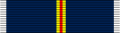 Honorary Commander of the Order of the Defender of the Realm (PMN) – Tan Sri (1983)[27]
 Courageous Commander of the Most Gallant Order of Military Service (PGAT) (1986)
 Johor:
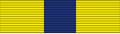 Knight Grand Commander of the Order of the Crown of Johor (SPMJ) - Dato' Sri Paduka (1986)[28]
 Sarawak:
 Knight Grand Commander of the Order of the Star of Hornbill Sarawak (DP) – Datuk Patinggi (1986)
 Philippines
 Singapore:
 Recipient of the Darjah Utama Bakti Cemerlang (Tentera) (DUBC) (1987)
 South Korea:
 Thailand:
 Yugoslavia:

.svg)


-_PMN.svg)
.png)


_-_1._Knight_Grand_Commander_(DP).svg)


_ribbon.svg)

_Heung-In_Medal_ribbon.gif)
_Ribbon.png)

_ribbon.svg)


Namesakes
[edit]On 3 October 2021, the General LB Moerdani Modular Hospital (Indonesian: Rumah Sakit Modular Jenderal TNI L.B. Moerdani) in Merauke Regency, Papua is inaugurated by President Joko Widodo.[30]
References
[edit]- ^ Lembaga Pemilihan Umum (1988). Buku Pelengkap IX Pemilihan Umum 1987, Ringkasan Riwayat Hidup dan Riwayat Perjuangan Anggota Majelis Permusyawaratan Rakyat Hasil Pemilihan Umum Tahun 1987 (in Indonesian). Vol. XVIII. Lembaga Pemilihan Umum.
- ^ a b Pour, Julius (2007). Benny: Tragedi Seorang Loyalis (in Indonesian). Jakarta: Kata Hasta Pustaka. pp. 13–14. ISBN 978-979-1056-10-6.
- ^ Pour, Julius (2007). Benny:Tragedi Seorang Loyalis. Kata Hasta Pustaka. ISBN 978-979-1056-10-6.
- ^ Pour, Julius (2007). Benny: Tragedi Seorang Loyalis. p. 18.
- ^ Pour, Julius (2010). Doorstoot Naar Djokja: Pertikaian Pemimpin Sipil-Militer (in Indonesian). Jakarta: PT Kompas Media Nusantara. pp. 152–153. ISBN 978-979-709-454-6.
- ^ Pour, Julius (2007). Benny: Tragedi Seorang Loyalis. p. 33.
- ^ Pour, Julius (2007). Benny: Tragedi Seorang Loyalis. p. 36.
- ^ Pour, Julius (2007). Benny: Tragedi Seorang Loyalis. p. 42.
- ^ Pour, Julius (2007). Benny: Tragedi Seorang Loyalis. pp. 60–69.
- ^ Pour, Julius (2007). Benny: Tragedi Seorang Loyalis. p. 87.
- ^ Pour, Julius (2007). Benny: Tragedi Seorang Loyalis. pp. 104–105.
- ^ Pour, Julius (2007). Benny: Tragedi Seorang Loyalis. p. 132.
- ^ Pour, Julius (2007). Benny: Tragedi Seorang Loyalis. pp. 141–142.
- ^ a b Pour, Julius (2007). Benny: Tragedi Seorang Loyalis. p. 163.
- ^ Tempo, 2017, Benny Moerdani, Jakarta, Kepustakaan Populer Gramedia, p. 48.
- ^ Pour, Julius (2007). Benny: Tragedi Seorang Loyalis. p. 184.
- ^ Area Studies: East Timor (r) Archived 2007-08-22 at the Wayback Machine
- ^ Pour, Julius (2007). Benny: Tragedi Seorang Loyalis. p. 213.
- ^ Pour, Julius (2007). Benny: Tragedi Seorang Loyalis. p. 239.
- ^ Library of Congress Country Study, Indonesia, November 1992, Organization and Equipment of the Armed Forces
- ^ Pour, Julius (2007). Benny: Tragedi Seorang Loyalis. p. 243.
- ^ Pour, Julius (2007). Benny: Tragedi Seorang Loyalis. p. 242.
- ^ Pour, Julius (2007). Benny: Tragedi Seorang Loyalis. p. 264.
- ^ Uba (30 August 2004). "Arsitek Intelijen Itu Telah Pergi". Republika. Retrieved 2007-01-13.
- ^ Elson, Robert (2001). Suharto: A Political Biography. UK: The Press Syndicate of the University of Cambridge. pp. 258–259. ISBN 0-521-77326-1.
- ^ SIB (5 October 2006). "Kivlan dan Prabowo Dukung Habibie, Cegah Benny Moerdani Jadi Presiden". Sinar Indonesia. Retrieved 2007-01-13.[permanent dead link]
- ^ "SEMAKAN PENERIMA DARJAH KEBESARAN, BINTANG DAN PINGAT". Prime Minister's Department (Malaysia). Archived from the original on 29 September 2018. Retrieved 16 November 2021.
- ^ "Honours for 177 on Sultan's 54th birthday", New Straits Times, 8 April 1986.
- ^ "Recipient Order of Yugoslav Star". Gentleman's Military Interest Club. 2017-08-11. Retrieved 2024-05-28.
- ^ Al-Farraby, Raden Muhammad Ikhsan (3 October 2021). "Presiden Resmikan Rumah Sakit Modular Jenderal TNI L.B. Moerdani di Merauke". www.presidenri.go.id. Retrieved October 5, 2021.
External links
[edit]- (in Indonesian) Various articles marking Moerdani's death
- (in Indonesian) Profile on pdat.co.id
- (in Indonesian) Article on ABRI's reluctance to nominate Sudharmono as Vice President
Further reading
[edit]- L.B. Moerdani, 1932-2004.- Festschrift in honor of Leonardus Benjamin Moerdani, former Commander in chief of the Indonesian Armed Forces and Minister for Defense. Jakarta: Centre for Strategic and International Studies. ISBN 979-8026-87-X (In Indonesian, some articles in English).
- Tempo. 2017. Benny Moerdani. Jakarta: Kepustakaan Populer Gramedia. ISBN 978-602-424-348-7 (In Indonesian).


| International | |
|---|---|
| National | |
| Other | |

L. B. Moerdani
View on GrokipediaEarly Life and Education
Childhood and Family
Leonardus Benjamin Moerdani was born on 2 October 1932 in Cepu, Central Java, the sixth of thirteen children to R.M. Moerdani Sosrodirdjo, a Javanese Muslim from the nobility who served as an official in the Dutch colonial railway administration, and his wife Jeanne Roech (also spelled Rochmaria Jeane), an Indo-Eurasian woman of partial European descent.[2][5][6] This mixed ethnic and religious family background placed Moerdani amid the cultural tensions of colonial Indonesia, where Eurasian communities navigated identities between indigenous Javanese society and European colonial structures.[5] Raised as a Catholic in a predominantly Muslim region, Moerdani experienced the Japanese occupation of Indonesia from 1942 to 1945, a period of harsh militarization and economic hardship that disrupted colonial norms and fostered anti-colonial sentiments across diverse groups.[7] In the immediate postwar chaos, shortly after his thirteenth birthday in 1945, he obtained a discarded Japanese rifle and enlisted in the Student Army (Tentara Pelajar), participating in local efforts to resist the returning Dutch forces during the Indonesian National Revolution.[6] These early encounters with armed conflict and revolutionary zeal in Cepu—a town known for its oil fields but shaped by broader independence struggles—instilled a formative exposure to violence, loyalty to nascent Indonesian nationalism, and the fractures of multicultural colonial society.[2]Initial Military Training
In October 1945, shortly after Japan's surrender in World War II, 13-year-old Leonardus Benjamin Moerdani participated in an assault on the Kempeitai (Japanese military police) headquarters in Surakarta (Solo), Central Java, where holdout Japanese forces refused to yield control to emerging Indonesian authorities.[8] This action marked his entry into armed resistance during the chaotic onset of Indonesia's independence struggle against lingering colonial and imperial powers.[1] Moerdani enlisted in the Tentara Keamanan Rakyat (TKR), the provisional republican army formed that month as a precursor to the modern Indonesian National Armed Forces, serving as a prajurit pelajar (student soldier) in Detasemen II of Brigade XVII Tentara Pelajar, under the command of Mayor Achmadi Hadisoemarto.[9] During the Second Dutch Military Aggression (Agresi Militer Belanda II) in late 1948, he fought in the Abdoel Latif Company, defending Surakarta through urban guerrilla engagements against advancing Dutch forces.[8] Lacking formalized military academies amid the revolution, Moerdani's foundational training emphasized hands-on guerrilla warfare, including ambushes, sabotage, and small-unit maneuvers suited to irregular combat against superior Dutch conventional forces.[10] This practical immersion honed skills in terrain adaptation and decentralized tactics, with his early effectiveness in such operations earning rapid promotions from private ranks, underscoring merit-based advancement in the unstructured revolutionary forces.[8]Military Career
Independence Struggle and Early Assignments
Following the Indonesian Declaration of Independence on 17 August 1945, Leonardus Benjamin Moerdani, then aged 13, joined the revolutionary forces as a munitions carrier amid the armed struggle against returning Dutch colonial forces.[1] Operating in Central Java, particularly around Surakarta (Solo), he participated in guerrilla actions as part of Brigade 17 of the Tentara Pelajar, a youth militia unit supporting the nascent national army in skirmishes during the 1945–1949 revolution.[11] These early efforts contributed to local resistance against Dutch reoccupation attempts, including the 1947–1948 offensives, though Moerdani's role remained at the auxiliary level due to his youth.[12] After formal independence in 1949, Moerdani's assignments shifted toward internal security amid regional revolts challenging central authority in Jakarta. In the early 1950s, he underwent basic officer training at the Army Officers' Education Centre in Bandung, Java, transitioning from irregular youth combat to structured military roles focused on enforcing national unity.[11] By 1956–1957, as a company commander in West Java, he led operations against Darul Islam insurgents, an Islamist separatist movement seeking an Islamic state and rejecting the secular Pancasila framework, which had escalated since 1949 and threatened sovereignty in Java.[11] These counter-insurgency engagements in West Java involved patrolling rural areas to disrupt Darul Islam networks, integrating local irregulars into loyal central commands, and suppressing ambushes that exploited post-revolutionary instability.[11] Moerdani's units emphasized rapid response tactics suited to Java's terrain, aiding in the gradual containment of the rebellion, which persisted into the late 1950s but weakened central control in affected regions.[1] No verified records indicate early Sumatra postings for Moerdani during this period, with his focus remaining on Javanese theaters to bolster loyalty amid broader separatist challenges like the 1950s regional unrest.[11]Special Forces Operations (KKAD/RPKAD)
In the early 1950s, Leonardus Benjamin Moerdani joined the Kesatuan Komando Angkatan Darat (KKAD), Indonesia's nascent special forces unit formed in 1952 for commando and airborne operations, where he served as a trainer and was appointed Head of the Teaching Bureau.[5] His responsibilities included developing curricula for elite soldiers in unconventional warfare techniques, such as airborne insertions, sabotage of enemy infrastructure, and small-unit raids behind enemy lines.[13] Moerdani himself underwent advanced special warfare training, including a 12-week officer's course at Fort Bragg, United States, which emphasized guerrilla tactics and psychological operations, enhancing KKAD's capabilities independent of conventional infantry doctrines.[14] By 1956, following the unit's redesignation as Resimen Para Komando Angkatan Darat (RPKAD), Moerdani contributed to standardizing training protocols that prioritized merit-based selection and technical proficiency over regional or political affiliations prevalent in the broader army.[15] Moerdani's emphasis on professionalism aimed to create a cadre of apolitical operators capable of executing high-risk missions without entanglement in Sukarno-era factionalism, such as rivalries between pro- and anti-communist elements within the military.[1] This approach fostered unit cohesion, enabling RPKAD to function as a strategic asset for the central government amid internal threats. In practice, these innovations manifested in operations disrupting rebel logistics; for instance, during the 1958 PRRI rebellion in Sumatra, Moerdani led a five-man RPKAD team that parachuted into Pekanbaru, Riau, on March 20, 1958, securing the airfield and town center from hundreds of insurgents with minimal casualties through targeted sabotage and ambushes that severed supply routes.[16] [17] Such tactics exemplified RPKAD's role in asymmetric warfare, relying on speed, surprise, and precision to undermine numerically superior foes without large-scale engagements.[18]Campaigns in Papua and Konfrontasi
In the lead-up to and during Operation Trikora (1961–1962), aimed at annexing Western New Guinea from Dutch control, Moerdani served in the Resimen Para Komando Angkatan Darat (RPKAD), Indonesia's special forces precursor to Kopassus, where he participated in infiltration operations into West Irian territory. These missions involved small teams executing reconnaissance, sabotage against Dutch installations, and psychological operations to erode colonial authority and foster pro-Indonesian sentiment among local populations through propaganda and agitation.[19] Moerdani contributed to Operasi Komodo, a covert initiative deploying commandos for intelligence gathering and subversion, which complemented broader Indonesian efforts including amphibious landings and aerial bombardments, pressuring the Netherlands toward negotiation without committing to high-casualty conventional assaults.[19] The asymmetric approach yielded territorial success: Dutch withdrawal via the New York Agreement on August 15, 1962, followed by formal transfer on May 1, 1963, integrated Western New Guinea into Indonesia with Indonesian ground forces incurring negligible direct combat losses—estimated in the dozens from infiltrations, contrasted against heavier naval setbacks like the loss of several vessels but limited personnel fatalities. This outcome demonstrated the leverage of special operations in hybrid warfare, combining covert actions with diplomatic coercion under U.S. mediation to achieve integration absent a decisive pitched battle. Transitioning to Konfrontasi (1963–1966), Indonesia's undeclared war against the Malaysia federation, Moerdani commanded RPKAD elements, including companies from Battalion 1, deployed to Borneo for guerrilla incursions from East Kalimantan into Sarawak and Sabah. In 1964, his units executed cross-border raids disrupting Malaysian supply lines, ambushing patrols, and supporting proxy insurgents to contest federation legitimacy, emphasizing hit-and-run tactics over sustained occupation.[20] These operations, informed by intelligence on Commonwealth defenses, inflicted sporadic attrition on opponents while preserving Indonesian regulars for potential escalation. Konfrontasi's empirical results affirmed special forces' utility in frontier conflicts: Indonesia registered approximately 600 total casualties across irregular engagements, far below conventional war scales, enabling prolonged pressure that exposed Malaysian vulnerabilities but ultimately faltered amid internal regime shifts, culminating in Suharto's 1966 peace overtures without Borneo gains. The campaign's reliance on commando raids underscored causal efficacy of decentralized, low-signature warfare for defensive expansionism, though territorial stasis in Borneo highlighted limits against coalition regulars.[20]Transition to Kostrad and Intelligence Roles
In 1965, following service in special forces units, Moerdani was transferred from the Resimen Para Komando Angkatan Darat (RPKAD) to the Komando Cadangan Strategis Angkatan Darat (Kostrad), Indonesia's Army Strategic Reserve Command, under the directive of Army Chief of Staff Ahmad Yani.[21] This shift positioned him within a key rapid deployment force responsible for reinforcing operational theaters, mobilizing reserves, and supporting strategic maneuvers amid Indonesia's ongoing territorial and border conflicts. Kostrad, established in 1961, emphasized elite infantry capabilities for quick response, aligning with Moerdani's prior paratrooper experience in operations like the 1962 West Irian campaign.[5] By the late 1960s, Moerdani began integrating intelligence functions into his portfolio, joining the Special Operations (Opsus) unit led by Ali Murtopo, where he contributed to gathering and analyzing foreign military intelligence.[22] Opsus operated as a semi-autonomous entity focused on covert activities, blending military operations with informational warfare to support national objectives. This early intelligence involvement marked Moerdani's pivot toward strategic oversight, leveraging his field expertise for broader threat assessment amid the Indonesian Armed Forces' (ABRI) evolving dual military-political mandate. Moerdani's intelligence roles extended to diplomatic covers, including a posting as a special liaison officer at the Indonesian Embassy in Kuala Lumpur from 1967 to 1971, facilitating discreet collection of Malaysian and regional military data during post-Konfrontasi normalization efforts.[7] These assignments underscored ABRI's push toward professionalized intelligence structures, prioritizing empirical threat evaluation over purely doctrinal approaches, though constrained by the institution's intertwined security and governance functions. Subsequent rotations, such as to Seoul, further honed his capacity for foreign liaison while advancing internal ABRI efforts to refine intelligence protocols for operational efficacy.[23]Suppression of the 30 September Movement
Major L. B. Moerdani, serving as a Kostrad officer under Major General Suharto following his transfer from RPKAD in January 1965, contributed to the suppression of the 30 September Movement (G30S) through covert operations amid the coup attempt launched on the night of 30 September 1965. The G30S involved junior officers, many affiliated with the Indonesian Communist Party (PKI), who kidnapped and murdered six senior army generals, aiming to preempt a perceived right-wing council of generals and install a PKI-influenced regime under President Sukarno. Suharto, as Kostrad commander, rapidly mobilized loyal units—including Kostrad infantry and RPKAD paratroopers—to retake central Jakarta, securing key sites such as the Radio Republic Indonesia station, telecommunications center, and Merdeka Square by the afternoon of 1 October, effectively crushing the plotters' control within hours.[24][25] Moerdani's specific actions included coordination with Suharto for intelligence and external outreach; he was dispatched to Bangkok shortly after the coup's onset, posing as a Garuda Indonesia ticket agent to establish liaisons with pro-Western diplomats and officials. This mission isolated the G30S plotters and PKI from potential Soviet or Chinese backing, as the PKI—then the world's largest non-ruling communist party with over 3 million members—had aligned with leftist elements amid Sukarno's Konfrontasi policy and received ideological support from Moscow and Beijing. By relaying military assessments and seeking assurances against foreign intervention, Moerdani helped ensure the anti-communist response remained unhindered internationally, aligning with causal factors that prioritized national stability over ideological expansionism.[26] In the ensuing weeks, Moerdani's intelligence efforts intensified, including operations that captured PKI Central Committee member Njono in November 1965, providing evidence linking the G30S directly to PKI orchestration and justifying broader purges. These actions dismantled PKI leadership and networks through arrests, trials, and executions, averting a potential Soviet-backed regime shift similar to those in Eastern Europe or Cuba. The purges, while resulting in an estimated 500,000 to 1 million deaths among suspected communists and sympathizers between October 1965 and March 1966, empirically stabilized Indonesia by eliminating subversive elements that had infiltrated military, labor, and peasant organizations, preventing civil war or balkanization amid the PKI's mass mobilization capabilities. U.S. embassy reports corroborated the scale and military orchestration of these measures as essential to countering the existential threat posed by communist insurgency.[25][27][28]Diplomatic and Covert Activities
Moerdani's intelligence roles extended beyond domestic operations to strategic procurement and foreign liaison activities, leveraging covert channels to secure advanced weaponry for the Indonesian Armed Forces (ABRI) amid geopolitical constraints. As head of the Armed Forces Strategic Intelligence Agency (BIA), he directed operations that bypassed official diplomatic barriers, including the acquisition of military hardware from non-allied states.[29][30] A prime instance was Operation Alpha, a clandestine intelligence effort in 1980 to procure 32 Douglas A-4 Skyhawk attack aircraft from Israel, executed despite Indonesia's lack of formal diplomatic ties with Israel and the attendant risks of economic retaliation from Arab oil exporters enforcing an embargo against nations arming Israel.[29][30] Moerdani, overseeing BIA's involvement, coordinated the transfer through layered intermediaries and secure transport, ensuring deniability while bolstering ABRI's air strike capabilities.[29] This operation exemplified his use of non-combat intelligence assets to achieve strategic self-sufficiency, as Indonesia navigated selective Western arms export limitations stemming from prior regional conflicts.[29] Through affiliations with Special Operations (Opsus) under Ali Murtopo, Moerdani contributed to building informal intelligence networks across Southeast Asia and the Middle East, facilitating discreet arms negotiations and information exchanges that supported ABRI's operational readiness without overt diplomatic exposure. These efforts prioritized pragmatic sourcing over ideological alignments, enabling Indonesia to maintain equipment autonomy amid fluctuating international sanctions and alliances.[29]Invasion of East Timor (Operation Seroja)
Following the Carnation Revolution in Portugal on April 25, 1974, which precipitated rapid decolonization, East Timor descended into civil conflict between the leftist Fretilin and pro-integration parties like UDT and APODETI, creating a regional power vacuum that Indonesia sought to fill to avert perceived communist expansion near its borders.[31] L.B. Moerdani, serving as chief of military intelligence under Kopkamtib, played a central role in planning covert actions to exploit this instability, initiating insertions of Indonesian special forces disguised as civilian volunteers starting in August 1975 to bolster pro-Jakarta elements and undermine Fretilin dominance.[32] These operations, including armed incursions under the banner of supporting local allies, aimed at establishing faits accomplis in border areas amid escalating chaos after Fretilin's August 1975 offensive against UDT.[33] Operation Flamboyan, directed by Moerdani, represented the escalation of these efforts from August 31 to November 28, 1975, with Indonesian troops crossing from West Timor to seize enclaves including Batugade, Balibo, Maliana, and Aidabaleten, thereby creating secured zones for logistical staging and propaganda of local integration support.[33] Fretilin's declaration of independence on November 28, 1975, prompted Indonesia to frame the subsequent intervention as a stabilizing necessity against anarchy and external threats, aligning with Suharto's strategic calculus for national security.[31] Moerdani coordinated intelligence-driven troop buildups in West Timor, involving elite units from Kopassandha (now Kopassus), to prepare for broader action while minimizing international scrutiny.[32] The overt phase, Operation Seroja, launched on December 7, 1975, under Moerdani's overarching planning, featured coordinated amphibious landings by marine battalions and airborne drops of paratroopers from Kostrad into Dili, supported by naval gunfire from Indonesian warships, rapidly overwhelming Portuguese-era defenses and securing the capital with roughly 10,000 initial troops.[31][32] Forces advanced inland from border gains, methodically linking captured areas through overland pushes from West Timor, prioritizing key towns and supply routes to consolidate control despite sporadic FALINTIL counterattacks.[33] Early stabilization emphasized securing populations in designated zones for administrative integration, laying groundwork for infrastructure like roads and resettlement programs to foster economic ties, even as resistance persisted in rural interiors.[32] By mid-1976, these efforts facilitated East Timor's formal incorporation via the Act of Integration on July 17, ratified under Indonesian auspices.[31]Handling of Garuda Flight 206 Hijacking
On March 28, 1981, Garuda Indonesia Flight 206, a McDonnell Douglas DC-9 named Woyla (registration PK-GNJ), was hijacked mid-flight by five members of the Islamist extremist group Komando Jihad, shortly after departing Palembang for Medan.[34] [35] The hijackers, led by Imran bin Muhammad Zein and armed with a revolver and grenades, diverted the aircraft first to Penang, Malaysia, and then to Don Mueang International Airport in Bangkok, Thailand, where it remained under their control for four days.[34] [36] Their demands included the release of imprisoned Komando Jihad members, US$1.5 million in ransom, and a larger aircraft to transport freed prisoners to an unspecified destination.[36] Lieutenant General L. B. Moerdani, serving as head of the Armed Forces Strategic Intelligence Center, was directed by President Suharto through Admiral Sudomo to oversee the response.[34] Drawing on intelligence assessments of the hijackers' affiliations and capabilities, Moerdani rapidly mobilized a 35-member Kopassandha (special forces precursor to Kopassus) unit, chartering a Garuda DC-10 to transport them to Bangkok alongside himself and operational commander Lieutenant Colonel Sintong Panjaitan.[34] [36] He personally lobbied Thai authorities, including King Bhumibol Adulyadej's representatives, to secure permission for an armed assault, emphasizing the threat posed by the extremists and coordinating joint planning with Thai forces to minimize diplomatic friction.[34] The crisis culminated in Operation Woyla on March 31, 1981, at 03:00 local time, when Kopassandha commandos stormed the aircraft in a precisely timed nighttime raid supported by Thai air force elements.[34] [35] Intelligence-driven tactics enabled the team to breach the plane and neutralize the hijackers—killing two, wounding and capturing the leader, with the others surrendering—within minutes, securing the release of 48 passengers and five crew members.[36] Casualties included one Kopassus operator (Lieutenant Achmad Kirang) killed in action and the aircraft captain (Herman Rante) who died from wounds days later, underscoring the operation's high risks but controlled execution under Moerdani's oversight.[34] [35] This handling exemplified Moerdani's operational decisiveness, leveraging ABRI's special forces for an intelligence-led intervention that averted prolonged negotiations and potential escalation, while highlighting Indonesia's emerging counter-terrorism proficiency amid regional threats from jihadist networks.[34] The subsequent trial of captured hijackers, including Zein's death sentence by the Central Jakarta District Court, reinforced the government's firm stance against such groups.[36]Command of ABRI
Appointment as Commander
In March 1983, President Suharto appointed Lieutenant General Leonardus Benjamin Moerdani as Commander-in-Chief of the Armed Forces of the Republic of Indonesia (ABRI), promoting him concurrently to the rank of full general. This move replaced General Mohammad Jusuf, with whom Suharto had developed estrangement, and marked a pivotal consolidation of executive authority over the military during the New Order regime's stabilization phase. Moerdani's ascension leveraged his longstanding loyalty demonstrated since the 1965 suppression of the 30 September Movement and his record in special forces and intelligence operations.[37][38] The appointment positioned Moerdani ahead of internal rivals, notably Army Chief of Staff General Widodo, whom he had outmaneuvered in prior bureaucratic contests leading to Widodo's eventual retirement. Suharto's directive emphasized unifying the historically fractious inter-service branches—army, navy, and air force—by centralizing decision-making at ABRI headquarters, thereby reducing service-level autonomy and enhancing overall cohesion. This occurred against the backdrop of Indonesia's accelerating economic growth, with annual GDP expansion averaging over 6% in the early 1980s, underscoring the need for a disciplined military to support regime stability.[1][38] Moerdani's initial mandate focused on bolstering military professionalism, including efforts to insulate officer corps from partisan politics and prioritize operational competence over factional allegiances. As a Suharto protégé yet committed to institutional efficacy, he sought to depoliticize ranks by streamlining promotions and deployments based on merit and loyalty to the state rather than personal or service-specific networks. These steps aimed to forge a more integrated force capable of safeguarding the New Order's developmental priorities.[39][40]Reorganization and Modernization Efforts
Upon assuming command of ABRI in March 1983, General L.B. Moerdani initiated a comprehensive reorganization of the armed forces' structure, culminating in major reforms announced in 1985. These changes centralized command authority over elite land forces, naval, and air operational commands, aiming to streamline decision-making and reduce redundancies in the previously army-dominant hierarchy. The army was restructured by eliminating brigade-level units and reorganizing into 39 battalions—one per Korem (regional resort command) and one per Kodam (territorial command)—to rationalize personnel distribution and enhance operational efficiency. Additionally, in 1983, Moerdani revamped joint commands and divided the navy into Komando Armada Barat (Western Fleet Command) and Komando Armada Timur (Eastern Fleet Command) to better support maritime enforcement roles.[41][42] Moerdani's modernization drive emphasized acquiring technologically advanced equipment to bolster conventional warfighting capabilities alongside territorial defense. Under the Renstra III development plan (1984/85–1988/89), ABRI procured eight F-16A fighters and four F-16B trainers from the United States for $432 million in 1986, along with 600 Scorpion light tanks in 1987, RBS-70 and Rapier surface-to-air missiles, four second-hand Dutch Van Speijk-class frigates (later redesignated Ahmad Yani-class), two German submarines, and various missile systems. These acquisitions, often second-hand to fit budgetary constraints, laid foundations for a nascent domestic defense industry by incorporating reverse-engineering and local maintenance programs, while upgrading personnel facilities and training standards to improve overall force readiness.[41] To foster joint operations and professionalism, Moerdani advanced training reforms focused on integrated service exercises and elevated soldier welfare, continuing initiatives from prior commanders but with stricter enforcement. He advocated merit-based promotions, privately criticizing corruption among senior officers and pushing responsibility toward younger, qualified personnel to curb favoritism and enhance competence. Two elite Kostrad divisions were formalized with combined armored, infantry, airborne, artillery, and engineer elements, enabling better interoperability and reducing army-centric dominance. These measures empirically strengthened ABRI's preparedness, as evidenced by improved logistics and doctrinal shifts toward layered defense under the evolving Sishankamrata framework.[41][1][43]Management of Internal Security Challenges
As Commander of the Indonesian National Armed Forces (ABRI) from March 1983 to February 1988, Leonardus Benjamin Moerdani concurrently led Kopkamtib (Komando Operasi Pemulihan Keamanan dan Ketertiban), the primary body responsible for countering subversion and maintaining internal order. Kopkamtib's operations under Moerdani emphasized intelligence-driven measures against residual elements of the banned Communist Party of Indonesia (PKI), including surveillance of former members and prevention of ideological revival, in continuation of post-1965 suppression efforts. These activities extended to monitoring separatist networks in peripheral regions, such as early Free Aceh Movement (GAM) activities, through territorial commands that integrated military units with local intelligence to preempt disruptions without escalating to full-scale confrontations.[11][44] Moerdani directed coordination between ABRI and the Indonesian National Police (Polri) to manage urban disturbances amid economic pressures from the global oil price decline of 1982–1986, which reduced Indonesia's export revenues and slowed GDP growth to an average of 4.8% annually during the period, down from over 7% in the preceding oil boom years. Routine patrols and joint security deployments in major cities like Jakarta and Surabaya helped contain sporadic labor and student agitations linked to inflation and unemployment spikes, prioritizing rapid response to forestall widespread volatility. This framework of preventive territorial oversight ensured that internal threats remained localized, with ABRI's dwifungsi (dual function) doctrine enabling military involvement in civil policing to uphold regime stability under President Suharto.[45]Political Career
Role in 1988 MPR Session
Despite his abrupt dismissal as ABRI Commander on February 24, 1988, just one week before the MPR General Session convened from March 1 to 10, L. B. Moerdani retained significant behind-the-scenes influence through his networks within the military faction of the assembly.[46][47] These networks, shaped by Moerdani's decade-long dominance of intelligence and command structures, maneuvered against rivals such as Sudharmono, Suharto's preferred vice-presidential candidate, reflecting tensions over palace favoritism and military professionalism.[48] Although the efforts to block Sudharmono failed, with the MPR unanimously endorsing him alongside Suharto's re-election to a fifth term on March 10, they underscored Moerdani's push to curb cronyism and assert ABRI's independent socio-political voice under the dwifungsi doctrine.[48] The session's outcomes reinforced the New Order's framework, with ABRI delegates—aligned with Moerdani's prior advocacy for disciplined military involvement in politics—upholding the dwifungsi principle that integrated the armed forces into governance and security roles. This consolidation bridged ABRI's operational loyalty to Suharto with its doctrinal stake in national stability, despite Moerdani's sidelining, which stemmed partly from his 1988 warnings to Suharto about family-linked corruption.[48] By affirming Pancasila as the sole state ideology in the session's Broad Outlines of State Policy (GBHN), the MPR countered latent Islamist challenges seeking greater religious influence, aligning with Moerdani's secular-nationalist orientation that had long prioritized Pancasila enforcement over ideological rivals.[48] These decisions perpetuated ABRI's pivotal position, even as Moerdani's personal influence waned amid factional realignments.Tenure as Minister of Defense and Security
Moerdani served as Minister of Defense and Security from March 1988 to March 1993, overseeing the implementation of Indonesia's defense policies amid the New Order regime's emphasis on national stability and development. During this period, he formalized the Sishankamrata (Total People's Defense) doctrine in 1988, which prioritized a land-centric, Army-dominated approach to national defense, integrating military, societal, and economic elements to counter both internal subversion and external incursions.[42] In 1991, he established the ABRI Security and Defense Doctrine (Doktrin Hankam ABRI), introducing a layered defense strategy that reinforced territorial commands while maintaining focus on internal security threats such as separatism in regions like Aceh and East Timor over broader external contingencies.[42] This framework aligned with the broader Ketahanan Nasional (National Resilience) concept, which linked defense to economic growth and regional stability through ASEAN mechanisms, though it reflected an Army-centric bias that limited inter-service balance.[49] Modernization initiatives under Moerdani's oversight were constrained by budgetary priorities favoring operational readiness over expansive procurement, with defense spending forming a declining share of the state budget amid economic developmentalism.[42] Key acquisitions included 39 naval vessels from East Germany in the early 1990s to bolster maritime patrol capabilities in Indonesia's archipelagic waters, and 12 U.S. F-16 fighter jets for the Air Force in the late 1980s, emphasizing self-reliance through domestic production where feasible.[42] Reorganization efforts strengthened the Army's Territorial Command (Koter), expanding it toward 150,000 personnel by the mid-1990s, and established Ministry of Defense regional offices via Regulation No. Kep/012/VIII/1988 to coordinate sub-national resources under central military oversight.[42] These measures aimed to rationalize personnel and enhance joint operations, though they perpetuated Army dominance and economic roles for ABRI units.[49] In addressing regional threats, Moerdani's policies heightened awareness of maritime disputes, including early tensions in the South China Sea, by advocating sovereignty protection through naval enhancements and intelligence-led deterrence, predating intensified ASEAN multilateralism on the issue.[49] Concurrently, he pursued anti-corruption probes within military-adjacent economic spheres, targeting emerging tycoons linked to regime cronies whose business encroachments risked undermining ABRI's institutional integrity and resource allocations.[39] These investigations, leveraging military intelligence, sought to curb graft that distorted defense procurement and territorial management, though they operated within a system where military economic exploitation remained entrenched.[49]Influence in 1993 MPR Session
Despite his deteriorating relations with President Suharto, L.B. Moerdani exerted significant behind-the-scenes influence during preparations for the March 1993 General Session of the Majelis Permusyawaratan Rakyat (MPR), particularly in steering the Indonesian Armed Forces (ABRI) toward nominating Try Sutrisno as the vice-presidential candidate. As a former ABRI commander and defense minister, Moerdani coordinated military factions to preempt Suharto's preferences for non-military figures from his inner circle, such as B.J. Habibie, ensuring a serving general ascended to the vice presidency on March 10, 1993.[39][50] This maneuver underscored Moerdani's strategic leverage within ABRI, even as civilian technocrats gained prominence, by framing the nomination as essential to balancing executive power dynamics. Moerdani's advocacy extended to safeguarding ABRI's institutional prerogatives amid nascent calls for democratization and reduced military political involvement. He resisted proposals to curtail the dwifungsi (dual function) doctrine, which embedded ABRI in governance through appointed legislative seats—100 in the Dewan Perwakilan Rakyat (DPR) and proportional representation in the MPR.[50] Consequently, the 1993 session upheld the status quo on these allocations, rejecting reformist pressures from student groups and intellectuals who argued for civilian dominance, thereby preserving ABRI's veto-like influence over national policy for the sixth Five-Year Development Plan term.[39] These interventions highlighted Moerdani's tactical focus on military autonomy, though they masked broader tensions over ABRI's role in an evolving polity, where economic liberalization increasingly challenged authoritarian structures. His success in elevating Sutrisno temporarily forestalled perceived encroachments on defense oversight, aligning with empirical patterns of military resilience against partial liberalization efforts in the early 1990s.[50]Deterioration of Relations with Suharto
Following his dismissal as Minister of Defense and Security on March 17, 1993, Leonardus Benjamin Moerdani experienced a marked exclusion from President Suharto's inner circle, signaling the deepening of their rift into the mid-1990s. This ouster, which replaced him with General Edi Sudradjat, stemmed from Suharto's growing perception of Moerdani as an independent actor whose influence within the military posed a risk to regime consolidation. Moerdani's assertive stance, rooted in a commitment to national institutions over personal loyalties, clashed with Suharto's efforts to centralize power among a narrower cadre of Javanese Muslim elites.[51] A key factor in the estrangement was Moerdani's Catholic background, which became increasingly untenable as Suharto pivoted toward alliances with Islamist groups to counterbalance military autonomy and secure political longevity. As a devout Catholic who had risen through merit rather than ethnic or religious favoritism, Moerdani represented an older, more secular military ethos that Suharto sought to marginalize amid rising demands for Islamic representation in governance. This religious dimension amplified tensions, positioning Moerdani as an outsider in Suharto's evolving patronage network.[52][53] Compounding these issues were Moerdani's public and private criticisms of nepotism, particularly the Suharto family's expansion of business interests into state and military domains, which he viewed as corrosive to institutional integrity. In the late 1980s, Moerdani had directly advised Suharto to distinguish official responsibilities from family enterprises, a counsel that foreshadowed his sidelining and underscored his prioritization of state welfare over familial cronyism. By the 1990s, this anti-corruption posture rendered him a perceived threat, as Suharto prioritized loyalty to kin and allies over reformist voices, leading to Moerdani's effective political isolation until Suharto's fall.[32][52][53]Later Life and Death
Post-Government Activities
Following his replacement as Minister of Defense and Security on March 17, 1993, Moerdani withdrew from formal governmental roles but retained informal influence within military circles through private counsel to officers on strategic and operational matters.[54] His guidance emphasized disciplined leadership and national cohesion, drawing from his extensive experience in intelligence and counterinsurgency, without engaging in overt political maneuvering.[55] Moerdani contributed to discourse on defense strategy via compiled speeches and reflections, as documented in publications extending into the late 1990s. The volume Menegakkan Persatuan dan Kesatuan Bangsa: Pandangan dan Ucapan Jenderal TNI (Purn.) L.B. Moerdani, 1988-1999 captures his post-retirement perspectives on upholding unity amid internal threats, underscoring the primacy of state stability over factional interests.[56] In the lead-up to and during the 1998 Reformasi upheaval, Moerdani privately assessed emerging separatist and ideological risks as potential vectors for fragmentation, advocating restraint to preserve institutional integrity, though he refrained from public endorsements of any regime. A notable instance of his discreet engagement occurred in December 1998, when he held a 90-minute meeting with former President Suharto at the latter's invitation, amid discussions on transitional challenges.[57]Illness and Passing
In 2004, Leonardus Benjamin Moerdani suffered from deteriorating health, culminating in hospitalization at Jakarta's Gatot Subroto Army Hospital.[58] He died there on August 29, 2004, at 1:15 a.m. local time, from complications of a stroke combined with lung problems.[59][60][58] Moerdani received a state funeral and was buried later that day at Kalibata Heroes' Cemetery in South Jakarta, a site reserved for national figures.[60][7] Former President Suharto, with whom Moerdani had experienced strained relations in the 1990s, visited the family to pay respects, underscoring a gesture of reconciliation amid political history.[7] Contemporary reactions from military circles and public commentary highlighted respect for his long service, with tributes portraying him as one of Indonesia's most decorated soldiers and a key figure in national defense.[12] Official and peer acknowledgments emphasized his contributions to stability, despite past controversies.[12]Controversies and Criticisms
East Timor Operations and Integration Debates
As head of Indonesian military intelligence in 1975, L. B. Moerdani orchestrated covert operations to support pro-integration East Timorese factions amid the power vacuum following Portugal's abrupt withdrawal after its 1974 Carnation Revolution.[1] His efforts included infiltrating operatives disguised as volunteers to bolster parties like APODETI, aiming to counter Fretilin's dominance after its victory in the August-October civil war, which killed an estimated 600-1,000 people through executions and clashes.[61] Proponents of integration, including Indonesian strategists, argued that Moerdani's planning prevented a communist-leaning failed state akin to Angola, where Fretilin's Marxist allies in the MPLA triggered decades of civil war post-independence; they cited Fretilin's ties to Cuba and the Soviet bloc as evidence of regional instability risks absent decisive action.[62] These operations facilitated the rapid shift to military intervention, with Moerdani advocating border pressures and local alliances over outright invasion, though intelligence coordination proved pivotal in addressing the post-civil war chaos left by Portuguese neglect and Fretilin's unilateral independence declaration on November 28, 1975.[12] Critics of the integration process under Moerdani's oversight highlight excessive violence, with the Timor-Leste Commission for Reception, Truth and Reconciliation (CAVR) estimating approximately 102,000 deaths from political violence between 1974 and 1999, including over 18,600 attributed to Indonesian forces in the initial 1975-1978 phase through direct killings, forced displacement, and induced famine.[63] These figures, derived from survivor testimonies and statistical modeling, encompass operations involving scorched-earth tactics and civilian targeting, though CAVR acknowledges contributions from pre-invasion Fretilin purges of rivals and ongoing guerrilla warfare.[64] Indonesian assessments and some analysts counter that total excess mortality, including disease and pre-occupation civil strife, aligns closer to 50,000-60,000, emphasizing Fretilin's role in initial anarchy—such as massacres of UDT supporters—and arguing that resistance intransigence prolonged conflict rather than Indonesian policy alone causing demographic collapse.[61] Moerdani's intelligence networks, including BAIS ABRI's Timor directorate, have been faulted for enabling militia auxiliaries and reprisals, yet defenders note his preference for non-kinetic subversion minimized broader escalation compared to full-scale alternatives.[65] Post-integration, Indonesian administration oversaw infrastructure expansions, including roads, electrification reaching 40% coverage by the 1990s, and school construction that elevated literacy from under 20% in 1975 to around 80% by 1999, alongside health clinics reducing infant mortality.[66] Economic indicators improved, with GDP per capita rising from Portuguese-era stagnation to integration-aligned growth via coffee exports and transmigration programs, though benefits skewed toward Java-centric policies.[67] Debates persist on sustainability: integration advocates credit it with averting perpetual underdevelopment, contrasting Timor-Leste's post-1999 referendum struggles—marked by militia destruction, GDP contraction, and persistent poverty affecting nearly half the population—against the relative stability under occupation.[68] The 1999 autonomy ballot, held under President B. J. Habibie after Suharto's fall, yielded 78% rejection of special status, triggering chaos that underscored pro-integration warnings of balkanization risks, though critics attribute referendum violence to unresolved grievances from earlier operations rather than inherent separatism failure.[69]Tanjung Priok Incident and Islamist Clashes
The Tanjung Priok incident unfolded on September 12, 1984, in Jakarta's northern port district, amid protests triggered by enforcement of regulations mandating Pancasila as the sole ideological foundation for organizations, including the Armed Forces Savings and Loan Cooperative (ASPABRI/Kopcabri). Tensions ignited earlier that month when security personnel removed posters from the As Sa'adah prayer house on September 8, criticizing military practices as un-Islamic, followed by arrests on September 10 of four individuals, including preachers delivering sermons deemed provocative by authorities. On the day of the clash, approximately 1,500 demonstrators, led by figures like Amir Biki, marched toward the local military district command (Kodim) to demand the detainees' release, chanting slogans challenging state ideology and escalating into confrontation with troops.[70] Security forces, including local infantry battalion personnel equipped with automatic rifles such as M-16s, responded with gunfire after the crowd refused dispersal orders, resulting in an official death toll of 24 civilians killed and 54 injured according to government reports, though opposition accounts and family testimonies claimed over 100 fatalities and up to 171 missing persons. Military justifications emphasized self-defense against a disorderly mob throwing stones and advancing aggressively, with no weapons recovered from protesters per some eyewitness reports, while critics alleged indiscriminate shooting without adequate warning, framing the event as disproportionate force against peaceful dissent. As Armed Forces Commander, L.B. Moerdani described the incident as an unforeseen escalation in a socioeconomically deprived area marked by high unemployment, denying any premeditated targeting of Muslims and attributing it to misjudgment rather than policy directive; he later reassured Islamic leaders of non-discriminatory intent and oversaw post-event inquiries.[70][71] Interpretations diverged sharply: state narratives portrayed the response as essential to safeguarding secular Pancasila against agitation perceived as anti-national, amid broader efforts to curb ideological challenges following the 1965 anticommunist purges where Muslim groups had allied with the military. Detractors, including human rights advocates, viewed it as emblematic of authoritarian overreach, with later ad hoc courts in the 2000s convicting some mid-level officers for excessive force but acquitting higher ranks, highlighting accountability gaps. Empirically, the crackdown correlated with subdued overt Islamist mobilization in subsequent years, as authorities intensified surveillance on militant preachers and mosques, though it arguably deepened underground resentments exploited by later radical networks.[70][72]Allegations of Authoritarianism and Ethnic Bias
Moerdani's tenure as Armed Forces Commander (1983–1988) drew accusations of authoritarianism, with critics characterizing his enforcement of New Order discipline as an iron-fist suppression of dissent that entrenched military dominance over civilian politics. Such portrayals emphasized his hardline stance against regime challengers, including intelligence-led operations to neutralize perceived threats, which some analysts linked to broader patterns of extrajudicial control under Suharto.[73] These claims, however, overlook verifiable advancements in ABRI's institutional structure; under Moerdani, the military implemented rigorous training reforms and merit-based evaluation systems that reduced factional patronage in promotions, fostering a more professional cadre less susceptible to personalistic politics.[74] Empirical outcomes, such as decreased internal coups and sustained operational readiness without reliance on ad hoc militias, indicate that his approach prioritized functional stability over unchecked repression, though it resisted full civilian oversight in line with dwifungsi doctrine.[50] Allegations of ethnic and religious bias centered on Moerdani's Catholic background in a nation where Muslims comprised over 85% of the population, fueling narratives of anti-Muslim prejudice and favoritism toward Christian officers in command assignments. Proponents of these views, often aligned with Islamist factions or Suharto's later inner circle, cited his faith as evidence of systemic exclusion of pious Muslims from key roles, purportedly exacerbating communal tensions. Yet, such assertions falter under scrutiny: Moerdani's rise to ABRI's apex despite minority status, coupled with documented appointments of competent Muslim subordinates based on battlefield performance rather than religious affiliation, demonstrates meritocratic practice over bias.[75] No comprehensive data supports claims of disproportionate purging or demotion of Muslim personnel; instead, ABRI's command diversity under his leadership reflected operational efficacy, with loyalty calibrated to anti-communist professionalism rather than sectarian lines.[74] These critiques embodied polarized assessments, with detractors framing Moerdani as an enabler of Suharto's autocracy through coercive means, while supporters highlighted his role as a stabilizer who averted chaos via disciplined governance. Post-1988 power shifts revealed the instrumental use of religious resentment against him—Suharto's allies amplified Catholic-Muslim divides to marginalize Moerdani after his anti-corruption stances clashed with regime interests, underscoring how allegations served political expediency more than causal evidence of inherent bias. Verifiable metrics, including ABRI's expanded intelligence integration without ethnic quotas and sustained national cohesion absent widespread pogroms, affirm outcomes aligned with pragmatic realism over prejudicial intent.[76][77]Legacy and Assessments
Contributions to Indonesian Stability and Anti-Communism
Leonardus Benjamin Moerdani's early military career in the Kopassandha special forces unit positioned him at the forefront of operations targeting Indonesian Communist Party (PKI) networks following the G30S coup attempt on September 30, 1965. As part of elite units tasked with countering subversion, Moerdani contributed to the dismantling of PKI leadership and infrastructure, which had amassed over 3 million members and posed an existential threat to the non-communist state structure.[78] This decisive action forestalled PKI dominance, averting scenarios akin to Maoist China's Great Leap Forward, which caused 30-45 million deaths through famine and repression, by eliminating the party's capacity for power seizure in a nation of approximately 100 million.[79] From October 1983 to February 1988, Moerdani served as Commander of Kopkamtib, the Security and Order Restoration Operation Command established post-1965 to neutralize communist remnants and other subversive elements. Under his leadership, Kopkamtib enforced vigilance against ideological threats, conducting surveillance and operations that prevented resurgence of PKI-affiliated groups, thereby sustaining the political stability essential for the New Order regime's economic policies. This security framework enabled Indonesia's sustained GDP growth averaging 7% annually from 1967 to 1997, transforming the country from post-coup chaos to regional economic prominence.[50][79] Causal analysis highlights Moerdani's role in averting outcomes observed in comparable cases, such as Vietnam's 1975 communist victory, which precipitated over 1 million executions, reeducation camps, and a refugee crisis displacing 1.6 million "boat people." Absent rigorous anti-communist measures like those Moerdani advanced, Indonesia risked similar fragmentation and humanitarian catastrophe, given the PKI's infiltration of unions, youth groups, and rural organizations. Empirical data from declassified assessments affirm that military intelligence under figures like Moerdani prioritized subversion risks, correlating directly with the regime's durability against internal ideological erosion.[1][80]Military Reforms and Defense Modernization
As Commander of the Angkatan Bersenjata Republik Indonesia (ABRI) from 28 March 1983 to 27 February 1988, L.B. Moerdani directed a major reorganization of the armed forces beginning in 1985, the most extensive since the 1969 centralization under President Suharto. This restructuring targeted inefficiencies in command and territorial structures, aiming to enhance operational effectiveness and reduce redundancies across service branches.[81][40] Key changes included the reconfiguration of elite units, such as the redesignation of Kopassandha Group 3 into Special Forces Airborne Infantry Brigade 3 (Brigif Linud 3), which bolstered specialized capabilities for rapid deployment and counterinsurgency operations. The reforms strengthened the ABRI joint staff, which coordinated support for army, navy, air force, and police headquarters, promoting greater integration and interoperability. Joint exercises during this period emphasized coordinated maneuvers, improving readiness metrics for multi-service operations in Indonesia's archipelagic terrain.[82][83] Moerdani's initiatives advanced self-reliance by prioritizing domestic production and diversification of procurement sources amid international constraints. ABRI expanded acquisitions of advanced systems, laying groundwork for technological upgrades that supported long-term professionalization. These efforts established a more streamlined, capability-focused force, providing a structural foundation for the post-Suharto era's shift toward a professional military detached from extensive sociopolitical roles.[84]Diverse Viewpoints on Leadership and Influence
Supporters, including contributors to a 2004 festschrift honoring his career, have portrayed Leonardus Benjamin Moerdani as a decisive patriot whose leadership exemplified commitment to national unity in a diverse archipelago prone to fragmentation.[85] His biography, Benny Moerdani: Profile of a Soldier Statesman, emphasizes a principled military ethos prioritizing state interests over personal gain, reflecting views from Indonesian security circles that credit his strategic acumen with bolstering institutional cohesion during the New Order era.[86] These assessments, often from military-affiliated authors, highlight his role in fostering order amid post-colonial volatility, arguing that merit-based advancement under his influence countered entrenched nepotism in a patronage-heavy system.[79] As a Catholic in Muslim-majority Indonesia, Moerdani's ascent to ABRI Commander-in-Chief in 1983 and subsequent defense ministership from 1988 to 1993 is cited by analysts as evidence of competence trumping ethnic or religious favoritism, enabling him to navigate alliances across societal divides despite initial outsider status.[87] This perspective, drawn from studies of military-Catholic networks, underscores causal factors like rigorous training—including U.S. programs at Fort Benning and Fort Bragg—and operational successes in intelligence coordination, which elevated him beyond typical communal barriers.[1] Critics, particularly from human rights-oriented sources, have depicted Moerdani as a shadowy operator whose intelligence oversight via BAIS amplified authoritarian tendencies, prioritizing security apparatus dominance over transparent governance.[88] Such views attribute his influence to opaque networks rather than overt merit, contrasting with defenses that frame his methods as pragmatic necessities for stability in a nation recovering from 1965 communist upheavals and regional insurgencies.[89] Post-2004 evaluations, including a memorial by associate Jusuf Wanandi, balance these by lauding Moerdani as a unifier and modernizer—second only to Suharto in influence—while acknowledging political missteps that strained relations with Islamist groups and eroded rule-of-law adherence.[12] Right-leaning Indonesian commentaries defend his tenure as essential for preventing balkanization, citing empirical outcomes like sustained territorial integrity against separatist threats, though left-influenced academia often amplifies suppression narratives, reflecting institutional biases toward critiquing security-heavy regimes.[90] These divergent lenses persist, with data on reduced overt communist activity under his watch supporting stabilizer claims, tempered by documented extrajudicial patterns that fuel rights critiques.[91]Honours and Recognition
National Awards
Leonardus Benyamin Moerdani received the Bintang Mahaputera Adipradana, Indonesia's premier state honor for exceptional devotion to national interests, in recognition of his extensive military leadership, including command of armed forces operations that bolstered territorial integrity and countered internal threats.[92][93] This award, typically reserved for figures demonstrating outstanding service in defense and statecraft, underscored Moerdani's role in intelligence-driven efforts against communist subversion during the New Order era. The Bintang Sakti, conferred by President Sukarno for unparalleled bravery and resolve in combat, was awarded to Moerdani as a major in the Army Special Forces for his contributions to the Trikora campaign (1961–1962), which secured West Papua's integration into Indonesia amid Dutch resistance and local insurgency.[94][95][96] This honor, the military's highest for valor, highlighted his early special operations expertise in unification missions, predating broader anti-communist purges where his intelligence work proved instrumental. Moerdani amassed over 38 service decorations, including branch-specific utama-class stars such as the Bintang Kartika Eka Paksi Utama for army command excellence, reflecting operational leadership in suppressing separatist and ideological threats to national cohesion.[97] These awards, tied to verifiable combat and strategic merits, affirmed his prioritization of empirical security imperatives over factional loyalties.Foreign Honours
Moerdani received foreign honours primarily from Southeast Asian and Middle Eastern nations, underscoring Indonesia's military diplomacy and post-Konfrontasi reconciliation efforts with Malaysia, as well as alliances forged through joint operations and regional security cooperation in ASEAN and beyond. These awards, conferred during his tenure as Armed Forces Commander (1983–1988), highlighted mutual respect among military leaders for his role in stabilizing bilateral ties and countering shared threats like communism.[98][99]- Brunei: First Class of the Order of Paduka Keberanian Laila Terbilang (DPKT), conferring the title Dato Paduka Seri (1985), awarded for contributions to defense cooperation.[99]
- Egypt: Order of the Republic, 2nd Class (Grand Officer), recognizing military exchanges and anti-communist alignments.[99]
- Jordan: Grand Cordon of the Order of Independence, bestowed for strategic partnerships in intelligence and regional stability.[99]
- Malaysia: Honorary Commander of the Order of the Defender of the Realm (PMN), granting the title Tan Sri (1983), symbolizing thawed relations after Konfrontasi; Courageous Commander of the Most Gallant Order of Military Service (PGAT); and Panglima Setia Mahkota (PSM).[98]
- Johor (Malaysia): Knight Grand Commander of the Order of the Crown of Johor (SPMJ), Dato (1986), reflecting subnational ties with the sultanate.[99]