


Community hub
Recent from talks
Contribute something
Nothing was collected or created yet.
Monnickendam
View on WikipediaMonnickendam (Dutch pronunciation: [ˌmɔnɪkə(n)ˈdɑm]) is a city in the Dutch province of North Holland. It is a part of the municipality of Waterland, and lies on the coast of the Markermeer, about 8 km (5.0 mi) southeast of Purmerend. It received city rights in 1355 and was damaged by the fires of 1499 and 1513.
Key Information


History
[edit]
Monnikendam was also the name of a number of warships built at the port of the same name during the Anglo-Dutch Wars.
The town was founded by monks,[4] the name Monnickendam translates as 'Monk's dam'.
Monnickendam was a separate municipality until 1991, when it was merged into Waterland.[5] Although it is a small fishing village today, it was an important port in earlier centuries. It possesses a seventeenth-century weigh house, once used by merchants and port officials, and a bell tower that dates from 1591. The fourteenth century church of St. Nicholas, renovated in 1602, is particularly notable. The synagogue was built in 1894.[6] Jewish families named Monnikendam trace their roots to this town.
The town was the site of an artist's colony in the early twentieth century.[7][8]
Economy
[edit]Monnickendam hosts a number of industries, many related to its history and proximity to the Markermeer. Notably, the city is home to the Royal Hakvoort Shipyards that has operated for over a century, first catering to the local fishing industry by building vessels for their purpose, and later moving into luxury and pleasure crafts.[9]
Other notable organisations include Leguit + Roos, specialising in the renovation and restoration of historical buildings that are plenty in the Waterland area.[10]
In recent developments, the derelict business quarter of Galgeriet was demolished in order to make space for the development of new residential buildings. The Dutch government has subsidised this development with €6,420,240, with the hope of creating 700 homes as well as additional commercial spaces to both alleviate the ailing demography and provide an impetus for further economic growth.[11]
Demographics
[edit]In 2001, the town of Monnickendam had 9,546 inhabitants. The built-up area of the town was 1.34 km2 (0.52 sq mi), and contained 3,766 residences.[12] The wider statistical area of Monnickendam has a population of around 9,680.[13]
Notable people
[edit]- Wendelmoet Claesdochter, first female Lutheran martyr during the Reformation, executed in 1527 at The Hague
- Cornelis Dirkszoon, mayor of Monnickendam during the Eighty Years' War
- Hermann Jung (1608–1678), prominent Lutheran theologian and preacher
- Simon Lambrechtszoon Mau, captain of the Duyfken who led the first expedition to the Dutch East Indies using a route around Africa
- Marlou van Rhijn, two-time 200 metre gold medal winner at the 2012 and 2016 Paralympics
Gallery
[edit]-
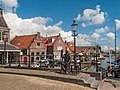 Monk sculpture at the bridge near de Waag
 -
 Church: de Grote of Sint Nicolaaskerk
 -
 Tower (de Speeltoren) and de Waag
 -
 View to the port
 -
 View to a street (het Noordeinde)
 -
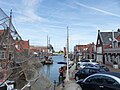 View to the grachten
 -
 Drawbridge: the Rietvinkbrug


.jpg)

See also
[edit]References
[edit]- ^ a b (in Dutch) Kerncijfers wijken en buurten 2009-2012, Statline, Statistics Netherlands, 2014. Retrieved 19 August 2015.
- ^ (in Dutch) Zoekresultaten, Postcode.nl. Retrieved 19 August 2015.
- ^ (in Dutch) Netnummer zoeken, Telefoonboek.nl. Retrieved 19 August 2015.
- ^ DK Eyewitness Travel Guide: The Netherlands: The Netherlands. DK Publishing. 1 August 2011. p. 174. ISBN 978-0-7566-8476-1.
- ^ Ad van der Meer and Onno Boonstra, Repertorium van Nederlandse gemeenten, KNAW, 2011.
- ^ Synagogues of Europe: Architecture, History, Meaning, by Carol Herselle Krinsky - 1996, p. 68
- ^ "Monnickendam aan de Zuiderzee, Holland". University of Pretoria Archives. 2012. Retrieved 3 July 2025.
- ^ Pennington, Estill (2010). Lessons in Likeness: Portrait Painters in Kentucky and the Ohio River Valley, 1802-1920. University Press of Kentucky. p. 211. ISBN 978-0-8131-2613-5. Retrieved 3 July 2025.
the American artist colony at Monnickendam, Holland, at the 1907 Southern Exposition
- ^ "Royal Hakvoort Homepage". Royal Hakvoort. Retrieved 10 February 2022.
- ^ "Ministry of the Interior and Kingdom Relations honors subsidy application for the Municipality of Waterland for the Galgeriet project". Gemeente Waterland. Retrieved 11 February 2022.
- ^ "Leguit + Roos Homepage". Leguit + Roos. Retrieved 11 February 2022.
- ^ Statistics Netherlands (CBS), Bevolkingskernen in Nederland 2001 [1]. Statistics are for the continuous built-up area.
- ^ Statistics Netherlands (CBS), Gemeente Op Maat 2004: Waterland [2][permanent dead link].
External links
[edit]

- Chisholm, Hugh, ed. (1911). . Encyclopædia Britannica. Vol. 18 (11th ed.). Cambridge University Press. p. 629.
| International | |
|---|---|
| National | |
| Other | |

 | This North Holland location article is a stub. You can help Wikipedia by adding missing information. |
Monnickendam
View on GrokipediaGeography
Location and Administrative Status
Monnickendam is a town located in the province of North Holland in the Netherlands, forming part of the municipality of Waterland.[5] It lies on the coast of the Markermeer, the western basin of the former Zuiderzee now known as the IJsselmeer.[2] The town is situated approximately 13 kilometers northeast of Amsterdam, with the municipality of Waterland sharing a border with the city of Amsterdam to the south.[6][7] Its geographic coordinates are roughly 52°28′N 5°02′E.[8] Administratively, Monnickendam held independent municipal status until 1991, when it merged with the neighboring municipalities of Broek in Waterland, Ilpendam (in part), Katwoude, and Marken to establish the modern municipality of Waterland.[5] This consolidation integrated Monnickendam into a larger administrative entity focused on regional coordination in the Waterland area.[5] In the regional context, Monnickendam functions as an entry point to the expansive Waterland polders and the recreational zones along the Markermeer, facilitating access to the surrounding rural landscapes and water-based activities.[9]Physical Features and Environment
Monnickendam is situated in the characteristically flat polder landscape of the Waterland region, consisting of low-lying reclaimed land with an average elevation of approximately -1 meter below sea level.[10] This topography is defined by an extensive network of dikes and canals that prevent flooding and facilitate drainage, hallmarks of Dutch land reclamation efforts that transformed marshy and lacustrine areas into arable farmland.[11] The town borders the Markermeer lake to the north, a remnant of the former Zuiderzee, while key waterways such as the Gouw canal and the Monnickendam harbor shape its aquatic environment.[12] These features, including the sheltered Gouwzee inlet connecting to the Markermeer, have long integrated the area into broader water systems essential for local hydrology.[13] The 1932 completion of the Afsluitdijk dam, which enclosed the Zuiderzee to form the freshwater IJsselmeer, profoundly altered Monnickendam's local ecology by shifting from a saline to a freshwater regime, leading to significant changes in flora and fauna composition.[14] This transformation reduced marine species diversity but enabled the development of freshwater habitats, with ongoing water management in the Waterland region now focusing on maintaining ecological balance through initiatives like Natura 2000 protections and biodiversity restoration projects that enhance riparian zones and fish stocks.[15] The IJsselmeer serves as a vital freshwater reservoir, supporting regional biodiversity amid challenges like salinization and climate variability.[16] Monnickendam experiences a temperate maritime climate influenced by its coastal proximity, characterized by mild winters with average temperatures ranging from 2°C to 6°C and cool summers averaging 15°C to 20°C.[17] Annual precipitation totals around 846 mm, distributed relatively evenly throughout the year, contributing to the region's lush, water-abundant environment.History
Origins and Medieval Development
Monnickendam was established around 1235 as an outpost of the Norbertine Mariëngaarde Abbey, established in Friesland in 1164, whose monks founded a grange on the nearby island of Marken that year and constructed a dam on a local stream to manage water flow and facilitate land reclamation in the marshy Waterland region.[18] The town's name, translating to "monk's dam" in Dutch, directly reflects this monastic engineering effort, which transformed the boggy terrain into usable land for settlement.[13] Early settlement in Monnickendam was heavily shaped by the monks' influence, who promoted agriculture through land drainage and cultivation techniques suited to the peat soils, alongside small-scale fishing in the surrounding waters.[19] By the 13th and 14th centuries, the community grew from these monastic roots into a modest trading post, benefiting from its strategic position along inland waterways that connected it to broader regional networks.[20] In 1355, Count William V of Holland granted Monnickendam city rights on February 25, empowering local governance, market operations, and toll collection to foster economic autonomy.[21] This status elevated the town within the county, allowing it to regulate trade and administer justice independently.[22] The medieval economy centered on agriculture, dairy production, and small-scale fishing and trade along inland waterways, with herring processing becoming prominent from the 16th century, where catches from nearby seas were processed and traded, often preserved with salt imported for curing to extend shelf life for distribution.[20] Salt production and handling became integral to this activity, supporting the town's role as a hub for exchanging fish and agricultural goods with nearby Amsterdam, which spurred further urban formation without overshadowing the monastic agricultural base.[20]Early Modern Period and Golden Age
The early modern period in Monnickendam was characterized by resilience in the face of destruction and subsequent economic revival. Devastating fires ravaged the town in 1499, destroying much of its wooden structures, and again in 1513, sparing only a handful of buildings including the Grote Kerk, a women's convent, a school, and a few houses. Reconstruction emphasized more fire-resistant materials, leading to widespread adoption of brick architecture for homes and public buildings, which contributed to the town's distinctive aesthetic. In 1575, the city expanded westward with the addition of a fortified wall featuring four bastions designed by fortification engineer Adriaen Anthonisz, enhancing defenses amid ongoing regional conflicts.[23] Religious transformations during the Reformation profoundly shaped Monnickendam's social and architectural landscape. The town emerged as an early hub of Protestant sentiment, influenced by trade contacts along the Zuiderzee that exposed residents to Lutheran and Zwinglian ideas. This is exemplified by Wendelmoet Claesdochter, a local fisherman's daughter born in 1490, who became the first female Protestant martyr in the northern Netherlands; arrested in 1527 for her sacramentist beliefs, she was imprisoned for 157 days before being tried and executed by burning in The Hague on November 20, 1527. Monnickendam's formal shift occurred on June 24, 1572, when it pledged allegiance to William of Orange, prompting the conversion of the St. Nicholas Church (Grote Kerk) from Catholic to Protestant use; the altar, statues, and other "papist" elements were removed, the pulpit centralized, and Catholic worship banned. Ongoing construction on the church, which had begun in the late 14th century, continued post-Reformation, with the southwest corner completed in 1644 and the tower's sober Protestant-style spire finished in 1641, reaching 55 meters in height.[24][4][25] The 17th century brought Monnickendam's zenith during the Dutch Golden Age, driven by its strategic position as a Zuiderzee harbor town facilitating maritime trade, particularly with the Baltic region for commodities like grain, timber, and fish. Large seagoing vessels docked regularly, underscoring the town's role in the Republic's commercial expansion, and its status as one of Holland's stemhebbende steden granted it political influence from the 16th to 18th centuries. Prosperity from this trade funded civic infrastructure, including the weigh house (Waag), first established in 1382 but rebuilt after a 1666 fire; the current structure, designed by an unknown architect in the style of Philip Vingboons and constructed between 1668 and 1669 under the supervision of city master carpenter Jan Boodt, featured a covered colonnade facing the harbor for efficient weighing and trading of goods such as cheese, butter, grain, and fish. Shipbuilding yards in Monnickendam supported the broader Dutch maritime economy, contributing vessels for the Dutch East India Company (VOC) and the Anglo-Dutch Wars (1652–1674), when the town peaked as a center for warship construction amid naval demands.[26][27][28]Modern Era and Integration
In the 19th century, Monnickendam experienced a period of economic stagnation following the decline of Dutch maritime trade after the Napoleonic Wars, as the town's role as a Zuiderzee port diminished with shifting global commerce routes and the loss of colonial influences.[1] This led to a reduction in shipbuilding and fishing activities, prompting a transition to agriculture and small-scale trades such as fish processing, which sustained the local economy amid a shrinking population of around 2,500 by mid-century.[1] By the latter half of the century, the town was often described as a "dead city," marked by social challenges including poverty and limited opportunities, reflecting broader rural depopulation trends in North Holland.[29] The early 20th century brought cultural renewal through the establishment of a prominent artist colony in Monnickendam, attracting painters drawn to its picturesque harbor and traditional architecture during the late 19th and early 1900s.[30] During World War II, the German occupation had relatively minimal material impacts on the town compared to urban centers, with no significant destruction reported in Waterland, though food and fuel shortages affected daily life.[31] Local resistance efforts were notable, including hiding Jews—such as members of the Akker family—and participation in strikes like the 1941 February Strike, as well as sabotage by groups like the Knokploeg Waterland; tragically, 49 Jews from the region, including several from Monnickendam, were murdered by the Nazis.[32] Post-war recovery saw suburbanization accelerate, with Monnickendam evolving into a commuter haven for Amsterdam workers, supported by improved infrastructure and residential expansion that capitalized on its proximity to the capital.[1] The 1991 municipal merger integrated Monnickendam into the newly formed Waterland municipality, combining it with Broek in Waterland, Ilpendam, Katwoude, Marken, and others, which reduced its independent administrative autonomy but elevated it to the role of municipal seat.[33] This consolidation streamlined services like water management in the polder landscape but sparked debates over local identity preservation. In recent years, post-2022 developments have focused on housing expansions, notably the Gouwhaven project, which includes approximately 700 new homes—with sales for 49 rentals in the first phase starting on June 3, 2025—alongside amenities like a supermarket and marina relocation to address population growth.[34] Concurrently, environmental adaptations to climate change include the ongoing Monnickendam Zeedijk reinforcement project, aimed at countering sea-level rise and flooding risks to the surrounding polders through dike widening, innovative soil stabilization, and integration of nature-friendly designs to protect over 1.2 million residents in North Holland.[35]Economy and Infrastructure
Key Industries and Businesses
Monnickendam's economy has long been shaped by its maritime heritage, with shipbuilding emerging as a cornerstone industry rooted in the town's historical role as a Zuiderzee port.[36] The Royal Hakvoort Shipyards, a family-owned enterprise founded in 1919 by Albert Hakvoort Sr. in Monnickendam, exemplifies this tradition. Initially focused on wooden vessels, the yard transitioned to steel construction after World War II and has since specialized in custom-built luxury superyachts ranging from 40 to 60 meters, emphasizing Dutch craftsmanship and innovation. Under the leadership of its fourth generation, the shipyard expanded its facilities in the 1990s to accommodate larger projects and received a royal warrant in 2020, marking over a century of operation. Today, it contributes significantly to the local maritime sector by producing high-end yachts for international clients, with a reputation for bespoke designs and meticulous detailing.[37][38] In parallel, the restoration and crafts sector supports Monnickendam's preserved historic architecture, with firms like Leguit en Roos playing a key role. Established in 1967 and based in Monnickendam, this construction company specializes in restoration, renovation, and maintenance of historical buildings, using sustainable methods certified for heritage work in the Waterland region. Their expertise ties directly to the town's medieval and Golden Age structures, ensuring the longevity of landmarks such as wooden houses and church facades through skilled carpentry and traditional techniques.[39] Remnants of Monnickendam's fishing heritage persist in small-scale operations, including smokehouses that process local herring and other seafood, a nod to the town's 16th- and 17th-century prosperity from fish trading. Tourism-related services have grown to bolster the economy, with harbor-based activities, guided tours, and artisan shops drawing visitors to the waterfront and preserved sites. Surrounding polders sustain limited agriculture, focusing on dairy and crops suited to the reclaimed land, which complements the area's rural character without dominating the urban core. Overall, these maritime and heritage industries form the backbone of Monnickendam's economy within the Waterland municipality, fostering small-scale employment and cultural preservation rather than large manufacturing.[40][41]Transportation and Urban Development
Monnickendam lacks a railway station and depends on regional bus services for primary transportation needs. Frequent buses, including lines 315 and 316 operated by EBS, connect the town to Amsterdam Noord in about 15 minutes, with services running every 10 minutes during peak hours. Road access to Amsterdam covers approximately 17 kilometers via local routes such as the Zuiderdijksesluisweg. In the surrounding area, ferry services across the Markermeer, such as the Volendam-Marken Express, provide additional water-based travel options between nearby towns, enhancing regional accessibility.[6][42][43] The town's harbor, once a key historical port for trade, has evolved into a modern marina focused on recreational boating and tourism. Marina Monnickendam offers over 500 berths year-round, with facilities including showers, laundry, and 24/7 access, situated directly in the old town overlooking the sheltered Gouwzee inlet of the Markermeer. This setup supports leisure sailing and attracts visitors exploring the Waterland region's waterways.[44][45] Urban development initiatives emphasize sustainable growth and housing expansion. The Galgeriet business quarter, an outdated industrial area, underwent initial phases of redevelopment starting in 2020, with full demolition of remaining structures completed in 2024 to accommodate the Gouwhaven project. This mixed-use development will deliver around 700 homes, comprising affordable social rentals, owner-occupied units, and specialized care housing for individuals with disabilities, alongside commercial spaces totaling 5,000 square meters. Construction of the first phase, known as the Hart van Gouwhaven, began in early 2025 following a ceremonial start in December 2024, with home sales beginning in spring 2025. In May 2025, sales for the first 49 owner-occupied homes in this phase were announced. The first homes are expected to be delivered in the second quarter of 2026, aiming to complete key elements by the end of the decade.[46][47][48][49][50] Flood defenses represent a critical infrastructure challenge in this low-lying coastal town, integrated with efforts by the regional water board Hoogheemraadschap Hollands Noorderkwartier. The board maintains primary flood protections, including dikes and dunes along the Gouwzee and Markermeer shores, to safeguard against storm surges and high water levels in line with national standards under the Flood Defences Act. These measures ensure resilience for Monnickendam's urban expansion amid rising sea levels.[51][52]Demographics and Society
Population Statistics
Monnickendam, a town in the Dutch province of North Holland, has experienced modest population growth in its borough (wijk, including surrounding areas) since the early 2000s, while the town proper (woonplaats, urban built-up core) has seen slight decline. The town's population is concentrated in its built-up core, while the broader borough encompasses surrounding rural areas, contributing to varying density measures depending on the defined boundaries.[53] Historical census data from Statistics Netherlands (CBS) provides key benchmarks for population trends. In 2001, Monnickendam recorded 9,546 residents across a built-up area of 1.34 km², yielding a high density of approximately 7,130 inhabitants per km²; the town contained 3,766 residences at that time.[54] By 2012, the population had risen to 9,915 in the wider statistical area, with a density of 677.3 inhabitants per km².[54] Recent estimates indicate continued gradual expansion in the borough. As of 2025, the Monnickendam borough population stands at 9,960, up from 9,865 in 2013, representing an average annual growth of 0.08%.[55] The town proper is approximated at 9,000–9,200 residents as of 2025, based on a -0.45% annual change from 9,160 in 2021, while the encompassing Waterland municipality totals 17,735 inhabitants as of September 2025.[54][56] This places Monnickendam as a significant portion of Waterland's overall demographic, though the municipality's rural expanse dilutes its density to about 338 inhabitants per km².[57] The following table summarizes key population metrics over time, distinguishing between the town proper (built-up area) and wider borough where applicable. Town proper refers to the urban core (woonplaats); borough (wijk) includes adjacent areas.| Year | Population (Town Proper/Borough) | Density (inhabitants/km²) | Area (km²) | Residences |
|---|---|---|---|---|
| 2001 | 9,546 (town) | ~7,130 (town built-up) | 1.34 (built-up) | 3,766 |
| 2012 | 9,915 (wider area) | 677.3 (wider) | ~14.6 (wider est.) | - |
| 2025 | ~9,100 (town est.) / 9,960 (borough) | 681 (borough) | 14.63 (land, borough) | 4,239 (borough) |
Cultural and Religious Composition
Monnickendam's ethnic composition is predominantly Dutch, with approximately 92.5% of residents born in the Netherlands as of 2021. The remaining population includes small immigrant communities primarily from other European countries (about 2.4%) and non-European origins (around 5.1%), including limited numbers from Morocco and Turkey, consistent with national immigration patterns but on a modest scale. This results in notably low ethnic diversity compared to the more cosmopolitan Amsterdam metropolitan area.[54] Religiously, Monnickendam historically shifted to a Protestant majority after the Reformation in the 16th century, centered around institutions like the Grote Kerk, which serves as the primary Protestant place of worship. A small Catholic presence persists through churches such as the Nicolaas en Anthonius Kerk, while other Christian denominations, including Mennonite (Doopsgezinde Kerk) and Lutheran communities, represent historical minorities. In the contemporary era, secularization has grown, mirroring national trends where the majority of the population identifies as non-religious, leading to reduced active church participation.[4][59][60][61] The town's education system supports community life through a network of local institutions, including primary schools like Basisschool de Verwondering, which emphasizes personalized talent development; De Blauwe Ster, focused on self-aware learning; and De Gouwzee, promoting collaborative parent-teacher involvement. Secondary education is offered at the Bernard Nieuwentijt College, providing vmbo-t and havo/vwo programs in a supportive environment. Cultural associations and a commuter lifestyle—many residents travel to Amsterdam for work—shape social dynamics, blending tight-knit local ties with broader urban influences.[62][63][64][65] Social challenges in Monnickendam include an aging population, with 27.2% of inhabitants aged 65 or older in 2021, exceeding the national average of 19.6% in 2021 (approximately 28% as of 2025, vs. national 20.8%). This demographic shift raises concerns about healthcare demands and intergenerational balance, though community events like the annual Monnickendam Fish Days—featuring maritime traditions, local markets, and family activities—strengthen social bonds and tie into broader Waterland festivals.[54][66][55][67]Culture and Heritage
Landmarks and Architecture
Monnickendam's landmarks reflect its medieval origins and prosperity during the Dutch Golden Age, featuring Gothic ecclesiastical architecture alongside 17th-century civic structures that highlight the town's maritime trade heritage. The town's preserved built environment, centered around its historic harbor, includes traditional gabled houses that exemplify Dutch Renaissance styles from the period's reconstructions following fires and economic booms.[68] The Sint-Nicolaaskerk, or St. Nicholas Church, stands as a prominent Gothic edifice begun in the late 14th century and completed over more than two centuries in six phases, measuring 70 meters long, 33 meters wide, and 20 meters high. This triple-aisled basilica, supported by 24 pillars and outer walls, maintains a consistent Gothic style despite its extended construction timeline, with the first double-aisled section finished around 1412 and the final southwest corner in 1644. Its tower, erected in three phases with the base completed by 1520 and the spire added in 1641, reaches 55 meters and adopts a sober post-Reformation design without decorative statues following the 1572 iconoclasm. The church's interiors, altered after the Reformation to remove altars and centralize the pulpit, underwent significant restorations from 1959 to 1969, including new foundations and organ repairs, and further updates from 2005 to 2011 for heating, lighting, and acoustics.[4] The Waag, or Weigh House, known as De Waegh, exemplifies 17th-century Dutch civic architecture, with its current structure built in 1669 from remnants of an earlier building dating to 1382, following a devastating city fire in 1666. Originally serving as the hub for weighing commodities like cheese, butter, and grain to regulate trade, the imposing brick building featured an authentic canopy for market activities and doubled as a meeting hall for the town council, militia headquarters, and fire station over the centuries. Today, it functions as Brasserie de Waegh, preserving its historical facade while hosting events and dining in its monumental setting.[69] The Speeltoren, a standalone bell tower, represents an early example of Renaissance tower architecture, initially constructed around 1450 as part of the town hall before gaining its current wooden spire in 1591-1592, spanning seven floors over more than 30 meters. Housing the Netherlands' oldest carillon, installed in 1595-1596 with 15 bells cast during the peak of early carillon artistry, the tower's glockenspiel performs mechanically at set times, featuring animated figures like prancing knights. Now home to the Waterlandmuseum de Speeltoren, it offers insights into local history and the evolution of bell music.[70][71] The synagogue on Havenstraat, constructed in 1894 after a fire destroyed its 1814 predecessor, serves as a preserved instance of late 19th-century Jewish architecture in a small Dutch town, built of brick in a modest regional style rated for its historical significance. Active until World War II, the building was sold postwar and repurposed, currently operating as a bar while retaining elements of its original form amid Monnickendam's waterfront.[72][73] Complementing these structures, Monnickendam's harbor provides scenic views framed by traditional gabled houses rebuilt during the 17th-century Golden Age, showcasing stepped and neck gables typical of prosperous trading towns, with many facades adorned by carved gable stones depicting maritime motifs. These residential landmarks, clustered along the Noordoostpolder dike and inner canals, underscore the town's enduring architectural cohesion and role in Waterland's cultural landscape.[74][68]Jewish Community and Traditions
The Jewish community in Monnickendam traces its origins to the late 17th century, when Ashkenazi Jews, fleeing persecution in Germany and Poland, began settling in the town informally. Official records indicate an early presence as far back as 1680, when the first documented property sale occurred to Gompert Moses, a Jewish butcher.[75] By the early 18th century, efforts were made to attract Portuguese-Jewish merchants around 1720, though these were largely unsuccessful due to the town's declining economy.[72] The community formalized its organization around 1787, amid broader economic hardships that limited resources for religious institutions, such as the inability to appoint a full-time religious teacher.[72][76] Economically, Monnickendam's Jews played niche roles in local trade and services, serving as butchers, fishmongers, textile dealers, and early currency traders. In 1670, Samuel IJsacks and Abraham Levy established a loan bank, highlighting their involvement in financial activities. Property records from 1680 further illustrate this integration, with Gompert Moses purchasing a house as a resident butcher. These occupations reflected the community's adaptation to the town's fishing and market-based economy, though the small scale—often just a few families—constrained their overall impact.[75][76] The community remained modest in size throughout its history, peaking at around 71 individuals in 1868, comprising dozens of families at most. By 1808, it numbered 50 people (9 men, 11 women, and 30 children), dropping to 30 by 1815 and further to 20 by 1938. This small scale meant religious services were often limited, especially after 1932 when they occurred only on high holidays. The onset of World War II accelerated the decline; in 1942, 17 remaining Jews were deported to Nazi camps, with only one survivor returning postwar, leading to the near-disappearance of the community by 1950 when it merged with Amsterdam's.[72][75][76] The legacy of Monnickendam's Jewish community endures through surnames adopted in 1811, such as Monnickendam itself—derived from the town and borne by Jewish families tracing roots there—as well as Mol, Witmond, and Leuw, which reflect geographic and occupational ties common in Dutch Jewish naming practices. The 1894 synagogue, rebuilt after a fire, stands as a cultural remnant, though sold postwar and now repurposed. A memorial monument opposite the Grote Kerk commemorates the 18 deported Jews from the community. This history connects to the broader narrative of Dutch Jewry, marked by integration in small towns before the devastation of the Holocaust.[77][76][72]Notable Individuals
Historical Figures
Monnickendam's historical figures are largely anonymous due to its status as a small maritime town, with prominence achieved through collective roles in trade, shipbuilding, and local administration rather than individual fame. In the medieval period following the granting of city rights in 1355 by Count Willem V of Holland, local officials such as schepenen (aldermen) and weigh house overseers managed commerce and governance, overseeing the weighing of goods like fish, cheese, and Baltic imports to ensure fair trade practices. These roles exemplified the town's early identity as a hub for North Sea shipping, where port officials regulated maritime activities that sustained the local economy.[78] During the early modern era, particularly the Dutch Golden Age, anonymous merchants and shipbuilders from Monnickendam contributed significantly to the Netherlands' maritime dominance, constructing vessels for Baltic grain and timber trade that bolstered regional prosperity. The town's weigh house, first established in 1382 and rebuilt in 1668 after a fire, served as a central institution where these figures operated, verifying cargo weights and resolving disputes to facilitate efficient port operations. Their efforts shaped Monnickendam's reputation as a reliable trading post, integrating it into broader Dutch commercial networks without recorded standout individuals.[79][80] A notable exception is Cornelis Dirkszoon (c. 1542–1583), who served as mayor of Monnickendam and admiral of the North Holland fleet during the Eighty Years' War. As a leader of the Sea Beggars, he commanded Dutch forces in key naval engagements, including the 1573 Battle on the Zuiderzee against Spanish forces, defending the town's strategic coastal position and contributing to the early success of the Dutch Revolt. His dual role in local governance and military defense highlighted how Monnickendam's leaders intertwined trade protection with regional politics, reinforcing the community's resilient identity.[81][82] In the 19th century, amid economic stagnation following the decline of large-scale trade, local figures involved in recovery efforts included descendants of early abbey settlers and community leaders who oversaw rebuilding after minor fires and infrastructural decay. These individuals, often tied to fishing and small-scale industries, focused on preserving maritime heritage through port maintenance and local administration, helping to stabilize the town's identity as a quiet coastal settlement without achieving wider renown.[1]Modern and Associated Persons
In the early 20th century, Monnickendam hosted a notable artist's colony that drew painters to the town's scenic harbor and surrounding Waterland landscapes, fostering a creative hub within the broader regional artistic tradition of depicting rural Dutch life.[83] This period saw artists capturing the area's traditional architecture and waterways, contributing to the impressionistic styles popular among Dutch painters at the time. A prominent figure linked to Monnickendam through familial and cultural ties is Martin Monnickendam (1874–1943), a Dutch-Jewish painter and draftsman renowned for his detailed urban scenes, theater portraits, and etchings of everyday life in the Netherlands.[84] Trained at the Rijksakademie in Amsterdam and later in Paris, Monnickendam's work, including over 200 exhibitions during his lifetime, reflected the vibrant social fabric of early 20th-century Dutch society, though he primarily resided in Amsterdam.[85] The Hakvoort family has been central to Monnickendam's modern economy since founding what became Royal Hakvoort Shipyards in 1919, initially building fishing vessels before pioneering luxury yacht construction post-World War II.[86] Under the leadership of founder Albert Hakvoort Sr., the yard transitioned to steel-hulled superyachts in the 1950s, delivering over 70 trawlers by 1980 and later innovating in custom designs up to 65 meters.[87] The third generation, including Klaas Hakvoort Sr., expanded operations, while the current fourth generation—brothers Klaas and Albert Hakvoort—continues family ownership, earning the royal designation in 2020 for a century of craftsmanship in high-end maritime engineering.[88] Jewish families originating from Monnickendam's historic community, established around 1787, have played a role in the global Jewish diaspora, with the surname Monnickendam serving as a marker of their roots in the town's once-thriving Ashkenazi population.[72] Many such families emigrated in the 19th and early 20th centuries amid economic shifts and later persecution, contributing to Jewish cultural networks in Amsterdam and beyond; however, the community faced near-total devastation during World War II, with most residents deported from Monnickendam in 1942.[89] Figures like the Monnickendam family exemplified this heritage, with many perishing in the Holocaust, underscoring the town's place in broader narratives of Jewish resilience and migration.[90] Among contemporary notables connected to Monnickendam, Paralympic sprinter Marlou van Rhijn (born 1991) stands out as a global advocate for athletes with disabilities, having secured three gold medals in the T43/44 category at the 2012 London Games and setting multiple world records in the 100m, 200m, and 400m.[91] Born and raised in the town, van Rhijn's achievements have elevated Dutch para-athletics, including her role as a commercial economist and motivational speaker.[92] In sports, volleyball player Marko Klok (born 1968), a former Dutch national team member and Olympian who competed at the 1996 Atlanta Games, also hails from Monnickendam, later transitioning to coaching in professional leagues.[93] Similarly, professional footballer Damon Mirani (born 1996), a defender who began his career with local club VV Monnickendam before progressing through Volendam and Ajax academies, now plays in the Eredivisie for Heracles Almelo (as of November 2025), representing the town's ongoing ties to elite athletics.References
- https://en.wikivoyage.org/wiki/Monnickendam